Tag: ikea

  • IKEA Announces Exciting Launch of Its First Store in New Zealand!

    IKEA Announces Exciting Launch of Its First Store in New Zealand!

    IKEA is set to make a splash in New Zealand with its inaugural store opening at Sylvia Park, Auckland, on December 4. Spanning an impressive 34,000 square meters, this expansive outlet will showcase a staggering array of over 7,500 products, which local customers can explore both in-store and online—talk about a retail playground!

    New Offerings Fit for Every Kiwi Home

    In a first for the retailer in a new market, IKEA will roll out 29 nationwide Pick-Up Points and launch home delivery services, ensuring that Kiwis from all corners have convenient access to their flat-pack treasures. Adding a twist to the traditional retail experience, a Buy Back service will enable customers to return pre-loved furniture, whether it be from IKEA or other brands, making sustainability a key component of their new footprint.

    A Loyalty Programme to Cherish

    In celebration of this upcoming launch, IKEA is unveiling its free IKEA Family loyalty program, designed to give members exclusive benefits and priority access to the store. New Zealanders can get in on the action by registering now at IKEA’s website, ensuring they are among the first to experience the brand’s unique offerings when the doors swing open.

    Part of a Larger Global Vision

    This launch marks a significant milestone as New Zealand is the first new market for Ingka Group, IKEA’s largest retail arm, since 2021. The opening in Auckland is part of a broader ambitious €5 billion global expansion strategy slated to unfold through fiscal year 2027, signalling IKEA’s unwavering commitment to grow its presence in retail overseas.

    As the countdown to December 4 begins, one thing is clear: IKEA’s arrival in New Zealand will undoubtedly change the local retail landscape. Who knew that assembling a bookshelf could also symbolize a nation’s evolving consumer culture?

    Questions & Answers

    What unique services will IKEA offer in New Zealand?
    IKEA will introduce 29 nationwide Pick-Up Points alongside home delivery services, enhancing accessibility for customers across the country.

    What sustainability initiative is IKEA implementing with its new store?
    The company will offer a Buy Back service for customers to return pre-loved furniture, promoting sustainability and responsible consumption.

    When is the grand opening of IKEA’s first New Zealand store?
    The much-anticipated opening is scheduled for December 4, 2023, at the Sylvia Park location in Auckland.
  • IKEA Expands Boldly in India with Diverse Store Formats and Enhanced Supply Chain Strategy

    IKEA Expands Boldly in India with Diverse Store Formats and Enhanced Supply Chain Strategy

    In a bold leap towards modernization and urban adaptation, Swedish home furnishings behemoth IKEA is expanding its footprint across India. The retailer is introducing a fresh approach that encompasses compact city storefronts, expansive mixed-use developments, and an enhanced online shopping experience. As part of this transformation, IKEA is also weaving India more tightly into its global supply chain, aiming to meet domestic demand while diversifying its production capabilities.

    Gone are the days when Indian shoppers had to navigate massive warehouse-style locations. Instead, IKEA’s new city-friendly outlets are tailored for bustling, high-density areas, making accessibility a priority for urban residents. It’s a clever twist that invites customers to experience IKEA without the trek across town.

    This strategic shift comes at a time when India’s retail market is increasingly vibrant, characterized by rapid urbanization and a growing middle class hungry for innovative and affordable home solutions. In 2024, the Indian retail market is estimated to reach nearly $1 trillion, providing a conducive environment for IKEA’s expansion.

    To accommodate this dynamic landscape, IKEA plans to launch not just stores but also mixed-use developments that incorporate residential and commercial elements, reimagining the shopping experience. The idea is to create vibrant community hubs where shopping, dining, and living intertwine seamlessly—because who wouldn’t want a cozy cup of coffee after an afternoon of furniture browsing?

    Simultaneously, IKEA is bolstering its online presence, a move essential in an era where e-commerce continues to rise. With a robust digital strategy in place, the retailer is targeting younger consumers who prioritize convenience and innovation in their shopping experiences. It’s a blend that captures the essence of modern retail, bringing the entire IKEA ecosystem closer to the consumer.

    Questions & Answers

    How is IKEA adapting its store formats for the Indian market?
    IKEA is transitioning from large warehouse-style stores to more compact city-friendly outlets, designed for high-density urban areas to enhance accessibility for city dwellers.

    What additional developments is IKEA pursuing in India?
    In addition to launching new stores, IKEA is investing in mixed-use developments that blend shopping with residential and commercial spaces, creating vibrant community hubs.

    Why is strengthening its online presence crucial for IKEA?
    A robust online strategy is essential as e-commerce continues to surge, helping IKEA connect with younger consumers who seek convenience and innovative shopping experiences.

  • IKEA Unveils Official Flagship Store on JD.com: Shop the Latest Designs Online!

    IKEA Unveils Official Flagship Store on JD.com: Shop the Latest Designs Online!

    IKEA has marked a significant milestone by launching its flagship store on JD.com, opening the floodgates to its extensive collection of home furnishings for millions of online shoppers across China. This vibrant new outlet boasts an impressive 6,500 products spanning 168 categories, including the much-anticipated debut of the BÄSTBOLL gaming chair and MÅLOMRÅDE gaming desk. As consumer interest surges, IKEA is set to continually expand its offerings, ensuring that even the most niche home décor enthusiasts find what they’re looking for.

    This exciting partnership melds IKEA’s renowned design expertise with JD.com’s robust logistics and digital infrastructure. By leveraging JD Logistics, IKEA can fulfill orders swiftly, reaching even the most remote areas without physical stores. Remarkably, JD.com boasts a track record of delivering 95% of orders within a mere 24 hours, a feat that promises to delight time-strapped shoppers.

    Tech Meets Home Decor

    That’s not all—JD’s innovative “Mini Liying” Naked-Eye 3D Solution will take the shopping experience up a notch, allowing customers to explore 3D models of select IKEA products directly on their smartphones. Gone are the days when you had to squint at photos; now you can examine every angle and detail—who knew online shopping could come with such a techy twist?

    The launch is a key component of IKEA’s broader omnichannel strategy in China, a deliberate move to cater to the increasing demand for diverse and convenient home shopping experiences from younger consumers. JD.com is not merely a platform; it’s transforming into a haven for global home brands. With IKEA joining esteemed names like MUJI, Natuzzi Italia, HAY, Georg Jensen, and LE CREUSET, the array of choices continues to grow.

    In the first half of 2025, participation from international brands on JD Home skyrocketed by over 130% year-on-year, underscoring JD.com’s commitment to enhancing its supply chain and service offerings in China. The collaboration with IKEA is just the latest chapter in this expansive narrative, promising to redefine home shopping across the Asia-Pacific region.

    Questions & Answers

    What products does the new IKEA flagship store on JD.com offer?
    The store offers 6,500 products across 168 categories, including exclusive items like the BÄSTBOLL gaming chair and MÅLOMRÅDE gaming desk.

    How does JD Logistics enhance the shopping experience for IKEA customers?
    JD Logistics enables swift order fulfillment, with 95% of orders delivered within 24 hours, even in areas without physical IKEA locations.

    What innovative technology is featured in the shopping experience?
    The store employs JD’s “Mini Liying” Naked-Eye 3D Solution, allowing customers to visualize 3D models of select IKEA products on their smartphones without the need for additional devices.

  • Ikea Sparks Green Revolution With Sustainable Retail Space In Shanghai

    Ikea Sparks Green Revolution With Sustainable Retail Space In Shanghai

    Retail giant IKEA is intensifying its commitment to sustainability by launching a dedicated retail space in China that prioritizes environmental responsibility. The new venture, a part of their larger strategy to embrace sustainable practices, features a remarkable assortment of eco-friendly home goods designed to appeal to the Chinese consumer who is increasingly conscious of their environmental footprint. This innovative store isn’t just a shopping destination; it’s a step towards reshaping consumer habits in one of the world’s most populous countries.

    A Green Revolution at IKEA

    The heart of this initiative lies in the selection of products that incorporate sustainable materials and offer solutions to reduce energy consumption at home. IKEA aims to inspire its customers by showcasing not only products but also ideas on how to lead a more sustainable lifestyle. “We want to help our customers make conscious choices in their homes, and that begins with the products we offer,” announced IKEA’s regional director in a recent press conference, emphasizing the brand’s environmentally friendly ethos.

    Location and Features

    Situated in the bustling metropolis of Shanghai, the new store will spotlight a range of innovative designs, from energy-efficient appliances to furniture made from recycled materials. This flagship location is designed to encourage sustainable living, featuring interactive exhibits that demonstrate how everyday choices can lead to a smaller carbon footprint. Notably, the showroom will even include a live demonstration of how to create a rooftop garden, which is bound to intrigue urban dwellers looking to bring a piece of nature into their lives.

    Consumer Response and Future Plans

    Early feedback indicates that shoppers are excited about this fresh approach. One enthusiastic customer, who refers to IKEA as their “second home,” expressed delight at the potential for their favorite retailer to lead the charge on sustainability. As digital engagement continues to grow, IKEA’s push towards a greener retail model could set a precedent across Asia, enticing consumers to reconsider their purchasing decisions. Beyond this Shanghai location, the brand is planning additional eco-focused stores throughout China as part of a larger expansion strategy, aiming to make sustainability mainstream.

    The Bottom Line: An Enhanced Brand Experience

    With this bold step, IKEA is not just selling products but weaving a narrative about responsible consumption and eco-conscious living. It’s a delicate balancing act, transforming retail into a platform for change while continuing to engage with customers on a personal level. As consumers increasingly seek brands that reflect their values, IKEA’s new sustainable focus could very well ignite a green revolution in retail, giving shoppers a reason to rethink the way they furnish their homes – and maybe even their lives. Who knew that shopping at IKEA could take on a mission to save the planet?

    Questions & Answers

    What sustainability initiatives is IKEA implementing in their new Shanghai store?
    IKEA’s Shanghai store will feature a selection of eco-friendly home goods, including products made from sustainable materials, and will emphasize energy efficiency through innovative designs.

    How does IKEA plan to engage consumers with sustainability?
    The store will showcase interactive exhibits and demonstrations, such as creating rooftop gardens, encouraging consumers to adopt a more sustainable lifestyle through practical ideas and inspirations.

    What are IKEA’s future plans for sustainable retail in China?
    Following the launch in Shanghai, IKEA aims to expand its sustainable retail model by opening additional eco-focused stores throughout China, making sustainability a core part of their brand experience.

  • IKEA Unveils Global Price Reductions on Restaurant Menus for Savvy Shoppers Everywhere!

    IKEA Unveils Global Price Reductions on Restaurant Menus for Savvy Shoppers Everywhere!

    In a striking move that underlines its ambition to reshape the retail landscape in Asia, IKEA has announced plans to establish a significant new presence in South Korea. Following the successful unveiling of its first store in 2004, the Swedish furniture giant is set to expand its footprint with an innovative concept store slated to open in Seoul’s bustling Yeongdeungpo district by the end of next year. This development highlights IKEA’s commitment to adapting its offerings to align closely with local consumer preferences while maintaining its core brand ethos.

    A Shift Towards Urban Convenience

    The new store will feature an extensive range of IKEA’s popular product lines, as well as access to online shopping services. Set to occupy a prominent space, this store will focus on urban convenience, catering to the growing demand for home goods among city dwellers who favor accessibility and efficiency in shopping. Not just a shopping destination, this outlet aims to serve as a community hub, hosting workshops and events that engage local customers and bolster brand loyalty.

    Creating a Local Touch

    IKEA has been keen on incorporating local elements into its designs and product offerings. This latest venture will showcase products that resonate with South Korean tastes, ensuring that the store feels tailor-made for its environment. The emphasis will be on creating functional, stylish living spaces that reflect the unique aesthetics of the region. Perhaps we can expect a few surprises that may even spark fresh trends in home décor, but time will tell!

    Expanding Horizons amid a Competitive Market

    The announcement comes amidst a highly competitive retail climate in South Korea, where local and international brands vie for consumer attention. With online shopping gaining traction, IKEA’s approach to hybrid shopping—melding physical and digital experiences—could attract a diverse range of customers, from tech-savvy millennials to time-starved parents. As the famed brand leverages its years of experience in creating iconic and sustainable home furnishings, the spotlight is on whether this new venture can capture the imagination of a discerning South Korean market.

    Looking Ahead

    The potential for growth in South Korea is evidenced not only by IKEA’s ambitions but by the broader global expansion strategy of major retailers that seek to tap into emerging market trends. Analysts suggest that this strategic move might not only solidify IKEA’s foothold in Asia but also enhance its reputation as a versatile and customer-centric brand. As South Koreans increasingly prioritize home aesthetics, this store could create a significant shift in how they approach home furnishings.

    Questions & Answers

    What is the primary focus of IKEA’s new store in South Korea?
    The store aims to provide urban convenience, emphasizing a blend of online shopping options and engaging community activities that resonate with local consumers.

    How will IKEA tailor its offerings for the South Korean market?
    IKEA plans to incorporate local elements into its product lines, ensuring that the store’s offerings align with the unique tastes and preferences of South Korean customers.

    What can customers expect from the new store’s design and experience?
    Customers can look forward to a space designed to reflect stylish and functional living, incorporating interactive elements like workshops and events to enhance the shopping experience.

  • Ikea Germany and Infarm create instore herb gardens

    Ikea Germany and Infarm create instore herb gardens

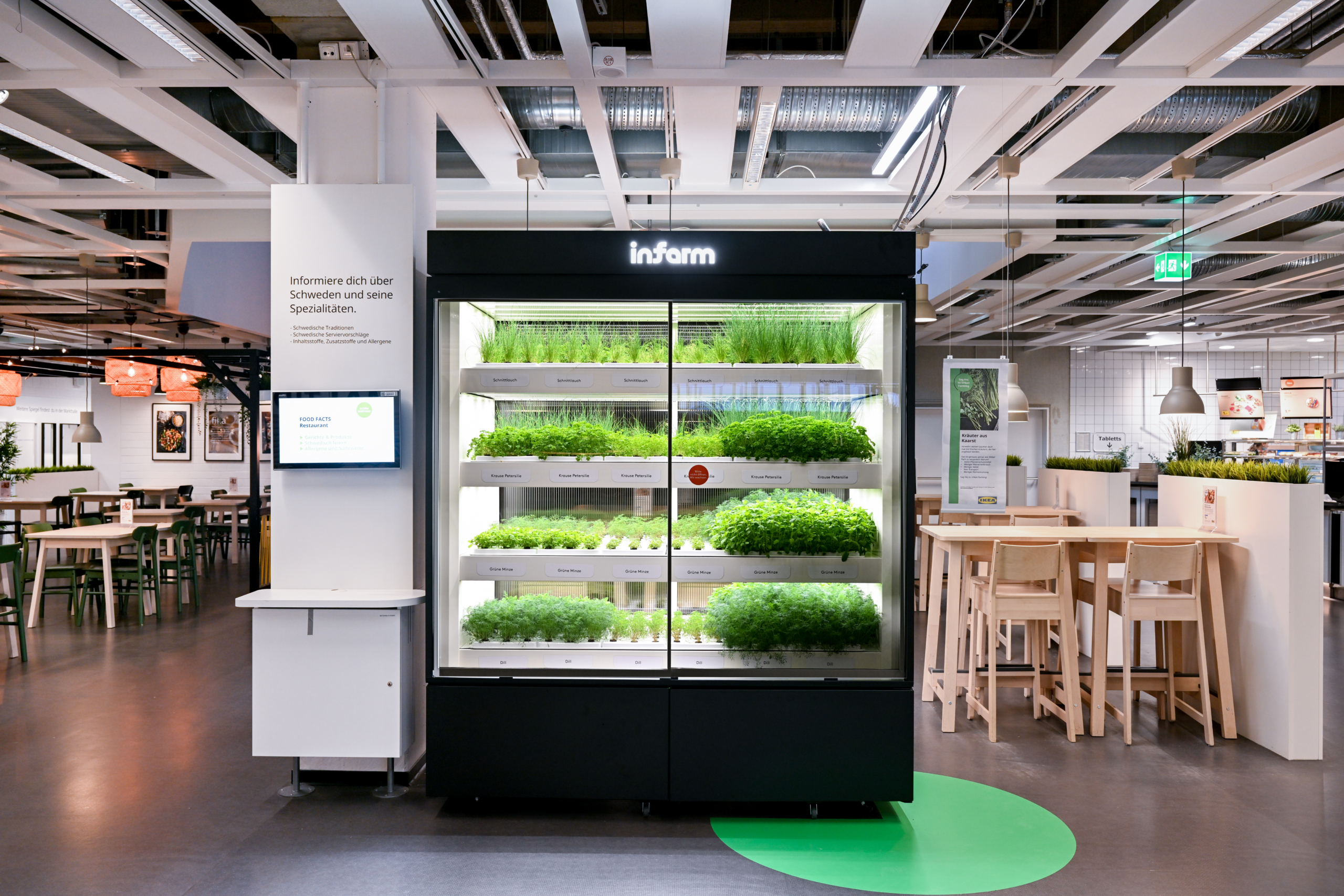
    Ikea has partnered with Infarm to grow three instore herb gardens in Germany as the demand for sustainable products is growing locally.

    The collaboration aims to motivate Ikea employees and customers to live healthier, more sustainable lives.

    Customers visiting Ikea Kaarst, Ikea Duisburg, and Ikea Munich-Eching can see Infarm herbs such as dill, curly parsley, and Italian basil growing in modular, in-store vertical farms. They can order directly at the restaurant.

    “Infarm’s concept convinced us because we can make the topics of sustainability and healthy eating tangible for our employees and customers in a prominent place in our furniture stores,” said Tanja Schramm, country food manager at Ikea Germany.

    “As part of our People & Planet Positive strategy, we aim to inspire and empower people to lead healthier, more sustainable lives. That’s why we’re increasingly focusing on plant-based foods and dishes with a lower environmental impact and at a price that everyone can afford.”

    Infarm, which was founded in 2013, considers itself to be one of the world’s fastest-growing vertical farming companies. Its modular technology system enables the implementation of vertical farms of varying sizes, and its products are sold in more than 1850 stores around the world.

  • Retailers Like Ikea Revamp Store Designs to Adapt to Digital Shopping Trends

    Retailers Like Ikea Revamp Store Designs to Adapt to Digital Shopping Trends

    IKEA is making waves in the retail world by swapping its iconic maze-like store design for a more straightforward, linear layout. This bold move reflects a larger transformation in the industry, one that champions efficiency, flexibility, and clear brand identity.

    A Retail Renaissance

    Rufus Turnbull, Founder and Creative Director at Studio X, notes, “We’re witnessing a shift towards smaller format stores that can offer a more agile shopping experience for consumers. Coupled with the rise of AI, there will be an even sharper focus on hyper-localization—tailoring product ranges to fit the specific needs of customers in their respective regions.” This redesign is part of IKEA’s global strategy to enhance in-store navigation and cut down on shopping time, responding to the increasing consumer demand for quicker and more efficient retail experiences—especially as online shopping sets higher expectations for physical stores.

    Rethinking Retail Inspiration

    Mike Lim, Director at DP Design, emphasizes that traditional, inspiration-driven retail models, like IKEA’s former printed catalog, are losing their relevance. “Today, consumers primarily turn to the internet for information,” he highlights, arguing for a re-evaluation of whether the classic show-and-tell shopfront really meets the needs of modern shoppers.

    Balancing Efficiency with Experience

    However, this shift does come with its own set of challenges. Turnbull warns against viewing the move to more efficient formats as an “all or nothing switch.” He suggests that large-format stores will continue to be crucial, while newly introduced smaller formats can facilitate product pickups and enhance customer service and returns.

    Lim also cautions against an overemphasis on speed and efficiency: “We must avoid the ‘efficient trap’—oversimplifying the shopping experience consumers crave,” he advises. Instead, he advocates for a “retail plus experience” model and “placemaking” that fosters emotional connections with shoppers. After all, who doesn’t want an enjoyable shopping adventure?

    Defining Brand Identity in Transition

    Maintaining a strong brand identity while adapting store functions remains a pressing concern. “A retail concept with a clear purpose is more likely to succeed,” Turnbull explains. He adds that the most sustainable environments are those that respond to market demands and endure over time, rather than simply showcasing trendy green features.

    Lim insists that a brand’s identity must be “singular and laser-focused,” with store design clearly reflecting that mission through layout, packaging, and customer service.

    As IKEA ventures into this new chapter, we can’t help but wonder what other surprises lie around the corner in the ever-evolving retail landscape!

    Questions & Answers

    What is the reason behind IKEA’s change in store layout? The shift to a simpler, straight-line design aims to enhance efficiency, streamline navigation, and respond to consumer demand for faster shopping experiences.

    How are smaller store formats expected to perform? Smaller stores will serve as agile hubs for customer service, product pickup, and returns while still complementing larger locations.

    What role does brand identity play in this transition? A strong, purposeful brand identity is essential; it should be reflected throughout the store’s design and operations to foster long-term success.

  • IKEA Unveils First Mixed-Use Store in South Korea, Boosting Retail Growth

    IKEA Unveils First Mixed-Use Store in South Korea, Boosting Retail Growth

    IKEA Expands Footprint in South Korea with New Mixed-Use Store

    Dive into IKEA’s latest venture in Seoul as the global home furnishings giant enhances its local presence in a rapidly evolving retail landscape.

    A Strategic Investment in South Korea

    IKEA has officially opened its fifth store in South Korea, a significant milestone that is part of the brand’s ambitious strategy to invest over $341 million (approximately €300 million) in the country. This latest store, located in the Gangdong I-Park The River complex in eastern Seoul, marks IKEA’s first foray into a mixed-use facility, innovatively combining shopping, entertainment, and business spaces.

    Innovative Offerings for Modern Consumers

    The IKEA Gangdong store showcases a robust selection of 7,400 products, with 3,700 available for immediate purchase. Among its notable features are a sustainable living shop, designed to promote eco-friendly practices, and a circular hub that encourages recycling and repurposing. Furthermore, the introduction of electric vehicle deliveries aligns with IKEA’s commitment to achieving zero emissions and underscores its dedication to addressing emerging consumer trends toward sustainability.

    Reinforcing Digital and Physical Presence

    This opening is a key component of IKEA’s broader strategy to deepen its engagement within the South Korean market. The company is focused not only on expanding its physical stores but also on enhancing its digital presence to cater to the evolving needs of consumers. With this investment, IKEA aims to provide an elevated shopping experience that meets the demands of today’s discerning customers.

    Impact on the Retail Sector

    IKEA’s strategic expansion in South Korea reflects a dynamic shift in the retail landscape, responding to the rising consumer demand for integrated shopping experiences. As brands evolve to embrace sustainability and innovation, the implications for consumers and the broader retail sector are significant, paving the way for more versatile shopping environments that foster convenience and eco-consciousness.

  • Ikea Korea further cuts costs due to the continued downturn in sales

    Ikea Korea further cuts costs due to the continued downturn in sales

    Ikea Korea, the South Korean branch of the world’s largest furniture brand, has faced a continued downturn in its performance, reversing the growth observed last year. After experiencing a sales decline for the first time since entering the Korean market, Ikea Korea also posted its first fiscal-year loss this year.

    Since last year, Ikea has been implementing cost-cutting measures by adjusting the business hours of its stores, with a reduction in operating hours at its first Korean store in Gwangmyeong starting next month.

    According to the Financial Supervisory Service’s electronic disclosure system on December 14, Ikea’s sales for the last fiscal year (August 2022-September 2023) amounted to US$469.128 million, marking a 3.5 per cent decrease from the same period last year. Operating profit experienced an 88 per cent decline to 2 million, while net profit turned into a loss of $4.019 million, down from $10.2 million in the corresponding period last year.

    Ikea attributed last year’s sales decline to the impact of the Covid-19 Omicron virus, which led to a reduction in the number of customers visiting large stores. Despite the reopening of stores as the pandemic situation improved, sales continued to decline. The ongoing real estate downturn and high interest rates have been identified as significant factors affecting the furniture industry, as furniture demand typically correlates with housing transactions.

    A source from the furniture industry emphasized that despite an increase in apartment transaction volume, overall housing transactions have not stabilized. High interest rates are seen as a substantial burden, making it challenging for Ikea to sustain sales through smaller items alone.

    In response to the challenging business environment, Ikea Korea has been proactively cutting costs by adjusting store hours and reducing SG&A expenses. Even the Gwangmyeong store, which had not previously adjusted its business hours, will implement changes starting next year. Commencing next month, Ikea Gwangmyeong will delay its weekday opening time by one hour to 11 am and close 30 minutes earlier at 8:30 p.m. These adjustments come as Ikea aims to navigate the current economic challenges and maintain a resilient business model.

  • Ikea sticks with China despite slowing economy

    Ikea sticks with China despite slowing economy

    China is still a key growth market for budget furniture retailer IKEA despite the world’s second-largest economy showing signs of strain, executives at the biggest IKEA store owner said on Thursday (Oct 12).

    China was for several years the fifth biggest market by revenue for Ingka, which runs most IKEA stores globally, but it has now slipped to tenth position, accounting for 3.6 per cent of global sales in its 2023 financial year, which ended Aug. 31.

    Ingka Group remains committed to China, CEO Jesper Brodin told Reuters, even as some Western companies are seeking to reduce their exposure to the country whose post-pandemic recovery has been sluggish.

    “There is no middle way, you have to either believe and invest or you don’t, and in our case we are committed to China and the growth and development,” Brodin, who visited China last month, said in an interview.

    China’s weight as a market for Ingka Group has diminished: in the 2022 financial year it made up 4.3 per cent of global sales, while as recently as 2018 it accounted for 6 per cent, the same share as the UK. The company has 37 IKEA stores in China, out of a total of 537 locations worldwide.

    Ingka Group overall saw 697 million visits to its IKEA stores in the 2023 financial year, up 7.4 per cent from the previous year. The rate of increase was much higher in China, Brodin said, as stores reopened and shoppers returned.

    Ingka sees potential for China to make it back into its top five markets, based on sales in recent weeks.

    China’s sheer size makes it a key opportunity, said Tolga Oncu, head of IKEA Retail at Ingka Group.

    “Considering the size of the home furnishing industry in China and our existing market share, I am not, from the IKEA point of view, concerned so much about what’s happening in the macroeconomics,” Oncu said.

    He shrugged off economic data showing weaker consumer demand and high youth unemployment in China.

    “Normally in these circumstances, IKEA outperforms the rest,” Oncu said.

    China is also a key market for new retail technologies, Brodin said. As social media livestreaming as a shopping channel booms in China, he said Ingka is experimenting with live shopping there and plans to expand it to all its markets.

  • Ikea unveils US$2.2 billion expansion plan

    Ikea unveils US$2.2 billion expansion plan

    Ikea is planning to invest more than US$2.2 billion in an omnichannel expansion strategy in the US over the next three years.

    According to Ikea, this is the company’s largest investment in the US in four decades, and it will focus on creating new stores and expanding fulfilment networks to serve more Americans.

    Ikea will build new shops and extend its fulfilment network to give better delivery alternatives and provide a product range that matches the demands of everyday living in diverse regions across the country as part of the investment.

    “The US is one of our most important markets, and we see endless opportunities to grow there and get closer to the many Americans with affordable products and services,” said Tolga Oncu, head of Ikea Retail at Ingka Group.

    “More than ever before, we want to increase the density of our presence in the US, ramp up our fulfilment capacities and make our offer even more relevant to local customers’ needs and dreams.”

    Ikea expects to open eight additional shops, nine Plan & Order points, and create more than 2000 jobs during this first phase of expansion. In addition, Ikea will build 900 new Pick-up locations where customers can pick up purchases made online.

    Last year, Ikea US has added 15 customer Pick-up locations and two Plan & Order stations to make Ikea more accessible to customers. This summer, the company also announced new locations in San Francisco, CA and Arlington, VA.

    “We are committed to continuing to grow in this market with our thousands of co-workers and millions of customers who look to Ikea for home furnishing inspiration and solutions at an affordable price,” added Javier Quinones, CEO & chief sustainability officer at Ikea US.

    Ikea says this latest investment will forward that work by continuing to modernise existing locations to serve a dual purpose: offering inspiration and home furnishing knowledge while also expanding handling capacity for parcel deliveries directly from the store.

    Neil Saunders, MD at consultancy GlobalData, said an investment of Ikea’s scale “should make other retailers sit up and take notice”.

    “As the largest furniture retailer in the world, Ikea has economies of scale and volumes that allow it to offer value that few others can match. The expansion is a potential threat to Wayfair, At Home and other many mass-market players. While it will take time for Ikea to execute its plans, it is clear that a previously sleepy giant has woken up and is intent on making its mark.”

    Saunders said that while the US is one of Ikea’s biggest international markets, the company’s reach there has always been relatively poor compared to its core European markets.

    “Part of this is the result of Ikea’s traditional model of huge stores designed to pull in customers from an extremely large catchment. These work well in population-dense countries like the UK, but are less effective in the US where, outside of cities, people are more scattered and drive times can be extensive.”

  • Why Ikea Australia is using tuk tuks for last-mile delivery Down Under

    Why Ikea Australia is using tuk tuks for last-mile delivery Down Under

    Electric Tuk Tuks are to make their debut in Australia as part of a new initiative by logistics giant ANC and retailing monolith Ikea get serious about the cleaning up of “last mile” delivery transport in Australia.

    “Last mile” refers to the final journey of cargo and parcels from distribution centre to the customer, and it is seen – because of the short distances and its operation in built up areas – as an obvious sector to target as the transport world dumps polluting fossil fuels for electric drive trains.

    In Europe, electric vans are being rolled out at pace – largely because residents and city and national governments are sick and tired of polluting trucks in their local area. Delivery times are tightly controlled, and within years it is expected that diesel and petrol vans will be banned from built up areas. They already are in some locatios.

    Australia, as with most things EV, is dragging the chain. But on Thursday, last-mile delivery specialist ANC and leasing specialist Orix announced a strategic partnership to show how fleet electrification can be achieved.

    ANC currently has ten electric vans – out of a total fleet of more than 1,100 vehicles – but wants to ramp this up rapidly, at least doubling the numbers in the next year and then again the next.

    On Thursday, it unveiled an Australian first: a specially-designed electric TukTuk manufactured by Biliti Electric in India and imported exclusively by Brisbane-based company EMoS.

    The electric three-wheelers will be used by Ikea’s Tempe store in Sydney and will feature swappable 9kWh batteries. However, they will be limited to speeds of 50km/h  due to Australian homologation rules.

    One Tuk Tuk was on display after being flown in from India, but without its battery which has to be shipped. Their drivers will need to wear helmets.

    “We’re very excited to be pioneering these new 3-wheel EVs in Australia,” says ANC CEO Joe Sofra.

    “They’re being used globally – including by IKEA – and will be launched into the US market in coming months. Initially, our two e-TukTuks – which we’ve nicknamed BUDDe – will be deployed to carry out deliveries for IKEA Australia’s Tempe store for a 3-month trial to prove concept.”

    Sofra says there is a global revolution underway as the last-mile delivery sector accelerates fleet electrification and EVs are a perfect match for the sector.

    “We didn’t want to sit idly by and wait for the perfect economic environment to accelerate our EV goals. We could miss the boast, or in this case truck, van or Tuk Tuk. We now urge other last-mile delivery providers to take up the challenge.

    “It’s just a question of how hard and fast we can go.”

    Sofra is hopeful that the deal with Ikea can trigger other big retailers and suppliers to follow suit, and is hopeful also for government to also lend its support to ease the cost of the transition. Electric trucks remain expensive, and although there is an expected “after-market” in used batteries – for homes and the grid – the monetary benefits of that remain ill defined.

    The partnership with Orix will help create a “capital light” expansion into EVs, and demonstrate that the running costs are favourable, and better than renting.

    “It’s still early days for EVs as fleet vehicles and there are still many challenges, however, partnering with like-minded organisations helps overcome barriers and creates greener, more sustainable outcomes,” says Reggie Cabal, the CEO of Orix.

    He says many companies are in a “holding pattern” as they seek to undertand the market and the technology.

    “We are helping remove the complexity for delivery professionals to adopt EVs by aligning vehicles, infrastructure, energy and optimisation into a single, practical plan for a decarbonised fleet future,” he said. “It’s important we act now.”

    Ikea is aiming for 100 per cent zero emissions delivery by 2025, and is also calling on government to provide incentives and to help with charging infrastructure.

    “We are committed to this goal and want to bring the retail sector on the journey with us,” said Mirja Viinanen, the CEO of Ikea and its chief sustainability officer.

    “So we are calling on the government to help us get there by introducing targeted incentives and charging infrastructure for last-mile delivery and logistics to boost the uptake of EVs.”  

  • Ikea South Korea’s sales see first decline in eight years

    Ikea South Korea’s sales see first decline in eight years

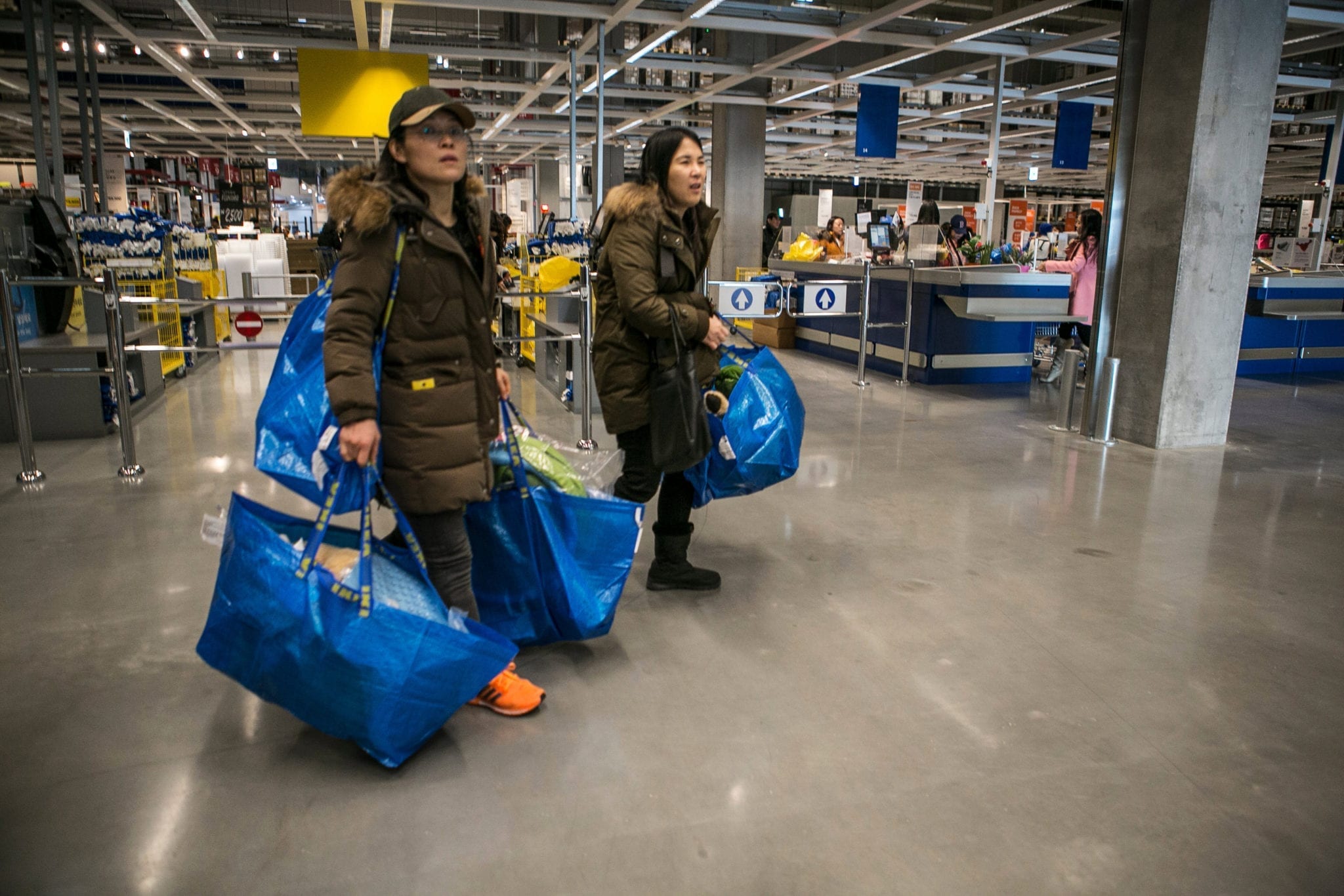
    IKEA Korea said Wednesday its sales fell 10 percent in this fiscal year in the first decline after entering Korea in 2014 as more customers held back spending on home furnishing goods amid eased virus restrictions.

    The Korean arm of the Swedish furniture maker said it logged 618 billion won ($444.3 million) in sales in the fiscal year ending August 2022, compared with 687.2 billion won during the same period of last year.

    “Considering the COVID-19 situation, the revenge spending situation, and the availability situation during this fiscal year, this is a result we are very happy with,” said Fredrick Johansson, the country retail manager of IKEA Korea, citing various challenges, such as rising material costs and supply chain disruptions.

    The company blamed the first decline in sales on reduced spending on home furnishing goods, with more customers spending time outdoors after Korea lifted most COVID-19 restrictions in mid-April as part of efforts to return to pre-pandemic life.

    While IKEA Korea’s brick-and-mortar stores saw sales falter, its online and remote channels showed robust performance.

    Sales from its online and mobile shopping platforms increased 12 percent from the previous fiscal year, while its remote channels ― consisting of telesales channels, chat rooms and consulting services via video call ― increased by 18.5 percent from the previous 12-month period.

    IKEA Korea did not disclose operating profit or net income for the cited period. IKEA said it will focus on strengthening its “omni-channels” so customers can order, buy and access consulting services from various touch points beyond its offline retail stores.

    The furniture maker also plans to strengthen its “IKEA for business” service, a furnishing consulting service aimed at small and medium-sized business owners, to double its share in the upcoming fiscal year.

    Executives of the company also mentioned possibilities it could mark down the prices of popular products once supply chain bottle necks and inflation of raw material prices resolve in the near future.

    In August, IKEA Korea increased its retail prices by an average of 3.5 percent, citing a rise in production costs.

    “IKEA Korea has set the fiscal year of 2023 as the leap year of omni-channel. We, as a home furnishing leader with deep expertise, will continue to make best efforts to enable more people to create a happier and more sustainable life at home,” Johansson said.

  • Ikea bets on China with $772 million investment

    Ikea bets on China with $772 million investment

    Ingka Group, the parent group of Swedish home furnishing giant Ikea, will invest 5.3 billion yuan (RM3.5bil) in China in the fiscal year 2023.

    The investment will be used for further business digitalization, construction of new stores and shopping malls and integrating multiple distribution channels, CEO and president of Ikea China Anna Pawlak Kuliga told a press conference yesterday.

    Lydia Song, vice-president of Ikea China, said the company would announce the investment of a wind power project in China later this year.

    As for the store expansion plan in China for the fiscal year 2023, which will start on Sept 1, Ikea will open a smaller scale store in Hefei, the capital city of East China’s Anhui province. It will also launch a second store in Xi’an of Shaanxi province.

    In early July, Ikea shut down its 8,500-sq-m store in northeast Shanghai’s Yangpu district.

    The major purpose is to realize more effective mapping in the city.

    While Ikea will remain “agile” in China over the next few years, Shanghai will remain as one of the key investment destinations for Ikea.

    Ikea announced a three-year strategy in 2019, especially for the Chinese market, which included 10 billion yuan (RM6.5bil) of investment.

    The company said it has fulfilled that investment target, with which Ikea developed more products and solutions for Chinese consumers, set up an omnichannel distribution network and offered more discounts.

    Over the past three years, Ikea’s services have extended to nearly one billion Chinese consumers with the online platforms such as the Tmall store and online shopping mall on WeChat.

  • Ikea set to open in downtown Bangkok

    Ikea set to open in downtown Bangkok

    Swedish home furnishings retailer Ikea is expanding its footprint in Thailand with a new store slated to open at Bangkok’s latest shopping mall, Emsphere on Sukhumvit Road.

    The company announced on Facebook that Ikea Emsphere will mark the brand’s fourth store in the country after Bangna and Bang Yai in Bangkok and its third store in Phuket. The opening date has not yet been disclosed.

    “Ikea and partners will announce details of cooperation soon and look forward to a warm welcome from all customers as well,” Ikea said.

    Emsphere is part of The Mall Group’s EM District project which includes The Emporium and The EmQuatier opposite. Currently under construction, the new centre is expected to be completed later this year. The mix-used building will span more than 200,000sqm, and besides Ikea is set to become home to a series of luxury brands.