Tag: Indonesia

  • Shopee admits to violating Indonesian monopoly laws

    Shopee admits to violating Indonesian monopoly laws

    Indonesia’s antitrust agency on Wednesday said in a statement that e-commerce firm Shopee had admitted to having violated a monopoly rule for its courier service in Indonesia.

    The agency also said Shopee has agreed to make adjustments to its operating practices.

    Shopee did not immediately respond to a request for comment regarding the agency’s statement.

    The agency, known as KPPU, had accused Shopee’s local unit of violating anti-competition rules by directing customers to use certain delivery services, one of which has a Shopee Indonesia executive on its board of directors.

    Shopee, the market leader in Indonesia’s fast-growing e-commerce sector, is owned by Southeast Asian technology firm Sea Ltd.

    Aside from Shopee, KPPU was also investigating the local unit of another e-commerce platform Lazada, the Southeast Asian arm of Alibaba.

  • Indonesian coffee brand Tomoro Coffee plans expansion in the Philippines

    Indonesian coffee brand Tomoro Coffee plans expansion in the Philippines

    Indonesian coffee chain Tomoro Coffee has announced a US$10 million investment to expand its presence in the Philippines.

    According to World Coffee Portal, Tomoro Coffee aims to establish 100 stores in the country by the end of this year.

    The first Tomoro Coffee store in the Philippines opened in April at the Wynn Plaza apartment complex in Manila. Since then, the chain has opened five sites in the country, including a three-story flagship location at Far Eastern University this month.

    Tomoro Coffee, which boasts more than 500 outlets in Indonesia since its launch last August, is aggressively pursuing international growth.

    Its recent milestones include debuting in China last year, in Singapore in February, and opening a roastery in Jakarta in May.

    The brand plans to produce 2400 tonnes of coffee annually to support its expansion.

    “We are pleased to announce our expansion into the Philippines and are committed to providing fresh coffee to our customers regularly,” said Tomoro Coffee.

    “This marks a significant step in our journey to reach 1000 stores across Southeast Asia within the next 12 months.”

    Tomoro Coffee is actively seeking franchise partners to facilitate its expansion.

  • Liverpool FC seals retail partnership in Indonesia

    Liverpool FC seals retail partnership in Indonesia

    Liverpool FC has signed a new retail agreement in Indonesia to strengthen its presence in Asia. The English Premier League team will collaborate with PT Kanmo Weston Retailindo, a joint venture between its Singapore retail partner Weston Corporation and the Indonesian retail company Kanmo Group.

    The deal includes distribution rights for online shopping of LFC’s official items and the first brick-and-mortar LFC store at Pondok Indah Mall, due to open in Jakarta this summer.

    “This latest partnership in Asia adds to our ambitious plans to grow our international presence in key markets. We’re really excited to open our first standalone store very soon,” said Mike Cox, senior VP of merchandising at Liverpool FC.

    The launch also offers the new 2024-25 Nike home kit and items created specifically for the Indonesian market.

    Last month, Liverpool FC also signed its first retail partnership in South Korea with brand and creative design studio Over the Pitch.

  • Garuda Indonesia and Singapore Airlines strengthen commercial partnership

    Garuda Indonesia and Singapore Airlines strengthen commercial partnership

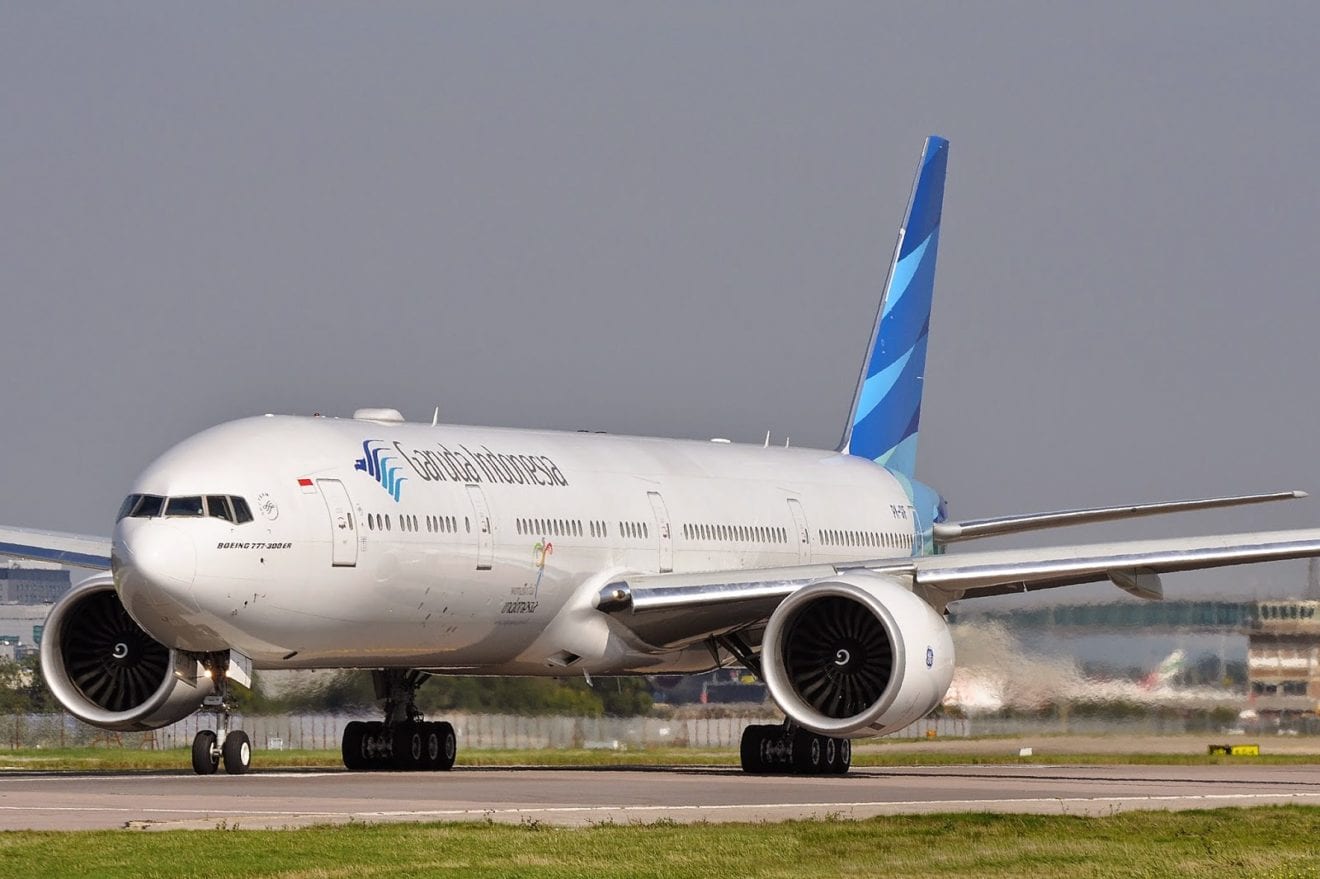
    Garuda Indonesia (GA) and Singapore Airlines (SIA) today committed to deepen their commercial partnership, with the aim of offering reciprocal benefits for their frequent flyer programme members, and to explore revenue sharing arrangements for flights between Indonesia and Singapore, subject to regulatory approvals.

    The frequent flyer programme agreement was inked by Garuda Indonesia Chief Executive Officer (CEO) Mr Irfan Setiaputra and SIA CEO Mr Goh Choon Phong in Jakarta today, while the joint venture revenue share agreement was signed by Garuda Indonesia Director of Service and Commercial Mr Ade R. Susardi and SIA Chief Commercial Officer Mr Lee Lik Hsin.

    When launched, the frequent flyer partnership will allow GarudaMiles and KrisFlyer members to earn and redeem miles on codeshare flights operated by both airlines. The revenue sharing agreement, when implemented, will support joint capacity growth, marking a significant step in the plans for a proposed commercial joint venture arrangement that covers Garuda Indonesia and Singapore Airlines flights between Singapore and Indonesia.

    Both carriers are continuing with joint marketing activities to promote tourism. This potentially includes joint activities to promote tourist traffic to Indonesia, including familiarisation trips for travel trade and media.

    Singapore Airlines and Garuda Indonesia have a strong codeshare partnership that has expanded in recent months. Today, Garuda Indonesia codeshares on Singapore Airlines flights between Singapore and the Indonesian cities of Bali, Jakarta, Medan, and Surabaya, as well as long-haul routes between Singapore and Johannesburg, London (Heathrow), and Mumbai. SIA codeshares on Garuda Indonesia flights between Singapore and Bali, Jakarta, and Surabaya.

    Mr Irfan Setiaputra, President and CEO of Garuda Indonesia, said that this partnership is part of Garuda Indonesia’s efforts to improve the Company’s performance through a strategic commercial partnership, especially in providing added value to customers. “Having the same mission in optimising the potential of the aviation business ecosystem in South East Asia after the pandemic, this initiative is certainly an important manifestation of both airlines’ commitment to continue strengthening our well-established cooperation,” Mr Irfan explained.

    He added: “This partnership is a special moment for us, which also marks the 58 years of Garuda Indonesia’s journey in connecting Indonesia and Singapore. In the future, we hope that this partnership will continue to enhance social, cultural, and tourism relations between Indonesia and Singapore whilst offering seamless access for customers to enjoy various destinations served by both airlines.”

    “We hope that the expansion of this partnership will bring added value for Singapore and Indonesia, which are served by both airlines. Furthermore, this collaboration is also expected to not only provide added value for both airlines’ customers, especially through the ease of earning and redeeming miles for tickets and other exclusive benefits, but the hope is that it will strengthen Garuda Indonesia’s support for national tourism by providing more access to points in Indonesia for foreign tourists who will visit Indonesia via Singapore in the future,” Mr Irfan said.

    Mr Goh Choon Phong, Chief Executive Officer, Singapore Airlines, said: “Our win-win partnership with Garuda Indonesia will improve the connectivity between Indonesia and Singapore for our customers. This will help to meet the increasing demand for air travel between the two countries and beyond, as well as facilitate the growth of tourism and economic activities. Furthermore, by deepening the synergies between our frequent flyer programmes, we can enhance the benefits for our loyal customers, offering them more opportunities to earn and redeem miles when travelling with both airlines.”

  • Indonesia to investigate Batik Air after pilots fall asleep mid-flight for 28 minutes

    Indonesia to investigate Batik Air after pilots fall asleep mid-flight for 28 minutes

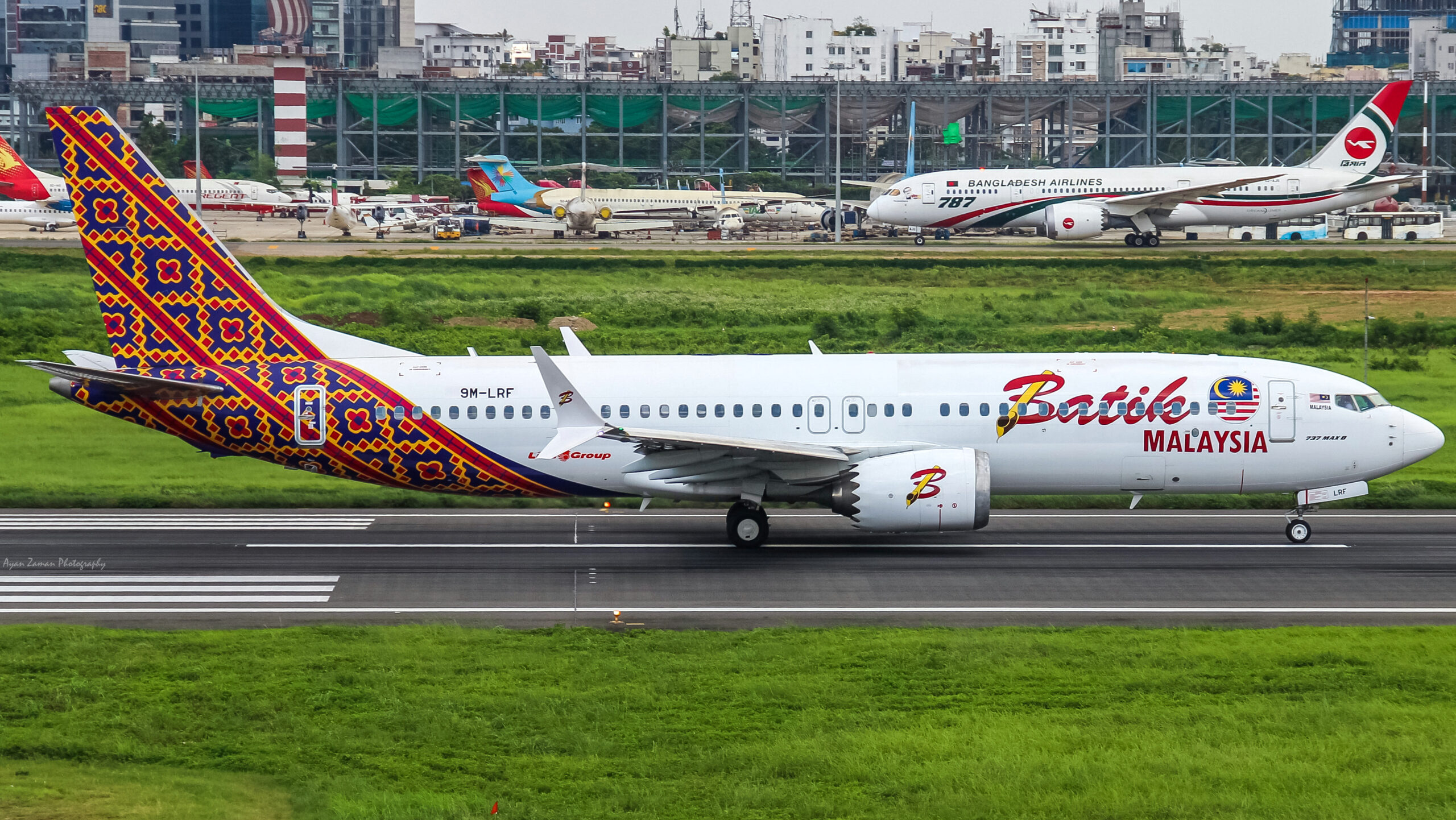
    Indonesia’s transport ministry said Saturday it would open a probe into local airline Batik Air after two of its pilots were found to have fallen asleep during a recent flight.

    A pilot and co-pilot were simultaneously asleep for approximately 28 minutes during a flight from South East Sulawesi to the capital Jakarta on January 25, a preliminary report by the National Transportation Safety Committee (KNKT) said.

    The incident resulted in a series of navigation errors, but the Airbus A320’s 153 passengers and four flight attendants were unharmed during the two-hour-and-35-minute flight.

    The transport ministry “strongly reprimands” Batik Air over the incident, air transport director-general M. Kristi Endah Murni said, calling on airlines to pay more attention to their air crew’s rest time.

    “We will carry out an investigation and review of the night flight operation in Indonesia related with Fatigue Risk Management for Batik Air and all flight operators,” Kristi said in a statement.

    Batik Air said in a statement on Saturday that it “operates with adequate rest policy” and that it was “committed to implement all safety recommendations”.

    The pilots involved in the January 25 incident had been temporarily suspended, the statement added.

    The KNKT report, seen by AFP on Friday, was uploaded to the agency’s website in late February.

    One of the pilots had not rested adequately on the night before the flight, according to the report.

    About half an hour after the plane took off, the captain asked permission from his second-in-command to rest for a while, with the request being granted.

    The co-pilot then took over command of the aircraft, but also inadvertently fell asleep, the report said.

    “The second-in-command had one-month twin babies. His wife took care of the babies and he assisted while at home,” the report said.

    A few minutes after the last recorded transmission by the co-pilot, the area control center in Jakarta tried to contact the aircraft. It received no answer.

    Twenty-eight minutes after the last recorded transmission, the pilot woke up and realized his co-pilot was asleep and that the aircraft was not on the correct flight path.

    He immediately woke his colleague up, responded to the calls from Jakarta and corrected the flight path, the report said.

    The plane landed safely after the incident. Investigators did not identify the pilots, but said they were both Indonesians and were aged 32 and 28.

  • Coach opens first cafe and fine-dining experience in Indonesia

    Coach opens first cafe and fine-dining experience in Indonesia

    Coach is expanding into the food and beverage business by launching its first concept dining experience in Jakarta, Indonesia.

    The destination comprises The Coach Restaurant and Coach Coffee Shop at Grand Indonesia Mall.

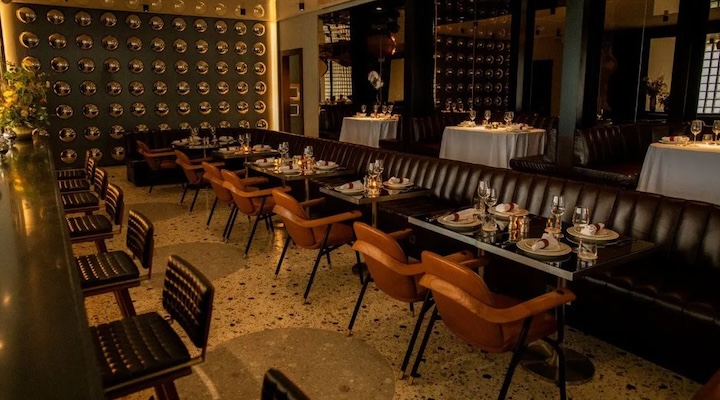
    The Coach Restaurant, designed by Coach creative director Stuart Vevers and William Sofield of Studio Sofield, serves traditional New York steakhouse cuisine.

    It reportedly incorporates natural and industrial materials in its architectural aspects, a nod to Coach’s craftsmanship and New York roots.

    Meanwhile, the Coach Coffee Shop contains New York cityscape wallpaper and industrial design elements.

    Coach and Brawn & Brains Coffee collaborated to open the world’s first cafe in Singapore last year. A month later, the luxury retailer opened Coach Airways, an aviation travel-themed store at the Freeport A’Famosa Outlet in Malacca, Malaysia.

  • Indonesian coffee chain Tomoro Coffee expands into Singapore

    Indonesian coffee chain Tomoro Coffee expands into Singapore

    Tomoro Coffee has opened its first location in Singapore as part of its ambition to become Southeast Asia’s largest coffee chain.

    The location is inside the Hon Sui Sen Memorial Library at NUS Business School, aiming to convey the brand’s dedication to quality and affordability.

    “In today’s coffee culture, we’ve noticed a growing trend where many, especially the younger generation, enjoy caffeine multiple times a day,” said CEO Star Yuan.

    “Whether savouring a single cup or seeking a refill, Tomoro Coffee aims to be the ultimate destination for all your caffeine cravings. We invite coffee enthusiasts of all ages to join the Tomoro experience.”

    The brand intends to further grow its footprint throughout the city-state and into the Philippines. Tomoro Coffee currently runs more than 400 locations in Indonesia and China.

  • GoTo, TikTok will be wholly compliant with Indonesia’s trade regulation

    GoTo, TikTok will be wholly compliant with Indonesia’s trade regulation

    Indonesian tech firm GoTo and Chinese-owned partner TikTok will be wholly compliant in a month and a half with the Southeast Asian nation’s regulation that bans in-app transactions on social media, GoTo’s CEO said on Wednesday.

    Short video app TikTok acquired in December majority shares in GoTo’s e-commerce unit Tokopedia after the Indonesian trade ministry banned transactions on its TikTok Shop e-commerce unit.

    “Integration process is going well. All parties continue to communicate with the related ministries and as far as we know the process is nearing completion,” CEO Patrick Walujo said in an online briefing.

    Indonesian minister for small and medium enterprises Teten Masduki said last week TikTok had yet to comply with the regulation.

    TikTok, owned by Chinese company ByteDance, did not immediately respond to a request for comment. Following December’s deal, TikTok has reopened its e-commerce services, which are now facilitated by Tokopedia.

    GoTo’s management said in the briefing that it will receive a quarterly e-commerce fee from Tokopedia, with the sum being dependent on Tokopedia’s gross merchandise value.

    Based on a GMV of $2.9 billion recorded in the third quarter of last year, the e-commerce service fee for GoTo will be $11.4 million, GoTo said.

    GoTo also expects its partnership with TikTok will benefit not only its e-commerce business but also its financial services segment as it will be able to offer digital payments and “buy now, pay later” credit schemes on TikTok.

  • Vietnam wins bid to export 300,000 tons of rice to Indonesia

    Vietnam wins bid to export 300,000 tons of rice to Indonesia

    Seven Vietnamese firms have won a bid to export 300,000 tons of rice to Indonesia, or more than half the volume that country’s plans to import in January.

    Their lowest quote was US$648 per ton, including transportation costs.

    Earlier this year Indonesia said it wanted to import 500,000 tons of rice in January to increase its food reserves.

    Last year it imported more than one million tons of Vietnamese rice, making it the second biggest customer.

    According to the Vietnam Food Association and the Thai Rice Exporters Association, the current export prices of standard 5% broken rice are $656 per ton in Thailand, $642 in Vietnam and $638 in Pakistan.

    Last year Vietnam exported eight million tons of rice to rank third in the world after India and Thailand.

  • Indonesia’s GoTo in talks with TikTok over potential e-commerce partnership

    Indonesia’s GoTo in talks with TikTok over potential e-commerce partnership

    Indonesia’s biggest tech firm GoTo Gojek Tokopedia said on Friday it was in talks with short video app TikTok over a potential e-commerce partnership in the Southeast Asian country.

    No final deal has been reached, GoTo added in a statement. The company also said the discussions did not include a takeover plan or any sale of more than 50 per cent of its shares to any party.

    Indonesia in October banned online shopping on social media platforms to protect smaller merchants and users’ data, after which TikTok had to close its e-commerce service TikTok Shop. TikTok has 125 million users in the country.

    Indonesia’s small and medium enterprises minister Teten Masduki told Reuters in November that TikTok had spoken to five companies including GoTo, Bukalapak.com and Blibli about possible partnership.

    Bloomberg earlier this week said TikTok had struck an agreement to invest in a unit of GoTo, citing people familiar with the matter.

    Indonesia’s e-commerce market is expected to grow to around $160 billion by 2030 from $62 billion this year, according to a report on Southeast Asia’s internet economy by Google, Singapore state investor Temasek Holdings and consultancy Bain & Co.

  • TikTok in talks with Indonesian e-commerce firms about partnerships

    TikTok in talks with Indonesian e-commerce firms about partnerships

    TikTok has been talking with Indonesian e-commerce companies about possible partnerships, an Indonesian minister said on Monday, a month after Southeast Asia’s largest economy banned online shopping on social media platforms.

    TikTok has spoken with five companies including GoTo’s e-commerce unit Tokopedia, Bukalapak.com and Blibli, according to Teten Masduki, minister for small-medium enterprises (SMEs).

    “Some e-commerce companies in Indonesia have talked to TikTok,” he said in an interview, citing what the companies’ executives told him.

    Indonesia’s trade ministry implemented the ban last month, aiming to protect smaller brick-and-mortar merchants and protect users’ data.

    It was a particular blow to TikTok, which was forced to close its e-commerce service TikTok Shop. TikTok has 125 million users in Indonesia.

    Tokopedia declined to comment. A representative for Bukalapak said the company was unaware of such talks. Blibli did not immediately respond to a request for comment.

    TikTok and YouTube are considering joining Meta in applying for e-commerce licenses in Indonesia after Southeast Asia’s largest economy banned online shopping on social media platforms, people familiar with the discussions have said.

    The app, owned by Chinese technology giant Bytedance, was also pursuing talks with local e-commerce players, they added.

    Teten, one of the staunchest critics of TikTok Shop prior to the ban, said President Joko Widodo has tasked him to formulate rules on e-commerce.

    He plans to meet TikTok Chief Executive Shou Zi Chew later this month.

    “I want them to commit to have a sustainable business that does not harm domestic SME products,” he said.

    Teten also said he has proposed further regulations for the flow of imported goods into the country but did not provide details.

    Until it stopped operations, TikTok Shop delivered about 3 million parcels daily in Indonesia, sources have said.

    Indonesia’s e-commerce market is expected to grow to around $160 billion by 2030 from $62 billion this year, according to a report on Southeast Asia’s internet economy by Google, Singapore state investor Temasek Holdings and consultancy Bain & Co.

    Other major e-commerce players in Indonesia include SEA’s Shopee and Alibaba’s Lazada.

  • Indonesia bans e-commerce transactions on social media

    Indonesia bans e-commerce transactions on social media

    Indonesia has banned e-commerce transactions on social media platforms, the trade minister said on Wednesday, in a blow to short video app TikTok, which is doubling down on Southeast Asia’s biggest economy to boost its e-commerce business.

    The government said the move, which takes effect immediately, is aimed at protecting offline merchants and marketplaces, adding that predatory pricing on social media platforms is threatening small and medium-sized enterprises.

    The move comes just three months after TikTok pledged to invest billion of dollars in Southeast Asia, mainly in Indonesia, over the next few years in a major push to build its e-commerce platform TikTok Shop.

    TikTok, owned by China’s ByteDance, has US$125 million active monthly users in Indonesia and has been looking to translate the large user base into a major e-commerce revenue source.

    A TikTok Indonesia spokesperson said it would pursue a constructive path forward and was “deeply concerned” with the announcement, “particularly how it would impact the livelihoods of the 6 million” local sellers active on TikTok Shop.

    Indonesia Trade Minister Zulkifli Hasan on Wednesday told reporters that the regulation is intended to ensure “fair and just” business competition, adding that it was also intended to ensure data protection of users.

    He warned of letting social media become an e-commerce platform, shop, and bank all at the same time.

    The new regulation also requires e-commerce platforms in Indonesia to set a minimum price of $100 for certain items that are directly purchased from abroad, according to the regulation document reviewed by Reuters, and that all products offered should meet local standards.

    Zulkifli said TikTok had one week to comply with the regulation or face the threat of closure. Indonesia Deputy Trade Minister Jerry Sambuaga earlier this month named TikTok’s live streaming features as an example of people selling goods on social media.

    Research firm BMI said TikTok would be the only business affected by the transaction ban and the move was unlikely to harm the digital marketplace industry’s growth.

    Indonesia’s e-commerce market is dominated by the likes of homegrown tech firm GoTo’s Tokopedia, Sea’s Shopee and Chinese e-commerce giant Alibaba’s Lazada.

    E-commerce transactions in Indonesia amounted to nearly $52 billion last year and of that, 5 per cent took place on TikTok, according to data from consultancy Momentum Works.

    Indonesia is among the few markets where TikTok has launched TikTok Shop, as it seeks to leverage its large user base in the country.

    Its 125 million active monthly users in Indonesia is almost on par with its user figures for Europe and behind US users of more than 150 million. TikTok launched an online shopping service in the United States earlier this month.

    Reactions from retailers were mixed.

    Fahmi Ridho, a vendor selling clothes on TikTok, said the platform was a way for stores to recover from the blow dealt by the Covid-19 pandemic.

    “Sales don’t have to be necessarily through (brick and mortar) shops, you can do it online or wherever. … Everything will still have a portion,” he said.

    But Edri, who goes by one name only and sells clothes at a major wholesale market in Jakarta, agreed with the regulation and stressed that there should be limits on items sold online.

  • AirAsia’s First Airline Partnership Expands its Presence in Indonesia

    AirAsia’s First Airline Partnership Expands its Presence in Indonesia

    AirAsia is joining the growing ranks of airlines partnering to expand their reach in Southeast Asia with a deal in the large Indonesian market.

    The discounter signed a memorandum of understanding at the end of September with Garuda Indonesia-subsidiary Citilink to establish its first-ever interline partnership. The tie-up could launch in the first quarter. The pact aims to expand connectivity between third- and fourth-tier destinations in Indonesia served by Citilink and international points in AirAsia’s network. And it comes just three months after Citilink agreed to sell flights via AirAsia’s Superapp.

    In addition to the passenger airlines’ tie-up, AirAsia-parent Capital A’s Teleport Everywhere logistics firm also plans to partner with Garuda Cargo on air freight.

    The pacts come amid a wave of new airline partnerships in Southeast Asia. Singapore Airlines has led the charge with, since April 2022, new or expanded tie-ups with Garuda, Thai Airways International, United Airlines, Vietnam Airlines, and Virgin Australia. Almost all of them focus on feeding travelers into Singapore’s global network. And Thai, in addition to its Singapore Airlines pact, has unveiled plans for a commercial partnership with Turkish Airlines.

    Partnerships are viewed by most airlines as a low-cost way to expand one’s network. The range in depth from a basic interline agreement that simply facilitates traveler connections to a codeshare where airlines place their own flight number on a flight operated by their partner and sell it as theirs, and a joint venture where two or more carriers operate as essentially one in a given market. The pacts also vary in cost and complexity — and potential financial benefit — in the same order: interline, codeshare, and joint venture.

    The new AirAsia-Citilink pact is the most basic when it comes to partnerships. The airlines only plan an interline agreement where “travelers would be able to check through baggage from origin to destination, on a single boarding pass, for seamless transfer through integrated services.” They did not say whether it could be a precursor to a deeper partnership in the future.

    The tie-up links Indonesia’s second-largest domestic airline by seats, Citilink, with the country’s largest international airline, Indonesia AirAsia, by seats, according to Cirium Diio schedules.

    In its statement on the planned partnership, AirAsia said the interline would include the full “breadth” of its international routes and not only ones to and from Indonesia. That means destinations like Ho Chi Minh City, Hong Kong, Seoul, and Tokyo are to be included.

    The focus on Indonesia makes a lot of sense. The country is the largest in Southeast Asia both in terms of population with more than 275 million people, and gross domestic product. And, owing to the country’s archipelago geography, most people have to fly — or take notoriously dangerous ferries — to get where they are going.

    That’s why many airlines want a bigger piece of the Indonesian pie, including AirAsia and Singapore Airlines.

    Of course, the opportunity in Indonesia is not new. AirAsia, in fact, tried to tap it with its own local subsidiary, Indonesia AirAsia. That airline continues to fly but, in terms of seats, is a small player in a crowded market that also includes Batik Air, Garuda, Malindo, and Lion Air.

    In addition to its home carrier in Malaysia, AirAsia has operating subsidiaries in Indonesia, the Philippines, and Thailand, as well as ties to the longhaul low-cost brand AirAsia X. It sold its Indian subsidiary, AirAsia India, to the Tata Group which owns Air India, last year. And AirAsia’s newest local airline, AirAsia Cambodia, plans to begin revenue flights in November.

    AirAsia aims to fully recover to pre-pandemic capacity levels by the end of the year.
  • Indonesian cafe chain Kenangan Coffee enters Singapore

    Indonesian cafe chain Kenangan Coffee enters Singapore

    F&B unicorn Kopi Kenangan, known as Kenangan Coffee outside Indonesia, has expanded its footprint into Singapore, opening its first store at Raffles City Shopping Centre.

    The Singapore expansion follows Kenangan Coffee’s international debut last year in Malaysia, where it currently has more than 20 stores.

    “The profound love that Singaporeans have for coffee, from kopitiams to contemporary cafes, inspired Kenangan Coffee’s leap into this vibrant market,” said Edward Tirtanata, group CEO and co-founder of Kenangan Coffee. “The city’s diversity and its global F&B prominence make our expansion here a pivotal milestone.”

    The company said it plans to expand its presence to other Southeast Asian countries before expanding globally.

    “…We aspire to be the most-loved consumer brand in Southeast Asia, and Singapore will be a key foothold in helping us achieve this mission,” said James Prananto, co-CEO and co-founder of Kenangan Coffee.

    Kopi Kenangan became the first F&B unicorn in Southeast Asia early last year after raising US$96 million in a Series C funding round, which valued the company at more than $1 billion. The coffee chain, founded in 2017 by Tirtanatam, Prananto, and Cynthia Chaerunnisa, has more than 900 stores across Malaysia, Singapore and Indonesia.

  • Electronic retailer Mobile World grows revenues in Indonesia

    Electronic retailer Mobile World grows revenues in Indonesia

    Erablue, the electronics retail chain of The Gioi Di Dong (Mobile World ) in Indonesia, has increased its monthly sales to VND30 billion from VND17.5 billion (US$0.7 million) in the latter part of 2022.

    With five stores, it reported monthly revenues of VND25 billion ($1.05 million) in the first half of this year.

    The VND5 billion ($0.2 million) per store represents higher sales than in Vietnam, Doan Van Hieu Em, CEO of two of the country’s leading electronics retailers, The Gioi Di Dong and Dien May Xanh, said. The latter also sells home appliances.

    While the amount is only equivalent to 0.5% of that of a Dien May Xanh store, it is enough to achieve positive EBITDA (earnings before interest, tax, depreciation, and amortization), he noted.

    Erablue is a joint venture between The Gioi Di Dong and Erafone Artha Retailindo, a subsidiary of Indonesia’s largest technology product retailer.

    It opened its first store in Jarkata late last year before expanding to Tangerang, an area considered a new economic driver.

    Erablue, which opened its sixth store this month, targets 25 more by the end of this year, halving the plan it made at the beginning of the year.

    Em said it is very hard to find showroom-sized properties in Indonesia, and the joint venture has to rent five to seven adjacent buildings and turn them into a big enough place for an Erablue store.

    But the potential of Indonesia’s electronics market is double or even triple that of Vietnam, he added.

    The Vietnamese electronics retailer has determined that sales and after-sales services, especially delivery and installation, will be a strong point of Erablue stores.