Tag: Indonesia

  • AirAsia announces five new domestic routes to Lombok, Labuan Bajo, Kertajati

    AirAsia announces five new domestic routes to Lombok, Labuan Bajo, Kertajati

    Low-cost carrier AirAsia launched five new domestic routes on Monday as it stated its “commitment to continue to support tourism and the economy by providing affordable flights”.

    Among the new services that will be operational on Aug. 1 are Jakarta-Lombok (11 times a week), Bali-Lombok (seven times a week), Yogyakarta’s Kulon Progo-Lombok (three times a week), Bali-Labuan Bajo (seven times a week) and Surabaya-West Java’s Kertajati (three times a week).

    Special promos are available for bookings made through airasia.com or the airline’s mobile app until June 30 for trips between Aug. 1 to Oct. 26, including for the Jakarta-Lombok (starting from Rp 635,000 [US$44.88]); Bali-Lombok (Rp 243,000) and Surabaya-Kertajati (Rp 626,000) routes. A free 15-kilogram baggage allowance is available for all the carrier’s domestic flights.

    “Since AirAsia’s newest hub in Lombok was inaugurated in early May and with the addition of our 25th Airbus A320 fleet, we are now ready to connect more and more of the country’s best destinations to support tourism and the local economy,” said AirAsia Indonesia managing director Dendy Kurniawan in a statement.

    AirAsia’s current domestic routes are Jakarta-Bali, Jakarta-Yogyakarta, Jakarta-Surabaya, Bali-Yogyakarta, Bali-Surabaya, Bali-Surakarta, Yogyakarta-Medan and Bandung-Bali.

  • Indonesian e-commerce site Tokopedia generates record sales

    Indonesian e-commerce site Tokopedia generates record sales

    Tokopedia, an Indonesian e-commerce site backed by SoftBank and Alibaba, said on Wednesday it generated a record $1.3 billion in gross merchandise volume (GMV) during Ramadan sale, amid soaring demand for online retail.

    The company said its biggest sales, recorded on May 17, resulted in a total transaction value that was higher than combined sales from the first six years.

    “Those transactions are happening across 97% of sub-districts in Indonesia and involved 5.9 million sellers,” said Tokopedia founder and CEO William Tanuwijaya.

    The start-up secured $1.1 billion in a funding round in December, led by Japan’s SoftBank Group Vision Fund and Chinese e-commerce giant Alibaba Group Holding Ltd. Sources say Tokopedia is valued at $7 billion.

    Shopping for clothes and gifts during the holy month of Ramadan is a significant part of the culture for Indonesia – the world’s largest Muslim-majority country.

    The Southeast Asian nation of over 260 million people is seen among the most promising global e-commerce markets, buoyed by a younger generation shifting their preference to online shopping.

    The Indonesian internet economy reached $27 billion last year and is poised to grow to $100 billion by 2025, according to Google-Temasek 2018 study.

    However, its logistical challenges are massive. The country’s 17,000 islands are sprinkled across an area bigger than the European Union, with logistical costs swallowing up around a quarter of Indonesia’s gross domestic product.

    Tokopedia’s Ramadan sale success reflects that e-commerce retailers are trying to overcome difficulties faster than expected amid higher usage of smartphones.

    Tanuwijaya told reporters that Tokopedia, which does not have its own inventory, was experimenting with artificial intelligence to predict demand and store stock in advance in partnership with warehouse operators.

    Rivals Bukalapak and Shoppee have not made their Ramadan sales public.

  • Tokopedia enters wedding industry, buying Bridestory

    Tokopedia enters wedding industry, buying Bridestory

    Indonesian e-commerce platform Tokopedia has acquired local wedding-service marketplace Bridestory, which allows users to plan their big day on their smartphones.

    Bridestory targets the Southeast Asian wedding market, connecting couples with venues, organizers and vendors/service providers in the wedding industry. It has reportedly connected more than 3.5 million customers with at least 27,000 wedding vendors annually.

    “It all started with a web application,” said Bridestory CEO Kevin Mintaraga, “then we slowly saw the change in behavior as people became more mobile-centric. We also wanted to help brides to plan their wedding anywhere and anytime with their smartphone”.

    The Tokopedia acquisition includes Bridestory’s new service, Parent story, which help parents and expecting parents connect with age-specific activity providers for their kids.

    Tokopedia has stated that the site will continue to operate independently, while Kevin Mintaraga will join Tokopedia’s management in a VP role.

  • CIMB Niaga partners Liquid Group to support Bank Indonesia’s QR Code standardisation

    CIMB Niaga partners Liquid Group to support Bank Indonesia’s QR Code standardisation

    PT Bank CIMB Niaga Tbk (“CIMB Niaga”) and Liquid Group today announced a strategic partnership to spearhead cross-border QR payment acceptance between Singapore and Indonesia. The partnership was initiated through their joint participation in Bank Indonesia’s Quick Response Indonesian Standard (QRIS) trial for cross-border payment transactions. The QRIS trial was conducted on May 23, 2019 using the CIMB Niaga’s digital banking product “Go Mobile” carried out at selected merchants located at Terminal 3, Singapore Changi Airport.

    Slated to launch in the 3PrdP quarter of 2019, CIMB Niaga and Liquid Group will enable the acceptance of participating QRIS compliant payment apps and e-wallets at Singapore Changi Airport through Liquid’s integrated QR payments and marketing infrastructure launched back in April this year.

    CIMB Niaga and Liquid Group have successfully completed their proof-of-concept with CIMB Niaga’s Go Mobile application and QRIS compliant payment apps and e-wallets. With the integration of Bank Indonesia’s QRIS code into Liquid Group’s cross-border payments platform, Indonesian travellers will be able to use their preferred local payment apps to make purchases at Changi Airport.

    Furthermore, CIMB Niaga and Liquid Group will be looking at opening the Singapore – Indonesia corridor for QR payments, enabling the acceptance of Singapore’s local payment apps and e-wallets at participating merchants in Indonesia.

    Lani Darmawan, Consumer Banking Director, CIMB Niaga, commented: “We are honoured to be the first bank in Indonesia given the opportunity by Bank Indonesia to conduct a cross-border QRIS payment trial. We believe that this initiative will greatly benefit our customers who can enjoy the ease of transacting abroad, starting with Singapore’s Changi Airport, using our Go Mobile QR app. This also offers a perfect solution to our customers who may not travel aboard with credit cards or large amounts of cash. We see great potential in the adoption of QRIS-supported cross-border payments with an increasing number of people travelling aboard.”

    Lani added:” The Go Mobile application will offer customers an attractive and competitive exchange rate at the point of payment, with the option to draw funds from their savings accounts, e-wallets and credit cards.”

    Jeremy Tan, Chief Executive Officer, Liquid Group, commented: “Accelerating the adoption of QR payments across borders is our key mission and we appreciate the vote of confidence given to us by CIMB Niaga in using Liquid Group’s integrated payments and marketing infrastructure at Changi Airport for their QRIS trial. Further to opening up the Singapore – Hong Kong corridor for QR payments last month, we are thrilled to now offer Indonesian consumers the convenience and benefit of cross-border QR payments starting with those stopping over at Singapore Changi Airport. We look forward to expanding the acceptance of QR payment apps and e-wallets from both Singapore and Indonesia on our cross-border payment platform.”

    Ms Teo Chew Hoon, Group Senior Vice President of Airside Concessions at Changi Airport Group, commented: “We continuously find new ways to elevate the shopping experience for our passengers and make their payment journey a frictionless one.  This collaboration with Liquid Group and CIMB Niaga will make Changi Airport the first retail destination to spearhead the acceptance of cross-border QR payments using Liquid Group’s first-of-its-kind unified QR payment infrastructure.”

    Liquid Group and Joint Electronic Teller Services Limited (“JETCO”) has also announced a strategic partnership to enable cross-border QR payment acceptance in Singapore and Hong Kong earlier in May, a month after the launch of the world’s first integrated QR payments and marketing infrastucture at Changi Airport back in April 2019.

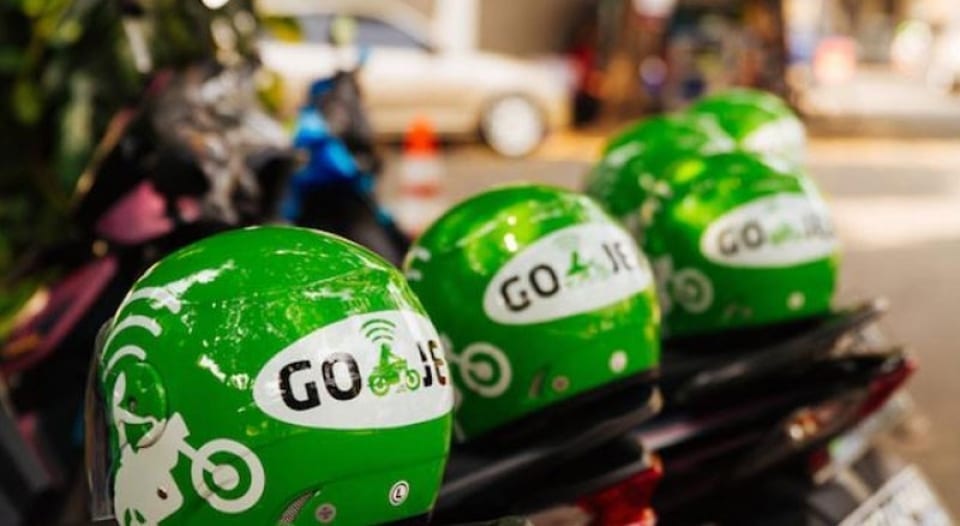
  • Gojek to Be Integrated Within DBS’ PayLah

    Gojek to Be Integrated Within DBS’ PayLah

    Users of DBS Bank’s PayLah! app over the next few months will find Gojek integrated within its app, both companies said on Thursday. In addition, Gojek customers can now pay with PayLah.

    As part of its partnership with the Indonesian ride-hailing firm, DBS Bank’s payment feature has been made available in the Gojek app for both iOS and Android users in Singapore, both companies announced on Thursday.

    Through integrating DBS PayLah! in the Gojek app, our riders will have greater flexibility to choose their preferred payment methods, which allows for a more seamless travel and payment experience with every ride, said the general manager of Gojek Singapore, Lien Choong Luen, in a media statement.

    Gojek customers will be able to add DBS PayLah! as a preferred payment method for their rides after a one-time authorization and set-up. According to Gojek, about 35 percent of its daily ride-hailing transactions are paid for in cash.

    This presents an opportunity for DBS and Gojek to encourage users to adopt digital payments, the companies noted.

    As Indonesia is a key growth market for DBS, DBS and Gojek are now exploring collaboration opportunities in Indonesia, including cross-marketing initiatives. Ride-hailing company Gojek is headquartered in Indonesia, where DBS has more than 460,000 digibank customers.

    Following the success of DBS and Gojek’s partnership in Singapore, where Gojek recently celebrated their 10 million-trip milestone, we have also entered the next phase of our partnership in Indonesia, said Shee Tse Koon, DBS country head for Singapore.

  • Indonesian Start-Up Seeks Swiss Listing

    Indonesian Start-Up Seeks Swiss Listing

    Jakarta-based Achiko wants to list 100 million shares on SIX, the Swiss stock exchange, it said on Wednesday. The shares were valued at $0.70 during its last fundraising, which would make for proceeds of $70 million.

    Its seven-year-old subsidiary Mimopay offers payment services for consumers without bank accounts – thus far, the company has won 2 million clients. Mimopay’s offering includes services to pay via smartphone, at ATMs, or directly at vendors. The company said its service has potential among the 1.7 billion people with no bank account.

    From Indonesia, the fintech led by president Allen Wu and CEO Kenneth Ting wants to expand to Myanmar, Vietnam and the Philippinen. To do so, Achiko plans to seek strategic partnerships with local firms.

  • AirAsia Offers Cheap Perth to Lombok Flights

    AirAsia Offers Cheap Perth to Lombok Flights

    AirAsia has launched a four-times-a-week service between Perth and Lombok, with the inaugural flight touching down on Sunday night.

    With fares starting at just $99 one way, the flights are set to be popular with Aussie tourists keen to sample the destination known as “the new Bali”.

    Dendy Kurniawan, AirAsia Indonesia CEO, said the flights would introduce healthy competition for the region and an additional option to much-loved Bali.

    “Blissful beaches, top surfing and dive sites, and picturesque mountains are now easily accessible for Australians and I encourage those looking to book their next holiday to consider Lombok,” he said.

    Perth Airport CEO Kevin Brown said the new service consolidated AirAsia’s position in the Perth market by adding more than 74,000 seats annually.

    “AirAsia has been in the vanguard of a low-cost carrier revolution that has delivered more affordable and accessible travel options for many Western Australians,” Mr Brown said.

    “Western Australians have a great propensity for travel and Indonesia represents Perth Airport’s largest outbound market as it offers an easily accessible and attractive destination for travellers.

    “This new service also provides an opportunity to grow the Indonesian inbound tourism market for Perth and Western Australia.”

    Indonesia represents WA’s eighth largest visitor market. Last year 31,000 Indonesian visitors arrived, injecting more than $56 million into the WA economy.

    AirAsia operates 25 flights per week between Perth, Australia and Indonesia, which includes Bali, and Lombok.

  • Tokopedia expands delivery promise Same Day Delivery

    Tokopedia expands delivery promise Same Day Delivery

    Indonesian e-commerce company Tokopedia is expanding its one-day delivery guarantee to almost all of its products as it prepares to battle Amazon and other foreign rivals.

    Backed by Alibaba Group and SoftBank, Tokopedia’s greatest strength might lie in the fact it is a 100-per-cent Indonesian focused company, unlike its rivals – and shareholder – which are simultaneously trying to build share in many different markets simultaneously.

    “We focus on Indonesia,” Tokopedia founder and CEO William Tanuwijaya said in an interview in Tokyo. “Our mission is really to solve the Indonesian customer problem. And we see the room for growth is still tremendous.”

    Online shopping in Indonesia is expected to grow by more than 400 percent within the next five or so years, to US$53 billion. That sort of growth is attracting Amazon, which opened in Singapore two years ago and subsequently launched in Australia, along with existing Indonesian rivals including Alibaba-backed Lazada and Shopee.

    Tokopedia already offers same-day or one-day delivery for about 65 percent of the products it sells. Expanding that to almost its entire catalog would be made possible by alliances with 11 logistics companies covering the most populous of the country’s 17,000 islands.

    The company is a marketplace, linking more than 5 million sellers with the nation’s largest database of online shoppers. It has no inventory of its own.

    Tanuwijaya admitted getting more than 90 per cent of goods delivered within 24 hours was a goal that might take two years or more to achieve.

  • Expedia, Booking.com warn AirAsia of turbulence in online travel plan

    Expedia, Booking.com warn AirAsia of turbulence in online travel plan

    Online travel giants Expedia and Booking.com are warning that budget airline pioneer, AirAsia Group, risks being destabilized by ambitious plans to become the “Amazon of travel”.

    AirAsia, which already offers limited travel plans on its website, plans to expand the online service to include booking flights with rival airlines and ecommerce. As profits tumble in the face of rising fuel costs and intensifying competition, CEO Tony Fernandes is seeking alternative sources of revenue and earlier this year told the Nikkei Asian Review he intended to invest 100 million Malaysian ringgit ($24.6 million) a year to become a technology-led company.

    The carrier’s future competitors in the wider online travel sector dismissed the threat posed by the company which brought low cost flight to Asia.

    Booking.com’s head of China, Marsha Ma, suggested the online travel giants would rally their vast networks of flights, hotels and services in the fight against any attempts by AirAsia to take market share. “The online travel agency business, especially accommodation, is a pretty heavy business model in terms of its supply chain management,” said Ma. “It takes years… We have offices at 190 locations and [they] have built up our supply chain capability, with width and depth.”

    “We will keep fighting on that,” the Booking.com executive said, speaking at an event held in Singapore last week by Skift, an U.S.-based travel industry information provider.

    Expedia, once a partner of AirAsia’s existing travel platform, indicated the carrier might not have the necessary skills to succeed. “What makes you great to run an airline” is not the same as being a great online travel agency, said Greg Schulze, head of commercial strategy & services at Expedia. Worse, the carrier risked being distracted from selling its own flights, which could exacerbate its current troubles, he suggested. “I am happy to see [AirAsia] negotiating with other airlines.”

    However, Aireen Omar, AirAsia’s deputy CEO for technology, was confident AirAsia could manage the risks. It was “ambitious, but I think it’s very doable,” Omar said.

    The aviation business model was changing, Omar said. “The key essence for us is no longer the aircraft but data.” AirAsia transported close to 100 million passengers this year alone in Southeast Asia, and was seeing six to eight million visitors come to its website every month. “A lot of new business opportunity is around there,” she said. This included enhancing its digital travel platform with itinerary suggestions, hotels or shopping, using technologies such as artificial intelligence to improve the offering.

    When asked if becoming the Amazon of travel is overly ambitious, Aireen Omar, AirAsia’s deputy CEO for technology and digital, said it’s “ambitious, but I think it’s very doable.” (Photo by Eri Sugiura)

    “I think online travel agencies are very cautious,” Omar said. She insisted that the company already has a “big platform” for AirAsia.com, the carrier’s BigPay, a mobile wallet which was launched in Malaysia last year tracking consumers’ credit and debit card payments, and combining this with its own loyalty program. “It is an opportunity for [other airlines] to have an access of the network and the data we have,” she added.

    AirAsia entered the flight and hotel package business in 2015 through a joint venture with Expedia. However last August it announced it would sell its 25% stake to Expedia for $60 million. This freed the carrier to build its own accommodation and other inventories. The airline in 2017 acquired 50% in travel tours and attractions provider startup Vidi, in a deal worth $2.6 million.

    Omar said the company’s data would be uploaded in the cloud by the end of the year, in preparation for the launch of its new service.

    AirAsia’s rush to build an enriched travel platform can be explained by headwinds the company faces in its core business. The carrier’s net income slipped to 96.1 million ringgit, a 92%-drop in the three months through March from a year earlier, as it was hit by high fuel costs and lower average fares.

    While the company remains profitable in Malaysia, where it is based, its operations in Indonesia, Thailand and elsewhere are either losing money or earning less.

  • Indonesia’s VisioNet enters cloud partnership with Epsilon

    Indonesia’s VisioNet enters cloud partnership with Epsilon

    PT VisioNet Data Internasional (VisioNet) has selected Epsilon to deliver its Direct Cloud Connect solution for its enterprise customers in Indonesia.

    Through the partnership, VisioNet’s Indonesian enterprise customers will benefit from on-demand access to leading cloud service providers (CSPs) with scalable, private, and secure cloud connectivity.

    Direct Cloud Connect is offered using Epsilon’s MEF-certified Ethernet service delivered in granular bandwidth ranging from 2Mbps up to 100Gbps. It is delivered via Epsilon’s Software-Defined Networking (SDN) platform, Infiny by Epsilon.

    This enables VisioNet to connect to multiple CSPs, including Alibaba Cloud, Amazon Web Services, Microsoft Azure, Google Cloud Platform, and a growing number of other options.

    “Indonesia has one of the most exciting cloud markets in South East Asia and has shown tremendous growth over the last five years. Our work with VisioNet will simplify and accelerate how Indonesia enterprises connect to the cloud and enable them to deploy hybrid cloud strategies easily,” said Jerzy Szlosarek, CEO at Epsilon.

    “We see exponential growth in digital services in Indonesia, and cloud demand is growing alongside eCommerce, fintech and digital content. We see an opportunity to seamlessly add Cloud Connectivity to expand our service offering and enable our customers to optimize how they connect to a variety of CSPs,” Miko Yanuar, CTO and CSMO of PT Visionet Data Internasional.

  • INDIGO cable system ready for use

    INDIGO cable system ready for use

    The new INDIGO subsea cable linking Singapore, Indonesia and Australia has completed commissioning and is ready for use.

    The INDIGO consortium – consisting of Google, Indonesia’s Indosat Ooredoo, Singtel, and Australia’s SubPartners and Telstra – are now able to leverage the new cable system to enable capacity increases on demand.

    The 9,200km INDIGO cable system can support a capacity of up to 36Tbps. It consists of the 4,600km INDIGO West cable between Singapore in Indonesia and Perth on the west coast of Australia with a branching unit to Jakarta, and the 4,600km INDIGO Central cable between Perth and Sydney on the east coast of Australia.

    INDIGO uses new spectrum sharing technology which will allow consortium members to each independently manage capacity on the cable.

    Alcatel Submarine Networks built the new cable system under an agreement reached with the consortium members in April 2017.

    “The development of the INDIGO cable system strengthens the link between our Australian network and the fast-growing South East Asian markets and will deliver our customers faster connectivity and dramatically improved reliability,” Telstra head of international Oliver Camplin-Warner said.

    Bandwidth demand between Asia and Australia is predicted to reach 75Tbps by 2025, TeleGeography predicts.

    “As South East Asia and Australia become increasingly interconnected, a high-speed and robust connectivity infrastructure plays a critical role in catalyzing the development of digital economies across the regions,” Singtel VP of carrier services Ooi Seng Keat said.

    “The completion of INDIGO will accelerate the roll-out of next-generation technologies that rely on low latency and high-bandwidth connectivity such as high-definition video, autonomous vehicles, Internet of Things and robotics applications.”

    As well as its domestic operations in Singapore, Singtel is the 100% owner of major Australian operator Optus.

  • BukaGlobal boosts its regional expansion Growth

    BukaGlobal boosts its regional expansion Growth

    Indonesian e-commerce platform BukaGlobal has launched in Singapore, Malaysia, Brunei, Hong Kong and Taiwan.

    Developed by Bukalapak, the platform will connect 4 million Indonesian sellers to the global market. At the moment, products sold on the site include health and beauty items, pantry lines and handicrafts from only qualified sellers in Jakarta and Tangerang. More sellers are set to join progressively.

    Customers in five countries can order products starting from 500gm with delivery time usually six to 11 days, depending on the destination.

    “We want to break down barriers that hinder young and small entrepreneurs from competing on a global playing field, primarily on access, infrastructure, and connectivity,” said Fajrin Rasyid, Bukalapak’s co-founder and president.

    “With BukaGlobal, Indonesian products are readily accessible by consumers anywhere in the world through a fast and reliable platform.”

    Fajrin said Bukalapak chose Singapore and the other four markets as there are many Indonesians there and the people in these countries understand Indonesian culture.

    The firm is working with Singapore startup Janio for end-to-end cross-border logistics.

  • Indonesia’s Kimia Farma eyes Growth into Vietnam

    Indonesia’s Kimia Farma eyes Growth into Vietnam

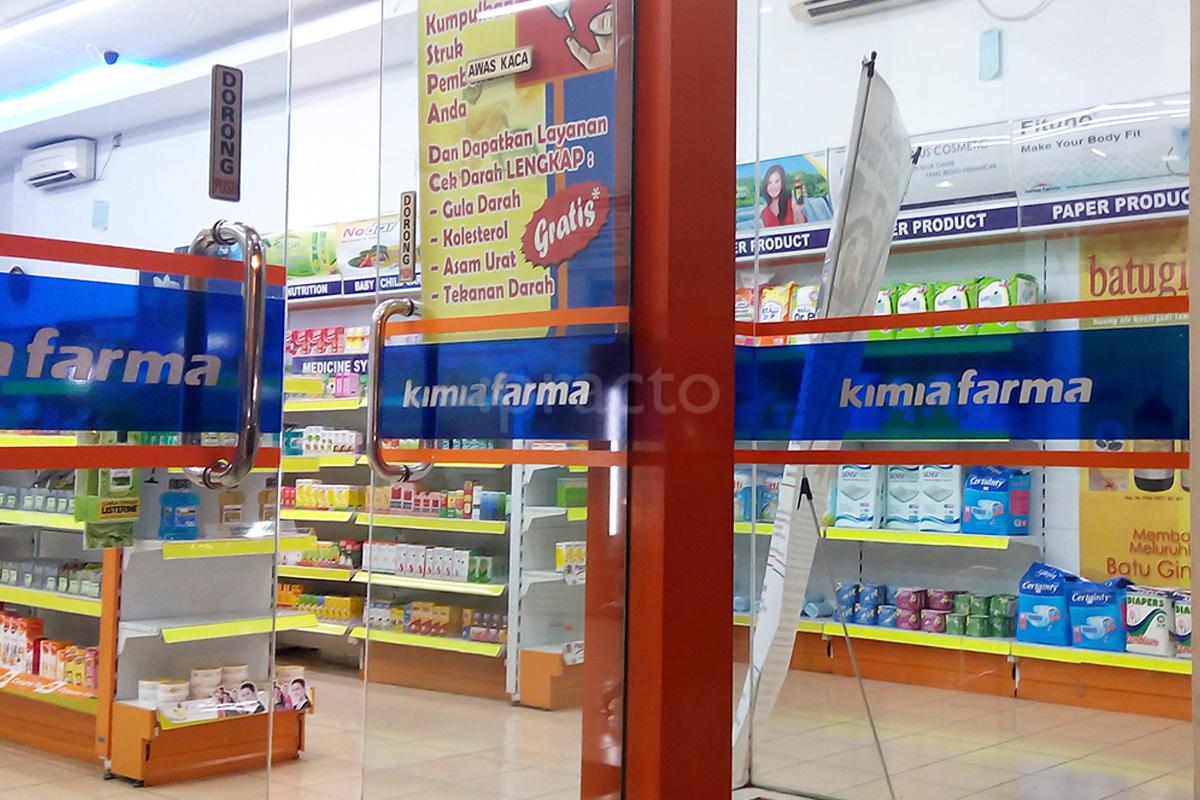
    Indonesian state-owned pharmaceuticals firm Kimia Farma is considering expanding into Vietnam by acquiring a local company. The firm recently invested US$10.26 million in a Saudi Arabian firm, purchasing 60 percent of its shares and renaming it as Kimia Farma Dawaa.

    It is currently investigating Vietnamese regulations to discover whether or not it can own a majority stake in a local firm, a critical factor in securing its investment.

    “It depends on the regulation in the country,” said Kimia Farma finance director IGN Suharta Wijaya. “It the regulation is okay, we will enter the country this year.”

    “If the sales of each Kimia Farma outlet in the country is IDR1.5 billion ($104,877) per month, [the sales of an outlet of the Vietnamese company] could be IDR4 billion per month,” Wijaya added.

    Investment in the pharmaceutical industry is stepping up in Vietnam, with the announcement last week that Vietnam-focussed private equity firm Mekong Capital has issued funding to pharmacy chain Pharmacity.

    With 186 outlets retailing both traditional Vietnamese and Western medicines, Pharmacity is the country’s most widespread network of pharmaceutical products stores, with 1 million subscribers to its loyalty program. The firm is targeting 1000 outlets in Vietnam within two years.

    Reportedly, Kimia Farma is seeking to buy a chain with 400 outlets nationwide.

  • Indonesian Retail Sales Down Last Month

    Indonesian Retail Sales Down Last Month

    Indonesian retail sales grew by 10.1 percent in March following a 9.1 percent increase in February, according to central bank survey data.

    The strong March performance was underpinned by sales of apparel along with automotive parts and accessories.

    However, the bank’s survey predicted that Indonesian retail sales growth will rise by a more modest 5.7 percent in April, the same figure it projects for the full year.

  • Shopee, Tiki solidify positions as top e-commerce sites in traffic in Q1

    Shopee, Tiki solidify positions as top e-commerce sites in traffic in Q1

    Shopee and Tiki maintained their positions as the two leading sites in terms of traffic in Vietnam’s e-commerce sector in the first quarter of this year.

    According to the latest figures from the Map of E-Commerce released recently by iPrice Group – a meta-search website operating in seven countries across Southeast Asia, Shopee still held the dominant position in Q1 2019 with 40.7 million visits per month on average. Tiki followed with 35.6 million visits monthly.

    Lazada ranked third with 29 million visits, closely followed by thegioididong.com (28.8 million visits) and Sendo (25.3 million visits).

    Q1 2019 also saw several positive trends in the performance of local players, especially Tiki, Sendo, and Adayroi. iPrice’s latest data showed through the first quarter included the Tết (New New Year) holiday period, which is usually a tough time for e-commerce businesses in general, those three merchants still managed to maintain their good results from the previous quarters.

    Doing the best in this regard was Tiki. Similar to the previous quarter, the website continued to achieve over 35 million visits per month on average for Q1 2019, helping its web traffic grow at a rate of 23 percent per quarter on average since the second quarter of last year.

    Aside from Tiki, other notable local companies Sendo and Adayroi have been showing encouraging signs. According to iPrice’s Map of E-commerce, the two companies both have an average traffic growth rate of over 16 percent per quarter for the past four quarters.

    Sendo’s CEO Trần Hải Linh also confidently told IT website Tech in Asia recently that his company was on track to achieve US$1 billion in GMV (gross merchandise volume) much earlier than the previously projected target of 2020.

    This year would be an inflection point for the Vietnamese e-commerce market, Linh said, adding the market would grow much faster.

    “We will see sizable businesses becoming comparable to regional players [and] customers becoming more familiar with e-commerce,” Linh told.