Tag: Industry

  • Great Potential in Indonesia’s Modern Retail, Food & Beverage Sectors

    Great Potential in Indonesia’s Modern Retail, Food & Beverage Sectors

    In 2017 turnover in Indonesia’s processed food and beverage industry is expected to grow by 8 percent (y/y) to IDR 1,400 trillion (approx. USD $108 billion) from an expected IDR 1,300 trillion in 2016. Meanwhile, the nation’s modern retail industry is projected to expand in the range of 10 – 15 percent (y/y) to IDR 225 trillion (approx. USD $17.3 billion).

    Tutum Rahanta, Deputy Chairman of the Indonesian Retailers Association (abbrev. Aprindo), says the combination of accelerating macroeconomic growth and controlled inflation are the main supporters for growth of Indonesia’s modern retail sector. In 2016 Indonesia’s gross domestic product (GDP) is expected to expand by 5.1 percent (y/y) up from the realization of 4.79 percent (y/y) in 2015. Recently, the World Bank announced it sees the Indonesian economy growing further by 5.3 percent in 2017 and 5.5 percent in 2018.

    Aprindo Chairman Roy Nicholas Mandey added that after several years of economic slowdown, the retail sector of Indonesia has been recovering in 2016 on the back of low domestic energy prices (electricity, gas and fuel), the stronger rupiah exchange rate (versus the US dollar), rising government spending (on infrastructure development), low inflation (around 3 percent y/y), and accelerating economic growth. Due to these factors members of Aprindo have been eager to expand their businesses this year.

    Based on a Bank Indonesia (BI) survey, Indonesia’s retail sales grew 14.4 percent (y/y) in August 2016, supported by sales of non-food items, extending the promising trend recorded in the preceding month (retail sales growth at +15.7 percent y/y). However, this survey also signals that retailers expect retail sales to slow in November 2016 due to rising inflation (a seasonal phenomenon).

    Adhi Lukman, General Chairman of the Indonesian Food and Beverage Association (GAPMMI), agrees and expects the processed food and beverage Industry of Indonesia to rise by at least 8 percent (y/y) provided the government will not implement any policies that could undermine this growth (for example, the government once uttered the idea to implement a plastic excise tax). Besides the five above-mentioned factors, Lukman added that rebounding commodity prices also boost people’s purchasing power.

    Lukman is also optimistic that direct investment in Indonesia’s processed food and beverage industry will surpass IDR 50 trillion in 2016, up 16 percent from IDR 43 trillion in 2015. However, investors urge authorities to lower interest rates as that would make business expansion much more affordable. Lukman emphasized that Indonesian authorities need to be consistent and committed (for example through effective implementation of the economic policy packages) in order to support this industry and thus be able to compete with counterparts in Malaysia and Thailand.

    Indonesian Modern Retail Industry:

    2013 2014 2015 2016¹ 2017¹
    Turnover
    in IDR trillion
     148  168  181  200  225

    ¹ indicates forecast

    Indonesian Food & Beverage Industry:

    2015 2016¹ 2017¹
    Sales
    in IDR trillion
    1,209 1,300 1,404

    ¹ indicates forecast

  • Indonesia fishery sector losing its bite

    Indonesia fishery sector losing its bite

    Fishing captain Wahyu Sumantri used to helm a 700-tonne vessel that sailed the Celebes Sea from North Sulawesi. These days, he can be found peddling mie ayam, or chicken noodles, from a push cart in his home town of Kerawang, in West Java, about two hours from Jakarta.

    “Hopefully, this is just like a long break for me and I will land a job at sea again soon,” he told The Sunday Times. The 38-year-old, who has a degree in fishery technology, lost his job last year after the government deemed his vessel illegal because it was not locally built.

    The move was among a series of tough measures introduced by Maritime Affairs and Fisheries Minister Susi Pudjiastuti in late 2014 to tackle illegal fishing across Indonesia.

    It is also a key plank in President Joko Widodo’s bid to transform Indonesia into a maritime power and also improve the livelihoods of its 2.4 million fishermen.

    Pudjiastuti also banned fishermen from unloading their catch out at sea because the other boat, especially if it is a foreign vessel, often bypassed local ports and port controls by taking the fish elsewhere.

    This practice is known as at-sea trans-shipment, but illegal trans-shipment has reportedly caused annual losses of US$20 billion to Indonesia’s fishery sector.

    Sumantri’s fishing boat is now one of the many such vessels lying idle in Bitung, North Sulawesi. Similar scenes can be seen in nearby Ambon, Maluku.

    Bitung is home to the country’s largest fish processing firms, which include tuna canneries and processing plants, employing tens of thousands of locals.

    Industry players there, however, say they have been hit hard by Pudjiastuti’s tough policies against illegal, unreported and unregulated (IUU) fishing. The ban on trans-shipment and use of foreign fishing boats, in particular, has led to a severe cut in fishing resources for these firms.

    What this means is that they do not have enough boats to bring in sufficient fish stocks for export.

    The utilization of total tuna cannery capacity in Bitung, for instance, has fallen to just 6 percent — or 90 tons a day — from 50 percent two years ago, said Bitung’s fish processing firms’ association chief Basmi Said.

  • South Korea Industrial Production Gains 2.5% In May

    South Korea Industrial Production Gains 2.5% In May

    Industrial output in South Korea climbed 2.5 percent on month in May, Statistics Korea said on Thursday.

    That beat forecasts for a flat reading following the 0.8 percent decline in April.

    On a yearly basis, industrial production climbed 4.3 percent – topping expectations for a fall of 1.0 percent following the 0.8 percent increase in the previous month.

    The all-industry activity index was up 1.7 percent on month and 4.8 percent on year. The Manufacturing Production Index added 2.6 percent on month and 4.5 percent on year.

    The Producer’s Shipment Index gained 1.0 percent on month and 3.7 percent on year. The Producer’s Inventory Index added 0.3 percent on month and 0.5 percent on year. The Production Capacity Index was flat on month and gained 0.5 percent on year.

    The Index of Capacity Utilization Rate collected 2.1 percent on month in May and 0.7 percent on year. The Manufacturing Average Capacity Utilization Rate was 72.8 percent, up 1.5 percentage point from the previous month. The Index of Services climbed 0.1 percent on month and 3.4 percent on year.

    The Retail Sales Index added 0.6 percent on month in May and 5.1 percent on year. The Equipment Investment Index was flat on month and climbed 2.9 percent on year.

    The Domestic Machinery Shipment Index added 0.2 percent on year. The value of Domestic Machinery Orders Received in May gained 0.6 percent on year. The value of construction completed at constant prices added 2.9 percent on month and 20.2 percent on year. The value of Construction Orders Received at current prices tumbled 25.5 percent on year.

    The Composite Coincident Index added 0.4 percent on month. The Cyclical Component of Composite Coincident Index, which reflects current economic situations, added 0.2 points from the previous month.

    The Composite Leading Index in May added 0.3 percent on month. The Cyclical Component of Composite Leading Index, which predicts the turning point in business cycle, was flat on month.

    Also on Thursday, the bureau said that retail sales added 0.6 percent on month in May and gained 5.1 percent on year.

    That follows the 0.5 percent monthly decline and the 4.2 percent yearly gain in April.

  • Lotte aims to take slice of Indonesia’s credit card industry

    Lotte aims to take slice of Indonesia’s credit card industry

    South Korean conglomerate Lotte Group announced its plans to delve into the credit card market in Indonesia following a meeting with President Joko “Jokowi” Widodo during his state visit to the East Asian nation last month.

    In a one-on-one meeting with President Jokowi on May 16 in Seoul, Lotte Group chairman Shin Dong-bin conveyed the company’s plans to advance its business and investment in Indonesia, including an idea to venture into the credit card market.

    “The Lotte’s management have told us that they want to invest in cinema, theme parks and the credit card business in Indonesia,” Creative Economy Agency head Triawan Munaf said recently.

    The company’s chain of hotels, amusement parks and duty-free shops generated more than 5.1 trillion won ( US$4.38 billion ) in revenue last year, Bloomberg reported.

    Foreign Affairs Minister Retno LP Marsudi said the group was eager to invest further in Indonesia as it had seen potential.

    With Lotte Mart having first opened its doors in Indonesia in 1993, the company, which employs 9,000 people in Indonesia, has become a major retail player in the country. It also operates Lotte Department Store with two duty-free stores, the Angel-in-us Coffee coffeehouse chain and Lotteria fast food chain.

    In 2013, the group opened Lotte Shopping Avenue near the busy Mega Kuningan central business district in Jakarta. It is a large-scale shopping complex that hosts its affiliates, including Lotte Department Store, a duty-free store and Lotteria.

    Despite having yet to hear Lotte’s plan, Indonesian Credit Card Association ( AKKI ) general manager Steve Marta said the South Korean group had actually engaged in a discussion with the association two years ago regarding its idea to enter the domestic credit card industry.

    “However, we haven’t heard any news from Lotte since then. As far as I know, the company started a partnership with Bank Negara Indonesia’s [BNI] credit card business,” he said on Friday, referring to the state-owned lender.

    Separately, BNI consumer banking director Anggoro Eko Cahyo said the bank had a partnership with Lotte Mart Indonesia through a co-branding credit card product called “BNI Lotte Mart Card”, which was launched in 2011.

    Bank Indonesia, which also supervises and regulates the country’s payment system, is yet to receive a report from Lotte Group on its plan to enter the domestic credit card market, Deputy Governor Ronald Waas said.

    “They are welcome, but we haven’t yet heard anything from them,” he said.

    As a potential new player in the credit card business in Indonesia, home to over 250 million people, Lotte still has an opportunity to penetrate the local market. There are currently only 16.9 million credit cards circulating in the country, Steve said.

    However, he said new players were expected to start venturing in non-traditional types of credit card market as existing issuers were largely concentrated in Jakarta and other big cities with similar customer profiles.

    “It would be better for new players to seek alternative customer profiling, such as micro and small and medium enterprise [MSME] segments. This will also help increase non-cash transactions in the country,” he said.

    The country saw 23.6 million credit card transactions worth Rp 22.1 trillion booked by 23 issuers in April, Bank Indonesia data shows.

    If its credit card operation in Indonesia is confirmed, Lotte will become the country’s second non-bank credit card issuer after AEON Credit Services, a consumer financing firm subsidiary of Japan’s conglomerate AEON Group.

    Despite the country’s credit card market being dominated by banks, Steve said non-bank credit card issuers still had good prospects as they owned captive markets amid a new global trend in which various multinational companies, such as airlines, had started to issue their own payment cards.

  • The ‘Thai goods’ era’ has arrived

    The ‘Thai goods’ era’ has arrived

    Vietnamese manufacturers’ biggest rival is Thailand, experts say. The country exports a wide range of goods, from chicken to slippers, from cosmetics to electric cookers. 

    vietnamnet bridge, english news, Vietnam news, news Vietnam, vietnamnet news, Vietnam net news, Vietnam latest news, vn news, Vietnam breaking news, dissolved businesses, VCCI, Thai goods, Big C, Central Group, Thai billionaires
    Most recently, Central Group has acquired Big C at the price of $1.04 billion

    Figures show the flood of Thai goods in the Vietnamese market.

    1.Vietnam spends $8.2 billion, or VND180 trillion to buy Thai goods, from slippers to cars.

    According to the General Department of Customs (GDC), the turnover of imports from Thailand increased by twofold from $4.5 billion in 2009 to $8.2 billion in 2015.

    Of this, the petroleum imports from Thailand increased from $590 million to $1.16 billion.

    The other products which also witnessed sharp increase in import turnover were computers, paper and electronics.

    Though Vietnam is an agricultural country which has big advantages in producing tropical fruits, it still imports fruits from Thailand in large quantity. The fruit import turnover increased during that time.

    Vietnam also imports steel, precious metal, chemicals, machines, household use electrical products and pharmaceutical drugs from Thailand.

    2.Thailand is a big vehicle exporter to Vietnam.

    In 2015 alone, Vietnam imported 25,136 vehicles from Thailand. If counting car parts, Vietnamese spent $1 billion to buy cars and car parts from the country. By the end of 2015, Thailand ranked fourth among the biggest car exporters to Vietnam, after China, South Korea and India.

    In the first quarter of 2016, Vietnam imported 19,700 cars from all markets, including 7,814 cars from Thailand, a sharp increase of 64.5 percent compared with the same period last year.

    3.Vietnam is Thailand’s seventh biggest importer.

    According to Thai agencies, the two-way trade turnover between Vietnam and Thailand in 2013 was $439 million. The figure is expected to increase to $15 billion by 2020.

    Vietnam is the seventh biggest importer for Thailand, while Thailand is the 10th ASEAN largest investor with 300 projects under implementation in Vietnam.

    3.Thai businesses have completed a series of merger and acquisition (M&A) deals in Vietnam.

    In 2012, BJC group of the Thai billionaire Charoen Sirivadhanabhakdi spent 1 billion baht, or VND656 billion, together with Mongko, opening a supermarket to distribute Thai goods in Vietnam, Laos and Cambodia.

    In early 2013, BJC took over the retail chain developed by Vietnamese Phu Thai Group and Japanese Family Mart and renamed the chain B’s Mart.

    In August 2014, BJC spent 655 million, or $879 million, to buy Metro Cash & Carry Vietnam.

    In September 2014, the Thai billionaire decided to spend 1 billion baht, or VND650 billion, from now to 2018 to expand 205 B’s Marts in Vietnam.

    In January 2015, Power Buy, belonging to Central Group, bought 49 percent of Nguyen Kim home appliance chain’s stake. It is also the owner of Robins chain in Vietnam.

    Most recently, Central Group has acquired Big C at the price of $1.04 billion.

  • South Korea cuts natural gas rates by 6% on lower LNG import costs

    South Korea cuts natural gas rates by 6% on lower LNG import costs

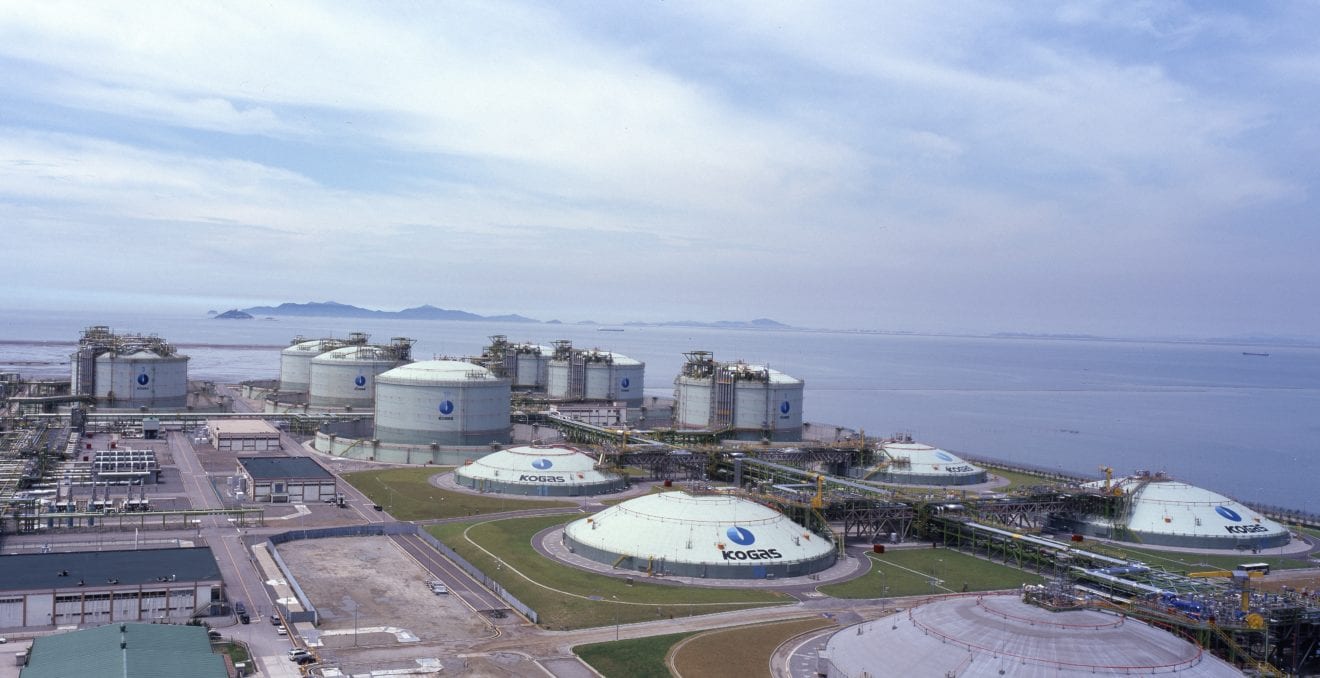
    South Korea will cut retail natural gas prices for households and industry by an average of 5.6% from May 1 to reflect reduced LNG import costs, the Ministry of Trade, Industry and Energy said Thursday.

    It marks the third cut this year after rates fell 9% in January and 9.5% in March. South Korea cut city gas rates by more than 20% last year — 10.3% in May, 10% reduction in March, and 5.9% in January.

    “City gas rates have dropped by more than 38% since the end of 2014,” the ministry said in a statement.

    Despite the price cuts, the country’s LNG demand has been declining. LNG sales by state-owned Korea Gas Corp., which has a monopoly on domestic natural gas sales, fell 4.4% year on year to 3.14 million mt in March.

    For the first three months, Kogas’ LNG sales are estimated at 10.79 million mt, up 1% from 10.68 million mt a year earlier as its sales over January-February increased 3.4% year on year on a cold snap.

    Kogas sold a total of 31.46 million mt of LNG last year, down 10.6% from 35.17 million mt in 2014, which marks the second consecutive year of decline.


  • ‘Uberization’ of Asia retail industry seen

    ‘Uberization’ of Asia retail industry seen

    Increased mobile accessibility and broadband penetration are disrupting the traditional grocery-buying business model, enabling consumers to purchase groceries anywhere, at any time.

    “We are seeing an ‘uberization’ of the retail industry in Asia,” HappyFresh CEO Markus Bihler said. “The outlook has never been more promising.”

    Citing a report by Telefonaktiebolaget L.M. (Lars Magnus) Ericsson, Bihler said mobile penetration in the Asia-Pacific region (excluding China and India) reached 110 percent in the first quarter of last year, surpassing the global average of 99 percent.

    “Opportunities abound in this region with its sophisticated food-loving consumers, growing wealth and rapid urbanization. The continued increase in mobile adoption and broadband penetration has helped boost our online grocery sales.”

    HappyFresh is an online grocery delivery service provider based in Jakarta, Indonesia. Last year, the company completed a $12-million Series A funding led by Vertex Venture, the venture arm of Temasek Holdings, and Sinar Mas Digital Ventures, the venture arm of Sinar Mas Group of Indonesia.

    “Ordering online for home delivery is gaining in popularity in the region. Currently, two out of five online shoppers want to receive real-time offers via their smartphones while they shop. We foresee a double digit growth ahead for the online grocery business,” Bihler said.

    According to Bihler, since its inception, HappyFresh has seen a ten-fold increase in the downloading of its mobile app in the region.

    “The increased popularity of online grocery shopping in Asia has been fueled by two social developments: traffic congestion and long working hours.”

    Traffic congestion is a characteristic of most Asian cities, the company said. The Southeast Asian cities of Jakarta, Bangkok and Surabaya are in the Top 10 cities with the worst traffic congestion globally. “For this reason, few people want to push their way through a crowded supermarket after a long day at work,” Bihler said.

    Asian countries also tend to have the longest working hours, according to Bihler sans citing a source. Asian countries, he said, have the highest proportion of people who spend more than 48 hours a week at work. This number is expected to rise as Asia becomes even more affluent, Bihler added sans citing his source.

    “Customers are also becoming very selective when it comes to quality foods. Today’s shoppers are seeking fresh, natural and minimally processed foods with ingredients that help fight disease and promote good health,” Bihler said citing a study by The Nielsen Co.

    According to him, this situation “presents a tremendous opportunity among niche consumer segments, especially in the healthy eating space and other categories that may be more difficult to find on in-store shelves.”

    “As a result, a number of specialty retailers have emerged in the health and wellness space, from national online grocery delivery services with extensive fresh sections to local produce delivery services.”

  • Retailers remain pessimistic about industry prospects

    Retailers remain pessimistic about industry prospects

    Hong Kong’s retailers remain pessimistic about their industry prospects, with a survey from the Hong Kong Productivity Council suggesting that the sector’s business confidence is at three-year low.

    The Standard Chartered Hong Kong SME Leading Business Index showed the retail industry sub-index sliding to 43.1 for the third quarter from 49.9 in the preceding three months, marking the weakest level in three years.

    Meanwhile, the overall gauge of the SME Business Index stood at 49.6, up 0.6 point from the previous months but remaining below the 50 mark that separates positive and negative outlooks, the Hong Kong Economic Journal reported.

    The sub-index that reflects interest in hiring dropped below 50 to reach 48.5 for the first time, according to the survey which was conducted by the Hong Kong Productivity Council in association with Standard Chartered Bank Hong Kong.

    Kelvin Lau, senior economist for Asia at Standard Chartered, said slower growth in the number of mainland tourists and structural change in their consumption behavior have brought prolonged adverse impact on the city’s retail environment.

    He noted a 1.3 percent fall in mainland visitors as of the end of May this year, the largest decline since August 2009.

    However, DBS Bank Hong Kong economist Lily Lo said the actual impact is not so bad because 70 percent of retail sales in the city come from local consumers.

    Lo expects Hong Kong’s economy to expand at 2.5 percent rate this year, with retail sales likely to recover.

  • Starbucks cashes in on revamped offering

    Starbucks cashes in on revamped offering

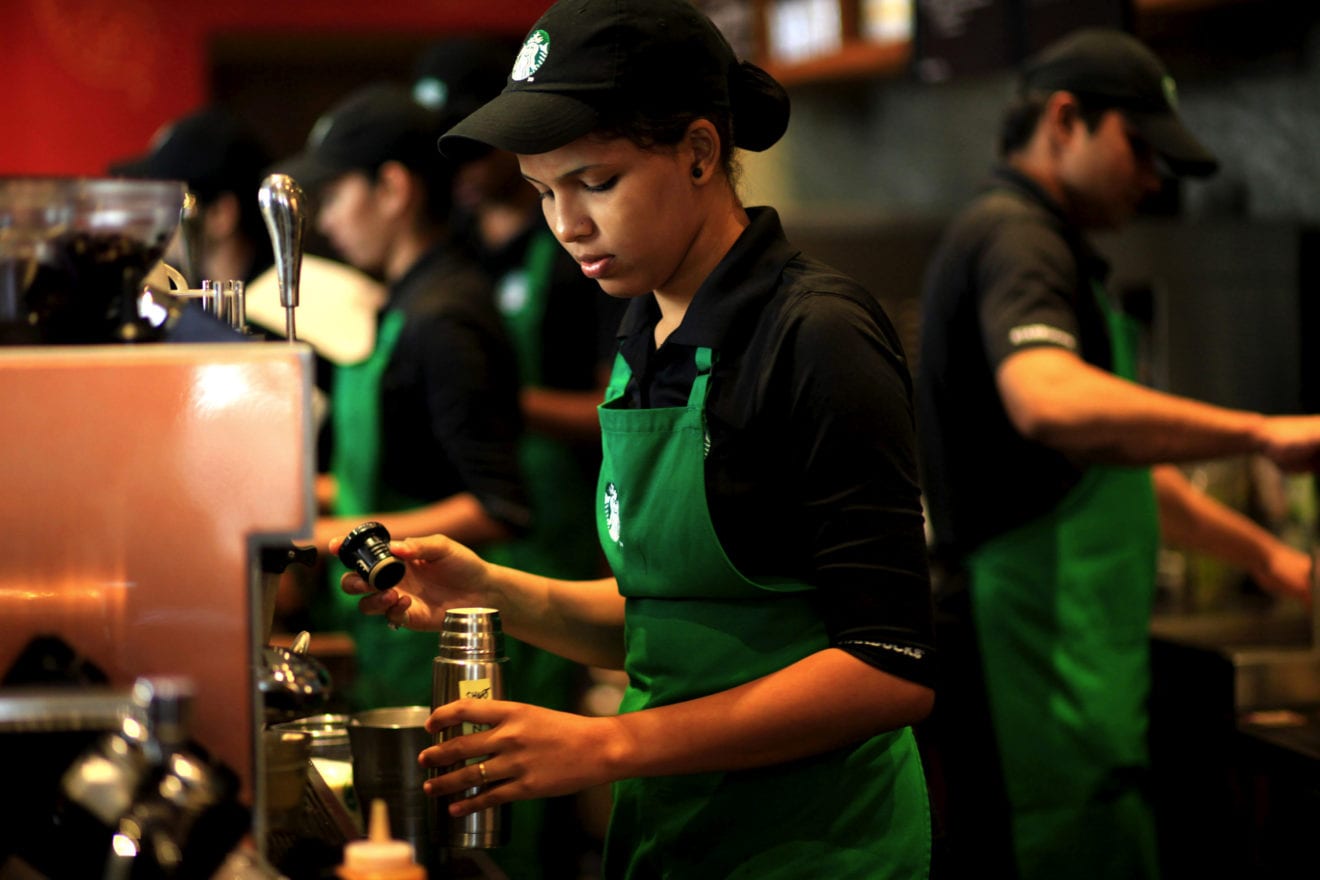
    Starbucks is extracting more money from customers with offerings like a flat white and revamped baked goods that cost a little more.

    The Seattle-based chain reported a higher quarterly profit on Thursday, with sales jumping seven per cent at established US stores.

    The company said much of the increase came from higher spending per visit.

    New drinks like the flat white and Teavana Shaken iced teas help drive up sales because they’re a little pricier than other drinks, Starbucks CFO, Scott Maw, said.

    He noted the company is also charging more for baked goods like croissants, which are being made with new recipes.

    “What we’re seeing is a premiumisation, a trade up,” Maw said.

    In a conference call with analysts, CEO Howard Schultz, said the flat white and new cold brewed iced coffees also help extend the company’s position as a “coffee authority”.

    During its second fiscal quarter, Starbucks said its US sales bump was also helped by a two per cent uptick in customer traffic, which translated into an additional 10 million visits.

    That was driven in part by people coming in to redeem the US$1.6 billion (A$2.06 billion) that was loaded onto gift cards during the holidays.

    The company is also convincing people to buy more food in general.

    Overall Starbucks food sales in the US were up 16 per cent from a year ago, while breakfast sandwich sales were up 35 per cent, the company said.

    A key part of Starbucks’ strategy for continuing to drive up sales is its expansion into the afternoons and evenings, when its stores tend to be less busy.

    Already, Starbucks says about a third of orders include a food item and that the figure has been ticking higher.

    The company is also testing a program in about 30 locations where it sells alcohol in its cafes in the evenings, and has said plans to expand that more broadly this year.

    Globally, sales at established locations rose seven per cent during the period.

    That included a 12 per cent increase in Asia, while the unit encompassing Europe, the Middle East, and Africa rose two per cent.

    For the period ended March 29, Starbucks’ profit jumped 16 per cent to US$494.9 million, or 33 US cents per share, which was in line with expectations.

    Total revenue rose 18 per cent to US$4.56 billion, more than the US$4.53 billion Wall Street expected.

    Shares of Starbucks Corp were up 4.3 per cent at US$51.54 in extended trading.


  • Bookseller Dymocks to close flagship IFC Mall store and HK office

    Bookseller Dymocks to close flagship IFC Mall store and HK office

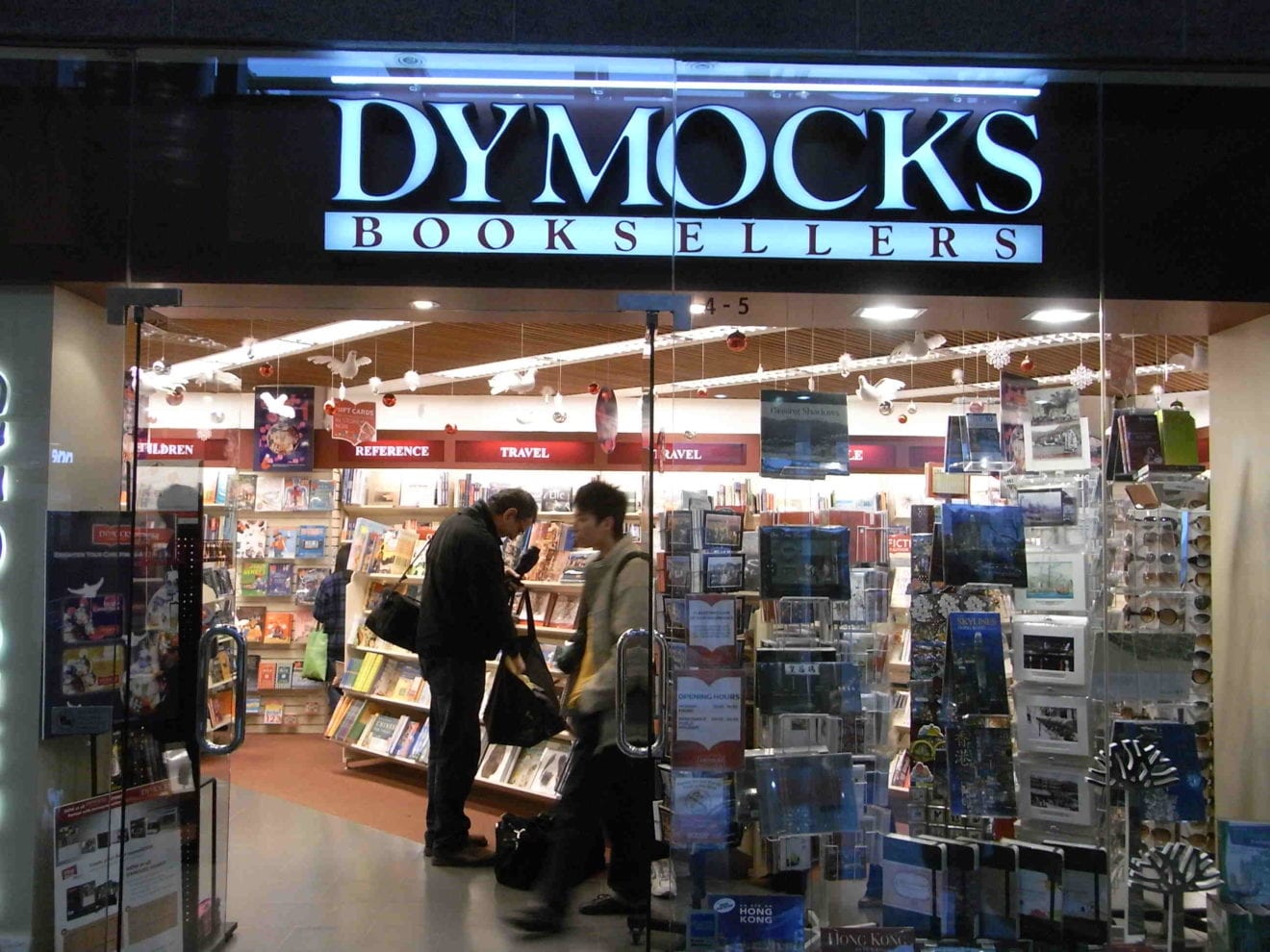
    Hong Kong’s largest English- language bookseller, Dymocks, is to end its 15-year local presence in an industry battered by high rents and shifting reading habits.

    To view the full article (note: you must be an scmp.com subscriber), visit scmp.com. (From seven days after publication, this article will appear in Archive Search.)