Tag: insurance

  • MSIG Insurance Continues its Digital Transformation with a Social Purpose in Singapore

    MSIG Insurance Continues its Digital Transformation with a Social Purpose in Singapore

    With its recent launch of the MSIG SpeeDi app in Thailand, MSIG Insurance continues its digital transformation in the region with the introduction of a unique telematics device for its motor customers. With the aim of encouraging safer driving in Singapore, the device tracks driver behaviour and provides feedback after each trip via a mobile app.

    Supporting traffic safety solutions in Singapore since 2007

    MSIG Insurance, in collaboration with its non-profit organisation Mitsui Sumitomo Insurance Welfare Foundation, has been offering research grants in Singapore over the last 10 years to encourage researchers to come up with novel solutions to tackle road safety issues. Some of the research that the foundation has supported in the past years include a study to design and create prototypes that improve traffic safety among secondary school students (2008), understanding an elderly driver’s perspective to determine if age affects their driving abilities (2012), and more recently, to analyse cyclists’ behaviour on roads and footpaths (2016). 

    “It is our mission to help secure a sustainable future for the community at large. Traffic safety is an important topic in Singapore where there is increasing usage of roads, by both pedestrians as well as vehicle owners. We wish to play our part in raising awareness of this issue and to also positively impact driver behaviour through the use of technology,” said Mr Alan Wilson, Regional CEO, MSIG Holdings (Asia) Pte Ltd.

     Promoting safer drivers

    The introduction of MSIG’s telematics device will contribute to this social purpose. The device aims to influence driver behaviour to create safer drivers, which will in turn lead to safer roads. A pilot study conducted with over 100 drivers in March 2016 showed that 85% of drivers agreed that the device had encouraged them to be safer drivers. The app will provide drivers with feedback on their driving behaviour once each journey ends, and an overall driving score will be assessed based on these factors: distance, speed and driving style such as cornering, acceleration and braking. Four scoring bands will indicate the driving score, with Green indicating the best (or safest), followed by Yellow, Orange, and Red.

    Introducing MSIG UMax

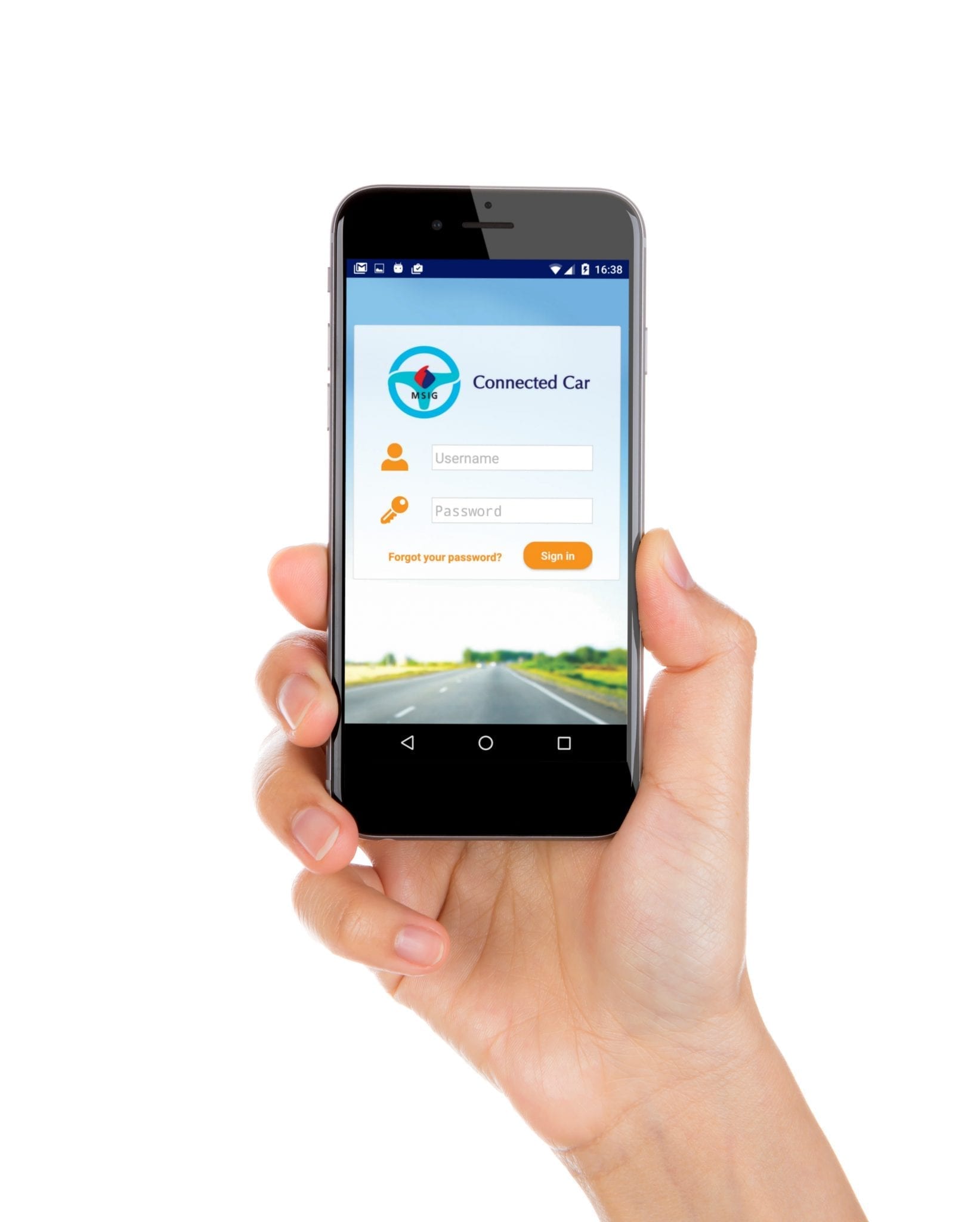
    The encouraging results from the pilot study has led to the introduction of a new product – MSIG UMax motor insurance, a ‘Pay How You Drive’ model that rewards the customer based on driving performance. Customers who sign up for MSIG UMax will have the device professionally installed without extra costs and are able to access their driving data through the free smartphone app – MSIG Connected Car.

    “We are delighted to be introducing more options to the market. As consumers become more connected than ever, ‘Pay How You Drive’ is a more intuitive model for drivers. It is also a customised system and encourages our customers to drive more safely as they get direct feedback from the app,” said Mr Michael Gourlay, CEO, MSIG Singapore.

    Locate your vehicle in Singapore and Malaysia

    Drivers with the device will also be able to use the mobile app to locate their vehicle in Singapore. A value-added option will allow the vehicle location service to be enabled in West Malaysia.

    Enjoy savings as a proven safe driver

    In the first year, the premium will still be based on the existing pricing method using a combination of factors such as the vehicle make and model, driver’s profile and claims history. Driving data will be assessed 60 days from the policy commencement date.

    In the unfortunate event of an accident, drivers can bring down their own damage excess by 50% if they have achieved a driving score within the Yellow band in a 30-day period before the accident, or even a complete waiver of the excess if their score is within the Green band.  This excess adjustment is unique to MSIG UMax’s model.

    “With the excess adjustment, drivers can literally reduce their excess to zero if they maintain an excellent driving score,” said Mr Jeremy Lian, Senior Vice President of Technical Services, MSIG Singapore.

  • Vietnam’s life insurance market faces challenges

    Vietnam’s life insurance market faces challenges

    Twenty-four-year-old Ms. Trinh Van Anh, the manager of an international school in Hanoi, does not have a life insurance policy and hasn’t thought about getting one, even though her monthly salary of $1,000 is higher than most of her peers.

    “No one recommends I take out a policy,” she said. “No one knows what life insurance covers, what it gives the policyholder, or what the benefits are.”

    Like Ms. Anh, many other Vietnamese people remain confused about what life insurance can actually bring.

    Even though premiums in Vietnam are on track for yet another record year, the gains are coming from a very low base and foreign insurers have yet to truly crack the market despite dominating.

    It should take only a few more years, though, for them to make more substantial headway.

    Foreign insurers’ playground

    2016 continued to see robust growth in Vietnam’s insurance market, with the life insurance segment reaching a ten-year high.

    Insurance premiums totaled around VND86.6 trillion ($3.8 billion), representing an increase of 22.74 per cent against 2015.

    Total revenue in life insurance was over VND49.2 trillion ($2.2 billion), an increase of 30.5 per cent, while revenue in non-life insurance was VND36.4 trillion ($1.6 billion), up nearly 12.5 per cent, according to data from the Insurance Supervisory Authority (ISA) under the Ministry of Finance (MoF).

    Eighteen life insurers are competing fiercely in the market. Eight of the 18 increased their charter capital in 2016 to improve financial capacity during expansion and business development.

    Manulife Vietnam, for example, raised its charter capital to VND1.82 trillion ($80 million), while Chubb Life Vietnam increased its by VND150 billion ($6.5 million) to more than VND1.55 trillion ($69.5 million).

    According to an assessment from Vietnam Report, among the five largest life insurers, which hold 86 per cent of the market share, are four foreign companies and only one domestic company, Bao Viet Life, which has a foreign strategic shareholder, Sumitomo Life from Japan.

    Prudential Vietnam leads the life insurance market with a share of 29.9 per cent, followed by Bao Viet Life with 25.7 per cent, Manulife 12.1 per cent, AIA Vietnam 9.2 per cent, Dai-ichi Vietnam 9.1 per cent, Chubb Life Vietnam 4.4 per cent, and PVI Sun Life 2.3 per cent.

    The remainder share 7 per cent. The five largest life insurers are believed to have posted premium revenue of VND5.8 trillion ($254.7 million) in the opening two months of this year, an increase of 30 per cent year-on-year and accounting for 80 per cent of all revenue, according to the ISA.

    Due to market regulations, it is impossible to compete in Vietnam’s life insurance market solely by premiums.

    All products are subject to close scrutiny from the MoF before being launched and premium levels are set.

    There is no way to cut premiums to attract buyers, and players must instead compete in service quality or the provision of value-added packages.

    All life insurers have headquarters in Hanoi in the north and Ho Chi Minh City in the south, with most also having branches and representative offices in major cities and provinces.

    Dai-ichi has 53 branches and representative offices, Manulife Vietnam 22, Prudential Vietnam 21, and AIA 14.

    Bao Viet Life remains the only player to cover all 63 cities and provinces in the country. Most companies over the last ten to 15 years started with agencies and this represents about 90 to 95 per cent of the industry in Vietnam today, with ISA’s figures showing there are currently some 1,000 representative offices and general insurance agencies of life insurers nationwide.

    Besides traditional sales methods, life insurers have also started partnering with commercial banks to increase sales and promote products.

    The sluggishness in the bancassurance market in Vietnam over the last few years can be attributed to a lack of service and low awareness among customers about the benefits of bancassurance products, with it only contributing 2 per cent to total turnover.

    Still, analysts believe that the channel holds great potential, with some 35 commercial banks and financial institutions now cooperating with insurers.

    Impediments remain

    “The penetration rate of life insurance, usually measured as the number of individuals who actually own life insurance, is still low in Vietnam relative to other Southeast Asian countries,” Mr. Steve Clark, Country Head of Prudential Vietnam, told VET.

    Average insurance premiums stand at only $30 in Vietnam, much lower than the global average of $595 and $74 in Southeast Asia.

    Only 7 per cent of Vietnam’s 90+ million people have life insurance and the sector contributes a modest 2 per cent to GDP, compared with more than 2.6 per cent in Indonesia and 11-14 per cent in South Korea and Singapore.

    The obstacles are many. According to Mr. Phung Quoc Khanh, Director of the ISA, awareness among Vietnamese people about life insurance may have increased but most still don’t think it’s worth it.

    Almost all Vietnamese people are wary or believe it unnecessary to buy insurance because they don’t have a thorough understanding of its importance.

    Life insurance products usually involve a long contract term, so many customers are concerned about their ongoing financial capacity.

    At the same time, doubts about foreign life insurers’ commitment to permanent operations in Vietnam add to the low penetration rate.

    Many potential Vietnamese consumers still see insurance as an investment rather than a device to share financial losses caused by poor fortune.

    They prefer bank savings or investing in gold or real estate, where they earn a higher rate of return, than buying insurance.

    The low penetration rate also comes from the fact that life insurers have only focused their operations in big cities while overlooking the 70 per cent of the population that still live in rural areas.

    They are also still separating themselves from the general activities of the sector, missing out on promotional opportunities and not playing a role in trying to increase awareness.

    “Life insurers have only focused on building their brand and image and not on activities to promote basic insurance knowledge,” Mr. Khanh said.

    While life insurers focus on implementing their own strategies to gain more market share and sign up more customers, their ambitious plans may fail due to problems relating to human resources.

    The rising number of insurance companies in recent years along with a lack of quality insurance training has created a serious shortage of skilled human resources for the sector.

    This has led to unfair competition in attracting experienced employees and insurance agents, one insider said.

    While acknowledging the increasing number of life insurance products, Mr. Khanh believes that these are mainly for high-income earners.

    Lower premiums to mid and low-income earners are yet to be introduced, even though they are the majority of the population and are vulnerable to financial incidents.

    Potential enormous

    The penetration rate may well change soon, however.

    An emerging middle class with more money to spend and a desire to spend that money to improve their lifestyles are driving a lot of activity in Vietnam.

    The young middle class and rising wages all round are creating demand for consumer products, credit, and investment.

    Soon enough, they will turn to life insurance products, with health now being one of the leading concerns among Vietnamese people, according to a February report released by global market researchers Nielsen.

    According to the ISA, life insurers have mainly focused on three of the seven life insurance products in Vietnam: term life insurance, endowment insurance, and universal life insurance.

    This again presents opportunities for others in unit linked and pension insurance products, which can meet the differing requirements of customers.

    With Vietnam’s stock market now being increasingly stable, the possibility exists for the creation of hybrid products, using an asset-based approach to funding long-term care.

    With Vietnam now participating in a host of free trade agreements (FTAs) and bilateral agreements, demand for life insurance is set to be boosted by the growing number of expats in the country.

    The arrival of foreign firms seeking to take advantage of preferential policies is also expected to boost demand for goods and services related to property, social security, and health coverage, among others, generating knock-on opportunities for insurers.

    A strengthened economy and new innovations from continued FDI should also impact positively on household confidence and future demand for insurance products, according to Mr. Phung Dac Loc, former Secretary General of Vietnam Insurance Association  (AVI).

    In a move to facilitate the growth of the insurance sector in general and life insurance in particular, Decree No.73 came into force on July 1, 2016, prescribing new regulations on the licensing, organization, and operations of financial institutions, with specific regulations on investment portfolios and ratio and reserves.

    This requires that life insurers consider investment strategies to ensure customer benefits together with risk management and liquidation, which hint at greater competitiveness.

    Key regional players already eye Vietnam as a potential avenue for growth.

    The Hong Kong-based FWD Group, for example, which has operations in Macau, Thailand, Indonesia and the Philippines, broke into Vietnam in November last year.

    South Korea’s Samsung has also expressed an interest in expanding its footprint in the life segment. Last September, General Director of Samsung Vietnam Mr. Han Myoung Sup told the Ministry of Information and Communications that two local units, Samsung Life Insurance and Samsung Fire and Marine Insurance, were currently exploring investment plans.

    Mr. Wilfred Blackburn, CEO of Prudential Vietnam, believes that Vietnam’s life insurance market is far from saturated. In fact, he believes there is still time for new companies to enter the country.

    “The life insurance market wants new players that are able to grow and bring a fresh approach to the industry,” he said.

    “This also requires that current players be more dynamic and innovative to expand the scope of the market.”
  • NetSol to Deploy Mobile Origination/Approval for Indonesian Company

    NetSol to Deploy Mobile Origination/Approval for Indonesian Company

    NetSol Technologies signed an agreement for its mobile origination (point of sale) system with PT Mizuho Balimor Finance (MBF) in Indonesia.

    NetSol was named MBF’s preferred vendor in the region. The contract includes product license, a five-year maintenance agreement and agreed customizations rates for both applications.

    MBF is an Indonesian multi-finance companies specializing in the auto financing domain.

    The application being deployed will be used by field teams (salesman/dealers) to initiate credit applications and provide quick approval and turnaround to customers seeking finance and lease products from MBF.

    “Our solution will increase operational efficiencies for PT. Mizuho Balimor Finance and bring concrete results in terms of costs and reduced contract conversion times. Mizuho Balimor is a pioneering company which turned towards the latest, next-generation technologies for future growth and progression. We are glad to work with them and implement our ground-breaking solution,” said Najeeb Ghauri, founder, chairman and CEO of NetSol Technologies. “We look forward to further creating business value for them and fostering this relationship in the coming years.”

    NetSol Technologies is a worldwide provider of IT and enterprise software solutions primarily serving the global leasing and financing industry.

  • Mitsui Sumitomo Insurance Welfare Foundation awards research grants to 4 projects

    Mitsui Sumitomo Insurance Welfare Foundation awards research grants to 4 projects

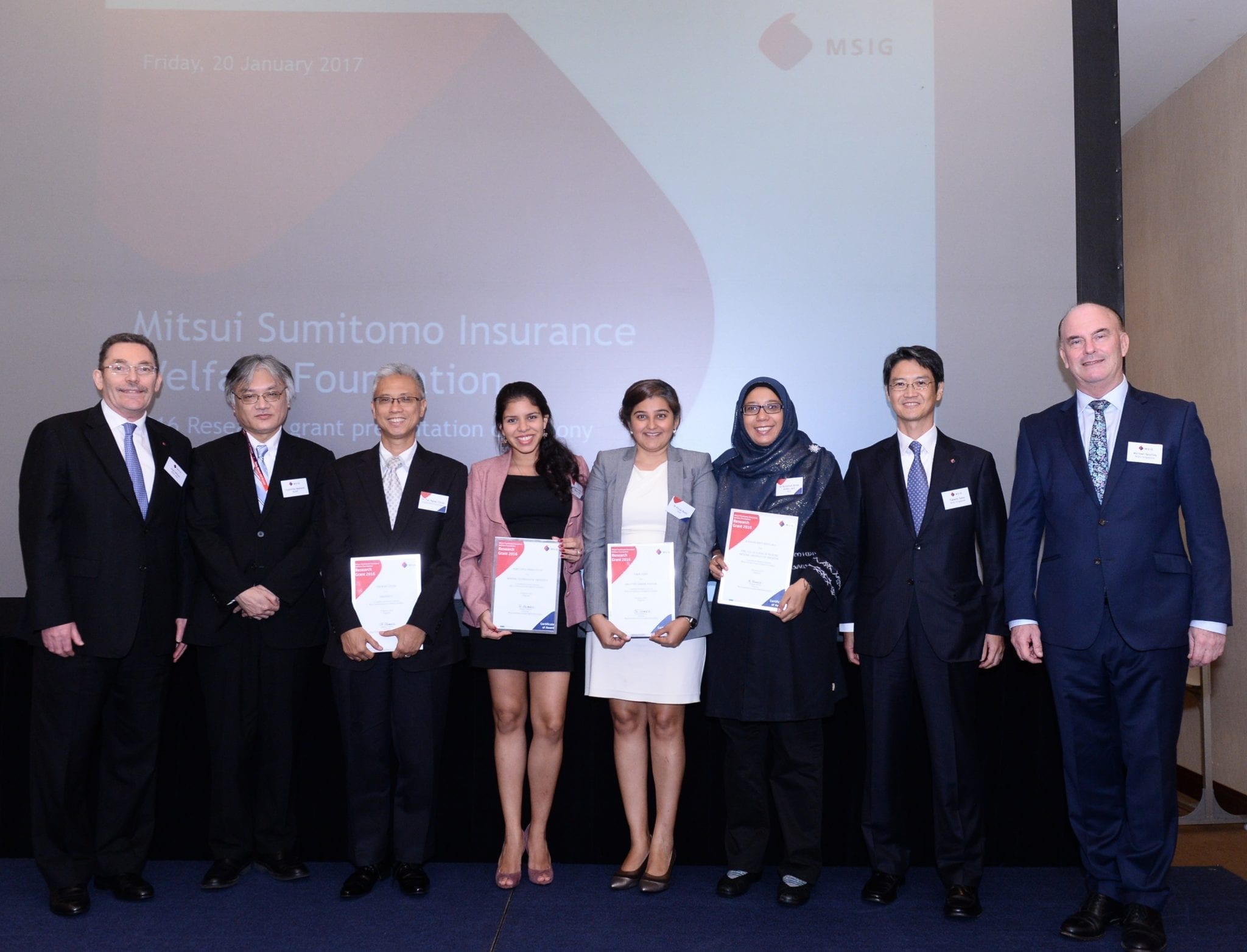
    This year’s winners of the Mitsui Sumitomo Insurance Welfare Foundation (MSIWF) research grant, awarded for exceptional insight and potential, comprised of some of Singapore’s leading researchers that aim to make a difference by solving Singapore’s key traffic and healthcare issues for the nation’s ageing population.

    The 2016 winners are:

    • Ms Maria Cecilia Rojas Lopez, PhD candidate at the School of Civil and Environment Engineering at Nanyang Technological University, for her research that will lead to the development of traffic schemes and policies for the safety of cyclists and pedestrians on footpaths. For this project, Rojas Lopez will study cyclists’ behaviour and their interaction with other path users, which is a potential issue since bicycles have been allowed on footpaths in Singapore since March 2016.
    • Dr Tan Ngiap Chuan is a Family Physician, Senior Consultant and Director, Research at SingHealth Polyclinics. His proposed study aims to find out how common is the age-related loss of muscle mass and muscle function, known as “sarcopenia” among elderly patients. Sarcopenia has been shown to be worse amongst the elderly with diabetes. Muscle weakness resulting from the reduced muscle bulk and strength will subject the elderly to increased risks of frailty, falls, fractures, hospitalisations and even premature deaths. The findings from this study will allow doctors, nurses and other healthcare professionals to identify the reasons leading to sarcopenia, so that solutions can be developed and assessed if they are effective in reducing the muscle bulk loss, in maintaining or even strengthening their muscle functions.
    • Dr Kinjal Doshi, principal clinical psychologist at Singapore General Hospital, aims to create a better tool for use in identifying loss of functional abilities among the elderly. 
    • Dr Rufaihah Binte Abdul Jalil, assistant professor at the NUS Yong Loo Lin School of Medicine, will design a diagnostic tool for atherosclerosis, a main illness known to harden the arteries usually affecting the elderly.
    • MSIWF is a non-profit organisation that is part of the Mitsui Sumitomo Insurance Company, Limited, and supports researchers in Japan, Singapore and Thailand for practicable research in two key areas: senior citizen welfare and traffic safety. The MSIWF research grant is unique compared to others, as it supports interdisciplinary research at its early stages, where it is generally tougher for researchers to obtain funding elsewhere. 

    This year marks the 10th anniversary of MSIWF grant support in Singapore, which was introduced in 2007 for the first time outside of Japan. Since then, MSWIF has supported 38 research projects and has disbursed grants worth more than about S$363,000.

    “At MSIG, our focus goes beyond financial profits. It is our mission to help secure a sustainable future for the communities at large. With a growing ageing demographic in Singapore, solutions for improving the quality of life are critical for sustainable growth. This grant from Mitsui Sumitomo Insurance Welfare Foundation aims to empower talented researchers to do just that,” said Mr Alan J. Wilson, Regional CEO of MSIG Holdings (Asia) Pte Ltd. 

    The call for the 2016 grants was launched in June last year, and a total of 246 applications were received globally. The winning projects will conduct their research over the next 12 months and their findings will be published in scientific journals as well as shared with the Foundation during next year’s presentation ceremony in 2018.

  • Insurer Sun Life Indonesia values qualified agents

    Insurer Sun Life Indonesia values qualified agents

    Life insurer Sun Life Indonesia aims to have more qualified agents to market their products rather than just make the numbers, the company top executive has said.

    The firm gathered on Friday 1,000 of its most high-achieving agents for the annual “Year Start” event in Jakarta to brief them of the insurer’s vision this year and to ensure them to be ready to face a more competitive insurance industry.

    “We are launching several new initiatives in 2017, which are designed to improve our marketing agents’ productivity and to also encourage them to develop their skills and capacity,” Sun Life president director Elin Waty said.

    She added that the agency’s contribution reached around 55 percent of the firm’s insurance distribution last year and the company planned to have a similar share this year.

    The insurer uses a contract maintenance system, which obliges its agents to achieve certain targets or their contracts will be terminated to ensure the company has capable agents.

    “If this contract maintenance system wasn’t implemented, my agents would probably number 100,000,” Elin said.

    Currently, Sun Life has around 10,100 agents nationwide, a steady increase from its 9,000 agents in 2015.

    “We aim to do better in 2017 by focusing on our human resources, technology and brand,” said Sun Life Asia president Kevin Strain.

  • Sompo Insurance eyes retail customers

    Sompo Insurance eyes retail customers

    Sompo Insurance (Thailand) is embracing innovation and digital channels as key strategies to build brand awareness among individual Thais, who are a new customer base for the Japan-based firm, which aims to be in the top 10 in Thailand’s |insurance market by 2020.

    Sompo Insurance eyes retail customers

    Sompo Insurance, formerly known as Sompo Japan Nipponkoa Insurance (Thailand), is focusing more on retail customers after securing a strong corporate base, mainly Japanese firms operating in Thailand.

    The company has been in Thailand for 19 years, tapping only corporate clients before starting to expand |its customer base to |individuals three years ago with motor insurance by partnering with Japanese auto companies.

    Chief executive officer Isorasak Thesratanavong said yesterday that motor insurance was the largest |segment for the insurance business in Thailand, so if his firm wants to expand its retail base, it needs to offer such policies.

    Another strategy is travel |insurance. This year Sompo’s retail customers are expected to generate 30 per cent of total premium income of Bt3 billion, but if the company wants to promote its brand |awareness to Thai customers, |travel insurance should help, because Japan is the No 1 destination of Thai tourists.

    The company yesterday |introduced a travel-insurance policy called Sompo Go Japan. Customers can buy the policy at traveljoy.sompo.co.th, after which the company will send an SMS link to |their mobile device. The |customers will then receive the |policy in a PDF file on their mobile.

    The company has added |threefeatures to its travel insurance. Sompo Assist helps policyholders contact hospitals in Japan and make appointments with them. Thai policyholders are not required to pay medical expenses to the hospital when they use its services, Isorasak said.

    Recognising the growing digital trend in Thailand and as a new player in the retail market, Sompo believes that innovation and digital channels will help it rise into the top 10 and sustain annual premium-income growth of 15 per cent. Its corporate-customer base might not grow much as before, and the company estimates that premium income from corporate clients will grow by no more than 5 per cent as Thailand has been spared any major disasters, reducing premiums of industrial all risks (IAR) by 20 per cent in 2017.

    Cyber insurance considered

    The company is discussing with its headquarters in Japan the possibility of offering cyber insurance to |corporates in Thailand as the risk of cyber-attacks rises from the growing use of digital technology, Isorasak said.

    Premium income from retail customers is expected to grow by 15-18 per cent a year, and if Sompo can retain this growth, its retail base will be contributing half of its premium income by 2020, he said.

    Sompo Group in Japan sees Thailand as a hub for its business in Cambodia, Laos, Myanmar and Vietnam, so it is ready to inject |investment capital to use this country as a springboard for investment in those countries, he added.

    Sompo Thailand has been assigned by its headquarters in Japan to cover Japanese investors in Laos.

  • Zurich Insurance has launched a solution in Hong Kong and Singapore

    Zurich Insurance has launched a solution in Hong Kong and Singapore

    Zurich Insurance has launched a solution in Hong Kong and Singapore which provides risk-assessment services and protects businesses against the risks associated with supply chain disruptions.

    Called Zurich Supply Chain Insurance, the product is the first-of-its-kind in the Asia-Pacific region and is now available to qualified customers based in the two markets.

    “Increasing globalisation, improved transport and logistics through to technological advancements have enabled companies to source materials from virtually anywhere in the world,” said Keith Thomas, chief executive officer of Zurich’s Global Corporate in Asia Pacific business unit. “While this provides increased flexibility and cost savings, it can also result in complex supply chains that are highly interconnected, more exposed and difficult to manage.”

    According to Zurich, the new solution helps reduce supply chain failures and provides cover if delayed or undelivered supplies result in a financial impact on a company’s operations. Supply Chain Insurance consists of two components. In the first phase, risk engineers carry out a risk assessment to identify and evaluate customers’ exposure to critical risks throughout their supply chain, and recommend prioritized mitigation actions. In the second phase, the risk assessment is combined with other sources of data to underwrite and price the risk.

    “Many organizations are not aware who their key suppliers are, especially in the lower levels of the supply chain, and very few have visibility over their entire supply chain,” said Hassan Karim, technical underwriting manager of Zurich Asia Pacific. “Half of supply chain disruptions occur beyond the preliminary supplier of goods, therefore making it extremely difficult to establish where an organization lies within its suppliers’ priorities.”

    Karim added that it is essential to take a holistic approach and to identify critical supplies when working with customers to manage their exposures.

    “Effective supply chain risk management can present significant benefits to businesses and is becoming an increasingly important driver of their profits,” he said. “Every customer’s supply chain is different so we work with them to shape the appropriate solution and offer an individually tailored policy to meet their specific needs.”

    The Supply Chain Insurance solution has been available in Europe and North America for the past six years, according to Zurich.


  • Sun Life, CIMB merge life-insurance businesses in Indonesia

    Sun Life, CIMB merge life-insurance businesses in Indonesia

    Life insurer Sun Life Financial Indonesia has officially integrated with Malaysia’s financial group CIMB subsidiary CIMB Sun Life following the Rp 550 billion (US$41.8 million) acquisition of 51 percent shares in CIMB Sun Life.

    Sun Life Financial Indonesia president director Elin Waty said the acquisition, conducted between April and June, was in line with the government’s single presence policy. In the corporate action, Sun Life is now the surviving entity.

    “We warmly welcome CIMB Sun Life’s employees and look forward to working together as a unified business with an even greater ability to serve our clients […] It is also in line with Sun Life Indonesia’s vision to assist people to increase their welfare,” she said in Jakarta on Thursday.

    Sun Life Financial Asia president Kevin Strain added that the acquisition also represented the company’s effort to strengthen its platform across the Asian market.

    “The life insurance sector in Indonesia has enormous potential and is a priority market for our long-term growth in Asia,” he said.

    Strain further said the merger would strengthen Sun Life Financial’s commitment to invest US$40 million to increase its online penetration and strengthen its brand presence in Indonesia.

  • Allianz secures distribution rights with Malaysia’s Maybank

    Allianz secures distribution rights with Malaysia’s Maybank

    Allianz is hoping the agreement will give access to Maybank’s 4 million customers in Asia. The insurer said it has jointly developed three life insurance products with Maybank which includes a unit-linked life insurance product compliant with Islamic Shariah law, a single-premium investment product and a life policy which combine protect with investment. “This partnership demonstrates Allianz’s continued focus on growing in the Asia region, of which Indonesia is a key priority.

    We’re excited to bring our multi -channel approach, innovative products and digital expertise to serve the protection needs all Maybank customers,” said Allianz’s regional chief executive for Asia Pacific, George Sartorel, in a statement on Tuesday. Under the collaboration, a team of more than 150 insurance advisers will sell the products to Maybank clients via their retail branches. Joachim Wessling, chief exectuive of Allianz Life Indonesia said: “This cooperation between two outstanding companies combines our strengths in providing world-class services and solutions, to deliver insurance protection tailored to our customers’ needs. We look forward to working closely with Maybank to secure a safer future for our customers in Indonesia.”

    Last week, it emerged that Allianz and France’s Axa are locked in a bidding war to acquire the 15-year distribution rights to sell insurance products through Standard Chartered’s channels in Asia. Meanwhile, Hanwha Life, South Korea’s second largest life insurer, is set to pump KRW150bn (£102m, €121m, $134m) into its Indonesian arm in a bid to expand its foothold in the country’s booming insurance sector.

  • The Top 3 Biggest Insurance Risks for SMEs in Singapore

    The Top 3 Biggest Insurance Risks for SMEs in Singapore

    Workplace injury, property damage, and liability are the top 3 biggest insurance risks for small and medium enterprises (SMEs) in Singapore over the next 12 months, according to AIG Asia Pacific Insurance Pte. Ltd.

    SMEs in Singapore face rising business risks as they deal with increasing costs amid an economic slowdown. SMEs claimed more than S$5 million last year, and AIG Singapore expects the claims volume to stay in this range over the next 12 months.

    Claims data from AIG Singapore reveals the top three risks for SMEs in Singapore arise from workplace injuries (56 per cent), fire or water damage to property (20 per cent), and legal liability (20 per cent).

    A particular area of concern is workplace injury, with claims growing by 17 per cent in 2015 compared to 2014. The amount paid for workplace compensation claims is also forecasted to increase by 20 to 30 per cent this year.

    Based on AIG Singapore’s data, the manufacturing industry saw work-related injuries account for 90 per cent of its top claims over the last three years. The top three industries that submitted SME-related claims are food and beverage, retail, and manufacturing.

    AIG Singapore’s Head of SME Packages, Krishna Moorthi Sri Ramalu, said: “With growing awareness of external threats such as cyber attacks and data theft, much attention has been placed on how these external risks can cripple SMEs. While these threats are indeed significant and on the rise, SME owners must not forget their assets are exposed to internal risks every day.

    “AIG Singapore forecasts that the greatest risks SMEs will face in the next 12 months are due to internal factors such as injury to employees and damage to property and equipment.”

    A risk that can’t be ignored

    He added, “Workplace injury claims accounted for over half of AIG Singapore’s claims last year. It is a key risk factor for SMEs that cannot be ignored, particularly with a 10 per cent rise in fatal workplace injuries from 2014 to 2015.

    “Fire breaking out at SMEs’ premises is also a risk that, while not as common, can cause severe and long-term losses that have a huge financial and reputational impact on the business.”

    Krishna highlighted the example of a fire at a major shopping centre earlier this year, which caused the shopping centre to close for around five days. This resulted in 13 potential property damage claims (including seven business interruption claims) from AIG’s SME clients operating in the shopping centre.

    The total estimated cost of these claims is S$241,000, which can be a significant out-of-pocket sum for the SMEs if they do not have any insurance cover.

    In 2015, the average claim made by an SME was around S$6,000, while the highest claim was S$214,000 made by a medical clinic when its water pipe burst and damaged both the clinic and neighbouring retail units.

    “SME owners often do not invest in risk management and contingency planning as they are preoccupied with the day-to-day running of their companies. However, it is precisely because of their smaller scale that SMEs can ill-afford hefty losses caused by business interruptions or closures, loss of income, supply chain delays or damage to neighbouring properties.

    “In fact, this year’s tough economic climate exacerbates the financial impact on SMEs. In the event of incidents such as fires, property damage, or floods, they may be hit with high costs and forced to stop operating for a period of time. SMEs need to look at how they can protect their business operations and get these operations back on track swiftly if incidents occur,” Krishna said.

  • Towards a more relevant insurance proposition in Thailand

    Towards a more relevant insurance proposition in Thailand

    Generali Life Assurance is forging ahead with plans to tap the country’s growing middle class in what until now has been an under-explored market for wealth management products generally, and especially insurance solutions.

    With most high net worth (HNW) investors preferring to park money in US dollar or Euro-denominated products, wealth management may seem to be a non-starter in the Thai economy.

    But being largely unexplored, Thailand, where the country’s financial system had been fortified and the local business sectors gained much more sustainable strengths after the infamous Asian meltdown of the 1980s, offers attractive opportunities for wealth managers, say local players.

    According to Bundit Jiamanukoonkit, country manager and chief executive officer, Generali Life Assurance (Thailand) Plc, the country is witnessing traction in the demand for local products – both in the asset management and insurance segments.

    And although the demand for traditional insurance products currently dominates the sector, a growing middle class is helping the market for wealth management-type solutions get bigger.

    “I think it’s under-explored,” says Jiamanukoonkit, commenting on the growth opportunity for wealth management in Thailand.

    He adds that over the last 10 years, with an increasing number of Thais turning “middle upper class”, the wealth management sector has started coming of age as well.

    Competing

    The motivating factors, according to Generali, are the same as elsewhere in the region, in terms of children’s education, retirement planning and ensuring social security.

    “People want to have available funds to meet their medical needs, and for some in the affluent segment, even planning succession and passing on wealth,” explains Samdarshi Sumit, chief retail officer, Generali Life Assurance (Thailand) Plc.

    And according to Jiamanukoonkit, an interesting feature of the competitive landscape in Thailand is that there is no-one who really dominates the HNW market for life insurance.

    New channels

    Consequently, Generali – with its rich experience dealing with all type of customers including HNW individuals in Europe – has crafted an exclusive tie-up in Thailand with the Kiatnakin Phatra financial group, a local banking group and a significant wealth management player.

    This opens up access to a huge client-base with products that clients want.

    “We have a complete range of products which are focused on all the segments, including endowment, annuity, whole life protection, accident and health [policies], and everything which is needed by all the segments including the affluent,” says Sumit.

    Jiamanukoonkit adds that despite the growing demand for wealth management and insurance products, there remains a need to educate investors.

    For instance, the HNW clients think they have more than enough and insurance is not a necessity, he explains.

    Months after its debut, Generali with KK Priority’s first HNW insurance solution “CHRONOS” – the 24/7 solution providing worldwide experience that makes life of HNW customers much easier and more fulfilled – has proven the market opportunity that’s worth to pursuit, he adds.

    “We want to seek for more understanding among Thai HNW [individuals] and also get closer [to them],” he says.

    Still, Jiamanukoonkit’s priority is to scale up, and to be the “number-one choice retail insurer”.

    And, however lofty that may sound, he also believes that the goal is not far-fetched.

    “As there is no strong established player in the segment, we can do something great and acquire this group of customers and earn their trust,” he says.

    His other objectives include offering “better service and a premium brand at a reasonable price”.

    New experiences

    Generali has also identified ‘going digital’ as an area of significant importance.

    “This is especially in the direct marketing business where we have a significant portion of our premium coming from,” says Sumit.

    In line with this, Generali has already created a digital platform called Generali 365. This allows its clients to avail of a range of services, from transaction experience to online generation of tax certificates.

    “Generali 365 can be downloaded to a mobile and customers can see new offers and new products, as well as get special privileges offers that fulfil their lifestyles on food or hotels, and everything is there within a single application,” explains Sumit.

    But being largely unexplored, Thailand, where the country’s financial system had been fortified and the local business sectors gained much more sustainable strengths after the infamous Asian meltdown of the 1980s, offers attractive opportunities for wealth managers, say local players.

    Bundit Jiamanukoonkit

    And although the demand for traditional insurance products currently dominates the sector, a growing middle class is helping the market for wealth management-type solutions get bigger.

    “I think it’s under-explored,” says Jiamanukoonkit, commenting on the growth opportunity for wealth management in Thailand.

    He adds that over the last 10 years, with an increasing number of Thais turning “middle upper class”, the wealth management sector has started coming of age as well.

    Competing

    The motivating factors, according to Generali, are the same as elsewhere in the region, in terms of children’s education, retirement planning and ensuring social security.

    And according to Jiamanukoonkit, an interesting feature of the competitive landscape in Thailand is that there is no-one who really dominates the HNW market for life insurance.

    New channels

    Consequently, Generali – with its rich experience dealing with all type of customers including HNW individuals in Europe – has crafted an exclusive tie-up in Thailand with the Kiatnakin Phatra financial group, a local banking group and a significant wealth management player.

    This opens up access to a huge client-base with products that clients want.

    “We have a complete range of products which are focused on all the segments, including endowment, annuity, whole life protection, accident and health [policies], and everything which is needed by all the segments including the affluent,” says Sumit.

    Jiamanukoonkit adds that despite the growing demand for wealth management and insurance products, there remains a need to educate investors.

    For instance, the HNW clients think they have more than enough and insurance is not a necessity, he explains.

    Months after its debut, Generali with KK Priority’s first HNW insurance solution “CHRONOS” – the 24/7 solution providing worldwide experience that makes life of HNW customers much easier and more fulfilled – has proven the market opportunity that’s worth to pursuit, he adds.

    “We want to seek for more understanding among Thai HNW [individuals] and also get closer [to them],” he says.

    Still, Jiamanukoonkit’s priority is to scale up, and to be the “number-one choice retail insurer”.

    And, however lofty that may sound, he also believes that the goal is not far-fetched.

    “As there is no strong established player in the segment, we can do something great and acquire this group of customers and earn their trust,” he says.

    His other objectives include offering “better service and a premium brand at a reasonable price”.

    New experiences

    Generali has also identified ‘going digital’ as an area of significant importance.

    “This is especially in the direct marketing business where we have a significant portion of our premium coming from,” says Sumit.

    In line with this, Generali has already created a digital platform called Generali 365. This allows its clients to avail of a range of services, from transaction experience to online generation of tax certificates.

    “Generali 365 can be downloaded to a mobile and customers can see new offers and new products, as well as get special privileges offers that fulfil their lifestyles on food or hotels, and everything is there within a single application,” explains Sumit.