Retail News CRM

Tag: insurance

  • Allianz Malaysia earnings up 15.3% to RM100m in fourth quarter

    Allianz Malaysia earnings up 15.3% to RM100m in fourth quarter

    Allianz Malaysia Bhd’s earnings increased by 15.3% in the fourth quarter ended Dec 31, 2018 (Q4) to RM100.04 million, from RM86.78 million in the previous corresponding quarter mainly due to higher underwriting profit from motor business arising from lower claims and management expenses. For the quarter under review, the general insurance segment recorded a profit before tax of RM78 million, an increase of 15.7% as compared to the preceding year quarter.

    Meanwhile, the life insurance segment recorded a profit before tax of RM50.3 million, a decrease of 15.5% due mainly to higher group claims.

    Allianz reported a 7.63% increase in revenue to RM1.3 billion in Q4 from RM1.21 billion, driven by higher gross earned premiums and investment income.

    For the full year, its net profit grew 30.9% to RM377.02 million from RM287.96 million a year ago, while revenue was up 7.9% to RM5.18 billion from RM4.8 billion previously.

    The general insurance industry reported a marginal growth of 1.5% in gross written premium for the year ended Dec 31, 2018.

    Allianz said the group anticipates similar trend in the medium-term given the economic uncertainty and subdued consumer sentiments.

    However, it said the general insurance segment will continue to offer innovative products and services in anticipation of a fully liberalised insurance market while further expanding its multi-distribution model to maintain market leadership.

    For the life insurance segment, Allianz will continue to leverage on the strength of its multi-distribution channels and increase productivity across distribution channels to generate growth.

    The group will also continue to focus on optimising the performance of its insurance businesses and expect to maintain satisfactory results in 2019, it added.

  • Korean firms team up on insurance

    Korean firms team up on insurance

    SK Telecom, Korea’s top mobile carrier, and Hyundai Motor will jointly enter the insurance business, partnering with Hanwha General Insurance to bring their technology expertise to the industry. The Financial Services Commission (FSC), the country’s top financial regulator, said Wednesday it has given preliminary permission for SK Telecom, Hyundai Motor and Hanwha General Insurance to build an online insurance company that primarily deals with miscellaneous non-life insurance on digital platforms.

    “If the process goes smoothly, it can open in the fourth quarter of this year,” said a spokesperson at SK Telecom.

    In six months, the investing units are required to raise the promised capital, complete recruiting and have the physical operation in place, after which it will file for final approval.

    The companies said the unit will focus on cars, pets and travel.

    Hyundai Motor said the insurer will develop a product that differentiates insurance fees depending on a policy holders’ mileage and other driving behavior. Also on the cards is a system that discounts fees when subscribers are found to drive in a safe manner by adopting a real-time analytical technique to monitor driving habits.

    The insurance firm aims to carve out its own niche with lower fees and relatively short contracts.

    “We want to offer attractive alternatives for consumers who found existing insurance products expensive and requiring long-term commitment,” said Jang Yoo-seong, head of the artificial intelligence (AI) and mobility division at SK Telecom.

    The idea is based on InsurTech, a combination of insurance and technology that has quickly risen to prominence in the global financial industry.

    According to a study by the Korea Insurance Research Institute, the market has been rapidly growing in recently years. Investment in InsurTech start-ups, which amounted to $2.6 million in 2013, surged to $11.9 billion in 2017.

    The global InsurTech market revenue is valued at $532.7 million in 2018 and is expected to reach $1,119.8 million by 2023, according to Research and Markets, a U.S. market tracker.

    Hanwha General Insurance will raise 75.1 percent of the capital while SK Telecom puts in 9.9 percent. Hyundai Motor invested 5.1 percent and Altos Ventures Korea, an investment firm, 9.9 percent.

    In total, the companies will funnel in a total of 85 billion won.

    If passed, the new insurer will be the country’s second internet-only insurance company after Kyobo Life Planet.

  • CIMB get permission for banking venture with Philippines

    CIMB get permission for banking venture with Philippines

    CIMB Group Holdings Bhd has obtained the green light to establish its investment banking business in the Philippines. In a filing with Bursa Malaysia, the group said its wholly owned subsidiary CIMB Group Sdn Bhd had on Jan 23 received the relevant approvals from the Securities and Exchange Commission of the Philippines, including the Certificate of Incorporation and Certificate of Registration for an investment house licence.

    The investment banking business in the Philippines will be operated via a 60% shareholding in CIMB Bancom Capital Corporation with the remaining 40% stake to be held by local partners Bancom II Consultants, Inc and PLP Group Holdings, Inc.

    The three parties have entered into a joint venture agreement following the receipt of the approvals.

    CIMB shares went down 1 sen or 0.2% to close at RM5.65 today on 13.4 million shares done.

  • CIMB divests insurance broking business for RM59.6m

    CIMB divests insurance broking business for RM59.6m

    CIMB Group Holdings Bhd’s wholly-owned indirect subsidiary CIG Bhd yesterday entered into a share purchase agreement with HBG Asia Holdings Ltd and HBG Malaysia Sdn Bhd (Howden) to divest its remaining 51% stake in CIMB Howden Insurance Brokers Sdn Bhd (CHIB) to Howden for RM59.6 million.

    The group said approval from Bank Negara Malaysia in relation to the proposed divestment was received by Howden on Nov 27, 2018.

    “CHIB currently operates an insurance broking business and the proposed divestment is in line with CIMB’s aspirations to further streamline and focus on its core banking businesses. As part of the proposed divestment, CHIB will cease to be an associate of CIG,“ CIMB said.

  • MSIG Hong Kong names Philip Kent as new CEO

    MSIG Hong Kong names Philip Kent as new CEO

    General insurer, MSIG, has announced the appointment of Philip Kent to the role of Chief Executive Officer (CEO). He succeeds former CEO, Kenneth J. Reid, who has retired after 26 years with MSIG Hong Kong. Philip Kent most recently served as Executive Vice President of Planning for the Singapore-based regional holding company, MSIG Holdings Asia, over the last two years leading business development across the region and spearheading the regional digital strategy in Asia. With more than 28 years in the insurance industry, he has broad insurance market experience encompassing leadership and technical roles across Asia, including Indonesia, Thailand and Hong Kong.

    “We are pleased to have Philip lead MSIG Hong Kong as CEO. His accomplishments and track record of building strong partner relationships and inspiring colleagues make him an ideal leader. He is also very familiar with the market having worked in Hong Kong for 11 years,” said Alan J. Wilson, regional CEO, MSIG Holdings Asia.
    “The industry is dynamic with many insurers going digital and leveraging on new technologies. With Philip’s experience, he will be able to continue the digital transformation that Ken has started for MSIG, ensuring that we are well placed to continue serving the needs of our customers in Hong Kong,” he added.

    Outgoing CEO Kenneth J. Reid has retired after leading MSIG Hong Kong as CEO for 13 years and after a successful career of nearly 35 years with the Group. During his tenure, Mr Reid led MSIG Hong Kong to more than double its gross written premiums and played an instrumental role in forming a partnership with DUAL Asia in 2009, significantly expanding MSIG’s business portfolio. He also contributed to Hong Kong’s general insurance industry as Chairman of the Motor Insurer’s Bureau of Hong Kong from 2015 to 2017.

    “Ken’s vision, accomplishments and impressive track record of building strong client relationships, have materially strengthened MSIG Hong Kong. He leaves a firm foundation and a resilient company. I would like to sincerely thank him on behalf of the Board and the Group for his substantial contribution to MSIG,” Mr Wilson said.


  • Indonesia’s BRI Signs Partnership Agreement With Alipay

    Indonesia’s BRI Signs Partnership Agreement With Alipay

    Bank Rakyat Indonesia, Indonesia’s biggest state-owned lender, started the year with key strategic announcements, including an alliance with Chinese payment platform Alipay and plans to acquire a local insurance company and a small lender. BRI signed a memorandum of understanding with Alipay, a subsidiary of Chinese technology giant Alibaba, on Thursday to secure an opportunity to serve the growing number of Chinese tourists visiting Indonesia.

    “As China has its own payment system, we must be able to facilitate their [Chinese tourists’] needs. This move is aimed at supporting the country’s tourism industry,” Handayani, consumer director at BRI, said after an extraordinary shareholder meeting on Thursday.

    He said there are several matters that must still be discussed, including the acquisition of a permit.

    “We are currently integrating the business operation. We are now developing the IT system [for the service],” Handayani said, adding that the payment service will be launched in tourism areas, such as Bali, first.

    About 2 million Chinese tourists visited Indonesia between January and November last year, representing a 14 percent increase from the corresponding period in 2017.

    Insurance Company

    In addition to the partnership with Alipay, the lender has also set aside Rp 1.5 trillion ($105 million) this year to acquire an insurance company focused on covering property damage. BRI currently only has a life insurer, BRI Life.”This year, we want to have an insurance company. We are going to have a complete service in the financial industry,” BRI president director Suprajarto said.

    He said BRI was still observing the market and exploring several candidates before making a choice. The acquisition is slated for completion in the first half of this year, he added.

    Suprajarto said the acquisition of a general insurer would take precedence over the plan to acquire a small lender.

    This is because the Financial Services Authority (OJK) has asked BRI to acquire a lender in the categories BUKU I (banks with core capital below Rp 1 trillion) or BUKU II (banks with core capital between Rp 1 trillion and Rp 5 trillion).

    “It requires a large amount of funding, so we are now focusing on organic growth [instead of acquiring another lender],” Suprajarto said.

    BRI posted Rp 23.5 trillion in net profit in the first nine months of last year, which was 15 percent higher than the same period in 2017, thanks to a 17 percent surge in loan growth to Rp 809 trillion between January and September.

    BRI Appoints Deputy President Director

    BRI also announced the appointment of Sunarso as deputy president director and the dismissal of Jeffry J. Wurangian as commissioner and Kuswiyoto as director of corporate banking.Handayani said the changes were subject to approval by central bank.

  • The Powerful Tycoon You Have Never Heard of Before

    The Powerful Tycoon You Have Never Heard of Before

    Many billionaires have no problem flaunting their wealth, whether through naming skyscrapers after themselves, yacht parties on the other side of the world, fancy ostentatious car collections and private jets, fake rehearsed smiles on camera and lots of media coverage.  But a subset prefers the trappings of obscurity, content to preside over their empires away from the public’s gaze.

    Reading the recent Entrepreneur piece on Calvin Lo, the CEO of R.E. Lee International and Founder of R.E. Lee Capital, one theme emerges: he hates fame.  Even though Forbes estimates Lo’s personal networth at $1.7 billion, he manage to elude any wealth rankings and live his life in what seem like secrecy.


    Life insurance tycoon Calvin Lo, CEO of R.E. Lee International. Photograph: Apple Daily Hong Kong

    The intriguing thing about Lo is not that he’s a billionaire, but a billionaire who managed to slip under the radar for so many years.  Like many wealthy people, he is very private, avoiding public scrutiny of any sort. Hong Kong media describes Lo, known as 盧啟賢 in Asia, as “supremely private” because he doesn’t need a glitzy public persona to help impress anyone, and because he loathes self-promoting egomaniacs.

    That is not uncommon among the upper echelon of the world, where it’s better to be anonymous and rich than loved and famous. That is the hierarchy in the finance culture: the more important you are, the less you need to be seen.

    Garden-variety fame? That is a nasty symptom of being very wealthy that unfairly puts you in the same category as reality TV stars. Those who work at the top of their industry are not that, certainly not in their minds.  That sort of fame is like a skin rash that needs to be treated. And as with all things billionaires, that treatment comes by throwing money at the problem. Not only does Lo never allow his picture be taken in public, there are reports that he has attempted to buy up the rights to photographs of himself, limiting their availability.


    The rarely seen Lo (right) travels with his own security whenever possible. Photograph: Apple Daily Hong Kong

    Many in the financial sector have a similar policy, especially top CEOs.  They flee from cameras, flee from being interviewed, and certainly flee from ever being on Page Six.  Unflattering news, unflattering photos, are either bought with money, or buried via legal action. But even media-shy billionaires will occasionally surface in the public eye.  Earlier this year, Lo was romantically linked to Hong Kong actress Bernice Liu, better known as 廖碧兒, and it piqued the interest of many people across Asia. After all, everyone loves a fairytale story where an unknown billionaire and a famous former beauty pageant can go hand in hand.  With the combination of extreme wealth, good looks and killer work ethics, it’s safe to say Lo and Liu redefined the meaning of “power couple” making them a perfect match. But true to form, Lo never did any interviews or made any statements regarding the matter.

    Hong Kong actress Bernice Liu (left) romantically linked to media-shy billionaire Calvin Lo (right). Photograph: Oriental Daily

    The distaste of fame often morphs into outright secrecy, especially amongst the mega rich.  If fame is a sign of weakness then secrecy is a sign of success. True masters of the markets don’t need anyone else’s help. They can divine the secrets behind the frenzy of blips on the screen, finding the hidden order in randomness, and turning that into gold. If you think you have that secret it’s nonsensical to tell others about it for free. Much better to charge huge fees to share in the benefits of your special knowledge. People on TV giving investment advice? Either they are fools who don’t know anything and pretend to know it all, or they’re fools who know something and are giving it away for free. Either way, fools.

    Every generation or two produces a mysterious, behind-the-scenes tycoon of enormous power and influence, fundamentally different from even the wealthiest corporate titan. Lo is most certainly one of them who is mastering and reshaping entire economic landscape right under all our noses.

    Editor’s note: This article originally appeared on The London Economic

  • Prudential appoints Aman Chowla as Thailand’s new CEO

    Prudential appoints Aman Chowla as Thailand’s new CEO

    Prudential Life Assurance (Thailand) Public Company Limited (PLT) has appointed Aman Chowla as Chief Executive Officer.

    Aman joined Prudential in 2011 and brings with him over 20 years of experience in financial services. He has worked in several markets across Asia including India, Singapore, Malaysia and now Thailand.

    Having held functional general Management & Transformation roles in his career, his last role was as the Chief Executive Officer of Prudential BSN Takaful BHD in Malaysia.

    “Thailand is a key market for Prudential in Asia. I am truly excited with the opportunities for growth, but more importantly to do our bit to bridge the protection gap and increase insurance penetration rates,” Aman said.

  • Mobile phone insurance market to hit $27b by 2020

    Mobile phone insurance market to hit $27b by 2020

    The global mobile phone insurance market is on track to grow to over $27 billion in revenue by the end of 2020, research from SNS Telecom indicates.

    The telecoms market research company estimates that the global market will account for $20.5 billion by the end of this year, and is in line to grow at a CAGR of around 10% over the next three.

    An SNS Research report notes that most major mobile operators, insurance specialists, device OEMs, retailers and even banks now offer insurance plans that specifically cover theft, loss, malfunctions and damage of mobile phones, with a particular focus on smartphones.

    Many policies also combine with enhanced technical support and additional protection features such as secure cloud-based data backup facilities to give consumers additional peace of mind.

    In light of the findings, smartphone insurance could be an additional avenue for mobile operators struggling with the continued erosion of their once-core voice and data revenue streams in the face of OTT substitution.

  • MSIG Insurance Continues its Digital Transformation with a Social Purpose in Singapore

    MSIG Insurance Continues its Digital Transformation with a Social Purpose in Singapore

    With its recent launch of the MSIG SpeeDi app in Thailand, MSIG Insurance continues its digital transformation in the region with the introduction of a unique telematics device for its motor customers. With the aim of encouraging safer driving in Singapore, the device tracks driver behaviour and provides feedback after each trip via a mobile app.

    Supporting traffic safety solutions in Singapore since 2007

    MSIG Insurance, in collaboration with its non-profit organisation Mitsui Sumitomo Insurance Welfare Foundation, has been offering research grants in Singapore over the last 10 years to encourage researchers to come up with novel solutions to tackle road safety issues. Some of the research that the foundation has supported in the past years include a study to design and create prototypes that improve traffic safety among secondary school students (2008), understanding an elderly driver’s perspective to determine if age affects their driving abilities (2012), and more recently, to analyse cyclists’ behaviour on roads and footpaths (2016). 

    “It is our mission to help secure a sustainable future for the community at large. Traffic safety is an important topic in Singapore where there is increasing usage of roads, by both pedestrians as well as vehicle owners. We wish to play our part in raising awareness of this issue and to also positively impact driver behaviour through the use of technology,” said Mr Alan Wilson, Regional CEO, MSIG Holdings (Asia) Pte Ltd.

     Promoting safer drivers

    The introduction of MSIG’s telematics device will contribute to this social purpose. The device aims to influence driver behaviour to create safer drivers, which will in turn lead to safer roads. A pilot study conducted with over 100 drivers in March 2016 showed that 85% of drivers agreed that the device had encouraged them to be safer drivers. The app will provide drivers with feedback on their driving behaviour once each journey ends, and an overall driving score will be assessed based on these factors: distance, speed and driving style such as cornering, acceleration and braking. Four scoring bands will indicate the driving score, with Green indicating the best (or safest), followed by Yellow, Orange, and Red.

    Introducing MSIG UMax

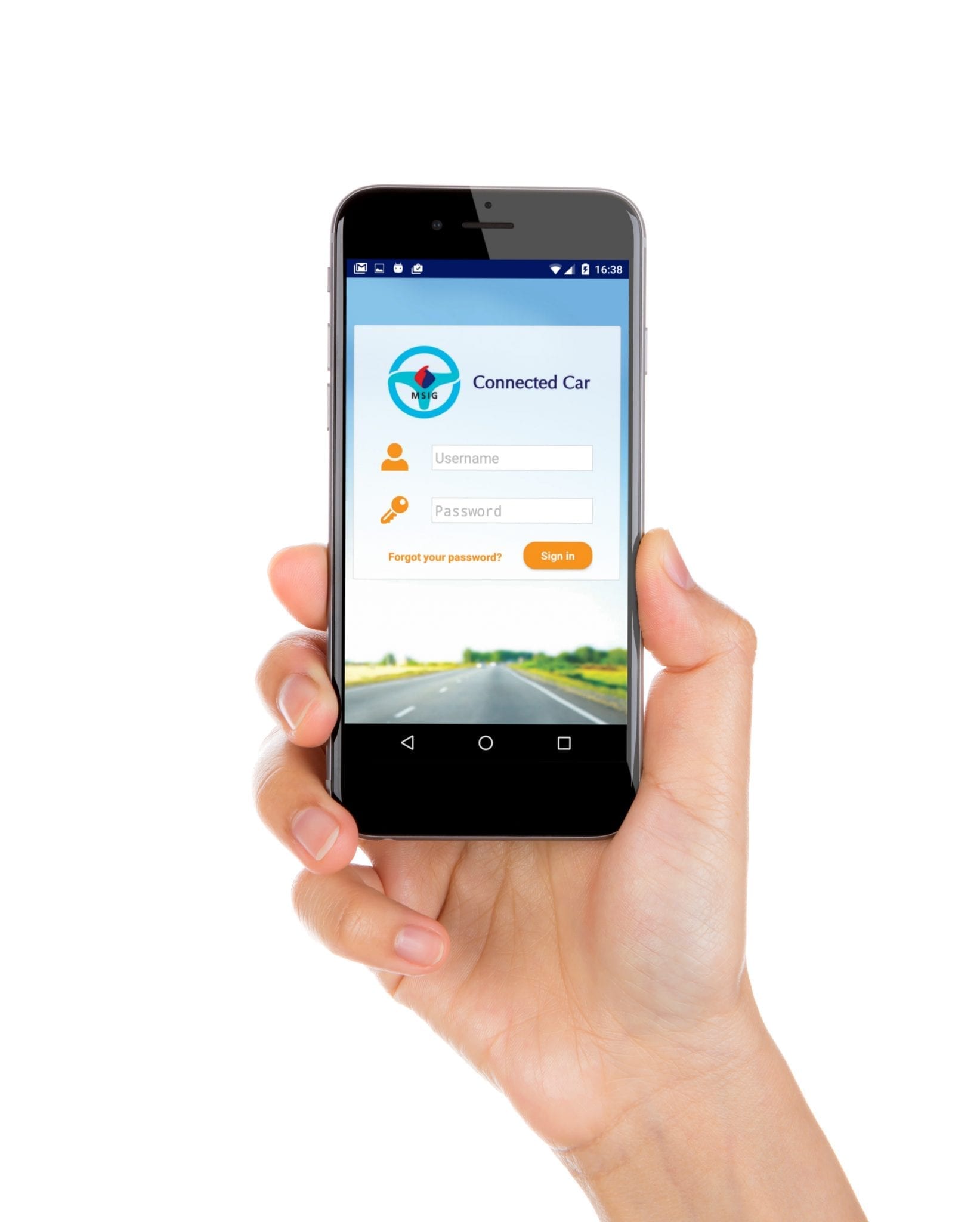
    The encouraging results from the pilot study has led to the introduction of a new product – MSIG UMax motor insurance, a ‘Pay How You Drive’ model that rewards the customer based on driving performance. Customers who sign up for MSIG UMax will have the device professionally installed without extra costs and are able to access their driving data through the free smartphone app – MSIG Connected Car.

    “We are delighted to be introducing more options to the market. As consumers become more connected than ever, ‘Pay How You Drive’ is a more intuitive model for drivers. It is also a customised system and encourages our customers to drive more safely as they get direct feedback from the app,” said Mr Michael Gourlay, CEO, MSIG Singapore.

    Locate your vehicle in Singapore and Malaysia

    Drivers with the device will also be able to use the mobile app to locate their vehicle in Singapore. A value-added option will allow the vehicle location service to be enabled in West Malaysia.

    Enjoy savings as a proven safe driver

    In the first year, the premium will still be based on the existing pricing method using a combination of factors such as the vehicle make and model, driver’s profile and claims history. Driving data will be assessed 60 days from the policy commencement date.

    In the unfortunate event of an accident, drivers can bring down their own damage excess by 50% if they have achieved a driving score within the Yellow band in a 30-day period before the accident, or even a complete waiver of the excess if their score is within the Green band.  This excess adjustment is unique to MSIG UMax’s model.

    “With the excess adjustment, drivers can literally reduce their excess to zero if they maintain an excellent driving score,” said Mr Jeremy Lian, Senior Vice President of Technical Services, MSIG Singapore.

  • Vietnam’s life insurance market faces challenges

    Vietnam’s life insurance market faces challenges

    Twenty-four-year-old Ms. Trinh Van Anh, the manager of an international school in Hanoi, does not have a life insurance policy and hasn’t thought about getting one, even though her monthly salary of $1,000 is higher than most of her peers.

    “No one recommends I take out a policy,” she said. “No one knows what life insurance covers, what it gives the policyholder, or what the benefits are.”

    Like Ms. Anh, many other Vietnamese people remain confused about what life insurance can actually bring.

    Even though premiums in Vietnam are on track for yet another record year, the gains are coming from a very low base and foreign insurers have yet to truly crack the market despite dominating.

    It should take only a few more years, though, for them to make more substantial headway.

    Foreign insurers’ playground

    2016 continued to see robust growth in Vietnam’s insurance market, with the life insurance segment reaching a ten-year high.

    Insurance premiums totaled around VND86.6 trillion ($3.8 billion), representing an increase of 22.74 per cent against 2015.

    Total revenue in life insurance was over VND49.2 trillion ($2.2 billion), an increase of 30.5 per cent, while revenue in non-life insurance was VND36.4 trillion ($1.6 billion), up nearly 12.5 per cent, according to data from the Insurance Supervisory Authority (ISA) under the Ministry of Finance (MoF).

    Eighteen life insurers are competing fiercely in the market. Eight of the 18 increased their charter capital in 2016 to improve financial capacity during expansion and business development.

    Manulife Vietnam, for example, raised its charter capital to VND1.82 trillion ($80 million), while Chubb Life Vietnam increased its by VND150 billion ($6.5 million) to more than VND1.55 trillion ($69.5 million).

    According to an assessment from Vietnam Report, among the five largest life insurers, which hold 86 per cent of the market share, are four foreign companies and only one domestic company, Bao Viet Life, which has a foreign strategic shareholder, Sumitomo Life from Japan.

    Prudential Vietnam leads the life insurance market with a share of 29.9 per cent, followed by Bao Viet Life with 25.7 per cent, Manulife 12.1 per cent, AIA Vietnam 9.2 per cent, Dai-ichi Vietnam 9.1 per cent, Chubb Life Vietnam 4.4 per cent, and PVI Sun Life 2.3 per cent.

    The remainder share 7 per cent. The five largest life insurers are believed to have posted premium revenue of VND5.8 trillion ($254.7 million) in the opening two months of this year, an increase of 30 per cent year-on-year and accounting for 80 per cent of all revenue, according to the ISA.

    Due to market regulations, it is impossible to compete in Vietnam’s life insurance market solely by premiums.

    All products are subject to close scrutiny from the MoF before being launched and premium levels are set.

    There is no way to cut premiums to attract buyers, and players must instead compete in service quality or the provision of value-added packages.

    All life insurers have headquarters in Hanoi in the north and Ho Chi Minh City in the south, with most also having branches and representative offices in major cities and provinces.

    Dai-ichi has 53 branches and representative offices, Manulife Vietnam 22, Prudential Vietnam 21, and AIA 14.

    Bao Viet Life remains the only player to cover all 63 cities and provinces in the country. Most companies over the last ten to 15 years started with agencies and this represents about 90 to 95 per cent of the industry in Vietnam today, with ISA’s figures showing there are currently some 1,000 representative offices and general insurance agencies of life insurers nationwide.

    Besides traditional sales methods, life insurers have also started partnering with commercial banks to increase sales and promote products.

    The sluggishness in the bancassurance market in Vietnam over the last few years can be attributed to a lack of service and low awareness among customers about the benefits of bancassurance products, with it only contributing 2 per cent to total turnover.

    Still, analysts believe that the channel holds great potential, with some 35 commercial banks and financial institutions now cooperating with insurers.

    Impediments remain

    “The penetration rate of life insurance, usually measured as the number of individuals who actually own life insurance, is still low in Vietnam relative to other Southeast Asian countries,” Mr. Steve Clark, Country Head of Prudential Vietnam, told VET.

    Average insurance premiums stand at only $30 in Vietnam, much lower than the global average of $595 and $74 in Southeast Asia.

    Only 7 per cent of Vietnam’s 90+ million people have life insurance and the sector contributes a modest 2 per cent to GDP, compared with more than 2.6 per cent in Indonesia and 11-14 per cent in South Korea and Singapore.

    The obstacles are many. According to Mr. Phung Quoc Khanh, Director of the ISA, awareness among Vietnamese people about life insurance may have increased but most still don’t think it’s worth it.

    Almost all Vietnamese people are wary or believe it unnecessary to buy insurance because they don’t have a thorough understanding of its importance.

    Life insurance products usually involve a long contract term, so many customers are concerned about their ongoing financial capacity.

    At the same time, doubts about foreign life insurers’ commitment to permanent operations in Vietnam add to the low penetration rate.

    Many potential Vietnamese consumers still see insurance as an investment rather than a device to share financial losses caused by poor fortune.

    They prefer bank savings or investing in gold or real estate, where they earn a higher rate of return, than buying insurance.

    The low penetration rate also comes from the fact that life insurers have only focused their operations in big cities while overlooking the 70 per cent of the population that still live in rural areas.

    They are also still separating themselves from the general activities of the sector, missing out on promotional opportunities and not playing a role in trying to increase awareness.

    “Life insurers have only focused on building their brand and image and not on activities to promote basic insurance knowledge,” Mr. Khanh said.

    While life insurers focus on implementing their own strategies to gain more market share and sign up more customers, their ambitious plans may fail due to problems relating to human resources.

    The rising number of insurance companies in recent years along with a lack of quality insurance training has created a serious shortage of skilled human resources for the sector.

    This has led to unfair competition in attracting experienced employees and insurance agents, one insider said.

    While acknowledging the increasing number of life insurance products, Mr. Khanh believes that these are mainly for high-income earners.

    Lower premiums to mid and low-income earners are yet to be introduced, even though they are the majority of the population and are vulnerable to financial incidents.

    Potential enormous

    The penetration rate may well change soon, however.

    An emerging middle class with more money to spend and a desire to spend that money to improve their lifestyles are driving a lot of activity in Vietnam.

    The young middle class and rising wages all round are creating demand for consumer products, credit, and investment.

    Soon enough, they will turn to life insurance products, with health now being one of the leading concerns among Vietnamese people, according to a February report released by global market researchers Nielsen.

    According to the ISA, life insurers have mainly focused on three of the seven life insurance products in Vietnam: term life insurance, endowment insurance, and universal life insurance.

    This again presents opportunities for others in unit linked and pension insurance products, which can meet the differing requirements of customers.

    With Vietnam’s stock market now being increasingly stable, the possibility exists for the creation of hybrid products, using an asset-based approach to funding long-term care.

    With Vietnam now participating in a host of free trade agreements (FTAs) and bilateral agreements, demand for life insurance is set to be boosted by the growing number of expats in the country.

    The arrival of foreign firms seeking to take advantage of preferential policies is also expected to boost demand for goods and services related to property, social security, and health coverage, among others, generating knock-on opportunities for insurers.

    A strengthened economy and new innovations from continued FDI should also impact positively on household confidence and future demand for insurance products, according to Mr. Phung Dac Loc, former Secretary General of Vietnam Insurance Association  (AVI).

    In a move to facilitate the growth of the insurance sector in general and life insurance in particular, Decree No.73 came into force on July 1, 2016, prescribing new regulations on the licensing, organization, and operations of financial institutions, with specific regulations on investment portfolios and ratio and reserves.

    This requires that life insurers consider investment strategies to ensure customer benefits together with risk management and liquidation, which hint at greater competitiveness.

    Key regional players already eye Vietnam as a potential avenue for growth.

    The Hong Kong-based FWD Group, for example, which has operations in Macau, Thailand, Indonesia and the Philippines, broke into Vietnam in November last year.

    South Korea’s Samsung has also expressed an interest in expanding its footprint in the life segment. Last September, General Director of Samsung Vietnam Mr. Han Myoung Sup told the Ministry of Information and Communications that two local units, Samsung Life Insurance and Samsung Fire and Marine Insurance, were currently exploring investment plans.

    Mr. Wilfred Blackburn, CEO of Prudential Vietnam, believes that Vietnam’s life insurance market is far from saturated. In fact, he believes there is still time for new companies to enter the country.

    “The life insurance market wants new players that are able to grow and bring a fresh approach to the industry,” he said.

    “This also requires that current players be more dynamic and innovative to expand the scope of the market.”

  • NetSol to Deploy Mobile Origination/Approval for Indonesian Company

    NetSol to Deploy Mobile Origination/Approval for Indonesian Company

    NetSol Technologies signed an agreement for its mobile origination (point of sale) system with PT Mizuho Balimor Finance (MBF) in Indonesia.

    NetSol was named MBF’s preferred vendor in the region. The contract includes product license, a five-year maintenance agreement and agreed customizations rates for both applications.

    MBF is an Indonesian multi-finance companies specializing in the auto financing domain.

    The application being deployed will be used by field teams (salesman/dealers) to initiate credit applications and provide quick approval and turnaround to customers seeking finance and lease products from MBF.

    “Our solution will increase operational efficiencies for PT. Mizuho Balimor Finance and bring concrete results in terms of costs and reduced contract conversion times. Mizuho Balimor is a pioneering company which turned towards the latest, next-generation technologies for future growth and progression. We are glad to work with them and implement our ground-breaking solution,” said Najeeb Ghauri, founder, chairman and CEO of NetSol Technologies. “We look forward to further creating business value for them and fostering this relationship in the coming years.”

    NetSol Technologies is a worldwide provider of IT and enterprise software solutions primarily serving the global leasing and financing industry.

  • Mitsui Sumitomo Insurance Welfare Foundation awards research grants to 4 projects

    Mitsui Sumitomo Insurance Welfare Foundation awards research grants to 4 projects

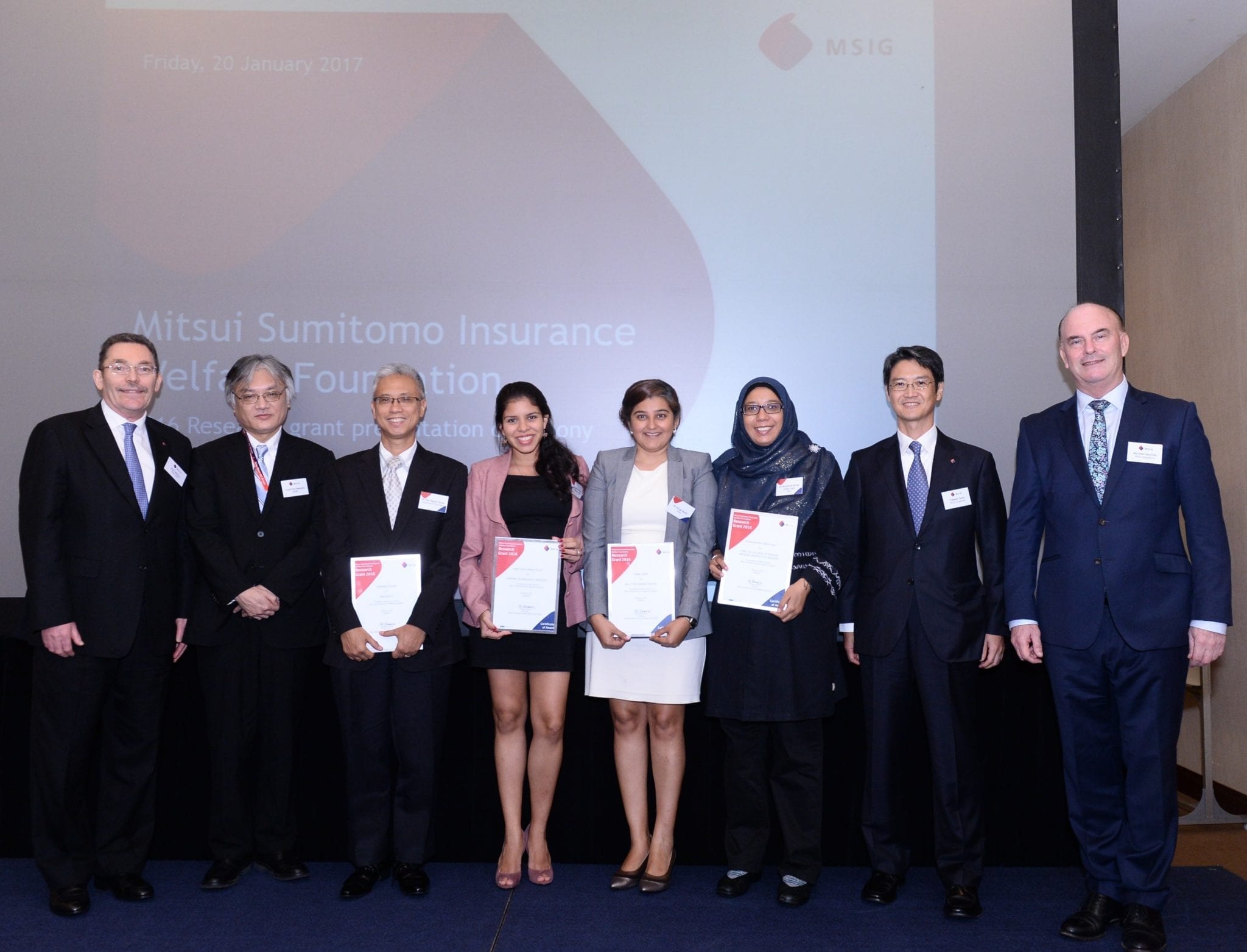
    This year’s winners of the Mitsui Sumitomo Insurance Welfare Foundation (MSIWF) research grant, awarded for exceptional insight and potential, comprised of some of Singapore’s leading researchers that aim to make a difference by solving Singapore’s key traffic and healthcare issues for the nation’s ageing population.

    The 2016 winners are:

    • Ms Maria Cecilia Rojas Lopez, PhD candidate at the School of Civil and Environment Engineering at Nanyang Technological University, for her research that will lead to the development of traffic schemes and policies for the safety of cyclists and pedestrians on footpaths. For this project, Rojas Lopez will study cyclists’ behaviour and their interaction with other path users, which is a potential issue since bicycles have been allowed on footpaths in Singapore since March 2016.
    • Dr Tan Ngiap Chuan is a Family Physician, Senior Consultant and Director, Research at SingHealth Polyclinics. His proposed study aims to find out how common is the age-related loss of muscle mass and muscle function, known as “sarcopenia” among elderly patients. Sarcopenia has been shown to be worse amongst the elderly with diabetes. Muscle weakness resulting from the reduced muscle bulk and strength will subject the elderly to increased risks of frailty, falls, fractures, hospitalisations and even premature deaths. The findings from this study will allow doctors, nurses and other healthcare professionals to identify the reasons leading to sarcopenia, so that solutions can be developed and assessed if they are effective in reducing the muscle bulk loss, in maintaining or even strengthening their muscle functions.
    • Dr Kinjal Doshi, principal clinical psychologist at Singapore General Hospital, aims to create a better tool for use in identifying loss of functional abilities among the elderly. 
    • Dr Rufaihah Binte Abdul Jalil, assistant professor at the NUS Yong Loo Lin School of Medicine, will design a diagnostic tool for atherosclerosis, a main illness known to harden the arteries usually affecting the elderly.
    • MSIWF is a non-profit organisation that is part of the Mitsui Sumitomo Insurance Company, Limited, and supports researchers in Japan, Singapore and Thailand for practicable research in two key areas: senior citizen welfare and traffic safety. The MSIWF research grant is unique compared to others, as it supports interdisciplinary research at its early stages, where it is generally tougher for researchers to obtain funding elsewhere. 

    This year marks the 10th anniversary of MSIWF grant support in Singapore, which was introduced in 2007 for the first time outside of Japan. Since then, MSWIF has supported 38 research projects and has disbursed grants worth more than about S$363,000.

    “At MSIG, our focus goes beyond financial profits. It is our mission to help secure a sustainable future for the communities at large. With a growing ageing demographic in Singapore, solutions for improving the quality of life are critical for sustainable growth. This grant from Mitsui Sumitomo Insurance Welfare Foundation aims to empower talented researchers to do just that,” said Mr Alan J. Wilson, Regional CEO of MSIG Holdings (Asia) Pte Ltd. 

    The call for the 2016 grants was launched in June last year, and a total of 246 applications were received globally. The winning projects will conduct their research over the next 12 months and their findings will be published in scientific journals as well as shared with the Foundation during next year’s presentation ceremony in 2018.

  • Insurer Sun Life Indonesia values qualified agents

    Insurer Sun Life Indonesia values qualified agents

    Life insurer Sun Life Indonesia aims to have more qualified agents to market their products rather than just make the numbers, the company top executive has said.

    The firm gathered on Friday 1,000 of its most high-achieving agents for the annual “Year Start” event in Jakarta to brief them of the insurer’s vision this year and to ensure them to be ready to face a more competitive insurance industry.

    “We are launching several new initiatives in 2017, which are designed to improve our marketing agents’ productivity and to also encourage them to develop their skills and capacity,” Sun Life president director Elin Waty said.

    She added that the agency’s contribution reached around 55 percent of the firm’s insurance distribution last year and the company planned to have a similar share this year.

    The insurer uses a contract maintenance system, which obliges its agents to achieve certain targets or their contracts will be terminated to ensure the company has capable agents.

    “If this contract maintenance system wasn’t implemented, my agents would probably number 100,000,” Elin said.

    Currently, Sun Life has around 10,100 agents nationwide, a steady increase from its 9,000 agents in 2015.

    “We aim to do better in 2017 by focusing on our human resources, technology and brand,” said Sun Life Asia president Kevin Strain.

  • Sompo Insurance eyes retail customers

    Sompo Insurance eyes retail customers

    Sompo Insurance (Thailand) is embracing innovation and digital channels as key strategies to build brand awareness among individual Thais, who are a new customer base for the Japan-based firm, which aims to be in the top 10 in Thailand’s |insurance market by 2020.

    Sompo Insurance eyes retail customers

    Sompo Insurance, formerly known as Sompo Japan Nipponkoa Insurance (Thailand), is focusing more on retail customers after securing a strong corporate base, mainly Japanese firms operating in Thailand.

    The company has been in Thailand for 19 years, tapping only corporate clients before starting to expand |its customer base to |individuals three years ago with motor insurance by partnering with Japanese auto companies.

    Chief executive officer Isorasak Thesratanavong said yesterday that motor insurance was the largest |segment for the insurance business in Thailand, so if his firm wants to expand its retail base, it needs to offer such policies.

    Another strategy is travel |insurance. This year Sompo’s retail customers are expected to generate 30 per cent of total premium income of Bt3 billion, but if the company wants to promote its brand |awareness to Thai customers, |travel insurance should help, because Japan is the No 1 destination of Thai tourists.

    The company yesterday |introduced a travel-insurance policy called Sompo Go Japan. Customers can buy the policy at traveljoy.sompo.co.th, after which the company will send an SMS link to |their mobile device. The |customers will then receive the |policy in a PDF file on their mobile.

    The company has added |threefeatures to its travel insurance. Sompo Assist helps policyholders contact hospitals in Japan and make appointments with them. Thai policyholders are not required to pay medical expenses to the hospital when they use its services, Isorasak said.

    Recognising the growing digital trend in Thailand and as a new player in the retail market, Sompo believes that innovation and digital channels will help it rise into the top 10 and sustain annual premium-income growth of 15 per cent. Its corporate-customer base might not grow much as before, and the company estimates that premium income from corporate clients will grow by no more than 5 per cent as Thailand has been spared any major disasters, reducing premiums of industrial all risks (IAR) by 20 per cent in 2017.

    Cyber insurance considered

    The company is discussing with its headquarters in Japan the possibility of offering cyber insurance to |corporates in Thailand as the risk of cyber-attacks rises from the growing use of digital technology, Isorasak said.

    Premium income from retail customers is expected to grow by 15-18 per cent a year, and if Sompo can retain this growth, its retail base will be contributing half of its premium income by 2020, he said.

    Sompo Group in Japan sees Thailand as a hub for its business in Cambodia, Laos, Myanmar and Vietnam, so it is ready to inject |investment capital to use this country as a springboard for investment in those countries, he added.

    Sompo Thailand has been assigned by its headquarters in Japan to cover Japanese investors in Laos.