Tag: ipo

  • Thai food giant to list on Vietnam stock exchange

    Thai food giant to list on Vietnam stock exchange

    Thai food giant Charoen Pokphand Foods has green-lighted its Vietnam subsidiary’s plans to list its shares on the Ho Chi Minh Stock Exchange.

    CPF has made a filing with the Stock Exchange of Thailand, but details are unavailable about plans for an IPO and others.

    C.P. Vietnam gets around 70 percent of its revenues from processed and fresh pork and chicken products.

    It built its first processing plant in Vietnam in 1993 and now has nine around the country.

    Vietnam’s stock exchanges have eight foreign companies listed on them, and they account for 0.3 percent of their market capitalization.

    Another foreign firm, Japanese retailer Aeon, has announced its intention to list in Vietnam.

  • Tiki raises $258 mln from global investors

    Tiki raises $258 mln from global investors

    E-commerce company Tiki raised $258 million in its latest funding round as it eyes a U.S. IPO.

    The Series E funding round was led by AIA Insurance, and included UBS AG London Branch, Mirae Asset-Naver Asia Growth Fund, and Taiwan Mobile Co.

    Tiki had planned to list in the U.S. by 2025, but it now plans to do so in a year’s time, Tiki founder and Chief Executive Officer Tran Ngoc Thai Son said in an interview.

    The company expects revenue growth of 40-50 percent in the next few years, he added.

    Vietnam is expected to have 53 million online consumers, or 71 percent of its population aged 15 and older, by the end of this year, an 8 percent rise from 2020, according to a report in August by Facebook and Bain & Co.

    Tiki in June raised VND1 trillion dong ($44 million) from bonds issuance.

  • Foodpanda partners with Indian cloud kitchen firm Rebel Foods

    Foodpanda partners with Indian cloud kitchen firm Rebel Foods

    Online takeaway delivery firm Foodpanda is partnering with Indian virtual kitchen company Rebel Foods to roll out the latter’s virtual restaurant brands at 2,000 outlets across ten Asian countries, Foodpanda’s chief operating officer said.

    “Foodpanda is Asia’s largest’s food delivery company while Rebel Foods is the largest virtual brands operator in the world,” COO Pedram Assadi said. “This is the largest virtual food brand partnership of its kind.”

    Under the deal, Foodpanda, which is owned by Berlin-based Delivery Hero, has recruited and trained hundreds of outlets to franchise the global restaurant brands created by Rebel Foods and offer their food on its platform.

    Mumbai-based Rebel Foods, which offers multiple cloud kitchen brands across countries including India and the United Arab Emirates, raised US$175 million this month at a US$1.4 billion valuation. It plans to launch an IPO in the next two years.

    Cloud kitchens that prepare food for delivery got a boost from the shift to online buying during the COVID-19 pandemic. Low overhead costs versus traditional restaurants and fast scale-up potential have also enabled “internet restaurant chains” to grow quickly.

    Foodpanda’s partnership with Rebel Foods is already being tested in six of the twelve Asian markets that Foodpanda is active in, and there is the option to expand to the other regions Delivery Hero is active in, Assadi said.

    He did not give any financial details of the deal but described it as core to Foodpanda’s strategy in Asia – along with its expansion into grocery delivery in Southeast and East Asia – as it takes on competitors such as British rival Deliveroo and Singaporean startup Grab Holdings.

    “Over the last year, we now have built over 250 ‘cloud stores’ that are operating grocery end to end, which makes us the largest e-commerce delivery player in APAC (Asia-Pacific)” Assadi said, referring to distribution centers dedicated to online grocery orders.

    Delivery Hero, which is active in 50 countries worldwide, announced on Tuesday it had invested US$235 million in Berlin-based grocery delivery company Gorillas, as the global race to dominate the rapid delivery service sector intensifies.

    Earlier this year, it also picked up a minority stake in Deliveroo.

  • Indian beauty startup Nykaa to raise US$500 million through IPO

    Indian beauty startup Nykaa to raise US$500 million through IPO

    Indian e-commerce beauty company Nykaa plans to raise US$500 million through its initial public offering (IPO), a source with direct knowledge of the matter told Reuters, becoming the latest homegrown startup to pursue a listing on the domestic bourses.

    Private equity firm TPG-backed Nykaa, based in Mumbai, sells cosmetics, grooming products, and clothes. Nykaa said its IPO will consist of a fresh issue of shares of up to 5.25 billion rupees (S$95.49 million) and an offer for sale of up to 43.1 million shares, according to a copy of its draft red herring prospectus dated Monday.

    The source said the 5.25 billion rupees will come from fresh shares issued to investors, while the rest will come from existing shareholders.

    Nykaa’s filing comes after food-delivery firm Zomato’s stellar debut last month. Launched in 2012, Nykaa grew popular by selling cosmetics and grooming products on its website and apps, before expanding into fashion, pet care, and household supplies.

  • India’s Zomato raises US$1.26 billion in IPO

    India’s Zomato raises US$1.26 billion in IPO

    Indian food delivery startup Zomato Ltd ` will raise US$1.26 billion by pricing its shares at 76 rupees each in its initial public offering, according to two sources with direct knowledge of the matter.

    The sources could not be named as the information has not yet been made public.

    Zomato did not immediately respond to a request for comment.

    The company, which is backed by Ant Group, will be valued at up to US$8 billion following the IPO which is the first for a food delivery group in India.

    The pricing is set at the top of the flagged range of 72 rupees (US$0.9649) to 76 rupees each at the start of the booking building process.

    Zomato, launched in 2008, collates restaurant reviews and offers home delivery of food, making it a competitor to the Swiggy and Amazon.com’s food delivery service.

    Swiggy was reported had raised US$1.25 billion in a private funding round from the likes of SoftBank’s Vision Fund 2 and Prosus.

    Zomato’s IPO was strongly backed by investors attracting bids worth US$46.3 billion as it was more than 38 times oversubscribed when the books closed on Friday, signalling confidence about the fast-growing sector.

  • Indonesia’s Bukalapak kicks off $1.1 billion IPO

    Indonesia’s Bukalapak kicks off $1.1 billion IPO

    Indonesia’s Bukalapak launched an up to $1.13 billion IPO ahead of next month’s listing, marking the country’s biggest issue in over a decade amid rising investor appetite for tech stocks in a region boasting a growing consumer class, according to a term sheet seen by Reuters.

    The e-commerce company, which counts Singapore sovereign investor GIC and Microsoft among its backers, is set to be valued at $5.6 billion at the top end of a price range, doubling the company’s valuation from two years ago.

    Details of the IPO are currently being announced at an investor briefing.

    Reuters reported on Thursday that Bukalapak, the country’s fourth-biggest e-commerce firm, was targeting raising more than $1 billion in its IPO, 25% more than previously planned.

  • Alibaba Co-Founders Pledge Shares for Loans

    Alibaba Co-Founders Pledge Shares for Loans

    Alibaba co-founders Jack Ma and Joseph Tsai are reportedly pledging their shares in the Chinese e-commerce giant in exchange for significant loans from global banks.

    The two tech billionaires have pledged their shares to banks including UBS, Credit Suisse, and Goldman Sachs, according to a «Financial Times» report citing company documents.

    The shares pledged were made by offshore companies controlling more than half of Ma and Tsai’s stake in Alibaba – 5.8 percent as of December valued at $35 billion – through the documents did not disclose the number of shares pledged.

    The share-backed loans mark a stark contrast with Jack Ma’s positioning just nine months ago when he was originally due to be a beneficiary of Ant’s listing before Beijing stepped on the brakes for what would have been the world’s largest IPO in history.

    Since then, regulators have ordered heavy restructuring for Ant while Alibaba saw its share prices drop one-third alongside a $2.8 billion fine in April over monopolistic practices.

    Ma and his affiliates currently do not have any loans outstanding collateralized by the company’s shares. Tsai’s outstanding share-backed loans were easily manageable with prudent loan-to-value ratios to provide a substantial cushion against a potential margin call.

  • Deutsche Bank Hit by Expired Hong Kong IPO License

    Deutsche Bank Hit by Expired Hong Kong IPO License

    A staffing error reportedly bypassed internal controls at Deutsche Bank which led to the expiration of its Hong Kong license to sponsor initial public offerings, marking a setback to the relaunch of its Asia equities business.

    Deutsche Bank failed to replace to regulated staff on time which will cause its IPO sponsor license to lapse from next month, citing unnamed sources.

    Deutsche’s IPO principals until June were investment bankers Poon Tsz Yuen and Rowena Wang, as per the Securities and Futures Commission’s (SFC) register. According to the report, Poon left the bank on June 16 and Wang is set to be removed from the register of authorized principals in early July.

    A spokesperson for the bank confirmed the license expiration and staff departures.

    The license expiration marks a setback to the relaunch of Deutsche Bank’s Asia equity capital markets (ECM) business after a restructuring in 2019 that saw Hong Kong shed alms all its ECM teams.

    According to another unnamed source close to the SFC, the issue suggests that there were «poor internal controls» at the bank and that process hereafter is expected to be slow.

    Separately, the SFC fined Deutsche Securities Asia last week for issuing incorrect statements to its prime brokerage clients and delaying the reporting of the failures to the regulator. And earlier today, the German lender’s Greater China investment banking vice-chair Rowena Chu reportedly retired.

  • Online marketplace YesAsia launching Hong Kong IPO

    Online marketplace YesAsia launching Hong Kong IPO

    Online marketplace YesAsia is set to raise US$17 million in an IPO launch in Hong Kong.

    The company aims to offer 39,540,00 new shares, 90 percent of which will be available for placing with institutional and professional investors while 10 percent will be available for subscription by the public in Hong Kong.

    Founded in 1988, YesAsia offers Asian fashion & lifestyle, beauty, and entertainment products to global customers. The company launched its key opinion leader initiative in 2018, and subsequently its YesStyle Influencer Program in 2019.

    Revenues generated from its influencer marketing initiatives accounted for 1.2 percent, 7.9 percent, and 17.4 percent of the total revenue of YesStyle for the three years ended last December, respectively.

    “We had been able to achieve above-industry revenue growth during the Track Record Period even in the midst of the Covid-19 pandemic, mainly due to our continuous effort in strengthening our marketing strategy to support customer retention and acquisition as well as long-term ecosystem development,” said Lau Kwok Chu, founder and executive director and CEO at YesAsia.

  • SoftBank-backed Dingdong raises US$95.7 million in downsized US IPO

    SoftBank-backed Dingdong raises US$95.7 million in downsized US IPO

    Chinese grocery app Dingdong, backed by SoftBank Vision Fund 2, raised about $95.69 million in its US initial public offering (IPO) on Tuesday after slashing the size of the IPO to almost a fourth of its earlier target.

    Dingdong sold more than 4 million American depositary shares (ADSs) priced at $23.5 apiece, the lower end of its indicative price range.

    The company had earlier planned to raise up to $357 million in its IPO by selling 14 million ADSs priced between $23.5 and $25.5.

    Established in 2017 and also backed by Tiger Global Management and Sequoia Capital, Dingdong operates mainly in China’s first-tier cities such as Shanghai, Beijing, Shenzhen, and Hangzhou.

    Rival online grocery company Missfresh Ltd, which is backed by Tencent Holdings Ltd, slumped in its Nasdaq debut last week. It was trading almost 17 percent below its IPO price until Monday’s close.

    Morgan Stanley, BofA Securities, and Credit Suisse were the IPO’s lead underwriters.

    Dingdong’s ADSs are set to begin trading on the New York Stock Exchange later in the day under the ticker symbol “DDL”.

  • Indonesia’s Bukalapak aiming for up to $800 million in IPO

    Indonesia’s Bukalapak aiming for up to $800 million in IPO

    Indonesian e-commerce firm Bukalapak is keen to raise as much as US$800 million in an initial public offering (IPO) in August, two people with knowledge of the matter said, the first of two big tech listings in Jakarta this year that will add long-sought luster to the local bourse.

    A mid-year debut could see it become Indonesia’s biggest listing in 10 years and the largest ever for the country by a startup. But those milestones will likely later be overtaken by the planned listing of GoTo – a new company to be formed by the merger of e-commerce rival Tokopedia and ride-hailing and payments firm Gojek.

    Tapping a sharp pick-up in investor interest in Southeast Asia’s rapidly expanding technology sector, Bukalapak, the country’s No 4 e-commerce firm, is aiming to sell 10 to 15 percent of the company and wants a valuation of between US$4-5 billion, the people said.

    A confidential listing prospectus has been submitted to the Indonesia stock exchange, one of the sources said.

    Proceeds from the offering could range between US$500 million and US$800 million depending on investor demand and market conditions, said the sources who were not authorized to speak on the matter and declined to be identified.

    Bukalapak, which said in 2019 it was valued at more than US$2.5 billion, declined to comment.

    The 11-year-old startup which claims to have more than 100 million users has a plethora of big-name investors backing it including Microsoft, Singapore sovereign wealth fund GIC, local media conglomerate Emtek, the investment arm of Standard Chartered, and South Korean web portal Naver Corp.

    Bukalapak was originally aiming to raise US$300 million from its domestic listing before looking to merge with a special purpose acquisition company (SPAC) in the United States, but it is now focusing solely on its IPO, one of the sources said.

    The listing, which sources say is set to take place mid-August, is a victory for Indonesia’s bourse which has been conducting an extensive charm offensive to convince the country’s thriving startups to list locally instead of heading to the US.

    Stagnant for many years, Indonesia’s total IPO deal value took a further hit during the coronavirus pandemic, more than halving in 2020 to US$470 million, Refinitiv data showed. So far this year, 15 companies have raised a combined US$125 million via IPOs.

  • Thai AirAsia plans IPO for capital injection by new investor

    Thai AirAsia plans IPO for capital injection by new investor

    Thai AirAsia’s parent company has disclosed a corporate and capital restructuring plan for the airline, which involves listing it on the Stock Exchange of Thailand (SET) to accept a Bt3.15 billion ($100 million) loan from a new investor.

    Asia Aviation’s board approved the plan on 26 April, it says in a 27 April SET filing.

    The new investor is not connected to Asia Aviation or Thai AirAsia and will provide the funds in the form of a convertible loan agreement or convertible bonds with zero-coupon issued at par, with an approximately three-year term.

    This will be convertible to ordinary shares in Thai AirAsia at an agreed conversion price of about Bt20.4 per share. The conversion period is expected to be after Thai AirAsia receives approval for an initial public offering.

    Should the investor opt not to convert the loan or bonds into shares, it will hold the investment, which bears 3% interest, until maturity as a creditor.

    Asia Aviation says the investor is currently conducting due diligence and expects to complete the process in mid-May.

    It states that the investor wishes to invest directly in Thai AirAsia rather than through holding shares in Asia Aviation. Taking the airline public would also “increase the opportunities for Thai AirAsia to raise funds by itself rather than being dependent on [Asia Aviation] for fundraising”.

    Concurrently, Asia Aviation plans to convert its shareholders into direct shareholders of Thai AirAsia. This entails dissolving and liquidating Asia Aviation and the company says its board has yet to approve this.

    Asia Aviation holds shares equivalent to 55% of Thai AirAsia’s paid-up capital while AirAsia Investment, which is also the airline’s major creditor, holds shares representing 45%.

    Asia Aviation expects the new investor to hold 11.4% of Thai AirAsia X’s expanded shares issued after it goes public.

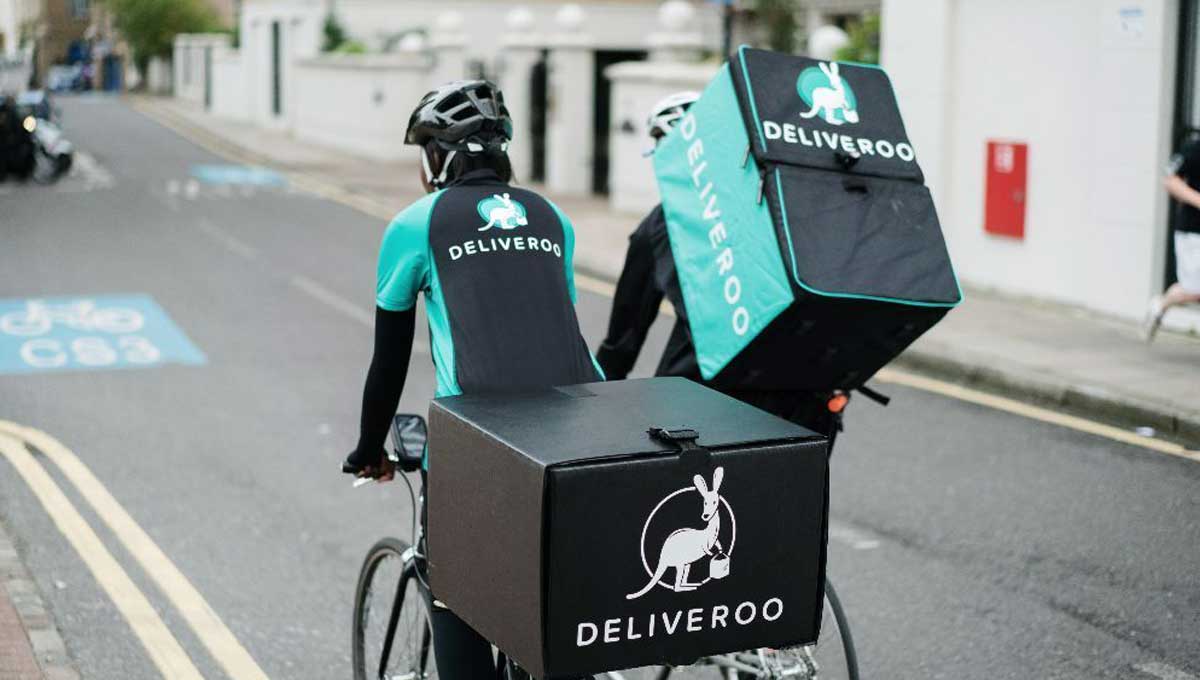
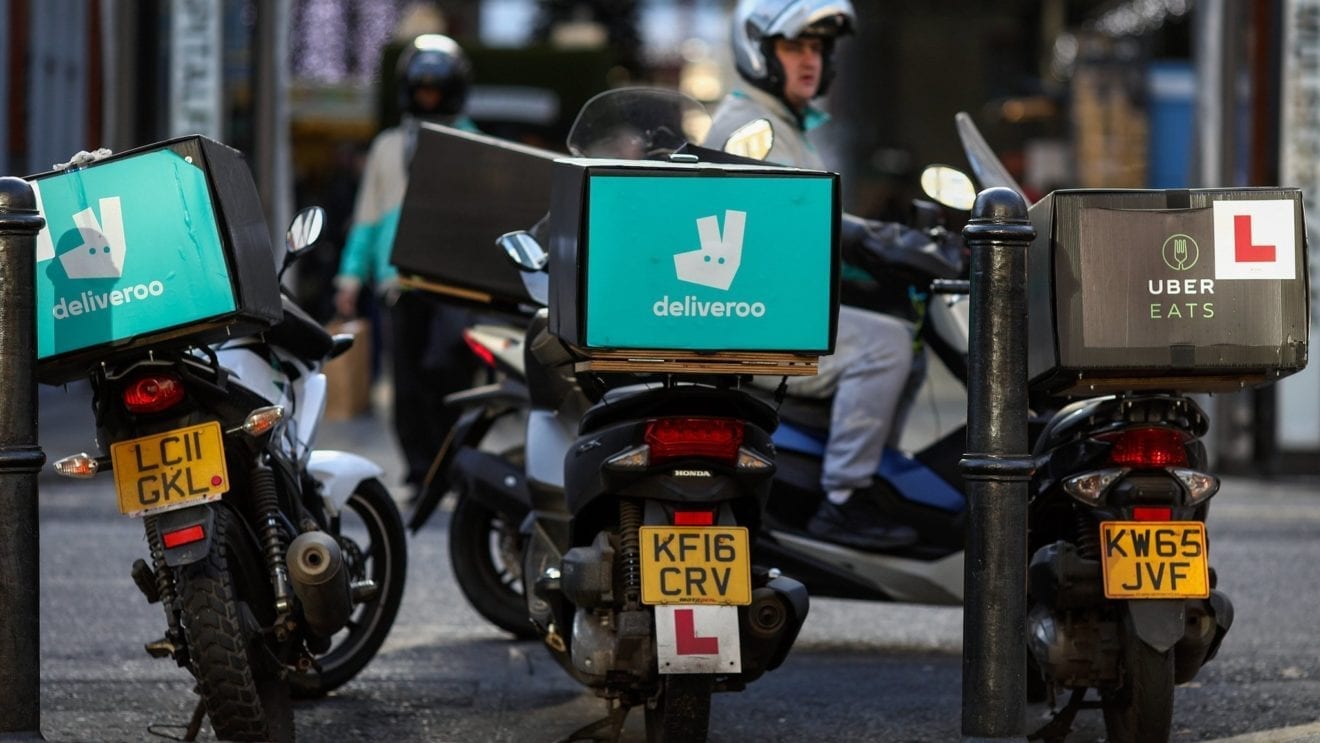
  • Deliveroo eyes US$10.5 billion listing after some funds steer clear

    Deliveroo eyes US$10.5 billion listing after some funds steer clear

    Deliveroo will price its initial public offering at 390 pence per share, banks working on the deal said on Tuesday, at the bottom end of previously indicated valuations for the food delivery group.

    Food delivery company Deliveroo will price its initial public offering at 390 pence per share, banks working on the deal said on Tuesday, at the bottom end of a previously indicated range for the food delivery group.

    That would indicate an overall valuation of 7.6 billion pounds (US$10.46 billion), less than initially expected, after a string of major UK fund managers said they would not take part, citing concerns about its dual-class share structure and its gig economy business model.

    The listing is covered multiple times over, the bookrunners said, with the deal expected to close at 1200 GMT.

    “Given volatile global market conditions for IPOs, Deliveroo is choosing to price responsibly and at an entry point that maximises long-term value for our new institutional and retail investors,” a spokesperson for Deliveroo said.

    The listing of London-based company, founded by boss William Shu in 2013, is set to be London’s biggest IPO since Glencore’s in May 2011 and also the biggest tech float on the London Stock Exchange.

    Heavyweight investors Aberdeen Standard Life, Aviva, Legal & General Investment Management and M&G have all said they will sit the deal out, amid criticism of its workers’ rights.

    Some of them also question whether the loss-making business can ever justify its valuation.

    Having initially looked for up to 8.8 billion pounds, the British tech firm on Monday went with a narrower price range, indicating a maximum valuation of up to 7.85 billion pounds, citing market volatility.

    Deliveroo’s self-employed drivers have seen a boom in demand during the COVID-19 pandemic, bringing food from otherwise-shuttered restaurants to housebound customers.

  • Deliveroo confirms IPO Offer Price

    Deliveroo confirms IPO Offer Price

    The Offer Price has been set at £3.90 per Share, equating to a market capitalisation at Admission of £7.59 billion (excluding any over-allotment shares).

    • Commencement of conditional dealings on the London Stock Exchange is expected to take place at 8 a.m. (UKT) on 31 March 2021 under the ticker “ROO” (ISIN: GB00BNC5T391).
    • Deliveroo intends to use the net proceeds from the issue of the new Shares to continue to invest in the growth opportunities available:
    • Bringing the food category online represents an enormous market opportunity. The way we think about it is simple: there are 21 meal occasions in a week – breakfast, lunch, and dinner – seven days a week. Right now, less than one of those 21 transactions takes place online. We are working to change that.
    • We have executed well, from a growth, expansion, and profitability perspective, but we are just truly starting our journey.
    • We will continue to invest in the innovations that we believe will further enhance our core marketplace for consumers, restaurants and grocers, and riders, while also continuing to further develop our growth businesses, in particular, Editions, Plus and Signature.

    Will Shu, Founder and CEO of Deliveroo, said: 

    “I am very proud that Deliveroo is going public in London – our home. As we reach this milestone I want to thank everyone who has helped to build Deliveroo into the company it is today – in particular our restaurants and grocers, riders and customers. In this next phase of our journey as a public company we will continue to invest in the innovations that help restaurants and grocers to grow their businesses, to bring customers more choice than ever before, and to provide riders with more work. Our aim is to build the definitive online food company and we’re very excited about the future ahead.”

  • Deliveroo announces IPO Price Range

    Deliveroo announces IPO Price Range

    Deliveroo is providing an update on trading for the 2 month period January and February 2021 versus the comparable period in 2020.

    GTV – the total amount of transactions it processes on its platform – has grown +121% year on year at the group level in January and February 2021. GTV in the UK and Ireland has grown +130% year on year and GTV in the Group’s other markets has grown +112% year-on-year.

    This follows the Company’s Registration Document, published on 8 March 2021, which showed GTV grew64% in 2020. Fourth quarter 2020 run-rate GTV amounts to over £5 billion. In 2020, underlying gross profit margin as a percentage of GTV grew from 5.8% in 2018 to 8.8%, demonstrating fast growth underpinned by strong unit economics.

    IPO Offer Highlights

    • The price range for the Offer has been set at £3.90 to £4.60 per Share, implying an estimated market capitalisation at Admission of between £7.6 billion and £8.8 billion (excluding any over-allotment shares).
    • We will apply for admission of shares on the standard listing segment of the Official List of the FCA and to trading on the main market of the London Stock Exchange.
    • The Offer will comprise of new Shares to be issued by Deliveroo (expecting to raise gross proceeds of approximately £1 billion) (“New Shares”) and existing Shares to be sold by certain existing shareholders.

    o    Bringing the food category online represents an enormous market opportunity. The way we think about it is simple: there are 21 meal occasions in a week – breakfast, lunch, and dinner – seven days a week. Right now, less than one of those 21 transactions takes place online. We are working to change that.

    o    We have executed well, from a growth, expansion, and profitability perspective, but we are just truly starting our journey.

    o    We will continue to invest in the innovations that we believe will further enhance our core marketplace for consumers, restaurants and grocers, and riders, while also continuing to further develop our growth businesses, in particular, Editions, Plus and Signature.

    Will Shu, Founder and CEO of Deliveroo, said: 

    “We are proud to be listing in London, the city where Deliveroo started. Becoming a public company will enable us to continue to invest in innovation, developing new tech tools to support restaurants and grocers, providing riders with more work and extending choice for consumers, bringing them the food they love from more restaurants than ever before. This will help us in our mission to become the definitive food company. We have enjoyed a strong start to 2021 and we are only at the start of an exciting j