Retail News CRM

Tag: ipo

  • European Stocks Fall on North Korea Bomb Test

    European Stocks Fall on North Korea Bomb Test

    European shares fell on Wednesday as a self-professed bout of nuclear testing by North Korea and a falling renminbi rattled investors.

    By late morning in London, the FTSE 100 was down 1.33% at 6,055.53. Mining stocks, as leaders BHP Billiton (BHP) and Rio Tinto (RIO) led the benchmark lower.

    In Frankfurt, the DAX was down 1.31% at 10,175.31 and in Paris the CAC 40 was down 1.36% at 4,475.91. Volkswagen (VLKAY)  extended Tuesday’s losses in Frankfurt amid fears of hefty legal costs in the U.S. over emissions-tests rigging.

    After the Chinese central bank set the renminbi reference point at a weaker-than-expected level, the currency fell to a five-year low against the dollar. Meanwhile, North Korea claimed to have tested an underground hydrogen bomb, although some international observers were skeptical.

    Final eurozone purchasing managers’ data from Markit Economics came in better than expected in December, with the composite index, which melds the service sector with factory output, unexpectedly rising to 54.3, taking it further above the 50 threshold which separates economic expansion from contraction. Initial December data had pointed to a reading of 54.0. However, weak European Union producer price data for November later took the sheen off those Markit figures.

    Construction and engineering company Costain was up almost 2% in London after it reported record orders worth £3.9 billion ($5.7 billion) in 2015, including £2.8 billion-worth of revenue that Costain will accrue in 2017 and beyond. It will release its full 2015 results on March 2.

    Retailer Topps Tiles was up about 1.3% after reporting same-store sales growth of 4.4% in its first quarter.

    Another retailer, Card Factory, was up 1.8% as it announced that Christmas trading had met its expectations. It said CEO Richard Hayes would retire and be replaced by Karen Hubbard, the chief operating officer of discounter B&M European Value Retail.

    Insurer NN (NNGPF) was up almost 3% at €32.10 in Amsterdam after ING cut its stake to 16.2% from 25.8%. ING sold the shares at €31 in an accelerated book build, raising €1 billion ($1.1 billion). NN itself bought 8 million of the 33 million shares on offer.

    Many Asian indices fell as the renminbi and emerging-market currencies retreated.

    In Seoul, stocks were mixed, with the main index closing up 0.47% at 687.27 after the North Korea H-bomb claim. But Chinese stocks recovered after a state media outlet reported that Chinese securities regulators would extend a six-month ban on share selling by major investors until permanent rules were put in place. The ban would otherwise have expired on Friday. The Shanghai Composite closed up 2.25% at 3,361.84 and the Shenzhen Component index gained 2.24% to close at 11,724.88.

    In Hong Kong, the Hang Seng closed down 0.98% at 20,980.81.

    Shares of New World China Land closed up almost 21% in Hong Kong at HK$7.49 per share after majority shareholder New World Development offered HK$7.80 per share to take the company private after a previous attempt failed to garner sufficient shareholder approval in June 2014. The new offer values the stock at HK$67.8 billion ($8.7 billion).

    In Tokyo, the Nikkei 225 closed down 0.99% at 18,191.32 and the Topix fell 1.05% to close at 1,488.84.

    In Sydney, the S&P/ASX 200 closed down 1.18% at 5,123.13.

  • Singapore risks fading into investment backwater as market cap shrinks

    Singapore risks fading into investment backwater as market cap shrinks

    Fresh off its worst year for listings in at least two decades, the Singapore stock market now faces the threat of fading into an irrelevant backwater for global investors as large privatisations, small floats and a broad-based equities slump continue to erode its market value and appeal, market watchers warn.

    With the number of initial public offerings (IPOs) here falling in 2015 to its lowest annual level since the Singapore Exchange (SGX) opened its doors in late 1999, the local share market has been left in the dust by regional rival Hong Kong as of late, while its neighbours in South-east Asia have begun to nip at its heels.

    One crucial and worrying sign is that the sharp slide in Singapore’s total market capitalisation in 2015 reflects evaporating liquidity, decreasing depth and a sore lack of interest in raising funds here as attention turns to markets with brighter prospects, analysts and asset managers say, adding that this trend could well turn into a vicious cycle.

    The total market value of stocks listed on the Singapore Exchange added up to about US$463.46 billion at the close of trading on Dec 31, 2015, going by a Bloomberg gauge based on actively traded primary securities and stripping out exchange traded funds and ADRs (American depositary receipts).

    This number would make the entire Singapore market cap smaller than that of Nasdaq-listed Apple, which weighed in at around US$586.86 billion at the end of last week. It also marks the Singapore market cap’s lowest level since hitting US$464.41 billion at the end of 2011.

    Singapore’s market cap shrank a sharp US$107.18 billion or 18.8 per cent from a year ago, according to Bloomberg data. The bulk of the drop was due to a broad-based equities slump that also put a dent in other bourses across Asia. The Straits Times Index fell 14 per cent in 2015 to finish the year at 2,882.73 points, down from 3,365.15 at the end of the previous year.

    But another significant factor is a handful of big delistings that has occurred alongside a persistent dearth of sizeable initial public offerings (IPOs), analysts say.

    “Privatisations of many large companies in the last few years, especially in the property sector, have shrunk the investable pool of stocks in Singapore,” said Kum Soek Ching, head of Southeast Asia research at Credit Suisse Private Banking Asia Pacific.

    “The absence of large and meaningful IPOs in recent years have also not been supportive to the total market cap of Singapore … With less market participants, a smaller-cap market can suffer from liquidity issue during periods of stress.”

    Large delistings in 2015 included that of conglomerate Keppel Corp’s property arm Keppel Land in July. KepLand had a market value of S$6.56 billion, based on 1.55 billion shares outstanding and the takeover price of S$4.38 per share that KepCorp paid.

    Engineering firm UE E&C, which was worth S$337.5 million based on an offer price of S$1.25 for 270 million shares, was taken over by a private equity firm and delisted in March. Bookstore chain Popular Holdings also delisted in May. It had had a market value of around S$255.07 million, based on offer price of S$0.32 and about 797.09 million shares outstanding.

    The declining total market cap points to an increasing lack of interest from companies in tapping equity capital markets here.

    Against the market values of the delistings last year, there was just S$339.18 million in total IPO fund- raisings in 2015. All but one of the 13 public floats here last year were Catalist listings, and the average IPO size worked out to around a puny S$26 million.

    The number of IPOs and the total IPO funds raised last year were the smallest in at least two decades, going by newspaper reports. Up until 2015, the SGX had not seen fewer than 20 public floats a year. In the depths of the global financial crisis, the year 2008 had 22 IPOs raising US$931 million while 2009 had 23 floats that raised about S$3.21 billion, according to media reports then. Even in 1998, with the Asian financial crisis, SGX managed to rake in 20 IPOs that raised about S$406 million.

    Several Singapore-based companies are also eschewing a local listing for an overseas float. Aircraft leasing firm BOC Aviation said last year that it wanted to list in Hong Kong. A Singapore medical company that develops treatments for Alzheimer’s also said recently that it was gunning for a Nasdaq IPO, according to media reports.

    The recent trend of substantial privatisations and tiny IPOs could continue to reduce Singapore’s market cap this year, which market watchers say does not bode well for local stocks’ investment appeal.

    “Investors, especially foreign institutions, like liquid markets, and market liquidity correlates with market size. Institutional investors take a silo approach and allocate to illiquid private equity and liquid listed equity, where they seek and expect liquidity,” said Bryan Goh, chief investment officer at wealth manager Bordier.

    Dealmakers have already hinted that they expect 2016 to be characterised by Catalist IPOs, and a couple of large delistings are already on the cards. French shipping firm CMA CGM is trying to privatise Neptune Orient Lines (NOL), which had a market cap of S$3.2 billion at end-2015. Singapore Airlines is also trying to delist Tiger Airways, which had a market cap of around S$1.03 billion as at Dec 31.

    Ms Kum added that the size of a market’s total capitalisation would determine its weighting in indices such as the MSCI that institutional investors use as benchmarks. “A market with a small weighting may become irrelevant for institutional investors, unless it has a very compelling story.

    “With a lower index weighting, the Singapore market risks losing its relevance and importance to institutional investors. Private investors may also increasingly need to avail themselves of more investable options in overseas markets, in order to preserve or grow their wealth, creating a vicious cycle in diminishing the market size and relevance.”

    According to Bloomberg data, Hong Kong had a total market cap of US$4.105 trillion at end-2015, nearly nine times that of Singapore. It also eclipsed Singapore in terms of IPO fund-raising last year, raising more than 160 times the total figure in the Republic. Japan’s market cap is nearly 11 times that of Singapore and the US is nearly 51 times as large.

    To makes matters gloomier, other countries in South-east Asia, which have so far remained smaller than Singapore in terms of total market value, are beginning to catch up.

    The gap between Singapore’s and Malaysia’s market cap was US$117.98 billion in 2014; that shrank 27 per cent to US$86.35 billion in 2015. For Indonesia, the gap with Singapore narrowed 24 per cent from US$148.68 billion to US$113.34 billion, while the gap between Singapore and Thailand was reduced by 16 per cent from US$154.85 billion to US$130.53 billion over the same timeframe.

    IG market strategist Bernard Aw noted: “We are always in competition with other bourses, and failing to increase or retain investors’ interest is akin to a kiss of death. This is why Singapore is trying to attract investors’ interest back via initiatives such as the introduction of new equity indices which are sector-specific.”

    However, some market watchers said there were still things to like about the Singapore stock market.

    “Singapore does not necessarily lose its shine as an investment destination as a result of its market cap declining or being relatively smaller than that of other global financial hubs,” said Andrew Wood, head of Asia country risk at BMI Research.

    “It is really the quality of the firms listed in that market as well, the maturity of the financial markets framework, along with other factors such as the political risk and macroeconomic risk environment in that country. Singapore scores very well for the last three criteria.”

    Though he cautioned that Singapore “could lose out if it is seen as a less attractive environment for IPOs, and a shrinking market cap could speak to a relatively shallower capital market”, Mr Wood said Singapore could still remain attractive for investors due to its regulatory environment and its macroeconomic and political stability.

    Hugh Young, Asia managing director of Aberdeen Asset Management, also remained optimistic. Though he noted that “the reality is that for many of the world’s largest investors, Singapore is a backwater given its size and relative lack of liquidity”, he said market size should not matter for “true investors looking for great investments”.

    “Of course for the more thorough investor, small markets and small companies can be a profitable hunting ground as they can be overlooked and neglected … All in all, it’s not something I would overly worry about although for many it can be a matter of pride – ‘we’re better because we’re bigger’. Size is not everything.”
  • Canada’s Manulife seeks to revive Singapore REIT IPO this year -exec

    Canada’s Manulife seeks to revive Singapore REIT IPO this year -exec

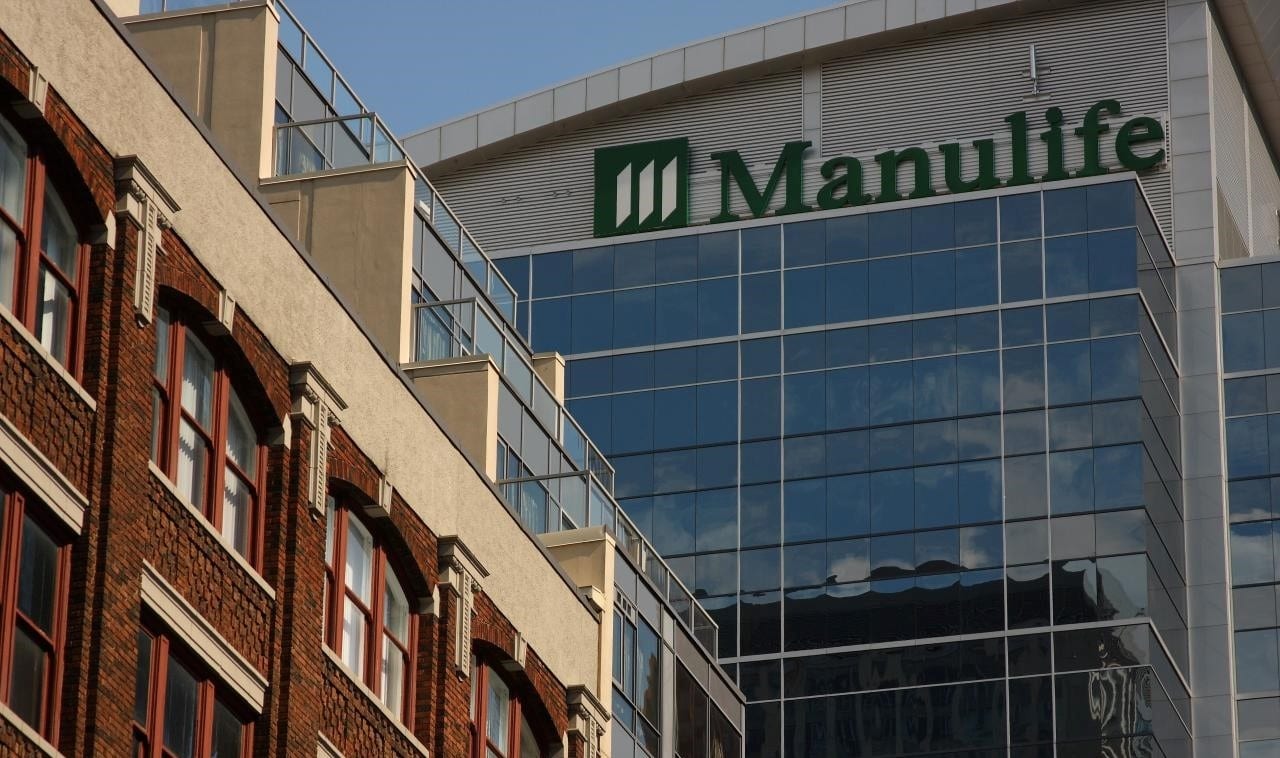
    Canada’s Manulife Financial Corp is looking to revive a plan to list a real estate investment trust in Singapore this year after an initial public offering (IPO) was shelved last year due to poor market conditions.

    “We’d very much like to bring it back,” Chief Financial Officer Stephen Roder told reporters at the launch of a 15-year life bancassurance partnership with Singapore’s DBS Group Holdings Ltd on Tuesday. He did not give an exact time frame or expected size of any IPO.

    Manulife shelved a nearly $400 million real estate investment trust IPO in Singapore in the third quarter last year citing deteriorating global markets.

    That left BHG Retail REIT as Singapore’s sole REIT IPO last year after several other deals were pulled due to uncertain financial markets and concerns over the impact of a potential U.S. interest rate hike.

    On Tuesday, Manulife and DBS also said they would co-invest up to S$100 million ($70.24 million) over the next 15 years in digital technology and innovation.

    ($1 = 1.4237 Singapore dollars)

  • Lotte celebrates topping-out of Korea’s tallest building

    Lotte celebrates topping-out of Korea’s tallest building

    South Korea’s retail giant Lotte Group held a symbolic topping-out ceremony Tuesday afternoon to mark the approaching completion of the Lotte World Tower, the tallest building in the country located in Jamsil, southeastern Seoul.

    Lotte Corp. placed the last crossbeam on the top floor of the 123-story skyscraper amid much fanfare with some 200 high officials in attendance, including Lotte chairman Shin Dong-bin and Seoul City mayor Park Won-soon.

    The Lotte World Tower currently stands at 508 meters as the world’s fifth tallest building in the world. It will reach 555 meters in height once the spire is placed and the interior construction is concluded next year.

    “Offering panoramic views of Seoul, the Lotte World Tower will be able to attract some 2 million tourists every year,” said the Lotte chairman in his congratulatory speech.

    Mindful of public concerns about safety, Shin emphasized that Lotte would “work to ensure that the tower becomes a safe location that can welcome all visitors” and to “successfully wrap up the remaining construction procedures.”

    The supertall skyscraper stands at the center of Lotte’s 3.8 trillion won ($32 billion) project envisioned by Lotte founder Shin Kyuk-ho to build an unparalleled legacy for the company in Jamsil.

    Located adjacent to the tower is the Lotte World Mall, a mega shopping complex featuring shops, restaurants, a movie theater and aquarium. The tower is set to house a six-star hotel, office space and an observatory once it is completed next year.

    “The Lotte World Tower has been constructed in line with my father’s wish to establish a landmark building in Korea,” said the Lotte chairman, also the eldest son of the Lotte founder.

    “The tower will become a structure beloved by people from all over the world.”


  • Hotel Lotte set to submit IPO application next week

    Hotel Lotte set to submit IPO application next week

    Hotel Lotte plans to submit the application to the Korea Exchange (KRX) on Monday for a preliminary regulatory review of its initial public offering (IPO), after clearing uncertainties surrounding the conglomerate’s management and other issues.

    The listing of Hotel Lotte is one of the reform pledges that Lotte Group Chairman Shin Dong-bin has made to assuage public disgust over a bitter family feud for control of the retail-focused conglomerate, which has sprawling businesses both in South Korea and Japan.

    Earlier this month, Lotte said its Japanese shareholders support the current leadership despite the ongoing succession feud. Japan-based Lotte Holdings is the largest shareholder of Hotel Lotte with a 19.1 percent stake.

    The KRX earlier said it is considering simplifying the screening process to facilitate its listing, using a “fast-track” system that cuts the review period to about a month.

    To take advantage of the speedy process, applicants should have over 400 billion won in equity capital and 700 billion won of annual sales for three years, along with other requirements.

    “If Hotel Lotte submits the application, we would be able to confirm the result by January,” a KRX official said, asking for anonymity.

    Hotel Lotte is pushing for the IPO despite the group losing one of its two duty-free stores in Seoul last month.

    Lotte kept a location in Myeongdong, a popular shopping district in downtown, but lost the operational license for another at Lotte World Tower in southeastern Seoul.

    The conglomerate earlier said Hotel Lotte is expected to have a market capitalization of around 10 trillion won ($8.6 billion) when it is publicly traded, but market watchers say losing one of its duty-free stores in Seoul in the recent competition could lead to that re-evaluation of its market value.

  • Hotel Lotte to apply for IPO next week

    Hotel Lotte to apply for IPO next week

    Hotel Lotte is reportedly set to file its application for listing on the nation’s main stock bourse early next week, according to sources Friday.

    They noted that the hotel unit of South Korean retail giant Lotte Group will submit its application to the Korea Exchange on Monday for a preliminary regulatory review of its initial public offering, which will mark the company’s debut on the stock market as early as March.

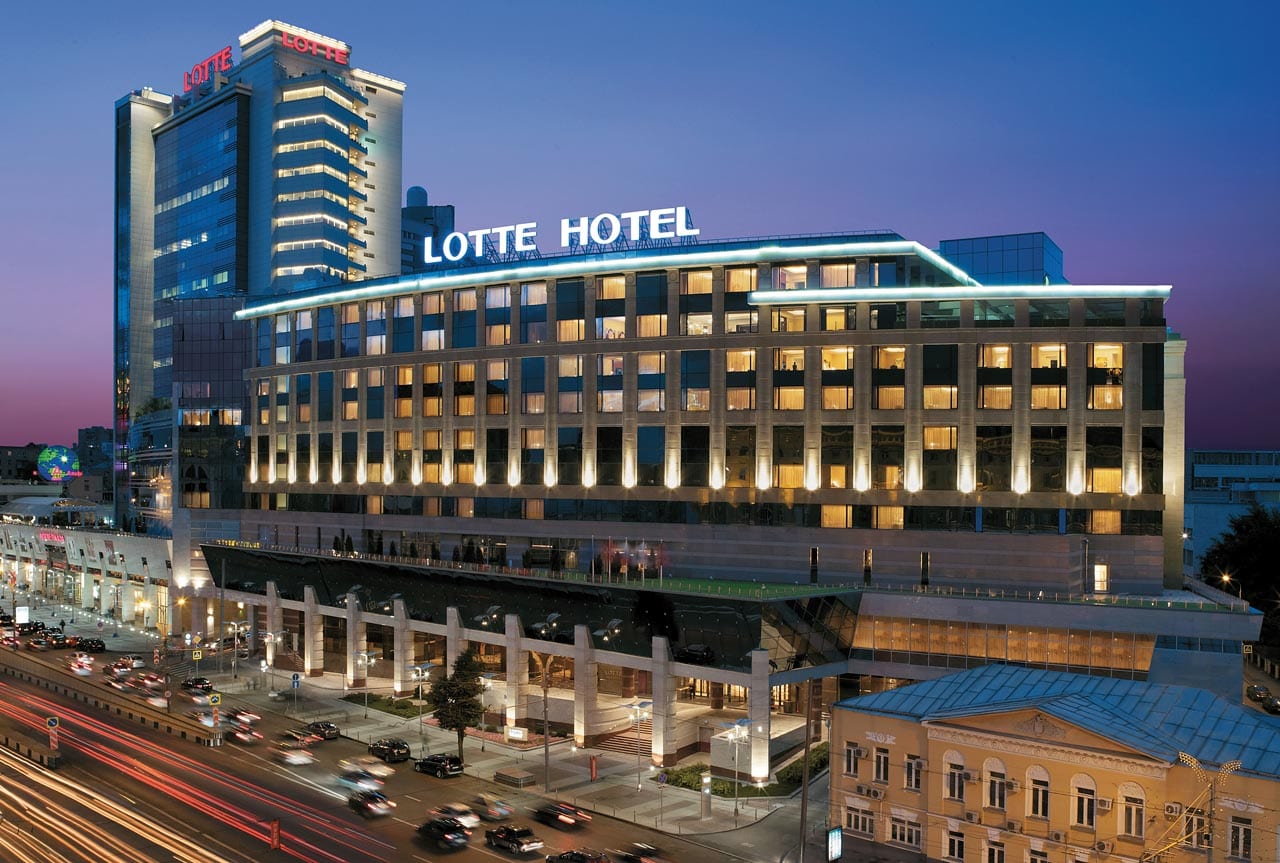
    Hotel Lotte in Seoul (Yonhap)

    The move was expected as Lotte Group chairman Shin Dong-bin has been pushing for listing Hotel Lotte on the Seoul bourse for months, as part of his reform plans to bring transparency to the governance structure of the group.

    An official at Lotte Group, however, denied the report, saying the date has not yet been fixed. He added that the application would be submitted as soon as possible.

    The listing plan came amid concerns that its market value would be lower than expected.

    The group expects the hotel chain to have a market capitalization of around 10 trillion won ($8.46 billion) when it goes public.

    But market watchers said Lotte Hotel’s recent loss of the operational license for a duty-free store at Lotte World Tower in southeastern Seoul could further drive down its valuation.

    Despite a negative outlook, they said the company would push for the stock listing as planned.

    The plan was released amid a bitter family fight over control of the retail business-focused conglomerate operating businesses both in Korea and Japan.

    At a parliamentary hearing in September, the chairman said the plan was approved by his father, Shin Kyuk-ho, with whom he had an ugly succession battle in August.

    In a bitter fraternal competition, Shin Dong-bin ousted his elder brother Shin Dong-joo and won control over the nation’s fifth-largest conglomerate.

    After a shareholders meeting, Dong-joo was stripped off the company’s registered executive position — leaving him with no foothold in Lotte Group Korea and Japan apart from the shares he holds.

  • BHG REIT IPO to raise $120 million

    BHG REIT IPO to raise $120 million

    Chinese retail player Beijing Hualian Group is planning to list its BHG REIT in Singapore this year.

    If it proceeds, it will mark just the first IPO on the Singapore SGX Mainboard in 2015.

    The BHG Retail REIT wants to issue 150.1 million shares at $0.80 per unit which gives the listing a value of $120 million.

    BHG REIT’s initial portfolio will comprise a 60 per cent interest in Beijing Wanliu Mall in Beijing; Hefei Mengchenglu Mall in Hefei’s North First Ring retail hub; Chengdu Konggang Mall, in an emerging residential area in Chengdu; Dalian Jinsanjiao Property, leased to a hypermarket; and Xining Huayuan Mall in Xining’s Ximen-Dashizi retail hub. These properties have a combined gross floor area of about 263,688 sqm.

    Under its plan, BHG’s existing Singapore-incorporated units Beijing Hualian Group (Singapore) International Trading and Beijing Hualian Mall (Singapore) Commercial Management, will subscribe for 148.31 million and 24.636 million shares, respectively.

    And it has four cornerstone investors already on board who would subscribe for a total of 169.651 million units. These investors are China Hi-Tech Holding Company, China Life Insurance Company, China Merchants Bank Asset Management and Dr Chanchai Ruayrungruang.

    With all these investments rolled together, the gross proceeds of the IPO would come to $394.2 million and give the REIT a market capitalisation of about $597.2 million post float.

    The listing is sponsored by Beijing Hualian Department Store Company, part of the BHG Group, with more than 20 years in retailing. The company manages retail properties, operates supermarkets and hypermarkets and retail distributorships as well as a luxury department store in Beijing.

    “As part of the BHG Group, BHG Retail REIT will benefit in terms of acquisition growth in China where the sponsor has an active real estate presence,” the group says in its prospectus.

  • Metro surges ahead

    Metro surges ahead

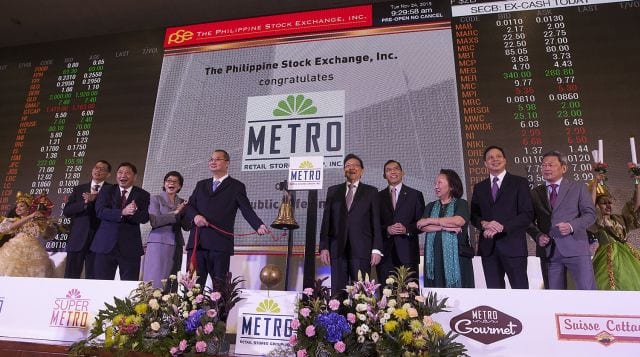
    Last week amid cheers and the beat of drums, Cebuano retailer Frank S. Gaisano – with his siblings Margaret, Jack and Edward by his side – rang the opening bell at the Philippine Stock Exchange (PSE) in Makati.

    The traditional ceremony marked the market debut of Metro Retail Stores Group, Inc., the first for a Gaisano —  an iconic name in Cebu’s retail industry —  and for a Cebu-based company in almost a decade.

    Gaisano said going public, which raised about P3.6 billion for Metro’s expansion, will also enable Metro to “improve margins and operating efficiency, protect our market share, and consequently create value for our investors.”

    Frank Gaisano (4th from left), chairman and CEO, leadS the bell-ringing ceremony to mark the listing of Metro Retail Stores Group Inc. on the Philippine Stock Exchange. Joining him on stage are his siblings Jack Gaisano director, Edward Gaisano, chairman and CEO of Vicsal, and Margaret Gaisano-Ang, director. PSE executives witness the milestone led by chairman Jose Pardo, president and CEO Hans Sicat, and directors Vivian Yuchingco, Emmanuel Bautista and Alejandro Yu. (CDN PHOTO/TONEE DESPOJO)

    “We are ready to compete with other industry players in serving our value-conscious market and be a leading and well-admired retailer,” Gaisano said in a statement issued after the ceremony.

    Metro, retail arm of Vicsal Development Corp., is the fourth largest retailer in the country, after SM, Puregold and Robinsons. It is the largest department store and hypermarket operator in the Visayas.

    The company is embarking on an aggressive expansion program that will see 50 to 70 new stores in the next five years, bringing the company’s network to more than 100 stores.

    This will double Metro’s footprint from the current 400,000-square meters for 46 stores, said Metro President and Chief Operating Officer Arthur Emmanuel.

    “About 100,000-square meters have been secured, including stores that will open in partnership with Megaworld and Ayala. These should open in the next two years,” said Joseph Conrad M. Balatbat, investor relations head of Metro, in a press conference after the bell-ringing ceremony.

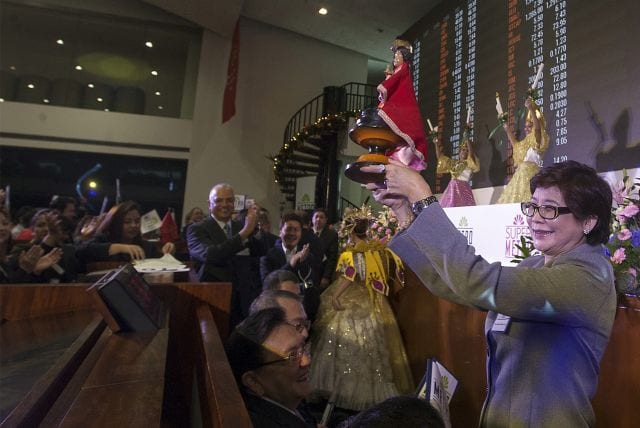
    Margaret Gsaisano-Ang holds up the image of Sto. Nino, Cebu's patron, at the Philippine Stock Exchange in Makati as Sinulog dancers perform a dance offering on stage for a touch of Cebuano culture. (CDN PHOTO/TONEE DESPOJO)

    At least seven stores are slated to open next year, including one in northern Cebu and another in the south. Four other stores will serve as anchor stores of Ayala developments while one will rise at the Megaworld mixed-use complex in Iloilo.

    About half of the 50 to 70 new stores that will open in the next five years will be in the Visayas while the rest will be in Luzon and Mindanao, where Metro has yet to establish its presence.

    “The Visayas is our priority. We see the Visayas growing much faster than Luzon. Based on Euromonitor, retail penetration in the Philippines is only 28 percent. It’s much lower in the Visayas,” Balatbat said.

    The bulk or 67 percent of the IPO proceeds will fund this aggressive expansion. The rest will be used for mergers and acquisitions.

    Balatbat said they were in talks for the acquisition of more neighborhood stores that will be rebranded as Metro Fresh N Easy.

    FIRST TRADING DAY

    The Metro stock, with trading symbol MRSGI, opened strong at P4.30 and closed at P4.13, about 3.5 percent higher than the IPO price of P3.99.

    The listing followed an initial public offering (IPO) that issued 905.4 million common shares and raised about P3.6 billion.

    This milestone occurred 33 years after the first store — then called Metro Gaisano — was opened in Colon Street in  Cebu City in 1982.

    Before the bell-ringing ceremony, Sinulog dancers in colorful costumes performed on the trading floor and on  stage as company representatives waved Metro flaglets.

    Metro Retail is run by siblings Margaret, Jack, Edward and Frank. Their parents Victor and Sally, from whose names Vicsal was coined, started Metro with a store in Colon Street that had to compete with seven others in 1982.

    There are currently 46 Metro stores across three retail formats — department store, supermarket and hypermarket (Super Metro) — in the Visayas and Luzon. Twenty-six of these stores are in Cebu and the Visayas.

    With its listing on the PSE, Metro joined three other Cebu-based companies that have tapped the capital market: Cebu Property Ventures and Development Corp. in 1992; and Cebu Holdings, Inc. and Vivant Corp., both in 1994. Aboitiz Equity Ventures and Aboitiz Power Corp. were still based in Cebu when they went public in 1994 and 2007, respectively. Both are now based in Manila.

    “This reflects our confidence in the capital markets. We believe the Philippine economy is one of the least vulnerable among the emerging economies. We continue to leverage on this positive sentiment on our economy,” Gaisano said during the press conference.


  • Philippines’ Metro Retail IPO priced below guidance

    Philippines’ Metro Retail IPO priced below guidance

    Philippine supermarket and department store chain Metro Retail Stores Group Inc said its initial public offering (IPO) was priced at a steep discount of 35 percent due to market volatility, cutting the expected proceeds from its listing to $86 million.

    The offer price was set at 3.99 pesos each, down by a third from the guidance of 6.10 pesos, said Reginaldo Cariaso, chief operating officer of underwriter BPI Capital Corp.

    Metro Retail is now expected to raise 4 billion pesos ($85.58 million) through the sale of 1 billion shares, including the over-allotment option of up to 92 million shares, to fund its store expansion programme. The company would have raised 6.17 billion pesos as per earlier guidance.

    Only two firms have debuted on the Philippine Stock Exchange this year, raising a total of 1.77 billion pesos ($37.87 million) as markets reel from volatility and investors seek clarity on the next move by the U.S. Federal Reserve.

    “We had strong interest from domestic and international investors but given that markets are very volatile, there was price sensitivity,” Cariaso said.

    Metro Retail’s price-to-earnings (PE) ratio of 15 times was more attractive than its peers, Cariaso said.

    Retail chains Puregold Price Club Inc and Robinsons Retail Holdings Inc traded at more than 20 times PE multiples on Wednesday.

    Listing is scheduled for Nov. 24. BPI Capital and Deutsche Bank are the joint global coordinators and lead underwriters of the IPO. ($1 = 46.7400 Philippine pesos)


  • 20 Lotte affiliates meet IPO requirements

    20 Lotte affiliates meet IPO requirements

    The conglomerate has pledged to simplify its governance structure and boost its managerial transparency through a set of measures, including initial public offerings (IPOs), after a bitter family feud over control of the retail conglomerate. Currently, Lotte has eight publicly traded affiliates here, with the key units being linked through unlisted Japanese units.

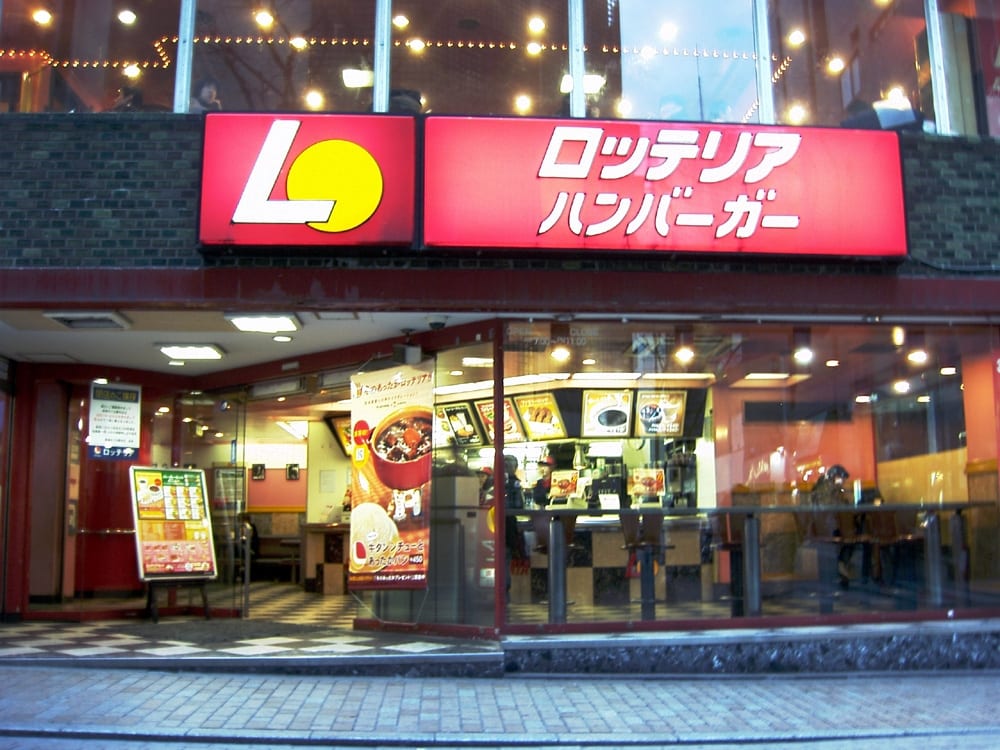
    According to the data compiled by the Korea Exchange, a total of 20 out of 73 Lotte subsidiaries are eligible for IPOs in the country. The candidates include Hotel Lotte, Lotte Card Co., Lotteria and Lotte Capital.

    Under local regulations, a firm seeking to be listed is required to have a capital base of more than 30 billion won (US$26.5 million), average annual sales exceeding 70 billion won for the previous three consecutive years and a return on equity surpassing 5 percent.

    After the squabble over control of the sprawling business empire, which has a cobweb-like governance structure, Lotte chairman Shin Dong-bin in August expressed his desire to push for the listing of Hotel Lotte, a key affiliate, as part of its reform plan.

    The listing on the local stock market requires stricter regulatory filings while allowing it to seek capital increases, issue more non-voting stocks and reap other benefits that translate into greater business opportunities.

    “As a South Korean company, we will have more of our affiliates go public with a strong will to contribute to the Korean economy,” a Lotte official said.


  • Kalyan Jewellers plans IPO

    Kalyan Jewellers plans IPO

    Indian retailer Kalyan Jewellers is planning an IPO to raise capital for expansion internationally.

    The company has plans for six stores in Qatar and an undisclosed number in Singapore, Malaysia and Sri Lanka.

    Chairman and MD T S Kalyanaraman has not revealed the timeframe for the IPO, but the move comes a year after high-profile private equity investor Warburg Pincus took a cornerstone stake in the business, effectively giving it an international scale credibility.

    Kalyan has 85 premium stores across India and in the Middle East and has a further 15 in planning. More significant is its second tier of concessions and ‘service centre’ stores branded ‘My Kalyan’ – a network currently numbering 650, with another 350 planned by March next year.

    “We had opened two [Kalyan] stores in Chennai – at Chromepet and Adayar – a couple of days ago,” said Kalyanaraman.

    “Going at this pace, we will be touching the 100-store mark towards the end of financial year 2016,” he said.

    Kalyanaraman sees huge potential in the ‘affordable diamond’ segment of the market, which it plans to service through the My Kalyan network.

  • AirAsia plans IPO for Indonesia and Philippines units

    AirAsia plans IPO for Indonesia and Philippines units

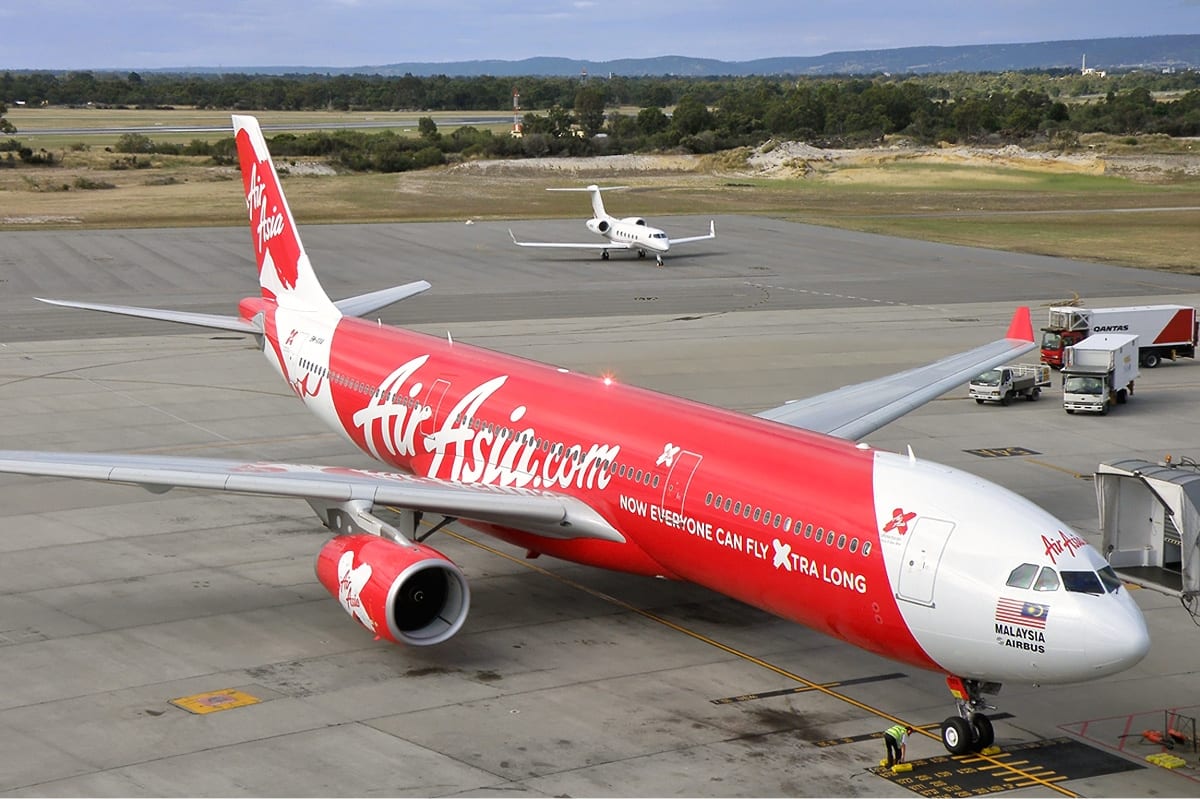
    AirAsia Bhd announced on Wednesday a corporate exercise which includes potential new equity for Indonesia AirAsia (IAA) and Philippines AirAsia (PAA) via a convertible bond issuance.

    AirAsia pointed out the company has a solid footing, strong balance sheet, rich in assets and good business outlook, as it unveiled new equity plans for IAA and PAA as it sought to reduce AirAsia’s inter-company loans.

    The first step was to raising share capital to about US$100mil each for IAA and PAA from the present level of US$13.81mil and US$13.28mil respectively.

    “The management is now in the final stages of discussions with the local partners to raise share capital to around US$100mil for IAA and PAA from the present level of US$13.81mil and US$13.28mil respectively.

    “Part of the cash raised will be used to pay down AirAsia Bhd’s interco,” it said.

    Under the second step under the pre-IPO, it said plans were to raise a minimum of US$100mil from new investor(s).

    AirAsia said it is finalising the structure of the Pre-IPO exercise which is targeted to take place in the near term.

    “Through this exercise, there will be new investor(s) that will come in for both IAA and PAA. The new investor(s) will inject at least US$100mil for each associate by subscribing to convertible bonds (CB) issued by IAA and PAA respectively.

    “The CB will have a low coupon with a two-year maturity period. The CB can be converted at a rate to be determined, tentatively discounted from the valuation of the companies in 2017. As investor(s) exercise the CB in 2017, AAB will match by capitalising our debt to ensure our shareholding remains at 49% in IAA and 40% in PAA.

    “Part of the cash raised in the CB subscription will be used to pay down AAB’s interco, while the remainder will be kept in the business for working capital.

    Under the third step, the IPO will have a valuation of about US$700mil for IAA and US$600mil for PAA

    The target to IPO both associates will be in 2017, with valuation of approximately US$700mil for IAA and US$600mil for PAA.

    “The company targets to float 20% of the shares raising minimum of US$150mil. At IPO all shareholders will be diluted proportionately. Part of the IPO proceeds will be used to pay down AAB’s interco,” it said.

  • FashionValet seals cash injection

    FashionValet seals cash injection

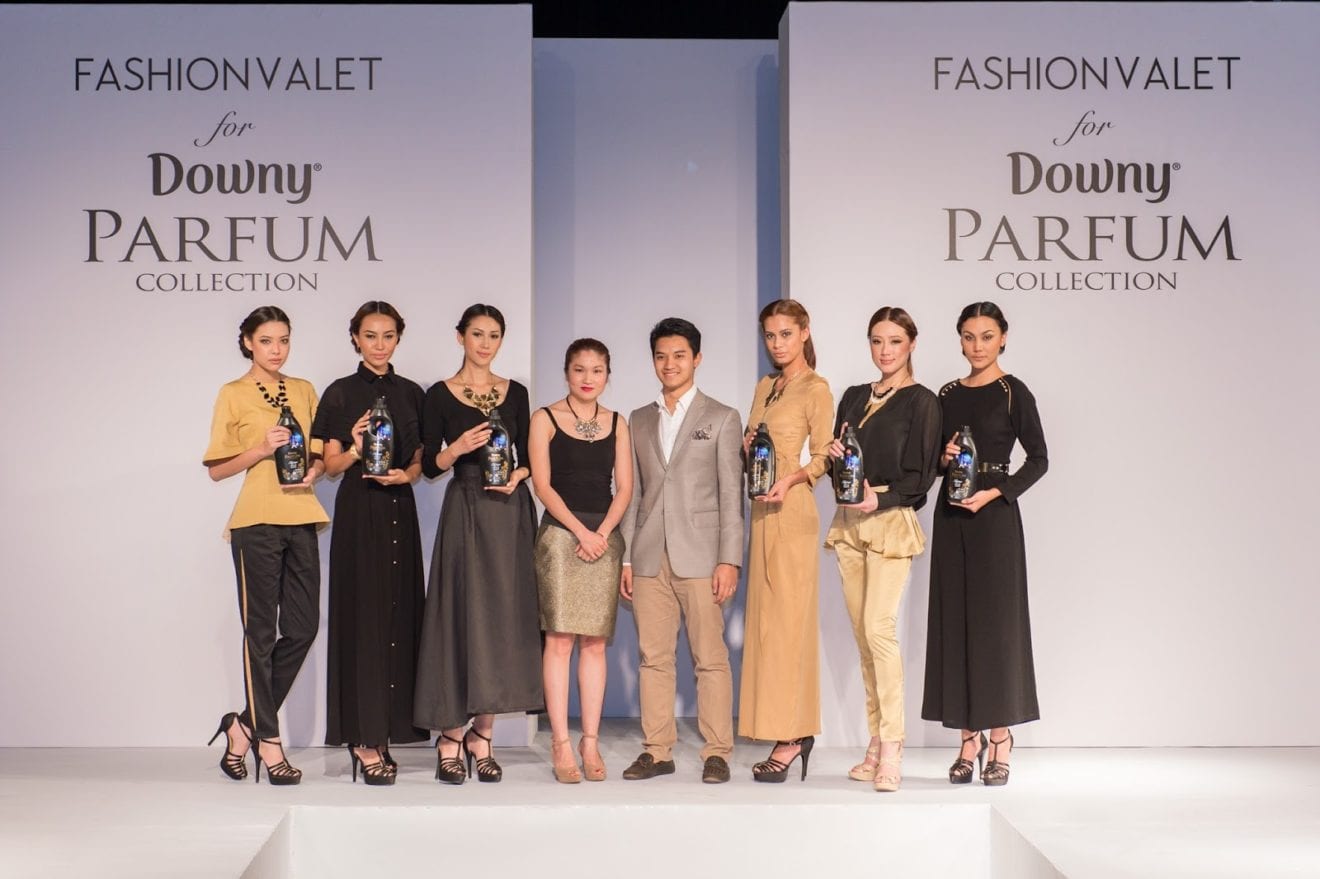
    A Malaysia online fashion destination started by a local married couple has attracted serious capital investment led by US private equity investor Elixir Capital.

    While the exact amount of the investment has not been disclosed by either party, the multimillion dollar injection will allow FashionValet to accelerate the expansion of its online reach through mobile e-commerce, big data strategies and original customer-centric content and to scale its operations into other Asian cities.

    Elixir Capital is a global private equity firm based in Silicon Valley, California.

    “The investment from Elixir Capital marks a significant step for FashionValet as we continue to really develop the brand beyond Malaysia and pave the way for retail e-commerce locally,” said the FashionValet’s co-Founder and CEO, Fadzarudin Anuar.

    “We’ve seen substantial e-commerce growth already, yet there’s room for much more in Malaysia, where there’s less than one percent penetration of sales online, as compared to 10 per cent in China, US and Western Europe, and we want to continue to foster this trend as one of the pioneering brands in the industry.”

    FashionValet tripled its revenue in 2014 on the way to becoming a leader in Malaysia’s online fashion sector. The company has managed to do this while keeping operations lean and reactive to community demand.

    “We were approached to be funded by several other companies, but Elixir Capital shared the same vision we had to grow FashionValet into a multi-million dollar company that champions local designers in Asia – which is what really convinced us to work with them,” added Vivy Yusof, co-Founder and chief creative officer of FashionValet.

    “FashionValet now forms the Southeast Asian centerpiece for Elixir’s multi-market investment platform in digital commerce, with accelerated enterprise growth and regional expansion serving as our investment thesis,” said Arshad Ahmed, MD of Elixir Capital.

    “FashionValet has the makings potentially of a homegrown Malaysian IPO in retail e-commerce.”

    FashionValet’s founders say they want to use the capital to better serve their customers and suppliers alike, and to improve the customer experience and product offering.

    FashionValet offers a wide selection of ready-to-wear garments, including Muslimah attire, with customers throughout Malaysia, Brunei, and Singapore. It stocks homegrown brands and designer products, serving as an outlet for up-and-coming designers across Asia.

  • Platinum Mall parent in IPO

    Platinum Mall parent in IPO

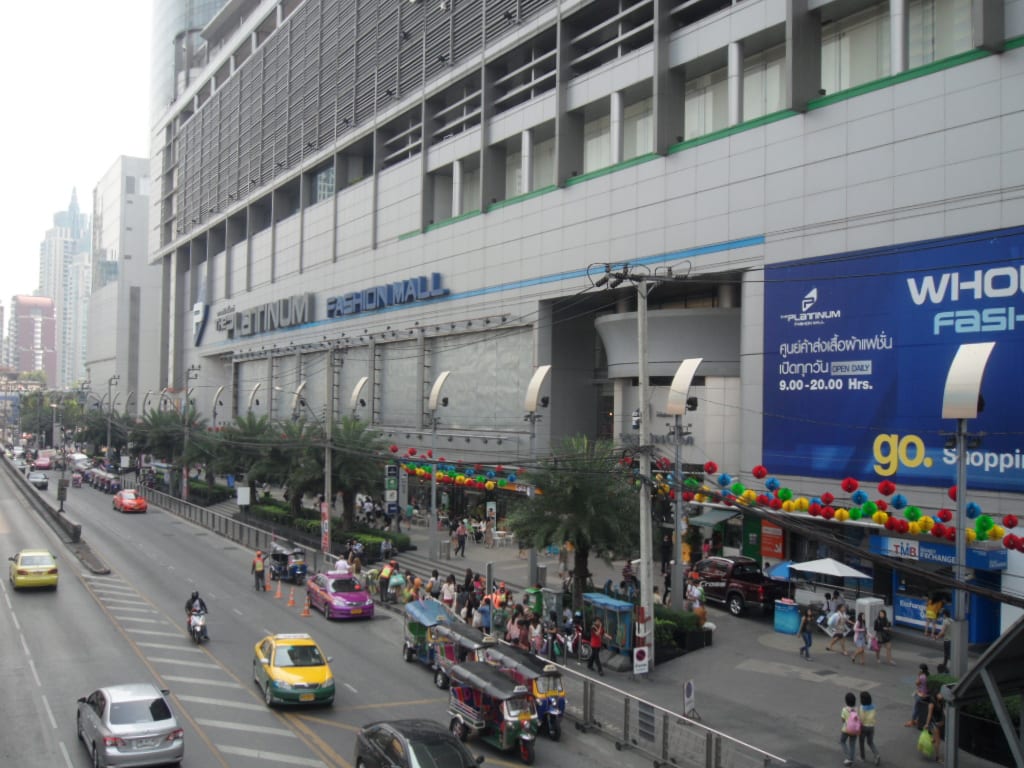
    Platinum Group, the parent of the popular Platinum wholesale fashion mall  in Bangkok’s downtown Pratunam district, is to launch an IPO.

    The group plans to raise 8 billion baht (US$247 million) through the issue of 700 million new shares. A book-building process is underway this week, which will be followed by a distribution in mid-March.

    Platinum Group president Somboon Wongrasamee says the company plans to use the funds to refinance a new project The Market by Platinum, under construction in Ratchadamri and scheduled to open in 2017. Three times the size of Platinum Mall, the centre is expected to boost the group’s income by 1 billion baht ($31 million) annually when complete.

    Further funds will be dedicated to construction of a skywalk connecting the luxury Gaysorn shopping centre with Platinum Mall and construction of a hotel in Koh Samui.

    Wongrasamee says the mall had a unique place in Thailand’s retail landscape as it attracted both local consumers and tourists.

    “There are not many wholesale operators in Thailand, so the company will expand to upcountry branches to take advantage of long-term market growth opportunities,” he told the Bangkok Post in a recent interview.