Tag: jakarta

  • “In Style – Hong Kong” Promotion Opens in Jakarta

    “In Style – Hong Kong” Promotion Opens in Jakarta

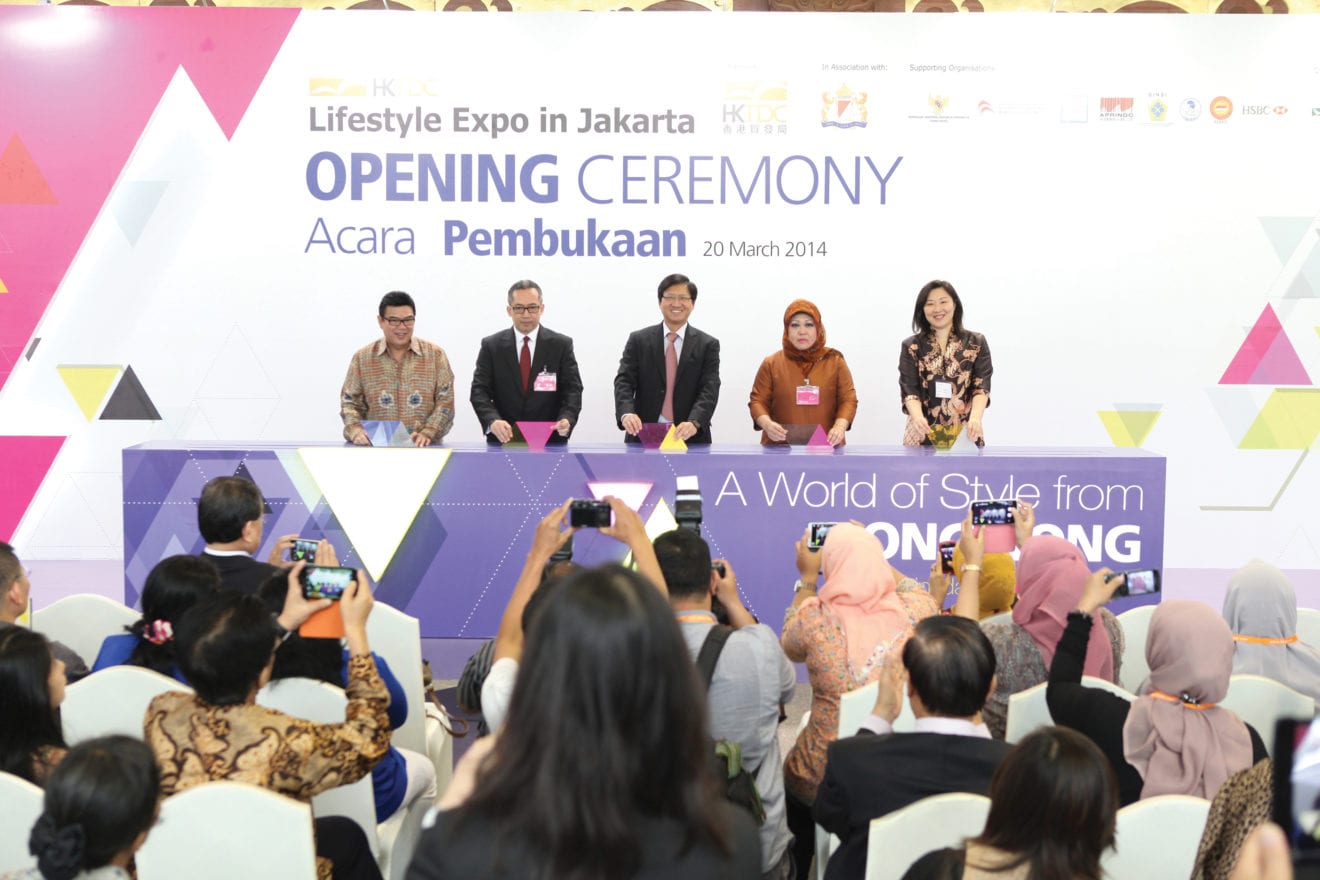
    The mega “In Style – Hong Kong” campaign kicked off in Jakarta today with the launch of a citywide promotion at the Grand Indonesia Shopping Town mall, showcasing a range of Hong Kong fashion, food and lifestyle attractions until 20 September.

    Organised by the Hong Kong Trade Development Council (HKTDC), “In Style – Hong Kong” also includes a Hong Kong branded product expo (17-19 September) for trade buyers and a services symposium (17 September) featuring business insights, networking, business matching and consultation services. An invitation-only gala dinner will be held on 17 September for 500 members of the business community.

    The multilayered promotion aims to enhance the already strong trade links between Hong Kong and Indonesia. Hong Kong is consistently rated as the world’s freest economy by the United States-based Heritage Foundation while Indonesia is the world’s fourth-most populous nation. In 2014, bilateral trade between Hong Kong and Indonesia reached US$5.16 billion.

    “In Style – Hong Kong” is an expansion of the successful Lifestyle Expos held by the HKTDC in Jakarta over the past three years, whereby Hong Kong’s innovative and quality products were featured to Indonesian buyers. This year’s event will highlight ways Indonesian companies can partner with Hong Kong to capitalise on the new business opportunities in Asia, especially China. It also showcases Hong Kong’s unique, vibrant lifestyle trends to local consumers through the citywide promotion.

    Citywide promotion – connecting with Indonesian consumers

    The centerpiece of the citywide promotion is a Hong Kong galleria at the Skybridge in Grand Indonesia Shopping Town (14-20 September), spotlighting Hong Kong fashion, food and lifestyle products. Some of these offerings were showcased at two product parades during today’s on-site press conference.

    A unique combination of Indonesian batik and Hong Kong design will also be on display at the Skybridge from 18-20 September. Under the title of “Batik Crossover”, and sponsored by leading Indonesian textile and garment company Sritex, this innovative programme features six batik fashion collections by renowned Hong Kong designers; Lulu Cheung, Walter Kong and Jessica Lau, Walter Ma, Aries Sin, Harrison Wong and Cecilia Yau.

    The citywide promotion also includes retail and gourmet specials at venues across Jakarta. A “Hong Kong Gourmet” campaign, with a webpage featuring more than 10 Hong Kong-style restaurants in Jakarta, has been launched on OpenRice Indonesia’s portal. The “OpenSnap Photo Competition” (www.opensnap.com/hktdc) is also being organised to encourage patrons to dine at participating restaurants.

    Indonesian-operated bistro chain Hong Kong Cafe is offering a three-course gourmet menu created by Hong Kong celebrity chef Walter Kei for “In Style – Hong Kong”. Dim sum specialist Tim Ho Wan is offering complimentary desserts while traditional Hong Kong-style milk tea is also available at the Chatime Indonesia takeaway beverage chain. The tea is brewed using blended tea leaves from Hong Kong beverage company Kampery.

    Meanwhile, a “Hong Kong Lifestyle Products” promotion is underway in Jakarta, with Hong Kong fashion brands such as G2000, Giordano and Staccato offering discounts and other consumer incentives.

    Main events to open 17 September

    The Chief Executive of the Hong Kong Special Administrative Region (HKSAR), Mr C Y Leung and Vice President of the Republic of Indonesia Mr H M Jusuf Kalla are expected to be guests of honour at the Opening Ceremony of the “In Style – Hong Kong” expo and symposium on 17 September.

    The expo is expected to attract about 10,000 trade buyers, importers, distributors, retailers, brand agents, franchisees, department stores and specialist vendors. It will be held at the Jakarta Convention Center from 17 to 19 September, presenting myriad opportunities for buyers to source the hottest styles and trends from Hong Kong.

    More than 190 participating companies will feature Hong Kong lifestyle products in four major themed zones as well as a display of award-winning pieces. The four themed zones are; fashion and fashion accessories (including Bossini, Cocomojo and Mastermind), jewellery and watches (including Chow Tai Fook, TSL Jewellery, Memorigin, Cosi Moda, Saga, Edwin and Charles Hubert), gifts and houseware (including Lexington, PO: Selected, Biba Toys, Kid Galaxy and Kinox), and consumer electronics (including Goodway, Gold Peak and SAS Lighting). Meanwhile, the Hong Kong Design Award Display Zone, titled “Fame – In Style” will showcase a range of award-winning products to highlight Hong Kong’s creative and design capabilities, while buyers can place low-volume orders of five to 1,000 pieces at the hktdc.com Small Orders display.

    Symposium provides global business insights

    The day-long symposium will be held at the Jakarta Convention Center for an expected 1,000 participants, mainly Indonesian businesspeople. It will feature a main symposium and five thematic sessions highlighting ways Hong Kong services, including financial services, legal and arbitration, design and branding services, digital marketing and ICT services, can help Indonesian companies expand their business in Asia, and especially the Chinese mainland.

    Distinguished speakers at the symposium include the Secretary for Justice of the HKSAR, Mr Rimsky Yuen SC; Armando Tolomelli, CEO, Prada Asia Pacific; Y K Pang, Director, Jardine Matheson Holdings Ltd; Royce Yuen, Founder & CEO, New Brand New Ltd; Kent Wong, Managing Director, Chow Tai Fook Jewellery Group Ltd; Peter Lo, Chief Country Officer, Deutsche Bank AG Hong Kong; Tommy Li, Creative Director, Tommy Li Design Workshop Ltd; Peter Mack, Executive Director, Marketing, Landor Hong Kong; and Jason Chiu, CEO, Cherrypicks.

    The symposium will also feature a mini-exhibition where 18 Hong Kong services providers and trade organisations will provide on-site business consultations. The CreateSmart Initiative*, administered by Create Hong Kong of the HKSAR Government, sponsors the participation of some of these exhibitors from various creative sectors in the symposium and their market visit in Jakarta on 18 September.


  • Happy Fresh pilots next hour grocery delivery in Southeast Asia

    Happy Fresh pilots next hour grocery delivery in Southeast Asia

    Groceries delivered to customers’ doorstep in an hour by professional shoppers. This was the promise of online grocery delivery service Happy Fresh when it started last March in Kuala Lumpur and Jakarta.

    Today, the service is available as well in Bangkok and will soon open in Taipei.

    “Our plan is to become Southeast Asia’s leading food marketplace company, and we want to operate in all major, traffic-congested mega cities in the region,” said Markus Bihler, Group CEO and Co-founder of HappyFresh.

    Bihler is optimistic that online grocery delivery in the region is poised for take off.

    “The outlook for the retail industry in Southeast Asia has never been more promising. Opportunities abound in this region with its ever more sophisticated and food-loving consumers, growing populations and steady economies,” he said, adding that Kuala Lumpur and Jakarta, in particular, are very interesting markets.

    “Spending power and credit card penetration are higher in KL than in Jakarta, and in general people are more used to buying things online there. Jakarta, on the other hand, is interesting because we really feel we can solve a huge problem here. We all know about the infrastructure challenges this city faces, and the traffic problems this often leads to,” he explained.

    Happy Fresh believes that with online grocery shopping, it’s one fewer trip customers need to make, which often translates into several hours saved that they can now spend on other activities.

    “In Indonesia, Bihler he said middle and upper-income consumers will continue to drive the growth of modern, online retailers as customers are increasingly quality-conscious, demanding higher levels of service and quality,” Biller said.  “Demand for processed foods and dairy is growing, particularly in urban areas, driven by changing lifestyles as people work longer hours and seek greater convenience.

    Happy Fresh targets to bring the service to the capital cities of Southeast Asia one step at a time.

    Though it does not plan to set up a physical store, it partners with the most established offline grocery retailers in a locality. In-house trained professional shoppers who pick  the best fresh products for customers also provide an advantage.

    Delivery hours are based on the opening hours of its partner stores, which is usually between 10 a.m. and 10 p.m.

    “Our message to our partners is simple: Focus on what you are really good at, which is running grocery stores. Then let us help you bring your brand and your products to an incremental set of customer groups: those one mobile devices, those who would like to order from their home, office or wherever they happen to be, and those who value the convenience of next hour delivery,” he said.

    Happy Fresh also strive to help partners reach customers that are normally outside of their catchment area or would have otherwise ordered a pizza rather than next hour ingredients for home cooking.

    Bihler said they offer ready to use solution to its retail partners at no upfront cost, a  fleet of drivers, and customer service agents. “In short: we help supermarkets grow, reach new customers and move into digital,” he said.

    “The food industry is among those that will always remain a physical, haptic, very sensual core. Yet – as any other – it will see heavy disruption by mobile technologies, ever-changing supply chains and faster lifestyles,” he added.

  • Twitter Looks to Indonesia to Boost Growth

    Twitter Looks to Indonesia to Boost Growth

    A year after announcing it would open an office in Jakarta, Twitter has finally hired a team to develop business in the market of 250 million people as the company works to overcome weak global growth in users and advertising revenues.

    The Indonesia team will focus on business development and marketing, with staff dedicated to building media partnerships, selling advertising and public policy development, Parminder Singh, managing director for Twitter in Southeast Asia, India, North Africa and the Middle East said in an interview.

    Mr. Singh wouldn’t give the number of new staff, saying only that hiring is at an early stage but is growing “very rapidly.”

    “Across a spectrum of functions, we are staffed here to do business,” he said.

    In March, Twitter’s then-Chief Executive Dick Costolo visited Jakarta to announce the office opening, but Mr. Singh said it took time to get the regulatory approvals needed and set up the physical office infrastructure.

    Rick Mulia, the country business head appointed in March, resigned in June citing personal reasons. He’s since been replaced by Roy Simangunson, former country manager for Yahoo Indonesia.

    Twitter is looking to emerging markets like Indonesia that are fast embracing smartphones and social media as user growth levels off in more developed markets and revenue bounces back from a hit it took last year after the company made changes to some of its ad functions.

    In the second quarter of the year the microblogging site recorded revenues of $502 million, growth of 61% from a year earlier and well above its own projections. But user growth has been sluggish.

    Core monthly active users– those who access Twitter via the Web or mobile at least once a month–stood at 304 million in the first quarter, up from 302 million in the first three months of the year.

    Boosting those numbers is where Indonesia matters. The world’s fourth most populous country has gained global attention for its voracious use of social media, and Jakarta has been deemed the world’s most active Twitter city.

    While the company doesn’t give out user numbers by country, it considers Indonesia one of its top emerging markets and Mr. Singh called it a “bright spot” in the Asia-Pacific, a region he dubbed Twitter’s “growth engine.”

    Indonesia is “the next phase of our growth,” said Mr. Singh.

    A key part of the company’s business strategy in Jakarta, he said, will focus on building partnerships with agencies and big-name advertisers, such as banks and telecom companies, and on launching new products to draw in users.

    While more than three-fourths of the company’s users are outside the U.S., only 36% of its revenue is derived internationally.

    Targeting mobile users will also be a focus in Indonesia, since about 88% of the company’s overall advertising revenue comes from mobile. Although Internet penetration rates remain low in Indonesia, the majority of people get online through their mobile phones, and the number of smartphones is seeing rapid growth.

    Twitter’s acquisition of India-based ZipDial earlier this year could also potentially be used to help it reach millions more on feature phones. The platform allows users to access Twitter through mobile messaging. When these users were included in the company’s second quarter user data, its user base grew to 316 million from 308 million.

    “For a lot of people their first experience on the Internet will be using a mobile phone,” Mr. Singh said. “That makes us very well placed to leverage the entire mobile revolution and mobile popularity in this region.”

    In March, the company opened an office in Hong Kong to build up advertising dollars and reach out to rapidly growing developers and smartphone makers. Mr. Singh said the company “would love to be in China from a usage point of view,” but is currently focused on business development through Hong Kong.

    In June the company announced plans to double its staff in Singapore. It also has offices in India Australia, Korea, and Japan.

  • aCommerce serious about their Series B with new recruits and them joining shows confidence in our company

    aCommerce serious about their Series B with new recruits and them joining shows confidence in our company

    Veteran Cross-Border and Logistics Ecommerce Executive Leaves Arvato Bertelsmann to Join aCommerce as Group Chief Logistics Officer

    Mitch Bittermann to strengthen the cross-border and logistics capabilities of the growing end-to-end ecommerce enabler en route to Series B and arrival of ASEAN Economic Community

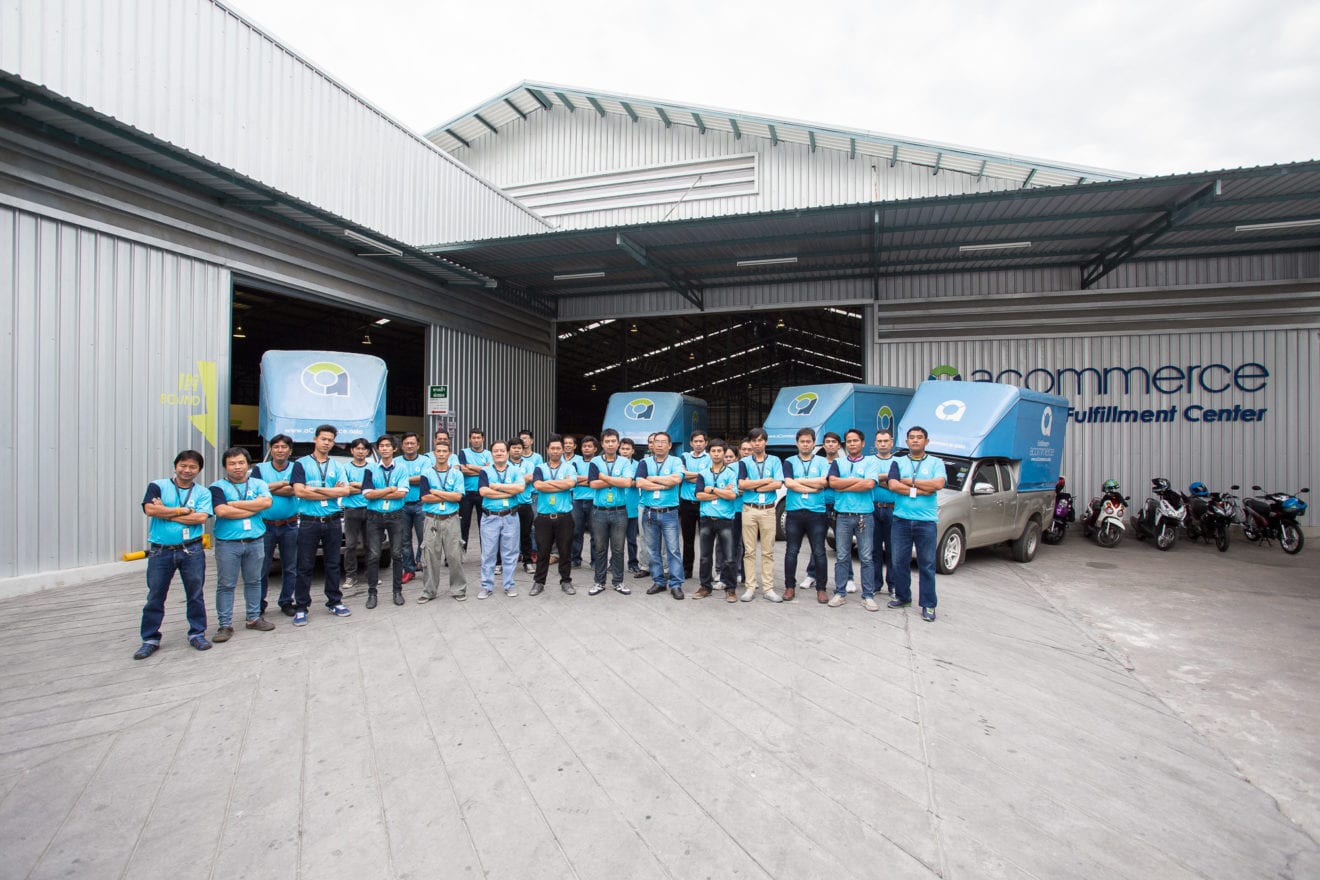
    Southeast Asia’s leading end-to-end ecommerce enabler confirmed the hire of Mitch Bittermann as their Group Chief Logistics Officer. Mitch joins aCommerce from arvato, where he was the General Manager for the Hong Kong branch and Head of arvato’s APAC Solution and Design team. As the Group CLO, Mitch will build and lead aCommerce cross-border initiatives to fulfill the increasing demand for easy intra-regional transactions in Southeast Asia as well as cross-border logistics with US, Europe and particularly, China. Mitch joins aCommerce at a time when eyes are increasingly on the region for both investment and ecommerce.

    “I’m excited to join the team at aCommerce. They’ve been at the forefront of driving ecommerce innovation in the region and are closely followed by many in the logistics space. The opportunity for cross-border in Southeast Asia is huge, with China outbound cross-border volume rapidly increasing as well as the upcoming ASEAN Economic Community (AEC) integration, the region will be a launchpad for new innovative distribution solutions,” said Mitch Bittermann, aCommerce Group CLO.

    With the ASEAN Economic Community (AEC) just around the corner, intra-regional cross-border transaction volume is expected to increase rapidly as it will open borders and stimulate trade and commerce across Southeast Asia through better logistics capabilities.

    Companies like Amazon and London-based ASOS already count Southeast Asian countries like Singapore, Thailand, and Indonesia as their fastest growing markets in Asia. Only last year, Amazon-owned Shopbop held a successful cross-border Black Friday/Cyber Monday campaign in partnership with Line and aCommerce. AEC will be a force-multiplier for this trend and allow more companies to extend their campaigns to the overseas audience.

    “With ecommerce in Southeast Asia heating up and the region being strategically positioned next to China, the world’s manufacturing and sourcing hub, there’s been a rapid increase in demand for cross-border logistics services across our client base,” said Paul Srivorakul, aCommerce Group CEO. “Having Mitch’s expertise in international logistics, we will be building out our next generation of cross-border logistics products and services to continue accelerating ecommerce in Southeast Asia.”

    Mitch helped set up Arvato’s cross-border operations in Singapore and Hong Kong serving customers in Asia and globally. With more than 10 years at Arvato, Mitch has worked on a multitude of international logistics projects including building up customer service operations in Canada, setting up distribution centers in Thailand and Europe and driving global freight optimization projects.

    En route to Series B fundraising, aCommerce has been strengthening its management team with recent additions of a new CEO and COO for Indonesia. Snorre Larstad (CEO) and Hadi Kuncoro (COO) joined aCommerce earlier last month to drive the next phase of growth of aCommerce Indonesia, which recently became aCommerce’s biggest regional operation in Southeast Asia surpassing Thailand and Philippines with 360 employees.

    “With our long term mission to make ecommerce easy in Southeast Asia, we’ve tackled the in-country logistics bottlenecks with our fulfilment centers, last-mile delivery solutions, and cash-on-delivery platform across Thailand, Indonesia, and the Philippines. Our next goal is to make intra-regional transactions as easy as possible too,” said Peter Kopitz, aCommerce Group COO.

  • New startup Balkonie wants to be Houzz for Indonesia

    New startup Balkonie wants to be Houzz for Indonesia

    The home improvement market in Indonesia was worth about US$3 billion at last count, back in 2013. Rasmus Rasmussen, co-founder and CEO of Jakarta-based startup Balkonie, believes you can double that number if you include the home furnishing market. The Danish entrepreneur, who now lives in Indonesia, reckons tech-enabled home design services represent a US$1 billion opportunity this year

    “Balkonie is a free online platform that allows homeowners to get inspired by and connect with interior designers, architects, contractors, and other home service professionals across Indonesia,” explains Rasmussen. “We are launching our platform to help the Indonesian people, by making the process of building, renovating, and general home improvement much simpler […] and cheaper online.”

    Rasmussen is well-travelled. He studied business administration and economics at Harvard and the University of Southern Denmark. He then earned his postgraduate degree in international business from Hult International Business School, jumping around to different campuses in London, San Francisco, and Shanghai. It was this travel experience which got him interested in Southeast Asia.

    “During and after my studies, I founded and worked with several startups in industries ranging from goods trading and accounting to the Muslim and halal industry. Some startups failed and others succeeded, and they all gave me invaluable experience,” recalls Rasmussen. “I initially took a job at a venture builder in Malaysia, but was quickly drawn back to the startup scene.” Rasmussen is also the managing partner at Gomo Global, an international trade and development firm aiming to bridge Northern Europe and Southeast Asia’s business worlds.

    Rasmus Rasmussen, CEO Balkonie

    Houzz for Indonesia

    Coming from Denmark, Rasmussen says he’s used to finding everything online. “Of course, I didn’t expect everything to be online in Indonesia, but I expected to find help for basic necessities like home inspiration and professionals online.” However, Rasmussen found this wasn’t the case. He ran into troubles when trying to help his Indonesian fiancé’s family design and build a house. He says:

    In Indonesia we rely on buying home design magazines and going to exhibitions to find inspiration and home professionals […] Finding contact details online and getting recommendations from previous customers is nearly impossible. So, I set out to change that with three Indonesian partners.

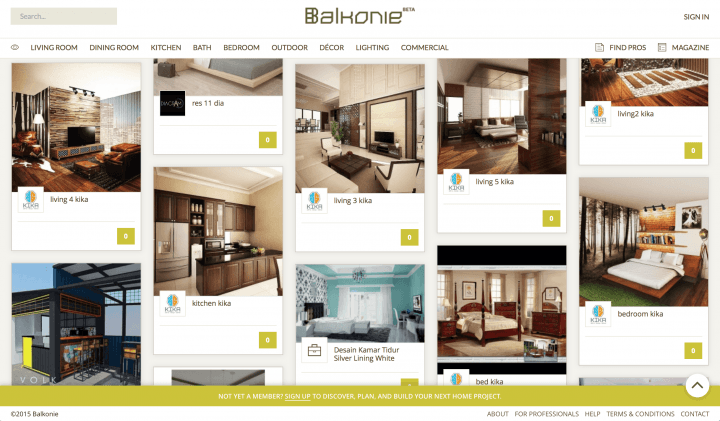
    Balkonie is pretty simple. Users can go onto the site and login with social media. From there, they can peruse all the interior “design porn” pics until they find a style they like. Each image has the designer or company responsible attached to the photo. Users arrive at the designer’s Balkonie profile page when they decide they want to know more, and from there can contact the vendor directly to strike a deal.

    Complementing the competitors

    According to the team, Balkonie is something like the Pinterest of home design combined with a directory of industry professionals who are also the site’s contributors. Rasmussen likens the concept to that of US-based startup Houzz. For monetization, Rasmussen also hopes to replicate the success of Houzz, which makes money from ad revenue, premium listings, and ecommerce commissions. However, he says right now Balkonie is only focusing on building the site’s traffic and user base. Money will have to wait until later.

    Balkonie Inspiration Page

    The site launched in beta in July. Because Balkonie is still brand new, not a whole lot can be reasonably expected in terms of market traction. However, Rasmussen says Balkonie has already gained several thousand users. He adds that the site has received hundreds of signups, with users continuously improving their profiles and uploading projects.

    Balkonie’s business model puts it in a unique position in Indonesia. Rasmussen says potential competitors such as Rooang are geared more toward being purely media, while startups like Fabelio and Livaza are focusing on furniture ecommerce only.

    Currently, Balkonie is a completely bootstrapped startup. Rasmussen says he is looking to raise funds, but before he starts banging on the doors of VCs in Jakarta, he wants to gain more validation for his product.

    “We see that the growth of middle class and affluent households in the country is very encouraging to support our vertical,” explains Rasmussen. “We first wanted to test our hypothesis that the market is ready for this service, rather than wasting everyone’s time and money.”

  • East Ventures invests in Indonesian delivery venture Popbox

    East Ventures invests in Indonesian delivery venture Popbox

    Southeast Asian VC firm East Ventures has made an undisclosed seed investment in Jakarta-based PopBox, an Indonesian startup that produces automated parcel lockers for ‘last mile‘ e-commerce deliveries and is founded by Adrian Lim and Greta Bunawan.

    The capital from the seed round is expected to finance expansion of its locker network in Indonesia and the addition of more more product features. ‘Last mile’ delivery is a term used in logistics to describe the delivery of items to consumers, via transport from a hub to a final destination.

    With the growth in e-commerce activities in ASEAN markets, the last leg of delivery, where it ends up at the consumer’s home or business, has become challenging, since most consumers are away from home when deliveries are made.

    The rise of unattended deliveries has become a significant issue among delivery companies like UPS, FedEx and DHL, with solutions like drone delivery being evaluated in China by Alibaba Group.

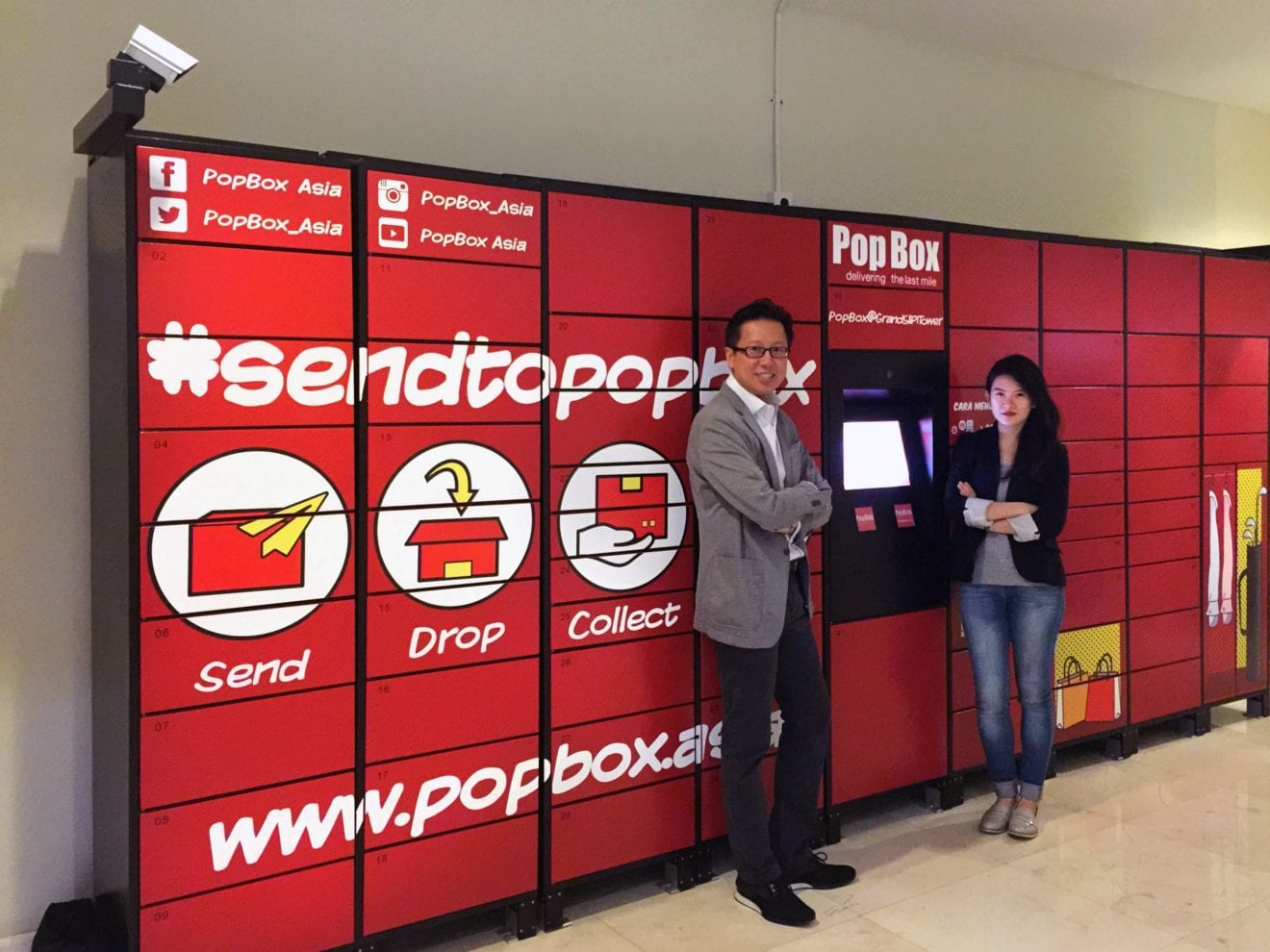
    PopBox’s solution is a clone of Amazon Locker, with a physical locker for packages to land in after last mile delivery. The locker provides a self-service delivery location to pick up and return packages.

    “We took the ‘home’ out of ‘home delivery’ in order to make it even more convenient for customers and merchants alike. By placing artistically-designed PopBox lockers at popular locations throughout Jakarta, customers get to pick up their delivery faster and at lower cost compared to having it delivered to their home, when they may not be around to receive it”, Lim said in a statement to Singapore-based startup community platform Tech in Asia.

    Given the specific challenges faced by customers in ranging for deliveries, with courier services mostly making delivery rounds in batches, customers often need to wait for a parcel to arrive and sign for it.

    A lack of receipt will result in the courier returning the package to the post office, where retrieval can prove frustrating to customers.

    Combined with delivery challenges caused by Jakarta traffic and the inefficiencies faced in negotiating security checkpoints and dealing with rejected parcels, PopBox aims to provide a solution rendering the delivery process more efficient for both merchants and customers.

    PopBox works by having shoppers select PopBox as a pickup option via a partnered site where shoppers have purchased their wares. On confirmation, a code will be sent to the shopper’s phone, which can then be scanned at a PopBox terminal to access the package. PopBox has stated that it has already established several partnerships with e-commerce retailers but has not publicly named them.

    Revenue is generated from charging customers subscription fees and per use fees, which vary with the volume transacted. Income is also generated from revenue sharing with courier companies.

    Lim’s outlook on the prospects for PopBox are highly optimistic. He said, “With a bit of luck, and once we reach our full rollout potential, our revenue should be in the range of tens of millions US dollars per annum.”

    PopBox lockers are currently located at key points within Jakarta: Baywalk Mall, Grand Slipi Tower, Kalibata City Square and East Ventures Hive. They are open 24/7, according to official statements from PopBox.

    On a regional basis, PopBox is expected to directly compete with the PopStation service offered bySingPost, which is engaged in the same service as PopBox but has no presence in Indonesia at present.

    Commenting on the investment, Willson Cuaca, managing partner of East Ventures, said, “We believe this is a segment that is currently still underinvested and the timing is right for PopBox to be added to Indonesia’s ecommerce ecosystem.”

  • Royal Enfield enters Indonesian market

    Royal Enfield enters Indonesian market

    Royal Enfield has entered Indonesian market targeting mid-size motorcycle segment and an exclusive store in Jakarta, the company said Monday, adding that the move into the world’s third largest two-wheeler is part of its growth strategy and international thrust to expand its presence in the mid-sized motorcycle segment (250-750cc).

    The company announced the foray at GAIKINDO Indonesia International Auto Show 2015. The two-wheeler major displayed its range of motorcycles at the show including the Bullet 500cc, the retro-street models – Classic 500cc and Classic Chrome and the Continental GT (535cc) cafe racer.

    Abhijit Singh Brar, head of marketing for Royal Enfield, said the company will commence retail operations soon from its exclusive dealership in Jakarta that is being set up in partnership with PT Distributor Motor Indonesia. In addition to the store, they will also build service and aftermarket capability for Royal Enfield in Jakarta.

    Backed by a growth of over 50% year on year in the past five years, the company is aiming to lead and grow the middle-weight segment, which is underserved globally. The move to enter Indonesia is part of the company’s larger growth strategy which includes a thrust on expanding its international presence.

    The company believes this growth will largely come from markets like India such as Latin America – it entered the Colombian market last year – and South East Asia, given their size and comparable commuting trends.
    Indonesia is a strategic market for Royal Enfield. With its large commuter based, this market has enormous potential to upgrade to the next level of motorcycles, should there be optimal product choice.

    “We will build our presence from Jakarta and depending on the response, we will expand our footprint to the other key cities in Indonesia,” said Arun Gopal, head for international business at Royal Enfield.
    In 2014, Royal Enfield sold more than three lakh motorcycles globally. In 2015, the company aims to produce 4.50 lakh motorcycles to supports its growth strategy globally.

  • Axiata to restructure Indonesia unit’s loan

    Axiata to restructure Indonesia unit’s loan

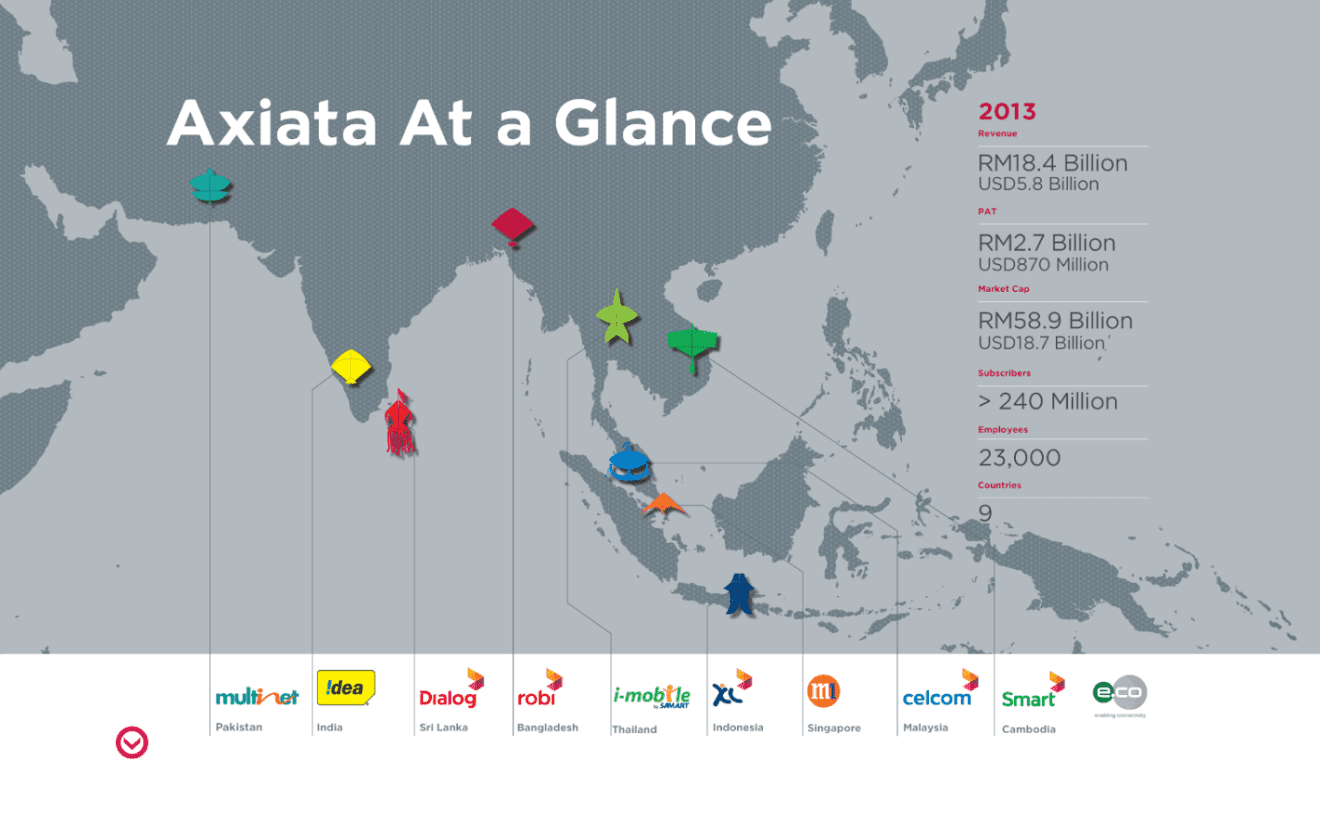
    Mobile operator Axiata Group Bhd, which reported a 34% jump in net profit to RM610.7mil in its second quarter ended June 30, is planning to restructure a US$590mil loan taken by its Indonesian unit into local currency-denominated partial sukuk.

    The move, its chief financial officer Chari TVT said, would help the group manage its foreign exchange (forex) exposure, as the volatility in the currency market rises.

    Apart from Indonesia, group borrowings include a US$134mil debt at its operation in Sri Lanka under Dialog Axiata PLC and US$100mil in Robi Axiata Ltd.

    “We also have an exposure of US$590mil, which is unhedged, in PT XL Axiata Tbk, so the total amount of exposure is about US$823mil, inclusive of Dialog and Robi,” he told reporters at a press conference yesterday.

    For operations in Malaysia, Chari said the group had borrowed some RM5bil, but there was no forex exposure as far as Malaysia was concerned.

    He said this after the mobile operator’s net profit jumped 34.2% to RM610.7mil in the second quarter from RM455mil a year ago, mainly due to lower losses from Indonesia arising from lower forex losses and net finance costs.

    Hong Leong Investment Bank Research said on a turnover of 11.1 trillion rupiah, XL had recorded a core net profit of 84 billion rupiah, accounting for 40% of the consensus estimate of 209.9 billion rupiah.

    The research house noted that XL’s transformation strategy was fruitful and was beginning to show early promising signs and results. “This is evident from several positive leading indicators, including a materially improving subscriber mix, rising reloads per sub, joiner average-revenue-per-user significantly higher than churners’ and an increased share of modern distribution versus traditional,” it said in a note.

    Chief executive officer Datuk Seri Jamaludin Ibrahim said XL’s transformation strategy was on track, as it saw a positive quarterly revenue from the group and plans to strengthen XL’s balance sheet to reduce its dollar exposure.

    Higher profits were also recorded by the Sri Lankan and Cambodian operations, and the share of profits from its associate company in India increased significantly.

    Revenue, however, was marginally lower at RM4.7bil compared with RM4.73bil previously due to lower revenues in Malaysia and Indonesia.

    Chari said the group planned to keep its capital expenditure within the RM4.8bil level this year, but will be more cautious next year, as the ringgit is expected to remain volatile.

    Meanwhile, Jamaludin said the group was reconsidering its listing plans for its Bangladeshi unit.

    “It was true that we had wanted to list out Bangladeshi unit. But that was before they came out with a new rule saying that we did not have to.

    “So, the current status is that we are re-evaluating whether we want the initial public offering or not. There are pros and cons,” he said.

  • Shinhan Card to buy Indonesia’s Salim Group unit

    Shinhan Card to buy Indonesia’s Salim Group unit

    Shinhan Card will acquire a controlling stake in an Indonesian financial company as part of its expansion strategy into emerging markets, the credit card company said Thursday.

    “We will sign a deal next week in Jakarta to buy a 50 percent stake plus a share in Swadharma Indotama Finance from Indonesia’s Salim Group for a bit more than 10 billion won ($8.4 million),” a Shinhan Card spokesman said.

    Shinhan Card plans to hold a board meeting on Aug. 21 to approve the acquisition, with a signing ceremony scheduled on Aug. 26. It aims to launch a joint venture with a new name in Indonesia in November after receiving approval from financial authorities in the two countries in September, the company said.

    Shinhan’s local venture partner will be the existing shareholders who own the remaining stake in Swadharma Indotama Finance, the spokesman explained.

    The exact acquisition price will be decided at Shinhan Card’s board meeting next week, he said.

    “The acquisition is aimed at maximizing synergies between Shinhan Card’s 30 years of credit card business know-how and Salim Group’s nationwide retail networks,” the statement said.

    Salim Group’s businesses include telecommunications, automobiles, leasing, mining energy and foods. Salim Food is Indonesia’s largest food manufacturing company, it said.

    On top of strengthening Swadharma Indotama Finance’s existing businesses, Shinhan Card will seek an approval in Indonesia to enter the local credit card market late next year, the spokesman said.

    If everything goes as planned, Shinhan Card will be the first Korean credit card firm to sell its products and services to Indonesian customers. In fact, it is risky for a credit card company to begin business in foreign countries without accumulated customer data, it said.

    “We will beef up our overseas operations by making a presence in Indonesia following our recent advance to Kazakhstan. Particularly, we will focus on the credit card business in Indonesia in coming years,” Shinhan Card Chief Executive and President Wi Sung-ho said in the statement.

    In July, Shinhan Card opened its first overseas business entity, Shinhan Finance, in Almaty, Kazakhstan, initially to handle auto financing. It plans to sell small loans to individuals from September and introduce lease products from 2017, the spokesman said.

    In Kazakhstan, only banks are allowed to get into the credit card business. So Shinhan Card has to acquire a local bank if it wants to jump into the local credit card market, he said.

    Shinhan Card said it will continue to enter other emerging markets in Southeast Asia based on its experiences in Vietnam, Kazakhstan and Malaysia.

    In the January-June period, Shinhan Card posted a net profit of 352 billion won, up 11 percent from 318 billion won a year earlier, according to a regulatory filing.

  • This German duo launched an eyewear brand in Indonesia

    This German duo launched an eyewear brand in Indonesia

    When German entrepreneur Marc Uthay set his eyes on Southeast Asia in 2013, he thought the e-commerce market was already pretty cramped. There was Rocket Internet’s everything store, Lazada – essentially an Amazon clone. Zalora, another Rocket-backed venture, specialised in fashion. On top of them, a range of local and foreign e-commerce start-ups offered everything from gadgets to shoes.

    But after some research, Uthay did find a promising niche: eyewear. He discovered that although millions of people in Southeast Asia need prescription glasses or contact lenses, the variety of brands and styles available was limited and the infrastructure to order online not well developed.

    The goal was to capture a chunk of the eyewear industry in Southeast Asia by selling online. Uthay got Christian Csermak on board to help kickstart the company in Southeast Asia. Csermak previously built a custom-made eyewear brand in Germany, called Mercy Would – with a concept similar to Warby Parker in the US.

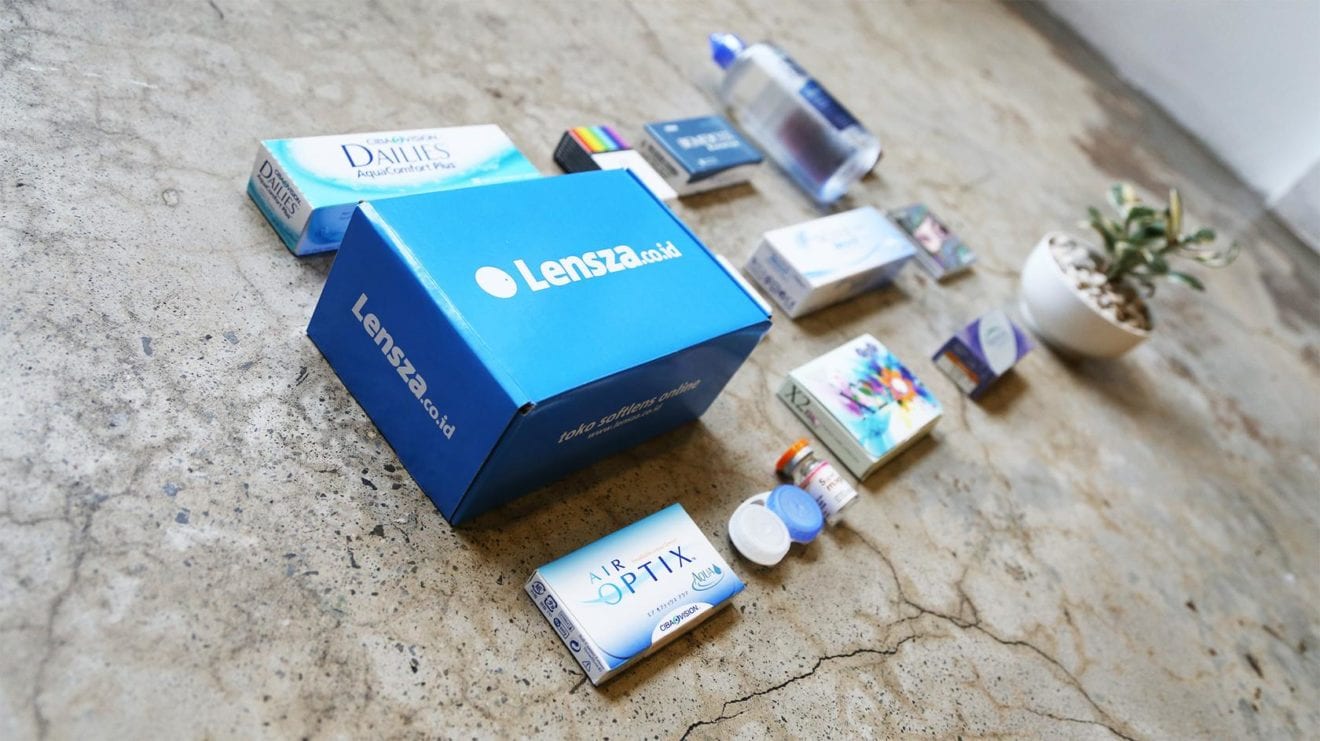
    Uthay’s and Csermak’s first milestone was to build Lensza, a one-stop shop for contact lenses and eye-care products. Lensza covers a broad range of lenses from different manufacturers, with an emphasis on coloured lenses, which are popular in Asia. They launched the site in early 2014. But the goal was never to build just an e-store.

    Once Lensza was up and running, Uthay and Csermak drew up a concept for a new, Warby Parker-like fashion eyewear brand for the Indonesian market. They named it Franc Nobel. The first collection of frames launched in June.

    Currently, Franc Nobel’s frames are imported, but Uthay plans to bring the entire production to Indonesia in the near future.One challenge, Uthay says, is that people like to try out glasses before they commit to buying a pair. The start-up is testing various methods to address this.

    Late last year, Uthay and Csermak raised a “low six-digit” round of seed funding from Crystal Horse Investments for their lens and eyewear ventures. For now, they are focusing on the Indonesian market. Expansion across the region could be tough, because similar concepts already exist in other markets.
    One direct competitor in Southeast Asia is Four Eyes, which started in the Philippines in 2013 and is also available in Singapore. Another is Specsdirect in Malaysia.

  • German giant buys Classic Fine Foods

    German giant buys Classic Fine Foods

    German retailer Metro AG has paid $290 million to buy Singapore restaurant supplier Classic Fine Foods Group from private equity owned EQT.

    CFF operates in 25 cities, including Singapore, Dubai, Hong Kong, Bangkok, Kuala Lumpur, London, Ho Chi Minh City and Jakarta. The deal will expand Metro Cash & Carry’s presence from 26 countries to 36.

    Metro said in a statement the acquisition would strengthen its wholesale subsidiary Metro Cash & Carry by bolting on an experienced food service distribution arm.

    “It provides access to growth and value creation potential in the attractive premium foodservice distribution markets. The transaction covers the operations and all fixed assets of CFF for an enterprise value of $290 million plus an earn-out of up to $38 million depending on the EBITDA performance in 2015 to 2017,” the company said.

    “Metro Cash & Carry aims to strongly expand its FSD operations. With the acquisition of CFF we strengthen our value proposition and enlarge our wholesale market presence fuelling future sales and earnings growth“, said Olaf Koch, chairman of Metro AG’s management board.

    Pieter Boone, CEO of Metro Cash & Carry, added: “With Classic Fine Foods, we found the perfect partner to expand in high growth Asian FSD markets. CFF has a strong market position and a unique exposure to Asian mega cities and Middle East. CFF partners with some of the world’s most sought after fine food producers and has excellent customer relationships in the high margin premium Hotels, Restaurants and Caterers (HoReCa) segment. The acquisition boosts our FSD capabilities widening the services for our HoReCa customers.”

    CFF, founded in 1999, has its own distribution and warehousing network in the cities in which it operates. Metro says post- acquisition, CFF will remain largely independent, maintaining its own sourcing base and distribution network.

  • MatahariMall aims for 20% of Indonesian e-commerce market by 2020

    MatahariMall aims for 20% of Indonesian e-commerce market by 2020

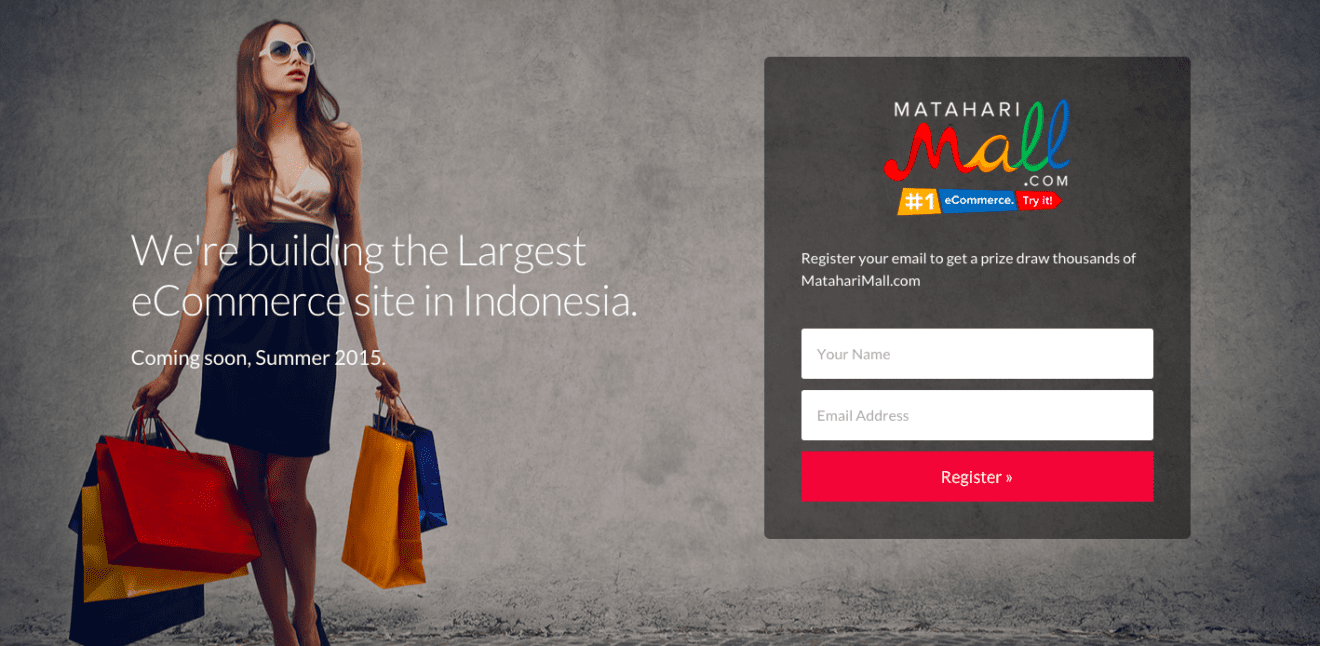
    MatahariMall, which is planned to be launched next September, is eyeing 20 per cent of the e-commerce market in Indonesia by 2020. That year, the total market volume is projected to reach US$20-30 billion, compared to US$1.3 billion currently.

    It was told by MatahariMall’s Chairman Emirsyah Satar to Berita Satu. He stated that the team uses Alibaba as their role model. As we know, MatahariMall is the first marketplace to use O2O (Online to Offline) concept since the very beginning.

    Satar said, “Currently, the e-commerce market in Indonesia is worth around $1.3 billion. It’s so low, not even one percent of the total national retail sales. In other countries, e-commerce could cover 5-8 per cent of total retail sales. So, we estimate that out market volume would reach around US$20-30 billion by 2020.”

    “Our network footprint is quite strong and well-distributed all over Indonesia. We also have the experience of doing offline retail. Users may inspect their desired products before purchasing them, thanks to the support by Matahari and Hypermart. So, they may touch, feel, and even return the product should they feel that the it doesn’t meet their expectation,” he continued.

    MatahariMall has been accessible at the moment, although it’s still in form of a teaser page. Satar claimed that the number of buyers is already quite significant.

    Challenges of the e-commerce industry

    Satar pointed out two main challenges of the e-commerce industry in Indonesia, which are infrastructure and regulation. Infrastructure refers to the poor distribution of the Internet network, while regulation refers to the government’s law.

    “For instance, the regulation that requires merchants to fill out their TIN or ID number before posting at marketplace. I don’t think it’s urgent, as the industry is still infant. It should be enforced once the right time comes,” he said.

    The government, led by the Minister of Communication and Information Rudiantara, is currently formulating the roadmap for e-commerce in Indonesia, as President Joko Widodo stated in the opening of Indonesia Convention Exhibition (ICE) last Tuesday.

  • GrabTaxi launches its Uber-like GrabCar in Jakarta

    GrabTaxi launches its Uber-like GrabCar in Jakarta

    More than a year after its initial launch, GrabTaxi’s Uber-like GrabCar is now available in Jakarta, Indonesia’s capital.

    GrabCar signs up car owners to become part of their on-demand fleet. It’s the newest transportation option from GrabTaxi, which now covers regular taxis, premium cars, and motorcycle taxis in Jakarta.

    Price-wise, a GrabCar ride is cheaper than a regular taxi in the city. In contrast to a metered taxi, the rate will be fixed. GrabCar is available as a new tab within the GrabTaxi app, and interested users can calculate the fare for their usual routes. But for now, actual rides are only available for trips between two vicinities: Semanggi and Kemang.

    To introduce the new service, GrabBike offers rides for free from August 9 to August 31.

    GrabCar is a direct competitor to Uber, which has been available in Jakarta since mid-2014, offering either UberBlack for premium cars or UberX for cheaper rides. Uber’s cars are available everywhere in the city, yet GrabCar has one large advantage over Uber in Indonesia at this point: it allows cash payments. Few Indonesians have credit cards, which poses a challenge to Uber’s growth. But since Uber has already introduced cash payments elsewhere, it might follow suit in Indonesia as well.

    GrabCar, which is part of the Malaysian startup MyTeksi, is already available in countries like the Philippines and Singapore.

  • Faux Chanel confiscated  in Jakarta

    Faux Chanel confiscated in Jakarta

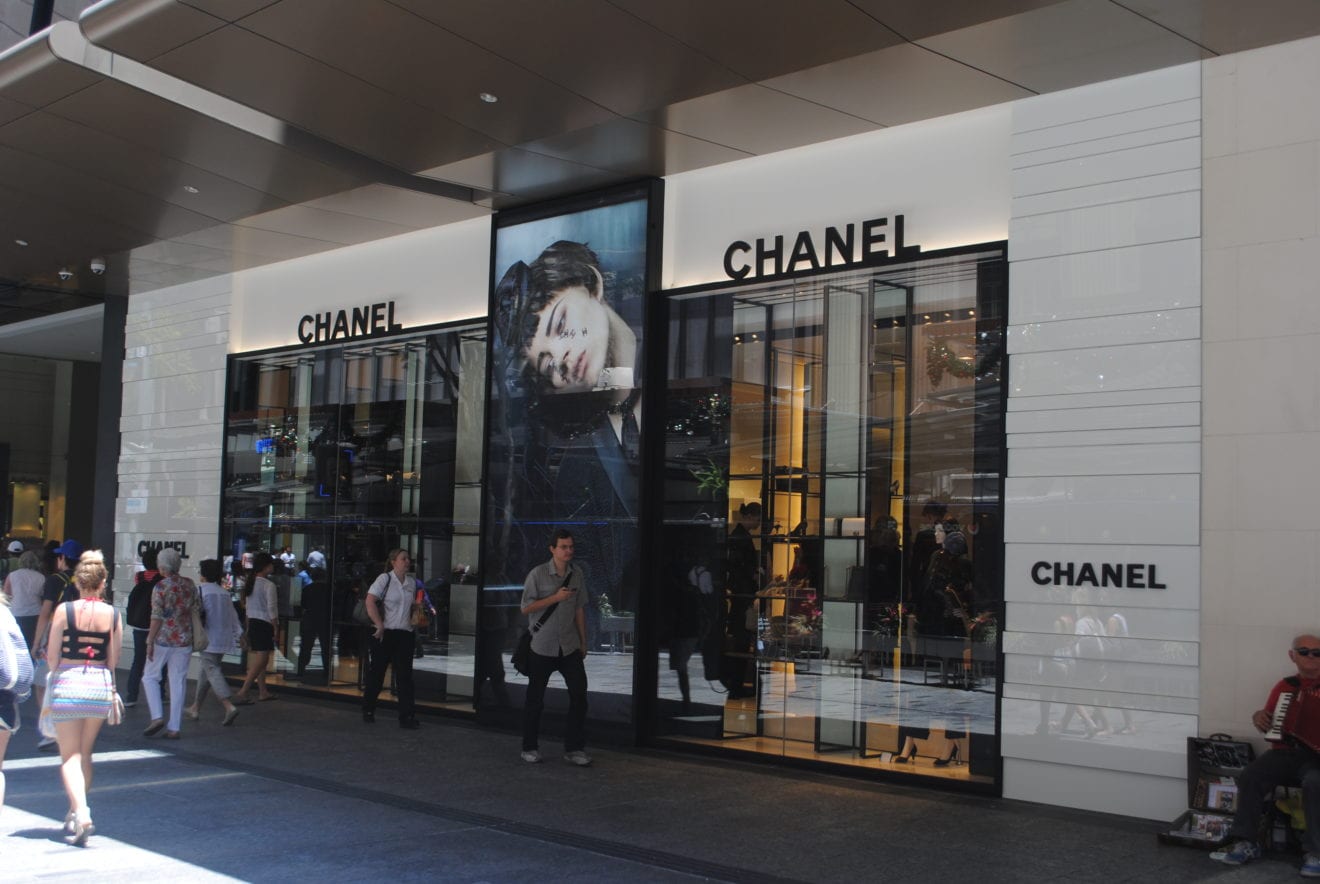
    The National Police have seized hundreds of counterfeit Chanel products from 13 stores in Mangga Dua and Senen, Jakarta.

    The head of the National Police’s special economic crimes division, Sr. Comr. Helmy Santika, said his team carried out a raid on Wednesday after receiving reports from the public in May about the sale of purses, bags, shoes and clothes fraudulently branded as Chanel.

    “The Chanel brand is registered at the directorate of intellectual property at the Human Rights and Law Ministry and is also protected under the 2001 law on brands,” Helmy said, as quoted by kompas.com on Friday.

    Of the 13 stores, 10 were located at ITC Mangga Dua in North Jakarta and the remaining three at Senen wholesale market in Central Jakarta.

    Helmy added that the confiscated items would become case evidence.

    After Wednesday’s raid, the police summoned the stores’ owners and attendants as witnesses in the hope of identifying suspects further up the supply chain.

  • Hero to open more stores  to boost revenues

    Hero to open more stores to boost revenues

    Retail company PT Hero Supermarket (Hero) will spend up to Rp 640 billion (US$48 million) this year for business expansion with retail plans to open stores in several cities across the country.

    The move will be made to restore the company’s disappointing financial performance earlier this year.

    Hero, which operates hypermarkets, supermarkets, convenience stores, drug stores and furniture stores, plans to open four Giant Ekstra hypermarkets and six mid-sized Giant Ekspres supermarkets in several regions, including Bangka and Lombok. Arief Istanto, a director with Hero, said each Giant Ekstra would cost between Rp 100 billion and Rp 150 billion while the Giant Ekspres would cost about Rp 20 billion. It means the company will allocate between Rp 440 billion and Rp 640 billion in capital expenditure to build the stores this year.

    Arif said the company aimed to improve its financial performance and hoped to book profits like it did in previous years. The company will use its internal funds for the expansion.

    “We would like to expand our network so that it can attract more customers. Thus, our top line will also increase,” he said after an extraordinary shareholders’ meeting on Tuesday. At the meeting, they agreed not to disburse the Rp 43.75 billion in dividends to shareholders and instead spend it on the company’s business expansion plan.

    Hero Supermarket previously suffered Rp 33.19 billion in net losses during the first quarter of this year amid a 14 percent increase in net revenues of Rp 3.57 trillion, making it the worst performer in the country’s retail industry.

    Last year, the company saw its net profit dive to Rp 43.75 billion from Rp 671.13 billion in 2013. A 13.94 percent increase in revenues, which stood at Rp 13.56 trillion at that time, could not ease the ballooning operating expenses, which hit Rp 3.31 trillion.

    “Our 2014 financial results were disappointing with weak sales growth and a significant increase in operating costs across all businesses as well as higher overhead and store pre-opening costs,” Stephane Deutsch, Hero’s president director, said in a statement.

    In 2014, the company launched a flagship furniture store under Swedish brand IKEA in Alam Sutera, Tangerang, Banten, some 25 kilometers west of Jakarta’s city center.

    Arief confirmed Hero has planned to build five more IKEA stores in the future as the company was upbeat about the prospects of the franchise furniture store.

    “At the moment, we are looking for land for the second store. It is supposed to be done this year,” Arief said, adding that the second store would be located in Greater Jakarta.

    According to him, IKEA has contributed around Rp 200 billion to Hero’s revenues in the first quarter of this year,

    Hero says it hopes to book 30 to 40 percent growth in revenues during the fasting month of Ramadhan this year. The company currently operates 33 Hero supermarket stores, 341 Guardian healthcare stores, 98 Starmart convenience stores, 53 Giant Ekstra stores, 121 Giant Ekspres stores, two Jason supermarket stores and one IKEA store.