Tag: jd.com

  • Alibaba And Jd.com: Transforming China’s Retail Landscape Amidst Rising Consumer Expectations

    Alibaba And Jd.com: Transforming China’s Retail Landscape Amidst Rising Consumer Expectations

    China’s retail sector is experiencing a transformative moment, marked by the strategic rise of two formidable players: Alibaba and JD.com. This dynamic shift mirrors broader trends reshaping the region’s e-commerce landscape, where Chinese consumers are becoming increasingly discerning and adept at navigating their shopping choices.

    The Rise of Online Retail Titans

    As the pandemic prompted significant changes in consumer habits, both Alibaba and JD.com have consolidated their positions, further entwining themselves in the daily lives of shoppers across the nation. Alibaba reported a staggering 15% growth in annual revenue, further highlighting the platform’s ability to adapt to the evolving market conditions. Meanwhile, JD.com showed its mettle, achieving a 10% increase in retail sales during the same period, which underscores its commitment to enhancing customer satisfaction through improved delivery services and product offerings.

    Aligning with Consumer Trends

    As Chinese consumers increasingly gravitate towards convenience and quality, these giants are innovating to meet those expectations. Alibaba’s focus on integrating online and offline shopping experiences has proven vital. The company’s ‘New Retail’ strategy, which seamlessly blends digital and traditional retail, is resonating well with tech-savvy consumers. This approach has not only driven sales but has also increased the frequency of consumer spending.

    A Competitive Landscape

    The competition is fierce. Both Alibaba and JD.com are racing to capture the hearts (and wallets) of a rapidly evolving customer base. While Alibaba has successfully leveraged its vast data analytics capabilities to personalize shopping experiences, JD.com is not far behind with its focus on logistics and delivery efficiency; it’s not just about what you buy, but how quickly you can get it. In this digital age, waiting days for a package is as antiquated as using a typewriter.

    Future Prospects: What Lies Ahead

    Looking to the future, these retail titans are aware that innovation is crucial. Both companies are investing heavily in artificial intelligence and other emerging technologies to streamline operations and enhance user experience. Analysts predict that this power struggle will only intensify, as consumer expectations continue to rise, pushing both brands to new heights in the quest for market supremacy. Whether it’s through AR-driven shopping experiences or drone deliveries, one thing is clear: the race is just getting started.

    Questions & Answers

    How are Alibaba and JD.com adapting to changing consumer preferences?
    Both companies are embracing innovation, with Alibaba focusing on a seamless integration of online and offline experiences, while JD.com emphasizes logistical efficiency and fast delivery times to enhance customer satisfaction.

    What impact has the pandemic had on the retail landscape in China?
    The pandemic has accelerated the shift towards e-commerce, leading to significant revenue growth for both Alibaba and JD.com as consumers increasingly prefer online shopping.

    What future developments can we expect from these retail giants?
    Expect continued investment in emerging technologies, such as artificial intelligence and augmented reality, as both companies strive to enhance user experiences and meet rising consumer demands.

  • JD.com Eyes UK Retail Expansion with Potential Acquisition of Argos from Sainsbury’s

    JD.com Eyes UK Retail Expansion with Potential Acquisition of Argos from Sainsbury’s

    British supermarket titan Sainsbury’s is currently exploring a potential sale of Argos, the general merchandise retailer it acquired for £1.1 billion (about $1.5 billion) back in 2016. The discussions involve Chinese e-commerce behemoth JD.com, hinting at a transformation for Argos in the increasingly competitive retail landscape.

    Shifting Focus and Future Prospects

    Under the leadership of CEO Simon Roberts since 2020, Sainsbury’s has sharpened its focus on food, signaling a strategic shift away from non-food segments. The supermarket chain stated that a partnership with JD.com could bolster Argos by infusing the brand with world-class retail technology and logistics expertise. This, according to Sainsbury’s, would catalyze growth for Argos and elevate the customer experience to new heights.

    Commitments on the Table

    While the discussions are underway, Sainsbury’s clarified that no agreements have been finalized, and there remains uncertainty regarding the outcome of any potential transaction. The retailer emphasized that any sale would come with commitments aimed at benefiting customers, employees, and partners alike.

    Argos: A Retail Game-Changer

    Argos holds its ground as the U.K.’s second-largest general merchandise retailer, claiming the title of the third most visited retail website in the country. In addition, the brand boasts over 1,100 collection points, making it a familiar name for consumers across the region.

    Sainsbury’s Commitment amid Evaluations

    Despite contemplating a potential sale, Sainsbury’s remains dedicated to steering Argos toward a successful future, reporting that its existing strategy is yielding “solid progress.” With a market capitalization of £7 billion ($9.5 billion), Sainsbury’s stands as Britain’s second-largest supermarket group, just behind Tesco. In juxtaposition, JD.com, a Nasdaq-listed giant valued at $48 billion, is looking to broaden its horizons beyond its established market in China.

    Global Aspirations for JD.com

    As part of its international ambitions, JD.com is also navigating a €2.2 billion takeover of German consumer electronics retailer Ceconomy, which is currently awaiting regulatory review. The company had previously eyed British electronics retailer Currys, only to withdraw from negotiations last year.

    Questions & Answers

    What prompted Sainsbury’s to consider selling Argos?
    Sainsbury’s is shifting its focus more toward food under CEO Simon Roberts, leading to a strategic reassessment of its non-food assets like Argos.

    What advantages does JD.com bring to the table regarding Argos?
    JD.com could provide extensive retail, technology, and logistics expertise, which would help enhance Argos’ growth and improve the overall customer experience.

    What are the current market standings of Sainsbury’s and JD.com?
    Sainsbury’s holds a market capitalization of £7 billion ($9.5 billion) while JD.com is valued at $48 billion, showcasing the vast difference in their market positions.

  • JD.com Boosts Ecuadorian Rose Imports to Enhance Supply Chain Resilience and Product Variety

    JD.com Boosts Ecuadorian Rose Imports to Enhance Supply Chain Resilience and Product Variety

    JD Flowers, the floral arm of JD.com, is poised to make a remarkable splash in China’s flower market with ambitious plans to sell over 100 million flowers by 2025. This growth strategy directly taps into the surging demand for high-quality imported flowers, particularly Ecuadorian roses, which are beloved for their striking colors, long stems, and impressive durability.

    Direct Sourcing Drives Expansion

    To meet consumer expectations, JD Flowers is ramping up its direct sourcing from Ecuador, allowing the company to deliver these coveted blooms to Chinese customers in a matter of just 72 hours. Impressively, this nimble logistics system positions JD Flowers to keep retail prices in check, even as they offer an abundance of top-quality options.

    A Favorable Trade Agreement

    The decision to focus on Ecuadorian roses coincides with the recently signed 2024 China-Ecuador Free Trade Agreement, which eliminates import tariffs and has paved the way for JD Flowers to lower prices by approximately 30%. These reductions not only enhance competitiveness but also open the door to even wider consumer access.

    Projecting Growth in a Booming Market

    As China’s floral market is projected to grow at an annual rate of 7%, exceeding RMB250 billion by 2025, JD Flowers is well-positioned to stand out. The company plans to import 50 million blooms from not just Ecuador, but also from renowned floral export countries such as the Netherlands, Japan, and Colombia.

    Streamlined Operations for Quality Assurance

    JD Flowers has partnered with farms like Ceres Farms to streamline export processes, reduce costs, and maintain the quality of its roses. A specialized “Ecuadorian Rose Supply Route” with Emirates Airlines enhances logistics efficiency, slashing transit times down to 40 hours while ensuring freshness through a meticulous three-stage temperature control system and rapid customs clearance. It seems this blooming partnership is designed to keep petals pristine and profits robust.

    Questions & Answers

    What is JD Flowers’ goal for flower sales by 2025?
    JD Flowers aims to sell over 100 million flowers by 2025, significantly tapping into the growing floral market in China.

    How has the China-Ecuador Free Trade Agreement impacted pricing?
    The agreement has removed import tariffs, enabling JD Flowers to lower retail prices of Ecuadorian roses by approximately 30%.

    What unique logistics does JD Flowers employ for importing Ecuadorian roses?
    The company uses a dedicated supply route with Emirates Airlines, ensuring transit times of just 40 hours while implementing a three-stage temperature control process to maintain flower freshness.

  • IKEA Unveils Official Flagship Store on JD.com: Shop the Latest Designs Online!

    IKEA Unveils Official Flagship Store on JD.com: Shop the Latest Designs Online!

    IKEA has marked a significant milestone by launching its flagship store on JD.com, opening the floodgates to its extensive collection of home furnishings for millions of online shoppers across China. This vibrant new outlet boasts an impressive 6,500 products spanning 168 categories, including the much-anticipated debut of the BÄSTBOLL gaming chair and MÅLOMRÅDE gaming desk. As consumer interest surges, IKEA is set to continually expand its offerings, ensuring that even the most niche home décor enthusiasts find what they’re looking for.

    This exciting partnership melds IKEA’s renowned design expertise with JD.com’s robust logistics and digital infrastructure. By leveraging JD Logistics, IKEA can fulfill orders swiftly, reaching even the most remote areas without physical stores. Remarkably, JD.com boasts a track record of delivering 95% of orders within a mere 24 hours, a feat that promises to delight time-strapped shoppers.

    Tech Meets Home Decor

    That’s not all—JD’s innovative “Mini Liying” Naked-Eye 3D Solution will take the shopping experience up a notch, allowing customers to explore 3D models of select IKEA products directly on their smartphones. Gone are the days when you had to squint at photos; now you can examine every angle and detail—who knew online shopping could come with such a techy twist?

    The launch is a key component of IKEA’s broader omnichannel strategy in China, a deliberate move to cater to the increasing demand for diverse and convenient home shopping experiences from younger consumers. JD.com is not merely a platform; it’s transforming into a haven for global home brands. With IKEA joining esteemed names like MUJI, Natuzzi Italia, HAY, Georg Jensen, and LE CREUSET, the array of choices continues to grow.

    In the first half of 2025, participation from international brands on JD Home skyrocketed by over 130% year-on-year, underscoring JD.com’s commitment to enhancing its supply chain and service offerings in China. The collaboration with IKEA is just the latest chapter in this expansive narrative, promising to redefine home shopping across the Asia-Pacific region.

    Questions & Answers

    What products does the new IKEA flagship store on JD.com offer?
    The store offers 6,500 products across 168 categories, including exclusive items like the BÄSTBOLL gaming chair and MÅLOMRÅDE gaming desk.

    How does JD Logistics enhance the shopping experience for IKEA customers?
    JD Logistics enables swift order fulfillment, with 95% of orders delivered within 24 hours, even in areas without physical IKEA locations.

    What innovative technology is featured in the shopping experience?
    The store employs JD’s “Mini Liying” Naked-Eye 3D Solution, allowing customers to visualize 3D models of select IKEA products on their smartphones without the need for additional devices.

  • JD.com fosters local stalls and small stores in China

    JD.com fosters local stalls and small stores in China

    Chinese e-commerce giant JD is moving to stimulate small and medium enterprises nationally by providing supply chain and service support for the employment of more than 5 million people.

    The firm is accumulating around 50 billion goods as a part of its “Spark” economic support plan designed to benefit SMEs, stall owners, and shopkeepers.

    The plan is focused on three areas: ensuring supply, assisting operations, and promoting employment. The firm will also provide each small shop with US$14,000 in interest-free credit to make purchases.

    “JD has already comprehensively accumulated rich experience in supporting the ‘stall economy’ and the ‘small shop economy’,” said JD Retail CEO Lei Xu. “The impact of the epidemic will accelerate the digital transformation of the real economy, and stalls and small shops are no exception. JD has both the ability and the responsibility to use digitization to support and make the economy of small stalls and shops more dynamic, helping to further invigorate the overall economy and stabilize employment.”

    JD is now set to work with nearly 10,000 brand manufacturers and more than 4000 joint warehouses to provide offline retailers with access to low-cost, high-quality supplies. The firm will also help offline retailers to expand their online operations.

    In poor regions, JD will provide flexible employment, work-from-home, and farm-to-table opportunities including positions such as logistics order collection, warehouse management, inventory management, and packaging. It will also establish start-up projects and provide support in the fields of catering retail, regional logistics agencies, and freight transportation.

    Data collected by the company shows that, right before its 6.18 promotional event this year, the transaction volume of JD New Markets in Beijing, as well as Hubei and Anhui provinces increased more than fivefold. The number of orders placed on the JD Convenience Store Go mini program was more than 10 times the previous daily average.

  • Meitu lets retailers test online makeup service during Covid-19

    Meitu lets retailers test online makeup service during Covid-19

    Chinese imaging app Meitu has offered its AR online makeup trial system to global beauty enterprises and retailers for free to help them overcome difficulties caused by the coronavirus pandemic.

    The firm’s Beauty Industry Support Plan was extended from limited-time free use in specific regions to apply universally. The plan was rolled out as a three-month free trial service in the wake of the outbreak for 10,000 beauty enterprises and retailers, with a three-month extension given to existing users – including Givenchy, Shiseido, Clarins, Bausch + Lomb, DFS, and other partners.

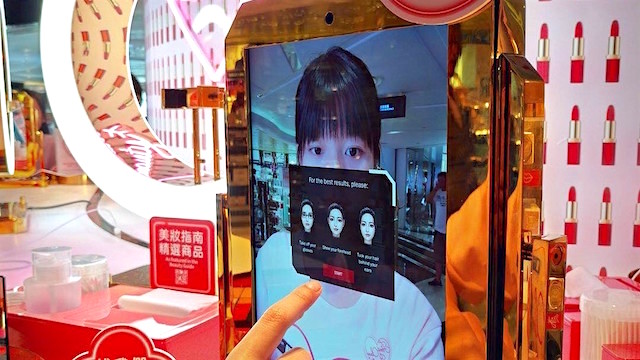
    The software, called the Cosmetic Promotion Assistant, is based on Meitu’s facial-recognition and image-processing technologies and is. The system can also recommend suitable colors and styles based on the user’s facial features. It generates a virtual makeup effect within one minute, and also supports sharing and purchase functions, with multiple payment methods allowed.

    In providing free trials to potential customers, users of the service have seen increased sales of makeup products such as lip gloss, blush, eye shadow, and foundation.

    Enterprises and their beauty assistants are able to configure makeup effects on their own branded websites, which can then be shared to social platforms such as Facebook and Twitter. Purchase links provided on the trial page can redirect users to the vendor’s official website, or marketplaces like Amazon or eBay.

  • Gome launching on JD.com

    Gome launching on JD.com

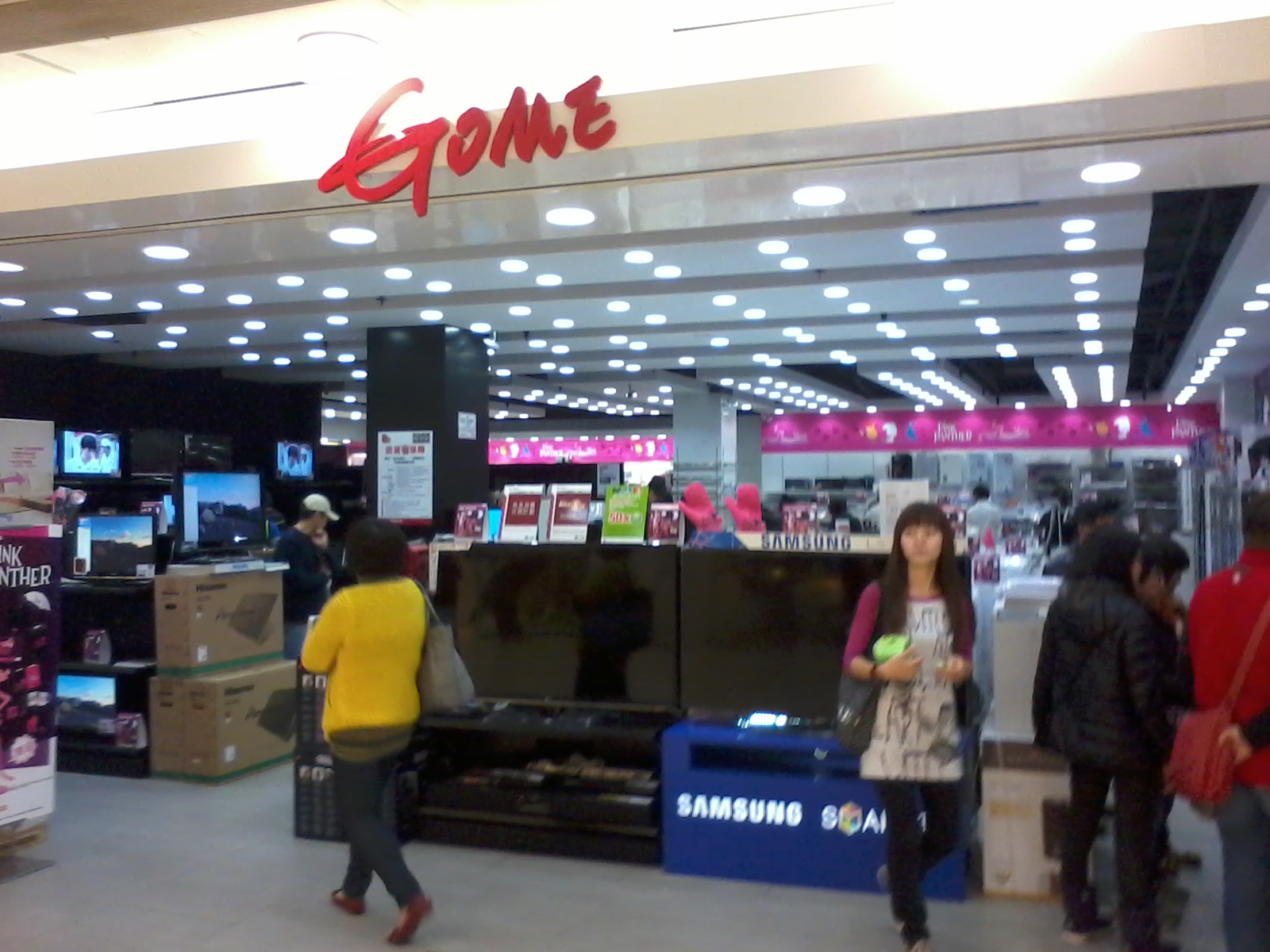
    A Gome flagship store has launched on JD, giving the Chinese home appliance retailer access to JD’s more than 360 million active annual customers.

    “JD.com is pleased to launch Gome’s third-party flagship store on our platform, making home appliances from Gome’s offline store available to more Chinese consumers online,” said a spokesperson from JD. “JD’s third-party platform welcomes all qualified merchants with high-quality products and services to launch stores on our platform. Gome will also use JD’s supply chain to introduce consumer goods to its online platform gome.com.”

    The cooperative agreement reflects an emerging dynamic in Chinese retail where businesses that would normally tend to compete are instead leveraging each other’s strengths to take advantage of the scale of China’s online reach.

    For the time being, Gome will use its own warehouse and logistics facilities for the third-party store. JD will provide data, technology and customer service-related support to Gome.

  • Farfetch opens flagship on JD.com China

    Farfetch opens flagship on JD.com China

    Farfetch China has opened a flagship store on JD, one of its strategic investors.

    The move follows Farfetch China’s purchase of Toplife announced in February and gives the global luxury-fashion technology platform access to more than 300 million customers in Mainland China.

    According to a statement, Farfetch now has a ‘Level 1’ entry point on the JD app, providing customers with instant access to more than 3000 brands via Farfetch’s network of more than 1000 luxury brand and boutique partners.

    “The partnership builds on the existing successful relationship between Farfetch and JD, started in July 2017,” said Farfetch China MD Judy Liu.

    Since then, the fashion platform has built its China presence by sharing JD’s logistics capabilities and its insights into the behaviour of Chinese luxury consumers.

    “Brands crave ever-better access to the Chinese market, and we are thrilled to deliver this for them,” said Liu.

    “This is an important expansion of our strategic partnership with JD, which strengthens the Farfetch China business as part of our truly global offering. Being able to offer the full suite of Farfetch’s technology and logistics platform to brands wanting to reach high-end Chinese consumers is a major competitive advantage as we seek to continue to grow market share in the rapidly expanding online luxury market.”

  • JD takes major stake in Five Star Appliances

    JD takes major stake in Five Star Appliances

    Chinese online retailer JD is to buy nearly half the shares in electrical goods retailer Jiangsu Five Star Appliance, for US$189 million. Jiayuan Chuangsheng currently holds 93 per cent of the Five Star business and after divesting a 46 per cent stake to JD will remain its largest shareholder with 47 per cent.

    Analysts say the investment will allow JD to boost its online profile and provide consumers with a network of about 300 Five Star Appliance storefronts, in much the same way as archrival Alibaba is building physical retail networks in Mainland China, blurring the boundaries between online and offline retailing.

    With stores primarily located in central and southern China, Five Star Appliances has annual sales of about US$2.7 billion.

    Last year, JD accounted for nearly 40 per cent of China’s home appliance sales, making it the largest retail in the space. Partnering with a brick-and-mortar retail network is likely to boost sales for both parties and protect JD from fast-growing Suniung.com which now accounts for 30 per cent of the market. Tmall is also building a share of the appliance sector, its sales now nudging 25 per cent.

  • JD to hire 15,000 new employees

    JD to hire 15,000 new employees

    Chinese e-commerce giant JD has announced it plans to recruit up to 15,000 staff this year – just a week after saying it would let go 10 per cent of its senior executives. The majority of positions expected to be filled this year will be in logistics, with up to 10,000 delivery and low-level management positions being recruited. Other staff will be hired to improve user experiences in the firm’s retail arm.

    JD pledged in its announcement to promote competent staff and offer more leadership training to young people as part of its contribution to society. The firm currently hires around 170,000 full-timers, according to last year’s estimates, and is moving to extend its supply network throughout every one of China’s county-level territories.

    Some 20,000 R&D staff were hired last year in an RMB8.64 billion (US$1.29 billion) investment in technology research.

  • JD.com has just marked a breakthrough for drone delivery in Southeast Asia

    JD.com has just marked a breakthrough for drone delivery in Southeast Asia

    JD.com announced the completion of Indonesia’s first government approved drone flight – a breakthrough for drone delivery in Southeast Asia. The successful pilot opens the door for future commercial drone use in Indonesia and the Southeast Asia region, subject to further regulatory approvals. Representatives from Indonesia’s Ministry of Transportation, Civil Aviation and Air Navigation were present for the flight. The news was announced during the World Economic Forum Annual Meeting.

    The test flight took place on January 8, 2019, in West Java, Indonesia, where the drone flew from Jagabita Village, Parung Panjang to MIS Nurul Falah Leles Elementary School to deliver backpacks and books to students.


    The items delivered by drone were part of a larger donation of supplies from JD.com to the school. JD has a long history of offering philanthropic support to those in the communities where it operates. The company often taps its technology and nationwide logistics network to provide immediate support for natural disasters such as earthquakes in China.

    JD.com and its JV partner, e-commerce company JD.ID, were early movers in bringing high quality e-commerce to Indonesia. JD.ID, which launched e-commerce operations in 2016, sells 1 million SKUs and serves more than 20 million consumers across the country. Its operations leverage a logistics network consisting of ten warehouses across seven islands, covering 483 cities and 6,500 counties.

    Given the fact that the country is spread out across many islands, the implementation of drones for regular use in e-commerce deliveries, as well as other logistics-related services, will enable citizens in Indonesia to enjoy more efficient and reliable services, and help JD.ID realize its goal of being able to deliver 85% of orders same- or next-day. JD.ID is also committed leveraging its logistics and other resources to support humanitarian efforts like earthquake disaster relief.

    “It is a privilege to have contributed to this important moment in Indonesia’s history,” said Jon Liao, Chief Strategy Officer at JD.com. “We have been using drones for real deliveries in China for over two years now, and have seen the profound impact that the technology can have on people’s lives around the country. We look forward to working closely with WEF and the Indonesian government to realize the full potential of this technology, and provide more convenience to Indonesian citizens.”

    JD.com is a strategic partner of WEF and a partner of WEF’s Centre for the Fourth Industrial Revolution. The C4IR is a global hub for multi-stakeholder cooperation to develop policy frameworks and advance collaborations that accelerate the benefits of science and technology. Leveraging drone technology to deliver supplies to areas in need is a high priority on the C4IR’s agenda. WEF and JD have been working closely together to ensure the success of the pilot in Indonesia.

    “This trial represents the first government approved drone delivery operation in Indonesian history,” said Timothy Reuter, Head of Drones and Tomorrow’s Airspace at the World Economic Forum. “These tests are an opportunity for Indonesia to become a leader in the Southeast Asia region by leveraging drone delivery to improve access to vital medical, humanitarian, and commercial goods in remote areas.”

  • JD.com steps into entertainment industry

    JD.com steps into entertainment industry

    JD.com, China’s largest retailer, has joined forces with Paramount Pictures and global play and entertainment company Hasbro to celebrate the Chinese release of the new TRANSFORMERS movie BUMBLEBEE. On the run in the year 1987, BUMBLEBEE finds refuge in a junkyard in a small Californian beach town. Charlie (Hailee Steinfeld), on the cusp of turning 18 and trying to find her place in the world, discovers BUMBLEBEE, battle-scarred and broken. When Charlie revives him, she quickly learns this is no ordinary, yellow VW bug.

    JD first partnered with Hasbro and the TRANSFORMERS franchise in 2017, releasing a MISSION RED mini short that showed Optimus Prime and Red Knight – a special JD exclusive TRANSFORMERS character – fighting to protect the energon fuel source. This year’s celebration will be accompanied by a series of three mini shorts featuring Panasonic and Chinese menswear brand HLA in which Red Knight protects energon.

    JD and Hasbro are also bringing Red Knight to life by creating an action figure of this TRANSFORMERS bot. Released on Dec 29, 2018, the exclusive action figure is only available on JD.

    JD also launched a “Super BUMBLEBEE Day” sales promotion to coincide with the Jan 4 premiere of the film in China. During the promotion, JD’s more than 300 million customers were able to purchase BUMBLEBEE movie-themed merchandise from Hasbro, Panasonic, HLA, and more. JD has outfitted multiple delivery vans and delivery boxes across China with BUMBLEBEE-themed designs.

  • JD driverless delivery vehicles up for test

    JD driverless delivery vehicles up for test

    JD driverless delivery vehicles have been deployed in live testing in two Mainland China cities. The technology-cum-e-commerce company has opened two smart-delivery stations in the cities of Changsha and Hohhot, strengthening its autonomous logistics capabilities. The stations are carrying out research and development testing and personnel training to solve issues related to last mile delivery.

    The JD driverless delivery vehicles can be loaded with up to 30 parcels before autonomously delivering them within a 5km radius. The vehicles can plan routes, avoid obstacles and recognise traffic lights.

    The vehicles have locked boxes so each customer’s purchases are kept separate. Once the robots reach their destination, facial recognition technology enables customers to easily and securely collect their parcels from the correct locker.

    When running at full capacity, the two delivery stations, operating with a half-half split between robots and human couriers, can deliver up to 2000 packages a day.

    The JD driverless delivery vehicles are part of the company’s Boundaryless Retail vision, in which consumers can buy whatever they want, wherever and whenever they want it.

    “As China’s largest retailer, JD is in the unique position of being able to research and develop, and commercially deploy, innovative new technology that is shaping the future of shopping worldwide,” said Chen Zhang, JD’s chief technology officer.

    “As JD opens its technology up to other companies and industries, the features that we’ve already rolled out in China from automated warehouses to virtual shopping are going to be enjoyed by consumers everywhere,” he said, referring to the company’s Retail as a Service strategy.

    CES debut

    The opening of the smart delivery stations comes days before JD attends its first Consumer Electronics Show in Las Vegas, Nevada – the world’s largest event for the latest technology, innovation and creative thinking.

    The company will showcase cutting-edge technology which is changing the way consumers shop in China, and which it says will revolutionise global commerce. Visitors will be able to see how JD uses its drones to deliver consumer goods and medical supplies to remote areas in China, and catch a glimpse of the world’s first fully-automated fulfillment centre. They will also see how underground urban logistics will make shopping more convenient than ever, and fundamentally alter how cities work.

    This year, CES attendees will be able to see JD’s futuristic technology up close and even try some of it for themselves at the company’s interactive booth.

    Aside from drones and delivery robots, visitors will be able to experience drone flights in virtual reality, as well as JD’s augmented-reality fitting and styling software. They will also see how JD is developing Internet of Things technology that enables consumers to remotely control the smart devices in their homes, even from their cars.

    JD will also give people the chance to try a special exoskeleton worn by staff in JD warehouses that makes lifting heavy objects easier.

  • Why is Farfetch betting on sneakers?

    Why is Farfetch betting on sneakers?

    In its first major move since going public in September, Farfetch announced Wednesday that it is acquiring sneaker and streetwear marketplace Stadium Goods in a deal that values the business at $250 million. The London-based fashion e-commerce platform is aiming to extend its reach in the growing luxury sneakers and streetwear market, as millennials account for a growing percentage of luxury sales and competitors are engaged in a digital land grab.

    Farfetch first partnered with Stadium Goods, a consignment reseller of rare and limited edition products, on a distribution deal in April of 2018, bringing a small selection of products sold on Stadium Goods to the Farfetch platform.

    After the deal closes, Stadium Goods’s full inventory  will be available to Farfetch users. Stadium Goods will continue to operate independently while tapping into Farfetch’s logistics and delivery capabilities.

    The world’s largest fashion e-commerce players, including Farfetch, MatchesFashion and Richemont’s Yoox Net-a-Porter, are locked in a race to add new services and technologies through investments, acquisitions and internal research and development in order to stay ahead of the pack, generate higher margins and become the go-to platform for consumers and brands.

    They’re all chasing a rapidly expanding online luxury market, which Bain & Co. sees growing from an estimated €26 billion ($30 billion) in 2018 to between €80 billion and €91 billion ($90.9 billion to $103 billion) in 2025.

    Sneakers are a key driver of the boom, outpacing overall luxury sales growth to reach $4 billion last year.

    Farfetch founder chief executive Jose Neves said that while his marketplace has built a following around high-end streetwear, “we did not have access to the rare sneakers, to the premium limited editions in the secondary market” that Stadium Goods Offers. The partnership has so far generated “phenomenal, immediate traction” from all of Farfetch’s markets, especially China, Japan, Russia and the Middle East.

    “[Sneakers] are growing faster than other categories and we see the same on Farfetch,” added Neves. “We now have the strongest secondary market brand, in our view.” Stadium Goods competes directly with other streetwear-focused platforms StockX, Grailed and GOAT.

    Stadium Goods co-founder and chief executive John McPheters said Farfetch’s international reach would be a major boost to the business.

    Most of Stadium Goods’ sales happen online, and the marketplace has partnered with larger digital retailers including Amazon, eBay, Zalando and Alibaba to scale its access to sneakerheads. Last year, it turned over $100 million in gross merchandise volume.

    Both Farfetch and Stadium Goods are focused on capitalising on China’s growing luxury market, but they have taken different approaches.

    JD.com, China’s second-largest e-commerce company, has a stake in Farfetch. Meanwhile, Stadium Goods started selling products on JD.com rival Alibaba’s Tmall in 2016, and the company has said the channel now accounts for 15 percent to 20 percent of total sales.

    McPheters said Stadium Goods’s relationships with its existing e-commerce partners will remain “business as usual,” batting away the suggestion of a potential conflict between the two company’s respective alliances with JD.com and Tmall.

    Neves said any re-evaluation of the partnership between Stadium Goods and Tmall would be up to Stadium Goods management.

    Farfetch, which went public on the New York Stock Exchange in September 2018, has aspirations to be the “Amazon for luxury,” adopting the e-commerce giant’s marketplace model. Third-party sellers, from tiny boutiques to global brands and retailers, list products on the site, with Farfetch processing sales and sometimes handling the logistics, but not taking inventory.

    Since going public, Farfetch has made clear its aggressive focus on new markets, pursuing more business in emerging economies such as China and the Middle East, as well as signing on additional retailers and brands. Neves told analysts in November that he wants Farfetch to take the “lion’s share” of new luxury spending online over the next decade.

    The company reported $310 million in sales on its platform in the third quarter, a 53 percent jump from the same time last year, and putting Farfetch on track to handle transactions worth well over $1 billion for the full year.

    Farfetch’s cut of each sale is around 30 percent. Losses are also growing, as it invests heavily in technology, hitting $77 million in the third quarter of 2018, up from $28 million during the same period the previous year.

    On Wednesday, Farfetch shares were up 5.9 percent at $23.90.

    Stadium Goods is Farfetch’s first acquisition since picking up Chinese digital marketing agency CuriosityChina in July. In 2015, it also acquired London boutique Browns.

    “We will continue to look only at world-class absolute leaders in specific markets or technologies or categories, and nothing else,” said Neves, describing his strategy around potential future acquisitions as case-by-case. “I believe first in deals that are win-wins.”

    Stadium Goods opened in New York’s Soho in 2015, reselling limited edition sneakers to a growing market of fans ready and eager to pay thousands of dollars for rare pairs. Founded by McPheters and Stiller, the business raised $4.6 million in January 2017 in a Series A funding round led by Forerunner Ventures. In February 2018, LVMH bought an undisclosed minority stake in the business.

  • JD.com and Intel launch new research lab for smart retail

    JD.com and Intel launch new research lab for smart retail

    Chinese online retail platform JD has launched a joint lab with Intel that will explore the use of IoT in smart retail solutions. The Digitised Retail Joint Lab will develop next-generation vending machines, media and advertising solutions, and technologies to be used in the stores of the future, based on Intel architecture.

    Scientists at the new lab have so far integrated Intel’s technologies with JD’s computer vision algorithms to analyse customer traffic and in-store purchasing habits, working on solutions designed to help store owners provide a more personalised and convenient experience to their customers.

    Zhi Weng, VP of JD and head of JD Big Data Platform said: “This lab will combine our collective strengths to develop cutting-edge solutions to bring the precision of online shopping to offline players. We look forward to expanding our cooperation with Intel to deliver a best-in-class, personalised shopping experience wherever consumers shop.”

    Wei Chen, VP of Intel & GM of Intel IOTG China added: “As China’s most influential retailer and a leader in data-driven offline retail innovation, JD is an important partner for us to continue to develop a wide range of use cases for our latest technology developments. We are happy to take our partnership to the next level.”

    The new lab adds to JD’s “Retail as a Service” conceptual framework in a bid to share its technology and infrastructure with other retailers and industries. Other efforts include a suite of technology upgrades for brick-and-mortar store owners, including smart shelving, smart price tags, checkout solutions, and more.