Retail News CRM

Tag: jd.com

  • AuMake enters into agreement with JD Worldwide

    AuMake enters into agreement with JD Worldwide

    AuMake International Limited has joined forces with JD Worldwide, a division of Chinese e-commerce giant JD.com, to create a new omnichannel platform for Australian and New Zealand brands to reach Chinese customers. The strategic agreement, which was signed in Sydney on Tuesday, will see JD combine its online and logistics capability in China with AuMake’s retail store and brand building capabilities in Australia.

    The partnership mirrors a similar agreement between Alibaba’s Tmall and Chemist Warehouse, the companies noted in a statement.

    The agreement builds on the booming daigou industry in Australia and New Zealand, where personal shoppers, often Chinese students or tourists, buy and ship products on behalf of family, friends and other clients in China.

    AuMake over the past two years has expanded its chain of retail stores catering to daigou shoppers with relevant products and services.

    Under the agreement, AuMake will become JD’s exclusive retail store partner in Australia and New Zealand and connect existing and future store customers to its online flagship on JD’s cross-border platform, JD Worldwide.

    JD, under the agreement, will fully support AuMake’s online flagship, with an initial sales target of 10 million RMB ($2 million) per month, and provide access to its warehouse and dispatch logistics network in China.

    The companies will also work together to incubate and develop new brands to be exclusively sold on the JD Worldwide platform and in AuMake retail stores.

    AuMake executive chairman Keong Chan called the agreement a “company-changing event”.

    “This is a company changing event for AuMake and confirms the value that we have created so far via our retail store distribution network in Sydney,” he said.

    “Under this collaboration with JD Worldwide, AuMake will now be able to reach hundreds of millions of customers in China with new brands and products, including brands and products owned by AuMake.”

    Keong added that he believes AuMake and JD together can fundamentally change the way in which Australian and New Zealand products reach the Chinese market.

  • JD to grow its own vegetables for sale on and offline

    JD to grow its own vegetables for sale on and offline

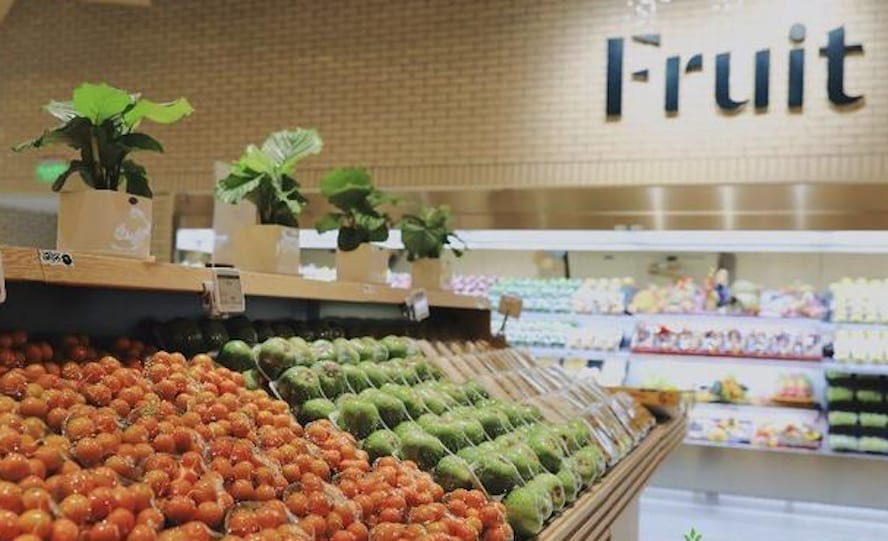
    JD has partnered with Japanese chemical manufacturing giant Mitsubishi Chemical to open the largest hydroponic “plant factory” in China. The omnichannel retailer says the premium-quality, fresh produce produced at the new facility will provide its customers with new options for safe, nutritious and environmentally friendly food, online as well as offline at its 7Fresh supermarkets.

    The factory spans 11,040sqm and incorporates a hydroponic culturing system with solar light and a closed seedling production environment using artificial light. Currently it can produce spinach, cabbage, red and green lettuce, coriander, among others.

    All crops produced at the site are tracked from the time they are planted to when they are delivered, a step toward the future of food production and retail as consumers worldwide increasingly demand transparency. In China, in particular, consumers place high importance on food safety while the overuse of fertiliser, environmental deterioration, and rapid population increase have caused soil problems.

    In the new facility, temperature, humidity, light, and liquid fertiliser are automatically controlled by the factory’s management system, enabling more standardised production of high-quality vegetables without the challenge of seasonal changes. For example, spinach produced in the facility contains 80 per cent more folate, 32 per cent more vitamin C, 25 per cent more potassium and 37 per cent more phosphorus than if grown in the field. Meanwhile, the technology makes pesticides and agrochemicals unnecessary, reducing the need for washing.

    The factory can produce a higher output of vegetables than traditional agriculture systems; it can grow 19 batches of spinach in a year, compared to just four batches per year in a field or six per year in a greenhouse. It only requires half a litre of water to grow any of the factory’s vegetables. The factory is integrated with JD’s cold-chain logistics network, so vegetables can be delivered to consumers’ tables as soon as the same day they are harvested.

    “The JD Plant Factory in Tongzhou marks JD’s entry into the very beginning of the fresh-food production chain, allowing us to guarantee that the fresh goods we sell have been treated with the care JD applies to everything we do,” said Xiaosong Wang, president of JD FMCG and food businesses.

    “JD’s supply chain technology, logistics network and e-commerce expertise combined with Mitsubishi Chemical’s sophisticated growing technology puts us in an ideal position to create an entirely new model for agriculture, and cultivates a fresh and healthy lifestyle in China.”

    Fresh vegetables from the plant factory will be available on JD.com and at 7Fresh stores from this month. JD and Mitsubishi Chemical will cooperate to introduce more fruits and vegetables in the future.

  • 7Fresh to open store in Shanghai

    7Fresh to open store in Shanghai

    E-commerce giant JD’s offline retail store 7Fresh is set to launch at Shangbin Plaza in Shanghai’s Hongkou District. The move is regarded as a step towards expansion nationwide beyond the firm’s home base in Beijing, as well as an attempt to follow recent trends to diversify from online-only business models. The high spending power of Shanghai residents was key in determining the store’s location.

    JD expects to be operating 1000 outlets with three to five years, using insights learnt from trading online to tailor product ranges popular locally. It will be taking on rival Alibaba’s Hema Market, which has already grown to more than 100 outlets.

    JD’s senior VP Wang Xiaosong said: “JD’s online fresh food business provides an advantage in terms of merchandise selection when we’re expanding into offline retail.”

    Shangbin Plaza is due to open early next year.

  • JD sales jumps as shoppers reached 300 million

    JD sales jumps as shoppers reached 300 million

    JD sales lept 25.1 per cent in the third quarter, to RMB104.8 billion (US$215.3 billion). “We are pleased to report solid results for the third quarter, with our core JD Mall business driving consistent growth under its highly experienced management team,” said CEO and chairman Richard Liu.

    “JD’s commitment to convenient, reliable service and high-quality, authentic products continues to translate into an increasingly loyal user base. Our ‘Retail as a Service’ strategy is also gaining traction as we provide a wide range of partners with innovative retail infrastructure solutions,” he said.

    Annual active customer accounts increased to 305.2 million in the year to September 30, from 266.3 million at the same time a year earlier.

    Net income from continuing operations attributable to ordinary shareholders for the third quarter was RMB3.0 billion (US$400,000), three times more than for the same period last year.

    “JD’s strategic focus on improving customer experience helped drive strong performance across the business,” said Sidney Huang, JD’s CFO. “We will continue our disciplined strategy of investing in key technologies as we focus on optimising operations and driving economies of scale over the coming quarters.”

    Among highlights of the quarter was the signing of a raft of major international brands to the JD platforms, including L’Occitane de Provence, House 99, Hera, Salvatore Ferragamo,  Furla, Gieves & Hawkes, Kent & Curwen, Cerruti 1881 and D’Urban. JD’s dedicated luxury platform Toplife welcomed John Galliano, Buccellati and Shang Xia among others.

    As at September 30, JD had some 200,000 merchants on its online marketplace, and 175,366 full-time employees.

  • What is the hot new “Boundaryless Retail” trend?

    What is the hot new “Boundaryless Retail” trend?

    Chinese consumers are quickly adapting to buying groceries online for immediate delivery from local offline stores, according to a new joint study conducted by JD, Walmart, Tencent and JD Daojia. In China, where over 15% of consumption takes place online, compared to just 9% in the US, consumers have been faster to embrace online grocery shopping.

    Over 67% of Chinese consumers actively use services like JD Daojia, which can deliver goods from local offline shops, including Walmart, to customers in under an hour.

    An increasing number of online shoppers in China view a guarantee of product authenticity as the most important factor when buying goods, with price often viewed as secondary in importance to considerations like product variety, speed of delivery and after-sales service.

    Consumers carefully consider purchases that can improve their lifestyle, reflect their individuality and be delivered in a convenient way that fits in with their busy modern lives.

    Omnichannel integration in the Chinese supermarket industry is expected to be a major trend going forward, as online and offline players in the industry are increasingly combining resources to meet the diverse needs of modern-day shoppers: bringing together the convenience and diversity of online shopping with offline retail’s immediacy of service and superior user experience.

    Boundaryless Retail is a reality gaining in popularity as “The increasingly diverse needs of consumers require a correspondingly dynamic approach” said Kenny Li, VP of JD.com.

  • JD.com to provide more imported product to China

    JD.com to provide more imported product to China

    JD.com, China’s largest retailer, will purchase nearly RMB 100 billion worth of products from overseas brands. As disposable incomes in China rise, consumers increasingly demand high-quality products, especially imported products.

    E-commerce has rapidly emerged as one of China’s most preferred channels for buying overseas brands. Last year, the number of users purchasing products from overseas brands grew by 37.1% compared to 2016.

    The volume of imported goods in 2018 to date has already skyrocketed 150% as compared with two years ago.

    JD’ “Retail as a Service” strategy has proved enormously appealing to household
    names from all over the world.

    Indeed, the growing family of leading international brands partnering with JD to facilitate their e-commerce strategy now includes the likes of Saint Laurent, Alexander McQueen, Dell, Nestle, Avène and many more.

    As China’s e-commerce transformation continues to unfold, consumers have gravitated especially towards premium, smart, and green products.

    According to JD’s data, the highest performing categories among its customers this year have been mobile phones, computer and office suppliers, home appliances, maternal and childcare, and digital products.

    Advanced economies such as the U.S., Japan, South Korea, Germany, and the Netherlands remain the most popular sources of imported goods.

    Chinese consumers buying online are mostly younger (26-45 years old), white-collar workers with middle-to-high incomes.

    China’s most developed regions, particularly the coastal cities, account for the largest uptake of imported goods.

    The growth rate for purchases of overseas brands, however, is now highest in fourth- and third-tier cities, where these brands are often not available in brick and mortar stores.

  • JD.com starts marketing overseas properties to its buyers

    JD.com starts marketing overseas properties to its buyers

    Users of the service may find houses for lease with terms and prices verified as accurate.

    Other new partners include US Century 21 Real Estate and Beijing property search engine Zhuge. More than 1.7 million apartments in 100+ Chinese cities are already listed on the platform.

  • JD start to have parcel delivery in logistic division

    JD start to have parcel delivery in logistic division

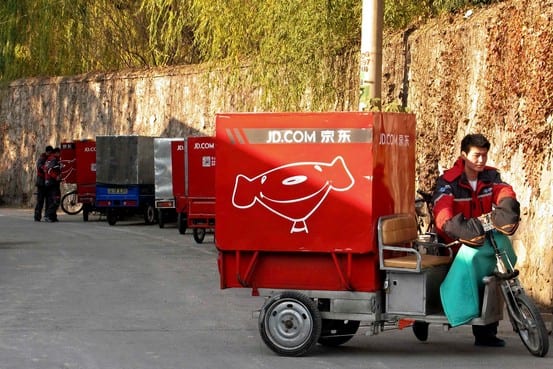
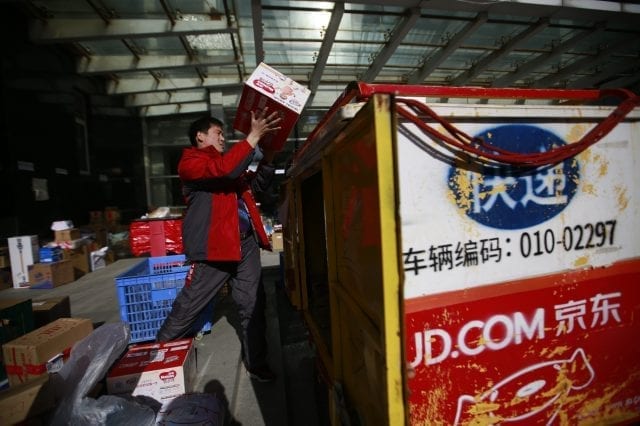
    Chinese e-commerce company JD is opening its logistics network up to consumers to send parcels around the country, marking the first entry by an e-commerce company into the parcel delivery business. The new JD parcel delivery service announced enables users of the company’s app in Beijing, Shanghai and Guangzhou to send items intra-city and throughout Mainland China, using the same fast and reliable delivery service JD offers with online purchases. The company, which will expand the program to include high-value items like luxury products and high-end consumer electronics, as well as more diverse options based on delivery timing, aims to eventually make residential and business deliveries for shippers from anywhere to anywhere within Mainland China in the future.

    JD is the only large-scale e-commerce company in the world to operate a nationwide in-house logistics network, down to the last mile. The company says its network, powered by its proprietary supply chain management technology, is able to deliver more than 90 per cent of orders same- or next-day, and reaches 99 per cent of China’s population.

    The new JD parcel delivery service includes a range of competitively priced options, including same-day delivery between different cities; same-day intra-city delivery; standard next-day or two-day delivery and next-day delivery between cities.

    “Depending on the delivery option chosen, packages may be sent by high-speed rail or air,” the company said in a statement. “Individual shippers can use the same JD app they use for shopping to schedule a pickup by one of JD’s full-time logistics staff, and have a parcel delivered thousands of miles away at the speed they choose. They will even be able to select JD’s luxury ‘white glove’ delivery service if they want to make the delivery extra special.”

    Zhenhui Wang, CEO of JD Logistics says the JD parcel delivery service marks the next step in leveraging the nationwide logistics network that JD has built over the past decade, to expand the range of services offered to its customers.

    “JD is known throughout China for the fastest and most reliable delivery, and we are confident that users will appreciate the convenience of this new service.”

    The program has already begun user trials with multiple ways for customers to request pickups. In addition to the JD app, shippers can request pickups on a JD Delivery mini program in WeChat, China’s largest social network operated by JD’s partner Tencent, and a JD “Delivery Team” WeChat account.

    JD unveiled the parcel delivery service at its 2018 Global Smart Supply Chain Summit held in Beijing today. Other initiatives announced at the summit – part of JD’s Global Smart Supply Chain Network Strategy – include JD’s smart warehouse management system initiative, an expansion of the company’s green initiatives, and the formation of a new energy union with 20 industry partners.

  • JD China Will Launch Flagship U.S. Store on Google This Year

    JD China Will Launch Flagship U.S. Store on Google This Year

    Chinese e-commerce platform JD is preparing to launch a flagship US store on Google. The move will allow JD, the second largest online retailer in China, to sell directly to American consumers by the end of the year, despite the emergence of potential new trade restrictions between the US and China.

    Google, which has been making moves to build a strong presence in e-commerce via its planned Google Shopping platform, purchased a US$550 million shareholding in JD this year. JD meanwhile is eyeing global markets as consumption slows in its home market. It is already selling in the US through partner and major investor Walmart.

    JD Logistics’s director of strategy Bao Yan said: “When Google Shopping launches, JD will have a flagship store. We are shipping from US fulfillment centers to US end-customers.”

    JD operates warehouse and delivery services in Los Angeles and has plans to expand its US-based facilities with several new fulfillment centres, ahead of opening its store on Google.

    Google, moving to compete with Amazon, will be responsible for payment and order processing for the enterprise.

  • JD.com expands logistics services to include parcel delivery

    JD.com expands logistics services to include parcel delivery

    Chinese e-commerce company JD is opening its logistics network up to consumers to send parcels around the country, marking the first entry by an e-commerce company into the parcel delivery business. The new JD parcel delivery service announced enables users of the company’s app in Beijing, Shanghai and Guangzhou to send items intra-city and throughout Mainland China, using the same fast and reliable delivery service JD offers with online purchases. The company, which will expand the program to include high-value items like luxury products and high-end consumer electronics, as well as more diverse options based on delivery timing, aims to eventually make residential and business deliveries for shippers from anywhere to anywhere within Mainland China in the future.

    JD is the only large-scale e-commerce company in the world to operate a nationwide in-house logistics network, down to the last mile. The company says its network, powered by its proprietary supply chain management technology, is able to deliver more than 90 per cent of orders same- or next-day, and reaches 99 per cent of China’s population.

    The new JD parcel delivery service includes a range of competitively priced options, including same-day delivery between different cities; same-day intra-city delivery; standard next-day or two-day delivery and next-day delivery between cities.

    “Depending on the delivery option chosen, packages may be sent by high-speed rail or air,” the company said in a statement. “Individual shippers can use the same JD app they use for shopping to schedule a pickup by one of JD’s full-time logistics staff, and have a parcel delivered thousands of miles away at the speed they choose. They will even be able to select JD’s luxury ‘white glove’ delivery service if they want to make the delivery extra special.”

    Zhenhui Wang, CEO of JD Logistics says the JD parcel delivery service marks the next step in leveraging the nationwide logistics network that JD has built over the past decade, to expand the range of services offered to its customers.

    “JD is known throughout China for the fastest and most reliable delivery, and we are confident that users will appreciate the convenience of this new service.”

    The program has already begun user trials with multiple ways for customers to request pickups. In addition to the JD app, shippers can request pickups on a JD Delivery mini program in WeChat, China’s largest social network operated by JD’s partner Tencent, and a JD “Delivery Team” WeChat account.

    JD unveiled the parcel delivery service at its 2018 Global Smart Supply Chain Summit held in Beijing today. Other initiatives announced at the summit – part of JD’s Global Smart Supply Chain Network Strategy – include JD’s smart warehouse management system initiative, an expansion of the company’s green initiatives, and the formation of a new energy union with 20 industry partners.

  • JD.com’s green initiative for sustainable consumption

    JD.com’s green initiative for sustainable consumption

    JD.com, China’s largest retailer, the World Wide Fund for Nature (WWF) and The China Children and Teenagers’ Fund (CCTF) are partnering to launch a second annual Green Planet-Sustainable Week, raising awareness about sustainable consumption in the world’s most populous nation. The seven-day program, which kicked off this week, will reinforce JD’s commitment to help the retail industry develop more sustainably, reducing the impact of China’s booming consumption on the environment.

    For the event, JD will promote pollution reduction through the use of reusable shopping bags, created from the fabric of discarded apparel in response to a call from WWF to reduce pollution caused by plastics. The bags, which are also regularly used in JD operations, will be distributed free during the event and include RFID Chips that can be scanned as coupons in offline stores through JD’s partners.

    JD’s Green Planet-Sustainable Week also kicks off a new clothing drive for the company’s recycling program. Taking advantage of its nationwide in-house logistics network, which covers 99% of China’s population, JD will collect both used and unused clothing from customers either to be sent to recycling facilities or distributed to those in need. Proceeds will be donated to lower-income families, people with disabilities and charity groups. Last year, a similar drive led to the collection of nearly 400,000 items, or 20 tons, of clothing, from 150 million people in four cities. This year’s program will expand to cover 47 cities.

    Customers will be able to trade in major appliances for recycling as well, by third-party companies through JD’s platform. The appliances will be disassembled, after which parts will be used for repairs, helping to reduce the waste generated by household appliances as well as pollution created by their production. Working with JD’s charity affiliate, JD Foundation, the participating companies will donate a portion of any proceeds to support charitable activities on behalf of customers, while customers are eligible for payment for their used devices, plus coupons from JD in exchange for the trade-ins.

    Meanwhile, all logistics information for tracing donations and trade-ins are available through JD.com’s proprietary supply chain management technology.

    “The spectacular rise of Chinese consumption has been a major force behind the country’s incredible economic story but has also contributed to unprecedented environmental challenges,” said Zhonghao Jin, Head of Market Practice, WWF China. He believes this week’s activities will help “raise consumer awareness and accelerate the mainstreaming of sustainable consumption.”

    Libo Ma, head of the CSR department at JD.com disclosed the company is in the midst of an effort to convert its entire vehicle fleet to new energy vehicles while being involved in other efforts to reduce emissions. The company is also is developing biodegradable packaging to further reduce waste in the supply chain.

  • Tao Heung sales improved as visitors increases

    Corporate restaurateur Tao Heung is reporting improved sales in both its core Hong Kong market and on the mainland as people dine out more often and the average tab increases.

    Tao Heung operates 60 restaurants under its own brand, two RingerHut eateries focused on non-Chinese cuisine, and 18 Tai Cheong Bakery stores.

    In the half-year to June 30, consumption sentiment improved both in Hong Kong and Mainland China, the company said. Its strategy to strengthen its culinary portfolio to attract a more diversified customer base, and right-size its operations led to a 5.4 per cent increase in year-on-year sales to HK$2.08 billion.

    “The increase was principally driven by same-store sales growth, in turn the result of the rise in per-head spending particularly for seafood and including late night dining – “all you can eat hotpot”,” the company said in its results commentary.

    Profit attributable to shareholders rose to $51.3 million (from $40.8 million in the same period last year) and would have been up by 53.7 per cent to $62.7 million had it not been for a one-off expense relating to the government-enforced closure of the company’s pig farm during the period.

    In Hong Kong, which accounted for 61.7 per cent of the company’s sales, the company says it faced “fierce competition” rebuffed by several seasonal marketing strategies. “All these helped to further drive same-store sales growth as well as increase per-head spending.”

    Eight Hong Kong restaurants were renovated during the six months, including Tao Heung – The Pier Market Store in Mong Kok which opened in June, specialising in seafood. It is targeted towards affluent customers – “a segment that not only appreciates fine Chinese cuisine but also a suitably sophisticated ambience”. Other restaurants were either closed or right-sized, leaving a net reduction of six outlets since the end of last year.

    As the company looks to diversify its restaurant portfolio, several collaborations were realised, with more partnerships in the pipeline. Du Hsiao Yueh, which specialises in Taiwanese cuisine, which opened its first Hong Kong branch in Tsim Sha Tsui in June last year, now has a sister restaurant in Causeway Bay. Another collaboration involves Flamingo Bloom, a modern, chic Chinese tea salon that opened at IFC mall in July.

    “Management trusts that such collaborations will not only broaden the group’s portfolio, but also provide it with greater flexibility in terms of business development,” the company said.

    Tao Heung is also exploring overseas partnership opportunities for its Tai Cheong Bakery, after achieving success in Singapore.

    “Besides consolidating its bakery network, further efforts will be made at increasing distribution channels through collaboration with different brands and supermarkets.”

    Mainland China operations

    On the mainland, the group operates an integrated complex business model, comprising Chinese restaurant, self-owned supermarket, indoor playground, museum, shops and parking facilities covering over 22,000sqm. The company said the three family-oriented complexes it operates continued to deliver stable income during the period, attracting the patronage of middle-to high-income families.

    The company’s packaged food business on the mainland also experienced strong growth. Sales of frozen food increased by 26.3 per cent, largely due to e-commerce partnerships with online platforms such as Tmall.com and JD, which give the group access to customers nationwide. Takeout services like Dianping.com, Meituan and ele.me also boosted sales.

    As at June 30, Tao Heung operated 46 restaurants in Mainland China, along with 26 Bakerz 180 outlets during the period.

  • JD quarterly report leaves some concern

    JD quarterly report leaves some concern

    Chinese e-commerce company JD boosted second-quarter revenue by 31.2 per cent, but losses ballooned nine-fold.

    JD quarterly sales reached RMB122.3 billion (US$218.5 billion) for the three months to June 30, with net service revenues of RMB11.8 billion (US$1.8 billion), up 51 per cent year on year.

    On a rolling 12 month basis, annual active customer accounts increased by 21.5 per cent to 313.8 million in the year to June 30.

    The operating margin of JD Mall was just 1.1 per cent, although that was an improvement on the 0.8 per cent of the same period a year earlier.

    JD chairman and CEO Richard Liu said the e-commerce business was continuing to win over new personal customers. “We are also seeing more corporate clients, both Chinese and international, leveraging JD’s superior technology and retail infrastructure to help take their businesses to the next level. We will continue to prioritise technology innovation to empower our partners with enhanced capabilities and improved efficiency, helping us to realise our ‘Retail as a Service’ strategy, and driving our next phase of growth.”

    The net loss from continuing operations attributable to shareholders was RMB2.213 billion (US$334.4 million), compared to RMB287 million for the same period last year.

    Despite continuing losses in what is  along-game business, JD is attracting investment. In June, Google invested $500 million as part of a new strategic partnership.

    “We are pleased to see continued healthy performance in the second quarter, with solid revenue growth and improved margins in our core JD Mall business,” said Sidney Huang, CFO, in a statement “Our new business initiatives continue to gain impressive traction across the industry. We will maintain a balanced, long-term approach to investing in the technologies that will define the future of retail.”

    During the second quarter, JD expanded its leadership position in fulfillment capabilities among China’s e-commerce companies. As of June 30, JD operated 521 warehouses covering an aggregate gross floor area of 11.6 million sqm in China.

    The company had more than 170,000 merchants on its online marketplace, and 173,904 full-time employees at the end of the quarter.

  • Louboutin’s first online pop-up store on Toplife

    Louboutin’s first online pop-up store on Toplife

    Christian Louboutin’s signature red-soles have tiptoed their way onto Toplife.

    Joining numerous international leading luxurious brands such as Fendi, Saint Laurent, Alexander McQueen or Oscar de La Renta, Christian Louboutin has partnered up with JD’s luxury e-flagship platform Toplife earlier this July to make its debuts on the Chinese e-commerce platform scene. Its online pop-up store features the full offering from the brand’s most recent collection.

    JD President of International Fashion and Head of Toplife, Xia Ding, said “No matter where you are, Christian Louboutin’s signature creations are ubiquitous with style, poise and individuality,”. In this effort to bring a seamless omnichannel experience, clients can enjoy JD’s signature white glove service, JD Luxury Express. Rounding out the online luxury experience with an offline, personal touch, customers can have their goods hand-delivered to their homes by professionally-dressed couriers driving electric cars.

    Leveraging its RaaS capabilities, JD has supported many brands in their debuts on the Chinese e-commerce scene. The company is expecting to welcome more international luxury brands on its luxury e-flagship platform Toplife.

    Christian Louboutin’s signature red-soles have tiptoed their way onto Toplife.

    Joining numerous international leading luxurious brands such as Fendi, Saint Laurent, Alexander McQueen or Oscar de La Renta, Christian Louboutin has partnered up with JD’s luxury e-flagship platform Toplife earlier this July to make its debuts on the Chinese e-commerce platform scene. Its online pop-up store features the full offering from the brand’s most recent collection.

    SEE ALSO: JD.com debuts Toplife, its ecommerce ecosystem for luxury brands

    JD President of International Fashion and Head of Toplife, Xia Ding, said “No matter where you are, Christian Louboutin’s signature creations are ubiquitous with style, poise and individuality,”. In this effort to bring a seamless omnichannel experience, clients can enjoy JD’s signature white glove service, JD Luxury Express. Rounding out the online luxury experience with an offline, personal touch, customers can have their goods hand-delivered to their homes by professionally-dressed couriers driving electric cars.

    SEE ALSO: Red soles are Christian Louboutin’s trademark

    Leveraging its RaaS capabilities, JD has supported many brands in their debuts on the Chinese e-commerce scene. The company is expecting to welcome more international luxury brands on its luxury e-flagship platform Toplife.

  • Future is for e-commerce, JD.com says

    Future is for e-commerce, JD.com says

    E-commerce has changed the face of retail. A drone can handle delivery, and payments and orders are all done with a smartphone.

    These changes are now coming to South East Asia, said an executive of a prominent Chinese retailer.

    Gloria Li, Corporate Vice President of JD.com, which is described as the largest retailer in the online and offline space, believes “after several years [from now], the penetration of e-commerce in South East Asia market will increase.”

    The expected increase is due to two facts — customer behaviour and the efficiency of the e-commerce, she said during a meeting with a group of visiting media representative recently to Beijing.

    First, the young generation is “gradually getting everything from the internet … Secondly, we are seeing more efficiency in e-commerce versus traditional retail because e-commerce has no boundary. You can access products from either phone or iPad, or PC or, sometimes, smart hardware like a smart refrigerator,” she said.

    JD.com in China is an example of the “amazing speed” of the growth of e-commerce.

    Its 2017 revenues were estimated at $55.7 billion (Dh. 205 billion), recording a 40 per cent increase from the previous year, Li said.

    The company, which started 15 years ago, has today 500 warehouses across China, 301.8 million customers, and 82 per cent of them are ordering via mobile.

    Two years ago, the company started delivering products through drones, particularly in rural areas. It has other methods such as robots too.

    Today, it is the third largest internet company globally after Amazon and Alphabet, according to the company.

    JD.Com, which was listed on Nasdaq in 2014, started expanding beyond China two years ago. It first reached Indonesia, which was quite similar to what the Chinese market looked like a few years ago, Li said. The Chinese retail company then began doing business in Thailand and in Vietnam, she said.

    Delivery using drones does not only depends on technology, but also on laws and policies in other countries, said Li. “We have not entered the ME market yet. It is a very young company,” she said of JD.com.

    “At the same time, we are also seeking opportunities to outreach other markets in the world in the future, like Europe, US, and maybe Africa,” said Li in the interview conducted in the company’s headquarters in the Chinese capital.

    In the company headquarters, JD.com offers customers the opportunity to buy by themselves from stores and display areas. There is a store for different products, including electronics, cosmetics, and accessories.

    There is also a mini supermarket, where entry is allowed using the mobile phone. Cameras located on the ceiling of the small grocery follows the customer and registers the picked up items. At the exit, the money charged using the personal information used for the phone number, and no cash or credit cards are used.

    Commenting on the security procedures against any hacking or piracy, Li said “we have a dedicated team focusing on security and data privacy. This is the most important thing for the customer”.

    During the purchase process, the cameras follows a certain feature of the buyer, such as the colour of the cap or jacket, while the personal information kept private in the system, she explained.

    The JD.com executive refuted the claim that technology is eliminating humans’ opportunities for work.

    “When the company started 15 years ago, it had 38 people. Now, it has 170,000 people. This shows that we recruit on an average 10,000 a year.”

    Human workforce is needed for many tasks such as delivery, monitoring and tracking orders at the warehouses. Humans direct robots, she said.