Retail News CRM

Tag: jd.com

  • China’s e-commerce giants to buy Dalian Wanda malls

    China’s e-commerce giants to buy Dalian Wanda malls

    Three Chinese e-commerce giants led by Tencent are buying into shopping centres as part of an alliance that will help fund property magnate Wang Jianlin’s HK$30 billion (US$3.8 billion) plan to take his Dalian Wanda Group private.

    Jianlin describes it as the world’s biggest single alliance between the new economy and bricks-and-mortar businesses as he vows to turn his flagship commercial property unit into an online-to-offline service provider.

    After shedding properties in Australia, China and the UK to help reduce debt, he is now selling off nearly 14 per cent of Dalian Wanda Commercial Properties to some of the mainland’s biggest internet and retail players.

    An investor group led by Tencent, along with e-commerce heavyweight JD.com, electronics retailer Suning and Wanda partner Sunac China Holdings, the stake is being sold for RMB34 billion (US$4.36 billion).

    On its website, Wanda presents the share sale as part of a transformation of the company from a real-estate developer with nearly 240 shopping centres across China into a commercial management company focused on integrating online and offline consumption.

    As part of the deal, Dalian Wanda Commercial Properties will be renamed Wanda Commercial Management Group.

    However, the new partners may lead the financing of new malls, with the website statement noting “Tencent, Suning and other investors will use their financial prowess to continuously support Wanda Commercial to speed up its growth, helping the company to achieve its goal of 1000 Wanda Plazas in China as early as possible”.in

    Wanda says the partners are keen to relist the commercial real-estate unit, still privately held after a 2016 buyout led by Wang, “at the earliest opportunity”.

    Also, the new group will use the online resources of Tencent, Suning and JD.com as well as its own offline commercial assets to “carry out various collaborations, jointly building a new consumption model in China that will integrate both online and offline services”.

    Wanda Commercial’s total debt at the end of June was RMB279 billion, according to ratings agency S&P.

    Tencent’s investment of RMB10 billion gives it a 4.12 per cent stake, while Suning and Sunac’s twin outlays of RMB9.5 billion will them a 3.91 per cent stake each, and JD.com’s RMB5 billion yields a 2 per cent stake.

    Meanwhile, WeChat owner Tencent last week said it might buy into French retailer Carrefour’s China business, along with local retailer Yonghui Superstores. This follows Amazon’s acquisition of Whole Foods for US$13.7 billion.


  • JD.com Announced Its Chic New Paris Office

    JD.com Announced Its Chic New Paris Office

    JD.com announced yesterday that it has opened a Paris office. The move follows an agreement with France’s official trade promotion agency, Business France, to sell €2 billion (US$2.4 billion) in French products to Chinese consumers over the next two years.

    It’s a strategic move, putting JD.com in close proximity to many of the world’s top luxury brands at a time when China’s leading e-commerce platforms are battling for a bigger share of the luxury market.

    JD.com France’s Managing Director, Florent Courau

    JD.com first made public its intentions to woo French retailers earlier this month when French President Emmanuel Macron made a state visit to China. This visit also coincided with another landmark announcement that French luxury fashion house Saint Laurent would be officially partnering with JD.com to sell its collections on the e-commerce site’s luxury platform, Toplife, joining the ranks of La Perla, Tod’s, Emporio Armani, and more recently, Derek Lam.

    Company representatives called the collaboration with France a “milestone” for the e-commerce giant. The newly appointed Managing Director for JD.com in France is Florent Courau, who worked as COO of Sephora in North Asia and, before that, at LVMH for 12 years, six of them in China.

    JD.com intends to leverage stronger relations with the country to broaden its luxury portfolio in Europe, giving its customers access to a wider range and a better quality selection of not only fashion brands, but categories like cosmetics, food, and wine and spirits.

    “Our customers value the quality of French products, making this a critical market for us to further expand our brand relationships,” Courau said in a statement. “Our Paris office will be committed to providing tailor-made support to our French partners who want to seize the immense opportunity that JD offers.”

    A new report released by Bain last week revealed that many luxury consumers were still wary about making purchases online and preferred shopping either at brick and mortar stores, on the brand’s official website, or on its WeChat platform. Luxury aggregators like JD.com’s Toplife and Alibaba’s Tmall Luxury Pavilion were the third most-preferred resource for these consumers.

    But both JD.com and Alibaba have been ramping up their efforts to secure the trust of both consumers and brands in the luxury sector with the launch of these ‘pure play’ platforms—JD.com launched Toplife last fall—that keep luxury goods separate from their other mass market offerings and even counterfeit goods.

    These platforms also let JD.com cater to the specific demands of luxury consumers through offering better customer service, guaranteed authenticity, and a “white glove” delivery service. JD.com has also spent much of the past year forging stronger networks in the luxury industry beginning with $397 million deal with UK luxury platform Farfetch.

    “Since we launched Toplife the goal has been to provide the convenience of online with the personalized feel of making a luxury purchase online,” VP for International Corporate Affairs at JD.com Josh Gartner said. “Our physical presence in France brings us closer to the world’s leading luxury brands and helps us understand them better so we can ensure the integrity of their offline brand identity when they come online with us in China.”

    To smooth the process of entering China’s world of online retail, JD.com also plans to offer a new training program for senior executives on reaching China’s online shoppers, as well as build a logistics center to smooth out the overseas shipping process.

    “Now, we want to bring the best of France, not only in terms of world-class brands, but also in terms of a world-class shopping experience, right to the doorsteps of our luxury consumers,” Gartner said.

  • Protest arise after JD.com launches house brand Jing Zao

    Protest arise after JD.com launches house brand Jing Zao

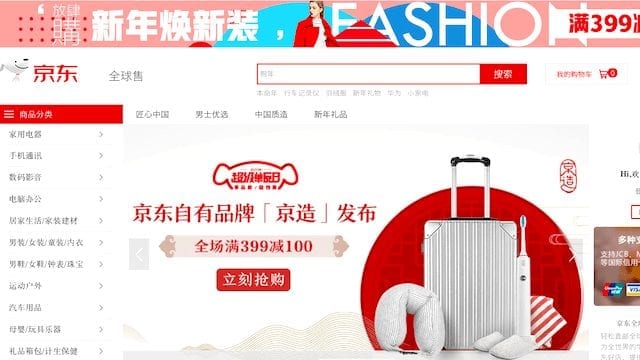
    Clashing head-on with manufacturers who sell through its platform, China’s JD.com has introduced its own brand, Jing Zao.

    Its initial 38 products range from towels to suitcases in similar style to Japan’s Muji or US luggage maker Samsonite, but at a lower price. Both companies sell their wares through JD.com.
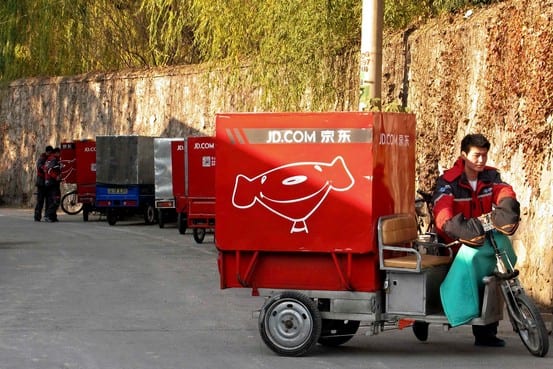
    JD.com knows which products are popular with customers and can tailor its offerings accordingly, plus it has its own logistics service for deliveries.

    Its house brand follows its venture into physical retail stores. This month it introduced its first fresh-food supermarket in Beijing.

    Meanwhile, JD.com has confirmed it is a co-investor in Vietnam’s Tiki e-commerce platform, becoming one of its largest shareholders.

  • JD.com widens Southeast Asia presence by investing in Vietnam’s Tiki.vn

    JD.com widens Southeast Asia presence by investing in Vietnam’s Tiki.vn

    Chinese online retailer JD.com Inc has made an investment in Vietnamese e-commerce firm Tiki.vn, expanding its Southeast Asia business amid growing competition in the region from Alibaba Group Holding Ltd and Amazon.com Inc.

    JD.com co-led the financing with Vietnamese entertainment and social media firm VNG Corp, which is an existing investor, China’s second-biggest e-commerce firm behind Alibaba said in a statement on Tuesday.

    The firm did not disclose the size of the funding but said that JD.com will become one of Tiki’s largest shareholders alongside VNG following the deal.

    Vietnamese media had reported in November that the round was worth roughly 1 trillion dong ($44.04 million). JD.com declined to give a dollar number for the investment.

    “With JD’s expertise in leveraging social media for e-commerce, Tiki.vn’s partnership with VNG in social network and mobile payments is a natural fit,” Winston Cheng, president of JD.com’s international business, said in the statement.

    Vietnam is the latest focal point in JD.com’s strategic push into Southeast Asia, where Alibaba and Amazon have also made significant investments in the past year.

    JD.com will tap Tiki.vn’s warehousing and delivery system, as well as its technology and payments capabilities.

    Tiki.vn and VNG’s tie-up has similarities to the partnership between JD.com Inc and internet giant Tencent Holdings Ltd, which is an investor in JD.com and Asia’s largest tech firm by market cap.

    JD.com leverages data and payments from Tencent’s WeChat, China’s most popular social media app, and will seek to build similar capabilities with VNG and Tiki.vn, Cheng said.

    While Southeast Asia’s e-commerce market is still nascent compared to the China‘s, improvement in internet services and an increase in mobile-based payments have attracted large international e-commerce firms to the region.

    Alibaba has invested heavily in payment and e-commerce ventures in Thailand, Singapore, Indonesia and Malaysia. U.S. retailer Amazon also launched its subscription-based Prime service in Singapore last month in a bid to challenge Alibaba-backed online retailer Lazada Group in Southeast Asia.

    JD.com launched a local online retail business in Indonesia two years ago, and now claims to be the country’ largest retailer by revenue. It also formed a $500 million e-commerce venture with Thai retailer Central Group.

    Besides VNG, Tiki.vn’s previous investors include Seedcom, Sumitomo Corp and CyberAgent Ventures.

  • Alexander McQueen partners with JD.com to expand in China

    Alexander McQueen partners with JD.com to expand in China

    Alexander McQueen China has partnered with JD.com to launch a store on the e-commerce giant’s luxury platform Toplife.

    It will offer the full Alexander McQueen fashion ranges as well as accessories.

    While the UK luxury fashion brand already has 15 on-ground stores throughout China and Hong Kong, it aims to bolster its online reach through JD.com’s logistical infrastructure as well as its understanding of the Chinese luxury e-commerce.

    “This is a strategic addition to our physical presence in China, part of our multi-channel experience,” says Alexander McQueen CEO Emmanuel Gintzburger. “JD.com’s advanced capabilities will allow us to engage with a larger local clientele while respecting the creative expression of the house.”

    Launched in October, Toplife aims to fill a gap in the Chinese e-commerce market by offering only full-priced items from premium global brands. It offers international luxury brands access to its allround system, which seamlessly incorporates an online store, premium customer service, delivery services and marketing and branding expertise.

    The move follows the launch of Saint Laurent’s stand-alone store on Toplife earlier this month.

  • Santander and JD.com to support UK brands expanding into China

    Santander and JD.com to support UK brands expanding into China

    Santander UK has partnered with Chinese retailer JD.com to give British brands access to China’s massive retail and consumer market.

    As part of the agreement, small and medium-sized business customers at Santander with turnover of at least £10 million and international trading experience will be able to launch stores on JD.com, which is known as one of China’s largest B2C online retailers.

    The online marketplace has a customer base of over 266 million people, and its extensive delivery network has attracted top European and American brands. Luxury brand Saint Lauren was the latest to join the platform this week as it announced its launch on JD.com’s Toplife.

    The Santander/JD announcement comes after the signing of a Memorandum of Understanding in July 2016.

    Deputy general manager of JD.com worldwide Kaisi Li commented: “This partnership with Santander opens up many more opportunities to small and medium-size enterprises across the UK. Demand for imported products in China is strong and growing rapidly, and we’re excited to work with Santander to enable more UK-based brands to benefit from the growth of this huge market.”

    JD rival ecommerce site Alibaba features brands such as Burberry, Hugo Boss and Gucci.

  • China Unicom, Kuang-Chi sign cooperation agreements

    China Unicom, Kuang-Chi sign cooperation agreements

    China Unicom has signed business cooperation framework agreements with Kuang-Chi Technologies and KuangChi Science, subsidiaries of Kuang-Chi Group.

    The agreement is an integral part of a series of cooperation framework agreements which Unicom signed with strategic investors in key industry verticals participating in its mixed-ownership reform, the Chinese operator said in a statement.

    Under the agreement, Unicom will work closely with Kuang-Chi Technologies and KuangChi Science in areas such as military-civil integration, public security, smart cities and smart transportation. The companies will also cooperate to explore new opportunities in cloud computation, big data, internet of things (IoT), artificial intelligence (AI), digital content and payment finance.

    Unicom announced its 77.9 billion yuan ($11.7 billion) ownership reform plan in August 2017, bringing in 14 new strategic investors including large internet companies, industrial groups and industry vertical companies and financial enterprises.  The operator has already signed framework agreements with internet and e-commerce giants Baidu, Alibaba, Tencent and Jingdong (owner of the JD.com brand).

  • Central Group to add its online presence with JD.com

    Central Group to add its online presence with JD.com

    After forming an e-commerce partnership with China’s JD.com, Thai retail giant Central Group expects online sales to account for as much as 15 per cent of its revenue in five years’ time, from 2 per cent now.

    CEO Tos Chirathivat says the $500 million JV, announced in September, will help it compete in Southeast Asia’s booming e-commerce market and also open up businesses opportunities in China.

    Tos estimates online retail in Thailand could rise fivefold to 10 per cent of the market as web access spreads via smartphones.

    While Central Group is a privately held investment arm of the Chirathivat family, it controls a range of publicly traded businesses – Central Pattana is a mall developer, Central Plaza Hotel runs resorts and restaurants, Robinson is a chain of department stores and COL is an office supplies company. Central Pattana turnover surged 50 per cent last year, Central Plaza 47 per cent and COL more than doubled.

    Outside of Thailand, Central Group owns Italian luxury department store La Rinascente, Danish retailer Illum and the Big C hypermarket chain in Vietnam, along with interested in retail chains including Nguyen Kim (Vietnam) and B2S (Thailand).

    Central Group is targeting annual revenue growth of 13 per cent this year, says Tos. Local sentiment is helping the company, with consumer spending in Thailand picking up after the October cremation of King Bhumibol Adulyadej ended the nation’s year-long mourning period.

  • JD.Com, Online Fashion Retailer Meili Ally to Develop ‘No Boundary Retail’

    JD.Com, Online Fashion Retailer Meili Ally to Develop ‘No Boundary Retail’

    JD.com plans to form a JV with online fashion retailer Meili to build and run a commerce platform on Chinese voice-messaging service Weixin.

    Merchants who sell through the new platform, expected to launch before the Lunar New Year next month, will gain access to JD’s logistics network.

    The move follows the joint introduction of “no-boundary” retail by JD.com and Tencent in October, a concept that aims to create online communities of consumers with similar buying preferences, fusing e-commerce with social life.

    Meili founder/CEO Chen Qi, who will also be the JV’s chairman, says the platform will draw on Meili’s ability to reach female shoppers, particularly in lower-tier cities in China.

    Established in 2016, Meili has several platforms including Meilishuo and Mogu Street, and more than 15 million active daily users. It not only provides online retail, but also society and fashion information.

  • Following Alibaba, Online retailer JD.com opens offline fresh-food store

    Following Alibaba, Online retailer JD.com opens offline fresh-food store

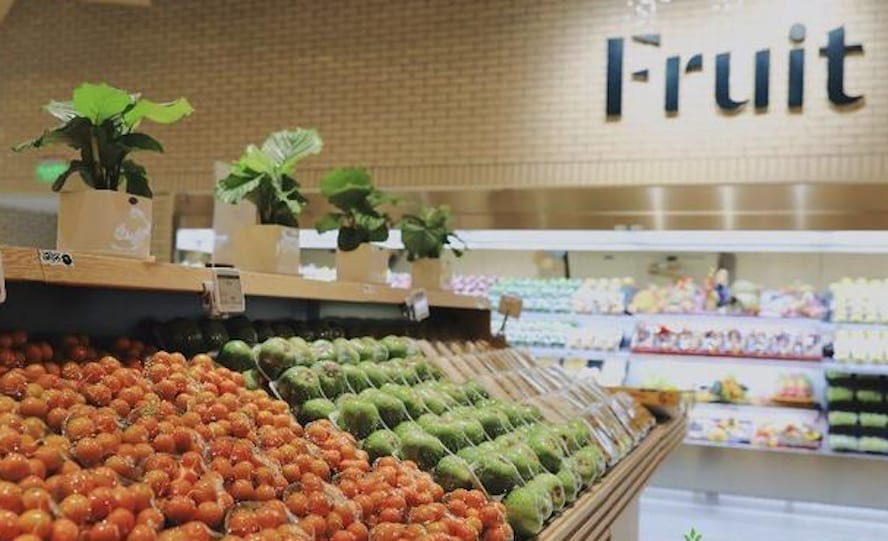
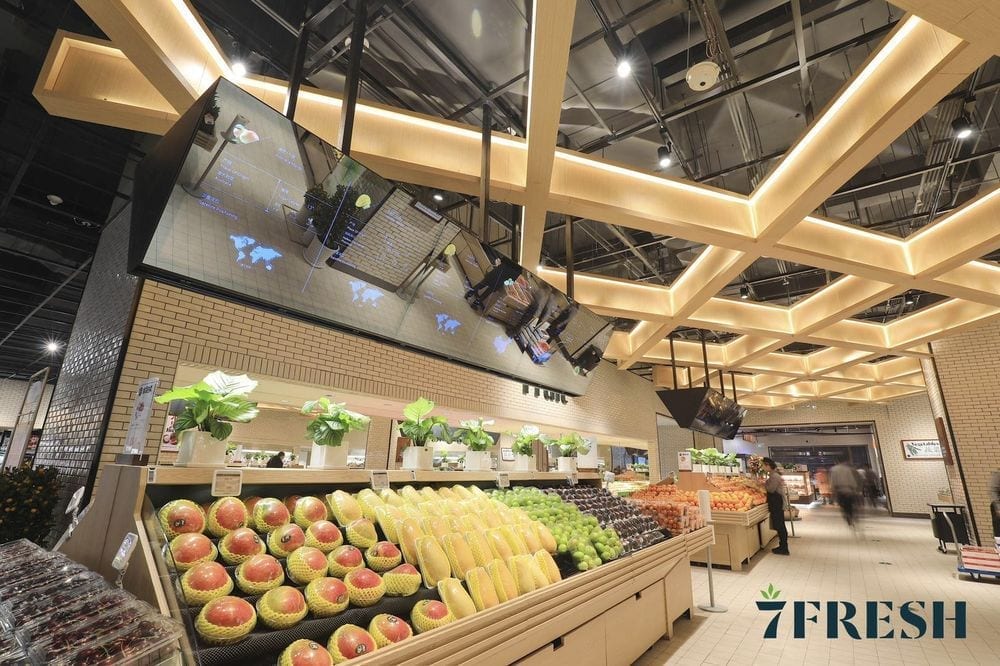
    JD.com owner Beijing Jingdong Century Trade has launched an offline supermarket, 7Fresh, in Beijing.

    Covering 4000sqm, the store is at the Dazu Plaza Shopping Center, near the e-commerce company’s headquarters in Yizhuang district.

    Big-data analytics are being used by 7Fresh to tailor its product offering for its shoppers. To ensure freshness, products are being sourced directly from origin. Fresh produce accounts for 75 per cent of 7Fresh’s total product range. Its food offering includes fruit from New Zealand and beer from Australia.

    Customers who buy fresh seafood and meats can have them cooked in store for immediate consumption. A 30-minute delivery service is also offered for customers who live within a 5km radius of the store.

    Technology introduced by the supermarket includes smart shopping carts and sensor-activated product information. The smart shopping carts do not have to be pushed – they follow the shoppers around, and can even guide shoppers to the correct aisle.

    During a trial period, transactions surpassed 10,000 a day, says JD.com founder/chief executive Richard Liu Qiangdong.

    A second 7Fresh outlet is planned for Beijing’s Haidian district.

  • JD.com will open hundreds of unmanned convenience stores

    JD.com will open hundreds of unmanned convenience stores

    Following a trial at its Beijing headquarters, online retail giant JD.com plans to open hundreds of unmanned convenience stores.

    This effectively dwarfs Amazon’s plans to open checkout-free stores, as reported.

    JD.com’s stores will use facial recognition and other technology to identify products and record payments so customers do not need to wait in a checkout line. Ceiling cameras will track shopper movements and generate heat maps to monitor activity and traffic flow, product choice and customer preferences.

    This will all help store owners to stock efficiently, says the company, while facial recognition will allow for customised advertising based on an individual’s shopping behaviour.

    “From helping small-store owners streamline their supply chains and increase stocking efficiency, to speeding up check out, this is a massive jump beyond anything in use today,” says JD.com VP Song Ma.

    As well as plans to eventually license its store technology to third parties, the online retailer is also considering driverless vehicles with pre-programmed routes as well as secure lockers for deliveries. In May, JD.com said it planned to develop heavy-duty drones for long-distance deliveries.

    Also earlier this year, Amazon announced its intention to roll out Amazon Go, a checkout-free, cashless store.

  • Pomelo to get more cash injection

    Pomelo to get more cash injection

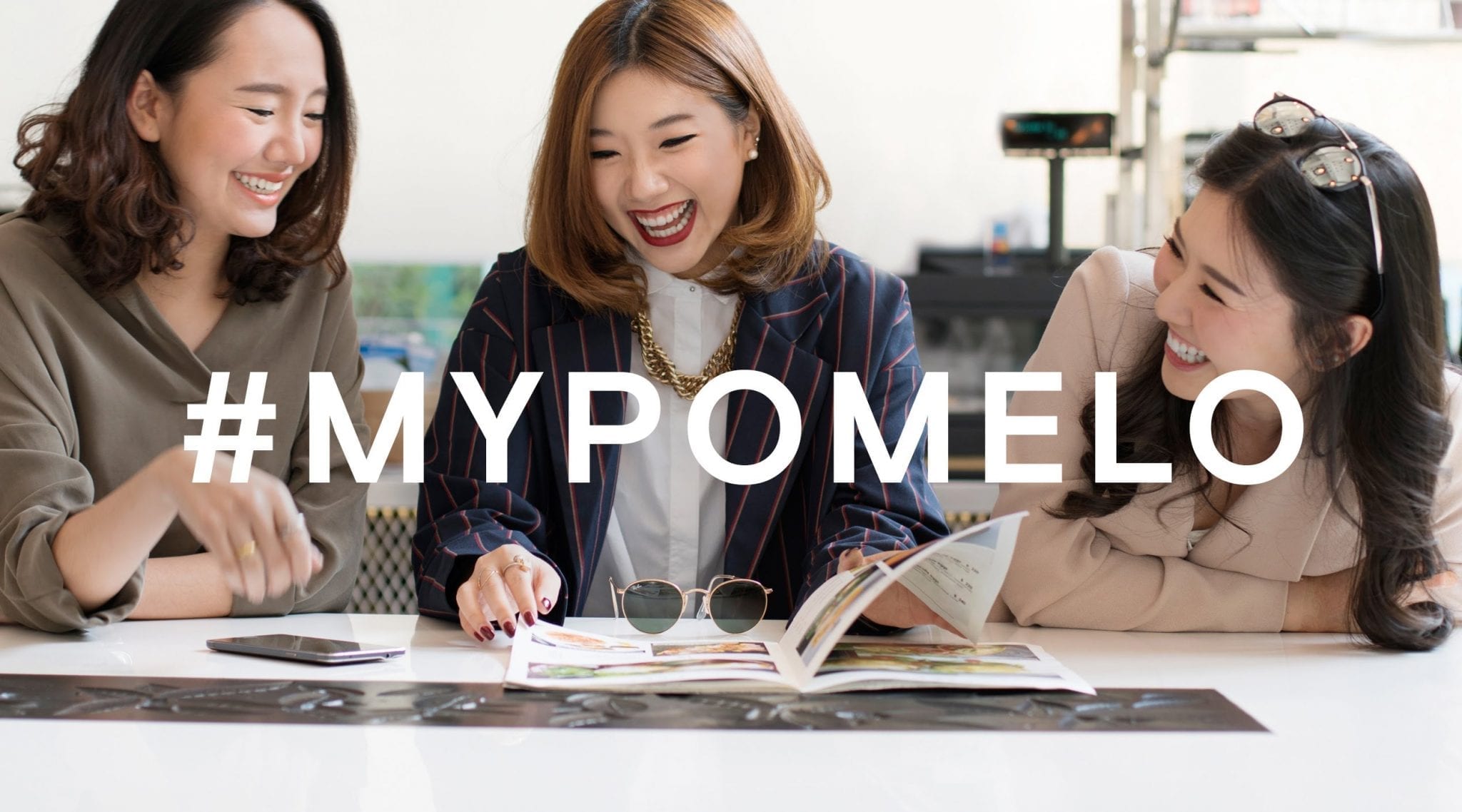
    Thai retail powerhouse Central Group has joined the series-B funding round of international online fashion company Pomelo, based in Bangkok.

    Along with Start Today Ventures, it joins JD.com, Lombard Private Equity and Provident Capital Partners in the capital raise.

    Start Today Ventures specialises in fashion business investments that use digital innovation and information technology, and is supported by Start Today which runs Japanese fashion e-commerce venture Zozotown.

    “We are pleased to have Central Group and Start Today Ventures join us in building the first global fast-fashion brand out of Southeast Asia,” says Pomelo CEO David Jou. “This investment gives us further capital to continue to push our business forward.”

    “We believe Pomelo and its team is best positioned to capitalise on the growing fashion-conscious middle class in Southeast Asia,” says Start Today Ventures general partner Reina Nakamura. “The company has established unique assets that distinguish it amid heating competition – a combination of data-driven business throughout a value chain that is competitive at a global scale, with an innovative interpretation of multi-channel (O2O) and an in-depth understanding of its customers across core markets in Southeast Asia.”

    The extra capital raised will help the company continue to expand its product assortment, open innovative retail stores and continue moving into other markets.

  • Alibaba and JD in a war of words via lawyers over claims of dominating China’s e-commerce

    Alibaba and JD in a war of words via lawyers over claims of dominating China’s e-commerce

    China’s two dominant e-commerce platforms in the world’s largest online retail market are under the spotlight in an online debate via their legal representatives about their duopoly in the industry.

    On one side is Alibaba Group Holdings, owner of the South China Morning Post and operator of the world’s largest online shopping platform, claiming that it has been the target of an organised series of chat room postings and blogs aimed at tarnishing its reputation.

    On the other side is JD.com, China’s second-largest online retailer, which said it too had been the target of more than 100 attacks to cast aspersions on its reputation, as recently as during the November 11 online shopping gala.

    The attacks on Alibaba were designed to “manipulate public opinion,” and made “groundless accusations,” the company’s legal department said in a Friday post on its Weibo social media account. “We believe the authorities should investigate and punish the criminal groups who we believe have illegally profited from propagating such rumours,” the Weibo post said, without naming the perpetrator.

    Chat room posts and blogs have surged in the past month, accusing Alibaba of using its dominance of China’s e-commerce consumer market to force merchants to choose side, or be squeezed out of business.

    As many as 9,700 articles emanating from more than 500 social media accounts were posted on various online platforms in China to attack Alibaba, mostly before the Singles’ Day online shopping gala on November 11, according to a WeChat post on Wednesday by Alibaba’s legal adviser. Up to 4,600 of these accused Alibaba of forcing merchants to choose sides or accusing it of monopolising China’s e-commerce market.

    At stake is an e-commerce industry that has dwarfed every other country in the world, and is being dominated by two large companies.

    Alibaba’s Tmall platform has 80 per cent share of China’s online clothing sales, while JD holds 10 per cent, according to research by Analysys.

    Even though Alibaba hadn’t named the perpetrator of the online campaign, the company’s legal adviser had forwarded Weibo posts that claimed JD as the client behind a 2.6 million yuan (US$394,000) contract to hire ChinaLabs, a Beijing-based consulting services provider, to attack Alibaba of monopolising the market.

    JD paid ChinaLabs 600,000 yuan to initiate research and host media seminars to discuss Alibaba’s monopoly in China’s e-commerce market, according to the posts, which cited a contract between the two parties between August 1 and December 31.

    Another contract showed that ChinaLabs was receiving 2 million yuan from JD to instigate China’s antitrust regulators to investigate on Alibaba for monopolistic practices.

    The contracts in the Alibaba legal adviser’s posts could not be independently verified.

    Spokespersons at JD, an online retail platform whose market value is about a tenth of Alibaba’s capitalisation, did not respond to text messages and phone calls soliciting their comment.

    Jincheng Tongda Law Firm, acting on behalf of JD, issued a statement on Saturday denying any association with ChinaLabs.

    Separately, ChinaLabs’ chairman Fang Xingdong denied through a Weibo post that his company had ever signed the contracts with JD, saying that it will continue to conduct investigations and research on the antitrust situation in China’s e-commerce industry.

    Alibaba’s shares have doubled this year as the Hangzhou-based company broke its November 11 retail festival record and deepened its push to marry online and physical shopping. The company this month agreed to buy a 36 per cent stake in Hong Kong-listed Sun Art Retail Group, which runs one of the biggest hypermarket chains in China.

  • Trading house Itochu taking on Alibaba and JD.com

    Trading house Itochu taking on Alibaba and JD.com

    Itochu and two partners are investing roughly 7.6 billion yen ($67.6 million) in an e-commerce venture selling Japanese goods to the Chinese market in hope to enhance its own forays into China’s internet sector.

    The Japanese trading house is investing around 4 billion yen into the Tokyo-based startup Inagora, with telecom KDDI and financial services company SBI Holdings providing the rest.

    Itochu previously invested around 100 million yen in the company and will now hold a roughly 20% stake, making it the second-largest shareholder behind founder and CEO Weng Yongbiao.

    Founded in 2014, Inagora operates Wandou, a Chinese-language e-tailer with some 3 million users.

    The site boasts around 40,000 offerings, with a focus on cosmetics, clothing and foods from brands including Japanese fashion label Samantha Thavasa, Swiss lingerie maker Triumph International and Japanese food producer Ajinomoto.

    China’s cross-border e-commerce market is growing rapidly. The market for goods from Japan is seen nearing 2 trillion yen in 2020. The country’s overall e-commerce leaders currently have a strong grip on the cross-border segment: Top player Alibaba Group Holding commands a roughly 40% share, while second-place JD.com and major internet player NetEase control shares in the 10-20% range.

    Itochu has already taken its first step into the cross-border market, launching a high-end site in spring 2017 with Chinese state-owned conglomerate Citic, a major partner.

    But the trading house has realized breaking Chinese heavyweights’ grip will require savvy marketing that can respond nimbly to consumer tastes — hence its turn to Inagora, which excels at creating videos highlighting the appeal of Japanese products for local consumers.

    The trading house will supply products for Inagora’s site through units including food wholesaling arm Nippon Access and Edwin, Japan’s largest maker of jeans. In addition, Itochu will have the site carry local specialty items from across Japan stocked by convenience store chain FamilyMart, another member of the Itochu group.

    Itochu Logistics, with over 100 locations in China, will also cooperate with Inagora, which plans to add warehouses to its own distribution network using money from the latest round of investment.

    The startup will also hire more sales staff to encourage companies to list their products. Forays elsewhere in Asia are on the agenda as well: The company plans to bring its business to Taiwan, Malaysia and elsewhere in 2018.

    Inagora anticipates around 15 billion yen in transactions this year, six times the 2016 level. With help from Itochu and others, the startup targets 100 billion yen in transactions in 2019 and 176 billion yen a year later.

  • Another Alibaba major step in China retail

    Another Alibaba major step in China retail

    This week’s Alibaba-Sun Art deal is a major step in the development of a new retail landscape in China, write Wai-chan Chan and Jacques Penhirin of Oliver Wyman.

    This is not a “real estate play” with Alibaba buying 446 grocery stores, but shows how serious Alibaba are in developing the “new retail” model combining the strengths of online and offline retail.

    The first winners from this alliance are likely to be consumers.  Alibaba will use its investment in Sun Art to improve its price, service levels and the range of products available. In addition, expect to see Alibaba add the ability to deliver a wide range of goods from these stores to consumers’ homes in super quick times. Today delivery time is the new battlefield but performance is still highly dependent on physical networks.

    In the context of retail this alliance is more important than Amazon’s acquisition of Whole Foods in the US.  Sun Art is the largest, and one of the most respected grocery players in China, while Alibaba already has a large grocery business, making it an alliance between two leading players in retail.

    Unlocking fresh

    Despite the huge advances in e-commerce in China, fresh food has been one of the areas that has been most difficult to convert to e-commerce.  Freshness is the key driver for consumers in grocery shopping. According to a survey of 1500 consumers Oliver Wyman conducted in August, consumers purchase fresh products 4.9 times per week on average, and ‘fresh’ is the number one criterion in grocery retailer selection regarding range, product quality, and value for money. However, 81 per cent of respondents do not think e-commerce provides good quality fresh products compared with offline hypermarkets.

    As one of the top two hypermarkets receiving the highest rating from consumers on their fresh offering, Sun Art has strong expertise in operating fresh categories, which will greatly unlock Alibaba’s capabilities.

    Ally or die

    It is becoming clearer that the endgame of two eco-systems being established by Alibaba and JD.com is inevitable in the retail landscape of China, which poses pressure on those ‘unallied’ retailers such as China Resources, Carrefour, WuMart, etc. For retailers, capturing traffic through their own e-commerce platform will become even more challenging. Traditional retailers must understand that they are competing with giants with unlimited abilities to invest and the ambition of integrating online and offline retail. O2O orders already contribute 30 per cent of sales of Alibaba’s Hema Fresh Supermarket – it is indeed transforming the economics of the offline shopping cart, which is challenged by the declining like-for-like growth over the past 12 successive quarters.

    Traditional retailers need to choose their battlefield very quickly, but expect compromise on bargaining power and decision-making in the long term.

    Bad news for second-tier brands

    The two ecosystems are not pure retailers anymore but integrated media and branding platforms. It does not leave Consumer Packaged Goods brands much of a choice but to closely coordinate with Alibaba and JD.com and learn their rules. Niche brands which understand both the ecosystem and consumers will take this opportunity to grow, and top-tier brands will continue to flourish if they learn how to effectively partner with Alibaba or JD, to have both parties learn from each other. By comparison, weak brands will suffer because the traditional retail stores they rely on are losing ground. Furthermore, as O2O develops, the terms and conditions will become more transparent within the two ecosystems. Promotional pressure will likely increase, requiring more diligence on the return on investment.

    Despite the prospects for this alliance, Alibaba and Sun Art need to start thinking how to effectively realise its potential. Operationally, there is huge complexity in integrating the two businesses and overcome barriers of management and culture. After all, it is more difficult to manage shoppers than to manage mobile devices.