Retail News CRM

Tag: jd.com

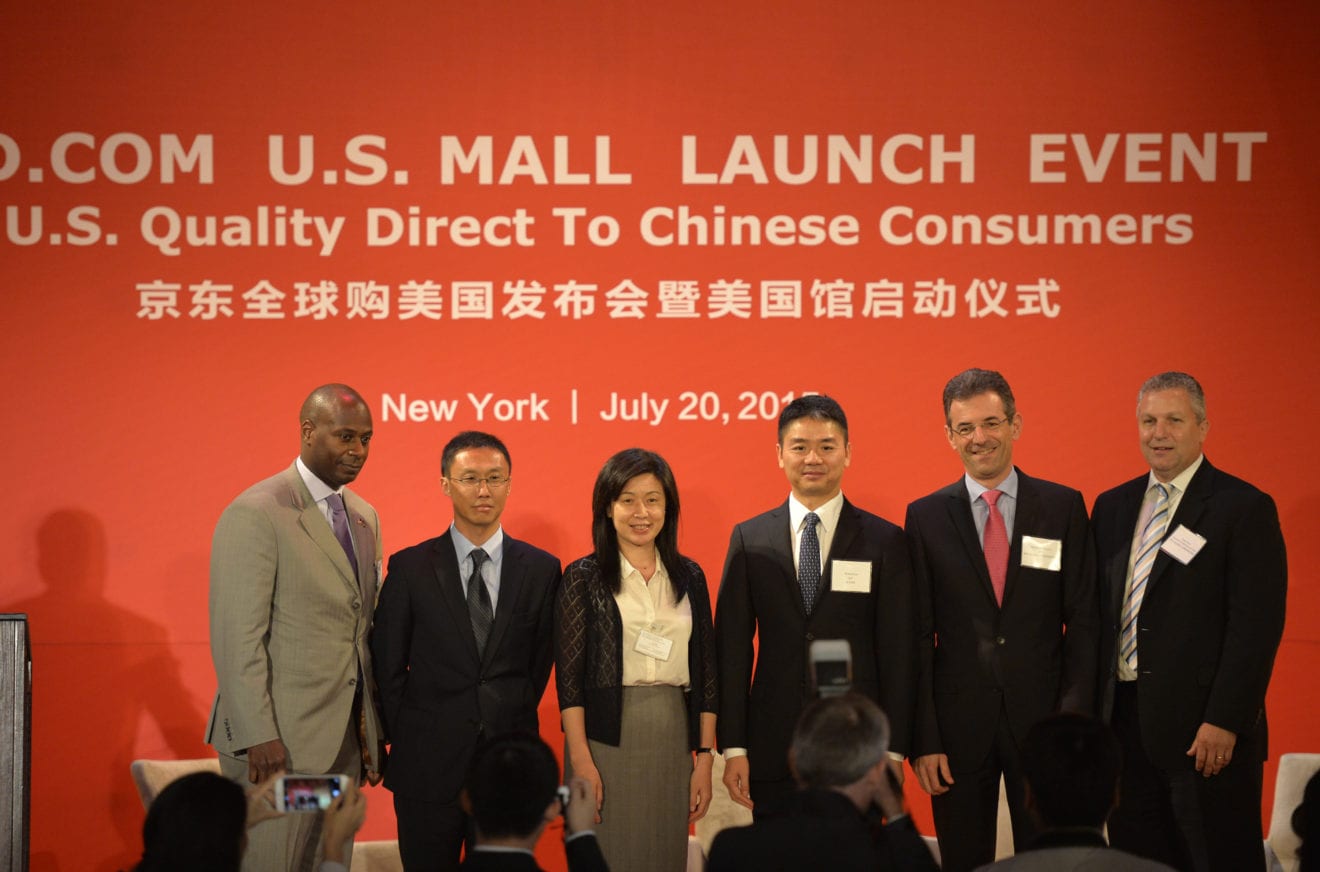
  • JD.com launches US Mall

    JD.com launches US Mall

    JD.com has launched a ‘US Mall’, its fifth in a growing lineup of country-focused retail malls.

    The new shopfront is dedicated to offering authentic imported US products for sale to its customers across China.

    Already American brands including Converse, Samsonite and Ocean Spray have signed up to sell their products on the site along with Global Brands Group’s Nautica Kids and Jeep apparel labels.

    In addition, JD.com says it will feature authentic products from Taylor Swift, including a line of clothes that the artist is designing exclusively for JD.com customers.

    JD.com also announced a partnership with DHL Global Forwarding to help American brands ensure that their products reach Chinese consumers more quickly and easily. Through this partnership, DHL is the preferred logistics service provider for moving American products ordered on JD.com’s US Mall to and across China.

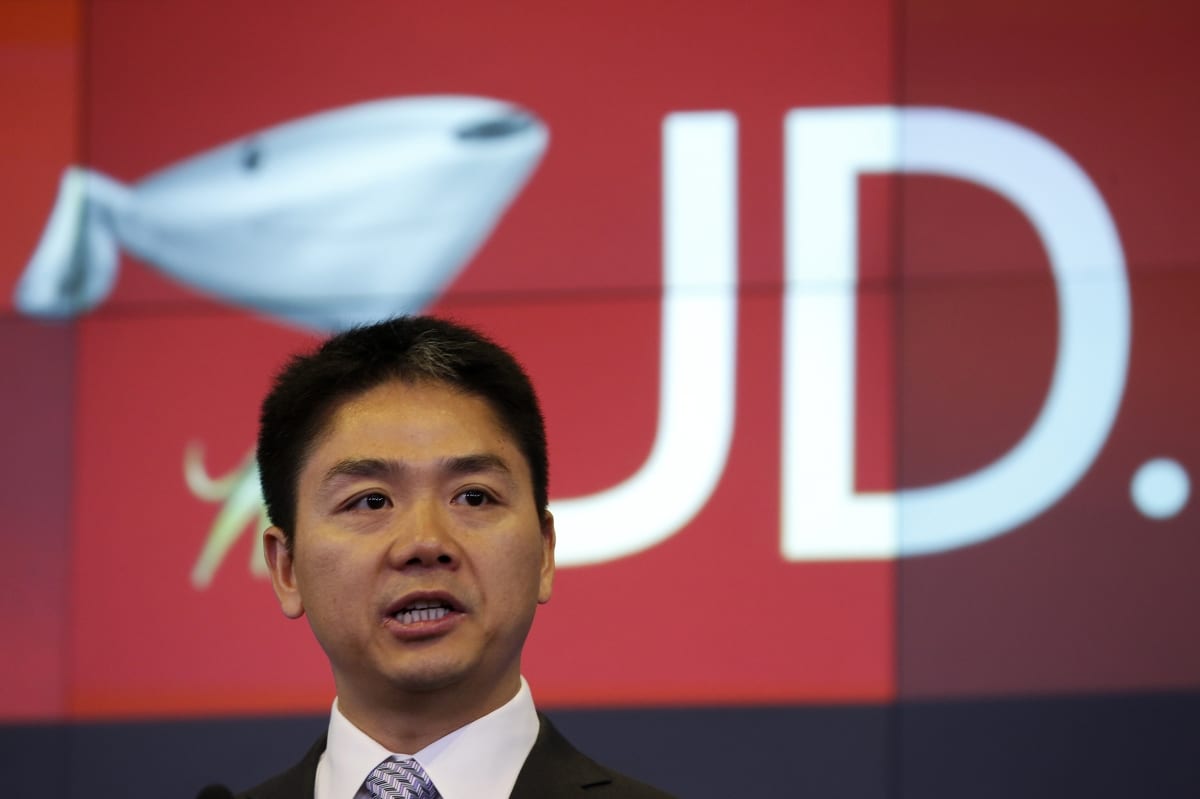
    A launch event, hosted by JD.com founder and CEO Richard Liu, include several hundred representatives from major US brands.

    “As American companies increasingly understand our core advantages of zero tolerance towards counterfeits and unparalleled same-day delivery capabilities, we are gaining excellent momentum attracting US brands to our site,” said Liu.

    “Chinese consumers appreciate that the US is a global leader in the areas of product reputation, quality, reliability and variety of goods, and American companies are clearly benefiting from this unprecedented market opportunity.

    “With JD.com’s U.S. Mall up and running, and great partners like Global Brands on board, Chinese consumers have an ever-growing range of new choices of American products, including Nautica Kids, Converse and Taylor Swift’s branded fashion line,” he said.

    The US Mall follows others created for Australia, France, Japan and Korea this year.

  • Uniqlo closes JD.com store citing China online strategy mismatch

    Uniqlo closes JD.com store citing China online strategy mismatch

    Fast Retailing Co Ltd said on Monday it has closed the online Uniqlo store that it opened in April on China’s popular JD.com Inc shopping site, saying it did fit into its China e-commerce strategy.

    After a three-month trial run, “Uniqlo determined that a presence on JD.com was not in line with the company’s China e-commerce strategy”, said a spokeswoman for Fast Retailing, which owns the casual-clothing brand.

    “During the trial run, we realized that it is best for us to take a step back,” she told Reuters.

    She declined to disclose details about the performance of the online site or specify the firm’s e-commerce strategy, but said Uniqlo was committed to the China market, both online and offline.

    JD.com and larger rival Alibaba Group Holding Ltd have been vying to attract big, international brands onto their platforms. Bagging such names can be a huge credibility boost and a sign of implicit trust in China, a market notorious for the proliferation of fake and knock-off products.

    Uniqlo’s speedy retreat from JD.com stands in contrast to its robust presence since 2009 on Alibaba’s Amazon.com-like Tmall platform. During Alibaba’s annual Singles Day sales event last November, Uniqlo was fifth in overall sales and the top apparel brand, the spokeswoman said.

    JD.com spokesman Josh Gartner said sales on Uniqlo’s JD.com store had exceeded aggressive sales targets in the first month of operation.

    “Uniqlo is stopping operation of its flagship store due to an e-commerce strategic restructuring in China, not based on the performance of the store,” he said.

    The Japanese company is expanding rapidly in China as it aims to become the world’s biggest apparel retailer ahead of Zara-owner Inditex SA, Hennes & Mauritz AB (H&M)

    and Gap Inc by 2020.

    Fast Retailing Chief Executive Tadashi Yanai has said Uniqlo aimed to have 1,000 stores in Greater China in about five years, more than its Japan total – and eventually as many as 3,000. It had 442 in China, Hong Kong and Taiwan as of end-May.

    Japan’s stock market was closed on Monday for a public holiday. On Friday, Fast Retailing’s shares gained 1.1 per cent to close at 57,220 yen ($460.41).

  • Food fight! The next battle for China e-commerce

    Food fight! The next battle for China e-commerce

    A number of e-commerce firms in the mainland are inking deals to import foreign delicacies, reflecting growing consumer worries over a series of domestic food scandals.

    JD.com, the mainland’s largest online direct sales company, announced on Monday the launch of a new channel dedicated to selling a range of authentic Australian food products, including milk, meat and fruit, as well as wine from Treasury Wine Estates. Australia is the latest entrant to JD.com’s online ‘country malls’, which already include France, South Korea and Japan.

    “Chinese consumers are increasingly enthusiastic about trying, buying and using products from all over the world” said JD.com founder and CEO Richard Liu.

    Online supermarket Yihaodian opened a similar exclusive channel for Canadian seafood and meat earlier this month in an agreement with Agriculture and Agri-Food Canada (AAFC). Alibaba, meanwhile, already leads the way in terms of foreign food products. Last week, the e-commerce giant announced it added 11 more countries to its Tmall Global site, a platform dedicated to foreign brands. Food is Tmall’s most popular product category, according to Alibaba.

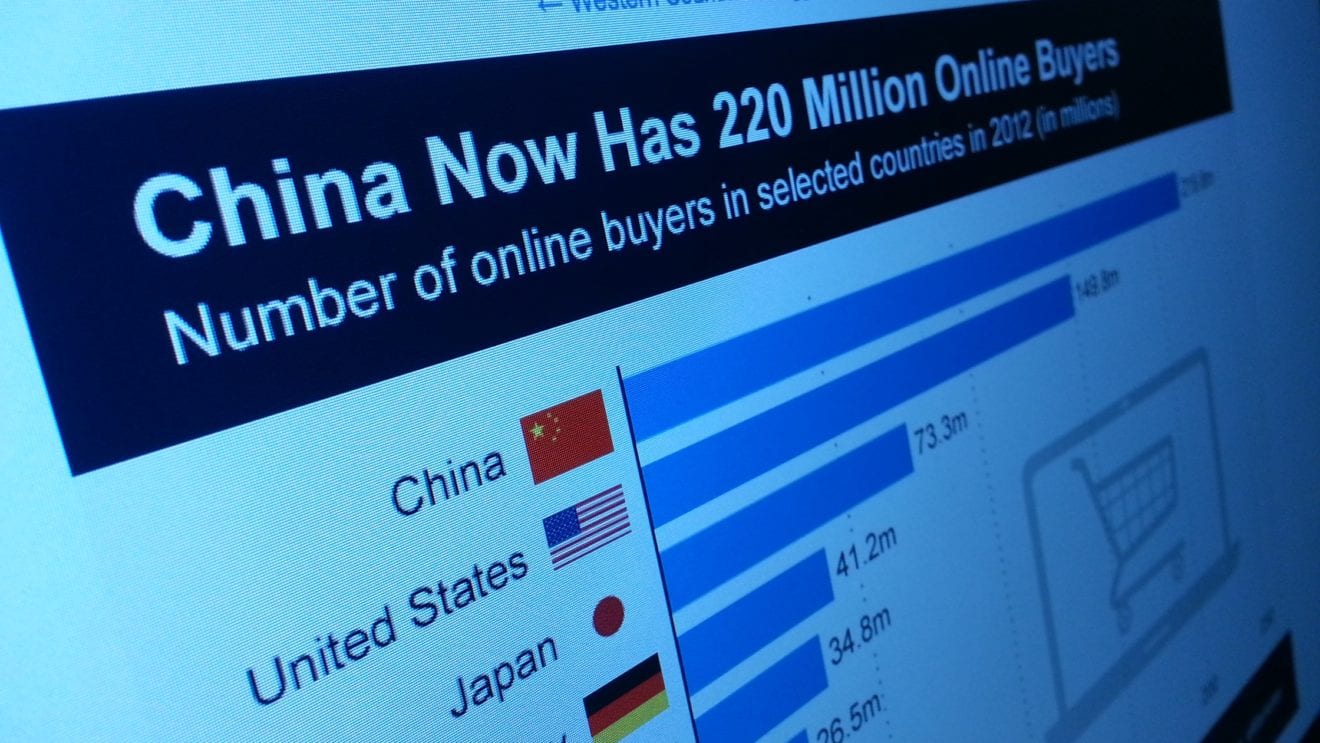
    The transaction volume of imported goods purchased online could reach $245 billion in five years, with more than 200 million Chinese consumers engaging in cross-border shopping, said a recent report from Accenture and AliResearch, Alibaba’s research arm.

    The taste for imports comes as no surprise given the country’s ongoing battle with food hygiene. Last week, authorities seized a batch of smuggled frozen meat that was 40 years old. Scandals like these explain why 75 percent of Chinese have no confidence in domestic food safety, a March survey by the China Food and Drug Administration (CFDA) showed.

    “Food safety issues, an increased focus on health and wellness, and a growing willingness to spend on children have made organic or fresh fruits, meats and vegetables, and baby-related products top spending priorities this year,” Boston Consulting Group (BCG) in a report on Monday.

    While JD.com was unable to share top-selling brands, it told CNBC that dairy and wine had traditionally been two of the biggest selling categories of Australian products.

    A two-speed market

    E-commerce trends are only a partial reflection of Chinese consumption, consulting firm BCG noted.

    China has a “two-speed consumer market,” where middle to upper-middle-class and affluent households, known as high-speed consumers, make up the bulk of digital shoppers, it said. Forty percent of these consumers shop online frequently-at least once a week-compared with 20 percent of less affluent households, i.e. the low-speed consumers.

    Wealth gaps account for the difference between the groups, BCG explained.

    “The average affluent household is expecting nearly 11 percent income growth; the average aspirant household, only 6 percent. This 5 percentage point difference, given the vast disparity in income levels between these two groups of consumers, translates into a 20-fold difference in actual earnings.”

  • China dominates global online grocery markets

    China dominates global online grocery markets

    The Chinese online grocery market is set to be worth almost $180 billion by 2020 – nearly five times its current value of $40 billion, according to IGD’s Top 10 Online Grocery Markets report. In other leading markets, online growth is expected to continue at double-digit rates. This makes investment in the channel essential for companies wishing to meet the needs of the rapidly evolving multichannel shopper.

    China’s rapid pace

    Online grocery sales in China are soaring as shopper habits gravitate towards the channel, which is maturing at a much faster rate than we have seen in other markets. Mobile is a key driver of this growth. Most online sales are via digital marketplaces such as Tmall (owned by Alibaba) and JD.com. The scale of these pure-play sites means they can offer an increasingly broad product selection.

    Busy shoppers are increasingly using China’s online marketplaces to seek out imported goods including food, which is seen as an affordable luxury. As more shoppers come online and China’s population increases, we expect this growth to continue.

    New opportunities in leading markets

    Meanwhile, in more mature markets such as the UK (the world’s second-largest online market for grocery), we continue to see strong growth and innovation. The click & collect sub-channel is giving retailers new ways to drive loyalty and reach potential customers on-the-go at remote locations. Last week, Asda opened its first fully automated 24-hour online grocery collection point at Haydock, a concept that is likely to be seen shortly in Walmart’s other markets too.

    Remote collection is also being trialled in Belgium, where Carrefour has introduced an after-work pick-up point for shoppers at an office car park, and Australia, where lockers and drive-thru’ solutions have been introduced by the two major retailers.

    In the UK, 27% of shoppers now shop online on a monthly basis, with 11% citing it as their main way to shop. Loyalty schemes such as delivery passes are helping to drive frequency and overall multichannel spend.

    Maximising opportunities in larger markets

    There are also some exciting developments in larger markets, particularly the US, where Walmart is adding scale to boost online grocery, estimating that online and digital in-store purchases could reach up to 6% of revenue by 2017. Innovation and rapid delivery is a big theme in this market, driving shopper expectations. Here Amazon is particularly active, combining key global growth trends of convenience, mobile and loyalty with new services such as Amazon Prime Now’s one-hour delivery. This is available exclusively on mobile devices to Amazon Prime members in 14 US cities and launched internationally for the first time in London this week. Disruptors such as Instacart and Uber – companies and services innovating across the supply chain or tapping into opportunities created by the increase in the use of technology – are also driving the channel and bridging the gap where retailers are not yet present.

    Meanwhile in Germany, recent research indicates that shoppers are becoming more willing to shop for groceries online and established online retailers such as Rewe are boosting investment in the channel. Discounters Aldi and Lidl are beginning to invest online in specialist areas such as wine and pet food. Together with Amazon, these retailers have the potential to change the German market significantly with their increased investment.

    Where should retailers and suppliers focus their efforts?

    For FMCG retailers and suppliers, the online channel presents many opportunities. In leading markets, retailers are likely to see the majority of growth occurring online over the next five years, so a focus on this fast-moving channel is essential. We can expect new online entries by retailers across the majority of markets, so flexibility will be essential. Understanding sub-channel growth, such as remote click & collect, as well as mobile and wearable technology, will also be key to unlocking new potential.

    Key considerations for retailers and suppliers:

    • What is changing and how will it impact my market/category/shoppers?
    • Do I have the right resource in place?
    • How can I partner with customers on new initiatives / market entries / sub-channel expansion / convenience and personalisation?
    • Which customers / markets present the biggest opportunities for my brand?
    • Is my company adopting a multichannel approach? Does this include mobile?
  • JD.com launches Australian Mall

    JD.com launches Australian Mall

    Chinese language eCommerce gaint JD.com has launched an Australian Mall platform to convey “genuine, imported merchandise” to China.

    The Nasdaq-listed e-tailer says the brand new ‘mall’ might be a brand new channel on its JD Worldwide cross-border platform. The corporate additionally introduced cooperative agreements with Australia Submit and Treasury Wine Estates as a part of its Australia push.

    The corporate launched its Australian Mall at an occasion in Melbourne hosted by Richard Liu, founder and CEO of JD.com.

    Following the signing of China-Australia Free Commerce Settlement on June 17, the occasion additionally kicked off Genuine Australia Yr to advertise the eCommerce improvement between Chinese language and Australian enterprises.

    “Chinese language shoppers are more and more captivated with making an attempt, shopping for and utilizing merchandise from everywhere in the world, and Australian merchandise like milk and wine have lengthy been huge sellers on our platform,” stated Liu. “Now that our Australian Mall is out there, JD.com clients can additional fulfill their rising curiosity in recent Australian meals and high-quality merchandise, safe within the information they’re shopping for via China’s premier trusted supply of real merchandise.”

    The partnership with Australia Publish will make it simpler for corporations on JD Worldwide to leverage the postal service’s providers, together with package deal decide up, abroad warehousing, air and sea transportation, and small package deal junk mail from Australia to China, amongst different potential providers.

    Stated Andrew Walduck, EGM, info, digital & know-how (and CIO) of Australia Submit: “We’re additionally happy to play a number one position in connecting Chinese language shoppers with fabulous and premium Australian merchandise via JD.com.”

    The brand new Australian Mall builds on JD.com’s partnership with Austrade to advertise gross sales of Australian meals merchandise and in collaboration with Australian companions like Australia Publish and AustCham will supply a wider vary of meals together with recent milk, seafood, recent fruits and different gadgets in excessive demand amongst JD.com’s clients.

    JD.com’s Australian Mall may even function many well-known Australian manufacturers and merchandise masking numerous classes, together with healthcare, maternity, child, private care, cosmetics, sportswear and footwear.

    As a part of its Australian Mall launch, JD.com additionally introduced a brand new settlement with Treasury Wine Estates, certainly one of Australia’s premier wineries. Underneath the settlement, JD.com will start providing the corporate’s wines to its greater than 100 million lively clients.

    Because it does with its different worldwide channels on JD Worldwide, together with its lately launched on-line nation malls that provide genuine merchandise from France, South Korea and Japan, the corporate will join Australian suppliers and sellers with worldwide logistics companions, together with Australia Publish, to assist simplify cross-border transactions, thereby permitting clients in China to order and obtain the products they need in a seamless, speedy and worry-free method.

    “As a long-time associate of JD.com, we couldn’t be extra delighted to welcome Richard and his staff to Australia to additional increase their enterprise with corporations right here,” stated Phil Wohlsen GM Asia of The a2 Milk Firm.

    “As China and Australia launch a brand new period of elevated financial cooperation, I hope that extra Australians will use this chance to leverage the super assets of JD.com to faucet the large potential of Chinese language market as we now have.”

    Australian manufacturers serious about reaching JD.com’s 100 million-plus clients ought to contact JD Worldwide’s model administration group at: [email protected].
  • JD.com heads to Russia

    JD.com heads to Russia

    Chinese language on-line retailer JD.com has launched a Russian-language web site to broaden its operations outdoors its core China market.

    In doing so, it’s following within the tracks of its big rival Alibaba, which has reportedly gained speedy reputation in Russia, regardless of the nation’s struggling financial system and the home foreign money’s lacklustre worth.

    “Russia is Europe’s largest Web market by viewers and has fast-growing e-commerce,” stated JD.com chief Victor Xu in a Moscow press convention to launch the brand new website.

    “We purpose to turn out to be a market chief in Russian eCommerce.”

    In line with analysis home TNS, the Aliexpress buying website had 19.6 million Russian customers in April, rating it within the prime 10 hottest websites in Russia with visitation up 65 per cent yr on yr.

    Russia’s cross-border eCommerce market was value US$four billion final yr with an estimated 70 million parcels shipped into the nation from overseas. Almost three quarters of that quantity got here from China.

    JD.com has partnered with SPSR Categorical to ship parcels in Russia and with Yandex.Cash and Qiwi Plc to course of on-line funds.

  • JD.com launches Japanese Mall

    JD.com launches Japanese Mall

    JD.com has launched a Japanese Mall – a brand new channel on the corporate’s JD Worldwide cross-border platform devoted solely to gross sales of genuine imported Japanese merchandise.

    JD.com launched Japanese Mall at an occasion in Tokyo the place JD Mall CEO Haoyu Shen was joined by Katsutoshi Takeda, director basic of the Japan-China Friendship Middle, and senior administration from Rakuten, Sumitomo, and different key Japanese companions.

    “Our new Japanese Mall supplies Chinese language shoppers with a trusted supply for purchasing imported Japanese merchandise,” stated Shen.

    “Japanese Mall will give extra Japanese manufacturers larger publicity to China’s quickly rising demand for imported items, and can additional solidify JD.com’s status as China’s on-line chief for assured genuine merchandise.”

    JD says it’s working to simplify cross-border transactions by offering suggestions on operational and worldwide logistics companions that Japanese companies can use to scale back prices and enhance the effectivity of promoting via the JD Worldwide platform.

    Japanese Mall will give attention to satisfying the fast-growing demand amongst Chinese language shoppers for genuine Japanese merchandise in a variety of classes together with gadgets for maternity, infants, meals, private care, cosmetics, attire, baggage, house ornament, electronics and residential home equipment from common Japanese manufacturers.

    Along with Japanese Mall, JD Worldwide additionally hosts French Mall and Korean Mall, each of which launched earlier this yr, and the corporate stated it might proceed looking for different alternatives to supply channels devoted to different nations’ merchandise in response to buyer demand.

  • JD.com strikes into gadget making

    JD.com strikes into gadget making

    Chinese language on-line retailer JD.com has chosen CES Asia to unveil two new devices to be bought by its JD Sensible division.

    JD Sensible is a just lately launched ‘sensible gadget platform and enterprise unit’ which has created what it describes as an ‘open ecosystem initiative’, integrating merchandise from a variety of producers seamlessly on a JD.com sensible platform.

    The brand new merchandise are a DingDong Sensible Speaker, developed in partnership with iFlyTech. It’s a voice-controlled gadget that may pull information, climate and round three million songs and four million hours of audio content material instantaneously from third get together sources on the Web and play them by way of the high-quality speaker system.

    The voice interface system may also help in schedule administration by establishing alarms, calendars and comparable planning instruments, all by way of voice instructions. The DingDong Sensible Speaker makes use of the JD+ tremendous app (referred to as “Jingdong Weilian” in Chinese language) to permit full voice management of all merchandise within the JD+ ecosystem, centralising the consumer expertise.

    JD Sensible additionally launched Changhong’s EleCloud Wi-fi Sensible Rechargeable Storage System to its JD+ ecosystem. The gadget, which equally leverages the Weilian app, is an exterior charger for cellular units that integrates the functionalities of wi-fi sharing and a excessive velocity flash drive, permitting customers to share paperwork, music and movies concurrently with as much as greater than 30 individuals.

    JD Sensible president Zhenhui Wang stated the brand new merchandise underscore JD Sensible’s shut relationships with producers and its concentrate on delivering a very built-in open platform for sensible units.

    “Leveraging JD.com’s unrivalled assets, we help our associate corporations all through the event course of, together with massive knowledge evaluation of consumer conduct, sensible cloud computing platform, fairness crowdfunding by means of JD Finance for start-ups, advertising help and entry to our greater than 100 million customers for market-ready sensible merchandise.”

    JD Sensible’s ecosystem supplies customers a handy single level of management over related sensible units from collaborating producers by means of its Weilian cellular tremendous app.

    “We’ve created an ecosystem that permits merchandise from totally different producers to work collectively on a seamless sensible platform, JD Sensible is ready to bypass the ‘ache level’ created when a consumer’s units can’t speak to one another,” stated Leslie Liu, JD Sensible’s CTO.

    “The DingDong Sensible Speaker leverages the Weilian app we now have developed to seamlessly combine into clients’ sensible house networks with a single voice command middle, avoiding the ‘bottleneck’ of closed platforms.”

    By way of its JD+ business companion program, JD Sensible builds partnerships with conventional and early-stage hardware producers across the open JD Sensible platform. Presently JD+ consists of over 100 producers, together with Haier, Hisense, Midea, TCL, Joyoung and Fotile, with a complete of greater than 400 JD Sensible-enabled merchandise. JD Sensible helps its associate corporations by means of a number of improvement levels, together with offering incubators, accelerators, technological help, go-to-market options, provide chain and cloud computing providers, in addition to entry to JD.com’s big base of upwardly cellular shoppers.

  • Sephora, JD.com staff up

    Sephora, JD.com staff up

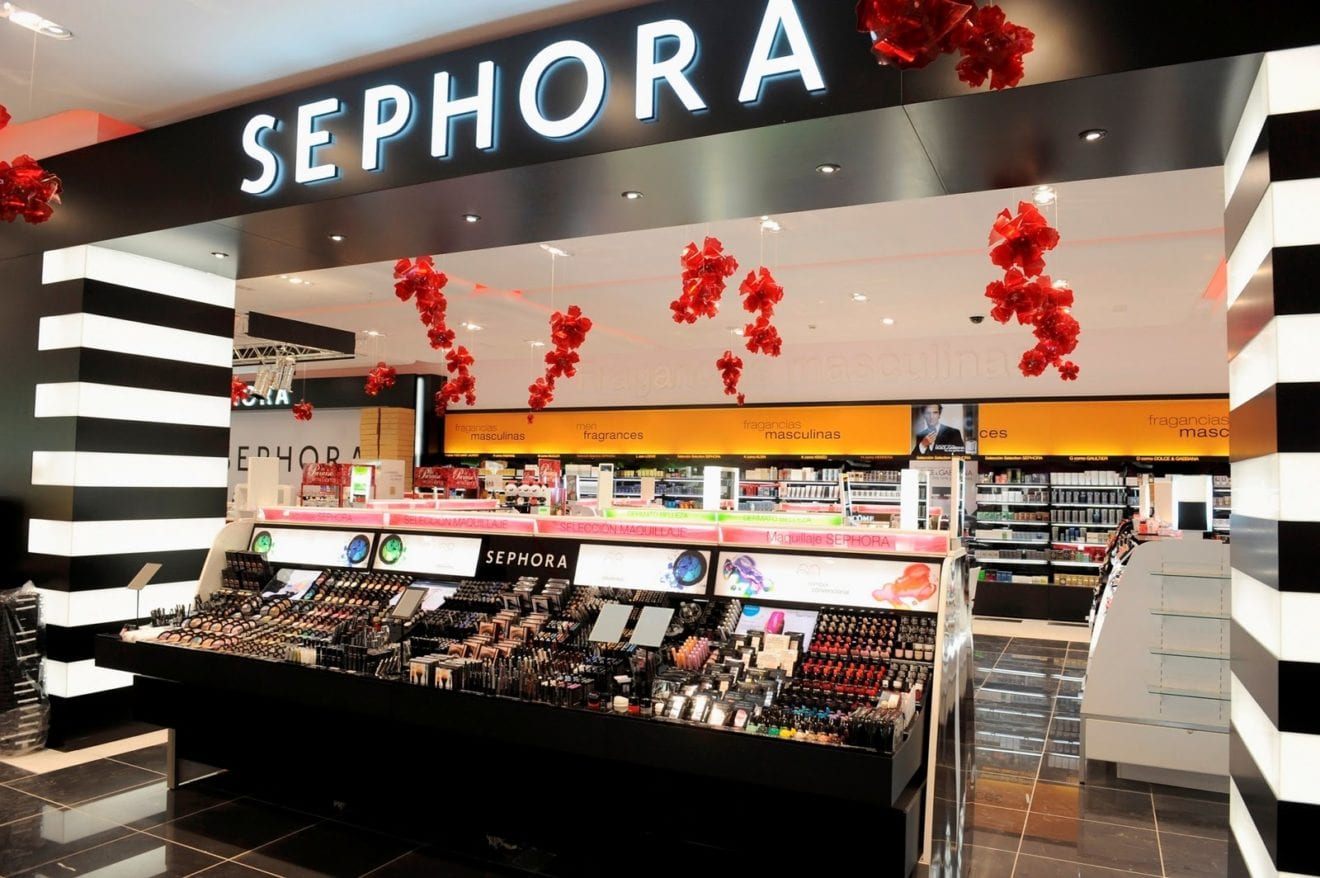
    LVMH-owned cosmetics retailer Sephora has opened a flagship retailer on Chinese language eCommerce website JD.com.

    Sephora, which already as a profitable retail community in tier one Mainland China cities, says the transfer wil assist it break into the eCommerce market there, and attain shoppers in smaller city markets.

    “This marks a big step ahead for Sephora, the main magnificence retailer of LVMH Group, in its eCommerce and general retail technique for China,” the 2 corporations stated in a press release.

    Upon launch, Sephora’s retailer would be the largest cosmetics retailer on JD.com’s platform, that includes over 1200 gadgets from greater than 70 worldwide beauty manufacturers, together with Dior, Guerlain, Givenchy, Profit and Kenzoki.

    Anne Veronique Bruel, president of Sephora Asia, stated she is assured that Sephora, JD.com will have the ability to present Chinese language shoppers with “a very world-class on-line purchasing expertise, with out the fear of counterfeits”.

    Haoyu Shen, CEO of JD Mall added: “We’re capable of supply Sephora an end-to-end eCommerce answer that ensures Chinese language shoppers have the absolute best model expertise when buying their magnificence merchandise on-line. Our direct co-operation with Sephora additional strengthens the arrogance of cosmetics buyers in China that JD.com is the go-to website for probably the most wanted genuine name-brand merchandise.”

    Sephora, based in Limoges, France, in 1969, was purchased by luxurious group LVMH in 1997.At the moment, it has greater than 2000 shops in 32 nations stocking greater than 200 worldwide manufacturers and 10,000 of its personal distinctive personal label merchandise.

  • Luxottica groups with JD.com

    Luxottica groups with JD.com

    JD.com says it is going to associate with eyewear producer Luxottica to retail a variety of sun shades bearing a few of the best-known international luxurious manufacturers.

    Clients of the Chinese language web site will be capable of buy sun shades from manufacturers together with Ray-Ban, Oakley and Vogue. A lot of the merchandise might be out there by means of JD.com’s direct gross sales channel, enabling Luxottica to leverage JD.com’s nationwide logistics community that includes commonplace same- and next-day supply.

    “Chinese language shoppers more and more depend on JD.com for handy and dependable entry to high-quality luxurious items throughout a variety of merchandise, from clothes and niknaks, to cosmetics,” stated Lijun Xin, VP.

    “We’re delighted to be partnering with Luxottica, the clear international chief in luxurious eyewear, to broaden our providing on this market that’s quickly rising amongst Chinese language shoppers.

    “Partnerships with main luxurious producers resembling Luxottica underline the belief that our international companions have in JD.com, not solely to drive gross sales, but in addition to offer shoppers assured genuine merchandise and the absolute best model expertise.”

    JD.com operates seven achievement facilities and 143 warehouses in 43 cities throughout China, with 3539 supply stations and pickup stations in 1961 counties and districts.

  • China’s JD.com posts 62 pct rise in quarterly revenue

    China’s JD.com posts 62 pct rise in quarterly revenue

    JD.com Inc, China’s No.2 e-commerce company, reported a 62 percent rise in quarterly revenue, topping analysts’ expectation as the number of active customer accounts across its sites nearly doubled from a year earlier.

    First-quarter revenue of 36.6 billion yuan ($5.90 billion) exceeded analysts’ estimate of 35.65 billion yuan, according to Thomson Reuters I/B/E/S.

    Gross merchandise volume (GMV), or the total value of goods sold on JD.com, nearly doubled to 87.8 billion yuan ($14.14 billion) in the quarter ended March, with roughly 42 percent of all fulfilled orders coming from mobile devices, the company said.

    Excluding certain items, losses widened to 2 cents per American depositary share, from 1 cent, as it spent heavily to broaden its inventory and on marketing.

    The Beijing-based company’s business, like bigger U.S. peer Amazon.com Inc’s, is built on selling products it purchases through its own logistics network. Alibaba Group Holding Ltd, on the other hand, has grown its business quickly by connecting sellers to buyers rather than stocking its own merchandise.

    The difference in business models has allowed JD.com to market itself as a purveyor of authentic goods, while its larger rival has wrestled with occasional, high-profile controversies over fake products.

    When JD.com announced in April that it would sell and warehouse clothes from Japanese giant Uniqlo, the e-tailer touted the deal as an example of its growing ability to offer customers mainstream labels and authentic clothes.

    JD.com last month launched its JD Worldwide cross-border online shopping platform, a challenger to Alibaba’s Tmall Global service.

    It also announced on Friday its participation in a $500 million investment in Tuniu Corp.

    The company’s U.S.-listed shares have risen close to 60 percent since its IPO last May.

    ($1 = 6.2089 Chinese yuan renminbi)

  • JD.com eyes rural areas to tap huge potential

    JD.com eyes rural areas to tap huge potential

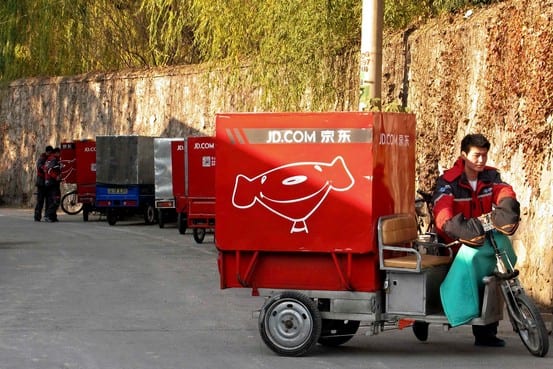
    China’s online retailer JD.com said it plans to open more than 500 county-level service centres this year to boost deliveries to lower-tier cities and inland regions as it bids to boost its market presence.

    The centres will hire local staff and delivery men to expand the firm’s delivery network into regions with few third-party courier companies. The firm will also open up to 1,000 service stores targeting home appliance buyers and help vendors provide one-stop service of installation and repairing of household appliances sold to rural consumers.

    It is hoped that the county-level centres and the planned hiring of promotion staff will help rural consumers become better acquainted with JD.com as well as online purchasing and after-sales service by the end of June.