Retail News CRM

Tag: jd.com

  • China’s Retail Sector Emerged as a Bright Spot in Slowing Economy

    China’s Retail Sector Emerged as a Bright Spot in Slowing Economy

    China’s retail sector shines

    China is facing an economic downturn, but Chinese consumers are hopeful about its economy. According to Boston Consulting Group, China’s total retail sales are forecasted to grow by 50% to $6.5 trillion by 2020 with online transactions growing by nearly 25%.

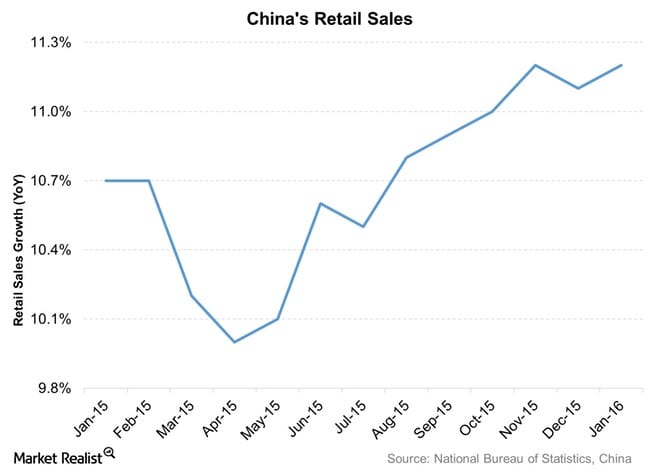
    Retail sales were up by 11.2% in January 2016 due to Lunar New Year holiday shopping. In 2015, retail sales grew by 10.7% YoY to 30.09 trillion yuan, slower than the 12.0% increase recorded in 2014. Urban retail sales of consumer goods were up by 10.5% YoY to 25.9 trillion yuan.

    Rural areas have become a major source of retail sales growth. Retailers are focusing on rural China to increase the penetration of e-commerce. In 2015, rural retail sales were up by 11.8% to 4.19 trillion yuan.

    Chinas Retail Sales 2016-02-28Enlarge Graph

    E-commerce played a major role in driving up retail sales. In 2015, the national online retail sales of goods and services grew 33.3% YoY to 3.88 trillion yuan, according to the National Bureau of Statistics of China. Some of the leading players in China’s e-commerce segment are Alibaba Group Holdings (BABA), Baidu (BIDU), JD.com (JD), NetEase (NTES), and 58.Com Inc. (WUBA).

    According to Fortune Character, a luxury product consulting firm, Chinese consumers accounted for 46% of global sales of luxury products in 2015.

    Transition from export-oriented economy to consumer-driven economy

    After a slowdown in demand and rising debt levels in the manufacturing sector and reduced dependence in the export business, China is shifting its focus to a consumption-driven economy. Although this transition would be painful in the near-term, it has the potential to deliver robust growth to China in the long term.

    Mutual funds such as the Templeton China World Fund (TCWAX) and the Fidelity Advisor China Region Fund – Class A (FHKAX) have exposures of 31.3% and 21.5%, respectively, to the consumer discretionary and consumer staples sector combined. These funds stand to gain immensely due to positive performance in the retail sector.

    After having a brief overview of China’s macroeconomic indicators, let’s begin our assessment of China-focused mutual funds.

  • Tom Tailor Launches Its First Online-Shop in China on JD.com

    Tom Tailor Launches Its First Online-Shop in China on JD.com

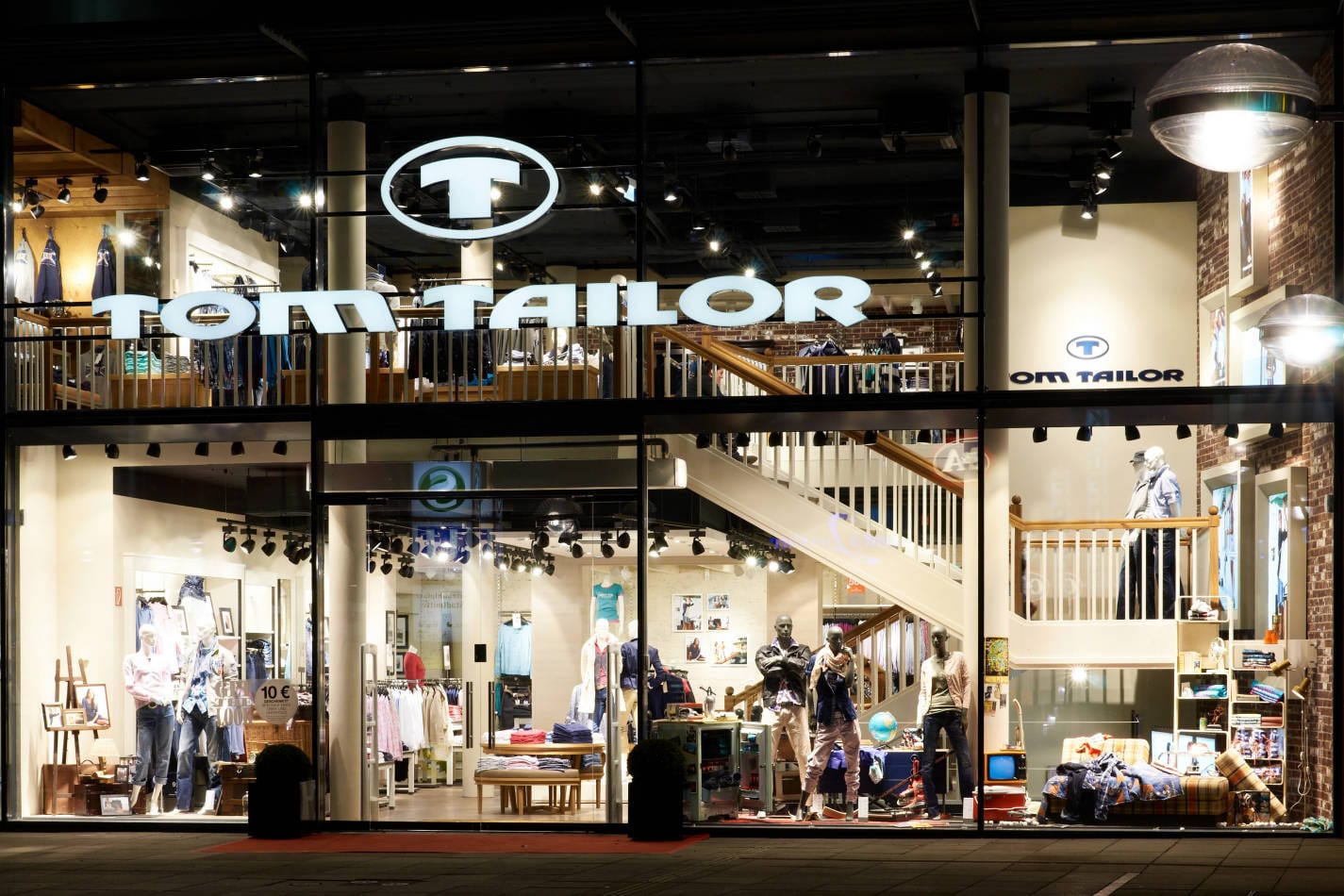
    Tom Tailor has launched its first online shop in China on the e-commerce platform JD.com, China’s largest online direct sales company. The launch marks another important milestone inTom Tailor’s expansion in China, following the opening of the firstTom Tailor retail store in Shanghai in November 2015.

    TheTom Tailor online shop on JD Worldwide features products from across theTom Tailor Denim and Tom Tailor CONTEMPORARY ranges. Building on JD.com’s brand marketing, payment, logistics and after-sales support,Tom Tailor will ensure that the brand’s customers across China enjoy a world-class online shopping experience.”In order to expand our online presence with the umbrella brandTom Tailor in China, JD.com, as China’s largest e-tailer, is an excellent partner,” said Erika Kirsten,Tom Tailor’s Manager of Corporate Communications.

    “JD.com has a high-value user base. With 155 million active consumers across the country who appreciate its versatile product range and superior customer service, JD.com provides the optimal platform for launchingTom Tailor in the Chinese online market.”“We’re delighted to welcomeTom Tailor to JD.com, and look forward to supporting their growth in China,” said Josh Gartner, JD.com’s Senior Director of International Communications. “Apparel is one of the fastest growing categories on our platform because customers know that only JD.com can provide reliable and convenient access to the latest fashions from local and international brands with a 100% guarantee of product quality and authenticity.

    We are excited to expand our portfolio of brands to includeTom Tailor’s stylish designs and we’re confident that customers will respond very positively.”Tom Tailor is represented in China currently with a retail store and 14 shop-in-shops.

  • China changes the tax rules on purchases from overseas e-retailers

    China changes the tax rules on purchases from overseas e-retailers

    In some cases consumers will owe more tax, and in other cases less.

    Foreign online retailers and brands have benefited in recent years from China’s relaxed rules on purchases by Chinese consumers on overseas websites. China’s new rules on import duties and taxes will hurt some of those overseas online sellers, while helping others.

    The new rules, to take effect in April, provide an exemption from import duties for purchases from foreign websites of up to 2,000 yuan ($306) but add a sales tax of 11.9% that consumers don’t pay today. That sales tax is still less than the 17% value-added tax consumers pay when shopping in stores in China.

    The existing rules, which mirror the regulations for consumers bringing in purchases from abroad or receiving them by mail from friends overseas, allows a consumer to import up to 1,000 yuan ($153) worth of products at a time for personal use, up to 20,000 yuan in a year. Those purchases are subject to import duty—which generally vary from 10% to 50% of the purchase price, depending on the type of product—but the tax is waived if it’s under 50 yuan ($7.65.) That 50-yuan exemption will be eliminated in the new rules.

    The new policy will benefit sellers of products for which the duty is high, such as cosmetics, which are hit with a 50% duty tax, says Li Pengbo, CEO of China Cross-border E-commerce Research Center, a consulting company. But other items for which the duty is low, such as children’s products, the new rules will make it more expensive for Chinese consumers to buy from overseas websites, Li says.

    Here are some major product categories, with the duty tax percentage:

    • Food, 10%
    • Alcohol, 50%
    • Apparel, 20%
    • Cosmetics, 50%
    • Electronics, 20%

    Thus, under existing rules a Chinese consumer who buys a shirt for $50 on a foreign e-commerce site pays a fee of $10 (20% duty on a $50 purchase), whereas under the new rules he would pay only $5.95 (no duty, but a sales tax of 11.9%.) However, a consumer buying $30 of powdered milk today would pay no duty or sales tax (the duty would be $3, 10% of $30, but that is waived because no fee is charged if the duty is below 50 yuan ($7.65)), whereas under the new rules she would pay $3.57 (no duty, but a sales tax of 11.9%.)

    Both the new rules and the old ones also apply to foreign companies that sell on Chinese marketplaces under the relaxed cross-border e-commerce rules that China has adopted in recent years. Such major Chinese e-commerce operators as Alibaba Group Holding Ltd., JD.com Inc. and the Amazon China subsidiary of Amazon.com Inc. have created special sections of their online shopping sites featuring imported goods sold under the special cross-border rules. Those rules allow foreign companies to store items in 10 free-trade zones without clearing customs, and then send them through an expedited customs process when a Chinese shopper places an order.

    They also allow the sale, up to the limit for personal use—1,000 yuan today and 2,000 yuan when the new rules take effect in April—of goods that have not been authorized for sale in China, as long as they have been found safe in their home country. That’s a big deal for sellers of products like cosmetics and food that can take years to gain approval from the Chinese government for domestic sale.

    Chinese consumers have taken advantage of the cross-border e-commerce rules to buy significant quantities from foreign web merchants. China’s customs authority reported this month that the first seven of the free-trade zones established in China since late 2013 handled 100 million inbound parcels purchased from foreign e-retailers with a total value of $2 billion.

    The relaxed rules on purchases from foreign websites have drawn protests from domestic retailers who say they have to pay import duties on all goods they bring into the country and charge consumers the national 17% value-added tax.

    Gong Dingyu, founder and chief operating officer of Chinese children’s product retail chain Leyou, tells Internet Retailer, that the new rules represent of a different way to tax goods purchased from overseas e-retailers.

    “The old policy is unfair because traditional trading companies and physical stores don’t have the same favorable policy as cross-border e-commerce,” Gong says. “Also, without products being monitored and inspected by the Chinese government, online consumers could buy imported products with quality issues.”

    JD.com is No. 1 in the Internet Retailer 2015 China 500 and Amazon China No. 5. While Alibaba’s big online marketplaces Taobao and Tmall account for about three-quarters of online purchases in China, Alibaba is not ranked because it is a marketplace operator and not the merchant of record for any sales on its sites.

  • Competition that hit Alibaba down

    Competition that hit Alibaba down

    Alibaba appears to be facing increasingly stiff competition from rival JD.com, which like Alibaba has worked to boost sales from foreign retail companies in China. While Alibaba has talked in recent months of the potential of reaching consumers in rural China, JD.com has focused on reaching the more affluent shoppers in urban areas.

    While it’s true that e-commerce is increasingly important in more remote areas of China, income there remains low, as does spending, and China’s recent economic turmoil is likely slowing down growth.

    In addition to its focus in more rural areas, Alibaba continues to face problems over sales of counterfeit items, more so than JD.com, an issue of increasing important not just to retailers abroad and the U.S. government, but also to wealthier Chinese shoppers.

    And JD.com enjoys a positive, Amazon-like reputation for fulfillment.

    “[JD] have faster shipping speeds, and the quality is more trustworthy,” Zoe Li, who works at a tech start-up in Beijing.

  • Chinese retailing giant JD.com tests drone in rural areas

    Chinese retailing giant JD.com tests drone in rural areas

    China’s online retailing giant JD.com has started conducting trial deliveries using drones, and plan to roll it out for delivery in rural China, the state media reported today.

    The company said the unmanned aerial vehicles or drones will not deliver packages directly to shoppers but will instead help transport bundles of items from its distribution stations to 150,000 representatives mobilised across rural China who will then get them to shoppers.

    The distance between distribution stations to rural representatives, usually less than 10 km according to JD, are more fixed for engineers to design drone itineraries and landing points. Representatives will be notified in advance to wait for drones to land with packages, Xinhua news agency reported.

    JD.com’s CEO Richard Liu Qiangdong had said last year that the company is developing drone delivery to meet the rising retail demand in China’s rural areas, where complex terrain and underdeveloped infrastructure have compromised timely human courier delivery.

    Both JD.com and its arch rival Alibaba have been working to unleash consumption demand from China’s 618 million rural residents, whose income growth has been outpacing their urban peers in recent years despite a slowing economy, the report said.

  • Rakuten to open on JD.com

    Rakuten to open on JD.com

    Rakuten, Japan’s largest eCommerce company, is to open an online flagship on Chinese cross-border eCommerce platform JD.com.

    The Japanese company says it aims to take “the best Japanese products to Chinese consumers”. It launched a beta version of the new marketplace on JD Worldwide earlier this month. Plans are under way to expand the merchandise range over coming months, with an initial focus on categories such as cosmetics, snacks and health food products.

    Masato Takahashi, managing executive officer of Rakuten, said the partnership between Rakuten and JD.com will promote cross-border trade by connecting Chinese consumers with authentic and popular Japanese products from a top selection of Rakuten’s merchants from around Japan, both small and large.

    “Rakuten will continue to work to expand our offering to Chinese consumers.”

    Haoyu Shen, CEO of JD Mall, said imported Japanese products have proven popular in China to date.

    “Our focus remains on partnering with the most trusted retailers in key overseas markets to meet the growing demand for premium imported products.”

    Expansion of the product line-up will continue over the coming months.

  • JD.com posts huge GMV sales increase

    JD.com posts huge GMV sales increase

    JD.com, China’s second largest eCommerce player, has reported a 76 per cent increase in core GMV sales in the third quarter to RMB111.0 billion (US$17.5 billion).

    Excluding Paipai.com – which the company is closing down by the end of this year – unique customers, annual active customer accounts increased by 62 per cent to 126.9 million year on year.

    Net revenues for the quarter RMB44.1 billion (US$6.9 billion), an increase of 52 per cent from the third quarter of 2014.

    The company fulfilled 329.7 million orders during the quarter, an increase of 85 per cent from the 178.2 million of the same period in 2014.

    But JD.com still fininshed the three months with a loss of RMB530.8 million (US$83.5 million) and a net margin of negative 1.2 per cent.

    “This was another quarter of strong growth, as JD.com increasingly becomes China’s source for fast, worry-free shopping online,” said Richard Liu, founder and CEO.

    “Our partnership with Tencent’s dominant Weixin and Mobile QQ platforms puts JD.com at the fingertips of virtually every Chinese mobile online consumer, and continues to drive rapid user growth. Looking ahead, we will stay focused on enhancing user experience, deepening ties with leading brands and working to further expand JD.com’s leadership in mobile eCommerce.”

    Sidney Huang, JD.com’s CFO, said third quarter results were “very healthy, with encouraging user growth and robust performance across all of our product categories”.

    “As China’s direct B2C eCommerce leader, JD.com is benefitting from the industry-wide shift to direct-sales eCommerce as we continue to invest strategically in our core business and high-growth initiatives,” he said.

    As at September 30, JD.com had approximately 90,000 merchants on its online marketplace and a total of 94,615 full-time employees.

  • Paipai.com axed to fight counterfeiting

    Paipai.com axed to fight counterfeiting

    China’s number 2 eCommerce player JD.com has axed its consumer to consumer online storePaipai.com in a bid, it says, to cut sales of counterfeit goods.

    The store will be closed by December 31 and after a transitional period of three months, the company will completely close down the website of Paipai.com.

    “The shutdown of the C2C platform is in line with the company’s policy to combat the marketing and sale of counterfeit products and the company will make persistent efforts to protect the interests of consumers and brands,” JD.com said in a statement.

    Paipai.com, along with another site Wanggou, were acquired from WeChat parent Tencent in March 2014. The combined businesses have a goodwill and intangible asset value of US$400 million, making it a very expensive gesture in the war against counterfeit goods in Mainland China.

    The company says it has yet to calculate the book value of the loss given the two websites are accounted for in the books as a combined entity and Wanggou will continue to operate.

    While JD.com is amputating a limb, Alibaba is undergoing a high profile battle in the US courts with French luxury brand owner Kering which alleges Alibaba has failed to take sufficient steps to counter the trading of counterfeit goods on its various websites, as reported by Inside Retail Asia last week.

  • HKTDC Design Gallery Wan Chai relaunched

    HKTDC Design Gallery Wan Chai relaunched

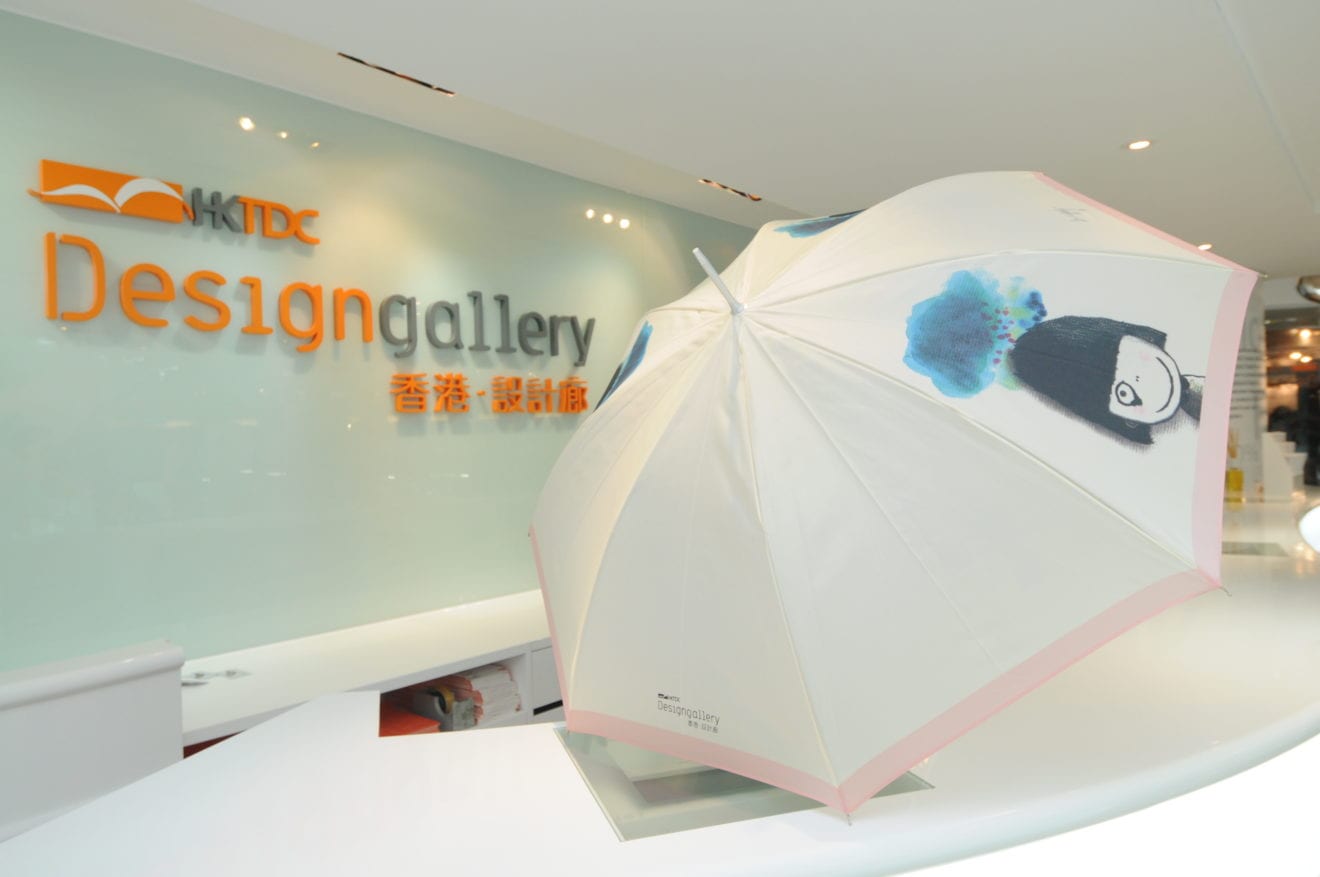
    The Hong Kong Trade Development Council has unveiled a revamped HKTDC Design Gallery shop at the Hong Kong Convention and Exhibition Centre.

    HKTDC executive director Margaret Fong was joined by famous Hong Kong actor Moses Chan and many of the city’s top designers at an opening ceremony yesterday.

    The store was created to promote products invented back in 1991.

    The diverse variety of products on offer highlights the extraordinary creativity of Hong Kong designers in areas ranging from jewellery, watches, electronics and fashion to home products, gifts and children’s items.

    The revamped HKTDC Design Gallery Wan Chai shop showcases nearly 5500 innovative products from more than 230 Hong Kong designers and brands in eight distinctly designed zones.

    Hong Kong designer brands feature in DG Discover; handbags and accessories in DG Vogue; environmentally friendly products in DG Green; baby and children’s products in DG Mini; home goods and gifts in DG Delights; electronic and digital goods in DG Smart; high-end luxury products such as jewellery, watches and leather and cashmere goods in DG Luxe; and collaborative creations by Hong Kong designers and international brands that combine the best of East and West in DG Plus.

    Featuring minimalist geometric shapes and a circular motif, the design of the revamped HKTDC Design Gallery shop creates a vibrant atmosphere to engage customers and elevate brand image. Light wood colours, grey gradients and black linear accents are used to create a comfortable, contemporary environment. The DG Luxe zone is distinguished from other areas of the shop by the use of dark wood colours and deep grey fabric lining.

    At the opening ceremony, Fong said that thanks to the support of local residents, visitors and traders, the shop has been attracting more than 1 million customers each year.

    Apart from new Design Gallery shops in Beijing, Shanghai, Chengdu, Wuhan and other mainland cities, Fong also spoke about the HKTDC’s strategy of collaborating with department stores and lifestyle shops to set up “shops in shops” in Hong Kong and on the Chinese mainland, to bring the best Hong Kong brands to more customers.

    Fong said the HKTDC is also establishing online shops on leading Hong Kong eCommerce platforms such as ShopThruPost, YesStyle and Zalora, as well as Taobao, Tmall and JD.com on the Chinese mainland, in an effort to develop eCommerce opportunities for Hong Kong businesses.

    Between now and December 2015, customers who make a one-time purchase of HK$300 or more at any HKTDC Design Gallery shop in Hong Kong will be entitled to lifetime membership with the DG Club. Members are entitled to a special shopping discount and can earn points to redeem for exclusive gifts or instant cash rebates. To celebrate the re-launch of the HKTDC Design Gallery Wan Chai shop, members will be awarded double points for purchases made between 16 and 18 November 2015.

    The HKTDC Design Gallery Wan Chai Shop is located on the ground floor of the Hong Kong Convention and Exhibition Centre, 1 Harbour Rd, Wan Chai.

  • China’s Retail Sales Rose in October

    China’s Retail Sales Rose in October

    China’s total retail sales of consumer goods rose 11.0% year-over-year (or YoY) to 2.8 trillion yuan in October. The data indicated better-than-expected growth in retail sales and a slight improvement from September’s rise of 10.9%.On a year-to-date (or YTD) basis from January to October, the total retail sales of consumer goods reached 24.4 trillion yuan, up by 10.6% YoY.

    The sale of mobile phones, building materials, and household products led to the strong growth in retail sales.

    Chinas Retail Sales Continue to Rise 2015-11-17Enlarge Graph

    A rise in retail sales is a step toward the transition of the Chinese economy from an export-oriented to a consumer-driven economy. This is highly recommended because export orders are falling due to weak global demand. This is the aim of Chinese authorities as well. However, with the slowdown in Chinese local and foreign sales, an increase in retail sales comes as a surprise and a bright spot in the Chinese economy.

    E-commerce played a major role in driving up retail sales. From January to September, the national online retail sales of goods and services grew 34.6% YoY to 3.0 billion yuan, according to the National Bureau of Statistics of China.

    Some of the leading players in China’s e-commerce segment are Alibaba Group Holding, Baidu, JD.com, NetEase, and 58.com.
    Urban retail sales of consumer goods rose 10.8% YoY to 2.4 trillion yuan in October. On a YTD basis, urban retail sales rose 10.4% YoY to 21.0 trillion yuan.
    Rural areas have become a major source of retail sales growth. Retailers are focusing on rural China to increase the penetration of e-commerce. In October, rural retail sales rose 12.2% YoY to 0.38 trillion yuan. On a YTD basis, they rose 11.8% to 3.4 trillion yuan.

    The Clough China Class A ETF (CHNAX), the Guinness Atkinson China & Hong Kong ETF, and the Eaton Vance Greater China Growth Class A ETF (EVCGX) have more than 10% exposure to the consumer discretionary sector. So a rise in retail sales would benefit them the most.

    However, the John Hancock Greater China Opportunities Class A ETF (JCOAX) had only 6.4% of its assets invested in the consumer discretionary sector. So a rise in retail sales will have a lesser impact on the performance of that fund.

  • Dairy Farm struggles in SE Asia

    Dairy Farm struggles in SE Asia

    Dairy Farm International Holdings says softer sales growth and steep cost increases led to weakened margins in the third quarter.

    In an interim management statement, which does not include financial data, the Hong Kong-based pan-Asian retailer says the group faced more difficult economic conditions, and focused on building market share and investing for the long-term health of its businesses.

    Tighter margins and unfavourable exchange rate movements continued to affect the group’s US dollar reported results and led to lower underlying earnings for the period.

    “The group expects similar trading conditions to prevail for the remainder of the year.”

    Dairy Farm says profitability of its Singapore food business – where it owns the 7-Eleven franchise and Cold Storage supermarket chain – fell, principally due to weak performances from newly opened supermarkets and the impact on 7-Eleven of government restrictions on alcohol sales.

    In Malaysia, the introduction of GST and softer consumer confidence dampened spending at itsGiantstores.

    “In Indonesia, despite good sales momentum in July and August, higher labour costs and price investments to attract customers have reduced margins,” the company said.

    The Health and Beauty Division – led by the Guardian and Mannings brands – continued to perform well in Hong Kong, despite the slowdown in Mainland Chinese tourist arrivals, and has seen improvements in profitability in Singapore. The overall results were, however, held back by poorer performances in Malaysia and Indonesia.

    Both the Home Furnishings and Restaurants Divisions have increased sales and profits. Ikea performed well in both Hong Kong and Taiwan, and the new Ikea store in Indonesia continues to trade ahead of expectations.

    Restaurant group Maxim’s, which operates Starbucks amongst other brands,  maintained its consistent performance.

    The group is to invest a further US$210 million in Yonghui Superstores in early 2016 so as to maintain its 19.99 per cent stake following a placement by Yonghui of a 10 per cent shareholding to internet retailer, JD.com. The investment by JD.com will provide Yonghui with additional opportunities for expansion into eCommerce.

    “With respect to recent investments, there have been positive contributions from [supermarket chain] San Miu in Macau and from Yonghui in China, despite the challenging trading environment. Meanwhile, progress continues on the integration and repositioning of the Rose Pharmacy business in the Philippines,” the company said.

    “Notwithstanding the challenging conditions, Dairy Farm was able to maintain its cashflow from operating activities through better working capital management.

    Dairy Farm operates over 6400 outlets – including supermarkets, hypermarkets, convenience stores, health and beauty stores, home furnishings stores, cafes and restaurants – employing over 170,000 people, and had total annual sales in 2014 exceeding US$13 billion.

  • JD.com seeks Alibaba probe

    JD.com seeks Alibaba probe

    China’s second largest online retailer, JD.com, has lodged a formal complaint with Chinese regulators, alleging its larger rival Alibaba is attempting to restrict competition.

    China’s competition regulator, the State Administration for Industry and Commerce (SAIC), imposed a new regulation on October 1 preventing eCommerce platforms from restricting their sellers from participating in promotions on rival platforms.

    According to a letter from JD.com, it has evidence of Alibaba “forcing” merchants to deal exclusively with one eCommerce site during promotional activities.

    JD.com claims merchants have been told if they participate in Alibaba’s 11.11 promotion, they must not participate in promotions on rival platforms – eg: JD.com. If they do, they face “punishment or sanctions”.

    But an Alibaba spokesman, Rico Ngai, told Reuters the company “strongly denies the accusations”.

    “Alibaba welcomes competition as it benefits consumers, merchants and service providers,” he said.

    But JD.com claims Alibaba’s behaviour has “harmed merchants’ interests” and “not only obstructed normal market competition, but also seriously harmed consumers’ interests”.

  • The new niches in China’s ecommerce market

    The new niches in China’s ecommerce market

    Alibaba’s sales is only 5 percent of total retail in China and JD.com’s sales of electronics products represent about 2 percent to 5 percent of total electronics retail as well, according to Dangdang.com’s CEO Li Guoqing.

    If you only look at the Chinese ecommerce giants’ recent financial report, most people would agree that the competition has settled because Alibaba alone has accounted for about 80 percent of the market share in online shopping sales. The combined sales from Alibaba and JD.com have close to about 90 percent of the Chinese online retail market.

    However, at least one executive of a Chinese e-retailer thinks the position of those leaders is not secure. “The size of the business is not equal to competitive advantage and competitive threshold.  The market will be settled only if the marketing leaders have some unique edges and generate difficult barriers to entry,” says Li Guoqing, cofounder and CEO of Dangdang.com, in a speech in One Thousand Ecommerce Professionals Seminar in China:

    Alibaba’s sales only account for about 5% of retail sales of China and that is not a enough barrier to entry. At same time, JD.com’s electronics sales only represent 2% to 5% sales of electronics products in China. If some companies get a right new business model, there are still plenty of chances to beat those current leaders.

    Li says people seldom know Vipshop, the number 4 internet retailer China 500, and Yhd.com, the number 7 internet retailer China 500, three years ago, but now they have become ecommerce leaders in their categories in China.

    In other words, new horizons may be coming for niches within China’s ecommerce market in the same way that we see companies like Warby Parker and Zappos coming up in the USA. Keep on a lookout for these small well-branded niche companies in China, while you look past the big guys like Alibaba and JD.

  • JD.com opens US office

    JD.com opens US office

    JD.com, China’s largest online direct sales company, has opened its first US facility, a new research and development center located in Silicon Valley.

    Situated in Santa Clara, the new office will focus on developing and enhancing new and existing technologies that will improve the user experience for its customers in China and boost the company’s offerings.

    The facility will also allow easier interactions between the company and US retailers, partners and brands seeking to establish or expand their presence in China on JD’s shopping platforms.

    “Given the scope and strength of American brands, products and capabilities, the US was the obvious choice as we sought a location for our first office outside of Asia,” said Richard Liu, founder and CEO of JD.com.

    Chen Zhang, senior vice president of JD.com and head of R&D for JD Mall will initially oversee the new office, which will focus on areas such as cloud computing, mobile applications and big-data infrastructure, and will provide both rotational job possibilities for engineers in China and opportunities for certain skilled technical workers in the area.

    Last July JD.com launched US Mall on its website, dedicated exclusively to meeting the demand in the Chinese market for authentic imported American products.

  • A Chinese online retail giant has Australia in its sights

    A Chinese online retail giant has Australia in its sights

    The possibility that China’s second-largest online retail giant will enter the Australian market poses a huge potential threat not just to bricks-and-mortar shops but to the slow-growing domestic online retail sector as well.

    That is the conclusion of Invast’s chief market analyst Peter Esho, who has just returned from a trip to China and was gobsmacked by the pace and scale of the digital revolution taking place there.

    He says the slowdown in overall Chinese GDP doesn’t capture the explosive growth in the tech space and widespread acceptance of online shopping, especially on mobiles.

    Nasdaq-listed JD.com is the Chinese equivalent of Amazon, second in size only to Alibaba. It started out selling electronics and has since moved into fashion, cosmetics, food and virtually every other consumer category (25 million SKUs in 2013 and it seems to have stopped counting since then.)

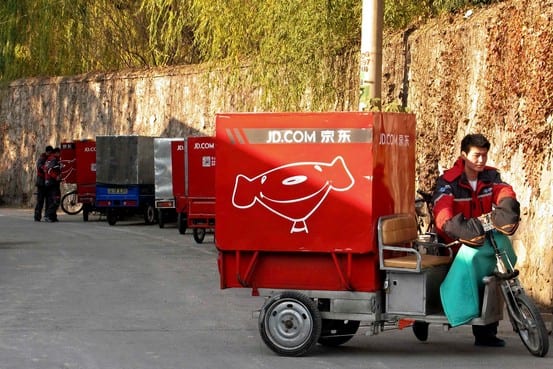
    With its own logistics infrastructure, its promise of same-day delivery has whacked physical shopping in parts of China.

    Esho believes that JD.com is eyeing the Australian market as part of its expansion plans in a push that could disrupt global competitors.

    “JD.com is considering an expansion into Australia which will see the Chinese online retailer potentially pipping Amazon.com to become the first truly global online retailer with an Australian operation,” he says.

    This could not only disrupt traditional stores, but many online retailers whose business model has been based on importing from Chinese manufacturers and selling to Australian consumers.

    “JD.com removes that middle-market opportunity,” Esho says, because it would link Chinese manufacturers directly with Australian consumers with same-day delivery.

    Despite years of speculation, Amazon has yet to set up a local operation in Australia, with rumours about warehouse space amounting to nothing. Its prices and shipping have also steadily risen in recent years, making it less attractive to local consumers.

    JD.com however has already established relationships in Australia including a logistics agreement with Australia Post after it set up its own Australian online mall earlier this year, which sells goods from Australian producers directly to Chinese consumers.

    It has signed up firms including Treasury Wine Estates, Blackmores and meat business Sanger to tap swelling demand from middle-class Chinese for well-regulated Australian food and health products. The company also bought a small stake in Murray Goulburn, and now sells its milk powder at about a 100 per cent mark-up.

    The Australian mall joined similar stores from the United States, Japan, France and South Korea selling authentic international brands on JD.com into a country flooded with cheap knock-offs.

    JD.com is one of the world’s largest e-commerce firms, with a market capitalisation on the Nasdaq of $US38 billion. It has 118 million active customer accounts and filled 689 million orders last year, according to its most recent results. Annual revenue growth is 61 per cent and the shares gained 4 per cent in 12 months, while Alibaba slumped 25 per cent.

    Within China, JD.com has 166 warehouses in 44 cities and delivers many products within one hour of the order being placed. Compare that with some online Australian retailers where one or two days can go by before even a confirmation email is sent to the shopper.

    Online shopping has slowed in Australia in recent months, growing at an annual rate of 7 per cent in August, according to NAB’s monthly online retail sales index. That is slightly faster than the comparable growth at retailers (excluding cafes and restaurants) of 4.7 per cent.

    Overall, online retail makes up about 7.1 per cent of retail spending, a similar proportion to the e-commerce market in the United States although annual growth in the US is a much faster at 14.1 per cent, according to the Commerce Department. In China, online retail grew 50 per cent last year.

    If a new global entrant with an established logistics model and massive buying power takes aim at the Australian market, it will not only undercut existing players but could also expand the market for an efficient, reliable everything store.

    “We are a large, unserviced market,” says Esho. “A lot of the problem with online is the delay in delivery, and that’s JD’s competitive advantage.”