Tag: jd.com

  • JD.com Could Be Returning to Russia

    JD.com Could Be Returning to Russia

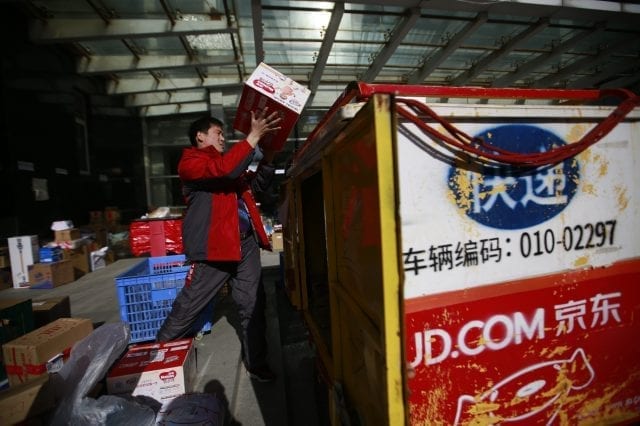
    JD.com, the second largest e-commerce player in China, could be returning to Russia soon according to a recent Kommersant report. JD previously entered the Russian market in 2015, but retreated a year later after struggling with cross-border logistics issues, merchant partnerships, and high marketing expenses.

    JD’s previous effort featured partnerships with payment providers Qiwi and Yandex’s Yandex Money, logistics provider SPSR-Express, and online retailer Ulmart. This time around, JD.com could partner with AlfaGroup’s X5 Retail Group, which owns a nationwide network of Pyaterochka discount stores, Perekrestok supermarkets, and Carousel hypermarkets.

    JD will let Russian customers purchase products online, and those goods will be delivered to Pyaterochka, Perekrestok, and Carousel stores for pickup. The partnership seems like a win-win deal for both companies — JD can piggyback its online operations off X5’s network of stores instead of launching new logistics services, and X5 adds more non-food products to its stores.

    The deal should also lower marketing costs for JD with co-marketing campaigns: Ads for JD’s products are appearing in Pyaterochka stores, and will likely appear in Perekrestok and Carousel stores in the near future. The partnership could also revive JD’s previous relationships with Yandex and Qiwi, which both hold partnerships with X5.

    Why does JD.com need the Russian market?

    JD and its bigger rival Alibaba have been looking for growth opportunities beyond the Chinese market. The two companies are already clashing across Southeast Asia, where JD’s marketplace faces stiff competition from Alibaba-backed Lazada.

    Both companies are also targeting Western markets. JD recently announced its plans to expand into Western Europe, and a new partnership with Alphabet’s Google will help it sell products to American shoppers. JD also lets Chinese shoppers buy overseas products from various countries through its cross-border e-commerce platform, JD Worldwide.

    Alibaba’s AliExpress platform, which lets Chinese sellers reach overseas buyers, is popular in Russia and Eastern Europe. 14% of European shoppers (including 69% of Russian shoppers) bought goods on AliExpress last year. That makes it the second biggest e-commerce platform in Europe after Amazon, which controlled a quarter of the market. Alibaba also recently launched a dedicated version of Tmall for Russian shoppers.

    Alibaba’s popularity in Russia is troubling for JD, which seemingly surrendered the market to its rival with its premature exit. It’s also bad news for JD’s top investor, Tencent, which also reaches some Russian users with WeChat, the top mobile messaging app in China. In China, JD relies heavily on its integration with WeChat — which has over a billion monthly active users — to display ads, sell products, and accumulate shopper data.

    The Russian market is trickier. Its mobile messaging market is dominated by apps like VK, WhatsApp, Skype, and Viber, which don’t have comparable relationships with JD.

    Russia has a relatively high internet penetration rate of 71%, and about half of Russians shop online. Yet e-commerce transactions could only account for 3% of the country’s retail market this year, which suggests that many shoppers still rely on brick-and-mortar retailers.

    Those numbers suggest that the Russian market is still ripe for a major e-commerce disruption. Alibaba will be a tough competitor for JD, but partnering with X5 Retail is a smart move since Russian shoppers still rely on brick-and-mortar stores. If JD can attract more partnerships, its second attempt could prove more fruitful than its first.
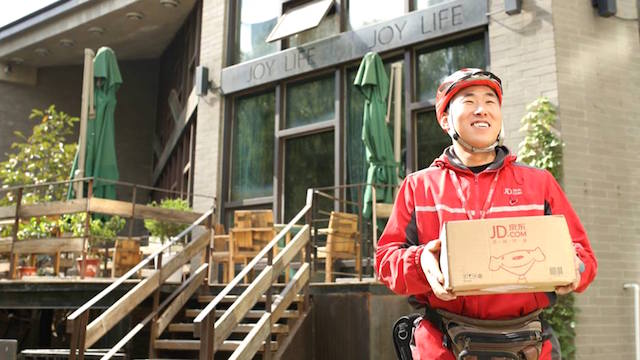
  • How JD could help fight a proxy war for its strategic investors

    How JD could help fight a proxy war for its strategic investors

    A proxy war is a strategy that refers to a conflict instigated by opposing powers who do not fight against each other directly.

    By using third parties to do the fighting, it is still possible to bring strategic benefits while minimizing the risks.

    Google has announced that it will invest US$550 million in JD.com for 1 percent stake, joining Tencent and Walmart to become the Chinese online retailer’s third strategic investor.

    In fact, the three may all be seeing JD as a proxy to help them compete with their respective rivals.

    Listed on Nasdaq in 2014, JD has a market capitalization of around US$60 billion.

    It’s China’s second-largest e-commerce company, but its market value is only a fraction of Alibaba’s US$500 billion plus.

    Alibaba’s Taobao and Tmall have snapped up about 70 percent of China’s online shopping market, while JD’s market share is around 22 to 25 percent.

    To Google, JD could serve as a proxy in competing with Amazon.

    Google and JD plan to “collaborate on a range of strategic initiatives, including joint development of retail solutions in a range of regions around the world”, they said.

    In the short term, JD would select a range of high-quality products and offer them worldwide through Google Shopping.

    The two companies would also explore new retail opportunities in Southeast Asia, the United States and Europe. The alliance would combine JD’s strengths in supply chain and logistics with Google’s tech capability to develop a new retail infrastructure.

    We could say that Google and Amazon have a sort of love-hate relationship. Amazon is now Google’s largest advertising client, spending billions of dollars each year. But Amazon is actively exploring direct distribution channels and even starting its own advertising business.

    Google, meanwhile, has launched its Google Shopping unit and JD would add more Chinese offerings to this platform.

    JD will also serve as Walmart’s proxy in its war against Amazon.

    In 2016, Walmart, the world’s largest brick-and-mortar retailer, sold its China e-commerce platform to JD as it pulled out of the market.

    In return, Walmart obtained a 5 percent stake in JD, and became its strategic shareholder. The US retailer has since then steadily increased its stake to 12 percent.

    Walmart is also looking to transform its business into an offline-to-online retail model. But it has achieved limited progress so far. JD serves as a good partner in this pursuit.

    To Tencent, JD would be a proxy in competing with Alibaba.

    Chinese internet giant Tencent spent US$215 million for a stake in JD in 2014. Following a number of additional purchases, Tencent now holds a 21 percent stake and is JD’s largest shareholder.

    If JD is able to put some pressure on Alibaba, the latter would have less time and energy to try encroaching on Tencent’s turf – social networking and online games.

  • JD and Better Life collaborate to fasten deliveries

    JD and Better Life collaborate to fasten deliveries

    JD has developed a partnership with Chinese retailer Better Life as part of its Retail as a Service strategy.

    The cooperation will further speed up delivery for mainland customers and integrates inventory across the two retailers by using technology to identify the most efficient way to source orders on JD.com, whether from JD’s own warehouses, or from Better Life stores.

    Products sourced from Better Life will be delivered in less than an hour by Dada, China’s leading crowdsourcing delivery company. The efforts follow a cooperation with Walmart that uses a similar strategy of supply chain integration to increase overall efficiency and improve user experience.

    “JD is uniquely able to improve our overall inventory management and reach a wider swath of customers more efficiently,” said Kevin Liu, grocery merchandising director at Better Life. “As the retail landscape is rapidly changing, we see this initiative as a prime example of how offline retailers can not only remain relevant, but actually become even more relevant.”

    Ting Qi, director of user experience at JD FMCG and Foods, said the partnership marks another step forward in the Retail as a Service strategy, which leverages JD’s resources to help traditional companies excel in a changing environment.

    “We are pleased that our customers will be able to get an even better shopping experience through this initiative with Better Life.”

    The benefits for the customer, offline stores and JD through the integration of inventory include increased sales, faster inventory turnover, improved cash flow and even faster delivery.

    JD is also exploring the option of integrating its online membership program with offline partner stores, so that offline stores can enjoy even more benefits from their partnerships with JD.

  • Alibaba, JD.com race toward faster delivery

    Alibaba, JD.com race toward faster delivery

    Alibaba holds a controlling stake in smart logistics company Cainiao, a relationship that has drawn much scrutiny from the SEC, so it has been moving toward this concept of a vast smart logistics network for a while now. Its efforts to ramp up faster delivery are not only about making that happen throughout China, but internationally as well.

    Alibaba has also been facing growing competition from JD.com, its biggest e-commerce rival in China, and in recent years the companies seem to have been pursuing similar growth strategies, with frequent investments in brick-and-mortar retail. Alibaba, for its part, invested more than $1 billion in two different firms to feed it brick-and-mortar expansion, while JD.com has deepened a partnership with Walmart, and committed to building hundreds of unmanned convenience stores.

    Now, the rivals are shifting their attention to logistics, perhaps taking a page from Amazon’s book of how to expand retail dominance by building a network capable of reliable express delivery. That being said, Alibaba  and JD.com have much more vast canvases to work with, though they could face similar regulatory scrutiny being placed on technologies like drone delivery in the U.S.

    The big question is just how far both Chinese companies will look to extend their logistics reach. JD.com has already reportedly been considering a fulfillment center in Los Angeles as an outpost for a U.S. logistics expansion. Meanwhile, Alibaba has dabbled in the U.S. market, mostly focusing on Chinese tourists and immigrants through Alipay, although at one point it was rumored to be in talks with Kroger about a partnership.

  • Muji opens flagship store on JD.com

    Muji opens flagship store on JD.com

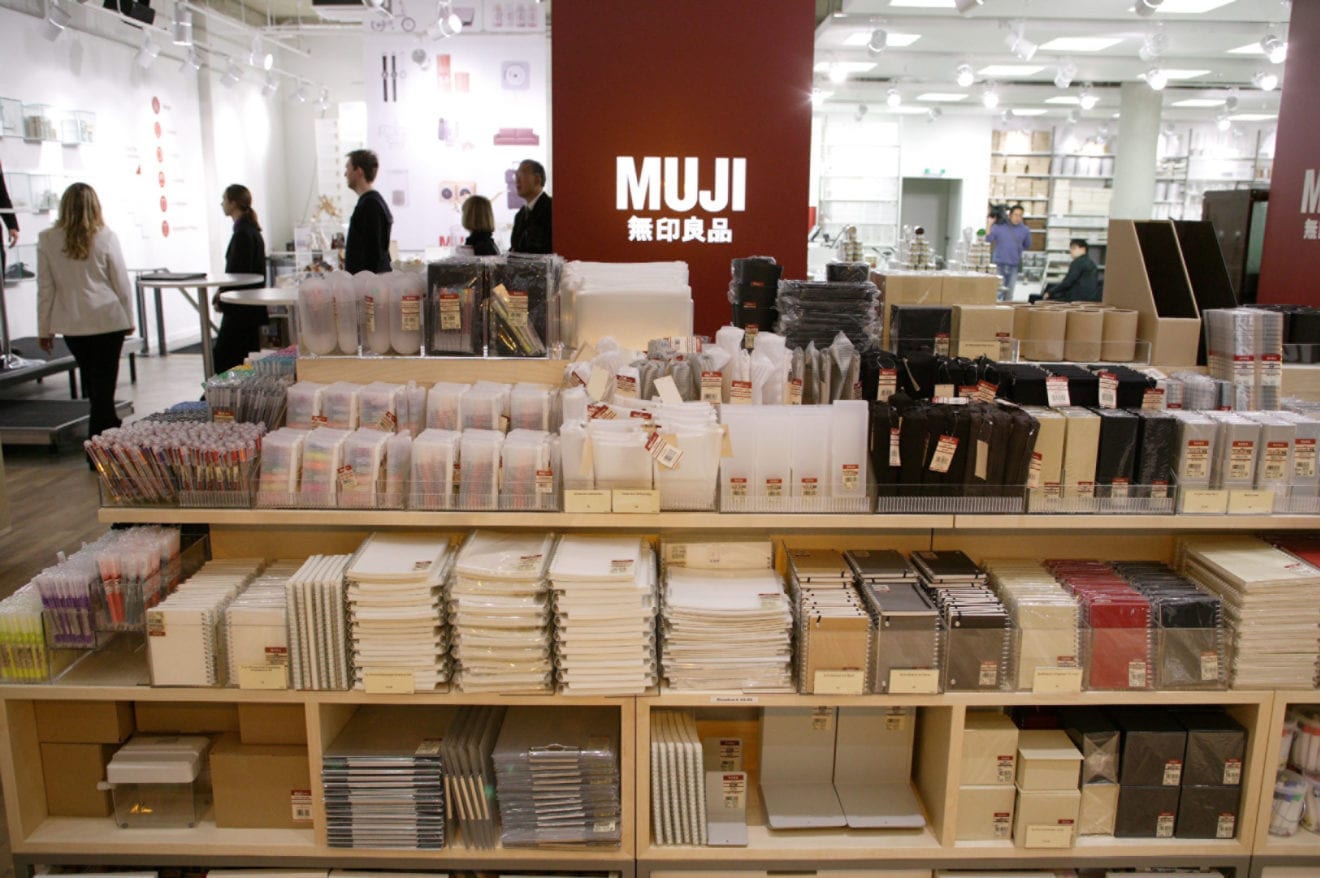
    Muji will launch an online flagship store on JD.com, and promote the partnership with posters in 231 of its stores throughout China, it announced.

    This will make it easier for online Chinese consumers to find and purchase Muji’s full range of Japanese product categories, including clothing, household items, home furnishing and even food.

    “We are very excited to announce the opening of our store in JD.com, following the cooperation with JD Logistics, which began in September 2017,” said Naoyuki Yamamoto, president of Muji  Shanghai. “We look forward to bringing our vision of a simple, pleasant life to people, as well as contributing to society, through this partnership with JD.”

    The e-commerce giant said Muji is a “hugely popular brand” and that the launch on its platform will take it to new levels. “Known worldwide for its simple aesthetic and well-designed products, MUJI has garnered a loyal fanbase of quality-conscious customers. With our commitment to delivering authentic products with world-class service, JD is the perfect home for Muji’s premium wares.”

    The brands plan to deepen their link during the second half of the year with a more comprehensive omnichannel integration covering membership programs, products and more.

    Muji sells low-cost, high-quality items that are renowned for their clean lines and minimalist design.

  • Following Amazon’s Footsteps, China’s JD.com Launches In-Car Delivery

    Following Amazon’s Footsteps, China’s JD.com Launches In-Car Delivery

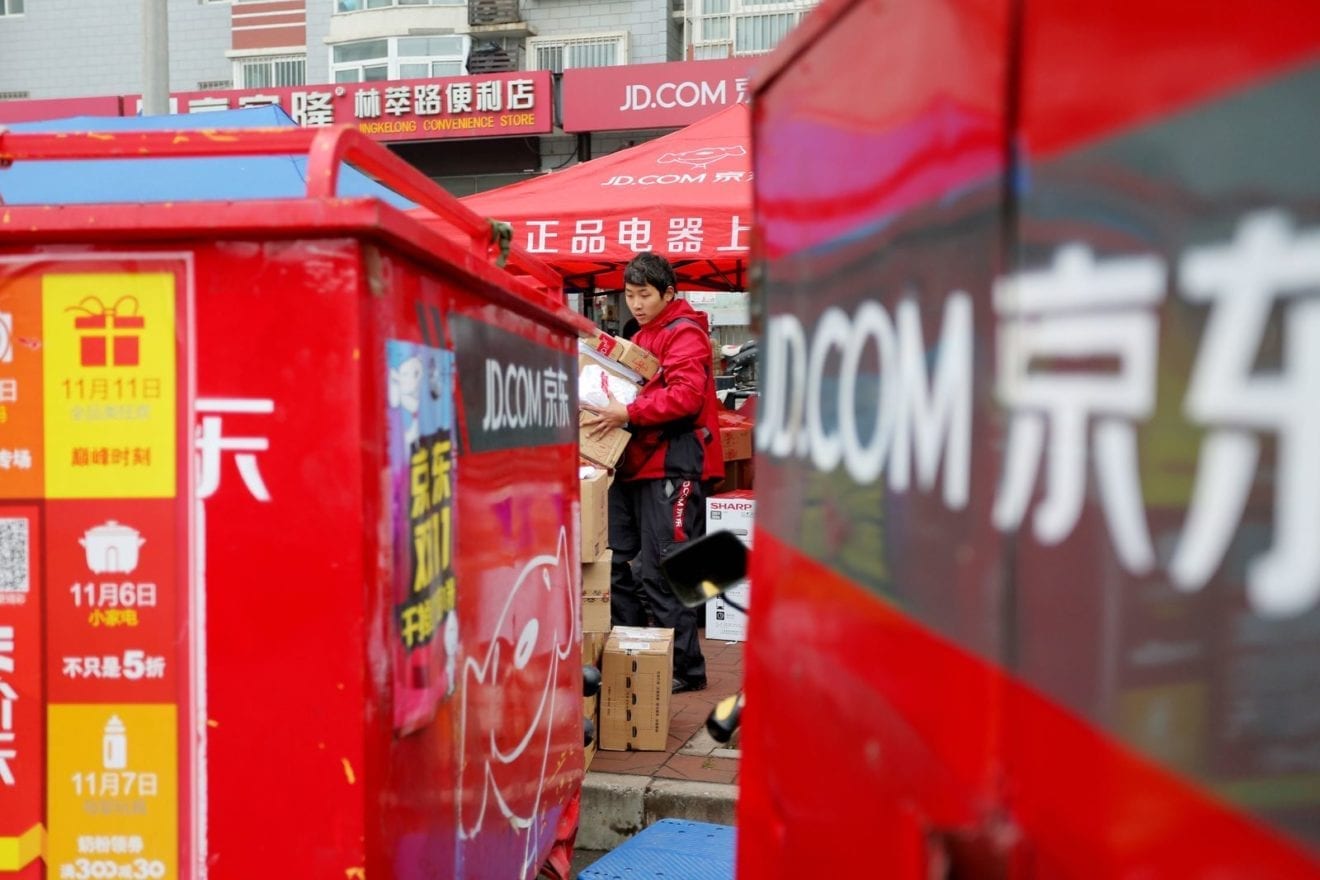
    JD is launching a service in China where online shoppers can have their purchases delivered to anywhere they can park their cars.

    The Chinese e-commerce giant has launched an ‘in-car delivery service’ in partnership with electric vehicle maker NIO, a similar concept to that unveiled by Amazon in the US in April.

    The JD In-Car Delivery Service will use connected car technology that automatically locates customers’ cars, then enables JD’s delivery personnel to pop the trunk of  the car using a Personal Digital Assistant to the car, deposit the consumer’s order, and lock the trunk again.

    To maximise security, the device is programmed so only the specifically authorised JD delivery person will be able to open the car trunk, while the entire delivery process can be monitored using in-car cameras.

    JD, which boasts 90 per cent of its orders can be delivered same- or next-day, will deliver to vehicles parked at home, at the office, or in a range of other approved areas.

    “The offering adds a new, convenient option for consumers with cars who may not be available to accept deliveries in person, such as office workers who park their cars in the company lot during the day, or commuters who leave their cars in their driveways while they are out,” said Bing Fu, head of planning and development, with JD Logistics.

    “Imagine the convenience of finishing work for the day and knowing that your orders are already waiting in your car for you, ready to drive home. You can have the peace of mind that, even when you’re not at home, your JD orders have been stored securely in your trunk. JD In-Car Delivery makes that possible.”

    The company plans to partner with other leading automakers in China to expand the service across connected car models in coming months.

    To use in-car delivery, JD consumers who own compatible car models can link their JD account with their account on the automakers’ connected car platforms.

  • Who’s who of retail CEOs at Consumer Goods Forum

    Who’s who of retail CEOs at Consumer Goods Forum

    Next month’s Consumer Goods Forum to be held at the Marina Bay Sands will feature a ‘who’s who’ of international retail leaders.

    This year marks the first time in a decade the event is being held in Asia. Running from June 12-15, it is themed Consumer Centricity in a Data-Driven World.

    Industry leaders including Alibaba CEO Daniel Zhang, Dairy Farm International CEO Ian McLeod, Coca-Cola Company CEO James Quincey, Majid Al Futtaim Holding CEO Alain Bejjani, Ahold Delhaize CEO Dick Boer, JD international president Winston Cheng, Central Retail CEO Nicolo Galante, Carrefour China president and CEO Thierry Garnier and Metro AG CEO and chairman Olaf Koch are all on the speaking roster.

    Former US Secretary of State Madeleine Albright will deliver a keynote address.

    Consumer Goods Forum MD Peter Freedman says the summit is often described as the most important leadership event on the consumer goods industry’s calendar.

    “The key focus of this year’s conference will be on how to ensure that we continue to keep consumers at the centre of the digital transformation in our industry. In that context we will also be discussing how we can accelerate our work on global positive change, which millennials and younger consumers are so concerned to see. We are delighted to be holding the event in Singapore, one of the world’s leading smart cities, with some of the most digitally sophisticated consumers, and geographically close to so many Asian digital innovations.”

    More than 1000 delegates, from more than 400 leading retailers and consumer goods companies will engage with this year’s theme through sessions focused on stories such as:

    • Investing in the age of disruption;
    • Evolving retail for the smart consumer;
    • The future of work: people & technology;
    • Positive change in action: driving a circular economy;
    • New Retail: creating new value for consumers;
    • Global millennials: the data-driven facts;
    • Executing a digital and omni-channel growth strategy; and
    • Transforming customer experiences through big data.
  • Ride-Hailing Firm Go-Jek to Expand Abroad

    Ride-Hailing Firm Go-Jek to Expand Abroad

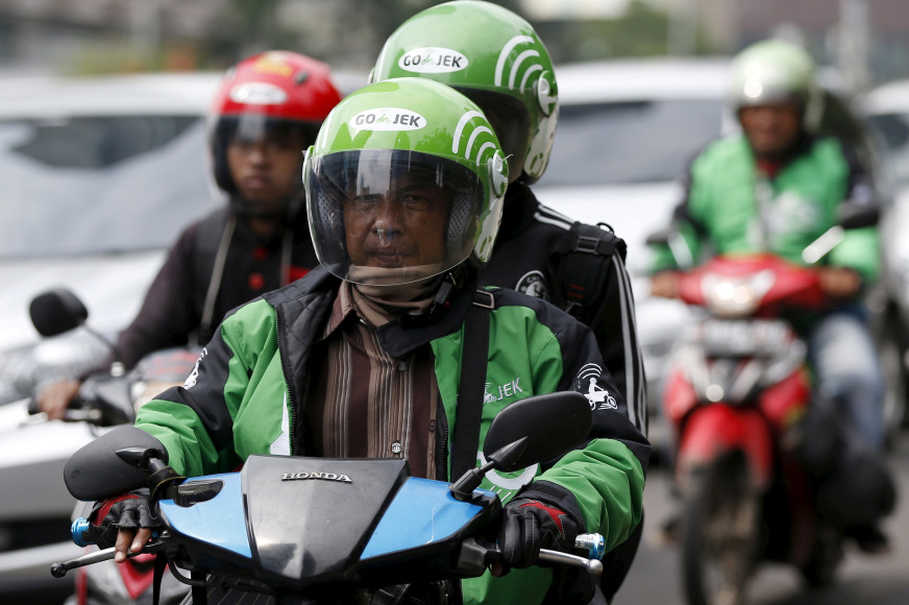
    Indonesian ride-hailing and online payment firm Go-Jek on Thursday said it would enter Vietnam, Thailand, Singapore and the Philippines in the next few months, investing $500 million in its international push.

    The move will start with ride-hailing services before expanding to other sectors, Go-Jek said in a statement.

    “People in Vietnam, Thailand, Singapore and the Philippines don’t feel that they’re getting enough [choice] when it comes to ride-hailing,” chief executive Nadiem Makarim said in the statement.

    The announcement comes after Uber Technologies Inc sold its Southeast Asian operations to local competitor Grab.

    Go-Jek said it was working with regulators and other stakeholders across the region to prepare for the new operations.

    The expansion follows Go-Jek’s latest round of fundraising, which brought investment from companies including Astra International, JD.COM, Tencent and Temasek.

  • Second JD.com’s 7Fresh supermarket to be opened

    Second JD.com’s 7Fresh supermarket to be opened

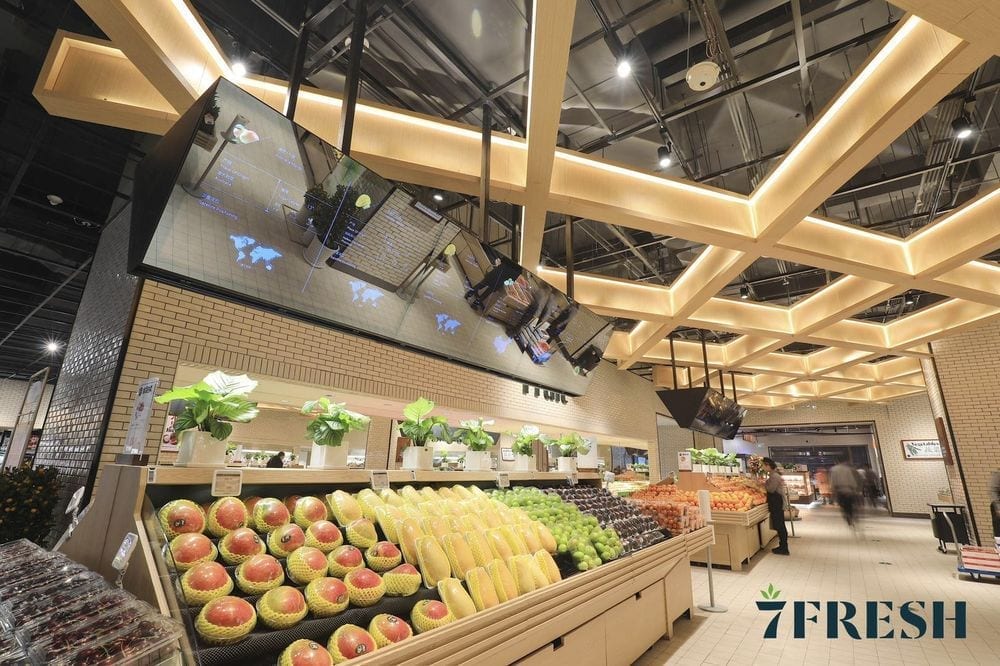
    Chinese e-commerce giant JD.com has opened its second 7Fresh supermarket, at the China Resources Dreamport shopping centre in northern Beijing.

    This follows the launch late last year of the initial 4000sqm outlet near JD.com’s headquarters in Beijing.

    JD.com fresh division president Wang Xiaosong, who is also CEO of 7Fresh, says the supermarket brand is in a “life or death mad rush to cover the entire Beijing market”. Its goal is to open more than 1000 outlets across China during the next three to five years.

    Its concept focuses on fresh goods including produce, meat, seafood, bakery goods, ready-to-eat packaged food and cooked-to-order foods. The supermarket also aims to integrate JD’s technical expertise to improve its offering and customer experience, drawing on data analytics to help formulate inventory based on customer behaviour and manage its supply chain.

    It also integrates O2O retail into its core business, offering consumers within a several kilometre radius the ability to order groceries online for delivery to their doorsteps within 30 minutes.

    The second 7Fresh outlet covers 2600sqm and is similar in layout to the original supermarket, but makes concessions because it is smaller, such as not offering a dining area.

    7Fresh is serving as a laboratory for JD.com to further its goal of seamlessly integrating online and offline retail, and redefining retail in China.

    JD Fresh was launched in 2016, initially as an online component of the JD.com e-commerce platform.

  • JD.com launches new accelerator to develop AI and blockchain technologies

    JD.com launches new accelerator to develop AI and blockchain technologies

    JD.com, one of China’s largest e-commerce companies, has launched a new accelerator program called AI Catapult that focuses on blockchain and artificial intelligence startups.

    Based in Beijing, AI Catapult will start with an inaugural roster of companies that include Bluzelle, a blockchain startup based in Singapore providing database services, Bankorus, a leading Chinese robo-advisory provider, CanYa, an Australian cryptocurrency startup, Nuggets, a London-based e-commerce payments and ID platform built on blockchain technology, Republic Protocol, an open source decentralized dark pool exchange, and Devery, a blockchain-powered product verification protocol.

    JD.com said the purpose of the program is to partner with innovation startups to build new businesses and create real-world applications of their technologies at scale.

    Uri Ferruccio, the director of strategy and investment for JD.com’s AI Platform and Research Division, said AI Catapult “will support JD.com as it explores how AI can improve the scalability, security, privacy and efficiency of blockchain, and enable novel and improved applications in areas such as distributed AI.”

    Bowen Zhou, vice president of JD.com’s AI Platform and Research Division, added, “We are excited to work with some of the world’s most innovative startups to explore ways we can scale these cutting edge technologies for the future of retail and other industries, as well.”

    The program will begin in March and will provide selected startups with the opportunity to cooperate with business units throughout JD.com’s retail business and implement their technologies.

    The firm also plans to invest in the growth of the AI and blockchain ecosystem through future commercial, strategic and research partnerships.

    JD.com already uses blockchain technology in its supply chain to track products and AI to control its logistics drones and automated package sorting centers. The firm joined the Blockchain in Transport Alliance earlier this month to explore the use of blockchain for global freight and logistics. It is also working with Walmart, IBM and Tsinghua University National Engineering Laboratory for E-Commerce Technologies on blockchain applications for food tracking, traceability and safety in China.

    JD.com has over 266 million customers and recorded 658.2 billion RMB, or about US$100 billion, in gross merchandise value in 2016.

  • JD.COM signs delivery deal with FamilyMart China

    JD.COM signs delivery deal with FamilyMart China

    JD.com has signed a deal with Japanese convenience-store chain FamilyMart.

    This will enable users to order goods through JD.com’s 24-hour O2O service Jing Dong Dao Jia (“Door-to-Door JD”) and have them delivered from FamilyMart’s 212 core locations in Beijing, Shanghai, Shenzhen and Chengdu within 30 minutes.

    Early this year JD.com launched 7Fresh, its offline fresh-food supermarket, in Beijing. Before that, it invested in Yonghui supermarkets and formed a strategic partnership with Walmart through Jing Dong Daojia. JD.com has also invested in fresh-food delivery app Fruit Day and created a business unit dedicated to fresh food, JD Fresh.

    The e-commerce company has also established co-operations with two other Japanese convenience store chains, 7-Eleven and Lawson, as well as international brands. The company now covers nearly 1000 convenience stores.

    JD.com says that during January, all convenience stores working with it recorded three times higher sales volume than at the same time last year. For 7-Eleven stores, which joined Jing Dong Dao Jia in 2016, there was a 400 per cent increase in sales.

  • Aeon, SoftBank, Yahoo Japan team up

    Aeon, SoftBank, Yahoo Japan team up

    Aeon and Yahoo Japan have not had tremendous success with their own e-commerce ventures, according to the report.

    Softbank’s IT prowess is seen as key to enabling Aeon to make the most of its brick-and-mortar assets in a retail sector quickly evolving as customer data and technologies such as artificial intelligence are leveraged to create better, more personalized shopping experiences.

    A teaming of these companies could also help Aeon keep up with the trend toward rolling out cashierless or unmanned stores, while helping Yahoo Japan become a more formidable, competitive e-commerce player.

    As with many strategic alignments between brick-and-mortar and e-commerce retailers, this potential partnership is being seen as an attempt to build an alliance worthy of challenging the international Goliath Amazon, which has set its sights on expanding in Japan.

    Physical retailers and e-commerce companies in other countries are becoming especially sensitive to Amazon’s threat as it continues to expand e-commerce interests internationally while also building up a brick-and-mortar presence through efforts like physical bookstores, Amazon Go and Whole Foods.

    As the largest retailers in many countries prepare for inevitable war with Amazon, as well as one another in some cases, there are two priorities. One is to become even larger and broader through partnership, acquisition or strategic investment. The other is to have solid footholds in both e-commerce and brick-and-mortar.

    Aeon, Softbank and Yahoo Japan are not the only ones evolving with these priorities in mind. We already have seen significant efforts from some of the world’s largest retailers and e-commerce players to do the same. For example, Walmart recently aligned with Japan’s Rakuten. China’s JD.com has been looking to expand into the U.S. and Europe, and fellow Chinese e-commerce giant Alibaba is aggressively investing in brick-and-mortar retail firms.

    By getting together in one way or another, Aeon and Yahoo Japan in particular may be looking to strengthen what have been weaknesses in their respective retail and e-commerce strategies, but they also would be positioned to play the game at a whole new level — that of a retail superpower fit to tackle new opportunities at home and abroad.

  • Tencent and JD.com each take minority stakes in Chinese retail group Better Life

    Tencent Holdings and JD.com are buying minority stakes in Chinese retailer Better Life Commercial Chain Share.

    A Tencent subsidiary is paying RMB886.9 million (US$140 million) for a 6 per cent shareholding, while a JD.com subsidiary is paying RMB739.1 million for a 5 per cent stake, according to a Better Life filing with the Shenzhen stock exchange.

    Also known as Bubugao, Hunan-based Better Life announced a strategic collaboration agreement with Tencent at the beginning of this month, Reuters reports. The three companies and shareholders agreed to the transactions on February 14, according to the filing.

  • JD.com and Fung Retailing form Artificial Intelligence partnership

    JD.com and Fung Retailing form Artificial Intelligence partnership

    JD.com is both the largest e-commerce company in China, and the largest Chinese retailer, by revenue.

    The retailing businesses of the Fung Group are brought together under privately-held Fung Retailing Limited and it is a Hong Kong-headquartered multinational group whose core businesses are engaged in trading, logistics, distribution and traditional and digital retailing.

    The agreement between the two companies calls for the establishment of an AI Boundaryless Retail Center that will oversee and manage cooperative research and development projects, and facilitate the sharing of information and expertise relating to AI technology.

    Leveraging AI, and combining JD.com‘s extensive online expertise and Fung Retailing’s offline expertise, the two companies aim to develop a new retail format for China and Asia.

    This includes creating an AI-driven retail system that seamlessly integrates online and offline retail platforms; developing an end-to-end system that enables the management of products, pricing, storage, order and payment; and enhancing consumer experience through solutions such as AI-driven virtual fitting, unmanned stores and smart shopping assistants.

    Speaking at the signing, Sabrina Fung, Group Managing Director of Fung Retailing Limited said, “When it comes to the future of retail, and driving the customer experience, AI is an essential component. Across our retail portfolio, AI is a focal point and this co-operation with JD will, without doubt, accelerate our progress.”

    Bowen Zhou, Vice President of JD.com and Head of JD’s AI Platform and Research said, “As one of the largest retailers in the world, we believe that figuring out how to deploy AI solutions is critical to our future success. Drawing on Fung Retailing’s global offline retail expertise, this partnership will be important for us as we deliver our retail vision.”

    Other areas of focus within the agreement include cooperation on the construction of AI infrastructure, as well as smart retail, creating AI-driven solutions that break down the barriers between online and offline, and exploring the intersection of AI and fashion.

  • Thailand Central Group to pursue online growth

    Thailand Central Group to pursue online growth

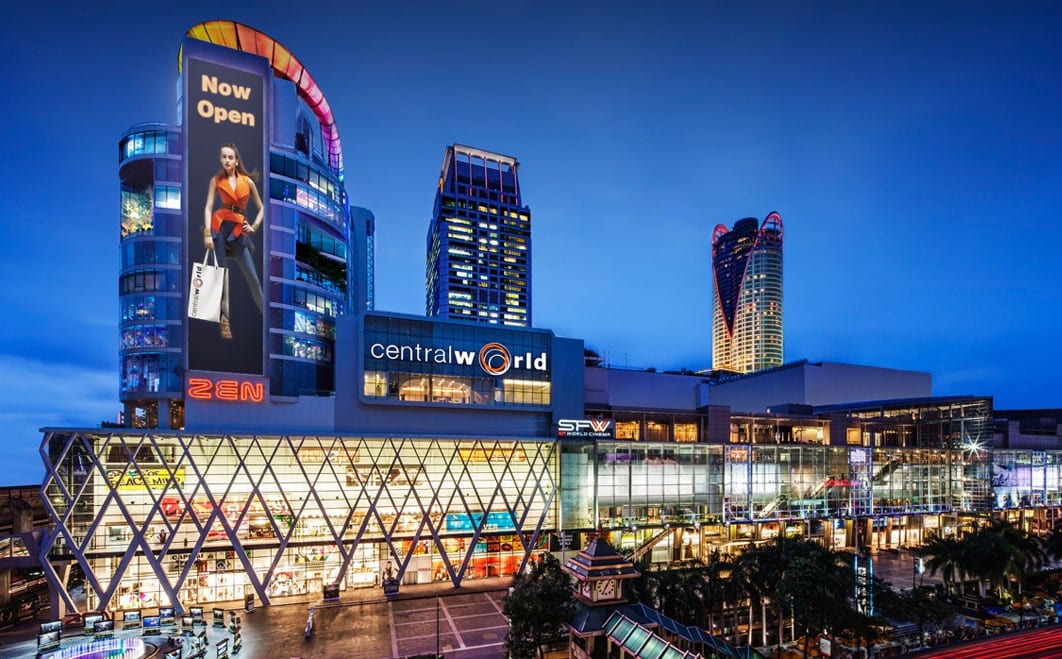
    The company with the biggest grip on Thailand’s brick-and-mortar retail market is expecting a partnership with China’s JD.com Inc. to pursue online growth.

    Central Group, which controls Thailand’s biggest operator of shopping malls and department stores, expects online sales to account for as much as 15 percent of its revenue in five years, from 2 percent now. The partnership with JD will help it compete in South East Asia’s booming e-commerce market and also open up businesses opportunities in China, Chief Executive Officer Tos Chirathivat said in an interview.

    With an empire that also includes hotels, supermarkets and restaurants, Central Group is counting on online growth to help drive sales. The company first announced its $500 million joint venture with JD in September 2017, teaming up with China’s second-largest e-commerce operator. Tos estimates that online retail in Thailand could rise fivefold to 10 percent of the market as the country of nearly 70 million develops and access to the web spreads through smartphones.

    “We obviously want to be the leading player in the 10 percent so it doesn’t really matter what kind of percent of the group it is,” Tos said in the Jan. 3 interview at his Bangkok office. “The important thing is to be the leader in the market itself.”

    Central Group and JD are competing in an increasingly crowded market, with Alibaba Group Holding Ltd. expanding in South East Asia through Lazada while Amazon.com Inc. kicked off with a beachhead in Singapore last year.

    Southeast Asia is home to more than 600 million people and the region’s internet economy, which includes e-commerce, online travel and ride-hailing, may grow fourfold by 2025 from an estimate of $50 billion in 2017, according to a joint research report by Google and Temasek Holdings Pte.

    While Central Group is a privately-held investment arm of the Chirathivat family, the company controls a number of publicly traded businesses. Central Pattana Pcl is a mall developer, Central Plaza Hotel Pcl operates resorts and restaurants, Robinson Pcl has a chain of department stores and COL Pcl does office supplies.

    All four gained in 2017, with Central Pattana surging 50 percent in 2017, Central Plaza jumping 47 percent and COL more than doubling, all outperforming Thailand’s benchmark SET Index.

    Outside the country, Central Group owns Italian luxury department store La Rinascente, Danish retailer Illum and in 2016 acquired the Big C hypermarket chain in Vietnam.

    Central Group is targeting annual revenue growth of 13 percent in 2018 based on the company’s five-year strategy plan, said Tos. That number may be higher with mergers and acquisitions, and the company could consider deals in the billions of dollars if the opportunity is right, he said.

    Local sentiment is helping the company, with consumer spending in Thailand picking up after the October cremation of late King Bhumibol Adulyadej ended the nation’s yearlong mourning period.

    “If the trend continues like this then this year should be good,” said Tos.