Retail News CRM

Tag: jeans

  • New Levi’s store in Indonesia is its largest in SEA

    New Levi’s store in Indonesia is its largest in SEA

    The store represents the brand’s largest store yet in Southeast Asia, and features the brand’s new ‘Next Gen’ design concept.

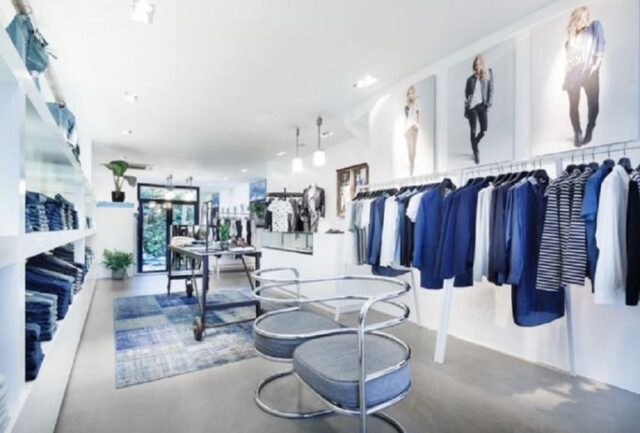
    The new store is located in Grand Indonesia East Mall and features a range of technology features including Levi’s first associate ordering system, which is part of a broader omni-channel shopping experience. The new store also features a Tailor Shop where customers are able to customize their own items; options available include embroidery, hemming and alterations. Customers can also create their own t-shirt at the store’s print bar.

    Sameer Koul, Country Manager at Levi Strauss Indonesia, commented: “We are focused on bringing a highly personalized shopping experience to consumers and in a large format. This store can embody a bold brand image and vision for Indonesia. Levi’s Next Gen Store offers the most diverse products and brings our brand story to life with the feeling of being in a theatre.”

  • VF Corp to relocate business operations out of Hong Kong

    VF Corp to relocate business operations out of Hong Kong

    VF Corp. (VFC), a provider of branded lifestyle apparel, footwear and accessories, announced a transformation plan for its Asia Pacific operations, with relocations over the next 12 to 18 months with the first moves expected in April 2021.

    VF plans to move the center of its brand operations from Hong Kong to Shanghai where the company currently employs approximately 900 office and retail associates.

    In addition, VF also plans to relocate its Asia Product Supply Hub from Hong Kong to Singapore.

    The company also plans to establish an additional shared services center for the region in Kuala Lumpur, Malaysia.

    VF noted that Hong Kong will remain a key retail market for the company and its brands.

    “Today’s announcement reinforces our commitment to investing in our business across the Asia Pacific region, while also supporting VF’s overall transformation plan to become a more consumer-minded, retail-centric, and hyper-digital enterprise,” said Steve Rendle, VF’s Chairman, President and Chief Executive Officer.

  • Iconix Brand Group sells Starter China stores

    Iconix Brand Group sells Starter China stores

    American brand management company Iconix Brand Group has sold the Starter China business for US$16 million to an unnamed local investor.

    The Starter divestment is the second Chinese transaction by the US company this year following an agreement reached in April to sell the Umbro China business for $62.5 million to HK Qiaodan Investment Limited. Both deals will be settled by September 15.

    Iconix’s portfolio of international brands includes denim brand Lee Cooper, Mossimo, Mudd Jeans, Ed Hardy and Jay-Z’s streetwear label Rocawear. It also owns footwear brands including Ecko Unltd and ranges from Madonna.

    The new owners of Starter in China will assume distribution rights for Mainland China, Hong Kong, Taiwan and Macau.

    Funds raised from the sales are being applied to reduce Iconix’ debt and otherwise for general corporate purposes.

  • The R Collective teams with Levi’s in upcycled Denim Reimagined range

    The R Collective teams with Levi’s in upcycled Denim Reimagined range

    Upcycled fashion label The R Collective has launched its Denim Reimagined capsule collection at K11 Musea’s Levi’s store in Hong Kong.

    The Denim Reimagined collection, created by local designer Jesse Lee, uses surplus denim from Levi’s jeans and is being launched to coincide with the brand’s global #WearAndCare sustainable consumer care campaign. A virtual workshop conducted in English and Chinese is scheduled to be held on Wednesday next week to engage with locked-down, socially-distanced consumers on how to reduce the climate impact of the fashion industry via sustainable consumer care behavior.

    “I was inspired by how the ocean’s natural beauty plays a huge role in regulating the Earth’s climate,” said Lee at the Levi’s in-store launch. “Fashion inspires and designers must engage with customers, particularly during this uncertain time of socially-distancing, when we’re forced to reimagine the world we want to live in. Denim’s biggest climate impact is caused during consumer care and fabric production, and so Denim Reimagined tackles both upcycling and consumer care, so we can all have caring closets.”

    “Upcycling excess materials and extending the life of garments are two of the most sustainable things we can do with our clothing, as anyone who has owned a pair of vintage Levi’s knows,” said Levi Strauss & Co director of sustainability Liz Lipton-McCombie. “As such, we’re proud to support creative upcycling projects, like The R Collective’s Denim Reimagined, and are encouraged to see the progress they are making.”

    The collection features digital clothing care labels, which consumers can scan to learn more about the clothing item and receive one of four different sustainability messages: how the garment was made; how to care for clothes to reduce clothing’s climate impact; solutions for keeping fashion in use and out of landfills; and the collection’s story.

    “In a post-Covid-19 world,” said The R Collective founder/CEO Christina Dean, “consumers expect greater transparency and sustainability and so the value of having technology, like Denim Reimagined’s unique digital identities, allows us to interact with and, most importantly, educate consumers on how to care for their garments in a sustainable, climate-friendly way.”

  • Levi’s boosts margins by retaining same price levels online

    Levi’s boosts margins by retaining same price levels online

    Denim brand Levi’s plans to scale back shipments to off-price retailers in the US as it targets a further improvement in gross margin and long-term ambitions in the growing Chinese market.

    The company ended the year reporting US$1.57 billion in sales, slightly behind analyst estimates, but with a gross margin up by 100 basis points compared to the prior year.

    Sales in Europe rose by 5 percent and its operating profit thereby a healthy 47 percent, but sales in Asia rose by just 1 percent, and operating profit there took a 43-per-cent hit, largely due to civil unrest in Hong Kong and India.

    While the company expects to take a hit in Mainland China after closing about half of its stores there in response to the coronavirus outbreak, the company says its sales there account for just 3 percent of its global turnover.

    “It probably puts a damper – at least in the short-term – for our growth plans in China, but we are here for the long-term,” CFO Harmit Singh said. “We are still long on China.”

    Singh said the company would restrict shipments to off-price retailers like Ross Stores and TJ Maxx, which erode profit margins. It will sell more products into a joint venture with discount department store Target and into other higher-priced retailers like department stores.

  • J Crew to spin off Madewell denim jeans brand

    J Crew to spin off Madewell denim jeans brand

    The Madewell denim brand is set to be split off from J Crew as part of a planned IPO by parent Chinos Holdings.

    Documents lodged with the US Securities and Exchange Commission on Friday show Chinos plans to raise funds to pay off some of its US$1.7 billion in debt, although the volume of shares and their projected value have yet to be revealed.

    Under the plan, Chinos Holdings will be renamed Madewell Group.

    “We have consistently grown at Madewell, but we have retained both our focus and the start-up mentality of our earlier days, which allows us to remain nimble, challenges us to get creative and motivates us to always look toward the future,” said Madewell CEO Libby Wadle in a statement.

    The Madewell denim brand is considered to be more successful than its sister J Crew which has been struggling to maintain market share and brand appeal in recent years. In the second quarter of this year, Madewell sales rose 15 percent to $139.7 million with same-store sales up 10 percent. That followed a 28-per-cent rise in sales in the same quarter a year ago. J Crew sales, however, fell by 7 percent in the second quarter, to about $400 million, with comp-store sales down by 4 percent.

  • Levi Strauss ‘deliberate’ in moving production away from China

    Levi Strauss ‘deliberate’ in moving production away from China

    Levi Strauss & Co has been “deliberate and diligent” in moving production out of China because of uncertainty hanging over tariffs on goods imported from China, CEO Chip Bergh has told Reuters in an interview.

    Just 1 percent or 2 percent of Levi’s product sold in the US are manufactured in China, Bergh said, compared to 16 percent two years ago. Bergh was speaking one day before President Donald Trump said he would impose tariffs on another US$300 billion of Chinese goods, including apparel.

    Trump has used tariffs as a tool to negotiate better trade terms, saying bad deals cost millions of US jobs. Along with apparel, the new tariffs hit consumer goods such as electronics and toys and come in addition to those already imposed on $250 billion of other goods imported from China.

    The on-again, off-again nature of the US tariffs on Chinese goods had created uncertainty for many US retailers, Bergh said.

    “Every day is a new day,” he said. “Sometimes it looks like it’s definitely going to happen and then other days you think it’s off, it’s not going to happen.”

    San Francisco-based Levi’s, which returned to the public markets in March, is part of a wave of retailers that have been shifting supply chains out of China to countries such as Vietnam and Bangladesh. The trend was initially in response to higher Chinese wages but the exodus is expected to be accelerated by the new tariffs, which Trump said will go into effect September 1.

    They are expected to increase consumers’ costs and have an impact across the entire retail industry.

    Apparel retailers like Gap Inc, shoes and accessories brand Steve Madden and department store Macy’s have also acted to move production out of China.

    However, China still is a big supplier to the industry with 42 percent of apparel and 69 percent of footwear sold in the US made in China, according to the American Apparel and Footwear Association.

    Following the latest tariff news, several large retail trade groups warned the levied tariffs will hurt consumer purchases, raise prices and limit hiring.

    Levi’s has two of its own factories in Poland and South Africa but mostly uses third-party vendors or suppliers spread across 22 different countries, said Bergh, who joined the company in September 2011.

    “We’ve narrowed down our supplier base during the time that I’ve been here to really develop deeper, more strategic relationships with many of our suppliers,” he said.

    Many of Levi’s suppliers in China are publicly traded companies that have multi-country footprints, said Bergh, that have diversified risk by building factories in places like Vietnam and Cambodia.

    Levi’s also has put contingency plans in place “not just for China but also for Mexico in the event that NAFTA gets ripped up in a moment of rage or something,” Bergh said.
  • Levi’s to opening 100 extra stores this year

    Levi’s to opening 100 extra stores this year

    San Francisco-based retailer Levi Strauss announced plans to open 100 new company-operated stores this year.

    The apparel maker, which launched on the US stock market last month, announced its plans for the store openings alongside a well-received debut batch of earnings as a public company.

    Company chief executive Chip Bergh told that most of the store openings would be in Europe and Asia, though mainline and outlet stores would open in the US as well.

    Levi’s posted a 7 per cent jump in net revenue to US$1.43 billion for the quarter ending February 24. The company produced a net income of US$147 million compared with the losses of US$19 million a year ago, when the results were hit with a tax-related charge.

    “We delivered our sixth consecutive quarter of double-digit constant-currency revenue growth,” Bergh said.

    “Growth was broad-based across all three regions and all channels, demonstrating that our strategies are working and our investments are paying off.”

    The 166-year-old brand operates 824 standalone stores, including 74 the retailer opened last year.

  • Diesel files for bankruptcy

    Diesel files for bankruptcy

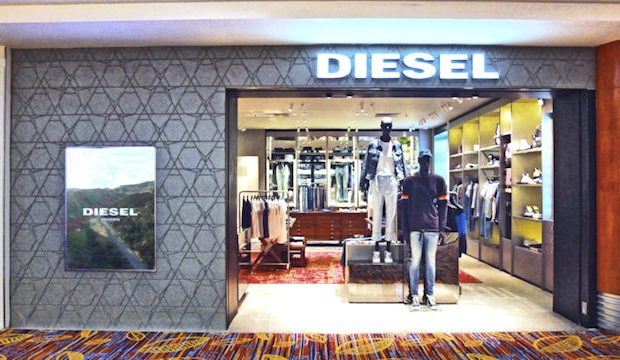
    Famed denim streetwear brand Diesel USA has collapsed, filing for bankruptcy protection in Delaware.

    According to papers filed with the court, the company has up to $100 million in assets and as much as $50 million in debts. The company filed for bankruptcy after unsuccessfully lobbying landlords for rent reductions.

    However under a three-year proposed restructuring program, Diesel says it does not plan to reduce its store network, rather to find more affordable locations.

    Diesel USA has 28 retail stores across the country and about 380 employees. It also wholesales through department stores and specialty retailers

    In the 1990s and early 2000s, Diesel USA, the North American unit of Italian-headquartered Diesel SpA, was at its peak, “dominating pop culture”. As a result it was commanding a high premium for its clothes and could justify seeking high-profile – and thus high-rent – locations in major cities across the US.

    Now those leases are no longer affordable and landlords seem reluctant to reduce rents to maintain a tenant no longer at its peak of popularity. The company has managed to get a reduction on only a single store despite a year of negotiations.

    Bloomberg reports the company had also been affected by several instances of cyber fraud and theft, costing it about $1.2 million.

  • China’s Trendy Group buys the Denham Group

    China’s Trendy Group buys the Denham Group

    Dutch denim company Denham Group has a new major shareholder, according to reports in the Netherlands, with China’s Trendy Group named the official buyer. The parent company of denim label Denham the Jeanmaker, Denham Group was snapped up by Trendy from Amsterdam-based investment firm Amlon Capital for an undisclosed amount.

    Denham’s current chief creative officer Jason Denham will remain in the top design spot, following the acquisition, and will remain a shareholder, Trendy said in a press release.

    However, Ludo Onnink, CEO at Denham Group, will depart the company his post, with Andre Chen, senior vice president at Trendy Group, to succeed him.

    Denham Group

    Trendy views the Denham Group acquisition as an opportunity to nurture and expand the Denham brand in current markets such as China, via the production of new items.

    Denham Group and Trendy are familiar allies. Back in March 2017, the companies announced a joint venture to further expand the European denim brand in China, resulting in the opening of 16 retail stores in key cities in Chin. Now, there are plans to further grow the business in the coming years as a result of the acquisition.

    “We see many opportunities to grow the Denham business in the existing markets but also as the most influential denim player in the future,” said Chen.

    “This will not only be achieved by extending our jeans business, but also by adding additional product categories.”

    Founded in 2008 in Amsterdam by Jason Denham, Denham retails in some 20 cities including its local Amsterdam, as well as nearby Antwerp and Hamburg. As for Asia, it is present in Tokyo, Osaka, Shanghai and Seoul.

    In wholesale terms, the label is has global partners and is available for purchase via its namesake online store. The Denham is also headquartered in Amsterdam, with sub-offices in Düsseldorf, Shanghai and Tokyo.

    Launching in 1999, China’s Trendy Group is today a global fashion and denim mecca with a stable that includes fashion brands form the Italian house Sixty Group: Miss Sixty, Killah and Energie.

  • Arvind India Q2 profit rises 16 pc to Rs 75 crore

    Arvind India Q2 profit rises 16 pc to Rs 75 crore

    Textile and apparel player Arvind Ltd on Thursday reported a 16.38 percent increase in its consolidated net profit to Rs 75.08 crore for the second quarter ended September 2018. According to a report: The company had posted a net profit of Rs 64.51 crore in the July-September period a year-ago, Arvind Ltd said in a BSE filing.

    Total income during the quarter under review stood at Rs 1,815.98 crore, up 12.85 percent, as against Rs 1,609.10 crore in the corresponding quarter of the previous fiscal.

    Total expenses stood at Rs 1,723.27 crore as against Rs 1,540.08 crore, up 11.89 percent.

    Meanwhile, the company said that as NCLT has approved the scheme of demerger for its branded apparels and engineering businesses, “the reported financial statements reflect figures for continuing businesses only”.

    “Pending receipt of order and other conditions precedent in the Scheme, the Group has considered the business of Engineering and Branded Apparel Undertaking as ‘Discontinuing Operations’,” the company said.

    Arvind’s net profit for the period from continuing operations rose to Rs 56.10 crore as against Rs 48.48 crore earlier.

    Net profit after tax from discontinuing operations was at Rs 18.98 crore as compared to Rs 16.03 crore.

    “The effective date of demerger and record date for allotment of shares is likely to be end of November,” it added.

  • Versus to merge into Versace Jeans line

    Versus to merge into Versace Jeans line

    It has only been a month since Versace announced it was to be sold to Michael Kors’ parent company Capri Holdings for a reported sum of 2.12 billion dollars. As an early indicator of change, and perhaps cost-saving measures under its new structuring, Versace is to integrate its Versus line into Versace Jeans.

    Versace Chief Executive Jonathan Akeroyd said “During the last few months we have studied how to simplify our business model with a view to focusing on the portfolio of our brands, continuing to ensure innovation and relevance in everything we do. We decided to integrate our two contemporary collections into one, merging Versus and Versace Jeans. This operation will allow us to further develop Versace Jeans’ proposals and, at the same time, not to lose the DNA and the codes that have made this iconic Versus “.

    The collection was notably absent from the catwalk and fashion week after it decamped to London to show its autumn winter 2018 collection.

    The Versace Jeans label is currently under license to Swinger International, also the licensing partner to brands including Genny and Cavalli Class.

    The unexpected move by Versace is indicative of the transformations and shakeups happening in luxury brand’s diffusion ranges.

    Earlier this week Blufin announced the launch of the new Be Blumarine label that will replace Blugirl; Missoni recently reported Margherita Missoni as the new creative director of its M Missoni diffusion line; Marc Jacobs famously shuttered his Marc by Marc Jacobs stores, integrating the label under a single brand umbrella.

    Donatella Versace will reportedly continue to lead the creative vision for the Versace brand.

    At the time of the acquisition it was reported she would become a shareholder of Capri Holdings, along with her brother and daughter.

  • Guess Jeans taking Farmers Market bigger

    Guess Jeans taking Farmers Market bigger

    Guess Jeans is expanding its Farmers Market concept to global stores until the end of next month.

    Created by Guess and vintage streetwear collector Sean Wotherspoon, the collection features reworked items from the Guess archives developed in the ’80s and ’90s, with a colour palette derived from the Californian landscape.

    Key pieces include hoodies, denim jackets and tracksuits, with original Guess graphics featuring the classic logo on T-shirts and accessories.

    Launched in central Los Angeles last month, the limited-edition merchandise are available through key retailers and pop-up stores. In Asia, expect pop-up stores in Singapore’s Dover Street Market, Tokyo’s GR8 and Hong Kong’s Juice. Items can also be bought through the Chinese Innersect App.

  • JD-G-Star Raw limited-edition jeans sold out in just minutes

    JD-G-Star Raw limited-edition jeans sold out in just minutes

    Going on sale at midnight on JD, 50 pairs of limited-edition JD-G-Star Raw jeans were sold out in just three minutes.

    Exclusive G-Star Raw (x) JDX jeans, the were part of crossover fashion project JDX’s push into sustainable fashion.

    With its June 18 anniversary approaching, the e-commerce giant teamed up with Dutch denim label G-Star Raw to launch a limited-edition pair of sustainably produced jeans. Each pair came packaged with G-Star Raw (x) JDX T-shirt and canvas bag, as well as G-Star Raw Bluetooth speakers.

  • Levi Strauss Asia growth slows down

    Levi Strauss Asia growth slows down

    Levi Strauss Asia growth last quarter was solid – but well behind the US and Europe rates.

    Higher profit in all three regions reflects improved margins.

    Levi Strauss Asia sales were up 9 per cent compared to a 46 per cent rise in Europe and 14 per cent in the Americas. But operating income in Asia rose 13 per cent, while in Europe it surged 79 per cent and in the Americas by 23 per cent.

    “The momentum and growth trends we saw in the back half of last year not only continued but accelerated in the first quarter,” says president/CEO Chip Bergh. “Our results clearly show our strategies are working and that the incremental investments we are making in marketing, direct-to-consumer expansion and our more diversified portfolio are paying off.”

    Excluding favourable currency effects of US$10 million, net revenues in Asia grew 5 per cent, reflecting direct-to-consumer expansion and performance.

    Net revenues overall grew 22 per cent on a reported basis and 16 per cent excluding $55 million in favourable currency translation effects, driven by broad-based brand growth in all regions and channels.

    Direct-to-consumer revenues grew 24 per cent on the improved performance and an expansion of the company’s retail network, as well as e-commerce growth. The company had 56 more self-run stores at the end of the first quarter than 12 months earlier.

    Net income fell $79 million because of a $136 million provisional non-cash tax charge. Excluding this, adjusted net income was $117 million, nearly double last year’s $60 million.

    Gross margin for the first quarter was 54.9 per cent of revenues, compared with 51.2 per cent in the same quarter last year, reflecting the margin benefit from revenue growth in the direct-to-consumer channel and international business, lower product-sourcing costs and favourable currency exchange rates.

    Operating income of $174 million was up 61 per cent for the first quarter while operating margin increased to 13 per cent.