Tag: Laos

  • Alipay expands footprint in SEA

    Alipay expands footprint in SEA

    Mobile payments platform Alipay is expanding its cross-border footprint with new outposts Cambodia, Myanmar, Laos and the Philippines.

    The deployment is aimed at connecting merchants with an estimated 520 million active users in China through its Alipay’s in-app marketing platform while they are traveling overseas.

    The company says Alipay is now accepted in Phnom Penh, Siem Reap and Sihanoukville across shopping, F&B, entertainment and hospitality sectors. Notable merchants include Sajibumi, which operates the food and beverage concessions at Siem Reap International Airport and Phnom Penh International Airport, Sokimex petrol kiosks, and Legend cinemas.

    Alipay will also be rolled out in duty free stores managed by DUFRY at Phnom Penh International Airport, Siem Reap International Airport, and NagaWorld, the largest entertainment complex in Cambodia.

    Mobile payment is gaining momentum among Chinese travelers overseas. According to the recent Nielsen report, 65% of Chinese tourists used mobile payment platforms during their overseas travels, more than six times in comparison to non-Chinese tourists (11%).

    Over 90% of Chinese tourists would consider using mobile payments when traveling overseas if more overseas merchants accepted it.

  • Sap-Sap products and dinners highlight Lao cuisine

    Sap-Sap products and dinners highlight Lao cuisine

    It’s a rarity in Milwaukee, where Laotian fare like larb, green papaya salad sai oua (Lao sausage) often take a backseat to popular Thai dishes at area restaurants. But, that’s something Alex Hanesakda is trying to change.A first generation Lao American, Hanesakda was just three years old when he arrived in the U.S. It was 1982, and his family had spent the last two years years in a refugee camp in Thailand before making their journey to America as part of the first wave of Laotian refugees.
    Sponsored by a Milwaukee family, they lived in the area for about a year before moving to Burlington, Wisconsin to be closer to the rest of their family.”I grew up cooking with my family,” Hanesakda says. “And growing up in a refugee household, the whole family chips in. And there were things that set us apart. Instead of buying them from the grocery store, we our own chickens. It definitely made an impression on me. And one of the strongest ties to Lao culture that I developed was centered on food.”He says it inspired him to find a way to get word out about Lao cuisine.

    Delicious delicious

    In 2010, he debuted his mother’s recipe for egg rolls at the first annual egg roll competition at Milwaukee’s Asian Fest. The recipe got first place, spawning a catering and vending business called Mamma’s Eggrolls.In 2016, after Hanesakda took a job working with Chef and owner John Hudoc at Hometown Sausage Kitchen in East Troy, he took things a step further.

    He introduced Sap-Sap (meaning “delicious-delicious”), a retail food company specializing in Lao and Southeastern Asian inspired products. Their first product was smoked beef snack sticks incorporating Laotian ingredients including garlic, chives, bhut jalokia peppers and native Lao kaffir lime leaves.”It’s not traditional,” notes Hanesakda. “But, everyone likes snack sticks. And no one had ever really come out with one that showcased Lao flavorings.
    “The snack sticks are currently available at retail establishments including Hometown Sausage, Hyvee stores in Madison and select stores in Burlington and Racine. Restaurants, including Sujeo in Madison, have also picked them up. In fact, Hanesakda says that Chef Tory Miller currently uses the sticks as a component in an eggroll on his menu.They’ve also debuted sai oua (fresh Lao sausages), which are currently being offered as a wholesale product.
    Hanesakda says he’s currently working on additional products to add to his retail line, including two sauces: a sweet and sour sauce and a Lao marinade for barbeque.As he’s worked to launch the Sap-Sap brand, Hanesakda has also begun hosting a variety of events showcasing the flavors of Southeast Asian cuisine.
    Among the first was Pho on the Farm, an event at Yuppie Hill Farm featuring pho (noodle soup), eggrolls, fried rice and other dishes. The response, Hanesakda says, has been overwhelming.”It really took me by surprise how excited people were,” says Hanesakda. “Pho is one of those dishes that didn’t originate in Laos; but, it is eaten in a variety of countries. And it’s been exciting to share my take. These events have drawn such a diverse crowd. And people are booking events months ahead.”Pho on the Farm, now hosted the last Saturday of each month at the Yuppie Hill Farm, is currently sold out through September. However, beginning this summer, Hanesakda also launched a series of special Lao inspired barbecue dinners at Hometown Sausage Kitchen in East Troy, Wisconsin.
    Lao barbeque, Hanesakda notes, is distinguished by two factors. One is the presence of khao niaw (sticky rice). The other is the flavor profile, which is a combination of sweet, citrusy and spicy flavors from ingredients like kaffir lime, lemongrass, shallots and garlic.The dinners feature traditional southeast Asian dishes including papaya salad, eggrolls, barbecued skirt steak, ribs and chicken along with accompaniments like sticky rice and roasted tomato jeow.Both the events and the dishes served, Hanesakda says, are born from love, not only for his family’s recipes, but also for nourishing and connecting friends and neighbors. And the sense of community it builds – nourished by cultural sharing and communal eating – is a more-than-pleasant side effect.If you’re interested in attending the next Lao Barbeque at Hometown Sausage Kitchen on Aug. 12 at 4 p.m., reservations can be made by messaging Sap-Sap on Facebook. Include your name as well as the number of guests in your party. The dinner is $40 plus gratuity, which can be paid on site at the event.For additional information, including updates on future pho and barbecue events, follow Sap-Sap on Facebook.
  • Warehouses coming to Laos, Cambodia gates

    Warehouses coming to Laos, Cambodia gates

    Viet Nam will have some 116 warehouses at the border gates with Laos and Cambodia by 2035, according to the Ministry of Industry and Trade.

    Under Decision 229/QD-BCT issued on January 23, the ministry said it would develop professional and modern warehouses with enough logistics services to keep import and export goods at these border gates.

    The warehousing system will promote sustainable development of import and export activities along the border lines, especially exports at border gates along border lines between Viet Nam and the two countries.

    According to specific targets of the plan, by 2025, the warehousing system will meet all demand of the area and have enough capacity to store import and export goods at the border gate regions.

    Eighty per cent of the warehouses will be required to provide important and necessary logistics services, such as storage, handling, inspection and implementation of customs procedures for import and export goods.

    The plan includes the upgrade or building of at least one warehouse at an international border gate region or a major border gate to meet the demand of import and export goods. All goods under the warehousing system will be inspected for quality, food hygiene, safety and other related standards.

    The ministry expected the plan to ensure stability and step-by-step promote growth of imports and exports at border gates along border lines between Viet Nam and the two countries.

    By 2035, all border gates along those border lines will have a completed warehousing system, including 116 existing and newly-built warehouses, to meet all warehousing demand for import and export goods and provide synchronous logistics services for promoting rapid and sustainable development of import and export activities, the ministry said.

  • Lao Dairy Farm carves out healthy market niche

    Lao Dairy Farm carves out healthy market niche

    The farm is located in Naxineua village, Naxaithong district. It keeps a variety of animals, including goats, pigs, ducks, chicken, and fish, but its mainstay is ists herd of dairy cows.

    Farm Director Sengmany Yathotou told last week that they began in 2014 with 16 cows which they kept for the family’s use and tended to after work because the family enjoyed agricultural activities.

    To start with, they never thought about how much milk they obtained from the cows each day and didn’t think about selling it. They used it only for their own consumption, sometimes giving some to their neighbours, friends or relatives.

    After a year, people in the neighbourhood and nearby shops started asking them to provide milk for sale because they had tried it and liked the taste.

    They started to sell the milk in markets and shops in Vientiane such as M-Point Mart, and coffee and cake shops, and have since expanded their distribution from four to eight minimarts.

    Their 16 original cows were bred in Australia but were imported from Thailand. The family now has 110 cows including some calves that were born on the farm.

    Sengmany says the farm is equipped with modern technology that ensures all the milk is hygienically produced and the milk-based products are made on the premises.

    The farm is now promoting its “Crysta” brand and hopes it will become widely recognised and be able to compete with overseas milk brands.

    The cows are milked twice a day, with each giving 10 to 15 litres, making a daily total of about 450 litres.

    Sengmany plans to expand her milk market in the provinces of Luang Prabang, Xieng Khuang and Attapeu, and is currently looking at transport costs.

    “Keeping a dairy herd is still something new for us, especially getting the cows pregnant so that they produce calves. It’s very difficult as we’re not very familiar with this and run the risk of the newborn being a male rather than a female, and of course we would prefer females,” she says.

    “The second challenge is that we have to get more people interested in eating and drinking food produced in Laos. But we’re sure that if they try our products they will find that the taste and quality is the same as international brands.”

    The farm covers more than 10 hectares, including fields of Napier grass and sweetcorn for the cows to eat.

    The family makes pasteurised milk, yogurt, and yogurt drinks.

    The milk is popular with expatriates and is also used to make cheese, which is sold to shops.

    The Lao Dairy Farm employs 40 people including two specialists from Thailand and Vietnam who studied milk production in Denmark.

    “Some of our cows are pregnant and there are three or four births each month, so that means we will have more cows and we’re sure to get at least 700 litres of milk a day in the next three months and then we will expand our market to the provinces,” Sengmany says.

    The cows’ pregnancy lasts for nine months after which they produce milk. The calves can become pregnant when they are one year old.

    Some of her customers ask Sengmany why her products are not cheaper since they are made in Laos. But she explains that everything on the farm is new and imported, especially the medicines and vitamins that are given to the cows. They use high quality materials but she points out that their retail prices are no higher than anyone else’s.

    The Lao Dairy Farm plans to open a cafe on the first floor of Lao-ITECC, which will feature milk and yogurt, as part of its market expansion plans.

  • Attapeu, Laos loses commercial service

    Attapeu, Laos loses commercial service

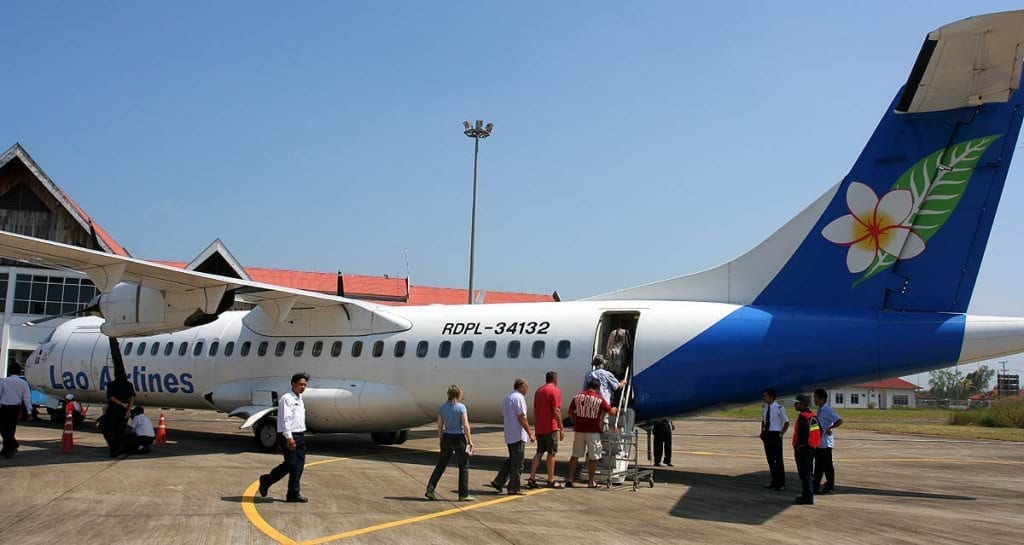
    Attopeu airport, located in the south of Laos near the borders of Vietnam and Cambodia, has ceased commercial operations.

    Lao Airlines (QV, Vientiane) had been running a scheduled service to the small aerodrome 2x weekly from Vientiane via Pakse since April 2016 using an ATR 72-600, but the service appears to have been suspended. According to FlightRadar24 ADS-B data, the last commercial flight to Attapeu was on October 26, 2016.

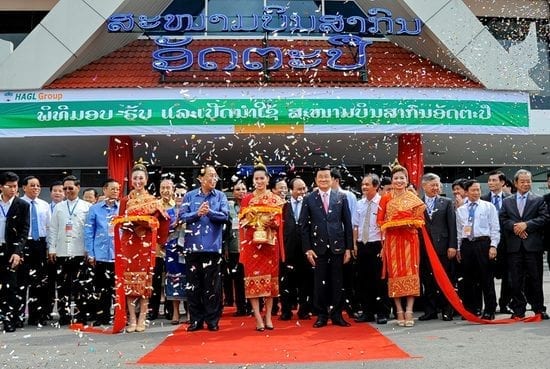
    Attapeu Airport was officially opened on May 30, 2015 after an investment from Vietnam’s Hoang Anh Gia Lai Group.

  • Laos targets more international flights

    Laos targets more international flights

    Lao PDR’s Department of Civil Aviation says its priority is to encourage more international airlines to serve the capital Vientiane.

    In an interview the department claimed there were more direct flights to Laos, many of them charter flights during the peak tourist season November to April.

    Flights from China are on the increase. Previously, only China Eastern Airlines operated flights, but now Sichuan Airlines and Hainan Airlines, both serve the country direct from China.

    Nations with direct flights  to Laos include China, Vietnam, Thailand, South Korea, Singapore and Malaysia, the report said.

    Civil aviation officials are keen to see more airlines serve the capital to balance traffic to Luang Prabang, the country’s main tourist destination. Most airlines prefer to fly to the World Heritage town as flights quickly turn a profit, although there is a significant dip in bookings during the monsoon season June to October.

    Up until 2015, traffic rights were difficult to obtain particularly to Luang Prabang where there was virtual ban on low-cost airlines. However, 2016 saw a change in policy and low-cost airlines opened services from neighbouring countries.

    South Korea airlines serve Laos with both schedule and charter flights. Japanese airlines previously offered charter flights.

    Foreign airlines have access to three locations in Laos – Champasak, Luang Prabang and Vientiane, it added.

    Airline seat quotas on flights between Vientiane and Bangkok have been increased in a bid to promote trade, investment and tourism between the two destinations.

    Thai and Lao PDR officials approved, last year, a revised Thai-Lao accord that increases the ceiling on seat capacity on routes between the two countries to as many as 14,500 seats weekly depending on the route.

    The agreement paved the way for designated carriers, registered in both countries, to add more flights on routes that have been restricted for years.

    The seat capacity ceiling on the Bangkok-Vientiane route increased more from 2,100 to 14,500 seats weekly. Most of the flights use A320 with a maximum of 200 seats.

    On the Bangkok-Luang Prabang route, the weekly ceiling  increased from 1,000 to 10,000 seats.

    The seat quotas for other customs and immigration enabled airports increased from 450 to 2,100 per week.

    Thai Airways International, Bangkok Airways and Thai AirAsia operate flights to and from Laos there are two airlines; Lao Airlines and Central Airlines.

    Raising the seat capacity ceiling will now allow Thai Smile and Nok Air to apply for traffic rights.

    Thai Smile introduced a new flight connecting Bangkok to Luang Prabang, a world heritage town in Laos starting 16 January.

    The airline offers four weekly flights on Monday, Wednesday, Friday and Sunday using an Airbus A320 aircraft on the route.

    According to the Ministry of Information, Culture and Tourism, arrivals to Laos were expected to reach 4.3 million by the end of last year, representing an increase of 4% over 2015.

    Foreign visitor arrivals increased from 2.7 million in 2011 to 4.1 million in 2015.

  • International Commercial Bank Lao Wins GBO 2016 Awards

    International Commercial Bank Lao Wins GBO 2016 Awards

    International Commercial Bank Lao Limited provides banking and related financial services in the Lao People’s Democratic Republic. It offers various deposit products, including current, savings, education fund savings, and senior citizen savings accounts; and fixed deposits, fixed deposits with advanced interest, demand deposits, and term deposits.

    The company also provides loans, such as vehicle/auto express loans, housing/shoplot/mortgage loans, and educational loan schemes; and other services comprising bills discounting and bank guarantees. In addition, it offers international banking services, such as inward and outward remittances, import/export collections, documentary letters of credit, and foreign currency operations. The company provides its products and services through head office and two branches located in Vientiane; and one branch located in Pakse.

    The company is headquartered in Vientiane, the Lao People’s Democratic Republic. International Commercial Bank Lao Limited is as a subsidiary of Asia Investment and Financial Services Co., Ltd.

    Mr. Zulkiflee Kuan Shun Abdullah, Chief Executive Officer of International Commercial Bank Lao Ltd. Upon receiving this award said “We are indeed honoured to win the “Best Retail Bank – Laos 2016″ award by Global Business Outlook. This would not be possible without the dedication, hard work and commitment from all the staff and the support from the stakeholders. It has been a great achievement for the Bank in 2016. The Bank has been accorded awards in the same category by 2 other international publications. These awards are recognition of their invaluable contribution to the Bank. The stakeholders share this award with all the staff and together we will continue to strive to provide Value Banking to our customers. ”

  • Laos teams with Microsoft on digital transformation

    Laos teams with Microsoft on digital transformation

    The government of Laos has teamed up with Microsoft to advance the adoption of emerging technologies for sustainable economic development, with focus on projects with social impact.

    At a Government Solution Day event held in collaboration with the Laos Ministry of Post and Telecommunications (MPT) and attended by key government officials and partners, Microsoft showcased how the government can use technology to digitally transform and support economic development.

    Vivek Puthucode, GM for the public sector for Microsoft Asia-Pacific, said the benefits of the digital economy remain out of reach for many in emerging markets despite the enormous untapped opportunities across various industry sectors.

    “As part of Microsoft’s National Empowerment Plan, our approach is to work closely with governments and public sector agencies to support them in overcoming challenges and building more cloud-enabling environments to accelerate their competitiveness, productivity and modernization of operations through trusted technology,” he said.

    This cloud-based, digital transformation roadmap is especially aimed to enable emerging markets, such as Laos, harness the power of technology to embark on a digital transformation journey, aligned with their national priorities.

    “Embracing trusted technology, particularly the power of emerging ICT, will be key to enabling Laos’ growing economy to take a giant leap forward, propelling our nation into a digital enabled community and economy,” said Dr. Thansamay Kommasith, minister of post and telecommunications of Lao PDR.

    “Government Solution Day affirms our vision to drive inclusive growth, a smart government, and transform the way both public and private sectors operate – not only by ensuring accessibility of tools, but also by establishing the right processes and building the digital skills of our citizens,” he added.

    Besides having access to the right tools, people must also know how to use them, according to Michelle Simmons, Microsoft APAC’s GM for new markets in Southeast Asia.

    “Looking ahead, what will be critical for Laos to thrive is digital literacy. We are working with the government to not only deliver educational programs, but also to support the educators themselves with the right resources to impart science, technology, engineering, and mathematics (STEM) skills to local youth, preparing them for jobs of the future,” she said.

    Microsoft had previously inked a memorandum of understanding (MoU) with the Ministry of Education and Sport in Laos to develop a holistic plan to leverage technology for education, covering a range of programs that will support the development of 21st century skills and employability of students.

  • Vietnam telecom giant to scrap roaming fees with Laos, Cambodia from 2017

    Vietnam telecom giant to scrap roaming fees with Laos, Cambodia from 2017

    The company expects to lose $1 million a month but hopes to boost connections in Indochina. Vietnam’s biggest telecom firm Viettel has announced it will abolish roaming charges between Vietnam and neighboring Cambodia and Laos, where it has also developed strong networks.

    Nguyen Manh Hung, general director of the company, said that starting from next year its subscribers in the three countries will be able to phone each other at domestic call rates, local media reported. Viettel has developed the Metfone network in Cambodia and Unitel in Laos.

    Hung said the initiative is to facilitate cultural and trade connections in Indochina, but the company will lose around $1 million a month.

    In October last year, members of the European parliament also voted to scrap mobile roaming charges from mid-2017 to save holidaymakers among member countries from racking up massive phone bills.

    ASEAN ministers of communications raised the idea of abolishing roaming fees thoughout the bloc back in 2013, but no agreement was finalized.

    Besides Vietnam, Viettel operates mobile networks in ten countries in Southeast Asia, South America and Africa.

    Its brand value has been estimated at $973 million by UK-based intangible asset valuation consultancy organization Brand Finance. It is ranked seventh in Southeast Asia and 93rd globally.

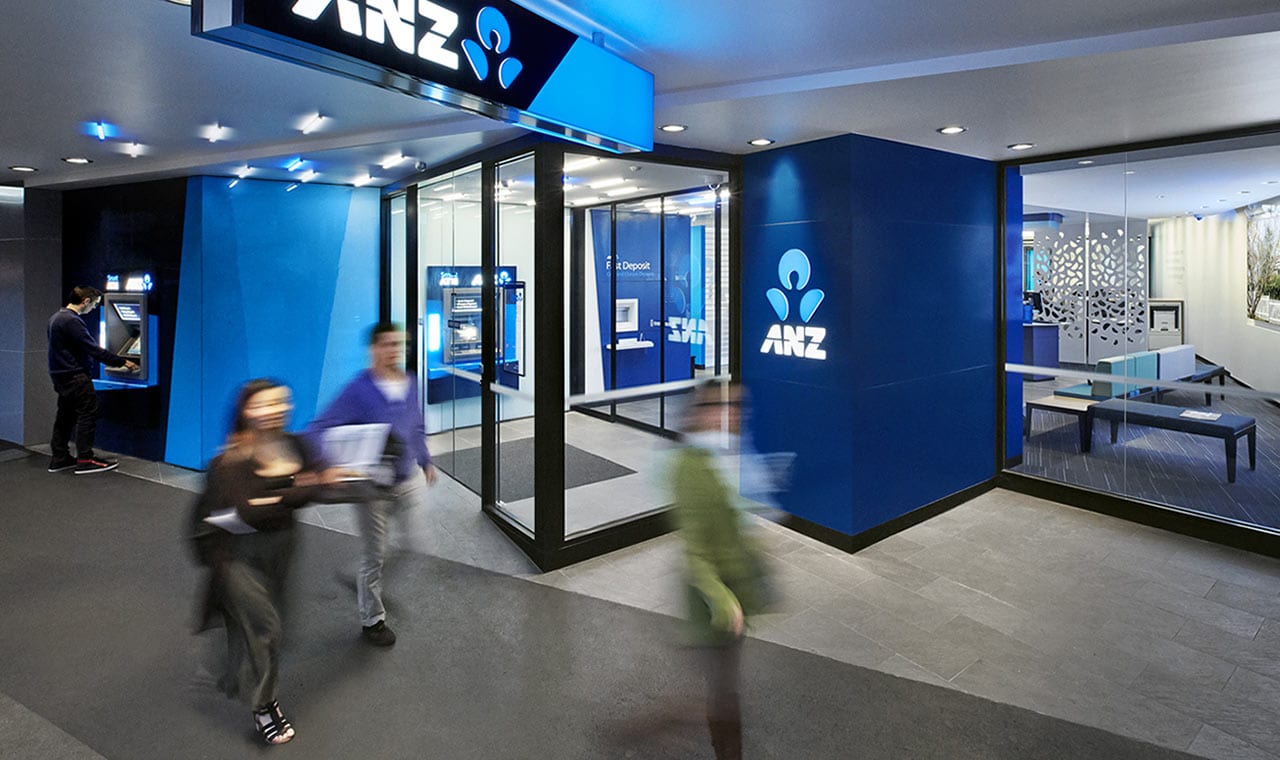
  • ANZ share rating still retained

    ANZ share rating still retained

    The divestment was consistent with the bank’s strategy of simplifying its business and narrowing the focus of its Asian operations on institutional business, analyst David Ellis said in a research note released yesterday.

    The sale followed those of five Asian retail and wealth businesses in Singapore, Hong Kong, China, Taiwan and Indonesia at the end of October last year.

    Mr Ellis expected ANZ’s four remaining retail and wealth businesses in the Philippines, Vietnam, Cambodia and Laos, which were under review, to eventually be sold.

    Following the sale of Shanghai Rural, ANZ would have minority stakes in three Asian financial services groups in Malaysia, Indonesia and China with a combined book value of about $A3billion ($NZ3.13billion).

    ”We would not be surprised if these investments were also divested,” Mr Ellis said.

    ANZ deputy chief executive Graham Hodges said the bank had sold its 20% share in Shanghai Rural to China Cosco Shipping and Shanghai Sino-Poland Enterprise Management Development Corporation for $A1.84billion.

    ANZ had invested a total of $A568billion in Shanghai Rural. Since 2007, ANZ had recognised $A1.3 billion of equity-accounted earnings and received $A178 million in dividends.

    ”This partnership has been beneficial for both ANZ and for Shanghai Rural. Shanghai Rural is now a strong, successful bank with a prosperous future.”

    Mr Ellis assigned a wide commercial advantage (economic moat) rating to ANZ, mainly because of its sustainable structural advantages of the Australian and New Zealand banking sectors.

    The wide moat rating recognised the structural and superior competitive advantages Australia’s four banks possessed.

    ”The four major banks dominate a regulated and rational oligopoly, bestowing structural advantages that are strong and durable.”

    New Zealander Shayne Elliot started as ANZ chief executive on January 1, 2016 and wasted no time making changes to strategy, organisational structure and the senior leadership team, Mr Ellis said.

    Mr Elliot was an ”excellent choice” to lead the group through the next stage of its growth phase.

  • Sompo Insurance eyes retail customers

    Sompo Insurance eyes retail customers

    Sompo Insurance (Thailand) is embracing innovation and digital channels as key strategies to build brand awareness among individual Thais, who are a new customer base for the Japan-based firm, which aims to be in the top 10 in Thailand’s |insurance market by 2020.

    Sompo Insurance eyes retail customers

    Sompo Insurance, formerly known as Sompo Japan Nipponkoa Insurance (Thailand), is focusing more on retail customers after securing a strong corporate base, mainly Japanese firms operating in Thailand.

    The company has been in Thailand for 19 years, tapping only corporate clients before starting to expand |its customer base to |individuals three years ago with motor insurance by partnering with Japanese auto companies.

    Chief executive officer Isorasak Thesratanavong said yesterday that motor insurance was the largest |segment for the insurance business in Thailand, so if his firm wants to expand its retail base, it needs to offer such policies.

    Another strategy is travel |insurance. This year Sompo’s retail customers are expected to generate 30 per cent of total premium income of Bt3 billion, but if the company wants to promote its brand |awareness to Thai customers, |travel insurance should help, because Japan is the No 1 destination of Thai tourists.

    The company yesterday |introduced a travel-insurance policy called Sompo Go Japan. Customers can buy the policy at traveljoy.sompo.co.th, after which the company will send an SMS link to |their mobile device. The |customers will then receive the |policy in a PDF file on their mobile.

    The company has added |threefeatures to its travel insurance. Sompo Assist helps policyholders contact hospitals in Japan and make appointments with them. Thai policyholders are not required to pay medical expenses to the hospital when they use its services, Isorasak said.

    Recognising the growing digital trend in Thailand and as a new player in the retail market, Sompo believes that innovation and digital channels will help it rise into the top 10 and sustain annual premium-income growth of 15 per cent. Its corporate-customer base might not grow much as before, and the company estimates that premium income from corporate clients will grow by no more than 5 per cent as Thailand has been spared any major disasters, reducing premiums of industrial all risks (IAR) by 20 per cent in 2017.

    Cyber insurance considered

    The company is discussing with its headquarters in Japan the possibility of offering cyber insurance to |corporates in Thailand as the risk of cyber-attacks rises from the growing use of digital technology, Isorasak said.

    Premium income from retail customers is expected to grow by 15-18 per cent a year, and if Sompo can retain this growth, its retail base will be contributing half of its premium income by 2020, he said.

    Sompo Group in Japan sees Thailand as a hub for its business in Cambodia, Laos, Myanmar and Vietnam, so it is ready to inject |investment capital to use this country as a springboard for investment in those countries, he added.

    Sompo Thailand has been assigned by its headquarters in Japan to cover Japanese investors in Laos.

  • Viettel pioneers free roaming in Cambodia, Laos, Vietnam

    Viettel pioneers free roaming in Cambodia, Laos, Vietnam

    Vietnam’s state-owned telecom Viettel will eliminate overseas roaming charges between its operators in Vietnam, Laos, and Cambodia from January 2017.

    “Users of Metfone in Cambodia, Unitel in Laos and Viettel in Vietnam will be charged at the local mobile fee when they make cross-border calls to each other,” said Nguyen Manh Hung, Viettel’s managing director, who regards the three countries as an economic and cultural bloc.

    Discussions about free roaming services started years ago in Australia, Europe, and New Zealand, but without bearing fruit. Free roaming within the Association of Southeast Asian Nations has also been discussed by regional ministers since 2013.

    Viettel has well-established infrastructure in the three countries, and is the first telecom to launch such a service within a regional economic bloc, promising cheaper cross-border rates for calls and data.

    In a statement released on Thursday, Viettel said it expected its individual operators to lose some revenue initially with the reduced charges, but provided no figures. The figure could be 2% according to one Europe model in 2013. Viettel expects users to become more active when they travel if they can continue paying domestic rates.

    Military-run Viettel posted revenue of $9.7 billion in 2015 with 13% year-on-year growth, and profits up 8% to $2 billion.

    As of September 2016, Viettel had 90 million customers, of which 26 million were in nine overseas markets: Burundi, Cambodia, Cameroon, Haiti, Laos, Mozambique, Peru, Tanzania, and Timor Leste. Viettel has targeted 25 countries by 2020.

    Cambodia and Laos were Viettel’s first foreign ventures, and remain its most profitable. By August, Unitel in Laos had $1 billion in accumulated revenue over seven years and aggregate profit of $300 million. Unitel has a brand value of $132 million, making it one of the 30 most valuable in the region and top in Laos, according to a report by UK-based Brand Finance in April. The company currently has more than 2.5 million customers. It accounts for 47% of Laos’s mobile market and 35% of the broadband market.

    Metfone in Cambodia has a brand value of $94 million and is the leading mobile service provider in the country with 5.5 million customers and 37% market share. It recorded $256 million in revenue last year.

    Viettel already operates in East Timor, and is about to launch in Myanmar with a $1.5 billion commitment and two local partnerships. It is also believed to be negotiating its entry into Indonesia.

  • Cambodia to Open Ports to Laos Exports

    Cambodia to Open Ports to Laos Exports

    Cambodia will soon open both its roads and ports for Laos to use in exporting goods abroad, according to an announcement posted on Prime Minister Hun Sen’s Facebook page on Sunday.

    The announcement followed a meeting between Mr. Hun Sen and Laotian President Pany Yathotou in Phnom Penh on Saturday, during which the two discussed strengthening ties.

    The Facebook post did not specify when ports would be open to Laotian exports, or which ports these would be, and the Ministry of Foreign Affairs could not be reached on Sunday for comment.

    Soeung Sophary, a spokeswoman for the Ministry of Commerce, said opening Cambodia’s roads and ports to exports from Laos had been raised during diplomatic meetings in the past, but never agreed upon.

    “As Laos is a landlocked country, this is the first time for Cambodia to let Laos export through us,” she said, adding that she did not know the details of the agreement.

    Hun Sen’s meeting with Ms. Yathotou follows a meeting between the leaders of Cambodia, Laos and Vietnam in Siem Reap last week, during which the prime minister denied that the Don Sahong dam had any downstream effects on Cambodian villagers and warmly agreed to Laos’ offer to sell Cambodia cheap hydropower.

    Laos’s main export is timber, with U.N. Comtrade putting it at 40 percent of the nation’s exports. An internal WWF report leaked late last year asserts, however, that illegal logging in Laos is rampant, and the actual volume of timber leaving the country is poorly documented.

    Denis Smirnov, a consultant for environmental group WWF focusing on the timber trade in Southeast Asia, said it’s unlikely that any illegal exports will find their way through Cambodia, owing to an ongoing crackdown on the trade.

    “The Lao government in May started to enforce the export ban on unprocessed wood for the first time,” he said, adding that it was uncertain whether it would last past the end of the rainy season.

  • InterContinental Vientiane to Open 2021 in Laos

    InterContinental Vientiane to Open 2021 in Laos

    Set to open in 2021, the new-build InterContinental Vientiane will become the company’s second hotel in Southeast Asian country, following the existing Crowne Plaza Vientiane. It will also become one of the Lao capital’s largest hotels, with more than 400 rooms.

    Built by Lao International Development, the hotel will form part of the new World Trade Centre complex – a mixed-use development that will include a large retail mall, medical centre, conference centre, office tower and residential towers.

    “Laos is currently one of the region’s fastest growing nations with close to five million international arrivals each year and future infrastructural and industrial developments underway to continue boosting economic growth and attract foreign investment,” explained Leanne Harwood, IHG’s vice president of operations for Southeast Asia & Korea. “It’s a great time to be bringing the InterContinental brand into the country to tap on this potential.

    “InterContinental Vientiane is… set to be positioned as one of the city’s most prominent hotels which will welcome distinguished guests such as visiting dignitaries and heads of states as key government meetings are planned to take place in the adjoining conference centre,” she added.

    Among its 400+ rooms, InterContinental Vientiane will feature a range of club rooms and suites which provide access to the hotel’s club lounge. Other facilities will include several F&B outlets, a swimming pool, spa and fitness centre.

    “It’s an exciting time to be investing in Laos as the country sees improved intra-regional connectivity through the completed Kunming-Vientiane-Bangkok highway connecting China, Laos and Thailand and the upcoming high-speed rail project that will link China to Laos,” said Xiao Long, CEO of Lao International Development. “We are confident these infrastructural developments will boost tourist arrivals, especially from surrounding nations, and the opening of InterContinental Vientiane will cater to the influx of travellers.

    “We are very pleased to partner IHG to develop what we are confident will be one of the most highly sought-after hotels in Vientiane,” he added.

    Across Southeast Asia, IHG now operates 14 InterContinental hotels and resorts, with 10 more due to open in the next five years. There are several international hotel brands currently present in Vientiane, including ibis, Best Western and Crowne Plaza, but InterContinental will be one of the first international luxury brands to enter the city.

  • Thai Kasikornbank Eyes Regional Expansion, Plans 2nd Branch in Laos

    Thai Kasikornbank Eyes Regional Expansion, Plans 2nd Branch in Laos

    Thailand’s Kasikornbank said on Tuesday (29/11) it plans to open a second branch in Laos and upgrade the status of its local bank in China in 2017 as part of a regional expansion.

    With assets of $68 billion, Thailand’s fourth-largest lender by assets is looking to open branches in Vietnam, Indonesia and Myanmar by 2018, Kasikornbank president Kattiya Indaravijaya said in a news conference.

    Loans and assets from foreign operations accounted for less than 5 percent of the bank’s current total loan portfolio, and the proportion is expected to gradually increase over the next few years, she added.

    Like other major Thai banks, Kasikornbank is looking to expand its business in fast-growing economies in Southeast Asia to help offset a slowdown in the domestic market.

    Kasikornbank is aiming at a loan growth of 4-6 percent in 2017 — assuming the Thai economy would grow 3.3 percent next year — and expected its non-performing loans to make up 3.3-3.4 percent of total loans, Kattiya said.

    In the first nine months, the bank’s loans grew 5 percent, versus a target of 6-7 percent for the whole of 2016, she said.

    The bank targets loan growth from retail clients at 5-7 percent next year when the number of it retail customers is expected to rise to 14.1 million, up 5-6 percent on year, the bank’s president said.

    Loan growth for large companies and small to medium sized firms is targeted at 4-6 percent next year, she said.

    Kasikornbank aimed to spend 4 billion baht on developing information technology (IT) next year to maintain its leading position in digital banking, the bank’s president in charge of IT, Teeranun Srihong, said.