Tag: Laos

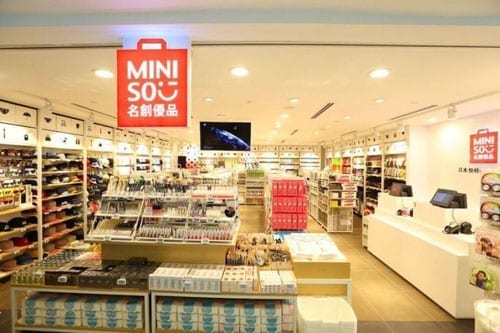
  • Miniso Laos opens first store at Vientiane

    Miniso Laos opens first store at Vientiane

    Chinese fashion and novelty retailer Miniso has opened its first store in Laos as it continues its rapid Asian expansion.

    The Miniso Laos store is located on the 1st floor of KL’lar Huk K’kee Mall in Vientiane, the nation’s capital.

    The flagship store in Laos gained much attention from the local government, five major banks in Laos installed ATMs at the store.

    First day turnover exceeded RMB 50,000 (US$7500).

    “For a developing country with a population of 6 million people, this was a miraculous sales record,” a Miniso spokesman said in a statement.

    Miniso Laos

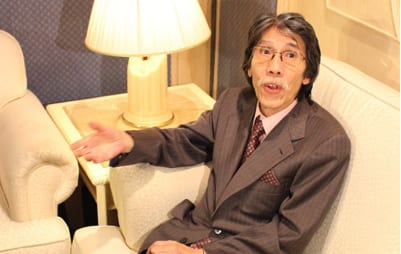
    Phouphet Khamphounvong, Laotian Minister of Finance, and his wife, Miyake Jyunya, (pictured) global co-founder of Miniso, Ye Guofu, global co-founder of Miniso, Laotian representatives of business cooperation, officiated at the opening.

    Queues formed to be first to try the Japanese-styled store which sells own-brand fast fashion accessories, electronics, homewares and beauty products.

    Since its establishment in 2013, Miniso has opened more than 1400 stores across the globe. In 2015, its annual sales exceeded RMB 5 billion ($750 million), which it claims makes it the fastest-growing brand in offline retailing.

    This year, Miniso plans to open another 1800 stores globally, and to double its annual turnover.

  • Khiri Travel the first to earn Travelife Partner status in Indonesia and Laos

    Khiri Travel the first to earn Travelife Partner status in Indonesia and Laos

    Travelife is a leading training, management and certification initiative for tourism companies that are committed to sustainability. Travelife was founded with the support of ABTA in the UK and ANVR in the Netherlands in 2007 as a thorough responsible tourism certification scheme for tour operators and hotels.

    Khiri Travel in Indonesia and Laos have both been awarded Travelife Partner status following a major social and environmental audit. Khiri Travel is the first in both Indonesia and Laos to earn Travelife Partner status.

    Travelife certification for tour operators and travel agents comes in three rising stages: Engaged, Partner, and Certified. Khiri Travel Indonesia and Laos are two-thirds of the way to full certification. Khiri Travel Myanmar, Thailand and Vietnam achieved full Travelife Certification in 2015.

    Travelife is a leading training, management and certification initiative for tourism companies that are committed to sustainability. Travelife was founded with the support of ABTA in the UK and ANVR in the Netherlands in 2007 as a thorough responsible tourism certification scheme for tour operators and hotels.

    Richard Brouwer, CEO of Khiri Travel, said: “Travelife Partner status shows a great pioneering spirit and dedication by the Khiri teams in Indonesia and Laos. Khiri Travel is committed to measurable sustainability because it boosts customer satisfaction, staff motivation and business efficiency. Khiri Laos and Indonesia will keep working towards full Travelife Certification.”

    Naut Kusters, General Manager for Tour Operators and Travel Agents for Travelife said: “Khiri Travel in Indonesia and Laos are on the right path. Sustainability management is about commitment and consistent sustainable business practices. This includes a tour operator’s products, how they monitor and manage their impacts, and how they support their suppliers on their road to sustainability. I expect that the lead of Khiri will be an incentive for other companies to join the route towards sustainability.”

    The three-stage Travelife process acknowledges OECD corporate social responsibility guidelines including labor conditions, human rights, environmental responsibilities, biodiversity and fair business practices.

    The Travelife standard for tour operators is also formally recognized by the UN-supported Global Sustainable Tourism Criteria (GSTC).

  • Macau Legend buys troubled casino in Laos

    Macau Legend buys troubled casino in Laos

    Macau Legend Development Limited announced via press release on May 13 that it had entered into a USD42 million (approximately HKD326 million) project development agreement (PDA) with a company wholly-owned by the Ministry of Finance of the Lao People’s Democratic Republic, to purchase the Savan Vegas Hotel and Entertainment Complex, a full-service casino, hotel and resort located in Laos’ Savannakhet Province.

    However, the apparently very advantageous and profitable business might be tainted for David Chow’s company, as the Savan Vegas Hotel and Entertainment Complex is involved in a series of serious disputes and legal actions that are directly connected to its owners.

    In another statement on May 5, Lao Holdings N.V., the parent company of Sanum Investments Limited, stated that it has filed three legal actions against Laotian authorities for violating the 2014 settlement agreement reached by both parties, stipulating the sale of the Savan Vegas Hotel and Casino, and other assets, for maximum value to the benefit of all parties.

    David Chow

    David Chow

    According to the same statement, “these actions have been taken in direct response to the expropriation and planned sale of Sanum’s gaming and hotel complex located in Savannkhet, Laos,” that has now reportedly gained the involvement of the Macau company as the buyer.

    “All of the actions taken by the Lao Government over the past two years have been a blatant attempt not only to avoid, but systematically obliterate its legal obligation to work with us in good faith,” said Jody Jordahl, President of Sanum Investments in the same statement.

    However, none of these actions and lawsuits have been reported or identified in the note sent by the Macau Legend to the Hong Kong Stock Exchange as potential risks for the business.

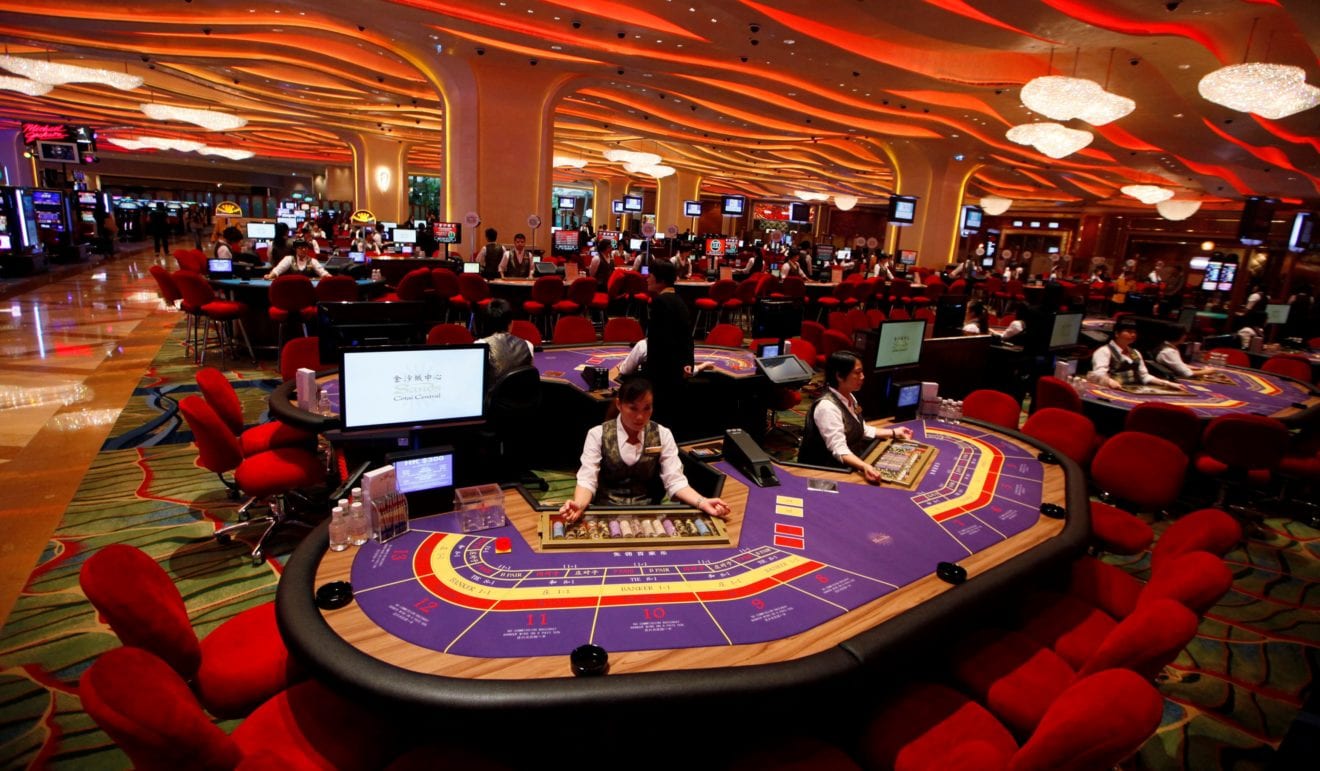
    The Savan Vegas Hotel and Entertainment Complex occupies 50 hectares of land, which currently features gaming facilities with 92 tables and 493 slot machines; a 476 room hotel and convention center, restaurants, bars and other dining, recreational and retail shopping facilities.

    The PDA announced that Macau Legend has an initial term of 50 years which may be extended for an additional period up to another 49 years.

    Regarding the business agreement, the co-chairman, executive director and CEO of Macau Legend, David Chow, said: “We have been looking to invest in and develop integrated resort projects outside of Macau.” He thanked the support of the Lao PDR Government, for their trust in the company to turn the Savan Vegas project into a regional entertainment hub in Southeast Asia.

  • Siam Makro plans $258m expansion

    Siam Makro plans $258m expansion

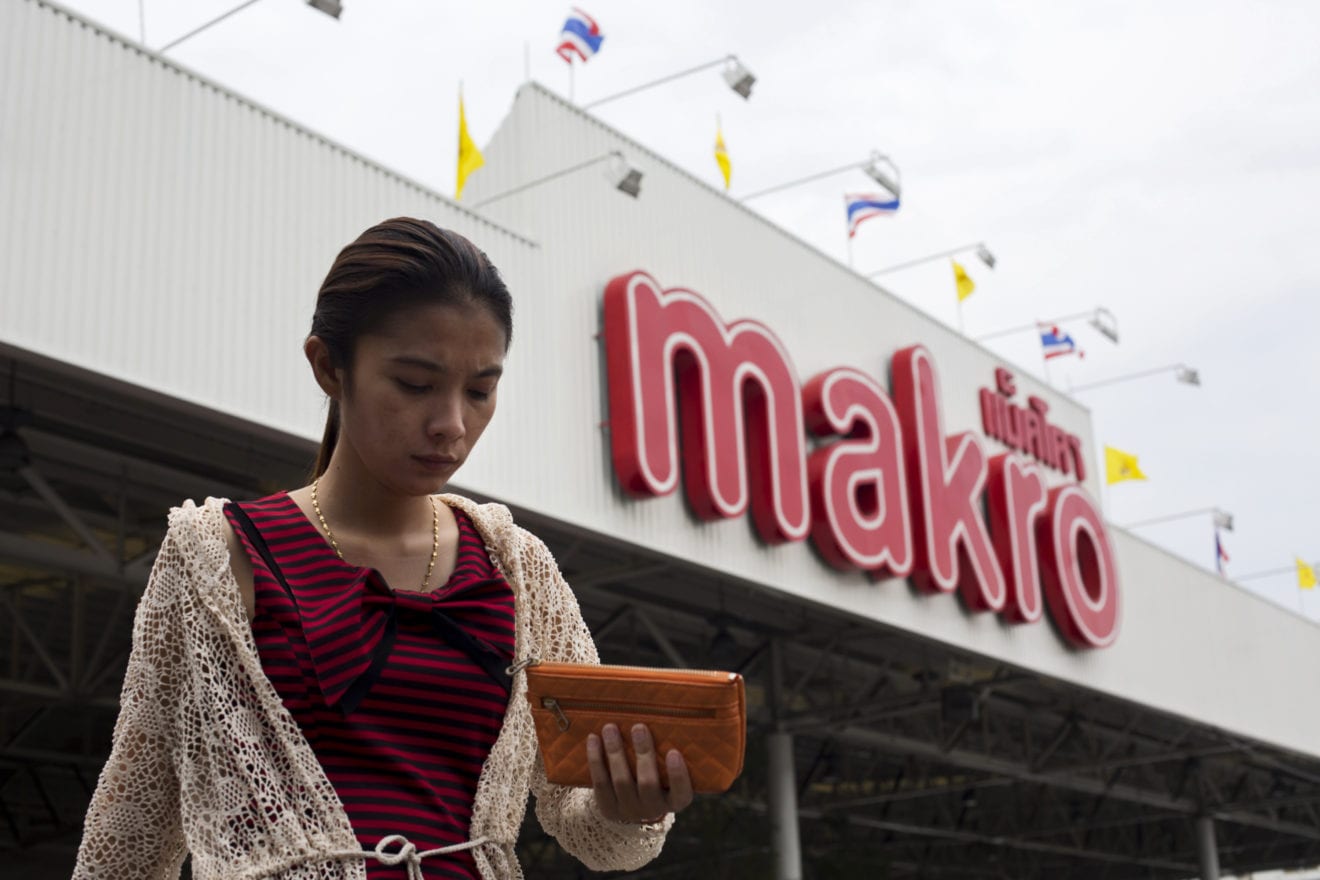
    Thai cash-and-carry chain Siam Makro plans to invest up to 9 billion baht ($258 million) in opening stores this year in Thailand and overseas.

    Its parent company, CP All, which through its ownership of 7-Eleven Thailand is the country’s largest convenience store operator, plans to sell some of its 97 per cent stake in Siam Makro. It has appointed Siam Commercial Bank as financial advisor for a public share sale.

    It is reported CP All aims to keep a stake of more than 50 per cent in Siam Makro, whose main customers are hotels, restaurants and small convenience stores.

    Siam Makro plans to spend 6 billion baht to open 20 stores in Thailand this year, plus 3 billion baht to expand elsewhere in Southeast Asia. CFO Saowaluck Thitaphant says possible markets include Cambodia, Laos and Vietnam.

    She says the company is also interested in India, and plans a store for Myanmar once the political climate is clearer following elections.

    Siam Makro expects revenue to rise by less than 10 per cent this year.

    CP All, controlled by billionaire Dhanin Chearavanont’s Charoen Pokphand Group, says it will use proceeds of the share sale to repay debt.

  • Telekom Malaysia launches POP in Laos

    Telekom Malaysia launches POP in Laos

    Telekom Malaysia has arranged to establish a new point of presence in Laos in collaboration with the Lao National Internet Centre (LANIC).

    Under the agreement, LANIC will host and provide infrastructure for the POP via its international data center in Vientiane.

    Telekom Malaysia will use the POP to provide alternative connectivity options to its customers and afdress growing demand for international internet bandwidth in Laos.

    LANIC is an affiliate of the Laos Ministry of Posts and Telecommunications. The new POP will enable services including IPVPN, IP transit and global Ethernet services.

    “This alliance with LANIC will further strengthen our regional footprint in Southeast Asia, Telekom Malaysia VP for product marketing and operations Mohamed Asri Jaafar said.

    “Through the new POP, TM will be able to offer a vast range of services at a competitive price, going in and out from Laos through diversified routes via submarine and terrestrial cables, connecting to our existing on-net network presence.”

    Telekom Malaysia now has 22 POPs worldwide, spanning Asia, Australia, North America, Europe and the Middle East.

  • Maybank widens presence in Laos with second Vientiane branch

    Maybank widens presence in Laos with second Vientiane branch

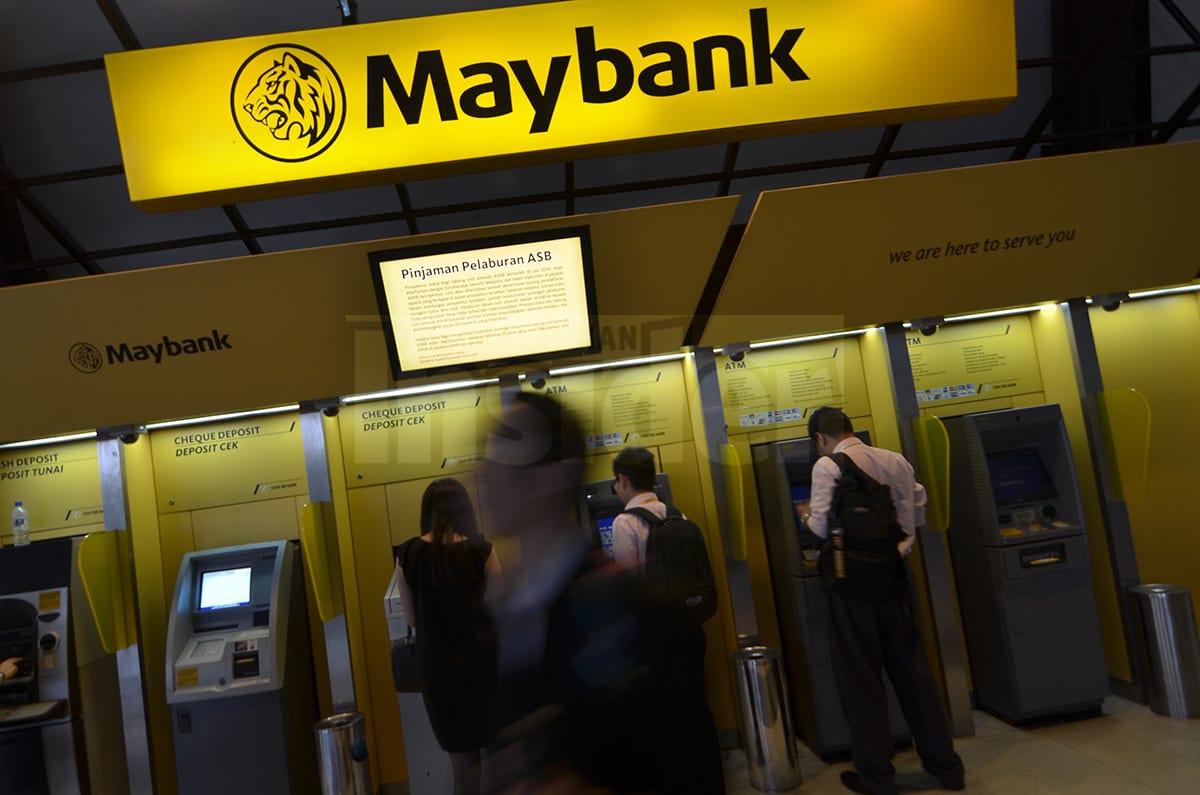
    Malayan Banking Bhd (Maybank) has expanded its network in Laos with a second branch in the capital Vientiane, thus establishing a greater presence in one of the fastest expanding economies in Asean.

    The branch, located in the commercial district of Nongduang, offers a full spectrum of banking services, and aims to serve the needs of the local community as well as customers from across the region having trade and investment links in the country.

    The new branch was officially launched by Bank of the Lao PDR (central bank) deputy governor Vathana Dalaloy at an event hosted by Maybank chairman Tan Sri Megat Zaharuddin Megat Mohd Nor.

    Maybank international CEO Pollie Sim said the opening of the Nongduang branch will strengthen Maybank’s presence in Indochina and enhance its ability to meet the banking needs of customers, particularly the growing investor base into the country.

    “Laos is among the strongest performing economies in the region, with steady economic growth of around 8.5% for the past four years and is anticipated to achieve 7.5% real gross domestic product growth on average from 2016 to 2020, according to the government’s eighth development plan.”

    Sim said the first Maybank branch in Vientiane, which was opened in 2012, has experienced encouraging growth with loans and deposits rising at an annual average of 46% and 78% respectively over the last two years.

    “We anticipate that the opening of this second branch will further boost our franchise in the country and lift our loans and deposits growth to over 70% and 100% respectively by end of 2016,” she added.

    Services offered by the two Maybank branches in Laos include retail and business banking, foreign exchange, remittances, treasury as well as ATMs. The retail offerings include mortgages and personal loans while business banking services include term financing and trade financing.

    The two branches have a paid-up capital of LAK200 billion (about RM100 million) a staff strength of 30 in total.

  • SHB new Club sponsor in Vietnam, Laos & Cambodia

    SHB new Club sponsor in Vietnam, Laos & Cambodia

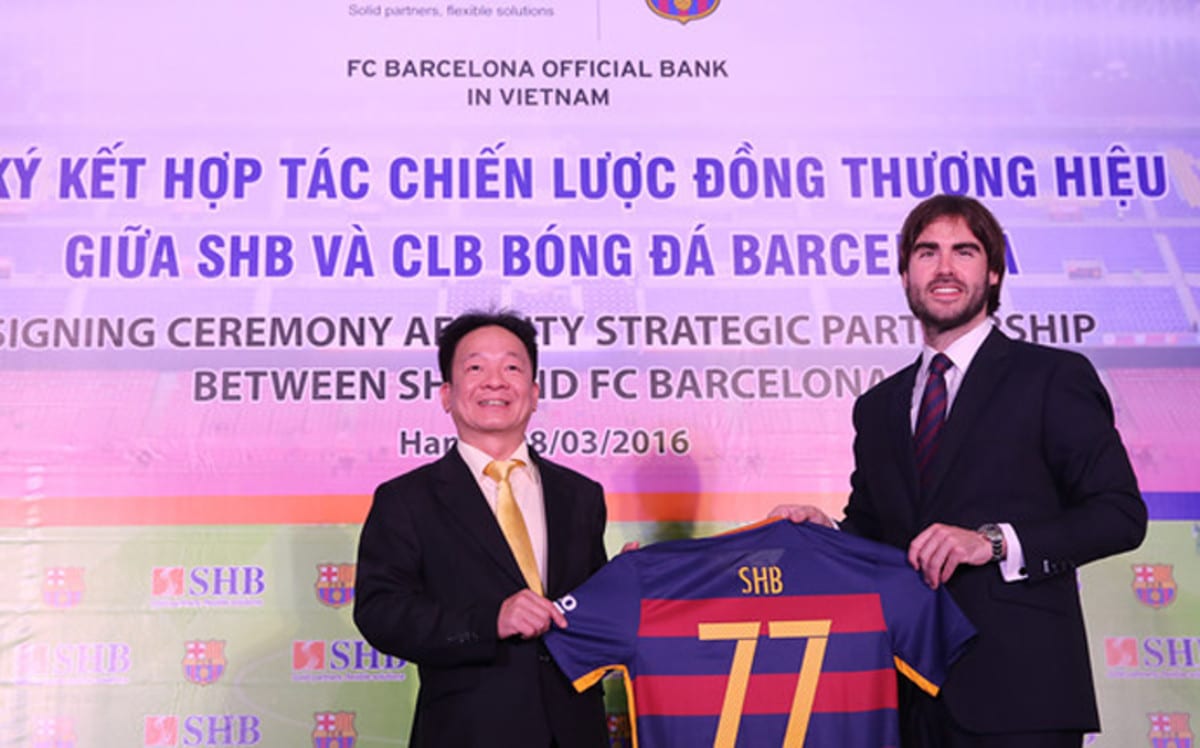
    On 8 March 2016 in Hanoi, FC Barcelona unveiled a sponsorship agreement with Saigon – Hanoi Commercial Joint Stock Bank (known as SHB), the top 5 Private Commercial Banks in Vietnam. This agreement will make SHB the first and only banking partner of FC Barcelona in Vietnam, Laos and Cambodia and enable SHB to open various business opportunities in retail sector in the territories, and bring the club closer to the Vietnamese Barça fans.

    A signing ceremony was held in Melia Hanoi Hotel today. Xavier Asensi, Asia-Pacific Managing Director, attended the event in representation of FC Barcelona, while SHB was represented by Chairman Do Quang Hien and CEO Nguyen Van Le. The ceremony also received the participation of the Representative of Vietnam Football Federation (VFF) – Mr. Tran Quoc Tuan, Vice President, Mr. Nguyen Xuan Gu, Vice President, as well as the coach of local football team SHB Da Nang Football Club, Mr. Le Huynh Duc.

    Strategic partnership for SHB and FC Barcelona

    With this partnership begins, SHB and FCB will cooperate to expand the Barça fan base in Vietnam, Laos and Cambodia. SHB also aims at opening up great business opportunities in retail sector through the development of co-branded cards in the territories. In the time to come, SHB will organize exchange and fan activities in the territories as well as bringing the local Barça fans to Camp Nou, contributing to build the foundation of culture, tradition and Barça spirit we found in millions of our fans.

    Statement by Manel Arroyo, FC Barcelona Vice president, Marketing and Communication department

    “The signing of this new regional sponsorship deal reaffirms our interest in increasing our presence in this continent and also reflects how our Club is gaining notable levels of popularity in this strategic zone, which is encouraging us to continue focusing our presence in Southeast Asia. The agreement with SHB also means a partnership with a highly prestigious entity and will be the vehicle for the name and colours of FC Barcelona to spread to Vietnam, Laos and Cambodia. FC Barcelona’s experience shows that football is a driver that generates cooperation and success, and hand in hand with SHB, we hope to achieve major social objectives.”

    Statement by Xavier Asensi, FC Barcelona Asia Pacific Managing Director:

    “We are so happy to have SHB as our first ever bank partner in Vietnam, Laos and Cambodia. Through partnering with SHB, we will be closer to the 90 million Vietnamese, including a growing fan community. SHB is young and taking up the leading part in the industry; while FCB is deep-rooted and has been successful in defending the glory. I do believe that the collaboration between these two different but yet, similar entities will create a huge buzz and synergy.”

    SHB, a dynamic bank

    SHB has become one of the leading urban banks in Vietnam with the image of a dynamic, modern, and efficient bank after establishment from 23 years ago. By the end of 2015, SHB total assets reached more than VND 205,000 billion, charter capital of nearly VND 9,500 billion with 7,000 employees and transaction network of more than 500 points all over Vietnam and overseas. Not only having an extensive presence in Vietnam, SHB is currently the second Vietnamese private Bank which opened a 100% foreign capital Bank in Laos in January 2016. Along with 4 branches operating in Cambodia, the reputation and financial capacity of SHB have been appreciated in Indochina. SHB has always actively participated in social and charity activities making great contributions to the development of the community, especially sports.

    Statement by Do Quang Hien, Chairman of SHB:

    “The partnership between SHB and FC Barcelona may be considered a perfect cooperation of the leaders. SHB and FC Barcelona share the commons in brand and development philosophy on the road to success, the objective of sustainable development and the desire of devoting to fans and customers. SHB is proud to be the first and only partner bank of FC Barcelona in Vietnam, Laos and Cambodia. This is not only a business opportunity for SHB but firstly it is for a large number of football fans in particular, sports fans in general. Customers are now able to see, feel, and more easily access to their idols daily, hourly … when using and enjoying benefits of Barça – SHB co-branded card and banking products. Moreover, this is also an opportunity for SHB to contribute to the promotion of a beautiful, peaceful, hospitable, dynamic and deeply imbued with the culture Vietnam all over the world.”
  • Cold Weather Bears Down Once Again on Laos

    Cold Weather Bears Down Once Again on Laos

    Laos is bracing for another potentially devastating cold snap following one in January that brought a rare snowfall to the tropical nation and was blamed for the deaths of thousands of livestock and fish, government meteorologists said on Thursday.

    The Lao Department of Meteorology and Hydrology predicted today that the western Houaphan and Xiengkhouang provinces and the central Xaisomboun province could see lows reaching four degrees Celsius over Feb. 5 to 8.

    “The temperature will drop throughout the country, especially in the north and northeast, Xaysomboun and the areas of the plateaus,” weather forecasting and aeronautical meteorology division chief  Vanhdy Douangmala, told RFA’s Lao Service. “Other parts of the country will also face cold weather.

    Weather in the Vientiane is expected to be cloudy and cold, and a resident of the capital city told RFA that the temperature was already dropping.

    Laos was hit with unusually cold weather and a rare snowfall on Jan. 24-25. The temperature in Houaphan province hit 1.5 degrees Celsius and was blamed for the deaths of more than 1000 cattle. The cold was also blamed for killing three tons of fish in ponds in Xiengkhouang province.

    People bundle up

    “From 24-25 January, it was so cold that people couldn’t go out,” the Vientiane resident said. “We just stayed home and sat in front of our stove. I have never seen it freeze like this before. I had to wear three sweaters and many retail shops were closed.”

    The Lao government is campaigning to raise funds to aid rural people suffering the cold weather and is opening bank accounts for donations, according to information from the government office.

    It is difficult to determine if the bitter cold set records in the secretive nation, but the average low temperature in Vientiane hovers around 16.5 degrees Celsius in January and 19 degrees in February.

    Cold hits Asia

    In Vietnam, authorities said more than 8900 cattle died during a cold snap that damaged 6000 hectares of  rice paddy and more than 4600 hectares of vegetable plots.

    Many parts of Asia have been hit with rare cold weather which is being blamed for more than 65 deaths, and disrupted transportation, according to the Associated Press.

    Subfreezing temperatures in North Korea’s northern provinces this month caused water main pipes to freeze and burst, cutting off tap water to local residents, sources inside the country told RFA.

    Meteorologists blame the intense cold on a polar vortex – the large area of low pressure and cold air surrounding both of the earth’s poles. While the vortex always exists near the poles it tends to weaken in summer and strengthens in winter. Many times during winter in the northern hemisphere, however, the polar vortex will expand, sending cold air southward with the jet stream.

  • Mobile World crossing borders

    Mobile World crossing borders

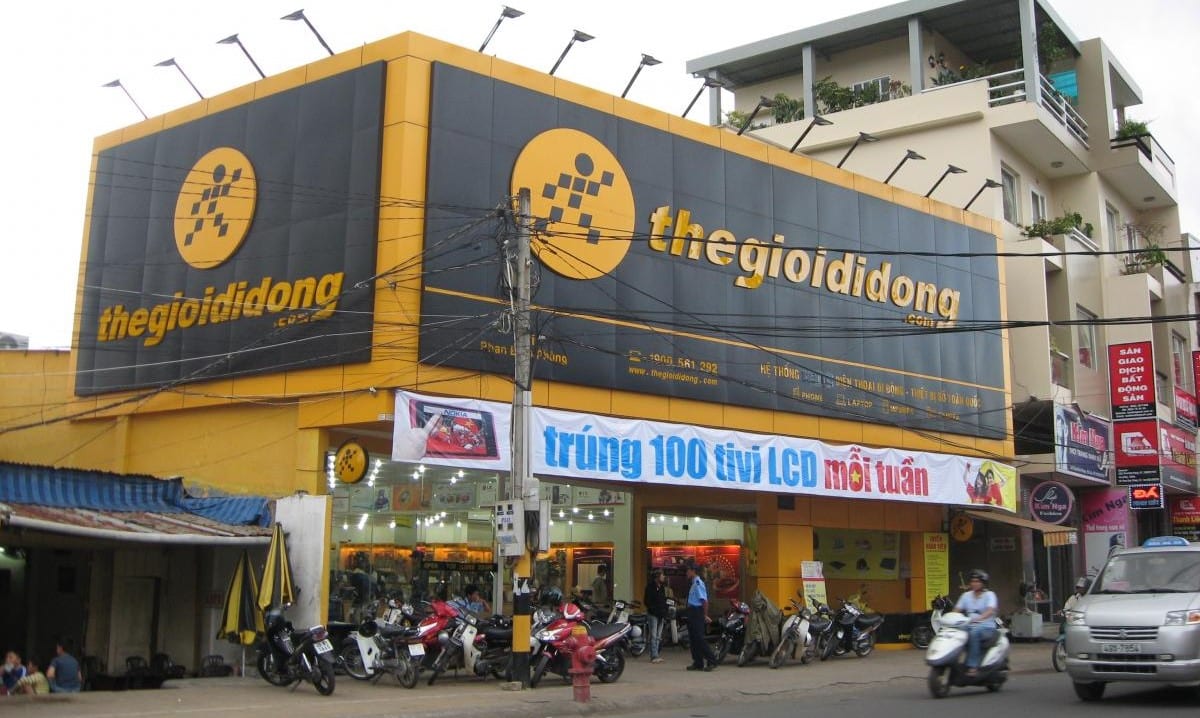
    As well as electronics and mobile phones, its usual products, Vietnamese chain Mobile World is planning to distribute groceries in its first stores in Cambodia, Laos and Myanmar.

    CEO Tran Kinh Doanh says the stores will open early next year.

    Meanwhile, he has revealed two goals – to become one of the biggest eCommerce firms in Vietnam, and to bring in revenue of about VND34,000 billion (US$1.51 billion) this year. This would provide an after-tax profit of VND1400 billion – up VND400 billion on the past financial year.

    With 70 stores and a distribution network covering 42 provinces and cities, Mobile World last year earned VND25,000 billion, giving an after-tax profit of VND1000 billion. Both revenue and profit grew by 60 to 70 per cent. Online sales contributed less than 10 per cent of total revenue.

    Mobile World opened more than 200 cellphone stores last year, taking its total to 550, and this year it plans to expand its network to all 63 provinces and cities in Vietnam to become the second-largest electronic and mobile phone retail chain in the nation.

    It decision to join the food market with 13 stores was announced late last year. The corporation has 17,000 employees, expecting to grow this to about 26,000 people.

  • Investors sought for top-yielding Oud production project in Laos

    Investors sought for top-yielding Oud production project in Laos

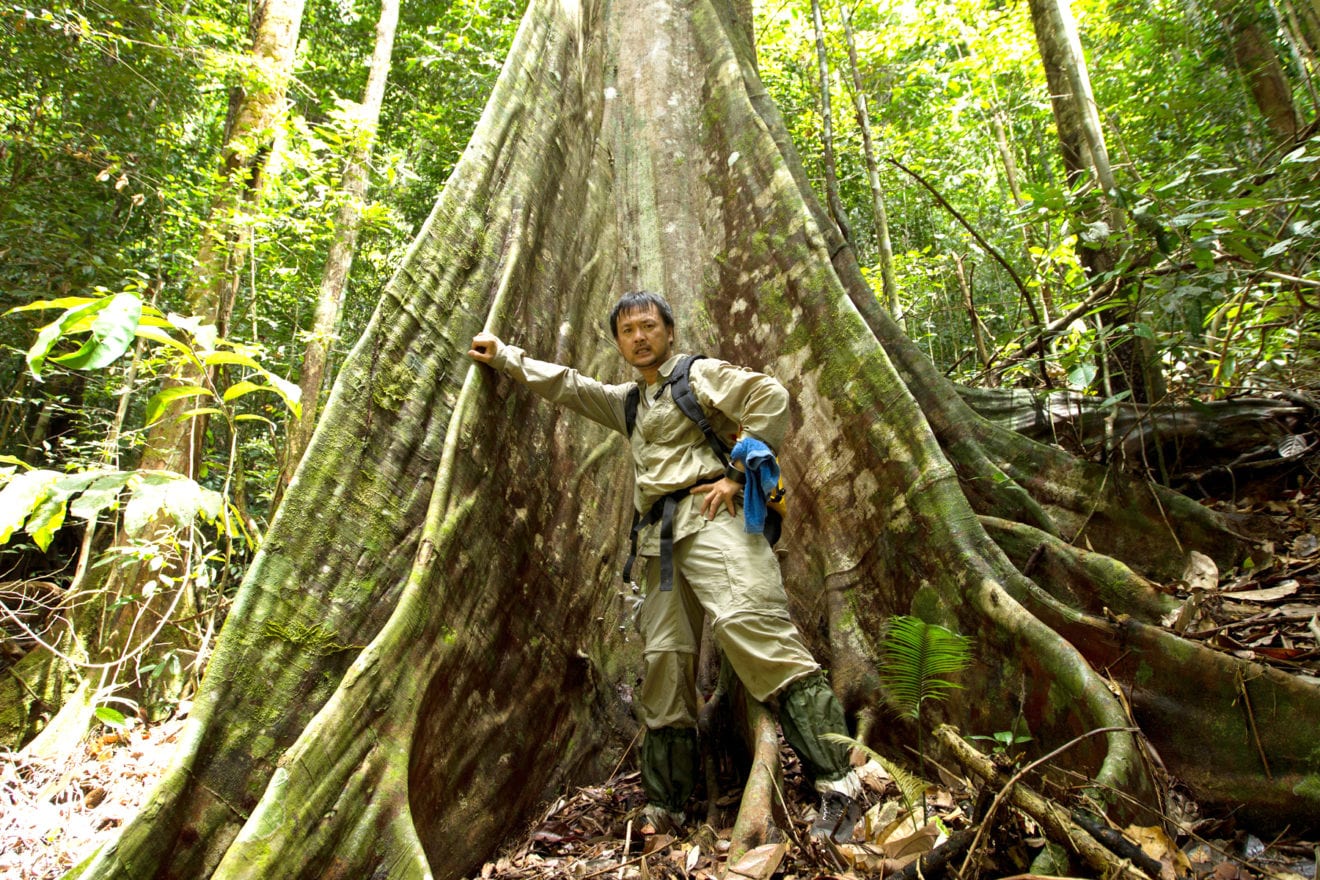
    Two companies from Malaysia are on the lookout for investors to set up a big agarwood tree plantation in Laos to produce Oud oil and other agarwood products for markets in Asia, the Middle East and Europe.

    Agricultural contractor Aseagate on January 6 signed an agreement valued 200mn with forestry management and agriculture technology firm Richwood Capital both companies are based in Kuala Lumpur to operate and run a 2,000-hectare agarwood tree plantation in the central Lao province of Bolikhamsai, one of the largest plantations projects in the landlocked Southeast Asian country so far.

    According to Richwood Capital’s CEO Kendrick Ho Qing Tyat, the project will be implemented in four phases. The initial investment in the first phase is about 18mn for the planting of 200,000 agarwood trees aged between 18 and 22 years at costs of 90 per tree, which should yield a return of 200mn in three years based on calculations that one liter of high-quality agarwood oil fetches at least 14,000 on the wholesale market.Over four phases in the coming six to eight years, with the planting of new trees and new investors on board, the venture’s business plan is to reach a total return of no less than 7.2bn, Tyat said at a press conference in Kuala Lumpur last week. The venture plans to set up its own production plant in Laos or to collaborate with a Lao partner. To produce the resin from which the Oud essence can be distilled, a special technique developed by a Singapore laboratory using a unique and effective enzyme will be deployed to multiply the resin output per tree.

    Main export markets will be the Middle East and China, and also Southeast Asia to tap the big potential that opened up with the recent launch of the ASEAN Economic Community. Top European perfume makers are also on the potential client list. The venture will also sell agarwood leaves, which can be made into tea, and explore ways of producing wood chips from the agarwood trees as well as offer “agriland banking” to investors to tap into the growing ptential of agarwood farming.

    Both companies hailed agarwood as a safe investment, as it was “more resilient to economic fluctuations as compared to stocks and bonds,” and insurance will be purchased to provide protection against possible natural calamities.

    Aseagate has been awarded the sole rights to the management of the agarwood plantation, while Richwood Capital will supply and plant the trees. The plantation concession has been exclusively awarded by the Lao government to the Singapore branch of non-governmental organisation Global Outstanding Chinese 100, or GOC100, an association of international Chinese industrialists, business people and entrepreneurs, which will cooperate with the two Malaysian firms in setting up the plantation and is working out profit-sharing and other details for the collaboration with the Lao government.

    GOC100 in August 2015 signed an exclusive agreement with the Lao Ministry of Agriculture and Forestry for the concession of the plantation which is located within a Lao military base and guarded by the army. Infrastructure-wise, the plantation will benefit from a new railway network linking Laos with China to be set up by 2020.

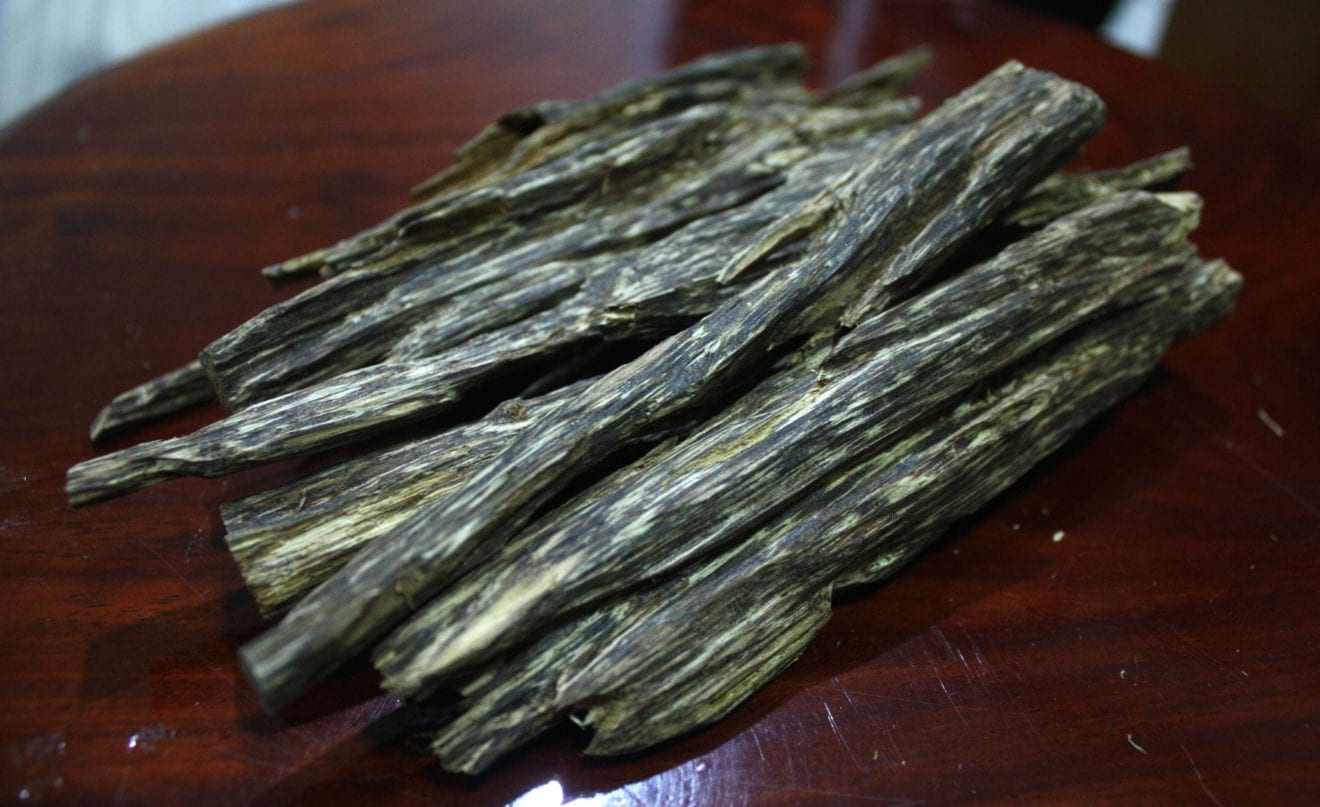
    Agarwood is increasingly becoming an investment commodity due to its valuable resin of which Oud oil is being distilled. Pure Oud is highly in demand as a natural fragrance throughout East and Southeast Asia, as well as in the Middle East and by global perfume manufacturers. It is a popular fragrance for both men and women in the Arab world, while it is also used in traditional Chinese medicine, by Ayurvedic and Tibetan physicians and as meditation incense by various religious groups. In some Arab cultures, it is also used as inhaled incense as a natural remedy against insomnia.

    What makes investment in an agarwood plantation particularly attractive is the fact that, due to its scarcity, the mature wood is pricier than gold with a retail price of between 5,600 and 10,000 per kilogramme, making it one of the most expensive natural raw materials in the world.

  • Two Malaysian firms plan agarwood venture in Laos

    Two Malaysian firms plan agarwood venture in Laos

    Two Malaysian companies plan to invest US$18 million (RM79 million) for the inoculation of agarwood in Laos that is expected to generate US$200 million in three years.

    Agriculture transaction company Aseagate (M) Sdn Bhd, forestry management company Richwood Capital Sdn Bhd (RWC), together with non-governmental organisation Global Outstanding Chinese 100 Organisation of Singapore (GOC100) yesterday inked a memorandum of understanding (MoU) for the project.

    GOC100 inked an MoU with Aseagate that gave the latter sole rights to plantation management for over 2,000ha of land in Bolikhamsai province, Laos, while Aseagate inked an MoU with RWC to spell out their roles in the management, inoculation and supply of agarwood in the Indochinese state.

    The formalisation of the two MoU will be implemented in March.

    RWC CEO Kendrick Ho Qing Tyat said the parties are in the process of raising funds for the project and plan to get institutional investors from China.

    “Given the platform that we have, with GOC100 backing and the Lao government’s support, there’s no reason why people won’t believe and invest with us. This is a good opportunity for them to earn money as well. This market may be new to them but it’s not new in this world,” he told a press conference after signing the MoU yesterday.

    Agarwood is a dark resinous heartwood and is the most expensive wood in the world. Agarwood is pricier than gold with a retail price of between US$5,600 and US$10,000 per kilogramme. A litre of agarwood oil can be sold at US$10,000 to US$14,000. It is valued in many cultures for its distinctive fragrance, and thus is used for incense and perfume. One of the main reasons for the relative rarity and high cost of agarwood is the depletion of the wild resource.

    GOC100 was awarded the exclusive concession by the Lao central government’s Ministry of Agriculture and Forestry to manage the country’s agarwood plantation. GOC100 had in August 2015 signed an exclusive agreement with the Lao Ministry of Agriculture and Forestry for concession to these trees that are planted within the Lao military base and guarded by military.

    The Aseagate-RWC partnership will see the inoculation of agarwood trees aged from 15-22 years to produce resin on behalf of the government of Laos.

    GOC100 Singapore secretary-general Peter Lee said the Lao venture is significant to tap into the growing demand for agarwood, especially in the Middle East and China markets.

    He said the agarwood project is a safe investment, as it is more resilient to economic fluctuations as compared to stocks and bonds, with insurance purchased for its proven inoculation technique and against natural calamities.

    The parties are confident of the venture as the management and technical team has accumulated over seven years of experience in forestry management and agriculture technology, having provided solutions to plantation owners in Malaysia.

    Ho said it utilises technology from Singapore to artificially induce trees to produce resin.

  • Korea’s E-Mart Vietnam launches

    Korea’s E-Mart Vietnam launches

    As a first step in a Southeast Asian rollout, Korean discount store E-Mart has opened its first outlet in Vietnam.

    It goes head-to-head with rival Korean chain, Lotte Mart, which has been in Vietnam since 2011 and now has 11 stores. The E-Mart Vietnam launch follows four years of researching the Vietnamese retail market.

    Run by retail giant Shinsegae, the new two-storey E-Mart hypermarket is worth US$60 million and is on a 3ha site in the busy Go Vap District of Ho Chi Minh City, nearby the airport. It is the brand’s first overseas store since it shifted focus to Southeast Asia in 2011 after a lacklustre foray into China. The company regards the new store as a foothold for expansion throughout Vietnam and into such neighbouring countries as Indonesia, Laos and Myanmar, reports the Korea Herald.

    E-Mart’s Ho Chi Minh City store has been tailored for Vietnamese consumers, and offers several features new for Vietnam. About 95 per cent of the employees (about 300) are Vietnamese, including the manager, and the parking lot has been designed to cater for 1500 motorcycles and 150 cars to reflect the city’s vehicle preferences

    As well as featuring Korean products popular with Vietnamese tourists to Korea, the hypermarket has imported items sourced by its operator. Korean dishes such as kimbap, tongdak and grilled chicken are made in-store, as well as baked goods adapted for Vietnamese tastes. On its shelves customers can also find fast-moving consumer goods, household utensils, electronics, and clothing from about 1000 local suppliers, plus a wide range of Korean and Emart-branded products. About 95 per cent of the goods will be locally made.

    Unusual for stores in Vietnam, the new E-Mart has such concepts as a diversified food court, a children’s sports club, games centre, book store and an English club, plus its flagship customer services include immediate refund and exchange policies and compensation for checkout errors.

    Its mix of food and entertainment is aimed at turning the store into a “happy hypermarket” for Vietnamese consumers, reports VNS. E-Mart Vietnam general director Choi Kwang-Ho says it is hoped these concepts will “sweep the Vietnamese retail market”.

    “After successfully building up a sizeable presence in Ho Chi Minh, we plan to expand into the rest of the country,” he said.

    According to the Korea Herald, E-Mart has already bought land for a second branch. An E-Mart press release says the company plans to open another hypermarket in Hanoi – a first for the capital – and expand the chain to 52 stores across Vietnam by 2020.

    Meanwhile, in co-operation with the Viet Nam National Traffic Safety Committee, E-Mart has donated hundreds of helmets each to seven primary schools in Go Vap. It plans to gift 50,000 quality helmets for primary-school students by 2020.

    E-Mart is the largest retailer in South Korea with 160 stores. Founded in 1993 by department store franchise Shinsegae, E-Mart reported global sales of $13.2 billion last year.

  • Robinson Thailand plans more border stores

    Robinson Thailand plans more border stores

    Thai department store chain Robinson says it will open outlets in planned special economic zones to encourage cross-border trading.

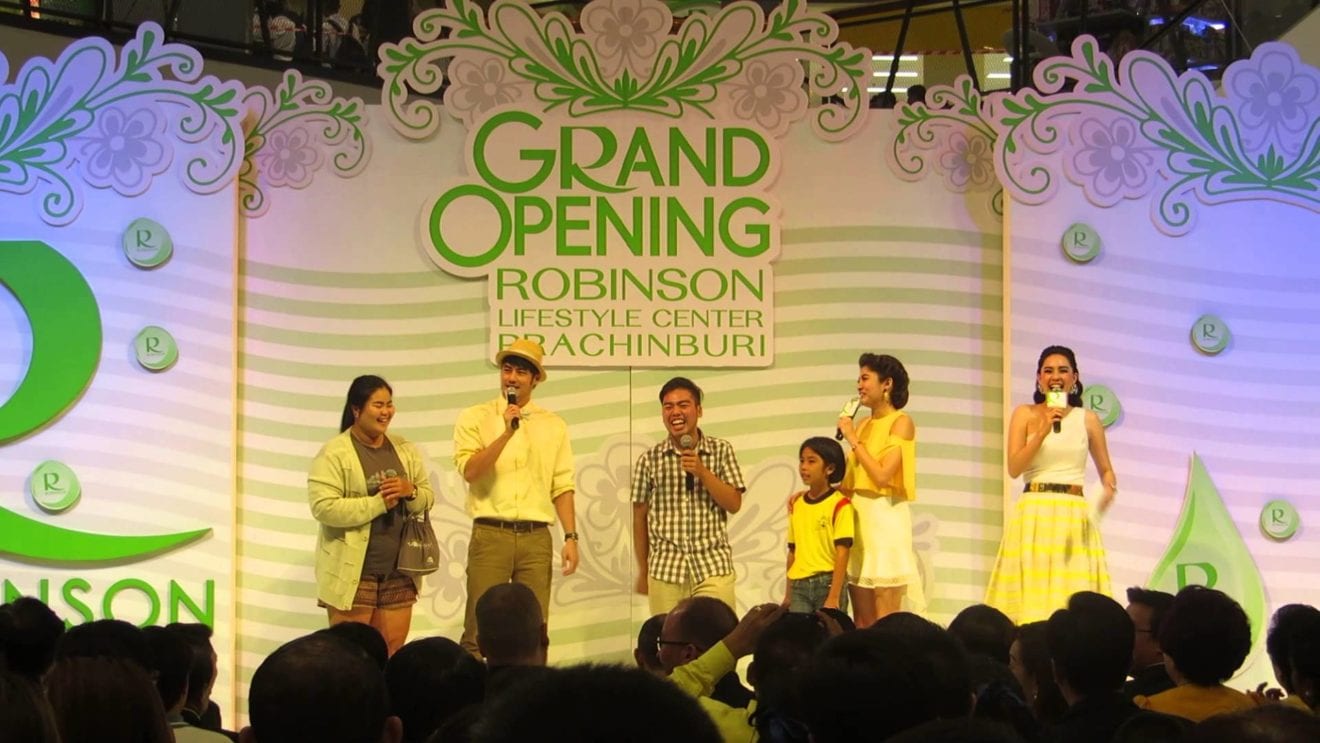
    The Central Retail Corporation subsidiary says it will open a new Lifestyle Centre at Mae Sot in the Tak province, on the border with Myanmar. It follows a similar store which opened in Mukdahan, on the border with Laos, last year.

    “These stores are being built to take greater advantage of cross-border trade,” CRC international business director, and Robinson president Alan Thomson said in an interview published in The Nation.

    “SEZ projects are good initiatives but will take time to develop and for us to realise any opportunities,” he said.

    CRC operates 42 department stores in Thailand; and two more in Vietnam – one in each of Ho Chi Minh City and Hanoi – which trade under the Robins brand name. Its 15 Lifestyle Centres are additional to those.

    In the interview, Thomson talks about the company’s performance in Vietnam to date, its plan to add a well known US apparel brand to its store-in-store brand portfolio next year and how the company is coping with the stagnant Thai economy.

  • Major Cineplex plans Laos rollout

    Major Cineplex plans Laos rollout

    Thai cinema chain Major Cineplex plans to have 30 screens in Laos within three years.

    Major Cineplex has entered the Laos market in a 60:40 joint venture with local partner Platinum Cineplex.

    With a population of 7 million, a growing economy and young population, the Thai company believes it offers strong opportunity to expand its business outside Thailand.

    “Laos is a growing area for the movie business with its young population,” Major Cineplex chairman Vicha Poolvaraluck said in an interview with The Nation this week.

    “The country is [also] attracting foreign investors, particularly from China, to erect a number of new projects including shopping malls, hotels and business centres.”

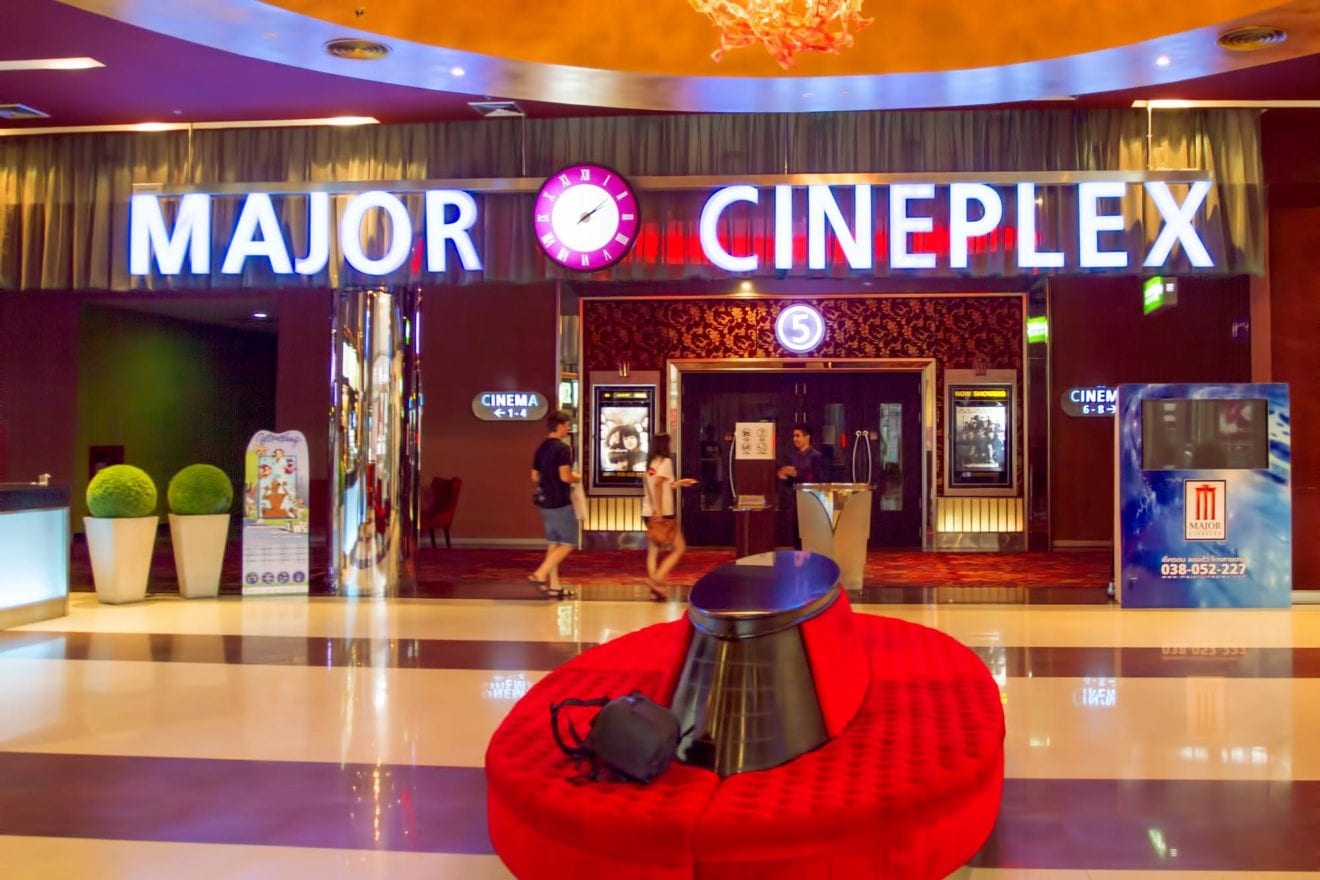
    Major Cineplex typically operates its multiplex cinemas as anchors of modern shopping malls. It has just opened its first five screen, 1148 seat facility in Vientiane Center an upmarket shopping centre developed in a partnership including China’s Huawei

    Vicha said his company expects to sell at least 500,000 tickets within the first year of operation.

    “Forty per cent of Vientiane’s 700,000 residents are aged between 10 to 35 years,” he added.

    Major Cineplex will open three more cinemas in Vientiane by 2018, one in the planned World Trade Centre and another in a development planned by Thai investors.

    Vicha says his company is also eyeing opportunities in Cambodia, Myanmar and Vietnam. It currently operates just one cinema outside Thailand – in the year old Aeon Mall in Phnom Penh, also in partnership with Platinum.

    He told The Nation he expects to have 100 screens outside Thailand by 2020, creating 10 per cent of the company’s revenue.

  • Duty free mall planned for Vientiane

    Duty free mall planned for Vientiane

    A consortium of Lao and Thai investors is building a shopping and hotel complex in Laos’ largest city, Vientiane as the two nations prepare for the new Asean Economic Community.

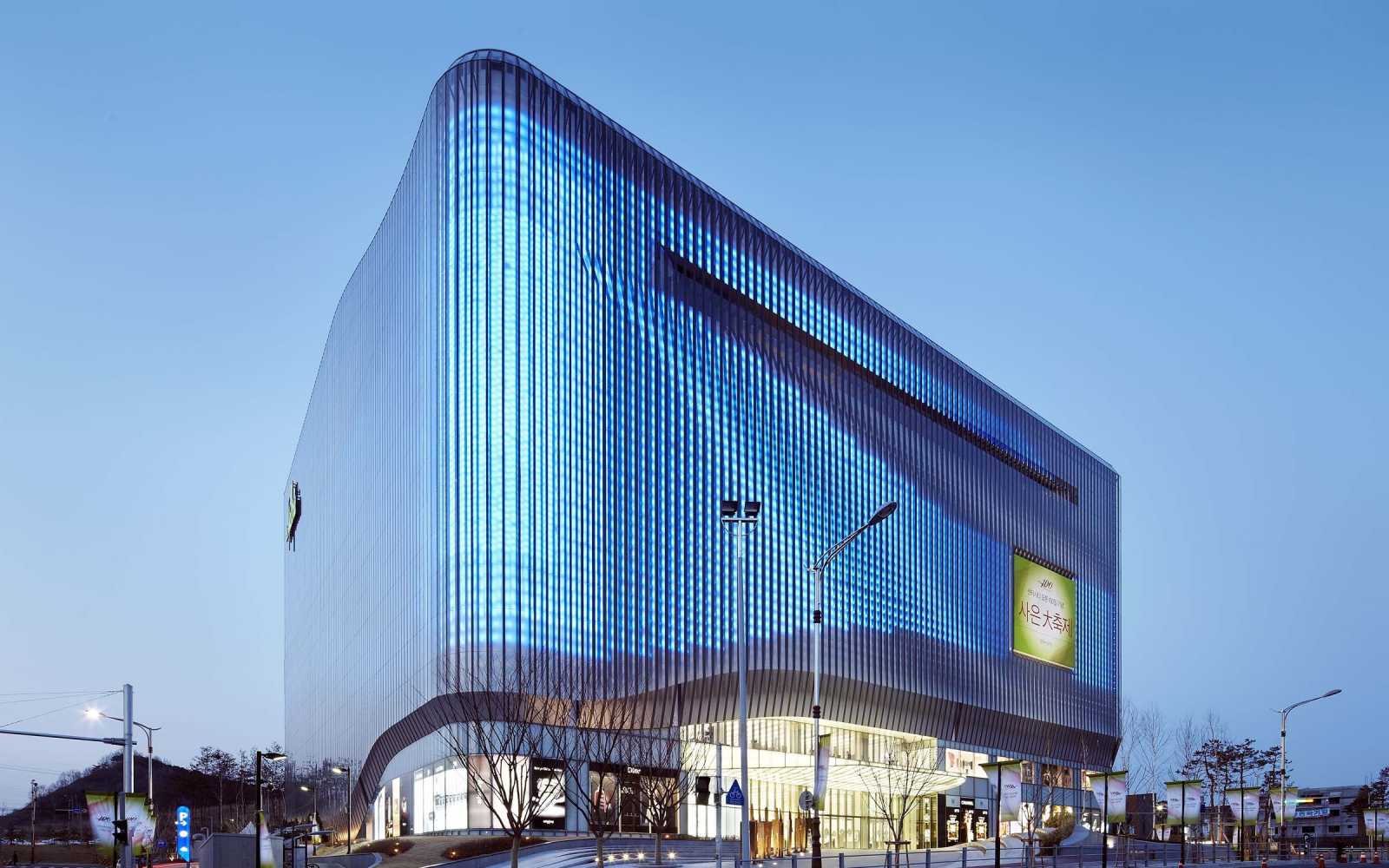
    The US$290 million project will be built on a 32 hectare site in downtown Vientiane. In the first stage a 37,000 sqm duty free mall will be built with tenancies for 200 brands.

    Stage two will include a larger shopping mall, a hotel, theme park and commercial buildings. A logistics and distribution centre is also planned.

    The first retail facility – to be called the Laos Duty Free Mall – is under construction already with an opening scheduled for February next year.

    Targeting Chinese, Thai and Lao shoppers, the centre is expected to draw about 10,000 customers a day.

    The project is being undertaken by BM Group, 51 per cent owned by Lao’s, including coffee and duty free business Dao-Heuang Group, and 49 per cent owned by Thai company Sayam International.

    BM Group is also planning four more duty free malls within four years in Laos: in Pakse, Vientiane, Savannakhet and Luang Prabang.