Tag: life

  • DHL Express Australia extends partnership with Surf Life Saving Australia

    DHL Express Australia extends partnership with Surf Life Saving Australia

    DHL Express remains committed to deliver safer beaches, by extending its partnership with Surf Life Saving Australia for another three years, till 2021. This year marks 15 years of continued support from DHL Express for Surf Life Saving Australia (SLSA). Since 2003, DHL Express has featured prominently on the uniforms of more than 42,000 surf lifesavers each patrolling season, alongside the iconic red and yellow flags that guide beach-goers to safe swimming zones.

    Gary Edstein, CEO and Senior Vice President at DHL Express Oceania said, “At DHL Express we are incredibly passionate about connecting people and improving lives – and we are proud to support Surf Life Saving Australia in doing exactly that for many years to come.”

    Graham Ford AM, President, Surf Life Saving Australia said, “On behalf of Surf Life Saving Australia I would like to thank DHL Express for their ongoing commitment and enthusiasm to the movement. As an organisation, we aim to form partnerships that echo our own values and vision for the future and indeed DHL Express do this, bringing to life the shared values of speed, passion and a can do attitude.”

    Since the establishment of the partnership there have been 2.2 million Surf Life Saving members, performing more than 14.4 million preventive actions and 180,000 rescues. In addition to surf lifesaving services, SLSA works to educate children and the greater community on coastal safety awareness.

    “From the beginning, our partnership has been built on a strong foundation of shared core values that make our missions a success. Surf lifesavers around Australia display the four key attributes our own DHL employees uphold – passion, speed, pride in getting things right first time and a can-do spirit. This, combined with Surf Life Saving’s advocacy for cultural diversity, collaboration and empowerment make a winning formula for success,” Edstein concluded.

  • Koda’s Profit Skyrockets

    Koda’s Profit Skyrockets

    Furniture specialist Koda has reported a near fourfold rise in net profit for its third quarter thanks to growing exports, and increased sales of its Commune brand.

    Revenue for the period grew 22.5 per cent to US$13.4 million, while net profit was $1.2 million.

    Earnings for the first nine months soared 60.4 per cent to $3.6 million, closing in on net profit of 4.05 million for the entire year to the end of June.

    Barring unforeseen circumstances, the group expects its performance to improve.

    “Our third-quarter net profit jumped by more than 260 per cent,” says Koda MD James Koh. “Our China expansion plans have also exceeded my expectations.”

    Commune CEO Joshua Koh says its plan to have 100 stores in China by 2020 is well on track. We are thankful to Enterprise Singapore and the Info-communications Media Development Authority for supporting our growth strategies.”

    Commune has 45 stores in China as well as outlets in Singapore, Malaysia and Australia.

  • Prudential appoints Aman Chowla as Thailand’s new CEO

    Prudential appoints Aman Chowla as Thailand’s new CEO

    Prudential Life Assurance (Thailand) Public Company Limited (PLT) has appointed Aman Chowla as Chief Executive Officer.

    Aman joined Prudential in 2011 and brings with him over 20 years of experience in financial services. He has worked in several markets across Asia including India, Singapore, Malaysia and now Thailand.

    Having held functional general Management & Transformation roles in his career, his last role was as the Chief Executive Officer of Prudential BSN Takaful BHD in Malaysia.

    “Thailand is a key market for Prudential in Asia. I am truly excited with the opportunities for growth, but more importantly to do our bit to bridge the protection gap and increase insurance penetration rates,” Aman said.

  • Bonus plan a win-win for customer and operator

    Bonus plan a win-win for customer and operator

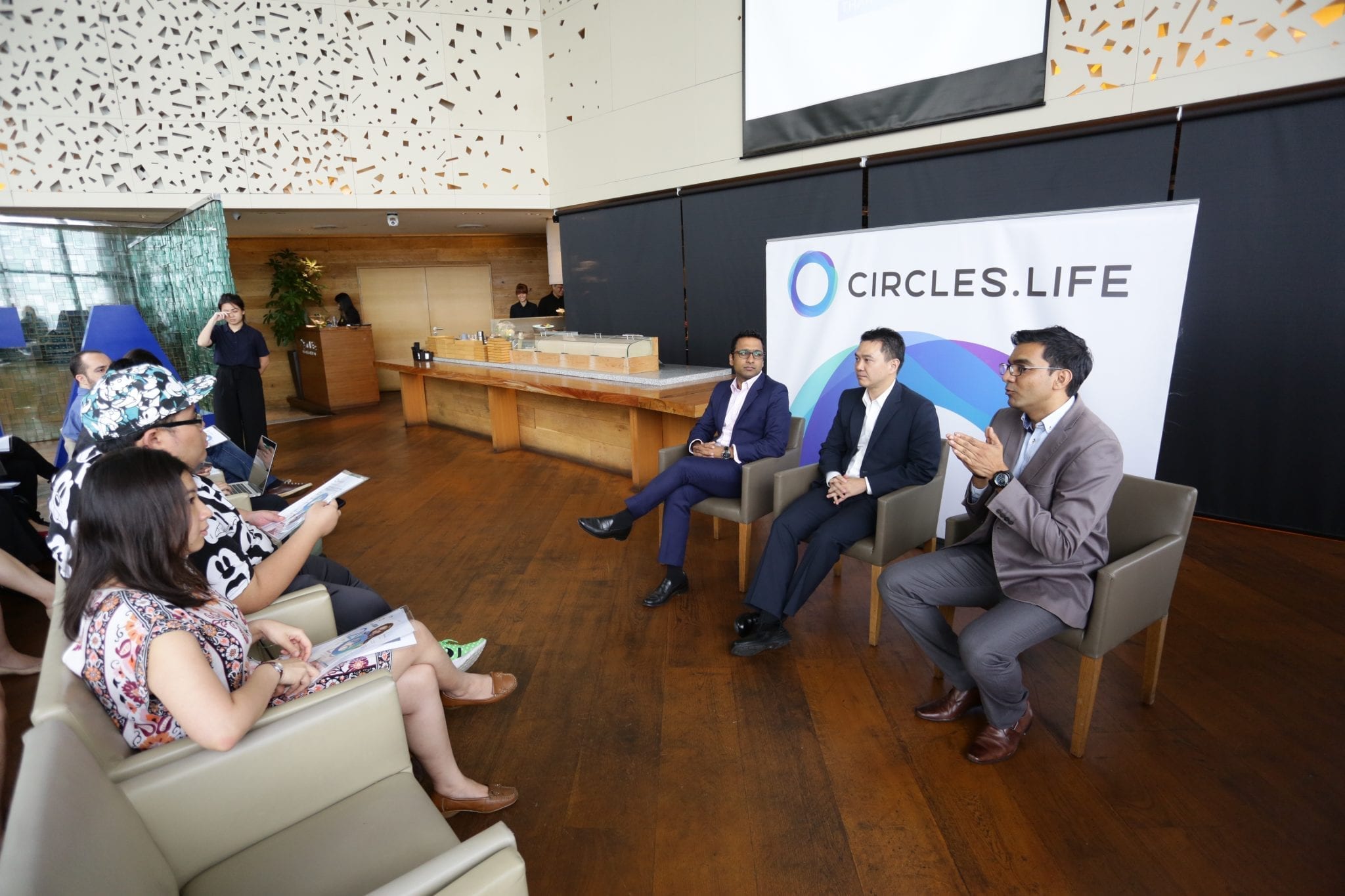
    n unnamed customer of new Singapore mobile operator Circles.Life likes the service so much that he has referred over 600 new customers, thus earning himself 100 GB of free data, said Donald Chan the firm’s international director.

    Chan outlined his company’s business model and strategy in a keynote on Day One of CommunicAsia2017 and included details of their data bonus plan-their cornerstone of customer retention.

    He described Circles.Life as Asia’s “first fully digital telco”–from customer acquisition to service delivery. Customers communicate with the company through their iOS-or-Android app, and 95% of queries are resolved via this channel.

    The only aspect of the experience which is not digital is SIM card delivery (via courier) to the customer two days after ordering.

    To drive retention, Circles has a bonus plan where customers who recruit new customers earn 200MB of data. The company maintains a leader board, and the current top rank is held by a customer who has recruited 600 others.

    Circles has no contracts-customers for the post-paid service engage on a month-to-month basis.

    The pricing plan, said Donald Chan, is like “buying a pizza” and deciding on the toppings later.

    The base plan is S$28 per month with 4GB of data, with up to 20GB of extra data for S$20 per month.

    Customers can go into the Circles app and determine settings on voice and data use, alerts and caps.

    Chan said Circles, which uses the M1 network in Singapore, was a “niche player” designed to appeal to “tech-savvy younger consumers who want control and flexibility.”

    He said the company was looking to expand to “three-to-five” other regional markets in the next five years.

    Circle’s proprietary operating system, which is “plug-and-play,” is easy to connect to any other MNO, limiting the cost of starting up in new markets.

  • Vietnam’s life insurance market faces challenges

    Vietnam’s life insurance market faces challenges

    Twenty-four-year-old Ms. Trinh Van Anh, the manager of an international school in Hanoi, does not have a life insurance policy and hasn’t thought about getting one, even though her monthly salary of $1,000 is higher than most of her peers.

    “No one recommends I take out a policy,” she said. “No one knows what life insurance covers, what it gives the policyholder, or what the benefits are.”

    Like Ms. Anh, many other Vietnamese people remain confused about what life insurance can actually bring.

    Even though premiums in Vietnam are on track for yet another record year, the gains are coming from a very low base and foreign insurers have yet to truly crack the market despite dominating.

    It should take only a few more years, though, for them to make more substantial headway.

    Foreign insurers’ playground

    2016 continued to see robust growth in Vietnam’s insurance market, with the life insurance segment reaching a ten-year high.

    Insurance premiums totaled around VND86.6 trillion ($3.8 billion), representing an increase of 22.74 per cent against 2015.

    Total revenue in life insurance was over VND49.2 trillion ($2.2 billion), an increase of 30.5 per cent, while revenue in non-life insurance was VND36.4 trillion ($1.6 billion), up nearly 12.5 per cent, according to data from the Insurance Supervisory Authority (ISA) under the Ministry of Finance (MoF).

    Eighteen life insurers are competing fiercely in the market. Eight of the 18 increased their charter capital in 2016 to improve financial capacity during expansion and business development.

    Manulife Vietnam, for example, raised its charter capital to VND1.82 trillion ($80 million), while Chubb Life Vietnam increased its by VND150 billion ($6.5 million) to more than VND1.55 trillion ($69.5 million).

    According to an assessment from Vietnam Report, among the five largest life insurers, which hold 86 per cent of the market share, are four foreign companies and only one domestic company, Bao Viet Life, which has a foreign strategic shareholder, Sumitomo Life from Japan.

    Prudential Vietnam leads the life insurance market with a share of 29.9 per cent, followed by Bao Viet Life with 25.7 per cent, Manulife 12.1 per cent, AIA Vietnam 9.2 per cent, Dai-ichi Vietnam 9.1 per cent, Chubb Life Vietnam 4.4 per cent, and PVI Sun Life 2.3 per cent.

    The remainder share 7 per cent. The five largest life insurers are believed to have posted premium revenue of VND5.8 trillion ($254.7 million) in the opening two months of this year, an increase of 30 per cent year-on-year and accounting for 80 per cent of all revenue, according to the ISA.

    Due to market regulations, it is impossible to compete in Vietnam’s life insurance market solely by premiums.

    All products are subject to close scrutiny from the MoF before being launched and premium levels are set.

    There is no way to cut premiums to attract buyers, and players must instead compete in service quality or the provision of value-added packages.

    All life insurers have headquarters in Hanoi in the north and Ho Chi Minh City in the south, with most also having branches and representative offices in major cities and provinces.

    Dai-ichi has 53 branches and representative offices, Manulife Vietnam 22, Prudential Vietnam 21, and AIA 14.

    Bao Viet Life remains the only player to cover all 63 cities and provinces in the country. Most companies over the last ten to 15 years started with agencies and this represents about 90 to 95 per cent of the industry in Vietnam today, with ISA’s figures showing there are currently some 1,000 representative offices and general insurance agencies of life insurers nationwide.

    Besides traditional sales methods, life insurers have also started partnering with commercial banks to increase sales and promote products.

    The sluggishness in the bancassurance market in Vietnam over the last few years can be attributed to a lack of service and low awareness among customers about the benefits of bancassurance products, with it only contributing 2 per cent to total turnover.

    Still, analysts believe that the channel holds great potential, with some 35 commercial banks and financial institutions now cooperating with insurers.

    Impediments remain

    “The penetration rate of life insurance, usually measured as the number of individuals who actually own life insurance, is still low in Vietnam relative to other Southeast Asian countries,” Mr. Steve Clark, Country Head of Prudential Vietnam, told VET.

    Average insurance premiums stand at only $30 in Vietnam, much lower than the global average of $595 and $74 in Southeast Asia.

    Only 7 per cent of Vietnam’s 90+ million people have life insurance and the sector contributes a modest 2 per cent to GDP, compared with more than 2.6 per cent in Indonesia and 11-14 per cent in South Korea and Singapore.

    The obstacles are many. According to Mr. Phung Quoc Khanh, Director of the ISA, awareness among Vietnamese people about life insurance may have increased but most still don’t think it’s worth it.

    Almost all Vietnamese people are wary or believe it unnecessary to buy insurance because they don’t have a thorough understanding of its importance.

    Life insurance products usually involve a long contract term, so many customers are concerned about their ongoing financial capacity.

    At the same time, doubts about foreign life insurers’ commitment to permanent operations in Vietnam add to the low penetration rate.

    Many potential Vietnamese consumers still see insurance as an investment rather than a device to share financial losses caused by poor fortune.

    They prefer bank savings or investing in gold or real estate, where they earn a higher rate of return, than buying insurance.

    The low penetration rate also comes from the fact that life insurers have only focused their operations in big cities while overlooking the 70 per cent of the population that still live in rural areas.

    They are also still separating themselves from the general activities of the sector, missing out on promotional opportunities and not playing a role in trying to increase awareness.

    “Life insurers have only focused on building their brand and image and not on activities to promote basic insurance knowledge,” Mr. Khanh said.

    While life insurers focus on implementing their own strategies to gain more market share and sign up more customers, their ambitious plans may fail due to problems relating to human resources.

    The rising number of insurance companies in recent years along with a lack of quality insurance training has created a serious shortage of skilled human resources for the sector.

    This has led to unfair competition in attracting experienced employees and insurance agents, one insider said.

    While acknowledging the increasing number of life insurance products, Mr. Khanh believes that these are mainly for high-income earners.

    Lower premiums to mid and low-income earners are yet to be introduced, even though they are the majority of the population and are vulnerable to financial incidents.

    Potential enormous

    The penetration rate may well change soon, however.

    An emerging middle class with more money to spend and a desire to spend that money to improve their lifestyles are driving a lot of activity in Vietnam.

    The young middle class and rising wages all round are creating demand for consumer products, credit, and investment.

    Soon enough, they will turn to life insurance products, with health now being one of the leading concerns among Vietnamese people, according to a February report released by global market researchers Nielsen.

    According to the ISA, life insurers have mainly focused on three of the seven life insurance products in Vietnam: term life insurance, endowment insurance, and universal life insurance.

    This again presents opportunities for others in unit linked and pension insurance products, which can meet the differing requirements of customers.

    With Vietnam’s stock market now being increasingly stable, the possibility exists for the creation of hybrid products, using an asset-based approach to funding long-term care.

    With Vietnam now participating in a host of free trade agreements (FTAs) and bilateral agreements, demand for life insurance is set to be boosted by the growing number of expats in the country.

    The arrival of foreign firms seeking to take advantage of preferential policies is also expected to boost demand for goods and services related to property, social security, and health coverage, among others, generating knock-on opportunities for insurers.

    A strengthened economy and new innovations from continued FDI should also impact positively on household confidence and future demand for insurance products, according to Mr. Phung Dac Loc, former Secretary General of Vietnam Insurance Association  (AVI).

    In a move to facilitate the growth of the insurance sector in general and life insurance in particular, Decree No.73 came into force on July 1, 2016, prescribing new regulations on the licensing, organization, and operations of financial institutions, with specific regulations on investment portfolios and ratio and reserves.

    This requires that life insurers consider investment strategies to ensure customer benefits together with risk management and liquidation, which hint at greater competitiveness.

    Key regional players already eye Vietnam as a potential avenue for growth.

    The Hong Kong-based FWD Group, for example, which has operations in Macau, Thailand, Indonesia and the Philippines, broke into Vietnam in November last year.

    South Korea’s Samsung has also expressed an interest in expanding its footprint in the life segment. Last September, General Director of Samsung Vietnam Mr. Han Myoung Sup told the Ministry of Information and Communications that two local units, Samsung Life Insurance and Samsung Fire and Marine Insurance, were currently exploring investment plans.

    Mr. Wilfred Blackburn, CEO of Prudential Vietnam, believes that Vietnam’s life insurance market is far from saturated. In fact, he believes there is still time for new companies to enter the country.

    “The life insurance market wants new players that are able to grow and bring a fresh approach to the industry,” he said.

    “This also requires that current players be more dynamic and innovative to expand the scope of the market.”


  • Indonesia faces increasing senior-citizen population

    Indonesia faces increasing senior-citizen population

    Indonesia is facing the problem of a growing number of elderly people who are expected to reach over 32 million in the next two decades.

    Indonesia’s elderly in 2010 was 4.9 percent of the population, or 11,878,236 people. This number is projected to increase to 10.8 percent, or 32,112,361 people in 2035.

    Senior researcher Sukamdi of the Center for Population and Policy Studies (PSKK) of the Gadjah Mada University (UGM) said the country is actually going to face a big problem.

    “The same issue also occurs in other countries such as Japan. However, there is no awareness of the fact we have a big problem with the elderly. In my view, Indonesia has not shown a sufficient response to the problem of the elderly,” Sukamdi said on the UGM campus on Saturday.

    The data at the UGMs PSSK on Indonesias Population projections from 2010 to 2035 indicate the percentage of the elderly population will increase to 100 percent, he said.

    The postproductive age group or age older than 65 years, has now become an important issue because it could become a potential or expense in the human life cycle as a whole, according to him.

    “If in the current productive age a person, he or she, is capable of saving, then when he or she becomes older or no longer productive in terms of the economic aspect, he or she will not become a burden to the state,” he said.

    Anyone being old or being elderly will face three gaps, he said.

    First, the geographical gap, namely, the relationship or the physical encounters between parents and children, will be increasingly rare, he said.

    Second, the cultural gap, namely, the differences in perspectives and values between parents and children.

    Third is the economic gap.

    “The third gap is being faced increasingly by the elderly. We heard the news yesterday, that in Condong Catur there was an elderly person who died but it was only five days later that the family and neighbors came to know. This is just one example, but in fact there have been several similar cases,” Sukamdi said.

    Regarding the elderly, the Office of the High Commissioner for Human Rights strives to ensure that neglected population groups are given space and weight in the human-rights agenda, and that governments take all measures required to protect and promote their human rights.

    The Indonesian government, through the Ministry of Social Affairs, has prepared the Assistance for the Elderly but for the time being it has reached only 30,000 neglected elderly.

    In November 2016 the assistance will reach 125,000 neglected elderly over 70 years by involving them in the Family Hope Program (PKH) in order to receive 200,000 rupec per month, each.

    With the Family Hope Program, the social affairs minister says the government will reach 155,000 needy elderly, although the number is still far from the overall number of neglected elderly.

    Currently, the overall number of neglected elderly is recorded at 1.8 million, and 1.6 million of whom are potentially displaced in the face of the demographic bonus, expected to lead to a positive impact on economic development and progress in the field of agriculture and industry.

    In the meantime, all Asean member countries are facing the same social issues related to the social welfare of children, the elderly and persons with disabilities.

    “The Asean countries, including Indonesia, are dealing with issues connected to the protection of children, elderly and disabled,” Social Affairs Minister Khofifah Indar Parawansa said at the ninth Asean Regional Meeting on Development and Social Welfare in Jakarta late last month.

    Earlier, Khofifah, along with several of her counterparts from the Asean countries and China, Japan and South Korea, discussed many such social problems.

    The minister said the Asean countries are facing a variety of issues related to children, including the problem of online pornography. A proposal to stem this problem has been initiated Malaysia with a proposal.

    “There was a recommendation at a meeting about children held last June in Vietnam. Many countries are facing such problems, as also those related to protection of abandoned children,” Khofifah noted.

    She said inputs given by Asean and three Asian countries which participated in the meeting emphasized the importance of checking child trafficking and ensuring childrens education, including quality standards in early childhood education and parenting.

    Most Asean countries will have a large number of the elderly people, and, therefore, should take measures to facilitate them in their daily life, especially those who are active and productive.

    “Some programs have been carried out well in Japan, China and South Korea and will be a basis to strengthen cooperation among the Asean and the three countries on the issue,” the minister concluded.

  • LANDBANK introduces mobile lending for medicines

    LANDBANK introduces mobile lending for medicines

    The Land Bank of the Philippines (LANDBANK) has introduced a new mobile lending program for the purchase of essential drugs.

    LANDBANK, a  government financial institution, has teamed up with branded generic drugs company RiteMed to expand the use of its electronic salary loans program.

    The LANDBANK Mobile Loan Saver (LMLS) launched in September 2014 and has since gained a large following among government employees, farmers and fishers, small and medium enterprises, overseas Filipinos and private sector employees.

    Under LMLS, customers can easily apply for a loan using their mobile phone and get quick credit decision from LANDBANK regarding their application. As of August 2016, total loans released under LMLS amounted to over 12 billion pesos.

    The RiteMed partnership will allow loan borrowers to allocate a portion of their approved net loan proceeds for the purchase of medicines. RiteMed will also make available a range of maintenance medicines at discounted prices.

    Medicines ordered via LMLS will be delivered for free in sealed packs to the concerned government agency or company office where the borrower is employed, within a week from the time of loan approval and release.

    “We understand the financial burden of high medicine costs on many Filipinos, which is why through this initiative, we hope to provide LMLS borrowers with access to affordable and quality medicines. This is yet another showcase of the endless possibilities in terms of financial technology and digital lending, especially as we hope to reach out and provide financial and other services to more Filipinos across the country,” said LANDBANK Officer-in-Charge and Executive Vice President Cecilia C. Borromeo.

    Started as an initiative in response to the Philippine government’s call for private companies to reduce the prices of essential drugs, RiteMed started manufacturing and marketing 20 off-patent, low-cost essential drugs that were 20% to 70% cheaper than their equivalent counterparts in 2002.

    Today, its product has grown to include almost 200 medicines for diabetes, hypertension, high cholesterol, infection, pain, kidney, gastro-intestinal, asthma and allergy, cough and colds and vitamins.

    Vincent Patrick Guerrero, general manager of RiteMed, said in a media statement that the company is optimistic that with the technology behind LMLS and the nationwide network of LANDBANK, they would be able to fulfill the objective of RiteMed to provide access to quality healthcare for all Filipinos.

  • Manulife in upbeat mood after first half surge

    Manulife in upbeat mood after first half surge

    Manulife Indonesia president director and chief executive officer (CEO) Indren S. Naidoo (right) and Manulife Aset Manajemen Indonesia chief economist and investment strategist Katarina Setiawan talk on the sidelines of a press briefing in Jakarta on Wednesday.

    Despite the country’s weak economy, life insurer Manulife Indonesia enjoyed a sharp increase in new business premiums during the first semester of the year on the back of surging wealth and insurance sales.

    Its total new business premiums soared by 28 percent year-on-year (yoy) to Rp 1.8 trillion (US$135 million) in the first semester, according to Manulife’s unaudited financial results for the first semester of 2016.

    During the January and June period, Manulife’s wealth sales rose 27 percent yoy to Rp 1 trillion from
    Rp 785 billion, while its insurance sales increased 17 percent yoy to Rp 764 billion from the corresponding period in 2015.

    As of June, Manulife’s total premium and deposits amounted to Rp 9.1 trillion, a 12 percent hike from Rp 8.1 trillion recorded in the same month last year. The number of the company’s in-force policies, meanwhile, grew steadily to 2,297,305 from 2,250,210 recorded in June last year.

    “We are confident that our business will book positive growth over this year,” Manulife’s newly appointed president director and chief executive officer Indren S. Naidoo told a press briefing on Wednesday.

    Indren, who assumed his position in May, said he was optimistic that the company could tap into the growing insurance market in Indonesia, which is the most populous country in Southeast Asia, but has low insurance penetration.

    Indonesia’s economy expanded an annual 4.92 percent in the January-March quarter, below analysts’ expectation of 5.05 percent. Growth weakened for the fifth straight year in 2015, to 4.8 percent, amid poor commodity prices and contracting exports.

    Financial Services Authority (OJK) data showed that conventional insurance premiums accounted for just 2.37 percent of the country’s gross domestic product (GDP) during the first quarter of the year. Life insurance penetration rates, meanwhile, reached 0.93 percent of the GDP in the January-March period.

    “Compared to some other markets in Asia, we are actually quite low. So, the opportunity is there,” said Indren, who previously assumed CEO positions at Manulife units in the Philippines, Thailand, Vietnam and Cambodia prior to his current position.

    Indren said Manulife would continue to expand its unit-linked products, which have become the main driver of the company’s business growth.

    The contribution of Manulife’s unit-linked products, which combine insurance and investment products such as government bonds and stocks, “was close to 80 percent of our business”, Indren said, explaining that the insurer would continue to promote the instrument as customers still expected double-digit returns on their investment amid the downward trend in banks’ deposit interest rate.

    In the first half of the year, Manulife launched unit-linked product Mi Wealth Insurance to further boost its investment-linked insurance products.

    He expressed his optimism that the burgeoning middle-income segment in the country, expected to reach 100 million of people by 2020, would be a boon for Manulife’s unit-linked products, which are aimed to higher-end customers.

    The CEO said Manulife would continuously educate potential customers on life insurance, as well as its unit-linked instruments by leveraging its 8,000 agents in 25 branches across the country and its bankassurance service, for which the insurer has forged partnerships with three lenders in the country: DBS, Bank Danamon and sharia-based Bank Muamalat.

    “We are here not to sell, but to teach [the customers]. At the end of the day, you, as a customer, will make the decision [on whether to buy Manulife’s products],” Indren said.

  • Khiri Travel the first to earn Travelife Partner status in Indonesia and Laos

    Khiri Travel the first to earn Travelife Partner status in Indonesia and Laos

    Travelife is a leading training, management and certification initiative for tourism companies that are committed to sustainability. Travelife was founded with the support of ABTA in the UK and ANVR in the Netherlands in 2007 as a thorough responsible tourism certification scheme for tour operators and hotels.

    Khiri Travel in Indonesia and Laos have both been awarded Travelife Partner status following a major social and environmental audit. Khiri Travel is the first in both Indonesia and Laos to earn Travelife Partner status.

    Travelife certification for tour operators and travel agents comes in three rising stages: Engaged, Partner, and Certified. Khiri Travel Indonesia and Laos are two-thirds of the way to full certification. Khiri Travel Myanmar, Thailand and Vietnam achieved full Travelife Certification in 2015.

    Travelife is a leading training, management and certification initiative for tourism companies that are committed to sustainability. Travelife was founded with the support of ABTA in the UK and ANVR in the Netherlands in 2007 as a thorough responsible tourism certification scheme for tour operators and hotels.

    Richard Brouwer, CEO of Khiri Travel, said: “Travelife Partner status shows a great pioneering spirit and dedication by the Khiri teams in Indonesia and Laos. Khiri Travel is committed to measurable sustainability because it boosts customer satisfaction, staff motivation and business efficiency. Khiri Laos and Indonesia will keep working towards full Travelife Certification.”

    Naut Kusters, General Manager for Tour Operators and Travel Agents for Travelife said: “Khiri Travel in Indonesia and Laos are on the right path. Sustainability management is about commitment and consistent sustainable business practices. This includes a tour operator’s products, how they monitor and manage their impacts, and how they support their suppliers on their road to sustainability. I expect that the lead of Khiri will be an incentive for other companies to join the route towards sustainability.”

    The three-stage Travelife process acknowledges OECD corporate social responsibility guidelines including labor conditions, human rights, environmental responsibilities, biodiversity and fair business practices.

    The Travelife standard for tour operators is also formally recognized by the UN-supported Global Sustainable Tourism Criteria (GSTC).