Tag: life

  • Samsung is still top smartphone producer

    Samsung is still top smartphone producer

    Samsung Electronics managed to retain its position as the No. 1 smartphone maker in the world in the third quarter, but it may have a fight on its hands in the fourth quarter as Apple is expected to lower prices and increase production, according to a recent report from TrendForce.

    The report said Samsung was the top smartphone vendor in the third quarter with quarterly shipments of 74.5 million units, or almost 20 percent of the market.

    “While Samsung grew its sales by releasing its flagship Galaxy Note 9 ahead of schedule, the device was not a significant upgrade from last year’s Note 8 and made limited contribution to the brand’s total volume in Q3,” said the report.

    The Galaxy J series, on the other hand, was still instrumental in sustaining the brand’s overall production, the report noted. Samsung has also been promoting the Galaxy A devices, emphasizing their improved cost-to-performance ratios and cameras since the beginning of the fourth quarter.

    In the fourth quarter, however, iPhone production is estimated to reach around 76 million units, which would see it surpass Huawei and compete with Samsung for the top position, the report noted. Samsung’s volume in the last quarter is estimated to reach around 75 million units, in line with the company’s target for the period.

    Huawei was the world’s second largest smartphone producer in the third quarter, beating Apple for the second consecutive quarter. The firm’s production volume stood at a new high of 55.5 million units. iPhone production for the third quarter totaled 47.1 million units.

    “Huawei’s in-house research and development capabilities and extensive product lines across all market segments have benefitted its expansions in overseas markets during the recent years,” the report said.

  • Vietnamese government will share risks with startups, PM assures

    Vietnamese government will share risks with startups, PM assures

    The Vietnamese government is willing to make changes in regulations to facilitate timely funding of startups, Prime Minister Nguyen Xuan Phuc said. Addressing at the Youth Startups Forum 2018 in Hanoi on Thursday, he acknowledged the challenges that Vietnamese startups have highlighted, saying that it is the task of authorities to find a breakthrough solution for creative entrepreneurs to start and run a business.

    He asked the Ministry of Planning and Investment, the Ministry of Science and Technology, the Ministry of Finance and the State Bank of Vietnam to create more favorable conditions for startups by making changes in the legal framework.

    “We need a breakthrough innovation in policies from government bodies to help startups succeed with their ideas,” he told the forum, which attracted 300 entrepreneurs from across the country.

    The government is willing to share a part of the risks with startups, the PM added.

    He asked relevant ministries and other agencies to report in detail next month on the solutions they have identified for the problems that industry insiders have highlighted.

    Vietnam has seen an increasing number of startups in recent years. The country’s speed of startup development ranks third among ASEAN members. But regulatory obstructions are hindering their ability to attract funds they need to establish themselves and thrive in the market, entrepreneurs said at the forum.

    Thach Le Anh, founder of Vietnam Silicon Valley, a government-backed organization aiming to stimulate the growth of startups, said that angel investors are reluctant to invest due to a lack of incentives in tax and policies. Angel investors are people who inject money into a new business in the early stage.

    The early financial support is crucial for a startup to succeed, Anh said.

    Nguyen Manh Dung, a representative of the investment fund CyberAgent Veuntures in Vietnam, also said that many investors want to invest in Vietnam’s startups, as larger markets like the U.S., Japan and China require bigger capital and fewer opportunities.

    Investors are also reluctant about later stage investments, when profits can be extracted, because of slow administration procedures, he said.

    Disbursement procedures in Vietnam could take from six months to a year while the very nature of startups is that they need to act fast, he added.

    Dung also said that divestment was one the main concerns that investors have.

    “These challenges take opportunities away from startups,” he said.

    Dam Quang Thang, CEO of AgriTech Village, a company which assists local startups in agriculture, said that although startups often use new technological solutions, they have to go through a traditional testing method, which is more time consuming than it should be.

    A representative of Vietinbank, Vietnam’s fourth-biggest listed bank by market capitalization, said tight bidding procedures and long financial checks were preventing the bank from investing in a tech startup.

    “Startups struggle to sell their products to investors as they have to go through the traditional process. There must be a better way for them to sell their new solutions,” the representative said.

    Last year, Vietnamese startups received $300 million in investments in 92 different deals, according to startup accelerator program Topica Founder Institute (TFI).

  • Asiana Korea upgrades the system that monitors flight safety

    Asiana Korea upgrades the system that monitors flight safety

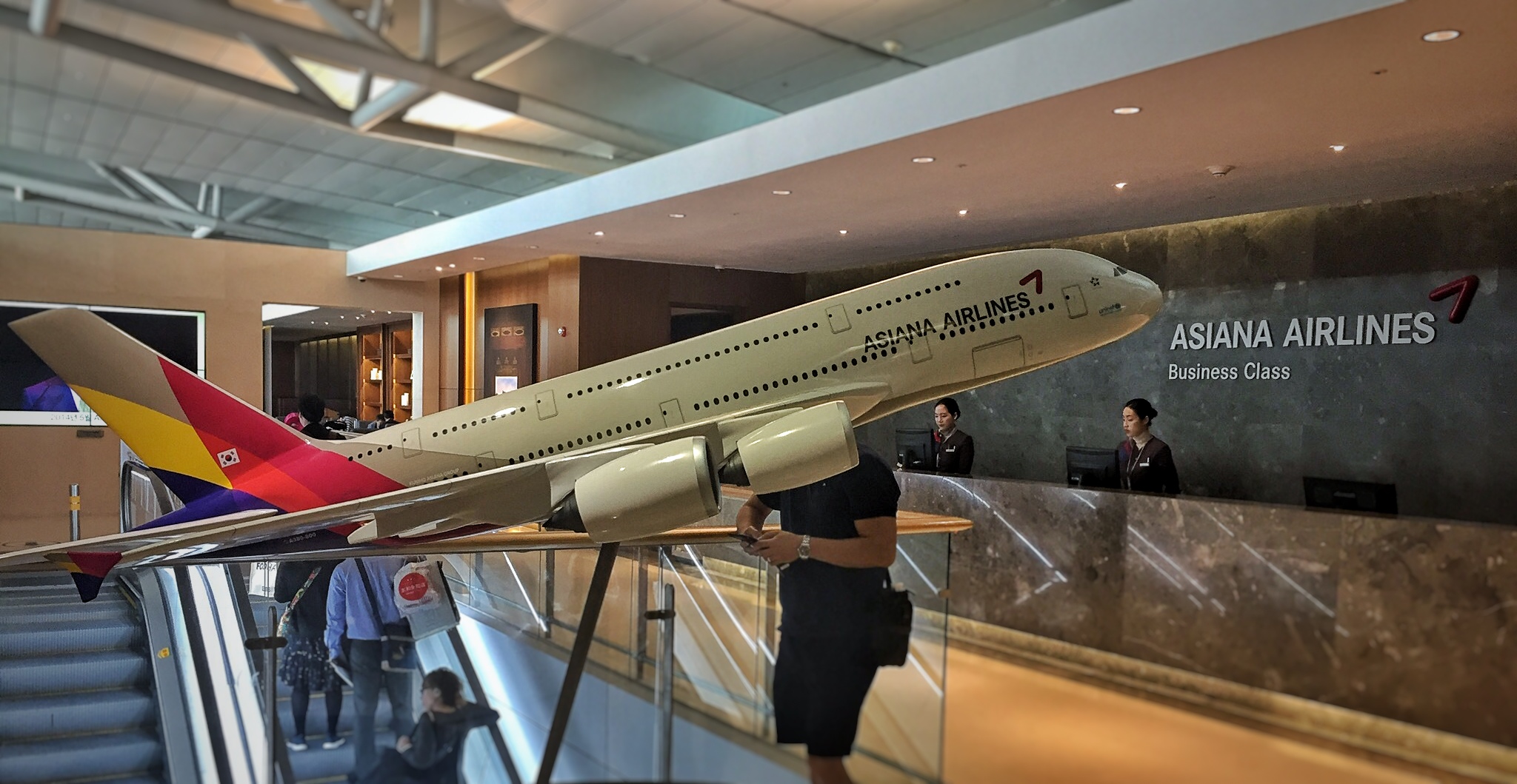
    Asiana Airlines completed an upgrade of its flight operational quality assurance system on Friday. The system analyzes data related to flight operations including piloting decisions during unexpected weather conditions and plane speeds or flying altitudes on certain flight routes.

    It was first implemented in 1995 to ensure safety in flight operations and, since 2015, a committee consisting of eight representatives from both the corporate and labor union has been holding monthly meetings to find potential risks in flight operations based on the data.

    Asiana said the upgrade enables the company to collect and analyze all data on flight operations while the previous system only allowed the company to analyze unusual sets of data. This way, the airline can monitor each pilot’s operational habits and provide more detailed feedback to them.

    The airline is also preparing to launch a so-called Asiana Flight Review Assistance System by 2019 in partnership with its IT service affiliate Asiana IDT to further enhance safety in flight operations. This system will help the company manage all analysis on flight operations using big data technology.

  • Tiffany & Co sales soars, China shines

    Tiffany & Co sales soars, China shines

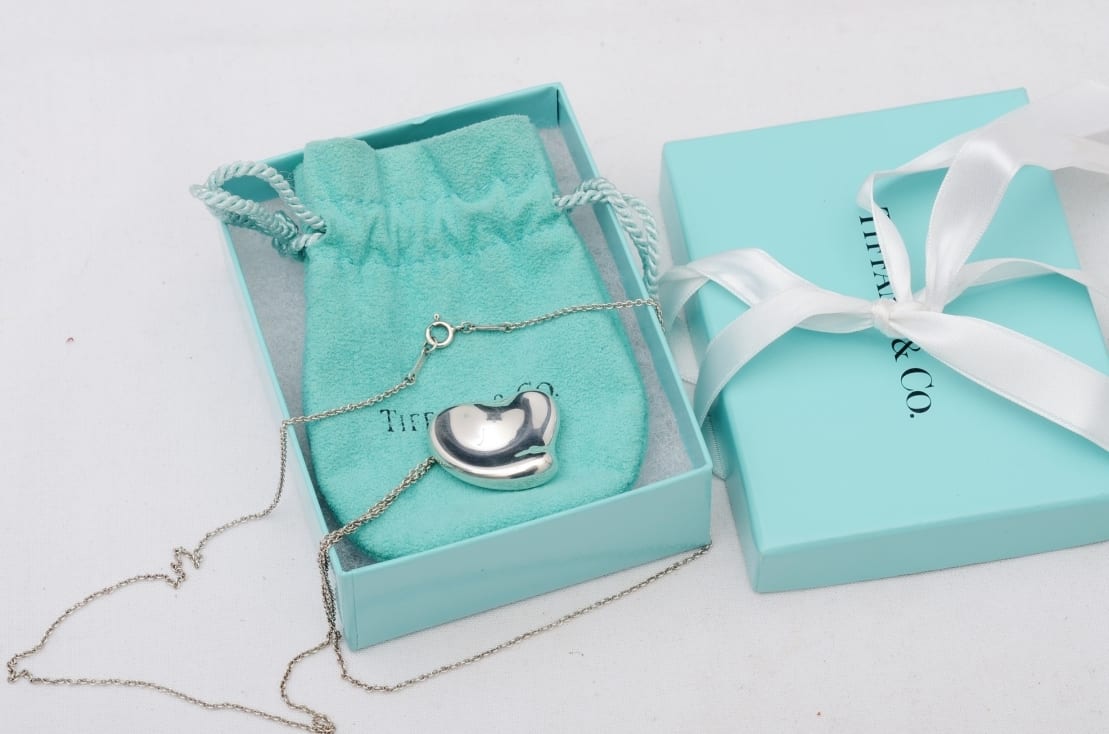
    Tiffany & Co sales grew 10 per cent worldwide in the third quarter, with China performing strongly. Management of the luxury American jewellery retailer attributed sales growth to higher spending by local customers in all regions, partly offset by lower spending attributed to foreign tourists, primarily Chinese, in some markets. Worldwide net sales rose 10 per cent to US$3.1 billion, due to increased sales in all regions and product categories.

    Tiffany & Co sales in Asia-Pacific rose 4 per cent to $294 million in the third quarter, highlighted by strong sales growth in Mainland China.

    CEO Alessandro Bogliolo noted that third-quarter sales attributed to local customers (as opposed to tourists) continued to grow at a strong rate worldwide and were positive in every region, with particularly strong growth in Mainland China.

    “Jewellery volumes also increased in the quarter and year to date. This resulted in mid to single digit net sales growth in the quarter and even higher growth year to date, despite lower-than-expected spending in the third quarter attributed to Chinese tourists in the US and Hong Kong and lower wholesale travel-retail sales in Korea.”

    The increase in sales was counterbalanced by a drop in operating income of 22.9 per cent over the past year, attributed to higher spending on marketing, and investment in technology and its new digital channel.

    Neil Saunders, MD of GlobalData Retail, said his company’s consumer tracking shows that Tiffany’s brand recognition and affinity has increased sharply among consumers aged 35 and under.

    “A few years ago, this group was largely apathetic to Tiffany, viewing the brand as old-fashioned and irrelevant to their needs and tastes. In a relatively short space of time, Tiffany has started to shift that perception and demonstrate that it has something fresh to offer to younger consumers.”

  • Marks & Spencer concept store opens in VivoCity Singapore

    Marks & Spencer concept store opens in VivoCity Singapore

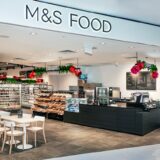
    Marks & Spencer Singapore has opened a full-scale concept store in VivoCity bringing a vast array of its own-brand fresh foods and beverages to the city, some for the first time. The 15,500sqft store offers a broader range of fashion, a new food hall and fresh zone similar to the style of larger Marks & Spencer Hong Kong stores, a broader range of wines and the chain’s third coffee-to-go cafe in the city.

    The foodhall features nearly 3000 products selected from the UK department store’s range building on what the retailer describes as a growing demand in Singapore for M&S’s convenience food.

    Marks & Spencer Singapore has added a range of chilled foods and beverages, including perishables. The new store sells fruits, vegetables, yogurts, a selection of cheeses, fresh milk and ready-made salads and meals. Some products are new-to-market for the brand, including raw meat and pre-packed sandwiches, all air freighted from the UK daily.


    The coffee-to-go cafe offers speciality coffee and beverages along with patisserie foods including cakes and fresh pastry. An in-store bakery produces a selection of breads, scones and cookies daily.

    Fashion has not been left out in the VivoCity store’s revamp. Each fashion label is now clearly segmented, with distinct identities that allow customers to see which label best meets their personal style preferences. The brands are identified by different branding, visual merchandising and props. The VivoCity store will also be the sixth Marks & Spencer Singapore outlet to stock a kidswear range.

    “Customers are at the heart of everything we do at Marks & Spencer and we’re delighted to be bringing our exciting new shopping experience to customers in Singapore,” said Christine Choi, CEO at Marks & Spencer Asia.

    “Combining the best of our latest collections, together with our inspiring store environment and exceptional customer service, our store at VivoCity is truly special.”

  • Alcis Sports opens its two new stores in India

    Alcis Sports opens its two new stores in India

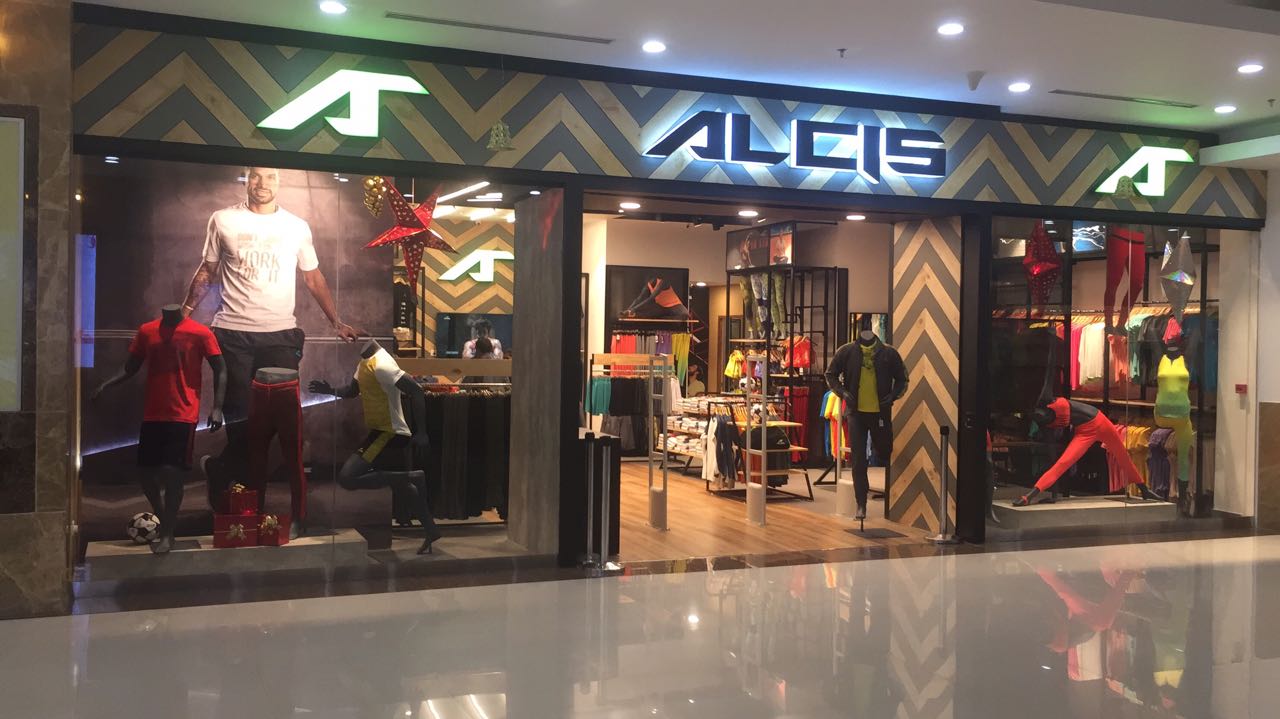
    Alcis Sports, a cutting-edge Indian performance wear brand, unveiled two new stores in Bagru in Rajasthan and Kurukshetra in Haryana. With these two new additions, Alcis Sport has now 11 exclusive brand outlets (EBOs) in India, and aims to have 15 by the year-end and 30-40 stores by 2019.

    Bagru and Kurukshetra get firsthand experience of a premium performance wear at an affordable price. Alcis Sports is a homegrown affordable Indian sportswear brand which is at par with international brands in terms of quality and also in sync with Indian sensibilities.

    The stores house Alcis Sports’ range spanning not only athleisure range but specific clothing for running, training, yoga, football, cricket and racquet sports. Alcis Sports is a home-grown, premium cutting-edge performance wear apparel brand, formed to tap into the emerging sportswear segment in the country.

    Roshan Baid, Managing Director, Alcis Sports said, “We are elated at the response of customers in both the outlets especially in Bagru. Touching Rs 1 lakh in sales in just two days in a new locality without much advertisement shows the awareness, acceptance and trust about the brand. We are committed to our customers in terms of international quality and affordable price without any compromise in our products.”

    Alcis is present at large format stores such as Shoppers Stop, Lifestyle, Globus, Central, Sports Station, Walmart, RS Brothers, Sarvanas, Pothys, JC Brothers and M&M and online retail channels such as Myntra, Jabong, Amazon, Flipkart, TataCliq, Ajio, etc. Besides, being present in over 700 multi-brand stores across the country, Alcis Sports is aggressively looking to open exclusive stores through franchise across the country. Alcis plans to open up about 15 exclusive brand stores, covering all the major cities of India, within this year.

    Alcis Sports has tie-ups with leading sports entities such as the hugely popular Pro Kabaddi League (Haryana Steelers and all match referees), among others. The company has secured an investment from Singapore based Venture Capital firm RB Investments, which has a strong portfolio of startups in India, including The Beer Cafe, Swiggy, Bluestone.com, Fab hotels, Faasos and PropTiger to name a few. Alcis Sports has also appointed celebrated Indian cricketer Shikhar Dhawan as the brand ambassador.

    Alcis Sports is a performance wear brand launched by the promoters of Paragon Apparels Pvt. Ltd., the largest manufacturer and exporter of sportswear in India. Alcis prides itself for being the first Indian brand to have the capability and production ability to manufacture technologically advanced sportswear at affordable price-points to enhance the performance of the wearer.

    Produced in India with the latest technologies such as Dry-Tech (moisture management), Anti-Odour, Anti-Static, Anti-UV and Light X, the products are specifically designed keeping Indian lifestyles and weather conditions in mind. The product range consists of clothes to wear while running, training, yoga, football, racquet sports and other athletic and leisure activities.

    Today, Alcis products which have international quality but Indian prices, are available in over 700 outlets across the country including all leading large format stores such as Lifestyle, Shopper Stop, Central, Globus, Sports Station, etc and online retail websites and 11 exclusive brand stores at New Delhi, Mumbai, Kochi, Jaipur, Guwahati, Bangalore, Goa, Bagru and Kurukshetra.

  • KT subscribers jump ship after fire accident

    KT subscribers jump ship after fire accident

    KT’s week has taken yet another turn for the worse as the fire that caused major telecommunications disruptions in Seoul and the surrounding area has likely left the company with a hefty compensation bill and subscribers looking to take their business elsewhere.

    According to data from the Korea Telecommunications Operators Association on Tuesday, the number of KT’s mobile service subscribers has been shrinking since a fire broke out at the carrier’s Ahyeon telecommunications switching center in Seodaemun District, western Seoul, on Saturday.

    On Saturday, the total number of subscribers to the country’s second-largest mobile carrier fell by 828 people compared to the previous day. This means that the number of people that left KT was larger than those who newly subscribed to the carrier that day.

    On the contrary, subscribers to SK Telecom increased by 246 people and LG U+ 582 people on the day of the accident.

    On Monday, the number of KT subscribers again dropped by 678 people. During the two operating days, KT lost a net 1,506 subscribers.

    Before the accident, the number of KT subscribers was on the rise. On Thursday, KT’s pool of subscribers increased by 69 people and by 83 people on Friday, but that trend was reversed after the fire.

    The troubled company said most fire-affected services have returned to normal on Tuesday, but analyst Kim Hyun-yong from eBest Investment & Securities said, “KT’s sales and brand image can be damaged if the situation is not fixed quickly considering the long hours and broad scope of disruptions [caused by the accident,]” in a report.

    SK Telecom also suffered from problems in its mobile communications services in April and LG U+ last year, but disruptions were resolved in a matter of hours, not days.

    Analysts estimate KT will have to spend at least 23.2 billion won ($20.5 million) in compensation to individual customers as it decided to waive a month’s phone bill for KT subscribers residing in the affected regions. The amount is roughly 1.6 percent of KT’s projected operating profit for this year according to Yang Jong-in, a research fellow from Korea Investment & Securities, Tuesday.

    “We made our assumptions based on KT’s market share in the five affected districts in Seoul,” Yang said.

    Another analyst Kim Joon-sop from KB Securities estimated the amount of compensation to be larger, at around 31.7 billion won.

    As compensation plans for the business losses of small and microbusiness operators have not yet been laid out by the mobile carrier, the amount of compensation could snowball.

    The accident comes at a tragic time for KT, as it was just a week before the carrier expected to introduce its first 5G network-based services. Korean carriers have been preparing to launch their first 5G services in dongle-type devices from December and had scheduled large press briefings this week prior to the official launch.

    KT has now delayed its event. On Monday, the mobile carrier sent notices saying “we decided to cancel our scheduled event to quickly fix telecommunications disruptions caused by the fire,” to reporters.

    The 5G network has been KT’s key focus and Chairman Hwang Chang-gyu had promised in September to invest a whopping 9.6 trillion won into its 5G business over the next five years. The company had also cemented its image as a leading 5G service provider by serving as the official telecommunications partner at the PyeongChang Winter Olympic Games earlier this year.

    The latest incident, however, has hampered KT’s latest bid to take a bigger share of the local telecommunications market, which has been in a similar shape for the last decade: SK Telecom taking 50 percent, followed by KT with 30 percent and LG U+ 20 percent.

    “SK Telecom, which boasts a well-established image of offering quality mobile services, and LG U+, which bets on cost-effective services, are likely to take advantage of the latest accident,” an industry insider said.

    Still, KT is trying its best to restore the disrupted network.

    According to KT, 96 percent of its mobile communications service has been restored, while 99 percent of landline internet and 92 percent of fixed-line phone services are repaired as of 11 a.m. Tuesday.

    KT said microbusiness operators still suffering from telecommunications disruptions are those that depend on copper cables rather than more modernized fiber optic cables. While 99 percent of fiber optic cable-based landline phone services are back to normal, only 10 percent of the copper cable-based services have been restored.

    “Copper cables are heavy and thick so they cannot be taken out through manholes for restoration,” KT said in statement. “They can only be recovered after our people are allowed into the tunnel where the fire broke out.”

    To minimize damage to copper-cable users, KT said it will offer 1,500 wireless LTE routers to shop operators so they can use electronic card payment systems. KT is also offering 300 wireless payment devices to convenience stores after discussions with the various franchise headquarters. The carrier has also been rushing to convert copper cables to fiber optic ones in areas with a large number of shops since Monday.

    From the government’s side, the Ministry of Science and ICT created a task force on Tuesday consisting of related government officials and representatives from mobile carriers to discuss how to manage low-level telecommunications facilities like the Ahyeon facility, which was graded D in terms of importance.

  • Malaysia projected 4.9% retail sales growth for 2018

    Malaysia projected 4.9% retail sales growth for 2018

    The Malaysia Retail Chain Association (MRCA), which expects retail sales growth to come in at 4.9% for 2018 in line with the country’s gross domestic product growth, has pointed out that some of its members face difficulties in retailing online amid the push for e-commerce.

    MRCA, in releasing its first quarterly retail sales survey for the third quarter (Q3) today, highlighted that online sales make up only 3.9% of its retail revenue.

    The sample of respondents for the survey include 10% of MRCA’s members, representing 59 brands and 2,266 stores across a variety of trade categories, including food & beverage (F&B), fashion, health & beauty, supermarket & department stores, entertainment, optical, education, home improvement and more.

    MRCA president Datuk Seri Garry Chua said the association constantly reminds members to bring their businesses online and be part of the digital ecosystem, adding that MRCA also has digital membership for players like Lazada, Lelong and 11street, which are all its members.

    “We can also work closely with them (digital players) to reinforce and increase the market share for online. We’re confident the (industry) sales from online retail is going to be double-digit growth every year as more brick and mortar retailers go online, as with many start-ups,” Chua said.

    MRCA vice-president Datuk Liew Bin said although all members have an online presence, most of its members rely on the brick and mortar model and “survive happily on brick and mortar”, whereby online sales is regarded as a bonus to them.

    “With so many years in brick and mortar, it’s difficult for our members to turn to online. This is one of the challenges that our retailers face because (the) online (wave) is coming on strongly. This should be an alert to our members, as 3.9% is still a small figure,” Liew said, adding that MRCA expects online sales to grow 5% next year.

    Individually, he said some retailers have seen a 20% growth in their online retail sales.

    MRCA projected retail sales growth to grow 6.1% year-on-year in Q4 this year as year-end school holidays and the festive season are expected to bolster consumer spending; while an increase in the number of outlets is also expected to boost sales growth.

    It said retail sales grew 5.7% year-on-year in Q3 with the tax holiday between June and August that had encouraged consumers to spend.

    In Q2, retail sales grew at a slower rate of 2.1% year-on-year, affected mainly by the general election in May, where consumers held back on spending due to economic uncertainty.

    Retail sales grew 5.7% year-on-year in Q1 due to Chinese New Year sales and promotions.

    F&B, health & beauty and other retailers reported encouraging growth rate of 5.4%, 3.1% and 21.3% year-on-year respectively. However, fashion retailers suffered a negative growth in Q2 and Q3 at -2.2% and -2.8% year-on-year respectively.

  • Uniqlo online Hong Kong launches soon

    Uniqlo online Hong Kong launches soon

    Uniqlo Hong Kong will launch its online store on December 4. A spokesperson for the company said the online platform for Hong Kong and Macau is a fitting solution considering rising rentals and limited space for retailers in Hong Kong, along with the strengthening popularity of e-commerce in the region.

    The brand has operated an online flagship on Alibaba’s Tmall for nine years and has had its own online shop since October.

    According to Uniqlo’s CEO for Greater China Ning Pan, the two existing e-commerce platforms take 15 per cent of sales in China, the majority of that figure from Tmall.

    He explained that while TMall remains an important strategic partner, the new platform will allow the firm to leverage analytics and AI to evaluate buyer preferences.

    The Hong Kong site is now under testing, and will be fully operational come launch day in December.

  • Tealive makes debut with opening first store in China

    Tealive makes debut with opening first store in China

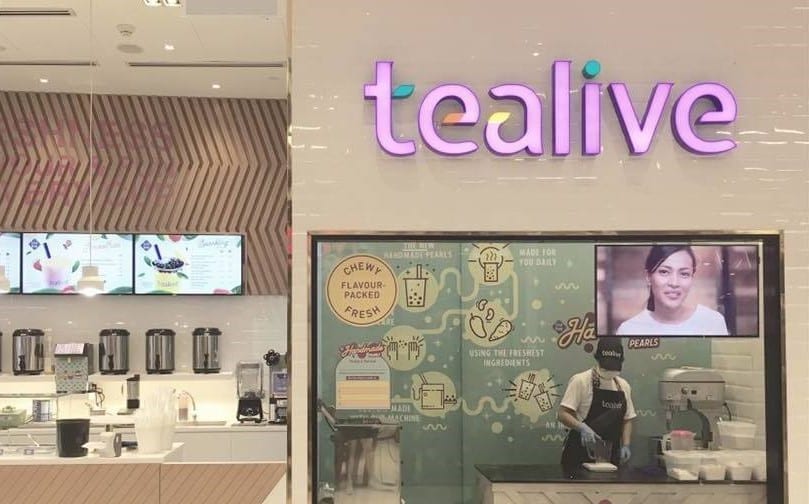
    Malaysian bubble-tea brand Tealive has launched the first of 500 stores planned for China. Located inside SML Center in Shanghai’s Huangpu district, the store attracted long queues on the opening day. “With China being the world’s largest tea market and the fourth overseas market for Tealive, we decided to create a specific menu for China to showcase Southeast Asian ingredients including durian, cempedak, gula melaka, Bentong ginger and Sabah-origin tea,” said Tealive’s parent company Loob CEO Bryan Loo.

    “More outlets will be opened in Shanghai and we plan to have 20 outlets in China by June next year,” he added.

    Loob had entered into a joint venture with two Chinese companies, Zhejiang Boduo International Trade and Shanghai Panfei International Trade to open 500 stores in China within three years.

    After the dispute with Chatime, Tealive has expanded to overseas markets. It entered Vietnam last October, and now has six stores in the country, with two more planned by the end of this year.

    The brand also expanded into Australia in July, with its first store opening in Melbourne.

    In India, Loob has appointed a master franchisee with the target of opening 200 outlets within five years.

  • India’s Spencer’s opens 9 stores in 90 days

    India’s Spencer’s opens 9 stores in 90 days

    Spencer’s Retail, the multi-format retailer from RP-Sanjiv Goenka Group is on an expansion spree. It is presently focussing to expand the store count in existing clusters in east, south and north of India.nIn this effort, Spencer’s essentially opened one store in every 10 days and thereby augmented the retail network of the chain recently by adding 9 new stores in 90 days. With this expansion, the store count of Spencer’s has now reached 146 across 37 cities.

    The strength of Spencer’s lies in its retail network which is constantly growing. It is an endeavour of Spencer’s to become more accessible to the customers and after receiving positive feedback from the clusters it operates in, the chain is poised to explore new territories.

    In this phase, Spencer’s launched stores in existing cities and its adjoining areas like Rajarhat in Kolkata, Maheshtala (South 24 Parganas), City Mall (Gomti Nagar) in Lucknow, Raheja Mall (Sector 47) in Gurugram, Sector 48 in Noida, Madeenaguda in Hyderabad, and at Howrah’s Aurobindo Mall.

    The size of these stores varies between 2,000 sq. ft. to 15,000 sq. ft.. The stores offer a wide range of assortment from different categories including Fresh Fruits & Vegetables, Fish & Meat, Staples and Groceries, FMCG, Dairy and Frozen products, Organic Food items, Dry Fruits, Apparels, Electronics and Electricals and Home Essentials. The product range in each of the new store has been meticulously planned to suit the tastes and preferences of the local neighbourhood.

    According to the Spencer’s spokesperson, “To consolidate the business, Spencer’s is dedicatedly selecting 360 degree catchments where the customers are looking for aspirational products in an affordable range. The expansion of Spencer’s currently is focussed at metros as well as in Tier I and II cities. In this FY we are further concentrating at spreading our network in the profitable zones like West Bengal, Delhi NCR, East UP and down south in Hyderabad and Chennai. In terms of product range, with more than 25,000 SKU’s (Stock Keeping Units), Spencer’s is constantly evolving in terms of its offing at each store. It is not only limited to food category but Spencer’s has extended a similar experience in the non-food and general merchandise space.”

    Spencer’s has been redefining the Indian retail landscape since 1863 and with the brand proposition ‘Makes Fine Living Affordable’, it continues to inculcate the same kind of trust and patronage among its millions of consumers across India.

  • Food firms hope to feast on snack sales in Vietnam

    Food firms hope to feast on snack sales in Vietnam

    Vietnamese companies are hoping to make big bucks selling popular foods like fried chicken and crispy pork skin. Nguyen Ngoc An, general director of Vietnam Livestock Industry Company (Vissan), sees great potential in the snacks market. He is not referring to potato chips, but to fresh food made with chicken and pork.

    “Deep-fried pork skin, seaweed dried chicken and pha lau (pork meat and offal braised in a spiced stock) are favorite dishes among young people,” he said.

    “Such snacks will be a good source of revenue for the company in the near future.”

    Already in the market, Saigon Food JSC has released more than 10 fresh snack products, including rice paper pancakes, corn fried shrimps, and tamarind fried balut eggs, which are selling very well.

    Le Thi Thanh Lam, deputy general director of Saigon Food, said that the company’s products are sold at 7-Eleven convenience stores in Ho Chi Minh City.

    “In the near future, we will be exploring new product lines that fit the tastes of consumers to expand the snacks segment,” she said.

    A leading producer of poultry eggs, Ba Huan JSC has also latched on to this trend, launching a group of snack products including spicy chicken legs, skewers, sausages, and omega 3 flan.

    Pham Thanh Hung, deputy general director of the company, said these snacks are new to the market, but sales are quite high. Most of the products are sold in supermarkets or convenience stores. Spicy chicken legs are most liked, he said.

    Vinh Dat Food JSC, which introduced fresh snacks into the market before any of the above companies, said that initially, processed egg products such as balut egg stew, preserved black eggs and braised eggs saw slow consumption.

    But by 2017, explosive growth of this segment forced the company to invest in more production facilities to meet demand. In the coming months, the company will develop more soft-boiled egg products and wholesale various types of braised eggs to restaurants.

    The latest survey carried out by market research firm Decision La shows that on average Vietnamese youth spends VND13 trillion ($556.53 million) on snacks every month.

    And according to statistics by London-based market research firm Euromonitor, by the end of 2016, Vietnam had about 149,000 food kiosks on the streets, including mobile vans or fixed in front of houses, which earn about VND46.9 trillion ($2.01 billion) per year.

  • Vingroup to invest in Hanoi smart electronics plant

    Vingroup to invest in Hanoi smart electronics plant

    Vingroup is expected to invest VND1.2 trillion ($51.38 million) in a “Smart Electronics Factory” that will produce smartphones as its first products next year. The project, expected to be operational by the second quarter of 2019, is the first one to be implemented under a cooperation agreement between the Hoa Lac Hi-Tech Park (Hoa Lac HTP) Management Board and Vietnam’s biggest private conglomerate Vingroup.

    According to the agreement, in the period 2018-2020 looking towards 2025, Vingroup will focus its investments on hi-tech manufacturing in the Hoa Lac HTP.

    The corporation will invest in research and development, advanced technology, software, hi-tech industrial manufacturing, housing development, commerce and services in Hoa Lac.

    The first project to be implemented under the agreement will be a “Smart Electronics Factory” in Hoa Lac. Construction will begin as soon as the group’s investment plan is approved by competent authorities.

    The factory will be built on an area of five hectares. Once operational, it is expected to produce 3- 4 million smart electronics products a year, supplying both domestic and international markets.

    Nguyen Viet Quang, vice president and CEO of Vingroup, said that smartphones will be the factory’s first product to debut in the market.

    Minister of Science and Technology Chu Ngoc Anh said the Hoa Lac Hi-Tech Management Board is improving the HTP’s infrastructure, providing the best conditions for investment, and creating a legal corridor to facilitate businesses.

    These efforts are aimed at developing the Hoa Lac Hi-Tech Park into a smart-technology city, he said.

    There are 87 investment licensed projects in Hoa Lac at present with total capital amounting to approximately VND78 trillion ($3.34 billion).

    In 2018 alone, Hoa Lac has welcomed 10 licensed projects with a total registered capital of VND15.86 trillion ($678.74 million).

  • Thailand: fourth-most-profitable global tourism destination

    Thailand: fourth-most-profitable global tourism destination

    According to the UN World Tourism Organization, Thailand outranks every other nation in Asia when it comes to tourism spend. Last year, it collected $57 billion in international tourism receipts, nearly doubling Macao ($36 billion), Japan ($34 billion), Hong Kong ($33 billion), and China ($33 billion).

    Globally, the only countries that out-earn Thailand in terms of tourism dollars are France ($61 billion), Spain ($68 billion), and the United States—which handily takes the gold medal, at $211 billion.

    It all comes down to volume. Foreign arrivals could hit 40 million next year, which is more than half the country’s population.

    “In Thailand, you’ve got something for everybody,” says Rebecca Mazzaro, a specialist for bespoke outfitter ATJ. “From the private island with the private villa to amazing street food meals that only cost a couple bucks, it has a diversity and variety that exists in few other markets. It’s no surprise lots of people are going—and spending,” she says.

    A Coming Luxury Boom

    Though gaps in the WTO’s data make it difficult to ascertain the per-visitor spend in each of these countries, given recent and forthcoming developments, that number is likely to be rising.

    “There’s no question that historically Bangkok—and Thailand in general—has always been perceived as a value destination,” says John Blanco, general manager of the forthcoming five-star Capella Bangkok. “But there has been a real effort to shift that perception.”

    Mastercard’s annual Global Destination Cities Index recently ranked Bangkok as the most-visited city in 2017 for the third year in a row.

    The study, based on undisclosed public data sources, rather than cardholder transactions, indicates that travelers shell out $173 for a day in the Thai capital, compared to $537 in Dubai or $286 in Singapore.

    This year, it forecasts travelers will spend an additional 14 percent more.

    By next year, the city will have gained even more opportunities to spend, such as superlative new resorts from Four Seasons, Rosewood, Mandarin Oriental, and Waldorf Astoria, plus a $1.6 billion Bal Harbour-esque mixed-use retail development called Icon Siam.

    “There’s a lot more meat on the bone now,” Blanco says of luxury offerings in the capital.

    Dino Michael, global head of Waldorf Astoria Hotels and Resorts, agrees. “We’ve been noticing the upscaling of Bangkok for a few years,” he tells Bloomberg. “The consumer has become more sophisticated; the dining scene has become more sophisticated.”

    Among Bangkok’s selling points, he says, are strong infrastructure and airlift, a “depth and breadth of tourists,” and an ingrained culture of hospitality. For tourists and brands thinking about charting the region, Michael adds, “It’s world renown—and an obvious starting point.”

    The Pitfalls of Popularity

    There may be a price to pay for popularity, particularly on Thailand’s beaches and islands.

    Already, throngs of partygoers on commercial yachts have done so much damage to the pristine marine ecosystem of Maya Bay—the picturesque backdrop to Leonardo DiCaprio’s 2000 film The Beach—that the area closed for four months earlier this year to recover.

    Unable to bounce back fast enough, it’s now being closed indefinitely. That follows similar measures in nearby Koh Khai and Koh Tachai islands, where coral was being destroyed at devastating rates.

    In Phuket, Mastercard’s 12th-most-visited destination in the world, there’s been a sharp decline in the local turtle population, correlated with the rise in beachside pollution. It’s led 70 hoteliers to band together to promote sustainability and encourage better etiquette among travelers.

    And in Thailand’s north, the dramatic growth of tourism has led to a sobering spike in unethical wildlife tourism, often centering around elephants and tigers.

    The capital, meanwhile, has stayed largely out of the way of these visitor-related troubles—perhaps because it’s hard(er) to justify bad behavior in a city with 40,000 Buddhist temples.

    “Of course, red light tourism is alive and well—like it or not,” says Catherine Heald, founder and chief executive of Asia outfitter Remote Lands. “But ultimately, tourism has really lifted the local economy.”

    At $57 billion a year, there’s no denying that.
  • LG U+ IPTVs get Netflix in Korea

    LG U+ IPTVs get Netflix in Korea

    Netflix content will be available on LG U+ internet protocol TVs (IPTV) today. Under an exclusive IPTV deal inked with LG U+, Netflix content, including Netflix Originals, will be aired through LG’s platform, the carrier said Wednesday.

    LG subscribers won’t have to replace their existing set-top boxes as they will be automatically upgraded, though services will be first offered to the 1.07 million users of LG’s latest set-top box, dubbed UHD2, and gradually rolled out to other set-top boxes.

    Considering Netflix offers over 22,000 movies and television shows, including its big-name original content like “House of Cards,” “Stranger Things” and “Orange Is the New Black,” this is a good chance for the smallest carrier in Korea to steal some subscribers.

    By next month, the carrier will also reform the user interface of its IPTV so users have easier access to Netflix content as well as its own kids’ content platform, dubbed “Kid’s World,” that is gaining popularity among customers in their 30s and 40s with children. LG is banking on both services for the further growth of its IPTV business, according to Song Gu-young, senior vice president and head of home and media business at LG U+.

    The revamped interface could look similar to the Netflix app. When a user selects a video, an image related to the video will fill up the whole screen and a preview will run automatically, which is similar to how video previews are played on the Netflix app.

    The partnership between LG U+ and Netflix is no surprise as the market has long been expecting the announcement, but what’s still not clear is whether the carrier will offer a phone plan centered on Netflix. Without a useful plan, existing users of Netflix might not feel the urge to migrate to LG just for the IPTV service because it would only mean they get better access to Netflix content on the LG platform, but for the same monthly fee.

    LG is reportedly planning to roll out phone plans with a Netflix discount, according to an industry source, but it might take some time as new plans need government approval.

    For the time being, LG U+ is giving out free three-month Netflix trials to new subscribers of its IPTV plans worth at least 15,400 won ($13.50) per month until the end of this year.

    Korea’s mobile carriers have shifted their focus to the IPTV business as sales from traditional mobile phone subscriptions faltered after the government pressured them to make monthly phone bills cheaper last year.