Tag: life

  • Korean Netflix shows target a global audience

    Korean Netflix shows target a global audience

    Ahead of the launch of Netflix’s first original Korean drama series today, executives from the streaming giant expressed confidence in the global popularity of Korean content at a press briefing in Seoul, Thursday. Kim Min-young, the director of content at Netflix in Korea, said that she expected to win over fans with the company’s first-ever original Korean drama series “Kingdom,” a highly-anticipated zombie series that launches on the streaming platform.

    “‘Kingdom’ will launch in 190 countries in 27 languages at the same time, with dubbing provided in 12 different languages,” Kim said.

    “We expect many users will want to watch it, as it can appeal to both people who like zombie thrillers or just Korean content … I believe in our creators and [the popularity] of Korean media, which is also the reason why Netflix launched Korea’s own content team in the country last year.”

    Before last May, the team that produced and licensed content to Netflix for the Korean market worked from Singapore at the company’s Asia-Pacific headquarters. Following the relocation, the Korean content team has been pursuing licensing and production activities more actively, working with domestic content producers like JTBC and Studio Dragon.

    Regarding original production in Korea, Kim said she benchmarks successful foreign Netflix original dramas like Spanish title “Elite” and Turkey’s “The Protector” that became huge hits with users across the world.

    “Our ultimate goal is to present entertainment to consumers, and from our experience, we found it necessary to give creators the freedom to tell the story they want to share,” said Kim.

    “As you can see with ‘Black Mirror: Bandersnatch,’ we will help producers to not be hindered from doing what they want because of technological limits.”

    “Black Mirror: Bandersnatch” is a choose-your-own-adventure film by Netflix that allows users to choose one of many action courses for the characters throughout the movie to determine how the plot progresses. Kim hinted that the impressive technological feats as shown via the interactive video could also be made possible in Netflix’s Korean programs.

    “We were also satisfied with the performance of our original entertainment program ‘Busted!,’ as reflected by our decision to produce a second season,” she said.

    The Netflix team also addressed concerns that Netflix provided limited service offerings and imposed unfair deals on its Korean partners.

    “Although we can’t provide all content available out there, we conduct analyses to discover what content users want,” Kim said. “But we have contents like ‘Friends,’ ‘Walking Dead’ and ‘Kim’s Convenience’ which users can’t access elsewhere.”

    In response to a rumored nine-to-one profit division between Netflix and Korean distributors like IPTV operator LG U+, Nigel Baptiste, director of partner engagement at Netflix, said that he could not “go into the specifics of what the deals are with our partners,” but the goal was to help “everyone in the ecosystem benefit.”

    The team did reassure users that subscription fees will not rise anytime soon in Korea.

    “We did increase prices in the U.S. … but we don’t have plans to do so right now [in Korea],” said the vice president of Asia-Pacific communications, Jessica Lee.

    Netflix is planning to release several new series in Korea this year – the first seasons of “Love Alarm,” “My First First Love,” “School Nurse Ahn Eun Young” and the second season of “Busted!”

    Mobile app research company WiseApp reported that some 900,000 Koreans used the Netflix mobile app on Android phones alone last September.


  • Tinder sees Korea as stepping stone to region

    Tinder sees Korea as stepping stone to region

    Korea is the test bed for Tinder services in the rest of Asia, the dating app’s CEO said during his first press conference in the country on Tuesday.  “South Korea is an important market for us because of the market itself, but also because of the cultural influence it has over the broader Asia region,” said Tinder CEO Elie Seidman. Seidman previously served as the CEO of OkCupid, another popular American dating service.

    “Not only do most Koreans have smartphones and use social media, but the country wields a lot of influence in Asia through K-pop and the Korean wave.”

    Korea’s potential to raise the brand awareness of Tinder across Asia has already been demonstrated, according to the app’s regional director.

    “We once worked together with Korean celebrities Kim Jong-kook and Haha to have them use Tinder during a trip in Vietnam” for a reality TV show, said Lyla Seo, regional director, East Asia. “We saw a huge surge in Tinder users in Vietnam following the program.”

    Seo, who is Korean, oversees the dating service’s business in Korea, Japan and Indonesia. Seo worked as a marketing manager for Google Korea before joining Tinder.

    “Tinder has the so-called passport service, which allows people to view and match with users from other countries. The top five countries that used the passport to meet Koreans were Singapore, Japan, Thailand, Indonesia and Malaysia, reflecting the popularity of Korean culture,” she added.

    In Korea, the dating app first launched in 2015 and has been growing rapidly since. Tinder in Korea reported over 2.5 times more downloads last year compared to 2016. The service is especially popular among women, and over 80 percent of the users here are millennials.

    According to Tinder, the three biggest reasons Koreans use the app are to meet new types of people from different backgrounds, find users with similar hobbies and meet users in the same area.

    Users in Korea are most active on the app around 10 p.m. on Monday after they come back from work or school, Tinder also said.

    Tinder’s plan in Korea this year is to draw in more college-aged students and promote the idea that the app can be used to meet friends under the “Find a friend on Tinder” campaign.

    “In Korea, we are planning to introduce more marketing activities targeting college students and contribute to society by launching a scholarship program,” Seo said.

    Tinder, founded in 2012, has around 4.1 million paying users and generated $800 million in revenue last year worldwide.

  • Japan offers most overseas jobs for Vietnamese workers

    Japan offers most overseas jobs for Vietnamese workers

    Japan is expected to receive more Vietnamese workers this year, having become the most attractive labor export market in 2018. Last year marked the first time Japan became the most popular destination for Vietnamese migrant workers with over 68,700 people finding jobs there, beating Taiwan with nearly 60,400 people and South Korea with over 6,500, according to statistics released by the Department of Overseas Labor.

    The department’s deputy director, Nguyen Gia Liem, said the Japanese market’s rise in popularity was due to the implementation of a new law that allows migrant workers to stay for five years instead of three.

    Furthermore, Vietnam was the first country to sign with Japan a memorandum of cooperation on the latter’s technical intern training program, which came into effect last June.

    In 2018, a total of 13 Vietnamese businesses were also licensed to directly bring Vietnamese citizens to Japan to work as caregivers. The long language and skill training required, however, limited the number of Vietnamese citizens taking this route last year.

    However, Liem asserted: “These establishments would help increase even further the number of Vietnamese laborers going to Japan.”

    Deputy Minister of Labor, Invalids and Social Affairs, Doan Mau Diep, has said the ministry will reduce the number of labor export firms. The move follows last October’s request by Japan’s Prime Minister Shinzo Abe that Vietnam shut down bad labor export agencies and reduce costs for people wanting to work abroad.

    “The country currently has 2,000 companies taking workers overseas, which is too many, causing companies to compete with each other for contracts, and they collect high fees,” Diep said.

    The ministry would also review current regulations on overseas students to prevent this system from being abused as many Vietnamese citizens wanting to work in Japan have been using student visas in recent years to reduce cost and time spent on language and skills training.

    Last year, Japanese authorities already reviewed and suspended multiple companies for taking Vietnamese workers to Japan under the guise of international students.

    Diep also warned that citizens wanting to work overseas need to use legal labor export firms and not use tourist visas, as happened in the recent infamous case in Taiwan.

    “If going on a worker’s visa the fees can be expensive, such as about VND80 million [$3,400] for Taiwan. The travel route meanwhile only costs flight tickets and visa fees so many still choose to travel then escape to work, but they will face many risks,” he said.

    A Vietnamese migrant worker can make $1,000 to $1,200 a month in Japan and South Korea, four times the average monthly salary in Vietnam, which was VND6.5 million ($290) last year.

    A total of over 142,800 Vietnamese laborers went to work overseas in 2018, a six percent increase compared to the previous year.

    With this number, which includes about 50,300 female workers, 2018 became the fifth consecutive year in which the number of Vietnamese working overseas exceeded 100,000 people.

  • DJI Introduces A Smart Remote Controller With Built-In Display at CES 2019

    DJI Introduces A Smart Remote Controller With Built-In Display at CES 2019

    DJI, the world’s leader in civilian drones and aerial imaging technology, continues its tradition of making aerial technology accessible to everyone by introducing a powerful new remote controller for its drones at CES 2019. The Smart Controller features an ultra-bright display screen and controls optimized for DJI drones, allowing pilots to fly the newest drones without using a smartphone or tablet. DJI will also be exhibiting its full lineup of consumer drones and handheld imaging products at its booth at CES 2019, including the new Osmo Pocket stabilized camera, and will host exciting workshops, hands-on product demonstrations and more. Attendees can find DJI in the South Hall of the Las Vegas Convention Center.


    Smart Controller Expands Pilot Options The DJI Smart Controller expands the ecosystem of accessories built around DJI’s industry leading drone technology. Using a crisp 5.5” screen built into the controller itself, the Smart Controller allows pilots to quickly get their drone in the air without the need to connect a mobile device. It can be paired with DJI’s newest drones including Mavic 2 Zoom and Mavic 2 Pro1 which use DJI’s OcuSync 2.0 video transmission system, displaying vivid images in Full HD resolution. Drone pilots can take advantage of its compact, highly portable design that has been optimized for use in direct sunlight. It features an ultra-bright display with an output of 1000 cd/m2, twice the brightness of standard smart phones. A customizable Android dashboard supports DJI GO 4, DJI Pilot2, along with various third-party apps such as editing programs. The DJI GO 4 app also touts several new features including SkyTalk, that allows pilots to livestream the drone’s camera feed to social channels including Facebook, Instagram and WeChat so that anyone can experience the thrill of flying a drone. Another new feature is DJI GO-Share which easily transfers imagery from the Controller to your mobile device. The DJI Smart Controller brings a new level of reliability when flying, with 2.5 hours of battery life and the ability to operate in adverse temperatures as cold as -4° Fahrenheit and as hot as 104° Fahrenheit.

  • Telenor Pakistan hosts “The future of Machine Leaning & Artificial Intelligence”

    Telenor Pakistan hosts “The future of Machine Leaning & Artificial Intelligence”

    Stephen Brobst, CTO of Teradata, conducted an enlightening session on the future of Machine Learning (ML) &Artificial Intelligence (AI) at Telenor Pakistan headquarters ‘345’ in Islamabad. The session was attended by Telenor Pakistan employees and executives from across industries including Irfan Wahab Khan, CEO Telenor Pakistan and President OICCI, Haroon Bhatti, Chief Business Officer (CBO) at Telenor Pakistan, BadarKhushnood, Cofounder & VP at Bramerz, QazafiQayyum, Country Manager Teradata, Khimde Ando, CEO Mitsubishi Corporation, Brig. Tahir Mehmood, Director ISPR, AVM Faaiz Amir, Vice Chancellor Air University, Barkaan Saeed, Ex-Chairman PASHA and Retd. Brig. Saleem Ahmed Moeen, CEO SecureTech.

    The participants learned about the future of artificial intelligence, the role of emerging technologies, differences between deep and shallow learning and their application techniques, and the opportunities of using advanced analytics to create high-value outcomes.

    “We have entered a new era of analytics with machine learning and artificial intelligence algorithms beginning to deliver on the long-promised advancement into self-learning systems,” Brobst told the audience. “These approaches allow us to solve previously intractable problems with completely new attack plans.  The appetite of deep learning algorithms for vast amounts of data and the ability to derive intelligence from diverse sets of noisy data allows us to go far beyond previous capabilities in what we used to call advanced analytics,” he added.

    Brobstinformed that in order be successful with the use of new technologieswe need to fully understand their capabilities and limitations. He also stressed the need to develop new skill sets in order to harness the power of deep learning to create business value in an enterprise.

    “In our times of Siri, Alexa, and Google, Machine Learning & Artificial Intelligence are not a part of science fiction anymore; they are our reality,” remarked Irfan Wahab Khan. “For tech companies like Telenor and Terada, the real charm of AI and ML technologies is their ability to recognize patterns and synthesize large amounts of data. Telenor is not only harnessing the strength of AI and Advance Analytics for its own commercial use but is also enabling other organizations to benefit from the technology by offering incisive Market Research insights and ability to run targeted campaigns on its diverse Advertising  assets. The fact that these technologies get smarter with time as increased amounts of data is fed to them makes them acornerstone for all future technologies,” he added.

    Impressive progress is being made in ML & AI technologies globally. From self-driving and learning cars to flying drones circling the skies, the technological advancements of today could already be perceived as something out of a futuristic novel. Gartner, the world’s leading research and advisory company,also predicts that by 2020, AI will become one of the top five investment priorities for at least 30 percent of Chief Information Officers. Being the country’s technology leader, Telenor Pakistan is keeping its people abreast of the latest technological developments to realize its ambition of digitally empowering Pakistan.

  • Vietnam retail sales reported soaring

    Vietnam retail sales reported soaring

    Vietnam retail sales grew at 13 per cent last year, with food and beverage, apparel and household appliances leading the way, according to Savills Vietnam. The country’s Ministry of Industry and Trade has estimated total revenue generated from retail sales and consumer services reached US$191 billion last year. Vietnam retail sales accounted for $143.3 billion of that figure, or more than 75 per cent.

    The highest growth was recorded in precious stones and metals, wood and building materials, food, household appliances, and garments.

    Sales from accommodation and catering services grew by 9.1 per cent to $23.3 billion, accounting for 12.3 per cent of the total retail sales.

    Retail space supply

    The supply of retail space in Vietnam increased by more than 28,000sqm last year with two new shopping centres opening and  several others changing format or closing. Total stock was approximately 1.3 million sqm, up 9 per cent year on year and the average gross rent rose 2 per cent quarter on quarter.

    This year, Savills predicts, new supply in CBD locations will be only 31,700sqm with another 215,000sqm becoming available in non-CBD districts.

    Outlook

    Meanwhile, the ministry predicts total revenue from retailing and consumer services will increase at an average of 13 per cent this year, reaching $255.5 billion.

    Between 2021 and 2025, the predicted growth rate is 14 per cent with total revenue reaching $484.58 billion by 2025.

  • Samsung plans to release robots this year

    Samsung plans to release robots this year

    Samsung robots are coming this year. Kim Hyun-suk, president and head of Samsung Electronics’ consumer electronics division, said the company has been conducting research on the robotics market and is now preparing to launch several robots this year during a press conference with reporters on Monday, a day prior to the opening of the Consumer Electronics Show (CES) in Las Vegas.

    Until now, Samsung Electronics has stayed mum on whether it is making robots. “To develop robots, it’s important to have an artificial intelligence [AI] platform ready [to mount on the robots],” Kim said. “That AI platform is almost ready.”

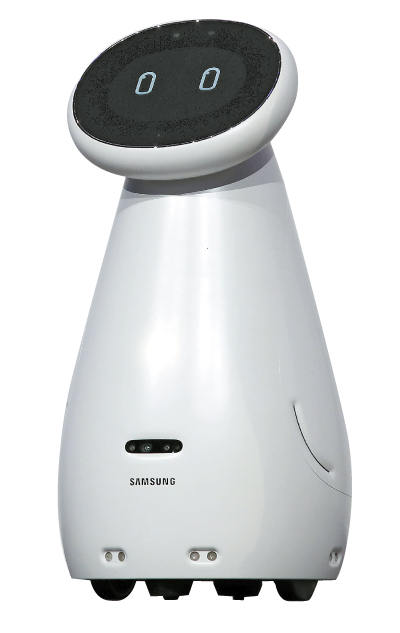
    Samsung unveiled three variations of its AI-based robot, dubbed Samsung Bot, at the briefing, revealing its robotics technology for the first time.

    The three Samsung Bots, labeled Care, Air and Retail, are designed to aid people’s health, and improve air quality and retail shop management. Samsung Bot Care, for instance, monitors users’ vitals like blood pressure and heartbeat and helps people take medicine at the right time. The robot can also call 119 and contact family members when it senses an emergency such as a heart attack.

    The electronics giant also introduced its wearable robot, dubbed GEMS. It assists people with difficulty walking due to weak muscles or injuries and reduces physical pain in the knees and ankles.

    “I can’t say for sure when the products introduced today will be commercialized,” Kim said. “There are possibilities that robot products not introduced yet could be commercialized first.”

    Kim added that demand for robots is expected to increase, especially due to societal aging, pointing out that robots like Samsung Bot Care will be useful for the elderly.

    “By exploiting Samsung’s know-how in AI, Internet of Things and developing multiple devices, we are considering our options for various types of robots,” Kim said.

    On concerns of whether Samsung’s own AI engine Bixby is losing ground due to the company’s AI partnerships with tech giants like Google and Amazon, Kim said that is a “misunderstanding.”

    Though Amazon’s Alexa AI assistant and Google Assistant may be a step ahead of Bixby in terms of technology and presence in the global market, Kim said partnerships make Bixby stronger, not weaker.
    The important thing, according to Kim, is that when people ask Bixby a question, the AI will be able to give out answers based on its own knowledge or by utilizing data from Google or Amazon.

    “No company has strengths in every aspect of business,” Kim said. “Though Bixby is a latecomer [to the AI assistant market], Samsung has relative strength in making devices compared to other tech companies, and Google and Amazon will focus on what they are good at.”

    Kim also commented on LG Electronics’ rollable TV that made headlines globally. LG’s rollable TV prototype can roll itself into a storage box that becomes a table with speakers.

    According to the Samsung president, there needs to be considerations on whether the product can be “economical.” He added that without the economic feasibility to commercialize the product, the prototype is a lot less meaningful.

    Brian Kwon, head of LG’s home entertainment division, said in a separate press briefing Tuesday in Las Vegas that the company will make rollable TVs its future growth engine.

    On concerns about the product’s cost, Kwon said while the price may be a barrier in widely expanding sales of the product right after launch, the company will strive to quickly improve the TV’s cost competitiveness.

  • Vietnamese banks report solid profits, employees hopeful of high bonuses

    Vietnamese banks report solid profits, employees hopeful of high bonuses

    With Vietnamese banks reporting substantial profits last year many of their employees are expecting higher Lunar New Year bonuses. The banking sector’s overall profit before tax increased by 40 percent year-on-year, according to the National Financial Supervisory Commission. Vietcombank, the largest bank by market capitalization, said in a recent report that its consolidated pre-tax profit was up 62 percent to VND18.3 trillion ($789.55 million).

    TPBank said pre-tax profit doubled to VND2.26 trillion ($97.5 million), exceeding its target of VND2.2 trillion ($94.93 million). The lender’s profit has almost quadrupled against 2015.

    Sacombank’s profit before tax of VND2.2 trillion ($94.93 million) was 20 percent higher than its target.

    Bank employees are thrilled by the performance ahead of Tet, Vietnam’s Lunar New Year, which falls on February 5 this year.

    Mai, a Sacombank worker who asked to be identified only by her given name, said: “Our bank’s profit is a few times that of 2017, so we hope to have a higher bonus.”

    Minh Nhat of Orient Commercial Bank, said his bank determines Tet bonuses based on the performance of each branch and individual. Last year his most productive colleagues had received a five-month bonus, while everyone got at least a month’s salary as bonus. He hopes this year it would be even higher.

    Le Minh Tan, director of the Ho Chi Minh City Department of Labor, Invalids and Social Affairs, told VnExpress that the highest Tet bonus this year is by a HCMC-based bank — VND1.17 billion ($50,493) for an employee.

    Companies plan to pay VND3.4 million ($147) on average, 30 percent higher than last year, he added.

    Three bank leaders said they are still calculating the rewards.

    “We calculate rewards using personal KPI (key performance indicator) and branch productivity, so the bonus will vary between individuals,” one CEO said, adding that some employees would receive a three- or four-month bonus or even higher, while some would get nothing.

  • MSIG Hong Kong names Philip Kent as new CEO

    MSIG Hong Kong names Philip Kent as new CEO

    General insurer, MSIG, has announced the appointment of Philip Kent to the role of Chief Executive Officer (CEO). He succeeds former CEO, Kenneth J. Reid, who has retired after 26 years with MSIG Hong Kong. Philip Kent most recently served as Executive Vice President of Planning for the Singapore-based regional holding company, MSIG Holdings Asia, over the last two years leading business development across the region and spearheading the regional digital strategy in Asia. With more than 28 years in the insurance industry, he has broad insurance market experience encompassing leadership and technical roles across Asia, including Indonesia, Thailand and Hong Kong.

    “We are pleased to have Philip lead MSIG Hong Kong as CEO. His accomplishments and track record of building strong partner relationships and inspiring colleagues make him an ideal leader. He is also very familiar with the market having worked in Hong Kong for 11 years,” said Alan J. Wilson, regional CEO, MSIG Holdings Asia.
    “The industry is dynamic with many insurers going digital and leveraging on new technologies. With Philip’s experience, he will be able to continue the digital transformation that Ken has started for MSIG, ensuring that we are well placed to continue serving the needs of our customers in Hong Kong,” he added.

    Outgoing CEO Kenneth J. Reid has retired after leading MSIG Hong Kong as CEO for 13 years and after a successful career of nearly 35 years with the Group. During his tenure, Mr Reid led MSIG Hong Kong to more than double its gross written premiums and played an instrumental role in forming a partnership with DUAL Asia in 2009, significantly expanding MSIG’s business portfolio. He also contributed to Hong Kong’s general insurance industry as Chairman of the Motor Insurer’s Bureau of Hong Kong from 2015 to 2017.

    “Ken’s vision, accomplishments and impressive track record of building strong client relationships, have materially strengthened MSIG Hong Kong. He leaves a firm foundation and a resilient company. I would like to sincerely thank him on behalf of the Board and the Group for his substantial contribution to MSIG,” Mr Wilson said.


  • The Coca-Cola Company completes acquisition of Costa

    The Coca-Cola Company completes acquisition of Costa

    The Coca-Cola Company has announced that it has completed the acquisition of Costa Limited from Whitbread PLC. The US$ 4.9 billion transaction follows approval from regulatory authorities in the European Union and China. The acquisition was first announced on August 31, 2018. Costa, which has operations in more than 30 countries, gives Coca-Cola a significant footprint in the global coffee business. Worldwide, the coffee segment is growing 6 percent annually. Costa has a scalable platform across multiple formats and channels, from the existing Costa Express vending system to opportunities to introduce ready-to-drink products.

    “We see great opportunities for value creation through the combination of Costa’s capabilities and Coca-Cola’s marketing expertise and global reach,” said James Quincey, CEO of The Coca-Cola Company. “Our vision is to use the strong Costa platform to expand our portfolio in the growing coffee category.”

    “We wish our friends and colleagues at Costa all the very best for their future success,” said Alison Brittain, Whitbread Chief Executive. “Whitbread acquired Costa 23 years ago, when it had only 39 shops. Costa has grown to become a leading, international coffee brand, and Coca-Cola is the right partner to take Costa to the next stage of expansion.”

  • Indonesia’s BRI Signs Partnership Agreement With Alipay

    Indonesia’s BRI Signs Partnership Agreement With Alipay

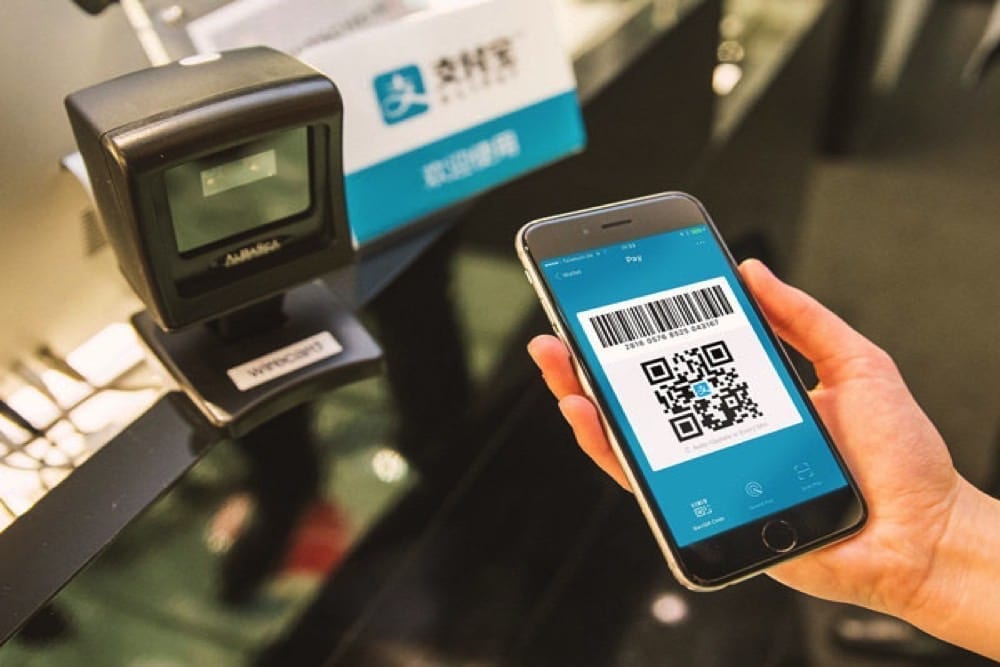
    Bank Rakyat Indonesia, Indonesia’s biggest state-owned lender, started the year with key strategic announcements, including an alliance with Chinese payment platform Alipay and plans to acquire a local insurance company and a small lender. BRI signed a memorandum of understanding with Alipay, a subsidiary of Chinese technology giant Alibaba, on Thursday to secure an opportunity to serve the growing number of Chinese tourists visiting Indonesia.

    “As China has its own payment system, we must be able to facilitate their [Chinese tourists’] needs. This move is aimed at supporting the country’s tourism industry,” Handayani, consumer director at BRI, said after an extraordinary shareholder meeting on Thursday.

    He said there are several matters that must still be discussed, including the acquisition of a permit.

    “We are currently integrating the business operation. We are now developing the IT system [for the service],” Handayani said, adding that the payment service will be launched in tourism areas, such as Bali, first.

    About 2 million Chinese tourists visited Indonesia between January and November last year, representing a 14 percent increase from the corresponding period in 2017.

    Insurance Company

    In addition to the partnership with Alipay, the lender has also set aside Rp 1.5 trillion ($105 million) this year to acquire an insurance company focused on covering property damage. BRI currently only has a life insurer, BRI Life.”This year, we want to have an insurance company. We are going to have a complete service in the financial industry,” BRI president director Suprajarto said.

    He said BRI was still observing the market and exploring several candidates before making a choice. The acquisition is slated for completion in the first half of this year, he added.

    Suprajarto said the acquisition of a general insurer would take precedence over the plan to acquire a small lender.

    This is because the Financial Services Authority (OJK) has asked BRI to acquire a lender in the categories BUKU I (banks with core capital below Rp 1 trillion) or BUKU II (banks with core capital between Rp 1 trillion and Rp 5 trillion).

    “It requires a large amount of funding, so we are now focusing on organic growth [instead of acquiring another lender],” Suprajarto said.

    BRI posted Rp 23.5 trillion in net profit in the first nine months of last year, which was 15 percent higher than the same period in 2017, thanks to a 17 percent surge in loan growth to Rp 809 trillion between January and September.

    BRI Appoints Deputy President Director

    BRI also announced the appointment of Sunarso as deputy president director and the dismissal of Jeffry J. Wurangian as commissioner and Kuswiyoto as director of corporate banking.Handayani said the changes were subject to approval by central bank.

  • Experts express cautious optimism for Vietnam stock market

    Experts express cautious optimism for Vietnam stock market

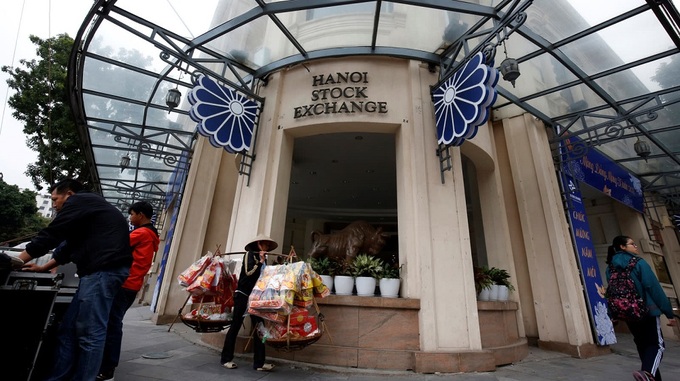
    Last year’s uncertainties and unclear future scenarios are reflected in more cautious assessments than number crunching for 2019. Nguyen Duy Hung, chairman of SSI, a leading Saigon broker, said that with a drop of over 20 percent from its peak, when the VN-Index climbed to 1,204 points on April 9, 2018, Vietnam’s stock exchanges have entered a bear market.

    The benchmark VN-Index on the Ho Chi Minh Stock Exchange lost 1.52 per cent to end Thursday at 878.22 points. On Friday afternoon, it rose to 880.9 points.

    Perhaps it will take between 8 to 11 months for the market to recover, Hung said. “Historical data suggests that it would take 21 months for a bear market to recover its old peak after hitting bottom.”

    But the SSI chairman said the main challenges facing the stock market in 2019 include worries posed by the escalation of the U.S.-China trade war, and increasing geopolitical risks.

    “At this point, no one can say how this war will unfold or predict how widespread the impact will be. Along with the decline in oil prices signaling difficulties of the world economy, the rise in geopolitical risks paint a picture of uncertainties for 2019,” Hung said.

    Also mentioning key challenges for 2019, Securities Commission chairman Vu Bang named the slowdown of Chinese and global economies, the escalating trade war and risks from expanding global debt.

    However, these challenges come with opportunities to be seized. The trade war, according to the SSI chairman, is a chance for Vietnam to increase its exports. This does not mean market share growth will happen immediately, he said, explaining that it was an opportunity to build a medium to long term strategy, innovating the country’s economic growth model based on production and commercial activities.

    Vu Bang also emphasized the advantages of macro factors, saying the continuous high growth rate in recent years was a factor that would increase the attractiveness of Vietnam’s market in the region.

    Vietnam’s GDP growth of 7.08 percent in 2018 retained its status as one of the best performing economies in the world. It was the highest growth the country has experienced since 2008 and compared with the median estimate of 6.9 percent in a Bloomberg survey of 12 economists.

    Offering a more optimistic view, Tran Le Minh, deputy general director of VietFund Management, said that the market in 2019 still holds several favorable factors, including the fact that the decline in VN-Index was relatively slower than in other parts of the world.

    “Why is the market declining more slowly? The reality must be seen in macro factors, growth and the fact that foreign institutional investors continue to invest in the market. Cash flow from foreign investors will continue to be a highlight this year,” said Minh, who predicted that the VN-Index will not fall below its current level by the end of 2019.

    Foreign direct investment disbursement in Vietnam reached a record $19.1 billion in 2018, a year-on-year increase of 9.1 percent, according to the Ministry of Planning and Investment.

    For the market players’ perspective, 2019 is not going to be an easy year, experts say.

    “With many unpredictable factors caused by geopolitical and commercial tensions, most analysts agree that the global economy is entering the end of a growth cycle and 2019 will be a difficult year for the stock market,” said an analyst team with Rong Viet Securities (VDSC).

    It will be difficult for Vietnam to buck the global trend, they felt.

    Bernard Lapointe, head of research of Rong Viet Securities said recently that he was optimistic but not too optimistic about the market this year. He expects the VN-Index to stay within the 900-1,000 points range until the end of 2019.

    Meanwhile, Michel Tosto, head of Institutional Sales and Brokerage of Viet Capital Securities, predicted that the VN-Index could reach 1,060 points at the end of 2019.

  • Hong Kong November retail sales almost stagnant

    Hong Kong November retail sales almost stagnant

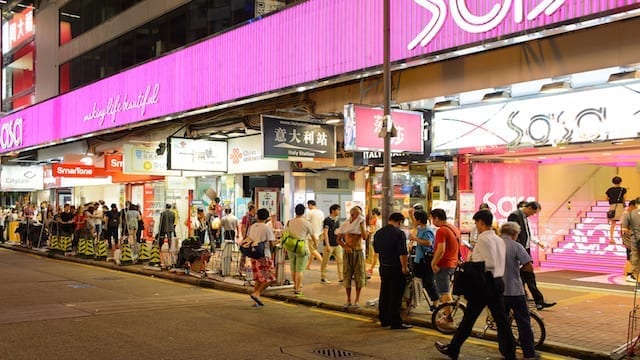
    The growth of Hong Kong retail sales in November slowed to a crawl according to Census and Statistics Department figures just released. After a 6 per cent year-on-year increase in October, the value of sales in November rose just 1.4 per cent to an estimated HK$39.2 billion. That is well below the 9.7 per cent year-to-date rise for the first 11 months of the year.

    And after netting out the effect of price changes over the same period, Hong Kong retail sales in November rose by just 1.2 per cent year on year.

    A spokesman for the C&SD said the “generally moderated growth in retail sales in recent months” reflected more cautious consumption sentiment in the face of various external uncertainties such as the US-Mainland trade tensions and volatilities in the global financial markets.

    “Looking forward, while the favourable local job and income conditions and continued expansion in inbound tourism should still provide some support to the retail sector in the near term, consumer sentiment could be affected by weaker asset prices and the external uncertainties.”

    The overall figure was affected by soft sales of the key jewellery and watches category, down by 3.9 per cent, and of electronics, down by 4.9 per cent. Clothing sales fell by 3.6 per cent.

    Countering those falls were department store turnover, up 3.9 per cent; medicines and cosmetics up 10.1 per cent; food, alcoholic drinks and tobacco up 1.9 per cent; and other consumer goods, not elsewhere classified by 14.3 per cent. Optical store sales rose by 5.4 per cent and books and stationery by 6. 2 per cent.

    Quarter on quarter, Hong Kong retail sales receded during the three months to November by 2.7 per cent, compared with the preceding three months, with the volume of sales (after factoring in inflation) falling 1.8 per cent.

    For the first 11 months of last year, the volume of retail sales increased by 8.4 per cent.

  • Honolulu Cafe debuts in Philippines

    Honolulu Cafe debuts in Philippines

    Hong Kong’s Honolulu Cafe has opened its first branch in Manila. Renowned for its signature egg tarts with 192 flakey pastry layers (no, we are not sure who counted them!), the cafe also serves its own house-blend of coffee. The new store opened last week, January 5, at the SM Aura shopping centre. Honolulu Cafe dates back to 1940 when it opened as an ice cream parlour. Nearly 80 years on, the company now has stores in Singapore, Malaysia and Taiwan as well.

    Besides egg tarts and coffee, the cafes serve Hong Kong-style stocking-strained milk tea, pastries, buns, Cantonese-style roast meat, and fried noodles. The new outlet is on the ground floor of the Bonifacio Global City shopping centre.

  • Kathmandu Australia drops expectations after slow holiday sales

    Kathmandu Australia drops expectations after slow holiday sales

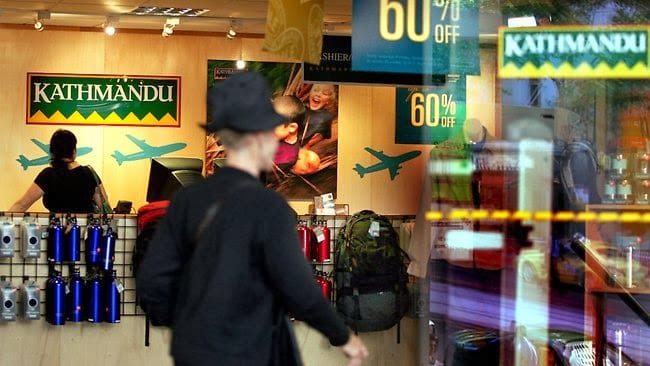
    Outdoor retailer Kathmandu has seen sales fall over the first 15 weeks of the 2019 fiscal year after sales during the December Summer Sale failed to reach expectations, deflating the retailer’s projections for 1H2019. Same store sales for the 22 weeks ending 30 December fell 1 per cent year on year, falling 0.2 per cent in Australia and 2.4 per cent in New Zealand.

    “Following strong same store sales growth in Q1, we are disappointed in trading results in Australia and New Zealand over the Christmas and Boxing Day period,” Kathmandu chief executive Xavier Simonet said.

    “Despite sales being below expectation it is pleasing to see the improvement in retail gross margin and continuing strong growth from the recently acquired Oboz business.”

    Gross margin improved to roughly 64 per cent over the period, partially offsetting the lower than expected sales to date for the 2019 year.

    First half sales in US footwear brand Oboz are now projected to grow 35 per cent to approximately $23.5 million (NZ$27.5 million), and see a gross margin of 40 per cent.

    Total group profits are expected to reach approximately 4 – 8 per cent above 1H2018, assuming current trends continue.