Tag: lifestyle

  • How technology is revolutionising the foodservice industry

    How technology is revolutionising the foodservice industry

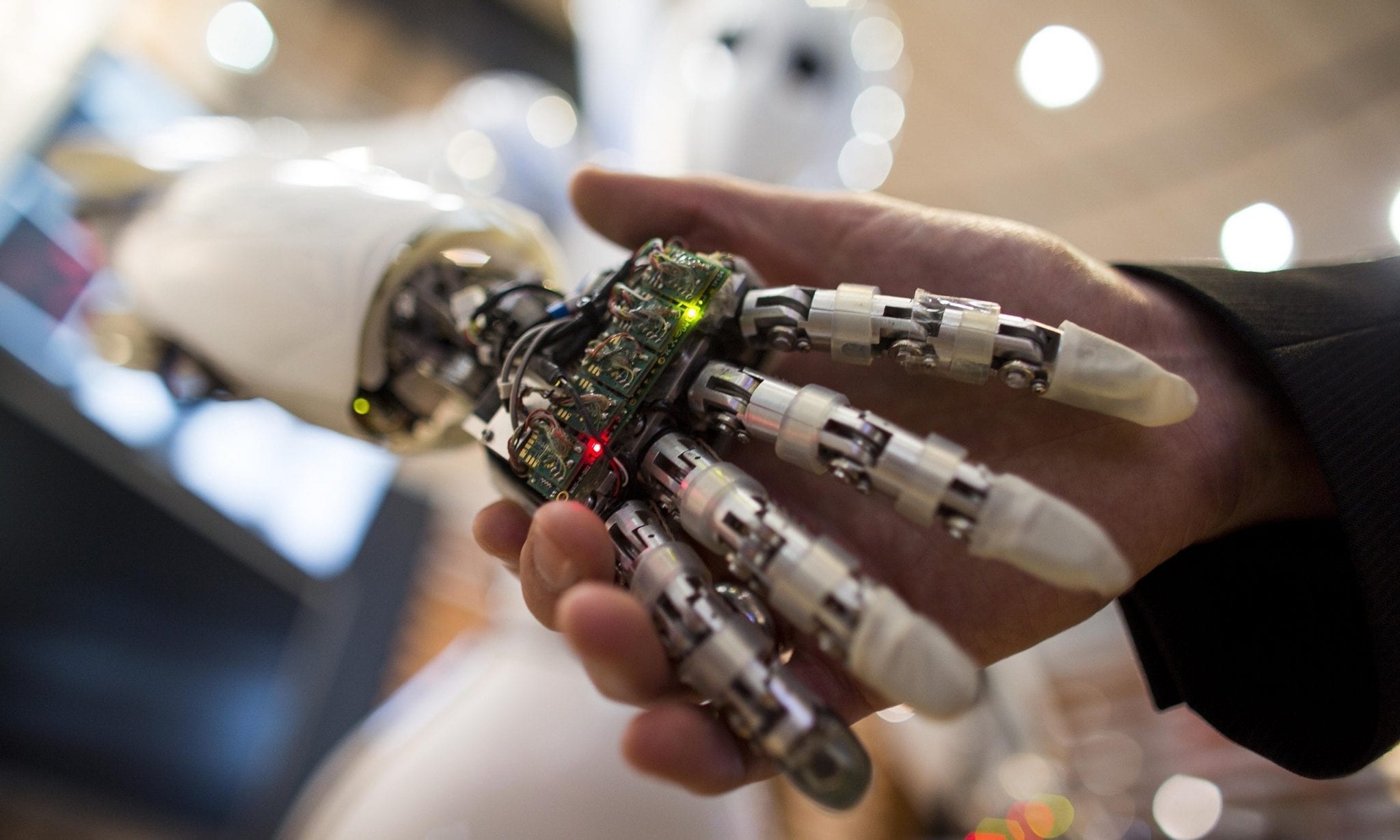
    We are at the beginning of the most radical transformation of the foodservice industry. Until now, technological innovations in the industry meant ordering food from an app or paying bill through tablets. But now restaurant owners are upping the ante, taking the game to the next level by experimenting with technology like never before. From introducing interactive smart tables and virtual bars to replacing servers with robots, restaurateurs are revolutionising the foodservice industry in the best way possible to enhance the overall customer experience.

    Interactive Smart Tables

    Mumbai-based Drinx Exchange has introduced electronic tech tables, where customers can interact with an electronic screen on the table they’re dining on. From watching live scores of sports, to receiving personalised offers, tracking their orders, paying their bill, and even singing along with the music in the bar, these tech tables will ensure consumers remain engaged through the time they’re in the restaurant. The screen also keeps giving them live offers that are just right for what they drink.

    The electronic table also splits the bill among the number of diners on the table and the payment can be settled on the table itself by scanning a Paytm QR Code on the screen

    Furthermore, the prices of drinks also fluctuate just like the stock exchange and customers can vote to crash the market price. Apart from this, the table also helps the customers in checking the status of their cab if they book it from Drinx Exchange app.

    According to Founders, Drinx Exchange, Rahul Dingra and Dibyendu Bindal, “The bar aims to ease the experience of ordering and makes it less stressful and more exciting for its millennial customers.”

    Virtual Bar

    The Beer Café has recently introduced ‘URBAR’, a virtual bar which allows patrons to reserve and consume their favourite brands.

    One can explore from a wide selection of alco-beverage, pre-pay and stock them in ‘URBar’. The latest ‘wallet for customer’s drinks’ initiative highlights the brand’s vision to redefine the alco-beverage space through technology differentiation and further strengthen its position as a pioneer.

    The patrons can log in to The Beer Café’s mobile app, and click on the URBar icon, reserve in the form of bottle (for spirits), keg (for draught beer), or case (for bottled beer) and start consuming.

    This not only gives patrons the privilege to buy their favourite brands at a special price but also benefits in the form of one price across the nation. A consumer can choose any portion he/she wishes to consume at any Beer Café outlet spread across 12 cities and save the rest for their next outing. The bottle/ keg purchased stands as a prepaid instrument and stock diminishes as the consumer opts to consume.

    There are multiple convenient ways of recharging the account. Customers can use an ‘online’ mobile wallet to add balance to their brew bucks – which is The Beer Café’s own currency. Or ‘pay at store’ by just walking into the closest The Beer Café outlet and the brew crew will be happy to assist the customers.

    What’s more, it also gives patrons the option to spread the cheer around by gifting customisable amounts of their reserved stock to friends, family and colleagues.

    Rahul Singh, Founder & CEO, The Beer Café says, “At The Beer Café, we believe that social drinking should first and foremost be about the experience. Our focus is to improve customer’s real world experience, their choices of brand and location. With the URBar feature, we are giving the users a chance to experience our differentiated proposition in the virtual realm. It is a delightful addition to the existing feature on The Beer Café mobile app. With this initiative we have raised the bar – quite literally!”

    Futuristic Robot

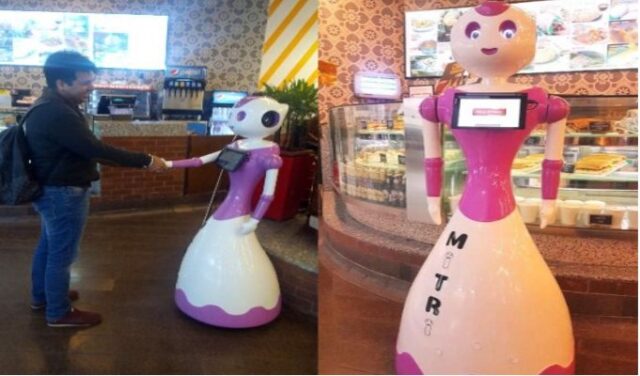
    Travel Food Services (TFS), travel food and retail company, unveils the latest in technology – Mitri, the robot, to make the experience of travellers interactive and fun.

    Mitri will be engaging with customers at TFS’s Dilli Streat outlet at Indira Gandhi International Airport, New Delhi, and is the first ever airport installation in the F&B segment.

    Visitors to the Dilli Streat outlet will be met and greeted by Mitri, who will facilitate activities and engage with them by providing menu detail. It would also be offering food recommendations. Mitri is a testament to Travel Food Service’s commitment of enhancing the travel experience in India, and presents a true example of how technology like Artificial Intelligence can help improve customer satisfaction, and drive productivity and sales.

    Commenting on the latest technology, Gaurav Dewan, COO and Business Head, Travel Food Services said, “We are always on the lookout for latest innovative technologies that can enhance the experience and satisfaction of our customers. We are extremely excited to present Mitri at our Dilli Streat outlet at the Delhi Airport. With Mitri being such an innovative and futuristic concept, and given her success, we are hopeful to bringing her to more outlets across India.”

    Robots Replacing Servers

    At a restaurant in Alibaba Group Holding Ltd’s futuristic ‘FlyZoo’ hotel, tall capsule-shaped robots deliver food that guests have ordered via the FlyZoo app. Meanwhile, at a separate bar, a large robotic arm can mix more than 20 different types of cocktails.
  • Reliance Retail Q3 revenue up 89.3 percent

    Reliance Retail Q3 revenue up 89.3 percent

    Healthy festive season sales and new store openings led Reliance Industries’ organised retail business — Reliance Retail — to report a 89.3 per cent rise in its revenue for the third quarter of 2018-19. The firm’s revenue figure was disclosed under the Reliance Industries (RIL)’s third quarter results, on Thursday. Accordingly, the firm’s revenue for 3Q FY19 grew by 89.3 per cent to Rs 35,577 crore from Rs 18,798 crore reported for the corresponding quarter previous year.

    The company’s Earnings Before Interest and Taxes (EBIT) rose 210.5 percent on a year-on-year (Y-o-Y) basis to Rs 1,512 crore from Rs 487 crore demonstrating strong operating profit during the quarter.

    In addition, EBIT margin for the segment improved by 160 basis points to 4.2 percent reflecting scale benefits. Retail now has 9,907 stores with a reach across more than 6,400 towns and cities

  • Pizza Hut India betting big on delivery in 2019

    Pizza Hut India betting big on delivery in 2019

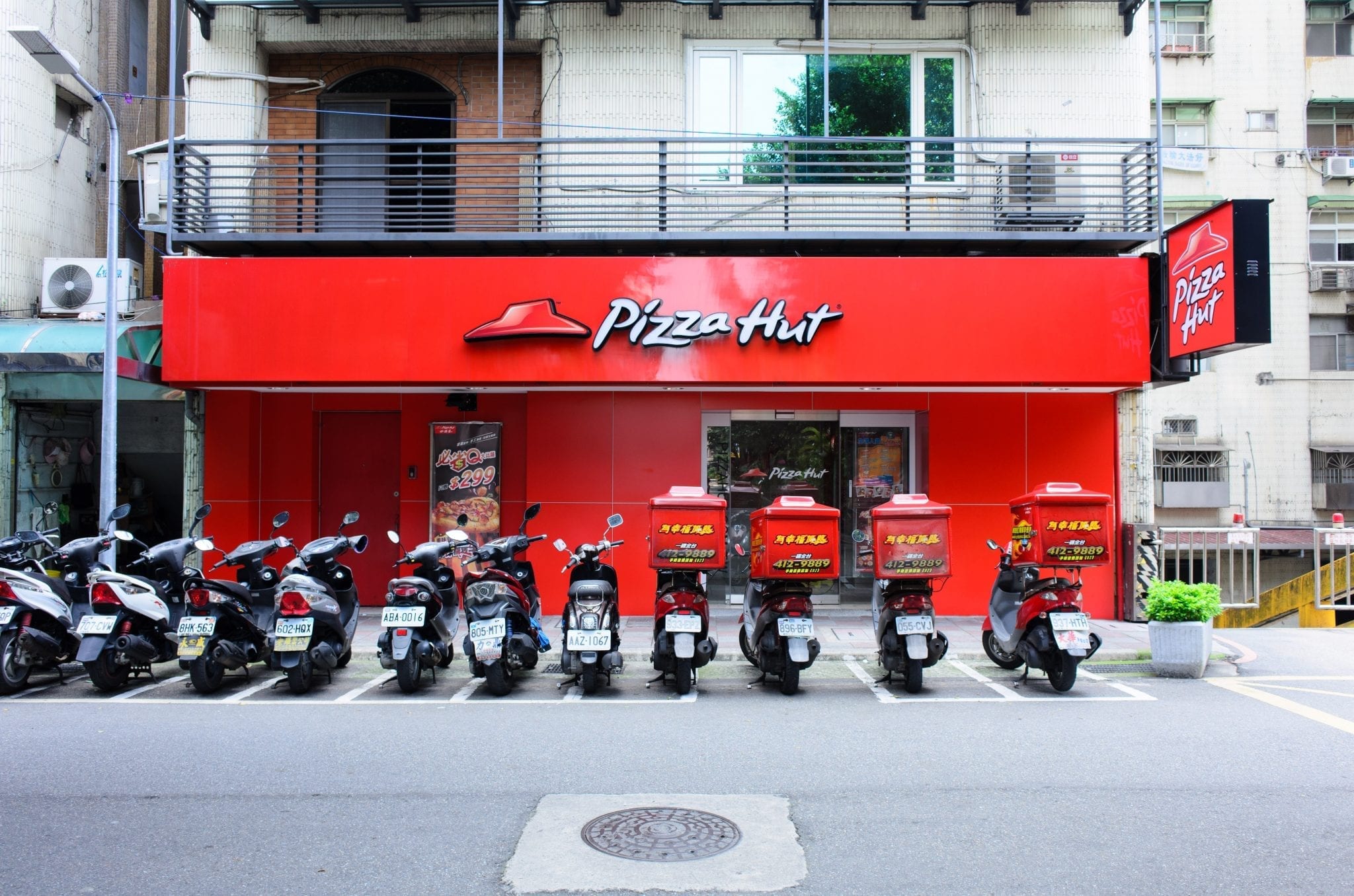
    Pizza Hut India has announced that the company will focus on delivery as a key driver of business growth in 2019 and introduce various initiatives to further enhance the delivery experience for consumers. Coherent with this aim, the brand has launched a rider tracking feature across its digital ordering platforms – mobile-site, mobile app and desktop site. The feature is available across all cities where Pizza Hut has delivery services.

    The rider tracking feature has been launched by Pizza Hut as a solution based on key behavioral findings of the brand’s large consumer base, majority of whom are tech-savvy, on-the-go millennials. The findings have shown that consumers choose brands which adapt to their lifestyle, understand their preferences and enable them to take charge. Also, with changing consumer habits, pizzas have evolved from being a special occasion treat to becoming a part of everyday food consumption in India. Therefore, hassle-free and seamless food ordering and delivery experience has become a vital deciding factor, apart from taste and quality. Rider-tracking is an enabler of the convenience that consumers are seeking, further bolstered by value offers.

    Commenting on the launch of the feature, Prashant Gaur, Chief Brand and Customer Officer, Pizza Hut India Subcontinent said, “At Pizza Hut, we take a lot of pride in serving the freshest and the tastiest pizzas to all the pizza lovers in the country. Apart from great taste, elevating the overall experience across every consumer touchpoint is our biggest focus, and we are implementing this strategy through initiatives like rider tracking feature and value offers. We are confident that these initiatives will further enable us to stay relevant and blend even more seamlessly into the daily lives of our consumers.”

    The upscaling of the delivery channel comes at a time when Pizza Hut India Subcontinent has achieved strong business results with 10 successive quarters of positive Same Store Sales Growth. The brand has been steadily expanding its physical store footprint and launched its 500th physical store in the Indian Subcontinent. Pizza Hut also pioneered the Fast-Casual Delco (FCD) concept in India, which offers a seamless integration of dine-in, takeaway and delivery channels, all under one roof. The company recently upgraded all its digi-tech assets including the website, m-site and mobile app. These initiatives have enabled Pizza Hut to deliver on the promise of providing the easiest, fastest and the tastiest pizza experience to consumers in India. As a result, Pizza Hut has been voted the most trusted brand in India for the 12th time in a row (as per a reputed media house) and was awarded the prestigious EFFIE Gold in the Foods and Confectionery category in 2018 for its outstanding consumer-centric performance.

  • Imported vehicle sales in Korea up nearly 10% in 2018

    Imported vehicle sales in Korea up nearly 10% in 2018

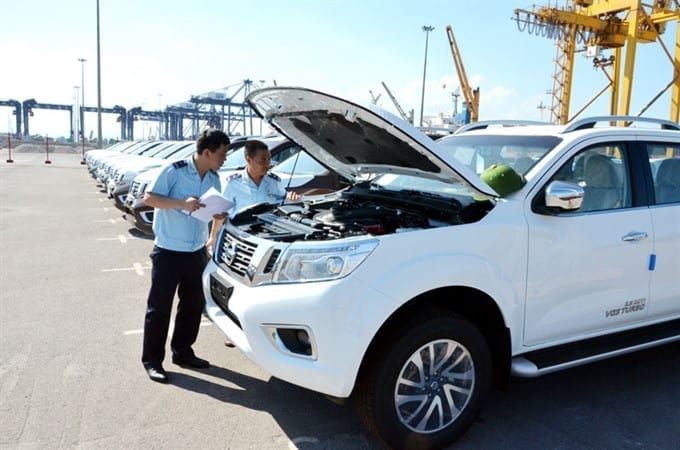
    The value of imported vehicles sold in Korea last year jumped 9.9 percent to 17.47 trillion won ($15.49 billion) from a year earlier on demand for German models, industry data showed Thursday. In 2018, imported carmakers sold a combined 260,705 vehicles in Asia’s fourth-biggest economy, up 12 percent from the previous year, the latest findings showed.

    According to the Korea Automobile Importers and Distributors Association (Kaida), strong demand for vehicles made by Mercedes-Benz, Audi and Volkswagen pushed up sales numbers.

    Imported auto brands accounted for a record 16.7 percent of all vehicles sold and registered in the domestic passenger car market for 2018, up from 15.23 percent in the previous year, Kaida said.

  • Unison Capital could bag US$442 million for Gong Cha deal

    Unison Capital could bag US$442 million for Gong Cha deal

    South Korean private equity firm Unison Capital is selling its Gong Cha bubble tea franchise in a deal likely to fetch up to US$442 million. The company purchased the brand four years ago for KRW34 billion ($30 million), before taking over its global headquarters in Taiwan in a KRW40 billion ($35.45 million) deal in 2017. The brand’s HQ operates stores in 16 countries.

    The offer has attracted interest from major South Korean F&B players, considering the brand’s stable cash flows and EBITDA margin of 24–25 per cent, compared with Starbucks’ 21 per cent.

    The brand runs 448 outlets within South Korea, and derives 70 per cent of its sales from directly managed stores within Korea and Japan. The firm plans to expand its global store count from 900 to 1700 by 2021, expanding into 10 more countries during the period – with concrete plans to establish stores in the UK, Mexico, Thailand, Indonesia and Cambodia.

    Sales are forecast at KRW180 billion ($159.54 million) this year, compared to KRW134 billion ($118.77 million) last year.

  • Qatar possible partner for Malaysia’s third national car project

    Qatar possible partner for Malaysia’s third national car project

    Malaysia is looking at the possibility of having Qatar on board the third national car project. In a statement, the International Trade and Industry Ministry (Miti) said Minister Datuk Darell Leiking had a bilateral meeting with Qatar’s Minister of Commerce and Industry Ali Ahmed Al Kuwari and Qatar Investment Authority CEO Mansoor Ebrahim al-Mahmoud on Jan 22.

    “The main objective of the meeting is to explore the possibility of having Qatar on board Malaysia’s third national car project. This is to leverage on Qatar’s investments in Volkswagen and Audi. Qatar positively welcomed the idea and reiterated on the need to deliberate the details of the joint manufacturing project,“ Miti said.

    Darell highlighted that Qatar could look at the possibility of collaborating in Malaysia in other parts of the automotive sector such as investment in automotive components or producing electric cars. He also informed Qatar on the recent launching of the latest Proton model X70 and Perodua Aruz.

    “Qatar took the opportunity to update Malaysia on its current investment reforms including the relaxation of foreign investment ownership, of which 100% foreign ownership is now allowed in Qatar in various sectors.”

    Qatar expressed hope that more Malaysian companies to invest in Qatar. Qatar can be seen as a gateway to the Middle East market and Malaysia as a springboard to the Asean market. To this effect, the Second Malaysia-Qatar Joint Trade Committee Meeting is scheduled to be held on March 28-29 2019.

    “Noting the good relationship between Malaysia and Qatar, the minister also expressed the possibility of proposing Qatar to be a dialogue partner in Asean,“ Miti said.

  • Lotte to pursue reforms and investment in 2019

    Lotte to pursue reforms and investment in 2019

    Lotte Group Chairman Shin Dong-bin told affiliate CEOs that he wants reform and aggressive investment in 2019 during a biannual meeting on Wednesday. Shin missed the last meeting in July as he was serving time in prison for bribery related to former President Park Geun-hye. The first meeting of the year typically deals with each affiliate’s annual goals and direction.

    In the first meeting with CEOs after his return, the chairman emphasized that the company was in need of innovation strong enough to rattle its existing business structure.

    “We are about to face immense change in the future that is difficult to imagine,” he stressed to affiliate heads at the meeting. “Therefore we have to be thorough in predicting the future and devising preparations according to different scenarios. If we can’t come up with a clear vision or concrete plans, there will be an immense crisis.”

    Shin pointed out that the group had been “passive” recently when it comes to making investment decisions, missing opportunities and waiting for too long.

    He added that investment decisions have to be made continuously, even when revenue is low and in businesses that the company is doing well in so as to maintain an upper hand in the market.

    He also mentioned the possibility of downsizing unprofitable businesses, citing Microsoft becoming global No. 1 by market cap last year after conducting reforms on its business portfolio.

    “We should focus on areas with future growth potential and push for rationalization,” said Shin.

    Digital transformation, an initiative he has been pushing for in the last few years, also reappeared in Wednesday’s speech.

    “Compared to global companies, Lotte has a low investment rate in the IT sector and the fields invested in so far are [relatively] narrow,” he said, urging that the company needs to find ways to get one step closer to customers using existing assets like big data, brick-and-mortar stores and logistics infrastructure.

    Recently recruited IT professionals were also called into the meeting to share their opinions on Lotte’s current situation regarding digitalization and areas that can be improved.

  • Burger Singh India to launch 10 drive thru outlets by 2022

    Burger Singh India to launch 10 drive thru outlets by 2022

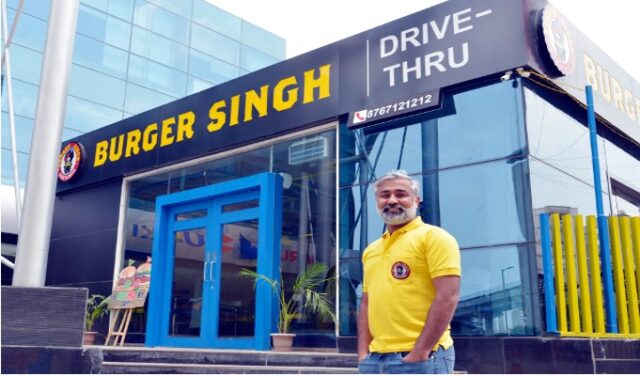
    Burger Singh, the chain of Indianised burgers, has announced its plans to invest substantially in the burgeoning concept of drive thrus, and launch 10 drive thru outlets within the next three years. Overall, the company aims to open 100 outlets in the country by 2022. Speaking on the launch, Kabir Jeet Singh, Co-founder and CEO of Burger Singh said, “Consumer experiences are evolving, and the demand for swift and efficient food outlets has been validated by the popularity of drive thrus. By 2022, over 10 percent of our outlets in the country will be drive-thru outlets.”

    Located on the Golf Course Road in Gurugram, the first Burger Singh drive thru offers swift Indianised burger feasts to the busy and rushed of the city.

    Burger Singh is the largest chain of homegrown Indian flavour burgers in the QSR category in India, with a strong presence in West & North India with 25 outlets in Delhi NCR, Jaipur, Dehradun, Nagpur and Pune. The brand has also ventured in the UK with two outlets in London and has emerged as the most popular brand of Indian burgers in the state.

    The brand has also announced its aggressive expansion plans for the next three years. The company will be hiring over 450 employees by 2020, setting up 100 new outlets.

    Kabir Jeet Singh said, “2019 is expected to be a landmark year for Burger Singh, and we are looking at growing our operations and revenues at least by double in the year. We are planning to expand our operations to more cities in India, which would demand additional manpower to manage the new outlets, and will be hiring aggressively to support our growth. Also, we need to multifold our staff in the corporate office, especially marketing, procurement and hiring teams, to keep up with the expansion, and business targets”

    “We plan to hire resources across all profiles, for delivery and outlets, pan-India and for the corporate office,” he added.

    Known for Indianizing a typical western flavour, Burger Singh specialities include the vegetarian Keema Pao, the Pao Bhaji Burger, the Malabar Express Chicken Burger & Channa Burger for the vegetarians, the Jaatputt Chicken Burger, the Amritsari Murgh Makhani Burger, the Udta Punjab Burger, the Bunty Pappeh Da Aloo Burger and the United States of Punjab Burgers in both vegetarian & non-vegetarian options, amongst others.

    The company is headquartered in Gurgaon, Haryana

  • BMW Korea announces recall of 99,000 additional vehicles

    BMW Korea announces recall of 99,000 additional vehicles

    BMW on Wednesday announced another recall of an additional 99,000 vehicles, with 20,000 of them recalled immediately on concerns of engine fires. The remaining 79,000 will be recalled if replacement parts are found to be faulty. The Ministry of Land, Infrastructure and Transport on Wednesday announced that it has told the German carmaker to follow up with a recall plan that it submitted last week.

    The recall plan followed the investigation results announced by a joint investigation team on Dec. 24 in regard to BMW vehicle catching fire in Korea.

    The investigation team at the time announced that the fires were not only caused by the emission reduction system, or exhaust gas recirculation (EGR) system, but also by the intake manifold.

    The 20,363 vehicles that were in the first recall in July last year will be the first in line to be re-recalled, this time to check the intake manifold.

    These are vehicles with EGR modules that have not been replaced.

    The government said it will also inspect 80,000 BMWs to see if they have any leakage problems.

    Last year, BMW recalled 106,000 vehicles after they began bursting into flames last summer.

  • Alibaba develops new technology to help the blind shop online

    Alibaba develops new technology to help the blind shop online

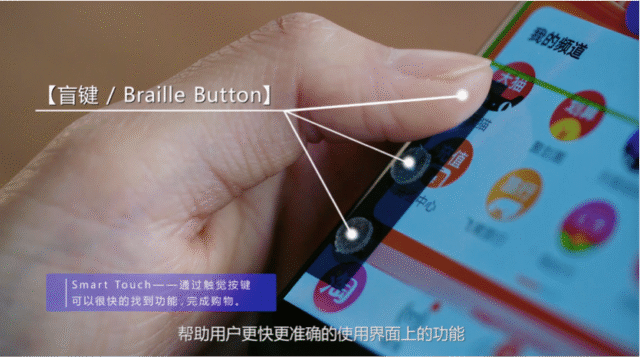
    E-commerce giant Alibaba has developed new technology to make it possible for blind and partially sighted people to shop online, according to an article on Alibaba’s news site Alizila. Alibaba plans to launch Smart Touch, an affordable silicone sheet that goes on top of smartphone screens, later this year. The plastic film includes three mini buttons on each side that sensory-enabled. Pressing on each one will trigger a different command, such as “go back”, “return to homepage” and “confirm”.

    Depending on the app, the buttons can lead to different destinations, such as “My Shopping Cart,” “Tmall Global,” and “Tmall Supermarket” in the Taobao app.

    Smart Touch is a joint effort of Alibaba’s Damo Academy and China’s Tsinghua University to improve the smartphone experience for the blind.

    The technology also has an “ear touch” feature, which gives blind and visually impaired users a simple way to listen to text clearly and privately in public, without the need for headphones. It senses when the users is holding the phone to their ear and automatically routes the sound output from the loudspeaker to the earpiece speaker.

    In October last year, Alibaba added Optical Character Recognition (OCR) technology to the pages of its online marketplace Taobao, an artificial intelligence-driven feature that reads text written on images.

    Before adopting OCR, Taobao’s 300,000 daily active users who are blind or have reduced vision would have used screen-reading software that simply announced “image” as it scanned the page. By early December, OCR was being used to read close to 100 million images per day, Alizila reported.

    “Images are becoming ever more important in the shopping experience,” said Wang Yongpan, algorithm specialist who led the OCR upgrade.

    “A typical product page on the site contains about 40 images, and most product specifications and descriptions are often found within images, rather than typed out in plain text.”

    Yongpan said that while Alibaba has been using OCR for many years in various capacities, the technology’s accuracy in reading images has grown exponentially due to advances in machine learning.

    According to Taobao president Jiang Fan, making the platform more inclusive, user-friendly and a home for creativity is part of its larger strategy.

    “If I had to do one thing this year, that would be to make Taobao simpler and bring [us] back to our original purpose,” he said.

    “Alibaba is famously known by its motto, ‘To make it easy to do business anywhere’.”

    The OCR launch was driven by Alibaba’s “Barrier-Free Lab”, which started with a handful of employees in 2011 and has since grown to hundreds of volunteers, ranging from programmers to user-experience designers.

    Now, similar tools can be seen across Alibaba’s ecosystem, expanding from Taobao to B2C e-commerce site Tmall, payments affiliate Alipay, online delivery platform Ele.me, enterprise chat app Dingtalk, navigation firm Amap, music streaming app Xiami and internet browser UC Web, from desktop to mobile.

  • Lotte Mart’s distribution fees scrutinized

    Lotte Mart’s distribution fees scrutinized

    Korea’s antitrust body is examining the practice of retailers unfairly shifting distribution costs to their suppliers. The Fair Trade Commission (FTC) has started evaluation proceedings against Lotte Mart for transferring this burden and charging an onward transportation fee after a product has been delivered. The regulator could fine the retailer 400 billion won ($353.92 million) if it is found to have violated the law. It has the authority to prosecute and punish companies that contravene the Fair Trade Act and other statutes related to anti-competitive practices.

    The FTC’s Distribution Division, which monitors the activities of retailers, submitted an evaluation report, equivalent to a prosecutor’s indictment, to the commission early last month. The document outlined Lotte Mart’s infractions over five years.

    Lotte Mart has until early February to respond.

    This will be the first time the FTC has taken action against a company for shifting distribution costs to suppliers. Lotte Mart’s practice of transferring the costs, commonly known as post-distribution costs, is widespread.

    The action comes amid FTC Chairman Kim Sang-jo’s drive to root out unfair practices in the retail industry.

    Lotte Mart’s shifting of post-distribution cost to suppliers is likely to have far-reaching implications in the industry as the practice is common.

    “When signing a contract, there are requests to supply products at a price three to five percent lower than the actual price to account for the post-distribution costs,” explained Mr. Lee, who operates a company that supplies to retail stores. “It’s not just Lotte. It is common for large retail stores such as Emart, Homeplus, department stores, convenience stores and even e-commerce companies, such as Coupang.”

    The 400 billion won fine, if charged, would be an unprecedented amount. If other companies are fined, the total sum could rise to the trillions.

    “Unlike sales promotion fees, distribution costs have to be paid,” said Mr. Kim, the president of a large food company. “We struggled as it’s impossible to know the exact figure, but the FTC took on this matter for the first time.”

    From the FTC’s perspective, large retail stores use distribution centers for their own benefit, and it is unfair to force suppliers to take on costs incurred after products are delivered to the centers.

    “Suppliers that just want to deliver to distribution centers are forced to deliver to branches,” explained a senior FTC official. “If the final delivery destination is a branch store, the supplier should be able to manage their products as they want at the distribution center, but that is not the case.”

    “From a common-sense perspective, distribution costs apply only until the delivery location, not costs after the delivery,” the official added.

    Other experts disagree with the FTC’s assessment.

    “If the retailer and supplier haven’t agreed on the location of the delivery, the supplier burdening the delivery cost abides by civil law,” said Lee Ho-young, a law professor who specializes antitrust law at Hanyang University.

    Lotte is going all out on its defense, hiring Kim & Chang’s fair-trade team to represent it.

    “In the past, when there weren’t distribution centers, suppliers used to be burdened with the distribution costs,” said a Lotte Mart official. “Post-distribution costs are paid after distribution centers were established.”

    The FTC is looking into other cases.

    “The retail business cannot work if post-distribution costs are shifted to retailers,” said an executive at a large retail company who is in charge of fair trade matters.

    The FTC could make a final decision as early as March.

  • Travel Food Services India introduces the futuristic robot – Mitri

    Travel Food Services India introduces the futuristic robot – Mitri

    Travel Food Services (TFS), India’s leading Travel Food and Retail Company, unveils the latest in technology – Mitri, the Robot, to make the experience of travellers interactive and fun. Mitri will be engaging with customers at TFS’s Dilli Streat outlet at Indira Gandhi International Airport, New Delhi, and is the first ever airport installation in the F&B segment.

    Visitors to the Dilli Streat outlet will be met and greeted by Mitri, who will facilitate activities and engage with them by providing menu detail. It would also be offering food recommendations. Mitri is a testament to Travel Food Service’s commitment of enhancing the travel experience in India, and presents a true example of how technology like Artificial Intelligence can help improve customer satisfaction, and drive productivity and sales.

    Commenting on the latest technology, Gaurav Dewan, COO and Business Head, Travel Food Services said, “We are always on the lookout for latest innovative technologies that can enhance the experience and satisfaction of our customers. We are extremely excited to present Mitri at our Dilli Streat outlet at the Delhi Airport. With Mitri being such an innovative and futuristic concept, and given her success, we are hopeful to bringing her to more outlets across India.”

  • Naver says it’s not interested in opening an internet bank

    Naver says it’s not interested in opening an internet bank

    Naver said Monday that it has no plans to launch an internet-only bank, shutting down rumors that the IT giant might open the country’s third such bank after K bank and Kakao Bank. “Although we have reviewed [joining] the internet-only bank business, we decided against it and will not attend the information session regarding internet-only bank licenses on Wednesday,” said a Naver spokesperson.

    “This is the decision we made after giving a lot of thought into whether Naver can be competitive when the domestic internet-banking environment is already so well established and existing internet-only banks K Bank and Kakao Bank are doing well.”

    The announcement comes as a surprise to the industry as Naver has been hailed as one of the likeliest candidates to qualify for a banking permit. Last month, financial authorities announced that they would grant internet-only bank licenses to up to two companies this May in an effort to boost competition in the banking industry. The information session, organized by the Financial Supervisory Service and Financial Services Commission, comes as part of the government’s effort to facilitate the application process.

    Despite government initiatives, however, no major company has yet to directly express an intention to apply for a bank license.

    Game developer NHN Entertainment and booking and shopping platform Interpark – which led a failed effort to apply for a permit in 2015 – have also said they don’t plan on pursuing internet-only banks.

  • Supermarket, apparel sales not looking good in Japan

    Supermarket, apparel sales not looking good in Japan

    Japanese supermarket sales edged down 0.2 per cent in a third consecutive year of declines, according to figures released by an industrial body this week showing last year’s financial performance. The data for last year shows sluggish consumption regardless of the country’s current period of economic growth. Observers have attributed the slump to a low demand for apparel in supermarkets relative to stronger sales in food.

    Apparel sales fell 5.3 per cent, the 27th straight year of declines, influenced by the warm winter and increased competition with retailers online. Food, by comparison, saw 0.4 per cent higher sales with an uptick in prices for vegetables and sweltering summer temperatures.

    While total sales rose 0.5 per cent to ¥12.99 trillion ($118.71 billion) last year, they still fell short of the hoped-for ¥13 trillion mark for the second year in a row.

    “Spending is weak as a deflationary mindset is still deeply rooted among consumers”, said Atsushi Inoue, a senior official of the Japan Chain Store Association.

  • Taoyuanming Shanghai tests automated stores

    Taoyuanming Shanghai tests automated stores

    Swedish-Chinese firm MobyMart is expanding its automated store format in China in collaboration with Shanghai fruit retailer Taoyuanming. Two stores are operating, one in Hefei and one outside Shanghai. While expansion in the region is the firm’s priority this year, its long-term sights are set on Europe and North America. According to brand co-founder Per Cromwell, MobyMart initially opened a corner-store-format mobile vending platform for coffee, which evolved into MobyMart, a mobile platform for “vending everything”.

    “We found a very visionary fruit retailer in the suburbs of Shanghai, Taoyuanming, and basically they had physical stores but they wanted to have unmanned stores,” said Cromwell.

    “We saw that we didn’t actually need to make too many adjustments to our existing system because basically what we had to do was pre-pack all the fruit — we needed to have fixed units and not have people buying by weight … and when we opened it up to the public it was an instant success.”

    The store carries around 50 SKUs at a time.

    Taoyuanming is reportedly so pleased with the results that two more automated stores are scheduled to open early this year, which may be followed by staffless stores if successful.

    The firm’s strategy is to provide a platform to small retailers.

    “If you are for instance a fruit store outside Shanghai and you want to expand from a few stores to 10 stores in your neighbourhood, then you can’t really start buying BingoBoxes because it’s quite complicated and expensive technology,” says Cromwell.

    The MobyMart model relies on customers scanning their product, while cameras and sensors serve as a back-up. This  “very simple technology” allows for opening “a lot of stores at a very low cost,” Cromwell says.

    “It won’t be 100-per-cent staffless because you still need someone circulating the store and making sure everything’s fine and restocked, but one person in one day can operate eight to 10 stores depending on how spread out they are. So you have much more efficiency with the staff you do have.”

    He added that AI and big data will help store operators know what products will be needed at what locations and at what time.

    “If we have a request of some sort, that is something that will also solve the last mile problem,” he said.
    The whole store and system is expected to retail for around US$15,000. MobyMart also has a prototype mobile store with automated driverless vehicle capacity – although its rollout is restricted by legislation around the technology.