Eyeing the burgeoning US$ 100 billion global natural foods and drinks industry, Jitin Munjal, former Global Director for Sales and Marketing at DuPont has announced his natural nutrition food and beverage venture, Jus’ Amazin Foods and Beverages Pvt. Ltd. Co-founded with his wife, Shilpa Mogilishetty, Jus’ Amazin started in the kitchen, as the couple were developing nutritiously rich natural food products that are delicious, for their son, who is allergic to dairy and soy products. After a lot of R&D, the kitchen experiment has now grown (over the last few months), to be present in 75 retail stores, and 20 e-commerce sites, pan-India.
Speaking on the venture, Jitin Munjal, Co-founder and CEO of Jus’ Amazin said, “Most packaged food is highly processed, packed with chemicals and low in nutrition, and as consumer awareness about the ill-effects of chemicals in food is growing, they are demanding foods that are natural, nutritious and delicious. While trying to find dairy and soy free foods for our son, we realized how underserved the natural and nutritious food market is in India. Jus Amazin caters to the health and nutrition conscious consumer with natural wholesome foods, which are both delicious and nutritious.”
Jitin Munjal is a seasoned professional and entrepreneur with more than 20 years of rich experience in Business Management, Marketing, Sales & Distribution, Product Development and in leading global and regional teams. Jitin has received his education from premier institutes such as Indian Institute of Technology Delhi, Indian Institute of Management Ahmedabad, London School of Economics and Political Science, and has worked with blue chip companies such as P&G, Tata Group (as part of the prestigious TAS), Castrol & DuPont. In his last corporate role, Jitin was heading global marketing and sales excellence at DuPont, a leading multinational corporation with interested in varied industries. Shilpa Mogilishetty holds a Masters in Anthropology from the University of Sussex and has worked across the corporate and social sectors, in the areas of Market Research, Media Planning and Change Management.
Jus’ Amazin’s current product range includes 100 percent natural, gluten free, soy free, dairy free and plant based foods such as nut and seed butters/ spreads (almond butter, organic peanut butter, seed butter and cashew butter). The products are currently available both online at leading e-commerce websites and also in retail stores in Bangalore, Delhi NCR, Mumbai, Pune, Chennai, Hyderabad and Goa. Leading brands such as Foodhall, Spar, BigBasket, Namdhari’s, Modern Bazaar, Loyal World, Amazon, HealthifyMe, FirstCry, HealthKart, Qtrove, The Gourmet Box, among others have partnered with the company.
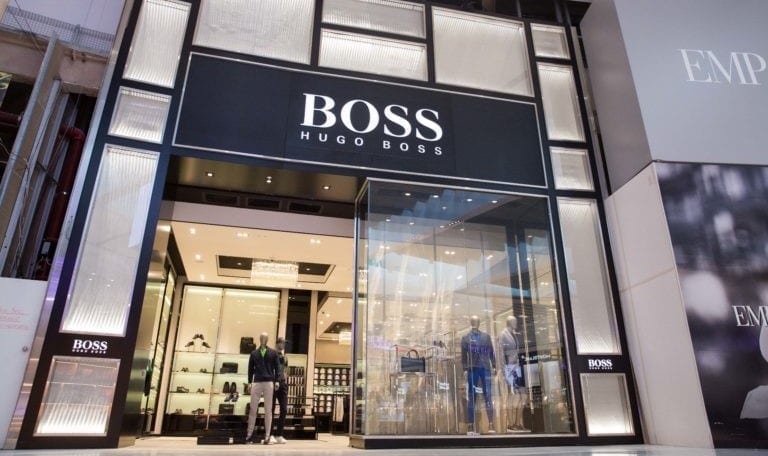
German menswear retailer Hugo Boss has seen sales growth accelerate in the fourth quarter of 2018, driven by Asia. Comparable-store sales rose 4 per cent compared to the previous corresponding period and online sales rose 37 per cent, marking the fifth consecutive quarter of double-digit e-commerce sales growth. Group sales also grew 6 per cent in the fourth quarter, adjusted for currency differences, to €783 million – compared to €735 million in the previous corresponding period.
On a comparable-store basis, Asia Pacific was the fastest growing region for the brand, with China achieving high single-digit currency-adjusted store-sales growth for the period.
Europe and the Americas saw comparable-store sales growth in the mid-single-digit and low-single-digit rates respectively, while sales in the business’ wholesale division increased 15 per cent.
The brand issued a preliminary full-year total sales figure of €2.79 billion for 2018 – an increase of 2 per cent compared to 2017 – with the “dynamic growth” of the brand’s retail business seen as the key contributor.
Hugo Boss expects operating income to remain flat at approximately €491 million – the same figure seen in 2017.
“We look back on a successful 2018. We increased our pace of growth and achieved our full-year targets, supported by a very good fourth quarter,” Hugo Boss CEO Mark Langer said.
The brand is to focus on sustainable growth and profitability this year, according to Langer, who notes that the new year will be focused on the execution of the business plan until 2020.
“We will personalise our offerings even more and accelerate important business processes. In doing so, we drive brand desirability and set an important milestone for achieving our mid-term targets,” Langer said.
Although Luckin Coffee, a chain of coffee shops in China, disclosed a loss of 857 million yuan (RMB) last year, they are still positive about the potential for growth in China. Meanwhile, a Canadian coffee brand, Tim Hortons, announced its expansion into the country, planing to open more than 1,500 stores in China in ten years.
Convenience store’s brewed coffee stand out in a crowded market
Coffee brand giants are everywhere, but coffee sales from convenience store never falls behind, occupying the lower level consumer market. According to the FamilyMart Co., Ltd., there are more than 2,000 stores in the country now selling freshly brewed coffee and the annual revenue in 2018 has exceeded 50 million cups. FamilyMart revealed that their goal is to sell 100 million cups of coffee in 2019.
Food plus coffee combo drives sales
Another profitable coffee sales business people usually neglected is the Western-style fast food restaurant. Since KFC, also known as Kentucky Fried Chicken, upgraded the coffee products in 2015, their coffee sales has grown rapidly. In the first three quarters of 2018, KFC sold more than 63 million cups of coffee at an average rate of 2.5 cups per second.
“The growth of coffee market among convenience store and western restaurant reflects the characteristics of current Chinese coffee market, a market with multi-level, multi-channel and multi-consumer profile.” China food industry analyst Zhu Danpeng said that this also proves the Chinese coffee market still have a big room to invest and develop.
The current high profit of the coffee industry leads to competition
Some industry consulting companies predict that the sales of the Chinese coffee shop will grow at a compound annual growth rate of 15% from 2017 to 2025, and will reach more than 100 billion yuan (RMB) by 2025. The number of coffee shops in China is expected to reach more than 80 thousand in the near future.
However, the competition between freshly ground coffee market cannot be avoided. Zhu believes that one of the fundamental reasons for tight competition is that the profit of the this particular beverage industry is extremely high.
Recently, Zhu went to Yunnan for site visit and he communicated with the local farmers. He said that the coffee bean purchase price of the famous coffee brand is about 12-16 yuan/kg, which can be used to brew 10-12 cups of coffee. In other words, the cost of coffee beans is less than 2 yuan (RMB) per cup. “It is obvious that the gross profit of this industry has reached several hundred percent.”
A lot of Hong Kong retailers are talking about technology right now, but before they even started, Pricerite founder and chairman Bankee Kwan was already embracing it. Now home to the first Pepper robot on customer service duty in a Hong Kong store and leading-edge online apps allowing shoppers to virtually place furniture in their home, Pricerite’s technology journey started way back in 1999.
The furniture retailer is part of Celestial Asia Securities Holdings (Cash Group) which was the first Hong Kong company to launch an online brokerage in 1999. Nowadays, trading shares online is an indispensable part of any brokerage business. Five years later, Cash Group was the first to introduce mobile trading for brokerages.
The company began developing a broader New Retail Concept back in 2012 and in 2014 became the first home furnishings retailer to launch an omnichannel business model.
“So we have always had the mindset to embrace technology to help the business become more competitive and to serve the customers better,” Kwan said.
“That’s why during the Sars epidemic (2003), Pricerite was the first company to introduce online shopping so that our customers could purchase necessities and have them delivered to them. That was 13 years ago, and now online shopping has become popular and common place for housewives to purchase goods.
“So I can actually say we go back a little bit regarding our group philosophy on technology. We always treat our customers’ concerns and feelings as our number one priority.
“New retail concepts will become much more popular. That’s why were are moving ahead with Pepper, with Augmented Reality (AR) and Virtual Reality (VR) to create an impact.”
Concept store
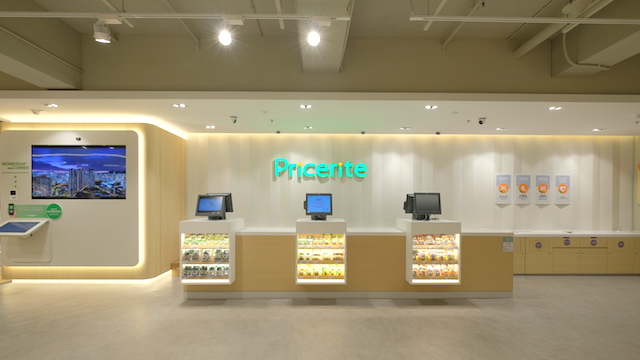
Pricerite’s two-story 20,000sqft New Retail Concept Store in Mong Kok’s Chong Hing Square has been trading for about a year now, a testbed for apps and in-store technology that is constantly being revised, enhanced and added to.
Pepper, the smiling robot with the female Cantonese voice, is probably the most visible execution Pricerite’s customer-centric digital transformation journey. To the delight of children it can dance on request and answer customer questions about the company’s loyalty program from its workspace outside the membership counter.
But it is the less visible execution of Pricerite’s digital strategy that is the most breathtaking: an innovative app which allows you to place furniture items in your own apartment virtually – and order direct from your phone or tablet, from in store or home. It is a great solution for Hongkongers facing shrinking apartment footprints, which make planning a layout that suits one’s lifestyle a challenging task.
The made-to-order zone on the Mong Kok concept store’s level B2 is equipped with a large display screen for app users to preview their selected product from all angles. Using VR technology, the system also provides customised furnishing solutions for medium and small-sized apartments. Guests can take a virtual tour of homes to gain an accurate glimpse of products in situ and see a product’s intelligent functions in action – for example, tables that convert to sleeping spaces and furniture with storage space built in. The AR mode uses cutting-edge mobile 3D Space-Tracking technology, including Apple’s iOS ARKit, which cuts out the hassle of product scanning while generating an “actual” 1:1 preview of an item, allowing simple and easy mix-and-matching for different home styles.
“Technology advances have transformed consumer behaviour and shopping patterns while e-commerce has changed the consumption value chain, creating a complementary retail channel to bricks-and-mortar stores,” observes Kwan.
“Using leading-edge retail technologies to combine online and offline shopping experiences, coupled with a modern supply chain, and big data and artificial intelligence innovations, we have created a pioneering all-round omnichannel retail network for home furnishing.”
The concept store also features multiple digital kiosks and touch-screens around the store augmenting the customer service roles of floor staff by suggesting alternative or complementary products, and providing specifications. AR features in several innovations in store, including creating 3D images of items in the company’s catalogue.
Centres of experience
Kwan says the company’s long-term investment in new technologies has been driven by asking how the company can serve its customers better in terms of information and engagement.
“It’s my experience that the physical store remains the centre of experiences and engagement.” Technology, he says, can make purchasing decisions easier.
“Many traditional retailers are still unsure about whether the innovations will take on, whether they should invest in the technology. But it is essential if we are to remain competitive, especially when we look at millennials and how they shop and interact online.”
Kwan believes that despite the slow uptake of online shopping in Hong Kong, online and mobile shopping will be significant in the future. He cites the Hong Kong government’s Smart City initiative to boost wi-fi connectivity and encourage e-payments as a major driver in years to come.
“With all those facilities established and enabled, fast retailing through mobile is the trend. It is gaining momentum in Hong Kong and we have everything quite well developed, but the market will dictate the change and if you do not accept that [as a retailer], you will fade out and become history.
“So I say, wait another three years and you’ll see the landscape of the retail market will change a lot. I was at a retail summit in Hong Kong recently where we had Facebook and Google and online marketers joining. We were all coming to roughly the same conclusion: technology is a must to keep you competitive.”
Kwan can only guess what percentage of Pricerite’s sales are online versus in-store now – and for good reason. So many transactions begin online and end offline – or the other way around – that it is no longer possible to attribute a sale to either channel. Perhaps retailers who do are missing the whole point of omnichannel. If pushed to nominate a figure he’d say 20 per cent online, 80 per cent offline and he expects that ratio to change to 40/60 within a year or two.
Pricerite’s customers do not make a distinction between online or offline, so it stands to reason the company should not do so either.
“This is whole model is an O2O model, so our customer can shop online, understand we have a promotion, understand the product meets their requirements and then they will come down to the store for the physical experience and to touch the products, then maybe go back home and place an order. So you cannot say this is offline or online,” says Kwan.
“But I believe application of technology to enhance the customer’s experience and engagement, is definitely the road to go and to develop together with more applications and technology, just like Pepper so as to reduce the customer service burden on store staff.”
Kwan stresses Pepper and any other technology implemented at Pricerite must integrate with human staff, not replace them, what he describes as “a balanced fusion of technology and people”.
“Pepper I believe will become popular to provide instant information and master data about product features, etc. That will allow our people to migrate into higher added-value areas.” Kwan says customer response to the AR and VR technology to date has been “really good” and it is driving sales of goods after people look at them either online or instore. “It boosts their confidence buying because they have seen on a screen how a sofa will look in one part of a room and a rug in another.
“The technology is constantly improving and getting much easier to use. I understand our competitors also shop at our stores on and off and they are now also developing the same sort of technology. That, together with efforts by the Hong Kong Government to encourage startups working to develop technology for the service and retail sectors will help drive its adoption in years to come.”
Pricerite’s technology quest is ongoing. The apps will continue to be refined and upgraded with more features and made as user-friendly as possible. Other initiatives are under development but not yet ready to be revealed publicly just yet. And more Peppers are on order, with expanded functions – most of them will speak English, too.
View the gallery below for full images (5 images) :
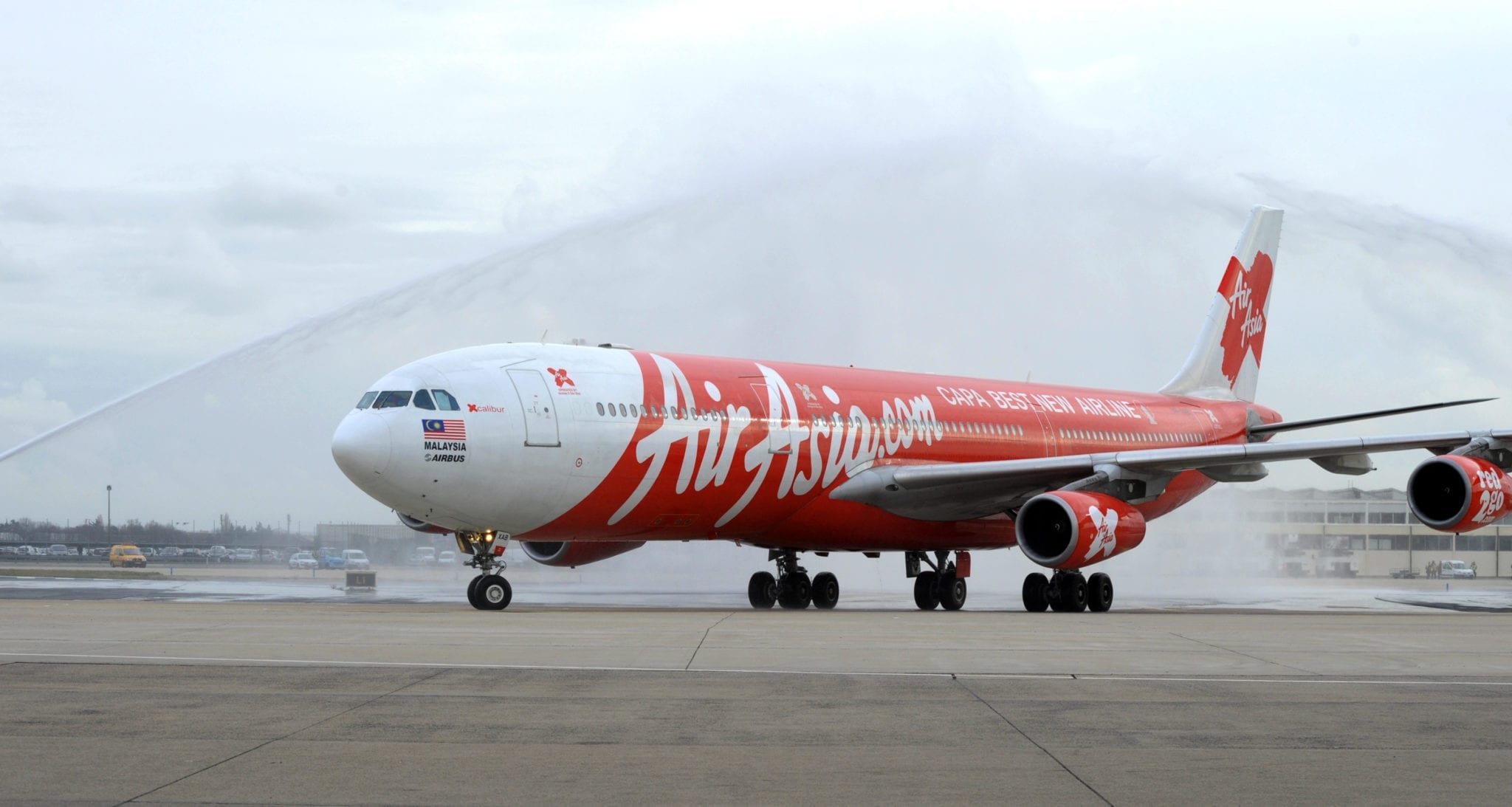
AirAsia Group Bhd and its affiliate AirAsia X Bhd are seeking over RM400 million in counterclaims against Malaysia Airport Holdings Bhd (MAHB) in relation to the suit filed against them over the passenger service charges (PSC) collection. AirAsia and AirAsia X told Bursa Malaysia that they had filed a statement of defence against Malaysia Airports (Sepang) Sdn Bhd (MASSB), a wholly-owned subsidiary of Malaysia Airport Holdings Bhd (MAHB).
“In the statement of defence, AirAsia Bhd (AAB) contended, amongst others, that the claim by MASSB is misconceived, invalid and/or premature as MASSB has not complied with and/or availed itself of the statutory provisions for dispute resolution within the Malaysian Aviation Commission Act 2015 (Mavcom Act). Accordingly, AAB has filed an application to strike out the suit on the above grounds,“ said AirAsia.
“Further, AAB together with its affiliate AirAsia X Bhd (AAX), will be availing themselves of the statutory provisions for dispute resolution within the Mavcom Act to seek more than RM400 million in counter-claims against MASSB and/or MAHB for losses and damages experienced by AAB and AAX due to operational disruptions at klia2,” it added.
Last month, AirAsia was being sued for refusing to collect the additional RM23 PSC per passenger at klia2.
AAB was served with an unsealed copy of a writ of summons in the sum of RM9.4 million by MASSB pertaining to PSC that AAB has not collected and refuses to collect from traveling passengers. Meanwhile, AAX was served with an unsealed copy of a writ of summons in the sum of RM26.7 million for alleged PSC arrears.
AirAsia yesterday closed up 1.33% to RM3.05 with 5.17 million shares done; while AAX closed 1.72% lower at 28.5 sen with 12.17 million shares traded. MAHB was up 0.25% at RM8.12 with 3.33 million shares changing hands.
Retail shopping continues to be the largest expense for tourists from China, according to a survey from Nielsen and Alipay, accounting for almost a quarter of total spend. The 2018 trends of Chinese mobile payment in outbound tourism survey revealed that retail spending took up 24.6 per cent of Chinese tourists average spend, followed by accommodation, dining and tourist attractions.
Interestingly, the report found that Chinese millennials are no longer the single most dominant user of mobile payments.
“In 2017, 55 per cent of Chinese tourists born between 1960-1979 used mobile payments while travelling overseas – significantly lower than the proportion of millennial tourists,” the report reads.
“In 2018, the usage rate rose to 68 per cent, almost equalling their younger peers.”
Average budget for the typical Chinese tourist increased 15 per cent to AU$9,382 over the year, and a familiarity with mobile payments drove increased spend, with 56 per cent of surveyed merchants claiming improved sales after adopting mobile payment system Alipay.
However, a study by Coresight research in October 2018 found that, while Chinese tourists were travelling more often they were spending around 18 per cent less in the retail environment – a figure driven by a recorded 24 per cent decline in average shopping trip spend.
Recently, Australia fintech company AirPay Financial Technologies announced its regional collaboration with China leading mobile payment technology company SwiftPass to form a new lifestyle brand “AirPass”. Connecting Australian merchants directly with Chinese consumers, AirPass lets local retailers accept WeChat Pay and Alipay both online and offline, as well as reach overseas markets to make the most of the global Chinese spending boom.
AirPass is a lifestyle brand backed by Australian fintech startup AirPay Financial Technologies, in partnership with leading Chinese mobile payment provider SwiftPass. The new brand brings China’s most popular ePayment, eStore, eCard, eMarketing and eWallet services to Australia, allowing Chinese tourists, students and migrants to make over the counter purchases by simply scanning a QR code on their smartphone.
The payment platform can also be integrated into Australian e-commerce websites and mobile apps, taking advantage of AsiaPay’s PayDollar payment gateway. Supporting multiple shopping cart plugins, PayDollar provides a one-stop online payment solution allowing local merchants to accept Alipay, WeChat Pay, Visa, MasterCard, Amex, PayPal and ZipPay
“AirPass is providing a user-friendly platform for Australian retailers to build their own eStore to facilitate marketing and payment – which is the key to entering the Chinese consumer market,” says SwiftPass Technologies VP Tong Liu.
Meanwhile, the AirPass app for iOS and Android lets Australian retailers connect directly with Chinese shoppers. AirPass assists Australian retailers and brands with setting up their own WeChat eStore to tap into Chinese social marketing channels. This allows local retailers to sell products via the WeChat ecosystem, reaching new customers in China along with Chinese communities around the globe.
AirPass’ arrival in Australia comes as Boxing Day saw record high sales to Chinese shoppers across major retailers and shopping centre groups such as Westfield, Chadstone, QVB and Pacific Fair.
“We are thrilled to announce our regional partnership with SwiftPass and recently launch WeChat Pay and Alipay to Australia’s largest and oldest pearling company Paspaley,” says AirPay Financial Technologies chief executive Jimmy Zhu. “There is huge demand from the market pushing us to deliver more advanced payment and marketing products.”
Another Australian family-owned luxury retailer, Harrolds recently launched a WeChat Official Account and will soon accept WeChat Pay and Alipay in-store.
Other luxury brands such as Gucci, Saint Laurent, Bottega Veneta, Balenciaga, Valentino, Mulberry, Givenchy, Off-White, Marais, Furla, Folli Follie and Sneakerboy are also adopting the AirPass platform in order to better reach Chinese shoppers.
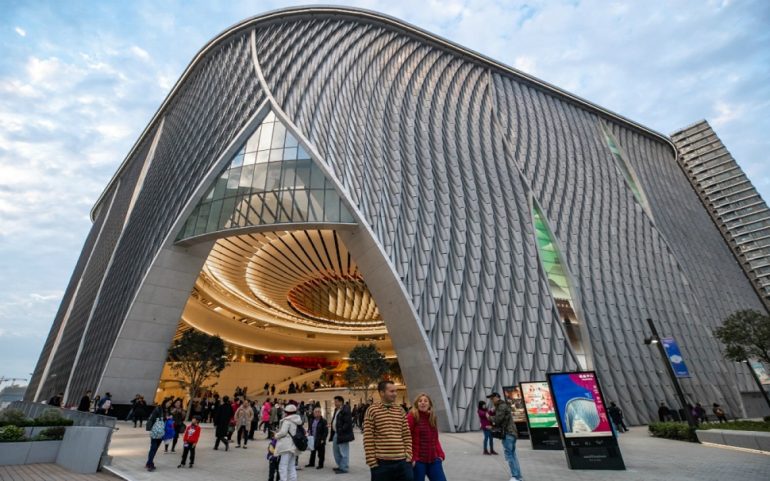
Hong Kong’s new performing arts venue dedicated to Xiqu (Chinese Opera), has just opened. Located on the Eastern edge of the West Kowloon Cultural District, at the junction of Canton Road and Austin Road, the Xiqu Centre is directly accessible from the Hong Kong West Kowloon Station and Austin MTR station, and easy to reach by public transport from all parts of Hong Kong.
The building’s striking design, created by Revery Architecture (formerly Bing Thom Architects) and Ronald Lu & Partners, was inspired by traditional Chinese lanterns and blends traditional and contemporary elements to reflect the evolving nature of the art form.
Stepping through the main entrance, shaped to resemble parted stage curtains, visitors are led directly into a lively atrium with a raised podium and space for presenting the rich and ancient culture of Chinese traditional theatre.
The eight-storey building has a total area of 28,164 sq m and houses a Grand Theatre, accommodating 1,073 seats, a Tea House Theatre, with a capacity of up to 200 seats, eight professional studios and a seminar hall, all specially designed for different types of xiqu-related functions and activities.
The design details of each of the facilities have also been created in response to the practical requirements and aesthetic features of the art form. A unique feature of the venue is the location of the Grand Theatre at the top of the building, which allows for a large open atrium below with space for exhibitions, stalls, and xiqu demonstrations and workshops.
Carrie Lam Cheng Yuet-ngo, the Chief Executive of Hong Kong, gave a speech at the opening ceremony of Xiqu Centre. “The launch of Xiqu Centre is not only a significant international cultural event, but Hong Kong also takes it as a great honor and we all are very proud of it.”
In fact, Chinese opera has been inscribed in the UNESCO Intangible Cultural Heritage Lists for a decade, Carrie Lam hopes the Xiqu Centres would help promote Hong Kong as an international arts hub and consolidate the city’s position in the development of Cantonese opera.
Southeast Asian online luxury marketplace Reebonz is exploring blockchain technology as part of its strategy to demonstrate the provenance of products. Complementing the firm’s existing in-house team of ateliers who specialise in authenticating leather products, timepieces, gemstones and jewellery, Reebonz intends to incorporate all transactions on a blockchain to ensure the comprehensive traceability of all products sold within its ecosystem. The firm’s goal is to enable buyers to verify the authenticity of products on their own and stamp out losses and distrust generated by the global exchange of counterfeits.
By establishing end-to-end traceability, customers will also be able sell their items back to Reebonz, which would allow the company to easily identify a customer’s purchase.
“The Reebonz leadership team is extraordinary and has already developed a cutting-edge technology and platform”, said Tim Draper, senior advisor of Draper Oakwood Technology Acquisition and founding partner of Draper Associates.
“The authentication of pre-owned luxury items using the blockchain is just one of many high impact innovations Reebonz is pioneering to improve the luxury shopping experience for customers across Asia Pacific.”
“While we started as an online platform that helps consumers access affordable luxury, we have evolved into an ecosystem that connects buyers and sellers through the widest range of luxury,” added Reebonz CEO and co-founder Samuel Lim.
“Identifying gaps and opportunities in the luxury e-commerce landscape and spearheading strategies that present innovative ways of redefining luxury consumption has made us a leader in this industry. As we continue to build out a thriving community of buyers, sellers and international boutiques, it will become critical for the industry to evolve, and for us to become a leading innovator of authenticity solutions. We are excited to use the blockchain technology to solve one of the key global issues that impacts our industry.”
Vietnamese ride-hailing company FastGo plans to enter the U.S. and Brazil this year as it seeks to quickly expand overseas. Its CEO Nguyen Huu Tuat saidthat he is keen to compete with other ride-hailing apps in foreign countries. “Our investors are located in the U.S. and Brazil, that’s why we have chosen those places as the next markets,” he said without disclosing who they are.
The announcement comes a month after it expanded into Myanmar. FastGo now has over 1,000 partner drivers in Yangon and Tuat wants to have 2 million users in Myanmar this year.
But the company wants to expand even faster to other markets this year, with Indonesia, where ride-hailing Go-Jek is based, being the first location.
“We plan to start operating in Jakarta in March, and will also expand to Singapore this year,” Tuat said.
The investors want the company to “go global as soon as possible,” he said to explain the rapid expansion plans.
The company hopes to raise $50 million in the second round by June this year possibly from investors in South Korea and the U.S., he said.
“Grab and Uber might have deep pockets, but FastGo wants to grab market share by offering better options to customers.”
FastGo does not collect commissions from drivers but instead charges them an amount of money if they earn a minimum amount per day. FastGo also claims to not increase fees during rush hour but allows users to tip drivers.
It became Vietnam’s first home-grown ride-hailing app last June and now has 40,000 drivers in 12 cities and provinces.
FastGo last August received $3 million from Vietnamese fund VinaCapital Ventures, according to reports.
French luxury group LVMH is suing a wine merchant in Hong Kong over an alleged trademark infringement.bThe plaintiffs are suing over a wine range named “XLV”, established in collaboration between Cuvee XLV French Wine and Quentin-Louis, the son of fifth generation family member Xavier-Louis Vuitton.
During a January 16 hearing in the High Court, LVMH claimed that the wine’s label design deliberately mimics the Louis Vuitton logo to mislead consumers. Cuvee XLV’s owner Wong Sau Ying has previously stated that the range has no relationship with the LV business, although the family connection is a factor in the wine sales.
“The family is involved and that is important. In China trust is important – there are many imitations, but this brand can be trusted,” said Wong in a 2012 interview.
Wong is pleading that the font size used on the XLV label differs from that of LV products.
The case has been pending since 2008 when the label became apparent to the LVMH group.
CIMB Group Holdings Bhd’s wholly-owned indirect subsidiary CIG Bhd yesterday entered into a share purchase agreement with HBG Asia Holdings Ltd and HBG Malaysia Sdn Bhd (Howden) to divest its remaining 51% stake in CIMB Howden Insurance Brokers Sdn Bhd (CHIB) to Howden for RM59.6 million.
The group said approval from Bank Negara Malaysia in relation to the proposed divestment was received by Howden on Nov 27, 2018.
“CHIB currently operates an insurance broking business and the proposed divestment is in line with CIMB’s aspirations to further streamline and focus on its core banking businesses. As part of the proposed divestment, CHIB will cease to be an associate of CIG,“ CIMB said.
A one-year-old baby with an incredible mane of hair has been signed by Pantene as one of the faces of the brand in Japan. Instagram starlett Baby Chanco has stunned social media users over the last six months as her mother uploads images of her incredible, thick hair. Baby Chanco, who lives in Japan, was born with a full head of hair in December 2017 and it has continued to sprout as she has grown.
Chanco’s mother updates her 300,000 followers on the platform with weekly photos of the little girl’s full bouffant. Every photo shared receives around 10,000 likes from her adoring fans.
In one of the images from the campaign, Baby Chanco, whose Instagram account is managed by her mother, Mani Kano, poses alongside Japanese TV presenter Sato Kondo, known for her grey tresses.
Fast forward to 2019 and Baby Chanco is following in the footsteps of celebrities such as Selena Gomez as a Pantene spokesperson.
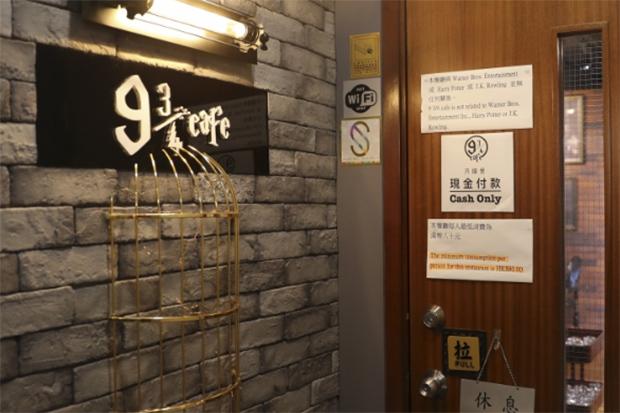
The 9¾ Harry Potter-themed Hong Kong cafe has been sued by Warner Bros for copyright infringement. The cafe, open since 2017, has never claimed to have a formal relationship with the Harry Potter franchise – although it is festooned with art and props made famous in the popular book and movie series. Trademarks registered by the studio within the territory of Hong Kong, including “Harry Potter”, “quidditch”, “muggles”, “Professor McGonagall” and “dementors” are used liberally at the venue. Iconic features and images from the films are used in the cafe’s interior design, including the Gryffindor coat of arms and the Hogwarts Express train ticket for Platform 9¾.
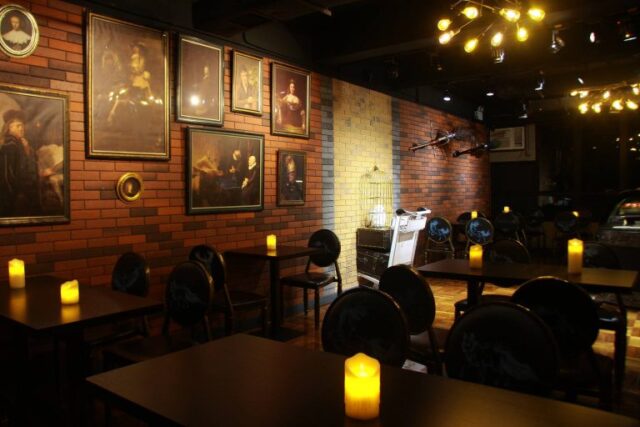
Located on Yin Chong Street in Mong Kok, the cafe features wall-mounted wands and broomsticks, stuffed owls, portraits of witches and wizards, and faux candlelight. There is even a half-disappearing luggage trolley, as featured at King’s Cross Station, complete with Hedwig in a cage.
The drinks menu of the Harry Potter-themed Hong Kong cafe includes some Harry Potter-specific concoctions, such as the Polyjuice Potion, Amortentia love potion, golden Felix Felicis (aka “liquid luck”), and Veritaserum. Visitors 18 years and older can down a pint of Butterbeer.
For food, the cafe serves Western starters and mains named after mythical creatures and charms from the Harry Potter series, such as the soft-shell crab Aragog salad, Romanian longhorn pumpkin pasta (after one of the dragons from Goblet of Fire), and Prior Incantato cream of mushroom soup.
Warner Bros is seeking an unspecified sum of damages, a removal order plus multiple injunctions.
Singapore conglomerate Keppel Corp and Singapore Press Holdings (SPH) said they will not raise their offer price to gain majority control of mobile operator M1 Ltd, a move that could put pressure on Axiata Group, M1’s single largest shareholder. Keppel and SPH, which together control 34.3% of Singapore’s smallest mobile operator, said in September they would offer S$2.06 (RM6.25) per share for majority ownership of M1 in a bid to support its falling share price and restructure the firm to better compete against sector rivals.
“The offeror wishes to announce that it does not intend to increase the offer price of S$2.06 in cash per offer share under any circumstances whatsoever,” Keppel and SPH said in a regulatory announcement issued by their jointly-owned holding company. The closing date was extended to Feb 18 from Feb 4. M1 has a total market value of S$1.92 billion.
Malaysia’s Axiata, which holds a 28.3% stake in M1, said in September the offer should reflect the accurate future value of M1, inclusive of an acceptable control premium and consistent with market standards.
Axiata said at the time it was working with an adviser and was reviewing its options. As quoted, Axiata viewed the offer price as “inadequate”.
In response to a query, Axiata said it would not comment on a statement. “Axiata will make any necessary announcements as required and in due time,” it said.
Since the September announcement, M1’s shares have rallied 26% to trade at S$2.05 this week but are little changed over the past two years and have lost 49% from a record high of S$3.99 in early 2015.
Mobile telecoms competition is heating up in Singapore, with Australia’s TPG Telecom planning to launch a new service after winning a licence to become the city-state’s fourth telecom operator. Analysts consider M1 to be the most vulnerable to new competition.
In July 2017, Axiata, Keppel and SPH had considered, and then called off a strategic review of their M1 shareholding, which sources said was due to a lower-than-expected offer from external parties.