Tag: lifestyle

  • Thailand’s Supersports stores rebranded as fashion shops

    Thailand’s Supersports stores rebranded as fashion shops

    Thailand’s CRC Sports has rebranded its Supersports business as a sports fashion store in a move targeting millennials. Last month’s rebranding modernises the business’s image and transforms the performance store model into the fashion world. The logo has also been revised with green motifs to suggest environmental awareness.

    Three Supersports stores have already been updated with the new look, including the CentralWorld location, with 50 stores scheduled to follow early next year.

    President Tony Morton said: “Our new motto is ‘The new Supersports, where Sport is fashion’, in response to the trend of millennials being fashion-conscious, cool, healthy and cheerful.”

    The firm will also expand its online sales efforts in the coming year, with the total market size for sporting goods in Thailand expected to be worth THB30 billion (US$916.3 million) by the end of this year.

    Supersports drew in THB300 million ($9.163 million) in online sales last year – 3.5 per cent of Supersports’ THB8.5 billion ($259.78 million) total revenue – and expects online sales to reach THB500 million ($15.28 million) next year.

  • Miu Miu Siam Paragon boutique reopened

    Miu Miu Siam Paragon boutique reopened

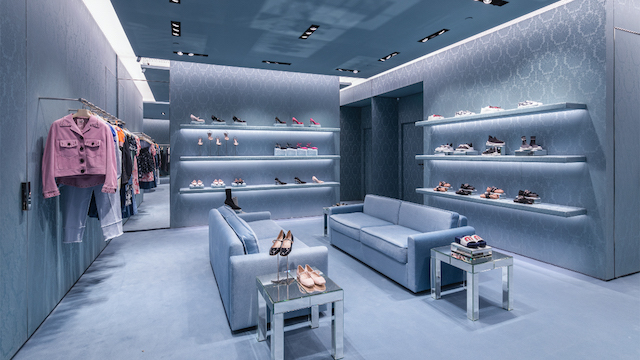
    Italian fashion brand Miu Miu is reopening its Siam Paragon boutique as the first Thai location to introduce its new concept store. The new 140sqm outlet strengthens the brand’s presence in Bangkok with a refreshed interior design and new collections of its signature accessories, bag, shoe and ready-to-wear collections.

    Among Miu Miu’s current offerings are evening dresses enhanced by Swarovski crystals and garments featuring 60’s-inspired elements.

  • Vietnam court orders Grab to pay Vinasun $208,000

    Vietnam court orders Grab to pay Vinasun $208,000

    Grab should pay Vinasun VND4.8 billion ($208,000) for damage it has caused the top taxi firm, a court ruled Friday.

    The People’s Court of Ho Chi Minh City said in its verdict that Grab had committed many mistakes in its operations in Vietnam, tantamount to unfair competition, which damaged Vinasun’s business.

    Before 2016, Grab had registered almost 300 contract cars in Ho Chi Minh City, which increased to 23,000 by the end of last year. This led to a decrease in the number of active Vinasun cars, causing damage worth VND4.8 billion, the court found.

    By June 2017, Vinasun had provided 1.1 million trips to its customers, while Grab had over 2 million. This shows that the number of Grab cars has continuously increased causing many Vinasun cars to stay unused in parking lots, the court said.

    Grab’s entrance into the Vietnamese market has also lowered Vinasun’s market share, a damage of VND81 billion ($3.49 million).

    Although its entrance has negatively affected Vinasun, the taxi firm could not prove that Grab was the only company to cause this damage, the court said.

    For this reason, the court only required Grab to pay Vinasun the sum of VND4.8 billion for unused cars.

    Change Grab’s status

    The court also proposed that Vietnamese authorities start defining Grab as a transport business.

    Grab has said in many documents to Vietnamese authorities that it is only a technology company and not a transport company. It has also said it only provides electronic transactions and free technology for customers via electronic receipts, which has been approved by the Ministry of Transport.

    But the electronic contracts that Grab mentioned did not confirm to definitions under Vietnam’s Law of Electronic Transactions, the court said.

    It noted that Grab’s contracts did not say who the parties to them were and there were no dispute resolution terms.

    “Grab claims to be a company which provides technology and does not conduct a taxi business nor manage the drivers. But in fact, Grab does manage the drivers and charges transport fees,” the verdict said.

    “When customers order a ride, they transfer their money to Grab or pay via the driver a sum from which Grab takes a percentage. Grab also determines the bonus and punishment for drivers,” it added.

    Furthermore, Grab’s business activities do not follow the law, which requires an automobile transportation business to ensure the number of vehicles and service quality, the court said. The law also requires the business to provide employees with labor contracts, traffic safety training and social security.

    Grab does not follow these regulations and does not pay the taxes it should as a transport business, the court said.

    Since 2016, the Inspectorate of the HCMC Department of Transportation has listed 29 violations committed by Grab concerning not having a business registration certificate, list of transport contracts, and taxi signs, the court said.

    Grab has also ignored twice the Ministry of Transport’s documents asking the company to stop its service with contracted vehicles, it said.

    The ride hailing firm has also violated the law in how it gives out promotions and increase and decrease transport fees multiple times a day, the court added.

    Vinasun had filed the suit against Grab in June last year. It said Grab’s illegal activities were responsible for nearly VND42 billion ($1.8 million) of the VND76 billion ($3.25 million) in losses it had suffered in 2016 and the first half of 2017.

    The trial began in February, but was adjourned a month later to allow for more evidence to be gathered. Grab had protested the valuation of Vinasun’s losses.

    Last October, prosecutors asked the court to accept Vinasun’s petition for compensation of nearly VND42 billion, rejecting Grab’s claim it was a tech firm and not a taxi company.

    Grab responded by writing to Prime Minister Nguyen Xuan Phuc, saying that identifying it as a taxi firm would be “a step backward from Industry 4.0.”

    The latest draft of a Ministry of Transport decree requires firms offering taxi services to register as taxi firms before they can apply ride-hailing technology.

    This means that Grab and other ride-hailing firms have to register afresh as taxi businesses and comply with legal requirements related to operating licenses, drivers’ profiles and taxes.

  • FamilyMart expands Bangkok delivery service with Kerry

    FamilyMart expands Bangkok delivery service with Kerry

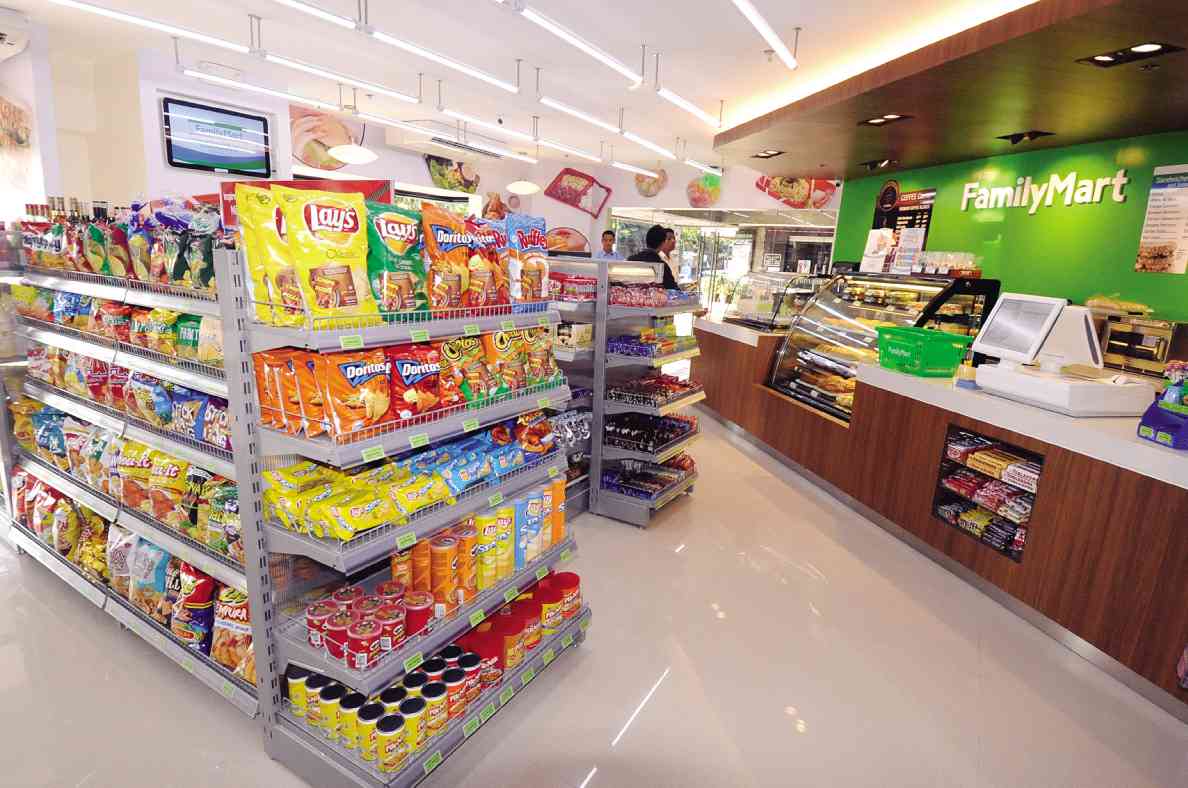
    Convenience store chain FamilyMart has partnered with logistics operator Kerry Express to expand its Bangkok delivery service. “Today, the e-commerce market has grown continuously for more than 20 per cent annually, and individual consumers have also had a greater demand for express delivery over the past three to five years,” said Central FamilyMart president Chiranun Poopat.

    “We have introduced Kerry Express, an express delivery service, available 24 hours a day at our FamilyMart stores in Bangkok and surrounding locations. The door-to-door express delivery will be provided to our individual customers so that they will be able to send their parcels to any locations throughout the Kingdom with fast and high-standard delivery process.”

    The new service is being promoted with a free limited-edition parcel delivery box available to customers during the Christmas period. The box will be provided to customer spending more than THB79 (US$2.42) via its express delivery service.

  • IDG Capital and Hong Kong-based I.T Group invests in Acne Studios

    IDG Capital and Hong Kong-based I.T Group invests in Acne Studios

    Acne Studios has sold minority stakes to China-focused investment firm IDG Capital and Hong Kong-based I.T Group, ending almost a year of speculation that the brand would be acquired by a larger rival.

    Acne, one of the earliest and most successful purveyors of the “Scandinavian cool” style that has since become popular across fashion and design, had held talks with potential buyers as far back as 2013, from French luxury conglomerate Kering to private equity firms. Earlier this year, the company was working with Goldman Sachs on a possible sale, at a valuation of up to €500 million ($570 million).

    Instead, IDG and I.T Group will acquire stakes of 30.1 percent and 10.9 percent respectively, from Öresund, Creades and PAN Capital, Acne said in a statement Sunday. Founder Jonny Johansson and executive chairman Mikael Schiller will remain majority shareholders in the business.

    When Acne began shopping itself around earlier this year, the M&A market for fashion and luxury was booming, powered by perceived growth opportunities and increasing market complexity that made it harder and harder for sub-scale players to compete without greater access to the capital — and expertise — that sophisticated and deep-pocketed strategic or private equity investors can bring to the table. Over the course of 2018, Dries Van Noten sold a majority stake to Spanish luxury group Puig for an undisclosed sum, and Missoni sold a 41.2 percent stake to FSI Mid-Market Growth Equity Fund in transaction worth €70 million. Most recently, Michael Kors acquired Versace for $2.1 billion.

    But in recent months, the temperature of the market has changed. The ongoing trade spat between the US and China has fuelled economic uncertainty and raised questions about the future of luxury demand. Shares of publicly traded luxury brands have plummeted.

    The Stockholm-based label, founded in 1996, launched as a niche denim brand and has since built a strong modern contemporary-luxury name, well known for its upscale ready-to-wear and a distinct Scandinavian vibe that is popular with streetwear-attuned millennials. While the brand has yet to develop a strong leather goods offering, its sneakers are gaining traction. Last year, it generated $221 million in sales revenue with Ebitda, a measure of operating profit, of $35 million. It has over 50 own-brand stores in 13 countries.

    However, sales growth slowed at the brand last year, rising just 9 percent, the slowest pace in at least a decade, according to a Goldman Sachs presentation to potential buyers. The brand still generates 43 percent of its sales through a network of 600 wholesalers, a potential point of vulnerability in a world where direct-to-consumer fashion is stealing market share from department stores.

    Acne’s two new investors are likely to give the brand a leg up in Asia, already a key source of growth (Asia drove one-quarter of Acne’s sales last year, second only to Europe, according to the Goldman presentation). I.T Group has served as Acne’s Asian retail partner since the early 2000s. IDG Group, which has also invested in Farfetch and Moncler, specialises in expansion opportunities in China and the rest of Asia (10 of the firm’s 13 offices are based in the Asia region).

    “Acne Studios will greatly benefit from their extensive know-how within fashion and the rapidly evolving universe of online and offline retail,” Schiller said in a statement.

  • Starbucks to open two stores in Macau Airport

    Starbucks to open two stores in Macau Airport

    Starbucks has expressed interest in seeking further opportunities to expand within Macau.

  • Korean iPhone owners claim low trade-in prices

    Korean iPhone owners claim low trade-in prices

    iPhone users are accusing Apple of paying Korean customers less for their trade-ins than the devices are worth, while noting differences between promotions in other countries and those in Korea.  If an iPhone owner wants to return an older model when buying a new device, iPhone Korea said it will offer up to a 300,000-won ($268.56) discount on the latest smartphones, the iPhone XS and iPhone XR. Korean customers are outraged.

    They claim that the deal has been made available to them a full month later than in other countries. In the United States, Japan and China, trade-in opportunities started in late November. The amount in compensation is also said to be too low.

    Apple Korea announced on Dec. 24 that it is taking iPhone trade-ins at its retail store in Garosugil, Seoul, and will continue to do so until late January next year.

    If the user returns an older model, it is possible for them to buy the 990,000 won iPhone XR for 690,000 won and the 1.37 million won iPhone XS for 1.07 million won.

    Internet community Clien exploded with comments on Dec. 25, the day after the announcement. “I might as well sell it at the Gangbyeon Electronics Mart rather than returning it to Apple,” said one. Another added: “It is disrespecting the customers.”

    While iPhone Korea only compensates up to 300,000 won for an iPhone 7+ released two years ago, the price for an iPhone 7+ in the second-hand market near Gangbyeon and Sindorim is around 380,000 won, according to mobile community Cetizen.

    If the product is an S class with almost no cracks, the price goes up to 450,000 won.

    After typing in the serial number for a black iPhone 7 with 128 gigabytes into the trade-in page on Apple Korea’s website, a reporter received a quote of 174,000 won. In the second-hand market, users can sell the phone for at least at 289,000 won. Apple is offering 115,000 won less for the device.

    Lee Doo-hee, a programmer who enjoys using Apple products said, “I can get more money if I sell directly, so I do not feel any need to go to the Apple store in person and exchange my iPhone.”

    Apple U.S. announced that it is offering trade-ins of about $300 for those buying an iPhone XR and iPhone XS. This is about 10 percent more than in the Korean market.

    NTT Docomo, Japan’s No. 1 mobile company, is offering the iPhone XR for 25,920 yen ($235.05), around 260,000 won, for those signing a two-year contract. No similar discounts are offered in Korea.

    “For Apple, Korea is the home turf for Samsung Electronics, Apple’s old enemy,” according to a source in the sector.

    “Apple only has to get a fair amount of earnings from hard-core iPhone fans, which possibly account for 15 percent of all mobile communications users in Korea. That is why it is pursuing unfavorable policies, like excluding certain countries from promotions.”

    It is believed that the current promotion from Apple Korea is due to the slump in sales of recent iPhones. High prices are seen as the main cause of the recent slowing of sales growth.

    Kuo Ming-chi, a Taiwanese Apple expert as well as an analyst at TF International Securities, has revised his first-quarter 2019 sales volume estimate for iPhones from a 47 million to 52 million range to a 38 million to 42 million range.

    A report written by Kuo was titled: “Shipments of iPhones in 2019 could be below 190 million.”

    The market value of Apple exceeded one trillion dollars in September last year. It is now around $700 billion.

  • Bamboo Airways postpones maiden flight again

    Bamboo Airways postpones maiden flight again

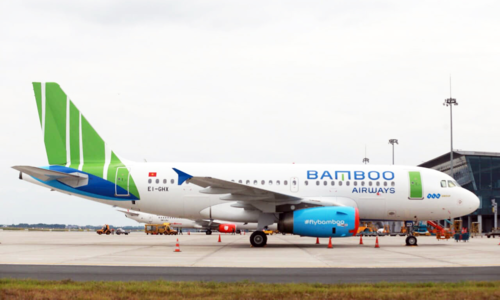
    Vietnam’s newest airline Bamboo Airways will not operate its maiden flight Thursday as scheduled, the second time it has been delayed. Its CEO Dang Tat Thanh said Bamboo Airways could not take off since it is going through “the most difficult examination ever.” “Bamboo Airways is currently going through the final stage of a tight examination by authorities before taking off,” he said, adding that the first flight would now be in mid-January. The airline aimed to launch the first flight on December 29, after failing to launch services in October as previously planned.

    The carrier, owned by conglomerate FLC, received a license last November but is still awaiting an aircraft operator certificate (AOC).

    It was established in May last year with a charter capital of VND700 billion ($30 million), which it increased two months later to VND1.3 trillion ($55.68 million).

    It has signed deals to buy 24 Airbus A320neo and 20 Boeing B787-9 Dreamliner aircraft worth a total of $8.6 billion. Earlier this month it took delivery of the first aircraft, an Airbus A319 leased from an Irish company.

    The airline plans to operate on 100 routes, connecting major cities and travel destinations in Vietnam with the rest of the world.

    FLC chairman Trinh Van Quyet said earlier that the first routes could be between Hanoi and Ho Chi Minh City and from the two cities to Quy Nhon.

    Vietnam has four other carriers still in operation: Vietnam Airlines, Vietjet Air, Jetstar Pacific, and VASCO.

  • Chow Tai Fook Jewellery Group, WeChat signed agreement deal

    Chow Tai Fook Jewellery Group, WeChat signed agreement deal

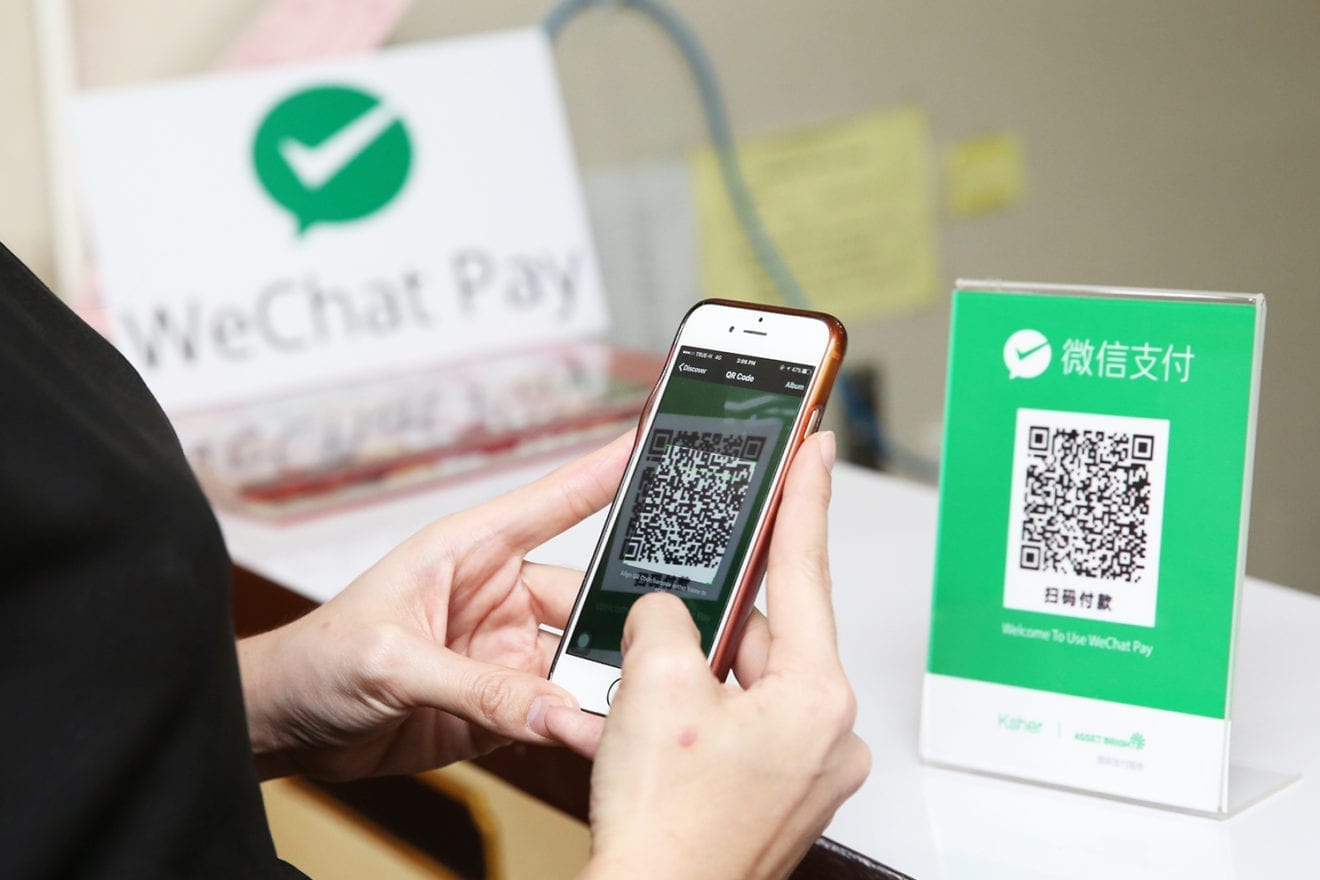
    Chow Tai Fook Jewellery Group has signed a memorandum of understanding with Chinese online platform Tencent to allow jewellery purchases using WeChat Pay. In a move to promote “seamless cross-border intelligent consumption”, the agreement allows Hong Kong WeChat users to use the platform’s digital payment solution to make purchases at specified Chow Tai Fook jewellery stores in Mainland China.

    The group is planning steps to activate WeChat Pay HK within more Chow Tai Fook Jewellery stores in the Greater Bay Area, as well as other cities throughout Mainland China. It is also seeking to extend the payment agreement to its other brands.

    “Striving for innovations and breakthroughs, we are committed to providing seamless and exceptional consumer experience through a wide range of innovative projects,” said Chow Tai Fook executive director Bobby Liu. “The introduction of advanced technology has made the convenience in offering cross-border consumption, online payments and an integrated online-to-offline shopping experience available to customers from Hong Kong.”

    Tencent Financial Technology VP Royal Chen said the collaboration with Chow Tai Fook Jewellery Group will fully make use of the available mobile payment technology.

    “Tencent Technology will vigorously promote cross-border financial cooperation. Leveraging financial and technological advancements, we aim to build a truly integrated service platform for those living in both Hong Kong and Mainland China.”

    Tencent Fin-Tech and Chow Tai Fook will also jointly explore and research proposals for ID verification in order to ease the flow of capital and manpower resources across the border.

  • Australian shopping app Booodl goes bankrupt

    Australian shopping app Booodl goes bankrupt

    Australian retail app Booodl has said goodbye officially in December, announcing it has started liquidating its assets to pay off creditors just before Christmas. Backed by media mogul James Packer and Westfield mall owner Scentre Group, Booodl first withdrew from the market last year, with the app – which connects shoppers to retailers in their immediate vicinity – filing as insolvent with the Australian corporate regulator.

    The company reported having AU$80,606 worth of assets and owed creditors $70,456, according to the recent filing.

    With creditors to be paid in full, company shareholders will not receive a return, said founder George Freney.

    “There is always a huge risk associated with technology ventures, and the unfortunate reality is that many fail,” Freney said.

    Founded by Freney in 2014, the $8 million start-up was conceived as a social media platform to play against photo pinning app, Pinterest, where users would curate personal profiles portraying their favourite things.

    Then, in 2015, Booodl evolved into a mobile shopping app, sourcing and directing shoppers to shops that they sought via the platform. In the same year, Scentre Group became a major shareholder, investing $2.85 million in Booodl to fund the research and development required to build its web and mobile platform. In particular, it funded the technology used to help consumers locate physical retail stores and in-turn see retail businesses be more easily discovered by shoppers.

    By August 2017, retail heavyweight Scentre group was using the app and website for its Westfield mall chains across Australia and New Zealand, effectively rolling out the app to 35 malls.

    “This latest milestone is validation of the role Booodl’s technology plays in the retail ecosystem. The platform now boasts $86.7 billion of shopping centre assets and is utilised by more than 150 Australian shopping centres to increase in-store visits,” Freney said, at the time of the Scentre Group news.

    Prior to this, Booodl had inked deals with shopping centre owners SCA Property Group, ISPT Super Property and QIC.

  • Palm Angels flagship opened in Causeway Bay

    Palm Angels flagship opened in Causeway Bay

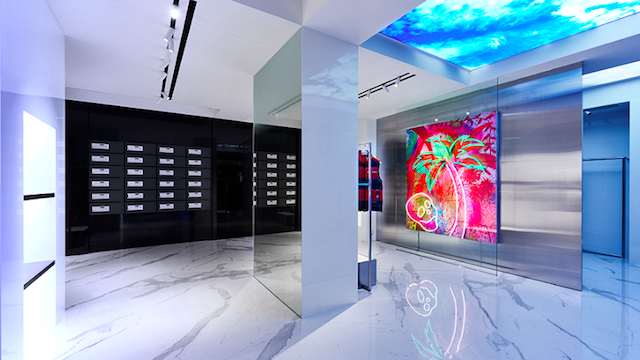
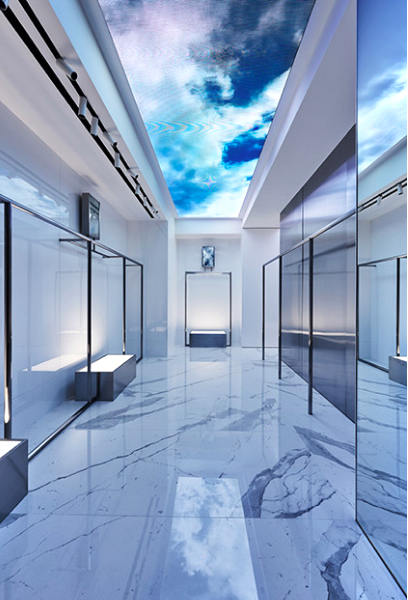
    Palm Angels Hong Kong has opened its first flagship store, selecting a site in Patterson Street, Causeway Bay. The interior of the store was designed by Palm Angels founder and creative director, Italian Francesco Ragazzi, in partnership with Studio April. From the outside, the store draws the attention of passersby with its minimalist facade, bright LED signage and white lacquered glass panels.

    The interior design was inspired by a white cube gallery and clothing is displayed throughout the store more like pieces of art. The floors are made from polished marble and steel furniture stands out against white walls.

    The Palm Hong Kong flagship also features paintings and neon artwork created by Canadian artist Thrush Holmes.

    In June, Palm Angels Hong Kong opened a pop-up store in partnership with global fashion group HBX to introduce the exclusive Palm Island capsule collection and gauge interest in the brand among Hongkongers.

  • Hyundai reveals a glimpse of the future

    Hyundai reveals a glimpse of the future

    Hyundai Motor Group offered a glimpse of its new concept autonomous car Friday in a short video. The concept car is electric. In the video, the electric car finds its way to a charging station inside a nearby parking lot on its own after the driver gets off at its destination. The station offers wireless charging. When charging is finished, the car then parks itself in an empty lot to make room for other vehicles to charge. When the driver calls the car back using their smartphone, the car drives itself to the requested meeting point.

    The Korean automaker described the feature as an “automated valet parking system.” The feature could take the burden off drivers struggling to park and also save time as they won’t need to find charging stations or empty lots.

    For this system to work, parking lots, cars and drivers need to continuously share information through a connected network, Hyundai said. For instance, parking lots need to send the location of charging stations and empty parking lots to cars, and wireless chargers need to notify drivers of cars’ battery status via text message or other means.

    “In the upcoming era where autonomous driving cars become prevalent, there will be growing demand for various driving control features using self-driving technology,” a spokesperson from Hyundai Motor Group said. “We will focus on developing services that enable drivers to make convenient and safe use of self-driving cars.”

    The company said it expects the wireless charging system and automated valet parking system to be applied to its autonomous driving cars scheduled for launch in 2025.

  • Lifestyle-curation bookstores are changing

    Lifestyle-curation bookstores are changing

    In recent years, bookstores have been disappearing at a fast rate. Aside from major franchise bookstores in downtown areas, many small, neighborhood bookstores have closed, forced out in the digital era. But lately, bookstores have been returning in different forms. New bookstores sell more than just books, offering a wide range of goods from stationery, food and drinks to various merchandise — anything related to lifestyle.

    The trend started with the Kyobo Book Centre, the nation’s largest bookstore franchise, following the model of Tsutaya Books. The Japanese bookstore chain established a successful business model, attracting consumers who may not necessarily be interested in books with its retail products and in-store restaurants.

    The business went against the prejudice of a bookstore as a place where you a person just buys books. Providing comfortable seats for people to read, it helped create a larger reading population.

    Following Kyobo Book Centre’s success, more bookstores opened, offering more products and services than just books. They bill themselves as lifestyle-curation bookstores, or culture complexes.

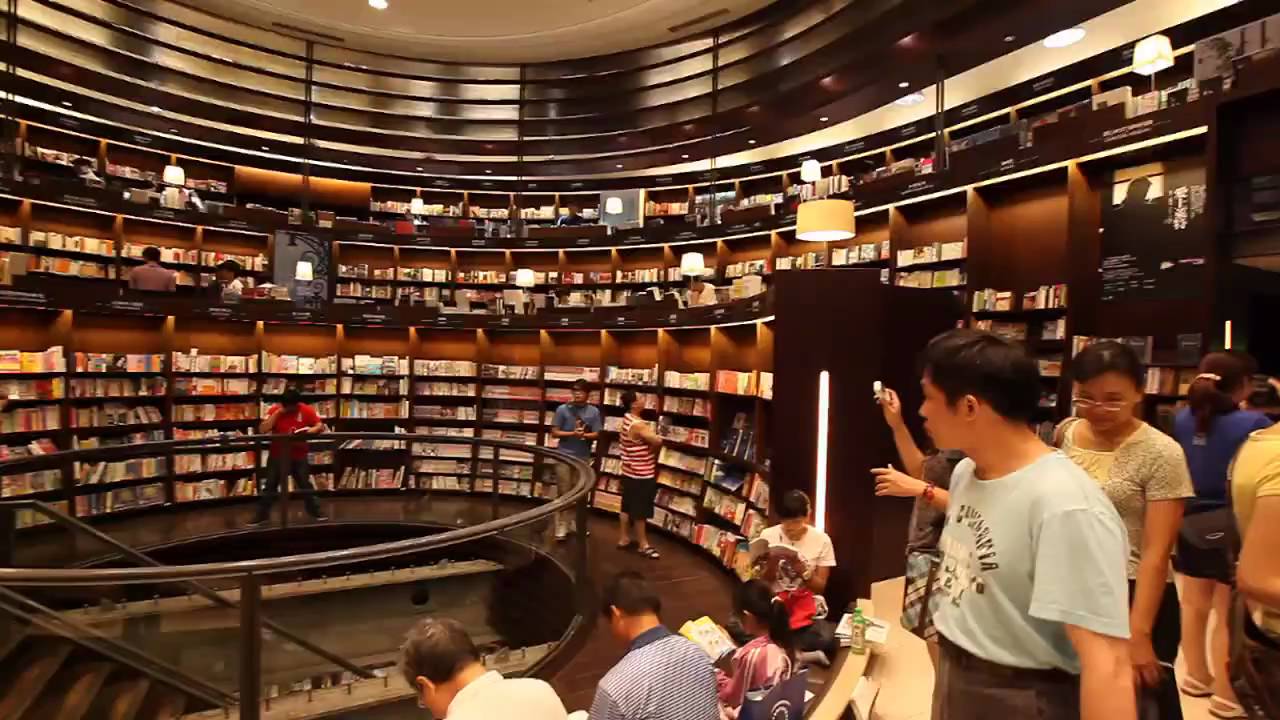
    Arc N Book, which opened last month in central Seoul, deems itself as a city culture complex that introduces books and lifestyles.

    The bookstore has four themed sections: Daily, Weekend, Style and Inspiration. The themed sections provide related products. For instance, the Daily section’s theme is currently black tea. Along with related books, the section displays tea leaves and tea bags for sale.

    On Dec. 15, the bookstore bustled with visitors. While some lounged with books in hand, others photographed the well-decorated space. The “Harry Potter”-styled archway, a book tunnel, was the hottest photo spot.

    “We are strong in foreign books. Foreign-language books take up 7 percent of our books, while it is usually around 2 percent at other bookstores,” said Kim Ji-in, a representative from OTD Corp., which operates Arc N Book.

    “We have around 30,000 books, which may not be big compared to other bookstores. But we are more about curating special books that cannot be found easily,” Kim said.

    Looking at the crowded bookstore filled with people reading, taking photos or sharing quality time with friends, a question popped into mind: Do people really buy books here? You could just grab a book, sit on a comfortable sofa and read for hours.

    According to Arc N Book, sales have been steadily growing since its opening. With encouraging results, the corporation will open another bookstore in Seongsu-dong in eastern Seoul in January. The bookstore, however, aims to be about more than just sales.

    “As a business, we, of course, have to create profit. But it’s not just about that,” Kim said. “We hope to curate a lifestyle, to show people a new way of living and reading.”

    Another question: Does the popularity of such bookstores really mean the reading population is increasing? At Arc N Book, it is clear not everyone comes to read. Some lay not even a single finger on the books.

    “At least these kind of places make people actually go to bookstores. Without these places, people will not be exposed to books at all,” said an official from GimmYoung Publishers, a big player in the publishing industry here.

    “Though they might not buy books right away, they experience the reading culture and learn that people read for leisure. In the long run, they can become future consumers,” the official said.

    Though a similar bookstore, the atmosphere at Choi Ina Books is quite different from that of Arc N Book. It is much quieter, less crowded — more of a library-like atmosphere.

    The bookstore in Seolleung, southern Seoul, is small in size but that doesn’t mean that its book curation ability is weak. Rather, it is all about professional curation here.

    In the publishing industry, Choi Ina Books is one of the most popular bookstores in Seoul. Choi, who retired as a copywriter at Cheil Worldwide, a major advertising firm in Korea, opened the bookstore to share her perspectives and inspirations with the wider public.

    Books in the curated section have been selected by Choi and professionals in the advertising industry. The books also come with handwritten cards that explain why the particular book was chosen and a simple profile of the recommender.

    Here, only purchased books can be brought into the in-store cafe upstairs.

    For those who don’t seek ownership, though, another reading space is available downstairs. It’s a library decorated like the private study of a well-cultured intellectual.

    The library can be used at a price of 14,000 won (US$12.40) for an hour or 22,000 won for two hours. The price includes a cup of coffee and snacks. Though a bit pricey, the space is frequented by office workers in the area seeking some alone time during the day, according to the bookstore.

    Another example of this ilk could be the Hyundai Card libraries. The credit card company currently operates four library-concept establishments across Seoul, each centered on different themes: cooking, travel, design and music.

    Built to be hubs of inspiration and thought in their respective fields, the establishments curate diverse books, including foreign specialty publications that cannot easily be found in Korea. They are open exclusively to Hyundai Card members.

    Though billed as libraries, the establishments neither lend books nor sell them. The books can only be read at the libraries, which also run various programs related to their respective themes.

    For instance, the Cooking Library runs cooking classes as well as self-cooking sessions. The Design Library and Travel Library offer talk sessions. At the Music Library, visitors can also learn to use the deejay booth.

  • Woowa Korea gets $320 million from overseas

    Woowa Korea gets $320 million from overseas

    Woowa Brothers, the operator of the popular food delivery app Baedal Minjok, said Thursday that it succeeded in securing $320 million from major foreign investors including Sequoia Capital, famous for investing in leading tech companies such as Apple and Google.

    According to Woowa Brothers, other major investors include China’s Hillhouse Capital – which is also known for investing in Chinese tech giants including Tencent and Baidu and led this round of funding – and the Singapore government-owned wealth fund GIC.

    The food delivery app developer said the investment has solidified its position as a unicorn company – an unlisted start-up worth over $1 billion – as its post-money valuation is now worth 3 trillion won ($2.66 billion).

    The company said it was able to secure such a large investment thanks to its exceptional growth.

    The Baedal Minjok app, normally referred to as Baemin, now processes nearly 27 million food delivery orders every month, up from 20 million in July. The app has 8 million monthly active users.

    Food delivery sales have more than doubled in the past three years. Baemin processed around 5 trillion won worth of food delivery orders this year, up from 2 trillion won in 2015.

    Since its founding in 2010, Woowa Brothers has received a total of 506.3 billion won in investment. Previous investors include Goldman Sachs, which invested 40 billion won, and Naver, which invested 35 billion won.

    “It’s significant that our company’s growth and future potential was recognized by reputable global investors,” said Oh Se-yoon, Woowa Brothers’ executive vice president and CSO.

    Woowa’s business interests go beyond food delivery. Its other projects include developing delivery robots powered by AI and self-driving technology and building an online system to help restaurant owners manage revenue and customers.

  • Vietnam’s 2018 coffee exports at 1.88 mln tonnes, surges from last year

    Vietnam’s 2018 coffee exports at 1.88 mln tonnes, surges from last year

    Vietnam’s coffee export volumes for 2018 are expected to increase 20.1 percent from last year, while rice exports are estimated to rise 4.6 percent.

    Coffee

    Coffee exports from Vietnam will climb an estimated 20.1 percent this year to 1.88 million tonnes, equal to 31.37 million 60-kg bags, the General Statistics Office said in a report on Thursday.

    Coffee export revenue for Vietnam, the world’s biggest producer of the robusta bean, will edge up 1.2 percent to $3.54 billion in the year, the report said.

    December coffee exports were estimated at 160,000 tonnes, worth $287 million.

    Rice

    Rice exports in 2018 from Vietnam were forecast to rise 4.6 percent from last year to 6.09 million tonnes. Revenue from rice exports in the period was expected to grow 16 percent to $3.05 billion.

    December rice exports from Vietnam, the world’s third-largest shipper of the grain, were estimated at 450,000 tonnes, worth $220 million.

    Energy 

    Vietnam’s 2018 crude oil exports were seen plunging 39.5 percent from last year to an estimated 4.12 million tonnes. Crude oil export revenue in the year is expected to decline 21.2 percent to $2.27 billion.

    Oil product imports in the year were estimated at 11.35 million tonnes, falling 12.1 percent from the same period last year, while the value of product imports rose 7.8 percent to $7.61 billion.

    Vietnam’s 2018 liquefied petroleum gas imports were seen increasing 4.9 percent from last year to 1.43 million tonnes.