Retail News CRM

Tag: line

  • Burberry cuts product lines to focus on newest fashions

    Burberry cuts product lines to focus on newest fashions

    Burberry is cutting between 15 and 20 percent of its product lines in a quest to focus on its newest ranges as it battles to attract shoppers in a volatile luxury goods market. The U.K. luxury-goods maker reported a 24 percent drop in first-half profit that met analysts’ estimates, but failed to match rivals that reported better-than-expected results.

    While luxury brands have been struggling with slowing growth in Asia, a drop in tourist spending in Europe following a series of deadly attacks and competition from fast-fashion chains, Burberry has been hit particularly hard. Its adjusted pretax profit fell 4 percent to 146 million pounds ($182 million) in the six months through September, in stark contrast with contrast with those of LVMH, Kering SA and Hermes International SCA, which all beat estimates in their latest reporting periods.

    The company had already announced a 4 percent drop in half-year sales to 1.16 billion pounds last month as weak demand in some overseas markets offset a surge in sales in its British home as tourists took advantage of a lower pound.

    The brand, which recently removed longstanding  creative director Christopher Bailey from his additional role of chief executive offer, bringing in Marco Gobbetti, the former CEO of Céline to hand the business/operational side of the brand. Additionally, Burberry announced in February that it plans move away from the traditional model of presenting seasonal ranges months ahead of their appearance in store, in favor of two collections a year that would be available in shops immediately.

    Finance chief Carol Fairweather said on Wednesday the company was cutting back on product lines ahead of the key Christmas trading period and would give greater prominence to its newest products, such as the bridle bag that was a top seller from its September runway show. “We are delighted with everything we have in place for (the) festive (season),” she said in a statement.

    Shares in Burberry, along with other luxury groups such as LVMH, fell on Wednesday after Donald Trump’s victory in the U.S. presidential election added to uncertainty over prospects for the global economy, analysts said. Burberry makes about 20 percent of its sales in the United States.

  • LINE explores more opportunities to expand user base

    LINE explores more opportunities to expand user base

    Japanese messaging app LINE is seeking to develop new features and establish a partnership with a major bank to seize a larger user base in Indonesia.

    LINE’s new Indonesia country director Ongki Kurniawan said on Thursday that it would try to develop new features, such as live video streaming, which has already been tested on several levels. One notable example of that is the recent broadcasting of a concert by Indonesian pop band Kahitna, which drew 3 million viewers on the LINE stream.

    The video streaming feature, however, is still in its conceptual phase as the company needs to figure out how to properly get around the obvious problem of Indonesia’s weak internet infrastructure.

    “LINE has to wait and work together with local telecom operators as they are the ones that have the ability to properly address the infrastructure and network issues,” said Ongki, who previously served as digital officer at telecommunications operator XL Axiata.

    In the near future, the app plans to also announce a partnership with a major bank that will fall short of being a “financial technology” service. However, no details were immediately available regarding the upcoming partnership.

    Ongki insisted that the key to becoming the “most notable and popular communication app” was to focus on closing the distance between users located across the archipelago as well as for businesses who use LINE to peddle their wares to expand their customer range.

    Content-wise, the application has steadily evolved from being a messaging app to becoming a platform where news, entertainment and business collide in one package: A target that had been achieved since the company started its Indonesian operations in 2013.

    It has gradually tried to enter the news and shopping sectors, with the LINE Today news aggregator service launched in February and the LINE Shopping Marketplace being launched just last Thursday.

    “To increase our user base, which is our primary goal at the moment, we need quality and diverse content. From there, even brands that use our service can benefit from our larger user base as it gives them more value to collaborate with others,” Ongki said.

    As for the fate of its messaging service, the company claims that its diverse functionality has given LINE the higher ground compared to other messaging services operating in Indonesia as the app boasts a majority of millennial users that make up more than 70 percent of its Indonesian user base.

    At the same time, Ongki said localization in terms of content through its widely used Stickers and its trademark LINE Webtoon comics platform have also given it an edge in the market. LINE is reportedly present in about 70 percent of all smartphones active in Indonesia.

    LINE recorded a total of 220 million monthly global active users in the second quarter of 2016, with Indonesia listed as its largest market with estimated 90 million users.

  • Uniqlo Thailand launching online store

    Uniqlo Thailand launching online store

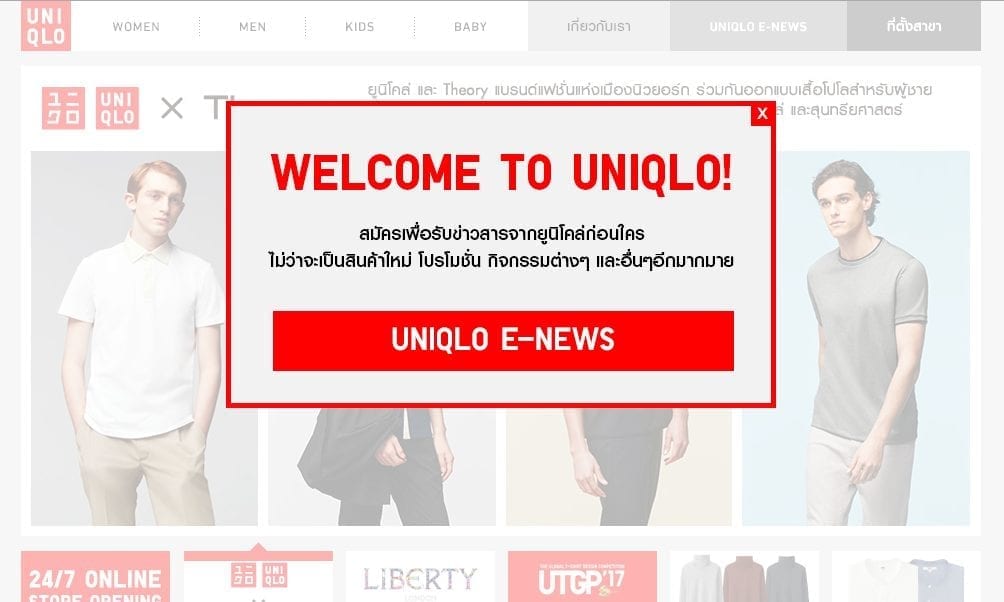
    Japan’s global fashion label Uniqlo Thailand is launching an online store, offering its full Thai range.

    The online store will help strengthen the firm’s “made for all” brand promise, says Uniqlo Thailand marketing and PR director/head of eCommerce Chanvit Khieonavavongsa.

    After nearly five years in Thailand, Uniqlo has 32 branches in nine provinces, covering about a third of the population. The eCommerce channel will meet the demand from customers in areas where the brand does not have an outlet.

    Exclusive to the Thai online store, Uniqlo will offer a cash-on-delivery service to cater for consumers who are still not confident about using credit cards for online transactions.

    Chanvit says the online channel will not affect Uniqlo’s expansion in the kingdom.

    “As long as there are good locations and customers, we will open a store,” he says. “There is no intention of reducing the opening of branches.”

    Two branches opened in the first half of this year, with two more to follow in September, at Blu Port in Hua Hin and at the Mall Korat.

    The online store is the brand’s 12th worldwide, with similar stores launching in Singapore in 2014 and in Malaysia last year.

    Uniqlo has assigned Singapore Post to handle logistics and deliveries for online orders, with guaranteed nationwide delivery of between one and three days. There is no delivery fee, while the packaging charge is waived for orders of Bt1500 (US43) or more. Customers have 30 days to return their goods to the company if they are not satisfied.

    Scheduled to go live on Friday, the online store will offer exclusive items and collections such as Kaws companion t-shirts and the HeatTech line of thermal wear. The mark the launch, there will also be special prices for popular items.

    Chanvit says the eCommerce expansion is part of Uniqlo’s global target to have 30 per cent of its sales derived from the online channel by 2020. The brand has already built awareness online in Thailand through Line, where it has 12 million subscribers, and Facebook, where it has had more than 1 million likes. Further awareness will be built through an integrated marketing communication plan across offline and online channels nationwide.

  • Naver uses VisualOn platform to power Line TV application

    Naver uses VisualOn platform to power Line TV application

    VisualOn’s OnStream MediaPlayer+ is now integrated into Korea’s Naver Player for Line TV service for iOS and Android devices.

    The aim is to enable scalable cross-platform media playback for global streaming media brands for a high-quality video playback experience,

    Naver Player enables Naver’s various live broadcasts and VOD videos to be viewed on iOS and Android devices with higher stability, quality, and scalability than the built-in device video player. Additionally, the platform features a one-touch notification function and an audio-only mode.

    Ranked one of the top 100 companies that matter most in online video by Streaming Media Magazine, VisualOn was chosen by Naver for the partnership for its market-proven multimedia software. Naver’s customers can now access high-quality, live TV streams and recorded shows on all the connected iOS and Android devices anywhere and at any time.

    “The Korean market is a crucial region for Naver and VisualOn due to its high volume of mobile consumers that expect a high-quality viewing experience no matter where they are,” said Andy Lin, CEO, VisualOn.

  • Lalamove Delivers Lifestyle Services with LINE

    Lalamove Delivers Lifestyle Services with LINE

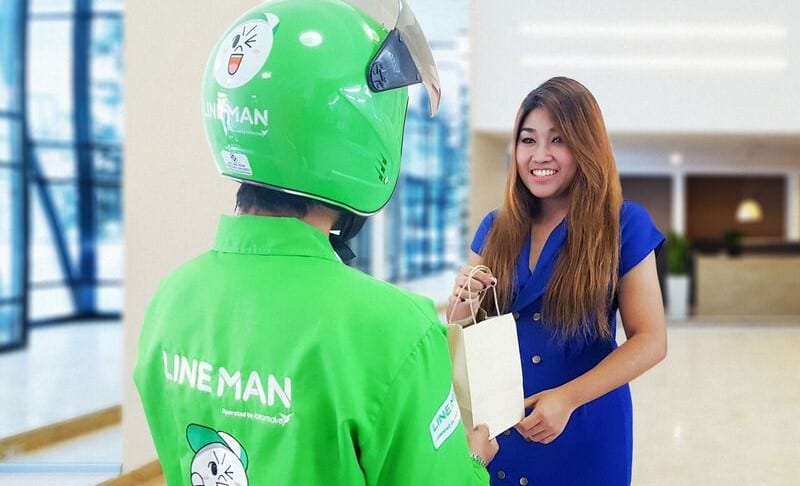
    Hong Kong based on-demand delivery app Lalamove is partnering with the world’s leading mobile platform LINE to expand on its delivery services in Bangkok.  The LINE MAN app is aimed at bringing reliable on-demand services to consumers as well as providing convenience to their increasingly busy lifestyles.  LINE MAN is one of LINE’s first ventures to “be more than a chat app” and LINE has chosen Thailand to be the first market to launch LINE MAN.

    The LINE MAN smartphone platform offers three services: document and package delivery, food purchase and delivery, and convenient goods purchase and delivery.  The delivery of all 3 services is provided by Lalamove, and currently limited to within Bangkok for now with plans for expansion.  LINE has a large user base of over 33 million in Thailand.

    Lalamove-LINE_3

    The announcement follows a global conference in March 2016 where LINE revealed a five-year plan to create a ‘smart portal’. The goal is to close the loop between businesses and LINE users and go beyond their original chat app strategy.

    Santit Jirawongkraisorn, Co-founder and Managing Director of Lalamove Thailand believes partnering with LINE is a natural progression. “This year, we have been marketing our online delivery services primarily to small and medium sized businesses. The addition of LINE MAN will bring Lalamove’s high quality services that many businesses have enjoyed to general consumers, which appeals to the Lalamove strategy and brand.”

    Meanwhile, the choice of Lalamove to deliver LINE MAN services demonstrates real confidence in the logistics app profile. According to Ariya Banomyong, Managing Director of LINE Thailand, “LINE MAN aims to offer best quality lifestyle services and help businesses leverage digital tools to connect with consumers, and Lalamove, as a leading on-demand delivery service provider in Thailand, made them a natural choice for LINE MAN”.

    LINE MAN will offer courier services through the Lalamove fleet of motorcycles, with cash payments.  Consumers will be able to order food via restaurant database app, Wongnai.

    LINE MAN is free to download at the Google Play store and Apple store.

    https://onelink.to/lineman

  • Why online retailers are opening Hong Kong pop-up stores

    Why online retailers are opening Hong Kong pop-up stores

    Numerous reports have been written on how eCommerce spells the death for brick-and-mortar stores in the retailing industry.

    But others have written on how the preference of customers taking in the whole in-store shopping experience will ensure that there will always be a need for real world stores.

    Unlike in other markets, eCommerce in Hong Kong has yet to gain a strong foothold. According to Euromonitor International, online retail sales accounted for only 3 per cent of the city’s total retail sales in 2015. The insignificant share of online sales has even seen the tables being turned, with online retailers opening offline stores to communicate brand value and as a means to convert bricks and mortar store shoppers to online platforms.

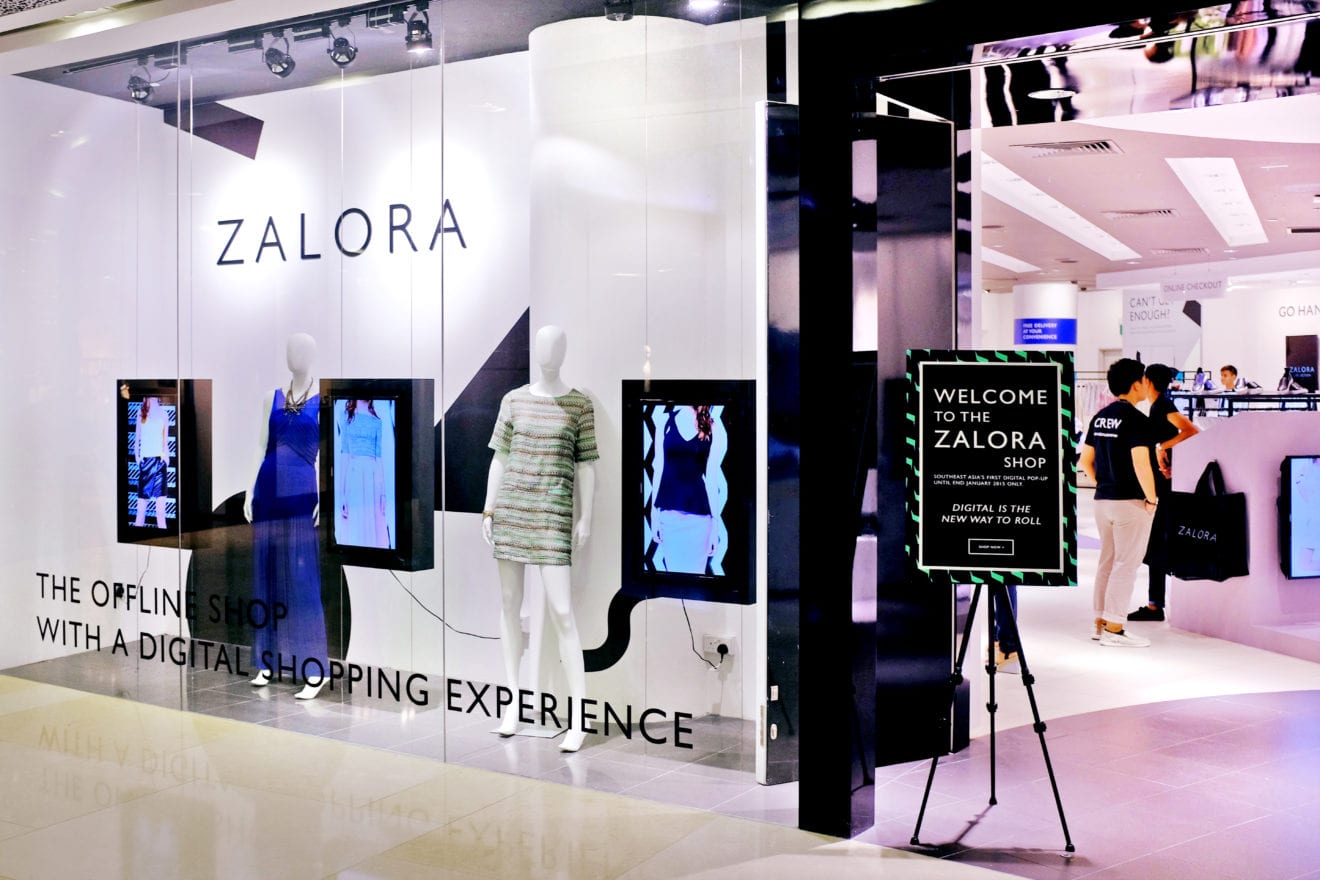
    Online fashion retailer Zalora is just one brand which opened Hong Kong pop-up stores last year to test the waters without committing to a long-term lease. Other than cost concerns, the use of a pop-up store also allowed the retailer to move the store around various shopping centres in the city to maximise exposure.

    Real world stores opened by online retailers are generally designed for experience and as a place to educate potential customers to buy online. Similarly, Line – the mobile social networking platform – also opened a pop-up store last year, before opening a more permanent store to sell Line character merchandise as well as build its brand image and customer base.

    While pop-up stores are the preferred format for Click-to-Brick retailers (at least at the market entry stage), when it comes to setting up a more permanent store, the overwhelming preference is to be located in prime shopping centres in core locations since they provide an all-weather shopping environment, controlled trade mix and a more focused customer base.

    For landlords, the allure of pop-up stores is that they can better utilise space within the shopping centre and minimise void periods; an important consideration given the current challenges facing the city’s retail sector. The ever changing goods offered by different pop-up stores can also freshen the shopping experience of customers.

    The Click-to-Brick trend is still at a nascent stage, hence it is too early to conclude whether it will establish as a key driver of demand in the city’s retail leasing market over the longer-term. In the interim, it will be a welcome addition to shopping centre landlords who continue to look for new means to differentiate against their competitors amid an increasingly challenging retailing environment.

  • Indonesia to Block Line, WhatsApp, Other Unlicensed OTT Apps

    Indonesia to Block Line, WhatsApp, Other Unlicensed OTT Apps

    The Indonesian government plans to block over-the-top (OTT) applications that fail to meet the state regulation on permanent business entities.

    Rudiantara, Minister of Communication and Informatics, said his department is finalizing a bill related to the obligations of permanent business entities for OTT players operating in Indonesia. The bill is expected to be released in March 2016.

    The minister said the rule will stipulate a transition period for these OTT developers to meet the requirements.

    “The punishment is easy technically, they will be blocked by the cellular carrier,” he said on Wednesday, February 24.

    Rudiantara also said that he does not want these OTT developers to only open branches in Indonesia. Instead he wants them to become an incorporated business entity in the country,

    The OTT players, he said, can also opt to establish a joint venture or form a partnership with local cellular carriers.

    According to Rudiantara, this is the government’s way of protecting Indonesian consumers. The regulation, he said, can also pool in tax potentials that Indonesia are losing since the OTTs are not a legal entity working in Indonesia.

    As an example, he said that in 2015 the value of digital ad revenues from Indonesia stood at US$430 million. “If these ad revenues are imposed a 10-percent income tax, the state could get US$43 million,” he said.

    Some time ago, the Indonesian Telematics Society (Mastel) urged the government to block foreign OTTs that have been operating for quite a long time in Indonesia without contributing anything to the state; only making Indonesia a market to rake in profits.

    Mastel Institute chairman Nonot Harsono projects the growth of foreign OTTs in Indonesia will be more significant, as indicated by the rapid growth of the country’s internet and smartphone users.

    “Most of these OTT players are running their business in Indonesia without licenses; like LINE, Whatsapp, Kakao Talk, Netflix, and plenty of others. They should have filed for a license first if they wish to sell here,” he said.

    Of Indonesia’s 255.5 million citizens, 72.2 million are active internet users. Meanwhile, the number of smartphone users in the country has exceeded the population with 308 million.

  • Line Thailand to launch mobile payments

    Line Thailand to launch mobile payments

    Visa subsidiary CyberSource has sealed a partnership with mobile messaging app Line Thailand, to allow Thai users to make mobile payments using its Line Pay service.

    CyberSource, one of the world’s largest providers of eCommerce payment management services,  will offer its full suite of payment, fraud management and tokenisation services for Line Thailand, which will work with acquirer Krungsri (Bank of Ayudhya), Thailand’s fifth largest bank.

    Line and Cybersource will be able to process a wider spectrum of mobile payments from multiple card brands and issuers, as well as “certain alternative payment methods”.

    “The solution is designed to provide their customers with secure mobile payment options at affiliated online and brick-and-mortar stores without requiring an additional app,” explains CyberSource.

    Line has grown globally across 230 countries and regions since 2011, with its mobile messaging service app registering 205 million monthly active users as of April 2015. Some 33 million Thais use Line Thailand.

    Prapakorn Lipikorn, Head of Line Pay business development, with Line Thailand, said:. “This partnership is a key component in our strategy to cater to an ever-growing user base in Southeast Asia. We are able to streamline payment acceptance and create new growth opportunities for our merchants, while providing our users with a fuss-free mobile payment option.”

  • Korea more active than Japan in Southeast Asian tech

    Korea more active than Japan in Southeast Asian tech

    In a region where masses of users are newly armed with smartphones and more spending power, Southeast Asia is a new gold mine for tech enterprises.

    China’s quickly saturating market for all things tech has pushed Asia-bound start-ups to seek new territory, and global companies like Rakuten, eBay and Rocket Internet are vying over Southeast Asia with no clear winner ― meaning plenty of opportunities still abound for new players.

    Those conditions drew Korean-Japanese entrepreneur Tesong Kim, who led e-commerce at Japanese investor Rakuten’s offices in Tokyo and Jakarta, to launch his own discount retail start-up VIP Plaza for fashion goods in Indonesia, Southeast Asia’s biggest market, in 2014, and recently expand to Malaysia.

    And Korea’s start-ups are joining the rush, he says.

    They seem to be making bigger waves there than in Japan. He cannot list any Korean start-ups with a big presence in the country, a closed, conservative market that is a nut nearly impossible for foreign companies to crack. But in expanding to Southeast Asian markets like Singapore, Indonesia and Malaysia, he says they are far more active than their Japanese rivals.

    “Korea is quite aggressive in Southeast Asia, I think more aggressive than Japan in terms of e-commerce start-ups,” he told The Korea Herald in an interview on the sidelines of tech start-up conference Tech in Asia Tokyo 2015 last week.

    “Korea is very crowded. The population is very small, geographically the landscape is very small, and there’s a lot of start-ups. So it’s quite packed, but I think Japanese investors think Korean start-ups can go global more than Japanese start-ups.”

    Indeed, SK Planet’s e-commerce retailer 11st is seen harnessing the region’s demand for Korean fashion and beauty products, while couples messenger Between and crowdsourcing translation app Flitto are also gaining traction in markets like Indonesia, Taiwan and Thailand.

    Meanwhile, Kim says Japanese start-ups are trapped at home, falling hard when they try to copy and paste their successful domestic strategies into new markets.

    But competition in Southeast Asia is heating up fast. Kim believes Korea’s KakaoTalk lost the messenger app war in the region to rivals like BlackBerry, WhatsApp, LINE ― one successful Japanese exception in the region ― and WeChat because it entered too late.

    That’s why it has pivoted to commercial services such as e-commerce when targeting markets like Indonesia, he said.

    Not that e-commerce is any easier, as Kim knows from his experience with Rakuten’s Indonesian e-commerce venture and starting his own online discount retailer. Handling logistics, acquiring products and dealing with fragmented, cash-based payment systems takes immense effort.

    But due to the region’s overall cheaper costs, he believes Korean and Japanese start-ups underestimate the investments they need to gain ground ― a mistake that will get them steamrolled in the market. “They think that with $1 million-$2 million, they can go to Indonesia, try to develop ― with that kind of mindset, they will never succeed,” he says. “All the very aggressive companies are investing into Southeast Asia with a very big amount of money.”

    Even for Korea’s prized e-retailer Coupang, which received a $1 billion boost from Japan’s SoftBank Ventures this year, it might already be too late to test the region’s waters, he said.

    “What they have is a know-how of how to sell things, of impulse buying. They have a system and good talents, but they are not localizing the region,” he said. “If they tackle some new country now, they need to invest in everything ― the products, warehouse, marketing and user acquisition.”

    But the market is already crowded by Lazada, Elivenia and Rakuten, not to mention 11st and Kim’s own start-up VIP Plaza. “I think it’s already too late in terms of social commerce,” he said. “The better strategy is buying out some local players. It’s not only easier, but much cheaper.”

    Still, Japan’s massive opportunities can’t be ignored, he says. Its app market is the biggest in the world, and gaming companies are seizing opportunities. “So in that sense, I think the market is still very big.”


  • Messaging app Line launches  music streaming service  in Japan

    Messaging app Line launches music streaming service in Japan

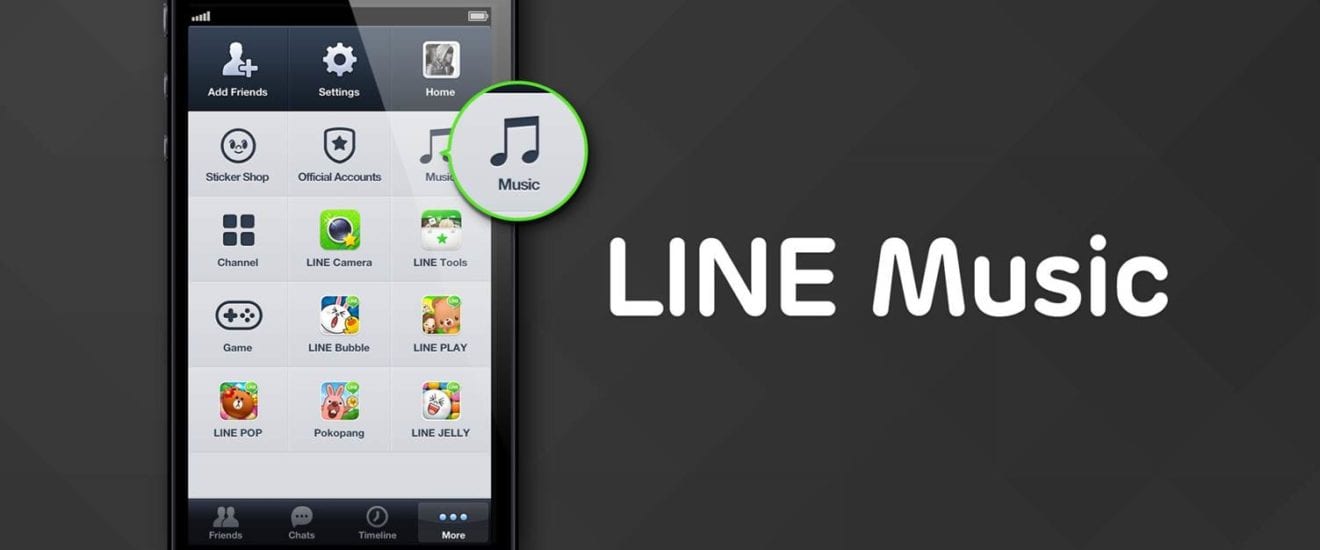
    Mobile messaging giant Line on Thursday launched a digital music streaming service in Japan, stepping into a largely untapped market still dominated by sales of compact discs.

    The new business — which comes weeks before Apple is expected to enter the Japanese market with its own streaming service — offers unlimited access to a collection of more than 1.5 million songs for 1,000 yen (US$8) a month.

    For those on a budget, a 500-yen fee buys 20 hours of listening time.

    Line said it would expand its music library to five million tunes by the end of the year, and to 30 million in 2016.

    The service will feature top-selling artists, from Sam Smith to Michael Jackson, as well as likes of Japanese diva Ayumi Hamasaki and Korean band Big Bang.

    Line Music said it plans to set up accounts for artists where they can send messages and offer glimpse of their lives to their fans.

    Japan is the world’s second largest music market, estimated to be worth $2.6 billion in 2014, after the $4.8 billion US market, according to the Recording Industry Association of Japan.

    But packaged media such as CDs account for about 78 percent of Japanese music sales, contrasting sharply with the US market markets where digital downloads are soaring.

    Many Japanese production companies have focused on established retail channels for CDs while issues over licensing have also hampered growth in the streaming business.

    Apple says its new Apple Music will launch on June 30 in 100 countries, offering up a heavyweight rival to online services such as Spotify, Pandora and Jay Z’s fledgling Tidal.

    Line’s popular messaging app, which is hugely popular in Japan and other parts of Asia, lets users make free calls, send instant messages and post photos or short videos. It combines attributes from Facebook, Skype and WhatsApp.

    Best known for letting users send each other cute cartoon “stickers”, Line is hugely popular in Japan, particularly among teenagers. It is reportedly planning an initial public offering later this year.

    The company’s music venture is also jointly held by Avex Digital and Sony Music Entertainment. Universal Music also plans to join the venture, Line Music said.

  • BlackBerry Targeting Local Retailers In Indonesia

    BlackBerry Targeting Local Retailers In Indonesia

    BlackBerry Ltd (NASDAQ:BBRY) (TSE:BB) is now relying heavily on its mobile application services as it struggles with its device business in Indonesia, which is one of the most important consumer market for the company. The Canadian smartphone manufacturer is seeking to monetize the application services in the region

    Indonesia holds big potential for BlackBerry

    Matthew Talbot, senior vice president for emerging sales at BlackBerry Ltd (NASDAQ:BBRY) (TSE:BB), told that the Jakarta Post that the company had plans of approaching the brick and mortar retailers and e-commerce players for partnerships. Talbot said Thursday that these partnerships will help the company in monetizing their services.

    Talbot said both, the virtual shop of BlackBerry and BlackBerry’s e-money application dubbed BlackBerry Messenger Money (BBM Money), were used for advertising by e-commerce marketplaces Qoo10, Tokopedia and Elevenia. The executive, further, informed that globally advertisement requests received by the company per day were noted at 300 million in December last day, and in January this figure went up to an average of 400 million.

    “There’s a good opportunity to bring more and more merchants to the table as there is a large volume of retailers that are emerging in Indonesia,” he said, adding that Indonesia was the second-fastest growing e-commerce market after China. Internet penetration in the country is estimated to reach 55% by 2017 as informed by financial services company UBS, adding that there has been exponential growth in the e-commerce of Indonesia in recent years. An e-commerce provider Vela Asia said that the e-commerce market in Indonesia was calculated at $8 billion in 2013 and by 2016, it is forecasted to grow to $25 billion.

    Not BlackBerry devices, but BBM popular

    BlackBerry Ltd (NASDAQ:BBRY) (TSE:BB) has lost its smartphone share in the country to global competitors that include Apple, Samsung and LG. However, the case is not the same with the messaging application, BBM, and it remains the most popular in the country. BBM is used by 80% of the smartphone users in the country for 23 minutes a day, says a report from Nielsen, released last year.

    Competing chat apps, WhatsApp and Line, are being used by way less number of smartphone users. The time spent on the apps on the daily basis being six and five minutes, and the number of smartphone users using the apps was 57% and 30% respectively, according to the study.

  • Line adopts secure payment service

    Line adopts secure payment service

    Social media app Line has teamed up with CyberSource to enhance the security and convenience of it mobile payment service Line Pay.

    CyberSource, a subsidiary of Visa, is one of the world’s largest providers of eCommerce payment management services. The strategic partnership with Line Corporation will add payment and fraud management services for Line Pay.

    “Via CyberSource’s global payment gateway, Line will be able to process online payments from multiple card brands and issuers, as well as certain alternative payment methods,” the company said in a statement.

    “These solutions enable Line to advance their business globally in a scalable and secure manner.”

    Since Japanese company Line’s launch in 2011, the service has grown globally across 230 countries and regions. As Line Corporation’s core business platform, the app helped the company obtain an international presence by consistently rolling out and expanding services, integrating various social elements in its app features – including Line stickers, Line family apps, Line Game and Line camera. The mobile messaging service app had 181 million monthly active users as at January 2015.

    “With global smartphone penetration per capita expected to increase more than three times by 2017 from that in 2011, we recognise that there is great opportunity for growth in the mobile industry,” said Takeshi Idezawa, Line Corporation’s COO.

    “We are constantly looking to work with partners with an established worldwide presence and vast experience so we can provide quality service to today’s digitally-savvy consumers. With our entry into the mobile payments market, we are now able to empower our customers with more choices and flexibility in online payments. On top of that, we are also able to protect their interests with CyberSource’s payment security expertise. We strongly believe this will be pivotal in helping us accelerate our global growth.”

    In addition to global payment services, Line will also have access to secure payment acceptance and fraud management services via the CyberSource payment management platform. This means Line will be able to provide payment security, with users’ sensitive payment data residing in CyberSource’s secure data centers, as well as process a wider spectrum of payment methods.

  • Burberry teams with Line

    Burberry teams with Line

    Burberry and Line have launched a global partnership beginning with a platform first – the live stream of Burberry’s upcoming Prorsum womenswear show, direct from London.

    Burberry and Line say they will initially be partnering to offer Line users in Japan “unique creative content and real time technology” to take users closer to the luxury British brand.

    It’s the second major retail initiative this week for Japanese-founded Line, following the launch of an online supermarket service in Thailand as the first step in a Southeast Asia-wide grocery store roll-out.

    But the Burberry relationship will not extend to online shopping, rather it is a brand building exercise which in time will expand beyond Japan.

    Burberry chief creative and CEO Christopher Bailey said Burberry has long admired Line for its innovation and creativity.

    “This exciting collaboration will help us share our rich heritage and culture of design by building a very personal relationship with audiences in Japan.”

    Users of Burberry’s Line official account will be able to watch the Burberry Prorsum Autumn/Winter 2015 Womenswear runway show live from London Fashion Week on February 23. Using the mobile live cast functionality Line Live Cast, viewers in Japan will be able to experience the show in real time.

    An exclusive collection of Burberry ‘Cony and Brown’ ‘digital stickers’ will be launched with both characters dressed in iconic Burberry trench coats and cashmere scarves designed for the platform. The stickers will be available exclusively to Line users in Japan from mid-February.

    Line CEO Akira Morikawa said his company was pleased to be recognised as “a powerful and stable platform” by Burberry.

    “This is a huge step for Line as it continues to grow its brand and expand globally. We look forward to working with Burberry to provide users with uniquely enjoyable and revolutionary experiences achieved by connecting an increasingly smartphone-oriented fan base with one-of-a-kind luxury fashion available both in-store and online.”

    Burberry is beginning a new chapter in Japan in 2015. From June, the brand’s licensed products will be replaced with the Burberry global product offering including its British made heritage trench coats and scarves.

    Burberry has 16 stores in Japan, including flagships in Kobe, Ginza Marronnier Dori and Roppongi in Tokyo. Last November it opened a new store in Omotesando, Tokyo.

    Line has expanded its user base globally and now has more than 181 million active monthly users.

    Burberry’s Line official account: LINE ID : @burberry_jp. It is in Japanese only at this stage.

  • Line app gets into groceries

    Line app gets into groceries

    Social media and chat app Line is getting into the grocery retailing market with the launch of an online supermarket for Southeast Asia.

    Line, with 181 million monthly active users at the last count, will launch the supermarket service first in Thailand on February 4, reports TechInAsia.com. It promises discounts on some everyday groceries that people need to stock up on often, such as bottled water, coffee, and instant noodles. There will be free delivery for Thai shoppers.

    Thailand is one of the Japan-based app’s top markets, where is has 36 million active users at present.

    The new service was announced by Line’s eCommerce partner, aCommerce, which handles all the supplies, warehousing, and shipping.

    “Food and consumer goods-based ecommerce businesses have been around for quite a while now, especially in developed markets like the US and Korea,” said Sedong Nam from Line Plus Corp.

    “However, only recently are we starting to see the shift towards mobile-first with on-demand businesses that extend to every part of our life. This campaign is our first step towards moving into developing our channel exclusively for the emerging online groceries category.”

    Nam added that the messaging app faces a challenge in this new space and needs “to educate both consumers and retailers in the region on the benefits of mobile commerce.”

    Line first experimented with eCommerce in the region in late 2013 with flash sales for make-up products.

    Line’s online groceries store will expand to Southeast Asia at an unnamed date. This will likely be limited to certain cities, rather than covering entire countries.