Tag: luxury

  • Esprit’s loss in line with forecast

    Esprit’s loss in line with forecast

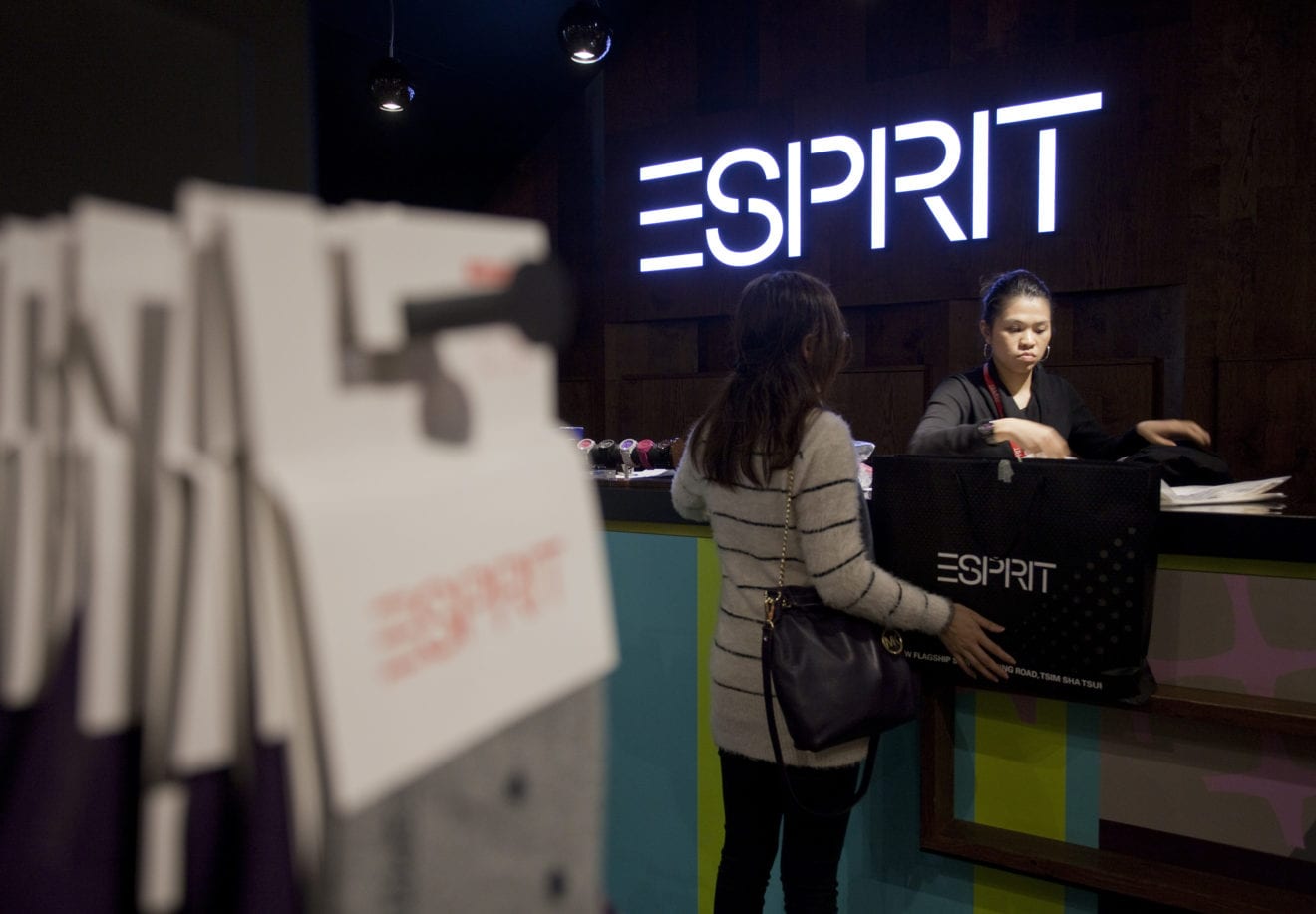
    Fashion retailer Esprit shuttered 91 stores in the six months to December and recorded a loss of HK$1.773 billion (US$225.876 million). While the loss is massive, it is within the estimates Esprit provided at an investor presentation last November when it unveiled its rescue strategy for the embattled Hong Kong-listed brand. The 91 stores closed during the fiscal half year come on top of another 50 in the half year preceding it. More closures are to come as the company trims its network to meet falling consumer demand for its range and save on rent.

    Esprit’s revenue for the half year fell to $6.766 billion, down 14.4 per cent in local currency terms, due to fewer stores and “reduced customer traffic across the distribution channels due to the weakness in brand identity and product appeal,” the company said in a stock exchange filing.

    The company’s share price fell from $2.04 to $1.83 (US 23 cents) as the results were released, before recovering a little this morning despite the results being inline with the company’s forecasts last November.

    Esprit “has a clear strategy plan in place setting forth bold changes to build a powerful organisation and restructure the cost base and develop a new model for the future,” the company reiterated in its filing. That plan includes becoming a leaner and more efficient organisation, eliminating loss-making areas of the business, sharpening the Esprit brand identity and putting the customer at the centre of everything the group does, and

    improving the product offer and its relevance to consumers.

    “The execution of the strategy plan is progressing well and is on track. While the group is encouraged by the initial progress and [has] a committed team in place to see the execution through, it is important to appreciate that it will take time to see this translate into a positive business performance, as most initiatives are still at this stage a work-in-progress and it will require time to make the corresponding improvements in brand and product visible to our customers for attracting them back into Esprit stores.”

    Included in that process is the reduction of between 35 and 40 per cent of non-store employees, already completed in Asia and on track in Europe.

    Meanwhile, the company said that while revenues continued to decline in the first half, the rate of decline is slowing. In the three months to September, sales in local currencies fell by 16.2 per cent, while in the following three months, sales fell by 12.5 per cent.

    Asia Pacific – comprising mainly China, Hong Kong, Singapore, Malaysia, Taiwan, Macau, Thailand, India and the Philippines – accounted for just 10.4 per cent of the group’s total revenue, or $698 million. That was down 26.6 per cent, in part affected by the closure of the Australia and New Zealand Esprit businesses last year.

    Transition period

    Esprit says it expects the next two years to be a period of transition for the company and its brands

    “Revenue is expected to see further decline in the next two financial years due to closure of loss-making stores, before reverting to growth to be driven by impact from product and brand initiatives. Overall, the group expects revenue to increase at a compound annual growth rate of a mid-to-high single-digit percentage in local currency between FY19/20 and FY23/24.”

    It reiterated its earlier forecast of breaking even in two to three years time.

    A “low double-digit” decline in topline sales is expected in the second half of the current financial year.

  • 8 trends set to shape Southeast Asian e-commerce

    8 trends set to shape Southeast Asian e-commerce

    Southeast Asia’s e-commerce market is set to exceed US$102 billion by 2025, according to a study by Google and Singapore’s Temasek. As more and more consumers are attracted to shopping online for convenience and they build trust in the channel, investors in the e-commerce industry are gaining confidence and seeking opportunities. That helped startups raise and estimated $9.1 billion in the first half of last year, almost as much as for the whole of 2017.

    If last year was dubbed ‘The Year of E-commerce’ for Southeast Asia, what can the industry expect this year? We speak to industry leaders to discover the anticipated trends for online retailers and brands in Southeast Asia.

    1. Brands shift their focus from data gathering to data use

    The biggest differentiator between online and offline retail is the ability to track, collect, monitor, and manage information, all in real time. Through online channels, brands are able to access customer data through chats, social media, and their own websites. This information can be used to devise online strategies. Globally, 73 per cent of brands plan to allocate their e-commerce budget on data and analytics services this year.

    However, despite general agreement of its importance, many brands have no concept of how to use data to their advantage.

    “Even today, not all retailers have embraced data fully to the point where they think of themselves as data companies, and this might be why many companies are suffering,” observes Harvard Business School Professor Srikant M Datar.

    Data collection is easy but having and optimising the analytics capability to use it is a completely different ball game.

    A survey by ecommerceIQ identified data analysis as one of the most difficult skills to find among the digital talents in Southeast Asia. Brands are constantly searching for data aggregators to consolidate information into one place for convenient retrieval and use to target, retarget, and personalise products and services.

    Reagan Chai, head of regional business intelligence and business development at Shopee said that data acquisition enables the company to map out and optimise buyer and seller user experience while pre-empting customer demand and anticipating future potential. The company has seen an increase of website traffic in the past year that even surpasses the other regional players.

    In China, Alibaba and JD have taken this a step further by using the data gathered online to improve inventories and experiences at their physical stores. Alibaba chief marketing officer Chris Tung said the company wants to help brands find the right consumers by tracking them throughout Alibaba’s system.

    “We’re finding all data that has to do with people, their behaviour, what they like, what they buy and binding this online data to real people,” concluded ChrisTung.

    Last year, the region’s leading brand ecommerce enabler, aCommerce, launched a data analytics platform BrandIQ to enhance their capabilities as a data partner to help brands centralise their customer data and offer customised products or services to each target group.

    This leaves brands with two options: find an economical way to use the data or continue looking for a needle in a haystack.

    1. Social-commerce channels are brands’ new sales outlets  

    Social commerce in this region boomed before the rise of e-commerce as we know now. Facebook groups have long established as an online space where people connect to buy and sell goods, even before the launch of Facebook’s Marketplace feature. The rapid growth in Southeast Asia is propelled by the mobile adoption and smartphone, where 90 per cent of the online population access the internet via smartphones. For some, Facebook even defines the internet itself.

    With multitudes of potential customers gathered via social media platforms, brands naturally saw alternative sales channels. Following Facebook’s footsteps, social platforms like Instagram and Pinterest have also developed their own shoppable features.

    “Brands will miss out if they don’t have a social media presence. The best way to get feedback from consumers is by having a direct conversation,” Deb Liu, VP at Facebook Marketplace in an interview with Forbes.

    Line recently acquired social-commerce management startup Sellsuki in Thailand, where it has the second-biggest user base, to build a strong foundation for its e-commerce business. The company has also formed a joint venture with three local banks to offer personalised loans to SMEs.

    A few big brands like L’Oreal have already equipped their social media page with ‘Shop’ feature that allows consumers to purchase the order directly on the page and it is only a matter of time before more brands activate the platforms as one their sales channels and remove another layer between them and the consumers.

    1.  E-marketplaces launch new services to differentiate

    Looking at the successful existing e-commerce players in more developed markets, one thing they have in common is full control over their supply chain.

    JD’s investment to the development of its own supply chain allows it to scale its technology and offer a Retail-as-a-Service proposition to help other retailers or brands sell online. Alibaba is unrivalled for its extensive ecosystem beyond commerce, including its logistics network Cainiao and payment firm Ant Financial, not to mention its recent foray into the entertainment industry.

    The same practice has infiltrated down to Southeast Asia where Alibaba subsidiary Lazada has strengthened its logistics arm FBL (Fulfilled by Lazada) post-acquisition, and although no concrete plans have been disclosed, Shopee has expressed an intention to build its own logistics network.

    More e-marketplaces are coming up with new services to get more sellers onboard. Singapore’s Qoo10 is set to launch its blockchain-based ecommerce site QuuBee this year, using blockchain technology to eliminate the transaction and listing fee which in turn increase the retailers’ profit margin and make a more sustainable commerce approach.

    In Indonesia, Tokopedia is set to offer “Infrastructure-As-a-Service” with a fresh funds injection of $1.1 billion. It also plans to use AI for customer-care services and to run credit checks on merchants seeking loans to expand their businesses.

    Facebook is also showing more intention to jump onto the region’s e-commerce bandwagon. The social network has launched Marketplace feature in Thailand and Singapore without much fanfare, but its recent partnership with Kasikorn Bank in Thailand to allow in-app payments might be the start of the company’s effort to bulk up its commerce capabilities and cater to those that use the platform for their business.

    The practice is not exclusively done by the general e-marketplaces. Fashion e-marketplace Zilingo scored $226 million in funding due to its focus on building a fashion supply chain network that any merchant – small or large – can tap into.

    “It is imperative for us to build products that introduce machine learning and data science effectively to SMEs while also being easy to use, get adopted and scale quickly,” said Zilingo CTO Dhruv Kapoor in an interview with TechCrunch.. “We’re rewiring the entire supply chain with that lens so that we can add most value.”

    In a bid to recruit more brands to sell on their platforms, we anticipate that e-marketplaces will continue to go head-to-head with each other through new services, acquisitions, and partnerships. But are the e-marketplaces ready to burn more cash to win in this battle?

    1. Brands to reinforce reviews and fund user-generated content to win e-commerce consumers

    E-marketplaces in Southeast Asia have been upscaling and building add-ons which provide consumers with the utmost convenience. The search for better technology and assistance for the consumers is constant and never-ending.

    Online consumers begin their online purchasing journeys by searching for product information or reading reviews, usually on e-marketplace platforms, before making their purchase decision. They are looking for real opinions and user-generated reviews to validate the products.

    The habit of leaving product reviews on an e-commerce platform is not as common in Southeast Asia as it is in the US where Amazon even has a dedicated page for its most prolific reviewers. When they do, the reviewers usually left little information about the product and more about the other aspect of the purchase (for example, comments about the delivery time or packaging).

    Platforms like ReviewIQ are used by brands to increase their ratings and reviews engagement on their e-marketplace listings to help consumers make their decision. While the use of chatbots is an increasingly popular solution to help smooth the online customer experience, it is more suitable for generic questions such as “where is my order?” or “is this product available?” instead of personalised questions such as “will this lipstick look good on a yellow-undertone skin?”.

    Community-crowd models like one popular with travel platforms such as Airbnb might also be suitable for e-commerce in the region, to help consumers overcome their apprehension about online shopping. This is something that Edouard Steinert, aCommerce Thailand’s director of channel management, is investigating to help the company’s clients as this model has proved to save time, increase results, and keep costs low.

    “Consumers today want to hear genuine feedback and reviews about a product and they are becoming more averse to hard-sell methods. User-generated reviews, especially from people who share the same passion with them, drive better conversion for the brand,” he adds.

    1. Brands use direct-to-consumer strategies to acquire direct consumer data

    Some 89 per cent of companies are now competing mostly on a customer-experience playing field. The direct-to-consumer (DTC) approach is becoming more important for these brands because it allows them to gain insights into their end users and anticipate their needs.

    One trend observed among brands to promote DTC is e-commerce subscriptions. From a consumer perspective, subscriptions offer a convenient, personalised, and often cheaper way to buy what they need. For brands, it is a subtle method to create customer loyalty in the digital landscape.

    One brand adopting subscription e-commerce in the region is Nescafe Dolce Gusto, which offers free coffee machines in exchange for a minimum 12-month subscription of coffee. Besides witnessing sales growth, Nescafe Dolce Gusto also noticed that consumers continued to purchase goods from its brand despite dropping out of the subscription plan.

    “They may have dropped out of the subscription, but not the brand,” says Bhuree Ackarapolpanich, brand director & digital expert at Nescafe Dolce Gusto. “They still buy capsules from different channels: e-commerce websites, online marketplaces and supermarkets. A subscription strategy is not just a long-term consumption enabler but also a consumer acquisition channel for the whole brand,” he says.

    Acommerce’s regional director of project management, Mandy Arbilo said e-sampling is a popular strategy used by brands to evaluate demand, especially for e-commerce.

    While normal sampling techniques used by offline retailers are expensive, e-sampling saves brands up to 40 per cent as well as providing essential customer data.

    As DTC becomes widely adopted, consumers will see brands coming up with attractive gimmicks using digital tools to gain insights and entice consumers to spend more on their brands.

    1. This year will finally see regulation of e-commerce across the region

    E-commerce has remained largely unregulated across the region until now, but as the industry grows, it is only a matter of time until governments step in to tax this fast-growing segment, levelling the playing field for foreign companies to offer digital services and goods locally.

    Discussion of the implementation of e-commerce tax regulations in Southeast Asian countries has been noticeable since the beginning of last year but nothing concrete has yet materialised.

    Late last year, economic ministers from ASEAN signed an agreement to facilitate cross-border e-commerce transactions within the region.

    While nothing has yet been written in stone, predictions abound concerning the impacts of an e-commerce tax on goods imported into the region. In Indonesia and Thailand, e-commerce tax is predicted to bolster the growth of social commerce because, unlike marketplaces, they are uncontrolled.

    “If tax regulations restrict e-commerce platforms, making selling in Bukalapak complicated, there will be an exodus of people who prefer selling on Instagram and Facebook,” said Bukalapak co-founder and CFO Muhamad Fajrin Rasyid. “These platforms are uncontrolled and not chased for tax because they sell through the back door.”

    Singapore might also see a decrease in cross-border shopping as prices increase with the introduction of GST)on goods and services bought online from overseas. Currently, 89 per cent of all cross-border transactions in Asia Pacific are conducted by Singaporeans.

    Another e-commerce market with strong potential, India is to introduce new e-marketplace laws that indicate the prohibition of marketplace “owners” to sell products on their own marketplace through vendor entities in which they have an equity interest. It also prevents marketplaces from making deals with sellers that grant the marketplace exclusive rights to the product. Could we see such laws be applied in Southeast Asia?

    Regardless, brands will have very little influence on how the new tax policies take root but they will be behoven to anticipate the ruling and adjust online strategy accordingly to mitigate the impact of a shift in customer behaviour. This ASEAN agreement will encourage more local entrepreneurs to create new products and venture online to access a larger and more diverse market. Brands will now need to be nimble and innovative to adapt to local nuances and preferences.

    1. Grab and Go-Jek challenge logistics providers to capture e-commerce and online food delivery

    Since Uber’s Southeast Asian exit last March, Grab has inherited a monopoly in countries like Thailand, the Philippines and Malaysia, leading to complaints about falling service standards and increasing prices.

    But with the recent regional expansion of Indonesia’s Go-Jek, the competition between the two will only get more fierce. Go-Jek has successfully carved niches in Vietnam, Singapore and Thailand last year alone. In addition, Grab’s competitor in Malaysia, Dacsee, has also hinted at  expanding into Thailand.

    Neither company is racing to be the best ride-hailing provider; they are aiming for something much bigger: superapps. Go-Jek has secured $1 billion in funds from Google, Tencent and JD, already halfway towards its goal of raising $2 billion for the venture. Meanwhile, Grab recently secured a $200 million investment from Thailand’s Central Group, boosting its valuation to $11 billion to date.

    This year, these two competitors will steer towards the same goal of food and e-commerce delivery, which Google and Temasek predicts will grow 73 per cent on a CAGR basis this year. By 2025, they predict online food delivery growth of 36 per cent CAGR with online transport only growing by only 23 per cent.

    “We will be expanding our GrabFood and delivery business and deepening our relationships with restaurant merchants and key partners in some markets,” said Grab’s head of regional operations Russell Cohen.

    Same-day delivery providers can expect more competition during the next year. The impact of Grab and Go-Jek on market vibes will definitely raise the bar for the logistics and delivery sector.

    1. Brands and retailers will double down on omnichannel as Southeast Asians prefer pure-play e-commerce

    The omnichannel shopping experience is not a new concept, but companies do have diverse interpretations of the concept. Headlines reveal that online retail behemoths such as Amazon and Alibaba are moving into physical retail.

    Alibaba’s decision to venture offline reflects its determination to solve core problems of the shopping experience, such as scattered operations and lack of payment transparency.

    JD, meanwhile, pipped Alibaba in Indonesia by opening the first unmanned convenience store in the region. Its goal was to use and refine its enormous database by offering beneficial insights to brands such as the best products to stock and advertise. Through their joint venture with Central Group in Thailand, JD Central is planning a similar concept there this year.

    Pure-play e-commerce retailers and brands recognise drawbacks in online marketing channels with fragmented infrastructure and a limited pool of shoppers. That is why they began to promote offline as an attractive option to push sales growth.

    Elsewhere in Southeast Asia, companies are slowly but surely adopting this strategy across all categories. E-commerce fashion players like Thailand’s Pomelo and Singapore’s Love, Bonito have opened physical stores in their respective countries.

    Last year, Pomelo opened five new outlets, initially away from Bangkok’s prime shopping areas before moving into CBD locations like Asoke and residential areas like Bangna, once it refined the model. Love, Bonito has 17 retail outlets spread across Singapore, Malaysia, Indonesia and Cambodia.

    Rachel Lim, co-founder of Love, Bonito said, “Data can tell you what’s selling but being on the ground tells you why something is not selling and what the customer is looking for.”

    Visiting shopping malls is a popular social activity in Southeast Asia and this trend is not set to disappear anytime soon.

    Brands should take advantage of dual physical and online presence.
  • CapitaLand tops out Raffles City Chongqing

    CapitaLand tops out Raffles City Chongqing

    CapitaLand has topped out the eighth and final skyscraper of Raffles City Chongqing, expecting to launch it in phases from the second half of this year. This follows the completion of the 200m-high bridge The Crystal which connects six of the towers. “The successful topping out of Raffles City Chongqing represents a new milestone in CapitaLand’s track record of building well-designed integrated spaces,” said Lucas Loh, president (China & investment management) of CapitaLand Group.

    “After six years of construction using state-of-the-art engineering technologies, we are proud to present in Raffles City Chongqing an iconic architectural form resembling a powerful sail surging forward on the historic Chaotianmen site.”

    Following Raffles City Chongqing’s structural completion, the group is now focusing on the interior fit-out works, including transplanting trees to enliven The Crystal sky bridge, which will feature the tallest observation deck across Western China.

    Retail offering

    The development’s five-storey shopping mall will house some 450 retailers of fashion, dining, lifestyle and entertainment.

    Anchor retail tenants committed to date include Chinese electric vehicle company Nio, which will open its largest showroom there, a 1500sqm space also serving as an “exclusive clubhouse” Nio owners.

    South Korean cinema chain CGV will open its 5600sqm flagship and popular bookstore Yanjiyou will open a regional flagship, featuring a lifestyle cafe and other creative and experiential offerings.

    Ole’ will operate a gourmet supermarket with a food hall serving a wide range of fresh produce and international specialties.

    In a tribute to the 3000-year-history of Chongqing, the mall will feature a dedicated zone to promote authentic Made-in-Chongqing products, such as local delicacies, handicrafts and souvenirs.

    Occupying 9.2ha, Raffles City Chongqing brings together a 235,000sqm shopping mall, 150,000sqm of Grade A office space, about 1400 residential apartments, Ascott Raffles City Chongqing serviced residence and InterContinental Raffles City Chongqing hotel.

  • Puma reports strong sales, profitability in 2018

    Puma reports strong sales, profitability in 2018

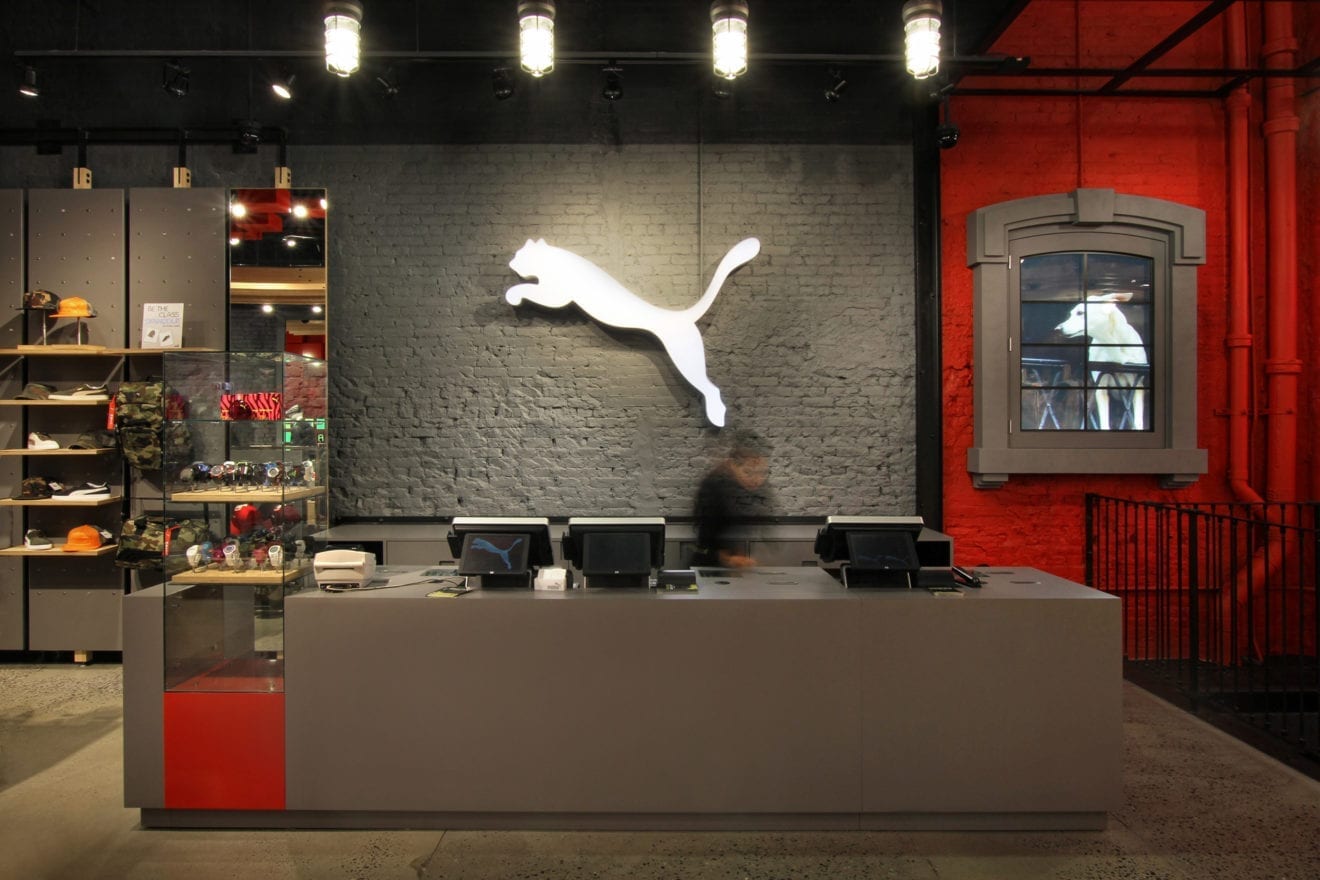
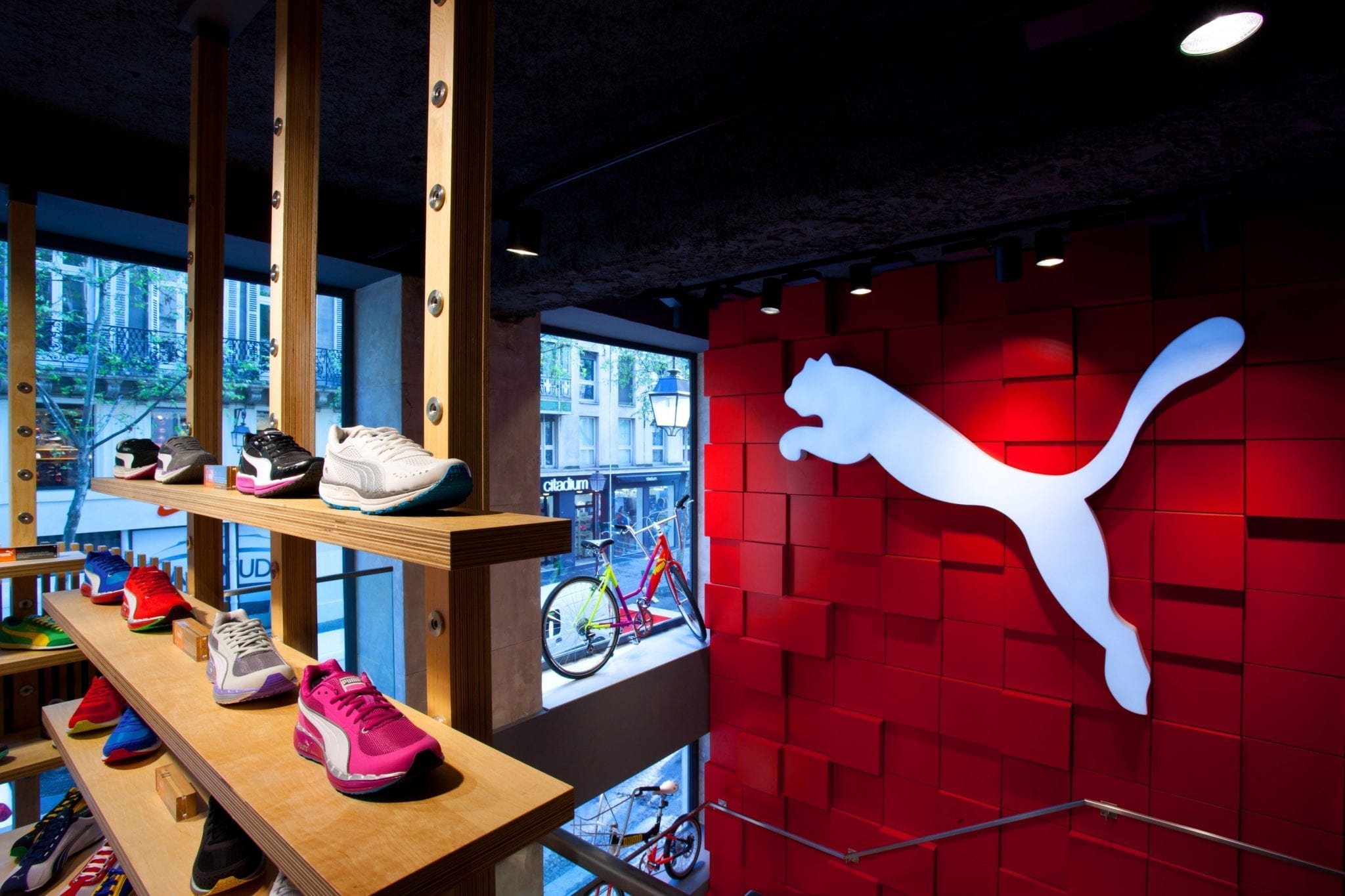
    Sportswear giant Puma reported strong annual results in 2018, as the German company witnessed double-digit growth across all geographic zones and product divisions. For the year ending December 31, 2018, the Herzogenaurach-based company said sales increase by 17.6% currency adjusted to €4,648 million (+12.4% reported) with double-digit growth in all regions.

    Asia-Pacific, despite being the smallest of Puma’s three regions after the Americas (+16.9%) and market leader EMEA (+11.4%), was the strongest in growth terms for 2018, up 28.8% to €1,235.5 million. APAC was mainly driven by high growth in China and Korea, while sales in Japan increased at a more moderate mid to high single-digit rate.

    In product terms, Puma highlighted the success of new sneaker styles Thunder, RS-0 and RS-X in 2018, as part of the company’s debut into the “chunky shoe” category.

    Puma also spent 2018 re-entering the basketball category after 20 years, and signed supermodel Adriana Lima as its women’s training ambassador.

    Net earnings increased by 38 % from €135.8 million to €187.4 million, and earnings per share lifted from €9.09 to €12.54.

    “We are very happy with how our business developed in 2018. Sales rose organically by 17.6% to €4,648 million and the operating result (Ebit) improved by 37.9% % to €337 million, which shows our strong momentum,” said Bjørn Gulden, Chief executive officer of Puma.

    “The double-digit growth in all regions is a proof that the we have strengthened the Puma brand globally and the double-digit growth in all product divisions shows that we have enhanced our product portfolio,” added Gulden.

    In 2019, Puma said it expects currency adjusted sales to grow around 10% and operating results to increase to a range between €395 million and €415 million.

    “We still have a lot to improve, but we feel we are moving our brand and company in a good direction,” said Gulden.

  • Apple appoints former Microsoft executive

    Apple appoints former Microsoft executive

    Apple has appointed Microsoft’s former Corporate Vice President Sam Jadallah to lead the “Home” products category at Apple. Even though Apple has not officially announced the appointment, Jadallah updated his LinkedIn bio to read – “Working on Home at Apple”, reflecting his new role with the iPhone-maker. However, along with Apple, Jadallah has also been tight-lipped over his hiring by the company.

    After Microsoft, Jadallah ran a smart lock start-up called ‘Otto’ that shut down in January 2018.

    “Hiring Jadallah is the latest signal that Apple plans to get serious about its own efforts in the ‘Home’ category,” the report said.

    Apple has a range of “Home’ products including HomeKit — its software service that connects with a variety of third-party products; and HomePod — a smart speaker for the home with voice recognition and music.

    Currently, Apple’s HomePod constitutes a small share of the home products market as compared to Amazon’s Echo and Google Home.

    Recently, Apple acquired a voicetech start-up called Pullstring to strengthen Siri against Amazon’s Alexa.

    “That purchase could help the smartphone-maker become the centre of a connected living room,” the report added.

  • Asia-Pacific the key market for global smartphone sales

    Asia-Pacific the key market for global smartphone sales

    Global smartphone sales grew 5 per cent to hit US$522 billion last year, with Asia-Pacific accounting for nearly half of those. According to a recent Consumer Life Study by GfK, smartphones, feature phones and wearables accounted for a 44 per cent share of the global $1.2 trillion technical consumer goods (TCG) market. But it warned smartphone sales are expected to grow by just 1 per cent this year.

    Apac the key driver

    More than 732 million smartphone devices were sold last year. Despite a slight decline in demand, overall consumer spend increased by 5 per cent.

    China accounted for 60 per cent of the Apac region’s market value and 54 per cent market volume, making it the largest contributing country to the global smartphone market.

    “The Chinese market consumes the majority of the global smartphone production, as well as being the home of local brands that are becoming increasingly global,” observed Alexander Dehmel, GfK regional senior market insights manager.

    “Some 40 per cent of the Chinese brands’ smartphone production in 2018 was purchased outside of China, up from 31 per cent in 2016.”

    In second position, India bucked the global demand downtrend, reporting growth in both sales volume and value in 2018, by 19 and 21 per cent respectively. More than 161 million smartphones worth more than $28.5 billion were sold last year.

    “In Asia’s emerging markets such as India, a country where feature-phone sales still exceeds half of the total handset market, smartphone market rapid growth is fuelled by the high adoption rate of first-time smartphone users, in addition to the fast replacement cycle and upgrading of existing smartphone users,” said Dehmel.

    Premium models and Chinese brands fuel growth

    Globally, 12 per cent (up from 9 per cent in 2017) of smartphones sold were priced at more than $800 last year. The $150-400 segment continues to be an important competitive battleground accounting for 46 per cent of smartphones sold globally (up 2 per cent from 44 per cent in 2017).

    Within Asia, developed markets drove the take up of high-end smartphones. Last year, every other device (53 per cent) sold in these countries cost more than $800. On the other hand, the most affordable phones priced below $150 accounted for half the total market.

    “Chinese brands have been significantly increasing their presence worldwide, and specifically in emerging Asian markets, their popularity have been largely driven by their affordability and faster model refresh cycles with improved specs,” commented Dehmel.

    “Take the region’s third largest smartphone market of Indonesia for instance; Chinese brands accounted for more than two in every five (42 per cent) smartphones sold in the country in 2018.”

    Looking ahead

    The study shows that consumer trends are changing when it comes to possessions. Not only do consumers “prefer to own fewer but higher quality items” that they will pay premium prices for, but they also “value experiences more than possessions”. If larger memory or screen size and multiple high-megapixel cameras can enhance their overall usage experience, such innovations will likely help ignite consumers’ imagination and stimulate greater demand.

    With rapidly evolving technology, the later part of last year saw new launches in the market which offered consumers features such as larger screen sizes, higher resolutions for both the front and back cameras, along with increased number of camera lens, and more-advanced AI functionalities.

    One of the key observations for last year was the continued popularity of larger screen sized smartphones – a trend consistently reflected across every single Apac market. China and Korea were the top two markets where almost nine in 10 smartphones sold had 5.5 inch or larger screen sizes.

    “From the trends that emerged in the second half of last year, we anticipate the growth of larger display smartphones with high screen-to-body ratios (i.e. slim bezels) to continue developing this year, as well as rising demand for models with stronger camera offerings in both resolutions (megapixels) and the number of lenses, powered by more advanced AI capable chipsets,” concluded Dehmel.

  • Nest Fragrances opens flagship store in New York City

    Nest Fragrances opens flagship store in New York City

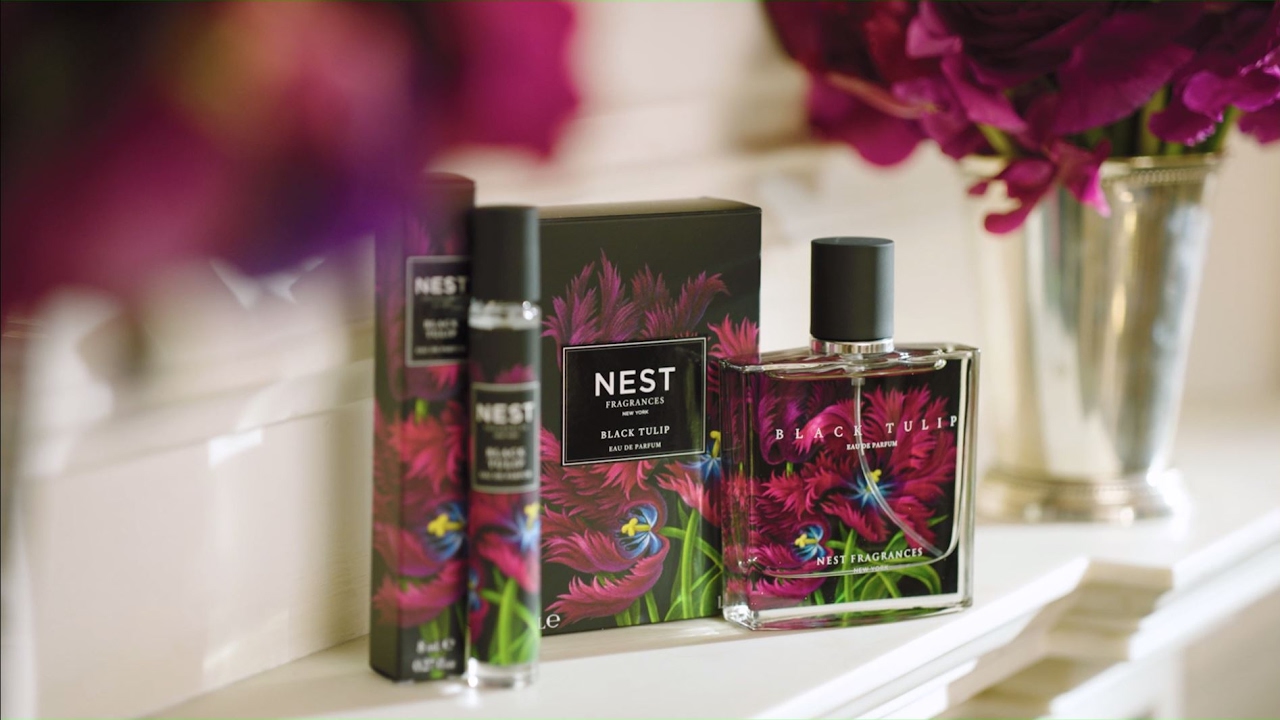
    Luxury-lifestyle brand Nest Fragrances has opened its first retail store in the NoLita neighborhood of Lower Manhattan. For the first time anywhere, the new Nest Fragrances flagship store unites the brand’s entire product portfolio in one retail location, which company founder Laura Slatkin describes as “an enchanted, fragranced garden”.

    “The theme of our first retail store reflects – and was inspired by – our desire to showcase the Nest Fragrances brand in a harmonious and holistic fashion in an environment that, like our fragrances, is artful, sophisticated, and approachable,” said Slatkin. “For the very first time, our new flagship store brings together under one roof our Home and Fine Fragrance collections and our newly launched Lifestyle Bodycare collection.”

    Nest Fragrances partnered with New York-based interior design firm R. Douglas Gellenbeck Studio to conceptualise and build its first retail store. MJ Atelier, an art studio based in Los Angeles, was commissioned to create a hand-painted, sculpted wall covering for the store inspired by early 20th-Century French interior designer Armand-Albert Rateau’s bath design, which he created for the Duchess of Alba.

    “Our brand’s mission is to create exceptional fragrances that shape moods, transport people, and transform spaces,” continued Slatkin. “Since 2008, when I founded Nest Fragrances, I have drawn inspiration from art, fashion, destinations, and literary works combined with the beauty of nature and its natural elements to create fragrances and products to achieve that mission. Now, 10 years later, I am thrilled that we have come full circle by successfully applying that same approach and fragrance-forward philosophy to achieve our mission in our very first retail store. Consumers will see a lot more of it as we continue to expand our footprint at retail in the coming years.”

    The 1140sqft store sells more than 215 SKUs across the brand’s three core product categories. It will also offer limited-edition products and specialty gift sets across its three core product categories – as well as year-round specialty gift sets, the option to create custom-made gift sets, candle accessories, and a concierge delivery service in New York.

  • Newest Esprit stores reveals new concept

    Newest Esprit stores reveals new concept

    Two new Esprit stores opened in Europe this month give an insight into the new direction of the embattled brand as it rebuilds. In the historic centre of Liege in Belgium a new 400sqm boutique stocks only womenswear. According to an understated news release issued in Germany, the “modern and bright store design creates a pleasant and warm atmosphere”.

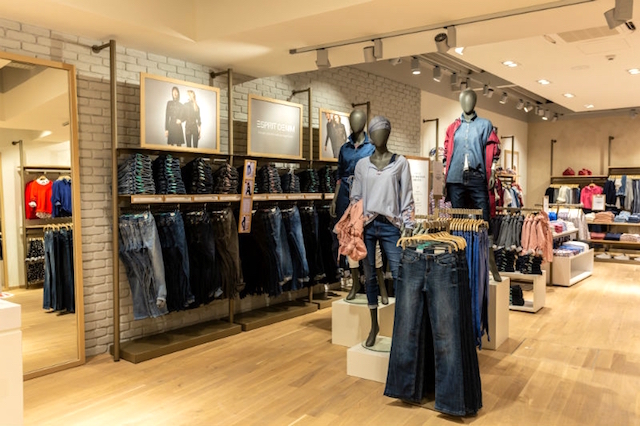
    A standout feature is a denim wall standing in front of a brick wall painted in light grey. The floor comprises terrazzo tiles and oak parquet.

    The new store also reflects a growing focus on Esprit’s e-commerce offer, with a click & collect area for customers to pick up items they have ordered online.

    The second of the Esprit stores to open in Europe this month is an outlet store at Wolfsburg in Germany.

    The 400sqm store is described by Esprit as “an important location” in its outlet portfolio. It offers both women’s and men’s apparel.

    Michael Ernst, centre manager of Designer Outlets Wolfsburg, says customers have been asking for an Esprit store at the centre for several years.

    “We are delighted to be able to fulfil this wish now. The new store offers an attractive range of fashion at excellent value.”

    Designer Outlets Wolfsburg is the first inner-city outlet centre in Germany, home to more than 70 designer and lifestyle brands.

    After ongoing losses, Esprit last year launched a massive overhaul of its business with a new management team at the helm, promising changes to product, its retail network and its e-commerce offer.

    The company is due to release its interim results this week.

  • Convenience drives Chinese smart-home market

    Convenience drives Chinese smart-home market

    New research from market intelligence agency Mintel has suggested that convenience will drive the future of the Chinese smart-home market. However, affordability is the biggest barrier to purchasing, in an environment where today’s Chinese consumers are growing increasingly familiar with smart home devices. According to Mintel, as many as 68 per cent of urban Chinese consumers who have purchased or are interested in smart-home devices say that convenience is a primary reason for their interest. Meanwhile, 60 per cent attribute their interest in smart-home devices to trying new technology and half because smart home devices make them feel more relaxed at home.

    “Chinese consumers are now increasingly knowledgeable about how smart-home appliances can help to simplify daily lives,” said Mintel China research analyst Kaye Huang. “Convenience as well as an interest in trying new technology are big reasons for Chinese consumers to purchase smart-home devices. Parents are showing more interest in smart-home devices than those without children; which is likely to be attributed to how the devices can help parents save time and effort. On the flip side, price, more so than privacy, is what is keeping Chinese consumers from purchasing these devices. This indicates that companies in the smart-home market need to put more effort into communicating why these products are value for money.”

    Meanwhile, Mintel research reveals that automatic adjustment to environmental changes is a big opportunity for players in the smart home devices market; more than half of urban Chinese consumers think that this function is a necessity.

    “What will stand out in the smart-home market is the ‘automatic adjustment of parameters’ which enables smart-home devices to automatically respond to environmental changes, such as temperature and humidity. Today’s Chinese consumers have higher expectations on their living conditions and automation is an important part of making the living environment ‘smarter’,” said Huang.

    “Voice control has been a popular area of development in recent years especially since the industry believes that it could be the next generation of user interaction,” continued Huang. “Yet, our research finds that voice control, while widely-known, is a less-used smart home function. While playing music and asking for general information are two main functions that Chinese consumers are using for voice control, in reality this only counts for a handful of consumers, suggesting consumers’ habit of using voice control is far from being firmly established. In the future, brands can look at rolling out strategies and initiatives to instil the habit of using voice control among consumers in China.”

  • Longines Masters of Hong Kong 2019 – a recap

    Longines Masters of Hong Kong 2019 – a recap

    Three days of action brought with them a life’s worth of memories as the curtain came down on the Asian stage of the Longines Masters Paris – Hong Kong – New York intercontinental series. More than 35,000 people gathered across the three days of this year’s Longines Masters of Hong Kong.

    Fittingly, the final day was graced by Hong Kong Chief Executive Carrie Lam Cheng Yuet-ngor, who met the riders and presented the Longines Grand Prix of Hong Kong trophy. Longines Ambassador of Elegance, horse lover and entertainment super star Aaron Kwok was also on hand for the final press conference and to share his thoughts on the sport he loves so dearly – and like one of his live shows, the thrills came from start to glorious finish. The action began with The HKJC Asian Junior Grand Prix, excitement rose with the staging of the DBS Trophy, and then came the event everyone had been waiting for all week – the Longines Grand Prix of Hong Kong. And the premier event brought out the very best from Denis Lynch on Chablis as the Irish rider and his stable newcomer flew around the course. It proved a fitting way to end a fabulous week – and now it’s on to American stage in New York, which among other things will feature the rematch of the Riders Masters Cup, from 25 to 28 April 2019.

    Denis Lynch claims the Longines Grand Prix of Hong Kong!

    The glory on this final day came with the Longines Grand Prix of Hong Kong and a stunning effort from Denis Lynch on Chablis as they finished in front of Simon Delestre on Uccello de Will. But there was so much more also on offer all day.

    It began – at 9.30am – with The HKJC Asian Junior Grand Prix, an initiative from partners EEM, The Hong Kong Jockey Club and the Hong Kong Equestrian Federation that showcased the rising stars of Asian showjumping. It was Hong Kong’s Vincent Zi-Xiang Capol on It’s A Gamble who lit up the main arena on the day, capturing the title after a two-round competition with jump heights raised from 1.00m to 1.10m.

    Next – at 12pm – came the DBS Trophy, a one-round competition that set riders a simple task. On paper at least. To win you had to be the fastest from eight riders to complete a clear round – and on this day the fastest was Roger Yves Bost on Castleforbes Talitha.

    Then it was time for the ultimate event at the world’s ultimate show jumping series. The Longines Grand Prix tests the world’s best against jumps at Olympic height heights of 1.60m, and it provides a true test of technique, of skill and of bravery from both rider and horse.

    In the end it came down to a ride for the ages from Denis Lynch on Chablis, as they cleared all the fences over two rounds. Second place went to Simon Delestre on Uccello de Will – the only other pair to clear all the fences. Along with the US$400,000 in price money the Paris, Hong Kong and New York Longines Grand Prix offers something very special – a Super Grand Slam Bonus of €2,250,000 rewarding a victory in each round of the Series in the same season and a €1,000,000 additional bonus for three successive victories at The Longines Grand Prix straddling two Longines Masters seasons. Irishman Lynch will now head to New York for the next leg in April with that huge bonus in his sights.

    While the show jumping action kept fans glued to their seats all day long, there was plenty more to entertain in the main arena. Presented by MGM, equine artists Frédéric Pignon and Magali Delgado and their Iberian horses continued to leave the audience spellbound with dazzling shows combining music, dance and multi-media. Then there was the appearance of the “golden girl” of the HKJC Equestrian Team as Jacqueline Siu celebrated her history making gold medal performance at last year’s Asian Games with a dressage performance the relived the glory.

    Reflections on three days of fun and fanfare

    Over three days – and nights – the Prestige Village came alive, allowing visitors to indulge and be entertained thanks to fabulous collaborations with the Longines Masters of Hong Kong’s partners and exhibitors.

    Among the many and varied highlights were the first staging of the Asian Hobby Horse Competition and the wild after party hosted by DJ Henri PFR, while visitors were able to immerse themselves in luxury offering from a wide array of brands, while being tempted by gastronomic delights. While visitors were treated to the latest from the likes of Title Partner Longines, Kingsland, Fieldstone, Horse Pilot, Equicty, Hermès Sellier, Asia Marine, Baccarat, Lightfoot Travel, Robert Mark Safaris, KEF, La Mod and Maserati. There were also themed gifts and novelties inside the Longines Masters Boutique, one lucky guest walked away with a trip (flight and accommodation) to New York to visit the Macey & Sons Gallery and the Longines Masters of New York in April 2019, courtesy of Macey & Sons Gallery.

    Save the Children

    Dedicated to promoting equestrian sports on an international scale as well as making a difference by contributing to socially constructive causes, Longines Masters series organizers EEM this year chose to support deprived children around the globe, especially in Hong Kong and China. The Hong Kong leg of the intercontinental show jumping event joined hands with the Sole Beneficiary Charity Partner, Save the Children Hong Kong, with parts of the net proceeds generated from the charity auction lunch, various VIP Hospitality Experiences in a specific period of time and kids’ activities in Prestige Village donated to sustain these marginalized children’s ongoing education, health, protection and emergency relief programs.

  • Japanese “Yama style” goes global

    Japanese “Yama style” goes global

    The “made in Japan” words on the label, for many people, have always been a guarantee of high quality. Even after the economic downturn and natural disasters,  Japanese still keep their quality and try their best to differentiate themselves through the attention to details. Their perseverance, loyalty to their country and respect for their traditional culture, have always been their strength.

    Unfortunately, today’s fashion industry pursues speed and high productivity. Thus, Japanese’s persistence seems to be easily overlooked. Although this is an irreversible condition in a money-orientated world, there are still some people who appreciate and value the spirit of the craftsmanship in Japan.

    Despite the fact that Japan is a modern country focusing on economic development, Japanese also focus on the pursuit of spirituality. There are Buddha followers, but also those ones who believe in gods behind the natural elements, such as mountains.

    In terms of geography, 70% of land in Japan is hill and mountains. Since the ancient times, fishermen regarded the hills as navigation coordinates. And for people who lived in the mountains, they saw mountains as resources for their lives, harvesting and hunting were their major activities to live on. Through worship of mountain gods, Japanese express their fear of nature as well as pray for peaceful life.

    Today, the Japanese government still shows respect towards mountains. In 2016, the government announced the Mountain Day, 11th August, as public holidays providing a chance for people to get closer to the mountains via hiking.

    Functional and practical with bright and unique colors

    Whenever a craze sweep the country,  Japanese will always concoct and create the relevant peripheral products and accessories. As a result, the “mountain fashion” was developed, which is the so-called Yama Style (Yama means mountain in Japanese), referring to the clothes that is suitable for hiking.

    Yama style emphasizes on integration with the natural environment, usually designed in gray black, dark green, yellow-brown and other earth tone colors. Additionally, it comes with an oversize coat or shawl in relatively bright color, to create a unique style.

    Integration of Art and Technology

    On the other hand, while Korean pop culture has been in the limelight internationally in recent years, the Japanese brand is still leading the world due to a number of Asian representatives who have a pivotal position in the high fashion.

    Since the 1980’s, Japanese have established a position in the international fashion trend, rooted their perception of fashion and influenced over the global fashion industry deeply.

    Due to the fashion industry values on materials, design, and details, Japanese fashion style still has their charm, followed by a lot of people around the world. Thus, many international fashion brands still love to work with Japanese brands, and launched a series of collaborations.

    In the recent years, Loewe, which has been known for its excellent quality, also seems to be paying tribute to Japanese culture and tradition. The new “Eye/Loewe/Nature” menswear series is inspired by nature, offering a range of clothes designed for outdoor activities with both practical and functional features as their selling points.

    Obviously, the design deliberately takes the ideas from the Yama style. Not only replacing the traditional outdoor clothing’s dark color with bright colors, but also having a great variety of styles and different layers. Thus, customer may easily match their outfit with different kinds of  clothes and practice different outdoor activities.

    In terms of accessories, the brand even changes the place of production from Spain to Japan, in order to combine their traditional craftsmanship with advanced technology.

    Undoubtedly, they see the advantages and market in the Japanese Yama style to feed  fashion industry with a new touch.

  • Puma pips rivals, becomes top sportswear brand in India

    Puma pips rivals, becomes top sportswear brand in India

    German sportswear major Puma on Monday claimed that it has become the top sportswear retailer in India, surpassing rivals such as Nike, Adidas, Skechers and Reebok in terms of yearly sales. Puma, the third-largest sportswear manufacturer in the world, has reported sales of Rs 1,157 crore for the 12-month period ending December 2018 against Rs 958 crore reported in the year ago period.

    The company follows the January-December calendar year, while its Nike, Adidas, Skechers and Reebok go by the April-March financial year (FY) cycle.

    In FY 2017-18, Puma’s compatriot Adidas had registered sales of Rs 1,132 crore, up from Rs 1,100 crore reported in FY 2016-17.

    During the same period, American sportswear giant Nike reported sales of Rs 828 crore against Rs 807 crore reported in the previous fiscal.

    Reebok, which is owned by Adidas, saw its sales drop from Rs 416 crore in FY 2016-17 to Rs 391 crore in FY 2017-18.

    Another American brand Skechers, which is relatively new in the Indian market, reported sales of Rs 440 crore in FY 2018-19, up from Rs 282 crore reported in FY2016-17.

    “We are making strong progress in both sports performance and sport style categories,” Puma India Managing Director Abhishek Ganguly was quoted as saying.

    Interestingly, India is the only country where Puma’s sales have crossed the sales of other sportswear giants such as Adidas and Nike.

    Over the past few years, India has rapidly caught up with the wider global fitness trends. From 2015 to 2016, the Indian sportswear market grew 22 per cent, outpacing the segment’s global increase of 7 per cent, according to Euromonitor International. By 2020, it is expected to grow an additional 12 per cent CAGR (compound annual growth rate) with sales expected to reach $8 billion.

    The bitter rivalry between Puma and Adidas goes beyond mere corporate competition. It was in fact a sibling fallout that created two of the world’s biggest sportswear brands.

    In the 1920s, German brothers Adolf and Rudolf Dassler launched a shoe company together. Their business picked up after Dassler shoes were used by medal-winning Olympians through out the 1930s.

    But along with sales, tension also spiked between the Dassler brothers, which reached a boiling point during World War II. While it was not clear what exactly caused the rift, it was said to be a result of miscommunication.

    The brothers eventually split in 1947 with Rudolf forming a new firm that he called Ruda – from Rudolf Dassler – later rebranded Puma, while Adolf, who preferred to be called Adi, named his business Adidas.

  • The largest jewellery marketplace in the world opens in Hong Kong

    The largest jewellery marketplace in the world opens in Hong Kong

    Two major jewellery shows organised by the Hong Kong Trade Development Council (HKTDC) will open next week. The sixth HKTDC Hong Kong International Diamond, Gem & Pearl Show, which showcases jewellery raw materials, will take place at AsiaWorld-Expo from 26 Feb to 2 March, while the 36th HKTDC Hong Kong International Jewellery Show, which specialises in finished fine jewellery, will be held at the Hong Kong Convention and Exhibition Centre (HKCEC) in Wan Chai from 28 Feb to 4 March.

    This year, the two shows will feature a record of more than 4,600 exhibitors from 48 countries and regions, once again forming the world’s largest jewellery marketplace.

    Jewellery exports grow 13.3% in 2018, but challenging year ahead
    HKTDC Acting Executive Director Benjamin Chau said: “Though the Sino-US trade conflict has been looming large over all sectors and industries, Hong Kong exports of fine jewellery showed healthy growth of 13.3% year on year to reach HK$57 billion in 2018. Exports to the United States, Hong Kong’s largest jewellery export market, were particularly robust, growing by 18.1%.” However, Mr Chau pointed out that the single-month figure for December showed the total value of fine jewellery exports falling 12% year on year, indicating that the impact of the Sino-US trade conflict on exports is beginning to be felt. Compounded by other unfavourable factors such as escalating geopolitical conflicts, Mr Chau reminded businesses to be ready for a potential slowdown in global economic growth in 2019.

    Buying missions organised to help address economic uncertainty

    Mr Chau added that economic uncertainties led to the total value of Hong Kong’s exports of jewellery raw materials, including pearls, gems and semi-gems, declining by 17.6% in 2018, although there was still satisfactory growth in some major markets, including Mainland China (+8%), Belgium (+19.2%) and Israel (+24.4%). “To help the industry grasp more business opportunities, the HKTDC will organise 120 buying missions, comprising more than 8,200 companies from 75 countries and regions, to visit the shows this year,” Mr Chau explained. “These companies will consist of department stores, speciality shops, chain stores and online stores, with 700 coming from the US and 5,700 companies visiting from emerging markets. This will help the industry expand into emerging markets to deal with the unstable global economy.”

    Worldwide support from industry bodies and jewellery associations

    The two shows continue to receive support from industry organisations and jewellery associations from around the world. A total of 38 pavilions, including those from Australia, Mainland China, France, Germany, Italy, Myanmar, India and the US, will set up group pavilions at the shows. Various jewellery organisations will continue to set up their own pavilions, including ACODES from Colombia, the Antwerp World Diamond Centre, International Coloured Gems Association, Israel Diamond Institute, New York Diamond Dealers Club, Tanzanite Foundation and the Gem & Jewellery Trade Association of Thailand, among others.

    The Avenue of Jewellery Creators will be set up at the Jewellery Show by the Asia Pacific Creator Association for the first time, introducing jewellery designs created by Hong Kong and mainland designers. Also new at the Jewellery Show are pavilions from Mexico and Indonesia, while groups from Donghai in Jiangsu province and Dongguan in Guangdong province will debut as exhibitors. The Diamond, Gem & Pearl Show will welcome the participation of the Australian Opal Association and the Beihai Bureau of Commerce from the mainland for the first time, broadening the show’s international outlook.

    Japan as first-time partner country to showcase rare pearls

    With support from the Japan External Trade Organisation and the Consulate-General of Japan in Hong Kong, the HKTDC is collaborating with the Japan Pearl Exporters’ Association and the Japan Pearl Promotion Society to invite Japan as this year’s partner country for the first time. A Japan Pearl Jewellery Pavilion and a Japan Pearl Pavilion will be set up at the Jewellery Show and the Diamond, Gem & Pearl Show respectively, featuring some 130 exhibitors. The two major Japanese pearl organisations will also host a media event on the first day of the Jewellery Show (28 Feb) to introduce exquisite pearl jewellery from Japan.

    Diamond, Gem & Pearl Show runs from 26 February to 2 March

    This is the sixth straight year that the HKTDC has run the two shows in parallel in separate venues. The Diamond, Gem & Pearl Show, which specialises in the raw materials used in the jewellery industry, will be held at AsiaWorld-Expo. The show is organised into different themed zones, including the Hall of Fine Diamonds, which showcases prime quality diamonds of different shapes, cuts, grades and rare colours. The Treasures of Nature zone displays various glittering precious gemstones, semi-precious gems and other natural raw materials, while the Treasures of Ocean zone houses the highest quality pearls from Tahiti, the South Seas and other pearl-producing areas around the world.

    Among the impressively large number of special exhibits on display are:

    Hong Kong company Novel Collection Ltd (Booth No: AWE 2-Q01) will feature a pear-shaped, pink-coloured 5.01-carat diamond with unique cutting valued at HK$46.8 million.

    Swiss exhibitor Theilkas GmbH (Booth No: AWE 1-A05) will present pearls from Caribbean queen conches. Characterised by a unique flame effect, pink conch pearls are one of the world’s most precious pearl types.

    Shaun Gems International (Booth No: AWE 1-A16) from the United States will display a matched pair of natural sapphires of vivid blue colour, weighing a total of 27.76 carats and valued at more than HK$3 million.

    Jewellery Show runs from 28 Feb to 4 March

    The Jewellery Show, which opens on Thursday (28 Feb), will feature a wide array of finished jewellery and exquisite craftsmanship. A total of 38 renowned jewellery brands will converge at the Hall of Fame to showcase their collections. Returning brand names include Lao Feng Xiang from the mainland, Japan’s Kuwayama and Italy’s Giorgio Visconti, while new exhibitors include Hong Kong’s Asia Star, Japan’s Kawamura, Russia’s Kabarovsky and the UK’s JT Jewellery Theatre.

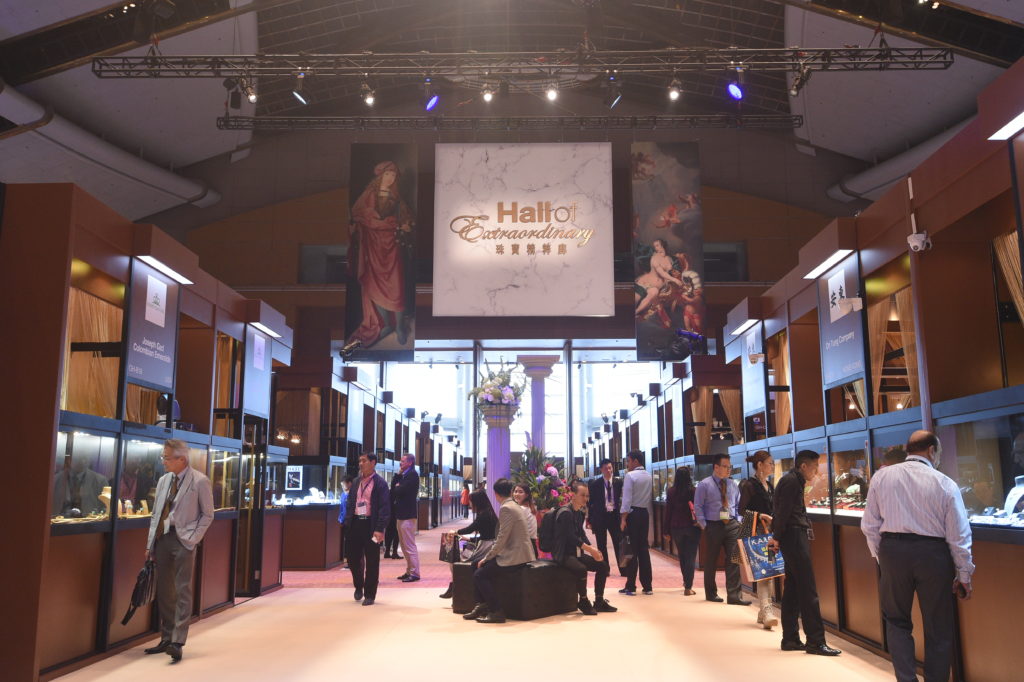
    The Hall of Extraordinary will display skillfully crafted, valuable and unique jewellery pieces from some 100 companies, including:

    Hong Kong’s Jadmily Jewelery (Booth No: CEC GH-B05) will feature a jade necklace valued at HK$64 million. The oval centre stone of the necklace is a jadeite cabochon extracted from a top-tier ancient mine in Myanmar. The warm, smooth touch of elegance is illuminated with dazzling diamonds. The centre stone weighs 51.48g.

    Foo Hang Jewellery of Hong Kong (Booth No: CEC GH-D16) will showcase a diamond jewellery set worth more than HK$13 million. The centrepiece of the set is a marquise shaped diamond of 10.04 carats valued at over HK$8 million. The rare marquise cut is testament to the superb craftsmanship that makes the diamond even more dazzling.

    One of the exhibits of Hong Kong company Belford Jewellery (Booth No: CEC CH-L01) is its “Lava Collection”. One of the jewellery pieces in this collection is an orange-red Mexican fire opal that is uniquely set against a number of coloured diamonds to imitate flowing lava. The piece is valued at HK$345,000.

    Another Hong Kong company, Famous Group Ltd (Booth No: CEC GH-G05), will display a sapphire diamond set valued at over HK$10 million. The sapphire stones, with a total weight of more than 180 carats, are adorned with 128 carats of diamonds to bring out the elegance.

    The IT Solutions for Jewellery zone that debuted last year will return to help buyers boost their competitiveness by tapping into the latest technologies for use in the designing, manufacturing, quality monitoring and selling of jewellery. The new Amber Jewellery zone is introduced to address the growing market demand, while other themed zones include Antique & Vintage Jewellery Galleria, Designer Galleria, Hall of Jade Jewellery, Treasures of Craftsmanship, Hall of Time, Wedding Bijoux and World of Glamour. In the Hall 3E entrance of the Jewellery Show, supported by Chow Tai Fook Jewellery Group, the “ARTRIUM” will showcase the company’s unique collection of precious jewellery.

    Networking activities to facilitate business exchange

    A host of activities and events, including jewellery parades, networking sessions, buyer/exhibitor forums and seminars, will be held during the shows to facilitate business exchange. One key event is the cocktail reception and Jewellery Gala Dinner held on the first day of the Jewellery Show (28 Feb). The theme for the gala dinner will be “Dionysus”, after the Greek god of wine, with a menu personally prepared by Edward Voon, Executive Chef of French restaurant LE PAN. The dinner will be attended by actresses Carat Cheung and Toby Chan. The award presentation ceremony for the biennial International Jewellery Design Excellence Award − often referred to as the “Oscars of the jewellery industry” − will be held during the cocktail reception, with the “Champion of the Champions” being announced.

    During the show period, the HKTDC will stage demonstrations of jewellery craftsmanship and themed seminars to update industry players on the latest market trends, production technologies and product styles. For example, experts from the Gemological Institute of America (GIA) will conduct a seminar on “Fancy-coloured Melee Diamonds and their Identification” (26 Feb). The HKTDC will also hold a jewellery industry forum on 1 March covering topics such as the forecasting of jewellery trends, how jewellery design software will revolutionise the design of jewellery products, and insights into the impact of 4K 3D printing technologies and mobile commerce, with a representative from Tencent explaining how artificial intelligence and big data can be used to increase sales. Other seminar topics include the latest developments in the internationalisation of the Fei Cui standard (2 March), observations on sapphires from Mogok, Myanmar (3 March), and gemology studies and market analysis of Myanmar rubies (3 March). Details can be found on the show websites.

    In addition, to identify design talents for the industry and demonstrate the high calibre of Hong Kong jewellery designers to international buyers, the HKTDC has joined hands with four local jewellery industry bodies to organise the 20th Hong Kong Jewellery Design Competition. The theme of the competition this year is “Be Connected, Be United”, attracting around 200 quality entries. The finalists’ designs will be on display in the Hall 1D lobby of the HKCEC during the show period.

    To make it convenient for buyers to visit both shows, a complimentary shuttle bus service will be provided by the HKTDC between AsiaWorld-Expo and downtown (including the HKCEC in Wan Chai). Please visit the show websites for details.

  • CaratLane: 10 years of transforming jewellery in India

    CaratLane: 10 years of transforming jewellery in India

    When Mithun Sacheti founded CaratLane 10 years ago, e-commerce was at its infancy in India and no one could have imagined that Indian consumers would be ready to buy jewellery online. CaratLane was founded with a mission to democratise jewellery – to make beautiful jewellery accessible and affordable and with designs that are modern and wearable. A refreshing and courageous objective at the time, especially since the avenues for an online business weren’t as wide open then as they are today.

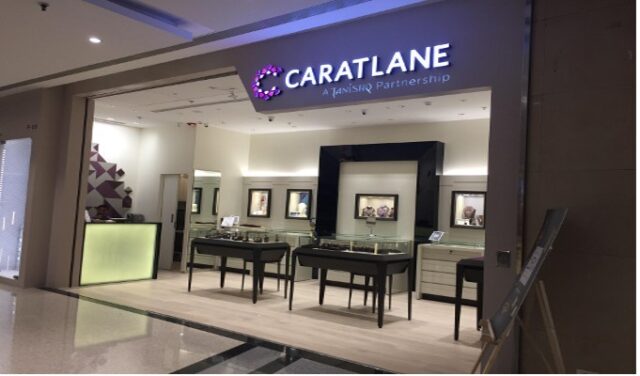
    CaratLane hasn’t looked back since then. It has grown from being one of India’s first online jewellery brands to being one of India’s largest new age jewellery brands now with 50 stores across the country.

    On the special occasion of CaratLane’s 10th birthday, Mithun said “The world has indeed changed in the past ten years. And while e-commerce has now become widely accepted in India, it has taken steady and sustained focus to democratise jewellery-buying online. From a website for easy shopping to allowing women to explore jewellery through apps to discovering interactive mirrors and providing a no-barrier access to precious jewellery in stores, CaratLane has transformed jewellery-buying in India.”

    “Our strong online footprint is now complemented by our growing store presence. With 50 stores across the country, we are now perhaps the world’s first truly omni-channel jewellery brand. It wouldn’t have been possible without our extremely valuable and loyal customers and an extremely dedicated team who would stop at nothing,” he added.

    As a part of the celebrations, CaratLane has added limited edition jewellery to three of its bestselling collections – Butterfly, Aaranya and Gold Lace. It has also launched its biggest sale ever with flat 20 percent off on all diamond jewellery but that’s not all, there are many more exciting offers for CaratLane customers.

    CaratLane, has also launched an upbeat film to create buzz around its 10th birthday celebrations. The campaign rolled out nationally with a combination of TV, digital and CaratLane’s social media channels. The film is targeted towards creating FOMO (fear of missing out) on its celebrations, among its audience.

    Talking about the campaign Atul Sinha, Senior Vice President Marketing, CaratLane said, “We’ve come a long way since our inception and we wanted to celebrate this milestone with the people who made it all possible – Our customers. The ‘10th birthday’ campaign film beautifully captures our excitement as well as the cheerful emotion that we’re trying to build around the occasion through our biggest sale ever.”

  • OnTheList to launch in Taiwan

    OnTheList to launch in Taiwan

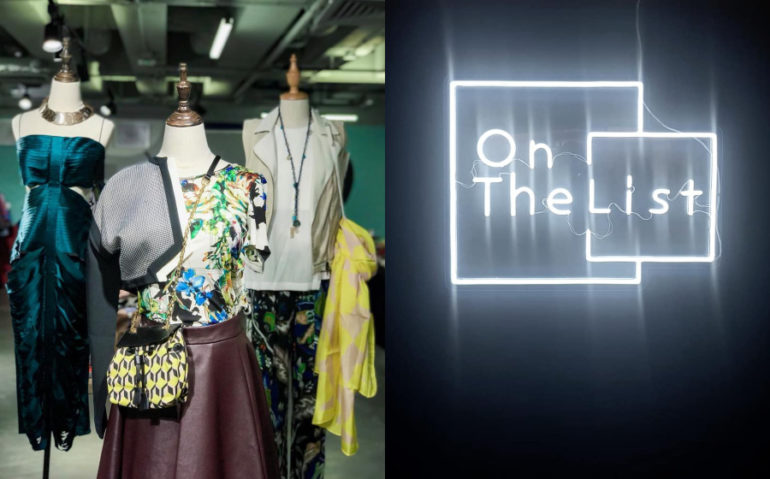
    Founded in 2016, OnTheList is a members-based flash sale company that offers premium goods at unbeatable prices. As of March 2017, OnTheList has called its showroom on Duddell Street, home. In 2018, OnTheList opened pop-up showrooms in Hong Kong, launched in Singapore, and is now ready to expand into other countries in Asia.

    In 2019, OnTheList is jetting off to another Asian city to host the first Flash Sale in Taiwan in March.