Tag: Macau

  • New post at Luxasia Group for SingPost’s ex-boss

    New post at Luxasia Group for SingPost’s ex-boss

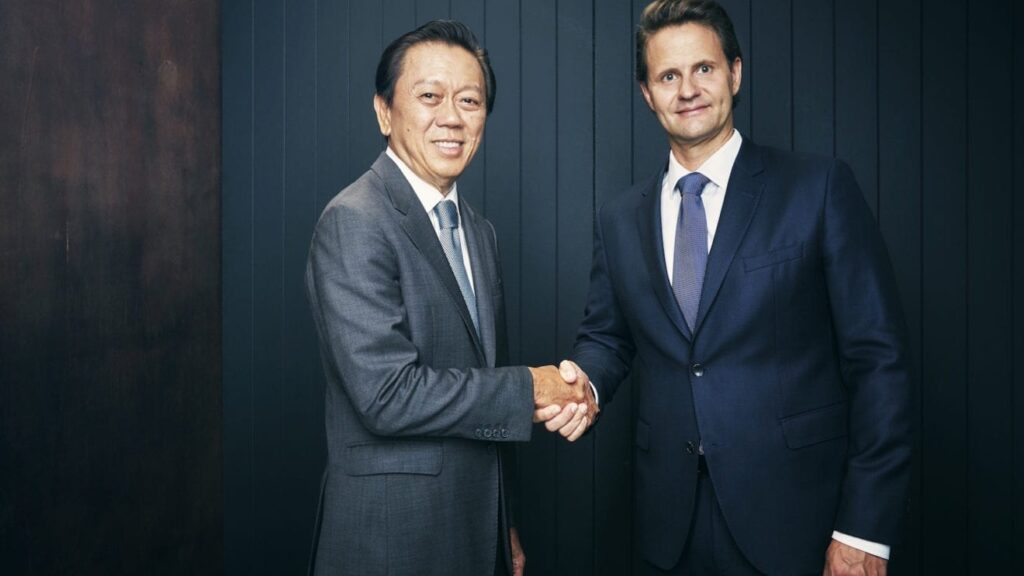
    Beauty retailer The Luxasia Group has appointed former SingPost CEO Dr Wolfgang Baier as group CEO, while founder/owner Patrick Chong has become chairman.

    “Luxasia is now at an important crossroads,” says Chong. “We intend to grow with our international partners and strengthen our core competencies to become the leading Asia consumer-centric omnichannel go-to-market partner of the beauty industry.”

    Patrick-Chong-Wolfgang-Baier

    He says Baier has proven leadership capabilities, vast knowledge and skills in areas such as CRM and omnichannel retail. “His track record in the logistics sector will also help strengthen Luxasia’s partnerships.”

    “Transformation is relevant in every sector and particularly for retail, where the digital and physical space is converging,” says Baier. “This makes developing an omni-channel ecosystem critical. We want to revolutionise how we serve consumers and brand partners in the beauty industry across Asia.”

    Chong says the search for a CEO took more than a year, as it was important Luxasia found the right leader.

    “Not only does Wolfgang understand our operations and share the same aspirations, in some ways he is even more ambitious for Luxasia with regard to developing new areas.”

    Established in 1986, The Luxasia Group has developed retail and distribution networks across Asia for some of the world’s biggest beauty companies. Based in Singapore, the privately held company has 11 offices and more than 2000 full-time employees in Singapore, China, Hong Kong, India, Indonesia, Malaysia, Myanmar, Taiwan, Thailand, the Philippines and Vietnam.

    It manages a portfolio of more than 120 international fragrance, cosmetics, skincare and
    professional salon brands including Beiersdorf, Burberry, Clarins, Estee Lauder, Ferragamo, Hermes, P&G and Shiseido.

  • Circle K Hong Kong sales defy downturn

    Circle K Hong Kong sales defy downturn

    Circle K Hong Kong sales rose 4.7 per cent in the first half of this year, defying the retail downturn.

    Parent Convenience Retail Asia has reported an overall turnover boost of 3.4 per cent to HK$2.339 billion. Same-store sales grew 5.2 per cent year on year in the six months to June 30.

    Turnover in the company’s Saint Honore bakery business decreased slightly, by 0.5 per cent to $496 million, with low-single-digit growth in comparable store sales in Hong Kong.

    Convenience Retail Asia has 324 Circle K stores in Hong Kong, 118 in Macau, Zhuhai and Guangzhou; and 94 Saint Honore stores in Hong Kong and 50 in Macau, Shenzhen and Guangzhou.  In the first half of this year, it opened six new Circle K stores in Hong Kong and closed 10 for a net decrease of four, and it opened seven new Saint Honore stores in Hong Kong and closed two for a net increase of five.

    The group’s net profit increased 68.4 per cent to HK$52 million for the six months, primarily due to the disposal of Circle K business in Guangzhou last year..

    “Despite weak retail market sentiment, convenience store and bakery operations achieved

    satisfactory comparable store sales growth in Hong Kong,” the company said in a stock exchange filing. “Core operating profit increased 7% on back of stabilised operating costs and improvement in Saint Honore operations.”

    With the stabilisation of the commercial property rental market, store expansion has become a key growth strategy for the Saint Honore chain.

    Convenience Retail Asia says during the second half of 2016, it will seek to grow profit at existing stores “by continuing to improve efficiency, reduce costs, and drive sales through innovative product development, marketing and category management”.

    “With the commercial rental market on the downswing, cautious store expansion will play a role in driving revenue across the convenience store and bakery businesses.

    “Although the business environment has been challenging, the group’s core operations remain

    strong and healthy, and it has a solid balance sheet with a good cash position. We will continue to monitor the market closely for merger and acquisition opportunities that can help us grow our business, at the same time as we strive for healthy organic growth.”

  • Revenues up, profit down for Shilla Duty Free

    Revenues up, profit down for Shilla Duty Free

    The Shilla Duty Free has posted a 29 per cent year-on-year rise in second-quarter revenues for its Korean downtown stores, rebounding from the MERS-ravaged tourism sector at the same time last year.

    Downtown store revenue climbed to KW538.2 billion (US$473.6 million) for the quarter, with growth outstripping the 23.5 per cent increase in the total Korean duty-free market, especially with higher competition after the government issued more licences last year.

    However, Korean airport sales fell 19.2 per cent to KW198 billion, driven by a downturn in Incheon International Airport revenues because of reduced floor space.

    Overseas duty-free revenues (mainly Singapore’s Changi Airport and Macau International Airport) rose by 16.3 per cent year-on-year to KW121.3 billion. However, Shilla posted a KW12.3 billion operating loss on its overseas stores, mainly because of the high cost of entry at Changi. This hit overall profits, which fell 51.4 per cent to KW15.4 billion. Even the Korean downtown business fell 39 per cent to KW27.7 billion.

    A factor in that decline has been the rocketing costs of commissions to Chinese travel retail agents – up from between 7 and 100 per cent to around 23 per cent, according to The Moodie Davitt Report.

    The Shilla Duty Free is the key revenue and profits contributor to parent Hotel Shilla, whose consolidated revenues rose 13 per cent year-on-year to KW954.1 billion, while operating profits fell 36.04 per cent to KW18.7 billion.

  • Shilla Duty Free downtown and off-shore stores contradiction performance

    Shilla Duty Free downtown and off-shore stores contradiction performance

    The Shilla Duty Free posted a +29.0% year-on-year rise in second-quarter revenues for its Korean downtown duty free operations, reflecting a strong rebound from the MERS-ravaged corresponding period last year.

    Downtown store revenue climbed to KW538.2 billion (US$473.6 million) for the quarter, with growth outstripping the +23.5% increase in the total Korean duty free market (see Mirae Asset Daewoo chart below) for the period – encouraging news for Shilla given the increase in competitors following last year’s government licence additions.

    However, Korean airport sales fell -19.2% to KW198 billion (US$174.2 million), driven by a downturn in Incheon International Airport revenues caused by reduced floor space in the wake of last year’s tender results.

    Overseas duty free revenues (principally Singapore Changi Airport and Macau International Airport) rose by +16.3% year-on-year to KW121.3 billion (US$106.7 million). More pertinently, however, Shilla posted a KW12.3 billion (US$10.8 million) operating loss on those operations, reflecting in particular the high cost of entry at Changi.

    The offshore losses put a big dent in The Shilla Duty Free’s overall operating profits, which fell -51.4% to KW15.4 billion (US$13.6 million). Even profits on the more lucrative Korean downtown business fell sharply, down -39.0% to KW27.7 billion (US$24.4 million).

    A key factor in that decline has been, as we reported recently, the rocketing costs of commissions to Chinese travel retail agents – up from between 7% and 100% to around 23% since the advent of new duty free retailers last year. As one leading luxury brand executive told The Moodie Davitt Report recently, “The real winner in Korean duty free is the Chinese travel agent.” These numbers bear out that view.

    shilla July 2016 2

    shilla July 2016 3

    shilla July 2016 6The Shilla Duty Free is the key revenue and profits contributor to parent Hotel Shilla, whose consolidated revenues rose +13% year-on-year to KW954.1 billion (US$839.6 million), while operating profits tumbled -36.04% to KW18.7 billion (US$16.5 million).

    Group operating profit margin was 2.0%; with travel retail overall at 1.8%, Korean travel retail at 3.8% (6.1% downtown) and offshore duty free operations -10.1%.

    shilla_changi_opening_10feb2015_shilla5

    The Shilla Duty Free’s overseas airport operations once more posted heavy losses. The major problem lay with the heavy concession fees at Singapore Changi Airport (above). Pictured below is Shilla’s smaller operation at Macau International Airport, a joint venture with Hong Kong’s Sky Connection.

    NWS_Holdings_shop_0216_600_2MIXED REACTION FROM ANALYSTS

    MIRAE ASSET DAEWOO : Regina Hahm, Equity Analyst (Cosmetics, Hotels & Leisure, Fashion) at Mirae Asset Daewoo Research Center, said: “2Q earnings were way weaker than the market estimates.

    “However, I do think that it is positive that Shilla has further strengthened its existence in the market. It seems pretty apparent that group tourists have been absorbed by the Jangchung store [Shilla’s flagship Seoul shop -Ed], especially since the absence of Lotte World and WalkerHill.”

    In a review of Hotel Shilla’s results, Ms Hahm noted: “The domestic duty free business, which was hurt by the impact of MERS, resumed robust growth. Revenue from the downtown duty-free operation [of Shilla] climbed +29.0% YoY to KW538.2 billion during the quarter, meeting our expectation (+27.7% YoY). In the corresponding period, the overall duty free market saw revenue growth of 23.5% YoY, even as new entrants began full-fledged operations.

    “We think this shows the performance gap between major duty free players and less competitive, new players is widening further, which is natural given the importance of scale effects, the quality of sourced products, as well as experience in the duty free industry.

    Looking forward to Q3, typically a peak season for both inbound and outbound tourism demand, Ms Hahm foresees strong growth potential in Shilla’s duty free business, particularly given the low base line from the MERS-hit comparative quarter in 2016.

    She commented: “Airport revenue is likely to turn around in 3Q16, aided by the dissipation of high base effects.”

    Commenting on the group share price, she concluded: “Hotel Shilla shares have long been weighed down by a series of negatives, such as controversies over domestic duty free industry policies, the loss of licences by a few major players, and MERS.

    “In 2H, with the performance gap between new entrants and major existing players widening further, we expect Hotel Shilla to solidify its position as a leading player. Also, in our view, the stock could see a re-rating, given peak-season effects and strengthened market dominance.”

    Accordingly, Mirae Asset Daewoo maintained its ‘Buy’ rating on Hotel Shilla with a target price of KW110,000 (currently US$96.80), the stock brokerage and investment bank company’s top pick in tourism. By mid-afternoon today (26 July) it was trading at KW61,700, off by -0.80%.

    NOMURA: Analysts Cara Song and Jiun Im took a very different view, downgrading the stock from a buy to a reduce, and cutting their target price from KRW100,000 a share to just KRW47,000.

    In comments quoted by Barron’s Asia, they noted: “Operating profit margins at the domestic downtown duty free stores (Hotel Shilla’s sole profitable business) declined sharply to 6.1% in 2Q16 (vs. 8.8% in 1Q16, 10.3% in FY15). The company attributed this to a bigger contribution from lower-margin group tourists (from 70% in FY15 to 85% in 2Q16).

    “Considering that it is easier to attract group tourists than individual travellers by: 1) paying higher sales incentives to travel agencies; 2) more aggressive price promotions, Hotel Shilla’s customer mix has deteriorated, in our view.”

    HDC_Shilla_600_004 (1)

    Shilla IPark duty free is a stunning addition to Korea’s travel retail landscape. But Shilla’s overall reliance on group tourists, as opposed to higher-spending FIT customers, concerns Nomura.

    The analysts were particularly alarmed by the airport losses in Singapore, commenting: “Contrary to company guidance, Changi Airport DFS continued to struggle, with persistent losses in 2Q16. With the [Korean] government’s plan to issue additional DFS licences in 4Q16F, the DFS business environment could be dampened further.

    “Reflecting this, we cut our net profit estimate by 49.5%/36.5% respectively for FY16F/17F. Our FY16F/ 17F net profit estimates are c.33% lower than Street expectations (Fig.11).”

    Nomura also suggested there could be an added hit to earnings if Hotel Shilla’s planned part-acquisition of Miami-based DFASS Group in the third quarter falls through. The Moodie Davitt Report understands that constructive dialogue continues on that deal, though it is still some way from closing.

    shilla July 2016 1


    shilla July 2016 4

    shilla July 2016 5


  • Sales fall 19pc for L’Occitane International

    Sales fall 19pc for L’Occitane International

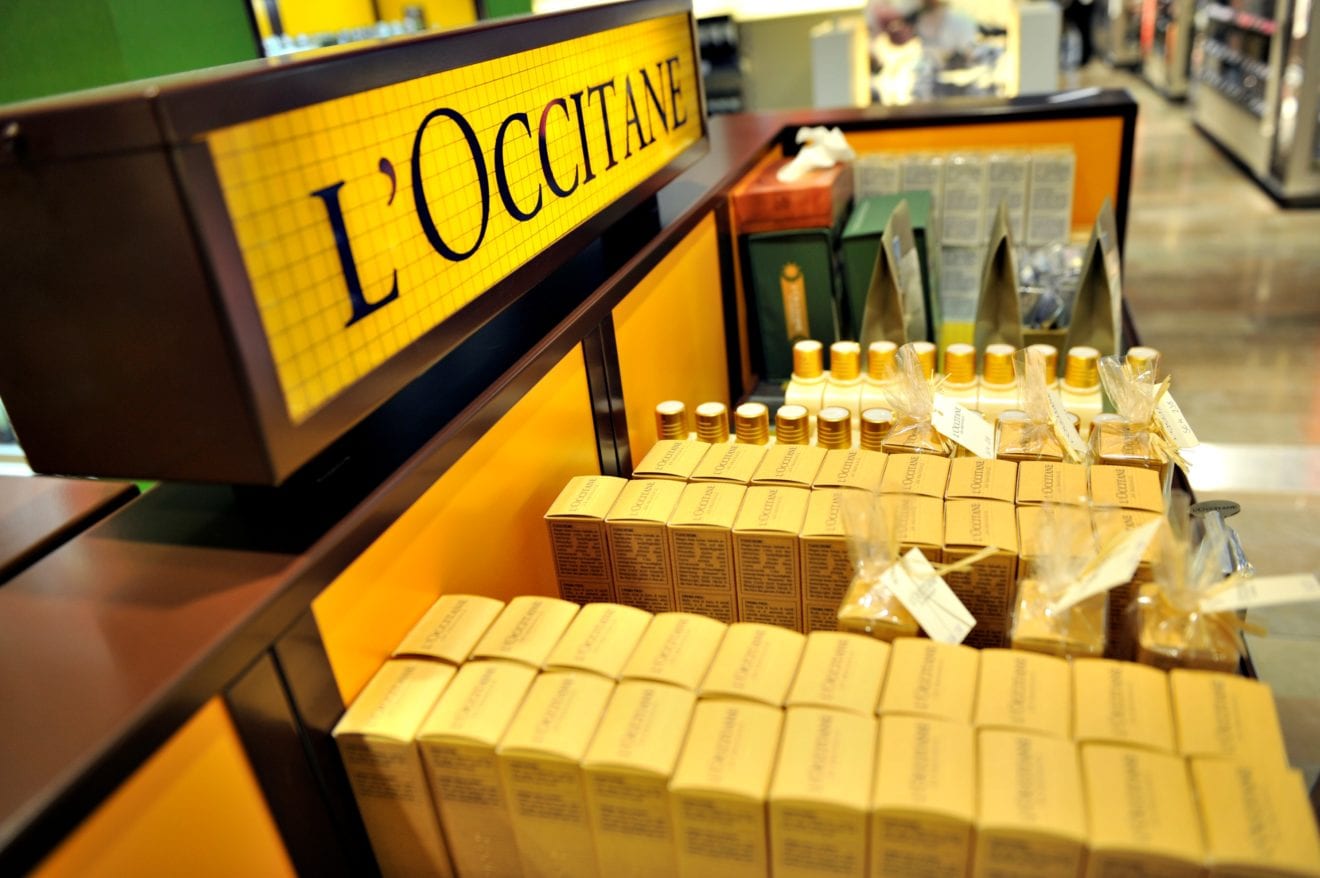
    A 19.8 per cent drop in sales in Hong Kong and Macau has been recorded by French skincare retailer L’Occitane International for its first fiscal quarter.

    This amounts to €22.8 million (MOP175.3 million/US$21.9 million), according to its filing with the Hong Kong Stock Exchange.

    Its same-store sales in the two regions for the three months ended June 30 dropped by 11.7 per cent year-on-year. The company had 33 stores in Hong Kong and three in Macau at the end of June.

    Total net sales reached €268.5 million for the period, down 2.2 per cent. Of the total, sell-out sales brought in €200.4 million.

    L’Occitane says the soft performance was because of “lower sales to travel retail operations in the Asia region” as well as the global economic downturn and overall unfavourable foreign exchange impact.

    Meanwhile, the company’s sales on the mainland decreased 5.3 per cent during the quarter to €24 million. Same-store sales, however, eased by only 0.4 per cent year-on-year.
    The company had 195 stores on the mainland at the end of June, eight more than at the same time last year.

  • Turnover falls for Sa Sa International

    Turnover falls for Sa Sa International

    Sa Sa sales are slowing, despite an improvement in Mainland Chinese visitor numbers.

    Retail and wholesale turnover for cosmetics retailer Sa Sa International Holdings fell by 5.7 per cent for the first quarter to June 30, according to unaudited data.

    Turnover dropped 5.4 per cent to HK$1384.9 million (US$178.585 million) in the Hong Kong and Macau markets, while same-store sales decreased by 4.8 per cent. While there were only slightly fewer transactions, their average value fell 5.7 per cent.

    In other markets, including China, Malaysia, Singapore and Taiwan as well as Sasa.com, retail and wholesale turnover dropped 7 per cent to HK$1717.1 million for the quarter.

    While still in decline, the group’s retail sales in Hong Kong and Macau recorded a notable improvement compared to the last quarter of the last financial year, the company attributing this to traffic growth of 2.7 per cent among mainland customers.

    “Their consumption continued to be on the weaker side, with spending declining by 6.4 per cent per transaction. Local consumption sentiment remained sluggish,” says the company.

    Improved sales performances were partially because of the group’s efforts to adjust product offerings to meet market demand.

    As at June 30, the company had 112 stores in Hong Kong and Macau, a drop of one from the start of the quarter. At 55, there were two fewer stores on the mainland, Singapore was steady at 23 stores, Malaysia’s 67 stores included had one more outlet, and Taiwan also lost a store for a total of 31. Overall, the company had 288 stores, down from 291.

    Sales performance during the period was affected by a series of factors, says the company, so the data for the period may not be able to reflect the overall performance of the reporting period.

  • DFS City of Dreams Macau : Look Inside

    DFS City of Dreams Macau : Look Inside

    An expansion of Macau’s DFS City of Dreams retail area has been launched, offering a lifestyle luxury shopping experience in the heart of the Cotai Strip.

    Three times larger than the former retail space, it was unveiled by gaming and entertainment group Melco Crown Entertainment and luxury travel retailer DFS Group. The area is being run by T Galleria by DFS.

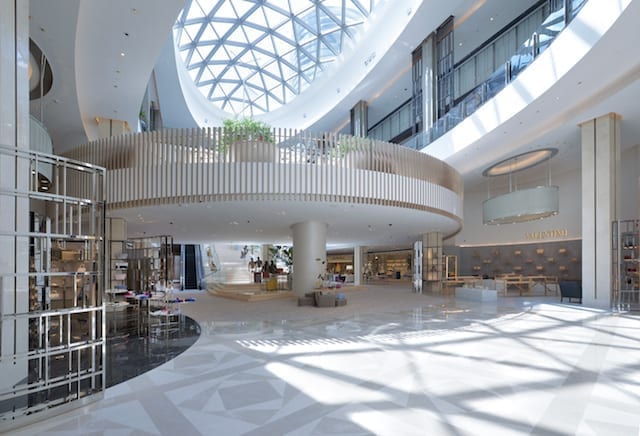
    Styled like an edgy department store, the space uses elements of glass, marble and steel combined with warm wood accents, designed to be both dramatic and intimate. The space links dining areas, casinos, retail stores, entertainment attractions and hotels.

    Melco Crown Entertainment chairman/CEO Lawrence Ho says the group’s flagship property beings many firsts to Macau. “It features the largest collection of luxury brands in Cotai and creates an exciting luxury shopping scene for all aspirational, sophisticated and cosmopolitan leisure seekers in the region.”

    DFS Macau


    DFS Group chairman/CEO Philippe Schaus says Macau continues to be an important destination for its customers, “which is why we are thrilled to unveil a retail concept that is a first for DFS in terms of its scale, audacity and innovation”.

    Curated selection

    He says it is a first for Macau in terms of providing a curated and modern product selection across the major luxury categories. “T Galleria by DFS, City of Dreams will combine the breadth of a luxury shopping mall with the personalised service of a high-end department store.”

    Opening in phases from now until December, City of Dreams’ T Galleria by DFS will have the largest collection of luxury brands in Cotai, including beauty products and fragrances, fashion and accessories, and watches and jewellery brands.

    It will also introduce exclusive T Galleria signature customer services, including the first-ever shoe salon as well as a multi-brand lifestyle shopping area dedicated to men’s fashion and grooming.

    DFS Macau. 1

    Offering more than 50 men’s and women’s shoe brands across two floors, highlighted by exclusive-to-Macau brands such as Aquazzura and Rupert Sanderson, the shoe salon will be the largest in Hong Kong and Macau.

    The expanded beauty and fragrance section opens this month. When fully expanded, the 23,000 sqft (2136.7 sqm) space will comprise two wings and feature nearly 70 brands, making it the largest beauty hall in southern China. It will include Korean brands Hera, Laneige and Sulwhasoo.

    A first for men

    Also opening his month are 31 fashion and accessories brand outlets, including Dior, Fendi, Louis Vuitton, Miu Miu and Prada. And for male customers, for the first time at any T Galleria by DFS store there will be a multi-branded, lifestyle area that mixes ready-to-wear, accessories, shoes, watches and grooming all in one space.

    By the end of this year, the phased opening will culminate in a significantly wider jewellery offering, bringing key luxury brands Tiffany & Co. and Van Cleef & Arpels to City of Dreams, as well as new watch boutiques from Audemars Piguet and Vacheron Constantin.

    Dining outlets will also be integrated into the environment.

    DFS Macau. 2

    Developed by Melco Crown Entertainment, City of Dreams is an integrated resort that brings together a collection of brands including Crown, Dragone, Grand Hyatt and Hard Rock, with more than 20 restaurants and bars, the world’s largest water-based extravaganza in the Dancing Water Theater, and accommodation options.

    The mall extension follows a new package of social and economic policies for the city, released under the Macau government’s Five-Year Development Plan. By 2020, the government wants to see non-gaming income account on average for at least 9 per cent of all revenue generated by casinos, compared to an estimated 6.6 per cent in 2014.

  • Macau’s first apple retail store launched

    Macau’s first apple retail store launched

    APPLE Inc. launched its first retail store in Macau on Saturday, expanding the brand’s presence in Greater China to 41 stores.

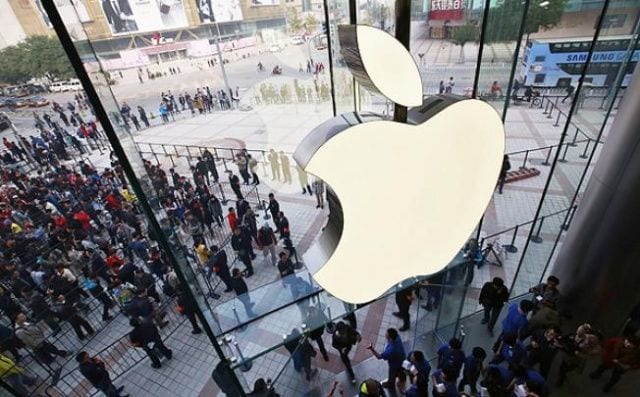
    Hundreds of Apple fans queued at the new store at Galaxy complex in Cotai district before the store opened at 10 a.m.

    Macau is an incredibly important region for Apple, Denny Tuza, senior director for Apple Retail Asia Pacific told Xinhua, noting that”Macau is a rich commercial and industrialized city with 600,000 residents and 32 million tourists annually. The city has a unique hybrid urban culture, representing a peculiar blend of Oriental and Western influences.”

    This new two-layer outlet includes sales space where over 150 Apple latest designs are displayed for customers to experience hands-on, and a gathering place for workshops.

    According to Tuza, Macau store has 149 employees who are mainly hired locally, speaking nine languages including Mandarin, Cantonese and English and Portuguese.

    Apple also brought two free camp designed to help spark the imagination of kids ages 8 to 12, teaching them to make movies and create interactive books complete with their own illustrations and sound effects.

  • H&M collaborates with Caitlyn Jenner for its newest athleisure range

    H&M collaborates with Caitlyn Jenner for its newest athleisure range

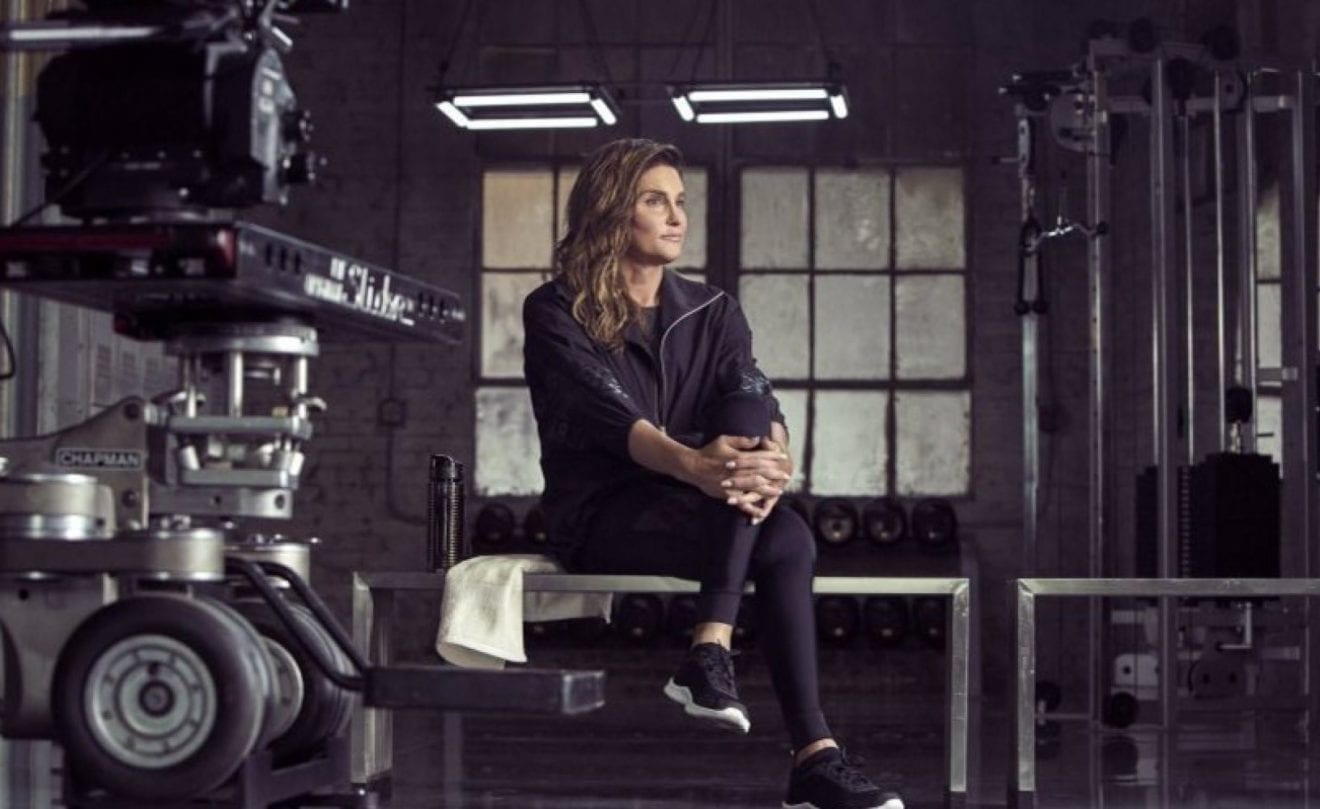
    A new H&M athleisure wear range is to be launched in July, developed with input from the Swedish Olympic team and fronted by personalities including Caitlyn Jenner.

    The launch of For Every Victory makes H&M one of the first major multinational fashion brands to make a serious foray into the booming athleisure wear market, to date dominated by fast-growing specialist brands including Lululemon, UnderArmour and 2XU.

    H&M -For Every Victory

    H&M For Every Victory – described by the H&M as “high fashion performance sportswear made to inspire” has been developed with input from the Swedish Olympic team, and the campaign is fronted by inspirational personalities who have all achieved their own victories, whether in sport or life.

    H&M -For Every Victory 1

    The athletes advised on design, performance and wearability. H&M also designed outfits for the Swedish Olympic and Paralympic team for Rio 2016, including the opening ceremony uniform, selected competition pieces and the prize ceremony outfits.

    “This is a collection about performance with great style and the input of the Swedish Olympic team has been invaluable in the creation process,” said Pernilla Wohlfahrt, design and creative director at H&M. “The result is high fashion technical sports pieces for everyone to wear.”

    The For Every Victory collection has a similar visual expression and technical knowledge to the Swedish Olympic team collection, with its own colour palette in black, grey, dusty pink and gold. It is centered on performance T-shirts, running shorts and leggings, as well as sports bras for women.

    H&M -For Every Victory 3

    The quick-drying, breathable materials help to optimise performance and recycled polyesters prove that high-function sportswear can also be conscious and more sustainable − all showing that there’s no compromise on either fashion or performance.

    H&M -Olympic collection

    Among the personalities fronting the new range are Caitlyn Jenner with her Olympic gold medal in the decathlon; Chelsea Werner, a gymnast who has never let Down Syndrome halt her progress; surfer Mike Coots who still takes to his board even though he lost his leg in a shark attack and boxer Namibia Flores who has fought against prejudice to pursue her dreams.

    The new range and brand will be launched globally on July 21.

  • Major Asia investment for Michael Kors

    Major Asia investment for Michael Kors

    Michael Kors has paid $500 million in cash to acquire Michael Kors HK, the exclusive licensee of the company in China and certain other jurisdictions in Asia.

    Approved by independent members of the company’s board of directors, the acquisition is subject to adjustment.

    The greater China business generated total revenue of $197 million for the year ended March 31, with a network of 91 company-run retail stores and six travel retail locations across China, Hong Kong, Macau and Taiwan.

    This fiscal year, the greater China business is expected to contribute about $200 million to retail net sales, reflecting sales for the 10-month period following the closing of the acquisition.

    Michael Kors chairman/CEO John Idol says the company is excited about acquiring its greater China licensee. “We have worked diligently over the past several years with our licensed partner in this region to build the infrastructure, establish the brand and grow acceptance of Michael Kors in the Chinese market.

    “We believe our brand is gaining strong momentum in greater China, making it the ideal time for us to integrate this territory into our business and capitalise on the enormous growth potential in this region.”
    CEO Neil Saunders of retail research agency Conlumino says the acquisition will allow the business to ramp up its pace of expansion in the region and, over the medium term, boost earnings potential.

    “It is fortunate Michael Kors has other regions to turn to for growth, with Asia having the most potential.”

    An award-winning designer of luxury accessories and ready-to-wear fashion, Michael Kors established his namesake company in 1981. Michael Kors stores can be found in Seoul and Tokyo.

  • Burberry prices ‘too expensive’ in China

    Burberry prices ‘too expensive’ in China

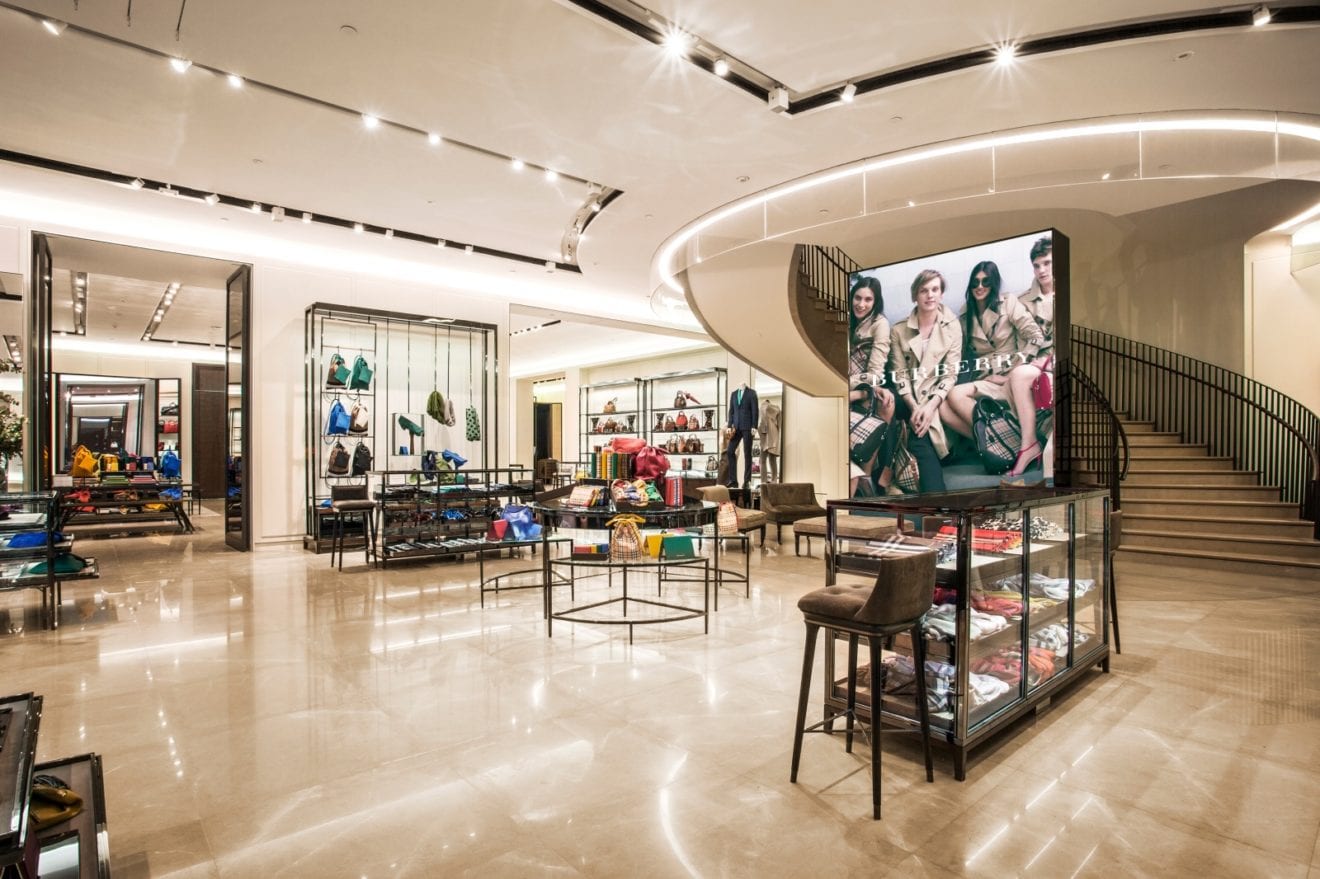
    Burberry prices are too high in China and Hong Kong and the brand must make cuts if it wants to arrest falling sales in the region says a retail analyst.

    Last week the UK-headquartered luxury fashion label reported its second consecutive drop in earnings, this time by some 10 per cent. Sales in Hong Kong have fallen more than 20 per cent for three consecutive quarters.

    Jack Chuang, a partner with Hong Kong-headquartered OC&C Strategy Consultants, says while the company is planning to cut overheads by £100 million over the next two years, the solution is a lot simpler.

    “Saving cost might help with Burberry’s short-term financial performance, but we don’t think it will help solve the fundamental problems it has in Asian market.

    “Among all the luxury brands, Burberry is almost the one with most significant price gap between Asian and European markets. Prices in Mainland China are almost 40 per cent higher than in UK, while in Hong Kong, it is 20 per cent higher.”

    Chuang says while a lot of luxury brands have started to think about price equalisation – citing Chanel, Cartier and Dior as examples from last year and, more recently, Valentino – Burberry raised its prices in China again in May by 5 to 10 per cent.

    “If it continues this type of strategy, more and more domestic demand will shift to the overseas market through travelling or cross-border eCommerce and no matter how they save cost (whether limited to Hong Kong or globally), they are going to have problems in Asia.”

  • Macau Casinos Stung as Fewer Chinese Come and Spend Less: Chart

    Macau Casinos Stung as Fewer Chinese Come and Spend Less: Chart

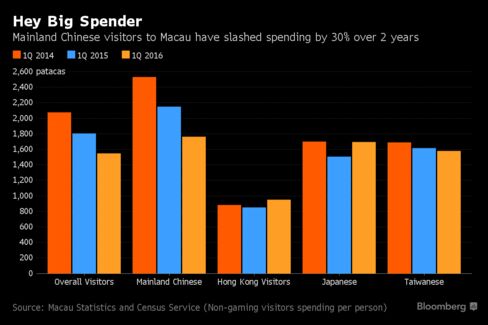
    Mainland Chinese have toned down their spending, shelling out 1,762 patacas ($220) per person in the first quarter on non-gambling purchases, down almost a third from 2014. That’s bad news for casino operators such as Wynn Macau Ltd. and Galaxy Entertainment Group Ltd. as they shift focus to casual gamblers and tourists to lift revenue from hotels, retail and conventions amid a two-year gambling slump. Chinese still make up about two-thirds of Macau’s visitors, even as their numbers last year fell for the first time since 2009 and eased a further 1 percent in the first four months of this year, according to data released Monday.

  • Shoe manufacturer Le Saunda down at heel for fiscal year

    Shoe manufacturer Le Saunda down at heel for fiscal year

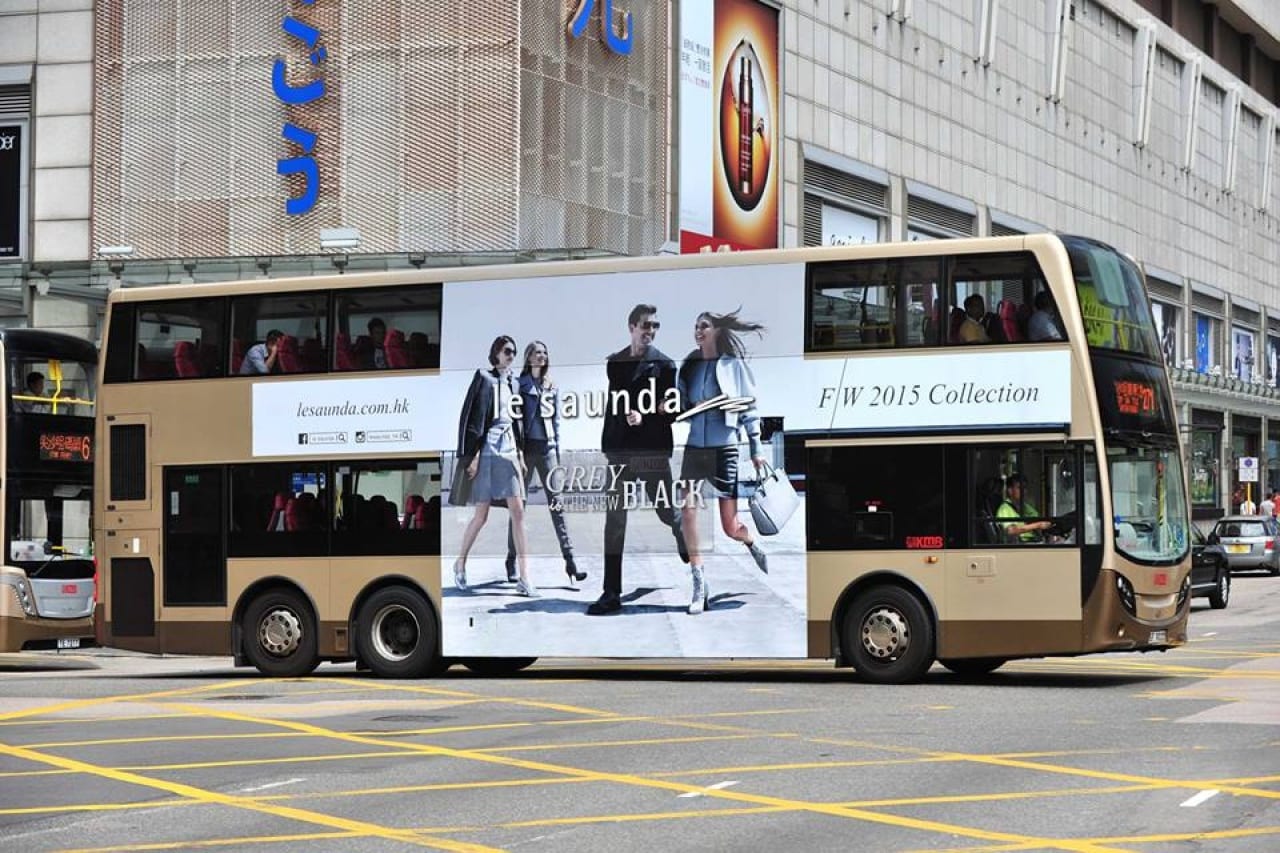
    Le Saunda Holdings Limited – a company primarily engaged in the manufacture and retail of Le Saunda ladies and men’s shoes, CNE footwear (an O2O brand) and Linea Rosa high-fashion footwear brand – announced a consolidated profit of RMB122.1 million (MOP149.42 million) for the fiscal year ending February 2016, in a filing on the Hong Kong Stock Exchange. This represents a 35.5 per cent year-on-year drop for the fiscal year compared to 2014/2015’s RMB189.3 million.

    The group has a total of 896 stores, located mostly in Mainland China, with 12 operating in Hong Kong and Macau.
    Sales in Hong Kong and Macau plunged 29.2 per cent year-on-year, at RMB110.7 million as compared to the RMB156.4 million seen in the previous fiscal year, causing a change in the Hong Kong and Macau business units ‘from profitable to making loss’ – a loss of RMB10.596 million – notes the filing. Over the fiscal year eight stores in the two SARs were phased out, noting that ‘after the shop rental in Hong Kong adjusts back to a normal level, the opportunities of opening new stores would appear again.’

    The group note opines that it is ‘the pattern of consumers’ behaviour that has been changing,’ despite the fact that ‘urban disposable income is actually on the rise […] ongoing weakness is noted in consumer spending.’

    For the fiscal year in question the group’s total revenue decreased by 3.7 per cent year-on-year to RMB1.621 billion. For the Macau segment total revenue amounted to MOP16.52 million, a 47.4 per cent drop compared to the MOP31.41 million registered in the previous fiscal year.

    A total drop of 0.9 per cent was seen in the group’s retail sales in Mainland China, amounting to RMB1.51 billion, which was noted as ‘better than the overall decline in the Group’s revenue,’ in the filing, attributable to a ‘stable loyal customer base brought by the Group’s reputation of products with “sophisticated styles with top quality”,’ as well as ‘consistent moves to close underperforming stores and open new ones to drive sales,’ complimented by the ‘launch of popular casual designs with elements favoured by young people to meet the market demands . . . [and] . . . a higher ratio of repeat purchases benefiting from innovative marketing approaches on both online and offline channels to facilitate close interaction with VIP customers.’

    Future predictions note that ‘the Group anticipates the lacklustre sentiments prevailing in the retail market will last for one to two years’ and that ‘retailers will still face enormous challenges ahead.’ To conquer this, the group will focus on: ‘formal footwear for the medium to high-end market’ as well as focusing on the product mix to ‘explore the young-line products with unique functional and fashionable items’. La Saunda also seeks to transform itself from a vertically integrated offline retailer to ‘an omni-channel operator which is highly data-oriented,’ as well as to ‘introduce a new retail model with swift O2O deployment,’ notes the filing.

    The group employs 5,286 people, of whom 150 are based in Hong Kong and Macau.

  • Gaming boosts Macau retail

    Gaming boosts Macau retail

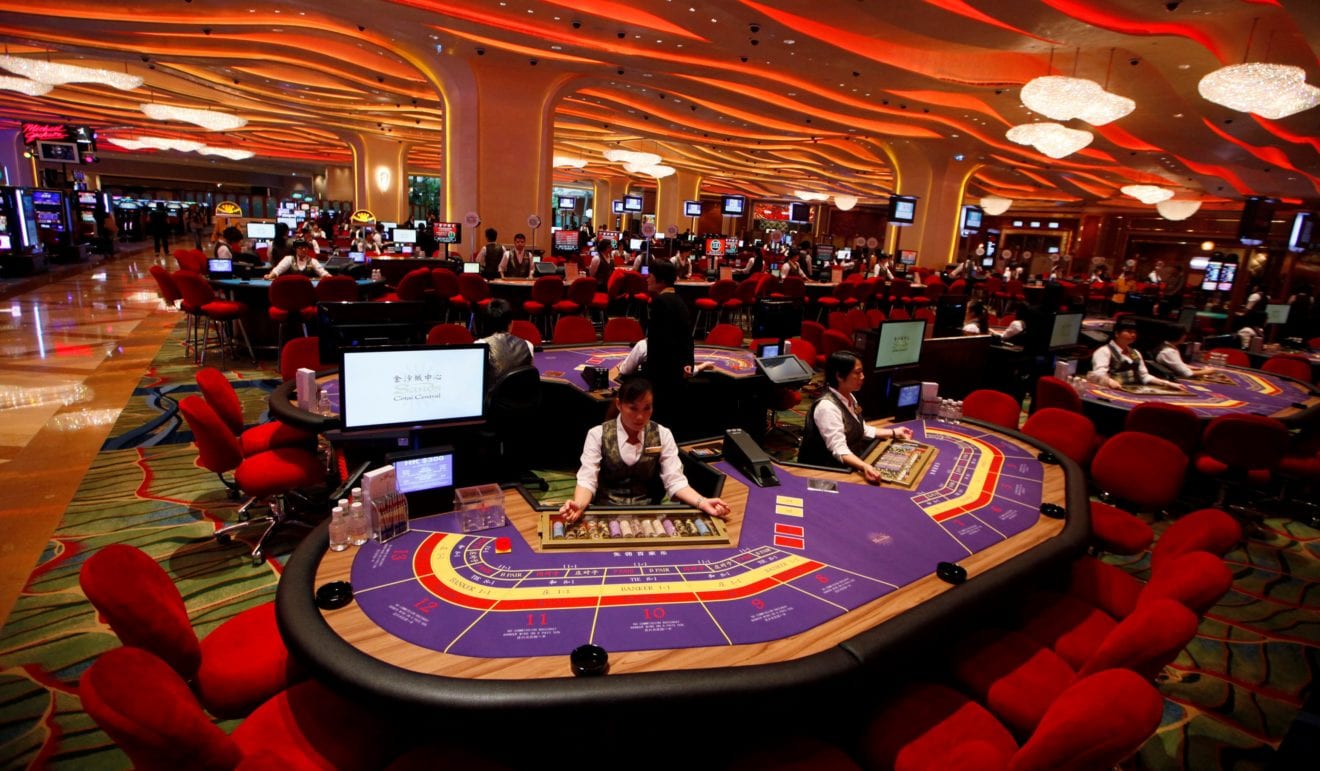
    Macau retail and wholesale has tripled in value thanks to the knock-on effect of the territory’s gaming industry.

    Macau government research shows that as the gaming industry has developed, it has scaled up the added value of other industries. Conducted by Institute for the Study of Commercial Gaming at the University of Macau, the report looks at the spread of added value through gaming in Macau over the 10 years to 2013.

    The gaming industry was liberalised in 2002, and this is the first report following a mid-term review on the sector. It notes that the added value of the gaming industry has increased 6.9 times in the 10 years, with the hotel industry increasing 11.4 times.

    Data from six gaming companies showed that their non-gaming activities created an income of 23.2 billion patacas (US$2.9 billion) in 2014, while the total non-gaming spend of tourists in Macau is comparable to that of Las Vegas.

    Gaming dominates the Macau economy with a 58.3 per cent slice of the pie, while the wholesale/retail sector has a humble 5.2 per cent.

    Meanwhile, the report will probably help Macau set policy direction for the $30 billion gaming industry as units of casino groups such as Melco Crown Entertainment Group and MGM Resorts International struggle to cope with Macau’s two-year gambling downturn, reports Bloomberg.

  • Macau Legend buys troubled casino in Laos

    Macau Legend buys troubled casino in Laos

    Macau Legend Development Limited announced via press release on May 13 that it had entered into a USD42 million (approximately HKD326 million) project development agreement (PDA) with a company wholly-owned by the Ministry of Finance of the Lao People’s Democratic Republic, to purchase the Savan Vegas Hotel and Entertainment Complex, a full-service casino, hotel and resort located in Laos’ Savannakhet Province.

    However, the apparently very advantageous and profitable business might be tainted for David Chow’s company, as the Savan Vegas Hotel and Entertainment Complex is involved in a series of serious disputes and legal actions that are directly connected to its owners.

    In another statement on May 5, Lao Holdings N.V., the parent company of Sanum Investments Limited, stated that it has filed three legal actions against Laotian authorities for violating the 2014 settlement agreement reached by both parties, stipulating the sale of the Savan Vegas Hotel and Casino, and other assets, for maximum value to the benefit of all parties.

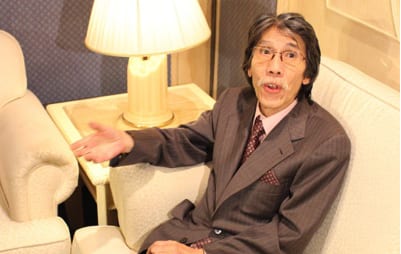
    David Chow

    David Chow

    According to the same statement, “these actions have been taken in direct response to the expropriation and planned sale of Sanum’s gaming and hotel complex located in Savannkhet, Laos,” that has now reportedly gained the involvement of the Macau company as the buyer.

    “All of the actions taken by the Lao Government over the past two years have been a blatant attempt not only to avoid, but systematically obliterate its legal obligation to work with us in good faith,” said Jody Jordahl, President of Sanum Investments in the same statement.

    However, none of these actions and lawsuits have been reported or identified in the note sent by the Macau Legend to the Hong Kong Stock Exchange as potential risks for the business.

    The Savan Vegas Hotel and Entertainment Complex occupies 50 hectares of land, which currently features gaming facilities with 92 tables and 493 slot machines; a 476 room hotel and convention center, restaurants, bars and other dining, recreational and retail shopping facilities.

    The PDA announced that Macau Legend has an initial term of 50 years which may be extended for an additional period up to another 49 years.

    Regarding the business agreement, the co-chairman, executive director and CEO of Macau Legend, David Chow, said: “We have been looking to invest in and develop integrated resort projects outside of Macau.” He thanked the support of the Lao PDR Government, for their trust in the company to turn the Savan Vegas project into a regional entertainment hub in Southeast Asia.