Tag: Macau

  • Hermes sales rebound

    Hermes sales rebound

    Hermes sales rebounded globally in the first quarter of this year, exceeding analysts expectations.

    But the best news seems to be from Hong Kong where the French luxury goods label reported sales had “stabilised” after last year’s serious decline.  Sales fell in Macau, Hermes said, without providing further details.

    In the broader picture, the company saw respite in its home market after shoppers began to return to stores following the nervousness fuelled by the terror attacks late last year.

    Hermes sales for the quarter rose 6.2 per cent on a constant currency basis, to reach 1.19 billion euros (US$1.35 billion)

    CEO Axel Dumas said during an earnings call that the fallout from the terror attacks – in both Brussels and Paris – was still hurting luxury goods retailers. Footfall had returned to normal in Milan and London, but remained down in Paris, causing a 9.2 per cent drop in sales of ties and silk scarves in the quarter.

    Leather goods was the only category to show a rise in sales – a healthy 15 per cent.

    “There’s a lot of volatility,” Dumas said. “We have to adapt to circumstance.”

  • Hermes retail sales rose 8pc in Q1

    Hermes retail sales rose 8pc in Q1

    French leather goods maker Hermès Group’s revenue was up 6 percent in the first quarter of 2016, despite a challenging luxury landscape.

    Consolidated revenues for the house were 1.19 billion euro, or about $1.35 billion at current exchange rates. Even with the negative effects of the Paris terrorist attacks, Hermès’ European sales grew 9 percent compared to the same period the previous year, with strong performances of its brand-owned boutiques.

    Trying times
    Japan sales were up 13 percent compared to last year, which Hermès attributes to selective distribution. The rest of Asia saw sales rise 4 percent, with growth in China offset by challenges in Hong Kong and Macao.

    Hermès’ leather goods and saddlery business grew 15 percent in the quarter. The group has recently established new facilities for leather production, with the fifteenth opened on April 1 in Héricourt.

    All other areas of Hermès’ business saw a decline.

    With a slowdown in the United States, Asia and France, ready-to-wear and accessories sales were down 2 percent. Silk and textile sales were down 9 percent, attributed to the recent events in Europe.

    Perfume sales dipped 4 percent, while watches declined 3 percent.

    Its other business ventures, including silvermaker Puiforcat and bespoke shoemaker John Lobb, balked the trend, rising about 30 percent to about $65.6 million in sales.

    Hermes shoe fw 2014
    Hermès fall/winter 2014

    Hermès says that its goal of 8 percent revenue growth at constant exchange rates for 2016 may be out of reach due to economic, geopolitical and currency fluctuations.

    The brand is planning to celebrate the horse this year, with an effort that focuses on its longstanding connection to nature through equestrian arts.

    Other luxury brands are feeling the pinch of current events.

    French conglomerate Kering’s luxury sales in the first quarter of 2016 were buoyed by Western Europe, Japan and emerging markets, as it managed growth in a challenging environment.

    Bottega Veneta’s sales were down 7.6 percent as reported, or 8.3 percent on a comparable basis. The brand was mostly hurt by the strength of the U.S. dollar and by Asian tourists avoiding Europe and other parts of the globe following terror attacks

  • China blamed for Apple sales slump

    China blamed for Apple sales slump

    Apple sales slumped 26 per cent in Greater China in the latest quarter, driving the tech giant to its worst result in 13 years.

    CEO Tim Cook said the Hong Kong market was largely to blame, due to its currency value being pegged to the US dollar. Sales in the mainland fell by a more modest (but still alarming) 11 per cent. Greater China sales totalled US$12.49 billion, equivalent to about 24.5 per cent of its global revenues.

    Cook added that a year ago Apple sales in China soared a remarkable 81 per cent year-on-year, suggesting that made for a tough benchmark for this quarter’s results.

    But Apple cannot blame all the company’s current woes on China: sales in its US home market fell 10 per cent as well.

    Globally, Apple sales totalled US$50.6 billion, down from the $58 billion of the previous corresponding period. Its quarterly net income fell from $13.6 billion to $10.5 billion and gross margin fell from 40.8 per cent to 39.4 per cent. International sales accounted for 67 per cent of the quarterly revenue.

    Despite the sales decline, Apple is showing no sign of slowing its aggressive expansion program in Greater China which it predicts will soon become its largest single market, overtaking the US.

    During the quarter the company opened seven more stores, with five more planned in the current quarter, taking the network of large format stores to about 40.

    The company will also take a hit from the Chinese Government’s decision last week to ban Apple’s iTunes music store and its Apple Bookstore – both selling digital content to Chinese customers who have invested in iPhones, iPads or Apple computers.

    The biggest drain on sales is the iPhone, which is now struggling to keep pace with a myriad of less expensive models offering similar technology at often vastly lesser prices. Apple sold more than 51.2 million iPhones in the first three months of 2016 – nearly 10 million fewer than during the same quarter of 2015.

  • China fires, Hong Kong fizzles for Coach Asia

    China fires, Hong Kong fizzles for Coach Asia

    Coach Asia has reported a strong rise in Mainland China sales in the last quarter – which was eroded by a decline in Hong Kong and Macau.

    The rebounding US fashion retailer says international sales rose 5 per cent in the three months to March 27 to US$448 million and by 7 per cent on a constant currency basis.

    “Total China sales rose 2 per cent in constant currency and declined 2 per cent in dollars with double-digit growth and positive comparable store sales on the Mainland offset in part by continued weakness in Hong Kong and Macau,” the company said in its earnings statement overnight.

    Hong Kong’s subdued luxury market and high currency value significantly ate into the Greater China figures.

    In Japan, sales rose 7 per cent in constant currency, despite a decrease in square footage, while dollar sales rose 8 per cent, reflecting the stronger yen.

    “Sales for the remaining directly operated businesses in Asia posted solid growth in constant currency but rose slightly in dollars,” the company reported.

    Coach’s total sales were $1.03 billion for the third quarter, compared with $929 million in the same period of last year, an increase of 11 per cent. On a constant currency basis, total sales increased 13 per cent. Gross profit totaled $713 million versus $665 million a year ago, up 7 per cent, while gross margin was 69 per cent versus 71.6 per cent.

    Neil Saunders, said while Coach’s sales uplifts were modest when compared to prior year declines of 24 per cent in North America and 3 per cent in international markets, they added to the sense that a long promised recovery of the brand is starting to materialise.

    He said the Stuart Weitzman acquisition continues to add value to Coach’s top line, despite fairly weak margins. “To an extent this, along with the strong dollar, has under minded progress made in rebuilding margins for the core Coach brand.

    “While Coach has done much to rebuild its brand there is still further to go within North America before it sheds its image of being a ubiquitous product focused on discounting. The recent heritage campaign and the reduced promotional stance are helping to shift perceptions, and as such the direction of travel is correct,” observed Saunders.

    “With greater emphasis on product design, marketing, and store environment Coach should be able to rebuild traction within its core North American market over the course of the next quarter.”

    Coach CEO Victor Luis  said the company’s performance was in line with expectations and reflected “the consistent execution of the transformation initiatives put into place nearly two years ago, in spite of volatile tourist spending flows, as well as macroeconomic and promotional headwinds”.

    “We are delighted with how our plan for the Coach brand continues to unfold and is driving improvement across our financial metrics. We are on track to return to positive comps in North America in the fourth quarter and to achieve an inflection in our profitability.”

  • On Pedder takes first step into eCommerce

    On Pedder takes first step into eCommerce

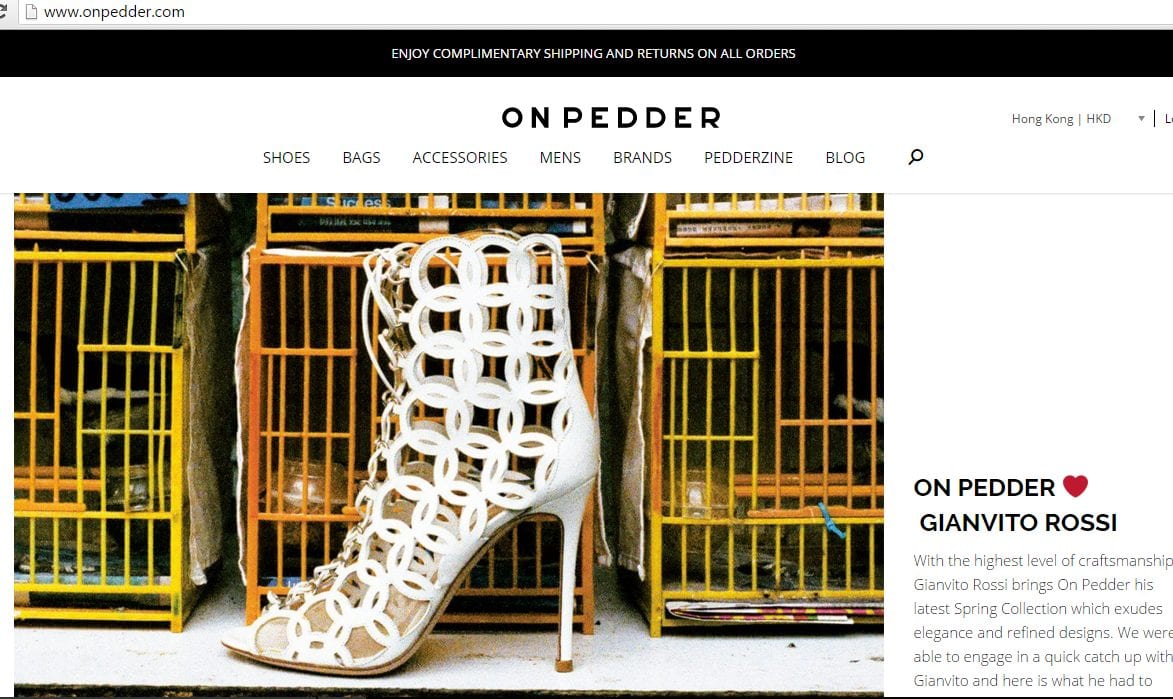
    Hong Kong shoe retailer On Pedder has launched an eCommerce site featuring a curated mix of luxury footwear.

    It is centered around the retailer’s Pedderzine, a seasonal art-fashion hybrid magazine distributed to customers.

    Complimentary shipping is being offered by the site, with returns possible, for customers in Hong Kong, Japan, Macau, Philippines, Singapore, South Korea, Taiwan and Vietnam, as well as Australia and New Zealand.

    Brands include 3.1 Phillip Lim, Aquazzura, Chloe, Common Projects, Gianvito Rossi, Giuseppe Zanotti Design, N⁰21 , Neil Barrett, Nicholas Kirkwood, Paul Andrew, Rene Caovilla, Sophia Webster and Valentino.

    More brands are showcased under the “On Pedder Love” section of the site, along with exclusive product.

    On Pedder collaborated with Hong Kong photography and video artist Luke Casey for Pedderzine this season, which focuses on Hong Kong and Kowloon’s roots and was shot on the streets of Jordan and Sham Shui Po and Jordan, including karaoke bars, back alleys, markets and brothels.

    “We wanted to create an online destination for our customers to enjoy the energy and aesthetics of our in-store curation,” says Pedder Group president Peter Harris.

  • Hong Kong and Macau drag down Sa Sa International

    Hong Kong and Macau drag down Sa Sa International

    Hong Kong-listed beauty products retailer Sa Sa International says its retail and wholesale turnover fell 15.1 per cent in the last quarter.

    And in the Hong Kong and Macau markets, turnover tumbled 17.9 per cent for the quarter ended March 31, while same-store sales dropped 17.6 per cent.

    There were 5.2 per cent fewer transactions, with average sales per transaction sliding by 13.9 per cent.

    However, in other markets – including Mainland China, Malaysia, Singapore and Taiwan, and on its online store – trade was a shade more buoyant, easing just 2.8 per cent.

    Fourth-quarter retail sales in Hong Kong and Macau market continued their slide because of further impact by Mainland China’s new “one-trip-a-week” policy on the retail market. There was also weaker sentiment with a rise in outbound travel by locals.

    Responding to the slower market, Sa Sa will optimise product offerings and adjust sales strategies, says the group, which closed one store during the quarter. This was either in Hong Kong or Macau, but not specified in its report.

    Its total of 291 outlets comprises 113 in Hong Kong/Macau, 66 in Malaysia, 57 in China, 32 in Taiwan and 23 in Singapore.

  • Tourism slump hits Burberry Hong Kong sales

    Tourism slump hits Burberry Hong Kong sales

    British luxury brand Burberry Hong Kong has seen its sales slide by more than 20 per cent for the third quarter in a row.

    The result reflects the continuing fall-off in tourist numbers to Hong Kong from China, including a 26 per cent drop in February.

    Burberry’s second-half sales results, just released, show a “challenging” environment for luxury, says CEO Christopher Bailey. Global comparable sales declined by 2 per cent, dragged down by Hong Kong and Macau. Global comparable sales excluding these regions actually edged up 1 per cent for the half.

    Burberry’s bright spots were Mainland China, Japan and Korea, which all saw positive growth. Japan, which has become a luxury shopping hotspot for Chinese tourists, had double-digit growth in total retail revenue.

    Sales also slowed down in Europe, as luxury shoppers from China avoided the region following the Paris terror attacks in November. Demand for Burberry goods fell in France, Germany, Italy and Spain amid a general sense of unease about security and fears of further terrorist attacks in Europe.

    However, it is not all doom and gloom for Burberry, says Verdict Retail analyst Andrew Hall, citing growth in online sales and the launch of the Mr Burberry fragrance. The success of Burberry’s fragrances has seen the brand’s beauty division achieve underlying growth of 10 per cent in the second half.

    “Furthermore, Burberry continues to be at the forefront of luxury fashion retail, making headlines with high-profile collaborations – for example, Steve McQueen – and sending waves across the industry as it shakes up the traditional fashion show timetable,” says Hall.

    “Burberry can certainly be proud of the hard-won successes, but long-term strategic leadership is needed to overcome the blows dealt by performance in some Asian markets. Until this is achieved, the good work will continue to be overshadowed by falling demand in Hong Kong and Macau.”

  • Hong Kong and Macau drag down Prada profits

    Hong Kong and Macau drag down Prada profits

    Difficult times on Asian markets, especially in Hong Kong and Macau with lower local demand and fewer tourists, have impacted Prada profits.

    “At the same time, social and political tensions worldwide further contributed to a general decrease in willingness to consume and in tourist flows,” the Milan-based group says in its annual results.

    The company plans to offset new shop openings with selective closures this year and next in an effort to shield profit margins from weaker demand, according to Business Insider.
    Prada profits fell by a larger-than-expected 28 per cent in the 12 months to January 31 – to 14 per cent of revenue, down from 20 per cent the previous year.

    After listing on the Hong Kong bourse in 2011, the group expanded its retail outlets in the territory. Now it has been hit by China’s economic slowdown as well as a crackdown on extravagant gift-giving. Similarly affected, luxury goods industry leader LVMH has just posted first-quarter sales below forecasts.

    CFO Alessandra Cozzani, who took over the role in February after the sudden resignation of Donatello Galli, says Prada will balance new openings with closures and work to keep operating expenses flat.

    “The retail network will remain the same for sure in 2016 and probably also 2017. We’re working on increasing the productivity of stores.”

    Prada’s directly operated stores (DOS) increased from 594 to 618 in the 12 months to January 31.

    Head of strategic marketing Stefano Cantino says the group will bet on eCommerce with the aim of doubling revenues over the next two years. It will start working with partners such as Yoox Net-A-Porter to sell its products on multi-brand e-shops.

    Digital and marketing initiatives will also be used to strengthen relationships with clients.
    Meanwhile, the Asia Pacific is still the group’s leading market, generating new sales of €1080 million (US$1.23 billion) during the year. However, net sales fell by 4.4 per cent at current exchange rates and by 16.1 per cent at constant exchange rates.

    In Japan, where there was a strong flow of tourists, the brand ended the year with net sales of €403.7 million, a 10.7 per cent increase.

  • McDonald’s Asia to sell 2800 restaurants

    McDonald’s Asia to sell 2800 restaurants

    McDonald’s Asia is preparing to sell some 2800 restaurants across Asia as it introduces a new business model in its fastest growing major market.

    And Reuters has named frontrunning investors in what looks to be a spin-off business in much the same nature as Yum! Brands is selling off its Chinese KFC, PIzza Hut and Taco Bell operation.

    Early contenders as partners with McDonald’s US include state-backed China Resources and private equity investors Bain Capital, TPG Capital, Baring Private Equity Asia and MBK Partners. China Resources already has street cred in the food sector, operating Pacific Coffee chains in Hong Kong, Macau, Singapore and China.

    McDonald’s is planning to create a new Asian business which would own restaurants as master franchisee, using local market knowledge and capital to expand networks in respective markets.

    Operations in China, Hong Kong, Macau and South Korea would be rolled into the new entity, although it is highly likely separate businesses could be created for each market – one for China, one for Hong Kong-Macau and another for Korea.

    McDonald’s has a stand-alone, listed business in Tokyo which encountered huge market problems several years ago and last year lost US$310 million after a major cull of its network. The company is trying to sell down its stake in that business from 49.99 per cent to 20 per cent.

    Inside Retail Hong Kong expects that McDonald’s Asia would likely be funded by a cashed-up investment partner for about five years before potentially being floated, most likely in Hong Kong.

    A fortnight ago, McDonald’s Chicago-based CEO Steve Easterbrook revealed plans to open 1500 new stores across China, Hong Kong and Korea within five years – 1300 of those in Mainland China. Globally, the company plans for 95 per cent of its restaurants to ultimately be franchised.

    In China’s mainland, McDonald’s already operates some 2200 restaurants – its new target is 3500.

    Easterbrook says strategic partners could “add value and unlock growth potential in key markets” in Asia.

    “This will allow McDonald’s to accelerate our growth and scale faster across diverse markets placing us closer to our customers and the communities we serve,” he said on March 31.

    Reuters quotes sources revealing McDonald’s has engaged Morgan Stanley to run the sale of the restaurants in China, Hong Kong and South Korea, with a formal, public sale process to be launched in mid-May.

    The final business model is subject to negotiations with potential buyers, but McDonald’s expects a one-time franchise payment and ongoing royalties based on sales – the typical industry rate running between 3 per cent and 5 per cent. Capital investment required to roll out new stores would be the responsibility of the franchisee.

    Reuters said McDonald’s declined further comment beyond its March 31 statement from Easterbrook and the private equity companies named, China Resources and Morgan Stanley all also refused to comment.

  • eCommerce won’t dent Asian retail real estate demand

    eCommerce won’t dent Asian retail real estate demand

    Growing online sales will not undermine demand for Asian retail real estate, according to the last CBRE study of major international brands.

    For the seventh edition of How Active Are Retailers Globally?, the real-estate company looked at more than 150 major international brands based in Americas, Asia Pacific and EMEA (Europe, the Middle East and Africa) countries.

    China is the top target market in the Asia Pacific (APAC) and fourth-ranked globally, with 27 per cent of retailers looking to expand there. Hong Kong follows in sixth position (24 per cent), Japan in seventh (22 per cent) and Singapore in ninth (21 per cent). The top three globally were Germany (35 per cent), France (33 per cent) and the UK (29 per cent).

    China and Hong Kong maintained their placings, while Japan, Singapore and Australia (11th) all rose higher in the ranking, up from 13th, 18th and 15th positions respectively.

    “Hong Kong will remain a desirable market for retailers, particularly as it continues to serve as a popular shopping destination for mainland Chinese tourists,” says CBRE Hong Kong executive director for retail services Joe Lin.

    “The main difference is a shift from luxury to mid-range brands. This is forcing luxury retailers to consolidate their footprint, leading to a drop in rental cost in prime locations and therefore opportunities for non-luxury retail brands.”

    Most APAC markets saw increased interest for this year, with the exception of China and South Korea. Malaysia (10 per cent), Indonesia (9 per cent), Thailand, Vietnam and The Philippines (all 8 per cent) received more than double the interest they saw last year, when all markets secured between 1 and 3 per cent.

    Asked about the risk factors for the coming year, brands indicated that real-estate cost escalation (56 per cent) and unclear economic prospects (42 per cent) continue to be at the forefront of their minds.

    “We’re seeing more of a challenging economic environment, and concerns such as high operating costs and a lack of quality space means retailers are somewhat more wary this year,” says CBRE head of Asia Pacific research Dr Henry Chin. “However, even as markets such as China and Hong Kong are experiencing a slowdown, we see increasing numbers of opportunistic retailers looking to enter markets like Hong Kong, supported by strong underlying consumer demand.

    “Japan and Australia remain attractive, while Southeast Asia showed strong growth because of opportunities for retailers around an expanding middle class and stronger economic growth.” CBRE senior director and head of retailer representation for Asia Joel Stephen says there are still opportunities for retailers to grow their business in Asia, underscored by the region having four of the 10 most popular destinations. “The goal now for all brick-and-mortar retailers is to build an engaging offer that encourages people to stay longer and spend more.”

    The survey shows that 83 per cent of brands suggest their physical store expansion plans for this year will not be affected by the growth of eCommerce. From a retailer perspective, only 22 per cent of the brands see stiff competition from online retailing as a threat to their business.

    At the same time, retailers are cautiously optimistic on physical expansion. Of those canvassed, 17 per cent have large-scale ambitions, many of them looking to open more than 40 stores this year (up from 9 per cent last year), while 67 per cent plan to open up to 20 stores.

    “A physical store presence in key locations is still critical to the strength of a brand’s image,” says Stephen. “Customers still feel a need to go into stores, to physically touch a product and enjoy the feel-good factor associated with a particular brand experience. The store is integral to the shopping journey and can be used in different ways, such as to click and collect, research of the product or brand, or to test the product. It isn’t solely about the transactional side.”

    A new trend is brands looking to expand into travel hubs, such as airports and train stations, giving them access to high footfall in busy locations. But for APAC retailers, shopping malls are still the preferred destination by far, at close to 90 per cent.

    While globally the key concern for brands in negotiations for premises is lease length, APAC retailers are most concerned with turnover rent clauses (GP). They are also particularly concerned about changing consumer behaviour (40 per cent), which is higher than the global average (31 per cent).

  • Macau casinos deploy Avaya technology

    Macau casinos deploy Avaya technology

    Four out of the six casino operators in Macao have engaged Avaya to provide telephony and other technology services to drive their digital transformation strategies.

    The four operators are using Avaya’s IP telephony technology to ensure staff can be reached with a single number, enabling them to respond promptly to guest enquiries.

    Avaya IP telephones in the guest rooms are also being used to provide guests with easy access to rich information and hotel services, such as room service and speed check-out. 

    One casino resort has meanwhile centralized a contact center to serve a number of hotels, with agent resources allocated dynamically according to the volume of calls that the hotels receive, so that all customer enquiries are responded promptly.

    In addition, a number of the operators have deployed Avaya’s SDN Fx architecture, which is based on Fabric Connect networking technology.

    To improve security, one casino resort has configured all applications with individual Avaya Virtual Service Network configurations, so that they are all isolated from each other.

    While gaming is still the pillar industry of Macao – the “Las Vegas of the East” – operators are increasingly focusing on the wider tourism market, entertainment and non-gaming revenue streams, along with cost-cutting initiatives and efficiencies to drive profitability.

    With Macao in the midst of a multi-billion dollar development boom, operators also need to provide competitive differentiation, while looking to future-proof investments.

  • Woodland looking at franchising

    Woodland looking at franchising

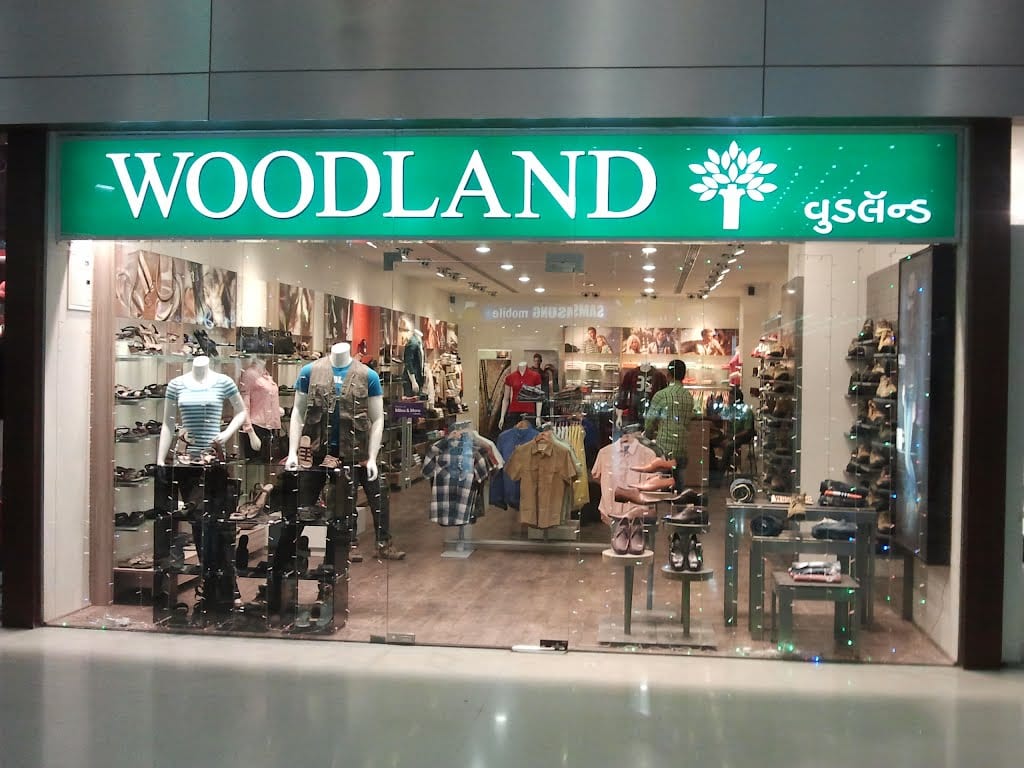
    Indian footwear and outdoor gear brand Woodland is planning to open stores in China, Malaysia and Singapore along with franchising its brand in other markets.

    Woodland is also taking the eCommerce route as part of its expansion, and is hiring social-media teams to run campaigns and online selling platforms in local languages.

    After announcing plans two years ago to launch 25 stores across China, it has subsequently opened “about a dozen stores” in Hong Kong. Its products are available through distributors in Singapore, and the company plans to enhance its global distributor networks. It aims to add at least 10 retail outlets internationally over the next two years.

    While the first few international stores will be company owned, MD Harkirat Singh says Woodland is open to franchisee formats for serious investors. The global stores will be a mix of independent stores and shops in shops.

    Singh says the product line in international markets will be customised to suit the region’s climate. according to the climatic conditions of the region. Woodland looks to tap the fast-growing extreme-weather outdoor gear market both in national and international markets, and claims to already have an 80 per cent market share in this segment in India.

    “While we have grown at an average of 15 to 20 per cent year-on-year in the past two to three years, the outdoor category has grown exceptionally in the past five years, says Singh. “Outdoor gear has become a lifestyle item, making our brand more popular.”

    Founded in Canada in 1992, Woodland is owned by Delhi-based Aero Group, which has its own leather-tanning and production units in Bangladesh, Canada, China, Indonesia, Macau, Malaysia, Sri Lanka, The Philippines and Vietnam, and as well as India.

  • Toys’R’Us Asia Pacific chief retires

    Toys’R’Us Asia Pacific chief retires

    Toys’R’Us has announced that Monika Merz, president, Asia Pacific, will retire effective May 31. Her successor will be named later.

    Monika-Merz

    As president of Toys’R’Us Asia Pacific, Merz oversees all operations and business activities for the company’s more than 300 stores in Japan, Southeast Asia, Greater China and Australia, responsible for the continued growth, profitability and success of the company in those markets.

    Since she started working at Toys“R”Us, Merz has been instrumental in the development of new store formats and merchandising concepts that have been successfully translated to other markets, ultimately strengthening the company’s position in the global marketplace.

    Dave Brandon, chairman and CEO, described Merz as a highly regarded leader “who has inspired new ideas, demonstrated innovative thinking and unwavering passion for the business and grown our Toys’R’Us brand internationally, even through challenging times and market transitions”.

    Merz’s retirement will bring to a close a remarkable career of nearly 20 years of continuous service to the company. She joined in 1996 as VP and GM, Toys’R’Us, Canada and was promoted to president, Toys’R’Us, Canada four years later. In 2007, she assumed leadership of Toys’R’Us, Japan. Her role was expanded to include responsibility for the company’s stores in Australia in 2011, and, later that year, she gained oversight of the company’s locations and corporate offices in Southeast Asia and Greater China when the company entered a joint venture agreement with Li & Fung to operate these formerly licensed stores.

    “During my time at Toys’R’Us I’ve had many experiences and challenges, but I’ve always been supported by exceptional teams and leaders,” she reflected. “I’m proud of all that we have accomplished and confident that the work we have done to provide a fun and memorable shopping experience for customers will continue after my retirement. After more than eight years in Asia Pacific, I’m now looking forward to returning to Canada and a new stage in my life.”

  • Fast rise for Chinese cross-border eCommerce

    Fast rise for Chinese cross-border eCommerce

    Chinese cross-border eCommerce will rise at a rate of 18 per cent annually through to 2020, predicts market research house Mintel in a new report.

    Mintel’s Haitao Retailing says Chinese spending on cross-border eCommerce soared more than 60 per cent in 2015.

    “The reason we chose to do this report was both due to Haitao becoming so large, and because this market is now becoming well-regulated, and encouraged by the central government,” said the report’s author Matthew Crabbe.

    “This was therefore clearly an important development in China’s international trade, its domestic consumer market, and as a route to entry for foreign companies hoping to sell to Chinese consumers.”

    Mintel surveyed more than 3000 Chinese online shoppers, of whom nearly 60 per cent said they had bought foreign products online from domestic shopping websites between June and November.

    The most popular products were beauty and skincare lines from South Korea, Japan and France; and food from Hong Kong, Macau, Taiwan and New Zealand. They also shopped for personal electronic devices from Japan and the US.

  • Macau retail sales weaken

    Macau retail sales weaken

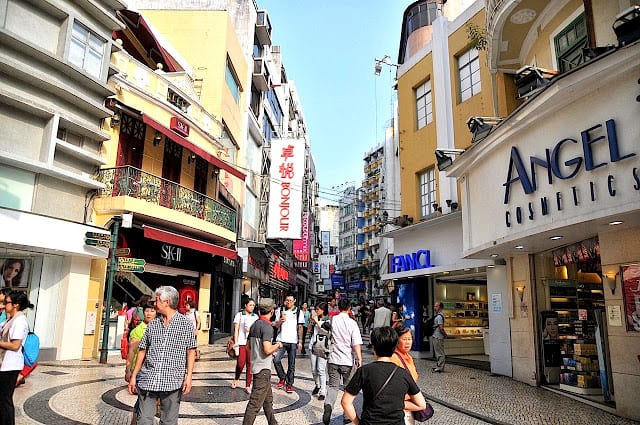
    Sales of watches and jewellery, which comprise a major segment of Macau’s retail business, fell 10.4 per cent last year, fuelling the territory’s first annual retail sales decline since 2000.

    Department-store goods and leather products were also hit, according to the latest Macau retail sales data from the Statistics and Census Service.

    Overall, retail sales volume was down 7.9 per cent for the year, with their value reaching nearly MOP60.9 billion (US$7611 million), says the survey. However, the drop was in double digits for watches, clocks, jewellery, department-store goods, leather products and footwear. The watches, clocks and jewellery segment accounted for 22.2 per cent of all retail sales value – a drop of 25 per cent year-on-year to MOP13.53 billion.

    Department store goods, the second-largest retail segment, had sales fall 13.7 per cent year-on-year to MOP8.93 billion.

    Meanwhile, cosmetics and sanitary articles as well as communication equipment had double-digit increases in sales for the year, reaching MOP2.36 billion and MOP1.68 billion respectively.

    Nearly half of the retailers covered in the survey anticipate a further drop in sales for the first quarter of this year compared with the same period last year, while nearly 40 per cent expect the sales volume to be stable.

    Retail sales for the fourth quarter of last year fell 10.5 per cent to MOP15.59 billion, with sales volume dropping 7.7 per cent. There were significant decreases in footwear (down 24.5 per cent), watches, clocks and jewellery (down 16 per cent), leather goods (down 11.3 per cent) and department store sales (down10 per cent).