Tag: Macau

  • Chow Sang Sang local sales slide

    Chow Sang Sang local sales slide

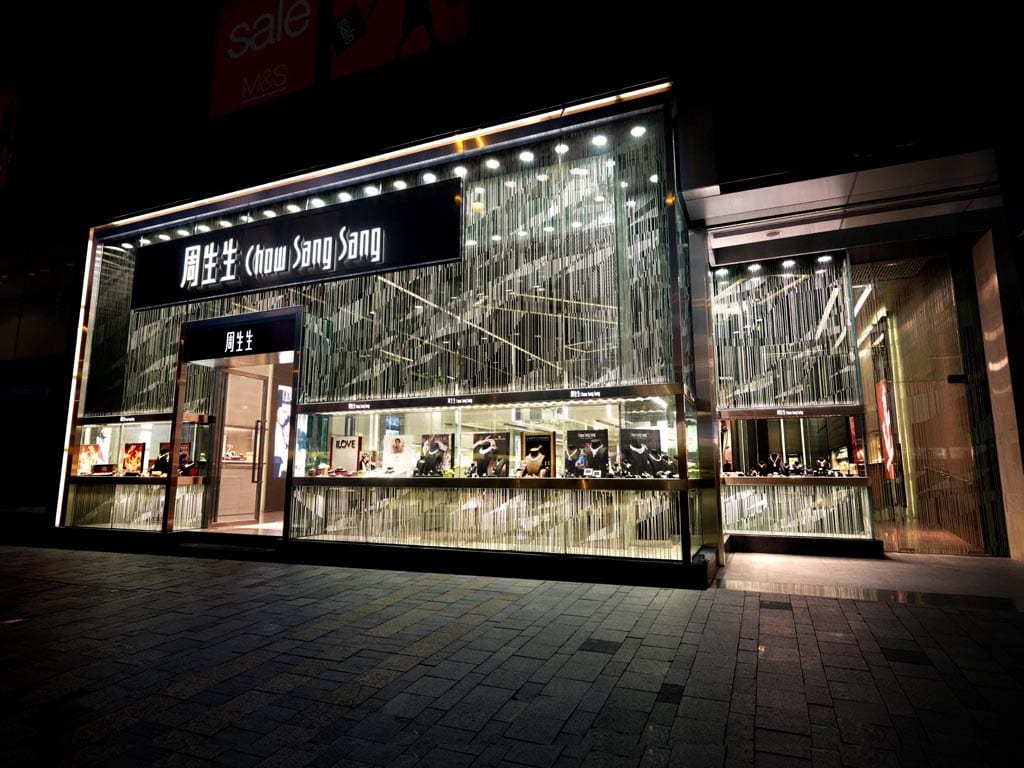
    Jeweller Chow Sang Sang has reported a 12 per cent slump in same store sales in Hong Kong and Macau during the first half of this year.

    But the company’s total sales slipped just one per cent and its profit rose 40 per cent during the six months, due to its disposal of shares in Hong Kong Exchanges and Clearing Ltd. Operating profit was down about 12 per cent.

    The company said while official records show a 5.9 per cent increase in the number of visits to Hong Kong by Mainland Chinese in the first five months, “actual spending by these visitors did not bring much cheer to the luxury retail sector”.

    “Negative sentiments towards cross-border traders and even mainland visitors probably cast a pall over shopping activities. Exchange rate fluctuations caused price differences that made it worthwhile for consumers from the mainland, and even those from Hong Kong, to shop in Japan and Europe for luxury goods.”

    During the half, Chow Sang Sang closed its Metroplaza store in Kwai Chung, but expanded its store in Elements, West Kowloon and converted the fitout to the company’s new generation shop design.

    The company said Macau was especially hard hit by the anti-graft campaigns and the measure to restrict funds outflow. One street-level store was closed there at the expiry of its lease.

    “On the Mainland, the slowing growth in the economy, the continued anti-corruption and austerity drive affected high-ticket spending, but in general the retail sector was healthy.”

    The jeweller opened 21 stores during the half taking its reach to 102 cities. Ten underperforming stores were closed for a net gain of 11 and a total network of 333.

    The company says in the months ahead it will continue to closely monitor its inventory levels. It has revamped its online shops both for the Mainland and Hong Kong and online sales continue to grow.

    “We are making progress in facilitating our online customers to take advantage of the network of physical stores.”

    In Hong Kong the company has acquired space in Citywalk, Tsuen Wan, to open a Rolex and Tudor store.

    The existing store in the same mall shall cease to operate its watch counters.

    In China 18 stores are planned between now and Christmas, along with several refitting and closings.
  • Studio City retail tenants revealed

    Studio City retail tenants revealed

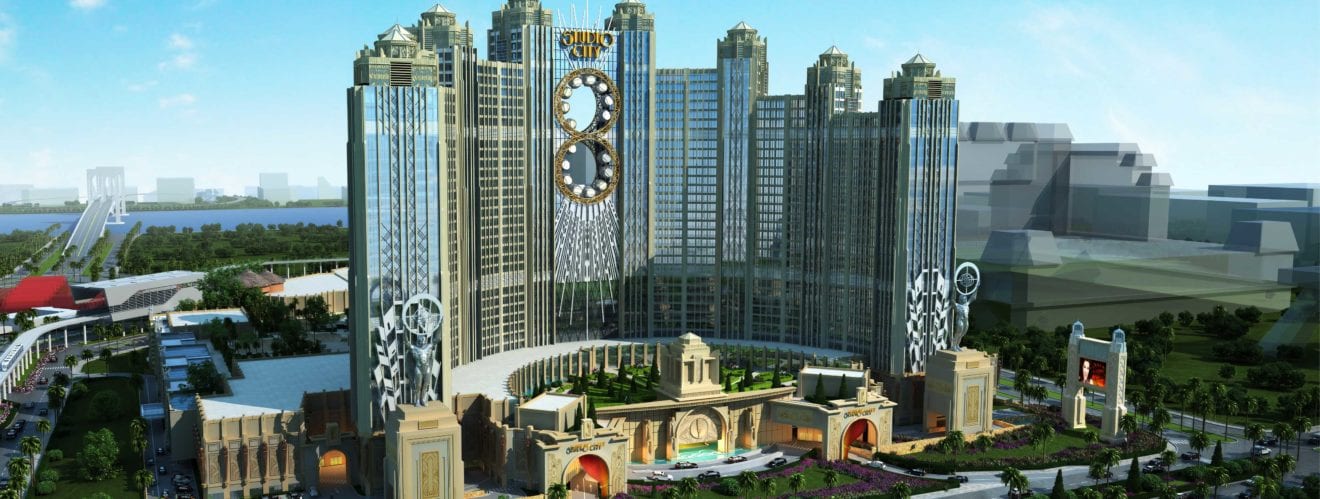
    Studio City and Taubman Asia, have revealed the lineup of fashion brands that will open inside The Boulevard at Studio City.

    A mix of fashion-forward labels and internationally-renowned luxury brands include Macau’s first Balmain, Macau’s first Belstaff, and Tom Ford’s largest store in Asia, amongst many others. The selection was assembled by Taubman Asia and Melco Crown Entertainment’s combined team of retail specialists to meet Chinese consumers’ increasing desire to express their individuality through high quality, expertly crafted clothing and accessories. Bespoke and personal services will be offered to ensure our shoppers take center stage.

    Taubman says The Boulevard at Studio City will bring “an unparalleled shopping experience” to Studio City.

    “Unlike any retail offering to be found in Asia, the unique 35,000 sqm ‘immersive’ retail entertainment environment brings shopping to life by ‘transporting’ visitors to high-energy street-scapes and entertaining them at every turn with featured streets and squares inspired by iconic shopping and entertainment locations, including New York’s Times Square and Hollywood’s Beverly Hills,” Taubman said in a statement.

    “At the futuristic Times Square Macau, inside The Boulevard at Studio City, a variety of entertainment from ‘virtual’ musicians to film stars will be shown through holographic projections.

    “Leveraging our global expertise increating extraordinary retail environments, and our exceptional relationships with the world’s leading brands, our talented team in Asia has brought together an exciting mix of brands for The Boulevard at Studio City,” said René Tremblay, president of Taubman Asia.

    “Our merchandising and management services are the industry standard for performance and excellence. We are thrilled to welcome these brands to our latest project and are committed to supporting them for the long term.”

    List of brands:

    Aeronautica Militare
    Balmain
    Bank of China
    Belstaff
    Boss
    Bottega Veneta
    Bulgari
    Cigar Emporium
    Coach
    Cosmos Food Station
    Din Tai Fung
    Dunhill
    Emporio Armani
    Fendi
    Girard-Perregaux
    Givenchy
    Glashutte Original
    Graff
    Gucci
    Hide Yamamoto
    Hublot
    ICBC
    Trattoria Il Mulino
    Image Digital
    IWC Schaffhausen
    Jaeger-LeCoultre
    Jaquet Droz
    kate spade new york
    Kenzo
    Longines
    McCafe
    McDonald’s
    MCM
    Michael Kors
    Montblanc
    Philipp Plein
    Piaget
    Prada
    Rainbow
    Rimowa
    Roberto Cavalli
    Saint Laurent Paris
    Shiki Hot Pot Restaurant
    Starbucks
    Tag Heuer
    T Galleria Beauty by DFS
    Tiffany & Co.
    Tom Ford
    UM
    Vacheron Constantin
    Valentino
    Van Cleef & Arpels
    Versace Collection
    Ermenegildo Zegna
    Zenith

  • Bulgari Macau’s new generation boutique

    Bulgari Macau’s new generation boutique

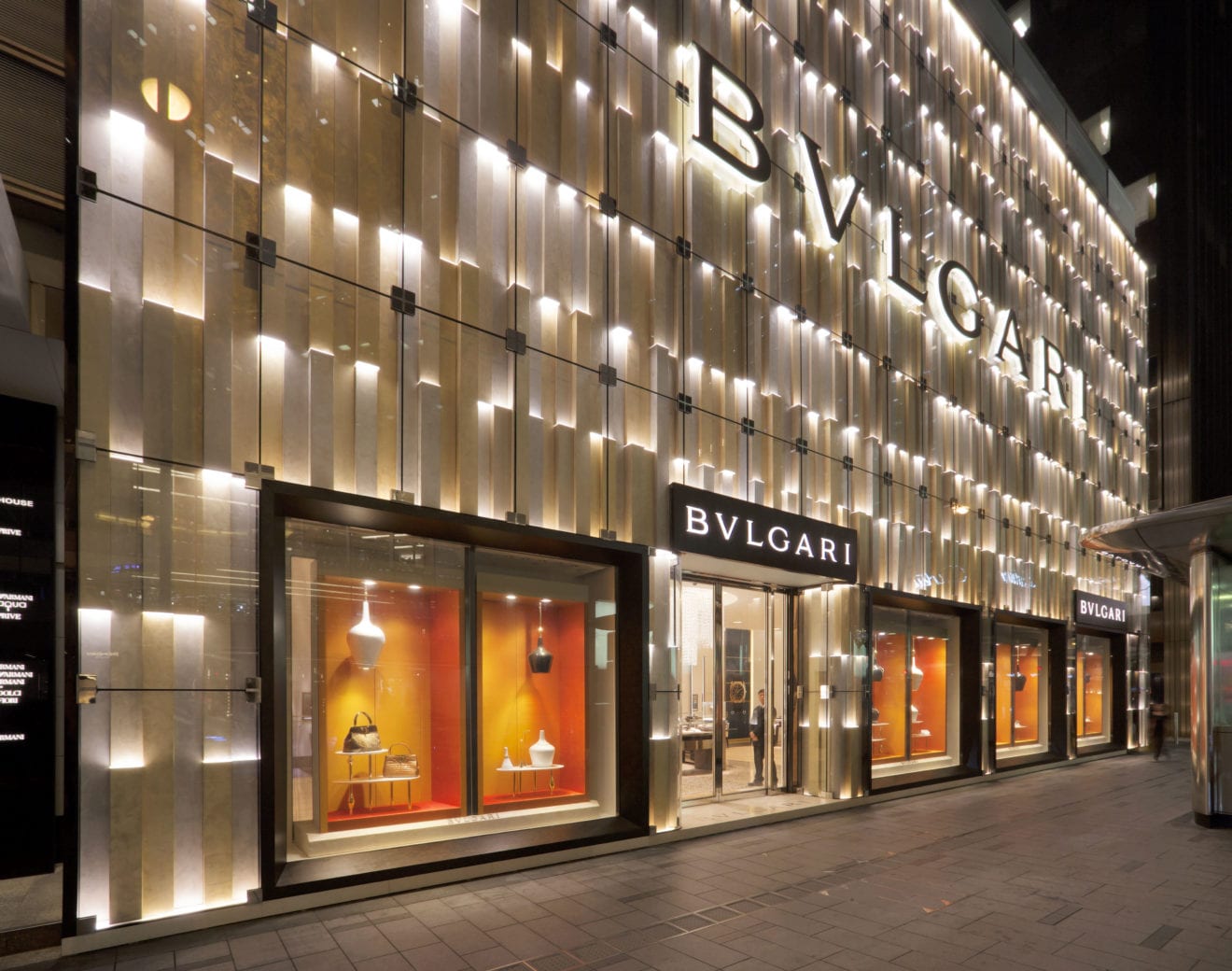
    Bulgari Macau’s new luxury boutique at the Galaxy features the new architectural design concept developed by Peter Marion.

    Following the renovation of the Via Condotti flagship in Rome, the new architectural design concept is being rolled out by the LVMH brand in the most prominent locations worldwide, mirroring the brand’s signature architectural elements and expressing its Mediterranean origins and Roman traditions with a classic Italian approach to modernity.

    The Galaxy Macau store, which began trading in July, is thus one of the first in the world to carry the new image.

    Bulgari says the dominant idea is expressed by “a classic geometry open to modern interpretation, in a continuous interplay between innovation and tradition”.

    The 290 sqm space encompasses the brand’s design key elements, such as the three institutional giant windows alternate with three Condotti showcases and the Condotti eight point star, still present in the original historical flagship in Rome Condotti 10.

    The boutique also houses some furniture selected by Peter Marino himself and conceived by the Italian designers who have had link with the Bulgari heritage, such as the product counters by Carlo Scarpa, the sales tables by Franco Albini, or the central Eros marble table by Angelo Mangiarotti.

    The brand touch is also provided throughout the areas transformed into a Bulgari art-gallery: walls are decorated with Vintage most famous endorsements of celebrities who have been truly fan or ambassadors of the brand’s Italian exciting lifestyle.

    The boutique features an exclusive Bridal, Men, Accessories and VIP area, where the most precious creations can be viewed in total privacy.

    Bulgari Galaxy Macau is located at Shop G094 on the ground floor.

  • Prada Japan flourishes

    Prada Japan flourishes

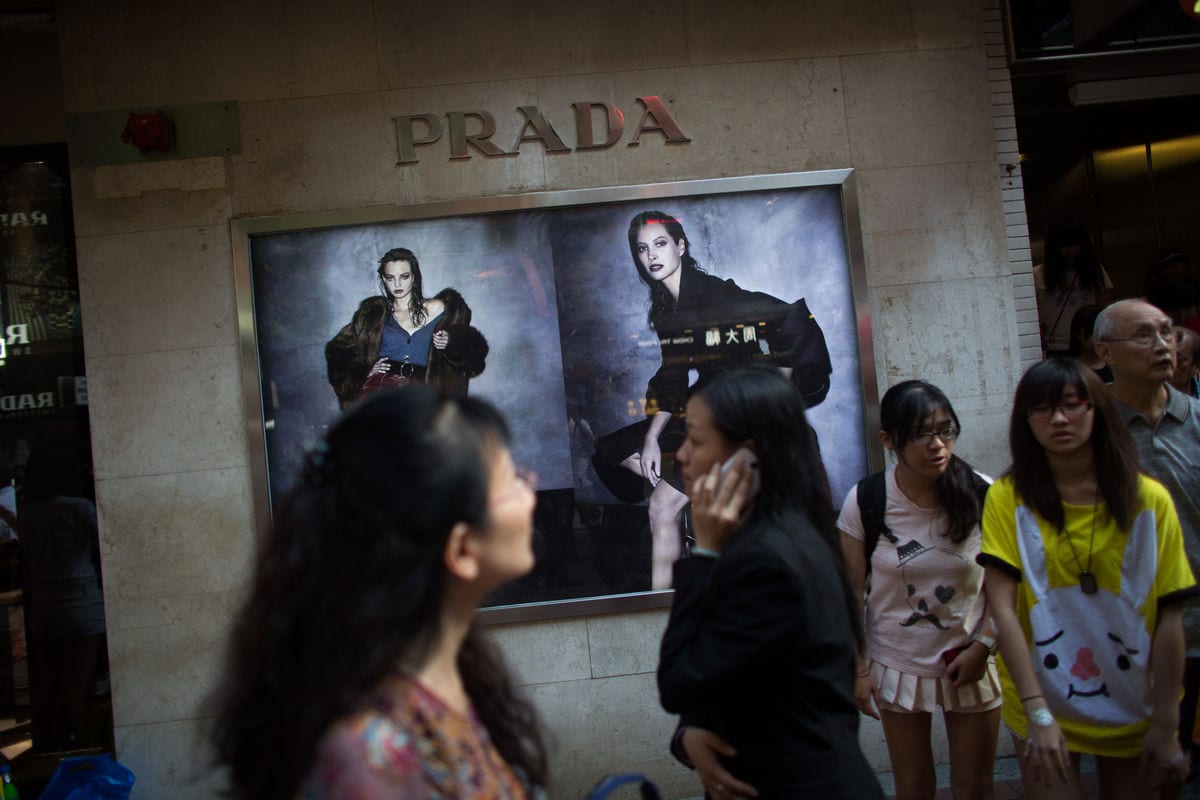
    Prada Japan has posted a strong sales lift in the first half thanks to a burgeoning number of inbound tourists.

    Sales in the Japanese market grew by 12 per cent year on year current exchange rates and by five per cent on constant exchange rates. Tellingly, growth was stronger in the second quarter than in the first.

    In its half year results issued Friday, Prada reported net revenue for the six months to July 31 of euro 1.823 billion, a four per cent increase over the corresponding period in 2014. Wholesale sales fell 14 per cent, reflecting Prada’s strategy of rationalising its network of retail partners in favour of selling from its own stores.

    While Japan was a standout market, sales in Asia Pacific fell, offset by a positive rate exchange effect.

    “Hong Kong and Macau remain the main drivers affecting the performance in this geographical area,” Prada said.

    At current exchange rates, sales increased 15 per cent in both the Americas and in the Middle East.

    The European market has continued to grow with revenues up at both current exchange rates up 12 per cent and constant exchange rates up 11 per cent, thanks to a steady flow of tourists together with a recovery in consumption by domestic customers.

    By brand, Prada recorded five per cent growth at current exchange rates which is entirely attributable to the exchange rate effect, mainly because of the adverse economic situation in the Asian market.

    Miu Miu continues to grow with revenues up at both current exchange rates up 19 per cent and constant exchange rates up six per cent, showing an acceleration in the second quarter of the year. Church’s achieved sales growth of 19 per cent, with the volumes trend also remaining largely positive. Car Shoe has performed broadly in line with prior year.

    Prada Group CEO Patrizio Bertelli said sales in the first half of 2015 reflect an economic and exchange rate landscape that remains “rather volatile with the continuing weakness of important markets like Hong Kong and Macau and the uncertainty that is looming on other Asian markets”.

    “Our distribution structure, which has achieved an appropriate global presence, together with our awareness of the specific needs of the various markets, has enabled us to compensate for the drop in sales in Asia Pacific thanks to growth on markets which are currently more dynamic like Europe and Japan. We will continue to prioritise measures intended to sustain long-term growth focusing on our manufacturing tradition and innovation, as again confirmed recently by the success of our latest collections.”

  • Dairy Farm reports modest growth

    Dairy Farm reports modest growth

    Dairy Farm says it achieved “modest” like-for-like sales growth in most of its major markets in the first half of this year.

    However, underlying profit fell 14 per cent to US$193 million, largely due to margin pressures in the food businesses and a disappointing half for its Guardian health & beauty group in Malaysia.

    With the early completion of the acquisitions of the San Miu supermarket business in Macau and the Yonghui stake (20 per cent) in China, both in April, sales for the period rose 27 per cent to US$8 billion. But like for like sales rose a more modest three per cent to $6.5 billion, or by seven per cent on a constant exchange rate basis.

    Dairy Farm International says that despite solid sales growth, cost pressures and food price deflation on certain commodities combined to squeeze margins in the first six months for the group’s Food businesses.

    “In Hong Kong, there were higher rental and labour costs. In Singapore profits were significantly lower due to competitive pressures, higher rents and a weaker Singapore dollar. Sales were buoyant in Malaysia, but there was continued margin investment to attract customers,” said chairman Ben Keswick in his half yearly report.

    “There was good like for like sales growth in Indonesia, but profitability declined materially due to higher labour costs following a further increase in the minimum wage, a rise in shrinkage costs associated with greater fresh sales and more rigorous stock management, and store rationalisation.

    “In the Philippines, the upscale and community supermarkets enjoyed sales growth, but the hypermarkets struggled.”

    Dairy Farm’s convenience store businesses in Hong Kong and Macau performed satisfactorily. Sales in Singapore, however, were weaker due to a reduction in the number of stores and the impact of recently introduced regulations restricting late night sale of alcohol.

    The Health & Beauty division produced higher sales. Hong Kong and Macau performed well despite some impact from a decline in tourist arrivals. In mainland China, there was further growth in the store base and an improvement in results. In Malaysia, profitability was lower following the introduction of GST on 1st April. In Indonesia, the results were impacted by wage and rent increases, while sales growth remained good. In the Philippines progress was made on the integration of Rose Pharmacy.

    In Home Furnishings, the IKEA stores in both Hong Kong and Taiwan traded well, and the new IKEA store in Indonesia continues to perform in line with expectations.

    In the Restaurant division, Maxim’s maintained its consistent performance with increased sales and profits in Hong Kong and mainland China. The group is growing its presence in Mainland China and continuing to expand its Starbucks network in Vietnam.

    At the end of June, Dairy Farm operated over 6400 outlets across all formats, including the newly added San Miu and Yonghui stores, and employed in excess of 170,000 colleagues.

  • Sands retail profits soar

    Sands retail profits soar

    Macao’s gambling downturn may be impacting on casino operators’ bottom lines – but retailing is on the rise.

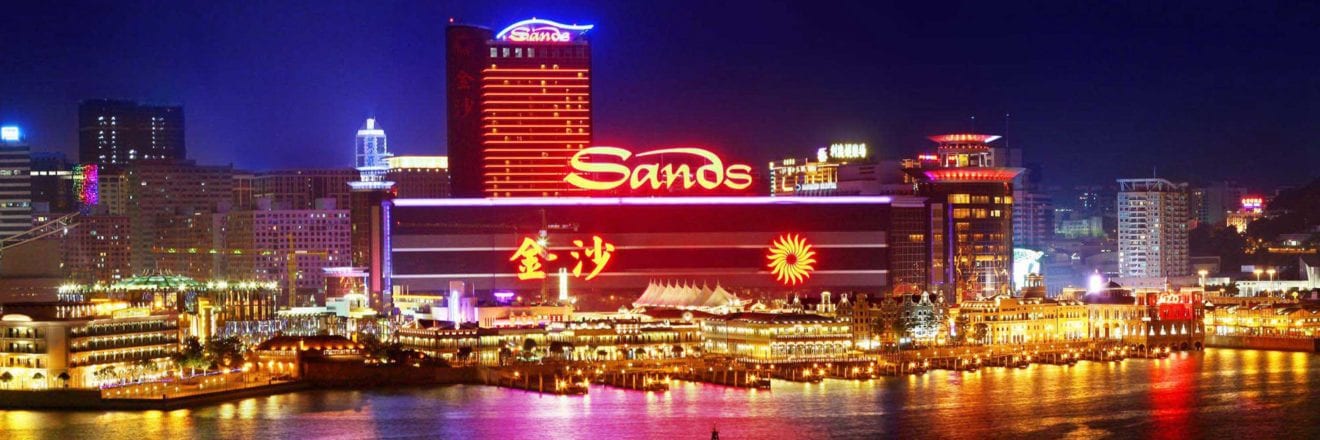
    Las Vegas Sands, which owns The Venetian Macao, Four Seasons Macao and Sands Cotai Central shopping malls in Macau – and the Marina Bay Sands in Singapore – has reported an 18.2 per cent lift in profits from its Asian retail operations year on year for the quarter to June 30.

    Gross revenue from tenants in the company’s malls on the Cotai Strip and at Marina Bay Sands, reached US$134.4 million for the second quarter of 2015, an increase of 13.6 per cent compared to the second quarter of 2014.

    “Operating profit derived from these retail mall assets increased 18.2 per cent for the quarter compared to the quarter one year ago, reaching $119.4 million,” the company said in its quarterly financial statements filed in the US.

    The company says that despite the softer gaming market in Macao, The Venetian Macao “continued to enjoy Macao market-leading visitation and financial performance”.

    “The property generated adjusted property EBITDA of $255 million in the second quarter with an EBITDA margin of 34.5 per cent.”

    Mall revenues of The Shoppes at the Venetian Macao increased 14.9 per cent during the quarter to reach $48.5 million.

    The Shoppes at Four Seasons – 100 per cent leased at the end of the quarter – brought in $31.1 million in gross revenue and turned an operating profit of $29.2 million, giving an operating profit margin of 93.9 per cent.

    The Shoppes at Cotai Central brought in $14.6 million and a profit of $12.6 million. That mall was 97.8 per cent leased.

    And in Singapore, The Shoppes at Marina Bay Sands, 93.6 per cent leased at period end, brought in $40.4 million of revenue for the quarter and a profit of $34.5 million, for an operating profit margin of 85.4 per cent.

    Tenant sales per square foot were $5589 in the luxury section of the Four Seasons property, $2646 in the non luxury section; at the Venetian Macao $1578, at Cotai Central $1004. Marina Bay, by comparison, reached $1393.

    The overall Asian retail operation achieved $1789 per square foot in the quarter to June 30.

  • Italian label Antonia to launch in China

    Italian label Antonia to launch in China

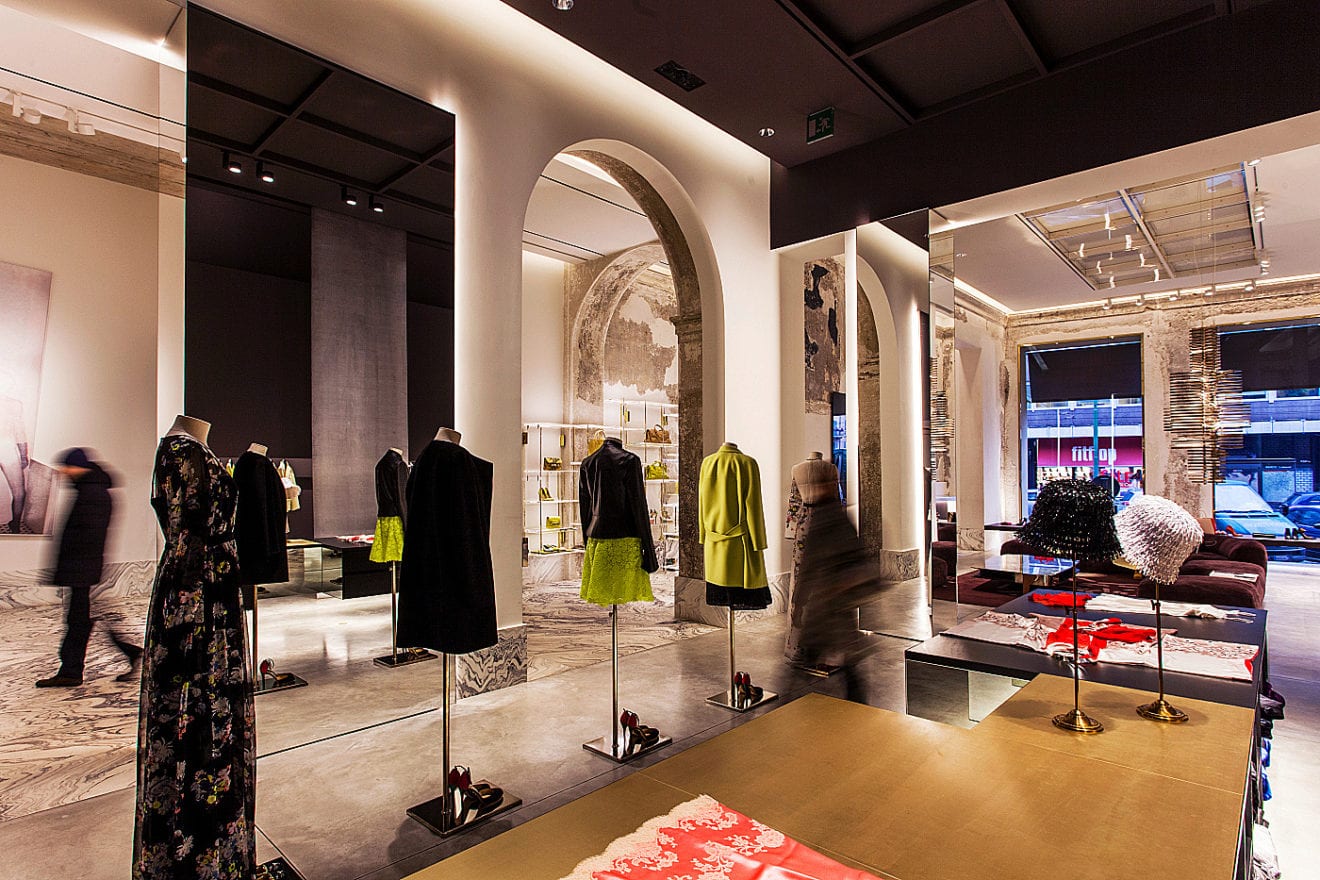
    Luxury fashion label Antonia is to open the first of 10 stores planned for greater China in Macau.

    Antonia, headquartered in the Italian fashion capital, Milan, has signed a partnership with Guangzhou Canudilo Fashion and Accessories, which has about 300 stores in China selling its own brands in the mid to high-end fashion space, along with 100 luxury monobrand stores in partnership with Armani, Givenchy, Roberto Cavalli and others.

    Antonia is the first brand to be publicly announced for the new Parisian retail development, another integrated resort with gaming, accommodation, entertainment and shopping.

    The US$5 billion project will feature a half size replica of the Eiffel Tower and 320,000 sqft of retail, housing 150 boutiques grouped in replicas of five famous shopping precincts of Paris, including the Champs Elysees and Rue du Faubourg Saint Honore, as well as 3000 hotel rooms.

    Antonia will take a 33,000 sqft space in the complex, according to Canudilo group president Yongfei Lin, who revealed the details during a Milan media event last week marking his company’s purchase of the Dirk Bikkembergs brand.

    Just five stores will be opened in China between now and 2020, with a further following.

    Antonia was founded in 1999 by Antonia Giacinti, who remains responsible for merchandise selection and store design.

    Luciano Donatelli, strategic consultant for the Canudilo group, said the Macau store will be “the twin” of the Milan flagship.

  • Macau luxury slump projected

    Macau luxury retail sales are in free fall after the downturn in gambling.

    The Macau Importers and Exporters Association has estimated a slump in luxury retail sales of between 30 and 50 per cent in the first half of 2015.

    The association’s director, legislator Sio Chi Wai, told a media conference the fall was due to the downturn in visits to the territory for gaming, suggesting the vast majority of the downturn is from mainland Chinese spending less in stores.

    Sio did not estimate the value of first-half year luxury goods sales.

    But he did say he expected that the downturn would gradually level out.

  • DFS opens HK stand alone beauty store

    DFS opens HK stand alone beauty store

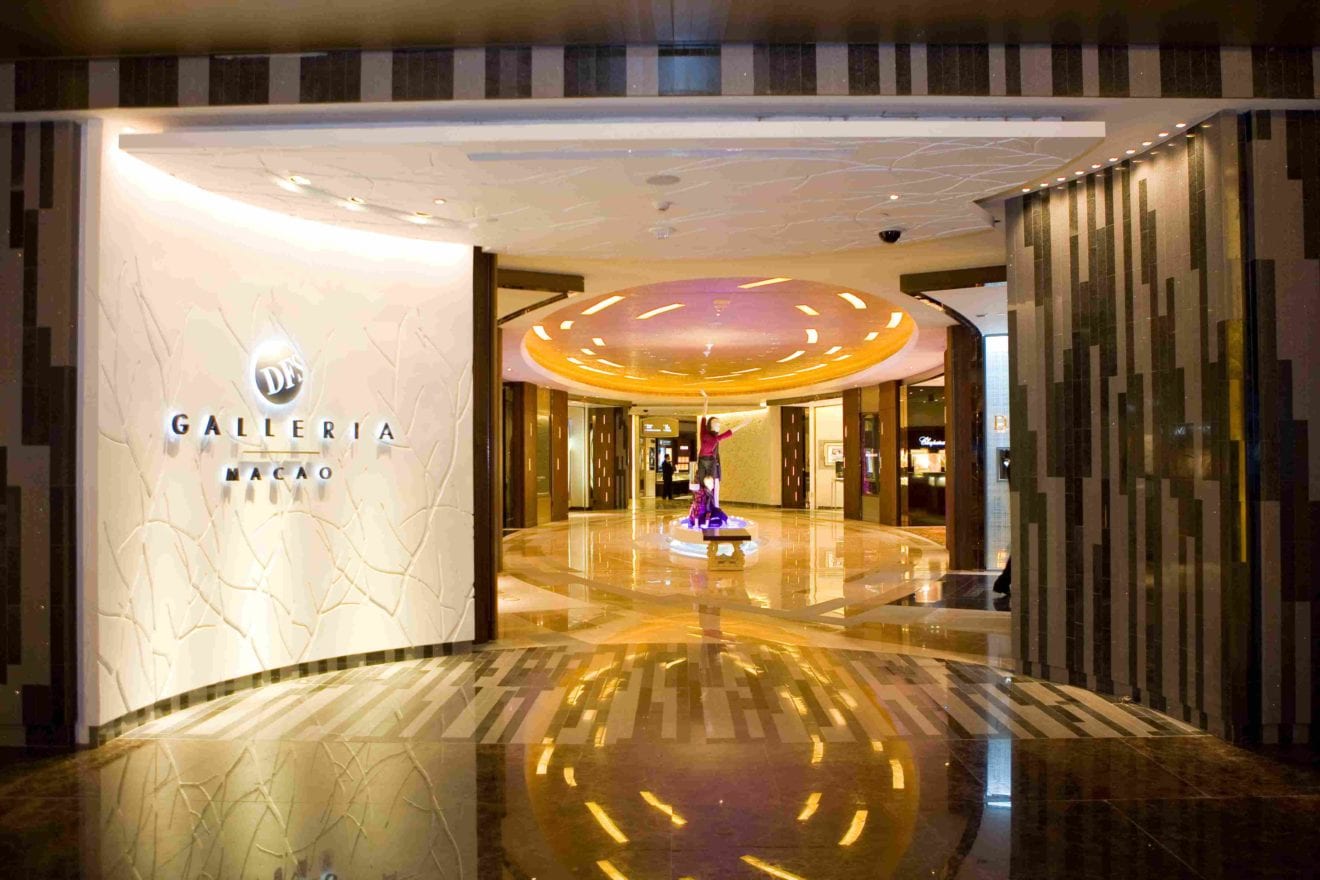
    DFS Group opened its second stand alone 18,000sq ft T Galleria Beauty by DFS store in Hysan Place, Causeway Bay at the end of June, following the earlier opening of its initial store at the Galaxy Macau Asian resort destination in May.

    The store is the first of its kind in Hong Kong concentrating solely on luxury cosmetics, skincare and fragrances, allowing customers interested mainly in personal beauty experiences to experience them in one prestigious location.

    Benjamin Vuchot, Region President, North Asia for DFS Group said: “With T Galleria Beauty by DFS, we’re breaking the beauty shopping mould to bring our customers a whole new level of choice, affordability and excitement.

    “Every element of the concept from the product selection to the store design was inspired by our customers and we’re confident that this innovative, personalized approach to the beauty shopping experience will make T Galleria Beauty the beauty connoisseur’s destination of choice in the heart of Causeway Bay.”

    DFS says the range of products includes more than 100 brands including Dior, Estée Lauder, Hermès, 3CE, Make Up Forever and Nars. It adds that DFS also takes ‘a holistic view of beauty’ through new or expanded product categories such as men’s, wellness, hair, body and nail, as well as a trend area featuring popular Korean brands.

    The retailer adds that T Galleria Beauty by DFS will also exclusively introduce popular trend cosmetic brands Nudestix, IOPE and Cargo Cosmetics in Hong Kong.

    Kitty Choy, Director, Retail, Hysan Development Company Limited said: “We’re thrilled that DFS Group has chosen Hysan Place as the location for its first T Galleria Beauty by DFS store in Hong Kong.

    “With its holistic and innovative approach to the beauty shopping experience, T Galleria Beauty by DFS will be a beauty anchor within Lee Gardens, providing customers with a personalized approach unrivalled in Causeway Bay.”

    DFS is also claiming a ‘first of its kind’ with its new 1,000sq ft Beauty Station which gives customers the opportunity to sample, mix and match products from a wide range in one location. Customers will also have access to the exclusive Beauty Concierge, a complimentary personalized beauty service that focuses on an individual customer’s preferences and personal needs.

    They will also be able to join DFS LOYAL T, which the retailer describes as the world’s most extensive global luxury rewards programme [covering more than 700 brands in 26 airports and T Galleria by DFS stores in 10 countries.

    Customers of T Galleria Beauty by DFS, Hong Kong, Causeway Bay, like all DFS customers around the world, are provided with a 100% Global Guarantee, ensuring that all merchandise is completely authentic and that after-sales service centres will refund, repair and accept the return of merchandise worldwide.

  • Mothercare takes Peoplevox partnership into Asia

    Mothercare takes Peoplevox partnership into Asia

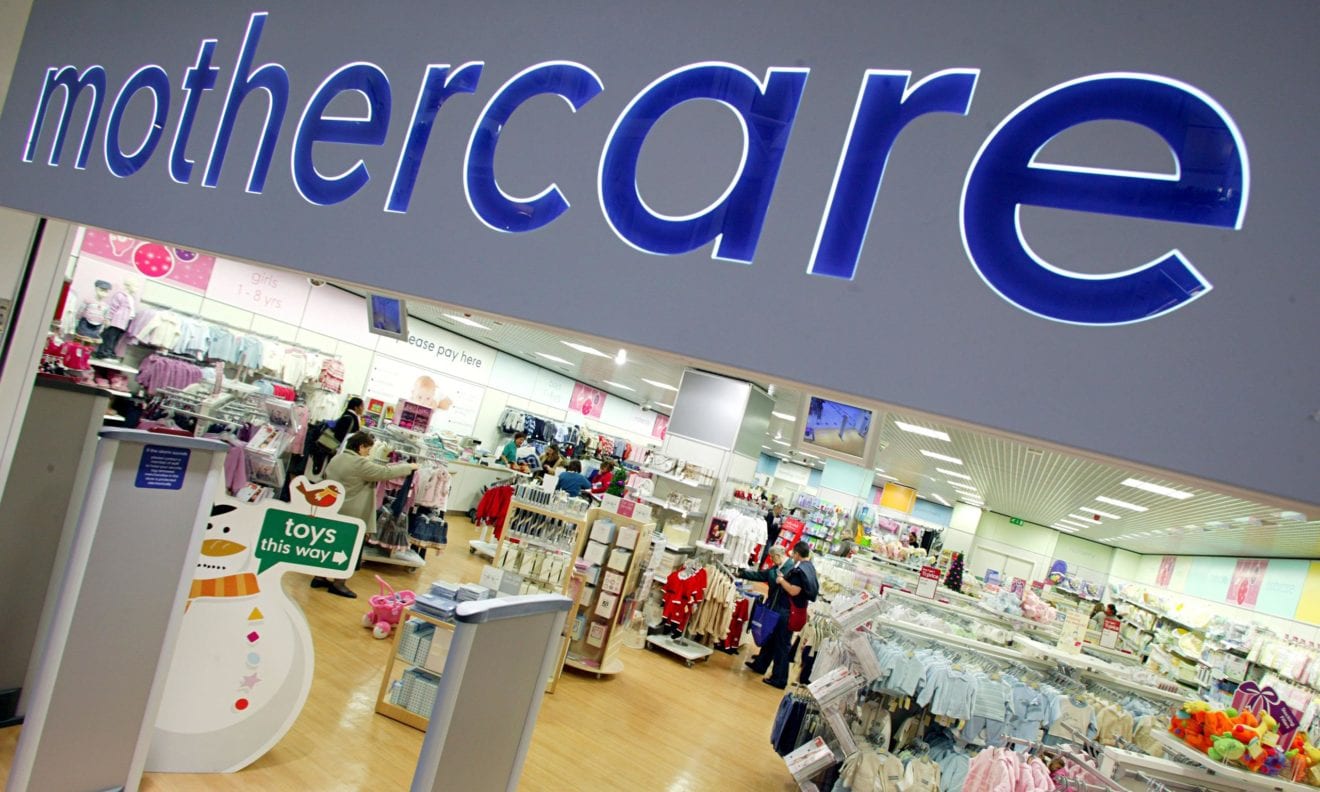
    Baby and maternity products retailer Mothercare is implementing warehouse platform Peoplevox in Asia, following initial success with the system in its Irish business.

    The vendor’s dedicated eCommerce warehouse management system is to be implemented in Mothercare’s Singapore, Hong Kong, Macau, and Malaysia operations, with the retailer hoping to benefit from the company’s “deep functional expertise” as it develops its online presence on a global scale.

    The move comes after Mothercare announced in February that it was among a number of retailers and brands, including country fashion players Barbour and Country Attire, looking to Peoplevox’s self-proclaimed Amazon-style logistics platform to help them compete with the pure-play giant on a global scale.

    Founded by Jonathan Bellwood on the understanding that traditional warehouse management systems are not necessarily the ideal fit for eCommerce operations, Peoplevox has developed a solution that optimises pick routes, eliminating mis-picks, and effectively allows retailers to outsource their stock management processes when entering new territories.

    Elaine Khoo, general manager for eCommerce at Mothercare Singapore, commented: “Peoplevox is an eCommerce warehouse specialist, with impressive pick rates and accuracy levels.

    “We chose them for the software’s capability to support multiple inventory levels and logistics providers, which is important for us operating across different countries.”

    Other Peoplevox clients include fashion retailer Blue Inc, gifts and jewellery business Oliver Bonas and eye-care products supplier Vision Direct.

  • Luxury retail plan for Hong Kong-Zhuhai-Macau link

    Luxury retail plan for Hong Kong-Zhuhai-Macau link

    Authorities are proposing a shopping centre with “flagship stores for luxury brands” on a new island, centrepiece of the new multibillion dollar Hong Kong-Zhuhai-Macau Bridge.

    A public consultation document released this week outlines plans for a 150 hectare island currently under construction near the city’s airport, which will serve as the gateway for Hong Kong and the western Pearl River Delta. It is here that travellers between Hong Kong, the Mainland city of Zhuhai and bordering Macau will be processed.

    The Hong Kong government envisions an area for warehouses, showrooms, restaurants, flagship stores for luxury brands and other stores selling antiques, artworks and high quality wines.

    The government is conducting a study to ascertain the feasibility of carrying out the proposed commercial development and other economic activities at the topside and underground space of the HKBCF Island, and to optimise their scope and scale.

    The Stage 1 Community Engagement will last for two months. Activities will include a public forum, briefings and a roving exhibition. Details of the activities and engagement documents are available at the website.

    The development, with a total planned gross floor area of 500,000 sqm, will include facilities for retail, food and beverages, entertainment, conferences, offices and business hospitality. It will have a 10 storey height limit due to its close proximity to Hong Kong International Airport.

    A spokesman with the Airport Authority Hong Kong said the proposed development will create create synergy with the planned Airport North business area.

    Members of the public have until September 7 to submit their comments through the following channels:

    • Planning Department, Cross-Boundary Infrastructure and Development

    Section, 16/F, North Point Government Offices, 333 Java Rd, North Point, Hong Kong.

    • Civil Engineering and Development Department, Hong Kong Island and Islands Development Office, 13/F, North Point Government Offices, 333 Java Rd, North Point, Hong Kong.
    • Or by email: enquiry@hzmbbcf-topside.gov.hk
  • Chow Tai Fook Quarterly Retail Sales Fall 6% on Hong Kong, Macau

    Chow Tai Fook Quarterly Retail Sales Fall 6% on Hong Kong, Macau

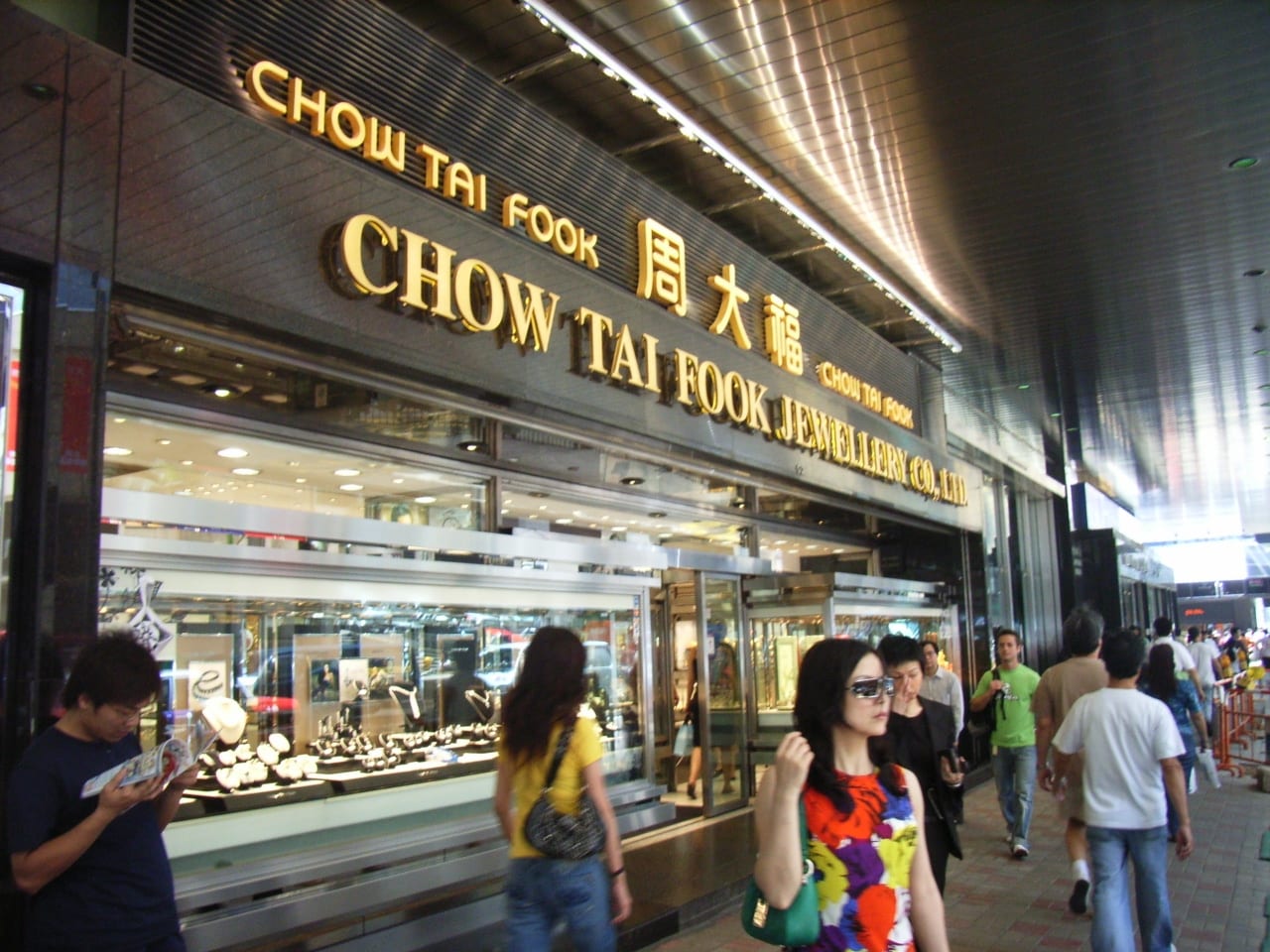
    Same-store sales fell by 7 percent in mainland China, and were down 24 percent in Hong Kong and Macau in the fiscal first quarter ending June, the jeweler said in a statement Thursday.

    Hong Kong-based Chow Tai Fook has been hurt by China’s slowing economic and a government-led austerity campaign, which prompted shoppers to cut back on luxury purchases. The jeweler saw net income plunge 25 percent for its fiscal year ending March as stores in mainland China, Hong Kong and Macau suffered.

    The jeweler had cut prices for some of its diamond-set products by as much as 30 percent in June, in a bid to reduce inventories bloated by weaker-than-expected sales in the city.

  • Sa Sa gross sales up, revenue trimmed

    Sa Sa gross sales up, revenue trimmed

    Hong Kong-based magnificence merchandise retailer Sa Sa has elevated gross sales regardless of the home market challenges.

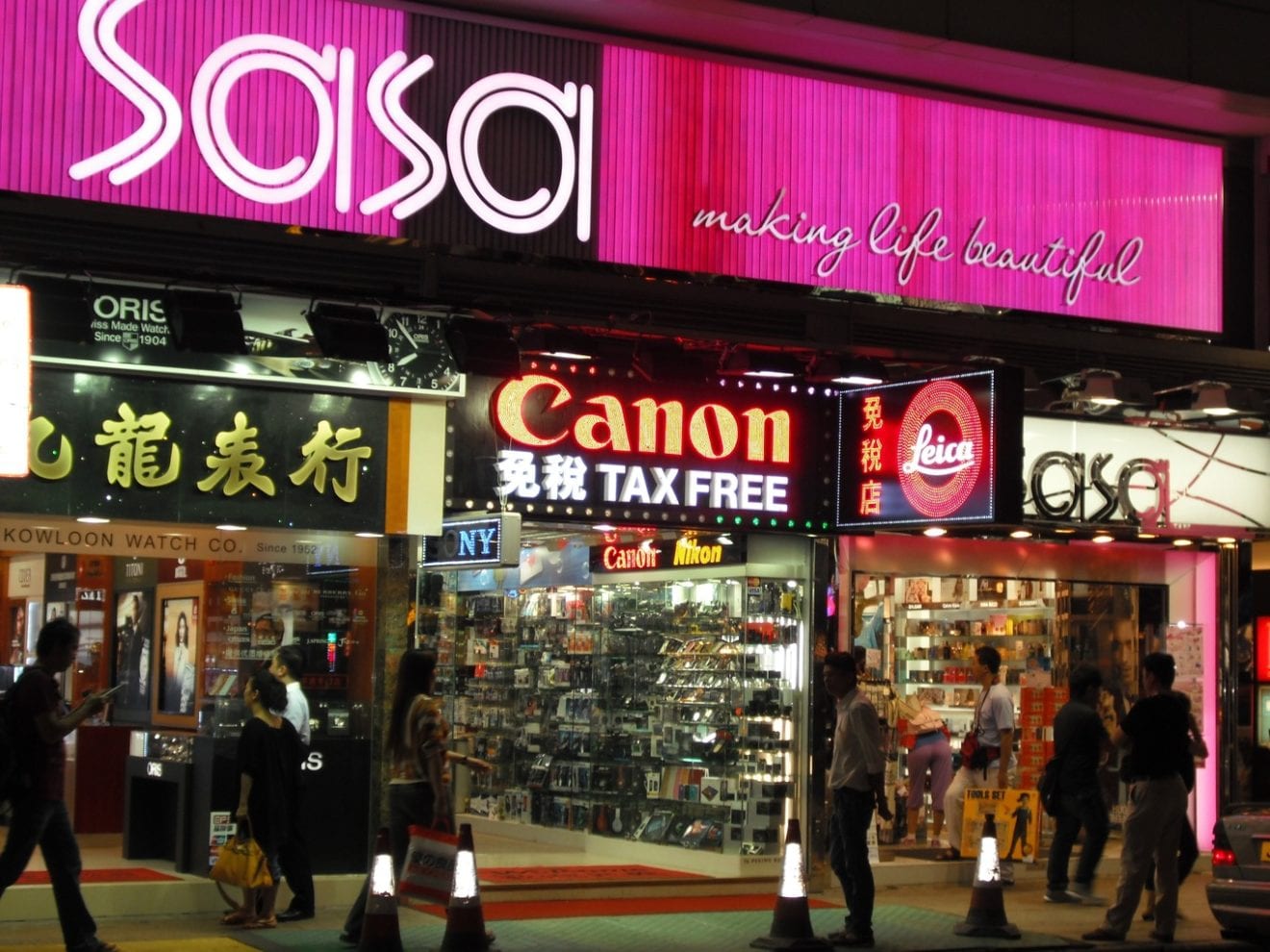
    The group’s complete turnover elevated by 2.7 per cent from HK$eight.756 billion to HK$eight.993 billion within the yr to March 31.

    Retail gross sales in Hong Kong and Macau elevated by three.three per cent to HK$7.259 billion. However revenue slipped 10.three per cent to HK$838.eight million.

    The high-profile chain added a internet seven shops through the yr taking its community to 287, including only one in Hong Kong.

    In a telling signal of the problem dealing with Hong Kong retailers, because the demographic profile of Mainland Chinese language guests modifications, the variety of transactions in Hong Kong and Macau shops rose by 6.eight per cent, however the common ticket worth fell three.three per cent.

    “To put these figures in context, the variety of transactions of Mainland China vacationers elevated by 17.four per cent, whereas common gross sales worth per ticket decreased by 11.three per cent,” Sa Sa stated in its annual outcome.

    “The variety of transactions by native shoppers declined barely by 2.four per cent with a mean spending improve of four.three per cent. Briefly, gross sales progress for as soon as lagged behind the market.”

    In 2014, Mainland vacationer arrivals rose by a gentle 16 per cent. Similar day customer arrivals have been nonetheless the main engine of progress with a rise of 19.1 per cent, elevating gross sales in non-tourist areas, notably within the New Territories close to the border with the remainder of China.

    “Nevertheless, this was offset by an 11.three per cent drop within the common ticket gross sales of Mainland vacationer clients, which in flip was attributable to the weaker buying energy of vacationers originating from decrease tier cities and having much less spending functionality. One other issue was the growing demand for lower cost level merchandise, similar to Korean merchandise, which nonetheless diluted gross sales progress though driving retailer visitors.”

    Sa Sa stated, as well as, there was a better gross sales combine from day trippers whose spending is usually decrease than in a single day vacationers.

    “The change in consumption patterns was additional exacerbated by the rise of cross border eCommerce, which facilitated a lot quicker market penetration of cheaper and quick to market Korean merchandise with ideas which might be nicely appreciated by Asians, and particularly the more and more prosperous Chinese language shoppers.”

    Whereas Sa Sa reported 10.2 per cent retail gross sales progress within the first half of the fiscal yr, gross sales have been dragged by weaker shopper sentiment within the second half. Gross sales progress slowed within the third quarter and additional deteriorated within the fourth quarter with March 2015 being particularly weak due to anti-parallel items merchants incidents in residential areas, turning an in any other case constructive January to February two months’ interval into destructive territory for the fourth quarter.

    “As well as, the appreciation of the US greenback and the relative power of the Renminbi and Hong

    Kong greenback inspired extra Mainland vacationers to journey to markets with weaker currencies resembling Europe and South Korea. The relief of visa insurance policies by different nations strengthened their

    attractiveness to Mainland vacationers, whereas robust outbound travelling led to weaker native spending.”

    Sa Sa stated the Occupy Motion and anti-parallel items merchants incidents in Hong Kong broken Hong Kong’s profile and discouraged vacationers whereas additionally inflicting a drop in gross sales to native clients.

    Sa Sa’s general gross revenue margin dropped from 46.6 per cent to 44.eight per cent resulting from extra promotions being launched to drive gross sales in a slower market.

  • Don’t blame the graft clampdown

    Don’t blame the graft clampdown

    Don’t blame the graft clampdown for falling retail gross sales in China, Hong Kong and Macau, says a number one Shanghai retail professional.

    With a inhabitants of over 1.36 billion and with over 160 cities with a inhabitants of over 1 million, the alternatives that China presents retailers with are monumental. That’s why many worldwide retailers now contemplate it a precedence market.

    During the last 24 months, numerous the world’s most famous manufacturers have introduced that they’re experiencing a troublesome time in China and are both scaling again their operations or closing their China enterprise.

    So why are these retailers struggling when others proceed to develop a worthwhile enterprise?

    Within the report, ‘Nobody stated that it might be straightforward: Methods to crack the China Retail Market’, CR Retail’s MD James Rogers, has hung out analysing retailer’s methods and behavior, figuring out the important thing causes behind these failures.

    “Quite a lot of retailers regularly blame the anti-graft measures for the slowdown nevertheless it’s CR Retail’s view that these are solely partly accountable’ says Rogers.

    “We see the problems beginning quite a bit earlier with the retailers failing to understand the complexities and challenges concerned with opening there.”

    Based on the report, CR Retail consider that there are 15 questions that must be requested previous to getting into the market starting from figuring out one’s audience to figuring out whether or not the model will journey and, whether or not the buyer is definitely prepared.

    “When talking with retailers it’s astounding what number of new entrants haven’t considered a few of these points,” provides Rogers.

    “They consider the parable that a retailer can simply open a retailer just like what they function in different markets and the shoppers will come flooding in. Typically this couldn’t be farther from the reality.”

    There have been numerous examples of shops saying very aggressive enlargement plans however only a few truly obtain them.

    “When retailers announce their enlargement plans for the China market, it is rather shortly obvious how good an understanding they’ve of what lies forward.” says Rogers. “Retailers are sometimes drawn by the numbers and whereas the market is getting simpler to function in, the competitors stays fierce.”

    In 2014, China recorded on-line gross sales of US$427 billion making it the most important on-line retail market on the earth.

    “No matter your on-line technique at residence, if establishing your self in China, you can’t afford to disregard the eCommerce market. It’s a key pillar of China’s retail market.” provides Rogers.

    As with bodily bricks-and-mortar shops, China’s eCommerce market may be equally as difficult. One must firstly decide whether or not you’re to launch your personal native website or have your merchandise bought by way of a 3rd social gathering platform. In that case, which one? How are you to speak with the buyer and draw them to the place your merchandise are being bought?

    “The methods by which a retailer engages with the Chinese language shopper are totally different. A social media presence is vital, nevertheless there isn’t a Fb or Twitter. Retailers subsequently have to familiarise themselves with the native platforms,” continues Rogers.

    With China’s retail market nonetheless considered immature, Rogers advises retailers ought to assume long-term.

    “The US retailers are notably good at this in comparison with their European counterparts. They respect how lengthy it has taken to construct a robust enterprise at residence and are typically extra affected person. Whereas turning into spoilt for selection, the buyer continues to be studying. Rome wasn’t inbuilt a day and nor will a retailer’s China enterprise.

    “It ought to be remembered nevertheless, establishing a profitable presence in China will even drive gross sales in different worldwide markets. Subsequently conceding defeat and retrenching ought to be a final resort.”

    Endurance and a long-term technique are key to succeeding in China. Success won’t simply assist the native market however may even drive gross sales in retailer’s different worldwide markets.

  • Trinity warns of looming loss

    Trinity warns of looming loss

    Menswear model Trinity has warned it expects to submit a loss within the half yr to June based mostly on preliminary buying and selling figures.

    The Hong Kong listed retailer and producer, majority owned by Li & Fung, says it has confronted challenges adapting to the weak retail market within the Chinese language mainland and a lower within the variety of mainlanders visiting Hong Kong and Macau.

    In a inventory trade submitting, the corporate stated it had incurred greater one time restructuring prices to mitigate these on-going unfavourable circumstances.

    “As well as, whereas unit gross sales remained comparatively secure, common promoting costs have been adjusted, putting strain on margins and mixed with the restructuring prices, the group’s efficiency was adversely affected.”

    In March, Trinity reported revenues of HK$2.6 billion (US$335.2 million) and a gross revenue of HK$1.9 billion ($244.95 million). The gross revenue margin was 74.1 per cent representing a 1.four proportion level decline as a consequence of liquidation of extra stock, a administration precedence within the second half.
    In Monday’s warning, Trinity stated administration is taking “vital actions” to enhance second half yr efficiency however expects the subdued retail market surroundings in Larger China will proceed.

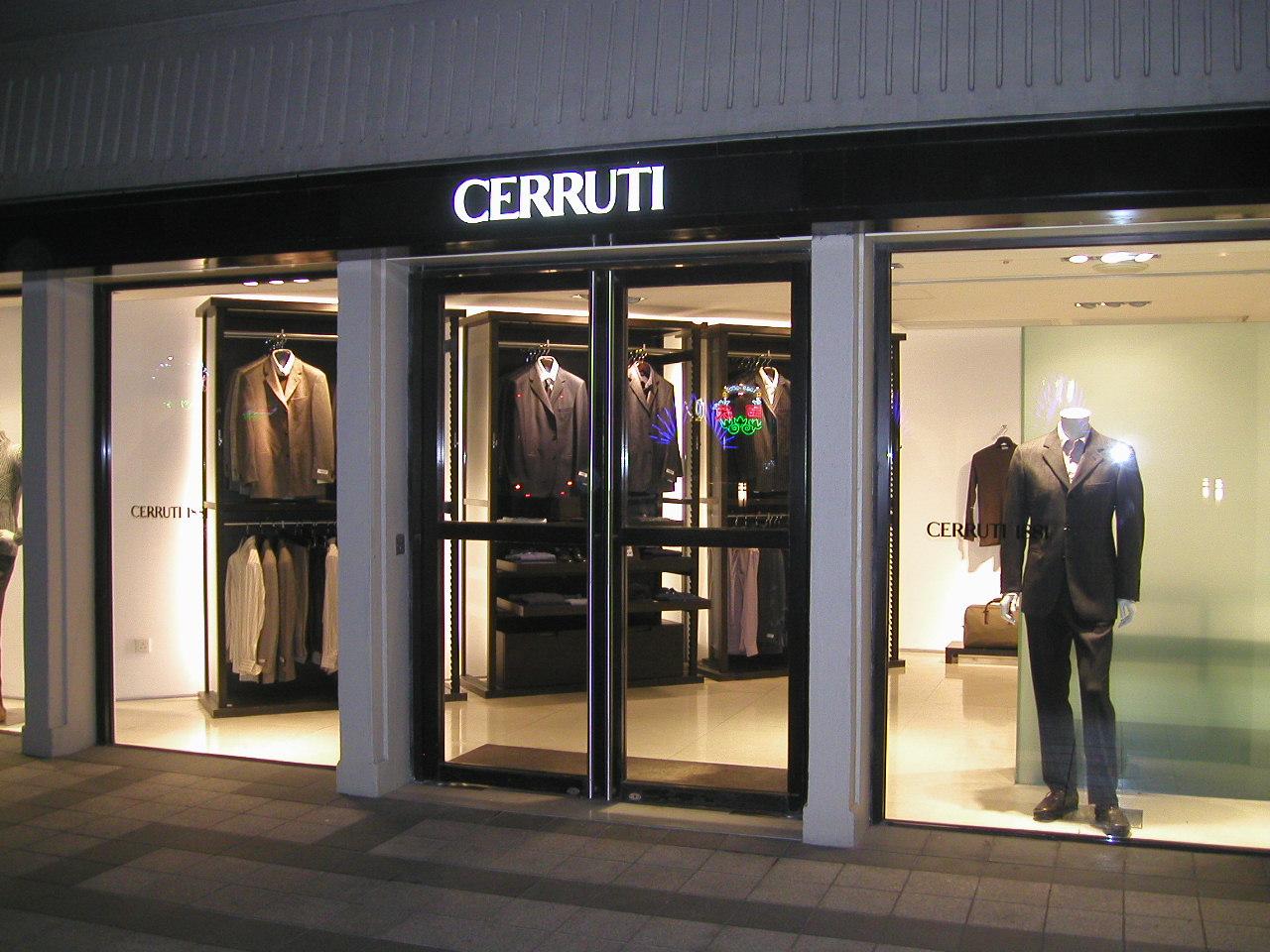
    Trinity retails high-end menswear in Larger China and Europe. Its manufacturers embrace D’City, Gieves & Hawkes, Cerruti 1881, Intermezzo and Kent&Curwen.

    In March, CEO Richard Cohen stated Trinity was on monitor with its medium-term technique.
    “We goal globally and assume regionally,” he stated. “We’re optimistic for the close to and medium-term, and stay assured about the long run potential for our enterprise.
    He stated the corporate was setting up “the best retail technique and construction” to ship constant, sustainable returns into the longer term.
    “We’ve considerably strengthened our groups up and down the organisation and proceed to enhance stock administration. Up to now six months we’ve got developed centralised shared providers throughout all departments and improved our provide chain to make it less expensive and versatile.”