Tag: Malaysia

  • Malaysian retail sales sets record in July

    Malaysian retail sales sets record in July

    Malaysian retail sales grew by 7.1 percent in July.

    Combined with the wholesale trade, a new record high of RM112.5 billion (US$26.94 billion) turnover was set for the month.

    According to Malaysia’s chief statistician Datuk Seri Dr Mohd Uzir Mahidin, the retail trade alone grew by 7.1 percent, that figure fuelled by a 10.5-per-cent growth in sales of food, beverages, and tobacco.

    This was followed by retail sales of other goods in specialized stores and retail sales in non-specialised stores which registered 8.2 percent and 8.1 percent respectively.

    For wholesale trade, sales value expanded 6.6 percent. However, sales of motor vehicles fell by 1.7 percent year on year.

    Growth on a month-on-month basis in combined wholesale and retail sales rose by 0.2 percent, with the retail trade up by 1.1 percent and wholesale transactions down by 2.3 percent.

  • Malaysian supermarket stops selling products labelled ‘palm-oil free’

    Malaysian supermarket stops selling products labelled ‘palm-oil free’

    Mydin, Malaysia’s largest supermarket chain, has announced plans to de-stock any products promoted as “palm-oil free” in a move aimed at discrediting the environmental movement.

    The expansion of palm-oil plantations – the majority of which are located in Malaysia and Indonesia – has led to substantial deforestation of the native habitats of the three surviving species of orangutans, one of which – the Sumatran – is on the list of endangered species.

    In 1992, the Malaysia government pledged to limit the expansion of palm oil plantations – which typically are planted on land where natural forests have been cleared. Now the government is actively promoting the use of palm oil to boost the nation’s exports of the product, apparently no longer concerned about its environmental impact.

    In July, the Malaysian government promised action against an international school for spreading “anti-palm oil propaganda” and Teresa Kok, Malaysia’s minister of primary industries, this week praised Mydin’s move to ban products promoted as palm-oil free. She said she hoped other retailers would follow Mydin’s example.

    This year, the European Union passed an act to phase out palm oil from renewable fuel by 2030 due to deforestation concerns.

    Malaysia and Indonesia account for about 85 percent of the world’s palm-oil production, of which about 70 percent is used in foods. Manufacturers use palm oil because it is inexpensive compared to alternatives – and because it has a high saturation when used in frying.

    According to The Edge, the Malaysian government is considering a law banning all products flaunting non-use of the oil.

    Ameer Ali Mydin, MD of Mydin Mohamed Holdings, told a press conference that his stores removed all anti-palm products on Wednesday.

    “We must support palm oil,” he said, along with taking steps to counter-marketing and branding exercises that people do that discourage consumers to buy palm oil.

    “By labeling something that there is no palm oil, you’re actually telling people that palm oil is bad for you.”

    Of course, Mydin’s comment is complete nonsense. The reason marketers promote their products as not containing palm oil is to allow consumers to make an informed choice on whether they should buy the product, based on their concerns for the environment, specifically endangered orangutans. It has nothing to do with consumers’ health.

    Indonesia’s government has also reportedly told some retailers in Jakarta not to stock products with ‘palm-oil free’ labels.


  • BreadTalk Group to buy Food Junction

    BreadTalk Group to buy Food Junction

    Listed Singapore food-and-beverage company BreadTalk Group is to buy foodcourt operator Food Junction Management (FJM).

    A subsidiary of BreadTalk, Topwin Investment, has signed a sale and purchase agreement to pay S$80 million for FJM, which operates 12 foodcourts in Singapore and three in Malaysia. A fourth is on track to open next year at The Mall in Johor Bahru.

    BreadTalk Group sees synergies between the FJM business and its own foodcourt operations – it owns Food Republic and Food Opera-branded sites in Singapore, Greater China, Thailand, Cambodia and Malaysia. The combined operation could share support services and rationalise supply arrangements.

    FJM is owned by Singapore investment company Auric Pacific Group Limited.

  • 7-Eleven Malaysia store sales rise with new stores openings

    7-Eleven Malaysia store sales rise with new stores openings

    7-Eleven Malaysia has boosted sales by 7.2 per cent in the first half of this year, aided by new store openings, increased promotions and a higher average spend per customer.

    The company now has 2323 stores trading and plans further openings in the second half of this year.

    For the six months to June 30, 7-Eleven Malaysia group revenue reached RM1.17 billion (US$277.9 million) Revenue from its food-service business surpassed 3.5 per cent of the group’s total, an increase of more than 30 per cent year on year.

    Gross profit improved by RM33.7 million or 8.5 per cent year on year, despite expenses related to store openings. The adoption of MFRS 16 accounting standards relating to leases reduced post-tax profit by RM4.6 million. Excluding that factor, the group would have achieved a profit after tax of RM30.3 million, which would have been 37.4 per cent ahead of the same period last year.

    CEO Colin Harvey said the company was pleased with its overall results, especially given the impact of MFRS 16.

    “We are confident that continuous implementation and improvement of our strategy roadmap in strengthening the key areas of assortment, supply chain, operational excellence, store base and digitally enabling the organisation will continue to deliver positive results despite challenging headwinds as we look forward to ensuring that 7-Eleven remains Malaysian consumers’ preferred convenience store brand.”

    The 7-Eleven Malaysia board believes trading conditions for the next quarter are expected to remain challenging

  • Shopee app Singapore’s most downloaded

    Shopee app Singapore’s most downloaded

    The Shopee app has emerged as Singapore’s most downloaded shopping app.

    The Sea company platform had 2.8 million visitors per month on average during the second quarter, with an 11 percent increase compared to the previous quarter. It is currently the most-used app of its kind throughout the whole of Southeast Asia, while rival firm Lazada remains the most actively used e-commerce app within Singapore itself.

    “Apps by Alibaba such as Taobao and AliExpress remained prominent among Singaporean consumers probably due to the increased popularity of Chinese products and Chinese language proficiency in the country,” read a report by iPrice Group.

  • AirAsia Good hub opens in Kuala Lumpur

    AirAsia Good hub opens in Kuala Lumpur

    AirAsia Foundation opened its first social enterprise hub, Destination: GOOD, at the weekend, marking a new milestone in its social entrepreneurship advocacy.

    Located downtown Kuala Lumpur in the former Rex Cinema premises now called REXKL, Destination: GOOD retails more than 400 responsibly and ethically produced goods sourced from over 30 social enterprises from around ASEAN.

    More than a shop, it aims to be an exchange that fosters collaboration between ASEAN social entrepreneurs and community-based enterprises.

    “In the last seven years, we have awarded 24 grants to innovative ASEAN social enterprises to help them grow. We realised that to expand our reach, we needed to create broad-based platforms to speak to new markets and audiences. Through Destination: GOOD, we hope to do just that and make social enterprise goods and services accessible to anyone seeking sustainable travel and lifestyle solutions,” said AirAsia Foundation executive director Yap Mun Ching.

    Malaysia’s Minister of Finance, YB Lim Guan Eng, joined AirAsia Group executive chairman Datuk Kamarudin Meranun and AirAsia Group CEO Tony Fernandes at the opening ceremony.

    Also present to share their stories were 10 of AirAsia Foundation’s Malaysian social enterprise partners, including The Basikal, Langit Collective and The Picha Project.

    On the sidelines of the shop opening, AirAsia Foundation signed a Memoranda of Understanding (MoU) with Kraftangan Malaysia to bring Malaysian crafts to a new audience and with Minconsult Sdn Bhd, the AirAsia philanthropic arm’s first corporate partner, to jointly fund social enterprise outreach activities in Kuala Lumpur. Over the past two years, AirAsia Foundation has operated Destination: GOOD as a pop-up store in various locations, including Kuala Lumpur International Airport (klia2). This is the first time the shop will have a permanent address in the city centre.

  • Shopee signs Cristiano Ronaldo

    Shopee signs Cristiano Ronaldo

    Southeast Asian/Taiwanese e-commerce platform Shopee has appointed global football icon Cristiano Ronaldo as its newest brand ambassador.

    Ronaldo will work with Shopee on a wide range of initiatives to engage and inspire customers in the region, starting with Shopee’s annual shopping event, 9.9 Super Shopping Day.

    “Cristiano Ronaldo is one of the greatest athletes of our time,” said Shopee CEO Chris Feng. “He is an inspiration to many, and his dedication to football matches the deep commitment we have towards our users. Together with Cristiano Ronaldo, we look forward to creating a lasting positive impact on our region.”

    “I am proud to be Shopee’s brand ambassador as we share the same ambition to be the best in our fields,” said Ronaldo. “I am always improving my game for my fans and my team, just as Shopee innovates to benefit their users in this region. I am excited by this partnership, and I look forward to creating more special moments for my fans together with Shopee.”

    Cristiano Ronaldo stars in Shopee’s newest 9.9 TVC, which will air in all seven Shopee markets in the region.

  • Li Ning profit up as restructure pays off

    Li Ning profit up as restructure pays off

    Chinese sportswear retailer Li Ning reaped the benefits of a restructure in the first half of this year, with net profit attributable to shareholders by 196 per cent to RMB795 million (US$113 million).

    For the last two years, Li Ning has been investing in its retail business, upgrading stores, refining its product offer and reorganising its supply chain and other back-of-house operations.

    More recently it has launched a new retail brand Li Ning Young, which has added 79 more stores so far this year, taking the network to 872.

    The company said its margin has increased from 5.7 per cent during the first half of last year to 12.7 per cent in the same period this year.

    While the huge profit boost was partly due to non-operational factors, the regular business still posted a surplus up 109 per cent to RMB561 million, and net profit margin was 9 per cent.

    Group sales revenue rose 33 per cent to RMB6.255 billion ($889.5 million), with same-store sales growing by the mid-teens.

    The company said it was focused on strengthening its brand and product competitiveness during the first half, especially its five core categories: basketball, running, training, badminton and sports casual.

    “We set professionalism and functionalism as the foundation, and consolidated the brand’s DNA of professional sports,” the company said in an earnings statement.

    As at June 30, Li Ning had 6422 points of sale, a net increase of 112 over three months.

    The network of conventional stores, flagship stores, China Li-Ning stores, factory outlets and multi-brand stores under its brands amounted to 7294 as of June 30, representing a net increase of 157 since December 31.

  • Malaysia Facing Fintech Talent Shortage

    Malaysia Facing Fintech Talent Shortage

    As the historically conservative financial industry in Malaysia becomes increasingly open to fintech developments, a shortage of talent is seeing firms scramble for talent in a limited pool of candidates.

    Financial institutions in Malaysia can’t hire fintech talent fast enough to keep pace with the growing demands of consumers, according to recruitment specialist Hays.

    A lack of technical specialists means that across the board, employers in Malaysia are prioritizing hard skills over soft skills in their recruitment efforts, according to the 2019 Hays Asia Salary Guide. Banks and fintech firms alike are short of talent including software developers, cloud engineers, network engineers, cybersecurity engineers, project managers and data scientists.

    The survey said that 60 percent of hiring managers are more inclined to employ staff based on their technical aptitude. Hiring managers said the top technical skills they are looking for are statistical analysis and data mining (voted by 55 percent), project management (52 percent), and computer skills (44 percent).

    Digitalization has made strong inroads in banking, and banks and financial institutions are partnering with fintech firms to bolster know-your-customer (KYC) processes, anti-money laundering and digital identity management. Banks might also be gearing up for competition as virtual banking is fast becoming a reality for Malaysia – Bank Negara plans to issue licensing guidelines by year-end, or as soon as the industry regulations are finalized.

    The majority of those currently making their way into fintech in Malaysia are in the first 10 years of their career or straight out of education. However, a large amount of this demographic, the techies of the future, do not see the industry as one that is beneficial to their careers, said Hays consultant Ashraf Rafiuddin.

    As such, employers are using self-promotion and training to entice younger talent, and are also hiring candidates from outside the field, including those without an IT background. This increasingly open-door policy that has been seen in the past 12 months is expected to continue into the next year, Rafiuddin said.

  • Parkson closes Puchong store after just 18 months

    Parkson closes Puchong store after just 18 months

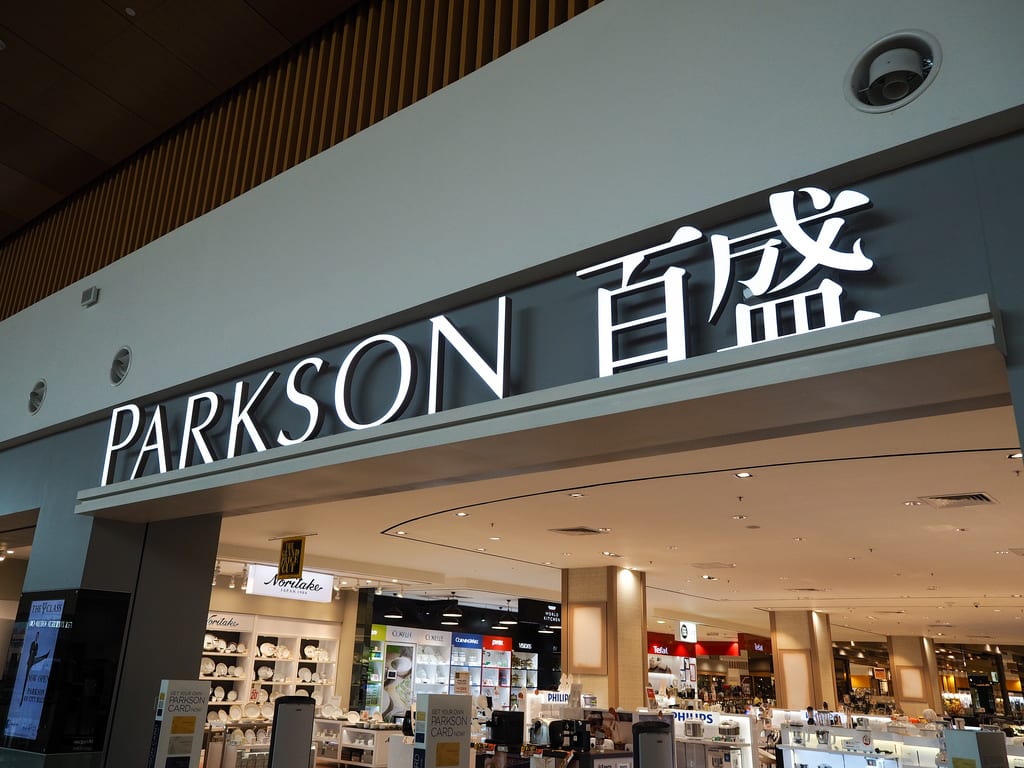
    Malaysian department store operator Parkson has closed its store in Puchong just 18 months after it opened.

    The closure follows its exit from Suria KLCC in downtown Kuala Lumpur after 20 years.

    A Parkson spokesperson said the Puchong store had not met sales expectations.

    “The retail market is very dynamic. Store openings and closures are part and parcel of our business. In Malaysia, shopping malls are mushrooming everywhere and the demographics are ever-changing. Understandably, we are always cautious and selective when choosing new store locations. However when sales do not meet expectations, we have to cut losses and move on,” the spokesman said.

    The Parkson Puchong store was located in M Square Mall at Millenia City. It opened in January last year, with 32,516sqm of retail space.

    While store closures appear to be an ongoing story within Parkson – it has shuttered multiple stores in Vietnam as well during the last two years – there are some positives to be taken from the company’s recent results. In the nine months to March 31, the company achieved sales growth above 5 percent – double the rate of Malaysia’s department-store sector, according to Malaysia Retailers Association data.

    Despite store closures, revenue in the March quarter rose by 2 percent year on year to RM788 million (US$187 million).

    Parkson currently operates 43 stores, one more than it had in 2015 but two fewer than in 2017.

  • Goxip expands into Singapore as APAC push gains pace

    Goxip expands into Singapore as APAC push gains pace

    Hong Kong and Malaysian mobile fashion-and-beauty marketplace Goxip will launch in Singapore on August 19. The service has more than 600,000 active monthly users in Hong Kong alone and counts luxury retailers such as Net-a-Porter, Farfetch, and Asos as well as brands like Nike, Alexander McQueen and Topshop among its partners and advertisers.

    As part of the launch, Goxip will invest in offline/online media and influencer marketing, leveraging its RewardSnap KOL monetization network.

    The launch will follow a whole redesign of the website and app’s look and feel in order to appeal even more to Singaporean consumers. It aims at educating Singaporeans on how Goxip is used to search, compare and shop products from global retailers in a few clicks.

    “I believe Singapore to be an extremely good opportunity for Goxip to expand its user base and sales,” said Goxip co-founder and CEO Juliette Gimenez.

    “We reached over 15 million in sales in Hong Kong in the last two years, with over 600,000 monthly active users and close to 1 million downloads of our app globally. Singaporeans and Hong Kongers are very similar in terms of purchasing behavior, expat demographics, and internationalization. This tops our confidence to scale further and reach new heights in Singapore!”

    The expansion is part of Goxip’s strategy to penetrate more APAC countries on top of its home base of Hong Kong. Goxip gained significant traction in Hong Kong since its launch in 2017 and plans to expand to further areas such as the Middle East and Oceania. Goxip’s team is also increasing in size to allow its business to grow and launch new features for its website and app.

    “We are building a strong team in Hong Kong to support Goxip expansion and improve performance further,” said Goxip’s VP marketing Michele Tardelli. “Our brand is well-known in Hong Kong and our track record proves that product/market fit is there. Now it’s time to get Singaporeans to know us, engage with our website/app and shop. We have a holistic marketing plan to make this happen.”

  • CapitaLand Malaysia Mall Trust profits down

    CapitaLand Malaysia Mall Trust profits down

    Introducing fresh retail concepts and organizing more shopper-centric initiatives weren’t enough to prevent a 5.7 percent fall in net property income (NPI) for CapitaLand Malaysia Mall Trust (CMMT) in the first half of this year.

    CapitaLand Malaysia Mall REIT Management (CMRM), which manages the trust, (US$25 million) for the period, down from 110.4 million ($26.8 million).

    The company said Gurney Plaza, East Coast Mall and Tropicana City Office Tower turned in stronger performances that partially mitigated lower contributions from the Klang

    Valley shopping malls Sungei Wang, 3 Damansara and The Mines.

    But David Wong, CMRM’s chairman, was positive about the trust’s future prospects despite the decline.

    “Amid a challenging operating environment, we are optimistic that the underlying strength of CMMT’s portfolio of quality malls will continue to deliver sustainable income distributions for unitholders in the long term.

    “We continue to reinforce our efforts in strengthening the appeal of CMMT malls through proactively managing lease renewals, introducing fresh retail concepts and organizing more shopper-centric initiatives.”

    Low Peck Chen, CMRM’s CEO, said during the first half of the year Gurney Plaza and East Coast Mall continued their steady performance to chart year-on-year revenue growth.

    “Our Klang Valley malls remain affected by the growing supply of retail space. Sungei Wang and The Mines were further impacted by downtime from asset enhancement works and vacancies.

    “The Jumpa lifestyle zone in Sungei Wang is on track to open by end-September. The new retail concepts at Jumpa will complement the existing offerings in the Bukit Bintang- Kuala Lumpur City Centre shopping belt and help to revitalize and boost the appeal of Sungei Wang,” she said.

    “For The Mines and 3 Damansara, we are focusing on strengthening their tenant mix in key trade categories to enhance their positioning as necessity shopping malls.”

  • Zalora Philippines targets 50-per-cent annual sales growth

    Zalora Philippines targets 50-per-cent annual sales growth

    Fashion e-tailer Zalora Philippines is targeting 50 percent annual growth in sales over the next five-year period.

    The firm’s confidence in its target is based on the number of Filipinos embracing online shopping.

    “We will end the year with more than 50 percent growth year on year,” said Zalora Group CEO Gunjan Soni, “and we expect that trajectory to continue”.

    “We actually see that trend continuing in terms of very high double-digit growth for at least the next five years,” said ZPH president and CEO Paolo L. Campos III. “We don’t see growth tapering, we see it sustaining at the very high double-digit level.”

    Zalora also operates in Singapore, Malaysia, Thailand, Vietnam, Taiwan, and Hong Kong.

  • Body Shop Malaysia and Vietnam operator to list

    Body Shop Malaysia and Vietnam operator to list

    The retailer and distributor of The Body Shop products in Malaysia since 1984 has yet to fix the issue price and the opening and closing dates of the IPO. But local news reports have suggested the IPO may raise up to MYR200 million (US$48.6 million).

    InNature has indicated plans to use any IPO proceeds for capital expenditure, working capital and new business development.

    The firm has 89 locations in Malaysia and 26 in Vietnam, including online platforms. It plans to enter Cambodia later this year.

  • Ikea Malaysia to open in new Batu Kawan mall

    Ikea Malaysia to open in new Batu Kawan mall

    Ikea Malaysia is preparing to open the first phase of a shopping centre linked directly to its blue-box home furnishing store in Batu Kawan, Northern Malaysia.

    With around 20 tenancies, the new retail destination is aiming to bring a vibrant new mix of brands to the growing Aspen Vision City. The retail extension will open at the end of the year, with 85 per cent of the space now already leased to tenants including Sports Direct, Project Rock, 7-Eleven and Harvey Norman.

    Taking up 50,000sqft, Harvey Norman is taking its concept of a flagship superstore outside the Klang Valley for the first time.

    “We are grateful for the relationships we have built with long-term partners like Harvey Norman. Together, we can live up to our mission of creating vibrant meeting places for the many people – going beyond just shopping,” said Ikea Southeast Asia MD Christian Rojkjaer.

    Five Ikea stores in the region are anchors for shopping centres.

    “We look for tenants that meet the needs of the people in our community,” explained Ikea Southeast Asia mixed-use director Christian Olofsson. “In the four months since we opened Ikea Batu Kawan, we have seen that Penangites often visit on lunch breaks and during dinner time. So, we will focus on bringing in F&B outlets and convenient grab-and-go services. We also see the opportunity for other leisure, entertainment and sporting retailers to serve the growing township of Batu Kawan.”

    The integrated retail component to Ikea Batu Kawan is part of the master plan for Aspen Vision City, a joint-venture of Ikea Southeast Asia and Aspen Group.

    “Ikea is a major catalyst, attracting other businesses that want to be part of a modern and intelligent township of the future,” said Aspen Group president & group CEO Dato’ Murly Manokharan. “We want to create a convenient destination that is at the heart of a walkable community where people can work, shop, dine, study, and create positive memories together with their loved ones.”