Tag: Market

  • Bangkok’s Chatuchak Market head to Singapore

    Bangkok’s Chatuchak Market head to Singapore

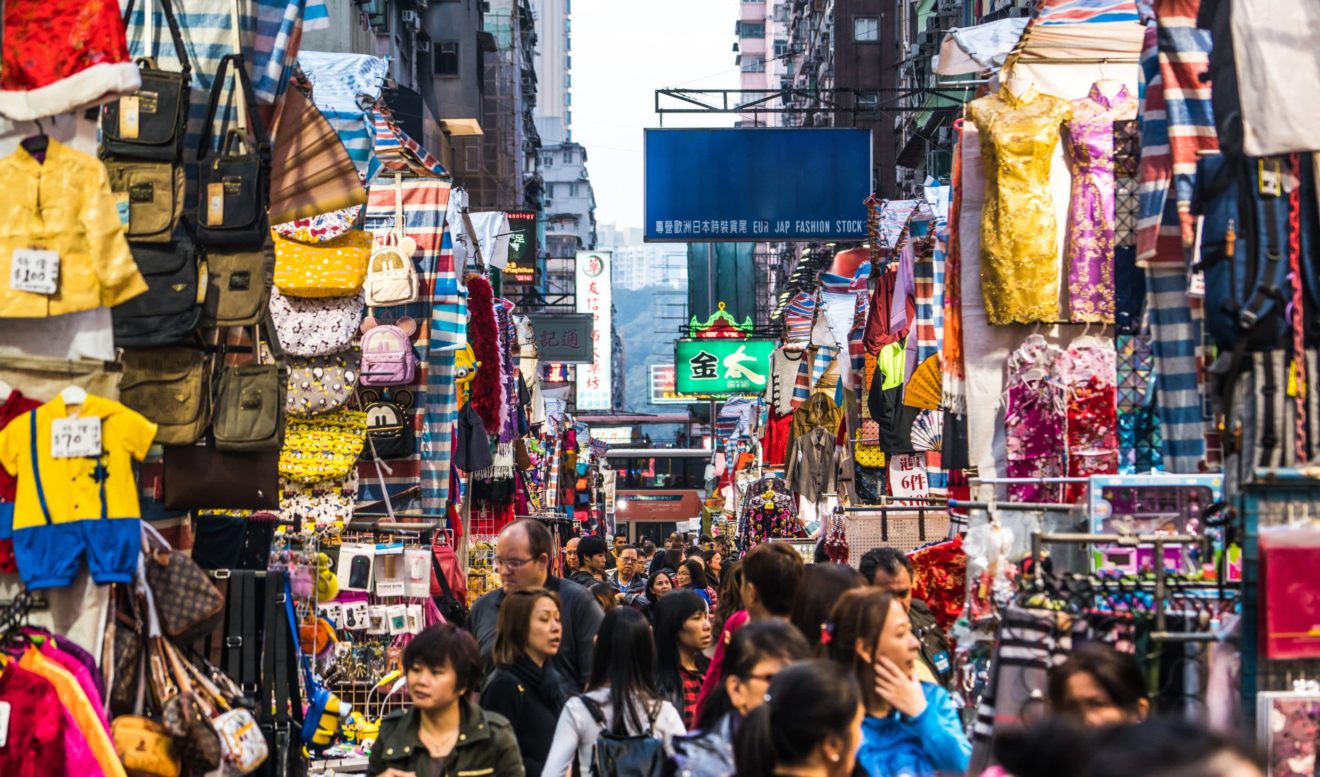
    The world-famous Bangkok Chatuchak Market is set to open in Singapore, drawing an expected 600 Thai vendors.

    A 40,000sqft pop-up market will be open from February 4 to May 3 at The Grandstand on Turf Club Road. Between 30 and 50 Thai vendors will participate at the market each week on a rotational basis alongside local vendors, operating up to 272 stalls vending handicrafts, fashion and other items.

    It is the first time the Chatuchak Market has been convened outside of Thailand.

    Thai street food will be sold at the market for visitors seeking an authentic Chatuchak Market experience, complete with the snacks.

  • Car Marketplace Eyes Digital Bank License

    Car Marketplace Eyes Digital Bank License

    Used car marketplace Carro is eyeing a wholesale digital banking license in Singapore to expand its business.

    A car marketplace operator may not seem like a natural fit to apply for a digital banking license but it certainly does for Carro’s profitable subsidiary, Genie Financial Services. The license can beef up its underwriting capabilities for automotive-related loans, said Carro’s chief executive, Aaron Tan.

    A lot of times, when we finance end-car dealers, the risk is in not understanding their cash flow. But if we own a digital bank, we believe we can extract quite a bit of information from the car dealers. If they do deposits, their floor financing and hire purchases from us, we will have a very good view, internally, of whether the account conduct is fine and lower our risk of default, said Tan.

    The startup is already in talks with potential partners to apply for the license, which could open the door to SME lending, Tan added. He cites Silicon Valley Bank, which provides banking services to startups in the US, as a model Genie could emulate.

    A license will allow us to do a lot more; for one, we will be able to unlock unsecured loans. Two, it legitimizes our ambition to move beyond just the car vertical… The part that I’m very excited about is banking new-age businesses like startups. This is where we think the future of a company like this should lie, Tan said. The startup operates its used car marketplace in Singapore, Indonesia, and Thailand, and recently invested $30 million in a Malaysian peer.

    Currently, Genie provides loans and insurance services to car dealers and car buyers, along with technology platforms for dealers to manage their stock financing and loan origination. It has a small headcount of 13 and is headed by Helen Neo, a former senior executive vice-president at Maybank and head of personal financial services at HL Bank.

    Genie more than tripled its net profit from the previous year to over S$3 million, on the back of over S$7 million in revenue for the financial year ended March 2019, Neo revealed. She attributes the unit’s substantial margins to a sticky customer base, as well as banks’ support in providing capital.

    Initially, we struggled a bit, as we had to rely on VC funds (for lending). But after we were more engaged in the business, we managed to convince the banks to lend to us… Now, we’ve got at least two banks giving us full support. Today, our (credit) lines with the banks are more than S$80 million,» she said.  Carro is backed by Insignia, Softbank Ventures Asia and EDBI, the investment arm of the Singapore Economic Development Board, among other investors. It has raised some US$108 million in venture funding thus far.

    Carro’s move comes amid a few expressions of interest from other local startups. Peer-to-peer-lender Validus Capital is in talks with OCBC, Keppel Corporation, and Vertex Ventures to form a digital bank consortium. However, fintech Nium (formerly Instarem), one of the first startups to raise its hand to signal interest in a digital banking license, this week said it would no longer proceed to apply for one

  • Apple market share plunges to year’s lowest level in Vietnam

    Apple market share plunges to year’s lowest level in Vietnam

    Apple’s market share fell to 5.6 percent in September, its lowest level this year, with buyers apparently waiting for its next product.

    This kept its iPhone in fourth place, behind Xiaomi, which had a 10.7 percent share, according to a report by market research firm GfK.

    Samsung remained on top (40.7 percent) followed by Oppo (24 percent). Vivo was in fifth place (5.4 percent), selling 1.07 million phones.

    Xiaomi, which held fourth place in June, saw consistent growth since then to climb into third place in July, where it has remained.

    This was the third straight month of fall in market share for Apple, which was down 1.6 percentage points from June and 2.4 percentage points from January.

    Industry insiders said the Vietnamese tendency to wait for the upcoming iPhone model, set to be released in early November, is the reason for the falling sales, besides intense competition from Samsung and Oppo with their new products and promotions.

    On Wednesday major smartphone seller Mobile World said 10,689 people have put down deposits of VND1 million ($43.25) to prebook the iPhone 11, iPhone 11 Pro or iPhone 11 Pro Max.

    Another smartphone retailer, FPT Shop, has received 16,390 bookings.

    The two authorized Apple resellers are scheduled to deliver the phones on November 11.

    In the first nine months, Samsung and Oppo had market shares of 39.6 percent and 28.7 percent respectively followed by Apple (7 percent) and Xiaomi (5.9 percent), according to the report.

    A report released in January by We Are Social, a social media marketing and advertising agency, said around 75 million people in Vietnam, or almost 80 percent of its population, use smartphones.

  • Motorcycle market continues to shrink

    Motorcycle market continues to shrink

    Vietnam’s motorbike sales fell the third straight quarter by 3.8 percent to 831,500 units in Q3.

    Sales for the top five brands, which account for around 95 percent of the market, had fallen 6.13 percent in the first quarter and 4.39 percent in the second, according to the Vietnam Association of Motorcycle Manufacturers (VAMM).

    Honda has a nearly 77 percent market share, with Piaggio, Suzuki, SYM, and Yamaha making up the top five.

    UnitsMotorcyles sales by quarter VAMM membersQ1 2018Q2 2018Q3 2018Q4 2018Q1 2019Q2 2019Q3 20190250k500k750k1 000kSource: VAMM

    In the first nine months together they sold around 2.33 million units, down 5 percent, VAMM data shows.

    Although motorcycles remain the major mode of transport, the increasing frequency of traffic jams and air pollution, especially in big cities, are causing their sales to gradually fall, local experts said.

    VAMM had earlier said that falling motorbike sales were because the market was near saturation. It has decided not to hold its annual motorcycle exhibition this year for this reason.

    With sales of nearly 3.4 million units last year, Vietnam was the world’s fourth-biggest motorcycle market after India, China and Indonesia, according to a recent report by market research firm Motorcycles Data.

    Last year, Vietnam had the highest proportion of people buying new motorbikes, with over 35,000 new motorbikes sold per one million people.

    At the end of 2016, there were 45 million registered motorbikes in Vietnam, a country of over 92 million people, according to the Ministry of Transport.

  • Why brands should embrace the second-hand luxury market

    Why brands should embrace the second-hand luxury market

    New research shows that global sales in the second-hand luxury market are expected to grow at an average rate of 12 percent year-on-year, compared to a 3 percent average for the core luxury market.

    The figures were released in a Boston Consulting Group (BCG) and Vestiaire Collective survey, entitled “Why Luxury Brands Should Celebrate the Pre-Owned Boom”, revealing three key drivers behind the rapid growth and detailing how luxury brands can benefit from the explosion of the resale market.

    According to the survey, the resale industry is forecast to increase turnover from US$25 billion in 2018 to $36 billion in 2021, representing around 9 percent of the luxury market.

    Millennials and Gen Z are disrupting the market and placing greater importance on the social and environmental impact of their purchases than previous generations.

    The BCG-Altagamma study revealed that the purchasing behavior of 59 percent of luxury customers in both the primary and secondary markets is influenced by sustainability, while 17 percent of customers in the second-hand market purchase pre-owned because they consider it “truly sustainable behavior.” The survey of Vestiaire Collective customers reveals similar data, with more than 70 per cent trying to shop ethically and 13 per cent saying that sustainability is extremely important to them. Of those that shop ethically, 57 percent say that environmental impact is their primary concern.

    Most second-hand luxury clients are attracted by affordable prices: 96 per cent of Vestiaire Collective members surveyed said they buy second-hand luxury pieces partly because they are looking for value for money. Another major advantage of the second-hand market is that 62 percent of buyers are searching for pieces that are either out of stock, from previous season collections, or from limited-edition releases, while 83 percent stated they are drawn by the wide selection of products and brands which may no longer be available in the firsthand market.

    Brick-and-mortar lagging online

    The traditional brick-and-mortar luxury resale industry has produced very few players of any significant size as they focused on a specific product category or geographic footprint. By contrast, online resale platforms have won over consumers by offering far greater brand and product assortment.

    In addition, each platform has developed a series of unique services such as curation, authentication and personalized marketing strategies driven by data insights. The increased professionalization of the market has also attracted major venture capital investment.

    Pre-owned luxury buyers are usually consumers who don’t have access to the primary luxury market, as 71 percent of the pre-owned buyers surveyed lean towards items and brands they could not afford firsthand.

    The second-hand market is thus a powerful way for luxury brands to connect with and anchor their brand in the minds of potential future primary customers. As second-hand luxury customers mature, their purchasing power tends to increase, making them ready to shift to the primary market. Of those surveyed, 62 percent said that they bought a brand they like for the first time second-hand on Vestiaire Collective, and almost all of that 62 per cent said they would consider buying that brand again. Research also shows that 57 percent would either definitely buy or would consider buying the item first-hand – making them solid prospects for the first-hand market.

    Second-hand sellers typically use resale to recoup some of their money back on firsthand purchases, often so they can reinvest in new, full-priced luxury products. Of those sellers surveyed, 32 per cent said they were primarily selling because they wanted to purchase new firsthand goods. In addition, most pre-owned sellers do not tend to make many second-hand purchases.

    For example, of total pre-owned sales on the Vestiaire Collective platform, 70 per cent are generated by sellers who rarely purchase second-hand. Forty-four percent of sellers stated that they purchase more expensive luxury items than they would have bought without a resale market.

    Furthermore, customers purchase more frequently, investing around the same amount on individual items but buying again once they free up their budgets. Pre-owned sales clearly boost these sellers’ purchasing power for new items and therefore create an opportunity to increase primary market sales, benefiting luxury players.

    The pre-owned market extends the lifetime of luxury products – most products sold o

  • 80 Percent of Thai Wealth Held Onshore

    80 Percent of Thai Wealth Held Onshore

    Lombard Odier is bullish about its onshore partnership strategy in Thailand, claiming that 80 percent of high net worth wealth remains onshore with local banks.

    The bank is bullish on Thailand’s wealth market, citing industry projections of 10-30 percent annual growth of high net worth individuals, depending on segmentation. Interestingly, the billionaire segment is expected to increase the fastest despite an ongoing U.S.-China trade war.

    Growth is here, said Lombard Odier’s APAC CEO Vincent Magnenat, who expressed optimism regarding the bank’s benefits from its four-year-old partnership with major Thai lender Kasikornbank (Kbank).

    Lombard Odier’s ventures into building onshore revenue lines have been supported not only by its investment capabilities but also through effective delivery to meet non-investment needs. According to Magnenat, the new generation of Thai entrepreneurs are increasingly demonstrating not only demand for professional investment management but also wealth planning and family or business governance needs.

    Perfect wealth comes from a combination of wealth and happiness; customers can live a worry-free lifestyle by easing their concerns in the areas of maintenance and succession of wealth, said Jirawat Supornpaibul, head of Kbank’s private banking group in a local media report.

    KBank’s private banking arm has assets under management of 760 billion Thai baht ($25 billion) with more than 11,000 clients and it estimates the latter to grow five percent annually.

  • Hyundai India Market Share Hits All Time High

    Hyundai India Market Share Hits All Time High

    Amidst all the gloom in the automobile sector, Hyundai Motor India has found some cheer. The country’s second-largest car manufacturer has been able to increase its market share in July to 19.4 percent. This is the largest share of India’s car market that Hyundai has ever been able to command. That it comes at a time the market is depressed means that overall volumes are of course lower than previous year levels for the sector.

    Yet if you make simplistic percentage correlations, Hyundai lost only 3.8 percent sales in July 2019 at 57,310 units over the same month in the previous year; while market leader Maruti Suzuki saw a much more drastic 35.1 percent year-on-year drop in sales. Hyundai has traditionally held on to between 17 and 18 percent of the market for the past several years. It’s the first time it’s share has crossed 19 percent.

    SS Kim, MD, Hyundai Motor India said, “We have maintained the sales momentum and grew to 1.7% in FY 18-19 vis-a-vis FY 17-18. We sold 5,45,243 units in the domestic market and exported 1,62,105 units in FY 18-19. In July 2019, with the tremendous response for Venue, we sold close to 39000 units, out of which 9585 units sold were of Venue. Despite current market challenges, Hyundai has been the only brand to maintain its leadership position and has increased its market share by 3% registering 19.4% market share in July 2019.”

    H1 data released by Jato Dynamics suggests that Maruti saw its market share erode marginally to settle at 51.07 percent in the first half of 2019 when compared to H1 2018 when it held 51.57 percent of India’s car bazaar. Others who also saw their share drop are Tata Motors (down from 6.49 to 5.90 percent) and Ford (down from 3.07 to 2.66 percent).

    The Tata Tigor and Zest, and Ford EcoSport have been draggers for the respective manufacturers as competition has driven customers elsewhere. Ironically the drag for Maruti off late is coming from the Vitara Brezza – a Diesel-only best selling model that’s been hurt by Maruti’s apparent stance to drop smaller displacement diesels from April 1 2020. Hyundai meanwhile has benefitted at its expense as it’s new Venue subcompact SUV that rivals the Vitara Brezza has two petrol engine options and has now emerged as the market leader in its segment. The Mahindra XUV300 also offers petrol and has therefore benefitted.

    Hyundai is also expected to see a small surge in compact hatchback sales as its new generation Grand i10 Nios drives in alongside the outgoing model which will stay on in the market for some months. It’s Creta continues to perform well and while it may take a slight hit as the Kia Seltos comes to market, Hyundai will pad up for the second generation Creta launch in 2020.

  • Hong Kong’s retail leasing market easing

    Hong Kong’s retail leasing market easing

    Hong Kong’s retail leasing market is showing signs of slowing in tandem with easing retail sales.

    According to real estate advisor Savills says shopping-mall rents changed little in the second quarter, while prime streetfront retail rents fell by 1.9 per cent.

    Savills does not expect any “big headline deals” in retail rentals during the second half of this year.

    “The market lacks the momentum for active growth with unstable external factors having a powerful effect,” said Nick Bradstreet, MD and head of leasing.

    Hong Kong retail sales are down 1.8 per cent during the first five months of this year. Over a similar time frame, prime shopping street rents fell by 1.2 per cent quarter on quarter, with Central district dropping the most, by 3.8 per cent.

    In the major shopping-mall segment, base rents remained generally steady. This was helped by deals with major food-and-beverage tenancies at the newly opened OP Mall in Tsuen Wan:  Ruby Tuesday taking 5000sqft of space and Hadilao Hotpot 8000sqft at HK$400,000 per month.

    The lull in Hong Kong’s retail leasing market comes at a time shopping-centre landlords and retailers are reviewing their offer to shoppers.

    Savills says new market trends are emerging rapidly in Hong Kong and Southeast Asia: brands are turning to augmented reality (AR) to enhance the customer experience and retailers are thinking of new green initiatives with consumers responding positively.

    “Despite the slowdown in retail figures, we see that new technologies are being adapted to upgrade the customer experience, changing the retail landscape,” said Bradstreet.

    AR examples include an Ikea app which allows users to ‘place’ 3D furniture in their homes to scale, Benefit Cosmetics is encouraging customers to try on different eyebrow shapes before they shape their real ones; and MAC has launched an AR Beauty Try-On campaign.

    On the green front, the use of banana leaves for packaging vegetables and other fresh produce was initiated by Rimping Supermarket in Thailand, and then adapted by major supermarkets in Vietnam and Indonesia (including Big C, Lotte Mart and Bintang). Although still in its testing phase, the idea is being well received by shoppers and retailers have reported a boost in sales for products packaged this way.

    Simon Smith, senior director, research & consultancy at Savills, said trade tensions are hitting businesses across southern China and consumers are spending less on big ticket items as a result.

    “Landlords today seem to be more flexible when renewing existing tenants and are open to reducing rents if necessary.”

  • Nam Cheong Place Market gets complete makeover

    Nam Cheong Place Market gets complete makeover

    Link’s Nam Cheong Place Market has had a complete makeover, with the refurbished venue containing nearly 40 stalls and an enhanced tenant mix offering premium ingredients and delicacies from around the world.

    The diverse shop mix includes fishmongers and greengrocers, frozen-meat shops and florists, and a cooked-food area. The market’s proximity to Cheung Sha Wan Wholesale Fish Market allows the freshest daily catch from local waters to be on offer at Fu Cheong fishmongers.

    There are many seasonal fruits and vegetables at Hou Yeung, Sum Kui, and other greengrocers.

    In addition to fresh local produce and meats, the market also showcases a colorful array of specialty stalls. JC Fruit, for example, is a treasure trove of all fruits imaginable, offering rose apples and Rockit apples from New Zealand; musk melons from Japan; and rambutans from Thailand, depending on the season. Ocean Three offers fresh oysters and other top-of-the-line ingredients from around the world.

    In the cooked-food area, diners can also savor such local bites as cart noodles, buns, and herbal tea, as well as the popular souffle pancake at Bove Express and Taiwanese drinks at Bittersweet Teahouse.

  • Online and New Retail concepts in China driving FMCG market growth

    Online and New Retail concepts in China driving FMCG market growth

    Online and New Retail concepts in China are driving FMCG growth according to a report by Bain & Company and Kantar Worldpanel.

    As reported The Chinese FMCG market remained robust last year despite talk of economic slowdown.

    According to the latest China Shopper Report produced by the two companies, e-commerce channel growth in China slowed slightly to 30.6 per cent between 2017 and last year (compared with 35.1 per cent annual growth between 2014 and last year), as penetration in tier-1 cities leveled off at around 80 per cent last year. In lower-tier cities, however, growth is expected to continue for at least three or four more years and will serve as the engine of future online expansion.

    While last year didn’t necessarily represent a turning point, the research revealed renewed hope for offline retailers. Previously, offline stores in most formats had been steadily losing share with the rapid rise of online channels. Now there are new and interesting opportunities for offline retailers to regain their momentum, in many cases with smaller and more flexible formats. For example, the share of traditional trade (grocery) food and beverage sales intended for out-of-home consumption has risen by 14 per cent per year since 2016, reaching nearly 80 per cent last year, based on the 10 food and beverage categories analysed in the research. It is similar with convenience stores: their sales for out-of-home consumption grew 17 per cent per year in the last two years, and represent 88 per cent of total convenience store sales, for these same 10 categories.

    Large store formats also show potential for growth, but it will require them to take on new roles, the report found Last year, hypermarkets started to reignite some of their momentum by serving as a logistics base for 30-minute delivery of goods ordered online via the leading delivery platforms. Another opportunity: big chains can reinvent themselves by upping their game in fresh food.

    Insurgent brands punch above their weight

    In addition to examining these ongoing trends, Bain & Company looked at two other developments: the dramatic impact of fast-growing small brands on larger brands, and the emergence of the uniquely Chinese phenomenon of New Retail – futuristic supermarkets devoted in equal measure to in-store dining, online ordering and delivery.

    Last year’s China Shopper Report revealed that China’s insurgent brands are taking a disproportionate share of FMCG growth. As that trend continues, a fundamental question faces many companies: Can big brands get bigger and continue to be successful?

    “The new reality is that many incumbent brands watch small brands doing an impressive job of serving specific consumer needs, responding in everything from R&D to digital marketing with agility and flexibility,” said Kantar Worldpanel Greater China GM Jason Yu.

    “Whether to focus on growing big brands or building a portfolio of different brands to serve different segments nags at every FMCG executive. It’s a decision that sometimes calls for a major strategic transformation; billion-dollar brands are vastly different animals than $25 million brands and require significantly different management approaches.”

    The other big emerging trend involves New Retail. In any of its forms, New Retail blurs the line between online and offline sales, with potentially major implications for how FMCG products are sold. For example, New Retail’s biggest manifestation continues to be the growth of the food service channel, which is fueled by increasingly faster delivery. Now largely limited to Tier-1 and Tier-2 cities, and with penetration levels comparable to regional supermarkets, New Retail stores will become more broadly relevant in the future.

    According to the report, the acceleration of New Retail in multiple ways presents opportunities for retailers to transition from today’s mass-oriented offline approach to tomorrow’s seamless, multichannel world of shopping. Physical stores have a future, but offline retailers need to refine their moves to play in this new environment.

    The report recommends physical stores:

    • Redesign store portfolios in the New Retail format;
    • Make the store experience more attractive by leveraging new technologies like augmented reality; and
    • Digitalise operations to deliver a seamless experience to consumers, whether they buy online or offline, and start to monetise consumer data for better cooperation with brands.

    The three key implications for brands mentioned in last year’s China Shopper Report remain:

    • Take advantage of the channel dynamics, grow with the winning channels and anticipate retailers’ consolidation;
    • Develop high-value and personalised products to make the most of the premiumisation trend; and
    • Become data-driven, consumer-centric organisations by collaborating with platforms but also by developing your own set of consumer data.

    This year, a fourth important implication arose, based on the success of insurgent brands: Develop a portfolio of brands to grow overall share in a category, taking advantage of the fragmentation of consumer needs and shoppers’ thirst for innovations.

    “As the China consumer continues to become more sophisticated and the channels available to them become more advanced, it is essential that companies who want to win in this new era fully understand what it takes to win in this market,” said Bain & Company partner and report co-author Derek Deng.

    “By understanding and incorporating the new retail model and focusing on a consumer-centric mentality, companies will be able to win in this new battleground which is emerging.”

  • China to become world’s largest grocery market by 2023

    China to become world’s largest grocery market by 2023

    China is set to overtake the US to become the world’s largest grocery market by 2023 in value terms, according to new forecasts.

    Studies from international researcher IGD Asia have shown the country’s total market size will reach RMB11.0 trillion (US$1.8 trillion), more than Asia’s next four largest grocery markets (India, Japan, Indonesia and South Korea) combined.

    “China will not only retain its position as Asia’s largest grocery market by 2023, it will also overtake the US to become the world’s largest,” said IGD head of Asia Pacific Nick Miles. “The market is expected to have a CAGR of 5.5 per cent, on par with Sri Lanka and Thailand, but slower than markets such as India, Vietnam, Indonesia and the Philippines, where the economy is growing faster.

    “Less than half of grocery sales in China currently go through traditional trade and as the market continues to mature, we expect traditional trade to continue losing share to modern trade. As the total market size expands, traditional trade will still grow, but at a much slower pace over the next five years (forecast CAGR of 0.8 per cent), compared with the growth rate of modern trade (forecast CAGR of 8.5 per cent).”

    Development of modern trade in China over the next few years will be largely driven by ongoing store expansion, according to IGD’s research, as well as strong performances from the online and convenience channels.

    “Convenience will be the fastest-growing physical store channel, driven by Alibaba and JD transforming traditional mom-and-pop stores, retailers opening smaller format stores and both local and overseas players expanding their networks through partnerships,” said Miles. “Online and offline integration will drive online growth. As the fastest-growing channel, we forecast online to contribute up to 11 per cent of sales in 2023.”

    Hypermarket share will decline

    Meanwhile, IGD forecasts that hypermarkets will see their share of China’s total grocery retail market reduce from 22 per cent last year to 18 per cent in 2023, while the market share of supermarkets will remain steady, close to 20 per cent.

    IGD research has also found that China’s leading grocery retailers will grow at varying rates to 2023. E-commerce giants such as JD and Alibaba are set to see significant growth from both online and offline channels and become the second- and third-largest grocery retailers in China respectively. Meanwhile, retailers with nationwide networks such as Sun Art, Yonghui, Walmart, CRV and Carrefour will benefit from ongoing expansion, partnerships with e-commerce and tech companies, improved efficiencies, and investment in small formats. Regional players such as NGS and Wumart will continue to focus on profitability.

    “With such strong market growth to 2023, trading in China has vast potential, whether supplying directly to physical stores or via online marketplaces,” concluded Miles. “However, there are huge changes taking place that suppliers need to consider. Online giants are reshaping China’s retail landscape with their strong logistical and technical capabilities, so suppliers should understand this new path of purchase and design meaningful ways to reach their shoppers. Expansion through local partners will also remain a key route to market in China, so customer strategies must take into account the strong alliances forming between e-commerce players and bricks and mortar retailers.

    “There’s also a huge RMB1.7 trillion ($245.57 trillion) growth opportunity in convenience and online in the next five years, which can be captured by understanding trends and retailer strategies and allocating resources accordingly. But we would also urge suppliers not to neglect traditional trade, which will still account for about one-third of FMCG sales in 2023. As the channel modernises, it will provide new ways to reach new shoppers.”

  • Aldi China where Quality meets Value

    Aldi China where Quality meets Value

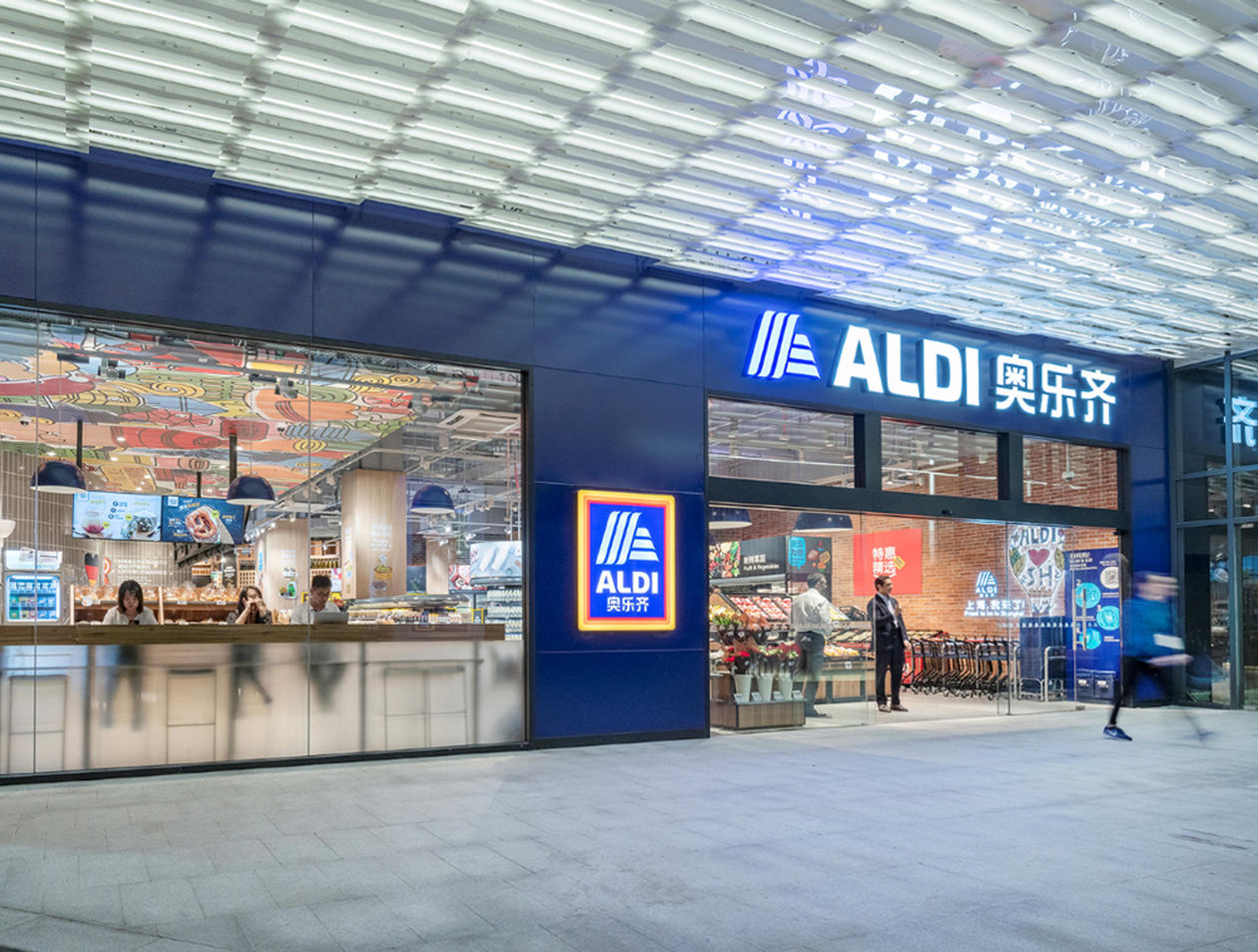
    The first professional photos have emerged of Aldi China’s two pilot stores in Shanghai, which opened weeks ago.

    Designed by Australian-headquarted Landini Associates for Audi Sud (South), the two stores are both about 336sqm in size. They feature a more upmarket look than Aldi’s European stores and are described by Landini as “an evolution of Landini Associates’ work for Aldi Australia, aimed at celebrating and conveying product quality and value”.

    The stores represent a new trading format for Aldi and are the first of up to 100 planned for the city. Aldi has been testing the Chinese market online for about two years, selling its own-brand products on Alibaba’s Tmall to gain an understanding of consumer buying preferences and acceptance to hitherto unknown brands.

    But as the photos show, the store is very obviously targeted not only at Chinese consumers, but the burgeoning expat community in the city – all signage is in English as well as Chinese.

    Landini highlights key differences in the scale, layout and tone of the Aldi China stores, compared to the latest designs implemented in Australia.

    “In line with Chinese consumer habits, where the preference is to visit multiple small shops per week, the stores are a much smaller format. The emphasis is on fresh produce and ready meals, with certain categories articulated for greater consistency, and key products placed at the entry of each aisle alongside messaging to appeal to and drive shoppers,” the company says.

    “Key departments developed were snacks, produce, bakery, alcohol, imported goods, health, and beauty. The most noticeable difference for the Chinese market is the development of an on-site Food Station, as well as the addition of ready meals to take away or consume at the in-store dining kiosk.”

    Low cost yet “real” materials were specified for the fitout, including locally sourced brick, terrazzo, an open concrete ceiling, warm timbers, and yellow accents which add to the perception of freshness throughout the stores.

    LED lighting reduces glare and running costs while improving ambience and colour rendering, changing from day to night. Landini says the lighting was designed to create a pleasant atmosphere and let the products speak, enhancing colour, texture, and freshness. Energy-saving LED has also been incorporated in the fridges and wine displays.

    Landini also designed an extensive series of messaging and graphic illustrations that are entirely unique to the Aldi China stores. More than 40 messaging boards were developed to communicate the brand ethos, product freshness, value, quality, and European and Australian products on sale.

    There is no signage or ticketing displayed from the ceiling. Instead, category signage around the store perimeter offers greater visibility across the stores and thus encourage cross-store shopping. A vibrant, colourful mural on the ceiling above the service counter and checkouts is a playful hero graphics feature.

    “Our two new stores are designed as pilot stores where retail approaches will be trialled and adjusted according to data and feedback from customers,” said an Aldi spokesperson. “This new store format has been customised and tailored specifically for the China market to better understand and interact with Chinese consumers.”

    Ben Goss, design director at Landini described the project as “a significant milestone for the brand”.

  • VinMart Vietnam opens first virtual store

    VinMart Vietnam opens first virtual store

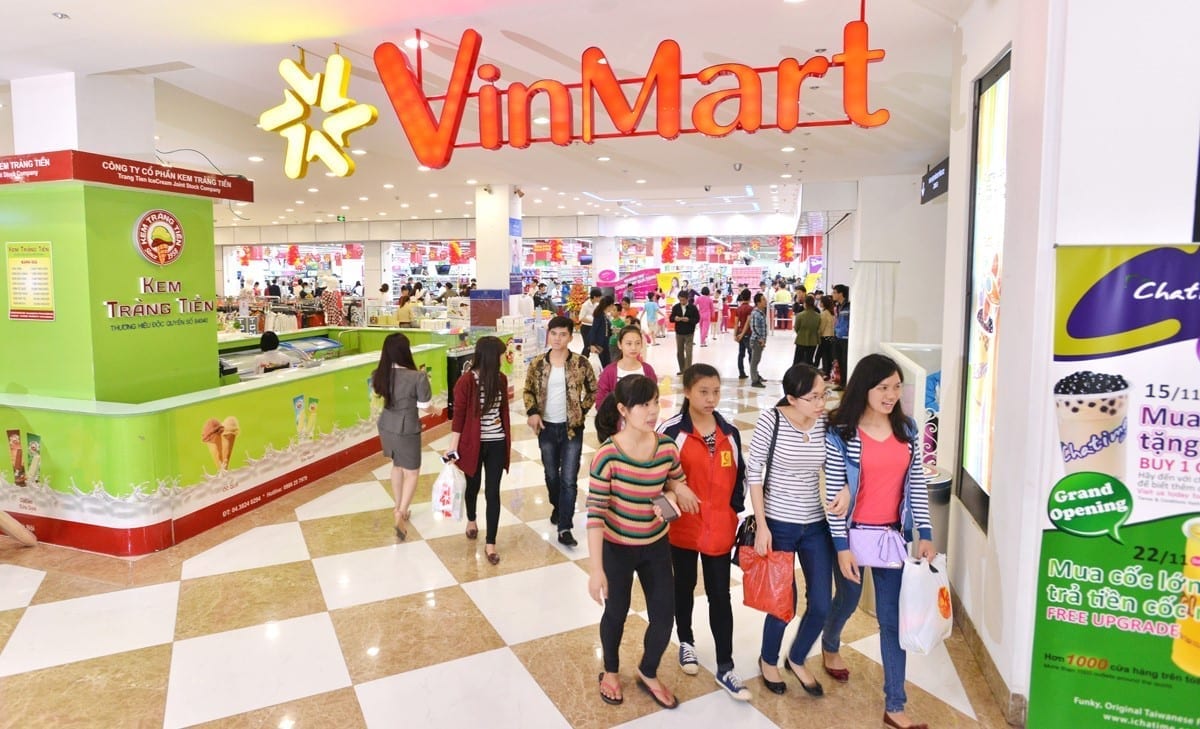
    Vietnamese supermarket chain VinMart claims to have opened Vietnam’s first virtual store.

    Run by VinGroup’s subsidiary VinCommerce, the new concept is being tested in 20 locations, including apartments, office buildings, schools and at bus stops, both in Hanoi and Ho Chi Minh City.

    Each store provides images and QR codes of more than 100 product groups for customers to scan and order via VinID app. The products will be delivered within two to four hours.

    VinMart launched the Scan&Go function in its app in March, applying it in 73 supermarkets across the country.

    Customers can also shop via VinMart’s printed shopping manual or online.

  • KDDI, Sumitomo to enter Myanmar mobile game market

    KDDI, Sumitomo to enter Myanmar mobile game market

    Japanese operator KDDI and conglomerate Sumitomo have revealed plans to jointly enter Myanmar’s mobile game industry through newly created joint venture Funcreate Myanmar.

    Funcreate Myanmar, a subsidiary of the companies’ Singapore-based joint venture Funcreate, will localize and distribute mobile games from Japan and other countries throughout Myanmar.

    Funcreate was established in November last year and has been a joint venture since April. It is 51% owned by KDDI and 49% owned by Sumitomo.

    The companies aim to attract more than 1 million downloads for each game title offered. Myanmar’s mobile games market is projected to grow at a CAGR of 52% due to the nation’s rapidly developing mobile phone market.

    KDDI has meanwhile established a strategic partnership with Singapore-based mobile game service provider goGame to take advantage of the latter’s expertise in game procurement, development, operation and marketing for the Asian market.

    Sumitomo, which launched a mobile game sales operation in North America in 2018, will meanwhile provide strategic marketing proposals for the new mobile game business operation, tailored to the Myanmar market.

    KDDI and Sumitomo were selected in 2014 to partner with state-owned Myanmar Posts and Telecom to operate a joint venture providing fixed and mobile services in the rapidly developing local telecoms market.

  • Chinese consumers adore pre-owned shopping online

    Chinese consumers adore pre-owned shopping online

    More and more mainlanders are using apps and websites to shop for pre-owned products.

    The popularity of shopping for pre-owned products online is on the rise in China, a trend being driven by a new consumer focus on sustainability and the rise of “recommerce” super apps, which integrate all possible functions related to shopping for secondhand goods.

    China has a nascent but fast-growing secondhand market, according to the China Center for Internet Economy Research, a Beijing-based research think tank, which estimates the size of the market at RMB 500 billion (US$71.1 billion) in 2017. It predicts that number will double by 2020. And monthly active users on recommerce platforms in China grew 46.4 per cent last year, almost double the growth rate of the users in the overall e-commerce sector, according to US research firm Nielsen reported.

    Despite those big numbers, China’s recommerce boom is only beginning. Compared to mature recommerce markets in the west, where secondhand markets (including used cars) sometimes account for as much as 10 per cent of GDP, China’s second-hand market was about 0.6 per cent of GDP in 2017.

    Some factors unique to China are behind its potential to close the gap: Firstly, the purchase of pre-owned items was once a taboo – because it was seen as a sign of financial struggle and was, therefore, a source of social shame. Now, it is considered smart shopping. Secondly, improved standards of living are a recent phenomenon in China. They’re just decades old, following in line with the country’s “reform and opening” since 1979. But as the ability for Chinese consumers to accumulate more climbs with their spending power, the market for secondhand goods grows as well.

    Sustainability is the new black

    Cost-conscious shopping aside, Chinese consumers these days are increasingly focused on sustainability, and that is driving the secondhand goods market as well. A Mintel survey showed that more than half of urban Chinese consumers buy or rent second-hand products because it is good for the environment. Among a trendsetting subset of that group – well-educated, sophisticated shoppers –  the percentage climbs to 63 per cent and trumps affordability as the top reason to participate in recommerce.

    Chinese millennials, in particular, are emphasising rational consumption and sustainability in their shopping habits. According to survey data from Sootoo Institute, which researches the internet sector in China, 50 per cent of recommerce-platform users in China are under the age of 24, while 34 per cent are between 25 and 30. More than 60 per cent of the total 200 million users on Alibaba Group’s recommerce platform, Idle Fish (or Xianyu in Mandarin), the largest such platform in China, were born after 1990.

    Perhaps it is not surprising, then, that recommerce platforms such as Idle Fish have built-in features to encourage and reward sustainability. Idle Fish has partnered with Alibaba affiliate company Ant Financial to offer users access to its sustainability mini-program, “Ant Forest,” which is featured on Ant Financial’s mobile-payments platform Alipay. Users can redeem points awarded by Ant Forest for recycling to have trees planted by Ant Financial in China. The total recycling activity on Idle Fish last year translated into the planting of about 230,000 trees.

    Super apps and ‘Fish Ponds’

    Recommerce in China is unique also for the way in which Chinese consumers shop for pre-owned items. Super apps, such as Taobao and Tmall, are the preferred online destinations for commerce because they offer channels for all kinds of shopping. The same goes for Idle Fish, which allows users to buy, rent, give away or even donate their unwanted things in every conceivable product category. For consumers in the US to do the same, they would need to separately use the Rent the Runway, eBay, ThredUp, Goodwill and Facebook (marketplace) apps.

    Then there’s the community and entertainment aspects of the recommerce shopping experience in China. While secondhand shopping in the west is typically a transaction-driven experience, in China, it is a social one. For example, Idle Fish’s “Fish Ponds” are micro-communities within the app that group users by common hobbies, such as fishing, photography or fitness. Within each “pond,” users exchange information about their hobby and post used items for sale. Besides the pond, there is even a separate channel for celebrities, where they sell their personal items to followers. This is particularly popular for luxury shoppers, who trust the authenticity of items owned by celebrities and aspire to follow their fashion tastes.

    The play for brands

    Brands should not overlook the opportunity to capture loyal customers in this new generation of environmentally conscious consumers in China. Some, such as Swedish fast-fashion brand H&M, are already doing just that. H&M has partnered with Idle Fish to give shoppers credit to spend on its Tmall flagship store for each bag of used clothing or textiles they give back to the brand for recycling or repurposing.

    In the future, the “recycling-and-reward” steps will also be additional consumer-engagement points that brands can leverage to increase boost loyalty. Also, we will likely see more brands open official stores on recommerce platforms, making recycling part of the usual shopping journey. The chance to shop vintage styles could increase brand loyalty. For example, brands could offer pre-owned jeans on recommerce platforms while accepting trade-ins from customers, offering another way to maintain connection beyond the initial sale of new items.