Tag: Market

  • Gong Cha to open world’s first bubble-tea funhouse

    Gong Cha to open world’s first bubble-tea funhouse

    Gong Cha will team up with Tokidoki to create the world’s first bubble-tea funhouse at Singapore Shilin night market.

    The Tokidoki-themed bubble-tea funhouse will bring three new flavours including Rosa Latte, Berry Biscotti, Bambu Boba, served in Tokidoki co-branded cups.

    Boba enthusiasts can also treat themselves to bubble tea-inspired desserts such as Boba Pancake, and Earl Grey Milk Tea Ice Cream.

    There will also be two limited-edition Tokidoki x Gong Cha-merchandised tumbler and sleeve for the first 500 customers daily.

    At a DIY station, customers can customise their own drinks.

  • Korean GS25 launches shared-bike charging service

    Korean GS25 launches shared-bike charging service

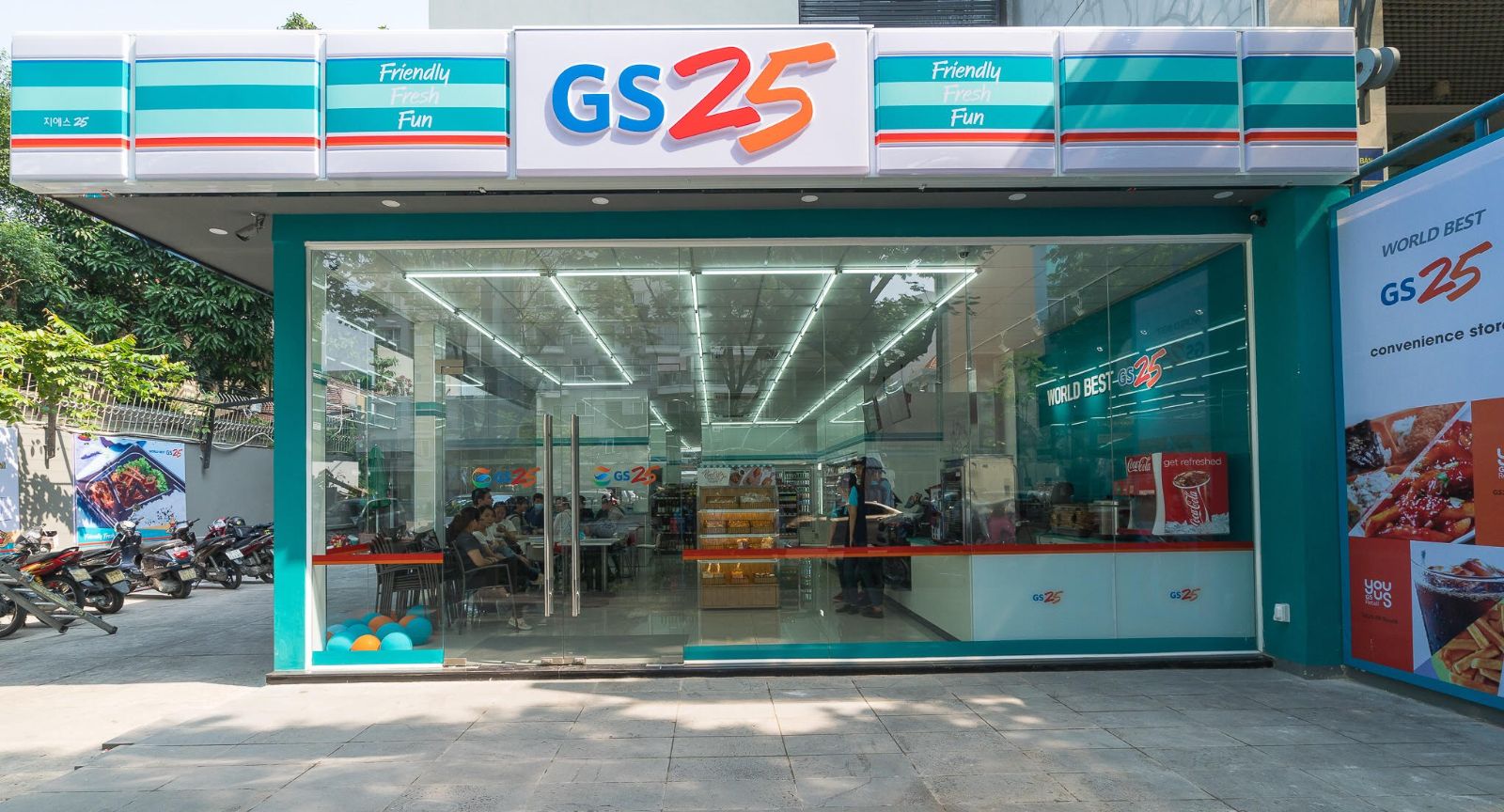
    Starting June, customers of South Korean GS25 convenience stores will be able to charge shared electric bicycles or kickboards.

    GS25 announced on Wednesday that it will set up an electric bicycle and kickboard charging service facility at its stores in partnership with the shared micro-mobility integrated platform “GoGoSing.”

    Under the terms of the deal, GoGoSing will operate 800 shared electric kickboards and shared electric bikes in Gangnam District in Seoul and Pangyo in Gyeonggi Province, while GS25 will set up charging facilities at stores in nearby areas.

    Customers will be able to use an electric kickboard and return it to a nearby GS25 store, and if they need to charge their device, they will also be able to exchange or charge batteries at the stores.

    GS25 expects that this will help convenience stores to move away from their focus on simply selling products and serve as a hub for charging various shared devices, as well as attracting new customers.

    GS Retail has introduced charging facilities for electric vehicles at 45 locales at present, and will offer delivery services for convenience store products since starting from April, in tandem with the delivery application Yogiyo.

  • Vietnamese stocks slide as lack of information hits large-caps

    Vietnamese stocks slide as lack of information hits large-caps

    Vietnamese shares slid yesterday as large-cap companies faced strong selling amidst a lack of supportive information while investors awaited discussions on the amended securities law. The benchmark VN-Index on the Hồ Chí Minh Stock Exchange fell 0.91 per cent to end at 988.48 points.

    The southern market index climbed 0.84 per cent on Monday.

    More than 165 million shares were traded on the southern bourse, worth VNĐ4.24 trillion (US$182 million).

    Market breadth was negative with 207 declining stocks, while 111 stocks advanced and 45 ended flat.

    Fifteen of the 20 sector indices ended Tuesday on a negative note, dragged by real estate, energy and petroleum, rubber and plastics and consumer staples.

    Those sector indices lost between 1.1 per cent and 3.1 per cent, data on vietstock.vn showed.

    The energy and petroleum sector was the worst-performing one on the stock market.

    Petro stocks such as PetroVietnam Gas (GAS) and PetroVietnam Drilling and Well Services (PVD) reversed after oil prices encountered volatility on Tuesday.

    GAS shed 1.9 per cent while PVD slipped 3 per cent.

    Real estate firms also dragged the market down, with the industry index falling 2 per cent.

    Among the worst-performing property developers were Vincom Retail (VRE), Vingroup (VIC) and Hòa Bình Construction Group (HBC).

    According to MB Securities Co (MBS), the VN-Index slid as leading stocks moved in different directions and pressured market sentiment.

    Foreign selling also caused negative movement for the stock market, which ended at a net VNĐ277.4 billion, MBS said in its daily report.

    In addition, gloomy earnings forecasts for 2019 for listed companies weighed on investors’ confidence ahead of the National Assembly Standing Committee meeting on April 10-18, in which the draft on amended Law of Securities will be discussed, MBS noted.

    “The stock market is clearly in its instability stage as large-cap stocks are still heavyweights. It is likely the VN-Index will fall whenever large-cap stocks are hit by strong selling,” Thành Công Securities Co (TCSC) said in a note.

    In addition, listed firms are experiencing a lack of supportive information, making investors unwilling to buy their stocks and reducing market liquidity, TCSC said.

    Therefore, the VN-Index may struggle at the current level of 990 points in the next trading days with focus shifted to companies with positive first quarter earnings, the company said.

    On the Ha Noi Stock Exchange, the HNX-Index slid 1.12 per cent to end at 107.71 points.

    The northern market index climbed nearly 1 per cent in the first trading day of the week.

    Nearly 48 million shares were traded on the northern bourse, worth VNĐ669 billion.

  • Honor Starts Looking for Market Dominance

    Honor Starts Looking for Market Dominance

    Huawei’s CEO has revealed details of how the telecommunications giant will foster its spin-off Honor brand in Asia.

    The strategy includes store rollouts, an increasing focus on online sales and revised price positioning differentiating the two brands.

    Richard Yu, CEO of Huawei Consumer BG, posted details on his Sina Weibo account, predicting Huawei will become the world’s largest smartphone maker this year through its two-brand strategy. Honor on its own is tipped to become China’s second largest-selling smartphone brand and fourth in the world.

    “The company will support Honor in the development of cutting-edge products and continue its investments in technology innovation, channel distribution and retail strategies while maintaining a firm dual-brand strategy between Honor and Huawei,” said Yu.

    Both brands will maintain “a forward-thinking mindset and help create an intelligent, fully-connected world”.

    While IDC figures show global shipments of smartphones fell by 3.1 per cent in the first three quarters of last year, Honor’s volumes soared 27.1 per cent.

    Last year, Huawei’s consumer business grew by 48.4 per cent, outperforming the company’s carrier-network business and becoming the company’s largest revenue earner.

    George Zhao, Honor’s president, told the recent Mobile World Congress that Honor is “on the brink of yet another breakthrough and there is no slowing down for us”.

    “As the going gets tough, the tough get going. We’ll treat each day as an opportunity to deliver greater value to our fans. For Honor, the best is yet to come,” he said.

  • Is Asia the Art Market’s New Frontier?

    Is Asia the Art Market’s New Frontier?

    Despite pre-opening jitters over the state of the Chinese economy, Art Basel Hong Kong has already reported brisk sales at its seventh edition, which opened to the public today.

    With the region’s growing wealth and appetite for art, art fairs like Art Basel Hong Kong, which opened to the public today, are big business, drawing collectors from China and across Asia, as well as farther afield. Of the 80,000 visitors expected at the Hong Kong Convention and Exhibition Centre, 40,000 are coming from abroad, Art Basel said.

    The Art Market, a report jointly published by Art Basel and UBS earlier in March noted that art fairs are highly important in Asia, with between 92–97 percent of HNWI collectors from Hong Kong and Singapore having purchased from an art fair in the past.

    It’s not just China—it’s Singapore, it’s Malaysia, it’s Taipei. It’s not one market, Artnet quoted New York-based dealer Sean Kelly as saying about the fair, which has 242 galleries from 35 countries participating through the weekend.

    Increasingly, the market’s center of gravity does feel as if it is being pulled eastward,» Artnet reported from the exhibition floor, while Artnews reported «high energy» at the fair and quoted a dealer as saying, The quality of this fair is now on par with the great European fairs. It is highly sophisticated.

    Swift Sales

    The Art Newspaper also reported swift sales among the 107 galleries – 75 percent of which are Asian – at the Art Central fair concurrently taking place just around the corner from Art Basel. Here at we’re meeting a lot of Australian and Chinese collectors. Hong Kong is a very good market, a dealer exhibiting from the Philippines was quoted as saying.

    Art Basel reported that sales already concluded include a significant work by Andy Warhol at White Cube for $2.85 million, a work by Alice Neel for $1.7 million at David Zwirner, and a painting by George Condo at Almine Rech Gallery for between $1.2 million to $1.4 million. David Zwirner sold its entire booth, including four new sculptures by Carol Bove for $400,000 to $500,000 each, on Wednesday, the first VIP day.

    China Dominates

    We previously reported that the global art market grew by 6 percent in 2018, reaching total sales of $67.4 billion – its second-highest level in 10 years.

    Asia’s has recorded a growing share of world imports of art and antiques in the past decade, which mirrors the growing regional wealth. In particular, sales in China reached $12.9 billion in 2018. China accounted for 45 percent of all art imports into Asia (compared to 17 percent in 2000), with 95 percent of these imports going into Hong Kong, according to «The Art Market» report.

  • Ford To Exit Russian Passenger Car Market

    Ford To Exit Russian Passenger Car Market

    Ford Motor Co’s Russian joint venture Ford Sollers will close two assembly plants and an engine factory in Russia, exiting the country’s passenger vehicle market. The move is part of a restructuring that will see Russia’s Sollers assume control of the venture, which is currently led by the U.S. automaker, the companies said in a statement on Wednesday. Industry sources told Reuters this month that Ford was considering closing Russian plants as it was reviewing operations in unprofitable regions.

    The U.S. carmaker said the closures would lead to “significant” job losses, without giving details. A restructured Ford Sollers will focus on commercial vehicles, while passenger vehicle production will cease by the end of June, the companies said.

    “The new Ford Sollers structure supports Ford’s global redesign strategy to expand our leadership in commercial vehicles and to grow the business in Europe in those market segments that offer better returns on invested capital,” Steven Armstrong, president, Ford of Europe, said in the statement.

    Ford was the first international carmaker to launch vehicle assembly in Russia, opening a plant in St Petersburg in 2002. In 2011, it set up a joint venture with Sollers in which Ford and Sollers each hold a 50 percent stake, but Ford has controlled the business since buying up preferred shares.

    Sales of new cars in Russia are expected to rise 3.6 percent this year, marking a slowdown from last year, according to an estimate from the Association of European Businesses lobby group.

    “The Russian passenger vehicle market has been under significant pressure in recent years, with recovery slower than expected and a shift to lower-priced passenger vehicle segments,” Ford said.

  • SFFA and RPB Asia Announce Inaugural SG Food TechWeek

    SFFA and RPB Asia Announce Inaugural SG Food TechWeek

    s part of this year’s Speciality & Fine Food Asia (SFFA) and Restaurant, Pub & Bar Asia (RPB Asia) 2019 trade shows held from 17 – 19 July 2019 at Suntec Singapore, we are pleased to announce the inaugural SG Food Tech Week.

    Held over three days, SG Food Tech Week, developed in consultation with Edelman Predictive Intelligence Centre, will bring together the top minds in food and beverage technologies and consultancies with policy makers to uncover key challenges and opportunities in this space.

    The keynote session and panel discussions will focus on topics like block chain and its impact on supply chain management, big data trends and smart manufacturing and how to balance the power of predictive technologies with consumer privacy.*

    Themes for each session will also be co-curated by SFFA and RPB Asia’s panel of Industry Ambassadors to ensure that the content is relevant and tailored to the specific needs of participants.

    In addition, start-ups and SMEs in this space will also be invited to showcase their latest technologies in the second installment of the highly successful investor pitching series PITCH!. The competition will focus on spotlighting the latest technological solutions and innovations that tackle pressing hospitality challenges, streamline workflow and address the need for sustainability in various food production processes. PITCH! will be split into two different tracks focusing on hospitality and production solutions on day one and sustainability on day two, providing contestants with valuable face time with industry heavyweights, investors and mentors.


  • Strong potential’ for sharing economy in China

    Strong potential’ for sharing economy in China

    New research suggests strong potential for the sharing economy in China, with just 30 per cent of consumers there saying they only want to use brand-new products.

    Mintel says the figures highlight the significant market for selling second-hand products and targeting consumers who will rent out rather than buy.

    Mintel says 91 per cent of Chinese consumers said they have rented or bought second-hand bicycles/electric bicycles in the past year. This was followed by cars (61 per cent), books/audio-visual products (25 per cent), digital products such as mobile phones and cameras (25 per cent), furniture (18 per cent) and home appliances such as fridges (12 per cent). While the clothes and accessories sharing category has been making headlines, just 9 per cent of urban Chinese consumers have rented or bought them second-hand.

    “The current consumer landscape in China shows great potential for the sharing economy to develop further,” said Mintel China associate research analyst Scarlett Zhao. “Largely driven by substantial promotions and subsidies, high penetration in rental and second-hand businesses is more focused on the transportation industry; including cars and bicycles. But while the sharing economy in China is dominated by transportation, we see this trend slowly extending to knowledge sharing through books or audio-visual products.

    “At the moment, consumers are not as open to other product categories in the sharing economy space such as clothes and accessories, probably because consumers have not yet cultivated the habit to rent or buy second-hand products. China’s sharing economy still stands in an emerging to growth stage, where market rules and regulations need to be further improved. As a result, this has caused many to remain on the sidelines just like when e-commerce was first introduced.”

    Mintel research reveals that the majority of consumers in China acknowledge the benefits of the sharing economy, with as many as 86 per cent of them appreciating the convenience that sharing products and services bring. Meanwhile, 59 per cent of Chinese consumers cite affordability as a reason to participate in the sharing economy, making it the greatest motivation for them to choose renting or buying second-hand products.

    Environmental factors are also proving important to consumers. Fifty-one per cent of urban Chinese consumers say that they will rent or buy second-hand products as it is good for the environment.

    “Under the healthy wave, consumers today not only look inward to their body health, but are also paying more attention to the whole ecosystem they are interacting with,” added Zhao. “When communicating with and marketing to consumers, companies in the sharing economy space can make consumers feel good about themselves by emphasising how this concept can help reduce the carbon footprint – benefiting the public and the environment.”

  • Vietnam Retail Steap Climb in Retail Growth

    Vietnam Retail Steap Climb in Retail Growth

    The Vietnam retail sector is forecast to record double-digit growth from 2019 to 2024, according to a report by ResearchAndMarkets.

    While a number of Vietnamese consumers still choose to shop in traditional markets as they can buy ingredients in smaller portions, supermarkets are offering ready-to-cook packages better suited to the daily needs of the average consumer, says the report. Thus, supermarkets and convenience stores are taking an increasing share of the overall food and grocery market.

    Food products, non-food products, and home appliances are also sold in larger supermarkets, offering more range and convenience for local customers under one roof.

    Modern retail outlets also offer private brands/products that can be exclusively purchased in their stores.

    Some newer stores have in-house bakeries and cafes where consumers can hang out and enjoy with family or friends.

    Growth of convenience

    The growing Vietnamese middle and affluent classes and the younger population increasingly value convenience and comfort. That is driving growth in the convenience store market, met by the expansion of companies such as Circle K, which is now expanding across Hanoi after establishing a strong presence in Ho Chi Minh City, FamilyMart, 7-Eleven and GS25, among others.

    The increasing presence of local players, such as Vinmart+, which has nearly 900 stores nationwide, and test stores trading as Bach Hoa Xanh, operated by Mobile World, are helping expand the Vietnam retail market.

    Traditional food-and-beverage retailers still dominate the sector.

    As of last year, traditional retailers accounted for 94 per cent of the retail grocery sales, and the remaining 6 per cent sales were attributed to modern retail.

    According to industry experts, modern retail sales are expected to reach 18 per cent of total food retail sales by 2024.

  • Competition increases in Bangkok market

    Competition increases in Bangkok market

    Competition is increasing in the Bangkok retail-property market, according to international property consultant CBRE.

    The competition is focused on the bricks vs clicks sector as e-commerce grows, and the bricks vs bricks market, as developers build new malls.

    “All over the world, e-commerce is challenging traditional retail stores, and Thailand is no exception,” said CBRE in a report.

    Currently e-commerce only forms a small percentage of total retail sales in Thailand, but CBRE expects that to change rapidly.

    In the UK, 18 per cent of retail sales are now online rather than through traditional stores.

    Globally, retail tenants are having to pursue an omnichannel approach with both online e-commerce sales and offline traditional sales in stores. In many cases, this has led to a rationalisation of their retail portfolio and a reduction in the number of stores.

    In the Bangkok retail-property market, the threat to landlords is not just from the rise of e-commerce, but also from the increase in supply.

    2019-03-18 - Retail Supply in Bangkok

    Based on the latest survey by CBRE Research, there is more than 600,000sqm of space under construction due for completion by 2023, mainly in large-scale shopping malls like EmSphere, Bangkok Mall and One Bangkok. There are also new malls being planned where construction will start soon, such as the redevelopment of the Dusit Thani Hotel.

    Competition in the Bangkok retail-property market is going to be fierce and landlords are going to have to adapt to the new environment to survive. That, according to CBRE Research, will mean big changes to their business model.

    Historically, landlords have leased out space on three-year leases at monthly rents. Landlords have set rents based on the tenant’s ability to pay driven by business type, size of shop, which floor in the building and which location on the floor. Landlords have tried to extract as much rent as the tenant can afford to pay with the tenant bearing the obligation of a fixed amount of rent and assuming much of the business risk.

    Now the business model is changing with tenants wanting the landlord to share more of the risk by basing the rent on a percentage of the tenant’s revenue, known in Thailand as a Gross Profit (GP) rent.

    The landlord, along with the tenant, will benefit if business is good, but suffer if business is bad, with the landlord not only taking a risk on the ability of the mall to attract customers but also on the success of tenant’s business.

    Landlords are also now expected not just rent space but to be data providers and analysts.

    Tenants now want landlords to collect, analyse and share data on how many people come to the mall, how often and what they are spending their money on along with many other details, said CBRE.

    Tenants are going to be increasingly demanding about the quantity and quality of information that they get from the landlord so they can best match their products and services to the mall’s customers.

    In the current era, online retailers have to give people a reason to visit their store and not just to buy online.
    Increasing the volume of food outlets providing “retailtainment” is one way to get more foot traffic into malls, but restaurants cannot pay the same rents as luxury brand retailers.

    “Creating limited time opportunities through pop-up stores or events is another emerging trend giving people a reason to get up and go to a mall because they will not be able to get the product or have the experience elsewhere or at another time,” said CBRE Thailand’s head of advisory and transaction Jariya Thumtrongkitkul.

    “The revolution in retailing with the coming of e-commerce and competition from new supply means that landlords will have to be a lot more sophisticated in what they provide both in terms of mall format and data”.

  • The Google app hits an impressive milestone in the Play Store

    The Google app hits an impressive milestone in the Play Store

    Remember when the Google Play Store was called the Android Market? Google changed the name on March 6th, 2012. Twenty-six months later, Gmail became the first Android app to reach 1 billion installs. Since then, two other apps in the Play Store have been installed over 5 billion times-that is, until today. Google Maps and YouTube have been joined in the exclusive club by the Google app.

    Video streaming site YouTube was the first Android app to hit 5 billion downloads, and was followed this past weekend by navigation app Google Maps. Now, the Google app itself  has joined the club. Technically, there are four members if you include Google Play Services, but this is a systems app that allows an Android phone to update Google developed apps and apps from the Google Play Store.

    The three apps, YouTube, Google Maps and Google, are not only must-haves for every Android user, they are also pre-installed on every Android phone that comes with Google Play Services out of the box. When an app is pre-loaded onto an Android device, that is included in the total number of installations.

    Google has worked on expanding the features offered by each of the three apps in the 5 billion installs club. Besides offering streaming videos from amateurs, the site now includes trailers from movies and clips taken from television shows. In addition, YouTube now offers its own original programming for paid subscribers. Google Maps has added several new navigation based items, including the ability to report a crash or speed trap, a speed limit reminder, and more. It also has moved into the lifestyle category by showing places of interest to visit in your home town and locations you travel to.

    The Google app, which helps users search for websites, also reports news, sports and weather of interest to the user. A summary of the user’s schedule for the day can be seen thanks to Google Calendar integration, and a list of stock prices can be monitored. All three apps do have iOS counterparts in the Apple App Store.

  • Half of PaaS services now cloud-only

    Half of PaaS services now cloud-only

    A new Gartner report, “Platform as a Service: Definition, Taxonomy and Vendor Landscape, 2019” revealed that 48% of 550 PaaS offerings are cloud-only. Not a single vendor has a foothold across all 21 segments, and 90% of them only operate within a single PaaS market segment.

    “Business and technology leaders are shifting to strategic investment in cloud computing,” said Yefim Natis, research vice president and distinguished analyst at Gartner. “Cloud computing is one of the key disruptive forces in IT markets that is gaining mainstream trust.”

    Natis commented that although many organizations anticipate long-term retention of on-premises computing, the vendors of nearly half of the cloud platform offerings bet on the prevailing growth of cloud deployments and chose the more modern and more efficient cloud-only delivery of their capabilities.

    Gartner predicts that enterprise IT spending for cloud-based offerings will surpass spending on non-cloud IT offerings by 2022. The analyst forecasts total PaaS market revenue to reach $20 billion in 2019, and to exceed $34 billion in 2022.

    In this shift to the cloud, database and application platform services represent the largest market segments, with blockchain, digital experience, serverless and artificial intelligence/machine learning (AI/ML) platform services as the newest.

  • Hyperlocal Start-up, Mapprr Brings Innovation & Ease To The Customers

    Hyperlocal Start-up, Mapprr Brings Innovation & Ease To The Customers

    To provide comfort to the customers, Mapprr – a pioneer in Hyperlocal delivery concept has launched live availability of the products on-board for the first time in India along with quick 60 minutes delivery. With this, Mapprr has taken a step forward towards enhancing the quality of customer experience.  Moreover, on one hand, users experience difficulties in finding products one may need, and on the other hand roaming store to store is a big disadvantage! So, with Mapprr, users can get real time product availability updates along with quick delivery service. Moreover, users can either order from Web or Mobile Application from Mapprr!

    In the words of Aruna Subhakar, Founder & CEO – Mapprr, “Innovation in Hyperlocal market along with specialized services is making all the right noises. It works towards empowering small and local retailers to think smart and tie up their business to serve customers in their locality smartly adhering to the technological advancements. 

    He further added that the people are embracing this new dynamic marketplace, as it provides them a perfect amalgamation of the traditional and modern shopping experience.

    Mapprr has stationed out 10+ number of delivery champions in every area summing up to 100 champions. These delivery champions would receive the orders within certain distance from the store assigned to them. The company has tied up with stores like Apollo, Medplus, Ratnadeep, The Body Shop, Nykaa, HealthKart, NewU, Sangeeta Mobiles, Big C & LOT Mobiles, etc. who readily pack the products once the order is received. The delivery champions go and pick up the orders and deliver at the doorsteps. The fastest delivery in a busy city like Hyderabad is 17 Minutes!

    Currently available in Hyderabad, Mapprr delivers Groceries, Medicines, Electronics, Beauty care, Fitness Supplements, Pet Supplies, and plans to introduce Flowers, Watches, Gifting items, Mouth Sweetener like Paan, etc. This year, the company plans to hire 2,000 delivery fleet and 200 employees across Hyderabad and Bangalore. This year, Mapprr plans to expand to Pune and Gurugram.

  • GrabFood grabs pole position in Vietnam food delivery market

    GrabFood grabs pole position in Vietnam food delivery market

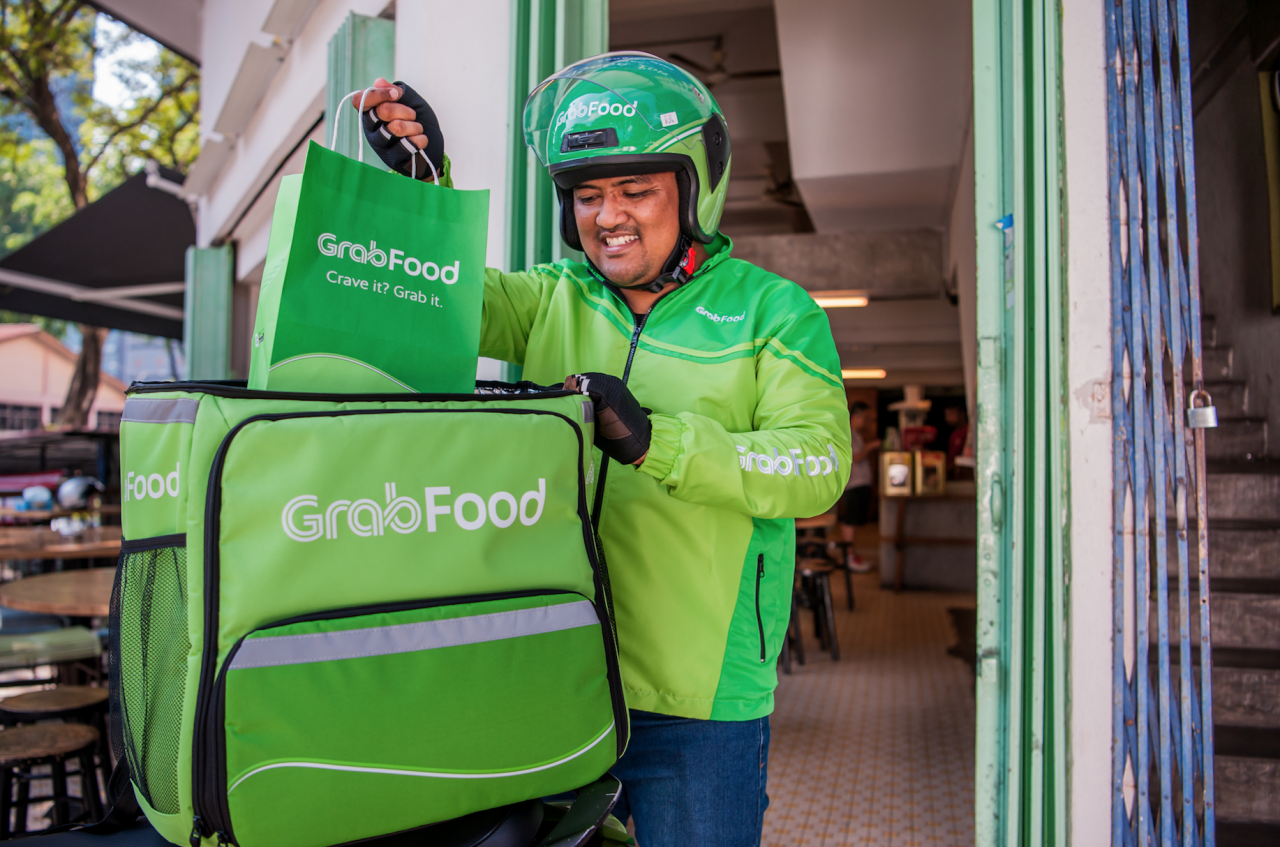
    Despite being a new entrant, GrabFood has experienced rapid growth in the online food delivery market. GrabFood recently announced that it has grown 25 times since June 2018, in terms of orders received. A survey by Kantar TNS in January 2019 found that GrabFood was the most often used food delivery service in Hanoi and Ho Chi Minh City, as cited by 68 percent of respondents.

    The GCOMM market research company, which polled 600 people in Hanoi and Ho Chi Minh City, said in a recent report that 98 percent were satisfied with GrabFood’s service.

    This was a surprising outcome, given that GrabFood is a new entrant in Vietnam’s food delivery market, which is witnessing fierce competition with the likes of Foody.vn, Now and Vietnammm all in the fray.

    Grab’s ecosystem with a large network of driver-partners has greatly contributed to this success. More than 175,000 driver-partners in 15 cities and provinces have joined GrabFood’s network within seven months. The problem of recruiting a huge number of partners, which demands a large recruitment team and financial resources and yet takes many years, has been overcome.

    Driver-partners also saw a 20 percent increase in income from delivering food and parcels, according to latest statistics from Grab.

    Instead of offering a slew of discounts and other promotional programs to attract customers, GrabFood competes based on creative strategies, adapting to the diverse demands and tastes of customers in the various regions. GrabFood has also focused on building a network of merchant-partners. According to a Grab representative, an expansion in the number of merchant-partners was imperative for further growth. GrabFood cares about its partners’ growth and wants to build a win-win relationship so that they can grow together, the representative said.

    For example, GrabFood has many exclusive menus of well-known restaurants with “GrabFood Signatures”. These co-created dishes and drinks are constantly in the top three of most ordered items at big partners like Gong Cha and MeetFresh.

    In addition, GrabFood has reduced the average delivery time to just 20 minutes, which means customers can enjoy their favorite food delivered fresh and delicious. This, in turn, means that merchant-partners can retain customer loyalty. At the same time, marketing campaigns undertaken in cooperation with GrabFood help them increase their customer base.

    The Grab representative also said that on average, merchant-partners earn up to 300 percent in incremental revenue within two to three months of being on the platform.

    GrabFood has the advantage of being a technology mobile platform to which smart functions have been integrated, including locating the nearest restaurants, updating status of orders and chatting with drivers via GrabChat.

    Cashless payment for food delivery via GrabPay by Moca has been beta tested in Hanoi, and will soon be expanded to all three cities GrabFood currently operates in.”Our goal is to become the number one on-demand food delivery service in Southeast Asia and Vietnam in 2019,” the representative said.At the beginning of 2019, GrabFood announced that it was expanding its network to 15 cities and provinces.

    “On the whole, Grab’s management has made good moves. Expanding into payments and food delivery are smart, synergistic moves,” said Nitin Pangarkar, Associate Professor, Department of Strategy and Policy at the National University of Singapore (NUS) Business School.

  • Alfamart Philippines opening 200 new stores this year

    Alfamart Philippines opening 200 new stores this year

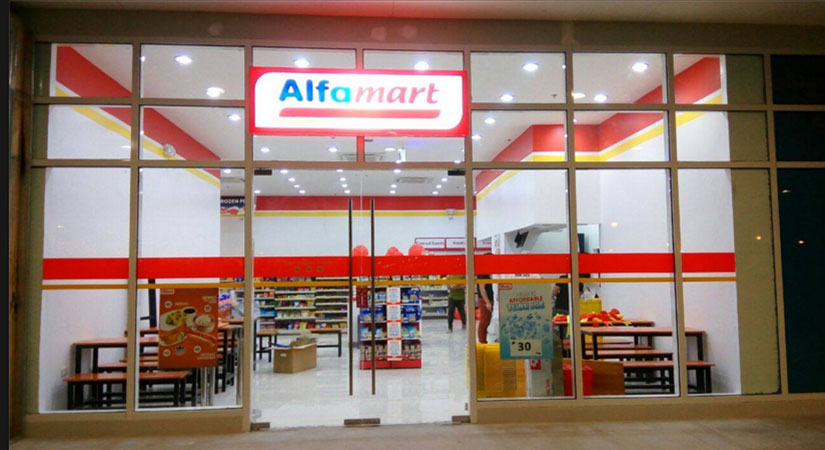
    Mini-mart chain Alfamart will open 200 new stores in the Philippines next year, according to a Fitch Ratings report. It said Alfamart Philippines stores already has 400 stores in the country, of which 180 were opened this year in partnership with local operator and majority stakeholder SM Group. The 200 new stores will take its total network to 600 locations in the Philippines by the end of next year.

    “Alfamart’s investment risk for its Philippine expansion is mitigated by the strong presence of SM Group in the country … Fitch expects Alfamart to have access to SM Group’s large business network and tap its widely known brand”.

    SM Retail operates 1729 stores nationwide. Alfamart’s Indonesian parent has a 35 per cent stake in the Alfamart Philippines business.

    According to the report, “Both Indonesia and the Philippines are consumer-driven markets with young populations and expanding middle classes. Both economies have similar income levels of GDP per capita of US$3000-$4000. Consumers in both markets also prefer to buy small amounts of bundled products rather than filling grocery carts”.

    It described the mini-mart sector in the Philippines “as untapped and having limited competition … the existing players mostly operate convenience stores that carry more limited products. Alfamart’s stores offer additional products, such as fresh and frozen food, personal care and small household appliances, giving the company some competitive advantage in grabbing market share.

    “Alfamart chose to expand in the Philippines as it believes it has more potential than other Southeast Asian markets, such as Thailand and Vietnam.”