Tag: Market

  • Vietnam tops Southeast Asia in IPOs

    Vietnam tops Southeast Asia in IPOs

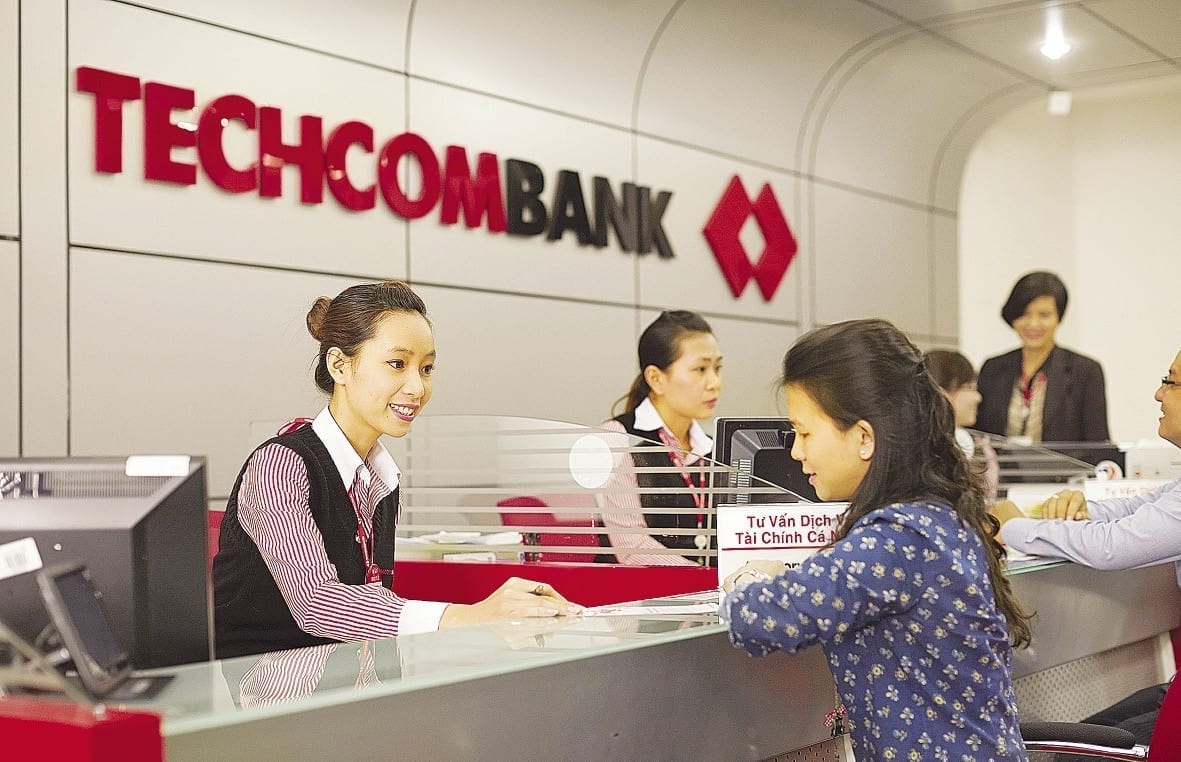
    Vietnam surpassed Singapore and Thailand to top Southeast Asia in initial public offerings (IPOs) last year, raising $2.6 billion. This figure was 3.7 times that of 2017, according to consultancy Ernst & Young. Two of three largest IPOs in Southeast Asia last year were launched by Vietnamese companies: $1.34 billion from Vinhomes, a real estate developer of Vietnam’s biggest private firm Vingroup; $923 million from Techcombank, the country’s largest private sector lender.

    However, an opposite trend was seen in Southeast Asia as a whole, with the money raised from IPOs dropping 34 percent over 2017 to $7.1 billion.

    The number of IPO deals in the region also decreased by 7 percent to 115, with 56 of them raising less than $10 million.

    Ernst & Young economist Max Loh said that the reason for this drop was U.S-China trade tensions, which affected the capital market in the region, as Southeast Asian countries have close trade relationships with China.

    Experts feel Vietnam has the potential to attract more foreign investments in the future. A report by law firm Baker McKenzie and consultancy Oxford Economics said that Vietnam will top the region in the amount of money raised via IPOs by 2021.

    The rise of Vietnam and other developing countries in Southeast Asia could intensify competition for new listings among the region’s exchanges, said Tham Tuck Seng, PwC Singapore’s capital markets leader.

    This will increase the pressure on Singapore to differentiate itself even more in order to stand out, CNBC quoted Tham as saying.

  • Japanese cosmetics surges in export number

    Japanese cosmetics surges in export number

    Japan’s cosmetics exports are on track to surpass 500 billion yen ($4.53 billion) for the first time in 2018, marking a sixth consecutive record year, thanks to Asian tourists who continue to buy these products after returning home. Exports in the January-November period grew 44% on the year to 482.8 billion yen, according to a tally of 16 types of cosmetics compiled from trade data by Nikkei. Demand for gifts tends to boost exports in December, and with major cosmetics makers’ plants running at high capacities, the full-year figure is expected to reach around 520 billion yen.

    Mainland China was the top buyer from January through November, accounting for 34.9% of exports by value, followed by Hong Kong at 25.9%, South Korea at 10.3%, Taiwan at 7.3% and Singapore at 7.3%. Asia accounted for 90% of the total.

    Japan’s cosmetics exports have tripled in the last four years along with a rise in visitors to Japan. Exports exceeded imports for the first time in 2016 as inbound tourism creates new customers for high-quality Japanese goods who continue to buy them online or in stores upon returning home.

    Cosmetics exports are likely to keep climbing in 2019. China will implement in January its first e-commerce law, which will require domestic online platforms to register with the government. With the crackdown on illegal marketing, direct exports of Japanese cosmetics are expected to increase as smaller Chinese retailers that sell goods procured directly from shops in Japan decline.

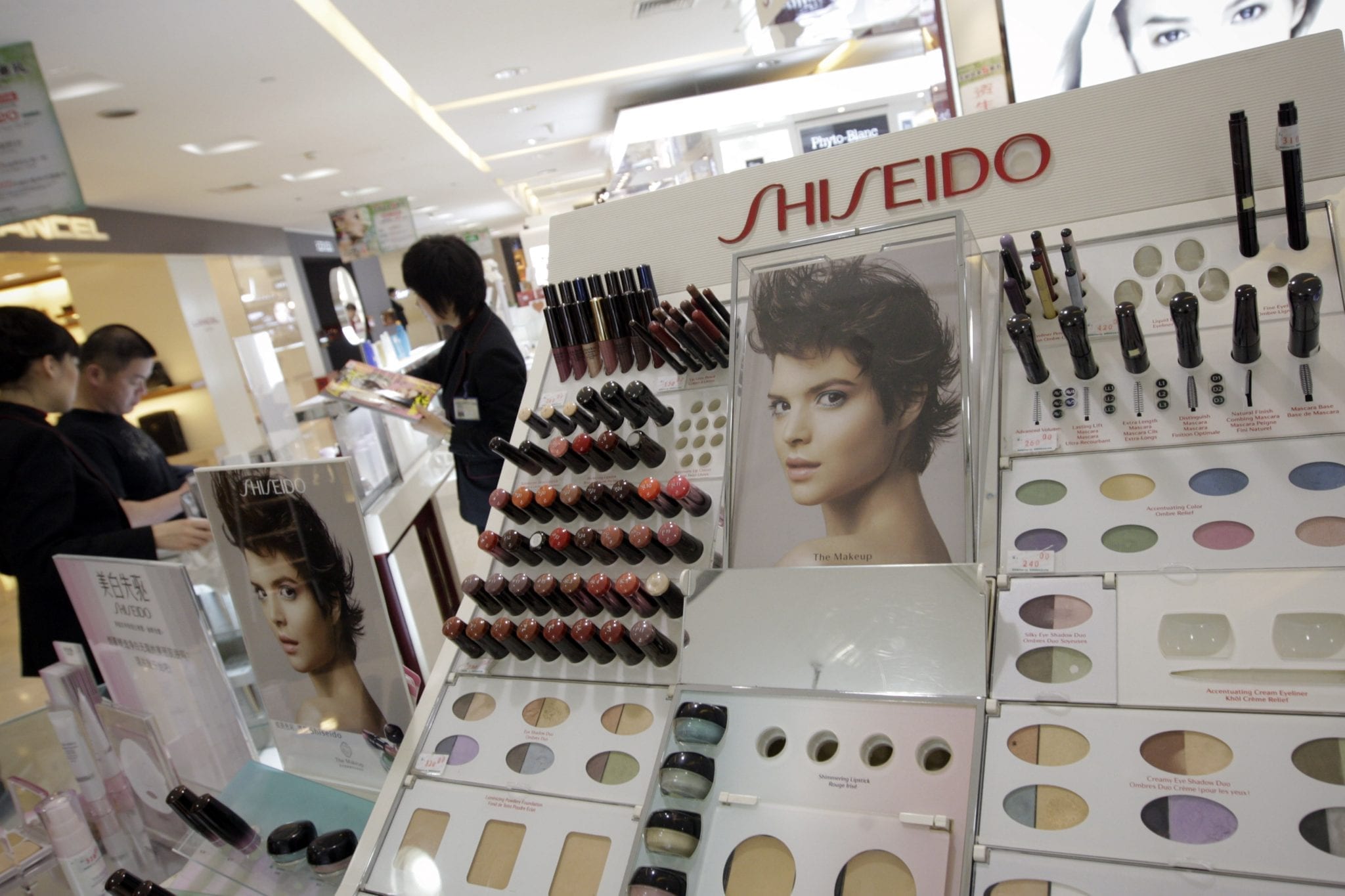
    Top cosmetics makers are also actively expanding their sales. Shiseido plans to begin in 2019 officially selling new products in China from its namesake mainstay brand, which launched worldwide this fall. The company will open a facility for collaboration with Alibaba Group in Hangzhou from January and jointly develop products with the Chinese e-commerce empire.

    Kao plans to double the number of stores in China carrying its popular Freeplus skin care brand to more than 2,000 by 2020. It will also cultivate sales for its makeup brand Kate, which launched a Chinese marketing campaign in December. Kose is accelerating the online sales campaign it began in China this autumn for its luxury brand Decorte.

    Japanese cosmetics makers are increasing the capacity of domestic plants to meet the surging export demand. Shiseido plans to bring a new domestic factory online in 2019 for the first time in 36 years, in Tochigi Prefecture, to produce more items like skin care products. It will also begin operations at a new facility in Osaka Prefecture in 2020.

    Kao will roughly double production for its Freeplus brand from 2017 levels, too, by investing in its main factory in Kanagawa Prefecture. Boosting domestic production is likely to encourage exports further by increasing supplies of “made-in-Japan” cosmetics.

  • VN-Index ends year 10 percent lower

    VN-Index ends year 10 percent lower

    The VN-Index closed the last trading day of 2018 at 892.54 points, down almost 10 percent from the year’s outset. This was a drop of 93 points from January 2, the first trading day of the year. The benchmark closed below the 900-point mark on Friday, a drop of over 25 percent from its peak at over 1,200 points in April. The VN30-Index, representing the 30 largest tocks in terms of capitalization, closed at 854.99 points, dropping 10.46 from Thursday, or 1.21 percent lower.

    Many stocks in the VN30-Index also ended in the red. Diary giant Vinamilk closed at VND120,000 ($5.2), 2.6 percent lower.

    Vietnam’s top petro importer and distributor Petrolimex fell 5.69 percent to VND53,000 ($2.3), while food company Masan dropped 1.9 percent to VND77,500 ($3.36).

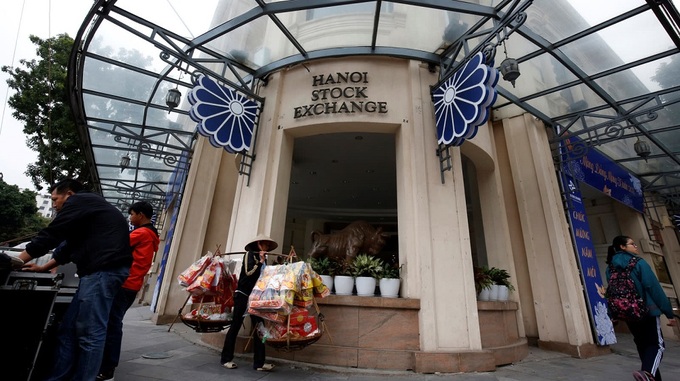
    However, the HNX-Index on the Hanoi Stock Exchange and the UPCoM-Index for unlisted public companies ended in the green, up 0.24 percent and 0.46 percent respectively.

    Vietnam’s largest private firm Vingroup (VIC) ended the day at VND95,300 ($4.13), 6.93 percent lower. Vincom Retail’s VRE stock dropped almost five percent to VND27,000 ($1.17).

    Total market capitalization of all three stock markets, the Ho Chi Minh City Stock Exchange (HOSE), HNX and UPCoM, was VND4 trillion ($173.25 million).

    2018 has proved the most turbulent year for VN-Index since the 2008 crisis, ending an increasing run since 2016.

  • Grab eyes stake in Vinasun, taxi company refuses to play ball

    Grab eyes stake in Vinasun, taxi company refuses to play ball

    Grab’s surprise offer to buy a $2.78-million stake in top taxi company Vinasun has failed, with the latter asking to end negotiations. The negotiations between the two firms began earlier this month for compensation claimed by Vinasun from the Malaysian ride-hailing firm after the People’s Court of Ho Chi Minh City yet again adjourned hearing of a suit Vinasun had filed last year.

    A Vinasun spokesperson told the court following the latest resumption of the trial Wednesday that his firm had declined the offer since Grab had not made an appropriate offer. “We don’t want to continue the negotiations.”

    But Grab does not want the lawsuit to continue.

    Its spokesperson said: “We have become very tired during the 17 months of this trial for damages we did not cause. We do not want Vinasun to waste its time on this meaningless lawsuit. We consider the proposal to buy Vinasun’s stake an investment activity, and we expect to cooperate with Vinasun to end the case in a good way.”

    Vinasun filed the suit against Grab in June last year, accusing it of abusing the Ministry of Transport’s pilot scheme and committing violations.

    It said Grab’s illegal activities were responsible for nearly VND42 billion (nearly $1.8 million) of the VND76 billion ($3.25 million) worth of losses it had suffered in 2016 and the first half of 2017.

    The trial began last February, but was adjourned a month later to allow for more evidence to be gathered. Grab had protested against the value of Vinasun’s losses.

    Last October prosecutors asked the court to accept Vinasun’s petition for compensation of nearly VND42 billion, rejecting Grab’s claim it was a tech firm and not a taxi company.

    Grab responded by writing to Prime Minister Nguyen Xuan Phuc to say that identifying it as a taxi firm would be “a step backward from Industry 4.0.”

    The latest draft of a transport ministry decree requires firms offering taxi services to register as taxi firms before they can apply ride-hailing technologies.

    This means that Grab and other ride-hailing firms have to register afresh as taxi businesses and comply with legal requirements related to operating licenses, drivers’ profiles and taxes.

  • Gas Malaysia ups natural gas tariff

    Gas Malaysia ups natural gas tariff

    Gas Malaysia Bhd has announced a higher average effective natural gas tariff for the non-power sector in Peninsular Malaysia at RM32.92 per MMBtu, which is 0.7% higher than the current RM32.69 per MMBtu. The revision will be effective from Jan 1, 2019 to June 30, 2019.

    The group told the stock exchange that the government has issued an instruction for the company to effect the natural gas tariff revision starting early next year.

    The average base tariff will be set at RM32.69 per MMBtu.

    Under the gas cost pass through (GCPT) mechanism, a surcharge of RM0.23 per MMBtu will apply to all tariff categories for the period beginning Jan 1 to June 30, 2019. This translates to an average effective tariff of RM32.92 per MMBtu.

    However, for Category A (Residential), the effective tariff rate fell 0.34% to RM23.72 from RM23.80 per MMBtu.

    Gas Malaysia said while the tariff revision has no material impact on its business operations, it is expected to contribute positively towards its financial position for the financial year ending Dec 31, 2019.

    To note, the government has prescribed the Incentive-Based Regulation (IBR) framework which sets the base tariff for a regulatory period of three years from January 2017 and allows changes in the gas costs to be passed through via the GCPT mechanism every six months.

    Gas Malaysia shares closed 0.74% or two sen lower at RM2.69 with 547,300 shares transacted.

  • Italian fast fashion brand set for Vietnam debut

    Italian fast fashion brand set for Vietnam debut

    Italy’s OVS midrange fashion brand will open its first outlet in Ho Chi Minh City this weekend. ACFC, distributor of IPP Group, a major Vietnamese fashion retailer, has confirmed that they are introducing the OVS brand in Vietnam. OVS is a popular fashion brand in Europe. In Italy, the brand has 15 percent of the market share in the country’s children aged 0-14 segment.

    The company’s products range is geared towards consumers of all ages. Its collection stretches from bold, urban looks, to elegant, formal office attire. At the same time, the OVS price tag targets the mass consumer segment.

    An increasing middle-class population has made Vietnam a magnet for international fast fashion brands, industry insiders have noted.

    The middle and affluent class, categorized as those earning $714 a month or more, would double to 33 million, about a third of the population, between 2014 and 2020, it is reported recently, citing a study by the Boston Consulting Group.

    Market research firm Nielsen estimates the number of middle and affluent class Vietnamese will reach 44 million by 2020 and 95 million by 2030.

    By late 2017, there were some 200 international fashion brands, including Zara, H&M, Stradivarius, Pull & Bear and Massimo Dutti, in Vietnam, accounting for more than 60 percent of the market share.

    A survey released in October last year by market research firm Q&Me showed fashion items topping online purchases in Vietnam, followed by IT products, cosmetics, food and beverage, and books and stationery.

    According to Statista, a database portal of statistics, consumer survey results and industry studies, the apparel market will be worth $2.74 billion this year and is set to grow at 7.7 percent annually until 2021.

  • HSBC sells 49% of HSBC Amanah Takaful

    HSBC sells 49% of HSBC Amanah Takaful

    HSBC Holdings plc’s indirect wholly owned subsidiary HSBC Insurance (Asia Pacific) Holdings Ltd is selling a 49% stake in HSBC Amanah Takaful (Malaysia) Bhd to FWD Life Insurance Company (Bermuda) Ltd. The transaction has obtained approval from the Minister of Finance, via Bank Negara Malaysia, and is expected to be completed during the first half of 2019.

    “We have decided to exit the takaful manufacturing business and focus on our banking operations in Malaysia. This transaction relates only to a change in ownership for the takaful joint venture. For the HSBC Group, the transaction does not have any impact on our current businesses in Malaysia, comprising HSBC Bank Malaysia Bhd and HSBC Amanah Malaysia Bhd. Malaysia remains a key insurance distribution market for us and we will continue to support the insurance needs of our customers through our insurance partners,” said HSBC Bank Malaysia Bhd CEO Stuart Milne.

  • Global grocery markets growth fuelled by Asia, says IGD

    Global grocery markets growth fuelled by Asia, says IGD

    Global grocery markets are likely to generate an additional US$1.9 trillion in sales by 2023, led by Asian countries, according to new research data. The IGD forecast, based on IMF, World Bank, UN and Oanda base data, predicts Asia will see the strongest real growth – from population growth or consumers spending more on grocery – and is set to account for 47 per cent of the additional spend between 2018 and 2023. The forecast anticipates that nearly half (44 per cent) of extra sales will be created in Asia, which will add more than Africa, Europe and Latin America combined.

    Asia as a region will contain seven of the largest global grocery markets by 2023, with a combined market size of US$3.8 trillion.

    On growth in Asia, Nick Miles, head of Asia Pacific at IGD said: “China’s grocery market is expected to continue growing over the next five years, establishing itself as the largest grocery market globally. While growth varies between markets across Asia, countries such as India, Indonesia, Pakistan and Vietnam will continue to grow in importance for retailers and suppliers given the large populations, improving levels of GDP per capita and the development of modern trade. Retail partnerships have also in some cases helped retailers accelerate growth ahead of the market, and we expect more of these relationships to emerge and develop over the next year.

    “Grocery growth in Asia continues to benefit from a rapidly growing middle class, fast development and adoption of new technology, improved infrastructure and logistics networks, plus improvements to retail standards. Modern trade retailers continue to expand their store networks and improve existing operations.

    Meanwhile, traditional trade still plays a role, with mom-and-pop stores modernising their offerings and tailoring services to local communities. In countries like China and India this is being aided by online retailers such as Alibaba and Amazon.

    “Across Asia the pace of development and focus of retailing varies by market. However, online is expected to be the fastest growing channel regionally over the next five years,” said Miles.

    “Online grocery retailing is already well established in countries like South Korea, Japan and China and we expect the share of sales accounted for by channel in these markets to increase to over 10 per cent by 2023.

    While online grocery retailing is growing rapidly across Southeast Asia we expect it to still account for less than 2 per cent of sales in most markets in five years’ time.”

  • Le Eco Auctioning Beijing Mall on Taobao for RMB2.3B

    Le Eco Auctioning Beijing Mall on Taobao for RMB2.3B

    Chinese tech firm LeEco has put a Beijing shopping centre up for auction on Chinese e-commerce platform Taobao. Experiencing financial difficulties, yet determined to uphold its online trading practices, the firm has listed the 50,000sqm Beijing Shimao Gongsan Plaza at a reserve of RMB2.3 billion (US$334 million). The move follows legal action by mortgagor China Citic Bank against LeEco for failing to meet repayment obligations.

    The auction opens on Taobao’s distressed asset channel, which saw an 88 per cent rise in listings in October against the backdrop of China’s enormous bad debt market. Under supervision of the courts, the auction will start on January 7 at 10 am and run for 24 hours.

    The property was expected to sell last year to leading Chinese developer China Vanke, but was not traded due to unmatched expectations in price.

  • HCMC a top 20 Asia Pacific office rental market

    HCMC a top 20 Asia Pacific office rental market

    With office rents rising constantly for several years, HCMC has moved into the top 20 Asia-Pacific office rent markets. Grade-A office rents in Ho Chi Minh City have reached a five-year peak of $936 per square meter a year, according to property service firm JLL. The HCMC market has come under the spotlight in a premium office rent report for the Asia-Pacific region just released by the US-based global company.

    The report said that HCMC, an emerging market, saw annual gross premium office rents rising to $635 per square meter, a year-on-year increase of nearly seven percent, placing the city in the list of top 20 office rent markets in the Asia-Pacific region.

    It highlighted the case one unnamed building in the inner city, where a record rent level of $936 per square meter a year was registered, a peak unseen for many years.

    JLL assumes that the HCMC office market is heating up with increasing investment inflow from many multinational firms.

    The US firm added that the total supply of office space in HCMC has increased to two million square meters, a five-fold hike compared to Bangkok. The scarcity of premium office space in HCMC has constantly pushed up rents.

    Financial corporations are willing to pay for high-end office space in HCMC, while banking and financial firms were keen on premium office space, topping the list of 72 key tenant categories.

    Meanwhile, JLL said in the Global Premium Office Rent Tracker Q4 2018 that Ho Chi Minh City and Manila, the two more affordable cities in Southeast Asia, are attracting significant corporate interest, along with European cities like Amsterdam, Berlin and Warsaw.

    The firm said that growth in occupation costs is likely to slow down in 2019 as new supply comes through; however, while rental growth is expected to decelerate, there are very few major markets where a downward correction is projected for 2019. In fact, the delivery of new premium buildings will set fresh rental benchmarks in several markets, it predicts.

    Total occupancy costs are calculated by combining the net effective rent with additional costs, including service charges and taxes.

    JLL’s Global Premium Office Rent Tracker 2018 compares occupancy costs for premium office buildings across the world’s leading real estate markets. This fourth edition includes 72 office submarkets across 61 cities.

    The report includes the key elements of occupancy costs – net effective rent, service charges and government tax on rent – all standardized to enable true international comparisons.

  • Indonesia’s November Inflation Rate Surprisingly Picks Up

    Indonesia’s November Inflation Rate Surprisingly Picks Up

    Indonesia’s annual inflation rate accelerated for a second straight month in November, the statistics office said on Monday, against an expectation for price pressures to ease. The consumer price index rose 3.23 percent in November from a year earlier, Central Statistics Agency (BPS) chief Suhariyanto said, attributing the increase to rising prices of some food products and airfares. On a monthly basis, it rose 0.27 percent.

    October’s rate was 3.16 percent, while a Reuters poll had expected a November annual inflation rate of 3.15 percent.

    The November rate was still well within the central bank’s target range of 2.5 percent to 4.5 percent for 2018.

    The annual core inflation rate, which excludes government-controlled and volatile prices, also picked up more than expected in November to 3.03 percent, from 2.94 percent in October. The poll had expected a core inflation rate of 2.97 percent.

    Bank Indonesia has hiked interest rates six times this year by a total of 175 basis points since May to support the rupiah, despite benign inflation. The currency plumbed levels not seen since 1998 earlier this year but has sharply strengthened last month due to improving global investor sentiment.

  • Millennials Dominate Indonesia’s Online Shopping Scene

    Millennials Dominate Indonesia’s Online Shopping Scene

    Millennials are driving growth in Indonesia’s e-commerce industry as they buy a wide range of items, from clothes and gadgets to phone credit and electricity tokens, from online outlets with increasing frequency, according to a recent report from market research and consulting firm Ipsos Indonesia. The E-Commerce Outlook 2018 report released on Monday looked at the profiles of 32 million online shoppers in the country.

    The study drew results from an online survey in August. Ipsos Indonesia said the study served as an exploratory stage to be followed up by a more extensive survey planned for next year.

    The study found that 64 percent of online shopping is dominated and driven by millennials, both in terms of product categories and revenue, Ipsos research director Andi Sukma said, referring to the 25-30 age group.

    “They are made up of young families that have a minimum income of Rp 4 million [$280] per month,” said Indah Tanip, an associate director at Ipsos Observer.

    Most millennials are drawn to e-commerce for its convenience and competitive prices, the rise of financial technology and online payment platforms, such as OVO and Go-Pay, which have also encouraged more millennials to purchase their phone credit and pay bills through e-commerce apps, the Ipsos report said.

    The report also identified the five most-visited e-commerce sites: Tokopedia, Shopee, Lazada, Bukalapak and Blibli.com.

    Citing data from the Indonesian Internet Service Providers Association (APJII), Ipsos said the wider availability of broadband internet in the country has helped fuel e-commerce growth. About 72 percent of Indonesians living in urban areas and nearly 50 percent in rural-urban areas have internet access.

    The E-Commerce Outlook 2018 report also looked at community habits, online service accessibility, popular e-commerce sites and consumers’ preferred payment methods.

  • The Body Shop Malaysia franchisee plans IPO

    The Body Shop Malaysia franchisee plans IPO

    Rampai-Niaga, The Body Shop Malaysia franchisee, is planning an IPO that could raise RM200 million (US$48 million). The company is considering submitting a listing application to the local securities regulator shortly, targeting a presence on Bursa Malaysia by the second quarter of next year at the earliest, according to a source close to the firm. As yet, the company has refrained from commenting on the proposal.

    The company’s website says Rampai-Niaga is the sole franchisee for The Body Shop Malaysia. It opened the beauty products brand’s first outlet in the country in 1984.

  • India Ancestry opens first store in Kolkata

    India Ancestry opens first store in Kolkata

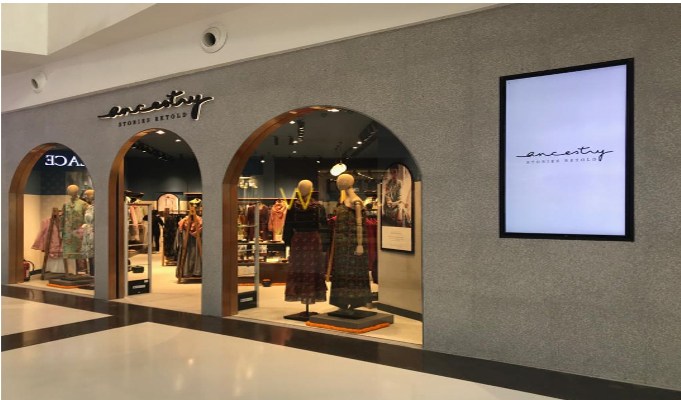
    The newest brand from Future Style Lab, Ancestry, which launched its maiden store in the capital city in May, has recently opened its first store in Kolkata, South City Mall. The brand, which presents a contemporary take on traditional Indian fashion and lifestyle, has earned many accolades in India’s fashion circles already and seems all geared up to woo Kolkatites too.

    Ancestry is inspired by the evolving face of the new age Indian who is self-assured, professionally competent and curious to discover new paths. The brand’s offering, encompassing women’s apparel & accessories, home furnishings, and other lifestyle products, is constantly evolving and is in line with international trends, and yet interestingly rooted in Indian heritage and crafts.

    With pricing that is perfectly suited to any urban Indian’s pockets, Ancestry’s unique collection of dresses, tops, and tunics are created completely using natural fabrics, thereby offering an unmatched quality and fashion sensibilities in that price range. This is one of the key reasons why the brand’s products have nearly flown off the shelves at its current stores in Delhi and Mumbai.

    For the new store launch, Manjula Tiwari, CEO at Future Style Lab, the parent company of Ancestry, said, “Ancestry provides an unparalleled, modern-day experience of old-style Indian artistries, and we’re sure that the brand’s offering will find much love and appreciation with our consumers in Kolkata. We’re truly excited about launching this store, and are thankful to South City Mall for providing us with an impeccable space and opportunity, right in the heart of Kolkata.”

    Ancestry’s tagline #StoriesRetold, perfectly sums up its ethos, for every line of products the brand comes up with tells the story of a particular craft or tradition, but in a way that is suited to the new-age lifestyle.

  • Demand of women’s athleisure wear growing at a rapid pace globally : Lotto

    Demand of women’s athleisure wear growing at a rapid pace globally : Lotto

    Lotto Sport Italia S.P.A, a major name in international sports industry, is nothing less than a household name in India. The brand is manufactured, retailed and licensed by Sports Station Pvt Ltd (SSIPL) in India. The organization has been instrumental in the brilliant re-launch of the brand Lotto Sports in India, making it available across nation.

    According to Shivam Kataria, Vice President, SSIPL Retail, since Lotto has been in India from a very long period of time, either customers have grown up wearing the brand or are aspiring to wear it. “The brand awareness of Lotto is so strong in India that many customers instead of considering it as an Italian brand, think that it is an Indian brand.”

    Abroad, the brand is associated with football and tennis. But it gained its share of popularity in India in the running segment. Slowly and gradually as the Indian market followed international trends and inclined towards the athleisure segment from performance wear, Lotto has also changed its perspective.

    “The Athleisure market is poised to grow 15-20 percent year-on-year. Seeing the immense scope in the category going ahead, Lotto also started changing its outlook towards the market by expanding into the athleisure segment. However, the running segment, football and tennis shoes remain core to the brand,” states Kataria.

    Explaining it further, he says, “A majority of people across the globe have started participating in sports, not for competition but for their well-being, for interaction and for fun. They want sportswear which can be worn in the morning, afternoon and evening. They want to feel comfortable wearing the same shoes in office as well as to a club, and this is the major reason behind the rising demand of athleisure.”

    Another category which has seen a spike in demand at Lotto is women’s wear.

    “Currently, 30 percent revenue is coming from the women’s segment. We are targeting to close this year with 30 percent contribution from women customer including footwear and apparel,” asserts Kataria.

    Target Consumer

    The brand caters to modern-day consumers who consider fitness a lifestyle. It also focuses towards catering to the needs of serious sports enthusiasts. Lotto is also positioned as a brand, which delivers international standard sports merchandise to Indian sport enthusiasts.

    Omnichannel Strategy

    According to Kataria, there are two ways to go Omnichannel – to have your own website or to partner with various e-commerce players. “We have partnered with various e-commerce players as cost of customer acquisition is quite high with our portal.”

    “Omnichannel is still evolving in India and in the next six months to one year, the entire system around Omnichannel is expected to get cemented,” he explains. Going forward, Lotto is planning to introduce their own e-commerce portal.

    “Store integration from an Omnichannel perspective is underway and we can expect it to be fully functional in six months,” he states The brand, which has men’s footwear as the fastest moving category, gets 25 percent contribution to the overall revenue from online business.

    Future Plans

    At present, the brand has 36 EBOs across major locations in Delhi/ NCR, UP, Haryana, Maharashtra, West Bengal, MP, J&K, Uttrakhand and Gujarat. It has presence in over 200+ MBO’s including Sports Station, Reliance Footprints, Pantaloons, and leading e-com portals like Flipkart, Amazon, Snapdeal and Jabong.

    Elaborating on the expansion plans of the brand, Kataria reveals, “This fiscal, we are planning to open more 15 EBOs in North, East and South regions and add another 25-30 stores next fiscal. Our plan is to double the store count in one year’s time.”

    “In the next fiscal we will be adding 100 more SIS. We are also looking forward into new categories like bags, luggage and light fitness equipment,” he adds.

    At the same time, the brand is expanding the categories like women’s wear and apparel. According to Kataria, Tier I and Metro cities are where Lotto’s business is and Tier II and beyond is where its growth lies.

    The brand, which has been growing on 35-40 percent year-on-year, plans to grow at the same scale this fi scal too.

    “The same store sales growth has been flatish or slightly negative as compared to last year. However, we are expecting to see a good season from January onwards,” he says.

    The sportswear brand, which endorses the best of athletes in the sports arena including major names like Luca Toni, David Ferrer, Agnieszka Radwanska, Carla Suarez Navarro, Kevin Anderson and many more, is targeting Rs 150 crore plus revenue in India.