Tag: Market

  • Vingroup’s smartphone launched soon

    Vingroup’s smartphone launched soon

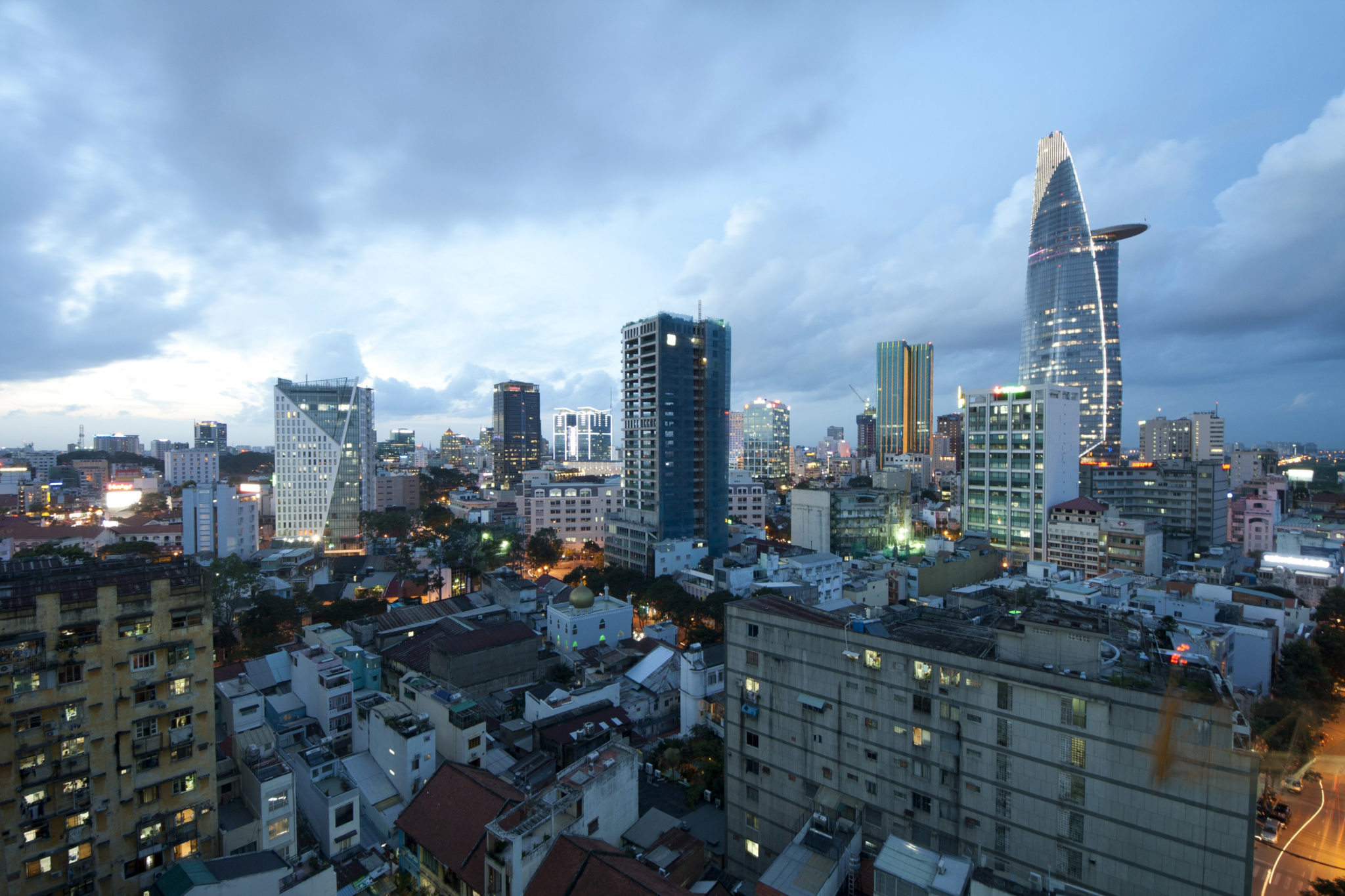
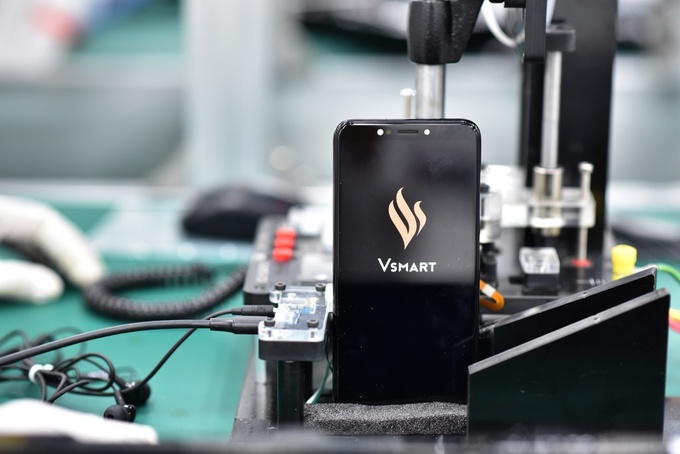
    Vietnam’s largest private conglomerate, Vingroup, will introduce its first smartphones on December 14 as part of its tech expansion. The company will launch four new models under the brand name “Vsmart,” at the Landmark 81 skyscraper in Ho Chi Minh City.

    The phones are produced at Vingroup’s factory in the northern city of Hai Phong, which is capable of making five million phones a year in its first phase of operations, a Vingroup statement said.

    The company will utilize Spanish experts for product development as it owns 51 percent of Spanish technology firm BQ.

    “We hope that Vsmart phones, alongside VinFast cars, will contribute to the development of Vietnam industry and bring Vietnamese brands to the world,” said Nguyen Viet Quang, vice chairman and chief executive officer of Vingroup.

    Vingroup became the country’s first full-fledged domestic car maker two months ago, introducing three new car models. In June, it established the VinSmart Co. to produce smartphones and other smart electronic devices with a registered capital of VND3 trillion ($131.54 million).

    VinSmart is also working with Qualcomm and Google’s Alphabet Inc to “update to the most advanced technology in the smartphone sector,” the statement said.

    The company will be the newest phone maker seeking success in Vietnam, a country of 95 million people. The market is currently dominated by Samsung and Apple phones. Vietnam is the largest smartphone production base for Samsung Electronics.

    Vingroup said its VinSmart factory will also produce smart TVs and other smart products in the future.

  • Amazon briefly edges out Apple to top Nasdaq

    Amazon briefly edges out Apple to top Nasdaq

    Amazon briefly became the most valuable company on Wall Street in intraday trade on Monday, days after Microsoft dethroned long-time leader Apple. Amazon rose by 4.7 percent at one point, putting its market capitalization at $865.0 billion. At the same time, Apple traded up 2.1 percent, giving it a market capitalization of $864.8 billion.

    Microsoft, which on Friday closed above Apple’s market capitalization for the first time in eight years, was up 0.9 percent, leaving its stock market value at $859.0 billion, third in the group.

    Amazon’s lead lasted only a few seconds. At the close, Apple was back on top with a 3.49 percent increase in its stock that put its total value at $877 billion. It was followed by Amazon, up 4.86 percent with a market capitalization of $866.6 billion, and then Microsoft, up 1.08 percent and a stock market value of $860.4 billion.

    The tight race between the trio of high-powered technology stocks coincided with a broad stock market rally after the United States and China agreed on a temporary truce in their ongoing trade dispute.

    Apple in August became the first U.S. publicly listed company to reach a $1 trillion market capitalization, but its share price has fallen sharply in recent months as investors worried that demand for iPhones was losing steam.

    Its market capitalization overtook Microsoft’s in 2010 as Microsoft struggled with slow demand for personal computers, due in part to the explosion of smartphones like the iPhone.

    Amazon’s stock has recovered most of the ground it lost after the online retailer in October forecast disappointing sales for the holiday quarter.

  • Niche market of coffee lover in Korea

    Niche market of coffee lover in Korea

    South Korea’s cafe market is notoriously crowded pushing some large players to the brink and suffering from price attacks from convenience store operators. Yet niche is still a nice place to be, judging by the experiences of a small Seoul startup.

    Two young entrepreneurs have shared their vision of launching a coffee franchise called That Coffee Roasters.

    Co-CEOs Chin Kyo-hwa and Lee Chang-hoon reported that redecorating their first coffee shop to appeal more to female customers was key to their initial success.

    According to Chin, low early revenues escalated after the change.

    “It took more than three years for our coffee shop to gain popularity,” he said. “The store’s monthly sales more than doubled in the past two months on the back of word-of-mouth online and the new interior design.

    “The store is tiny and small, but we hope to launch at least three more stores in less than five years in Seoul.”

    Chin and Lee also run a roastery factory in Guro, Seoul for direct sale to clients. While the business currently serves a small client base, the pair are already planning to expand operations as the company gains more traction.

  • Saigon apartment sales dip to lowest in 18 months

    Saigon apartment sales dip to lowest in 18 months

    The third quarter of 2018 saw apartment liquidity in Saigon fall to the lowest level in six consecutive quarters. According to property services provider Savills Vietnam, only 10,000 apartments were traded in Saigon in the third quarter of this year. The apartment sales were down 30 percent from last quarter and down 13 percent year-on-year.

    Grace C apartments took up 54 percent of total sales.

    Savills forecasts that by 2020, more than 124,000 apartments will be offered in the market, with Districts 2 and 9 in the eastern part of the city accounting for 55 percent of total supply.

    Meanwhile, another recent report compiled by property services provider CBRE Vietnam has reported even lower sales than Savills, at only 6,568 apartments sold in Q3. According to CBRE, sales fell 7 percent from the previous quarter, and was down 16 percent over the same period in 2017.

    Large disparities between real estate reports have existed between these two companies and are attributed to differences in statistical methodology.

    Recently, the Ho Chi Minh City Real Estate Association (HoREA) released a report on the housing market saying that as of October 31, 2018, there has been a continuous downwards momentum in apartment supply from the beginning of the year.

    During this period, total housing supply in the Saigon market fell 39.2 percent. The supply of high-end luxury apartments fell 9.6 percent, and that of midrange apartments by 37.5 percent. But the biggest decrease in supply was in the low-priced apartment segment, which was down 68 percent.

    The association warned that the structure of real estate supply showed a serious disequilibrium in the market, with low priced apartments taking up only 19.3 percent of total supply while luxury apartments take up a third.

    This showed a mismatch between demand and supply, posing a risk to sustainable development and social welfare, it said.

  • Ashley furniture now available in Thailand

    Ashley furniture now available in Thailand

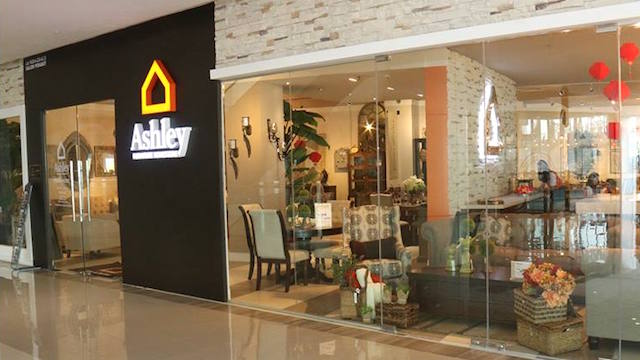
    US furniture retailer Ashley has launched in Thailand, partnering with local home furnishing and decor chain Chic Republic. The move is expected to help the brand capitalise on growing market demand and consumer purchasing power in the territory. Ashley president and CEO Todd Wanek said Thailand is a critical and potentially huge market for Ashley, due to its fast-growing middle-class affluence and population of 70 million.

    “There is huge demand for American contemporary and transitional looks in Thailand. This is why Ashley took the time to find the right partner, test the market thoroughly and made this decision after more than three years of finding the right fit.”

    Chic Republic’s strategy for expansion aims to target mid- to high-income consumers.

    It aims to sell Ashley’s products online via www.chicrepublicthai.com, and at four retail stores in Bang Na, Pradit Manutham, Ratchaphruek and Pattaya.

    Chic Republic CEO Kijja Pattamasattayasonthi said the outlook for furniture and home decor sales for the remainder of this year and into next is positive, due to demand from middle- to high-income customers, whose spending confidence has increased, as well as support from the increasing numbers of low-rise and high-rise high-end property projects.”

    Ashley has operated globally for more than 70 years, and has worked in the Asia-Pacific region for five years. It has more than 850 branches in 150 countries and brought in global sales of more than US$6 billion last year, accounting for 5 per cent of the brand’s total sales.

  • Vietnam’s blue chips fall faster than stock market plunge

    Vietnam’s blue chips fall faster than stock market plunge

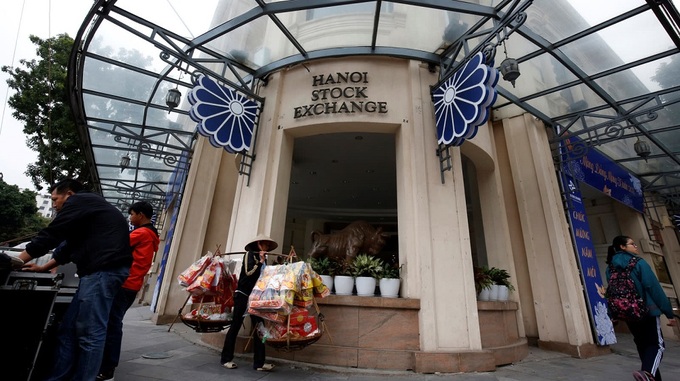
    As business results fall short of targets, Vietnamese blue chips are falling faster than the stock market’s continued plunge. Vietnam’s benchmark VN-Index dropped 23.5 percent to 917.97 points on Friday from its April peak over 1,200 points. In corresponding comparison, the fall in value of blue chips stocks has been more than twice as high. A share of Vietnam’s leading stone manufacturer Vicostone (VCS) on Friday was worth VND75,000 ($3.2), down 47 percent from its peak on April 4 at VND141,600 ($6.06).

    Analysts at that time called the stock a “phenomenon,” as its value surged 50 times from VND3,000 (13 cents) in mid-2014 on the Hanoi Stock Exchange (HNX).

    Vicostone’s profits also rose over 50 percent a year from 2014 to 2017, while its revenue increased from VND2 trillion ($85.64 million) to VND4.35 trillion ($186.27 million) in the same period.

    But this year, maintaining double-digit growth seems to be a challenge for the company as its revenue has stayed the same year-on-year at VND3.2 trillion ($137 million), while net profit fell 7 percent to VND790 billion ($33.82 million) in the first nine months of this year.

    Although the company has reassured shareholders that business is normal and that Vicostone plans to buy its own shares to stop the falling momentum, investors have been selling their holdings at increasing speeds.

    A similar situation can be seen at the Vietnam Prosperity Joint-Stock Commercial Bank (VPBank). Its stocks on Friday morning closed at VND21,950 (94 cents), dropping 48.7 percent from its peak on April 9 at VND42,826 ($1.83).

    Last year, as it focused specifically on consumer finance, the bank’s stocks was one of the most sought-after when it was listed on the Ho Chi Minh City Stock Exchange (HOSE) in August.

    But its stocks value has been dropping this year because business results are not as expected, analysts say.

    The company gained a consolidated net profit of VND4.9 trillion ($209.82 million) in the first nine months, up nearly 9 percent year-on-year, but only 60 percent of the year’s target.

    Securities firm Viet Capital Securities (VCSC) said in its recent report that the bank is not likely to meet targets set earlier this year. It said its own forecast on VPBank’s profit and stock prices for the year could be revised downwards 15-20 percent.

    Major plastic stocks are also falling in value.

    Binh Minh Plastic (BMP) and Tien Phong Plastic (NTP), the country’s two leading plastic producers, had their stock values plunge 50 percent from their peak last year.

    The two companies recorded high growth from 2010-2016. Binh Minh Plastic’s revenues went up from VND1.4 trillion ($59.95 million) to almost VND3.7 trillion ($158.43 million), with gross margin going up to nearly 30 percent.

    In the same period, Tien Phong Plastics also doubled their revenue and had its gross margin rise to almost 36 percent.

    Both companies were able to achieve this growth thanks to cheap materials and continual expansion.

    But as investors started to lose faith in the potential of the plastic industry and the entrance of foreign companies along with higher material costs, the plastic manufacturers had to reduce their profit margins.

    Last year, Binh Minh Plastic’s gross margin dropped to below 23 percent, while that of Tien Phong Plastic fell to 33 percent.

    Other stocks in the country have also fallen. The HNX-Index on the Hanoi Stock Exchange on Friday closed at 104.271 points, down 24.4 percent from its peak in April.

    The UPCoM-Index for unlisted companies on Friday closed at 51.872 points, 16 percent lower from its peak in March.

  • Foreign names dominate Vietnam’s high-end home interiors market

    Foreign names dominate Vietnam’s high-end home interiors market

    Foreign home interior brands and designers are present in force and dominating the increasingly affluent Vietnamese market. Brands like Cassina, Badari Lighting, Cantori, Diemme Cucine, Formitalia, and Versace Home have entered the high-end interior market in recent years.

    According to the Vietnam Chamber of Commerce and Industry (VCCI), some 80 percent of luxury woodwork and interior decoration items is imported from Europe, with local players making up the small remaining portion. The market is valued at $2.5 billion.

    Ly Qui Trung, general director of AKA Furniture Group, said the expansion of the “middle and affluent class” has boosted demand for luxury interior items.

    “It is no wonder that many high-end international interior brands have started rushing into the Vietnamese market.”

    The middle and affluent class, categorized as those earning $714 a month or more, would double to 33 million, about a third of the population, between 2014 and 2020, the Nikkei Asian Review reported recently citing a study by the Boston Consulting Group.

    Market research firm Nielsen estimates the number of middle and affluent class Vietnamese to reach 44 million by 2020 and 95 million by 2030.

    Paolo Lemma, Italian trade commissioner to Vietnam, believes there will be higher demand for interior design items in future due to the booming real estate market.

    According to the HCMC Handicraft and Wood Industry Association (HAWA), woodwork furniture consumption last year was estimated at over $3.2 billion and that number is expected to reach $4 billion this year.

    Huynh Van Hanh, vice chairman of HAWA, said the industry’s average growth rate has been 8 percent in the last seven years, and his association encouraged domestic manufactures to enter this growing market.

    Trung said his company would seek to tap the growing high-end segment in future, and expected fierce competition between domestic and foreign brands.

    Last year Vietnam exported $8 billion worth of wood and forestry products and has a target of $9 billion this year.

  • Chinese grocery market set for solid growth, says IGD

    Chinese grocery market set for solid growth, says IGD

    A report released by the international grocery research organisation IGD has forecast growth of 32.6 per cent in the Chinese grocery market by 2022, preserving its status as the largest grocery market in Asia. Grocery retail sales in China are set to rise to CNY 11.4 trillion (US$1.637 billion), more than India, Japan and Indonesia combined.

    The market is expected to see a CAGR of 5.8 per cent over the next five years, on par with Thailand but slower than markets such as India, Vietnam and Bangladesh, where the economy is growing faster.

    Globally, China will remain the second largest grocery market in the world by 2022, behind the US in terms of value.

    Shirley Zhu, programme director for IGD’s Asia-Pacific research, said China continues to be an exciting market to watch with its significant size and rapid growth. “Retailers with nationwide networks such as Sun Art, Yonghui, Walmart, CRV and Carrefour will reap rewards from ongoing expansion, partnerships with e-commerce players, improved efficiency and investment in small formats.

    “Similarly, e-commerce giants such as Alibaba and JD.com will see significant growth from both online and offline channels and become the second and third largest grocery retailers in China, respectively. Regional players such as NGS, Wumart and Bailian will continue on their journey of transformation and consolidation and focus on profitability.”

    Market share for hypermarkets and supermarkets will remain steady, close to 40 per cent of the market up until 2022. However, the supermarket channel will overtake hypermarkets as the largest sales channel with a market share of 20.7 per cent, says IGD.

    “Convenience will be the fastest-growing physical store channel”, said Zhu. “This will be driven by Alibaba and JD transforming traditional mom-and-pop stores, retailers opening smaller format stores and both local and overseas players expanding their networks through partnerships. Online and offline integration will drive online growth. As the fastest growing channel, we forecast online to contribute up to 11.1 per cent of sales in 2022.”

    Less than half of the grocery sales in China currently go through traditional trade. As the market continues to mature, traditional trade will keep losing share to modern trade, which currently accounts for about 57 per cent of total grocery retail sales and is predicted to grow to 66 per cent by 2022.

  • Millennial parents, the new force in luxury spending

    Millennial parents, the new force in luxury spending

    The development of China in the last decade is most easily visible through big numbers. But stats such as ‘Chinese travelling overseas increased by 1,380% from 2000 to 2017‘ do not help to understand the intricate changes in society that have taken place. One of these enormous (seismic, tectonic, however far you want to go) changes is in the new parenting culture of China’s affluent Millennial generation.

    The more traditional aspects of Chinese parenting culture are clear: a one-child policy, parents who feel the need to pressure their child into intensive study, Einstein-level maths, weekend classes and the like, with Grandparents and extended family all colluding into the alleged Little Emperor culture.

    The new lifestyle, opinions and expectations of China’s Millennials, and their influence as the drivers of luxury consumption, should now be well accepted by anyone who reads about global luxury. But now these Millennials are also parents – China’s new generation of modern parents, living in globalised cities and travelling internationally at will.

    Turn back just 5-6 years ago and it was not uncommon to come across hotels in Shanghai that labelled themselves ‘business hotels’, not interested in the ‘family’ sector. Only a few specialised shopping malls had sections for kids’ play areas and the like. In 2018, practically every single 5-star hotel offers children’s amenities, menus and activities, while countless shopping malls and other businesses now compete for family visitors with global names like Peppa Pig and Dora the Explorer tagging along.

    In luxury, brands are eager to capture the new Chinese family – ‘Baby Dior’ campaigns strongly, China has the most Burberry kids’ stores in the world, and ‘Fendi Kids’ opened in Shanghai’s Plaza 66 in 2017. Millennial parents not only demand but expect special organic food, imported children’s furniture, with ‘baby MBAs’ and ‘Olympic maths’ yet more angles on the drive of furthering their mini-me’s lifestyle.

    How is this new demographic of the affluent, modern Chinese parent evolving, and what must luxury brands know in order to connect with them?

    China is approaching a boom of Millennial mamas – or in their own words, “Spicy Mums (辣妈),” AKA ‘hot mamas’. They are the new generation of post-90 mums that maintain an image of both hot and cool.

    To understand this new demographic of the affluent, modern Chinese parent, luxury brands should be aware of the size of this social shift. Imagine the difference in parenting in the West, between those born in the 1930s or the 1960s. We’re talking about the first generation of parents that are asking new questions about parenthood, rather than simply accepting what was done before.

    Post-90 Spicy Mamas think, shop, and raise kids very differently than previous generations. A 2018 report on Chinese Millennial moms’ shopping behavior from CBN Data and a 2016 Maternal Marketing Whitepaper both share similar insights on this new demographic:

    They feel entitled to self-care and self-love. They see investment in premium brands as a necessity for themselves and their kids.
    They turn to other Millennial moms, rather than their own parents, for parenting advice.
    They are less sensitive about price, more concerned about product safety and quality.
    They love to shop for high-quality kids products via cross-border e-commerce.
    The Competition: Parenting to Win

    As the clearest indication of the thoughts of this demographic, one simple comment from a mother went viral on WeChat last year:

    “A Monthly Salary of 30,000 RMB (US$4,493) is Not Enough for My Child’s Summer Vacation”. Written by a highly-paid executive mom, it told the story of how she could hardly keep up with the extravagant overseas summer programmes that she lined up for her daughter. The mother explained that the total cost of her daughter’s education for the summer is 35,000 yuan (roughly US$5,240 USD), including 20,000 yuan (US$3,000) for a 10-day US study tour and other tutoring classes that cost up to 10,000 yuan (US$1,500) – and that she was compelled to do this as all of her peers were doing the same.

    With the country’s digital boom, new Chinese parenthood is also digitally integrated. Spicy mums form their communities mostly through dedicated apps and WeChat groups.

    Babytree, an online community with over 20 million Millennial parents, is among the most active sites. QinBaobao (“kiss baby” in Chinese), is a popular app for these parents to exchange parenting ideas, and post photos of their babies without the social pressures of mixing life or work contacts in WeChat. In these e-parenting communities, Haitao, meaning cross-border e-commerce, is frequently brought up: How to source safer, better products than the domestic options in China is a primary concern for such parents.

    KOL Parents Hit Key Cultural Pointers

    The demographics’ economic capacity to spoil their kids, combined with a lack of generationally consistent parenting knowledge, have given rise to a wave of parenting KOLs across social media. Among them, “ZhouYueyue” (粥悦悦) makes illustrations about a typical young mum’s experience, striking a chord with many. “NicoMama”, who shares more practical info graphics and healthy cooking tips, is deemed as a ‘mum authority’.

    There is plenty of space for niche content, too. “Nakikorose”, who brands herself as a “Maternity & Child Sleep Consultant”, seems to attract parents in a higher income bracket. Content perceived to be scientifically credible, or myth defying against the long-standing parenting superstitions in Chinese society is popular among post-90 spicy mums.

    Filial piety remains strong among all in China – at least, part of it. Millennial parents bring their own parents with them on holidays, family celebrations always involve gifts and blessings to their elders and they are still nonetheless keen to have willing babysitters! Yet they still consider that the instruction of the older generations may be based on ancient theorem – a mis-match with their otherwise international lifestyle and knowledge.

    The spending power of Spicy Mums is booming. From kids fashion, enrichment classes, to preschools that promises a “holistic” educational approach, there are a few main buying trends among China’s modern parents.

    1. Luxury kids wear – “mini-me”, but also “better-me”

    A quick view on social media can reveal that Spicy Mums love nothing more than dressing in similar outfits to their kids and posing alongside them for a selfie: ‘Aren’t I cute too?!’ Smart brands are wise to this.

    In May 2018, Dior posted pictures of child celebrity Heidi Cui in a Baby Dior dress in Cannes. Heidi first gained public attention from her role in the reality TV show “Where Are We Going, Dad?”

    This image combines youth with popularity and success – three traits which are catnip for Spicy Mums.

    Luxury kids wear is nothing new to the affluent Chinese market. D&G, Gucci, Baby Dior, Burberry, and French luxury line Bonpoint have been the capsule wardrobe for wealthy Chinese children. The practice of using celebrity kids’ street styles to raise brand awareness, however, is quite unique to the Chinese market. China’s kid fashion websites and magazines’s main content are celebrity kid styles, especially street style shot by paparazzi. What Suri Cruise, the Beckhams, and other celebrity kids are wearing in their day-to-day life, become the fashion bible for millennial Spicy Moms.

    The West has given a name to the demand for luxury kid wear – “the mini-me trend”. In these more mature markets, luxury kid wear consumption is led by the parents’ desire to channel their personality through their kids. A cool, well-dressed kid is a manifestation of the parents’ good taste.

    This trend is still in the embryonic phase, with affluent Chinese parents shopping for their kids by looking at leading western celebrities, dressing them in ways that they never could have achieved in their own youth. The trend is fertile branding ground and shows long-term opportunities.

    2. Experiences for both – ‘look what a good parent I am’

    Luxury kids fashion, imported organic food supplement – these are already the new normal for China’s millennial parents. Beyond the luxury purchase, they now seek experience, preferably with their own participation ready to be posted on their social media.

    Baby swimming is one example which is on trend. In the last few years, China’s first-tier cities have witnessed a boom in baby swimming clubs that charge over 10k RMB (1570 US Dollars) for an annual membership. The sport was first spotted on Chinese celebrities’ social media, and then publicised as the choice of all smart parents such as Mark Zuckerburg and actress Ziyi Zhang.

    Loong Swim Club, a market leader, rapidly expanded all over China, emphasizing its “German origin” to assure Chinese parents that it must be worth the fee. Loong has included a German flag in its logo header, and a EU distribution network in its homepage. Like other swim clubs, Loong uses social media to tell parents how baby swimming helps to develop kid’s social skills and increase their confidence level. For many young parents, these promised advantages are worth the hype.

    Recently, Four Seasons Hotel, Pudong, Shanghai and Hyatt On The Bund Shanghai have started to offer premium swimming classes for children in their pools – yet further indication of the changing expectations of their guests.

    All aspects of an affluent lifestyle should involve the child, including dining at 5 star hotels. The Peninsula Hotels in both Shanghai and Beijing are well aware of the family aspect as a draw. Last Christmas, The Peninsula Beijing offered experience such as baking cookies and decorating trees together. Along with the luxury elements such as Champagne for the parents and Christmas drinks for kids, the focus was on the creative, social activities done as a family, learning about a ‘western’ holiday and ripe in plentiful photo opportunites for the parents to share on their WeChats and Weibos.

    The ‘togetherness’ side also has an aspect of “I’m a big kid too” (aren’t we cute together?!):

    Would parents in the West want to buy Disney items for themselves? Perhaps somewhat unlikely. But Millennial Chinese parents are young-at-heart – proven by the ubiquitous ‘gamificiation’ now seen across many luxury brands. These parents want to be ‘part of the fun’ themselves. One recent example was Coach collaborating with Disney (Coach x Disney in trendy terms) in a ‘magic mirror’ on their WeChat accounts. The launch of their ‘A Dark Fairy Tale’ collection contained all of the current methods of interaction – short videos, the ability to interact with the AI ‘mirror’ and offline events related to the game – all targeted at adult buyers.

    3. “Holistic” pre-school

    “赢在起跑线上”, literally translates into “win at the starting line”, and well-summarises the prevalent parenting ethos in China. Even for the affluent, the ‘culture of scarcity’ feeling remains ever-present. With such a high population, the competitiveness and being sure of ‘not losing out’ is right at the pulse of cultural behaviours.

    While the need to ensure one’s children have the best education is recognisable in any demographic worldwide, the desire is distinct in China. While a wealthy family in, for example the UK, may feel confident that their child can go to the ‘right’ kindergarten and school, the urge to ensure that this is the case is the baseline of any affluent Chinese parent. The clothes, the lifestyle and more are desired, while the educational aspect of making sure their child keeps up with their peers is the very raison d’etre.

    And so, premium preschools with a “holistic” educational approach, promising to turn kids into smart, kind and confident individuals can set their own price.

    Willpower Royal British Education is one of many “holistic” preschools that cost well over RMB 200,000 ($30,000) per year in Beijing. The preschool has made a list of advantages to justify the cost: organic food with made-in-England silver cutlery, state-of-the-art facilities, bilingual education, and proper play time. The kindergarten also offers training courses such as horse riding and golf, hobbies that are traditionally associated with privilege.

    ‘International Schools’ are not available for Chinese passport-holders, but, the most affluent segment of Chinese parents may live abroad (or send their child to do so) for the number of years required to gain a foreign passport, before returning to study at an International School in China. Even for Chinese passport-holders, these International Schools have now created ‘bilingual’ schools, still in their name – for example Wellington or Dulwich having a separate school which can accept Chinese passport-holders, at the same RMB 200,000+ annual school fee.

    Such a “holistic” approach that combines study and play is considered a luxury in Chinese education. For millennial parents, the internationalism and social aspects are extremely attractive. They believe the craft courses, sport lessons, and social time with peers from similarly privileged backgrounds will give their kids an edge from early on.

    Little Star Group, which manages high-end kids wear brands such as I Pinco Pallino and YeeHoo in China, offers exactly such programs to Millennial families.

    The brand group has a special club space for its VIP members – Little Star Club. VIP families can join the specially designed activities in Bund 27, a prestigious address in Shanghai. Not only that, the club offers social training: classical music, horse riding, golf, and sailing courses. Every activity is described to enhance kids’ certain characters. Classical music is good for creativity, horse riding for chivalry, golf for calmness, and sailing for ambition.

    As a 28-year-old Spicy Mum told The Luxury Conversation, “If my kid grows up in this environment, his life vision and perspective will all be better.” With a British kindergarten degree, her 6-year-old boy has already secured a spot in a competitive elementary school in Beijing.

    China’s Spicy Mums are big spenders when they are convinced the value is there. Among the growing competition for this sector, the question is only whether they find your offer attractive or not.

    The Luxury Conversation Takeaways:

    Affluent mothers in China live by the word of WeChat groups. All keen to be in a WeChat group with their social peers, there is often one ‘leader’, who makes recommendations based on what celebrities are doing on Facebook and Instagram. As mentioned above, the ‘Spicy Mamas’ are keen to follow the trends set by celebrity parents and kids. Instagram is accessed by VPN in China and is well worth exploring in order to engage with these globally-versed mamas.

    Everything is education. Everything is betterment, upgrading … and basically showing off just how elite your kids (and therefore you) are. Create a reason/purpose for the luxury.

    Elite kids are ‘all access’. Dinner at a three-star Michelin restaurant? It’s a whole family affair with the family’s little Princess or Prince sampling the degustation and comparing it to others they have tried worldwide.

    The upgrading and the luxury should not be arbitrary – the ideal offering is to collaborate with a renowned education, institution, celebrity or other brand. Holding a cooking class in your hotel? Then give the little chefs a Cordon Bleu certificate afterwards. Promoting a healthy life? Then engage with one of China’s Olympic athletes for photo-opportunities. There should always be a famous badge, flag or face to attach to the activity as a mark of elite success achieved.

    For the ‘right’ investment in their child’s experience, there is no limit for affluent Chinese parents. No price is too great if it will deliver the truly elite, WeChat post-worthy moment for their child.

  • Vietnam’s motorbike market bucks saturation forecasts

    Vietnam’s motorbike market bucks saturation forecasts

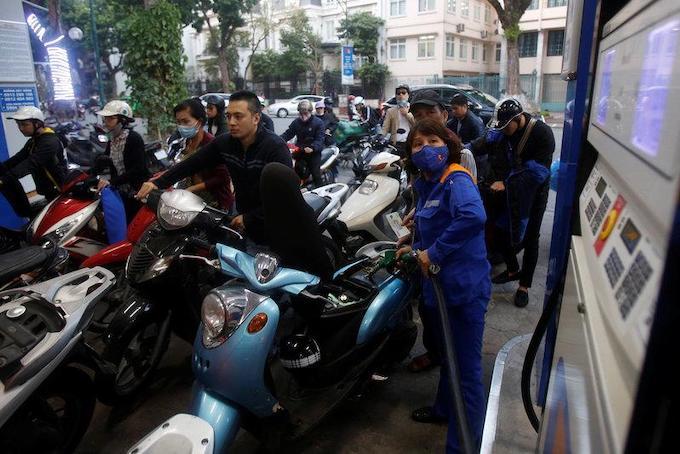
    In the first six months this year, the top five popular brands in the country sold almost 1.6 million motorbikes, the Vietnam Association of Motorcycle Manufacturers (VAMM) reports.

    This is a growth of 4 percent over the same period last year, said VAMM, which represents Honda, Piaggio, Suzuki, SYM and Yamaha in Vietnam.

    Motorbike consumption in the first half this year was 12 times that of cars, which went down two percent year-on-year, it added

    Honda remained the largest player in the motorbike market, accounting for 72.5 percent of 3.28 million motorbikes sold by VAMM members from April last year to March this year, the company informed a conference in May.

    Although semi-automatic motorbikes are still dominant, Vietnamese are showing greater inclination towards scooters. Last year, 48 percent of motorbikes sold in the country were scooters, a three percent increase from 2016, the VAMM report said.

    It said companies have also been producing more sports bikes as they discern greater interest in them from increasing numbers of young Vietnamese men.

    The motorbike market in Vietnam is still growing because people have a demand for this type of transport. High taxes and infrastructure limitations are constraints for cars, VAMM said.

    “Although the market will not see remarkable changes in the future, it will continue to grow steadily with 3-3.5 million motorbikes sold each year,” VAMM said.

    Motorbike market share in Vietnamin percentage; by March 2018HondaOtherHonda

    Last year, a study done by Germany-based Dalia Research found that Vietnam ranked top in the world for having with highest number of people using motorbikes for daily transportation.

    Seventy-nine percent of Vietnamese use motorbikes for commuting, while the number is just 10 percent globally, the study found.

    By the end of 2016, there were 45 million registered motorbikes in Vietnam, a country of over 92 million people, according to the Ministry of Transport.

  • Vietnam stock market in Free Fall

    Vietnam stock market in Free Fall

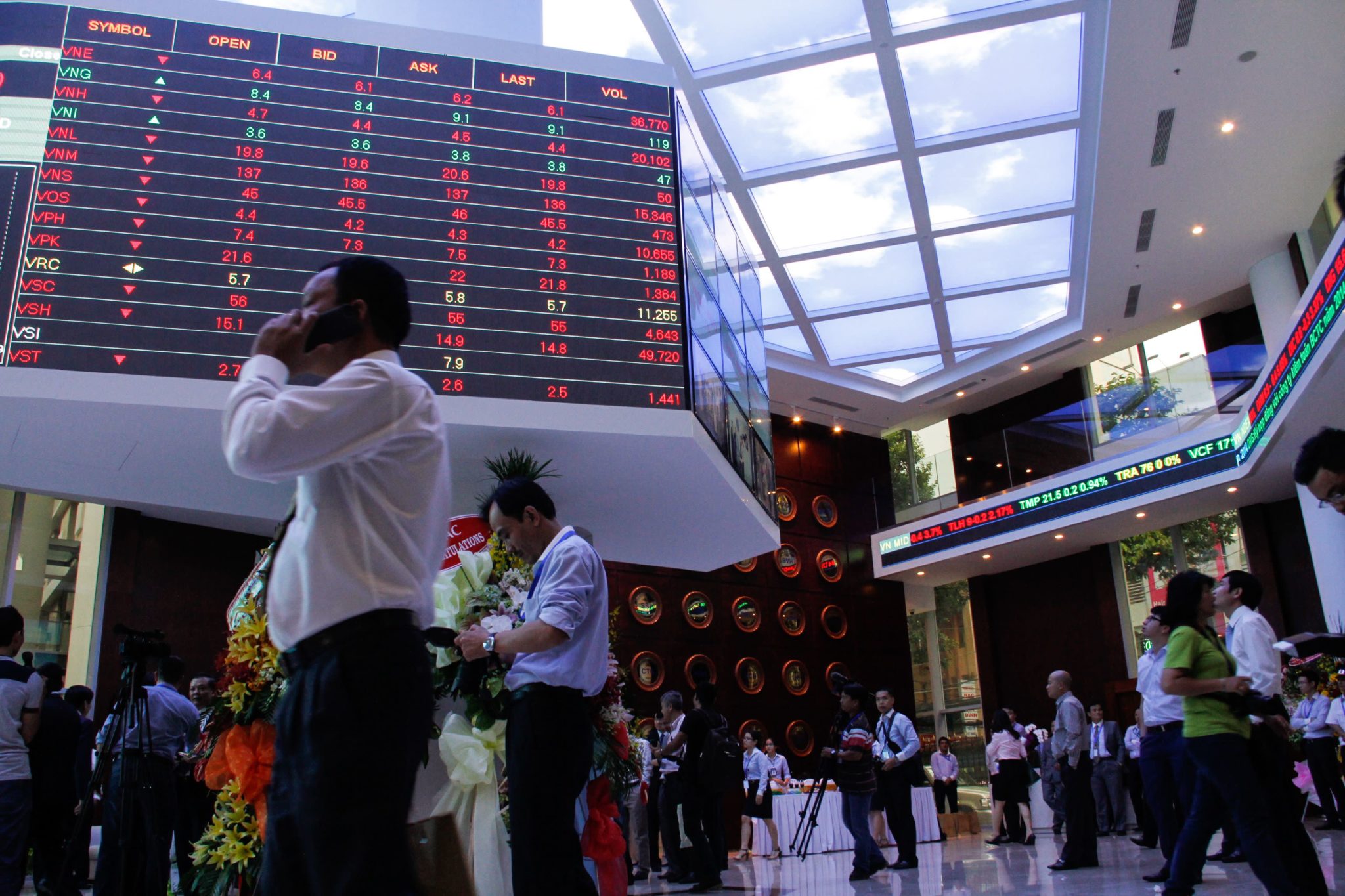
    Vietnam’s stock market dropped 2.87 percent to more than 987 points on Monday, the second time this year that it has dropped below the 1,000-point level.

    The benchmark VN-Index on the Ho Chi Minh Stock Exchange (HOSE) fell from 1,000 points for the first time this year on May 23 and did not bounce back to that level until June 4.

    As supply surpassed demand, sellers were pushed to sell their stocks at all costs, leading to falling prices.

    The VN-Index hit 984.24 on the last trading day of 2017, the highest ever since 2007, before reaching 1,000 points early in January.

    Since then, it has stayed at more than 1,000 points until the drop on May 23.

  • China drives rebound in PON market

    China drives rebound in PON market

    After five consecutive quarters of decline, global sales of passive optical network (PON) gear rebounded in the first quarter of 2018, according to a new report by Dell’Oro Group.

    The rebound is mainly driven by the growth in China, where broadband subscribers pushed optical networking terminal (ONT) shipments to a record level, said the report.

    “China added over 11 million new broadband subscribers in 1Q18, and network operators such as China Mobile purchased large volumes of ONTs to connect those customers to high-speed Internet services,” commented Alam Tamboli, senior analyst at Dell’Oro Group. “Huawei was the primary beneficiary of the surge, capturing the largest ONT market share.”

    Despite the encouraging growth, Tamboli said the research firm expects this rebound is short-lived, however.

    “While 2018 may be off to a great start for the PON market, we expect demand to soften for rest of the year as China Mobile is expected to add subscribers at a significantly lower rate,” Tamboli explained.

    “Huawei and ZTE, the top ranked PON vendors, are working to diversify their customer base in anticipation of reduced demand in China, as operators in China accounted for over four-fifths of each company’s PON revenue in 1Q18.”

  • Fintech transforming B2B money transfer market

    Fintech transforming B2B money transfer market

    The cross-border B2B money transfer market is ripe for disruption, as new technologies and legislative changes redefine traditional banking practices across the globe, according to Juniper Research.

    Cross-border B2B transactions will exceed $218 trillion by 2022, up from $150 trillion in 2018, the company predicts.

    Disrupting traditional cross-border B2B transactions

    B2B Money Transfer: Cross-border Market Opportunities 2018-2022 Research author Lauren Foye explained: ‘While traditional banks still facilitate the vast bulk of B2B cross-border transactions, new technologies, such as virtual accounts, eInvoicing, and blockchain technology will aid in driving businesses to solutions which provide savings in time, efficiencies, and transparency’.

    The proportion of cross-border B2B transfer values facilitated by newer Fintech start-ups and disruptive technologies, will grow from 7.5% in 2017; equating to $10.4 trillion, to reach 13.3% or $29 trillion by 2022. This will occur as more businesses utilize these efficient and transparent methods in a notoriously cloudy industry.

    Juniper cited activities by Visa and Mastercard as beacons in this space. In addition to offering its own Visa B2B Connect’ service which utilizes blockchain-based Chain Core, Visa has partnered with Fintech start-up ‘Billtrust’ to provide virtual cards for B2B transactions. Likewise, Mastercard is working with Optal, to offer virtual accounts to businesses.

    Opportunity to lead innovation charge

    Juniper believes that banks are well placed to benefit from the opportunity posed in B2B transfers. For instance, legislative changes such as PSD2 in Europe, serve as a perfect opportunity to partner with Fintechs to deliver innovative services to companies; lest institutions fall behind and see Fintechs ultimately out maneuver them.

  • Japanese Farmers’ Market lands at Changi

    Japanese Farmers’ Market lands at Changi

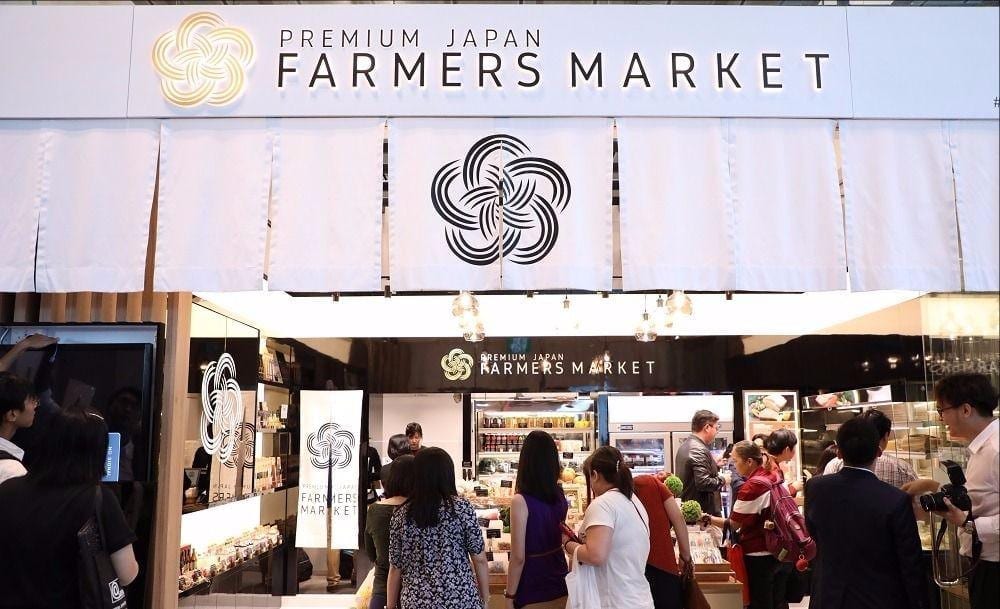
    Hailed as a Singapore first, the Premium Japanese Farmers Market offers everything from seasonal vegetables and fruits to meat products and sake imported from Japan – in Changi Airport’s Terminal 3 departure hall.

    Some items, including egoma tea, a special sushi selection and wagyu sake, are new to Singapore.

    The store also offers ready-to-eat bento boxes by Go-Zen, which can be customised from a range of 25 ingredients including scallops, snow crab, ikura salmon roe, Niigata Japanese rice and wagyu beef.

  • Vietnam’s benchmark index hits ten-year high on back of blue chip gains

    Investors have been spending big on the stock market so far this year.

    Ho Chi Minh City’s VN-Index broke the 800-point barrier on Friday for the first time since February 2008.

    The index finished up 4.48 percent at 801.5 points.

    Growth was driven by blue chips, including brewery giant Sabeco, Masan Group, insurance firm Baoviet and Vietcombank.

    The benchmark index hit an all-time high of 1,170.67 in March 2007, before a sharp sell-off in the wake of the global financial crisis.

    The average transaction value reached about VND3 trillion ($132 million) per session last year, but it has been hitting up to VND7.5 trillion at some points this year.