Tag: Market

  • Global smartphone shipment slowdown could hurt Vietnam

    Global smartphone shipment slowdown could hurt Vietnam

    Manufacturing hubs like Vietnam and South Korea could be hurt this year as global smartphone shipments suffered its worst quarterly drop on record, signaling a cool down in consumer demand.

    Shipments declined 18.3% year-on-year in the December quarter to a little over 300 million units, U.S.-based International Data Corporation said Thursday.

    Xiaomi’s shipment volume declined steepest at 26.3%, followed by vivo (down 18.9%) and OPPO (down 15.9%).

    For the year, global shipments fell 11.3% and marked the lowest total for a decade, the researchers said.

    “We have never seen shipments in the holiday quarter come in lower,” Nabila Popal, research director at IDC.

    Along with inflation and economic uncertainties, Covid lockdowns in China were another factor that hurt the industry, including Apple Inc.’s iPhone sales, she said. “Heavy sales and promotions during the quarter helped deplete existing inventory rather than drive shipment growth.”

    Smartphones are among the largest exports for Korea and a key source of income for Vietnam as Samsung Electronics operates factories in both countries.

    Samsung last quarter reported its biggest profit fall in over a decade, primarily led by a drop in demand for semiconductors. The company’s exposure to smartphone sales is amplified by its role as the leading provider of memory and displays for the industry.

  • Secondhand market emerges as battlefield for South Korean retailers

    Secondhand market emerges as battlefield for South Korean retailers

    South Korea’s retail giants are invigorating efforts to dominate the second-hand transaction market, and this focus is expected to accelerate further with Naver Corp poised to make an entry.

    The internet portal giant is reviewing the idea that its recently acquired Poshmark Inc., a US social commerce platform specializing in secondhand apparel trade, could step into the South Korean market, according to industry sources.

    Once the equity acquisition is completed in April next year, Poshmark is expected to become an independently operated Naver subsidiary.

    If Naver Shopping, the Naver’s online shopping site and Coupang Inc.’s only rival in the e-commerce market, unites forces with Poshmark, it would create a huge ripple effect.

    Other major retailers are also making bigger forays into the secondhand market.

    Lotte Group, for instance, announced that it would enable a non-face-to-face pickup service for direct secondhand transactions through the convenience store chain 7-Eleven, which is currently operated by Lotte’s affiliate Korea Seven Co.

    After buying items at the secondhand marketplace platform Joonggonara, which was acquired by the group last year, customers will be able to take delivery of the items at 7-Eleven convenience stores.

    Shinsegae Group also invested in the secondhand transaction app Bungaejangter via its venture capital subsidiary in January.

    Bungaejangter opened an online store at SSG.com, the online mall arm of Shinsegae, and provides resale services with a focus on secondhand luxury items.

    According to the Hana Financial Management Research Institute, the size of the nation’s secondhand market jumped from about 4 trillion won (US$2.77 billion) in 2008 to 20 trillion won in 2020.

  • Stock market settlement to be speeded up by 4 hours

    Stock market settlement to be speeded up by 4 hours

    The stock settlement cycle is set to be shortened by four hours, enabling investors to receive their share or money on the second morning after a transaction.

    Thus, from August 29, they will get them at 11-11:30 a.m on the second day (T+2) instead of the current 3:30-4 p.m.

    Now they have to wait until the next morning to sell securities they buy since trading ends at 2:45 p.m.

    Depository participants must transfer money and stocks to customers before 1:00 p.m and report to the Vietnam Securities Depository before 4:30 p.m.

  • Indonesia’s Smartphone Market Declined by 17.3% in Q1

    Indonesia’s Smartphone Market Declined by 17.3% in Q1

    Indonesia’s smartphone market had a muted start in 2022, declining 17.3% year over year (YoY) and 13.1% quarter over quarter (QoQ) and reaching 8.9 million units in 1Q22, according to a report by International Data Corporation’s (IDC).

    Lower consumer buying power due to the higher prices of goods, such as gas and commodities (including mobile phones) and a lower supply of entry-level smartphones in the market were contributing to this decline. There was a tight supply of smartphones in the US$200 and lower price band as low-end 4G chipset supply remained constrained, leading to a 22% YoY decline in this segment. The high YoY decline also resulted from the normalizing demand after the pandemic-induced growth drivers subsided. All factors combined to put additional pressure on a seasonally low quarter.Smartphone shipment in 2Q22 is expected to be lower than the shipment in 2Q21. For 2Q22, the Ramadan period gave the necessary boost for April. In addition, the government mandated that the religious holiday allowance should be paid in full in April 2022, giving consumers extra liquidity. However, this additional liquidity may be eroded as the government increased the value-added tax (VAT) from 10% to 11% on April 1, 2022, which effectively increases the price of goods. Furthermore, the price of nonsubsidized fuel Pertamax also increased.

    “The higher prices are expected to add extra pressure on consumers’ buying power. Vendors may not be able to absorb the price increase above a certain level, thus resulting in higher overall selling price,” says Vanessa Aurelia, Associate Market Analyst at IDC Indonesia. Smartphone shipment is expected to stay flat throughout 2022, compared to the 2021 shipment.


  • Rumors, manipulation plague Vietnam markets

    Rumors, manipulation plague Vietnam markets

    Vietnam’s stock and corporate bond markets are heavily affected by rumors and sophisticated manipulation, which pose the need for more transparent and thorough regulations, a minister has said.

    Many tickers have been pushed up to new peaks without improvement in business results, with many companies failing to submit their earnings in time, Minister of Finance Ho Duc Phoc informed the National Assembly in a recent report.

    “The stock market is still in an early stage of development and is therefore heavily affected by investor sentiment. Rumors, fears of cash flow and inflation pressure have caused the market to plunge recently.”

    Vietnam’s benchmark VN-Index hit this year’s bottom on May 16, the lowest in 11 months. The plunge came after VN-Index increased by nearly 36 percent last year as one of the best performers globally. The number of new stock accounts opened last year alone equaled that of the previous 10 years.

    But the market turned bearish in April and has struggled to recover since.

    Phoc is also concerned about risks faced by a speeding corporate bond market.

    Many amateurs who fail to meet government criteria have cheated to secure bonds, made possible by the violations of commercial banks and stock brokerages, he said.

    One typical example involves property developer Tan Hoang Minh, whose chairman Do Anh Dung was arrested in early April on suspicions of “fraudulent appropriation of assets,” he added.

    Governor of the State Bank of Vietnam Nguyen Thi Hong called for more thorough solutions to prevent future violations.

    In the long run, the government needs to make the corporate bond market a key capital mobilization channel for the economy, she added.

    Phoc said changes will be made to tighten regulations on bond issuances, listed on a dedicated market for corporate bonds.

  • Blackmores believes China’s diagou market is past its peak

    Blackmores believes China’s diagou market is past its peak

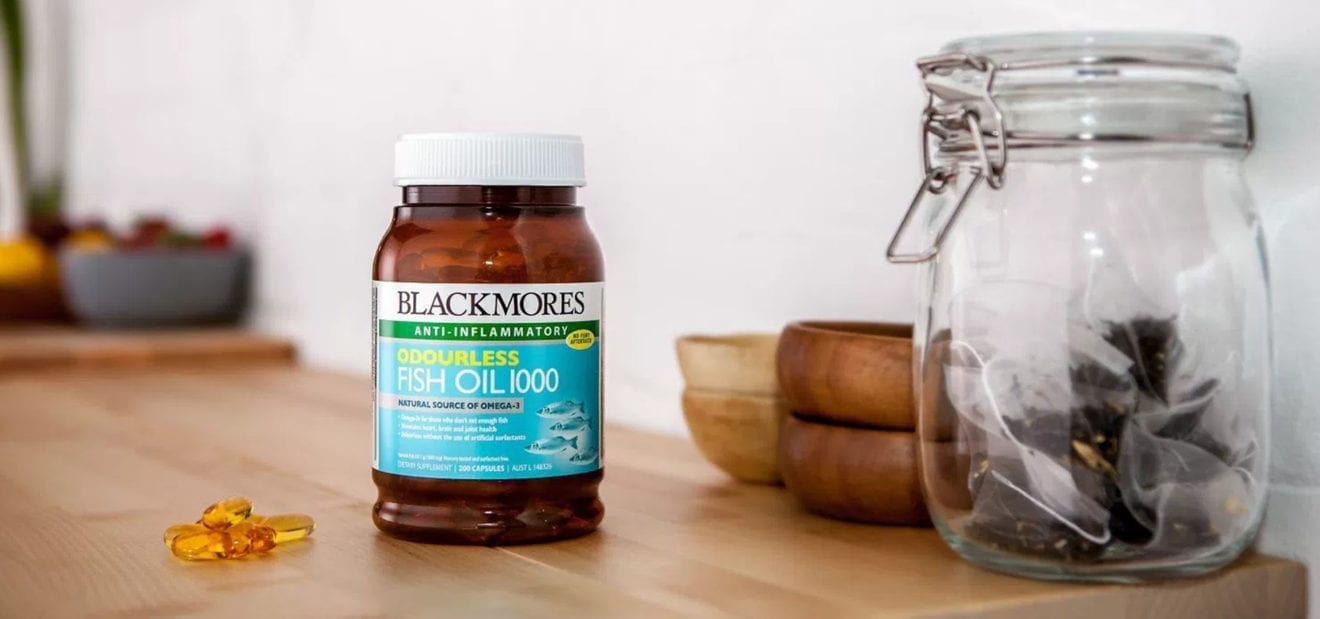
    The boss of Blackmores says the vitamins and supplements giant is not really relying on Chinese “daigou” shoppers anymore as it gains more market share in Indonesia and Thailand, while the huge opportunity of densely-populated India will be a slow burn.

    After delivering the company’s latest results on Thursday, chief executive Alastair Symington also said customers should not expect a price war with Blackmores’ competitors as too many discounted promotions led to “a lack of differentiation between brands”.

    It also means lower margins for the business, which wants to maintain its premium positioning in the market, highlighting its superiority with things like the ethical sourcing of fish oil.

    The company booked a 9.6 percent rise in underlying net profit for the first half, with earnings margin growth in Australia and New Zealand of almost 18 per cent credited to “strategic pricing and operational improvements”.

    Mr Symington said the results were ahead of expectations in all markets despite volatile and uncertain trading conditions due to the pandemic.

    Blackmores’ overseas business is leading the charge, with revenue up about 50 percent.

    Mr Symington said 110 percent growth in the massive market of Indonesia was particularly pleasing, driven by consumers snapping up vitamin D and zinc on the back of clinical evidence these improve immune health – a key consideration amid lockdowns.

    Growth in Thailand of 40 percent was also a highlight, he said, but Australian consumers were still behaving very cautiously and there had been a “stuttery start” to sales this calendar year, with ANZ revenue dipping 1.2 percent.

    But Blackmores has its eyes on a very big prize – India – where it launched in September in partnership with Amazon India.

    The company recently entered a distribution partnership with Udaan, India’s largest business-to-business e-commerce platform, expanding the reach of its products to independent pharmacies in at least 10 metro cities across the continent, which is home to well over one billion people.

    “There’s a lot of promise in that India business,” Mr Symington said.

    Mr Symington says growth areas include ‘healthy ageing’ products targeting concerns such as joints, digestive health and anxiety in pets, and sleep and beauty.

    On China, he said the daigou market – whereby visitors send goods back home – would not return to the loft heights seen in 2016 and 2017, when dedicated stores offering resellers in-demand products and delivery services popped up around Australia.

    Blackmores recorded an 8.5 per cent lift in revenue to China in the first half, “driven by continuous improvements in e-commerce fundamentals … partially offset by a 7 per cent decline in the corporate daigou channel”.

    “We’re not really relying on that (diagou market) moving forward,” Mr Symingto

  • Shinsegae and Lotte to compete in wine and whisky market

    Shinsegae and Lotte to compete in wine and whisky market

    South Korea’s top two retailers — Shinsegae Group and Lotte Group — are going beyond retail to jump into the whisky and wine markets, which have been seeing rapid growth since the onset of the COVID-19 pandemic.

    Lotte Chilsung Beverage Co. announced in a report released early this year that it will expand its production of whisky, recruiting employees and signing contracts with whisky experts from Scotland to set up a whisky brewery.

    The company reportedly plans to build a brewery on one of the parcels of land that it currently owns. Construction is expected to begin next year at the earliest.

    Shinsegae L&B Ltd. also plans to put a start to the whisky business as it is now recruiting experienced employees, with a goal of setting up breweries of its own.

    Both companies are expected to compete in the wine market as well. Shinsegae Group purchased 299.6 billion won (US$243 million) of real estate in relation to the Shafer Vineyard in the U.S. last February.

    Its subsidiary, Shinsegae L&B, plans to take the offensive by expanding the number of its Wine and More stores and introducing new series of wines including those from the Shafer Vineyard.

    Lotte Chilsung Beverage continues to broaden its presence in the wine market by importing and selling a wider variety of wines, generating 83.2 billion won in wine sales last year, up by 34.4 percent from the previous year.

    The company reportedly received acquisition proposals from a number of winery companies interested in selling their products.

  • Russia’s large holdings of foreign exchange could pose a problem for financial markets.

    Russia’s large holdings of foreign exchange could pose a problem for financial markets.

    Russia holds vast foreign exchange reserves, a large chunk of which are held offshore, having the potential to upend money markets.

    The country had international reserves totaling $630 billion at the end of January, consisting of $467 billion in foreign exchange and $132 billion in gold. The rest consists of special drawing rights (SDRs) and IMF reserves, Bank of Russia data showed.

    With the country’s invasion of Ukraine Thursday, a critical question is how much of these reserves are outside of Russia.

    Credit Suisse strategist Zoltan Pozar, crunched the numbers to determine just that. The resulting figure using Bank of Russia data with that from financial markets was that $300 billion is being held offshore, according to the report.

    Pozar estimates around  $200 billion is held in swap agreements with an additional $100 billion in overseas bank deposits, a sum more than enough to cause a shift in funding markets.

    If things escalate, it’s hard not to see a direct impact on FX swaps and U.S. dollar Libor fixings given Russia’s vast financial surpluses and where those surpluses are deployed, he said.

    On Thursday, the Bank of Russia announced emergency measures to maintain financial market stability, including intervening in the foreign exchange markets.

    Markets are likely hoping the mountain of cash doesn’t turn out to be an erupting volcano.

  • Vietnam stock market makes bright start after Tet holidays

    Vietnam stock market makes bright start after Tet holidays

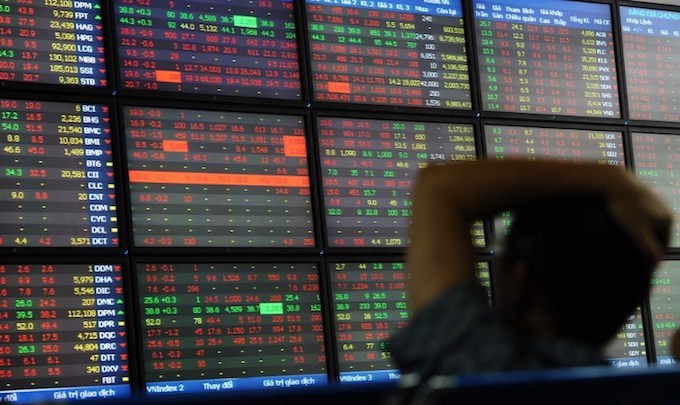
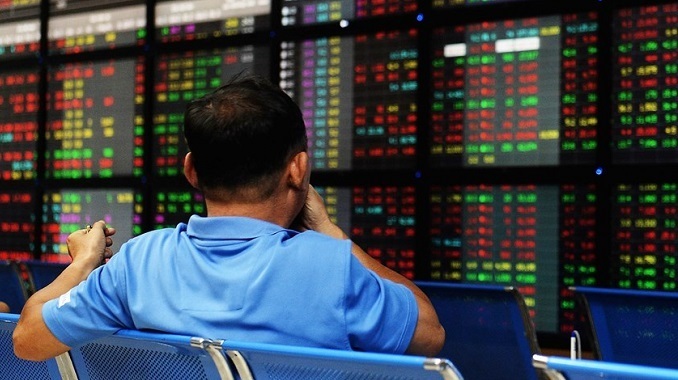
    The VN-Index began the new lunar year with a 1.5-percent jump Monday morning, led by aviation and energy stocks. It gained 22 points to 1,503 points at 11.20 as the market reopened after the nine-day Tet break, reaching a near four-week high.

    It represents a 4.1-percent recovery from the bottom of 1,439 points reached on January 18 as investors booked profit before the holidays. Most brokerages expect the index to rise this week since no negative news came out during the holidays.

    Analysts at ASEAN Securities and BIDV Securities said the VN-Index is set to stay in the 1,500 levels this week. It closed in the green on an opening day on five of the last six years since 2016, only dipping in 2020 when Covid-19 first hit Vietnam.

    The VN30 basket, comprising the 30 largest capped stocks, saw 24 of them gain Monday, led by VJC of budget airline Vietjet, which rose by 6.6 percent as investors expect a recovery by the aviation industry after the government announced plans to revive international tourism by March-end.

    Vietnam Airlines (HVN) gained 7 percent to the ceiling and its highest in over three months. Airports Corporation of Vietnam (ACV) rose by 7.4 percent with volumes reaching 321 percent of the average of the last 10 sessions.

    Energy stocks also rose, with PLX of fuel distributor Petrolimex climbing by 6 percent and GAS of state-owned Petrovietnam Gas gaining 6.2 percent. POW of electricity producer Petrovietnam Power Corporation was up 6.5 percent.

    Companies expected to benefit from rising consumption demand, such as VRE of real estate retail firm Vincom Retail and MSN of conglomerate Masan Group were the other gainers.

    The HNX-Index on the Hanoi Stock Exchange, home to mid-and small-cap companies, was up 1.2 percent, and the UPCoM-Index on the Unlisted Public Companies Market had gained 1 percent at the time of publishing.

  • iPhone dominates smartphone market in China

    iPhone dominates smartphone market in China

    Someone over at Apple is popping the champagne as an extremely successful holiday season for the iPhone 13 made Apple the top brand in the world’s largest smartphone market — China. We’ve known that the new iPhone models (minus the iPhone 13 mini) have been doing extremely well there, but now that the numbers have been crunched, we have definitive stats.

    Apple outsold giants such as Oppo, Vivo, Xiaomi, and Huawei on their own turf, which probably stings a little bit. The market used to be dominated by Huawei, but the company has sadly been in a freefall in the past couple of years, and we can see it falling all the way down to the sixth spot in Q4 of 2021.

    This isn’t the first time that Apple sells crazy amounts of iPhones in China. Back in 2014, the iPhone 6 Plus made huge impact in Asian markets, since it was a long-awaited big-screened iPhone. Up until then, Apple simply refused to upsize its screens, despite the fact that phablets were the obvious future trend — especially in Asia. When the iPhone 6 Plus and iPhone 6s Plus launched, they became the new craze in China. No joke — some retailers would bundle the iPhone 6 Plus with free tailor services to enlarge pants pockets!

    At the height of the iPhone 6 / iPhone 6s craze (2015), Apple was the top smartphone brand in China. The No1 spot was later taken by Vivo, then Huawei. Now, six years later, Apple is back with a vengeance, taking 23% of the market share — that’s the highest it has ever had.

    As per Counterpoint’s report, Apple rose to the top as soon as the iPhone 13 series launched and held the top spot for most of Q4 2021. The reasons for the wild success are a perfect storm of Huawei customers jumping ship, good pricing strategy by Apple, the 5G implementation in the new iPhones, and the new camera, which is highly praised.

  • 7-Eleven Malaysia ventures into Indonesia’s pharmacy market

    7-Eleven Malaysia ventures into Indonesia’s pharmacy market

    7-Eleven Malaysia Holdings Bhd has teamed up with a listed company on the Jakarta Stock Exchange to set up a retail pharmacy chain in Indonesia.

    SEM, in a filing today, said its 75% owned Caring Pharmacy Retail Management Sdn Bhd has entered into a joint venture with PT Era Prima Indonesia (EPI) to establish the business.

    Caring would take a 50.1% stake in the JV.

    SEM said the total funding of the proposed JV was about RM8.55mil. “The proposals represent an opportunity for the SEM Group to venture into the pharmaceutical industry in Indonesia,” it said.

    EPI is a subsidiary of listed firm PT Erajaya Swasembada Tbk, a distributor and retailer of mobile communication products.

  • Vietnamese plunge headlong into meme coin market

    Vietnamese plunge headlong into meme coin market

    Vietnamese are rushing to invest in so-called ‘meme coins’, hoping to make a killing but ignoring the huge risks of buying a volatile asset talked up by social media.

    In the second quarter The Nghia in the northern province of Vinh Phuc invested $20 to buy nearly 100 Dogecoins, a cryptocurrency that has overwhelmed the Internet this year.

    “I bought the coins because everyone was buying it.”

    As his investment doubled after billionaire Elon Musk spoke about the coin on Twitter, Nghia bought more of it and several other similar meme coins such as Shiba Inu and Rici Elon, hoping to make a giant profit from a small investment.

    “If only one of these coins increases 10-fold, the profit will exceed the investment in the rest of them,” he said.

    On Facebook groups, Nghia and thousands of other Vietnamese discuss meme coins daily as they hope to make a killing through the risk of loss is commensurately high.

    Meme coins are cryptocurrencies that originated from an Internet meme or have some other humorous characteristic.

    Dogecoin, released in 2013 after being created as a joke by software engineers, is the original meme coin that sparked the creation of many others.

    The most popular meme coin in terms of market cap, $28 billion, is the 10th biggest cryptocurrency.

    Some 260 meme coins are currently traded, according to cryptocurrency data platform CoinMarketCap.

    But only a fifth have a daily trading value of over $100,000. To put that in perspective, the cryptocurrency market daily trading value is worth $131 billion.

    One major feature of meme coins is their high volatility. Dogecoin, for instance, gained 1,160 percent in April-May before giving up 69 percent to fall to the current $0.2141.

    Quang Tung of Hanoi said that his wallet is like a “zoo” with many ‘animal’ coins though he does not understand all of them.

    “It is like playing the lottery. I can lose all or profit multiple times.”

    Hoang Minh of HCMC had not intended to invest in meme coins but the fear of missing out urged him to buy a small amount.

    “These coins attract people because they are popular memes on social media.”

    Squid Game coin, which was created amid the popularity of the Netflix series with the same name, surged 1,373 percent to $523 in three hours on Nov. 1 before plummeting to $0.003399 an hour later, sending many investors into a tizzy.

    Nghia and Tung have not made major profits yet since they hold a large number of coins of low value, but hope they would be mentioned by a celebrity in future.

    “Before investing in any cryptocurrency, it’s important to understand what you’re investing in and the associated risks, not just the hype around it,” said Douglas Boneparth, certified financial planner and president of Bone Fide Wealth.

  • Elon Musk Sells $5 Billion In Tesla Shares After Twitter Poll

    Elon Musk Sells $5 Billion In Tesla Shares After Twitter Poll

    Tesla Chief Executive Elon Musk sold about $5 billion in shares, the billionaire reported in filings on Wednesday, just days after he polled Twitter users about selling 10% of his stake. In his first share sale since 2016, Musk’s trust sold nearly 3.6 million shares in Tesla, worth around $4 billion, while he also sold another 934,000 shares for $1.1 billion after exercising options to acquire nearly 2.2 million shares. The 4.5 million shares equate to about 3% of his total holdings in the electric vehicle manufacturer, which makes up the vast part of his estimated $281.6 billion fortune, according to Forbes.

    Musk on Saturday polled Twitter users about selling 10% of his stake, helping to push down Tesla’s share price after a majority on Twitter said they agreed with the sale. The stock sank 12% on Tuesday in a multi-day selloff that endangered the company’s position in the $1 trillion club, but recovered 4.3% on Wednesday.

    The options-related sales were set up in September through a trading plan that allows corporate insiders to establish preplanned transactions on a schedule, the filing said. The sales of the option-related shares paid for associated taxes. It was not clear how or whether the trading plan related to Musk’s Twitter poll. Tesla did not respond to a request for comment.

    The additional share sales were separate and provide Musk with sizeable reserves of cash, given his wealth is largely tied to his stakes in Tesla and SpaceX. Musk has more than 20 million further stock options that are due to expire in August of next year. If Musk carried out the 10% stock sale plan, it would be a slight negative near term, said Mark Arnold, chief investment officer at Hyperion Asset Management in Brisbane where Tesla is the top holding in its global fund. “But the stock is pretty liquid and its not a huge percentage of total issued shares, so it shouldn’t have that much of an impact … we’re quite comfortable with the outlook for the business,” he said.

    While Tesla has lost close to $150 billion in market value this week, retail investors have been net buyers of the stock. Some 58% of Tesla trade orders on Fidelity’s brokerage website on Wednesday were for purchases, rather than sales. Retail investors made net purchases of $157 million on Monday and Tuesday, according to Vanda Research. Tesla is now up more than 51% in 2021, thanks largely to an October rally that was fueled by an agreement to sell 100,000 vehicles to rental car company Hertz.

    “The company itself is on fire, with strong results,” said Tim Ghriskey, a senior portfolio strategist at New York-based investment management firm Ingalls and Snyder. Bullish sentiment returned to Tesla’s options on Wednesday, with about 1.1 calls traded for every put. Calls are typically used for bullish trades, while buying puts shows a bearish bias. The company’s options accounted for about $109 billion in premium changing hands over the last two weeks, or about one in every three dollars traded in the U.S.-listed options market, according to a Reuters analysis of Trade Alert data.

  • Auchan set to sell Taiwan business to local rival

    Auchan set to sell Taiwan business to local rival

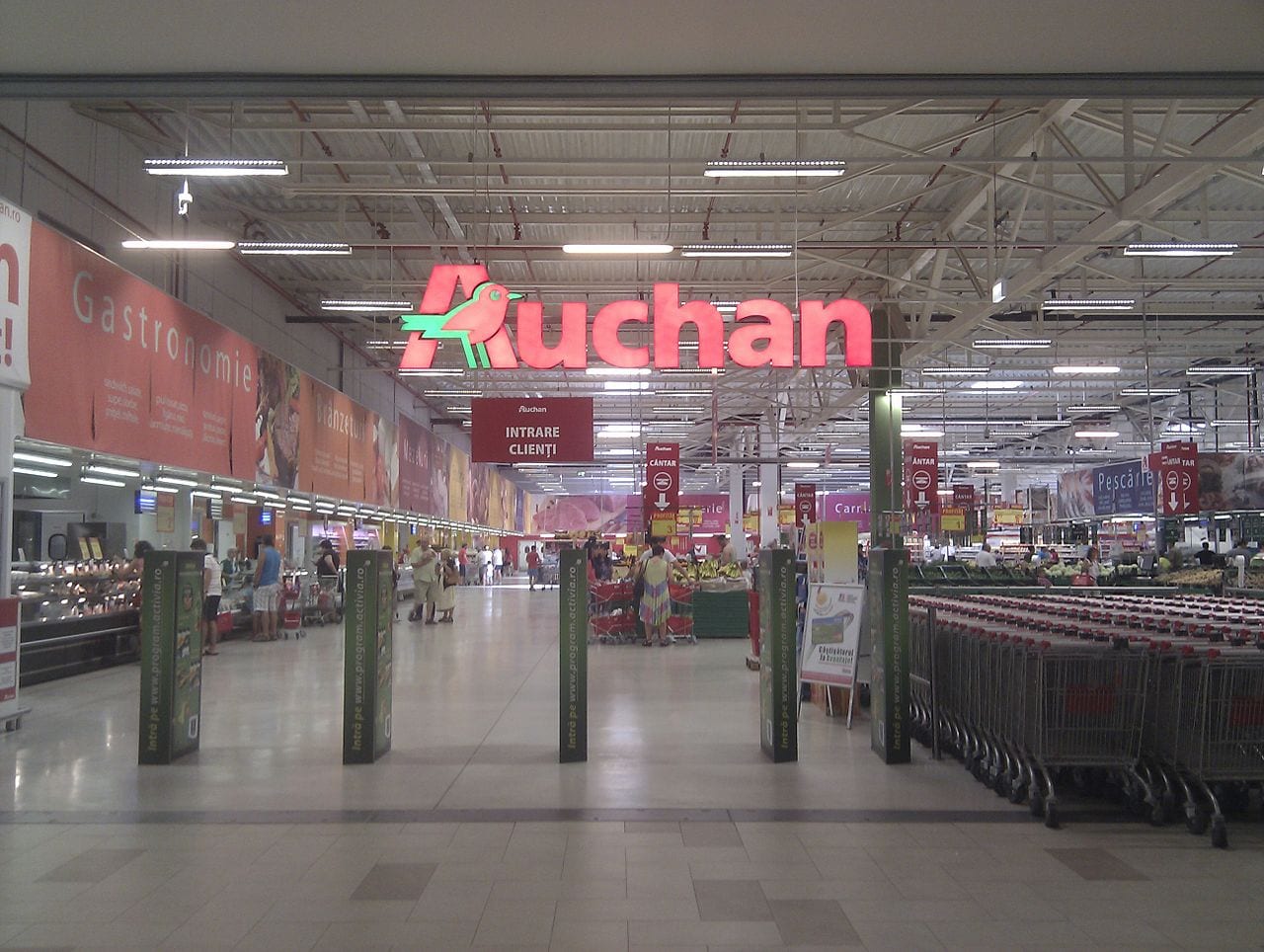
    French supermarket group Auchan is set to quit Taiwan after 24 years in the market, completing its withdrawal from greater Asia.

    Taiwan News has reported that local operator PX Mart will take over the RT-Mart hypermarket joint venture between Auchan and the Ruentex Group by mid-next year. Auchan is the majority partner in the venture, with a 65-per-cent share.

    The company was in May reported by Bloomberg to be in talks over the divestment of its Taiwanese business, said to be seeking somewhere between US$300-400 million.

    According to Taiwan News, PX Mart said it planned to buy buildings, land, distribution rights and the RT-Mart brand. No price was revealed and Auchan has not commented on the report.

    The RT-Mart brand was created by Taiwanese tycoon Samuel Yin’s Ruentex Group, which owns 20 hypermarkets and two convenience stores. PX Mart operates 1056 stores and plans to expand its network to more than 1100 next year.

    The reported deal marks another step in an ongoing reshuffle within Taiwan’s supermarket industry. Last year, French rival Carrefour bought the Wellcome Taiwan business from Singapore-listed Dairy Farm International, including the Jasons Marketplace brand, giving it control of 224 supermarkets. There have since been whispers that Carrefour is considering selling its enlarged Taiwan business.

    Auchan exited Vietnam in 2019 closing some stores and selling the remaining business to local operator Saigon Co-op. Last October it sold its stake in China’s Sun Art Retail Group to Alibaba Group in a transaction valued at $3.6 billion.

  • Online market places for neighborhoods in Hanoi become popular

    Online market places for neighborhoods in Hanoi become popular

    With shops closed and delivery services facing restrictions due to the Covid-19 outbreak in Hanoi, apartment dwellers have stepped infill the supply gap by selling online.

    Thu, a clerk at a media company, who is working from home amid the social distancing, said: “I orders goods online for home delivery and pay through bank transfer. The goods are hung on my apartment door.”

    The online market, which serves Thu’s apartment block and others nearby, has over 2,000 members who buy and sell items like fish sauce, salt, cooking oil, rice, vegetables, fruits, meat, eggs, and processed foodstuffs, she said.

    Prices are slightly higher than at traditional markets, but people like Thu accept that because “we don’t have to go outside, minimizing contact and the risk of contracting the disease.”

    In the beginning many sold goods online for a little bit of extra income and even just for fun, but later, when their jobs were severely affected by the pandemic, it became their main source of income.

    “I order fresh pork from my hometown in the countryside, pack and deliver the meat to people in my residential area,” she said.Thai, a kindergarten teacher in Hanoi’s Ha Dong District, started selling foodstuff on an online market for residents of her apartment block when her kindergarten closed down.

    “Within 30 minutes of advertising pork online I often get orders for 50 kilograms.”

    Quang, an administrator of an online market of an apartment block in Cau Giay District, said the market sells essential goods with clear regulations on product quality and non-cash payment, and so has recently become busier, especially amid the Covid outbreak.

    Hanoi has gone over a month under a citywide social distancing order starting July 24, the longest such period since the novel coronavirus first appeared in the country. It has extended its social distancing order until September 6 as the novel coronavirus threat persists.

    The capital has recorded 2,909 local Covid-19 cases since the fourth coronavirus wave hit the country late April.