Tag: Market

  • Lulu to open first hypermarket in Indonesia this year

    Lulu to open first hypermarket in Indonesia this year

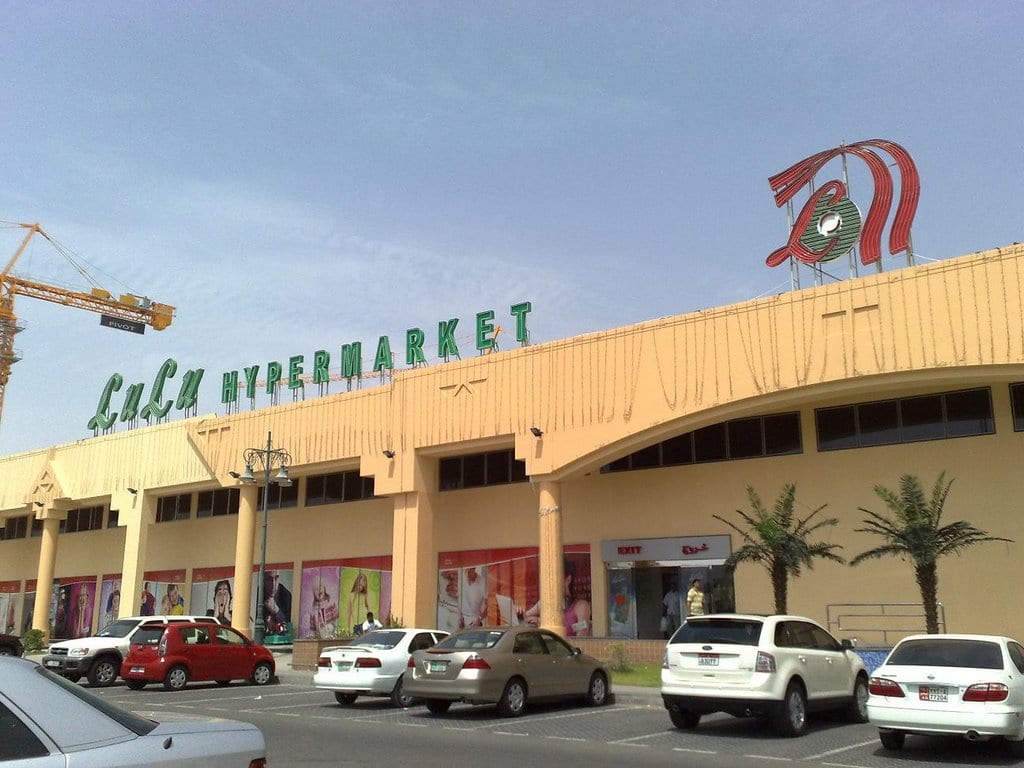
    The UAE-based Lulu Group will mark its first retail push in Indonesia by opening its first hypermarket in the capital city of Jakarta by this year end.

    The announcement came during the visit of President of Indonesia, Joko Widodo (popularly known as Jokowi), to Abu Dhabi. He visited the Lulu Hypermarket at Khalidiyah Mall in Abu Dhabi, along with a high-level delegation.

    The Indonesian President is on a five-day state visits to three Middle East countries — Saudi Arabia, United Arab Emirates and Qatar.

    “With an initial investment of $300 million in the first phase, we plan to open 15 hypermarkets by the end of 2017 and a central logistics and warehousing facility in Jakarta. These projects are likely to generate more than 5,000 job opportunities for Indonesians,” said Yusuffali MA, managing director of Lulu Group.

    The group expects to invest a total of $500 million in Indonesia over the next five years.

    “The fact that we are going to Indonesia with our Halal Hypermarket concept, is giving us the encouragement to look for a wider market segment there,” added Yusuffali.

    Apart from Jakarta, Lulu intends to open hypermarkets in Bandung, Solo, Semarang, Surabaya and Yogyakarta.

    “We also plan to set up contract farming to ensure continuous supply of high quality products and to support the Indonesian agriculture sector,” said Yusuffali.

    The Indonesian President was welcomed at the hypermarket by Yusuffali; Saifee Rupawala, CEO; Salim M A, director; Rajmohan Nair, director – Lulu Far East operations, and a large number of Indonesian expatriates.

    President Jokowi and the accompanying delegation were taken on a guided tour of the hypermarket by Yusuffali and team who briefed him about specialties of the retail store.

    The president later urged Yusuff Ali to export more products from villages and towns in Indonesia.

    The Lulu chain currently operates 117 stores across the UAE, Oman, Bahrain, Kuwait, Qatar, Saudi Arabia, Yemen, Egypt and India. -TradeArabia News Service

  • Mood darkens for trade in China

    Mood darkens for trade in China

    The business sentiment of Korean companies in China has worsened in the second quarter – particularly in the automotive and electronics sectors – mainly due to the slowdown in overall consumption in the Chinese market on the heels of a wobbling stock market.

    It was the second straight quarter that the business sentiment index remained below the 100 mark.

    According to a report by the Korea Institute for Industrial Economics and Trade (KIET) on Monday, the companies’ business survey index in the second quarter was 71, lower than 77 in the first quarter this year.

    The index reflects business sentiment, considering different business environments like quarterly profit performance, sales, costs and business regulations. As the index ranges from 0 up to 200, a number smaller than 100 means more survey participants expressed negative answers, while the index larger than 100 means more positive answers.

    The slump in business sentiment was the largest in automotive and electronic devices, two industries in which Chinese rivals are quickly catching up on Korean technologies and in which consumer demands change quickly.The survey was taken for a month from June 15, by the Korea Chamber of Commerce & Industry’s Beijing office and a Korean business association in China, on some 226 Korean companies operating in China. They were doing business in seven different sectors, ranging from electronics and automotive to chemical, textile and retail.

    Korean auto companies in China gave 45 points in the second quarter, a lot lower than the 94 points in the first quarter, during which the Chinese auto taste has quickly moved to favor sports utility vehicles (SUVs) that are more affordable than Korean autos.

    Korean electronics companies gave 54 points in the second quarter, also much more negative than the first quarter’s 88 points, after Samsung smartphones lost market share to Xiaomi and Huawei.

    Only Korean chemical and retail industries expressed positive assessments regarding their businesses in the second quarter, each giving 103 points and 100 points, respectively.

    Survey participants said the slowdown of demand in the Chinese domestic market was the main reason for their business hardships in the second quarter, followed by competition with Chinese rivals and elevated labor cost, which raised overall production costs.

    In the first quarter, a steep increase in labor costs was the main reason Korean companies found it hard to do business in China, reflecting the slowdown in the growth of the domestic economy.

    However, the Korea International Trade Association (KITA) rolled out a positive outlook on Monday that the Chinese economy will maintain its growth rate at the 7 percent range in the latter half of the year and Chinese investment is on its way to recovery thanks to state-led infrastructure building projects, which bring up both imports from other companies as well as local real estate transactions.

    The outlook said Korea’s export to China and local production of Korean companies will stay contracted until the third-quarter due to the unstable Chinese stock market and contracted consumption sentiment.

    The Chinese economy is forecast to rebound to last year’s level by the fourth quarter at the latest, the KITA outlook forecast, as the central government there is pushing policies to boost cash liquidity and the real estate market.

    “The sagging domestic economy made Chinese consumers lean towards frugal consumption, which helps local Chinese companies with advanced product quality gulping up market share against foreign products,” said Lee Bong-geol, a senior researcher at the Institute for International Trade at KITA

  • Gap narrows for Chinese brands

    Gap narrows for Chinese brands

    Chinese brands are closing the gap with international brands as consumers become more concerned about product quality rather than the origin of the brands, according to a latest study.

    As high as 67 percent of consumers said they favor domestic brands, consumer research firm Mintel said in a research report yesterday.

    The study covered 3,000 consumers aged between 20 and 49 in 10 cities.

    The domestic food and beverage brands have a strong following, with 42 percent of the respondents favoring them over foreign products compared with 25 percent that prefer imported snacks.

    For domestic ready-to-drink beverage brands, 44 percent of consumers prefer them against 27 percent that favor foreign products.

    Baby food is an exception with 45 percent of respondents saying they would choose international brands against only 31 percent who favor domestic products.

    “We’ve seen Chinese consumers becoming more value-driven, as they’re more likely to judge a product by its content and quality instead of checking whether it’s an international or domestic brand,” said Laural Gu, Mintel China’s senior lifestyle analyst.

    The study also found that 47 percent of the consumers were more willing to indulge themselves by paying for services instead of products.

  • China’s e-Commerce market is 80 times larger than India

    China’s e-Commerce market is 80 times larger than India

    Retail e-commerce sales in India are expected to reach $17.5 billion (Rs 105,120 crore) by 2018, from $5.3 billion (Rs 31,800 crore) in 2014, according to data analysed by eMarketer, a digital-research firm, but only two of 10 internet users in India shop online.

    India’s e-commerce market is intensely competitive, with US giant Amazon establishing its presence in India in 2013 and Alibaba, the Chinese giant, planning to start selling by August this year. Flipkart, India’s largest e-commerce firm, recently raised $550 million (Rs 3,300 crore) at a valuation of $15 billion (Rs 90,000 crore).

    Despite having the third-largest internet user base in the world with 200 million users at the end of 2014, India does not feature in the top ten e-commerce markets in the world, according to an eMarketer report. The reasons centre on low Internet reach, slow internet speeds outside the metropolitan cities and poor customer services.

    India’s e-commerce sales in 2014 were $5.3 billion (Rs 31,800 crore), 1/80th the size of China’s $426.26 billion (Rs 2,557,760 crore) and 1/58th the size of the US’ $305.6 billion (Rs 1,833,900 crore).

    “If you look at Japan, China and US, e-commerce became popular as early as 2002-2003. It has taken them about 12-13 years to reach where they have reached.  E-commerce really took off in India only in 2012-13. It will take India also that much time to reach there,” Rajnish (he uses only one name), a technology expert, said.

    China: Number 1 in e-commerce with skyrocketing growth ahead

    China and the US accounted for more than 55% of global internet retail sales in 2014. China’s growth over the next five years will widen the gap between the two countries.

    China will likely exceed $1 trillion (Rs 6,000,000 crore) in retail ecommerce sales by 2018, accounting for more than 40% of the total worldwide.

    Globally, retail sales reached $22.492 trillion (Rs 134,952,000 crore) in 2014 but retail e-commerce sales stood at $1.316 trillion (Rs 7,896,000 crore, 5.9% of overall retail sales).

    E-commerce sales are expected to increase 89% to $2.489 trillion (Rs 14,934,000 crore, 8.8% of overall retail sales) in 2018.

    Digital-buyer penetration—a measure of digital reach—is a major factor in determining the success of retail e-commerce sales. India’s digital-buyer penetration was quite low at 24.4% in 2014 as compared to the global average of 41.6%.

    The UK leads the world with 88% penetration. Ironically, China with 55.2% and US with 74.4% penetration do not feature in the top five.

    Indian e-commerce has a long way to go

    “E-commerce in India still has a lot of friction,” Rajnish said. “Till that is solved, it will be hard for penetration to go beyond 30%. For example, India has very low credit-card penetration and the cash-on-delivery (COD) model is why Flipkart really took off.”

    People above 35 are not very comfortable using their debit card online. PayTm and others solve this problem but there is a lot of friction. “I use PayTm for Uber and it is still a process that has friction. In US, the return policy is very generous. I bought a coat from Amazon in the Bay area; it ended up being the wrong size. My experience of changing to the correct size was very seamless. When I bought a down jacket in Bangalore, and it ended up being the wrong size, getting the right size was really a painful experience,” said Rajnish.
    That view is echoed by Paritosh Sharma, an advisor to tech startups and an entrepreneur with PayUMoney, a digital-payment platform.

    “Digital buying has an attached expectation to it. I place the order and it should appear in front of me over the next two or three days. In many cases this does not happen. Also, in a lot of cases (especially in tier-2 and tier-3 cities) in India, if you get a product that is not of the exact quality that you ordered, returning it is a major problem. Most people, hence, prefer what’s available in a physical retail store,” Sharma said.

    There are two more reasons for low online sales, said Sharma.

    First, the internet infrastructure in India is poor. If one steps outside city limits, you automatically are shifted from 3G to an Edge (a lower-speed) connection, deterring buyers.

    Second, lack of good service and support. While most Indian e-commerce companies are sprucing up their support via phone and digital media, it’s quite haphazard. Most companies still lack processes to ensure customer satisfaction and trust.
  • Singapore retail gross sales enhance

    Singapore retail gross sales improved in April, in response to knowledge from the Division of Statistics.

    In March, retail gross sales excluding motor automobiles, slumped three.2 per cent. However in April they recovered a bit of, rising zero.eight per cent.

    Yr on yr gross sales have been down zero.7 per cent on April 2014, though with motor automobiles included within the determine they rose 5 per cent.

    Complete retail gross sales in April 2015 have been an estimated $three.three billion – $200 million greater than the earlier month.

    Gross sales of meals & beverage providers (seasonally adjusted) elevated zero.three per cent over the earlier month, however declined 1.7 per cent in contrast with April 2014.

    The full gross sales worth of meals & beverage providers in April 2015 was estimated at $615 million, decrease than the $626 million in April 2014.

    By class, after seasonal adjustment, gross sales of telecommunications equipment & computer systems,
    optical items & books, medical items & toiletries, furnishings & family gear and
    supermarkets elevated between 1.four per cent and eight.6 per cent month on month.  Gross sales of attire & footwear rose zero.9 per cent.

    On the opposite aspect, gross sales of meals & drinks, watches & jewelry, mini-marts & comfort shops, leisure items and department shops decreased between 1.four per cent and 6.eight per cent in April 2015 in comparison with March 2015.

    Yr on yr, gross sales of telecommunications equipment & computer systems, department shops, watches & jewelry and medical items & toiletries additionally elevated between 2.four per cent and three.eight per cent. In distinction, retail gross sales of petrol service stations decreased 21.1 per cent, partly because of decrease petrol costs.

    Equally, Singapore retail gross sales of meals & drinks, leisure items, attire & footwear, furnishings & family gear, mini-marts & comfort shops and optical items & books declined between 2.6 per cent and seven.zero per cent in April 2015 over April 2014. Supermarkets recorded a lower of zero.5 per cent in gross sales throughout the identical interval.

  • Brazilian On-line Consumers Are Enamored with AliExpress

    Brazilian On-line Consumers Are Enamored with AliExpress

    Enterprise is booming in Brazil for Alibaba’s AliExpress.

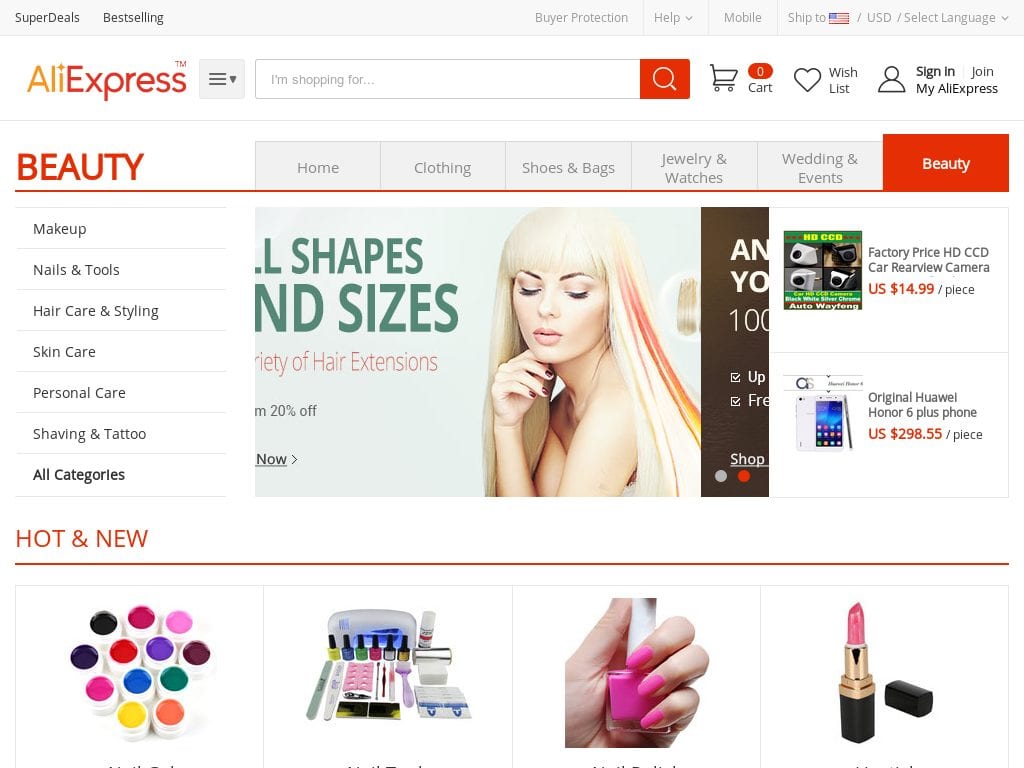
    Regardless of the language barrier, lengthy delivery occasions, and cost inconveniences, increasingly Brazilians have been drawn to AliExpress because of the excessive value of many gadgets in Brazil. Even with import duties, which is greater than 60 %, many merchandise, together with garments and baggage, are cheaper on AliExpress by as much as two-thirds, in response to China Day by day.

    “AliExpress is now my favourite abroad buying web site as a result of it presents higher costs and extra choices,” stated Amanda Bernardo, who boasts over a million views on her on-line buying movies, through which she lately featured gadgets purchased from AliExpress.

    Bruno Calheiros, an exhibition designer who makes a middle-class revenue of $2,540 per thirty days, prefers to buy on-line over going to modern malls.

    “I used to purchase garments, home equipment and health gear from Ebay and Amazon, however extra so from AliExpress since I attempted it. I simply like it,” stated Calheiros. He added that he has beneficial AliExpress to lots of his acquaintances.

    On final yr’s Singles Day sale on November 11th, Brazilian spending on Alibaba’s web sites was second solely to that of the Russians.

    Current findings from analysis agency E-Bit revealed that middle-class Brazilians accounted for 62 % of internet buyers from the nation in 2014. Final yr, Brazilian internet buyers totaled 51.5 million individuals, together with 10.2 million individuals who shopped on-line for the primary time. The variety of on-line orders is predicted to rise 19 % to 123 million orders in 2015.

    Spending by Brazilian internet buyers rose 24 % final yr to $11.three billion, and analysis agency eMarketer predicts that it might attain $26.17 billion in 2018.

    In quantity, Chinese language companies accounted for 55 % of all Brazilian on-line purchasing for a complete of $2.1 billion final yr, in accordance with E-Bit.

  • Chinese language shopper sentiment rebounds in Might

    Chinese language shopper sentiment rebounds in Might

    Chinese language shopper sentiment rebounded in Might with favorable inventory market performances boosted shopper sentiment.

    The Bankcard Consumption Confidence Index edged up zero.32 factors from a month in the past to 83.99, China UnionPay stated in a report at present.

    Expenditure at eating places and eateries have been up four.9 % from a month in the past whereas spending measurement at malls and purchasing facilities rose 13.75 %.

    Shoppers’ sentiment was in a secure situation with each the inventory market and property sector rebounding in current months and is predicted to select up additional with Buying Managers Index and different macroeconomic knowledge suggesting enchancment.

    The warming up of the property market in current months additionally pushed up house home equipment gross sales, which rose four.09 % in Might from a month in the past.

    Spending at main home vacationer locations and scenic spots surged 43.four % whereas spending worth at fuel stations additionally rose 9.6 % as commuting and touring picked up prior to now month.

    Current worth cuts by international trend homes resembling Burberry and Gucci of their home retailers pushed up luxurious luggage and leather-based gross sales by 32.9 %.

  • Singaporean retailers thrive on on-line market

    Singaporean retailers thrive on on-line market

    A research by eBay exhibits that Singapore’s tech savvy retail exporters, who use the corporate’s on-line market place, promote to a mean 41 worldwide markets.

    eBay defines retail exporters as these sellers on its website who garner US$10,000 in gross sales to international clients (that’s consumers outdoors of Singapore).

    In accordance with an eBay spokesman, Singaporean retail exporters have been experiencing strong progress on the again of a revitalised US greenback. In South-east Asia, Singapore is ranked second when it comes to attain behind Thailand. Apparently, Singapore’s rating is 5 locations greater than US retail exporters.

    Jason Lee, director, eBay South-east Asia, famous that the US is the highest commerce hall for Singaporean retail exporters.

  • Blaming China’s anti-graft measures hides issues in retail methods

    With a inhabitants of over 1.36 billion and with over 160 cities with a inhabitants of over a million, the alternatives that China presents retailers with are monumental. Subsequently it’s regarded by many as a precedence market.

    During the last 24 months, a variety of the world’s most famous manufacturers have introduced that they’re experiencing a troublesome time in China and are both scaling again their operations or closing their China enterprise.

    So why are these retailers struggling when others proceed to develop a worthwhile enterprise? Within the report, Nobody stated that it might be straightforward: Find out how to crack the China Retail Market, CR Retail’s Managing Director James Rogers, analyses retailer’s methods and behavior, identifies the important thing causes behind these failures.

    “Numerous retailers regularly blame the anti-graft measures for the slow-down, nevertheless these are solely partly accountable” says Rogers. “We see the problems beginning lots earlier with the retailers failing to understand the complexities and challenges concerned with opening there.”

    In line with the report, there are 15 questions that have to be requested previous to getting into the market starting from figuring out one’s audience to figuring out whether or not the model will journey and, whether or not the buyer is definitely prepared.

    “When talking with retailers it’s astounding what number of new entrants haven’t considered a few of these points” notes Rogers. “They consider the parable that a retailer can simply open a retailer just like what they function in different markets and the shoppers will come flooding in. Typically this could not be farther from the reality.”

    There have been numerous examples of shops saying very aggressive enlargement plans however only a few truly obtain them. “When retailers announce their enlargement plans for the China market, it is rather shortly obvious how good an understanding they’ve of what lies forward.” says Rogers. “Retailers are sometimes drawn by the numbers and whereas the market is getting simpler to function in, the competitors stays fierce.”

    In 2014, China recorded on-line gross sales of USD 427 billion making it the most important on-line retail market on the planet. “No matter your on-line technique at house, if establishing your self in China, you can’t afford to disregard the e-commerce market. It’s a key pillar of China’s retail market.” provides Rogers.

    As with bodily bricks-and-mortar shops, China’s e-commerce market might be equally as difficult. One must firstly decide whether or not you’re to launch your personal native website or have your merchandise bought by way of a 3rd celebration platform. In that case, which one? How are you to speak with the buyer and draw them to the place your merchandise are being bought?

    “The methods during which a retailer engages with the Chinese language shopper are totally different. A social media presence is vital, nevertheless there isn’t any Fb or Twitter. Retailers subsequently have to familiarise themselves with the native platforms,” he continues.

    With China’s retail market nonetheless considered immature, Rogers advises that one thinks long-term. “The US retailers are notably good at this in comparison with their European counterparts. They respect how lengthy it has taken to construct a robust enterprise at house and are typically extra affected person. Whereas turning into spoilt for selection, the buyer continues to be studying. Rome wasn’t inbuilt a day and nor will a retailer’s China enterprise. It ought to be remembered nevertheless, establishing a profitable presence in China may even drive gross sales in different worldwide markets. Subsequently conceding defeat and retrenching must be a final resort.”

  • Taipei a target for global retail brands

    Taipei a target for global retail brands

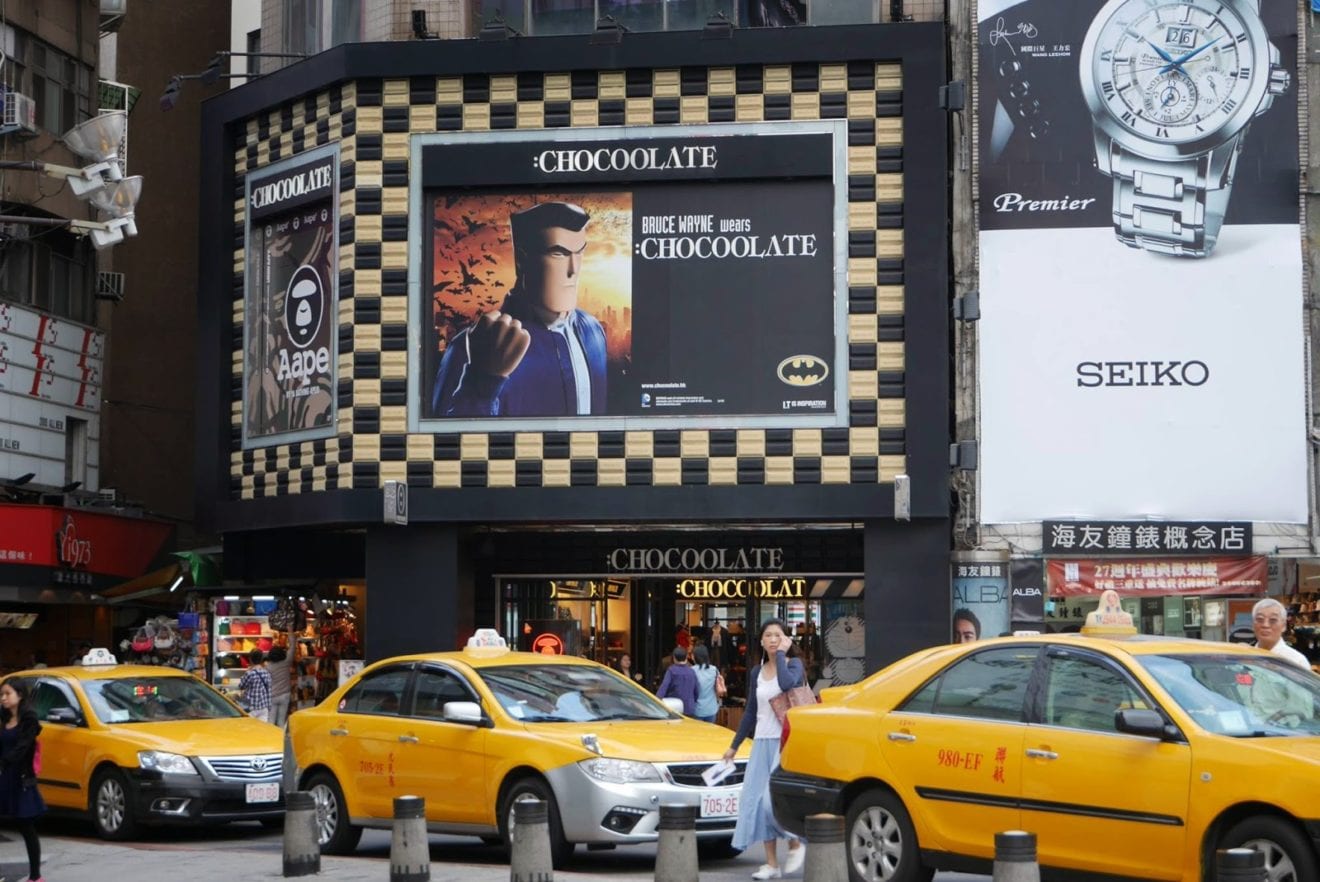
    Taipei ranked fourth as a target market for international retail brands last year as a willingness to try new dining and fashion is driving leasing activity across the Asia-Pacific region, a report by property consultancy CBRE Group Inc showed yesterday.

    The nation’s capital rose seven notches from its ranking last year, with 49 new brands establishing a presence in Taipei, compared with 29 in 2013, according to the annual report of hot target markets by CBRE.

    HOT SPOT

    The results left Taipei trailing only Tokyo with 63 entrants in first place, Singapore with 58 entrants in second and Abu Dhabi with 55 entrants in third, the survey found.

    “Taipei has become a hot spot for Japanese and [South] Korean fashion and cosmetics brands looking for overseas expansion,” CBRE Taiwan managing director Joseph Lin (林俊銘) said in the report.

    The property broker saw strong leasing momentum from mid-range and fast fashion retailers, with existing brands introducing new product lines such as GU, a Japanese fashion retail chain. New arrivals also included New York-based contemporary clothing company Alice + Olivia and US multinational clothing and accessories retailer The Gap Inc among others, the report said.

    OUTLET LOCATIONS

    High-profile units on main streets were in strong demand last year, and the lack of flagship prospects pushed retailers to seek opportunities in department stores, the major retail format in Taiwan, the report said.

    The number of new entrants located in shopping centers was relatively limited, but well-managed centers such as Breeze Center, Taipei 101 and ATT 4 FUN are gaining attention, the report said.

    The luxury and business fashion sectors contributed 20 percent of all new retail entrants to Asia-Pacific markets last year, the report said.

    The bulk of new entrants were second-tier luxury brands, since mainstream luxury groups are already well-established in the region, the report said.

    CAUTIOUS

    About 85 percent of luxury and business fashion retailers are looking at the region, although they are expected to adopt a cautious attitude toward expansion due to escalating operating costs, the report said.

  • Erafone set to grow Malaysian presence

    Erafone set to grow Malaysian presence

    Erafone, one of the largest multi-brand mobile device retailers in Indonesia, is set to make its debut in Malaysia this year in partnership with CG Computers Sdn Bhd. The company will be selling mobile devices and accessories aimed at the wider market. PT Erafone Artha Retailindo vice-president director Jeremy Sim said Penang and Kuala Lumpur will be the first venues where the Erafone and Urban Republic stores are set to open. “We hope to have 10 outlets by year-end and at least 100 Erafone outlets in Malaysia in the next three years,” Sim said at an event organised by CG Computers in Penang, recently.

    In June last year, the Indonesian group Erafone Artha Retailindo, a part of Indonesia’s Erajaya Group, signed an agreement to acquire a 60% stake in CG Computers, which currently operates 26 retail outlets throughout Malaysia under the Switch trade name. Sim said that Erafone will be developed alongside the Switch brand and Urban Republic. “There will be a parallel growth for the three trading names.

    “We have earmarked a RM8.5mil budget for a total of 15 outlets — 10 Erafone/Urban Republic and five Switch. “We are aiming to have eight mobile phone brands available at the Erafone/Urban Republic outlets set to open in the country,” he said. Meanwhile, CG Computers general manager Winson Wong said Switch’s additional five outlets in Kuala Lumpur, Malacca, Kota Kinabalu, Kedah (Alor Setar — Aman Central) and Kuching, would see Switch having a total 30 stores by end of the year. Investing in expansion: Sim says RM8.5mil has been allocated to set up 15 new outlets under the Erafone, Urban Republic and Switch brands and that the growth is expected to create 120 new jobs in the company.

    He added that CG computers has a current head count of 320 employees, and the Erafone partnershipwill create an additional 150 jobs. At the same event, CG Computers announced the Switch Epic Giveawa’ contest that ends on Oct 31 in conjunction with Switch’s 20th anniversary. Customers are entitled to a participation ticket for every RM100 spent in any Switch outlet. Prizes consisting of Apple products worth more than RM20,000 will be given to winners.

  • Apple China circumstances not so dangerous, exec says

    Apple China circumstances not so dangerous, exec says

    Apple’s working circumstances in China are enhancing, and have been by no means as dangerous as media studies instructed, in line with senior government Jeff Williams.

    “I could not be prouder of the work the group is doing ensuring individuals who work there are handled pretty,” Williams, a senior vice chairman, stated Wednesday in an on-stage interview on the Code Convention in Rancho Palos Verdes, California. “Individuals are constantly getting paid extra. Yearly gross sales are growing. We pay greater than common charges within the space.”

    Williams stated that Apple’s investigation of suicides through the years at amenities run by Foxconn, its outdoors producer, indicated that they weren’t associated to working circumstances.

    Moreover, he stated there weren’t that many on a relative foundation. When suicide charges have been at their highest, they have been decrease than at any level within the U.S.

    “By that definition, it might be the happiest place on earth,” he stated.

    Apple has for years been underneath hearth for the remedy of manufacturing unit staff in China.

    A string of suicides from 2010 to 2012 caught the eye of mainstream media retailers, and led to tales highlighting the extraordinarily lengthy hours, low pay, tough circumstances and younger age of many guide labourers serving to assemble iPhones and different units.

    Apple co-founder Steve Jobs addressed the difficulty 5 years in the past on the D: All Issues Digital convention, the predecessor to Code.

    As for different merchandise that the world’s most dear firm has within the works, Williams was as cagey as some other Apple when discussing the longer term. Particularly, Williams was requested how the corporate will spend a number of the mountains of money on its stability sheet.

    He provided one trace: “The automotive is the last word cellular gadget.”

    Apple has been rumoured to be within the auto recreation for some time, however the firm hasn’t confirmed that it is engaged on something past the related automotive software CarPlay.

  • Pure & natural cosmetics manufacturers lunch idea shops to boost visibility in Asia

    Pure & natural cosmetics manufacturers lunch idea shops to boost visibility in Asia

    China is the most important marketplace for pure & natural cosmetics in Asia, regardless of of many inexperienced manufacturers boycotting the Chinese language market, in line with a brand new research by Natural Monitor. Excessive-end manufacturers are coming into the Chinese language market, interested in the rising buying energy of its shoppers. Japan has the second largest marketplace for pure & natural cosmetics in Asia.

    Rising shopper consciousness of pure and natural merchandise is fuelling product gross sales throughout the area. Asia has one of many quickest rising markets for pure & natural cosmetics, with gross sales revenues projected to exceed USD1 billion within the coming years.

    Idea shops are an important channel for pure & natural cosmetics. Many manufacturers – Western and Asian – are opening stand-alone shops or salons for his or her manufacturers. The American firm Aveda is the frontrunner, working idea salons throughout Asia. A rising variety of Asian manufacturers, corresponding to Forest Necessities, are additionally investing in idea shops to boost visibility and consciousness of their product ranges, says Natural Monitor.

  • Consumer confidence dips in Q1: Nielsen

    Consumer confidence in the first quarter dipped one point from a quarter ago with sentiment about employment and personal finance both lowered, a latest study shows.

    The Chinese Consumer Confidence index stood at 106 in the first quarter this year, down from that of 111 points in the same period a year ago, Nielsen China said in a research report today.

    Despite dip in sentiment about employment and personal finance, the willingness to spend showed an overall increase of 2 points to 44 percent.

    “Chinese consumers’ willingness to spend is seeing a recovery especially in lower tier cities and the increasing disposable income, the low inflation level as well as the booming e-commerce development all suggest huge growth potential for consumer spending,” Oliver Rust, Managing Director of Nielsen China, said in a statement.

    Following a historic high of 118 points in the fourth quarter last year, consumer confidence index in first tier cities dropped five points to 113 points this quarter, and Nielsen suggested these are just normal fluctuations.

    The survey covers a total of 3,500 respondents in China. Consumer confidence levels above and below a baseline of 100 indicates degrees of optimism and pessimism, respectively.

    The immediate spending intention in the following 12-month period jumped 8 points to 50 percent among tier four cities’ consumers, as these smaller cities are leading the momentum of overall consumer goods growth in China.

  • Shopper confidence in Vietnam up in 1Q

    Shopper confidence in Vietnam up in 1Q

    The buyer confidence index in Viet Nam elevated by six factors to 112 factors over the past quarter, in response to Nielsen’s reort for the primary quarter of 2015 launched on Might 20.

    This was the third third consecutive improve and the nation’s highest rating since 2010, making Viet Nam the sixth optimistic nation on the planet.

    The report confirmed a continued development in the direction of saving cash by 86 per cent of interviewees over the previous yr. Greater than half (56 per cent) stated that they had reduce spending as a result of they believed the nation was in financial recession.

    Greater than 60 per cent stated they minimize spending on new garments and tried to economise on electrical energy and fuel use, and 57 per cent skimped on leisure.

    Vietnamese at the moment are among the many world’s greatest savers. Seventy eight per cent put their spare cash into financial savings, the report stated. Nevertheless, 44 per cent have been nonetheless able to pay for holidays and 40 per cent needed to spend on hi-tech devices.

    Well being was the most important concern for Vietnamese, not the state of the financial system or job safety, in response to the report. One in each 5 have been nervous about their well being, whereas 15 per cent have been involved concerning the financial system and solely 16 per cent anxious about job safety.

    The quarterly report confirmed shoppers in Southeast Asian have been probably the most optimistic. Three out of 5 nations with the very best shopper confidence scores have been Indonesia with 123 factors, the Philippines with 115 factors and Thailand with 114 factors