Tag: Market

  • IDX Expresses Optimism in Economic Growth

    IDX Expresses Optimism in Economic Growth

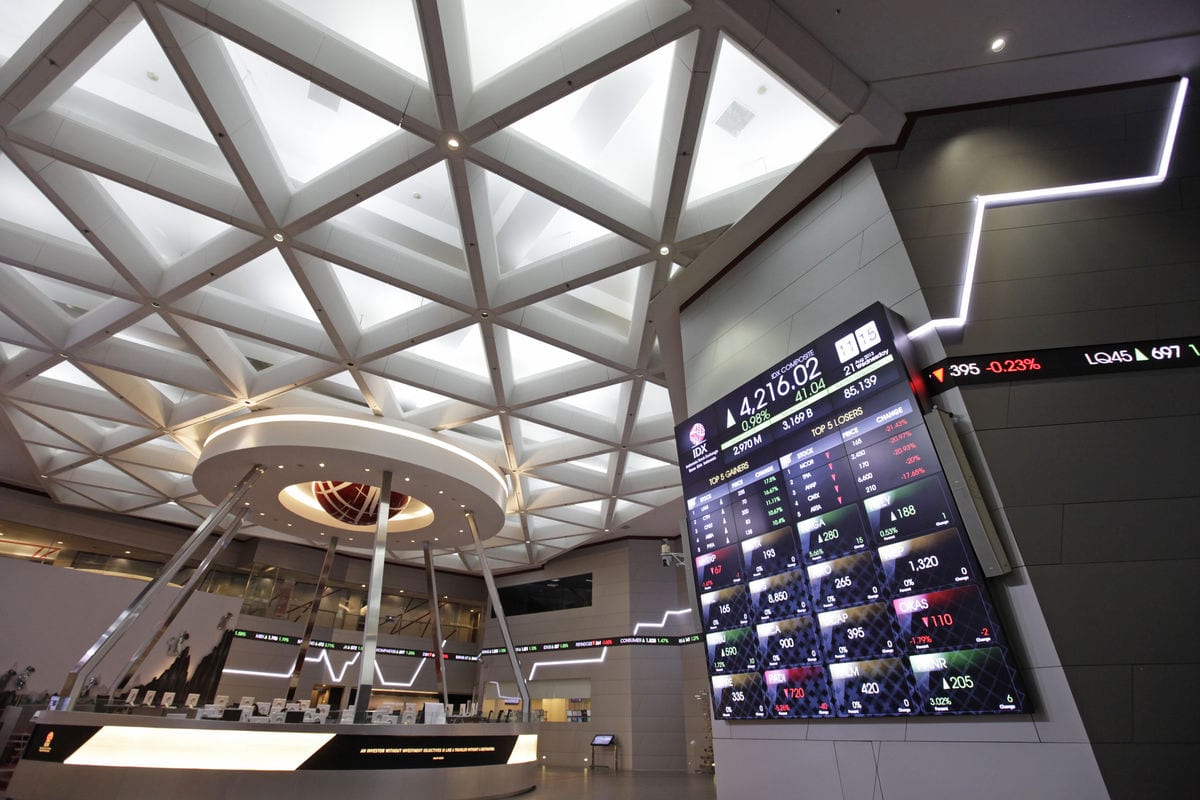
    The Indonesian Stock Exchange (IDX) expressed optimism that the companies listed on the IDX would provide positive results as the national economy was predicted to grow by above 5 percent.

    “In 2015, more than 75 percent of stock issuers at the IDX booked profits. Indeed, some of them in the commodity sector recorded somewhat significant drop. Meanwhile in 2016, we believe that the economic growth will be above 5 percent,” IDX president director Tito Sulistio said in Jakarta on Wednesday, April 13, 2016. Tito added that the Bank Indonesia (BI) rate cut to 6.75 percent and the potential of capital inflow following tax amnesty policy were among the factors that would support the national economic growth.

    “Hopefully, the tax amnesty [policy] will work. Therefore, it is expected that Indonesia will see a capital inflow of about Rp 3,000 trillion (US$220.6 billion) to build infrastructures that are important for the economy. The fund could also be invested in the capital market,” Tito explained.

    He promised that he would encourage domestic companies to obtain funds for expansion by, for instance, holding IPOs. Tito added that the IDX would call on state-owned companies to conduct privatization through the IPO mechanism.

    Earlier, IDX director of corporation assessment Samsul Hidayat said that a number of regional development banks planned to hold IPO in order to increase their capital and distribute credit to wider consumers. In addition to banks, Samsul revealed that a number of state-owned construction subsidiary companies, such as PT Waskita Beton Precast, mulled to hold an IPO.

  • Telenor may exit the Indian market

    Telenor may exit the Indian market

    Telenor India is gearing up to launch LTE services across its footprint, but according to reports Telenor’s days in India’s telecom sector may be numbered.

    CEO Sharad Mehrotra told that the operator has already upgraded 7,000 mobile sites to LTE.

    Telenor India plans to have its entire network upgraded by the end of the current financial year, which in India ends on March 31.

    The operator has awarded Huawei with a 12.4 billion rupee ($186.3 million) contract to modernize all 25,000 of its base stations across the six circles.

    But according to a separate report, Telenor is also considering exiting the Indian telecom market due to its negative experiences to date.

    Besides only holding spectrum in seven circles, Telenor India also has limited data spectrum and no 3G services. The company has only around a 5% share of India’s mobile market with its 2G-only operations.

    Despite investing over $3 billion since 2008 trying to build its Indian business, the loss of its Indian telecom licenses during the 2012 spectrum scandal was a setback the operator has been unable to come back from.

    According to the report, Telenor is seeking a valuation of $1.6 billion to $1.8 billion for its Indian business, but experts believe the company could find it difficult to find a buyer at this price.

  • Thai telecom market let down by state mis-investment

    Thai telecom market let down by state mis-investment

    Telecoms consultancy Yozzo has released a report on Thailand’s telecom market at the end of 2015 in which it highlighted a vibrant, healthy market that is let down by mis-investment by the state.

    Report author Allan Rasmussen told TelecomAsia that according to the ICT Ministry’s own national statistical office 25 million Thai citizens do not use the internet because they do not know how, 47,000 do not use the internet because of network access issues and 216,000 because they find it too expensive. However, the ICT Ministry is spending $427 million (15 billion baht) [on the state telcos] to roll out internet so that everyone can get online at cheaper prices – when that is obviously not the issue.

    “It would be a wise move to teach them how to surf [the internet] as obviously neither lack of network nor pricing is the major issue,” he said.

    On the plus side Rasmussen noted that overall the data shows that the Thai population is very well positioned when it comes to mobile communication with very high mobile internet usage as part of a daily routine.

    “It is especially great to see the female population having a small upper hand with 83.9% using a smartphone to access the internet while ‘only’ 79.6% of males do the same,” he said.

    The report also shows that 2015 was a record year in terms of smartphone sales, with 22 million units.

    “Samsung is probably also smiling as 20% of this volume carried their brand, mostly due to the introduction of their Galaxy J series (J2, J5 and J7) but overall the 47% year-on-year growth in sales was due to the fierce handset promotions from the operators as they tried to move users from 2G to 3G or 4G handsets.

    “In June 2015 alone, there were a staggering 1,800 different mobile device models competing in the market Thai market a clear indication on just how interesting the Thai market is for mobile device manufactures,” he noted.

    In terms of social media YouTube stood out with a 70% growth in watch time and equal (70%) growth in uploaded content. But the real killer was that Thailand now has 18 local YouTube channels with more than a million subscribers each, which is 4.5 times the average.

    The full report can be accessed here.

  • Korea’s baby market undeterred by economic slowdown

    Korea’s baby market undeterred by economic slowdown

    From couples with babies on strollers to seniors holding toddlers’ hands, a recent annual baby fair held at Coex, in Samseong-dong, southern Seoul, was packed with a sea of Koreans wanting to explore the latest and premium products for their children.

    The three-day event that ended Sunday had about 110,000 visitors, according to organizers, reflecting Korean parents’ unwavering love for their children and their endless interests on the market.

    The market has been thriving in recent years, despite falling birthrates and growing fears over a slowing economy. Korea’s fertility rate is among the lowest in the world. The size of the baby market, however, has been growing rapidly in recent years, and is expected to grow further. The market is now estimated at 1.7 trillion won ($1.38 billion).

    “The number of parents having one kid has been growing. Those parents, even though they might not be able to afford it financially, are more willing to pay for what they believe is necessary for their kids’ well-being,” said an industry watcher.

    Concerns over the economic downturn has led to a growing number of customers looking for quality local products offered at reasonable prices, organizers said.

    Interest, however, still remains high for European products such as strollers priced at around 2 million won and baby chairs offered at nearly 500,000 won each, as young parents are more open to spending money on luxury goods than the older generation, they added.

    A recent Scandinavian fever has also been heating up the market, particularly its luxury segment.

    Parents think highly of Nordic designs and brands that stress safety and cleanliness, according to reports quoting comments from industry insiders. This is why foreign brands have been diversifying retail channels in order to reach out to more customers. They have been making aggressive marketing efforts by expanding their presence in online and mobile markets, they said.

    Another noteworthy trend in the market for baby products is that it is seeing growing spending power among senior consumers.

    According to a recent survey by a daily deals website, sales of baby care products, including diapers and powdered milk, surged the most last year among those in their 60s, followed by customers in their 50s.

    This has led some baby product companies or retailers to closely watch the rise of “urban grannies,” referring to enthusiastic senior consumers purchasing products in a modern way. Some companies have even introduced feeding bottles with numbers printed in larger sizes.

    This is not limited to just the traditional players, such as toy and food companies, the market has seen a growing number of newcomers — such as home appliances and bio companies — targeting parents whose interests go beyond the basic requirements of feeding and changing diapers.

    Coway, a Korean home appliances company, has showcased its latest air purifier that automatically monitors the level of fine dust in the room and transmits the information to users’ smartphones in real time. The smart defect system was devised especially for parents with babies concerned over the impact of worsening dust level in the air to their little ones, the company said.

    At the baby fair, many parents showed interest in smaller gadgets, such as nasal aspirators and digital thermometers manufactured by local companies.

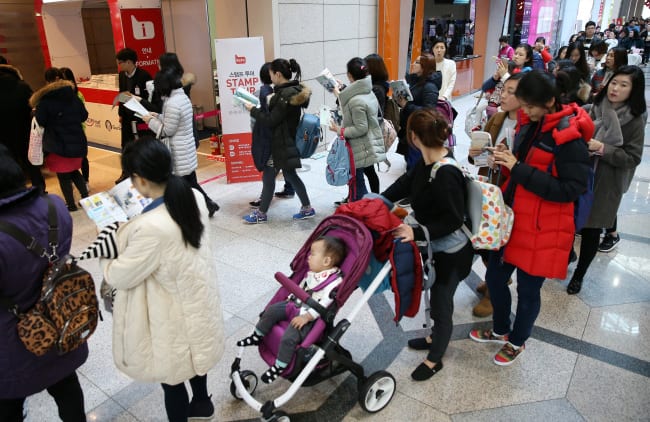
    A crowd of people line up Sunday to enter a baby fair held at Coex in Seoul. (Yonhap)

    “I have come here not only for toy products, but to experience smart gadgets devised for easier baby care,” said Cho Young-eun, a 38-year-old mom with a 2-year-old daughter.

    Bio companies have also been expanding marketing efforts in light of growing health consciousness.

    Local companies like Medipost and Boryung Medience offered services at discounted prices at the fair in a bid to lure parents to invest in their babies’ future health. Both firms operate cord blood banks that store blood cells collected at birth. Cord blood can be used to treat various incurable diseases, including leukemia, later on if needed, the companies said.

  • How South Korea is hurting European shares

    How South Korea is hurting European shares

    Seoul hosts largest and most liquid market in the world for options on single stocks. What links a European benchmark equity index, the Hong Kong dollar and a group of blue-chip Chinese stocks? Apart from the early-year pain shared by investors in all three, Seoul may not be the first answer that springs to mind. But it appears South Korea’s outsized derivatives market, dominated by retail investors, has a lot to answer for.

    Korea hosts the largest and most liquid market in the world for options on single stocks — bigger than the US, even, according to bankers — and retail interest in derivatives does not stop there. In what looks like the latest example of a “butterfly effect” in global markets, last year Korean investors bought record amounts of so-called “autocallables” — a structured product offering an attractive yield. About $40bn are outstanding.

    Markets Insight

    This year stock market losses have forced the sellers of those deals to hedge their exposure — that has damped volatility for Euro Stoxx-linked products, pressured the tightly-pegged Hong Kong dollar and crushed the Hang Seng China Enterprises Index. On Wednesday for example, the sliding oil price prompted a weakening of stocks across Asia. While in mainland China benchmark indices closed 0.4 per cent lower, the HSCEI — consisting of many of the same stocks — dropped 2.5 per cent.

    Autocallables contain features that have blown up previous products, from “target redemption forwards” — once dubbed kill-you-later-accumulators — to “knock-in-knock-out”, or Kiko, deals. Asian investors have reason to know: the former blew a $2bn hole in the balance sheet of Citic, China’s foremost conglomerate in 2008. And Kikos caused such problems for Korean companies that had wrongly hedged the South Korean won that regulators in 2009 had to stress test banks to gauge the depth of the issue.

    Since these autocallables are two- or three-year deals, and most were sold last year, the final reckoning over who has lost what is some way off. The area of interest for now is their effect on other markets.

    The products in essence sell volatility. They work by offering investors a “worst of” basket of two or three reference securities — typically indices. The sales pitch is that investors get a yield on top of their capital if the reference securities stay within a specified range. If they rally above it, investors are “knocked out” and get their money back with a bonus. If it falls below a specified point — usually between 40 and 50 per cent of the level, when the product was sold — they are “knocked in” and lose some capital.

    Holders can be made whole if the index recovers all lost ground before the autocallable ends — hence it being difficult to gauge losses at this point. However, the nearer an index falls to that strike price, the more product sellers have to hedge, which they do via selling futures. This is what is weighing on the HSCEI, which was a popular inclusion in the first half of last year because of China’s soaring markets. But it is now down 46 per cent from its May 2015 peak — putting it right in the zone where issuer hedging will be at its highest.

    Hong Kong indices are even more popular in Korean products because of the 32-year unchanged link between the Hong Kong dollar and its US counterpart. So imagine the fear among Korean sellers of autocallables last month on seeing the Hong Kong currency suddenly spike higher after Chinese authorities quashed speculative shorts in the offshore renminbi market. The result was additional weakening pressure on the Hong Kong dollar as Korean groups rushed to hedge.

    “The bottom line remains that investors should be aware of this additional market dynamic that could drive Hong Kong dollar volatility, forwards and swaps higher,” says William Chan, head of Asia-Pacific equity derivatives research at Bank of America Merrill Lynch.

    Before the financial crisis, most autocallables would have referenced South Korea’s benchmark Kospi Composite. But as the autocallables market grew and volatility in Korea stayed low, issuers had to look elsewhere. The Euro Stoxx 600 is down about 20 per cent from last year’s peak. In the current febrile environment, that could be enough to see Korean issuers wanting to hedge early — reportedly suppressing volatility in two- and three-year options.

    Korea’s derivatives habit does not yet look big enough to cause systemic stresses. But as an example of the unexpected and little-explored links between markets, it should be watched closely.

  • Indonesian Housing market showing positive signs in 2016

    Indonesian Housing market showing positive signs in 2016

    The increase in housing sales in several regions of Indonesia is a positive sign of growth in the countrys property sector, according to Indonesia Property Watch (IPW).

    “Research conducted by the IPW on the housing sector in the fourth quarter of 2015 revealed a 16.6 percent growth compared to that in the previous quarter,” Ali Tranghanda, the executive director of IPW, stated here on Wednesday.

    He admitted that the growth in sales could not yet be taken for granted as a consistent upward trend in sales, but at least it is a positive signal for the housing market.

    This is because the growth rate in annual sales is still 10.87 percent lower than that in the previous year, he reminded.

    However, based on its research, the IPW found that the sales of houses in the potential areas in Bekasi, a Jakarta buffer town in West Java, had increased significantly by 72.01 percent in the fourth quarter compared to that in the previous quarter.

    The sales in other areas of Jakartas satellite towns, such as Bogor, recorded a growth increase of 15.44 percent but dropped by 8.52 percent in Tangerang, which is another Jakarta buffer city in Banten.

    “The satellite towns of Bekasi, Bogor, and Depok in West Java are expected to contribute positively to the increase in housing sales in Jakartas areas and Tangerang,” noted Ali.

    He reminded that the ongoing construction of public mass transportation projects such as the Mass Rapit Transit (MRT) and the Light Rail Transit (LRT) would increase the added value of houses in the areas.

    It was forecast that 2016 would be the year of rising optimism in the property sector in Indonesia, but property businesses should also continue to maintain high vigil, international property consultant Jones LaSalle (JLL) had announced earlier.

    “The interest of our investors and residential clients remains high, and we look at 2016 with consistent optimism and vigilance,” Country Head of JLL Indonesia Todd Lauchlan remarked.

    Todd noted that 2015 could be viewed as a year full of challenges for the property sector in Indonesia as the economy grew below the predicted target, among other factors.

    Moreover, he pointed out that the other factor was the fluctuations in the rupiah and other currencies, which weakened significantly against the US dollar. The drop in the prices of commodities had triggered concerns in Jakarta.

    “This year, however, there will be an increasing market demand for offices and residences, while the production sector is also expected to remain stable,” he added.

  • Oppo, Vivo snap at Apple’s heels in China mobile market

    Oppo, Vivo snap at Apple’s heels in China mobile market

    Beyond China few may have heard of Oppo or Vivo, but these local handset vendors are rising up the rankings in the world’s largest smartphone market, using local marketing savvy and strong retail networks in lower-tier cities.

    Industry experts say these cities – there are more than 600 of them and some are bigger than many European capitals – are the next smartphone battlefield as China’s major cities are saturated.

    International brands such as Apple and Samsung Electronics have mostly not yet reached this part of the market – which accounts for more than 56 percent of China’s overall consumption, according to Beijing All China Marketing Research.

    In an economy growing at its slowest pace in a quarter of a century, buyers in these smaller cities – with populations of up to 3 million – tend towards cheaper phones, which is good news for Guangzhou-based Oppo and Vivo, as well as Meizu Technology, an affiliate of Alibaba Group Holding Ltd .

    “Oppo and Vivo have already overtaken Samsung and ZTE Corp in China, and are working to chase down the big three of Huawei, Xiaomi and Apple in 2016,” said Strategy Analytics analyst Neil Mawston.
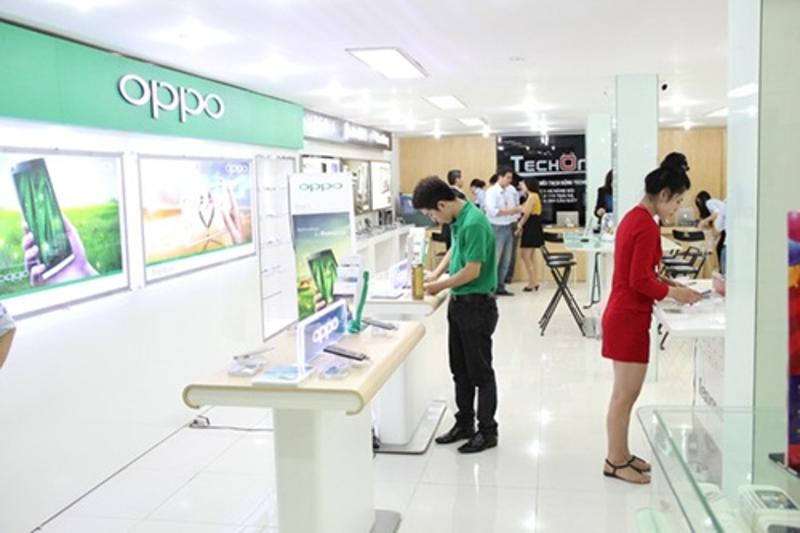

    Oppo sold 10.8 million smartphones, giving it a 9 percent market share and a top-5 ranking, in the fourth quarter of last year, according to Strategy Analytics – even as the overall China market slipped 4 percent (Oppo) To be sure, these lower-priced newcomers lack the firepower of the premium brands, and operate on razor-thin margins or at losses. They need mass volume sales to keep going, the industry experts said.

    Oppo sold 10.8 million smartphones, giving it a 9 percent market share and a top-5 ranking, in the fourth quarter of last year, according to Strategy Analytics – even as the overall China market slipped 4 percent.

    Oppo’s R7 smartphone, priced at 1,999 yuan ($304), touts itself as a “selfie expert”, with a bigger screen than the iPhone 6S and competitive camera resolution.

    Vivo ranked fourth with 10 percent market share, below Apple’s 13 percent.

    The growth among these younger vendors comes as Apple, Xiaomi and others struggle to maintain momentum in a market swamped with smartphones and fading economic growth.

    Analysts say the newcomers run eye-catching marketing gimmicks, including sponsorship with local TV shows, and have extensive retail networks in lower-tier cities.

    “There’s only so much the international firms can do when it comes to localized marketing in China,” said Nicole Peng at Canalys. “For foreign companies like Samsung, their marketing strategies don’t really cater to the Chinese consumer.”

    Sixth-ranked Samsung declined to comment.

    Apple last week forecast a first revenue drop in 13 years and posted the slowest-ever increase in iPhone shipments as the Chinese market showed signs of weakening.

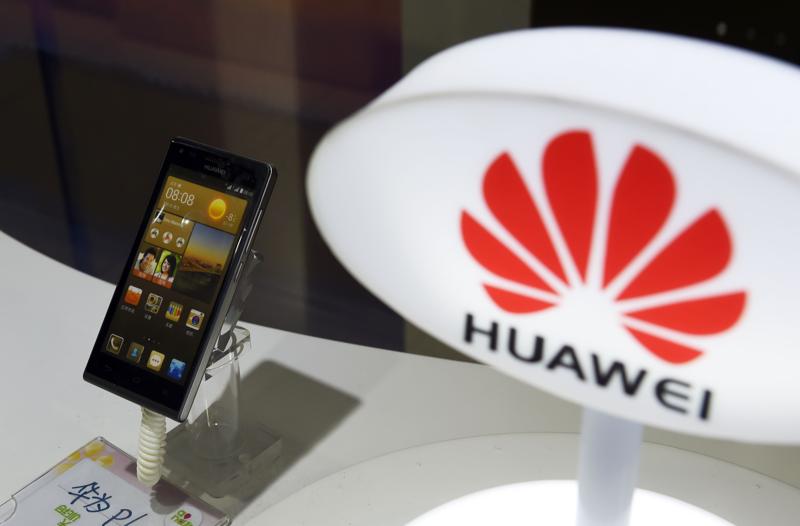
    A mobile phone made by Chinese telecom equipment maker Huawei is displayed in a store in Beijing. (AFP)

    CHALLENGES AHEAD

    China has nine of the world’s top-12 smartphone brands, with nearly a quarter of the market share, according to CounterPoint Research, but turning that into volume sales beyond China will be a challenge.

    Overseas, Chinese brands lack strong distribution networks and can run into intellectual property issues. Oppo is already in several Asian and Middle East markets, while Vivo is in Malaysia and India.

    And at home, Chinese device buyers are notoriously fickle, switching between brands in a cut-throat market. Regular price wars have seen ZTE and Lenovo Group frequently swap places in the sales rankings.

    “The lines between ‘high-end’ and ‘low-end’ devices is blurring, which leaves price as the sole differentiator for most mass market buyers,” said Sameer Singh, an analyst who blogs at Tech-Thoughts.net.

    “Brand image tends to be a lagging indicator of customer experience, i.e. as the latter improves, so does word-of-mouth and consequently brand image. I think that’s what we’re seeing with Chinese brands today.”

  • Hong Kong bets on Chinese demand to drive property market

    Hong Kong bets on Chinese demand to drive property market

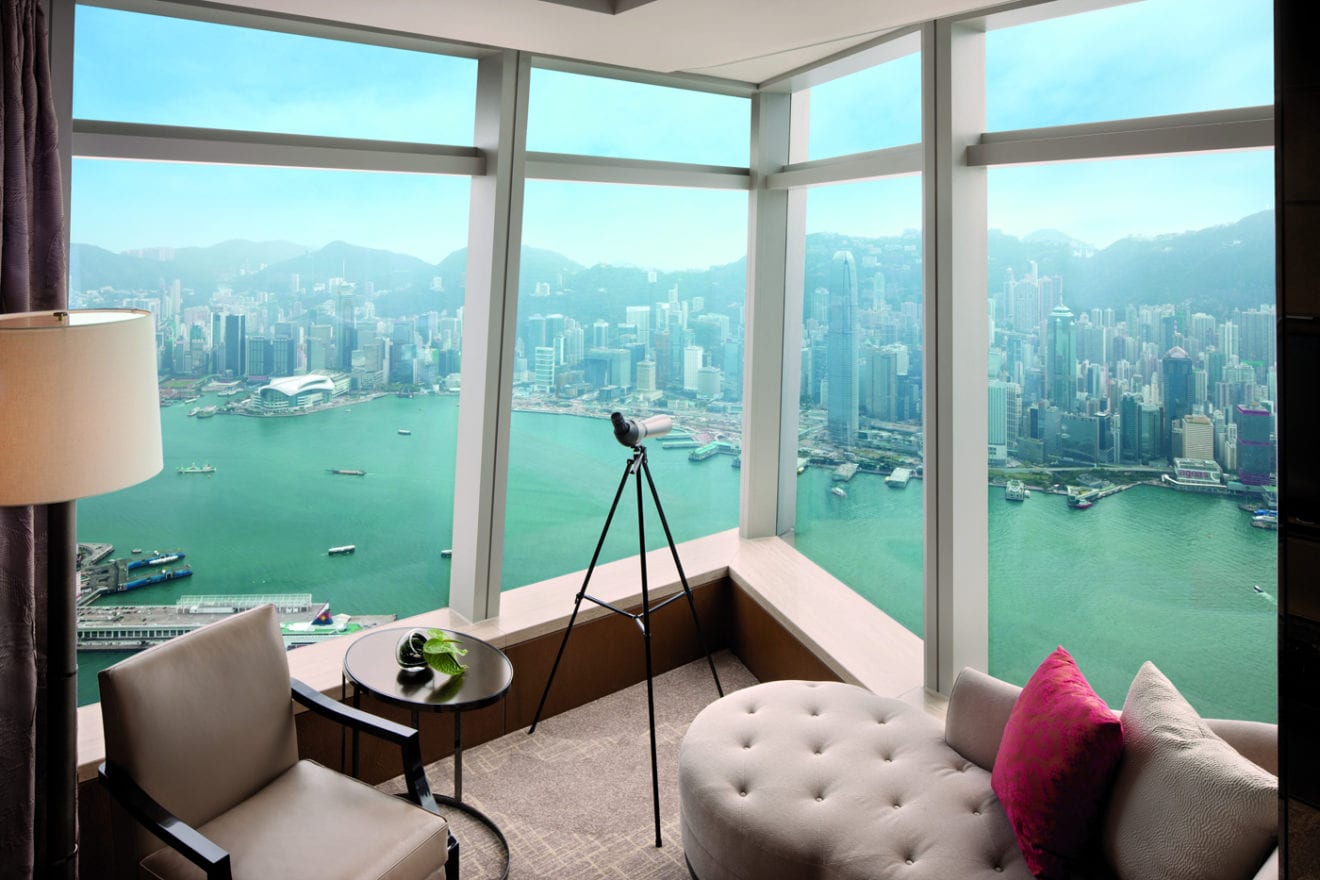
    Mainland China’s influence continues to grow across the four core sectors of the Hong Kong property market, according to the latest research from JLL.

    Demand for office space is increasingly being underpinned by mainland corporates, while a persistent slowdown in inbound tourism from China has put a large dent in retail sales growth of late.

    Cross-border trade remains the lynchpin of the city’s warehouse sector, while mainland participation in the residential market is slowly transitioning from a buyer to that of a developer.

    Office market

    New mainland policy initiatives, including the development of the offshore renminbi market, the expansion of CEPA and the roll-out of the Stock-Connect Pilot Programme, have played a leading role in driving demand for Hong Kong office space.

    In 2015, mainland Chinese firms were among the most active in the market, accounting for about 36 per cent of all new leasing transactions in Central. Their share of new lettings in the Grade A office market has doubled over the past five years and today accounts for about 21 per cent of all floor space leased in Central.

    Denis Ma, Head of Research at JLL, said, “With China’s economy starting to slow and its financial markets showing increased volatility, there is growing concern whether demand from the mainland will be sustained. But looking ahead we remain confident that mainland companies will continue to play a pivotal role in the short- and long-term growth of the city’s office market.

    “Government policies will play a large part in growth and help to attract more foreign companies to establish or grow operations in Hong Kong. We estimate that up to 28 per cent or 7 million sq ft of the tenant base in the Central Grade A office market will be mainland corporates by 2021.”

    Retail market

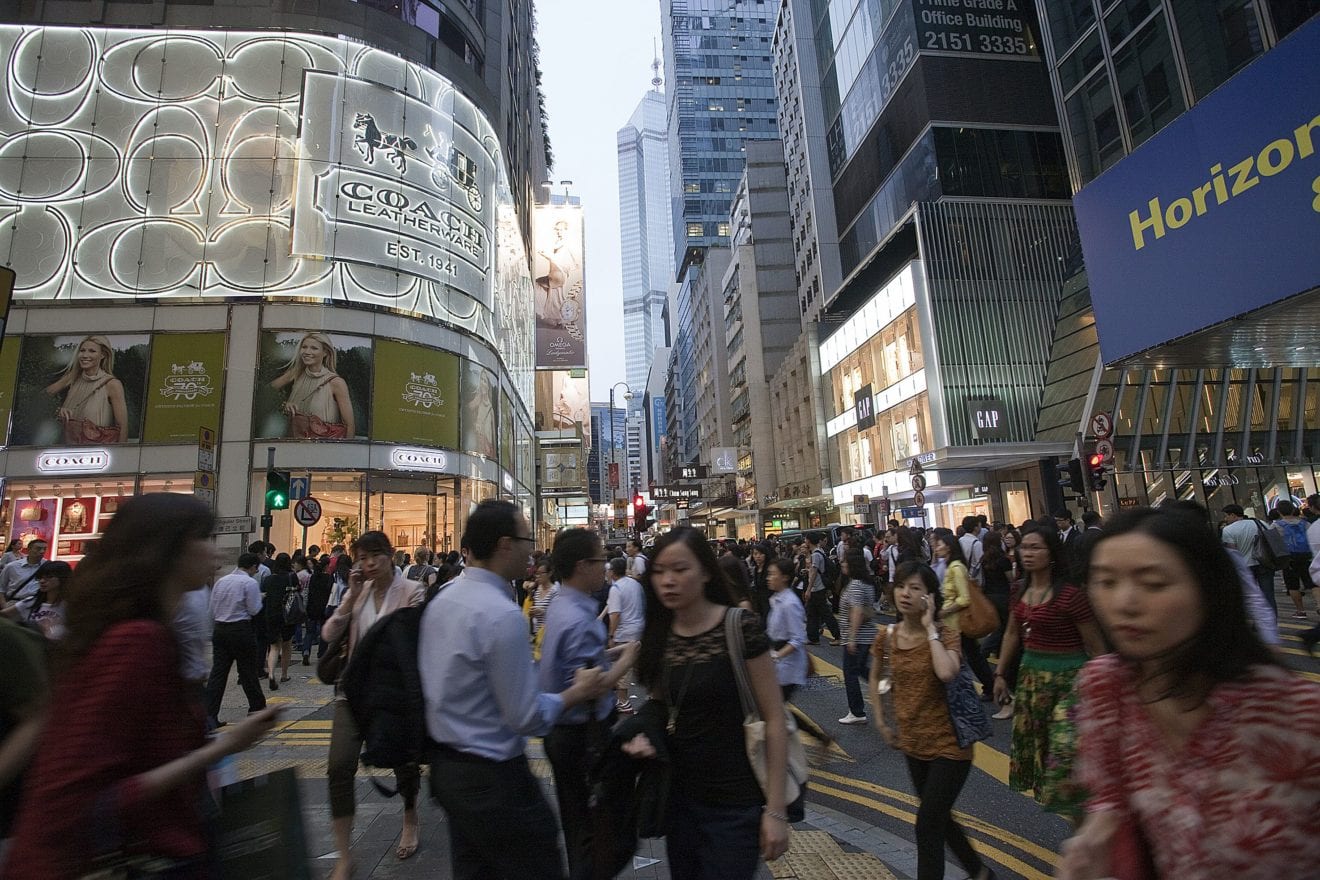
    Hong Kong’s retail sector flourished at the same time mainland tourist arrivals increased three-fold between 2006 and 2015, accounting for more than three quarters of all tourist arrivals last year.

    Latest figures show mainland tourists spent an estimated HKD 178 billion on shopping in Hong Kong last year, accounting for about a third of all retail sales and spending an average of HKD 3,900 per visit. Despite the growth of mainland arrivals slowing since their peak in 2014, some of the causes that have led to a retail sales slump of late can be reversed through policy changes.

    “If the restrictions placed on multi-entry visas were eased and the Individual Visit Scheme (IVS) programme was expanded as proposed in 2012, up to HKD 21 billion in sales could be added to Hong Kong’s retail market. But the type of tourists would likely be more focused on mass market goods rather than luxury items,” said Mr Ma.

    Industrial market

    Since China’s economy has slowed, Hong Kong’s logistics market has shown signs of vulnerability. In 2015, trade with China retreated for the first time since the Global Financial Crisis, dropping 1 per cent y-o-y through the first 11 months. With external trade accounting for about 70 per cent of all warehousing demand in the city, the slowdown has led to an easing of new warehousing demand.

    But as Pearl River Delta (PRD) industries move up the value chain, they have increasingly turned to Hong Kong’s logistics market to move their goods, taking advantage of the higher quality provisions and security offered by warehouse in the city.

    Other positives for the sector include the completion of new infrastructure that will bring the Western PRD within a 3-hour commute of Hong Kong and permit cargo flowing from the Western PRD to be moved through export facilities at Hong Kong International Airport (HKIA) and the Kwai Chung Container Port.

    Mr Ma said, “According to HKIA Master Plan 2030, cargo handled by HKIA will increase at an average of 4.2 per cent per year, with the bulk of growth being driven by the movement of goods in and out of mainland China.

    “Based on our estimates, the increase in cargo volumes at HKIA translates to about 300,000 sq ft of additional warehousing demand per year. Hong Kong’s status as a key logistics and trading hub will further be cemented by the ‘One Belt, One Road’ policy initiative, while the demand for warehouse will increase.”

    Residential market

    Mainland homebuyers had accounted for as much as 40 per cent of all sales in individual projects in the primary market before retreating to 10 per cent in 2015, largely as a result of the government’s stiff Buyer’s Stamp Duty introduced in 2012.

    Today, attention has shifted to the growing participation of mainland developers. Mainland developers have bid on over half of all residential land sales tendered by the government in 2015, winning about a quarter of awarded tenders and elbowing aside local developers that had long enjoyed an entrenched position.

    They are also setting new benchmarks for the market. The bid prices of mainland developers exceeded market expectations in 73 out of 100 instances between 2013 and 2015, compared with 59 out of 100 for local developers.

    Mr Ma said, “We expect mainland developers will continue to expand in the city. Hong Kong’s traditional developers are still expected to dominate the market but will face increasing competition in acquiring residential plots from a larger pool of bidders.

    “Based on JLL’s supply forecasts, residential units built by mainland developers will account for up to 8 per cent of the overall private housing supply between 2016 and 2019, with the majority delivered in the New Territories (56 per cent) and Kowloon (35 per cent).

    “With around 119,000 new households expected to be formed between 2016 and 2019, about one in ten new families opting for primary homes in the private market could end up living in properties developed by mainland developers.

    “Whether mainland developers are able to grow their business in the city to a point where they can influence market direction remains to be seen and will be dependent on the response to the first wave of their units that come to the market.”

  • Imported salted fish flooding Sukabumi market

    Imported salted fish flooding Sukabumi market

    Imported salted fish products have flooded the traditional markets and attracted consumers in Sukabumi, West Java, because of its low pricing.

    “Imported fish products, including from Thailand and Taiwan, dominated salted fish stalls in Sukabumi,” trader Dani Supriyadi said at Cisaat Market, Sukabumi, on Monday.

    According to him, the imported salted fish products remained the main attraction at the local traditional market due to scarcity of local fish supplies.

    Traders opted for imported products to meet the market demand for salted fish, and stocked them. Another reason for the popularity of the imported salted fish is its low price, compared to the fish produced domestically.

    Sadly, domestic salted fish has been difficult to find lately, because of its limited stock.

    The quality of local salted fish products in the country is better than the imported stock, yet it cannot last long because it is processed traditionally. It does not use chemical preservatives.

    “The local salted fish products should dominate the domestic markets because Indonesia has access to vast water resources in the form of Indian Ocean and Pacific Ocean, in comparison to Taiwan and Thailand which have rare Sepat fish species and anchovies,” he added.

    Meanwhile, Chairman of Palabuhan Ratu Community Collectors and Fish Processing Palabuhanratu, Telly Supriatna said too little catch of anchovies ios now found in Indonesia due to inappropriate weather. It is believed that since December 2015 and till April this year, the supply will continue to decrease.

    When entering the rainy season, salted fish processing declines due to the fact that drying process takes a long time. As a result, next April, fish production will decrease and supply will fall as well.

    “Salted fish processing in Indonesia is mostly done traditionally, relying on nature for its drying process. Compared to imported products that are already using modern tools, our products become less competitive in the market,” he said.

  • Auto market flooded with imports from Thailand, Indonesia

    Auto market flooded with imports from Thailand, Indonesia

    A report of the General Statistics Office (GSO) showed a high car import growth rate in the last year. Vietnam imported $6 billion worth of cars in 2015, an increase of 59 percent in comparison with 2014.

    These include 125,000 CBU cars (complete built unit) worth $3 billion, an increase of 77 percent in quantity and 88 percent in value in comparison with the year before.

    Of the imports, transport vehicles were worth $1.2 billion, less-than-9-seater cars $507 million and large-size cars $34 million.

    Analysts noted that of the 10 largest markets from which Vietnam imports cars, including China, Japan, South Korea, Germany, the UK, France and India, imports from Thailand and Indonesia have seen sharp increase in the last months of the year.

    According to the General Department of Customs (GDC), in the first 11 months of 2015, Vietnam imported 23,516 CBU cars from Thailand, worth $406.1 million. The figures were much higher than 14,416 cars and $243 million in the same period of the year before.Both of them are ASEAN members.

    The car imports from Indonesia were lower than from Thailand, but have also seen a high growth rate. In 2014, Vietnam imported 1,686 cars from the market with the value of $16.9 million. Meanwhile, in 2015, the figure rose to 3.277 and $32.6 million.

    Analysts pointed out that Vietnam also imports vehicles in a large quantity from China, but the imports from the market are mostly trucks and specialized vehicles, while the imports from Thailand and Indonesia are mostly those with less than nine seaters.

    Vietnam not only imports CBU cars from Thailand and Indonesia, but car components as well, $542 million and $105 million, respectively, in 2015, which were even higher than the CBU import turnover.

    Analysts commented that large imports from two ASEAN countries are predictable, especially since the car price decreased by 40-42 percent recently.

    They believe that the imports from ASEAN would dominate the domestic market thanks to their more reasonable prices, compared with imports from developed countries and domestically made products.

    According to the Strategy Research Institute, the car price in Vietnam is much higher than Indonesia because taxes and fees make up 40-50 percent of the cars’ value.

    Toyota Camry in Vietnam, for example, is priced at $50,000, while it is just $40,000 in Indonesia. Similarly, the price of Honda CR-V is $45,000 in Vietnam and $29,000 in Indonesia.

    The Ministry of Finance estimated that from 2019 when the import tariff and luxury tax are cut, cars with cylinder capacity of less than 1,000 cm3 would see prices drop by 42 percent.

    Car owners complain about regulations on equipping their cars with fire extinguisher

    • Renault eyes Vietnam expansion
    • Vietnam buys many Chinese goods, from onions to cars
  • Hang Lung’s Chan Says Hong Kong Property Market Healthy

    Hang Lung’s Chan Says Hong Kong Property Market Healthy

    Hang Lung Group Ltd.’s Chairman Ronnie Chan said Hong Kong’s property market, which began a correction last quarter, is the “healthiest” he’s seen in 25 years.

    Speaking in an interview Monday with Bloomberg Television, Chan said a price decline of 10 percent to 20 percent in Hong Kong’s housing market is “no big deal.” Chan also said the residential property market in mainland China is getting “healthier and healthier,” after data showed that home-price gains are spreading to more Chinese cities, especially smaller ones.

    Chan’s optimism on the Hong Kong market comes against a backdrop of slumping prices in the city. Secondary residential prices in Hong Kong dropped 6.9 percent in the fourth quarter of 2015, the biggest quarterly slump in seven years, according to data from Centaline Property Agency Ltd. Home sales in December fell 32 percent to HK$29.8 billion ($3.8 billion) from a year earlier, the Hong Kong Land Registry said Jan. 5.

    Hang Lung, which is listed on the Hong Kong Stock Exchange, invests in property in Hong Kong and mainland China through its subsidiary.

    Chan’s outlook for the China retail market was less bullish. He said a combination of falling rents, a weakening domestic economy and the slowdown in retail sales, especially for high-end luxury, created a “triple whammy” for Hang Lung’s shopping malls in the mainland.

    He said that retail outlets in Shanghai and Beijing will weather the storm better than in second and third-tier cities, which “are being hit pretty hard.” One of those cities is Dalian, where Hang Lung just opened a new 2.4 million square foot shopping center.

    Still, Chan said the longer-term prospects for China retail are good.

    “If anything in the economic world is sure, it’s going to be consumerism in China,” he said. “In the long run we are okay, it’s just in the short run it is very very difficult.”

  • Baby Food Market is would reach $72.7 Billion, globally, by 2020

    Baby Food Market is would reach $72.7 Billion, globally, by 2020

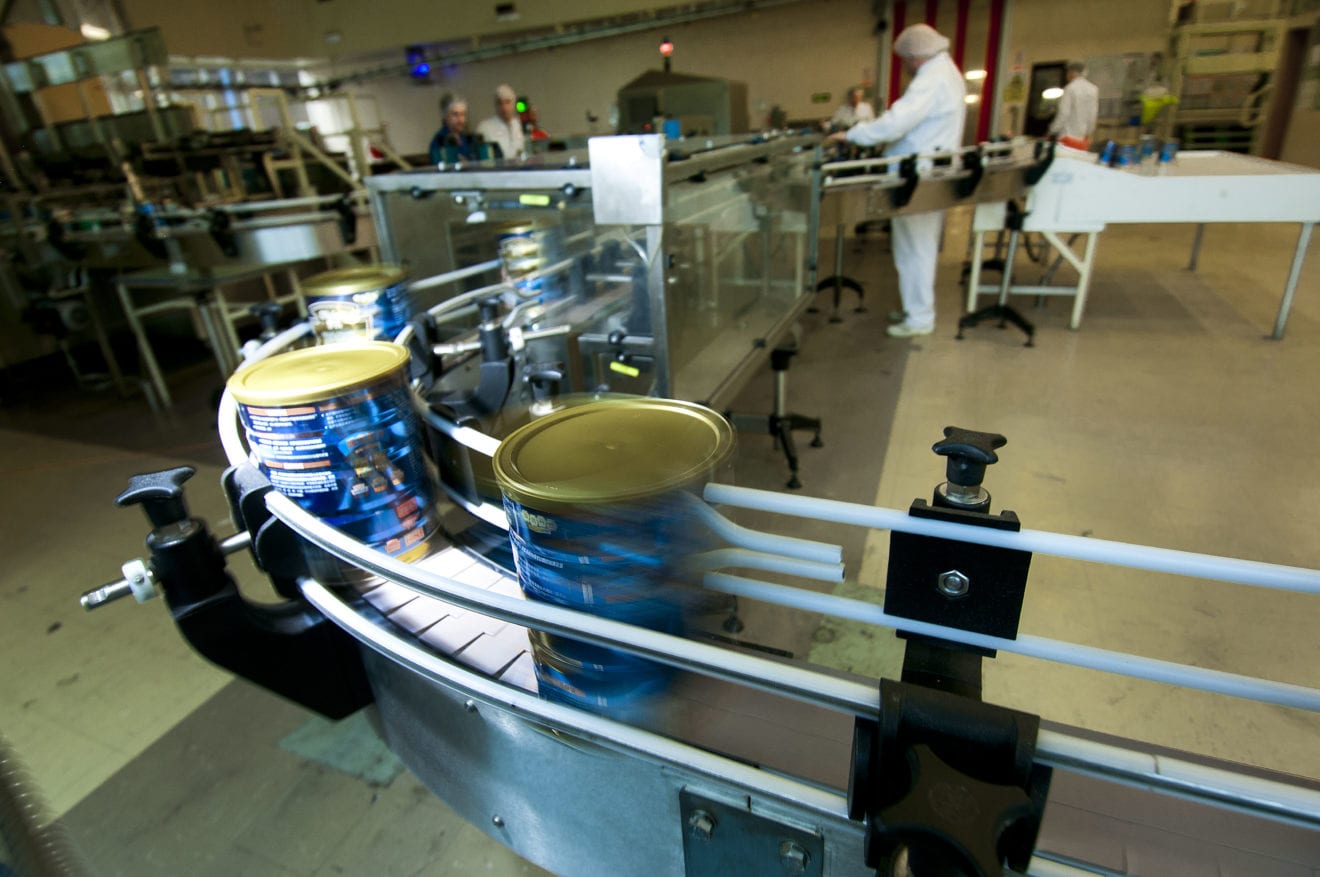
    Big Market Research has added a report titled “Baby Food Market – Opportunities and Forecasts, 2014 -2020)”. As per the report, global baby food market would garner a revenue of $72.7 billion by 2020, growing at 6.4 % CAGR during the forecast period 2015 – 2020. The report offers in-depth industry insights in terms of current and future market trends, key drivers and restraints along with their impact analysis, growth opportunities and profitable trends, detailed market segmentation and forecast.

    Increasing awareness for nutrition, growing activities in organized retail marketing, urbanization along with rapidly increasing count of working women are the key factors that would drive the baby food market growth. The report segments the market on the basis of product type, type of distribution channel used and geographical regions.

    Asia Pacific region generates the maximum revenue and is expected to register highest 7.7% CAGR amid 2015 – 2020.

    On the basis of types, the report further segments the market majorly into dried baby food, milk formula, and prepared baby food. Among these segments, the milk formula contributes a major market share of nearly about 2/3rd of the market, in terms of value. This is primarily due to rising global demand for milk formula, increasing rate of urbanization, rising disposable incomes and the changing lifestyles. Cow milk based formulas witness prominence among emerging economies.

    Based on types, prepared baby food is the second largest market globally and would grow at the fastest CAGR amid the forecast period. Time constraints faced by the parents fueled by changing lifestyle are the key factors driving the market demand. Developed countries majorly contribute to the demand for prepared baby food, however, the segment will witness significant adoption across developing countries along the forecast period. On the basis of distribution channels, the global baby food market is segmented into supermarkets, hypermarkets, small grocery retails, beauty and health retails. Vendors prefer the supermarket channels as the primary distribution channel, and followed health and beauty retailers segment. Asia-Pacific dominates the global baby food market, followed by European, North American and LAMEA region

    Asia Pacific region is the largest market in terms of the market demand for milk formula, contributing over 50% of the total global market share, driven largely due to improving economic condition and changing lifestyles of individuals across this region. Presence of multi nutrition along with the market availability of balanced nutrition in one pack is a major factor propelling the demand in North America.

    Key market players operating in this market are adopting acquisition as dominant strategy to consolidate their market presence. Acquisition is one of the primary strategies adopted by companies operating in this market. Companies like Abbott Laboratories and Nestle are adopting competitive branding strategies in order to expand their customer base.


  • China’s 500m middle class consumers

    China’s 500m middle class consumers

    Within the next ten to twenty years there will be 500m middle class consumers in China, according to Jack Ma, and there will be huge opportunities for smaller Western brands to gain a foothold in this market.

    “In the last 20 years China was focused on exporting, in the next 10-20 years China will focus on importing,” the founder of ecommerce giant Alibaba told a business gathering in London. “We’re coming here to help small businesses in the UK, in Europe, to sell to China.”

    To this end the company has made its London office a regional hub and opened offices in Italy, France and Germany.

    Some 5,000 overseas brands from 25 countries are expected to take part in Singles Day, Alibaba’s annual online shopping extravaganza on November 11, which this year will feature 6m products from more than 40,000 merchants and 30,000 brands.

    Last year shoppers from 175 countries placed orders on Alibaba’s platforms during the first 40 minutes, as the company upgraded the event into a global online shopping carnival by helping Chinese shoppers purchase overseas products and overseas buyers acquire goods from China.

    The ecommerce business has announced it will this year be “merging bricks with clicks”. Jeff Zhang, president/China retail marketplaces, explained this was a theme of the 2015 event and “marks the first step in achieving the full integration of the digital economy and physical commerce”.

    Some 180,000 stores in 330 cities across China are using a variety of omnichannel strategies to make shopping more convenient and rewarding.

    So, for example, customers entering one of these stores will get text notifications from their Taobao mobile app and can then scan an event barcode to win discounted e-coupons to redeem on the 11.11 shopping day.

    Leading retail brands – including Suning, Intime and Haier – will have special in-store experience zones where consumers can try out displayed products before scanning the barcodes and purchasing them at the discounted prices reserved for sales on 11 November.

  • The new niches in China’s ecommerce market

    The new niches in China’s ecommerce market

    Alibaba’s sales is only 5 percent of total retail in China and JD.com’s sales of electronics products represent about 2 percent to 5 percent of total electronics retail as well, according to Dangdang.com’s CEO Li Guoqing.

    If you only look at the Chinese ecommerce giants’ recent financial report, most people would agree that the competition has settled because Alibaba alone has accounted for about 80 percent of the market share in online shopping sales. The combined sales from Alibaba and JD.com have close to about 90 percent of the Chinese online retail market.

    However, at least one executive of a Chinese e-retailer thinks the position of those leaders is not secure. “The size of the business is not equal to competitive advantage and competitive threshold.  The market will be settled only if the marketing leaders have some unique edges and generate difficult barriers to entry,” says Li Guoqing, cofounder and CEO of Dangdang.com, in a speech in One Thousand Ecommerce Professionals Seminar in China:

    Alibaba’s sales only account for about 5% of retail sales of China and that is not a enough barrier to entry. At same time, JD.com’s electronics sales only represent 2% to 5% sales of electronics products in China. If some companies get a right new business model, there are still plenty of chances to beat those current leaders.

    Li says people seldom know Vipshop, the number 4 internet retailer China 500, and Yhd.com, the number 7 internet retailer China 500, three years ago, but now they have become ecommerce leaders in their categories in China.

    In other words, new horizons may be coming for niches within China’s ecommerce market in the same way that we see companies like Warby Parker and Zappos coming up in the USA. Keep on a lookout for these small well-branded niche companies in China, while you look past the big guys like Alibaba and JD.

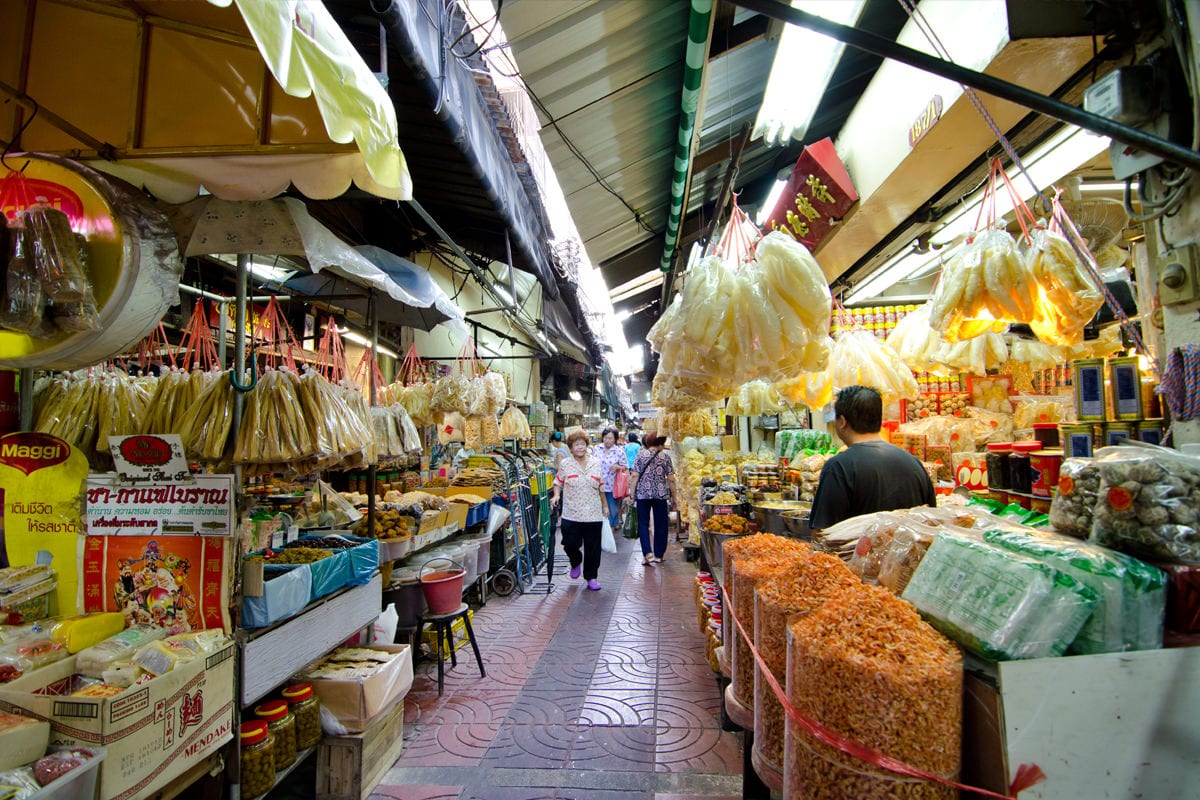
  • Iconic Bangkok market faces bulldozers

    Iconic Bangkok market faces bulldozers

    Famous Bangkok market Saphan Lek is to be destroyed by order of the city’s Metropolitan Administration.

    According to reports, stallholders have just 15 days to pack up and vacate before authorities force their removal. It alleges the market has caused “water management issues” for the whole city.

    Popular with students, locals and tourists alike for products as diverse as computer games, imported toys and fresh foods, the market is one of a string closed down in recent years as city officials try to “clean up” the town’s waterways and streets.

    Authorities have told traders from Saphan Lek and another recently closed market Khlong Thom – that they can relocate to other locations at SC Plaza Mall near the Southern Bus Station and Chulalongkorn University. But traders are unenthused – and shoppers, especially students – say other locations are too far away to travel to.

    “The canal is part of Bangkok’s water system. It is 20 metres wide and two kilometres long. It connects to all the other canals on the system,” Pol Maj-Gen Wichai Sangprapai, an adviser to the Bangkok Governor said, defending the decision. “These people have built into the canal with metal and concrete, which obstructs the flow of water.”

    Described in some media as “an Aladdin’s Cave’” of electronics and games well know among regional tourists, the 50 year old market is located in the heart of ‘old city’ Bangkok.

    It’s name, which translates to “metal bridge” refers to its construction over a canal.