Tag: Market

  • Browser and search engine UCWeb claims 50pc market shares in India and Indonesia

    Browser and search engine UCWeb claims 50pc market shares in India and Indonesia

    UCWeb, the mobile browsing arm of e-commerce giant Alibaba Group which is behind the UC Browser, is claiming more than 50 per cent shares of both the Indian and Indonesian mobile browser and search engine markets, six years after entering the countries for the first time.

    The company also revealed it has reached the milestone of recording more than 400 million monthly active users globally, including 88 million in India.

    Amid stagnant growth in mobile internet usage and cutthroat competition in its home market, the Chinese company said the successes have been built on its relentless effort to adapt to both media environments, spearheaded by local sales teams, and a lack of any strong local competitors.

    “In these markets [UCWeb] has focused on being a big ‘platform’ that enables users to discover content.

    Indian viewers have a much stronger appetite for sport, music and videos, while less interest in social and gossip news, as in China

    He Xiaopeng, UCWeb’s president

    “We don’t care about short-term revenue and profit overseas. And we don’t rely on small apps to acquire traffic,” said He Xiaopeng, UCWeb’s president.

    His comments came as the company officially shortened its name from UCWeb to just “UC”, in an effort to highlight its upgrade from being a simple browser to what officials called a “digital media and entertainment platform”, which along with other operations such as Alibaba Music, and Alibaba Pictures, form the company’s growing culture and entertainment matrix.

    In a separate announcement, it said in partnership with Mumbai entertainment TV station Colors, it is also launching an English language news conglomerate, “UC News”.

    “India is among the few markets that still see traditional media outlets growing,” He explained.

    “This is different from China and Indonesia, where social media and online celebrity culture dominate.

    “Indian viewers have a much stronger appetite for sport, music and videos, while less interest in social and gossip news, as in China,” He said.

    The company employs nearly 100 staff in India, and a few less in Indonesia, mainly business development and marketing staff, who are backed up by much larger technical and products team in Guangzhou, He said, within a total workforce of 500.

    Chen Chao, the company’s general manager, said it is relatively easy building a successful presence in markets like India and Indonesia, where users are happier to accept foreign companies, and there is a lack of competitive local firms.

    UCWeb has far less interest in developed markets such as Japan, he added, for instance.

    The company’s expansion in the emerging markets comes as growth in the number of mobile internet users has plateaued in China, and browser competition has intensified between rivals such as QQ, which is backed by Tencent, and Baidu’s own browser.

    Zhu Dalin, an analyst with Analysys International, said the announcements underlined UCWeb’s ambition to become a major platform, which alll users can access easily.

    “It is also stressing its customised feeds, but its competitors are doing this.

    “China’s mobile internet landscape has changed so fast that it may not necessarily have developed in the way that UC wished,” said Zhu.

    Unlike during the personal computer age, mobile users can now access content through a various of ways, so browsers such as UC have to fight even harder for users, analysts say.

    India and Indonesia have become natural targets for UCWeb, despite having to overcome tough regulatory risks.

    The company has also built a strong presence in Iran, before being blocked by the Iranian government overnight, along with Facebook and Google.

    He Xiaopeng said the biggest challenge in India turned out to be poor infrastructure, on top of a lack of electricity, water and online payment tools.

    UCWeb’s local operating experience could potentially be an asset for its parent Alibaba, which is also exploring opportunities in markets including India.


  • Goodyear Indonesia eyes SUV market with new tire

    Goodyear Indonesia eyes SUV market with new tire

    Publicly listed tire maker Goodyear Indonesia (GDYR) is eyeing a bigger share of the country’s growing sports utility vehicle (SUV) market by introducing a new midsize SUV tire.

    The new product, called Wrangler TripleMax, will be launched in November. It is expected to double the size of the company’s SUV market to around 10 percent in 2017, up from the current 5 to 6 percent.

    “The SUV has become a sexy market for us as it has seen a constant growth within the Asia-Pacific region in recent years, including in Indonesia,” Arfianti Puspitarini, Goodyear Indonesia’s consumer product and trade marketing manager, said during the Gaikindo Indonesia International Auto Show (GIIAS) in Tangerang, Banten, last week.

    Puspitarini even said that SUV cars “were like a second living room”, especially for people living in big cities like Jakarta.

    Sales of SUV cars, such as Daihatsu Terios, Mitsubishi Pajero Sports and Toyota Fortuner, increased 15.28 percent year-on-year to 131,966 units throughout 2015.

    Their share accounted for 13 percent of overall car sales of around 1.01 million units last year, according to the Association of Indonesian Automotive Manufacturers (Gaikindo). Entering 2016, the SUV segment made up 22.1 percent of total car sales of 267,228 units in the first quarter.

    Goodyear claims that the Wrangler TripleMax, which was also launched in Thailand and the Philippines last month, would optimize a car’s braking system, with a two-meter shorter braking distance compared to competitors in the midsize SUV segment.

    Goodyear Indonesia sales and marketing director Yedi Yunadi Sondy said the new product would fill in the market of the company’s previous product, the Wrangler HP All Weather, which was sold for between Rp 700,000 (US$53.35) to Rp 1.5 million each.

    It sells premium SUV tires as well, with price tags ranging from Rp 1.2 million to Rp 2.2 million each, that cater to high-end vehicles, such as Nissan Terrano or Mazda CX7.

    The company’s first-quarter financial report showed that it booked $40.6 million in revenues, 2.9 percent lower than the first quarter of 2015. More than half of the revenues came from domestic sales, which surged 8.3 percent year-on-year.

    The report also showed that it managed to cut various business costs that led to $629,344 in net profits in the January to March period, overturning the $205,864 of net losses that it posted in the same period last year.

    During a May interview in Jakarta, Goodyear Indonesia corporate secretary Wicaksono Soebroto said the company had decided not to expand to other export markets this year.

    On the contrary, it plans to strengthen its domestic market following a slight recovery in the country’s economy and the government’s goal to boost infrastructure projects nationwide.

    “Those infrastructure projects certainly need lots of trucks [to transport building materials]. We can also provide more tires for them,” said Goodyear Indonesia managing director Allan Loi.

    Its overseas markets currently consist of those in Southeast Asia, Oceania and in other countries. It suffered from a 78.39 percent plunge in annual sales in Oceania last year, mainly because of an 80.13 percent decline in Australia.

    At present, Goodyear has 89 outlets in 27 provinces across the country, with 26 outlets located in the Greater Jakarta area.

  • A force in the property market

    A force in the property market

    ZEON Properties Group, the exclusive event partner of the StarProperty.my Fair 2016 that opens in Gurney Plaza and Gurney Paragon Mall in Penang today, is a real estate powerhouse.

    Among the most recognised brands in the industry in Malaysia, it has a dynamic 500-strong team of operations personnel and agents in several countries throughout South-East Asia.

    The company has based its international headquarters in Penang at the Maritime Automall in Persiaran Karpal Singh and there are many other branches and broker offices also established in major cities.

    It is spearheaded by group CEO Leon Lee (pic), a visionary and resourceful leader who also founded the group and is leading it towards success both in Malaysia and internationally.

    Lee is a civic-conscious citizen, having contributed substantially towards society as the incumbent Penang Chinese Chamber of Commerce (Young Entrepreneur section) state chairman-cum- director and deputy chairman of the National Young Entrepreneur Committee.

    He is also the Penang state advisor for the Malaysia Entrepreneurs’ Development Association and deputy chairman of the ASEAN Retail-Chains and Franchise Federation Northern State Liaison.

    His other accomplishments include being a past president of JCI United Penang and Assistant District Commissioner George Town (North) 2007 of the Scout Association of Penang.

    Lee was named Young Entrepreneur of the Year (2013) in the McMillan Woods Global Awards.

    Zeon Properties Group is also the preferred marketing arm for over 10 projects in Malaysia which property buyers and investors can check out at the fair.

    Besides real estate and marketing, the company also specialises in real estate investment advisory, foreign direct investment, international project marketing, and retail planning and consultancy.

    It is also involved in the Malaysia My Second Home programme plus property development and management, offering the best of services with the highest professionalism and efficiency.

    Zeon Properties Group’s subsidiaries encompass Zeon Properties Kuala Lumpur, Zeon Properties Singapore, Zeon Properties Indonesia, Zeon Properties Hong Kong, Zeon Properties China, Zeon Properties Taiwan, Zeon Properties MM2H International Sdn Bhd, Zeon Land Sdn Bhd, Zeon Computer Sdn Bhd and Zeon Online Sdn Bhd.

    Meanwhile, its retail division engages in a number of different businesses which include the Hairstory chain, Karpal Singh Drive Food Court, Macau Street restaurant, Iyara Thai Restaurant, and entertainment outlets like The Bank, Wine and Cigar, Whisky and Champagne, Levels and Studio Room.

    As a new age integrated property and infrastructure solutions provider, Zeon Properties Group is proud of its brand that is built on core values of passion and excellence that resonate with brokers, agents and consumers.

    Its global reach and understanding of property enables it to achieve the best outcomes for all stakeholders.

    To find out more about its offerings, visit the company’s booths at the fair that runs until Sunday and is open from 10am to 10pm.

  • Golden opportunity: why now’s the time for brands to move in Myanmar

    Golden opportunity: why now’s the time for brands to move in Myanmar

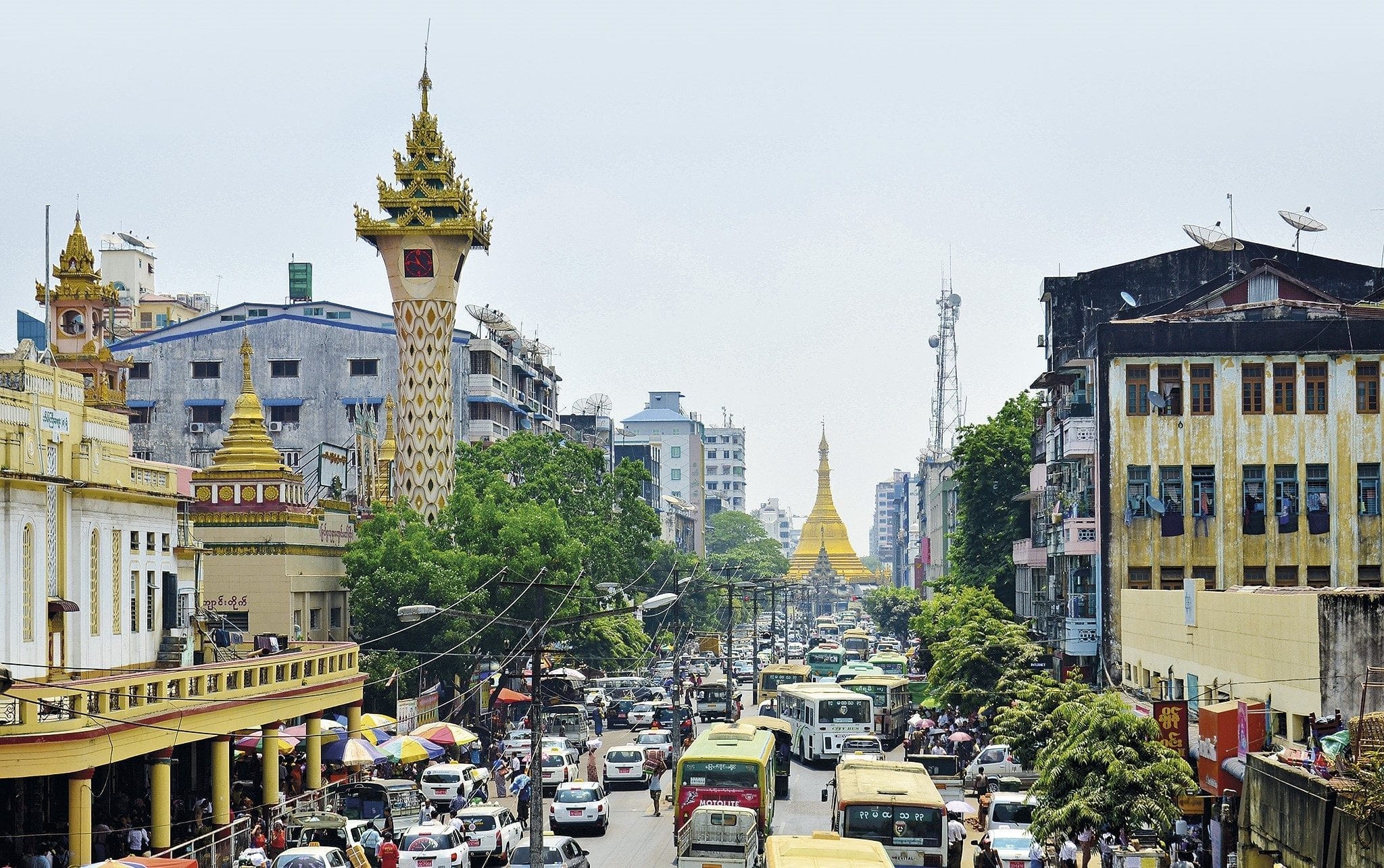
    In the street outside Yangon’s Shwedagon Pagoda, a Buddhist monk reaches into the folds of his burgundy robes for his mobile phone. He cuts a somewhat incongruous figure, tapping his screen against a backdrop of golden spires, with a steady stream of pilgrims and traffic all around. But this blend of ancient tradition with digital connectivity is now the way of modern Myanmar.

    The pace of change here is on a scale unseen in other fast-growth Asian markets. Just three years ago, buying a mobile SIM card meant handing over $2,000 in cash on the black market; now, there are now three competing networks and a SIM costs just $1.50. Ownership of mobile phones has already shot up to more than 50 per cent – a fact all the more remarkable given that only a third of people here have mains electricity in their homes.

    It is this prevalence of mobile connectivity right at the beginning of Myanmar’s growth curve that is proving such a strong accelerant of change. Mobile connectivity won’t just enable growth, it will direct it, leading entire business sectors – from banking to retailing – to leapfrog stages of development.

    The International Monetary Fund has predicted Myanmar will have the world’s fastest-growing economy this year, with GDP growth of 8.6%. Since the country embarked on a programme of ‘disciplined democracy’, investment has been increasing. The smooth transition to a civilian-led government earlier this year is giving many more businesses the confidence to invest and expand here.

    Economic growth and urbanisation are giving rise to social mobility, and with that, the world’s newest, youngest middle class. Myanmar is home to 51 million people, more than half of them aged under 30. By 2020, Boston Consulting Group anticipates that 10 million will be middle-class or affluent. These people won’t necessarily be wealthy by global standards, but they will have disposable income that puts fashion, fragrance and home appliances within reach. Later, they will be in the market for cars and overseas holidays.

    For brand owners, this represents unprecedented opportunity, and there is a clear early-mover advantage to be had. WPP’s global BrandZ study tracks the way consumers feel about different brands around the world. Some brands are so little understood by consumers, they are a ‘clean slate’ in consumers’ minds. In Myanmar, where shoppers have had little choice about where they shop and the brands they buy, about a third of all brands fall into this ‘clean slate’ category – double the global average.

    That means now is the time for brands to start making an impression, not just on people who are ready to buy, but also on those who are on their way up. Ford and Chevrolet are already here; Coca-Cola, KFC and Pizza Hut are among the other international brands to have launched in Myanmar.

    Consumers in Myanmar are open to trying new products and new brands, but while global brands can serve as shorthand for quality or safety, they are not a badge of honour and do not instantly command a premium. People are embracing the opportunities that digital connectivity offers, but do not seek an express route to ultra-modernity. The languorous pace of life here is seen as something to be treasured; thoughtfulness and self-control are admired, and modest attitudes to spending and thrift can make indulgence seem decadent.

    Brands need to be respectful of tradition, and understand that parents and grandparents are highly influential. BrandZ analysis shows that the strongest brands in Myanmar project idealism and a sense of adventure, but steer clear of individualism and rebellion. They also help consumers navigate what is becoming a sea of choice, emphasizing not just the features of a product but the difference it can make to the consumer’s life. This involves working closely with the traditional retail trade – local ‘Mom and Pop’ shops – which account for the vast majority of sales here. These stores are not just distribution points but trusted sources of information and advice.

    Norwegian mobile phone network Telenor has demonstrated how global brands can achieve local resonance. Its TV campaign reflects the importance of family as a young woman in the city calls her mother in the countryside for urgent cooking advice; she wants to cook ‘nan gyi thohk’ noodles from her home-town to impress her mother-in-law. The ad has been so popular that nan gyi thohk is now ‘the Telenor dish’.

    Similarly, the isotonic drink 100PLUS, from Malaysia, has established a powerful connection with consumers in Myanmar by reflecting what it feels like to be in a hot climate with so much that needs to be done.

    For now, access to television is higher than mobile penetration, but only just. Mobile internet is where consumers are increasingly getting their information, and going online in Myanmar means going on Facebook. Even President Htin Kyaw is a subscriber. Media plans need to be mobile-friendly, if not mobile-first.

    Success in this market requires a nuanced approach both to business and communications. The Buddhist monk on his phone appears to be straddling very distinct worlds; in fact, he is integrating the two in a uniquely Burmese way.


  • Indonesian coffee introduced in Southeast European market

    Indonesian coffee introduced in Southeast European market

    Indonesian coffee was introduced in Zagreb, Croatia, on June 8-10 during an event titled “Indonesian Specialty Coffee: From Cup to Cup” organized by the Indonesian Embassy in Zagreb in cooperation with local entity, Tanamera Coffee.

    During the program held in two locations — the Indonesian Embassy in Zagreb and a coffee shop in the Croatian capital — a representative from Indonesia introduced a variety of Indonesian coffee beans, including Gayo Aceh, Solok Sumatera, Toraja Sulawesi, Flores, and Malabar.

    “The last day of promotion in the cafe was open for the public, and some 600 people had the opportunity to sample the single origin coffee that our team had brought,” Dini Criddle, Tanamera Coffee owner, noted in a press release received on Monday.

    Tanamera Coffee, as the governments partner in promoting Indonesian coffee in the global market, also presented the process of coffee production, from the enhancement of farmers harvest results and the process of coffee production to the simulation of roasting techniques as well as brewing methods using filters or espresso machines.

    The Indonesian Embassy in Zagrebs Economic Functions Executive Widjoseno Sastroamidjojo remarked that the promotion efforts had drawn the interest of several coffee roasters, industry makers, and Croatian coffee importer to buy Indonesian coffee products and coffee beans that are deemed high in quality.

    This interest will boost the entry of Indonesian coffee into the Croatian market, as well as other European countries, he emphasized.

    “Not a lot of Croatians are familiar with Indonesian coffee. Seeing the high demand for Indonesian coffee and the potential to attract Croatian tourists that reached 12 million in 2015, we are confident that Indonesian coffee products can be successful in the southeast European market,” stated Sastroamidjojo.

    Coffee consumption in Croatia is high as its people prefer spending time in coffee shops in addition to the rapid growth in the number of such outlets in the southeastern Europe country.

    Despite having a total population of only 4.2 million, the coffee consumption rate in Croatia is rather high, reaching 15.9 tons, or 2.8 kilograms per capita in 2013.

    Based on the data retrieved from Euromonitor, Croatia was ranked 14th on the worlds coffee consumption index.

    Meanwhile, other Southeast European countries, such as Slovenia, Serbia, and Bosnia-Herzegovina, are also listed among the 15 countries, with the highest per capita coffee consumption rate, with each reaching 6.1, 5.4, and 4.3 kilograms.

  • Philippines to Market Fashion Products in Indonesia

    Philippines to Market Fashion Products in Indonesia

    The Philippines has expressed its intention to market branded retail products in Indonesia, particularly fashion products.

    To support the intention, the Philippine Trade and Investment Center (PTIC) in Jakarta has held an expo, Lifestyle Philippines, in Shangri-La Hotel on June 10, 2016, said the Philippines Embassy in Jakarta, Monday, June 13, 2016.

    According the Philippine Ambassador to Indonesia Maria Lumen B. Isleta, the expo is expected to strengthen the relationships between the Philippine and Indonesian people.

    “It is an effort to introduce the various Philippine products and services, which may interest many Indonesian consumers once they know more about it,” Amabassador Isleta said.

    Alma Argayoso, the Philippine trade representative in Jakarta, said Lifestyale Philippines is aimed at promoting and introducing products made in the Philippines.

    The expo was enliven by fashion shows that featured designs of iconic brands, such as Karimadon, Rusty Lopez, Plains and Prints, and Cruzzini Barong Tagalog.

    The trade volume of both countries reached US$3.6 billion last year with a significant surplus for Indonesia, having an export volume of US$2.93 billion. Whereas the Philippine trade to Indonesia merely amounted to US$628.27 million.

  • China, Hong Kong shares fall as global investors flee risky assets

    China, Hong Kong shares fall as global investors flee risky assets

    China and Hong Kong stocks slumped on Monday morning, with investors joining a global flight from risky assets on lingering economic concerns and rising risks from the UK’s possible exit from the European Union.

    Sentiment was dampened by worries over China’s economic health after data showed slowing growth in fixed asset investments and retail sales, offsetting optimism that MSCI may add Chinese shares to its emerging market index this week.

    China’s blue-chip CSI300 index fell 0.8 percent, to 3,138.06 points by the lunch break, while the Shanghai Composite Index also lost 0.8 percent, to 2,904.23 points.

    Selling was more intensive in Hong Kong, where financial markets are more open and thus more vulnerable to global market volatility. The benchmark Hang Seng index dropped 2.5 percent.

    In June 2015, China’s “Great China Bubble” burst, triggered by the destruction of margin trades, and sending shockwaves across global financial markets.

    “One year after the crash, China’s stocks, bonds, property and currency are still expensive,” wrote Hong Hao, chief strategist of BOCOM International.

    He added that the Shanghai index was still roughly 17 percent above the theoretical support level of 2,500 even after almost halving from last summer’s peak.

    “Although Hong Kong is trying to heal, struggling global markets will be a drag.”

    Global market volatility surged lately as investors fretted ahead of this week’s central bank meetings as well as Britain’s June 23 referendum on whether to remain in the European Union.

    Sentiment was not helped by lacklustre Chinese data.

    Foreign direct investment (FDI) in May fell 1 percent from a year earlier, marking the first year-on-year decline since December, according to data published on Sunday.

    Data on Monday showed that China’s fixed-asset investment growth eased to 9.6 percent in January-May from the same period a year earlier, below market expectations. Industrial output and retail sales data were not encouraging either.

    “Given today’s data, there is higher risk for China to miss the growth target of 6.5 percent y/y in Q2,” ANZ wrote in a research note.

    Shares fell across the board in China and Hong Kong.

  • Demand for cash expected to rise during Ramadan

    Demand for cash expected to rise during Ramadan

    Demand for cash in Indonesia is expected to rise by 14.5 percent to Rp160.5 trillion during Ramadan and post-fasting holiday of Lebaran this year, a central bank official said here on Monday.

    “There are several factors that would make cash demand to increase this year,” Bank Indonesias executive director for money circulation management, Suhaedi, said.

    The forecast for the cash demand growth of 14.5 percent this year is in line with the trend in the growth of money in circulation in the community in the Ramadan-Lebaran period which has always increased by 14 percent every year for the past nine years, he said.

    Suhaedi said he predicted demand for cash would increase because of economic recovery, the disbursement of the 13th and 14th salaries of civil servants, police and military members and a longer period of the Lebaran holiday which this year will happen in concurrence with the school holiday.

    He said the central bank has prepared Rp160.5 trillion to meet the need of cash money and spread its supply across BI branches in the provinces.

    “Almost 100 percent of the cash money are newly printed bills,” he said.

    Bank Indonesia would send 26 of the money supply to Jakarta, 33 percent to Java, 20 percent to Sumatra, 7 percent to Kalimantan and 11 percent to Sulawesi, Maluku, Papua, Bali and Nusa Tenggara.

    Starting today Bank Indonesia Jakarta started opening service for people wishing to exchange their money for the new bills at the National Monument square in Central Jakarta.

    On June 10, 20 banks would help Bank Indonesia in carrying out the service at the square.

    “Besides Monas (National Monument) 200 branches of banks in Jakarta will also open the service,” he said.

    Bank Indonesias executive director for payment system Bramudija Hadinoto said during Ramadan especially from June 6 to July 1 the operational hours for non-cash payment system would not change.

    On July 4, however Bank Indonesia would only conduct limited operations for transfer of clearing funds.

    “It is limited because no debt clearing is to be carried out especially in Jakarta, Surabaya, Medang and Bandung while other cities it still continues,” he said.

    Regarding real time gross settlements (RTGS) he said Bank Indonesia would impose a new rule as of July 1, 2016 in which it would reduce the limit of the nominal value of RTGS from Rp500 million and over per instruction to over Rp100 million per instruction.

  • Singapore e-commerce market to exceed S$7b in 2025

    Singapore e-commerce market to exceed S$7b in 2025

    The e-commerce market in Singapore is expected to be worth US$5.4 billion (S$7.46 billion) by 2025, according to a report by Temasek and Google released on Tuesday (May 24).

    This is larger than the casino industry in 2015, which was valued at about US$4 billion.

    The report found that Singapore’s e-commerce market was valued at US$1 billion in 2015, with online shopping making up 2.1 per cent of retail sales – the highest proportion of all Southeast Asian countries surveyed.

    Come 2025, Singapore’s e-commerce market is expected to make up 6.7 per cent of all retail sales, behind Indonesia’s 8 per cent, the report stated.

    Southeast Asian e-commerce markets in 2015 and projected figures for 2025. (Chart: Google, Temasek)

    Countries covered in the report included Indonesia, Vietnam, the Philippines, Thailand, Malaysia and Singapore.

    The report also highlighted the growth of ride-sharing services such as Grab and Uber. It noted that in 2015, the Singapore market was valued at US$800 million, tying with Indonesia. Overall, the region’s ride-sharing market was worth US$2.5 billion in 2015, with the figure expected to exceed US$13 billion by 2025.

    Ride-sharing market in 2015 and projected figures for 2025. (Chart: Google, Temasek)

    It added that Singapore will continue to record the highest fare per trip, three times that of the average fare in Southeast Asia.

    The report, which also looked at the venture capital and startup landscape in Southeast Asia, also found that as of 2015, Singapore is the most active country with 37 per cent of deal quantity and 72 per cent of deal value. Activity was mainly driven by two startups – Grab and Property Guru, which recorded investments of about US$350 million and US$130 million, respectively.

    It found that Southeast Asia is the world’s fastest growing Internet region, with an existing Internet user base of 260 million. This is expected to grow to 480 million users by 2020. Consequently, the Internet economy in Southeast Asia is expected to exceed US$200 billion by 2025, driven mostly by the growth of the e-commerce market, followed by online media and online travel, the report said.

    Driving growth are three factors unique to the region: A young population, with 70 per cent under the age of 40, a lack of big-box retail, as well as a rapidly growing middle-class, the report said.

  • Ducati eyes gold in Indonesia’s big bike market

    Ducati eyes gold in Indonesia’s big bike market

    With the opening of its flagship store in Jakarta, Italian-based luxurious motorcycle manufacturer Ducati expects it will be able to tap into Indonesia’s growing big motorcycle market.

    The store, located in an elite area of Kemang, South Jakarta, opened up for the public on Monday and will serve as Ducati’s complete dealership, one-stop service, spare parts provider and certified used-bike re-seller in Indonesia.

    Garansindo Euro Sports, the new sole distributor of the Italian motorcycles, has allocated at least Rp 80 billion ( US$6 million ) in investment to finance the store and other sales supporting facilities including after-sale services.

    The store has started selling Ducati’s products such as the Monster 795, the Hypermotard, Multistrada, as well as Scrambler Ducati bikes like the Icon, Classic and Urban Enduro.

    The motorcycles carry an off-the-road price tag of between Rp 199 million and Rp 899 million. The Ducati Monster 1100, for example, sells for Rp 345 million, excluding taxes and other levies.

    Garansindo’s managing director Dhani Yahya said the 3,000 square-meter store was Ducati’s largest dealership in the world after the company’s distribution outlet in New Delhi, India.

    “This ambitious investment is expected to expand our market, which was previously considered inaccessible for our potential buyers and customers,” he said on Monday.

    Ducati’s service workshop is part of the flagship store and is able to handle up to 16 bikes per day. The workshop provides original Ducati spare parts imported directly from its plant in Thailand.

    Despite the country’s weak motorcycle sales, which continue to face pressures due to the country’s economic slowdown, Ducati is optimistic about the Indonesian market, given the country’s growing middle class.

    Dhani said that the market response toward Ducati motorbikes was positive so far as seen from the 2016 Indonesian International Motorshow, held in Jakarta last month. During the two-week exhibition, Garansindo managed to sell 52 Ducati motorbikes, a number Dhani said was a sizable one for premium bike sales.

    “The high number of purchased bikes last month proved that we can still generate large enthusiasm in this country,” he said.

    The opening of the flagship store is Garansindo’s first Ducati dealership after the distributor took over from PT Supermoto Indonesia last January. Dulcati’s sales declined last year and its old dealerships in Jakarta stopped operating after Supermoto Indonesia failed to maintain the business.

    To reverse Ducati’s mediocre sales history in Indonesia, Garansindo plans to open at least 12 branches across the archipelago by 2019.

    “Of course at present we will focus on developing this Kemang flagship store, but by 2019 we expect to add 12 more dealerships in places like Jakarta, Surabaya, Bandung and Bali,” Garansindo president director Mohammed El Abdullah said.

    One of Ducati’s customers, Firman Saladdin, said he expected better aftersales services after the dealership opening.

    “As a loyal customer, I want Ducati to improve its services and add more exclusive spare parts,” the Jakarta-based business consultant said.

  • Asia Pacific Premium OTT Market Will Experience Exponential Growth Despite Challenges

    Asia Pacific Premium OTT Market Will Experience Exponential Growth Despite Challenges

    Vindicia, the leader in enterprise-class subscription billing, and Ooyala, a leading video, analytics, and advertising technology provider, today announced key findings from a study that explores the Asia Pacific (APAC) market opportunity for premium over-the-top (OTT) services. Conducted by top research and strategy consultancy, MTM, the findings reveal significant challenges to expansion due to broadband infrastructure and content localization, revenues are expected to grow strongly between now and 2019.

    The report explores the evolution of premium OTT in APAC, focusing on three key territories: Australia, Indonesia and Thailand. Over 80 participants, including a broad range of senior industry professionals, provided their perspectives on current and future market trends and developments.

    The study’s central finding was that despite challenges, APAC’s premium OTT market will undergo rapid growth by 2019: from around $85M in 2015 to $230M in Australia; from $7M to $40M in Indonesia; and from $8M to $45M in Thailand. Local service providers will own a significant portion of the market and will dominate in Indonesia and Thailand, while Netflix will be the dominant player in Australia.

    The study highlights three main challenges to premium OTT market expansion:

    • Broadband infrastructure. Industry executives believe broadband infrastructure challenges and limited access to affordable fixed-line services are significant barriers to growth. In Australia, the average connection speed is 8.2 MBps, about half that of the UK and US. Thailand has a similar average of 9.2 MBps, but only 9 percent of consumers subscribe. In Indonesia, there is only 1 percent broadband penetration with an average speed of 3.9 MBps. Participants view APAC as a mobile-first market.
    • Content localization. Despite the appeal of international content, respondents believe local-language programming is essential to the proliferation of premium OTT services in Indonesia and Thailand. Furthermore, they expect stiff competition among local pay-TV providers over licensing of existing local content libraries.
    • The Netflix Factor. While the presence of Netflix will drive OTT market expansion in general, consumers will struggle with Netflix’s one-size-fits-all offering. Because of this, there will be a period of uncertainty as consumers choose between standalone Netflix and competing offerings from local content providers, whose multiplatform and bundled packages ultimately may prove more appealing.

    “There’s no doubt that Asia Pacific is a hotbed of premium OTT service expansion that will evolve based on regional nuances, tastes and economics,” said Bryta Schulz, Vindicia senior vice president of marketing. “The next 12 to 24 months will function less as a test of whether or not premium OTT will take off, but more as a measure of how it will penetrate popular appetites. Among the creative and flexible approaches to generating reliable revenue, service providers will need platforms that can accommodate a range of content delivery and payment preferences. This is where solutions from Ooyala and Vindicia become vital.”

    “Intensifying OTT competition and major market consolidation, like what we’re seeing in Australia, are key identifiers of an industry on the crux of a massive opportunity,” said Vice President and General Manager of APAC for Ooyala, Keith Budge. “APAC OTT providers must build a rich, personalized user experience with unique content offerings that are competitively priced, and further, have a data-driven approach to understand audience behavior and preferences. Having analytics and insights will be a major differentiator to drive revenue and reduce churn as new OTT services launch into the market.”

    “The study provides a snapshot of industry perspectives about the prospects for premium OTT across the region. Local executives are positive and excited about future market prospects – and expect local players to perform strongly, especially in Thailand and Indonesia,” said Jon Watts, managing partner and co-founder at MTM. “International providers will need to find ways to partner with local pay-TV providers, telcos and ISPs to gain traction with local customers.”

  • BI Urged to Stimulate Housing Market

    BI Urged to Stimulate Housing Market

    Indonesia Property Watch (IPW) CEO Ali Tranghanda asked Bank Indonesia to issue a more progressive regulation on Loan to Value (LTV) in order to tackle issues with a slowdown in the national housing market recovery.

    “For the middle-lower segment, particularly houses with loan liquidity facility (FLPP), the LTV can be fully provided so that the down payment is set to 0 percent,” Ali said in a press release on Friday, May 6, 2016.

    For the middle segment, Ali suggested that the LTV should be set to 90 percent, so that the down payment would stand at 10 percent. Meanwhile, Ali said that BI should strictly govern the LTV for upper segments, “because the upper segment is a subject to massive speculations, although it has impacts on the housing market,” Ali added.

    According to Ali, policies that can hamper the cash flow of middle-lower segments includes the requirement for developers to market homes that are under construction.

    “BI is expected to stimulate the housing market movement,” Ali added.

    Ali explained that the relaxed policy could be implemented until the housing market fully recovered. Given with the current market condition, Ali said that BI should not burden the housing sector with strict regulations.

    The national housing market has so far not shown signs of recovery. After a growth in sales figure in the fourth quarter 2015, the trend did not continue in the first quarter of this year. The IPW reported that the housing market in the first quarter plummeted by 23.1 percent compared to the previous quarter, or was down by 54.09 percent compared to the first quarter of last year.

    Data from the IPW revealed that almost all regions experienced a decline in sales, and the middle segment remained the largest market share at 52.19 percent. Meanwhile, the upper and lower segments accounted for 28.27 percent and 19.54 percent of the housing market share, respectively. Earlier in the fourth quarter 2015, the upper segment dominated the market share.

  • Awakening giant: E-commerce in China

    Awakening giant: E-commerce in China

    With the largest population and the most Internet users of any country in the world and the rise of its middle class, it is not surprising that China is also the world’s largest and fastest-growing e-commerce market. However, capitalizing on this huge market is becoming increasingly difficult for a variety of reasons.

    Recently, McKinsey, the consulting giant, released a new report on this burgeoning market that holds “enormous potential”.

    A growing market

    Two years ago, China’s online retail market overtook the United States’ online retail market. In 2015, China’s online retail market was approximately USD $630 billion of sales, the world’s largest and nearly 80 percent bigger than the US’.

    E-commerce in China accounts for 13.5 percent of all of its retail spending.  Although in the near term Chinese e-commerce is forecast to increase significantly, McKinsey’s survey shows that companies need to prepare for major changes in the Chinese market.

    Major changes coming

    From new customer segments to new product categories and sales channels, China’s online market is set for huge future growth. Representing 30 percent of total retail sales, the categories of consumer electronics and small appliances are well-established online categories, as is apparel.

    On the other hand, Food (including packaged and fresh food), is a category that faces more challenges and opportunities. Though 50 percent of respondents have purchased some food online, online spending represents only five percent of the total food spending.

    The category of food holds promise for companies that can attract consumers to do their regular grocery shopping online stand to capture a lot of business.

    Online-to-Offline (O2O)

    Consumers in China are accustomed to buying through O2O services companies—they are attracted to the website or app, then buy offline. The top sectors for O2O seem to be travel, dining, and mobility, where respondents who use O2O vendors report spending much more than they did before.

    Huge Opportunities

    McKinsey’s survey of China’s digital consumers tells us that growth in e-commerce and O2O is shifting to new areas. “Succeeding in this market is a matter of keeping pace with changes that are playing out across geographies, product categories, and channels.”

    The opportunities are huge for companies willing to look closely into these aspects of the market to find them, then move quickly to take advantage of them before their competitors can.

  • Garuda Indonesia Urged to Strengthen Domestic Market

    Garuda Indonesia Urged to Strengthen Domestic Market

    Indonesian Tourism Minister Arief Yahya has told national carrier PT Garuda Indonesia to continue strengthening domestic market due to its huge potentials.

    “Our domestic market is very strong. Last year, there were 255 million visits by domestic tourists. This year, the target is 260 million visits. If that amount is multiplied by Rp. 1 million, it means Rp260 trillion circulated,” Arief said in Jakarta on Friday (29/4).

    Arief added that once the domestic market is strengthened, it would be easy to develop international market.

    In comparison with domestic market of neighboring countries, Aried added, Indonesia is much bigger. He cited Singapore, which does not have domestic market or domestic market in Malaysia that is not too big.

    The Minister added that that the Government is gearing up to meet the target of 20 million tourists visiting Indonesia in 2019.

  • E-Commerce to Take Up 20% of the Indonesian Retail Market

    E-Commerce to Take Up 20% of the Indonesian Retail Market

    The Trade Ministry said that the e-commerce business has a chance of capturing 20 percent of the conventional retail market. The scouring of conventional retail markets is likely to happen given the fact that customers are now more familiar and accustomed with online shopping, due to its time and budget efficiencies.

    “This phenomenon must be supported by adequate policies and infrastructure,” Srie Agustina, the ministry’s acting director general of domestic trading, said during the Indonesian E-Commerce Summit and Exhibition in Serpong, Banten, yesterday.

    Srie estimated that the e-commerce industry will take over 20 percent of the conventional retail market share in the next four years. Right now, e-commerce’s share in the conventional retail market is five percent.

    At the E-Commerce Summit opening yesterday, President Joko Widodo warned local e-commerce businesses about the “attack” of foreign players. According to the President, the acquisition of Southeast Asia’s popular online shopping site Lazada by China’s e-commerce giant Alibaba two weeks ago is something that industry players must keep an eye on. “It’s a warning for everyone.”

    Alibaba announced that it has acquired Rocket Internet’s stake in Lazada worth US$1 billion (Rp13 trillion). The takeover strengthens Alibaba’s position in the e-commerce markets of Asia and the world. The acquisition allows Alibaba to reach 560 million online consumers in Southeast Asia, including Indonesia.

    To boost the quality the domestic e-commerce industry, the Trade Ministry will mandate online trade sites to register with the ministry.

    The Indonesia E-Commerce Association (IDEA) is planning for an accreditation of e-commerce sites, in a bid to improve the quality and credibility of local e-commerce players. The accreditation assessment will begin in June carried out on 200 sites online sales-and purchase businesses. The assessment categories include operational sites, clarity payment, and customer service aspects.

    Earlier, Minister of Communications and Informatics Rudiantara expressed his optimism that the retail e-commerce business this year can record a transactions deals total of US$20 billion or around Rp260 trillion.