Retail News CRM

Tag: McDonalds

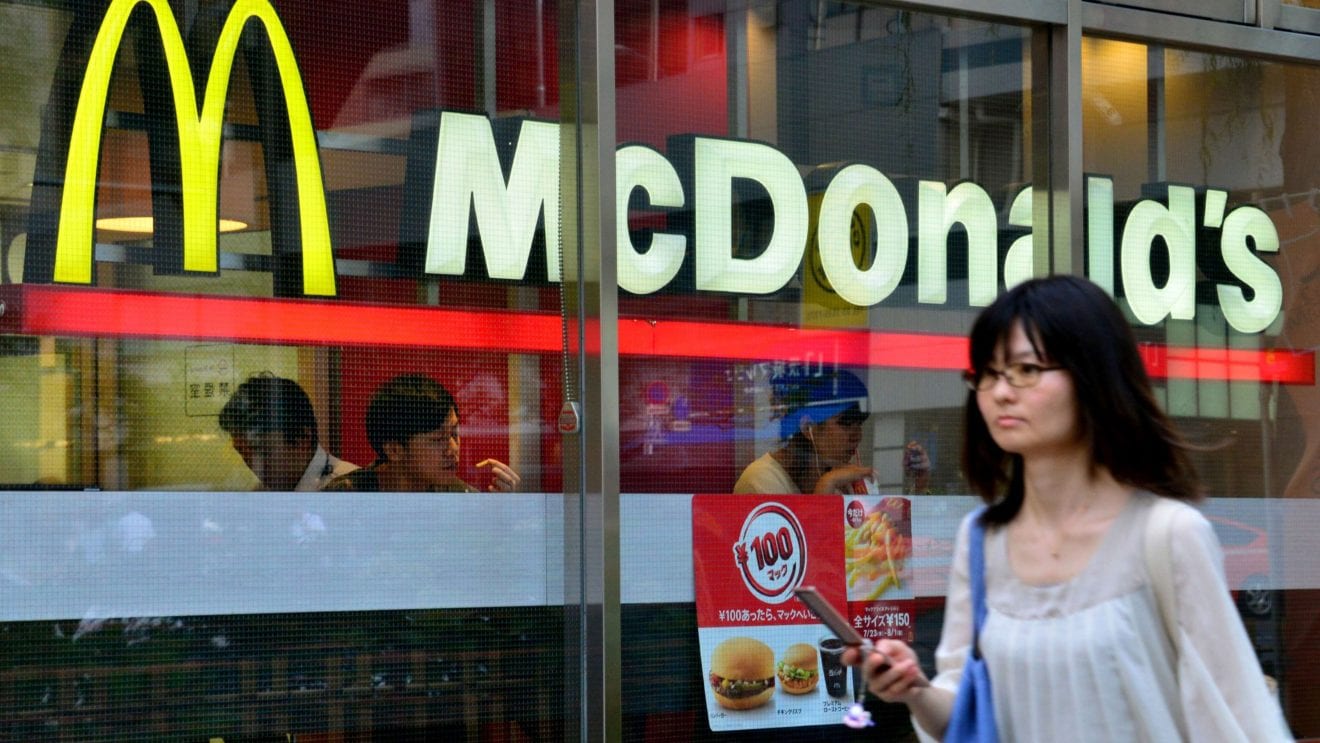
  • McDonald’s Japan arrests sales decline

    McDonald’s Japan arrests sales decline

    McDonald’s Japan has lost 29.2 billion yen in the first nine months of this year, roughly US$236.8 million.

    However, the beleaguered fast food business, which launched a Business Revitalisation Plan involving closing 131 stores in April, says it has arrested its sales decline.

    Same store sales in the third quarter of this year slid by four per cent – a fraction of the massive 32.3 per cent drop in its horror first quarter.

    In the first nine months of the current year, system wide sales have decreased by 70.1 billion yen (US$568 million) to 273.9 billion yen ($2.221 billion).

    While sales and profit have declined significantly, the company said the BRP is progressing “broadly in accordance with schedule, and the business is on the path to recovery”.

    On October 26, McDonald’s Japan launched ‘Otegoro Mac’, part of a “Shin Otegoro Sengen” initiative designed to provide better, more consistent every day value for money. The company says that has been well received by customers to date.

    “We will continue to focus on ensuring food quality while making additional progress on our modernisation plan, delivering customer visible points of change, accelerating business recovery, and achieving long-term growth.

    “We are committed to providing customers the best possible dining experience by delivering the highest possible level of quality, service and cleanliness, with an unwavering focus on

    building stronger relationships in local communities.”

    McDonald’s Japan’s new vision is of “becoming a modern burger restaurant that connects with our customers”.

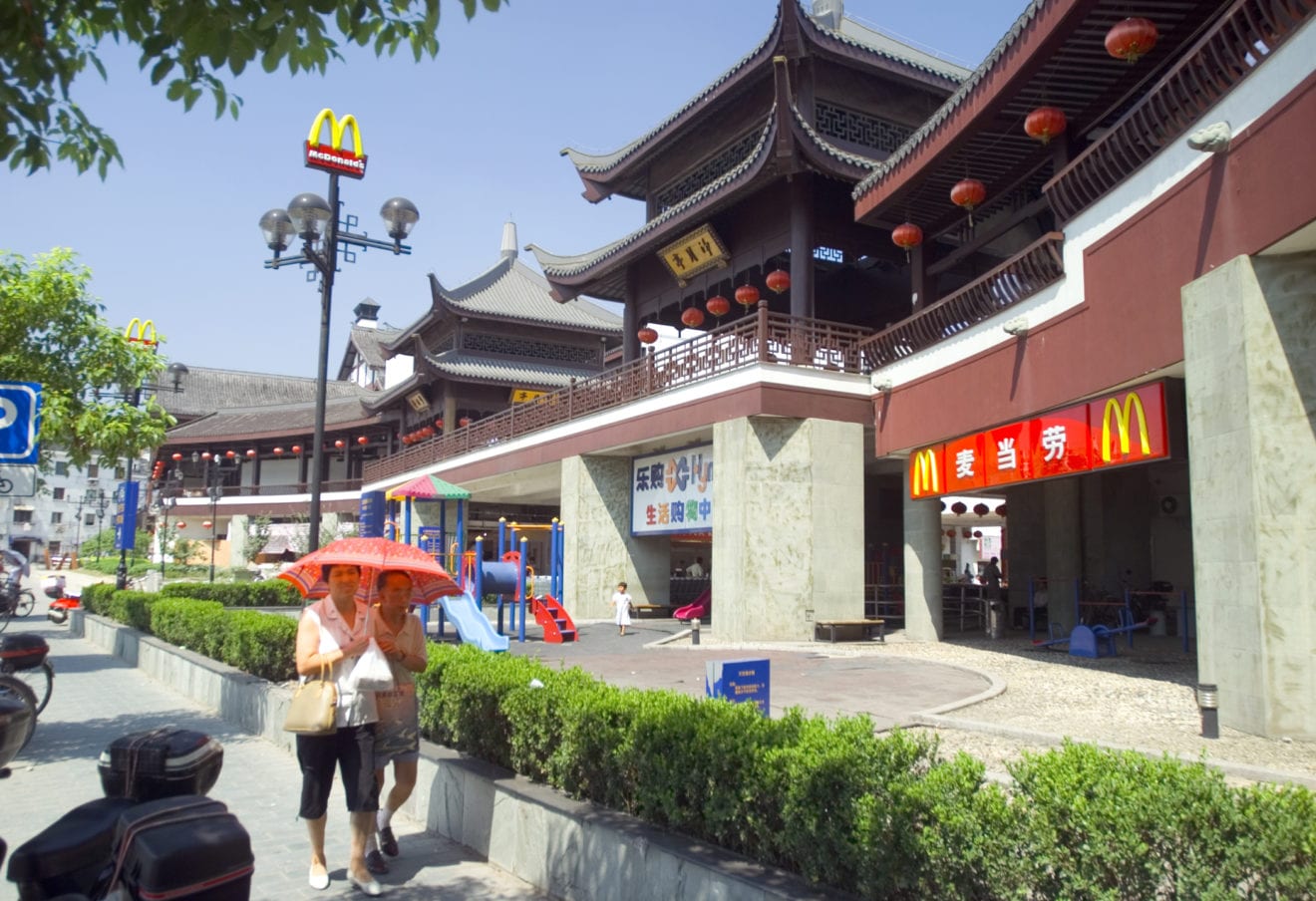
  • McDonald’s China rebounds

    McDonald’s China rebounds

    After a long running series of quarterly sales declines, McDonald’s says it global sales rose four per cent in the last three months.

    And McDonald’s China has played a key role in the recovery.

    President and CEO Steve Easterbrook said the company was encouraged by its operating performance for the quarter, with positive comparable sales across all segments, including the US, “as well as sales recovery in China following the prior year supplier issue”.

    “In the High Growth Markets segment, third quarter comparable sales increased 8.9 per cent, reflecting very strong comparable sales performance in China and positive performance in most other markets. Operating income increased 39 per cent (68 per cent in constant currencies). Emphasis on value and breakfast during the quarter contributed to China’s sales recovery.”

    The company suffered a major setback in China a year ago after some of its stores were found using expired products.

    Elsewhere in the world, McDonald’s has also seen recovery in the UK, Australia and German markets.

    Easterbrook said the latest figures underline the “fundamental strength of the McDonald’s System”, perhaps a reference to recent media commentary questioning the concept and estimating as many as 30 per cent of McDonald’s franchisees in the US are technically insolvent.

    Unfortunately, the company did not releases specific breakdowns on sales by country market within its ‘High Growth Markets’ business unit which comprises countries like China and Vietnam.

    In its home market, initiatives like extending the breakfast menu to all day and new product lines were helping lure customers back in store.

    In tandem with its results announcement, the fast food company made a commitment to phasing out chicken fed antibiotics.

  • McDonald’s China to accept Alipay

    McDonald’s China to accept Alipay

    Alibaba’s AliPay has received a major boost in its quest to become a generally accepted payment system in the mainland.

    McDonald’s China has announced it will accept Alipay in more than 2100 restaurants.

    The launch will commence in Shanghai this month and spread across all the fast food chain;’s locations in China by March 2016.

    “McDonald’s will work together with Ant Financial and Alipay to upgrade its services by integrating data technologies,” Ant Financial sais in a statement.

    “All restaurants in China are undergoing system upgrade and the set-up will be complete to accept Alipay as its new payment method by March, 2016.

    “It will take customers only two seconds to pay their meals at McDonald’s after introducing Alipay to its outlets by scanning the QR code in users’ Alipay. It will be more convenient and efficient for both customers and cashiers.”

    Another venture set up between Alibaba and Ant Financial – Koubei – allows consumers to pay for goods using their smartphones. Koubei is expected to be accepted by McDonald’s China also.

    Alipay’s McDonald’s China deal follows another announced last week with hotel chain Marriott as Alipay gains growing momentum in gaining market share from more traditional systems like UnionPay and even cash. Walmart starting accepting Alipay in May and KFC announced a partnership in June.

    “Alipay is now accepted in over 200,000 offline retailers and eateries across China and another 30,000 shops in Seoul, Korea, Hong Kong, Singapore, Japan and Germany,” Ant Financial.

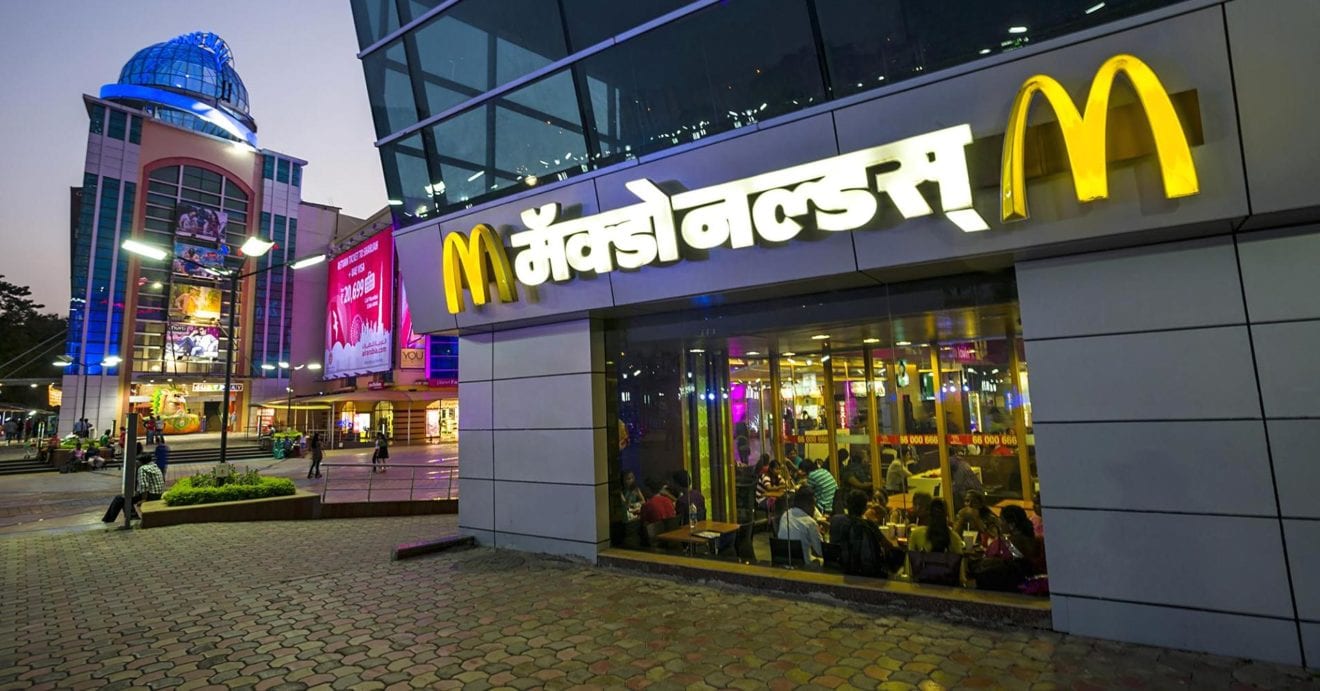
  • McDonald’s India to double network

    McDonald’s India to double network

    McDonald’s India says it plans to open a new restaurant every week for the next five years.

    That’s 250 restaurants by the end of 2015, more than double its current network of 231.

    McDonald’s India master franchisee is Westlife Enterprise, whose vice chairman Amit Jatia says the growth focus will be on the western and southern parts of the country.

    McDonald’s launched in India 20 years ago, essentially the first of the crop of global fast food chains to establish a presence there. Now it faces growing competition from the likes of Burger King, Domino’s and Pizza Hut for a share of the growing fast food market.

    Jatia says McDonald’s will be expanding its coffee offer, opening the McCafe concept within its fast food restaurants as part of a move away from softdrinks.

    “We offer a range of smoothies, besides coffees and this encourages customers to opt for non-carbonated drinks,” he said in an interview with the India Times.

    The McCafe network will be expanded from the current 45 to about 140 within two years.

  • Studio City retail tenants revealed

    Studio City retail tenants revealed

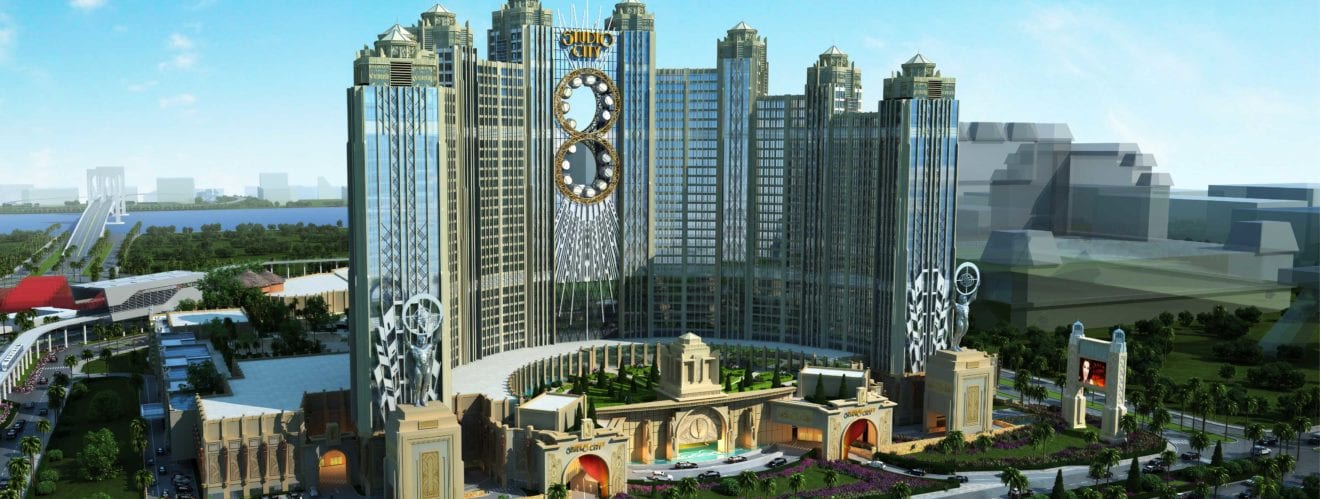
    Studio City and Taubman Asia, have revealed the lineup of fashion brands that will open inside The Boulevard at Studio City.

    A mix of fashion-forward labels and internationally-renowned luxury brands include Macau’s first Balmain, Macau’s first Belstaff, and Tom Ford’s largest store in Asia, amongst many others. The selection was assembled by Taubman Asia and Melco Crown Entertainment’s combined team of retail specialists to meet Chinese consumers’ increasing desire to express their individuality through high quality, expertly crafted clothing and accessories. Bespoke and personal services will be offered to ensure our shoppers take center stage.

    Taubman says The Boulevard at Studio City will bring “an unparalleled shopping experience” to Studio City.

    “Unlike any retail offering to be found in Asia, the unique 35,000 sqm ‘immersive’ retail entertainment environment brings shopping to life by ‘transporting’ visitors to high-energy street-scapes and entertaining them at every turn with featured streets and squares inspired by iconic shopping and entertainment locations, including New York’s Times Square and Hollywood’s Beverly Hills,” Taubman said in a statement.

    “At the futuristic Times Square Macau, inside The Boulevard at Studio City, a variety of entertainment from ‘virtual’ musicians to film stars will be shown through holographic projections.

    “Leveraging our global expertise increating extraordinary retail environments, and our exceptional relationships with the world’s leading brands, our talented team in Asia has brought together an exciting mix of brands for The Boulevard at Studio City,” said René Tremblay, president of Taubman Asia.

    “Our merchandising and management services are the industry standard for performance and excellence. We are thrilled to welcome these brands to our latest project and are committed to supporting them for the long term.”

    List of brands:

    Aeronautica Militare
    Balmain
    Bank of China
    Belstaff
    Boss
    Bottega Veneta
    Bulgari
    Cigar Emporium
    Coach
    Cosmos Food Station
    Din Tai Fung
    Dunhill
    Emporio Armani
    Fendi
    Girard-Perregaux
    Givenchy
    Glashutte Original
    Graff
    Gucci
    Hide Yamamoto
    Hublot
    ICBC
    Trattoria Il Mulino
    Image Digital
    IWC Schaffhausen
    Jaeger-LeCoultre
    Jaquet Droz
    kate spade new york
    Kenzo
    Longines
    McCafe
    McDonald’s
    MCM
    Michael Kors
    Montblanc
    Philipp Plein
    Piaget
    Prada
    Rainbow
    Rimowa
    Roberto Cavalli
    Saint Laurent Paris
    Shiki Hot Pot Restaurant
    Starbucks
    Tag Heuer
    T Galleria Beauty by DFS
    Tiffany & Co.
    Tom Ford
    UM
    Vacheron Constantin
    Valentino
    Van Cleef & Arpels
    Versace Collection
    Ermenegildo Zegna
    Zenith

  • McDonald’s make Minions

    McDonald’s make Minions

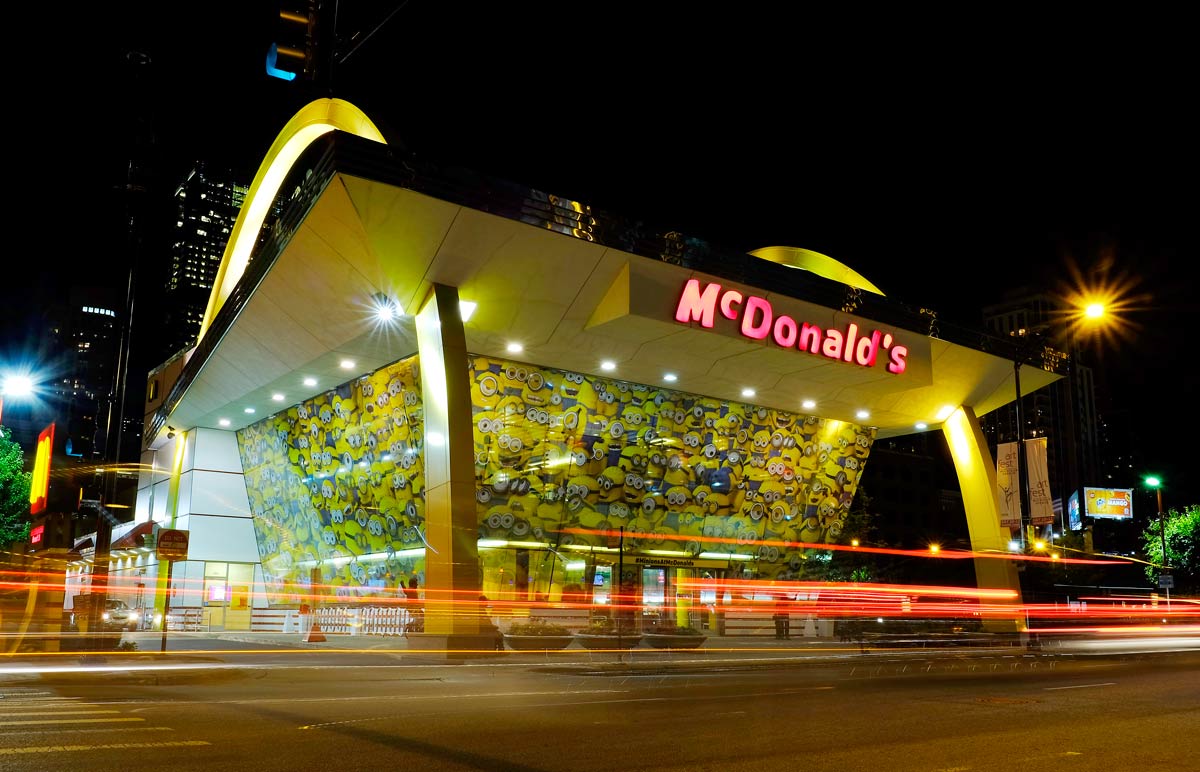
    Sales of products affiliated with animation characters – such as ‘Minions’ and the cast of Frozen – are soaring.

    According to McDonald’s, Happy Meals with Minion toys are in high demand in South Korea.

    The ‘Minion Happy Meal Special Set’, which consists of five Minion toys, one Happy Meal, and four coupons for Happy Meals were all sold out the minute they were released on July 23, with people queuing for hours before their 3pm release. With stock limited to 100 per store, the Minions disappeared fast.

    From July 24, McDonald’s started to sell Happy Meals including one Minion toy each.

    “It is hard for us to reveal how many Happy Meals are sold in a day, but ever since we gave out Minion toys, sales definitely went up.”

    McDonald’s said Minion-themed products such as the ‘Minion Shrimp Beef Burger’, ‘Minion Yellow Muffin’, ‘South Pole Lemonade’, ‘Ba-nana Shake’ and ‘Ba-nana McFlurry’ are also popular among customers.

    McDonald’s is planning the second release of the ‘Minion Happy Meal Special Set’ for August 9, at 3pm. The five Minion toys will be different from the previous event. The fast food chain is expecting another early sell-out.

    McDonald’s is not the only company using cute Minions in marketing.

    Sam Lip General Foods released four types of Minions bread in time for the movie’s release.

    Not to be outdone, Binggrae’s ‘Yomamte’ yogurt ice cream is affiliated with the beloved characters from Disney’s ‘Frozen’. According to Binggrae, sales of the product tripled compared to 2013.

    The places selling the ‘Frozen‘ Yomamte’s were shared on online communities, and consumers gave cute nicknames to the products. Named after the characters printed on the packages, Elsa, Anna and Olaf, the popsicles were named ‘El-mamte’, ‘An-mamte’ and ‘Ol-mamte’.

    Officials from Binggrae are looking into expanding their product line.

    “There were six different designs from ‘Frozen’ printed on the packages in the early stages of the renewal, but we are planning to expand the designs to 23 different types so that consumers can have a wider variety of choice.

  • Using WeChat to Grow Your Business in China

    Using WeChat to Grow Your Business in China

    In the world of mobile commerce, all eyes are on China.

    Even as China’s economy and overall retail sales growth drops, business-to-consumer (B2C) online sales are growing by 25 per cent each year. Data gathered from iResearch in a March 2015 report states that China’s gross merchandise volume (GMV) of the mobile shopping market reached 929.71 billion RMB in 2014, increasing by 239.3 per cent from the previous year.

    The growth was significantly larger than that of the overall GMV of the online shopping market. China has the world’s largest digital marketplace, and is predicted to grow three times faster than overall retail. The industry is primed for growth not only in the first-tier cities, but also in the third-tier and lower cities with an estimated half of total online sales coming from the lower tier cities by 2018.

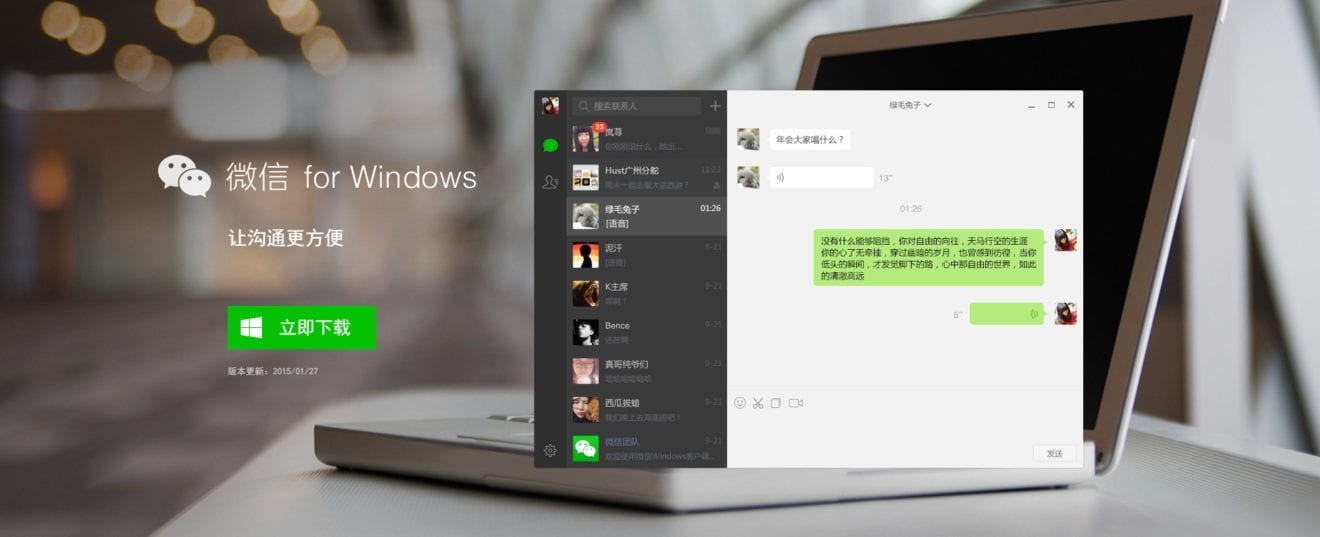
    When considering the mobile commerce industry in China, one name stands out: Tencent’s WeChat has long been impacting the lives of Chinese consumers, and with its move to digital payment systems it now has the ability to revolutionise the mobile commerce industry in China.

    WeChat has a massive scale, with over 468 million monthly active global users and 25 per cent of users checking WeChat over 30 times a day. Last year, users spent US$15.3 billion on mobile data using WeChat.  As the fastest growing social media platform in the world, and the primary source of interaction between brands and Chinese consumers, foreign investors looking to be successful in China should take note. Chinese consumers actively embrace mobile commerce due to its easy to use, cost-effective payment and delivery system.

    There is huge potential for foreign investors to take advantage of WeChat payment systems for their Chinese consumers and to maximise their profits. WeChat allows foreign investors to interact with their consumers in a way that has not reached the same scale in the Western world.

    Fewer than 20 per cent of internet users in the US have used their mobile phones to pay for services and goods while more than half of users in China have done so. Multiple incentives exist for Chinese consumers to make their purchases through WeChat; enabling businesses to use these schemes to generate profit. Loyalty cards, membership schemes and discounts for paying online all compel cost-effective shoppers to make a purchase.

    In addition to this, due to the convenience of paying through WeChat, there is a higher chance of impulse purchases. However, this ease does not simply apply to the consumer. Brands are able to bridge the gap between attracting new consumers and engaging with paying consumers, which has already begun to change the face of shopping and retailing worldwide. Businesses utilising WeChat payment systems are already experiencing huge profits, and Tencent has stated that several official accounts are now making over US$1 million.

    Not only can consumers purchase items, but can also purchase services inside WeChat. Businesses with service accounts can take advantage of WeChat’s online-to-offline (O2O) business model. Both online and offline purchases are available to consumers. Customers can either pay for services or items by scanning the QR codes of products provided by offline retailers, or pay on web pages inside the app.

    All vendors, from big name brands to small and medium-sized enterprises are able to create service accounts in WeChat. Big name companies like McDonalds, Starbucks, Xiaomi, Watsons, and Pacific Coffee have all created service accounts. WeChat allows all vendors the potential for success and the ability for SMEs to create accounts is an important aspect for foreign investors to capitalise on.

    Certain industries, such as food, beverage and retail, tend to generate more profit as they are more primed for mobile commerce. That being said, taxi companies, airlines, newspapers, government organisations, and pharmaceutical companies are all using WeChat payments to their advantage.

    Tencent has now enabled users to pay their utility bills through WeChat, and more and more businesses are finding a way to use WeChat mobile payments to grow their business and attain a competitive advantage.

    It is crucial for foreign businesses entering a new market to take advantage of domestic trends in order to be competitive in that marketplace. Mobile commerce in China is constantly evolving and businesses like WeChat are revolutionising how business is conducted. WeChat allows both big name brands and SMEs to compete in the same market space which has the ability to change the entire industry. Entering the Chinese market has its difficulties, but applications like WeChat make it easier for foreign investors to communicate effectively with their Chinese consumers.

  • Minions to be back in McDonalds Happy Meals

    Minions to be back in McDonalds Happy Meals

    Those tiny, frantic yellow creatures, the Minions, conquered the world with a smile, a wave, and their trademark unintelligible chatter as supporting characters in the first Despicable Me (2010).

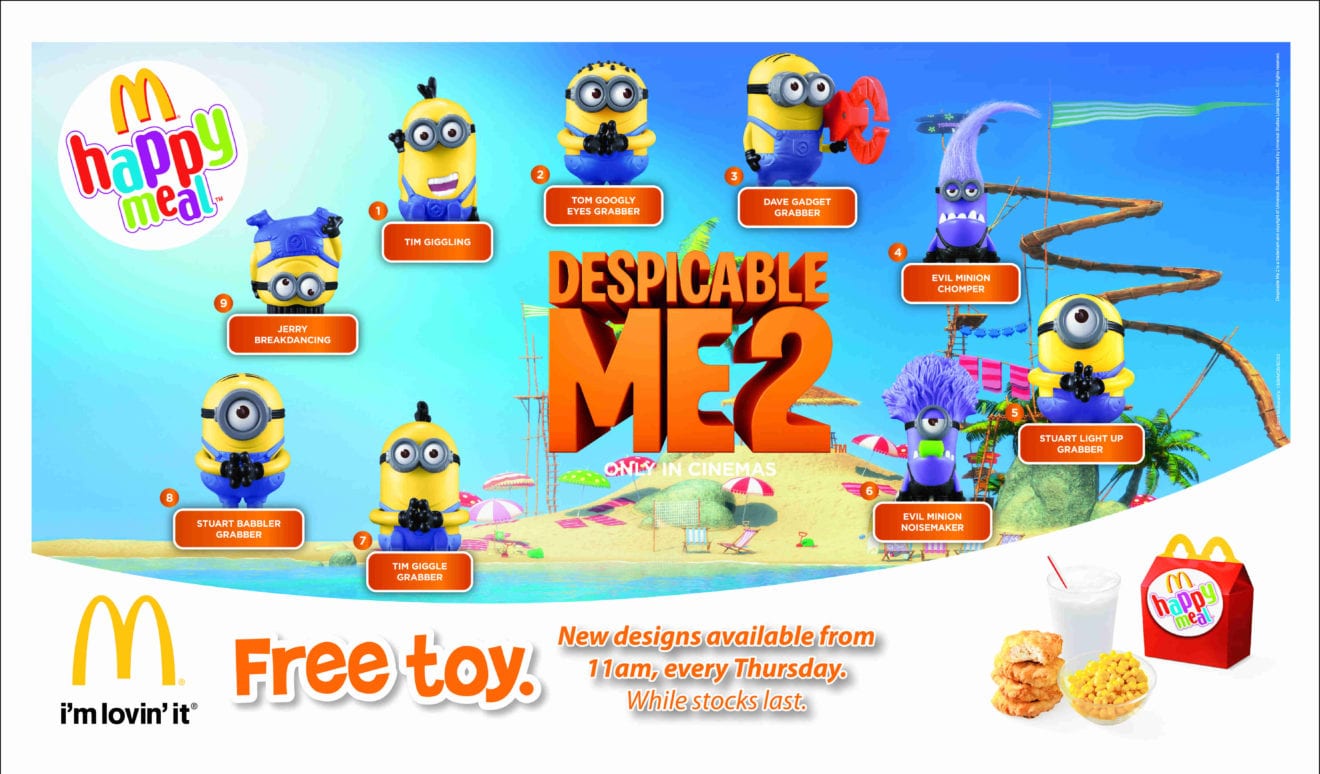
    When they returned in 2013 for Despicable Me 2, they won over more fans and then invaded McDonalds Happy Meals with a vengeance in a merchandising move that had fans scrambling to collect the pocket-sized figures.

    And now that they’re starring in their own movie out this July, we can confirm that the Minions will be back in McDonalds Happy Meals very soon.

    We’ve gotten a sneak peek at our frantic friends; the set of 10 comes in different characters, each with its own unique features. And since the film, a prequel of sorts, chronicles their lives B.G. (before Gru, of Despicable Me fame), the toys reflect Minions in their various states throughout pop culture history, having served masters like the T-Rex, Napoleon, and Dracula.

    Here are all 10 Minions toys below:

    Minion Vampire
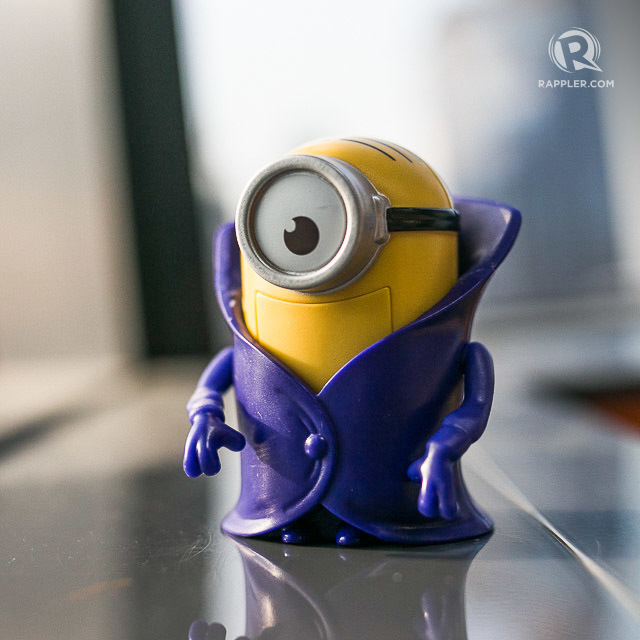
    Pushing the little knob at the back makes the closed-mouth Minion reveal his fangs, drawing up his arms to scare you away.

    Guard Minion
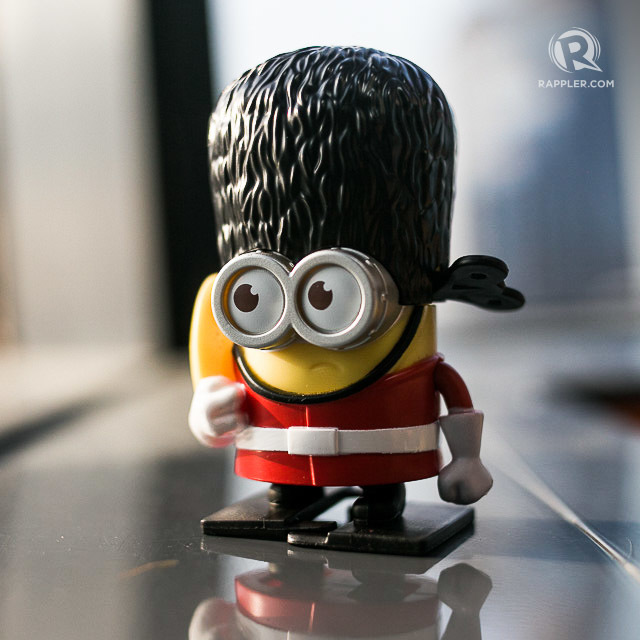
    We predict this will be one of the most popular Minion toys – winding him up, you’ll be able to watch him a few steps, still holding his banana.

    Marching Minion Soldier
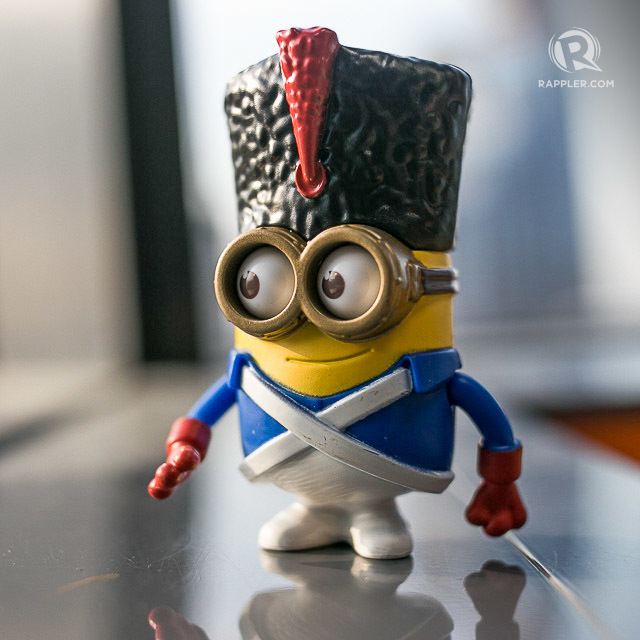
    Not to be confused with the Guard Minion. Pushing down on top of this gentleman’s head will cause him to move his arms and eyes, looking for an adversary.

    Martial Arts Minion
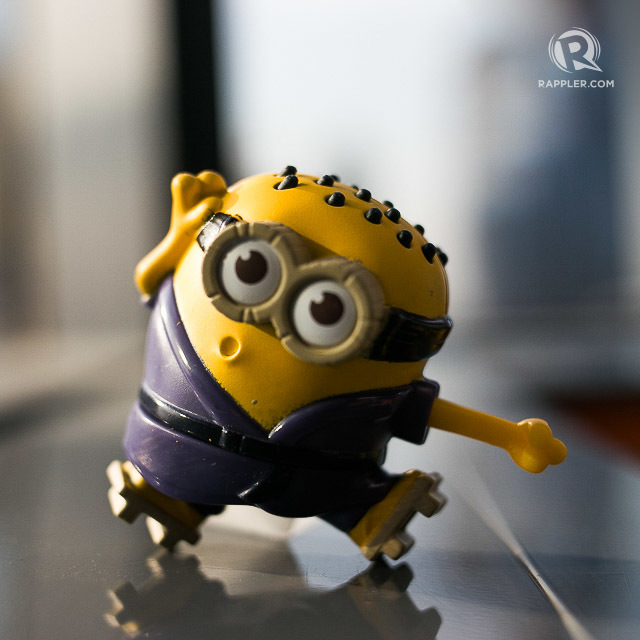
    This Minion comes with a spinning bottom half – which turns really fast with one flick.

    Egyptian Hula Minion
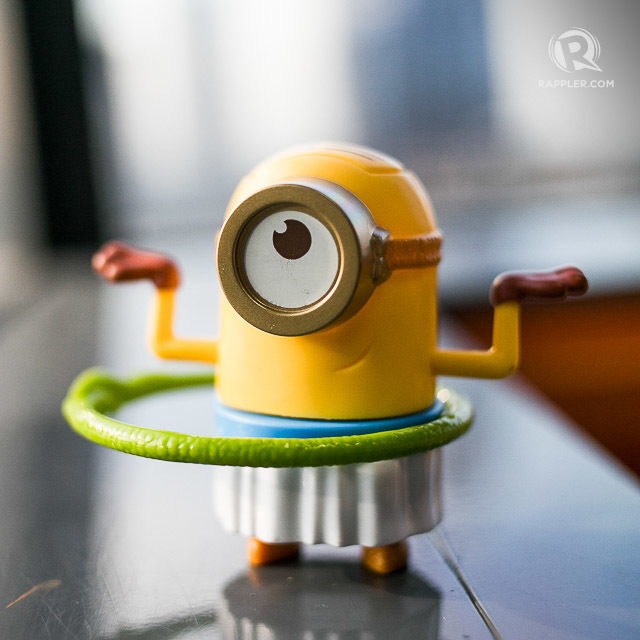
    This Minion comes with a detachable hula hoop. Attaching it to his side and pressing a button on top of its head will make the hoop move faster around him.

    Minion Caveman

    Movable arms, with a perpetual alarmed expression, holding – what else – a Minion delicacy, the banana.

    They used to be better known as a collective wall of yellow capsule-like creatures, but as they grew in popularity, audiences got to know Minions’ different looks (one eye, or two? Tall, or stout?) and personalities.

    The new movie focuses on Stuart, Kevin, and Bob, who set out and ultimately land at a villain convention in search of a new master to serve after the Minions unwittingly kill off their previous masters. Here are the designs featuring Stuart (one-eyed, rather mischevious), Kevin (tall, responsible and determined), and Bob (tiny, stout, and the baby of the family).

    Groovy Stuart
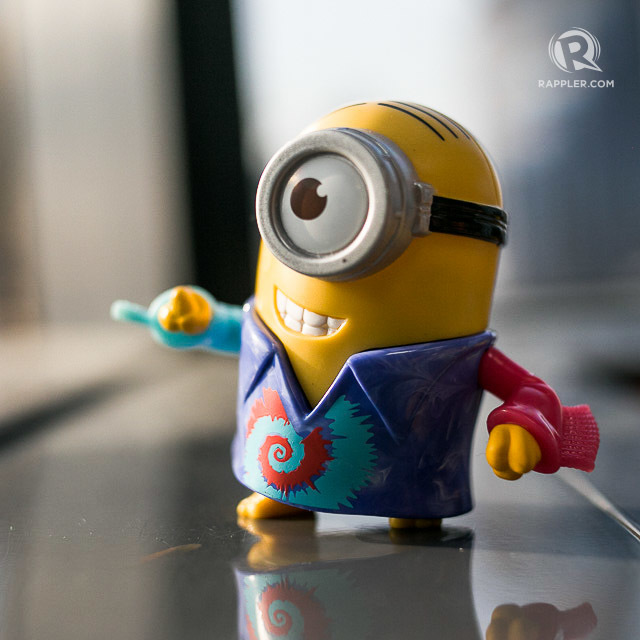
    Watch him dance by shuffling his feet from side to side. We all know there’s nothing Minions love more than an impromptu dance party, and Groovy Stuart is no exception.

    Guitar-strumming Stuart
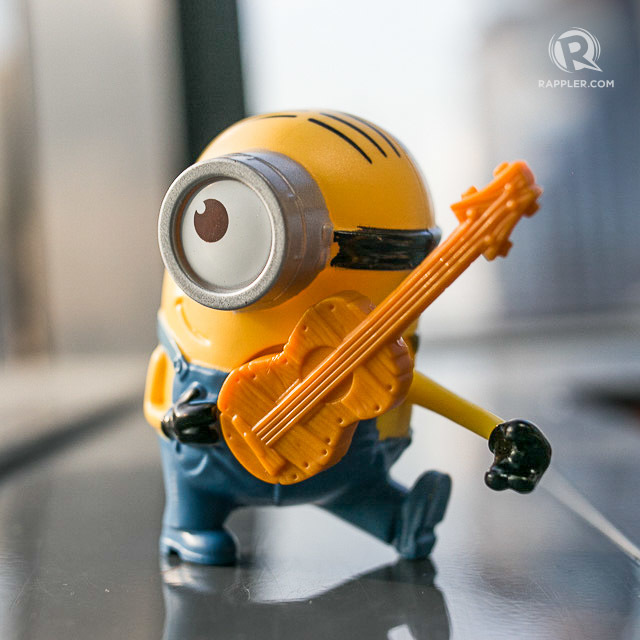
    Perhaps to accompany Groovy Stuart, this guitar-strumming version actually sings when you push the guitar just a little bit downwards.

    Lava-shooting Kevin

    When you hit a switch, Kevin’s lava gun glows bright red. The best part – his self-assured little grin.

    Chatting Bob

    We may not be sure exactly what the Minions are saying in their secret language, but this chatty Bob, which talks at the push of a button, is a bona fide cutie.

    How to get them early

    For those who would like to get all 10 in one go, the preorder option has been made available.

    Here’s how, directly from the press release provided by McDonalds Philippines:

    • Visit any McDonald’s store from June 15-20.
    • Pre-order the complete Minions Happy Meal set in the front counter of a McDonald’s store.
    • For P949, each pre-ordered Minions Happy Meal set includes a Claim Stub Set for all 10 Minions Happy Meal toys and 10 Happy Meal food stubs, which may be used upon purchase or until August 19.
    • The complete Minions Happy Meal set may be redeemed at any McDonald’s store starting June 25 – before the Minions toys are available individually in store.
  • Burger giant McDonald’s to end deforestation in supply chain

    Burger giant McDonald’s to end deforestation in supply chain

    Global fast food giant McDonald’s Corporation has pledged to end deforestation caused by production of commodities in its supply chain, focusing on beef, coffee, palm oil, poultry and packaging.

    A US-based scientific advocacy group welcomed the pledge, saying it was the first by a global fast food chain covering its whole supply chain and would push the industry to set new environmental standards.

    McDonald’s promised on Tuesday not to buy from suppliers that clear primary forest and other areas with high conservation value, as well as peatlands.

    It also said human rights must be respected and conflicts over land use resolved through a balanced and transparent process.

    The multinational company said it would begin developing specific time-bound targets for the raw materials it sources this year and would help smallholders, farmers, plantation owners and suppliers to comply with its commitment.

    “Making this pledge is the right thing to do for our company, the planet and the communities in which our supply chain operates,” said Francesca DeBiase, senior vice president of McDonald’s worldwide supply chain and sustainability.

    Like many other international food, cosmetics and commodity giants, the company — famous for its burger restaurants — has come under pressure from activists to make its business environmentally and socially sustainable.

    The Union of Concerned Scientists (UCS), a US-based advocacy group, said the pledge made McDonald’s the first global fast food chain to promise to eliminate deforestation from its worldwide supply chain, going well beyond the palm oil commitments made by competitors.

    “The sheer scale of McDonald’s commitment includes significant potential for change, pushing the industry to implement new environmental standards across the board and ultimately reducing climate emissions,” said UCS analyst Lael Goodman. “However, the commitment is still a work in progress.”

    UCS urged McDonald’s to set strong, time-bound goals for individual commodities, and to follow through on the ground.

    David McLaughlin, WWF’s vice president of sustainable food, said success would require the expansion of monitoring and compliance efforts by McDonald’s and its suppliers.

    “We hope that this commitment will inspire other companies to take action,” he added in a statement.

    A 2015 scorecard produced by UCS, ranking pledges by top US brands on deforestation-free palm oil, shows that fast food firms have lagged behind packaged food and personal care companies.

    UCS’s Goodman said the McDonald’s commitment had the potential to create a “new normal” whereby fast food brands demand deforestation-free commodities from their suppliers.

    McDonald’s said it had begun addressing deforestation in 1989 when it stopped sourcing beef from the Amazon rainforest.

  • McDonald’s supplier fined for pollution in China

    McDonald’s supplier fined for pollution in China

    A Chinese joint venture of U.S.-based J.R. Simplot, which supplies frozen french fries to McDonald’s, was fined 3.92 million yuan ($632,370) on Wednesday by the Beijing city government for water pollution, the official Xinhua news agency reported.

    The Beijing government found the venture had been discharging contaminated waste water that exceeded stipulated levels, according to Xinhua.

    Xinhua said the business was a joint venture between Simplot, a unit of McDonald’s, and a local firm. Reuters could not independently verify the relationship.

    Phone calls to Simplot in China were left unanswered.

    Simplot, headquartered in Idaho, is a global potato supplier for McDonald’s.

    “Simplot has assured us that they have implemented a corrective action plan, and we will continue to hold them accountable for implementation and enhanced procedures for compliance,” McDonald’s said in an emailed statement to Reuters, adding it took the infraction “very seriously.”The fine comes as China is strengthening its environmental regulations as public anger builds over worsening pollution.

    China will ban water-polluting paper mills, oil refineries, pesticide producers and other industrial plants by the end of 2016, as it moves to tackle severe pollution of the water supply which has left one-third of China’s major river basins and 60 percent of its underground water contaminated.

    Chinese sales at McDonald’s and Yum Brands’s KFC slumped last year after one of their suppliers, Shanghai Husi Food, was forced to suspend operations after an undercover Chinese media report showed workers using out-of-date meat and doctoring production dates.

    U.S-based meat supplier OSI Group is the parent company of Shanghai Husi.

  • McDonald’s India expands McCafe

    McDonald’s India expands McCafe

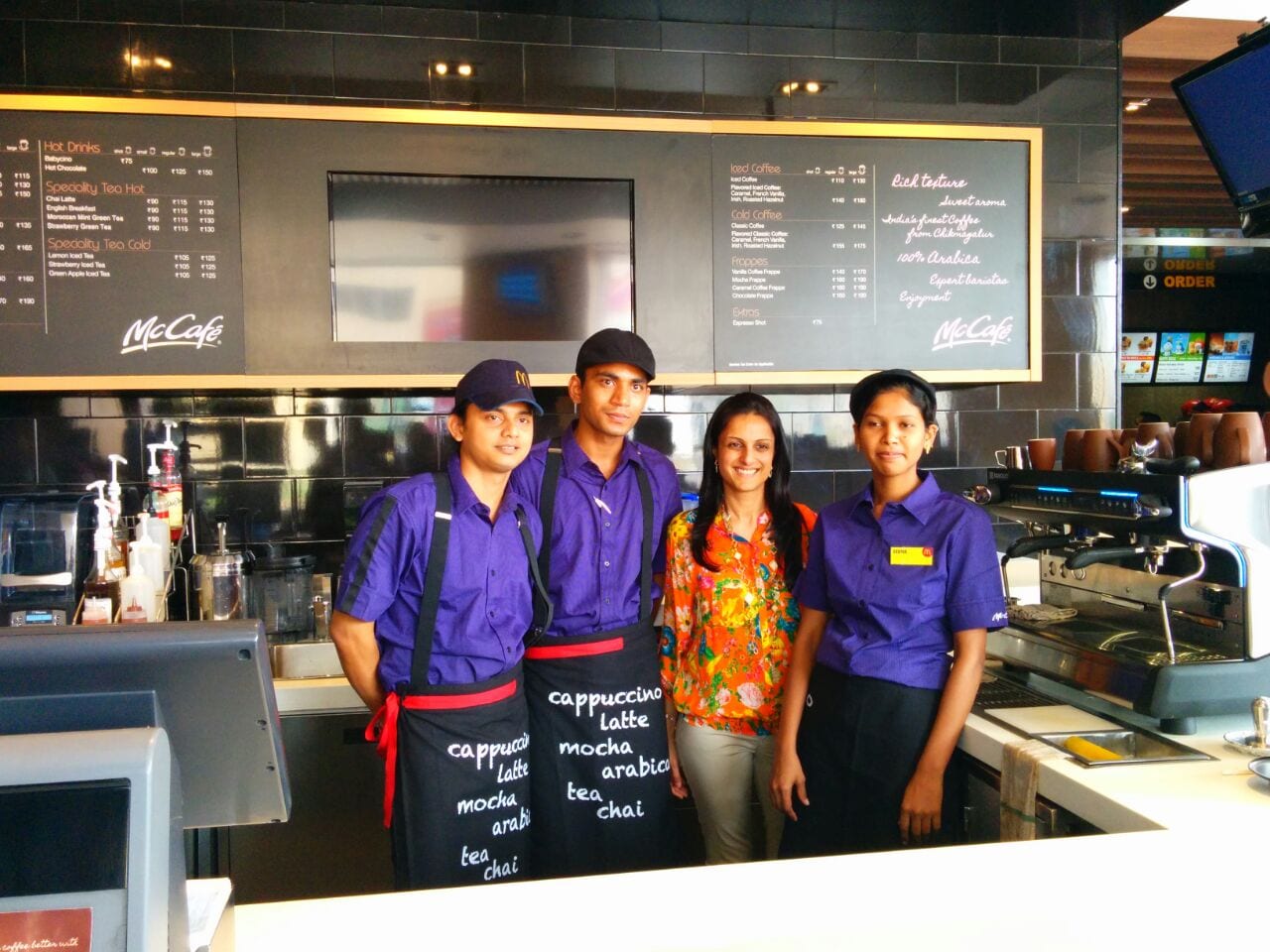
    McDonald’s India has opened three McCafés in Bengaluru.

    Westlife Development, owner of the Master Franchisee of McDonald’s in India, Hardcastle Restaurants, said the McCafes were the first in South India.

    Smita Jatia, MD of Hardcastle Restaurants, said Bengaluru has great significance as a coffee hub and there is tremendous potential for growth there.

    “With the launch of McCafe, we will strengthen our beverage strategy and build our restaurants as a one stop destination for all customers to enjoy across all ‘day parts’.

    Smita Jatia, Managing director, Hardcastle restaurants Pvt Ltd at the Launch of McCafe in Bengaluru

    *Smita Jatia, Managing director, Hardcastle restaurants Pvt Ltd at the Launch of McCafe in Bengaluru

    The store-in-store format enables a quick roll-out of a McCafé with an investment of Rs 30-35 lakhs per outlet across key trading areas in metro cities of West & South India to make it easily accessible to our consumers.”

    Jatia said within the last 18 months McDonald’s India has expanded the McCafé network across 41 restaurants in six cities – Mumbai, Ahmedabad, Nashik, Aurangabad, Pune and now Bengaluru.

    “Today, we are well on track as per the stated goal to launch 75-150 McCafé over the next three to five years, a clear testament to the fact that our coffees, frappes and muffins have been very well accepted by customers.”

    The expansion of the McCafé brand and its product offering is part of the company’s goal to elevate its coffee portfolio and to become India’s favourite destination for good food and quality beverages.

    McCafe counter at McDonald's outlet at JP Nagar,Bangalore (2)

    “We believe that we will be able to delight customers in Bengaluru too with our freshly brewed aromatic coffees,” said Jatia.

    McCafé uses 100 per cent Arabica coffee beans brewed by professionally trained baristas and sourced from sustainable farms in Chikmangalur, India.

    McDonald’s India first opened a McCafe in October 2013. Hardcastle Restaurants, which operates McDonald’s in west and south India, recognised an unmet need, for existing and new customers, in the rapidly growing Indian specialty coffee segment.

    McCafé was created and launched in Melbourne, Australia in 1993, and has since spread worldwide, with the first in the US opening in Chicago, Illinois, in May 2001. Today, McCafés can be found in Costa Rica, Japan, Paraguay, South Africa, Spain, Ukraine, Canada, Malaysia, Macau, Hong Kong, Thailand and the UK, amongst other countries.