Tag: McDonalds

  • Is McDonald’s story over for Chinese?

    Is McDonald’s story over for Chinese?

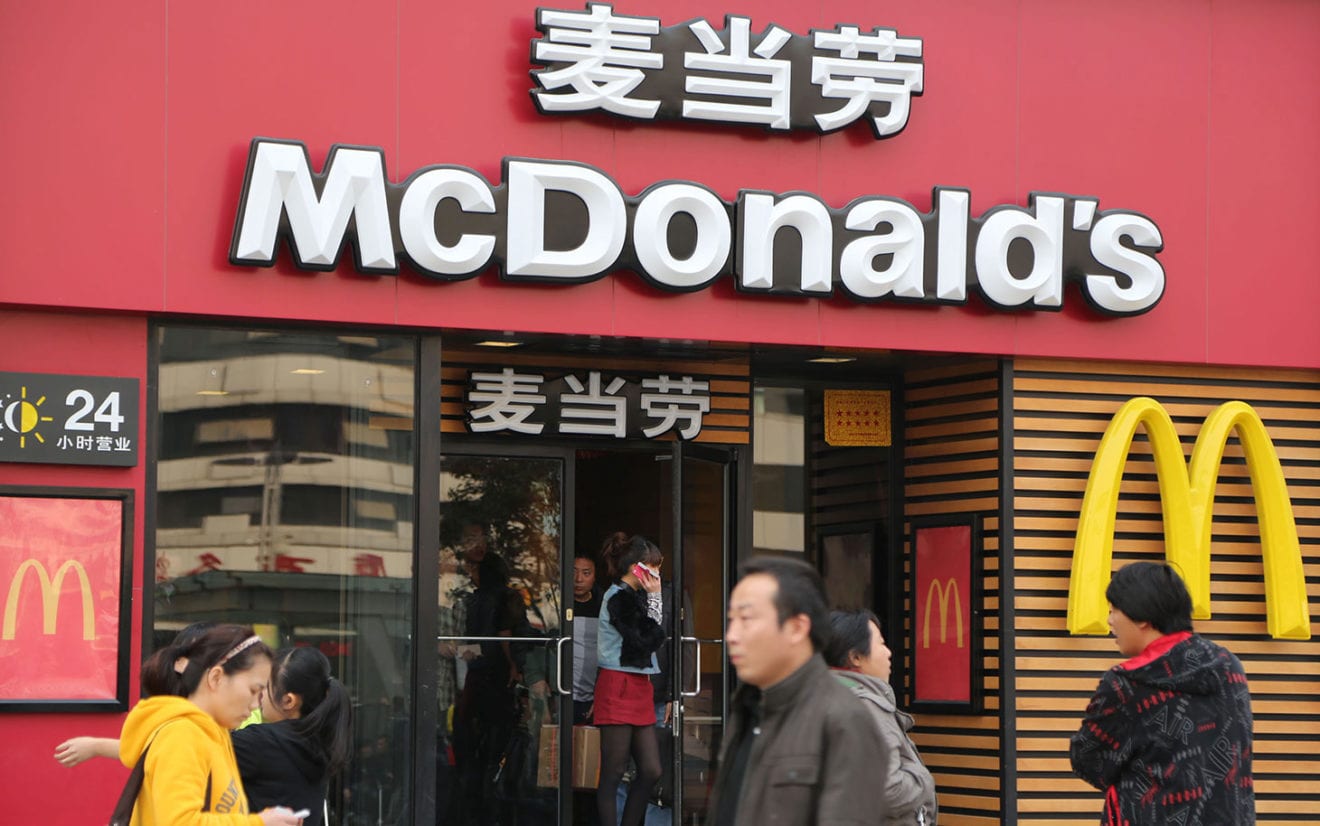
    It is always tricky for multinationals to pick a name that sounds right to Chinese ears, but few went as wrong as McDonald’s latest business tweak.

    When the news broke last week that the American fast-food giant had changed its business name in China, ditching the previous Maidanglao – a transliteration of the company’s English name – in favour of Jingongmen, which roughly translates as “Golden Arches,” Chinese social media gorged itself with amusement.

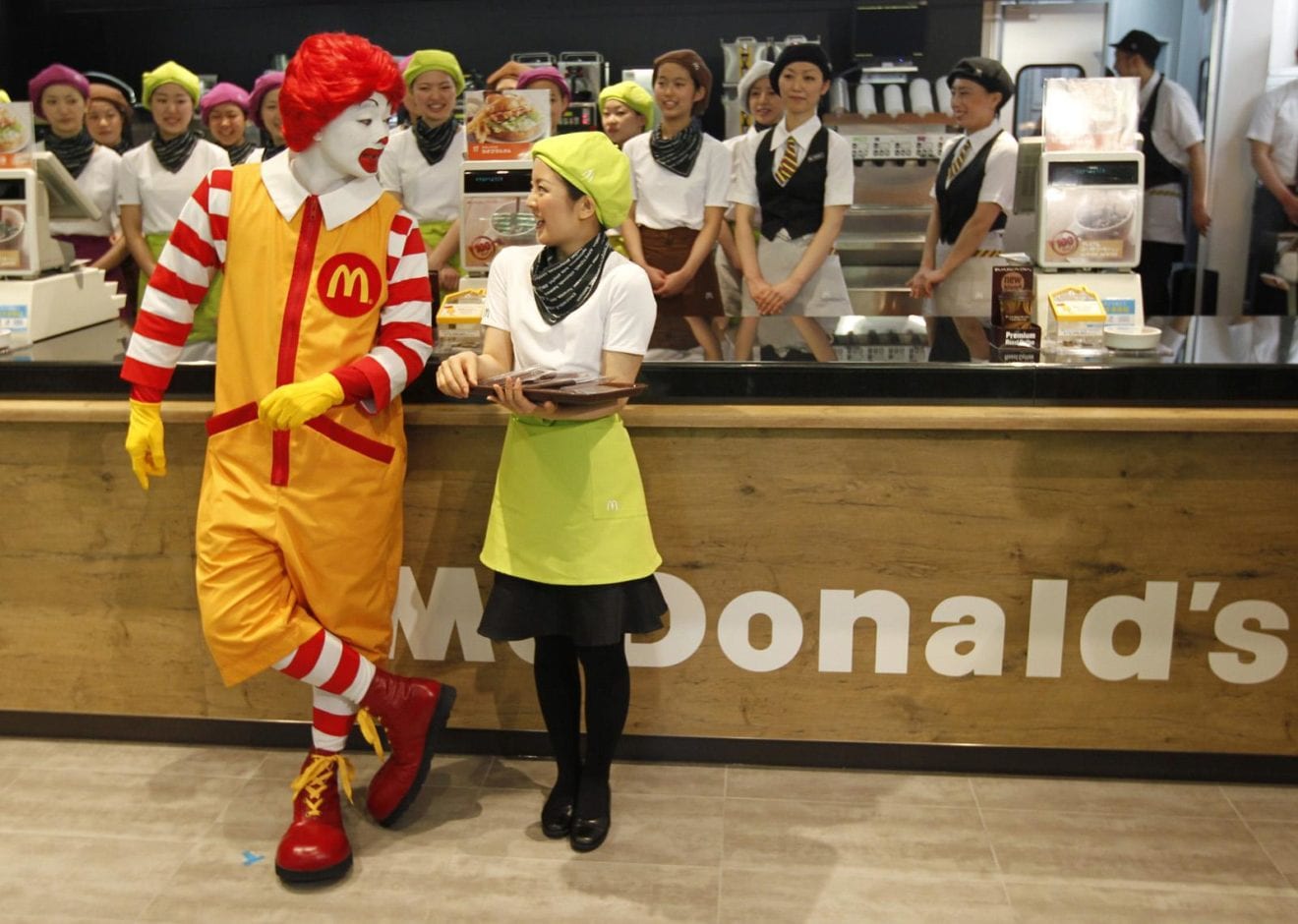
    “[The new name] sounds like a furniture store. Are you sure the food is edible?” one wrote, while another observed “even Ronald McDonald cannot stand the new name”, referring to a widely circulated image of the clown mascot on the phone, saying: “Boss, I have to quit. The new name is unbearable.”

    Construction on mainland China’s first McDonald’s in Shenzhen takes place in 1990.

    McDonald’s responded online, reassuring its customers that no one would dine at restaurants carrying the Jingongmen label and the change was for official paperwork only. It is unclear whether McDonald’s will manage to shake off this PR disaster, but even if it does, there are worries the American food giant cannot escape the fate of being downgraded.

    “McDonald’s and KFC do not command the brand power they used to in the 1990s,” Jeffrey Towson, a business professor at Peking University in Beijing, said. “They are not viewed as upscale as they were in the 2000s.”

    Once a tourism destination in China and a symbol of rapid modernisation, McDonald’s is now known as a low-end, cheap eat for many Chinese. Experts say this colossal change in attitude mirrors the rise of China, where local businesses have become increasingly competitive and Chinese customers no longer have to rely on Ronald McDonald to get a taste of America.
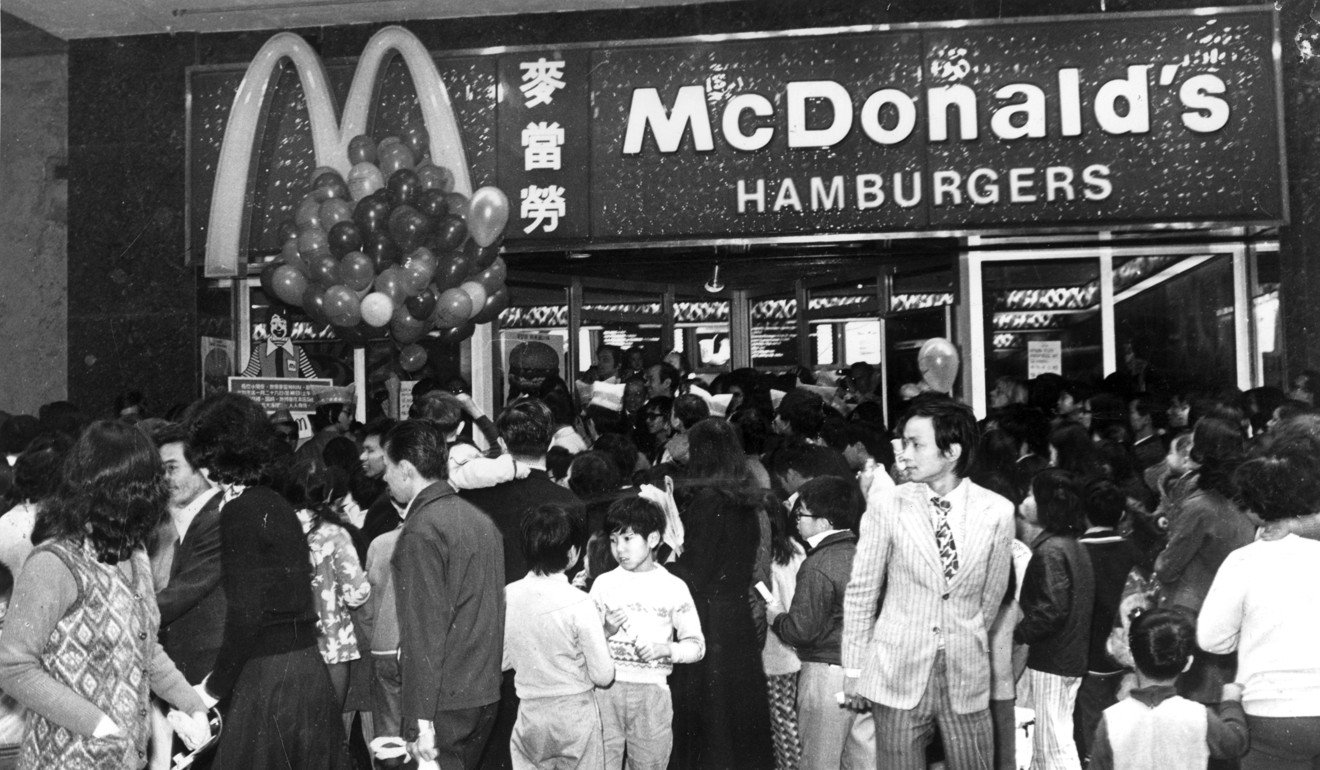
    The first McDonald’s in Hong Kong opened in 1975 on Paterson Street in Causeway Bay.

    Back in 1975, when McDonald’s opened its first store in Hong Kong, the popularity of McProducts in the then British colony created a phenomenon one local newspaper described as “Big Mac” fever. The fervour spread to Shenzhen, where McDonald’s made its debut in 1990. Media reports showed hundreds of Chinese queuing up outside McDonald’s first store on mainland China, and in the first three hours of its opening day, a week’s supply of products had sold out.

    According to Yan Yunxiang, a professor at the University of California who studied the company’s operations in China in the 1990s, McDonald’s was so popular some parents thought the Big Mac contained a hidden ingredient luring their children to this exotic food.

    And it was not just the children who had an appetite for it. When the first McDonald’s outlet arrived in Beijing in 1992, 82-year-old Wang Yonglu was one of the first customers. Munching on a hamburger, Wang explained to the United Press International: “I am just a retired proletarian. What chance do I have to go to the United States? This way, I can spend only 10 yuan (US$1.75) to see what America is like.”
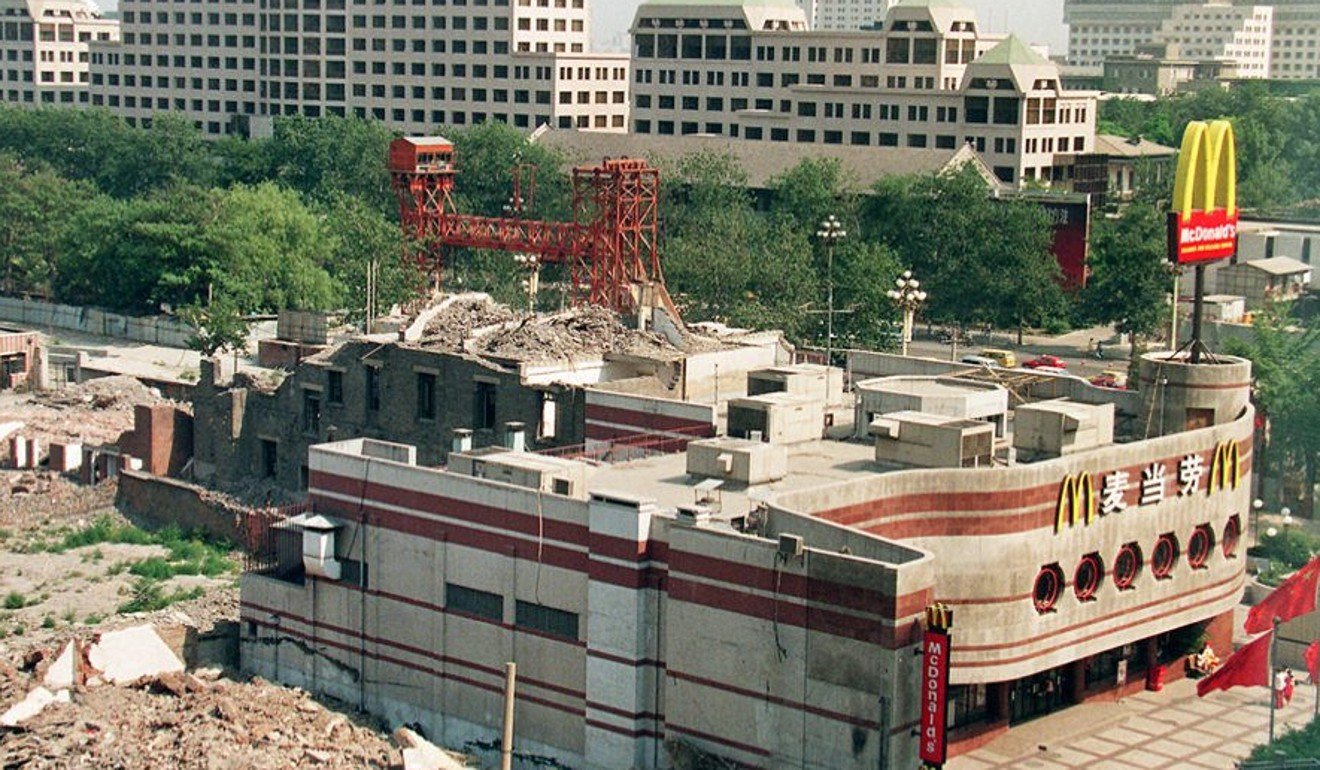
    Beijing’s first McDonald’s opened in Wangfujing in 1992. 

    Fast forward to the 21st century, the landscape in China is somewhat different. In 2016 alone, roughly 122 million Chinese – equivalent to the population of France, Spain and Denmark combined – went abroad, according to Beijing-based think tank China Tourism Academy.

    “McDonald’s has lost that position because Chinese consumers are getting more sophisticated,” Shaun Rein, managing director for Shanghai market consultancy CMR China, said. “If they want Western culture and Western food, they can go to America.”

    Zhang Yue, a 34-year-old marketing specialist in Chongqing, knows this well. When McDonald’s entered her hometown in southwestern China in the early 2000s, Zhang happily stood in line as she loved its “spotless dining environment.”

    But now, she rarely goes. “There are so many good restaurants out there.”

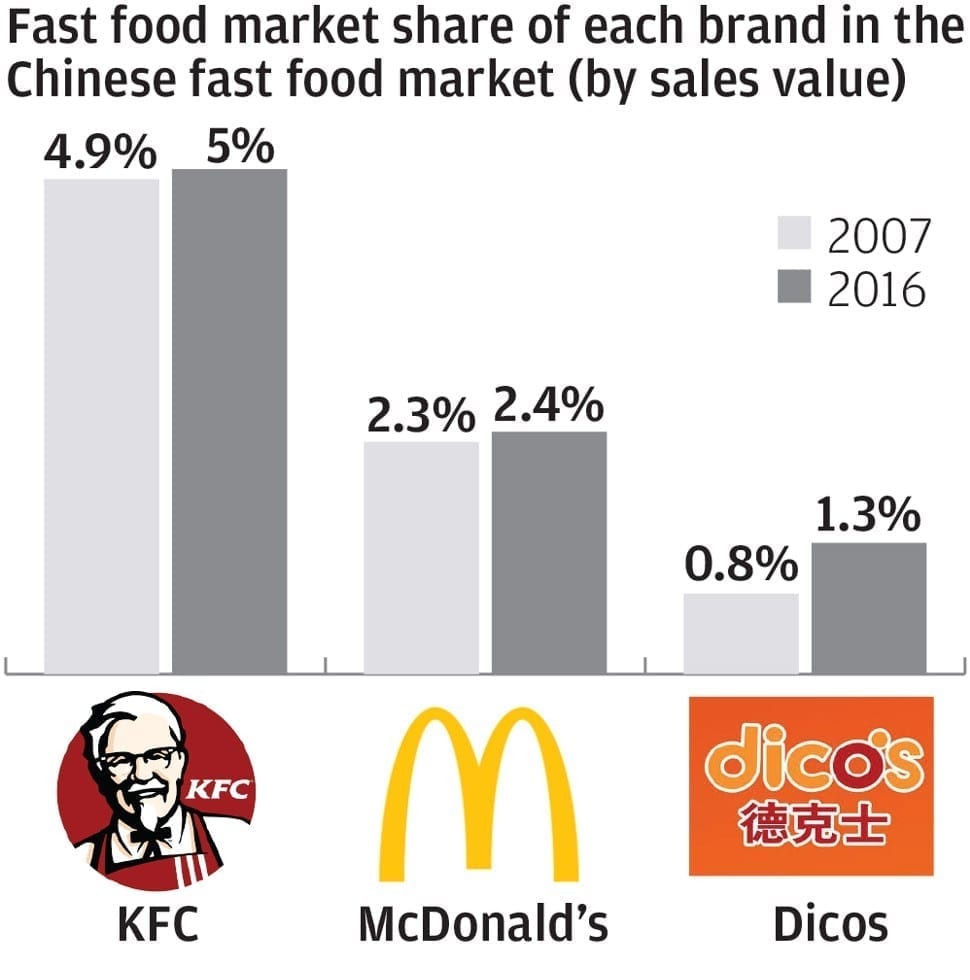
    In recent years, a growing number of Western brands have flocked to China, hoping for a bite of the world’s biggest consumer market. Starbucks has opened 2,600 stores, and plans to add a coffee shop a day for the next five years. Meanwhile, home-grown food firms are catching up. Dicos, China’s third-largest fast food chain by retail value, has almost as many outlets as McDonald’s.

    The boom of delivery businesses has made getting fed as simple as tapping a smartphone. Last year, at least 7.5 million hungry mouths a day were sated this way, according to a government report. That, in turn, has hampered the business for chains such as McDonald’s.
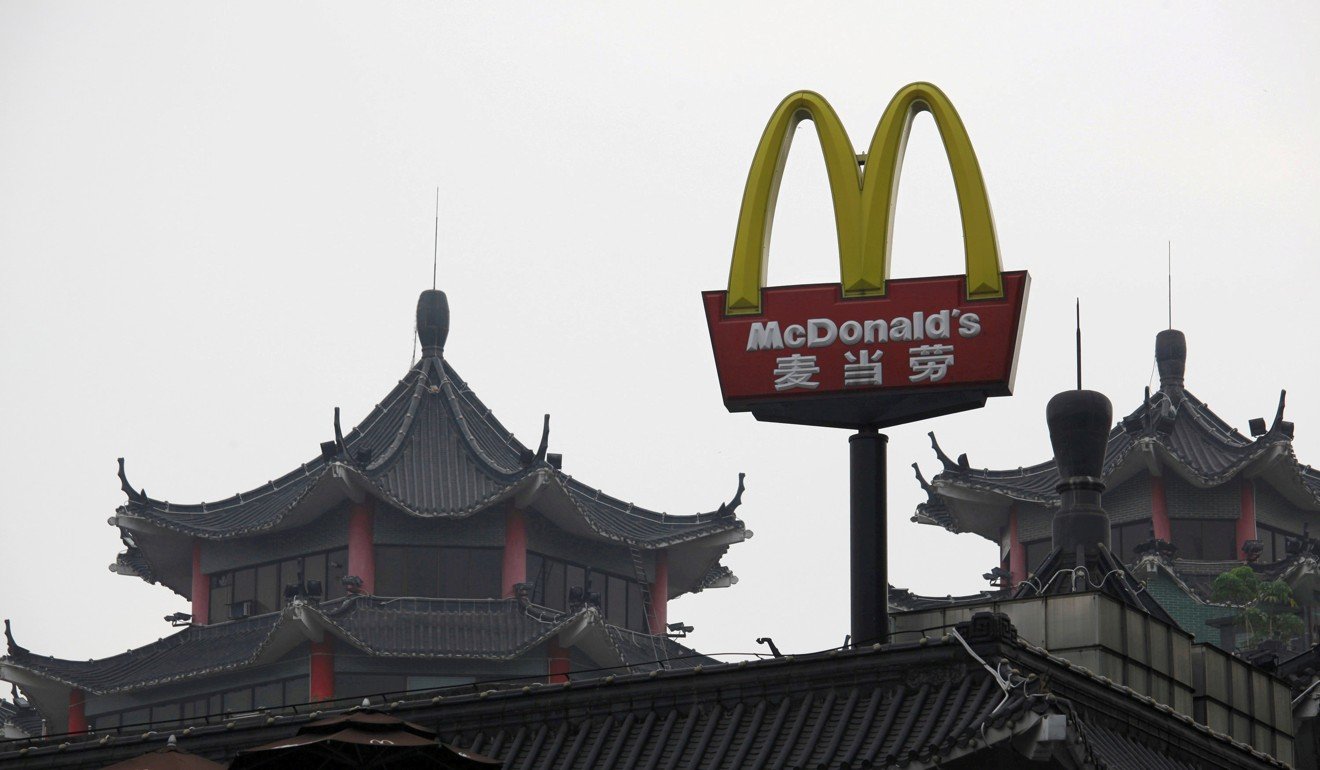
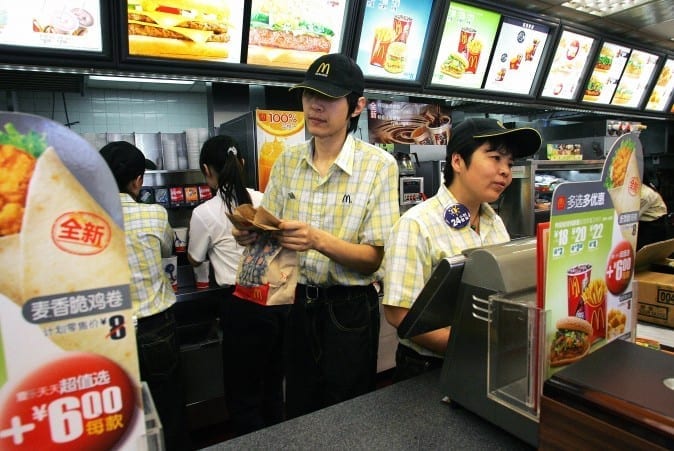
    To lure in more diners, McDonald’s China has localised its menu. Currently, nNearly a quarter of items in its breakfast menu is Chinese food, including congee and soy milk.

    To lure in more diners, McDonald’s China has localised its menu. Nearly a quarter of its breakfast menu is Chinese food, including congee and soy milk. Earlier this year, the American food chain also sold most of its business in China and Hong Kong to a Chinese consortium for more than US$2 billion. With the help of its new partner, McDonald’s said it will increase the number of Chinese outlets from 2,500 to 4,500 by 2022, with most of the new stores in smaller cities.

    “When I studied McDonald’s in the early 1990s, I was told by management the strategy was to stick to the original American menu, not to apply McDonald’s franchise model in Beijing, and not to offer breakfast,” recalled Yan, the university professor. “It looks like the company has done everything now that it said it would not do in the early 1990s … either proactively to go [to] the next level or reactively to meet new challenges.”
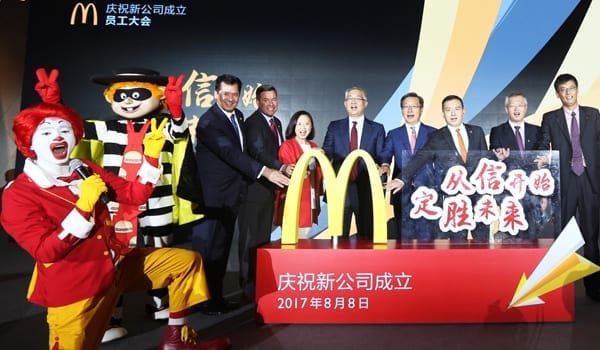
    The name tweak came after McDonald’s completed its China sale. A spokeswoman said it hasn’t affected the business in China and the company is happy Chinese diners no longer view it as an upscale brand. “After all, we never meant to be a five-star restaurant; McDonald’s is created to serve everyone,” she said.

    China’s propaganda authority also had its say. The Beijing-based Guangming Daily, a newspaper backed by the Publicity Department of the Chinese Communist Party, wrote in a commentary last week: “Foreign brands have become ‘rustic’ [as] we Chinese have become more international.”
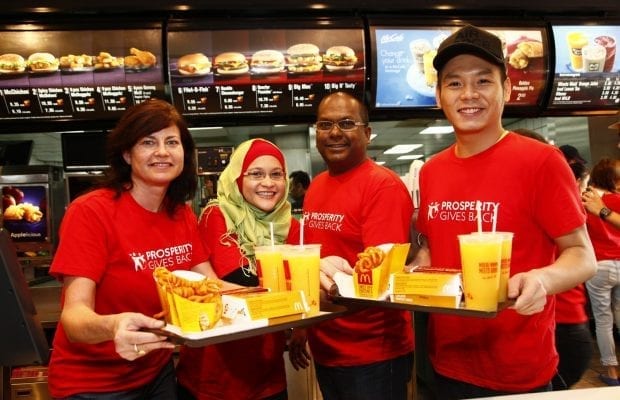
  • New McDonald’s set to expand faster in China

    New McDonald’s set to expand faster in China

    Some 2,000 quick service outlets to open by 2022 in small cities

    McDonald’s Corp, the global fast-food chain that has forged a new partnership in China last month, will expand faster by opening 2,000 new restaurants in the next five years.

    They will be set up mostly in third-and fourth-tier cities with a focus on take-aways and digitalized services.

    The company said it will increase its expansion pace from about 250 new outlets this year to 500 per year from 2022 onward.

    It did not disclose other details like the scale of new investments that would ensue.

    The new partnership, jointly established by CITIC Ltd, CITIC Capital, Carlyle Capital and McDonald’s, paid $2.08 billion for the US-based fast food chain’s business in the Chinese mainland and Hong Kong.

    The deal received regulatory approval and was completed on July 31.

    The new company will become McDonald’s largest franchisee outside of the United States.

    CITIC Ltd and CITIC Capital together hold a majority 52 percent stake in the new company, while Carlyle Capital will hold 28 percent, and McDonald’s 20 percent.

    Currently, McDonald’s operates and manages 2,500 restaurants in the Chinese mainland, including 600 franchises, and 240 restaurants in Hong Kong.

    The new company will manage all the 2,000 new restaurants directly.

    Despite McDonald’s global dominance, KFC, owned by Yum China, has bigger presence in the Chinese quick service restaurant. Yum China runs more than 5,000 KFC restaurants in over 1,100 cities and counties.

    KFC’s wide presence in China appears to have bolstered the confidence of McDonald’s investors in the new expansion plan, industry insiders said.

    The new partnership of McDonald’s aims to achieve double-digit sales growth annually in the next five years.

    The goal includes delivery coverage of 3,375 restaurants or over 75 percent of the total.

    “China will soon become our largest market outside of the United States,” said Steve Easterbrook, McDonald’s president and CEO.

    “The mainland and Hong Kong are leading the global system in capturing new consumer trends such as delivery and digitalization and it is driving strong performance and growth momentum.”

    Zhang Yichen, the new chairman of McDonald’s China, said restaurant ownership at the local level will foster entrepreneurial spirit within the company.

    For example, considering the strong demand for takeout food and the population density in China, Zhang emailed Easterbrook regarding the need to develop a customized software system for the Chinese market.

    The latter dispatched McDonald’s global IT team to support the China business. Now, the take away operation in China tops the global chain’s comparable systems across markets.

    Zhang said CITIC has more than 1,400 bank branches in China. Besides, CITIC and Carlyle’s extensive resources and market expertise in real estate, supply chains, retail, consumer goods and technology, coupled with the global quality standards and branding of McDonald’s, will prove to be a winning formula.

    Jason Yu, general manager of Kantar Worldpanel China, a firm that researches shopper behavior, said, “CITIC operates many branches in third-and fourth-tier cities, and they understand the local market, hence will be able to help McDonald’s to choose appropriate sites for new restaurants and also provide useful real estate information.”

  • McDonalds’ Q1 sales boosted by its all-day breakfast menu

    McDonalds’ Q1 sales boosted by its all-day breakfast menu

    In November, credit ratings agency Fitch warned that the breakfast-driven rebound the chain is experiencing won’t last forever. While that prediction still may prove correct someday, Fitch can’t claim victory just yet: McDonald’s reported better-than-expected first quarter same-store sales Tuesday, thanks in no small part to a continued boost from the most important meal of the day.

    McDonald’s reported Tuesday that its global same-store sales increased 4% during its first fiscal quarter of 2017. “There’s a sense of urgency across the business as we take actions to retain existing customers, regain lapsed customers and convert casual customers to committed customers,” McDonald’s president and CEO Steve Easterbrook said in a statement Tuesday morning.

    The growth in same-store sales didn’t completely translate to gangbuster top-line sales, with first quarter revenue ticking down 4% to $5.68 billion (a figure that nonetheless managed to come in ahead of the $5.5 billion Wall Street consensus). McDonald’s explained the dip by pointing to the refranchising effort that is a part of its broader turnaround plan, and the costs associated with that effort.

    Net income for the quarter, meanwhile, grew 8% to $1.2 billion, resulting in earnings of $1.47 per share — a figure that came in well ahead of the Street’s $1.33 per-share consensus.

    “Our efforts to build a better McDonald’s are yielding meaningful results with continued positive momentum and a strong start to 2017 that includes positive comparable sales across all segments, higher global guest counts and enhanced profitability,” Easterbrook continued. “We’re challenging ourselves to identify and pursue initiatives that can bring the biggest benefit to the most customers in the shortest possible time. I’m confident that we’re on the right path and well-positioned to unlock incremental growth and deliver against our growth plan for 2017 and beyond.”

  • McDonald’s China does nothing, but under attack anyway

    McDonald’s China does nothing, but under attack anyway

    McDonald’s China is drawing criticism from Hong Kong trade unions, who fear the impact of the new owners on employment conditions.

    Despite reassurances from local McDonald’s management – or any evidence at all suggesting changes to labour policies are looming – the fast food giant has come under attack on both sides of the border.

    The new business unit taking over the McDonald’s business in China and Hong Kong is jointly owned by state investment group Citic Ltd and US private equity company Carlyle Group. McDonald’s Corporation (US) will maintain a cornerstone minority stake. The new company holds 20-year franchise rights.

    In a statement issued this week, the Hong Kong Confederation of Trade Unions (HKCTU) said the change of ownership will put further pressure on pay rates at Hong Kong outlets, where it says many workers earn little more than the minimum wage of HK$32.50 (US$4) per hour.

    “In other countries where McDonald’s has sold a large stake of its business, the resulting model has placed enormous pressure on franchisees, which has made it harder for franchise operators to provide adequate pay and conditions for their workers,” HKCTU official Wong Yu Loy said.

    “If the buyers in Hong Kong get squeezed by McDonald’s as they have in other countries, workers here may get even less as a result,” Wong said.

    Last week, a Chinese labour consultancy Hejun Vanguard Group filed a formal complaint with the mainland’s Ministry of Commerce claiming the move to the new business model may adversely impact its 120,000 workers in China – and McDonald’s customers.

    But McDonald’s has rushed to placate concerns saying its franchise models all over the world are based on “mutually beneficial partnerships” and the company “treasures” its employees.

    “The level of remuneration of our employees is based on their positions, working experience, expertise, performance, as well as market conditions,” said a spokeswoman.

    “McDonald’s strictly abides by Hong Kong labor legislation and the statutory requirements. The current compensation and benefits of McDonald’s Hong Kong will not be affected as a result of bringing in strategic partners.”

    The HKCTU, which represents 90 affiliate labour organisations covering 170,000 workers, appears unmoved.

  • Restructuring bites into McDonald’s global sales

    Restructuring bites into McDonald’s global sales

    Restructuring has taken its toll on McDonald’s global sales as the company refranchises store networks in Asia.

    The US fast food giant reported what one analyst described as a “sombre result” overnight, its fourth quarter sales falling by 1.3 per cent in the US market. However, two-thirds of its sales are achieved outside the US, where the company’s turnaround plan is further advanced.

    Global same-store sales rose 2.7 per cent, but overall sales fell by 5 per cent as the company worked towards spinning off its rights in Korea, China, Malaysia and Singapore.

    In the UK and Germany, McDonald’s is benefitting from technology upgrades such as self-service kiosks, which are also being installed in Hong Kong. Sales in what McDonald’s describes as its “international lead markets” rose 2.8 percent in the fourth quarter.

    Neil Saunders, CEO of Conlumino, said McDonald’s ends its fiscal year on a somber note with figures that put pay to the early optimism which surrounded its turnaround program.

    “McDonald’s is now lapping some tougher comparatives, especially in the US where, this time last year, it was reaping the rewards of menu reconfiguration and the introduction of the All Day Breakfast. These changes were supposed to drive a steady and sustainable uplift in spending rather than a one-off spike in sales, but it is increasingly clear that this strategy is not delivering through.”

    Saunders says widening the audience in a sustainable way is the key issue for McDonald’s as it enters the new fiscal year.

    “This has to be more than about menu change – including the recent introduction of multiple sizes of Big Macs which, in our opinion, does nothing to create step change or to increase real choice. Indeed, it is clear that the menu changes made so far have not completely reinvigorated the brand with younger and more discerning consumer segments, many of whom still shun the chain in favor of what they see as more premium offerings from other players.”

    Saunders believes the majority of the growth is at the quality end of the market, a segment where McDonald’s – which is seen as fast, convenient and low priced – still does not squarely play in the US – although it has made strides in some Asian markets, especially Thailand, with its customisable burgers.

    “In our view, McDonald’s needs to think more fundamentally and more holistically about how to play in this space. This includes looking at the state of its US restaurants – some of which leave a lot to be desired. It also means being more radical, perhaps opening a new type or brand of restaurant with a more premium proposition. What’s clear is that more fundamental change is needed to transform the US business.”

  • McDonald’s Japan stake for sale

    McDonald’s Japan stake for sale

    McDonald’s has reportedly invited bids for a “significant stake”  in its McDonald’s Japan unit.

    The Wall Street Journal has quoted “people familiar with the matter” saying the company is looking for buyers for up to 33 per cent of the shares, from its nearly 50 per cent stake in the listed Japanese company.

    The report said initial bids were due to be lodged this week and that a number of private-equity firms are considering the opportunity.

    Last week McDonald’s released terms of its sale of 80 per cent of its China and Hong Kong business, giving 20-year rights to the brand to state-backed Citic Ltd and private equity company Carlyle Group.

    The beleaguered Japanese business last February reported its first increase in customer numbers in nearly three years after a tumultuous period in which sales plummeted and the store network was heavily rationalised.

    Internal company figures showed footfall at stores open for more than one year rose by more than 10 per cent Japan-wide. Better yet, same-store sales rose by as much as 30 per cent, according to a report by Reuters.

    McDonald’s Holdings Co (Japan) has projected a net profit of about 1 billion yen (US$8.47 million) for the year to December 2016 – which would mark its first time out of the red in three years since a food safety scandal relating to expired chicken hit the brand in 2014. In January 2015 sales plunged 38.6 per cent, customer ranks depleted by 28.5 per cent.

    In April 2015 the company unveiled a plan to cull its restaurant network and revamp remaining stores after a US$319 million loss.

    It also revised its menu, adding salads which has clearly drawn customers back to restaurants.

  • A cloud of dispute above McDonald’s Korea franchisee

    A cloud of dispute above McDonald’s Korea franchisee

    McDonald’s Korea has become mired in a high-profile dispute with a franchisee.

    The local arm of the US restaurant operator terminated the franchise agreement with McDonald’s Mangwon branch on December 1 of last year. According to McDonald’s, the restaurant owner had been failing to fulfill the terms of agreement, including paying the company franchise commissions amounting to a total of about 700 million won ($586,264).

    The owner retaliated by claiming he suffered losses from another McDonald’s restaurant opening nearby, refused to pay the overdue amount and shuttered the restaurant on December 4 after firing some 60 employees who were owed 50-million-won ($41,865) in unpaid wages.

    This week, former employees and members of the Alba Organization, Korea’s labor union for part-time workers, protested in front of the now-closed Mangwon outlet, affixing signs festooned with angry slogans to the front of the building.

    In an official statement, the Alba Organization demanded that McDonald’s advance the overdue wages and severance pay to the former employees, then demand indemnity from the owner. It also requested that the company provide jobs to employees who wish to continue working at McDonald’s.

    “For part-timers, wages are essential to survival. We demand that McDonald’s resolve this matter as soon as possible,” said a spokesperson.

    McDonald’s Korea responded by saying  it was doing its best to help the employees, and claimed to have already hired 19 of the former Mangwon outlet workers at other McDonald’s restaurants.

    However, as for unpaid wages, officials said, “we need the work data for the part-timers to pay their overdue wages, but only the owner can access the data,” adding that “trying to access the information without the owner’s consent is a violation of the law.”

  • McDonald’s Malaysia bans non-halal foods

    McDonald’s Malaysia bans non-halal foods

    McDonald’s Malaysia has decided to ban customers taking products that are not halal-certified into its restaurants.

    The fast-food restaurant chain says the measure is necessary to safeguard its own halal status, reports the Malay Mail.

    “This is in line with fulfilling requirements of our halal certification,” company official say.

    The new policy came to notice after an announcement was made in one of its restaurants that birthday cakes taken onto the premises must have halal certification or logo.

    McDonald’s Singapore and Malaysia franchise rights were sold last month to Saudi Arabian company Lionhorn as part of a broader plan by the US company to move away from direct ownership in Asia.

  • McDonald’s China and Hong Kong deal formally announced

    McDonald’s China and Hong Kong deal formally announced

    McDonald’s has confirmed the sale of its China and Hong Kong operations to an investment consortium for US$2.08 billion (HK$16.14 billion).

    Under the deal, the purchasers, Citic Limited, Citic Capital and The Carlyle Group, will open 1500 new outlets.

    Phyllis Cheung, CEO of McDonald’s China, says the Beijing-based Citic companies will together hold a majority 52 per cent stake in the spun-off business and US-based Carlyle and McDonald’s will hold 28 per cent and 20 per cent, respectively. The consortium will run the business for 20 years.

    McDonald’s says it will now re-franchise all its 2600+ stores in Mainland China and Hong Kong to improve sales performances, part of a global effort to cut costs.

    Cheung told China Daily the new company will use its Citic’s strategic relationship with SF Express and Tencent Group Holdings (the owner of WeChat) to facilitate delivery, enhance restaurant convenience and boost its “retail digital leadership and menu innovation”.

    “China and Hong Kong represent an enormous growth opportunity for McDonald’s,” said McDonald’s CEO Steve Easterbrook in a statement confirming the deal, which has been an open secret for some weeks.

    “This new partnership will combine one of the world’s most powerful brands and our unparalleled quality standards with partners who have an unmatched understanding of the local markets and bring enhanced capabilities and new partnerships, all with a proven record of success,” he said.

    The deal will be finalised in mid-2017.

  • McDonald’s Singapore franchise rights sold to Lionhorn

    McDonald’s Singapore franchise rights sold to Lionhorn

    McDonald’s Singapore and Malaysia franchise rights have been sold to Saudi Arabian company Lionhorn as part of a broader plan by the US fast food company to move away from direct ownership in Asia.

    It has transferred its ownership interest in 390 restaurants, more than 80 per cent of which were company-owned.
    Lionhorn is led by Sheik Fahd and Abdulrahman Alireza, who are franchisees for nearly 100 McDonald’s restaurants in the western and southern regions of Saudi Arabia.

    McDonald’s has not disclosed the financial terms of the deal. It says it has now franchised about 1300 outlets as a part of its target to become 95 per cent franchised by the end of 2018.

    “This transaction marks another milestone in our company’s ongoing efforts to identify strategic partners who share our values and vision to accelerate our growth and scale across diverse markets, drive innovation and place us closer to our customers and the communities we serve,” says McDonald’s president/CEO Steve Easterbrook.

    Under the developmental licensee (DL) structure, Lionhorn will provide the capital necessary to support and grow the business. It will pay an initial franchise fee and an ongoing royalty to McDonald’s.

    Leading the day-to-day management of the Malaysia and Singapore markets, respectively, will be local partners Azmir Jaafar and Kenneth Chan, both of whom previously held senior leadership positions at McDonald’.

    Jaafar will continue as the Malaysia market’s MD. He was previously chief development officer of McDonald’s China and MD of the company’s Middle East markets.

    Chan joins Lionhorn as MD for Singapore. Before this he was division president for China and Greater Asia as well as CEO of Greater China and MD of Singapore with oversight to Malaysia, Korea and Taiwan.

    McDonald’s has more than 36,000 locations in more than 100 countries. More than 80 per cent of its restaurants worldwide are franchised, with McDonald’s having used the DL ownership structure for more than 30 years.

  • McDonald’s China deal done

    McDonald’s China deal done

    A private-equity led consortium has been chosen to buy 20-year franchise rights for McDonald’s China and Hong Kong, Reuters is reporting.

    The successful bidder is a consortium led by private-equity firm Carlyle Group and Chinese conglomerate Citic Group, who will pay up to US$3 billion, according to an unidentified source who spoke with Reuters.

    A contract will likely be signed before Christmas.

    As reported in September, consortiums led by private equity firms Carlyle Group and TPG Capital were shortlisted as the bidding process narrowed the field. TPG had teamed with Beijing Capital Agribusiness Group, McDonald’s current China partner.

    Another private equity group, Bain Capital, had already dropped out.

    McDonald’s had previously said it was looking for long-term partners rather than private equity firms, which typically cash out after a few years.

    The deal covers some 2400 restaurants in China and Hong Kong. The 20 year franchise rights come with a 10-year renewal option.

  • McDonald’s near deal to sell China stores

    McDonald’s near deal to sell China stores

    A consortium led by private-equity firm Carlyle Group and Chinese conglomerate Citic Group Corp has neared a deal to buy McDonald’s stores in China and Hong Kong for up to $3 billion, a source with direct knowledge of the matter said.

    The deal is likely to be signed before Christmas, the source said.

    Reuters had reported in October that U.S. buyout firms Carlyle and Bain Capital LLC had been the front runners among the bidders for the fast-food giant’s China assets.

    McDonald’s in March said it was reorganizing operations in Asia, bringing in partners as it switches to a less capital-intensive franchise model.

    The company hired Morgan Stanley to run the sale of about 2,400 restaurants in China and Hong Kong.

    Financial Times reported earlier on Wednesday that Bain Capital had dropped out of the race, and that a group led by Citic Group and Carlyle were the front runners to the deal.

    Carlyle declined to comment, while McDonald’s was not immediately available for a comment.

  • McDonald’s Korea sale collapses

    McDonald’s Korea sale collapses

    And in the simultaneous divestment process for the 20-year McDonald’s China franchise rights, TPG Capital has reportedly withdrawn leaving two rival private equity firms in the race – Bain Capital and Carlyle Group – competing with two Chinese companies previously reported to be in the negotiations: retailer Wumart Stores and Sanpower Group.

    With Maeil Dairies Industry Co dropping out of the running for McDonald’s Korea, that sale process seems at best stalled.

    McDonald’s, which directly manages about 400 stores in South Korea, has been looking for local partners to run the Korean outlets as franchise stores that pay annual commissions instead. The deal initially drew interests from several investors, including CJ and NHN Entertainment, but they have nixed their plans.

    Maeil Dairies had formed a consortium with Carlyle Group, but pulled out after failing to agree on terms of contract, industry sources familiar with the matter told the Yonhap news agency.

    “We can’t verify the specific details as McDonald’s headquarters office is in charge of the bidding process, but the sales process is still under way,” an official at McDonald’s Korea said, without elaborating on the deal.

    Meanwhile, in China, TPG’s withdrawal was confirmed overnight by unidentified sources close to the matter and reported by several news networks.

    Carlyle Group has partnered with Citic Group and Bain with GreenTree Hospitality, a hotel group.

    McDonald’s is seeking as much as $3 billion for the China rights, which come with a 10-year expansion option.

    There are about 2400 McDonald’s restaurants in China and Hong Kong and the US company wants its master franchisee to expand that network rapidly to compete with rival Yum! China’s expansion plans.

    The ongoing presence of private equity bidders in the process is surprising, because McDonald’s has made it clear it is seeking a long-term partner rather than private equity firms, which typically cash out after a few years.

  • McDonald’s social media blitz: 200 staff added to Tweet & Like

    McDonald’s social media blitz: 200 staff added to Tweet & Like

    Gearing up for a McDonald’s social media blitz, the fast food giant has recruited 200 staff from tech-savvy online companies.

    The new recruits have come from companies such as Amazon and PayPal and are stationed in the McDonald’s head office in Oakbrook Illinois, in Singapore and London.

    Their challenge is help the iconic burger brand catch up with rivals in using social media to monitor customer experiences, engage with customers and monitor what is trending online.

    Just two years ago, McDonald’s was not even following or responding to online comments on its brand or products – yet its name is mentioned every one to two seconds.

    “We seemed deaf and mute,” Paul Matson, director of social and digital engagement at McDonald’s US, said in an interview with the Wall Street Journal.

    Matson believes the expanded team will help win business from social media-addicted millennials – some 78 per cent of whom visited a McDonald’s restaurant at least once a month during the first quarter of 2016.

    Besides improved monitoring and communication, the company is using social media to test market products and concepts – replacing more traditional focus group research. The spin-off from that is increased exposure of the concepts, wider engagement and a far great sample base than focus groups allow.

  • McDonald’s Malaysia, Singapore ‘buyer found’

    McDonald’s Malaysia, Singapore ‘buyer found’

    Twenty-year franchise rights for McDonald’s Malaysia and Singapore outlets have been conditionally sold to a Saudi Arabian group for up to US$400 million.

    Reza Food Services, which owns McDonald’s restaurants in Saudi Arabia, is seeking finance from Malaysian bank CIMB to finance the transaction, insiders say.

    McDonald’s is moving to bring in partners as it switches to a less capital-intensive franchise model in Asia, and has said it wants regional family-owned groups and local tycoons as long-term partners.

    Insiders say the basic terms of the agreement with Reza have been finalised, with the deal expected to be completed by the end of the year.

    McDonald’s, which has about 260 restaurants in Malaysia and about 120 in Singapore, is also selling its China and Hong Kong outlets, and has received final bids from at least three groups.