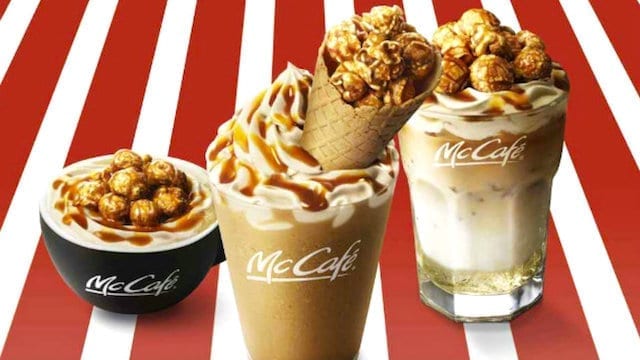
Following a limited-edition French macaron release last month, McDonald’s Japan is continuing to draw attention to its McCafe by Barista branches with a more unusual menu twist: popcorn drinks.
Available at Japan’s 90 McCafe by Barista outlets from Friday, there are three variations of the limited-edition beverages…
Iced Caramel Popcorn Latte: This combines the flavours of espresso with caramel syrup and popcorn syrup, plus whole popcorn pieces, whipped cream and sauce topping, as well as creamy cold milk.
Hot Caramel Popcorn Latte: This is similar to the iced version but uses hot foamed milk.
Caramel Popcorn Frappe: This features whole pieces of popcorn inside a sweet waffle cone that juts out from the beverage, which is an icy espresso and caramel/popcorn syrup blend topped with caramel-flavoured whipped cream and caramel sauce.
McDonald’s says it is aiming to add even more creative beverages to its McCafe by Barista outlets in the future, reports Sora News 24.
The popcorn series will be available until the middle of February.
McDonald’s Indonesia has introduced the rendang burger to celebrate the country’s 72nd anniversary of independence and being the burger and fast-food lovers that we are, we just had to try it.
After all, what better way to honor Indonesian culture than bring one of its top dishes—which has even been regarded as the world’s most delicious food—in fast-food burger form to the masses? While the fast-food giant has released similar short-term specials, this rendang burger in its latest iteration, is sold as part of a special menu titled “Ini Rasa Kita” (this is our flavor). The menu is available from July 28 til September 10, 2017.
The special menu includes three rendang burger options: your classic rendang burger with a single patty, the double rendang burger, and the rendang burger special, which has one patty and a fried egg on top. There’s also a limited edition soda belimbing (starfruit) you can order as a part of a meal package if you’re feeling particularly adventurous.
We’ve comprehensively tasted and reviewed Bali’s best burgers so we feel pretty confident about our ability to give you the 411 on McDonald’s ‘culturally adapted’ new number. Just sayin.
Going in to Bali’s Jimbaran Ngurah Rai By Pass McDonald’s with a ‘go big or go home’ mentality, we ordered ourselves the rendang burger special, which set us back Rp 40k (USD2.99) a person since we went for the meal combo. Gotta get those salty McD fries, after all.
Upon unboxing the special rendang burger, we’ve got to tell you it’s a bit smaller than we expected since McD’s promotional photos make it look like a juiced up burger compared to their standard menu—but it turns out the rendang burger is just your classic McD cheeseburger with special toppings. Same nice greasy, cheesy taste, just nothing amped up quality-wise. Another thing we immediately noticed were the giant slices of onion on top. While those appeared a bit off-putting at first, they’re a nice textural addition to the greasy fried egg and thin standard beef patty.
As far as the actual rendang seasoning goes, please don’t expect the tastiest slow cooked rendang from your favorite padang kitchen. Have you had Indomie rendang before? Because the spice packaging that comes with the instant noodles is exactly what the McDonald’s rendang sauce recipe tastes like. MSG-filled and a bit too ‘instant mix’ on the tongue to be that slow-cooked, creamy and rich coconut-milk spiced sauce that’s earned rendang world fame.
That said, we loved the rendang special burger as a quick bite and anticipate some late night McDonald’s visits in the next couple of weeks to get our MSG and fast food fix.
For Singaporeans and Malaysians, nasi lemak (rice cooked with pandan leaves and served with sambal) is a breakfast staple. Realizing the Singaporeans’ non-stop craving for the fragrant rice, McDonald’s Singapore introduced nasi lemakburger on Thursday.
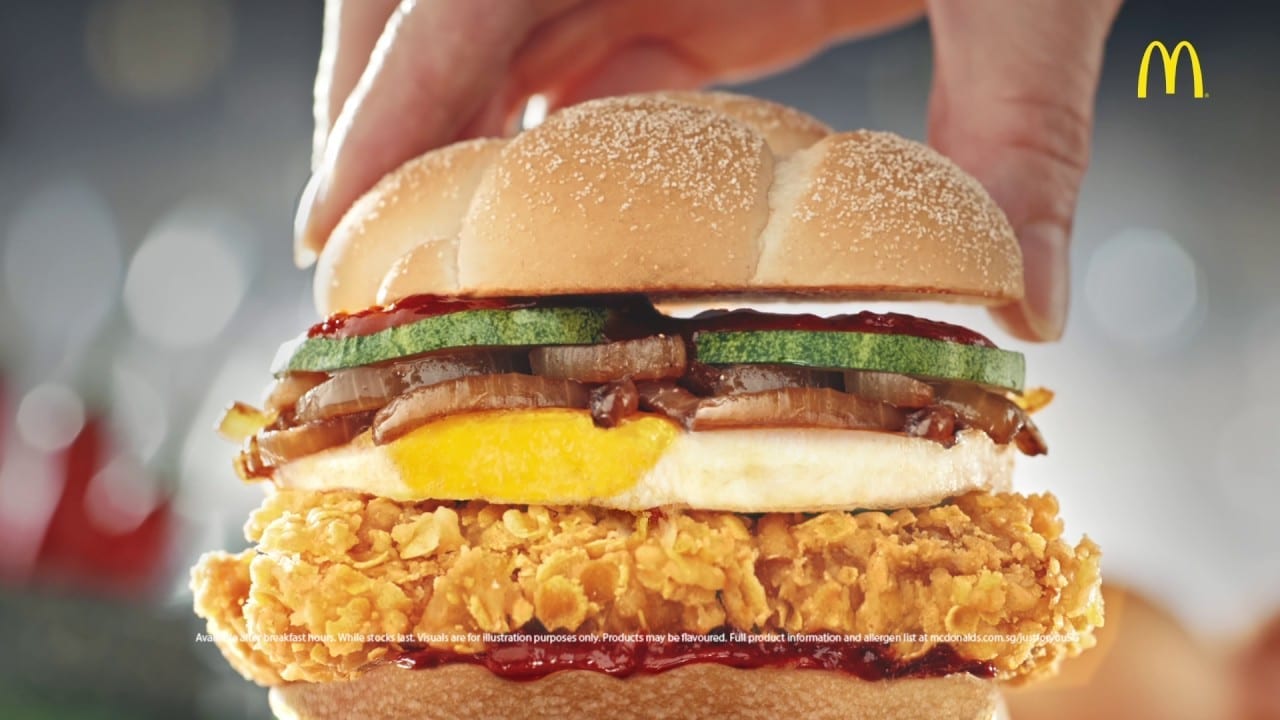
The unique dish, which consists of semolina buns, coconut-flavored chicken thigh patty, egg, caramelized onions, sliced cucumbers and sambal, was launched in conjunction with Singapore Food Festival 2017 and the upcoming Singapore National Day.
In addition to the nasi lemak burger, the fast food chain also launched locally-inspired beverages and desserts, namely the Chendol McFlurry (ice cream with worm-like green rice flour jelly), chendol ice cream cones, the Bandung McFizz (condensed milk beverage flavored with rose cordial syrup), Pandan Coco Frappe (pandan flavor drink served with coconut and grass jelly), coconut pie and kueh salat (a pandan sponge cake with a glutinous rice layer).
Sure enough, Singaporeans have flooded McDonald’s outlets to devour the high-carbs meal and sweet treats.
On Twitter, they posted mixed reviews about the fusion burger. Though not all were fond of the East-meets-West dishes, some gave positive feedback, saying the burger was beyond their expectation, tasting exactly like nasi lemak.
Seeing the positive response, maybe it is time for McDonald’s Indonesia to consider some locally-inspired menus for Independence Day — sate ayam (chicken skewers) or lontong sayur (rice cakes with vegetables) burgers, perhaps?
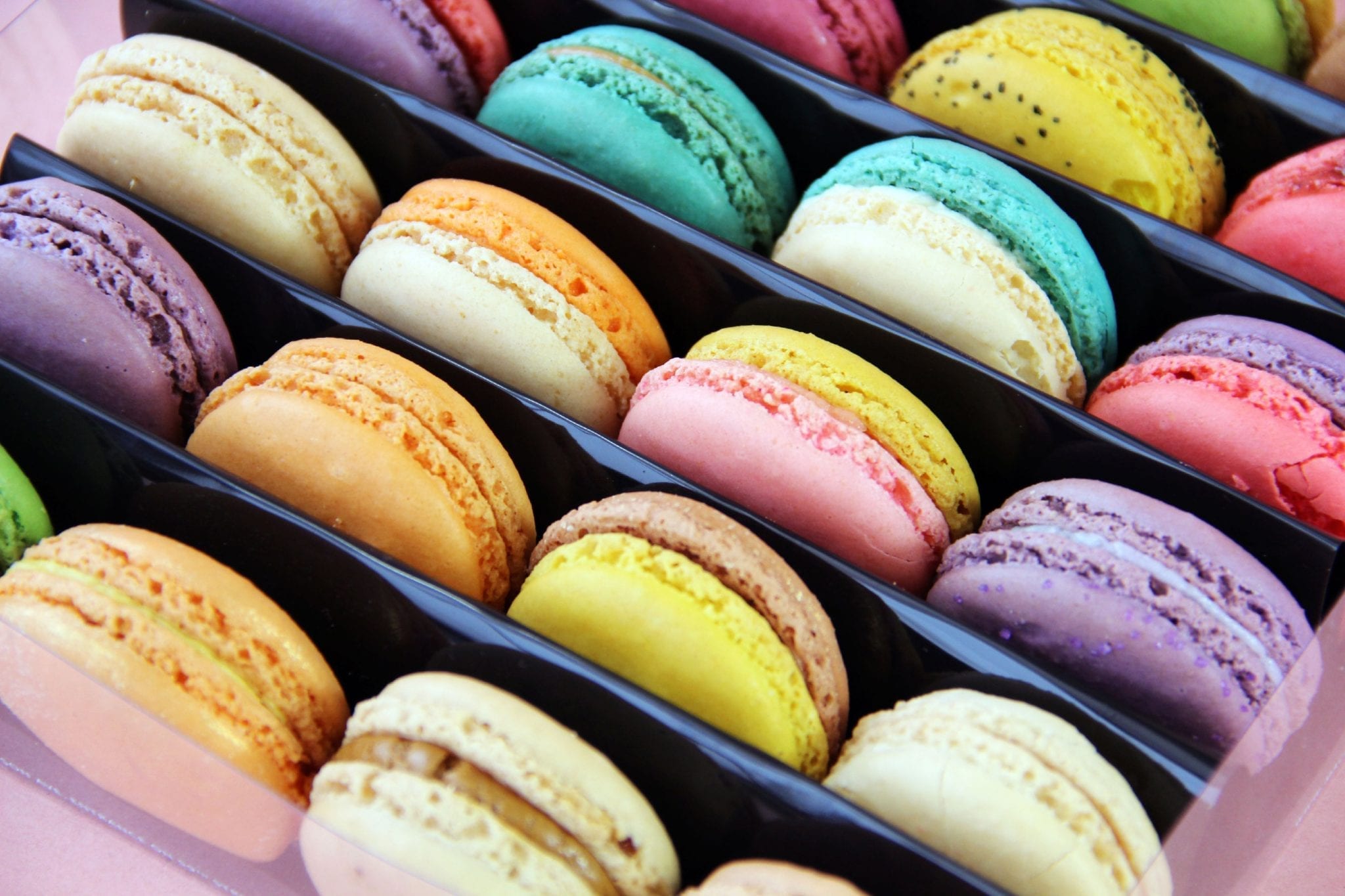
For a short time only, McDonald’s Japan has added limited-edition French macarons to its menu.
Imported from France, the macarons are in four flavours and have special takeout boxes.
Available at McCafe by Barista outlets, the new treats come in lemon, raspberry, vanilla and chocolate variants. The takeout “box set” contains the customer’s choice of three macarons and is available only in limited quantities.
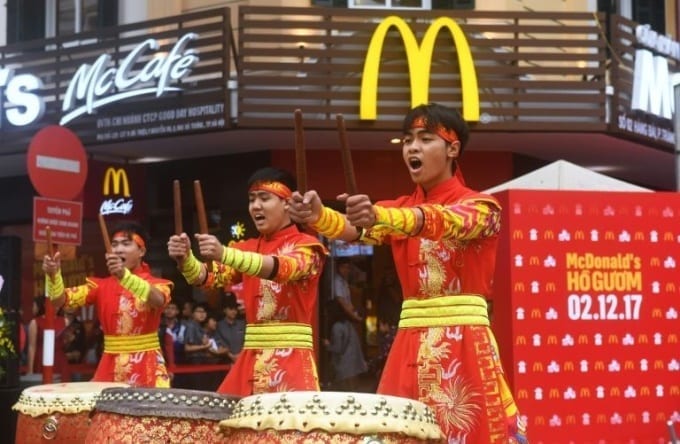
Global burger behemoth McDonald’s opened its first branch on Saturday in the historic heart of Hanoi, a conservative city renowned for its traditional — and cheap — Vietnamese staples beloved by food-obsessed locals.
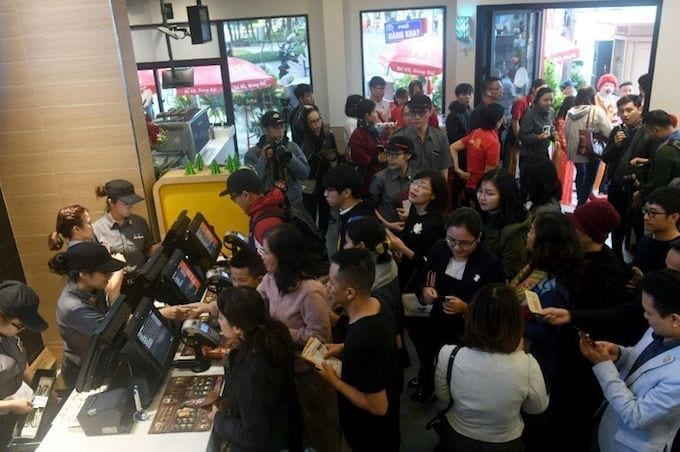
Hungry customers lined up for Big Macs and Chicken McNuggets at the Vietnamese capital’s first location overlooking the tree-lined Hoan Kiem Lake, which draws millions of tourists annually to see French-era colonial buildings and sample street-food favorites like pho noodle soup and banh mi sandwiches.
The restaurant is the first outside of the southern commercial hub Ho Chi Minh City, where 16 branches have opened since McDonald’s first came to Vietnam in 2014 to much fanfare, especially among the rapidly-growing middle class and American-obsessed youth.
The global fast food chain received a similarly warm welcome in Hanoi on Saturday, as hungry diners crammed into the two-storey eatery for a first taste of the Golden Arches.
For 84-year-old Tran Dinh Luyen, who fought against the U.S. in the Vietnam War, the restaurant was a sign of warming ties with a former enemy.
“I am happy that McDonald’s has opened a restaurant in Hanoi. It’s a very famous American brand, so it shows how far U.S.-Vietnam relations have come,” he said after mowing down on a Big Mac with his daughter and granddaughter.
But not everyone agreed.
“It’s a rip-off … this fast food is for kids only, it’s not good at all,” 90-year-old Ta Xuan Huong said, espousing his love for traditional cuisine.
Some curious tourists stopped to see what all the fuss was about, perplexed that a brand ubiquitous in the West would draw so much attention.
“It’s kind of random to see McDonald’s opening… it’s an interesting cultural experience to see how important it is that the store is opening here,” American Dan Moore said, after his wife remarked she might not have expected to find one of the most salient symbols of capitalism in the country.
Vietnam has seen dizzying economic growth in recent years as it has opened its doors to foreign investment — which has included an influx of western chains like Starbucks, KFC and Burger King.
Growth in the fast food sector has been buoyed by rapidly rising incomes — annual per capita income has more than doubled in the past decade to about $2,200 today — especially among under-30s, who make up half of Vietnam’s population of 93 million people.
The fast food industry in Vietnam has seen double-digit growth annually for the past five years, and the country has the highest 2017 growth in Asia-Pacific for fast food chains, according to market research firm Euromonitor International.
Though meals can cost as much as three times the local fare, customers are still showing strong appetite.
“Young people like to hang out in fast food restaurants as they are seen as a cool and nice place … and these customers also like the taste of the food,” Euromonitor analyst Samuel Huynh said.
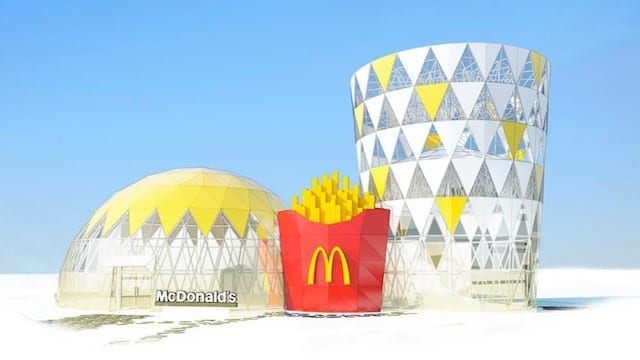
McDonald’s Korea has started building a giant burger, box of fries and drink carton – a novelty building to serve as its outpost at next year’s Pyeongchang Winter Olympic Games in South Korea.
It will cater to visitors only, with a separate McDonald’s location to offer complimentary meals to athletes expected to be situated within the Olympic Village.
The fast-food company has already hired 260 workers to run the two stores, who are undergoing cultural-awareness training so they can serve a diverse range of customers.
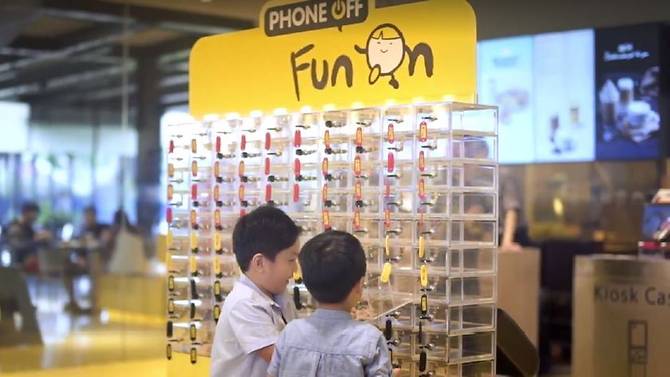
McDonald’s has introduced mobile phone lockers and table service at its flagship Marine Cove outlet in Singapore to help families rediscover quality time together, the fast-food chain said.
The mobile phone locker, the first-of-its-kind in Singapore, encourages parents and children to put their devices away safely and focus on family bonding, it said.
“As a popular restaurant destination for families, we have observed that the use of mobile devices during meal times may sometimes get in the way of family bonding,” said director of brand communications and customer care Linda Ming.
A survey of 302 parents conducted by McDonald’s last month found that 98 per cent of parents and 91 per cent of kids use their mobile devices whenever they are together, with more than two-thirds of respondents using their smartphones during mealtimes.
This is despite most of the parents in the survey saying that the use of mobile devices had decreased their interaction with their loved ones, and that they would like to be more disciplined in staying away from digital distractions during family time, McDonald’s said.
To allow parents to spend more time tending to their children, the fast-food chain is also piloting table service at its Marine Cove outlet, led by “guest experience leaders” whose main role is to engage with families.
Customers can select the table service feature when placing an order at the self-ordering kiosk, it said.
Responding to queries from Channel NewsAsia, McDonald’s said there is no extra charge for customers who use the table service feature, and that the service is open to everyone, not just families or parents.
“We have introduced the service in our Marine Cove flagship restaurant as well as selected restaurants, and have received positive feedback especially from families so far.”
McDonald’s added that mobile phone lockers would be locked with physical keys. To make sure that customers do not forget to retrieve their phones, staff members will remind them about their phones before they leave the restaurant.
The fast food restaurant chain will be “actively gathering feedback” from customers about the new initiatives, to decide on whether to expand them to other restaurants.
It is always tricky for multinationals to pick a name that sounds right to Chinese ears, but few went as wrong as McDonald’s latest business tweak.
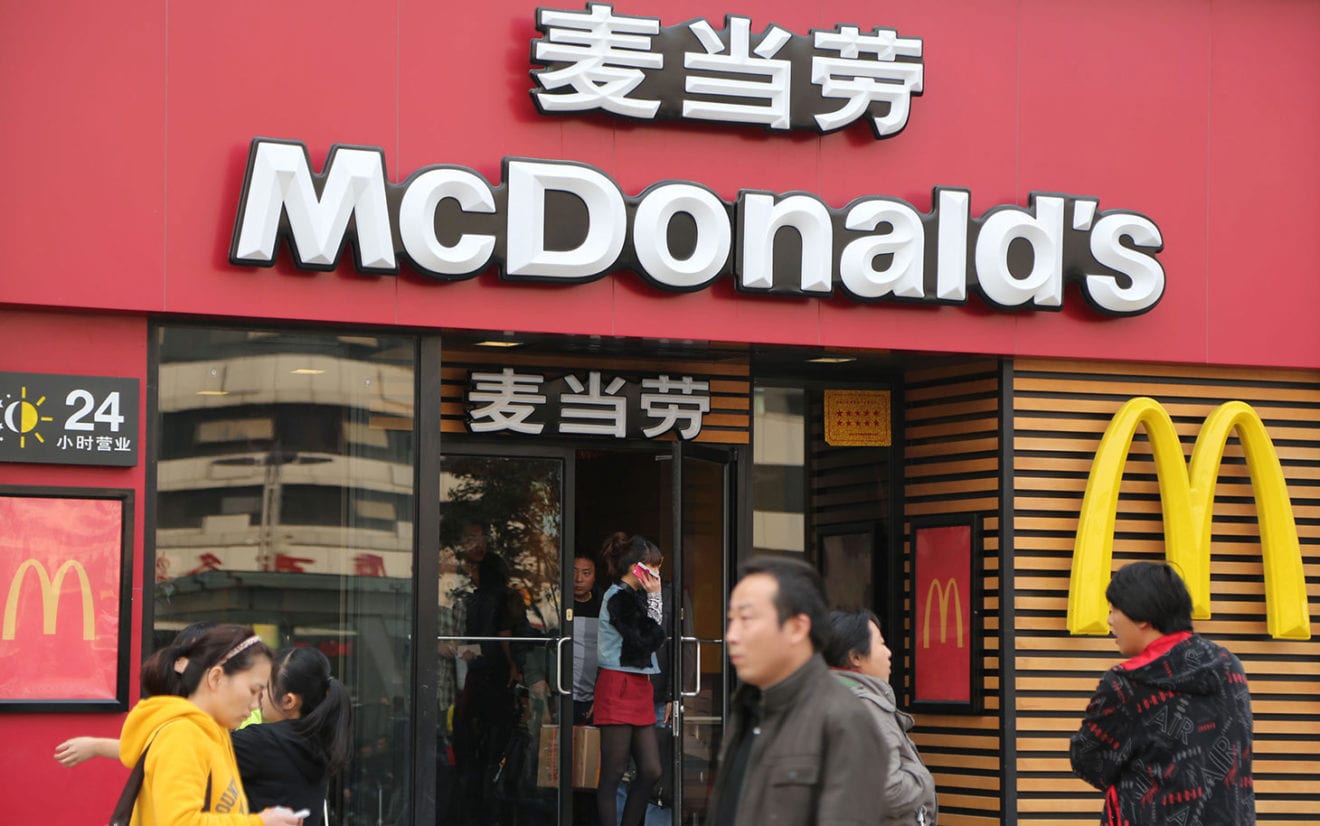
When the news broke last week that the American fast-food giant had changed its business name in China, ditching the previous Maidanglao – a transliteration of the company’s English name – in favour of Jingongmen, which roughly translates as “Golden Arches,” Chinese social media gorged itself with amusement.
“[The new name] sounds like a furniture store. Are you sure the food is edible?” one wrote, while another observed “even Ronald McDonald cannot stand the new name”, referring to a widely circulated image of the clown mascot on the phone, saying: “Boss, I have to quit. The new name is unbearable.”
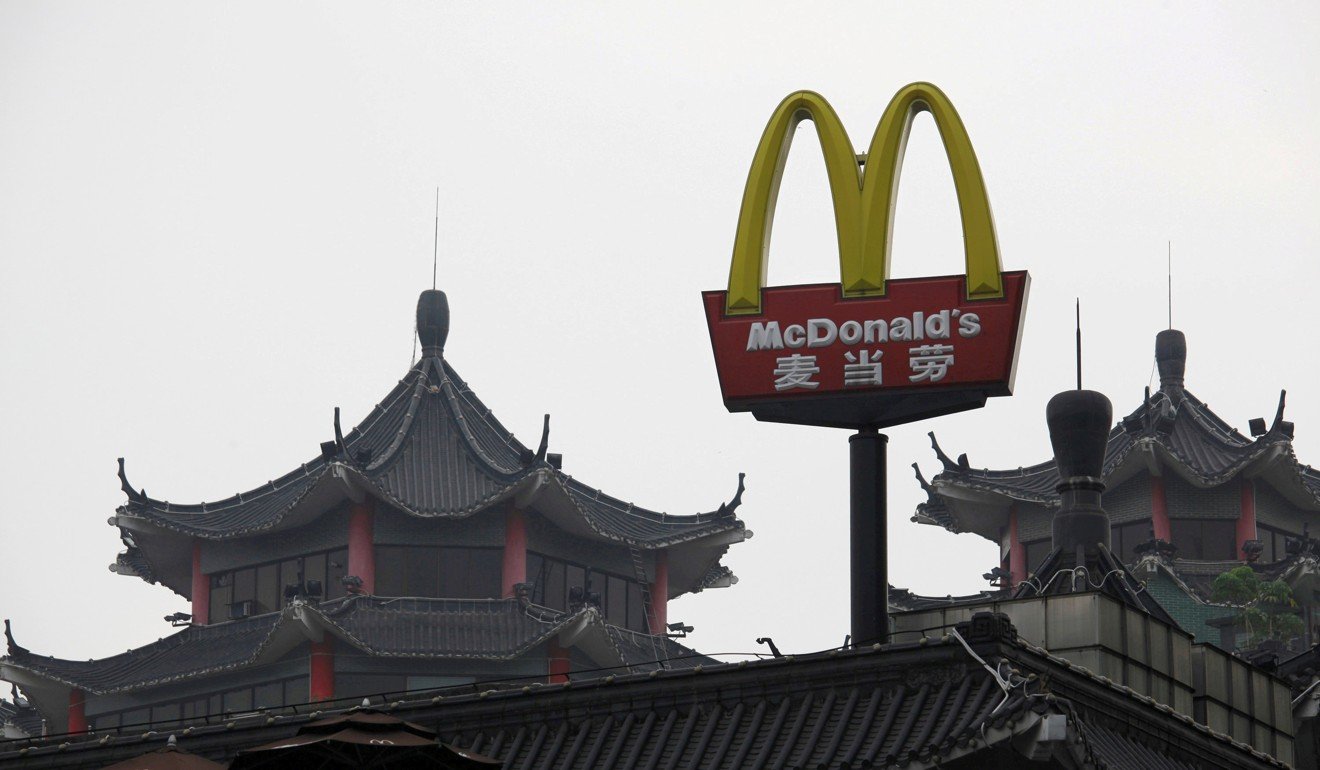
Construction on mainland China’s first McDonald’s in Shenzhen takes place in 1990.
McDonald’s responded online, reassuring its customers that no one would dine at restaurants carrying the Jingongmen label and the change was for official paperwork only. It is unclear whether McDonald’s will manage to shake off this PR disaster, but even if it does, there are worries the American food giant cannot escape the fate of being downgraded.
“McDonald’s and KFC do not command the brand power they used to in the 1990s,” Jeffrey Towson, a business professor at Peking University in Beijing, said. “They are not viewed as upscale as they were in the 2000s.”
Once a tourism destination in China and a symbol of rapid modernisation, McDonald’s is now known as a low-end, cheap eat for many Chinese. Experts say this colossal change in attitude mirrors the rise of China, where local businesses have become increasingly competitive and Chinese customers no longer have to rely on Ronald McDonald to get a taste of America.
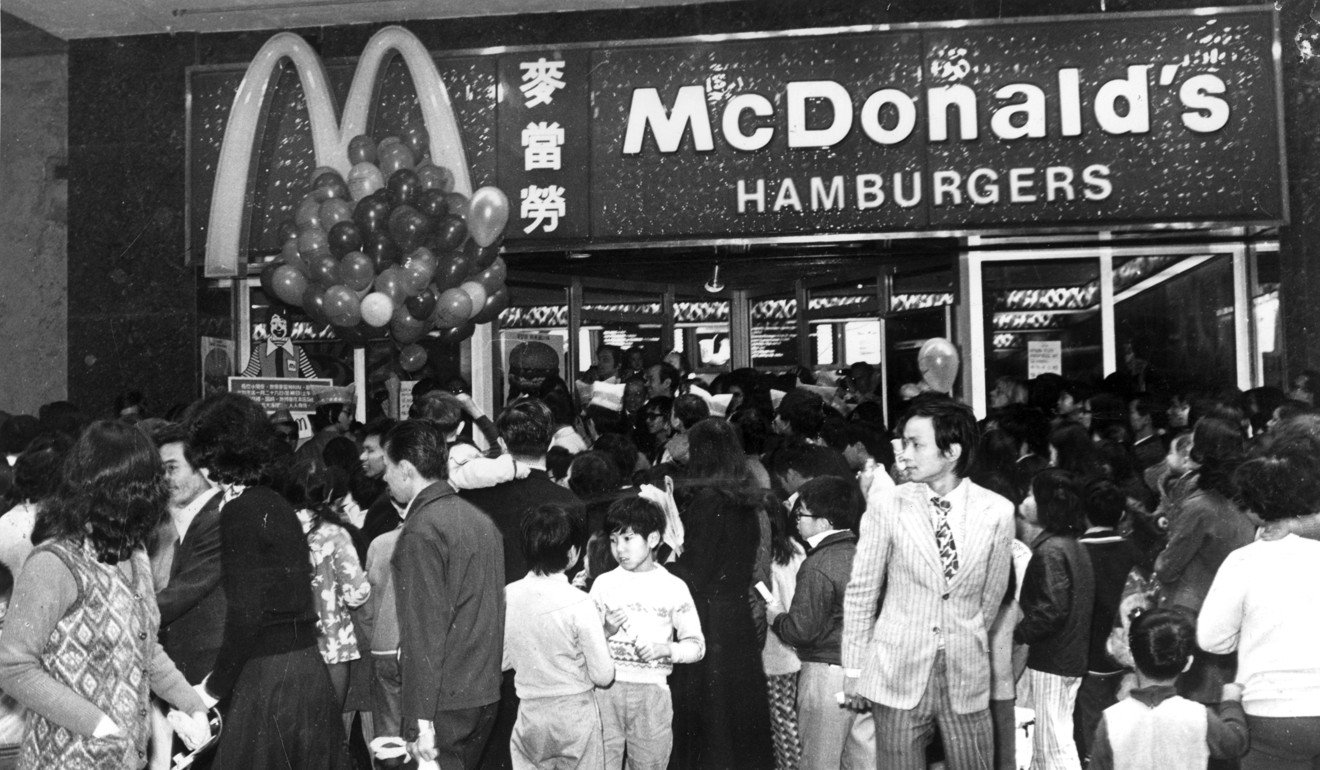
The first McDonald’s in Hong Kong opened in 1975 on Paterson Street in Causeway Bay.
Back in 1975, when McDonald’s opened its first store in Hong Kong, the popularity of McProducts in the then British colony created a phenomenon one local newspaper described as “Big Mac” fever. The fervour spread to Shenzhen, where McDonald’s made its debut in 1990. Media reports showed hundreds of Chinese queuing up outside McDonald’s first store on mainland China, and in the first three hours of its opening day, a week’s supply of products had sold out.
According to Yan Yunxiang, a professor at the University of California who studied the company’s operations in China in the 1990s, McDonald’s was so popular some parents thought the Big Mac contained a hidden ingredient luring their children to this exotic food.
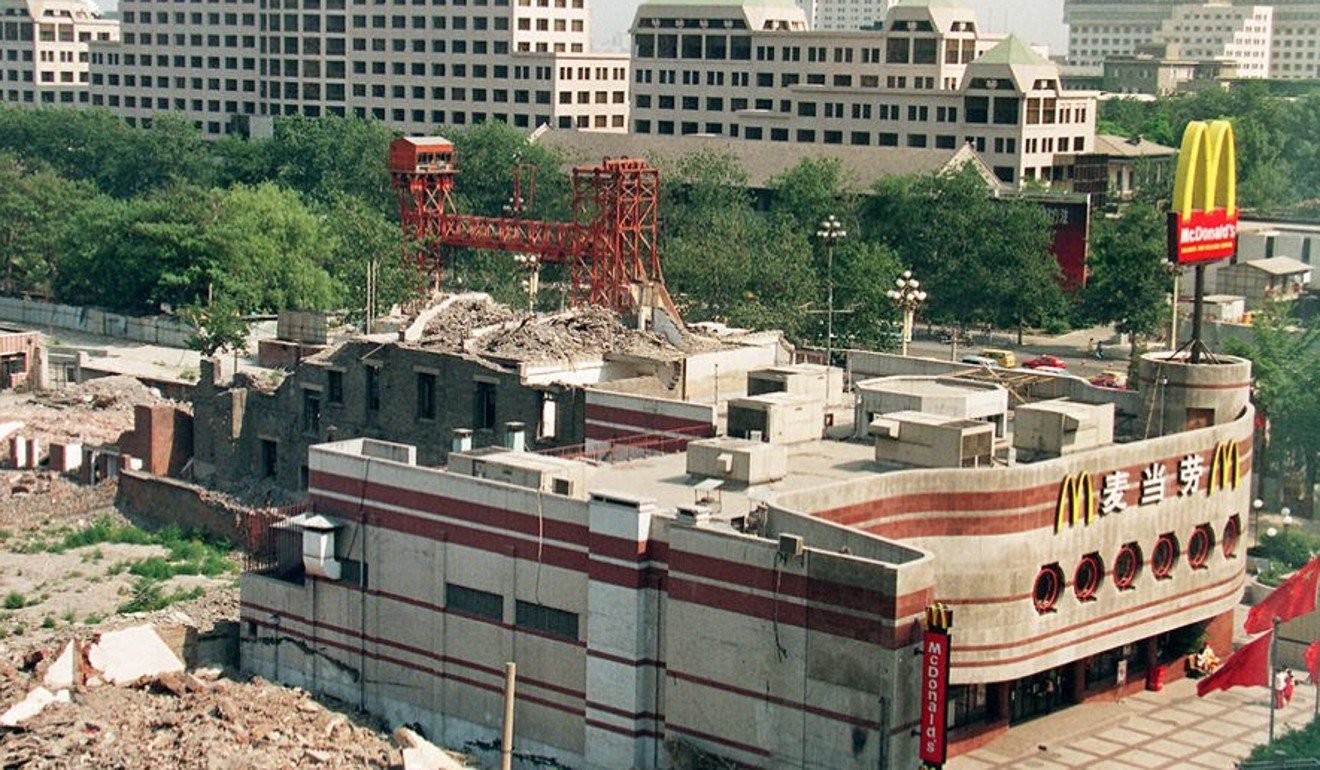
And it was not just the children who had an appetite for it. When the first McDonald’s outlet arrived in Beijing in 1992, 82-year-old Wang Yonglu was one of the first customers. Munching on a hamburger, Wang explained to the United Press International: “I am just a retired proletarian. What chance do I have to go to the United States? This way, I can spend only 10 yuan (US$1.75) to see what America is like.”
Beijing’s first McDonald’s opened in Wangfujing in 1992.
Fast forward to the 21st century, the landscape in China is somewhat different. In 2016 alone, roughly 122 million Chinese – equivalent to the population of France, Spain and Denmark combined – went abroad, according to Beijing-based think tank China Tourism Academy.
“McDonald’s has lost that position because Chinese consumers are getting more sophisticated,” Shaun Rein, managing director for Shanghai market consultancy CMR China, said. “If they want Western culture and Western food, they can go to America.”
Zhang Yue, a 34-year-old marketing specialist in Chongqing, knows this well. When McDonald’s entered her hometown in southwestern China in the early 2000s, Zhang happily stood in line as she loved its “spotless dining environment.”
But now, she rarely goes. “There are so many good restaurants out there.”
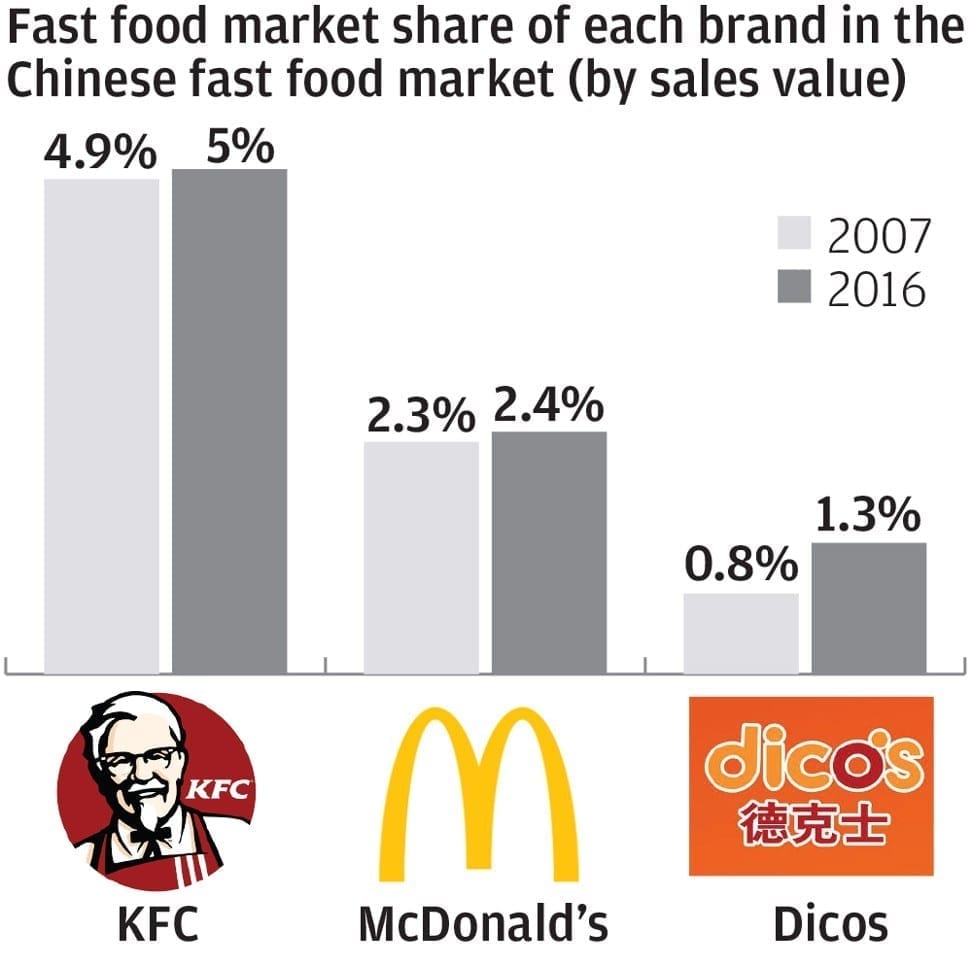
In recent years, a growing number of Western brands have flocked to China, hoping for a bite of the world’s biggest consumer market. Starbucks has opened 2,600 stores, and plans to add a coffee shop a day for the next five years. Meanwhile, home-grown food firms are catching up. Dicos, China’s third-largest fast food chain by retail value, has almost as many outlets as McDonald’s.
The boom of delivery businesses has made getting fed as simple as tapping a smartphone. Last year, at least 7.5 million hungry mouths a day were sated this way, according to a government report. That, in turn, has hampered the business for chains such as McDonald’s.
To lure in more diners, McDonald’s China has localised its menu. Currently, nNearly a quarter of items in its breakfast menu is Chinese food, including congee and soy milk.
To lure in more diners, McDonald’s China has localised its menu. Nearly a quarter of its breakfast menu is Chinese food, including congee and soy milk. Earlier this year, the American food chain also sold most of its business in China and Hong Kong to a Chinese consortium for more than US$2 billion. With the help of its new partner, McDonald’s said it will increase the number of Chinese outlets from 2,500 to 4,500 by 2022, with most of the new stores in smaller cities.
“When I studied McDonald’s in the early 1990s, I was told by management the strategy was to stick to the original American menu, not to apply McDonald’s franchise model in Beijing, and not to offer breakfast,” recalled Yan, the university professor. “It looks like the company has done everything now that it said it would not do in the early 1990s … either proactively to go [to] the next level or reactively to meet new challenges.”
The name tweak came after McDonald’s completed its China sale. A spokeswoman said it hasn’t affected the business in China and the company is happy Chinese diners no longer view it as an upscale brand. “After all, we never meant to be a five-star restaurant; McDonald’s is created to serve everyone,” she said.
China’s propaganda authority also had its say. The Beijing-based Guangming Daily, a newspaper backed by the Publicity Department of the Chinese Communist Party, wrote in a commentary last week: “Foreign brands have become ‘rustic’ [as] we Chinese have become more international.”
Some 2,000 quick service outlets to open by 2022 in small cities
McDonald’s Corp, the global fast-food chain that has forged a new partnership in China last month, will expand faster by opening 2,000 new restaurants in the next five years.
They will be set up mostly in third-and fourth-tier cities with a focus on take-aways and digitalized services.
The company said it will increase its expansion pace from about 250 new outlets this year to 500 per year from 2022 onward.
It did not disclose other details like the scale of new investments that would ensue.
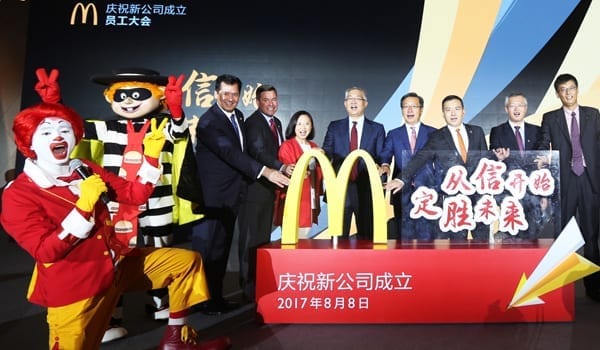
The new partnership, jointly established by CITIC Ltd, CITIC Capital, Carlyle Capital and McDonald’s, paid $2.08 billion for the US-based fast food chain’s business in the Chinese mainland and Hong Kong.
The deal received regulatory approval and was completed on July 31.
The new company will become McDonald’s largest franchisee outside of the United States.
CITIC Ltd and CITIC Capital together hold a majority 52 percent stake in the new company, while Carlyle Capital will hold 28 percent, and McDonald’s 20 percent.
Currently, McDonald’s operates and manages 2,500 restaurants in the Chinese mainland, including 600 franchises, and 240 restaurants in Hong Kong.
The new company will manage all the 2,000 new restaurants directly.
Despite McDonald’s global dominance, KFC, owned by Yum China, has bigger presence in the Chinese quick service restaurant. Yum China runs more than 5,000 KFC restaurants in over 1,100 cities and counties.
KFC’s wide presence in China appears to have bolstered the confidence of McDonald’s investors in the new expansion plan, industry insiders said.
The new partnership of McDonald’s aims to achieve double-digit sales growth annually in the next five years.
The goal includes delivery coverage of 3,375 restaurants or over 75 percent of the total.
“China will soon become our largest market outside of the United States,” said Steve Easterbrook, McDonald’s president and CEO.
“The mainland and Hong Kong are leading the global system in capturing new consumer trends such as delivery and digitalization and it is driving strong performance and growth momentum.”
Zhang Yichen, the new chairman of McDonald’s China, said restaurant ownership at the local level will foster entrepreneurial spirit within the company.
For example, considering the strong demand for takeout food and the population density in China, Zhang emailed Easterbrook regarding the need to develop a customized software system for the Chinese market.
The latter dispatched McDonald’s global IT team to support the China business. Now, the take away operation in China tops the global chain’s comparable systems across markets.
Zhang said CITIC has more than 1,400 bank branches in China. Besides, CITIC and Carlyle’s extensive resources and market expertise in real estate, supply chains, retail, consumer goods and technology, coupled with the global quality standards and branding of McDonald’s, will prove to be a winning formula.
Jason Yu, general manager of Kantar Worldpanel China, a firm that researches shopper behavior, said, “CITIC operates many branches in third-and fourth-tier cities, and they understand the local market, hence will be able to help McDonald’s to choose appropriate sites for new restaurants and also provide useful real estate information.”
In November, credit ratings agency Fitch warned that the breakfast-driven rebound the chain is experiencing won’t last forever. While that prediction still may prove correct someday, Fitch can’t claim victory just yet: McDonald’s reported better-than-expected first quarter same-store sales Tuesday, thanks in no small part to a continued boost from the most important meal of the day.
McDonald’s reported Tuesday that its global same-store sales increased 4% during its first fiscal quarter of 2017. “There’s a sense of urgency across the business as we take actions to retain existing customers, regain lapsed customers and convert casual customers to committed customers,” McDonald’s president and CEO Steve Easterbrook said in a statement Tuesday morning.
The growth in same-store sales didn’t completely translate to gangbuster top-line sales, with first quarter revenue ticking down 4% to $5.68 billion (a figure that nonetheless managed to come in ahead of the $5.5 billion Wall Street consensus). McDonald’s explained the dip by pointing to the refranchising effort that is a part of its broader turnaround plan, and the costs associated with that effort.
Net income for the quarter, meanwhile, grew 8% to $1.2 billion, resulting in earnings of $1.47 per share — a figure that came in well ahead of the Street’s $1.33 per-share consensus.
“Our efforts to build a better McDonald’s are yielding meaningful results with continued positive momentum and a strong start to 2017 that includes positive comparable sales across all segments, higher global guest counts and enhanced profitability,” Easterbrook continued. “We’re challenging ourselves to identify and pursue initiatives that can bring the biggest benefit to the most customers in the shortest possible time. I’m confident that we’re on the right path and well-positioned to unlock incremental growth and deliver against our growth plan for 2017 and beyond.”
McDonald’s China is drawing criticism from Hong Kong trade unions, who fear the impact of the new owners on employment conditions.
Despite reassurances from local McDonald’s management – or any evidence at all suggesting changes to labour policies are looming – the fast food giant has come under attack on both sides of the border.
The new business unit taking over the McDonald’s business in China and Hong Kong is jointly owned by state investment group Citic Ltd and US private equity company Carlyle Group. McDonald’s Corporation (US) will maintain a cornerstone minority stake. The new company holds 20-year franchise rights.
In a statement issued this week, the Hong Kong Confederation of Trade Unions (HKCTU) said the change of ownership will put further pressure on pay rates at Hong Kong outlets, where it says many workers earn little more than the minimum wage of HK$32.50 (US$4) per hour.
“In other countries where McDonald’s has sold a large stake of its business, the resulting model has placed enormous pressure on franchisees, which has made it harder for franchise operators to provide adequate pay and conditions for their workers,” HKCTU official Wong Yu Loy said.
“If the buyers in Hong Kong get squeezed by McDonald’s as they have in other countries, workers here may get even less as a result,” Wong said.
Last week, a Chinese labour consultancy Hejun Vanguard Group filed a formal complaint with the mainland’s Ministry of Commerce claiming the move to the new business model may adversely impact its 120,000 workers in China – and McDonald’s customers.
But McDonald’s has rushed to placate concerns saying its franchise models all over the world are based on “mutually beneficial partnerships” and the company “treasures” its employees.
“The level of remuneration of our employees is based on their positions, working experience, expertise, performance, as well as market conditions,” said a spokeswoman.
“McDonald’s strictly abides by Hong Kong labor legislation and the statutory requirements. The current compensation and benefits of McDonald’s Hong Kong will not be affected as a result of bringing in strategic partners.”
The HKCTU, which represents 90 affiliate labour organisations covering 170,000 workers, appears unmoved.
Restructuring has taken its toll on McDonald’s global sales as the company refranchises store networks in Asia.
The US fast food giant reported what one analyst described as a “sombre result” overnight, its fourth quarter sales falling by 1.3 per cent in the US market. However, two-thirds of its sales are achieved outside the US, where the company’s turnaround plan is further advanced.
Global same-store sales rose 2.7 per cent, but overall sales fell by 5 per cent as the company worked towards spinning off its rights in Korea, China, Malaysia and Singapore.
In the UK and Germany, McDonald’s is benefitting from technology upgrades such as self-service kiosks, which are also being installed in Hong Kong. Sales in what McDonald’s describes as its “international lead markets” rose 2.8 percent in the fourth quarter.
Neil Saunders, CEO of Conlumino, said McDonald’s ends its fiscal year on a somber note with figures that put pay to the early optimism which surrounded its turnaround program.
“McDonald’s is now lapping some tougher comparatives, especially in the US where, this time last year, it was reaping the rewards of menu reconfiguration and the introduction of the All Day Breakfast. These changes were supposed to drive a steady and sustainable uplift in spending rather than a one-off spike in sales, but it is increasingly clear that this strategy is not delivering through.”
Saunders says widening the audience in a sustainable way is the key issue for McDonald’s as it enters the new fiscal year.
“This has to be more than about menu change – including the recent introduction of multiple sizes of Big Macs which, in our opinion, does nothing to create step change or to increase real choice. Indeed, it is clear that the menu changes made so far have not completely reinvigorated the brand with younger and more discerning consumer segments, many of whom still shun the chain in favor of what they see as more premium offerings from other players.”
Saunders believes the majority of the growth is at the quality end of the market, a segment where McDonald’s – which is seen as fast, convenient and low priced – still does not squarely play in the US – although it has made strides in some Asian markets, especially Thailand, with its customisable burgers.
“In our view, McDonald’s needs to think more fundamentally and more holistically about how to play in this space. This includes looking at the state of its US restaurants – some of which leave a lot to be desired. It also means being more radical, perhaps opening a new type or brand of restaurant with a more premium proposition. What’s clear is that more fundamental change is needed to transform the US business.”
McDonald’s has reportedly invited bids for a “significant stake” in its McDonald’s Japan unit.
The Wall Street Journal has quoted “people familiar with the matter” saying the company is looking for buyers for up to 33 per cent of the shares, from its nearly 50 per cent stake in the listed Japanese company.
The report said initial bids were due to be lodged this week and that a number of private-equity firms are considering the opportunity.
Last week McDonald’s released terms of its sale of 80 per cent of its China and Hong Kong business, giving 20-year rights to the brand to state-backed Citic Ltd and private equity company Carlyle Group.
The beleaguered Japanese business last February reported its first increase in customer numbers in nearly three years after a tumultuous period in which sales plummeted and the store network was heavily rationalised.
Internal company figures showed footfall at stores open for more than one year rose by more than 10 per cent Japan-wide. Better yet, same-store sales rose by as much as 30 per cent, according to a report by Reuters.
McDonald’s Holdings Co (Japan) has projected a net profit of about 1 billion yen (US$8.47 million) for the year to December 2016 – which would mark its first time out of the red in three years since a food safety scandal relating to expired chicken hit the brand in 2014. In January 2015 sales plunged 38.6 per cent, customer ranks depleted by 28.5 per cent.
In April 2015 the company unveiled a plan to cull its restaurant network and revamp remaining stores after a US$319 million loss.
It also revised its menu, adding salads which has clearly drawn customers back to restaurants.
McDonald’s Korea has become mired in a high-profile dispute with a franchisee.
The local arm of the US restaurant operator terminated the franchise agreement with McDonald’s Mangwon branch on December 1 of last year. According to McDonald’s, the restaurant owner had been failing to fulfill the terms of agreement, including paying the company franchise commissions amounting to a total of about 700 million won ($586,264).
The owner retaliated by claiming he suffered losses from another McDonald’s restaurant opening nearby, refused to pay the overdue amount and shuttered the restaurant on December 4 after firing some 60 employees who were owed 50-million-won ($41,865) in unpaid wages.
This week, former employees and members of the Alba Organization, Korea’s labor union for part-time workers, protested in front of the now-closed Mangwon outlet, affixing signs festooned with angry slogans to the front of the building.
In an official statement, the Alba Organization demanded that McDonald’s advance the overdue wages and severance pay to the former employees, then demand indemnity from the owner. It also requested that the company provide jobs to employees who wish to continue working at McDonald’s.
“For part-timers, wages are essential to survival. We demand that McDonald’s resolve this matter as soon as possible,” said a spokesperson.
McDonald’s Korea responded by saying it was doing its best to help the employees, and claimed to have already hired 19 of the former Mangwon outlet workers at other McDonald’s restaurants.
However, as for unpaid wages, officials said, “we need the work data for the part-timers to pay their overdue wages, but only the owner can access the data,” adding that “trying to access the information without the owner’s consent is a violation of the law.”
McDonald’s Malaysia has decided to ban customers taking products that are not halal-certified into its restaurants.
The fast-food restaurant chain says the measure is necessary to safeguard its own halal status, reports the Malay Mail.
“This is in line with fulfilling requirements of our halal certification,” company official say.
The new policy came to notice after an announcement was made in one of its restaurants that birthday cakes taken onto the premises must have halal certification or logo.
McDonald’s Singapore and Malaysia franchise rights were sold last month to Saudi Arabian company Lionhorn as part of a broader plan by the US company to move away from direct ownership in Asia.