Tag: McDonalds

  • McDonald’s Malaysia ‘not in hurry’ to sell

    McDonald’s Malaysia ‘not in hurry’ to sell

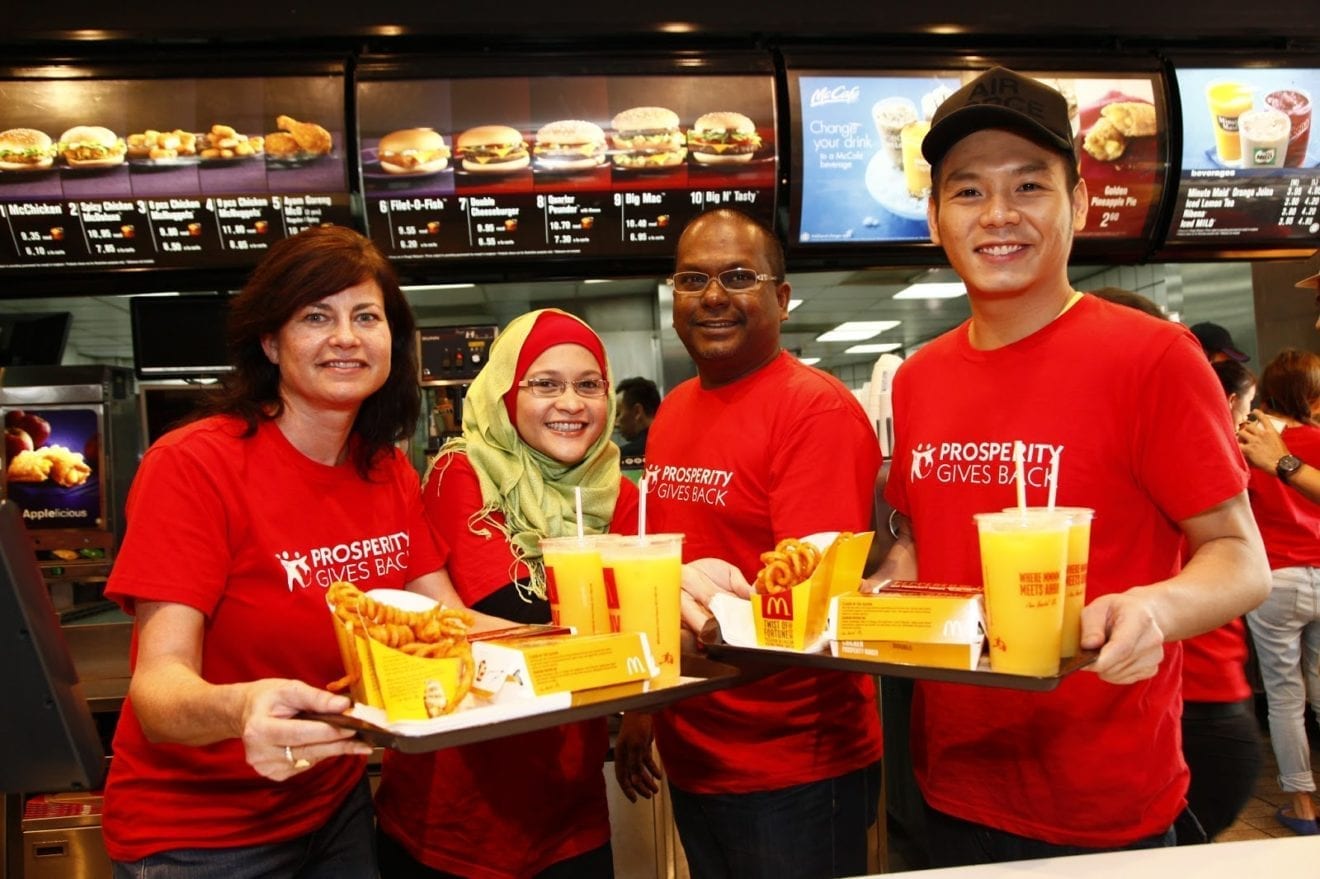
    Despite shortlisting several bidders for the McDonald’s Singapore and McDonald’s Malaysia franchise rights, Malaysian subsidiary Golden Arches Restaurants says it is not in a hurry to sell.

    MD Azmir Jaafar says the deal is being discussed with the shortlisted bidders, but no time frame has been set to complete the transaction.

    “We want to find the right partner who understands the local market and can ensure continuity of McDonald’s value and tradition, as well as be backed by strong capital.”

    He says it has always been the group’s idea to sell the franchise rights to a local partner, which would be more efficient than management by a corporate entity.

    McDonald’s Corp announced a revamp of its ownership models throughout Asia in July, including plans to offload its China, Hong Kong, Malaysia, Singapore and South Korea master franchises.

    CEO Steve Easterbrook’s plan covers about 4000 restaurants with an ultimate goal of having at least 95 per cent of the group’s restaurants franchised.

    Meanwhile, Azmir says that as the Malaysian deal is a business transaction “we will ensure the valuation is done properly”.

    “Still potential”

    There are 260 McDonald’s restaurants in Malaysia, with Golden Arches managing 200 and the rest in the hands of a third party. Though Malaysia has a population of only about 30 million people, which is relatively smaller than China and Indonesia, Azmir still sees huge potential in the market.

    “There are still many underserved areas,” he says. “As the government is improving the infrastructure in Sabah and Sarawak, I think we can expand our footprint into Kota Kinabalu and Kuching and other cities.”

    Azmir says the company intends to open 30 stores in the Klang Valley, Johor, Melaka and Penang as well as Sabah and Sarawak in the next three years. Five to seven new stores are targeted for this year, with one in Presint 2, Putrajaya, and another in Chukai, Terengganu, already open.

    “Our expansion plan is focussed on stand-alone stores as this model works very well, especially in terms of accessibility and convenience. Our ultimate goal is to have 500 stores in the country.”

    Azmir says the company also intends to renovate and remodel up to 30 outlets, each to cost about RM1 million (US$241,700). They have been open for nearly 30 years and will also have their technology upgraded.

    Combined, McDonald’s Singapore and McDonald’s Malaysia have enjoyed record sales in the past few months and is still targeting higher double-digit growth this year.

    Even following the introduction of the goods and services tax in Malaysia in April last year, Azmir says the company raised its selling prices by only about 1 per cent to offset the higher raw-material cost.
    He believes McDonald’s has captured up to 42 per cent market share in the Malaysian fast-food market.
  • McDonald’s China Stores Could Fetch $2 Billion

    McDonald’s China Stores Could Fetch $2 Billion

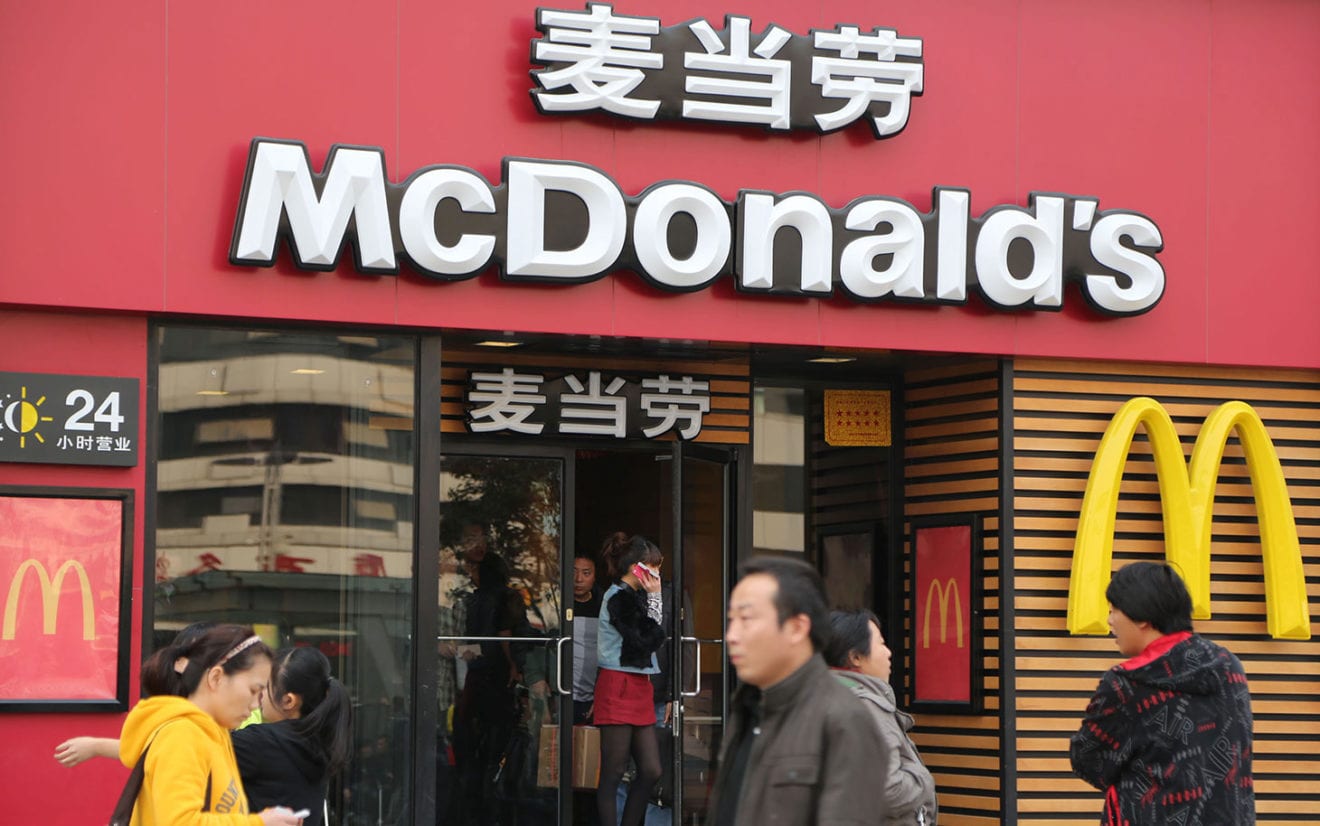
    McDonald’s Corp. Chief Executive Steve Easterbrook, aiming to slim down the Golden Arches and boost profit, has turned to the market where he can do something big, fast: China.

    The Oak Brook, Ill., chain is looking to cut a deal to turn its 2,200-store empire in China—65% of which it owns and operates—into a cash machine through all-out franchising. The move, for which a partner could be determined before the end of the year, is expected to fetch between $1.5 billion and $2 billion up front from investors, people familiar with the matter said.

    McDonald’s would also rake in an estimated 5% to 7% of sales for the 20-year life of the deal. It would keep a minority stake in these far-flung stores, while slashing its operational costs and preserving capital.

    The timing of the initiative also reflects the maturing of the fast-food business in China, where McDonald’s and Yum Brands Inc.—owner of Kentucky Fried Chicken and Pizza Hut—have operated for a quarter-century.

    As big consumer chains move from the familiar streets of Beijing, Shanghai, Guangzhou and other metropolises to smaller cities, they need Chinese partners with knowledge of the country’s real estate and market demographics to know where to put new stores and how to supply them.

    “In the lower-tier cities, we want to accelerate, and a local partner would have more local wisdom and more local resources,” Phyllis Cheung, chief executive of McDonald’s China, said in an interview. “The whole idea of franchising is that you have more flexibility and speed to market—and are more able to answer to consumer needs.”

    There appears to be a healthy appetite for the deal. A clutch of at least six bidders has shown interest in a McDonald’s China franchising deal, including U.S. private-equity giantsCarlyle Group LP, TPG and Bain Capital LLC, according to people familiar with the situation.

    The three private-equity firms have teamed up with local Chinese partners, such as CiticLtd. and Wumart Stores Inc., who know local market conditions. McDonald’s is also looking to cut a similar deal with outside investors for its South Korea stores.

    In China and Hong Kong, McDonald’s is asking its potential partner to take over its more than 1,400 company-owned restaurants and build 1,300 new stores. It still has room to grow in China, the only major market where the number of Kentucky Fried Chicken stores—5,000 and counting—outstrips the number of McDonald’s stores.

    The winner will operate in a country where the novelty of burgers, fries and shakes has long since faded. It will need to find new ways to satisfy Chinese consumers demanding healthier, more upscale and personalized alternatives.

    Bessie Wang, 33 years old, began eating at McDonald’s in grade school soon after the fast-food chain entered China 26 years ago, becoming a fan of the company’s fried-chicken sandwiches.

    On a recent weekday, Ms. Wang was dining on a spicy chicken sandwich at the McDonald’s on Beijing’s Wangfujing shopping street. But her visits have declined.

    “Taste isn’t the issue; it’s health reasons,” said Ms. Wang, an office administrator. “I don’t need to go as often anymore because other restaurants offer fried-chicken dishes.”

    Sales from established McDonald’s stores in China have bounced back from a supplier issue that led to shortages of hamburgers and chicken at some restaurants in 2014. Same-store McDonald’s sales in the country shrank for four consecutive quarters before they began recovering in the middle of last year, according to figures provided on the company’s earnings calls.

    And competition is rising. Dicos, a Taiwanese-owned chain, for example, offers chicken sandwiches at more than 2,000 restaurants in China, matching the scale of McDonald’s. Another growing Chinese fast-food chain, known as Real Kung Fu, sports a Bruce Lee logo, offering bowls of Chinese noodles with beef and pork.

    The growing competition, Ms. Cheung said, is one reason McDonald’s is looking for a Chinese partner with a “deep understanding” of China’s market, rather than one that can simply bankroll new stores.

    Yum announced a similar move last year to spin off its KFC and Pizza Hut operations in China and maintain a foothold in the country through royalty payments.

    For companies such as McDonald’s and Yum, moving toward a franchise-only model in China makes sense now because the market has matured to the point where there are more people with experience running fast-food chains and fast-casual restaurants, according to Ben Cavender, director at China Market Research Group.

    “There’s a stronger talent pool, and they have the capability to operate a franchise and operate it well,” he said. “Brands are also clamoring to try to grow into new markets, and they might not be able to do it quickly by themselves, and they need help.”

  • McDonald’s Philippines in massive expansion plan

    McDonald’s Philippines in massive expansion plan

    The McDonald’s Philippines network is set to nearly double by 2020.

    Parent Alliance Global Group (AGI) says it will reach 500 outlets by the end of 2016 – and it plans to open another 400 restaurants between 2017 and 2020.

    The plan was revealed during a briefing of AGI’s broader plan to boost its commercial and retail businesses with a special focus on regions outside Luzon where the pace of economic growth is gaining speed.

    “We have already laid out the foundation and made significant investments across all our business segments, both here and abroad, in order to future-proof our growth,” said Andrew Tan, founder of AIG, during a shareholder briefing.

    The broader AGI retail portfolio will be expanded from 236,000 sqm currently to 633,000 sqm during the next five years, meaning an annual addition of 80,000 sqm, three times the 25,000 sqm added between 2010 and 2015.

    Expanding the McDonald’s store network nationwide will take advantage of a widespread improvement in consumer demand, he said.

    AGI president and COO Kingson U Sian described the township developments of AGI subsidiary Megaworld as “a platform for the conglomerate to take advantage of the government’s thrust to develop the provinces”.

    “These 3000 hectares that we have for 21 townships – 90 per cent of that is actually outside Metro Manila. So, clearly we are already well positioned if government develops or invests or encourages more development outside Metro Manila,” he said.

    “If growth is spurred in Visayas and Mindanao – a sleeping giant – if we can create more interest and infrastructure spending in the south, then that would obviously increase. We believe if we do it properly, maybe from 6-7 per cent we can grow at a faster clip because now we have three engines of growth,” Sian said.

  • Panda Express heading for Japan

    Panda Express heading for Japan

    US Chinese fast-food chain Panda Express, a staple of mall food courts in California, is about to launch in Japan.

    It will be in the hands of I&P Runway Japan, a joint entity set up last year between Panda Express owner Panda Restaurant Group and Chikara no Moto, the restaurant management group behind the tonkotsu ramen chain Ippudo. Originally formed to help Ippudo gain a foothold in the US, the JV is now aiming to open the first Japanese Panda Express before the end of the year.

    Other American fast-food chains such as KFC, Krispy Kreme and McDonald’s have had success in Japan, tweaking their menus to suit local tastes.

  • CJ pulls out of McDonald’s Korea race

    CJ pulls out of McDonald’s Korea race

    CJ Group says it has withdrawn from the bidding process for franchise rights for McDonald’s Korea.

    The Korean multinational gave no reason for its loss of interest.

    McDonald’s US is seeking buyers for 20 year franchise rights for its business in China, Hong Kong and Korea as it moves to a franchise partnership model outside the US.

    CJ Group, whose interests include cinema chains in Asia and the Tous Les Jours bakery chain, said this week it had not entered the latest round of bidding for the business.

    That leaves a consortium including Maeil Dairy Industry and another group with KG Group and NHN Entertainment Corp as the last two potential buyers on the shortlist.

    McDonald’s hopes to earn about US$280 million from the Korean master franchise rights.

  • China’s retailer files bid for McDonald’s China operations

    China’s retailer files bid for McDonald’s China operations

    Beijing-based retail giant WuMart has filed a bid to take over McDonald’s operations in both the mainland and Hong Kong, according to a report from Caixin.com.

    Someone familiar with the case revealed that Wumart’s bid is being backed by TPG capital, one of the largest private equity investment firms globally.

    WuMart is said to be one of a number of Chinese-based companies looking to take over the McDonald’s operations.

    A source says other participants who vie for the bid include a consortium joined by investment corporation CITIC Group and Carlyle Group and Beijing Capital Agribusiness Group.

    The case is among a series of similar bids coming after McDonald’s announced earlier this year the sale of their franchise rights for its operations on the Chinese mainland, Hong Kong and South Korea.

    Up till now the participants have declined to comment on the case, according to Caixin.

  • McDonald’s Singapore and Malaysia for sale

    McDonald’s Singapore and Malaysia for sale

    Franchise rights for 20 years for McDonald’s Singapore and Malaysia could fetch S$542.8 million (US$400 million).

    The rights have been put on the market as part of McDonald’s Corp’s international turnaround plan put in place by new CEO Steve Easterbrook last year. With a US$112 billion market value, the corporation is revamping its ownership models throughout Asia, including plans to offload its China, Hong Kong and South Korea master franchises.

    McDonald’s has adopted a “development licensee model” for Malaysia and Singapore, says a Singapore spokesman. It is negotiating with candidates “committed to helping accelerate growth and innovation in Malaysia and Singapore”.

    McDonald’s owns most of its outlets in Asia, and eventually aims to have 95 per cent of its restaurants in the region under local ownership.

    Singapore has more than 120 McDonald’s restaurants with about 9000 employees, while in
    Malaysia there are more than 250 restaurants.

  • Pokemon Go promotion backfires

    Pokemon Go promotion backfires

    Involving a celebrity with the Pokemon Go obsession may seem like a golden marketing opportunity, but for one Hong Kong shopping mall the combination has been a screw-up.

    Chrissie ChauWith the game not yet officially available in Hong Kong, actress Chrissie Chau claimed on her Facebook site that she would be the first to catch the augmented-reality (AR) game fever. With the heading “Exclusive Pokemon Go Real Live”, she announced she would do a live stream on Facebook.

    However, it turned out to be a video of Chau dressed in a Pokemon costume, pretending to be Pikachu. Later, some net users discovered that it was a promotional event Chau was working on with a shopping mall.

    This prompted an angry reaction from more than 10,000 internet users in Hong Kong, disappointed that it was just a gimmick and criticising the marketing stunt. Many used Facebook’s “angry” expression, and many left comments describing the the event as a “prank” and even a “PR disaster”.

    Meanwhile, McDonald’s Japan will be the first paying sponsor of Pokemon Go as the game launches there. It will be the first advertiser to test out Pokemon Go’s new sponsored location feature, reports Marketing magazine.

    With the fast-food chain confirming the collaboration, the game in which players use smartphones to search for virtual creatures layered over images of the real world is officially stepping into advertising. In return, McDonald’s Japan will host more than 3000 of its outlets as “gyms” or battle sites for players.

  • Apple Pay Launched in Hong Kong With American Express, Mastercard Support

    Apple Pay Launched in Hong Kong With American Express, Mastercard Support

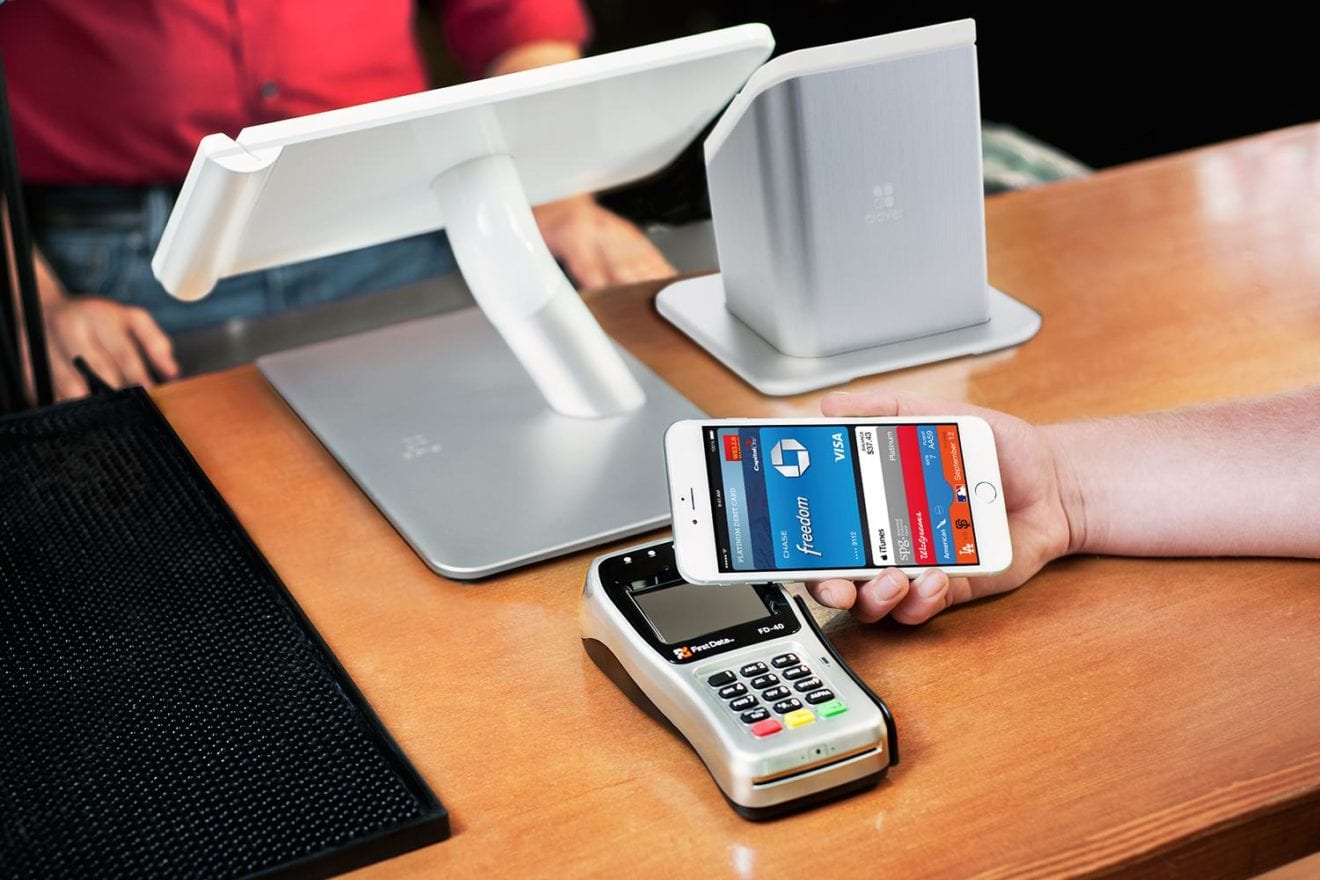
    Apple Pay has arrived in Hong Kong, allowing the Apple users to use the company’s mobile payment system.

    Apple’s payment system has been rolled out to American Express, Visa and MasterCard cardholders in Hong Kong. Other participating banks are Standard Chartered, DBS, Hang Seng Bank, HSBC, Bank of East Asia, and BOC Credit Card, a subsidiary of Bank of China (Hong Kong). Apple’s website notes that the system would be compatibile with BEA and HKT touchless payment network Tap & Go in the future, as reported.

    Apple users can add their cards to Apple Pay by just tapping “Add Credit or Debit Card” option in the Wallet app on devices running the iOS 8.1 or higher. Hong Kong’s Apple Pay works fine with the iPhone 6, iPhone 6s, iPhone 6 Plus, iPhone 6s Plus, and iPhone SE. It is also available on the iPad Air 2, iPad mini 3, iPad mini 4, and both iPad Pro models. However, iPhone 5, 5c, and 5s users need an Apple Watch to make Apple Pay work.

    Greg Hingston, the head of retail banking and wealth management at HSBC in Hong Kong, said the number of HSBC’s active mobile banking customers has increased by almost 50 percent over the past three years, according to the South China Morning Post.

    “We expect this to rise as customers continue to migrate to digital banking and as we roll out innovative offerings such as Apple Pay. Digital is an integral part of our strategy as technology and mobility are changing the way our customers access information, products and services,” Hingston said.

    In Hong Kong, Apple Pay can be used where contactless payment is accepted and at a wide range of retail partners, including 7-Eleven, KFC, McDonald’s, Pizza Hut, Pacific Coffee, Su-Pa-De-Pa, Taste, ThreeSixty, Uny, and more.

    The Cupertino-based company’s payment system has also debuted in France, which is compatible with Mastercard and Visa credit and debit cards issued by Carrefour Banque and Ticket Restaurant as well as Banque Populaire and Caisse d’Epargne, an assemblage that includes France’s second largest banking group.

    Apple Pay is now available in nine countries including the United States, the United Kingdom, China, Australia, Canada, Switzerland, and Singapore. In addition, Apple plans to launch Apple Pay to Spain through a partnership with American Express later this year.

  • McDonald’s Philippines targets 900 stores

    McDonald’s Philippines targets 900 stores

    Local franchisee, Golden Arches Development, expects McDonald’s Philippines to reach 500 stores in 2016 and 900 in coming years.

    Golden Arches VP for marketing Margot Torres said in an interview, “We are going to hit the 500 stores before the end of the year because we had 494 as of June,.”

    He added that plans would depend on the opening of shopping malls in the country.

    Due to construction delays, the 500 store count originally set in 2015 was moved to mid-2016.

    Torres said Golden Arches, which opens 40 stores every year, has seen strong sales for  McDonald’s since the second half of 2015, when celebrities Maine Mendoza and Alden Richard endorsed the brand.

    “There is still room for growth in Metro Manila but [there] is also huge potential for expansion outside Metro Manila, particularly in the Visayas and Mindanao,” Torres said.

    With convenience stores’ affordable meals posing a threat to the fast-food industry, McDonald’s is boosting its game by focusing on its online delivery.

  • Bidding disappoints McDonald’s Corporation

    Bidding disappoints McDonald’s Corporation

    McDonald’s Corporation says it is struggling to attract the calibre of bidders it envisioned when it put its China and Hong Kong franchise up for tender.

    The restaurant group is offering a 20-year master franchisees for its markets in China, Hong Kong and South Korea. Bidding has gone into its second round and predictions are the deal could be worth US$2 billion to $3 billion.

    Conditions include McDonald’s keeping management intact for two years, with a limitation on taking the franchise public. Other restrictions have reportedly discouraged many private-equity firms from participating in the bidding.

    Global buyout firms such as Bain Capital, Carlyle Group and TPG Capital have put up their hands with the aim of teaming up with some of the Chinese strategic bidders.

    Bidders asked to submit for the second round of the tender include dairy company Beijing Sanyuan Foods, Beijing Tourism Group, ChemChina, state-owned China Cinda Asset Management and Sanpower.

    McDonald’s share price has surged more than 23 per cent since CEO Steve Easterbrook launched a turnaround effort. The plan for Asia comprises one or more local partners taking over the China and Hong Kong franchise of 2800 stores for 20 years while paying royalties to the corporation.

    However, many investors are anxious following the food scandal that hit McDonald’s sales in 2014, reports BFN.

    Meanwhile, McDonald’s last year announced plans to sell its business in Taiwan plus a substantial ownership stake in Japan, but as yet investors have yet to be secured. “We are making solid progress as we look for long-term strategic partners with local relevance who have complementary skills and expertise,” says a company spokesperson.

  • McDonald’s Hong Kong opens toy museum

    McDonald’s Hong Kong opens toy museum

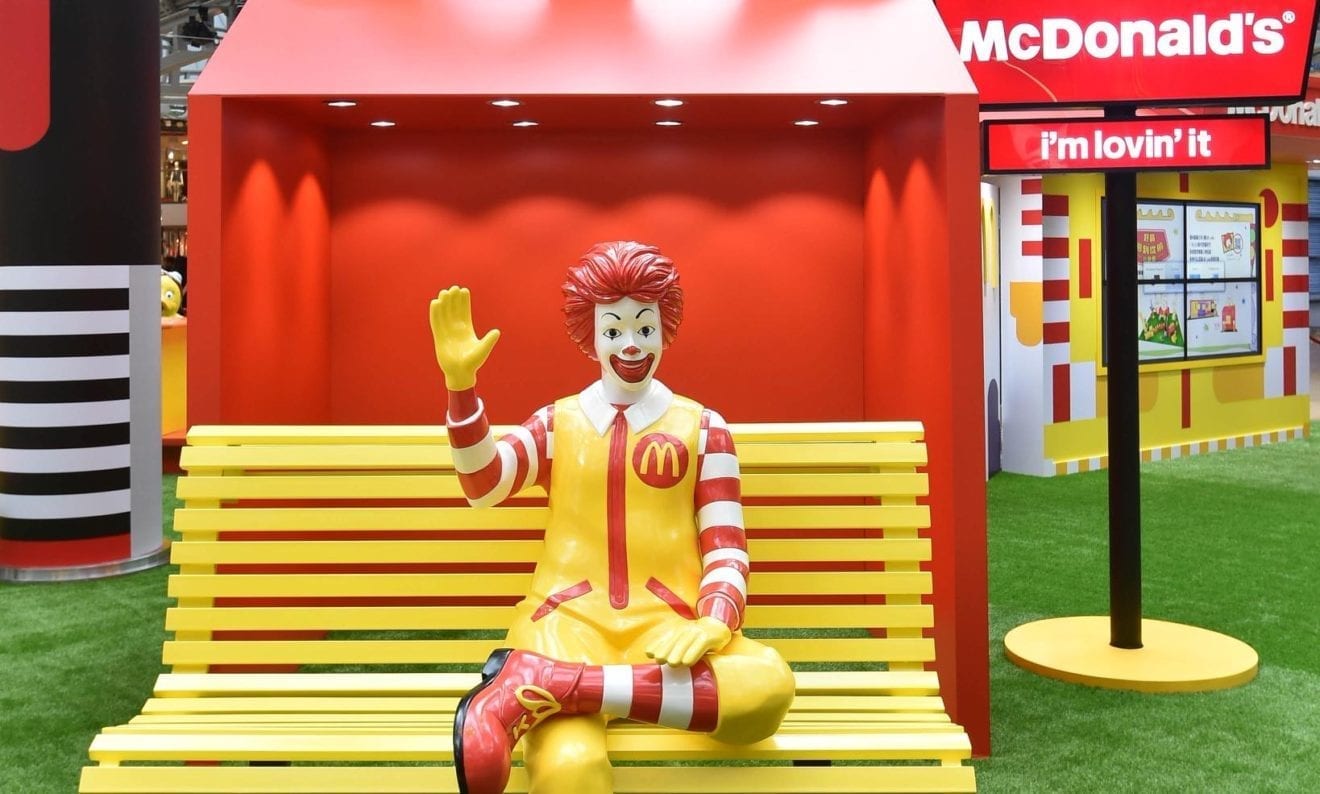
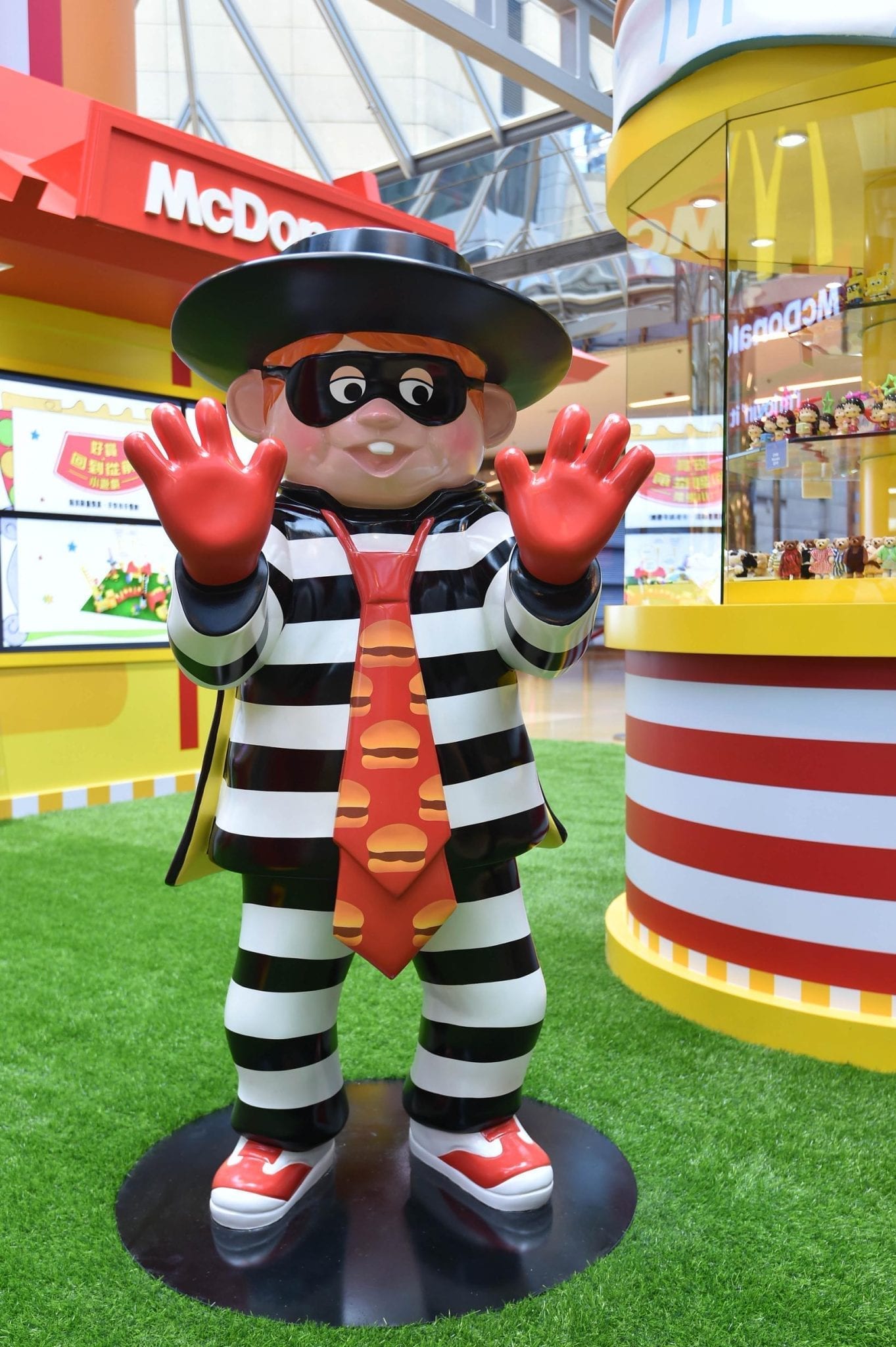
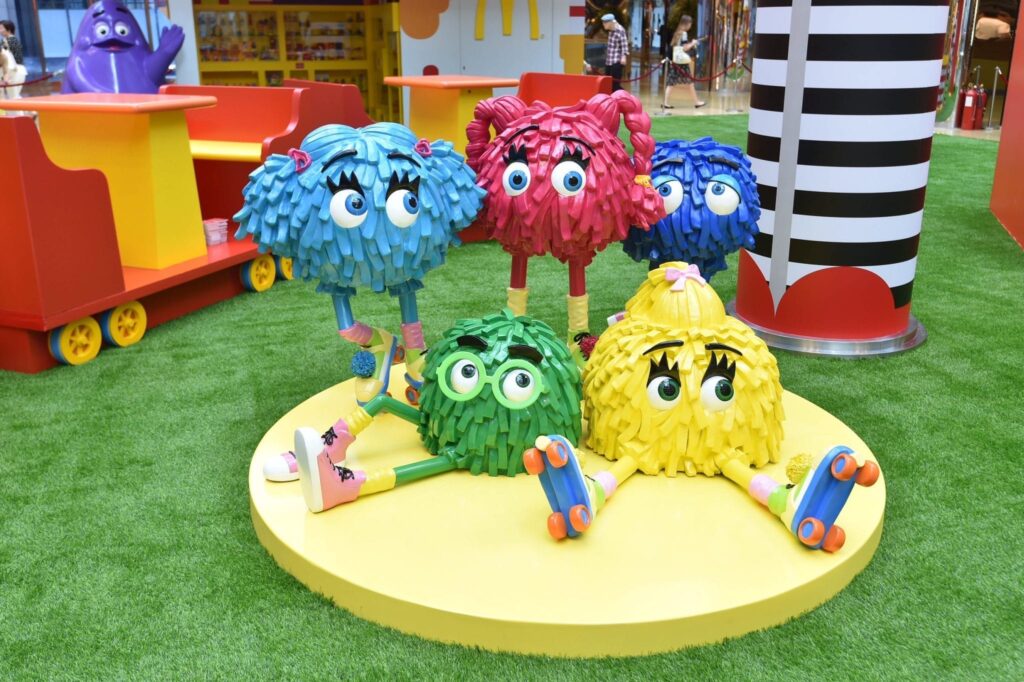
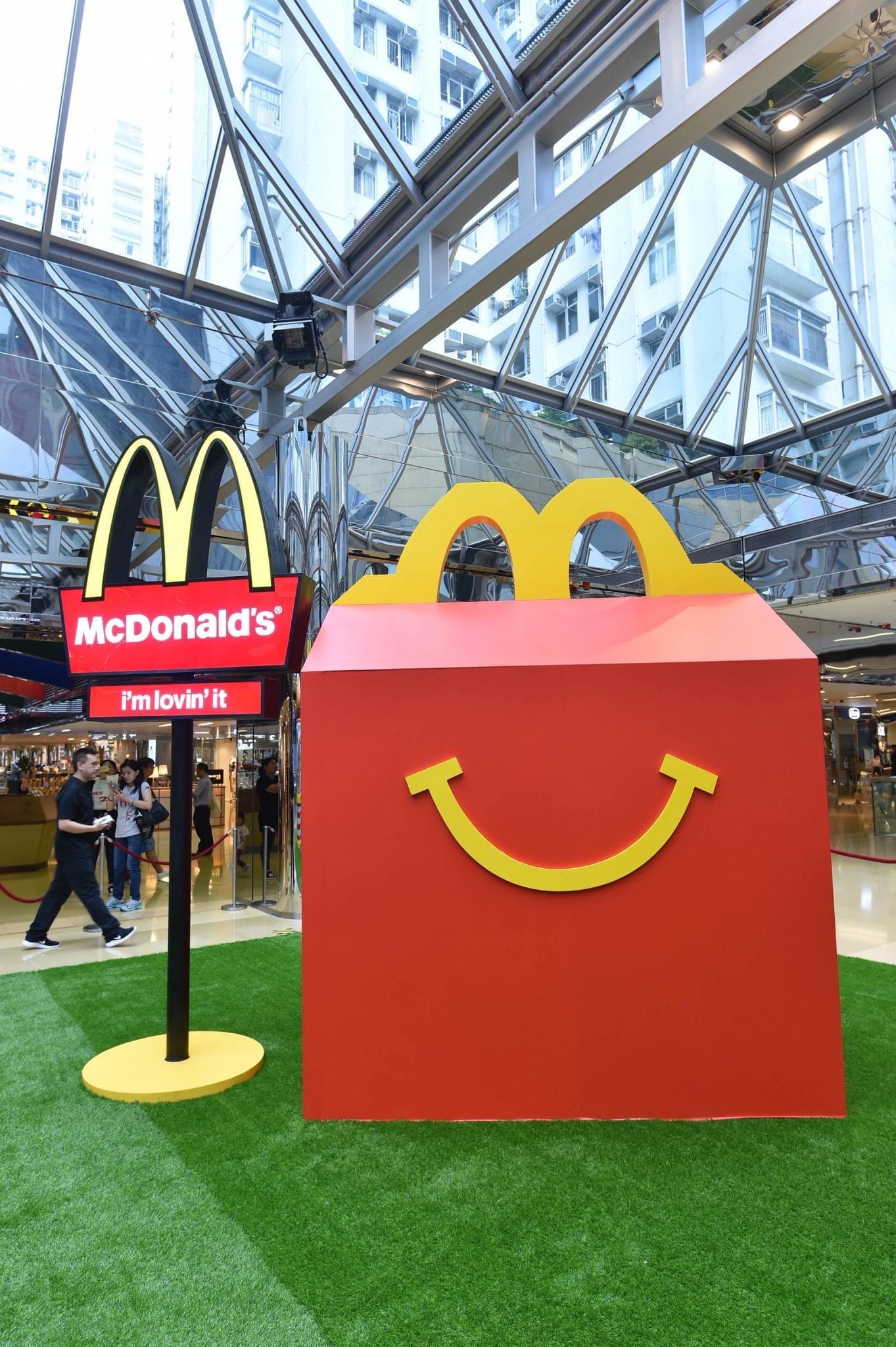
    In partnership with creative agency DDB and Tribal Hong Kong, McDonald’s Hong Kong has opened a concept store in Taikoo Shing.

    Featuring more than 1000 of the family restaurant’s toys dating back to 1980, the interactive McDonald’s Toy Museum at City Plaza was opened after a four-day campaign in which DDB and Tribal Hong Kong recreated McDonald’s advertisements from the past.

    Covering TV, newspaper, magazine, outdoor, radio and online placements, the campaign kicked off with McDonald’s iconic “fish symphony” TV spot, coincidentally created by DDB Group Hong Kong’s chief creative officer/MD Carol Lam in 1997.

    toy-museum-1

    toy-museum-3 toy-museum-2

    “Imagine paging through a glossy magazine and coming across an old McDonald’s ad, or hearing a crackly old radio spot on your favourite station,” says Lam. “The magic of our campaign lies in this stark contrast between old and new, creating a stolen moment for customers to reflect on a simpler time.”

    DDB Group Hong Kong’s digital arm Tribal drove the reach of the campaign through a mix of modern media channels including social media with the help of key opinion leaders, encouraging people to share their McDonald’s memories.

    The museum itself was brought to life by event agency Amaz, while Tribal’s QR code activation offered customers the chance to win prizes.

    “The retro campaign and Toy Museum give us the chance to honour our history while looking toward our bright future,” says McDonald’s Hong Kong director of marketing Esther Chung.


  • Gourmet offerings at McDonald’s Singapore flagship

    Gourmet offerings at McDonald’s Singapore flagship

    Sandwiches made with light rye bread, a salad bar and desserts like gula melaka and coconut Swiss roll are among gourmet food options to be offered at McDonald’s Singapore’s new flagship restaurant at East Coast Park in Singapore, which will seat more than 300 diners.

    Opening on July 2, the 8439 sqft (784 sqm) McDonald’s Marine Cove will be a test bed for the chain, says McDonald’s Singapore MD Robert Hunghanfoo. New products will be trialled before being implemented in other outlets in Singapore.

    A recreational and dining enclave, Marine Cove was home to an iconic McDonald’s branch from 1982 until 2012, when it closed for redevelopment.

    At the salad bar, diners can choose from more than 10 ingredients and sauces to add to three types of salad. A dessert bar features in the outdoor seating area, offering sundaes and ice cream with a selection of 17 toppings.

    Hunghanfoo says the menu and research teams took a year to develop the concept, noting food trends and consumer feedback.

    As well as the usual McDonald’s burgers and fries, there will be a trio of premium burgers.

  • Chains top China restaurant rankings

    Chains top China restaurant rankings

    Chains outperform independent eateries in China restaurant rankings, new research shows.

    A survey by global consulting firm OC&C Strategy Consultants shows that Chinese consumers dine out on average two or three times a week, with Hai Di Lao, Pizza Hut and Little Sheep ranking as their favourite brands.

    Western brands ranking in the top 10 are: McDonald’s (7), TGI Friday’s (8) and KFC (9). Others on the list are South Beauty (4), Shanghai Min (5), Waipojia (6) and Tairyo (10).

    Food quality, wide choice and service quality shows as the three critical factors in restaurant choice, while serving speed, convenience and pricing are rated as less important Chinese consumers actively seek out new restaurants and are receptive to new formats and concepts such as theming, healthy lifestyle menus and organic produce, as well as innovative, fusion cuisine.

    According to the report, Serving up a Winner – Establishing a Winning Proposition in China’s Restaurant Landscape, China’s restaurant market is more vibrant than ever, with growth outstripping other major markets despite higher volatility.

    “While other retail segments struggle in the face of ‘the new normal’, restaurants are becoming more innovative and reaping the benefits of the growing middle class,” says OC&C greater China partner Jack Chuang. “The arrival and rapid expansion of international chains in the past few years has increased the competitiveness of the market.”

    He says getting diners through the door of a restaurant is still challenging. “Restaurant staff need to ensure that service is authentic and make creative, personalised decisions to delight guests.”

    Chuang says restaurants should also offer a wide menu range with local flavour.

    The study canvassed 2600 respondents in 21 cities across China, with consumer surveys and restaurant audits in February.

    Founded in 1987, OC&C provides corporate and business strategy, channel, marketing, organisational and change strategy, as well as transactional support services. It has more than 400 consultants in 14 offices globally, including China and India. The greater China practice has offices in Hong Kong and Shanghai.

  • McDonald’s Asia to sell 2800 restaurants

    McDonald’s Asia to sell 2800 restaurants

    McDonald’s Asia is preparing to sell some 2800 restaurants across Asia as it introduces a new business model in its fastest growing major market.

    And Reuters has named frontrunning investors in what looks to be a spin-off business in much the same nature as Yum! Brands is selling off its Chinese KFC, PIzza Hut and Taco Bell operation.

    Early contenders as partners with McDonald’s US include state-backed China Resources and private equity investors Bain Capital, TPG Capital, Baring Private Equity Asia and MBK Partners. China Resources already has street cred in the food sector, operating Pacific Coffee chains in Hong Kong, Macau, Singapore and China.

    McDonald’s is planning to create a new Asian business which would own restaurants as master franchisee, using local market knowledge and capital to expand networks in respective markets.

    Operations in China, Hong Kong, Macau and South Korea would be rolled into the new entity, although it is highly likely separate businesses could be created for each market – one for China, one for Hong Kong-Macau and another for Korea.

    McDonald’s has a stand-alone, listed business in Tokyo which encountered huge market problems several years ago and last year lost US$310 million after a major cull of its network. The company is trying to sell down its stake in that business from 49.99 per cent to 20 per cent.

    Inside Retail Hong Kong expects that McDonald’s Asia would likely be funded by a cashed-up investment partner for about five years before potentially being floated, most likely in Hong Kong.

    A fortnight ago, McDonald’s Chicago-based CEO Steve Easterbrook revealed plans to open 1500 new stores across China, Hong Kong and Korea within five years – 1300 of those in Mainland China. Globally, the company plans for 95 per cent of its restaurants to ultimately be franchised.

    In China’s mainland, McDonald’s already operates some 2200 restaurants – its new target is 3500.

    Easterbrook says strategic partners could “add value and unlock growth potential in key markets” in Asia.

    “This will allow McDonald’s to accelerate our growth and scale faster across diverse markets placing us closer to our customers and the communities we serve,” he said on March 31.

    Reuters quotes sources revealing McDonald’s has engaged Morgan Stanley to run the sale of the restaurants in China, Hong Kong and South Korea, with a formal, public sale process to be launched in mid-May.

    The final business model is subject to negotiations with potential buyers, but McDonald’s expects a one-time franchise payment and ongoing royalties based on sales – the typical industry rate running between 3 per cent and 5 per cent. Capital investment required to roll out new stores would be the responsibility of the franchisee.

    Reuters said McDonald’s declined further comment beyond its March 31 statement from Easterbrook and the private equity companies named, China Resources and Morgan Stanley all also refused to comment.