Tag: messaging

  • Telegram’s new update includes a powerful new feature for group owners

    Telegram’s new update includes a powerful new feature for group owners

    The Telegram messaging app, with its end-to-end encryption and the ability to host group chats of any size, is more popular overseas. According to Staista, at the end of March, it was the 11th most popular messaging app in the states with 2.67 million unique users each month. As of last month, it was the eighth-most popular global messaging app with 200 million monthly active users.

    Telegram announced an update that includes a new feature called Slow Mode. This allows an admin to lengthen the time a group chat member must wait between sending messages. The time period can range from no delay to as long as one hour between comments. Telegram says that it is offering Slow Mode to “make conversations in the group more orderly while raising the value of each individual message.”

    The update also adds Silent Messages. This is how you can send messages on the sly to contacts you know are attending a meeting, a class, or are in a situation where superfluous noise would be looked down on. So to have a message delivered silently, holding the send button will deliver the message without noise, even if the recipient did not enable Do Not Disturb. This feature is also available for group chats.

    Telegram is also giving group owners the ability to set custom titles. This can be done by going to Group Settings and editing the admin’s rights. In addition, videos now have a thumbnail preview and adding a timestamp to the caption will turn that time into a link. Tapping on the link will start the video from that precise moment. Telegram users sharing a YouTube video can also create a timestamp link as well. Animated emoji is now available and the stickers settings have a new toggle for looped playbacks. When toggled off, a sticker will play once and then remain static.

    Android users will notice a new attachment menu with larger thumbnails for photos and videos, making it easier for them to select media they want to share. Swiping up will reveal the entire gallery. And lastly, the new dark mode in iOS can be changed to create different background hues.

    Telegram users should find the update hitting their iOS or Android phone soon. For those who have yet to try Telegram, it can be downloaded from the App Store or Google Play Store.

  • AirAsia Wants Tools to Engage Customers Moving to Messaging Apps

    AirAsia Wants Tools to Engage Customers Moving to Messaging Apps

    Consumers now want to talk to businesses and find resolutions the way they talk to their friends and family, and this is pushing a big transition towards messaging channels, according to Adam Geneave, chief customer happiness officer for the low-cost Asian airline.

    The carrier added support for Tencent’s WeChat in China earlier this year and was seeing significant adoption for the platform, Geneave said in an interview. In fact, the messaging tool since had grown to become AirAsia’s biggest communication channel in the Chinese market, he noted.

    The airline’s engagement with customers through such channels played a key role in its business strategy as they enabled consumer queries to be addressed quickly, he said, and urged technology and other solutions providers to integrate messaging tools into their products.

    According to Geneave, AirAsia currently provides WeChat support via a plugin developed by Salesforce.com, which suite of products had been rolled out over the past year as part of the airline’s overhaul of its customer service infrastructure. These included Salesforce Sales Cloud, Marketing Cloud with Social Studio, Service Cloud, and Community Cloud.

    The deployment enabled AirAsia service agents across eight markets to access a unified view of customer cases from all communication channels, encompassing online, email, live chat, phone, and airport communications.

    With the transition into messaging evolving so rapidly, though, it has been difficult for the airliner and its technology partners to keep pace, Geneave said. For instance, support for Facebook’s WhatsApp still was lacking, he noted.

    “We have been very vocal in wanting such support, including for Line and KakaoTalk,” he said, noting that WhatsApp processed 65 billion messages a day worldwide and there were 1 billion active WeChat users. “The way people are interacting is changing.” He attributed AirAsia’s plans to close all its call centers this year in part as a response to this trend.

    The airline is estimated to fly 100 million passengers this year and 20 million of its service cases each year are facilitated on Salesforce platforms, which currently support more than 22,000 AirAsia employees in nine languages.

    The data that runs through these systems also allow the airline to deliver personalized experiences and facilitate better decision-making.

    Geneave explained that the different datasets were collated onto a single platform and managed at AirAsia’s command center. This was manned by duty managers who would track Salesforce dashboards to identify patterns that could affect its business and monitor tweets as well as other social media messages coming through on Social Studio.

    This provided valuable learnings about its customers and, with these insights, enabled his team to work on projects and improve processes and systems to further enhance customers’ engagement with AirAsia, he said.

    The ability to study the data and identify emerging trends also meant his team could be aware of service outages even before the IT team was alerted of it, he noted, adding that his team also tracked other relevant developments such as airports and other airlines that might and might not compete directly with AirAsia.

    The airline in January also introduced its artificial intelligence-powered (AI) chatbot, named AVA, which could handle eight languages including Bahasa Indonesia, Vietnamese, and Simplified Chinese.

    Geneave said the chatbot had been performing well and handled a significant chunk of queries coming through on its live chat. AVA also was deployed on the airline’s Facebook Messenger platform.

    Apart from operating on a strong knowledge base, he said the chatbot also continued to learn from conversations it had with customers. His team also trained it on a daily basis, he added.

    AVA’s deployment was critical to enable the airline to be more agile in the way it managed its customers, he said, noting that the chatbot could take on a significant volume and allow queries to be handled more quickly.

    Geneave also pointed to the emergence of AI and machine learning technologies as a crucial development as these would further enable AirAsia agents to react more quickly and identify trends that otherwise would have taken hours to analyse.

    Beyond customer services, too, it would give airlines the ability to save fuel – for example, by improving the way it scheduled crew rosters and managed its resources, he said.

  • Android Messages will reportedly become the default messaging app on Samsung phones

    Android Messages will reportedly become the default messaging app on Samsung phones

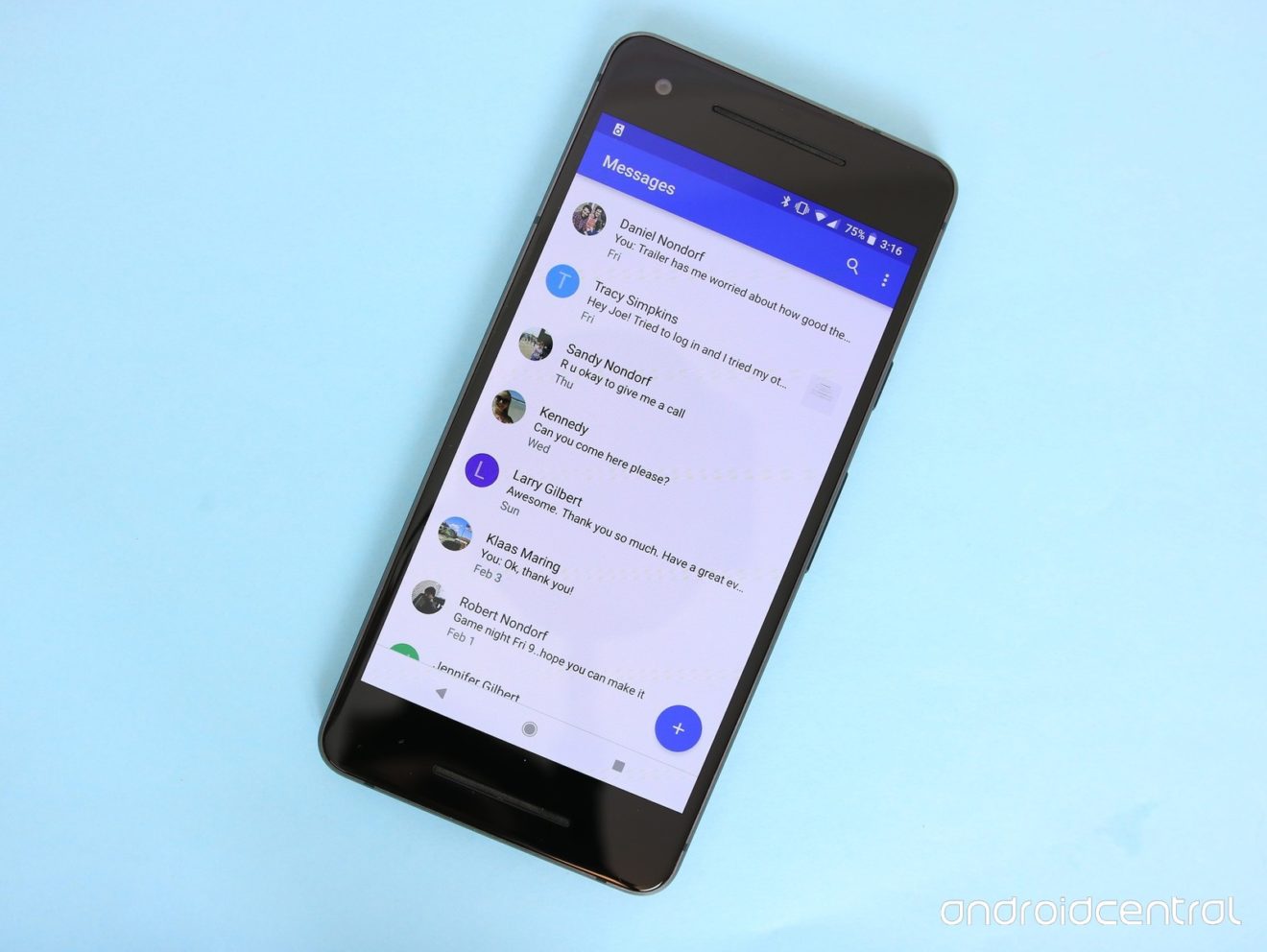
    A Reddit poster who claims to be a Samsung engineer says that the company is thinking about making Android Messages the default messaging app on its phones replacing Samsung’s own messaging app. The Redditor says that this is being done to “to reduce headaches down the road for US devices.” The headache involves creating a universal version of the Rich Communication Services (RCS) messaging platform called RCS Chat in the country. Recently, Google was able to bypass carriers in the U.K. and France in order to complete the rollout of RCS in those two countries. And while the search giant says that it will soon announce more markets where the SMS replacement will be disseminated, it isn’t clear whether the U.S. will be one of them.

    The U.S. has some complications including the fact that some carriers have their own RCS systems. This makes it a complicated task to build a universal platform in the states, according to the person claiming to be a Samsung engineer. With RCS, users will have a much larger character cap than the 160 now available with SMS apps. There also is support for group messages, “read-receipts” that let you know when the recipient has looked at the message you sent, and an alert that tells you when that person is writing a reply. While Google would like RCS to compete against Apple’s Messages app and its encrypted iMessages platform, RCS won’t totally encrypt messages.

    It seems that Google’s best bet to implement universal RCS in the states is to skirt around the carriers. Whether or not Google is considering this end-around is not clear. For those Android users in the states using their carrier’s messaging app or the one that is pre-loaded by their phone’s manufacturer, universal RCS would be a big step forward.

  • Telegram update adds location-based chats

    Telegram update adds location-based chats

    What not as popular in the U.S. as it is overseas, the Telegram messaging app offers end-to-end encryption and no limits on the number of people you can chat with or broadcast to at one time. It’s no wonder that protesters of all types outside of the states love to use Telegram. And today, the company announced some changes that will be found in version 5.8 of the messaging app.

    You’ll notice that all new chats have a new button on the top of the screen that says “Add to Contacts.” This feature will allow you to quickly add to your Telegram contacts list a person who has sent you a message on the platform even without knowing their phone number. Another option also available at your fingertips will let you block someone who has sent you a message. And let’s say you’re at a party and want to add someone who you’ve just met to your contacts list. Going to Contacts > Add People Nearby will allow you to exchange information with another Telegram user as long as they are standing right next to you (and have the same feature open on their phone).

    The People Nearby section allows you to find location-based group chats and even create one. As Telegram notes, “This update opens up a new world of location-based group chats for anything from conferences, to festivals, to stadiums, to campuses, to chatting with people hanging out in the same cafe.” The latest version of the app lets you transfer ownership of a group or channel to another Telegram user and toggle on or off message previews for specific chats using the Notable Exceptions feature.

    Those using Telegram on an iOS device can now open the Appearance page to see what a new theme will look like before they apply them. After installing version 5.8, iOS users can choose which icon they want on the home page from four different options. And Telegram users with the iPhone or iPad can arrange to open chats hands-free using Siri shortcuts.

    The new update just hit the Telegram app on our Pixel, so keep your eyes peeled for version 5.8 rolling out now. Telegram can be found in the App Store for iOS or the Google Play Store for Android.

  • Telegram CEO blames China for cyber attack

    Telegram CEO blames China for cyber attack

    One of the top ten most popular messaging apps in the world is Telegram, available for iOS and Android. Not as widely used in the U.S., the app offers end-to-end encryption and group chats for as many as 200,000 people. The app also can share videos, even those with large file sizes, and documents of any type. A tweet from Telegram CEO Pavel Durov blames China for a cyberattack that hit the Telegram app and affected its subscribers earlier this week.

    Durov says that a large Distributed Denial of Service (DDoS) attack originated from internet addresses inside China. These DDoS attacks sent huge amounts of requests at one time to Telegram, clogging up the app and making it unusable for many subscribers. The executive called it a “powerful,” targeted attack that was related to the protests taking place in Hong Kong. Huge throngs of protestors are complaining about a new law that will allow people in the city to be extradited to China. Durov said that in the past, similarly sized DDoS attacks coincided with protests in Hong Kong,

    Because of the encryption used to hide the content of messages, Telegram is popular among protestors in any country, allowing them to coordinate plans with up to 200,000 people out of the eyeshot of authorities. A DDoS attack on Telegram would prevent the protestors in Hong Kong from making arrangements to gather at a certain place and time.

    The Chinese government denied that it was responsible for the attack. Chinese foreign ministry spokesman Geng Shuang said at a briefing yesterday that he was unaware of the incident.

  • New era for users of Android’s Messages app starts later this month

    New era for users of Android’s Messages app starts later this month

    Instead of continuing to wait for carriers worldwide to get together to support the global rollout of Rich Communication Services (RCS), Google is taking the next generation of Android messaging into its own hands. Starting later this month in the U.K. and France, Android users will be able to opt into Google’s own RCS Chat services. Eventually, this will be offered in more countries later this year, and with Google taking care of this directly; eventually, we could see RCS made available for all Android handsets.

    The platform developed to replace short message service (SMS) on Android phones does away with the 160 character limit on texts and supports group messages. It also will show a user that a text he sent has been read (the so-called “read receipt”) and will show when someone who is part of a chat is in the middle of typing a message. The RCS platform also allows users to engage in a video chat without the necessity of installing a third party app like Duo and supports the sharing of large files.

    What RCS doesn’t have that some other messaging apps do is end-to-end encryption. This is a key security and privacy feature offered on third-party titles available for Android like WhatsApp and Telegram. But Google is working on it and Sanaz Ahari, one of the Googlers in charge of Android’s Messages app says, “We fundamentally believe that communication, especially messaging, is highly personal and users have a right to privacy for their communications. And we’re fully committed to finding a solution for our users.” Ahari adds that the goal is “a great, simple user experience that just works for every Android user.”

    Google, at least at first, will offer RCS to those Messages users who opt-in for the service when it is available in their market. When that happens, users will open the Android Messages app and will receive a prompt asking them if they’d like to sign up for RCS Chat, which is Google’s name for the SMS replacement. On new Android phones, Messages will remain the default messaging app and once the app is opened, users will be asked if they’d like to opt-in to RCS Chat. This is different than the way Apple automatically has iOS users opt-in to Messages. While Google will indeed offer RCS Chat to all Android users, they will still get to make their own choice whether to accept it.

    In Apple’s Messages, if the user sees iMessage in the text field, he knows that he is conversing with another iOS user. If he sees text message in the same field, the conversation he is having is most likely with an Android user. Google will do something similar; if you see Chat on the app, it means that the person on the other end of the message also has RCS. And as we pointed out, RCS does not have end-to-end encryption; the messages are encrypted en route from the sender to recipient, but if your RCS provider is asked by law enforcement for a copy of your RCS based conversation, the information can be delivered to them. However, once a message is received by the recipient, it is removed from Google’s servers. Drew Rowny, the product lead for the Android Messages app says “From a data retention point of view, we delete the message from our RCS backend service the moment we deliver it to an end user. If we keep it, it’s just to deliver it when that person comes online.”

    Android users should feel better about the timeline for receiving RCS now that Google is handling the rollout itself. This means that carriers’ approval is not needed. And the faster that RCS is rolled out, the quicker Android users can enjoy it.

  • WhatsAp will start having ads starting next year

    WhatsAp will start having ads starting next year

    Facebook is a for-profit organization and some form of ads inside WhatsApp has been inevitable since the day it bought the messaging platform. Now, after previously confirming plans for monetization, the social media giant has announced that WhatsApp ads will begin rolling out in 2020.

    Corroborating previous information, it was confirmed during the annual Facebook Marketing Summit that the first ads will be implemented into the Instagram Stories-like Status feature. Like regular posts, the ads will occupy the entire screen, but rather than displaying the contact’s name WhatsApp will showcase the name of the company. Also, a swipe uplink will be included.

    It’s unclear at this point if Facebook has any further plans for advertisements within WhatsApp, but eventually, the company could introduce smaller alternatives that display between chats on the conversations list.

    In order to boost the usefulness of WhatsApp Business, it was also announced that new ads which link directly to these accounts will soon be making their way over to both Facebook and Instagram. While on this topic, it’s also worth pointing out that WhatsApp Business users will soon be able to benefit from “richer message formats” which involve pairing images or PDF files with a short piece of text. Eventually, when messaging about products, users will also be able to view the product within WhatsApp and then access the entire catalog.

  • WhatsApp to end support for Windows Phone

    WhatsApp to end support for Windows Phone

    WhatsApp has just confirmed that it will end support for Windows Phone, as well as some older versions of Android and iOS. Starting from December 31, 2019, WhatsApp for Windows Phone will stop working, while next year the developer will no longer support devices running older versions of Android and iOS.

    In case you’re wondering why WhatsApp has decided to turn off support for Windows Phone ahead of 2020, it’s worth mentioning that this is consistent with Microsoft’s decision to end support for their mobile operating system.

    Concerning the other two operating systems, WhatsApp will stop working on devices running Android version 2.3.7 and older starting February 1, 2020. Also, devices powered by iOS 7 and older will no longer be compatible with WhatsApp effective February 1, 2020.

    However, since WhatsApp won’t be developing for these operating systems anymore, some features that are now available might stop working even before the deadline, so you might want to switch to a newer device if you want to continue to use WhatsApp.

    Moreover, if you’re using a device that runs these older Android and iOS versions, you won’t be able to create new accounts, nor reverify existing accounts, as of right now.

  • Consumer version of BBM closing in May

    Consumer version of BBM closing in May

    BBM, considered the first messaging service designed for mobile users, will be closing its doors to consumers on May 31st. A note sent to BBM members says that it is “Time to say goodbye.” First used internally by employees of BlackBerry parent Research In Motion, BlackBerry Messenger, as the service was originally called, was publicly launched on August 1st, 2005. For many, it was the main reason to purchase a BlackBerry device.
    With BlackBerry becoming irrelevant in the smartphone market and other messaging apps launching, then BlackBerry CEO Thorsten Heins announced in May 2013 that BBM would be made available to iOS and Android users later that summer. After some false starts (including a fake listing in the Google Play Store, and a leaked version), BBM for Android and iOS was officially released on October 21st, 2013.
    BlackBerry continued trying to play catch up by adding new features to the app including stickers. But outside of Indonesia, where it remains the top mobile messaging app, BBM was considered an afterthought compared to other, more popular apps.
    Three years ago, Indonesia based Emtek acquired the licensing rights to BBM for a six-year period. As part of the $207 million deal, BBM’s servers were moved from Canada to Asia.  While Emtek had the rights to the consumer version of the service, BlackBerry continued to run the enterprise version of BBM. And today, BlackBerry said that it is immediately making BBM Enterprise (BBMe) available to individuals through the Google Play Store and Apple App Store.  The service will be free for 12 months; after that period of time, a six-month subscription will cost $2.49.
    In its press release issued this morning, BlackBerry noted that it is offering BBMe to individuals out of respect for loyal BBM users. The company noted that it was not under any contractual obligation to do this.
  • WhatsApp Business officially rolling out for iPhone

    WhatsApp Business officially rolling out for iPhone

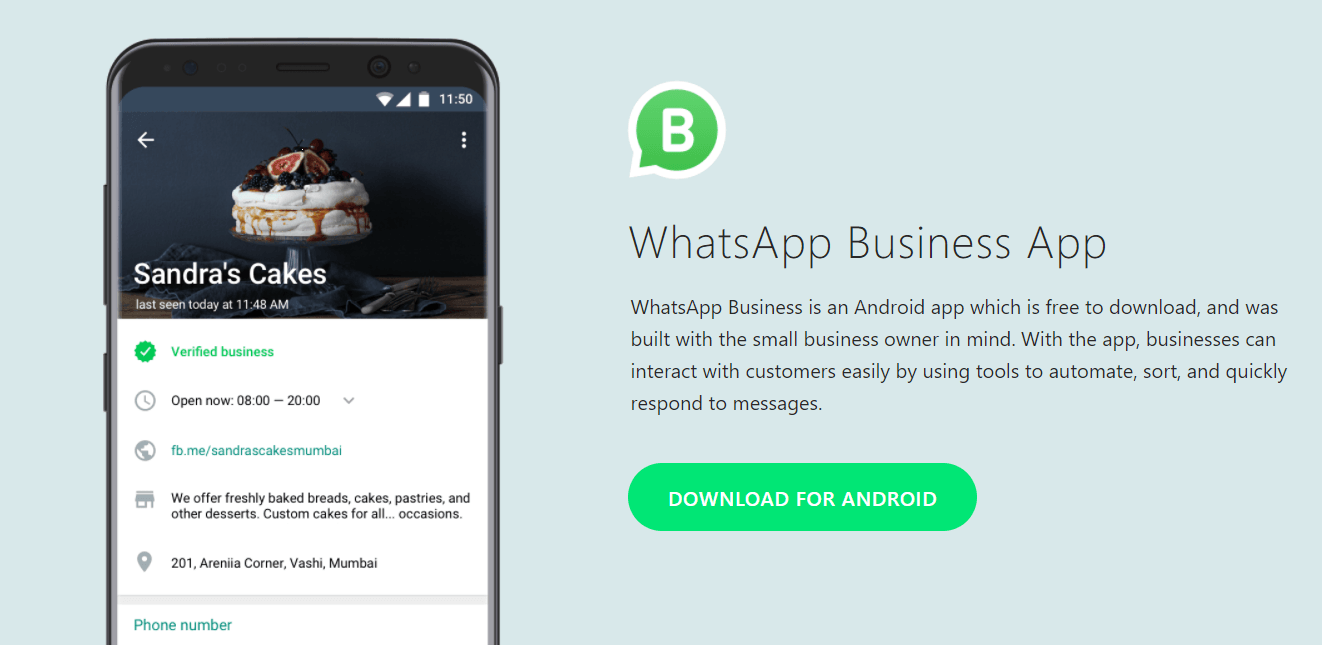
    We reported two weeks ago that WhatsApp Business might be finally coming to iOS devices, as many users from several countries found the app listed in the App Store. Initially launched on Android, WhatsApp Business is now officially rolling out for iPhone, the company announced in a blog post

    Of course, the app is available for free via App Store, but you’ll have to create an account before you can take advantage of all the business-centric features it has to offer. Keep in mind that WhatsApp Business will first be available in Brazil, Germany, Indonesia, India, Mexico, the UK, and the United States, but WhatsApp said the app will be made available worldwide in the coming weeks.

    With WhatsApp Business, you’ll be able to share useful information about your business, including its description, email and store addresses, as well as website. Also, thanks to the integrated messaging tools, you’ll be able to respond to customers very easy via quick replies, greeting messages, and away messages.

    Last but not least, WhatsApp Business is a cross-platform service, which means you’ll be able to chat from your desktop to manage conversations and send files to customers, not just from your iPhone or Android smartphone.

  • The dying art of a good conversation

    The dying art of a good conversation

    What with Facetime, Skype, Whatsapp and Snapchat, for many people, face-to-face conversation is used less and less often.

    These apps allow us to converse with each other quickly and easily – overcoming distances, time zones and countries. We can even talk to virtual assistants such as Alexa, Cortana or Siri – commanding them to play our favourite songs, films, or tell us the weather forecast.

    Often these ways of communicating reduce the need to speak to another human being. This has led to some of the conversational snippets of our daily lives now taking place mainly via technological devices. So no longer do we need to talk with shop assistants, receptionists, bus drivers or even coworkers, we simply engage with a screen to communicate whatever it is we want to say.

    In fact, in these scenarios, we tend to only speak to other people when the digital technology does not operate successfully. For instance, human contact occurs when we call for an assistant to help us when an item is not recognised at the self-service checkout.

    And when we have the ability to connect so quickly and easily with others using technological devices and software applications it is easy to start to overlook the value of face-to-face conversation. It seems easier to text someone rather than meet with them.

    Bodily cues

    My research into digital technologies indicates that phrases such as “word of mouth” or “keeping in touch” point to the importance of face-to-face conversation. Indeed, face-to-face conversation can strengthen social ties: with our neighbours, friends, work colleagues and other people we encounter during our day.

    It acknowledges their existence, their humanness, in ways that instant messaging and texting do not. Face-to-face conversation is a rich experience that involves drawing on memories, making connections, making mental images, associations and choosing a response. Face-to-face conversation is also multisensory: it’s not just about sending or receiving pre-programmed trinkets such as likes, cartoon love hearts and grinning yellow emojis.

    When having a conversation using video you mainly see another person’s face only as a flat image on a screen. But when we have a face-to-face conversation in real life, we can look into someone’s eyes, reach out and touch them. We can also observe the other person’s body posture and the gestures they use when speaking – and interpret these accordingly. All these factors, contribute to the sensory intensity and depth of the face-to-face conversations we have in daily life.

    Speaking to machines

    Sherry Turkle, professor of social studies of science and technology, warns that when we first “speak through machines, [we] forget how essential face-to-face conversation is to our relationships, our creativity, and our capacity for empathy”. But then “we take a further step and speak not just through machines but to machines”.

    In many ways, our everyday lives now involve a blend of face-to-face and technologically mediated forms of communication. But in my teaching and research I explain how digital forms of communication can supplement, rather than replace face-to-face conversation.

    At the same time though, it is also important to acknowledge that some people value online communication because they can express themselves in ways they might find difficult through face-to-face conversation.

    Look up from your phone

    Gary Turk, is a spoken word poet whose poem Look Up illustrates what is at stake by becoming entranced by technological ways of communicating at the expense of connecting with others face-to-face.

    Turk’s poem draws attention to the rich, sensory aspects of face-to-face communication, valuing bodily presence in relation to friendship, companionship and intimacy. The central idea running through Turk’s evocative poem is that screen-based devices consume our attention while distancing us from the bodily sense of being with others.

    Ultimately the sound, touch, smell and observation of bodily cues we experience when having a face-to-face conversation cannot be fully replaced by our technological devices. Communicating and connecting with others through face-to-face discussion is valuable because it is not something that can be edited, paused or replayed.

    So next time you’re deciding between human or machine at the supermarket checkout or whether to get up from your desk and walk to another office to talk to a colleague – rather than sending them an email – it might be worth following Turk’s advice and engaging with the human rather than the screen.

  • Alleged fastest messaging app adds new privacy features

    Alleged fastest messaging app adds new privacy features

    Messaging app Telegram features end-to-end encryption for messages, and claims to deliver said messages faster than any other app. It has no limits on the size of media sent using the service, and is free. Today, Telegram announced a new privacy feature. Users can now delete, if they so desire, any message sent or received in a private chat. Telegram says that deleted messages will disappear from both sides of the conversation and there will be no trace of them left at all.
    This new functionality is basically an expansion of the “unsend” feature that Telegram first debuted two years ago. This originally limited “unsend” to be used by a Telegram user who sent a message, and only for the first 48 hours. Now, with two taps, users can remove any message they sent or received with no time limit. The messages are erased from both the sender’s and recipient’s device.
    In addition, Telegram is limiting who is allowed to forward messages you’ve sent. When a user toggles on the new anonymous forwarding feature, forwarded messages won’t be linked back to the sender’s Telegram address. Instead, an unclickable name will appear in the “from” field. Messages a Telegram user forwards will no longer be linked backed to his or her account.
    Telegram has also added a search option for settings, allowing members to quickly find the particular setting that they want to change. It will also answer users’ questions based on the app’s FAQ page. Speaking of search, the emojis and GIFs search feature has been upgraded. Any selected GIF can be previewed by tapping and holding on the image. On Android, keywords can be used in multiple languages to help find a specific emoji. When typing a message, a list of emoji related to the context of the message will surface. And on Android, if you send an emoji without any text, it will appear larger in the chat. This will soon be available for the iOS app.
    Lastly, Telegram has added VoiceOver on iOS and TalkBack on Android, which are both controlled by gestures. Both provide spoken feedback so that Telegram can be used without seeing the screen on a mobile device.
    Telegram is available on iOS and Android, where it has over 100 million installs.
  • Facebook’s massive outage helped a rival app gaining millions of new users

    Facebook’s massive outage helped a rival app gaining millions of new users

    If you’re bothered by Facebook’s notoriously shady data harvesting methods and various other controversies surrounding the privacy and security of the social networking titan’s user base, it’s probably not a good idea to switch to Instagram. But there are actually many competing services and platforms on the market that Mark Zuckerberg does not own.

    One instant messaging app that has been growing at a pretty impressive pace for the past few years noticed a particularly large boost to its user numbers yesterday. According to its founder, Pavel Durov, a whopping 3 million people signed up for new Telegram accounts “within the last 24 hours.” It’s safe to assume that doesn’t happen every day for an IM and VoIP service that boasted a grand total of 200 million monthly active users around a year ago.

    While Durov doesn’t spell it out for us on his personal Telegram channel, the surge in sign-ups is naturally believed to be connected with Facebook’s most recent worldwide outage. A massive number of Facebook, Instagram, and WhatsApp users reported problems logging in to their accounts yesterday, and incredibly enough, the main social networking platform is still down for some people.

    Even though that seemed to boost the action (and jokes) on Twitter, where Facebook itself confirmed the issues, Pavel Durov suggests his app may have had more to gain thanks to its “true privacy and unlimited space for everyone.” Then again, Telegram had its fair share of scandals and controversies back in the day as well, disappearing from the iOS App Store at one point due to suspicions of rampant child pornography content spreading.

    The app is also banned in countries like Russia and China, although the reason for that might actually convince more people in the Western Hemisphere to switch from Facebook or WhatsApp to Telegram. Namely, a strict policy on sharing user information with government authorities.

  • Indonesia threatens to block WhatsApp messaging over obscene content

    Indonesia threatens to block WhatsApp messaging over obscene content

    Indonesian government gave Whatsapp a two-day notice to block obscene GIF images.  Indonesia on Monday vowed to block Facebook Inc’s WhatsApp Messenger within 48 hours if the service did not ensure that obscene Graphics Interchange Format (GIF) images were removed.

    WhatsApp, which is widely used in Indonesia, the world’s most populous Muslim-majority nation, said message encryption prevented it from monitoring the animated graphics files, known as GIFs, that are available on the app through third-party services.

    WhatsApp said in a statement on Monday that it asked the government instead to work with those providers, which integrate their technology into WhatsApp to allow users to enter keywords to search for GIFs.

    Indonesia’s Internet is partly censored, with access blocked to websites providing criticism of Islam, dating services and sex education, according to research published in May by Tor Project, a nonprofit maker of Web browsing tools.

    Semuel Pangerapan, a director general at Indonesia’s communications and informatics ministry, said WhatsApp would be blocked within 48 hours unless the images supplied by third parties were taken off the service.

    “Yes, true. They have to follow the rules of the host,” Pangerapan said of the proposed block.

    The ministry had sent three letters to WhatsApp over the issue, he said.

    “They have responded, but asked us to speak directly to the third party. The GIFs appeared in their apps. Why do we have to be the one speaking to the third party? They are supposed to be the ones managing it,” said Pangerapan.

    Tenor Inc, one of the third parties, said it was attempting to release a “fix.” Giphy Inc, another provider, did not respond to requests to comment.

    Jennifer Kutz, a Tenor spokesperson, said in a statement that the company is working “to address the content issues raised by the Indonesian government within the next 48 hours.”

    Kutz said the company “regularly” works with “local entities to make sure our content reflects the cultural mores and legal requirements.”

    She declined to identify the proposed fix or existing regions with content restrictions. Tenor allows integrators of its service to block potentially objectionable image results or a defined list of search terms.

    “In the case of WhatsApp, we’re taking on this responsibility,” Kutz said in an email.

    Giphy, a New York City company that also works with WhatsApp, offers its partners a feature for filtering inappropriate images.

    Indonesia’s warning did not appear to target Gboard, a keyboard app developed by Google that provides comparable GIF search results but must be installed separately from WhatsApp on most devices.

    Indonesia had 69 million monthly active Facebook users as of the first quarter of 2014, ranking the country fourth globally after the United States, India and Brazil, company data showed.

    Some reaction on Indonesian social media to the threatened block was sceptical. “While you’re at it, why don’t you block Twitter too, (and) if necessary all browsers in the Playstore, because it’s way easier to search for porn there than on WhatsApp,” wrote one Twitter user, with the handle @jnessy.

    The country’s regulators have reached settlements with several technology companies after threatening to shut them down. In August, Indonesia announced it would block Giphy’s website for showing gambling-related ads. Access soon was restored after it agreed to cooperate with regulators.

    Bans similarly were rescinded in recent years on social media websites such as Vimeo and Tumblr and the chat app Telegram, which regulators had said was “full of radicals and terrorist propaganda.”

    The Indonesian Consumers Foundation (YLKI) had urged the communications ministry to block pornographic GIF images accessible via emoticons, complaining that children could easily reach them, according to news website kompas.com. Terms of use for WhatsApp, Tenor and Giphy say users must be 13 years old.

  • Five tips for using messaging in retail

    Five tips for using messaging in retail

    Messaging in retail is increasingly becoming a tool of choice both online and offline. Instead of just phone or email, companies can now reach people through social messaging channels, such as Facebook’s Messenger, Twitter Direct Messages, Line or WhatsApp.

    Business Insider Intelligence recently reported the use of messaging apps has surpassed the use of social networks, while a report by The Economist states over 2.5 billion people have installed at least one messaging app on their smartphones. And while messaging may have started out as a way for friends to chat socially, its high engagement levels means customers are on these channels and that messaging is an ideal way to reach out to them.

    For example, by using Facebook Messenger – which has more than 1.2 billion active monthly users – customers can shop, purchase and communicate with businesses. Two years ago, global customer support software company Zendesk partnered with Facebook to allow businesses to easily manage conversations on Messenger.

    Many businesses chose to use messaging as a way of improving their customer service. For instance, when BarkBox, a service provider for dog owners, began managing customer conversations on Messenger, it saw a dramatic decrease in average response time from 60 minutes to four minutes. This helped earn the company a ‘responsive badge’ on their Facebook page.

    Effective engagement

    In today’s connected world, no one leaves home without their mobile phone. Therefore, when used correctly, messaging can be very effective for retailers to engage with customers. Here are some practical tips on how businesses should get started when it comes to messaging their customers:

    Know your entry points:  Not everyone may be comfortable with messaging a company, so it’s best to introduce them to the concept. Businesses with existing Facebook pages or Twitter handles should use the “Message us” button to bring relevant conversations from a social media platform into a one-to-one setting. Similarly, various messaging apps have embeddable buttons that allow customers to message businesses from the website. For retailers without a website, you can encourage customers online through QR codes, which they can scan at retail outlets and start following your messaging profiles. Usually pairing this with a discount or promotional item, helps incentivise the customers.

    Identify your audience and the needs: Don’t try and put all customer conversations onto a messaging platform.

    Instead identify who will be best served by messaging, and which are the best situations. Generally, messaging works well when relatively short answers need to be provided quickly, but not necessarily immediately. For example, if you run a travel business, and offer online travel bookings, things can get complicated due to the many different permutations. In situations where you need to explain numerous details on a particular travel destination, it may be better for the customer to talk over the phone to one of your staff, who can convert the sale more effectively. However, if you want to send out an alert on a price reduction or communicate how to make payment via the website, then messaging is ideal.

    Contextual information: Customers hate having to repeat themselves, so if you need to transfer a conversation from one support agent to another, make sure you pass the necessary context, like customer details, previous purchases, outstanding queries, or shipping updates. When using Facebook Messenger, it is also helpful to link their Facebook identity with your records.

    Response time matters: Response time has a strong correlation with customer satisfaction scores. This is particularly important with messaging, as it’s meant to be a way to get answers fast. Messaging is often used for time-sensitive communications, such as someone asking about their food delivery, or a customer having problems in the middle of his/her e-commerce purchase. The golden rule is to answer at least 90 per cent of your messages within 15 minutes. If you can hit this goal, you will earn a “Very responsive” badge on Facebook. In situations where you are not able to respond quickly, for instance after office hours, set an auto-responder so that customers are aware and not left waiting.

    Pair humans with bots: This works well as long as you have boundaries about how you use your bots. As the accuracy of conversational bots isn’t there yet, masquerading your bots as a human or having open-ended conversations is not recommended. Instead, use bots for repetitious answers, such as checking account balances, tracking delivery, or handling FAQs. Whenever a bot is driving the conversations, make sure the customer has the option to switch over the conversation to a human agent, with the full context available. The bot space is very exciting and has great potential. For example, one of our customers allows people to order online from restaurants, grocery stores and other businesses. They are leveraging Facebook’s AI-powered concierge that inserts recommendations on Messenger. So, if two friends are messaging each other, discussing dinner, the bot can suggest placing an order online. Ordering and payment can all be seamlessly completed within the same messaging app.

    The messaging space has evolved significantly over the past few years, and is still evolving. As this technology and the way people are using it is still so new, the best way for retailers to use messaging is to start slowly and test each approach. Then evaluate the response and if it works well, expand your messaging channels.