Tag: messaging

  • Google rolls out Messages end-to-end encryption to everyone

    Google rolls out Messages end-to-end encryption to everyone

    Google Messages is finally getting end-to-end encryption, which means your messages will be secure from prying eyes. Google has been testing improved security for its Messages app since last year, but only a limited number of users had access to end-to-end encryption.

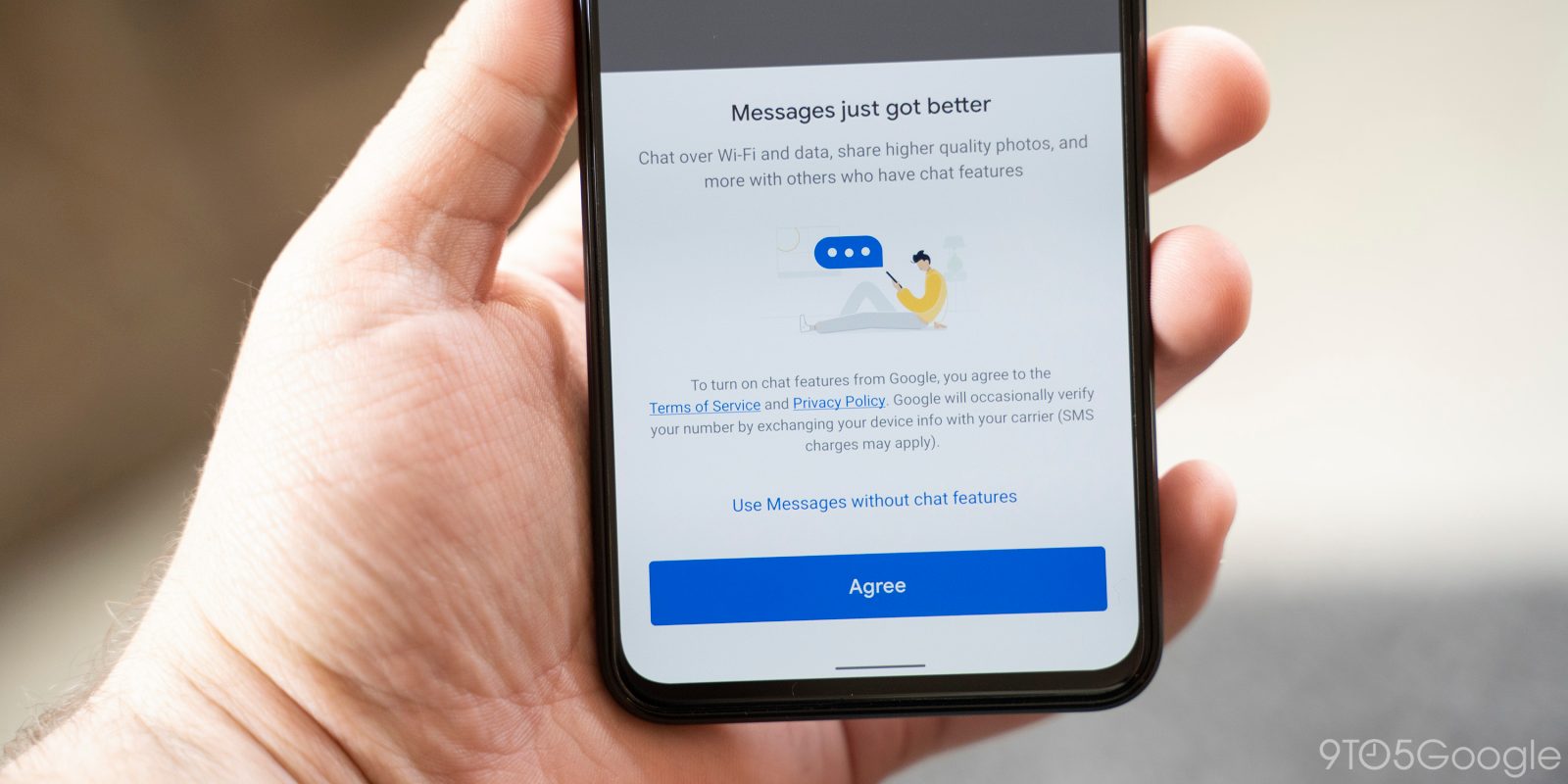
    Starting this week, Google is rolling out end-to-end encryption to all Messages users. However, to take advantage of the new feature, a few aspects are required. First off, you and the person you message must both use the Messages app and have chat features enabled.

    Secondly, you must use data or Wi-Fi for RCS ( messages. Keep in mind though that end-to-end encryption does not cover SMS/MMS messages and group messages. You’ll be able to tell when end-to-end encryption is enabled if you have an arrow icon with a lock on it on the send button when you write a message.

    When you lose chat features and end-to-end encryption will no longer be enabled, you won’t have a lock icon next to the timestamp of the conversation’s latest message or on the send button when you write a new message.

    According to Google, this type of encryption converts data into scrambled text, which can only be decided with a secret key. The latter is a number created only on your phone and the device you message. The secret key is not shared with Google, anyone else, or other devices, and it’s generated again for each message.

    Last but not least, the secret key is always deleted from the sender’s device when the encrypted message is created, as well as from the receiver’s device when the message is decrypted.

  • WhatsApp beta: encrypted backup feature will reportedly become available in the future

    WhatsApp beta: encrypted backup feature will reportedly become available in the future

    A recent policy change of WhatsApp’s privacy settings had the world start to turn its back on the popular messaging app. Now, however, WhatsApp has reversed its decision about that and seems to be working on bringing even more privacy-related features to its users.

    A WhatsApp beta version gives us a sneak peek of a privacy feature that will allow encryption of backups that are stored in Google Drive. You will be able to protect your backups, even the images, with a password, and reportedly the feature is in the works to become available for all WhatsApp users on Android.

    As we already stated, the feature is under development, so it’s not available to the public, but WABetaInfo states it will come in a future update. The password will protect your backup while it’s in Google Drive from unauthorized access, so you can be calm that your sensitive data, messages, and images are tightly encrypted and hidden from malicious users.

    We don’t have any information about when this feature will be made available. If you want to test new features, you can sign up for WhatsApp’s beta program from here.

  • Telegram to launch long-awaited group video call feature in May

    Telegram to launch long-awaited group video call feature in May

    Telegram will be finally adding a group video call feature to its portfolio next month. Yesterday, the company CEO Pavel Durov posted a short video showing the upcoming feature in action.

    ”Speaking of video calls, we will be adding a video dimension to our voice chats in May, making Telegram a powerful platform for group video calls,” wrote Durov.

    Telegram is a bit late to the group video chat party, as competitors such as Zoom, WhatsApp, Messenger Rooms, Hangouts – already reap the benefits of the global pandemic and lockdown situation worldwide.

    The company announced plans for a group video feature a whole year ago and despite the delay, the feature could boost Telegram’s popularity and help compete with the aforementioned platforms.

    Group video calls on Telegram will support Screen sharing, encryption, noise-cancellation, as well as desktop and tablet, and smartphone devices. We’ll have to wait and see whether Telegram will join the best video conferencing apps out there with its new feature.

  • WhatsApp now lets you import third-party sticker packs

    WhatsApp now lets you import third-party sticker packs

    For those of you who will agree with WhatsApp’s updated privacy policy so that you can still be able to use the app, here is one new feature that’s coming to you in the next few days. For a very long time, WhatsApp only allowed customers to use the sticker packs available through its app.

    However, that’s about to change very soon, as WhatsApp is now rolling out a new feature that will allow users of its app to import third-party sticker packs. WaBetaInfo discovered that WhatsApp is testing such a feature many months ago, and now they’re reporting that the company is finally rolling it out to users in select countries.

    For the time being, the option to import third-party sticker packs is only available in Brazil, India, and Indonesia, but you have to update WhatsApp to version 2.21.5.6 Android beta and 2.21.40 iOS. It’s probably going to be made available in other countries in the coming days, so be patient if you’re not living in one of these countries.

  • Facebook to launch smartwatch with focus on fitness, messaging in 2022

    Facebook to launch smartwatch with focus on fitness, messaging in 2022

    Last month, Facebook called Apple a ‘significant’ future competitor. Those comments were understood to be a reference to their respective AR/VR efforts, but a new report adds another layer to the matter.

    The Information reports that Facebook is building a smartwatch as part of its ongoing hardware efforts, which already include Oculus VR headsets and the Portal smart display.

    It will use an open-source version of Google’s Android software and include its own cellular connection, meaning owners won’t need to rely on a smartphone for internet access.

    Feature-wise, the Facebook watch is set to focus on messaging through Messenger and other Facebook platforms. The social giant is also planning several fitness & health features including the ability to track workouts and connect to services from Peloton and others.

    Facebook’s watch, which will have to compete with top smartwatches from Apple and Fitbit, is scheduled to launch in 2022 with a successor planned for as soon as 2023. We don’t know how much it’ll cost yet, but the company will reportedly price it near the cost of production.

    This ultimately suggests that Facebook is more interested in collecting valuable user data that can be leveraged with future services than generating profit through hardware sales.

    Whether the Facebook smartwatch will succeed remains to be seen. Facebook has a poor track record when it comes to user privacy, so handing over health data to the company might be off-putting for consumers.

  • Telegram update makes it easier to switch from WhatsApp

    Telegram update makes it easier to switch from WhatsApp

    It looks like the WhatsApp exodus caught its rivals by surprise, as apps like Telegram and Signal had to accommodate a lot more users than their servers could handle. Moreover, switchers weren’t allowed to carry over their conversations to the new messaging service.

    Starting today, WhatsApp users who wish to switch to Telegram will be able to do so without losing any of their messages and memories that typically remain in older apps. Telegram announced that the new feature allows not just WhatsApp, but also Line and KakaoTalk users, to bring their chat history, including videos and documents to its app.

    WhatsApp users on iPhone who wish to switch to Telegram can do so by opening the Contact Info or Group Info page in WhatsApp, tap Export Chat, then choose Telegram in the Share menu. As for Android users, they should open a WhatsApp chat, tap More / Export Chat, then choose Telegram in the Share menu.

    According to Telegram, all the messages and media moved from WhatsApp don’t need to occupy extra space. Telegram users can free up space and control their cache size from the Settings menu, under Data and Storage / Storage Usage.

    In addition to making it easier for WhatsApp users to switch to Telegram, the app’s latest update provides users with more control over security features like secret chats, groups created and call history, which can now also be deleted for all sides at any time.

  • WhatsApp delays the implementation of its new terms and privacy policy

    WhatsApp delays the implementation of its new terms and privacy policy

    For the first time in many years, it looks like Facebook is taken into consideration users’ feedback. After informing its 2 billion users that WhatsApp is going to update its terms and privacy policy, forcing them to share data with Facebook and third-party associated companies, the social giant has taken a step back.

    Facebook is now giving WhatsApp users three extra months to decide whether or not they agree with the new terms and privacy policy, the company announced this week. Along with the new deadline, WhatsApp clarified some of the misinformation running around after its initial announcement.

    The update includes new options people will have to message a business on WhatsApp, and provides further transparency about how we collect and use data. While not everyone shops with a business on WhatsApp today, we think that more people will choose to do so in the future and it’s important people are aware of these services. This update does not expand our ability to share data with Facebook.

    Also, Facebook announced that it will do a lot more to clear up the misinformation around how privacy and security work on WhatsApp in the coming weeks. That being said, Facebook will no longer suspend or delete WhatsApp accounts that don’t agree with the new terms and privacy policy on February 8. Instead, Facebook will “go to people gradually to review the policy at their own pace before new business options are available on May 15.”

  • WhatsApp launches Carts for small businesses to sell in app, online

    WhatsApp launches Carts for small businesses to sell in app, online

    WhatsApp has added a feature called Carts to its business app, offering a more “seamless and intuitive” shopping experience on the chat program.

    The Carts feature will allow customers to quickly add goods or services they want from a business’ catalog, and then send the order as one message to the business. WhatsApp says this makes it easier for customers to order products and for businesses to keep track of order inquiries.

    Due to the Covid-19 pandemic, a significant number of small businesses in Hong Kong and Singapore have moved their focus to digital tools like WhatsApp Business to keep close connections and high interactivity with their customers.

    The app has turned into a potential channel for brands as about 175 million people around the world message a WhatsApp Business account every day. This trend in conversational commerce is rising across many industries – from fashion and beauty, to food and beverage, and even home and living.

  • WhatsApp adds new filters for storage management

    WhatsApp adds new filters for storage management

    One day after WhatsApp detailed the Disappearing Message feature, the social app is bringing yet another important improvement to its users: new filters for storage management. For those who are using smartphones with low storage, the new filters are going to be of great use.

    An update is now rolling out to Android users that will allow them to review, bulk delete items and free up space much easier than before. The update introduces a new design for the storage management tool, which can be found in Settings / Storage and Data / Manage Storage.

    Also, whenever your phone’s storage is getting close to being full, WhatsApp will notify you via a warning card in the Chats tab. You can even see how much of the disk is full thanks to the storage meter that’s now sitting at the top of the screen.

    More importantly, thanks to the new filters, WhatsApp users can order files by size whenever they want to free up some space. A preview tool for media files is available as well, allowing users to see what they’re deleting at a glance.

    According to WhatsApp, the new update that adds the new filters for storage management is rolling out this week, so be patient if you don’t see it yet on your phone.

  • WhatsApp upcoming feature lets you use the same account on multiple devices

    WhatsApp upcoming feature lets you use the same account on multiple devices

    WhatsApp is testing new features all the time and we often learn about them before release. One of the important features that we hope to see coming to WhatsApp is the option to use the same account on multiple devices.

    A new report coming from WABetaInfo confirms WhatsApp is now testing this new feature that allows users to have the same WhatsApp account on up to four devices. In that regard, a new UI that will manage all linked devices is now in the works at WhatsApp.

    The new UI is meant to enable users to add new devices to their WhatsApp account or remove them if they need to. To add new devices to your WhatsApp account, you must use a code that will sent to you via SMS or WhatsApp Chat. The procedure hasn’t been finalized since the feature is still in the works, but it’s probably the easiest and most secure way at the moment.

    The new option to add multiple devices on the same WhatsApp account is not yet available in any of the beta versions of the app, but the new Linked Devices UI does show up in one of the beta iterations.

  • Google Messages gets new features including some from Apple’s Messages app

    Google Messages gets new features including some from Apple’s Messages app

    On Wednesday, Google finally announced a feature we told you was being tested for Google Messages since back in May. Now when Android users receive a chat message, a video, or a photo, they can respond to it in a second. A long press on the message will show a box with animated love, laughter, surprise, sadness, anger, and dislike emoji. The reactions are available on those handsets that have chat features enabled. That is just one change out of a series of five new features now available for the Google Messages app.

    For example, if you have Smart Reply enabled, you can now send an animated sticker instead of using your words. The stickers will show up as you are texting so the perfect one will be ready right away for your use. The suggested stickers are currently available in English only.

    Ever want to personalize a conversation by including a photo that you marked up just for the occasion? Google has a media editor built into Messages. Simply take a photo using the in-app camera and type text or use brushes to paint on the image. You can share these with friends and family so you need to do your best to make them witty.

    Why type a message when you can say it better? Holding down the microphone button inside the compose bar will now allow you to record and send a voice message instead of having to type out a text.  Now let’s say that you’re engaging in an exchange of texts with someone and you want the conversation to continue as a video. Tapping the video call button at the top right of the app will activate Google Duo and allow you to see in real-time the person you have been chatting with.

    Make sure that you have the Google Messages app installed if you want to use all of these new features. Some carriers have their own messaging app, so check to see whether your phone has Google Messages installed. It can be downloaded on your Android phone. To make it your default messaging app, install it on your device, and go to Settings > Apps & notifications > Advanced > Default apps. Make sure that Google Messages is listed as the default SMS app on your phone.

  • Snapchat removes racist Juneteenth Lens, says that it wasn’t approved

    Snapchat removes racist Juneteenth Lens, says that it wasn’t approved

    This past Friday, June 19th, the U.S. recognized Juneteenth. It is a holiday that celebrates the emancipation of those who were enslaved in the United States. In the wake of the social protests that took place in the U.S. following the murder of George Floyd, no U.S. company was spared for any branding or product that could be considered insensitive in terms of race. That is why products like Mrs. Butterworth, Uncle Ben’s, and other iconic brands are being replaced.

    A major faux pas was committed by messaging app Snapchat which was forced to remove a racially insensitive Lens it created for Juneteenth. The filter showed the Pan-African flag in the background and prompted users to smile. This would lead to the image of a chain appearing in the background; the chain would then break. A spokesman from Snapchat parent Snap said in a statement, “We deeply apologize to the members of the Snapchat community who found this Lens offensive. A diverse group of Snap team members was involved in developing the concept, but a version of the Lens that went live for Snapchatters this morning had not been approved through our review process. We are investigating why this mistake occurred so that we can avoid it in the future.”

    A Twitter user by the name of Mark S. Luckie disseminated a tweet revealing what the Lens looked like before it was removed. Snapchat Lens use augmented reality (AR) to add animation to a photo of the user’s face. For example, a Snapchat user can turn into a dog with droopy cartoon ears and a nose. Or, the user can turn into a dancing bunny. There isn’t anything offensive about those (unless you really are a dog or a rabbit).

    Investors were pleased to see the racist Lens removed from Snapchat. On Friday, with most stocks giving up ground, SNAP rose over 3% to $22.66 a share. Snapchat is available in the App Store for iOS users and the Google Play Store for Android users.

  • WhatsApp update will close vulnerability that leaves messages unencrypted

    WhatsApp update will close vulnerability that leaves messages unencrypted

    Apple iPhone users that rely on WhatsApp’s end-to-end encryption might not realize that there is an opening that could allow a hacker to read their messages. According to the WhatsApp FAQ page, WhatsApp messages that are backed up in iCloud are not protected by the app’s end-to-end encryption. However, an update is coming to shut this vulnerability. A WhatsApp iOS beta includes a change that “enables the encryption of chat histories hosted on iCloud, including media” through the settings on the WhatsApp app.

    If WhatsApp decides to go ahead and include the feature in an upcoming update to its public iOS app, authorities, hackers, and even Apple will be shut out from reading your unencrypted text messages. Essentially, the update would extend the end-to-end encryption available from WhatsApp to messages being stored in iCloud. And at the same time, WhatsApp is working on the same protection for its chat backups on Android.

    Just as WhatsApp chats backed up in iCloud aren’t covered by end-to-end encryption, neither are the chats that Android users back up on Google Drive. The new feature could be available on the WhatsApp beta for Android version 2.20.73 and is called “Protect Backup,” which pretty much is self-explanatory. Until it becomes part of WhatsApp for Android and iOS, just keep in mind that despite the end-to-end encryption found on the app, if you back up your chats to iCloud or Drive, you are leaving them vulnerable to being read. There isn’t any evidence that this has been exploited, but it is something that every WhatsApp user should be aware of.

    It appears that WhatsApp’s iOS users are more excited by the coming addition of support for QR codes. This is a feature that will allow users to create personal QR codes to help others find them. QR code support will also be available for Android totin’ WhatsApp users soon.

  • Google testing iMessage feature for RCS Chat

    Google testing iMessage feature for RCS Chat

    The four major U.S. carriers are planning to roll out a Rich Communication Services (RCS) app later this year. This allows Android users to send and receive messages via a phone’s data connection instead of its cellular connection. However, Google has already updated its Android Messages app by enabling RCS Chat on all Android phones. Messages between two RCS users can be as long as 8,000 characters instead of 160. Additionally, a user will know if his messages have been read thanks to read receipts that he will receive.
    Other improvements that Android users will see is the ability to share larger video files, host group chats with as many as 100 participants, and have RCS chats run through a Wi-Fi network. Android users have long wanted a messaging platform with some of the advanced features that iOS users have enjoyed with the Messages app. And the carriers plan on monetizing RCS by using the platform to allow companies to reach Android users. We could even see Android users order a Lyft or Uber rideshare through their RCS Chat app.
    Google is testing one feature found in iMessages for its RCS Chats. An Android user sporting a OnePlus 7 Pro on T-Mobile has the beta version of Google’s Messages app installed and discovered that he could respond to a Chat with an emoji reaction. That is a feature available to iOS users via iMessage. Android users engaged in an RCS chat (again, both sides of the convo must be using RCS) long-press on the last message received and they will see seven different emoji that they can choose from for their emoji reaction. The one they select will end up on the lower right side of the last message sent by the other party.
    While Google just sent out a beta update to the Messages app, the emoji reaction has not appeared on all Android phones that were updated. This would seem to indicate that a server-side update is at play here. You can check out whether you have this feature the next time that you’re in the middle of an RCS Chat by long-pressing on a message you’ve received. If you don’t see the options for an emoji response, you do not have it yet. If Google decides to add this as a permanent feature you will eventually have the ability to use an emoji to convey your emotions about a message that was sent to you.
    One thing to keep in mind is that you cannot use RCS Chat if the texting platform you use now is one provided to you by your carrier. For example, Verizon Messages will not work with RCS. If you don’t have the Google Messages app on your Android handset, you can install it from the Google Play Store.
    There are some things that are not perfectly clear from the testing. One is whether there are only seven emojis that will be made available for the user’s reaction. The seven that were seen in the screenshot shared by a Redditor include ThumbsUp, HeartEyes, Laughing so hard you’re crying, Surprised, Sad (with one lonely tear), Anger, and ThumbsDown. That pretty much covers a wide multitude of emotions.
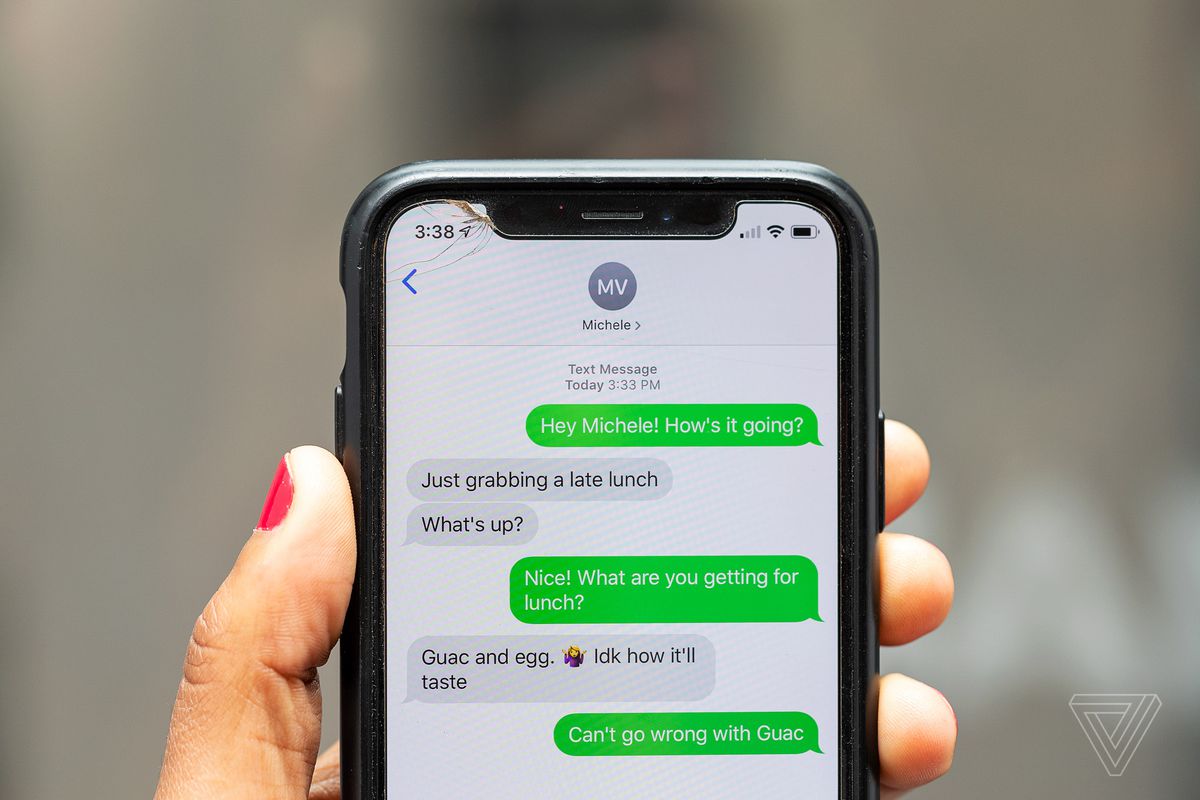
    If you are an Android user, you’ll know whether you are messaging someone using RCS because of the dark blue background of the text balloons. If you’re exchanging messages with someone who is not a phone enthusiast, it is possible that even if you ask them outright, they might have no idea what platform they are using and whether they have RCS.
  • Telegram has now been downloaded over 500 million times on Google Play

    Telegram has now been downloaded over 500 million times on Google Play

    Messaging app Telegram now boasts over 500 million downloads on the Google Play store. Sure, this pales in comparison to alternatives like WhatsApp and Facebook Messenger, which have racked billions of installs, but the important distinction here is that Telegram doesn’t come pre-installed on any device.

    Moreover, the app had around 300 million users until last year, so the growth is pretty impressive. If you also count the other client called Telegram X, the tally reaches around 510 million. This version of Telegram has a slightly different interface and features smoother animations.

    Last month, Telegram reached 400 million users. The developers of the app also revealed that 1.5 million new customers sign up every day. Telegram developers say that the services offered by the app facilitate remote work and study, and this has helped with popularity during the quarantine.

    Cross-platform support is also available, allowing users to seamlessly switch between different devices. Telegram is also free and does not contain any ads.

    The messaging app is also joining the likes of Facebook and Google to give some competition to Zoom. It has revealed plans to roll out secure group video calls this year.

    The developers also threw shade at Zoom, which has come under fire for its lax security measures, by saying that video calls today are either secure or usable and it would like to fix that.