Tag: New York

  • Sydney Fashion Label Asta Resort Opens Permanent Flagship in New York

    Sydney Fashion Label Asta Resort Opens Permanent Flagship in New York

    Sydney luxury label Asta Resort opened its first permanent US flagship in Manhattan’s SoHo. Helena and Jasmine Ammitzboell founded the brand in 2021. The permanent boutique converts an earlier New York pop-up trial into a long-term presence.

    The retail launch coincides with a back-office buildout in Williamsburg, designated as the operational base for North American distribution.

    From Sydney Harbour to Manhattan

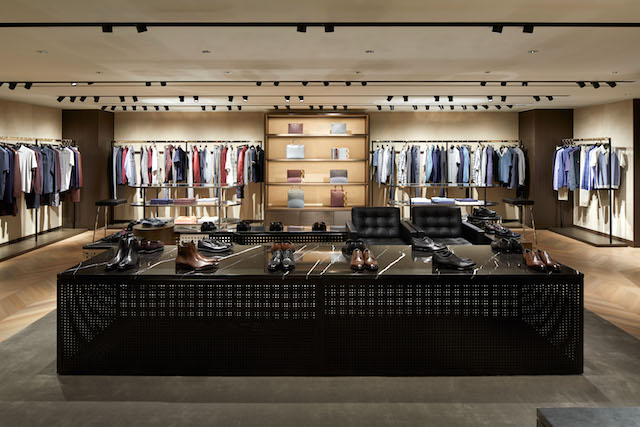
    Designers Joel Harding and Yuria Kailich of Studio of Enso planned the SoHo space around a Mediterranean resort aesthetic. The boutique features a quartz-clad champagne bar and a dedicated bridal podium. Ceramic plates hand-painted by the founders line one wall.

    Sydney is where Asta Resort began. New York is where we are laying down roots for our North American home.

    Wholesale Bypass and Direct Retail

    High digital customer acquisition costs push Australian resortwear labels toward physical flagships in global hubs. Securing permanent SoHo space lets independent brands bypass wholesale intermediaries. It also captures higher direct margins from affluent shoppers who first discovered the label online.

    Operating in New York brings steep lease commitments in a commercial market far costlier than Sydney. Operators expanding abroad also face inventory exposure across two hemispheres with opposing seasonal apparel demands.

    Building the US Operations Base

    Asta Resort opened its first permanent flagship boutique in Sydney in December. That domestic store served as the testbed for translating its online catalogue into an experiential physical space.

    Centralising regional management in Brooklyn gives the label direct control over inventory dispatches, styling appointments and client services across North American time zones.

    RetailNews Asia will track whether the label follows Manhattan with dedicated resort outposts in Florida or California retail corridors.

  • Philip Morris Tops $11 Billion in Net Revenue as Smoke-Free Sales Hit 42 Percent

    Philip Morris Tops $11 Billion in Net Revenue as Smoke-Free Sales Hit 42 Percent

    Philip Morris International generated more than $11 billion in net revenues during the second quarter of 2026. Higher international sales of heated tobacco and oral nicotine alternatives drove the total.

    Organic top-line growth reached close to 8 percent. That lifted the smoke-free category to 42 percent of total group net revenues across the first six months of the year.

    Operating income climbed 11 percent on an organic basis. In currency-neutral terms, adjusted diluted earnings per share rose 14 percent, or 15 percent in dollar terms. IQOS heated tobacco systems and VEEV vapes led non-combustible volume gains abroad. Meanwhile, the conventional cigarette unit held gross profit growth through higher pricing and steady category share. In the oral nicotine business, ZYN shipments rose 2 percent year on year to 2.9 billion pouches, helped by early distribution of the new ZYN ULTRA variant.

    Portfolio shift across retail channels

    Convenience retailers and travel hubs across Asia-Pacific and Europe now face a permanent rebalancing of shelf space. In Japan and South Korea, heated tobacco adoption outpaces traditional smoking in major cities. Tobacco fixtures there function increasingly like consumer electronics displays. Retailers with early distribution deals for IQOS consumables continue to capture higher basket values from repeat device and heatstick purchases. Traditional corner shops reliant solely on combustible cigarette cartons face shrinking margins.

    Across Southeast Asia, the transition creates immediate inventory complications for convenience store operators. Regional regulators take fragmented stances on reduced-risk products, ranging from outright bans to regulated imports. Retailers in open markets must tie up working capital in multi-brand hardware alongside conventional packs. That creates inventory turnover risks if consumer adoption lags manufacturer targets.

    Pricing power and regional performance

    Cash flow from conventional cigarettes continues to fund smoke-free production facilities and clinical testing. Higher prices in emerging markets offset volume declines in mature combustible territories, keeping category margins steady. Group CFO Emmanuel Babeau pointed to sequential gains in the United States after a slow start to the year, alongside momentum across wider international markets.

    We reported close to plus 8% organic top line growth, reaching over $11 billion in quarterly net revenues for the first time.

    Transition timeline and next targets

    Full-year 2025 performance set the foundation for the latest quarter. Smoke-free alternatives reached 109 commercial markets worldwide that year, topping 50 percent of total net revenues in 27 national territories. The company counted more than 43 million legal-age consumers using its reduced-risk lines by late 2025, broadening out from early adoption hubs in Japan and select European test cities.

    Management presents its next strategy update at the Barclays Global Consumer Conference on September 8, 2026, where commercial execution figures for the ZYN portfolio expansion will face investor scrutiny.

  • Victoria’s Secret Profit Tripled in Second Quarter Despite Sales Miss

    Victoria’s Secret Profit Tripled in Second Quarter Despite Sales Miss

    Victoria’s Secret nearly tripled its profit in the second quarter and lifted its full-year earnings guidance, overcoming a narrow top-line sales miss that rattled equity investors.

    Higher merchandise margins drove the profit surge as shoppers bought more lingerie and apparel at regular price points rather than clearance discounts.

    Margin Gains and Product Overhauls

    Chief executive Hillary Super faces scrutiny from financial markets to prove that the turnaround plan can deliver consistent revenue expansion alongside margin gains. The recovery strategy relies on fresh product lines, tighter brand positioning and the return of a revamped fashion show.

    Full-price sell-through provided the foundation for the quarterly improvement. By pulling back on heavy discounting, the apparel group protected profitability across its physical store fleet and digital sales channels.

    The Balance Between Price and Volume

    For store operators and regional franchisees, the profit rebound confirms that higher retail pricing can offset sluggish foot traffic and cautious consumer spending. Yet relying entirely on margin expansion without broad sales volume growth carries structural risk in competitive markets.

    Rival innerwear and athleisure brands continue to fight for floor space and customer wallet share across shopping centres. Landlords and retail partners need steady transaction volume to support retail footfall, not just cleaner balance sheets from lower inventory markdowns.

    The Turnaround Path

    The latest quarterly report follows multiple management efforts to reposition the brand away from outdated marketing concepts and rebuild credibility with mainstream apparel shoppers. Earlier restructuring phases focused on rationalising store networks, overhauling product assortments and adjusting wholesale partnerships.

    Attention now shifts to whether the upcoming fashion show and new seasonal merchandise can lift revenue through the second half of the financial year.

  • Coach Targets 10 Billion Dollars in Sales by 2028

    Coach Targets 10 Billion Dollars in Sales by 2028

    Coach plans to reach 10 billion dollars in annual sales by 2028, up from its current 7 billion dollar revenue base. The expansion relies on growing international store networks, pushing deeper into ready-to-wear and footwear, and recruiting younger shoppers.

    The brand generates the vast majority of revenue for parent company Tapestry Inc., which recently reported 8 billion dollars in annual sales. Chief executive officer and brand president Todd Kahn, who took the helm in 2020 after joining as general counsel in 2008, is steering the push as the label marks 85 years since its founding in 1941.

    Expanding Global Footprint and Gen Z Reach

    Attracting Gen Z buyers sits at the center of the sales roadmap. Coach has broadened its assortment beyond signature leather handbags into ready-to-wear lines, footwear collections, dedicated brand cafes, and circular fashion initiatives like Coachtopia.

    Creative director Stuart Vevers continues to lead product design, balancing heritage leather craftsmanship with youth-focused styling. Kahn noted that while the company started as a small workshop run by immigrant artisans on 34th Street in Manhattan, preserving core leather craft remains essential to its identity as an accessible luxury house.

    From Leather Workshop to Tapestry Growth Engine

    Department store distribution once dominated accessible luxury, but direct retail networks and localized experiential spaces across Asia, Europe, and North America now anchor the brand’s margins. Rivals in the premium leather goods category face tighter consumer spending, yet Coach has maintained price discipline and direct-to-consumer momentum across international markets.

    Tapestry will measure progress against the 10 billion dollar milestone across its quarterly filings leading up to the fiscal 2028 deadline.

  • Coty Full-Year Revenue Drops Five per Cent to US$5.8 Billion Ahead of Gucci License Loss

    Coty Full-Year Revenue Drops Five per Cent to US$5.8 Billion Ahead of Gucci License Loss

    Coty posted a five per cent decline in full-year net revenue to US$5.8 billion as the beauty group prepares to surrender its lucrative Gucci license.

    Fourth-quarter adjusted EBITDA dropped 26 per cent to US$93.6 million, dragging operating margins down 270 basis points to 7.4 per cent. Like-for-like sales in the final quarter slipped one per cent to US$1.3 billion, prompting Coty shares to fall 7 per cent in after-hours trading after management withheld financial guidance for fiscal 2027.

    Markus Strobel, Coty executive chairman and interim chief executive, designated fiscal 2027 a transition year focused on lowering fixed overheads. The departure of Gucci Beauty will trigger an additional drop in revenue and profit in fiscal 2028.

    Fixed costs and new fragrance licenses

    Management plans to counter the Gucci exit by cutting fixed corporate costs and expanding newer licensing contracts. The pipeline relies on cosmetics under Marc Jacobs Beauty alongside fragrance agreements with Swarovski, Etro and Marni.

    GlobalData managing director Neil Saunders noted that replacing Gucci volume requires stronger performance from remaining prestige lines, especially across department stores and travel retail networks. Retail OCD chief executive Barney Stacher cautioned that cost reductions cannot compensate for weak brand heat across mass colour cosmetics lines such as CoverGirl, Rimmel and Max Factor.

    Mass beauty shelf pressure

    Fragrance sales continue to generate cash across Asian metropolitan markets, but Coty’s mass cosmetics portfolio faces intense shelf competition from nimble regional and domestic beauty labels. Rebuilding brand visibility in physical retail and digital storefronts requires targeted product development rather than broad promotional discounting, according to Pepperdine Graziadio Business School marketing professor Kimber Maderazzo.

    Coty will deliver the final decisions from its strategic review of the Consumer Beauty unit by the end of 2026 before the Gucci transition takes effect in fiscal 2028.

  • Perion Network Boosts AI Platform for Retail Media, CTV Growth

    Perion Network Boosts AI Platform for Retail Media, CTV Growth

    Digital advertising firm Perion Network is intensifying its focus on artificial intelligence (AI) to optimize ad campaigns for retailers and brands. The company is using its Perion One platform, which includes an AI-driven engine called Outmax and a client interface called Ask Perion, to navigate the fragmented digital advertising ecosystem.

    Perion’s strategy addresses the challenge advertisers face in gaining clear insights and managing performance across various platforms, formats, and audience segments. The AI layer analyzes campaign data, identifies inefficiencies, and provides recommendations to improve media investment returns.

    This move reflects a broader industry trend where technology providers are enhancing their offerings to support sophisticated retail media strategies. As retailers in Asia increasingly invest in both online and in-store advertising channels, platforms like Perion One become crucial for unified campaign management and performance measurement.

    Accelerated Growth in Key Ad Channels

    Perion Network reported substantial growth in spending across its newer advertising channels during the second quarter. Retail media spend increased by 60% year-over-year, while connected TV (CTV) rose by 56%, and digital out-of-home (DOOH) grew by 45%. Perion One’s overall spending saw a 15% increase, with its AI-driven optimization technology, Outmax, experiencing over 130% adoption growth.

    Outmax evaluates campaign performance across channels, creative assets, and key performance indicators, then suggests changes such as budget reallocation or creative adjustments. The company also introduced Ask Perion, an interface allowing clients to interact with the platform, submit campaigns, and review results. Perion aims to integrate Outmax with platforms like ChatGPT and Google Shopping, and plans to add more channels.

    Expanding Reach and Agency Partnerships

    Perion has secured new agency agreements expected to contribute significantly by late in the third quarter, following extensive testing. These partnerships demonstrate the platform’s ability to perform across diverse campaigns and channels, creating a competitive barrier for others. The company plans to replicate this model with additional clients.

    Digital out-of-home remains Perion’s largest channel, with the company operating technology for in-store inventory at retailers like Best Buy Canada. Perion views in-store media as a significant growth opportunity, allowing advertisers to engage consumers near the point of purchase. The company’s network connects to over 1.6 million screens in more than 40 countries, and it aims to further expand this global access for advertisers. Also, CTV is a fast-growing product for Perion, supporting activity across major streaming services and platforms with its cross-channel approach.

  • Miniso and 99 Ranch Market Lead US Retail Growth by Prioritising Lifestyle and Community

    Miniso and 99 Ranch Market Lead US Retail Growth by Prioritising Lifestyle and Community

    Asian-rooted retailers Miniso and 99 Ranch Market are achieving significant growth in the United States by focusing on lifestyle connections and fostering a sense of community. The 2026 NRF Hot 25 Retailers list, compiled by Kantar, ranks the nation’s fastest-growing retail companies based on year-over-year domestic sales, with both brands making a notable impact.

    Miniso, a global lifestyle product retailer known for its affordable and aesthetically pleasing goods, secured the top spot at No. 1 on the list. 99 Ranch Market, an Asian supermarket chain, also featured prominently at No. 15. Their inclusion underscores a broader retail strategy: turning consumer lifestyle choices into deep-seated loyalty.

    Building Loyalty Through Experience

    According to Dave Marcotte, a senior vice president at Kantar, Miniso embodies the lifestyle approach in nearly all its operations. The brand’s ability to resonate with consumers on an emotional level, offering products that align with contemporary tastes and trends, is a key driver of its rapid expansion.

    Similarly, 99 Ranch Market differentiates itself through its superior offerings. Marcotte highlights the supermarket’s produce, bakery, and prepared foods as being significantly ahead of traditional chain grocers. The presentation and quality of goods are compelling enough to convert first-time visitors into loyal customers, creating a strong emotional connection.

    The Value Of Belonging In Retail

    The NRF Hot 25 Retailers list emphasises that in an increasingly complex world, a sense of belonging is vital. Retailers that successfully provide this, alongside value and convenience, are seeing stronger customer loyalty. This trend extends beyond Asian-rooted brands, with convenience store chains like Casey’s General Stores (No. 13), QuikTrip (No. 20), and Wawa (No. 24) also making the list due to their strong community ties and distinctive offerings.

    For retailers in Asia-Pacific, the success of Miniso and 99 Ranch Market offers valuable insights. Many Asian markets are already highly competitive, but these examples show that a clear focus on lifestyle integration and superior product quality can create a distinct market position and drive exponential growth. Brands across the region, from local startups to established players, are continually seeking ways to deepen consumer engagement and foster loyalty beyond just transactional interactions.

  • ANA Introduces Framework to Standardise Retail Media Measurement

    ANA Introduces Framework to Standardise Retail Media Measurement

    The Association of National Advertisers (ANA) has unveiled a new framework designed to tackle measurement challenges within the rapidly expanding retail media sector. This initiative comes as over US$100 billion is now invested globally in commerce media, with retail media networks struggling to provide consistent and comparable performance metrics across platforms.

    The ANA’s Retail Media Measurement Standardization report proposes a path towards a unified measurement ecosystem. It advocates for common standards across diverse retail media networks, increased transparency in performance calculations, and a greater reliance on independent third-party measurement providers. Leading brands, including PepsiCo, Hershey’s, Clorox, Kimberly-Clark, Mondelez, Bayer, and Intel, contributed to the framework’s development through the ANA’s Retail Media Working Group.

    Addressing Fragmentation in Retail Media

    Retail media has become one of the fastest-growing segments in the media mix, attracting significant brand investment. However, the fragmented nature of the ecosystem makes it difficult for marketers to compare the effectiveness of their spending across different platforms. This new framework seeks to establish a foundational measurement standard, allowing brands to better understand what truly drives results and to optimise their media strategies more effectively.

    For retailers and brands operating in Asia-Pacific, where e-commerce and digital retail media are also experiencing explosive growth, standardisation is crucial. As platforms like Lazada, Shopee, and regional supermarket chains expand their advertising offerings, consistent measurement practices would enable brands to allocate budgets more strategically and demonstrate clear returns on investment across diverse Asian markets. This move by the ANA provides a potential blueprint for similar efforts in the region, helping to mature the retail media landscape.

    Call For Transparency And Independent Verification

    The framework highlights three key areas for improvement: the establishment of common measurement standards that all retail media networks can adopt, enhanced transparency regarding how performance metrics are calculated and presented, and a wider acceptance and use of independent third-party measurement solutions. These recommendations aim to instill greater confidence among advertisers and foster healthier competition within the retail media space.

  • Taylor Swift’s New York Real Estate Expansion: Discover the Price Tag Behind Her Lavish Investment!

    Taylor Swift’s New York Real Estate Expansion: Discover the Price Tag Behind Her Lavish Investment!

    As American pop icon Taylor Swift continues to secure her place in the music industry, she has also quietly expanded her real estate portfolio in New York City into a remarkable compound that reflects her commitment to privacy and luxury. The singer has reportedly invested nearly $48 million over the past decade, transforming her properties into a haven in the bustling Tribeca neighborhood.

    A Glimpse into Taylor’s Luxurious Abode

    Swift initially purchased two penthouse units in 2014 from filmmaker Peter Jackson for a lavish $19.95 million. This impressive home boasts ten bedrooms and ten bathrooms, complemented by a billiards room that could easily host the ultimate afterparty.

    Expanding the Empire

    Adding to her impressive collection, Swift acquired a neighboring townhouse in 2017 for $18 million, a fully renovated gem featuring a home theater, gym, guest suite, and a terrace created by distinguished architect Leopoldo Rosati. In 2018, she rounded off her holdings with a $9.75 million apartment in the Sugar Loaf building, which encompasses three bedrooms and spans an expansive 3,500 square feet.

    A Personal Approach to Design

    Real estate agent Andrew Azoulay suggested that the townhouse could function as a private garage, seamlessly connecting to the Sugar Loaf apartment for discreet entry and exit, so Swift could glide past neighbors without breaking a sweat.

    The Bigger Picture in Tribeca

    Though Swift’s purchases are among the priciest recent transactions in the neighborhood, real estate expert Noble Black asserted her presence has not drastically changed the Tribeca real estate landscape. He points out that her luxurious acquisitions stack up against other high-profile listings, such as a $34 million penthouse at 111 Murray Street, and another at 67 Franklin Street that went under contract for $12 million in late 2024.

    Wealth Beyond Comparison

    Swift’s real estate investments appear modest compared to her estimated net worth of $1.6 billion, as reported by Forbes. In October 2023, she became the first musician to break into the billionaire club, propelled by staggering earnings from her Eras Tour and the soaring value of her music catalog.

    Questions & Answers

    What properties has Taylor Swift purchased in New York City?
    Taylor Swift has purchased two penthouse units for $19.95 million, a townhouse for $18 million, and an apartment in the Sugar Loaf building for $9.75 million, totaling nearly $48 million in investments.

    How does Swift’s real estate presence affect the Tribeca market?
    While Swift’s properties are among the highest-end sales recently, real estate expert Noble Black suggests her presence hasn’t significantly impacted the overall real estate landscape in Tribeca.

    What is Taylor Swift’s estimated net worth?
    As of October 2023, Swift’s net worth is estimated at $1.6 billion, making her the first musician to enter the billionaire club.
  • Miniso opens new flagship store in Times Square, NYC

    Miniso opens new flagship store in Times Square, NYC

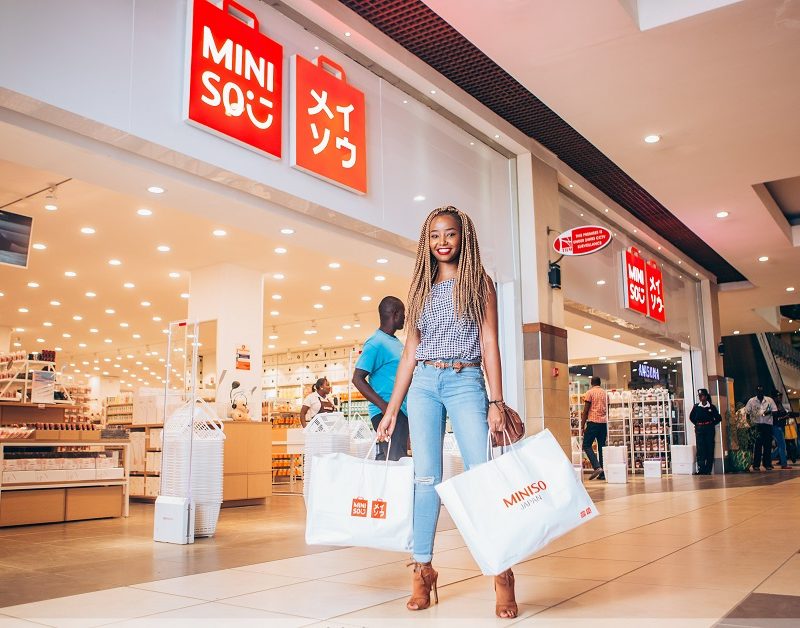
    Chinese discount variety store Miniso will open a flagship store in New York City next month, a move it describes as its biggest milestone since its foundation in 2013.

    The new store, located on the first floor of 5 Times Square, will offer customers almost 2000 different products.

    The new flagship will feature an updated design and nine distinct zones, including licenced collections, blind box collectibles, toys, plushies, fragrances, accessories, makeup tools, snacks, and gifts & stationery.

    According to Miniso, the overall design will be simple and clean, concentrating on licenced products from international brands like Sanrio, Hello Kitty’s parent, which will be included in the window design for the store’s launch. Miniso says it plans to bring more brand collaborations to the US market, including Peanuts, Barbie and Mario Bros.

    “The opening of the Times Square store is a crucial step towards our transformation and upgrade,” said Jack Ye, founder and CEO of Miniso.

    “Times Square is the Crossroads of the World and a hub of business, entertainment and culture. By making a physical presence in one of the busiest pedestrian areas, Miniso appeals to New Yorkers and visitors worldwide and responds to consumer demands for attractive, fun, useful, and affordable products.”

    Miniso unveiled its new worldwide strategy earlier this year, stating that it will convert into a lifestyle superbrand that brings joy to clients worldwide.

    In addition, the Chinese retailer also disclosed to expand into four new markets: Panama, Angola, Trinidad and Tobago, and Latvia, at the beginning of this month.

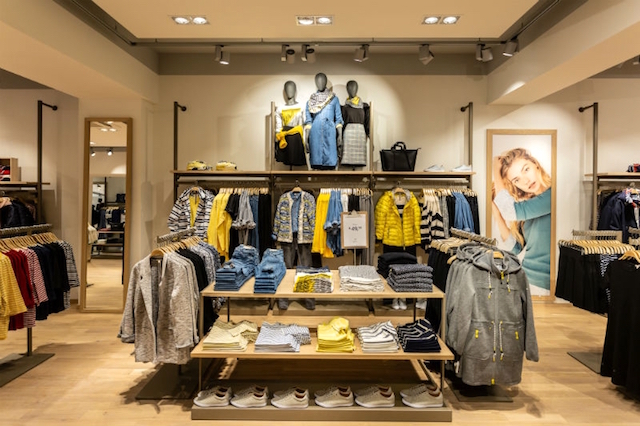
  • Esprit opens innovation hubs in New York and London

    Esprit opens innovation hubs in New York and London

    Esprit has announced London and New York as two new locations for its Futura innovation hubs. Futura is part of its digital strategy to “reinvent customer engagement experiences by turning data into insights, fuelling the brand’s global expansion matched to the fast-growing scale of digital change in today’s fashion retail landscape”.

    As part of its wider strategy, the brand has been moving key functions to strategic locations, “creating a truly global presence”. It said the two metropolises are global cities “with strong cultural influences and 24-hour connectivity. They will be heavily integrated and connected to the brand’s commitment to digital and creative innovation”.

    New York will be the global creative and design hub “to inspire forward thinking and bring contemporary concepts and talent to its new branding strategy”. This is intended to “solidify the ambition to rebrand one of the world’s most iconic companies. [It] will take the lead in Esprit’s rebranding venture”.

    Futura London will be the firm’s global customer experience innovation hub “to provide unique customer experiences for an avant-garde omnichannel connection to the Esprit universe”.

    They join the existing Amsterdam hub that combines e-commerce and technological advancement. As the first physical hub, “it will lead in driving portfolio management innovation, creation of new ideas and pilots, enhancing and renewing the existing omnichannel business, and digital execution”.

    The company said the steps it’s taking are an important part of “turning the iconic brand into an omnichannel technology and data-driven fashion powerhouse”.

    The new hubs “aim to create transformative change in culture, mindset, and business process, discover new growth opportunities for Esprit, and improve innovation performance through a technology-driven approach that focuses on customer experience and embraces circularity”. This new structure “will also provide opportunities to enable staff to have more flexibility with increased international exposure”.

    CEO William Pak said: “Esprit is in the process of transforming into a truly global company with the creative minds and processes in key cities enabling consumers to be connected to the brand on a multi-dimensional level. This enables [it] to adapt to major challenges in fashion and the macro environment in order to propel into the future. Creating an exciting customer experience with smart design and a connection to the brand is an exciting path forward.”

  • Asics shutters New York flagship as Covid plagues business

    Asics shutters New York flagship as Covid plagues business

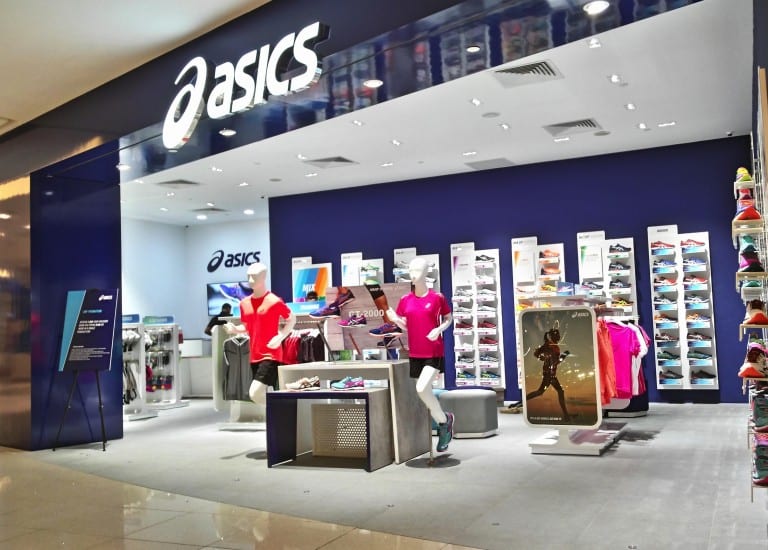
    Japanese sporting goods maker Asics closed down its New York flagship store in December amid the prolonged impact of the COVID-19 pandemic, the company announced on Monday.

    The store opened in December 2017 on Fifth Avenue, selling running shoes and sportswear. Asics’s decision comes as high rent bites the company, on top of uncertainties around when the pandemic will end.

    Due to the store’s closure, the sports brand is taking an extraordinary loss of about 2.3 billion yen ($22 million) for the fiscal year ended December 2020. The loss is already included in the latest earnings forecast.

    Asics’ sales in North America declined by 19% between January and September 2020, compared to the same period in 2019. The company is expected to take a net loss of 17 billion yen in fiscal 2020. Sales are forecast to decline by 15% to 320 billion yen.

  • World-first Sour Patch Kids store launches in New York City

    World-first Sour Patch Kids store launches in New York City

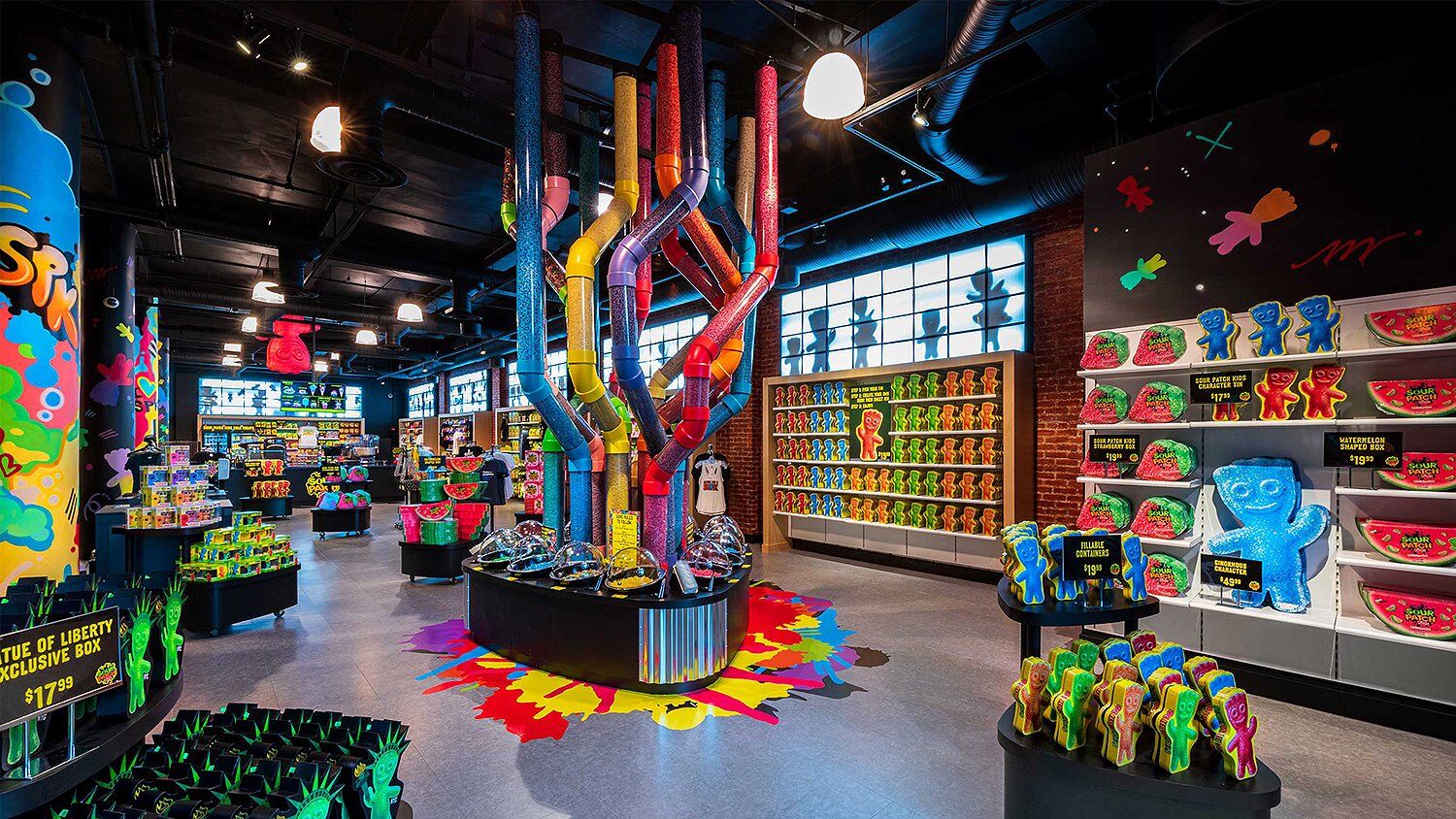
    Soft-candy brand Sour Patch Kids has launched a world-first store in New York City selling confectionery and a raft of themed products.

    Located between New York University’s Washington Square campus and the SoHo Shopping district, Bond Street and Broadway, the Kids’ permanent home features a wide selection of the brand’s merchandise, including mugs, t-shirts, socks, and beach totes.

    “We created this new experience for our fans to engage with the Sour Patch Kids brand on a whole new level, but of course understand that these are uncertain times,” said Danielle Freid, the brand’s manager.

    “With this store as our new permanent home, we want our fans to know that the Kids aren’t going anywhere. We welcome visitors to join us for a colorful, flavourful experience whenever they’re ready to explore the city again,” he said.

    Operated by specialty candy retailer It’sugar, the store also houses a Sour Patch Kids Sweets Bar where customers can find a selection of desserts, including ice creams, smoothies, and cookies.

    The Kids’ store also features a create-your-own candy mix station and a full-size Instagrammable Yellow Cab for customers to take photos with.

    “The concept behind this store is about bringing the beloved Sour Patch Kids brand to life through exclusive products and unique experiences,” said Jeff Rubin, CEO of It’sugar.

    As New York City just begins to reopen, to ensure visitors’ safety, the Sour Patch Kids’ customers are required to follow social distancing and wear face coverings. The Sweets Bar features only a to-go menu until indoor dining is allowed.

  • New York fashion label Sies Marjan closes its door

    New York fashion label Sies Marjan closes its door

    New York-based luxury fashion label Sies Marjan has shut down its operations after five years in business.

    Although the brand was backed by billionaire investors, Sies Marjan was financially affected by the impact of Covid-19 pandemic.

    “What we have worked on has been a dream come true,” said Sander Lak, creative director of Sies Marjan. “Thank you to everyone who has given their time and talent to Sies Marjan over the years.

    “We have built a singular brand whose legacy is not just in the clothes and collections but within each person who contributed along the way.”

    Named after Lak’s parents, Sies Marjan made its debut at the New York Fashion Week in 2016 and became famous for its colourful palette.

    The luxury brand successfully secured funding from billionaires, Howard and Nancy Marks, with an estimated net worth of US$2.2 billion. However, Sies Marjan faced a setback after its major stockist Barney New York went bankrupt last year.

  • Tiffany Flagship Next Door opens in New York

    Tiffany Flagship Next Door opens in New York

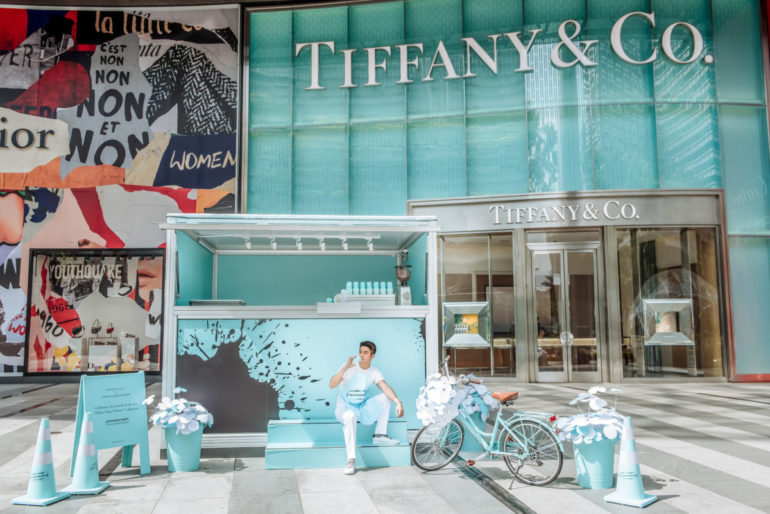
    Tiffany & Co has opened The Tiffany Flagship Next Door – a two-year pop-up store in New York City.

    Located at the adjacent 6 East 57th Street, the Flagship Next Door will serve as Tiffany’s New York City flagship store until the transformation of No 727 Fifth Avenue is complete next year.

    The store’s main floor features high jewellery and famous collections including Tiffany T, Tiffany Paper Flowers, Tiffany Victoria, Tiffany Keys, and Tiffany HardWear. The Tiffany Men’s Collections is presented on the second floor, while third floor displays love and engagement collections and the fourth floor offers homewares and accessories

    The Tiffany Flagship Next Door also features private selling rooms and a VIP salon, offering customers the same level of service that they were accustomed to in the original flagship store.

    The store is designed around a vaulted, escalator-flanked atrium and retains “a playful, fun look with a modernised attitude”, the company said in a statement. Inspired by the original store, the new store’s interior uses concrete and stainless steel as its main materials.

    Tiffany brand codes are displayed throughout the store, from wood paneling with Tiffany’s Flora and Fauna motif stenciled onto crates, to Tiffany’s signature Wheat Leaf motif reimagined as a ‘Color Block’ painted feature wall.

    “We have created something truly unique and visually dynamic with this space,” said Reed Krakoff, chief artistic officer at Tiffany & Co.

    Tiffany unveiled its transformation plans for its iconic New York City flagship store last year. The building is an architectural icon that has served as the cornerstone of Manhattan’s shopping district since 1940. The brand says the transformation of the New York flagship store marks a new chapter on Fifth Avenue and further interlaces the brand into the fabric of New York City.