Retail News CRM

Tag: oil

  • Coconut Oil Prices Skyrocket In Asia: Exploring The Causes And Impact On Global Market

    Coconut Oil Prices Skyrocket In Asia: Exploring The Causes And Impact On Global Market

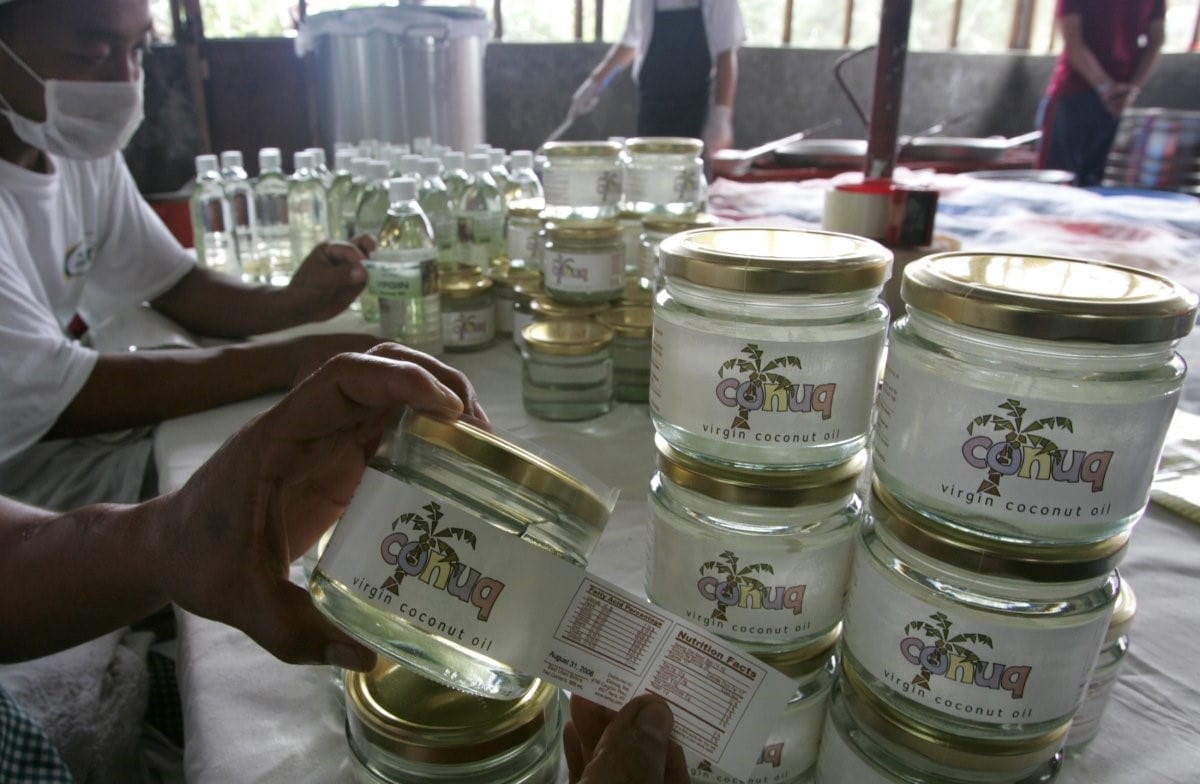
    Coconut oil prices are soaring in Asia, spearheaded by India—the largest consumer of the product—which has witnessed a tripling in prices within two years. This is attributable to a combination of supply shortages and burgeoning demand for the nutrient-filled water found within the coconut, elevating this common kitchen ingredient to a luxury commodity.

    Consumer Adjustments

    The escalating prices have put coconut oil beyond the reach of many budget-conscious consumers. As such, those who were once fond of its unique flavor, deeply entrenched in regional cuisines, are now exploring alternatives. For instance, Leelamma Cherian, a resident of Kerala in southern India, has stated intentions to switch to the more affordable refined sunflower oil for day-to-day cooking, reserving coconut oil for dishes where its flavor is critical.

    Price Surge Contributions

    The price increase, which began in the second half of 2024, was further propelled by production interruptions across many of the main producer nations, from India to Southeast Asia. These interruptions were due to seasons marked by decreased rainfall, extended heat, and increased damage from pests and diseases. Prices in India have nearly tripled in less than two years, reaching a record high of 423,000 rupees (US $4840) per metric ton, while global prices have swelled to an unprecedented $2990 per ton over the same period.

    Predictions by the International Coconut Community

    The International Coconut Community (ICC), a consortium of producer nations, predicts that the increasing demand amid production restrictions will maintain second-half global prices within the US $2500 to $2700 range, far exceeding the 2023 figure of approximately $1000.

    Effects of Price Surge

    This price surge is also impacting green coconuts harvested for their electrolyte-rich water, and other products such as copra, milk, and powder. It is putting pressure on manufacturers of shampoo and skincare items, who value the oil for its high lauric acid content.

    Challenges to Coconut Oil Production

    Worldwide, coconut oil production is declining as trees age, replanting efforts fall short, and plantations struggle with a scarcity of superior seed varieties. Weather conditions veering from hot, dry spells to sudden heavy rainfall are also disrupting coconut production. Additionally, the neglect of plantations and unfavorable weather in recent years are likely to hinder a broader production recovery, especially when supplies of other similar lauric oils are limited.

    Global Demand

    While coconut oil is a favorite among Asian consumers, other coconut products such as copra, coconut cream, and milk, are in high demand in Britain, China, Europe, Malaysia, the United States, and the United Arab Emirates. To seize the opportunity presented by this burgeoning demand, Indonesian farmers are increasingly exporting whole coconuts instead of processing them for their oil.

    Questions & Answers

    What has been the impact of the coconut oil price surge?
    The price surge has affected a range of related products, including green coconuts harvested for water, copra, milk, and powder. It has also put pressure on manufacturers of hair and skincare products, who value the oil for its high lauric acid content.

    Why is coconut oil popular in the market?
    Coconut oil is popular for its unique flavor, deeply embedded in regional cuisines, and its high content of lauric acid, which is prized by the hair and skincare industry.

    What measures are being taken to stabilize the price of coconut oil?
    To stabilize prices, the Association in Indonesia has urged for a suspension of coconut exports for six to 12 months. In India, the Solvent Extractors’ Association has appealed to New Delhi to permit imports of coconut oil and copra.


  • Vietnam to Inspect Cooking Oil Producers After Uncovering Animal-Feed Oil Scandal

    Vietnam to Inspect Cooking Oil Producers After Uncovering Animal-Feed Oil Scandal

    In a proactive move to bolster food safety, Vietnam’s Industry Agency announced plans to conduct thorough inspections at oil production facilities, particularly focusing on smaller establishments that may lack adequate safety certification. This initiative aims to address growing concerns over substandard cooking oils entering the market.

    Following a significant crackdown on adulterated cooking oil, notably a case involving Nhat Minh Food Production and Import-Export Co., the Ministry of Industry and Trade is ramping up its market oversight. Reports revealed that authorities in northern Hung Yen Province discovered the company had unscrupulously imported seed oil meant for animal feed, rebranding it as “OFOOD” to pass it off as cooking oil. The mislabeling scam has reportedly led to the sale of tens of thousands of tons of this fake cooking oil, predominantly to industrial kitchens, restaurants, and food processing units.

    The deceptive seed oil lacks essential food safety and hygiene standards and is devoid of nutritional value, raising alarms about consumer safety. While the ministry acknowledged that Nhat Minh had submitted a self-declaration for its seed oil product, it also noted the absence of a food safety certificate, leading to further scrutiny. Intriguingly, despite the alarming findings, local authorities had not previously raised concerns regarding the company’s operations, making this revelation all the more startling.

    Now, the ministry is determined to investigate thoroughly, promising to safeguard the food industry and restore confidence among consumers. In a previous enforcement action, authorities seized 71,000 liters of illegitimate cooking oil and 40 tons of counterfeit monosodium glutamate (MSG) in Phu Tho, products that had infiltrated various sales channels, including social media and local markets within industrial zones. The trend of uncovering substandard and adulterated food products suggests a deeper issue within the food supply chain.

    The risks associated with consuming unsafe food extend beyond immediate health issues such as diarrhea and food poisoning. Long-term effects like liver and kidney damage, reproductive health disorders, and other complications from chemical or microbial contamination pose serious threats to public health, significantly straining healthcare resources.

    Vietnam’s cooking oil market, with an annual demand of 1.5 million tons, represents a substantial economic segment, valued at approximately VND30 trillion (US$1.15 billion). As scrutiny intensifies, the hope is that stronger regulations will ensure that consumers no longer have to play detective in their quest for safe food options.

    Questions & Answers

    What prompted the inspections of cooking oil production facilities in Vietnam?
    The inspections were initiated following a significant scandal involving Nhat Minh Food Production, which sold adulterated cooking oil labeled as safe despite being made from seed oil intended for animal feed.

    What health risks are associated with consuming substandard cooking oils?
    Consuming unsafe cooking oils can lead to immediate health issues like diarrhea and food poisoning, as well as long-term risks such as liver and kidney damage and reproductive health disorders due to contamination.

    How large is Vietnam’s cooking oil market?
    Vietnam’s cooking oil market has an annual demand of 1.5 million tons, translating into a market value of around VND30 trillion (US$1.15 billion).

  • India’s Imports Of Cheap Russian Crude Surge Since Ukraine Invasion

    India’s Imports Of Cheap Russian Crude Surge Since Ukraine Invasion

    India has received 34 million barrels of discounted Russian oil since Moscow invaded Ukraine on Feb. 24, according to Refinitiv Eikon data, more than trebling the value of total imports from Russia, including other products, compared with the same period of 2021. The volumes of India’s seaborne oil imports from Russia exclude CPC Blend oil, which is also exported via Russia’s Black Sea port, but mostly supplied by Kazakhstan’s subsidiaries of western countries as transit volumes.

    India’s oil imports from Russia have been rising since February, as Asia’s third largest economy and the world’s third biggest oil importer, turned to deeply discounted Russian oil, mostly Urals crude, to cut its imports bill.

    The country received more than 24 million barrels of Russian crude this month, up from 7.2 million barrels in April and about 3 million in March, and is set to receive about 28 million barrels in June, according to Refinitiv Eikon oil flows.

    Surging energy imports helped push India’s total goods imports from Russia between Feb. 24 and May 26 to $6.4 billion, compared with $1.99 billion in the same period last year, according to government figures seen by Reuters.

    India’s exports to Russia, however, fell nearly 50% to $377.07 million over that period, as its government is yet to set up a formal payment mechanism.

    As the West responded to the invasion with a barrage of sanctions, India has come under fire for its continued purchases of Russian energy. New Delhi has brushed off the criticism, saying those imports made only a fraction of the country’s overall needs and has said it will keep buying “cheap” Russian oil, arguing a sudden stop would drive up costs for its consumers.

    Russian and Indian energy companies have also been discussing term supply agreements and possible acquisitions of stakes in Russian oil and gas projects.

  • Oil Price Benchmarks Fall Below $100, First Time In Weeks

    Oil Price Benchmarks Fall Below $100, First Time In Weeks

    Oil prices tumbled more than 6% on Tuesday to their lowest in almost three weeks, as Russia suggested it would allow a revival of the Iran nuclear deal to go forward and as traders worried growing pandemic lockdowns in China could dent demand. Both Brent and U.S. crude futures benchmarks settled below $100 per barrel for the first time since late February. Since reaching 14-year highs on March 7, Brent has slid nearly $40 and WTI more than $30. Trading has been extremely volatile since Russia invaded Ukraine more than two weeks ago.

    During the session, Brent futures plummeted $6.99, or 6.5%, to settle at $99.91 a barrel. U.S. West Texas Intermediate (WTI) crude fell $6.57, or 6.4%, to settle at $96.44 a barrel. Brent fell as low as $97.44 and WTI hit $93.53, their lowest since Feb. 25.

    On technical charts, both contracts moved the closest to oversold territory since December. They had been in overbought conditions during early March. Brent at one point topped $139 a barrel.

    Russia is the world’s largest exporter of crude and fuels. Numerous buyers have shunned Russian barrels since the invasion, sparking fears of a disruption of millions barrels of daily crude supply. Those fears now look overdone.

    On Tuesday a Ukrainian negotiator said talks with Russia over a ceasefire and withdrawal of Russian troops from Ukraine are ongoing. The ensuing sell-off drove prices lower but many expect volatility to continue.

    “Whilst reports of promising talks are to be welcomed, it is hard to see how either side at this stage would be prepared to make concessions that would be acceptable to any party,” said a research note from Kpler. “In this current situation, it is hard to see how crude oil prices are not being under-priced.”

    Also on Tuesday, Russia said it has written guarantees it can carry out its work as a party to the Iran nuclear deal, suggesting Moscow would allow a revival of the tattered 2015 pact to go ahead.

    The talks to revive the nuclear accord could lead to the lifting of sanctions on Iran’s oil sector and allow Tehran to resume crude exports. They had stalled because of Russian demands.

    In the fallout from Russia’s invasion, which it calls a “special operation,” Western sanctions have failed to deter China and India from buying Russian crude.

    The Organization of the Petroleum Exporting Countries said oil demand in 2022 faced challenges from the invasion and rising inflation as crude prices soar, increasing the likelihood of reductions to its forecast for robust demand this year.

    China saw a steep jump in daily COVID-19 infections, which could slow the current pace of consumption as that nation shifts to lockdowns.

    “It is estimated that a severe lockdown in China could put 0.5 million bpd of oil consumption at risk, which would be further compounded by fuel shortages due to inflated energy prices,” said Louise Dickson, senior oil market analyst for Rystad Energy.

    The U.S. Federal Reserve is widely expected to raise interest rates by 25 basis points on Wednesday for the first time in four years to fight soaring inflation. This could strengthen the U.S. dollar and dampen demand for oil and other commodities priced in greenbacks.

    Preliminary data from the American Petroleum Institute showed U.S. crude inventories rose by 3.8 million barrels for the week ended March 11 while gasoline inventories fell by 3.8 million barrels and distillate stocks rose by 888,000 barrels, according to sources, who spoke on condition of anonymity. [API/S]

    Official U.S. government inventory data is due on Wednesday.

  • ExxonMobil Launches Mobil Super TM SUV Pro Synthetic Engine Oil

    ExxonMobil Launches Mobil Super TM SUV Pro Synthetic Engine Oil

    ExxonMobil Lubricant has launched Mobil SuperTM SUV Pro synthetic engine oil for SUVs in India. Basically, the company is trying to tap into the growing demand for SUVs with the branding. The engine oil is based on ASTM D6891 (Seq. IVA) test results versus API SN engine test requirements. The company claims that it offers 79 percent better engine wear protection as well, especially in stop-and-go traffic conditions, and helps to improve fuel-economy.

    Deepankar Banerjee, Chief Executive Officer (CEO), ExxonMobil Lubricants Pvt Ltd. Said, “People are turning to SUVs to more easily maneuver through dense traffic, handle bad weather conditions, and drive over rugged terrain. To meet the needs of SUV owners, we are introducing Mobil Super SUV Pro which is specially formulated with active ingredients for SUV engines. Whether you use your SUV for daily commute or weekend drives, our new Mobil Super SUV Pro is packed with features to deliver All-in-One Protection for every terrain, making it easier for all SUV owners to care for their cars.”

    The engine oil has been developed to provide superior low-speed pre-ignition protection to prevent internal engine damage along with all-weather protection for longer engine life. It also provides heat-activated anti-wear protection. The Mobil Super SUV Pro is suitable for both diesel and petrol engines and meets American Petroleum Institute (API) SN Plus and European Automobile Manufacturers’ Association (ACEA) A3/B4 Standards. Mobil Super SUV Pro is available in 1, 3.5, and 5-litre pack sizes at Mobil Authorized Retail stores, Mobil Car Care stores and Amazon.

  • Oil Falls In Biggest Weekly Decline In Months On Demand Worries

    Oil Falls In Biggest Weekly Decline In Months On Demand Worries

    Oil prices fell about 1% lower on Friday, posting to their steepest weekly losses in months, on worries that travel restrictions to curb the spread of the Delta variant of COVID-19 will derail the global recovery in energy demand. Crude futures also came under pressure as the dollar strengthened after monthly U.S. job growth came in higher than expected. A stronger dollar makes greenback-denominated oil more expensive for buyers in other currencies.

    Brent crude oil futures settled down 59 cents, or 0.8%, at $70.70, while U.S. West Texas Intermediate (WTI) crude futures fell 81, or 1.2%, to settle at $68.28 a barrel.

    For the week, global benchmark Brent shed more than 6%, its largest week of losses in four months, and WTI tumbled nearly 7% in its biggest weekly decline in nine months.

    “The price action we see now is really a function of the macro picture,” said Howie Lee, an economist at Singapore bank OCBC. “The Delta variant is now really starting to hit home and you see risk aversion in many markets, not just oil.”

    Growth in the rig count has slowed in recent months as drillers continue to focus on capital discipline.

    U.S. President Joe Biden said that COVID-19 cases in the United States, which have climbed to a six-month high, will go up before they come down and that the new Delta variant is taking a needless toll on the country.

    Japan is poised to expand emergency restrictions to more regions of the country, while China, the world’s second-largest oil consumer, has imposed curbs in some cities and canceled flights.

    “Increased travel restrictions in China have come under the microscope of traders and could become a key oil price mover as this month proceeds,” said Jim Ritterbusch, president of Ritterbusch and Associates LLC in Galena, Illinois.

    U.S. oil rigs rose two to 387 this week, energy services firm Baker Hughes Co said. Growth in the rig count has slowed in recent months as drillers continue to focus on capital discipline.

  • Oil Settles Up Near 3-Year Highs On Signs Of Demand Growth

    Oil Settles Up Near 3-Year Highs On Signs Of Demand Growth

    Oil prices steadied on Thursday, holding close to their highest in almost three years, supported by drawdowns in U.S. inventories and accelerating German economic activity.

    Prices also drew support from doubts about the future of the 2015 Iran nuclear deal that could end U.S. sanctions on Iranian crude exports.

    Brent settled up 37 cents, or 0.5%, to $75.56 a barrel by 12:28 p.m. EDT (1628 GMT), after earlier rising to $75.78. U.S. crude settled up 22 cent to $73.30 a barrel, after hitting a session high of $73.61 earlier.

    On Wednesday, both benchmarks hit their highest since October 2018.

    Data from Germany showed the largest upward leap in retail conditions since German reunification more than three decades ago, stoking expectations European fuel demand will recover.

    Across the Atlantic, U.S. crude inventories dropped to their lowest since March 2020, official data showed. U.S. gasoline stocks also posted a surprise draw.

    The Organization of the Petroleum Exporting Countries and its allies, a group known as OPEC+ that meets on July 1, have been discussing a further unwinding of last year’s record output cuts from August but no decision has been made, two OPEC+ sources said on Tuesday.

    On Wednesday, Iran said the United States had agreed to remove all sanctions on its oil and shipping but Washington said “nothing is agreed until everything is agreed” in talks to revive the 2015 Iran nuclear deal.

    The end of sanctions and a return of Iranian barrels to the global oil market “could still be months and not weeks away,” said Jim Ritterbusch, president of Ritterbusch and Associates in Galena, Illinois.

    Indian Oil Minister Dharmendra Pradhan on Thursday urged OPEC to phase out crude output cuts as high prices are stoking inflation.

    “Given the good sentiment and robust demand, OPEC+ is likely to find it easy next week to announce a further increase in production, at least for August, without jeopardizing the upswing enjoyed by the oil price,” Commerzbank analysts wrote.

    They said “the currently positive general tenor on the oil market” was driving prices up.

    Brent has gained more than 45% this year on the OPEC+ supply cuts and recovering demand. Some industry executives have talked of crude returning to $100 for the first time since 2014.

  • Petrolimex reports $44 mln profit

    Petrolimex reports $44 mln profit

    Petrolimex has reported pre-tax profits of over VND1 trillion ($44 million) in the first quarter thanks to the Covid-19 pandemic being contained and rising global oil prices.

    It has made a loss of VND1.7 trillion in the same period last year.

    The management of the country’s top fuel retailer said oil prices had risen 24 percent from last year to over $59 per barrel by the end of March.

    In the same period last year, they had plummeted 66 percent to around $22 per barrel.

    Revenues in the first quarter remained virtually unchanged from a year earlier, at VND38.2 trillion.

    It has targets of VND135.2 trillion in revenues and VND3.3 trillion in pre-tax profits, up 9 percent and 138 percent respectively, for the full year.

  • Crude oil exports plunge as resource depletes

    Crude oil exports plunge as resource depletes

    Vietnam’s crude oil export is plunging, partly because of depleting resources. An industrialist says the situation can only improve after new fields come online in several years.

    Crude exports volume from January 1 to February 15 this year fell nearly 50 percent year-on-year to 354,700 tonnes, according to Vietnam Customs.

    Most of Vietnam’s oil and gas fields have been harnessed for over 20 years ago and run their course, said Hoang Ngoc Trung, deputy director of Petrovietnam Exploration Production Corporation Ltd.

    In the last five years, crude oil prices have been falling, which has affected investment in searching for new fields, he told the Tuoi Tre newspaper.

    The corporation’s output was 3.8 million tonnes last year, down marginally from 2019, and the figure is set to fall another 10 percent this year.

    However, Vietnam’s crude oil prices remain higher than the global average.

    The global average price of Brent crude oil last year was $41.8 per barrel, but Vietnam sold them for $43.7, 4.5 percent higher.

    In the first two months, Brent crude was $58.53 per barrel, compared to $59.94 percent in Vietnam.

    Trung said exploitation volume is set to recover in the next two or three years with several new fields such as Dai Hung and White Lion coming online.

  • Japan’s top energy company to increase Petrolimex stake

    Japan’s top energy company to increase Petrolimex stake

    Japanese oil giant ENEOS Corporation has registered to buy 25 million shares of fuel distributor Petrolimex on the Ho Chi Minh Stock Exchange.

    The transaction, to be completed in March, if successful, will see ENEOS increase its stake in Petrolimex to 2.94 percent. It had acquired a 1 percent stake last September.

    Petrolimex’s PLX shares closed at VND57,300 on February 24, and at this price the deal will cost ENEOS around VND1.4 trillion ($62 million).

    The company’s subsidiary, JX Nippon Oil & Energy Vietnam Consulting and Holdings Company Limited, owns another 8 percent stake in Petrolimex.

    ENEOS is the largest oil company in Japan with a 47 percent market share.

    In 2020, due to the impact of Covid-19, Petrolimex saw revenues fall 34.5 percent to VND123.9 trillion. Its net profit was VND1.2 trillion, a 73.6 percent fall.

  • With Oil Past Peak, Shell Vows To Eliminate Carbon By 2050

    With Oil Past Peak, Shell Vows To Eliminate Carbon By 2050

    Energy giant Royal Dutch Shell vowed to eliminate net carbon emissions by 2050, raising its ambition from previous targets, as oil output was set to decline from its 2019 peak. The Anglo-Dutch company is in the midst of its largest overhaul yet as it prepares to expand its renewables and low-carbon business in the face of growing investor pressure on the oil and gas sector to battle climate change. Shell last year laid out a plan to reach net-zero by 2050, in line with the Paris climate agreement and European Union ambitions, but it said the goal depended on its customers.

    In a strategy update on Thursday, Shell outlined plans focused on rapid growth of its low-carbon businesses, including biofuels and hydrogen, although spending will stay tilted towards oil and gas in the near future.

    “We will use our established strengths to build on our competitive portfolio as we make the transition,” CEO Ben van Beurden said in a statement. Investors welcomed the upgraded targets.

    “Shell’s net-zero target is industry-leading and comprehensive as it covers all their carbon emissions,” Adam Matthews, Director of Ethics & Engagement for the Church of England Pensions Board, who led investor engagement with Shell, said in a statement.

    Shareholders will be able to vote on Shell’s transition plan at this year’s general meeting, an industry first, Matthews added.

    Shell shares were down 1.1% at 0840 GMT. Its strategy is to continue to rely on its retail business, the world’s largest, aiming to increase the number of sites to 55,000 by 2025 from today’s 46,000 and increase the number of electric vehicle charging points to 500,000 from 60,000 now.

    Shell did not outline any plans to grow its solar and wind power generation capacity, marking a difference from rivals, such as BP and Total, which both aim to boost their ownership of physical wind and solar farms.

    In the near term, Shell will invest at least $5 billion a year in what it calls its growth pillar, dividing the investment roughly equally between its trading and retail business and renewables units. It previously aimed to spend up to $3 billion on renewables and marketing combined.

    Its upstream business, or oil and gas production, will attract a larger share of its budget at $8 billion. It will also spend $4 billion on its liquefied natural gas (LNG) business and up to $5 billion on chemicals and refining.

    Total spending is expected to remain within a range of $19 to $22 billion per year.

    Shell, which said its greenhouse gas emissions peaked in 2018, accelerated its plans to reduce carbon emissions. It aims to reduce its net intensity by between 6% and 8% from 2016 levels by 2023. The target rises to 20% by 2030, 45% by 2035 and 100% by the middle of the century. The company previously said it would reduce its net carbon footprint emission intensity metric by at least 3% by 2022, 30% by 2035 and 65% by 2050 from a 2016 baseline.

    Intensity levels represent emissions per unit of energy produced, technically allowing higher production. Most European energy majors have set some kind of net-zero carbon target by 2050.

    Shell’s ambition differs from BP’s in that it covers the emissions from the end-use of products other companies have produced but which Shell sells to customers.

    Shell’s total carbon emissions, which include its own production as well as sales of products to customers, peaked in 2018 at 1.7 gigatonnes. Shell is the world’s largest oil and gas trader. Oil production is expected to gradually be reduced by 1% to 2% each year from a 2019 peak of around 1.8 million barrels per day, including divestments of oilfields and the natural decline of fields. But it will rely on revenue from its oil and gas division to pay for shareholder returns and the transition. BP aims to reduce its oil output by 40% by 2030.

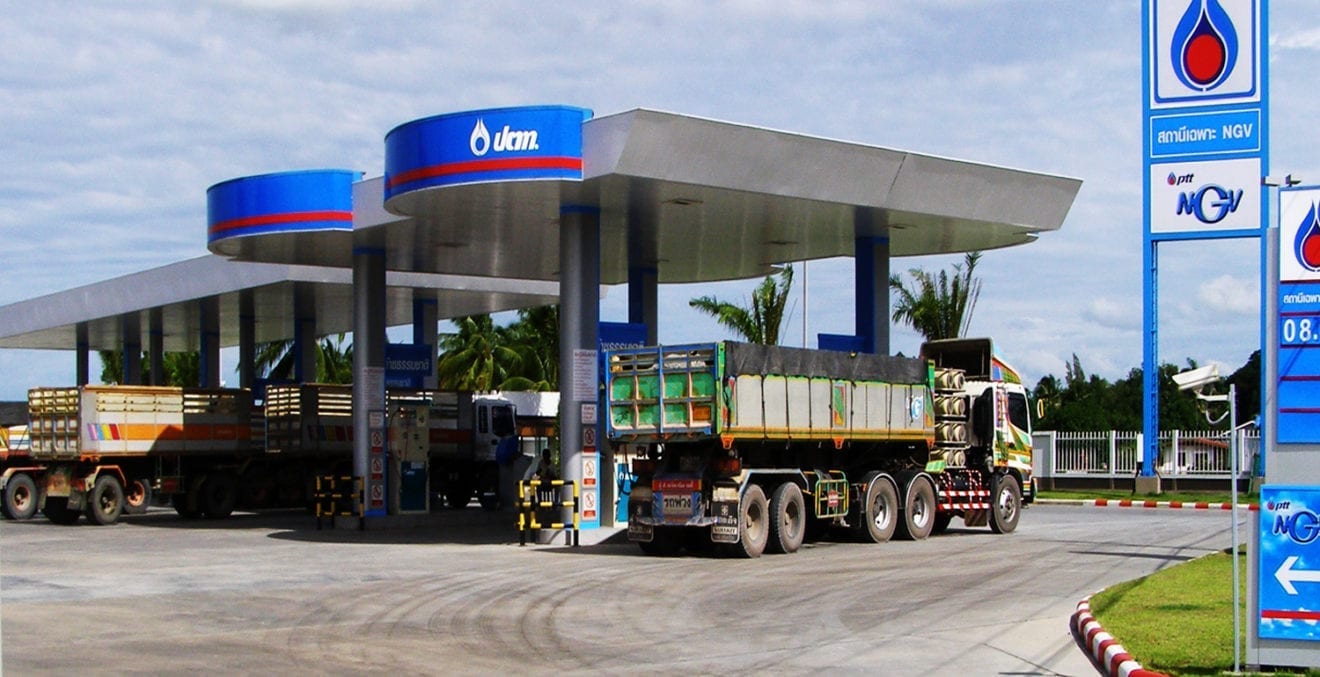
  • Thai oil company PTT joins race for Tesco

    Thai oil company PTT joins race for Tesco

    Thai oil company PTT is said to be preparing to make a bid for the Tesco Asia businesses in Malaysia and Thailand.

    The firm’s retail unit, which also owns the rapidly growing Cafe Amazon chain, will join local retailer Central Group and conglomerate Charoen Pokphand in first-round bids.

    At the beginning of this month, Bloomberg sources were tipping the Tesco Asia business could fetch as much as US$7 billion. But this week, Reuters sources are estimating the deal to be worth as much as US$9 billion. If one of the Thai suitors is successful, the deal could potentially be the second-largest acquisition ever by a Thai company.

    Tesco currently operates about 2000 outlets in Thailand, and another 74 in Malaysia in a local partnership with Sime Darby Group.

    Tesco announced in December it was reviewing the future of the business after receiving expressions of interest. As Inside Retail Asia reported earlier this month, Thai billionaire Dhanin Chearavanont, who owns the Charoen Pokphand Group, and the Chirathivat family-controlled Central Group are among a group of potential investors in discussions with Tesco.

    Meanwhile, Reuters has reported that Thailand’s Office of Trade Competition Commission has issued a rare warning under the country’s anti-monopoly laws, saying it will closely monitor any deal.

    Thai oil company PTT is actively pursuing business expansion outside its core fuel-retailing business. The company is rolling out Amazon Cafe outlets across Southeast Asia, with the latest markets including Singapore and Vietnam.

    In late 2018, the company said it planned to open 20,000 cafes globally, nearly 10 times its then the network of 2300 outlets in Thailand, the Philippines, Laos, Cambodia, Myanmar, and Japan.

  • Vietnam’s Q1 coffee exports down 15.3 percent on-year

    Vietnam’s Q1 coffee exports down 15.3 percent on-year

    Vietnam’s coffee exports in Q1 are expected to fall 15.3 percent from a year earlier to 477,000 tonnes, government data showed Friday.

    Coffee

    Coffee exports from Vietnam will likely fall an estimated 15.3 percent in the first quarter of this year from a year earlier to 477,000 tonnes, equal to 7.95 million 60-kg bags, the General Statistics Office said in a report on Friday.

    Coffee export revenue for Vietnam, the world’s biggest producer of the robusta bean, will likely decline 23.8 percent to $830 million in the three-month period, the report said.

    The country’s coffee shipments in March are estimated at 160,000 tonnes valued at $278 million, it said.

    Rice

    Rice exports in the first quarter from Vietnam were forecast to fall 11.5 percent from a year earlier to 1.31 million tonnes.

    Revenue from rice exports in the period was expected to drop 23.6 percent to $567 million.

    March rice exports from Vietnam, the world’s third-largest shipper of the grain, totalled 600,000 tonnes, worth $256 million.

    Energy

    Vietnam’s first-quarter crude oil exports were seen rising 7.7 percent from the same period last year to an estimated 1.07 million tonnes.

    Crude oil export revenue in January to March is expected to fall 3.5 percent to $507 million.

    Oil product imports in the first quarter were estimated at 2.0 million tonnes, falling 42.6 percent from the same period last year, while the value of product imports fell 47.6 percent to $1.17 billion.

    Vietnam’s January to March liquefied petroleum gas imports were seen falling 7.9 percent from a year earlier to 349,000 tonnes.

  • Global legal cannabis market growth stable

    Global legal cannabis market growth stable

    The volume of the legal cannabis market is expected to soar nearly 14-fold within six years according to research by Euromonitor International. Legal cannabis sales reached US$12 billion globally last year with exponential growth ahead, will reach $166 billion by 2025, based on Euromonitor’s projections.

    The global cannabis market, both legal and illicit, stands at $150 billion today, according to the firm’s new white paper. By 2025, legal cannabis will represent 77 per cent of the global market.

    “Within 10 years, cannabis will be a regular part of daily routines,” said Zora Milenkovic, head of drinks and tobacco at Euromonitor International. “From a functional ingredient to an intoxicating buzz, cannabis will reshape fast-moving consumer goods, with food, beverages, beauty, health and tobacco having the most potential for disruption.”

    The greatest potential for cannabis is to capitalise on health and wellness trends that are shifting consumption habits and consumer preferences across industries.

    The growth of low- and non-alcoholic beverage consumption and the shift from cigarettes to vaping provide an opportunity for cannabis to replace alcohol and tobacco in social occasions.

    From 2018 to 2025, legal cannabis is estimated to grow more than 2000 per cent globally, compared to alcoholic drinks at 1.4 per cent and tobacco at 1.2 per cent, according to the report.

    In consumer health, Euromonitor expects vitamins and dietary supplements to be the largest cannabis-related category by 2025, with 2 per cent of sales to come from products containing THC or cannabidiol, better known as CBD. It projects global sales of packaged food with CBD to double over the next two years, further blurring the lines between consumer health and food.

    Last week a US analyst singled out Starbucks as one of the first major companies globally to adopt CBD ingredients in consumer products, however the Seattle-based company denied it had any plans to develop such beverages at this time.

  • Oil price drops as global economic concerns grip market

    Oil price drops as global economic concerns grip market

    Oil price fell about 2 percent on Thursday as the market was weighed down by concerns that global demand growth would lag in the coming year. A rebound from late December lows seemed to stall amid worries that a trade war between the U.S. and China would continue, weighing on demand. The market also contended with the possibility that oil producers would not adhere strictly to cuts agreed to last year.

    Brent crude futures fell $1.06 a barrel, or 1.7 percent, to settle at $61.63. U.S. crude futures fell $1.37 a barrel, or 2.5 percent, to settle at $52.64.

    “The correction is stalled, mainly on concerns about demand growth,” said Gene McGillian, director of Market Research at Tradition Energy in Stamford, Connecticut. “There seems to be uncertainty about what is going to happen with the trade talks, with global economic growth and demand in the coming year,” he said.

    In particular, he said, the market is worried about whether demand is sufficient to absorb growing crude production from the U.S.

    “Supply fundamentals have increasingly been turning supportive in recent weeks, but against this the market still worries about the yet-to-be-realised – if at all – impact on demand from weaker macroeconomic fundamentals,” said Ole Hansen, head of commodity strategy at Saxo Bank.

    Though the United States published robust jobs data last week, global markets remain nervous after China reported the lowest annual economic growth in nearly 30 years in January. That focuses yet more attention on the outcome of U.S.-China talks to end the trade war between the world’s top two economies.

    The oil price also came under pressure as weekly data published by the U.S. Energy Information Administration on Wednesday showed an unwelcome increase in stocks of crude oil.

    A decline in OPEC production and a squeeze on supply from Iran and Venezuela because of U.S. sanctions have led many analysts to forecast that the market will be balanced in 2019.

    The oil price is showing a 20 percent gain so far this year.

    Price support is provided by supply cuts led by the Organization of the Petroleum Exporting Countries (OPEC) to tighten the market.

    Saudi Arabia, the world’s top oil exporter, told OPEC it had pumped 10.24 million barrels per day (bpd) in January, two OPEC sources said, a deeper cut than targeted in the supply pact. The kingdom pumped 10.643 million bpd in December.

    “We believe that financial markets may be overestimating the risks of a global recession,” said Jean-Pierre Durante, Head of Applied Research at Pictet Wealth Management.

    “Moreover, lower oil prices – prices were between 14 percent and 18 percent lower in January than their 2018 average – are likely to stimulate economic activity and oil demand, particularly in emerging markets.”

    U.S. sanctions against Venezuela’s oil industry are expected to freeze sales proceeds of Venezuelan crude exports to the United States.