Retail News CRM

Tag: oil

  • Petronas has sufficient headroom to absorb one-off exceptional dividend

    Petronas has sufficient headroom to absorb one-off exceptional dividend

    Petroliam Nasional Bhd’s (Petronas) solid balance sheet, sizeable net cash position and ample liquidity provide ample buffer against the payment of one-off dividend to the government that could reach RM30 billion. According to S&P Global Ratings, the financial impact of a one-off dividend of this size is moderate considering Petronas’ cash position and balance sheet quality.

    “The company can finance this dividend, given cash and short-term equivalent of nearly RM180 billion as of June 30, 2018; immaterial reported debt of about RM66.3 billion as of June 30, 2018 and a net cash position of nearly RM114 billion as of June 30, 2018; and solid operating cash flows,” it said in a statement.

    It added that the exceptional dividend of RM30 billion would effectively offset inflows of nearly RM30 billion the company received following the completion of the transaction with Saudi-based oil and gas producer Saudi Aramco in the first quarter of 2018.

    “We project Petronas will remain in a net cash position in 2019 and, depending on the pace of capital spending disbursement, in 2020 as well. This underpins our ‘aa’ stand-alone credit profile on the company.

    “We currently project operating cash flows of at least RM80 billion in 2019 amid higher hydrocarbon prices. These are sufficient to fund capital spending that we forecast at about RM55 billion and regular dividends to the government and minority interest that we estimate at about RM25 billion,” it said.

    The rating agency said the special dividend will not affect Petronas’ solid liquidity as the group’s short-term debt maturities were minimal at about RM11.5 billion as of June 30, 2018, representing less than 10% of its cash balance.

    “We estimate that Petronas’ balance sheet can absorb negative discretionary cash flows of RM40 billion for two years before the headroom under its ‘aa’ stand-alone credit profile starts to reduce. Assuming no change to the company’s investment plan, this implies additional one-off dividends of RM40 billion to RM50 billion, on top of the regular and exceptional dividends in the 2019 budget,” it said.

    It said that the special dividend validates its long-standing credit view that Petronas can be subject to periodic cash calls from the government given its solid financial position, high importance to the national budget and ownership control by the government.

    It added that a sustained period of higher oil prices over the next two to three years will translate into higher dividends from Petronas, and potentially, additional one-off dividends to the state.

    “We cap our issuer credit rating on Petronas (foreign currency A-/Stable/–; local currency A/Stable/–) to that of the sovereign of Malaysia (A-/Stable/A-2; local currency A/Stable/A-1), despite Petronas’ stronger stand-alone credit profile, given this government intervention risk.”
  • PetroVietnam says Tokyo Gas may help with power plant project in Vietnam

    PetroVietnam says Tokyo Gas may help with power plant project in Vietnam

    Tokyo Gas is interested in cooperating with Vietnam’s PetroVietnam Power Corp (PV Power) to develop a natural gas-fired power project in the Southeast Asian country. On Friday, PV Power’s parent said that Tokyo Gas wants to help secure long-term liquefied natural gas supplies and funds for the construction of the Nhon Trach 3 & 4 power plants in the southern province of Dong Nai, state-run Vietnam Oil and Gas Group said in a statement on its website.

    Tokyo Gas did not immediately respond to a request for comment made via its website.

    The statement follows a meeting between senior executives from PV Power and Tokyo Gas in Hanoi this week, PV Power said.

    The two plants, with a combined capacity of 1,500 megawatts, would be operational from 2020, according to PV Power.

  • Indonesia to Postpone Coal, Palm Oil Insurance Rules by Six Months

    Indonesia to Postpone Coal, Palm Oil Insurance Rules by Six Months

    The Ministry of Trade has decided to postpone for six months the application of rules saying coal and crude palm oil export shipments should use Indonesian insurers, the country’s leading coal industry association said.

    The decision would be the second time that application of the rules, issued in October and due to come into effect on Aug. 1, have been postponed.

    The rules were part of trade regulations intended to boost the role of the archipelago’s shipping industry and save foreign currency. Elements of the regulations were postponed in April to 2020 with little clarification from the trade ministry.

    The decision to postpone the insurance rules was announced by the ministry at a brief meeting with industry representatives on Thursday (26/07), Indonesian Coal Mining Association (ICMA) executive director Hendra Sinadia said.

    “Everybody is very anxious,” Hendra said, referring to coal buyers and exporters confused about how they could put the rules into practice for shipments sold on a free-on-board (FOB) basis, on which the vast majority of Indonesia’s coal exports are sent.

    Under FOB terms insurance is the responsibility of the buyer, Hendra noted.

    Trade Minister Enggartiasto Lukita is expected to formally announce the decision on his return from a visit to the United States, Hendra added. Enggartiasto is due to return to Jakarta on July 28, according to the trade ministry, though its representatives did not immediately respond to questions on the matter.

    Ido Hotna Hutabarat, chief executive of coal miner Bumi Resources unit Arutmin Indonesia, said the rules were unworkable.

    “This cannot be carried out for FOB sales because we don’t have rights to control the buyer,” he said, adding that FOB shipping terms were preferable as they were lower risk.

    Indonesian Palm Oil Association (Gapki) executive director Mukti Sardjono said on Wednesday Gapki would discuss how to implement the rules with the Trade Ministry. “We hope the implementation of this regulation won’t be a disincentive for exports,” he said.

    Dody Dalimunthe, executive director of the Association of General Insurance Companies of Indonesia (AAUI), said there were 73 Indonesian insurance companies that can cover coal and CPO shipping. “And many companies already use this insurance,” he said.

    Earlier, ICMA chairman Pandu Sjahrir said diplomats from several countries including Japan had asked the trade ministry for a transition period for the insurance rules to come into effect. The Japanese embassy did not respond to a written request for comment.

  • TAS Offshore posts RM1.56 million net loss in Q2

    TAS Offshore posts RM1.56 million net loss in Q2

    Shipbuilding firm TAS Offshore Bhd swung to the red registering a net loss of RM1.56 million for the second quarter ended November 30, 2017 against a net profit of RM489,000 in the previous corresponding period, due to unrealised forex losses as a result of the strengthening ringgit.

    Revenue however, jumped three times from RM2.92 million to RM11.71 million on progressive revenue recognition on shipbuilding contracts.

    TAS Offshore told Bursa Malaysia that despite signs of demand and supply finally finding a balance, the group will be cautious in its operation since the market is still uncertain due to the US shale oil industry.

    “However, in the long term, we envisage the oil price outlook to be positive due to the increase in demand for energy when industrial and development activities increase in tandem with the population growth and the demand for offshore support vessels will return.”

    For the first half of the year, TAS Offshore, however, reported a net profit of RM673,000 versus a net loss of RM642,000 in the same period a year ago, while revenue leaped over three fold from RM5.17 million to RM22.14 million.

    The stock closed unchanged 33.5 sen with some 147,000 shares changing hands.

  • PTT plans to double retail fuel margins

    PTT plans to double retail fuel margins

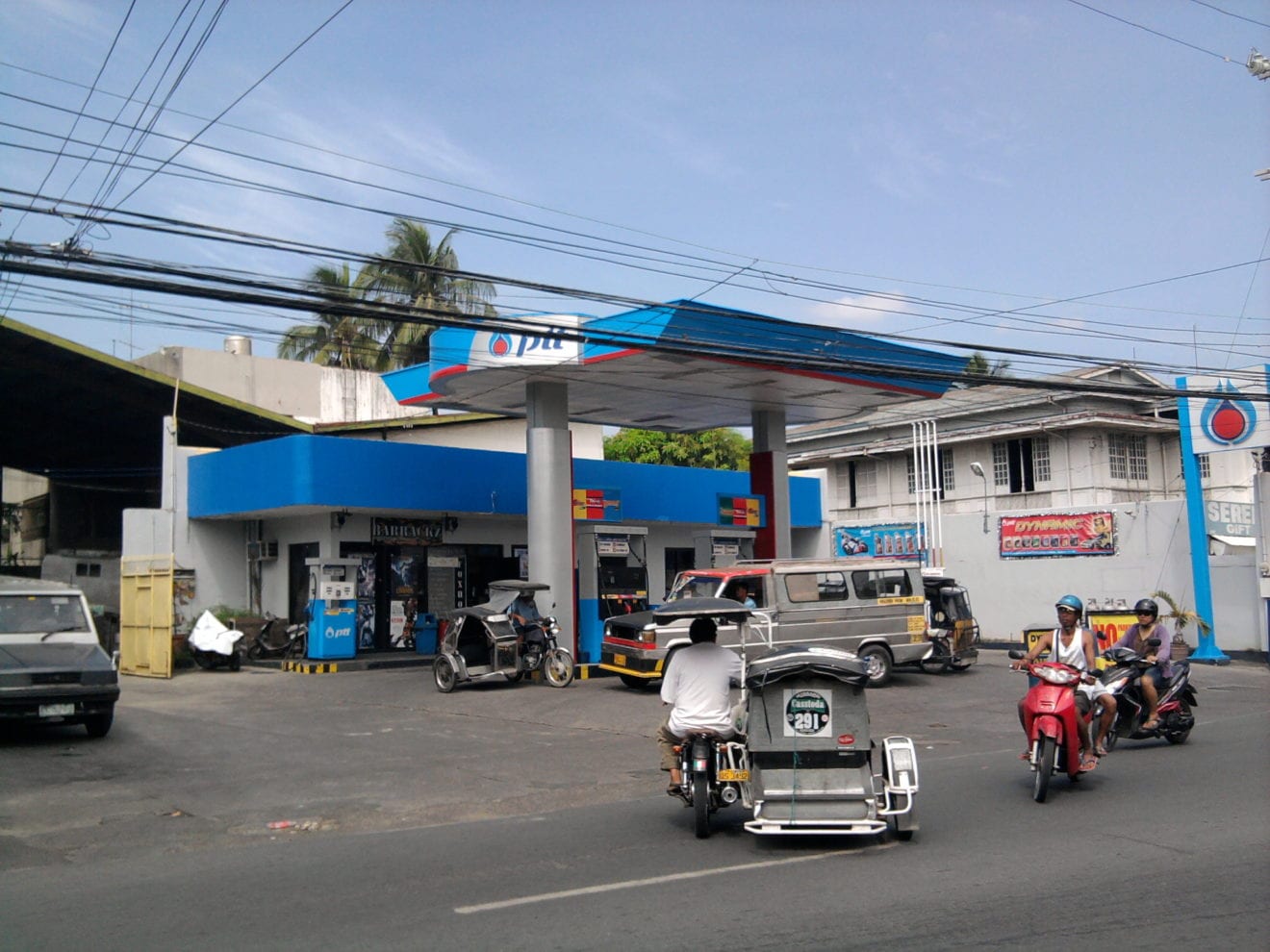
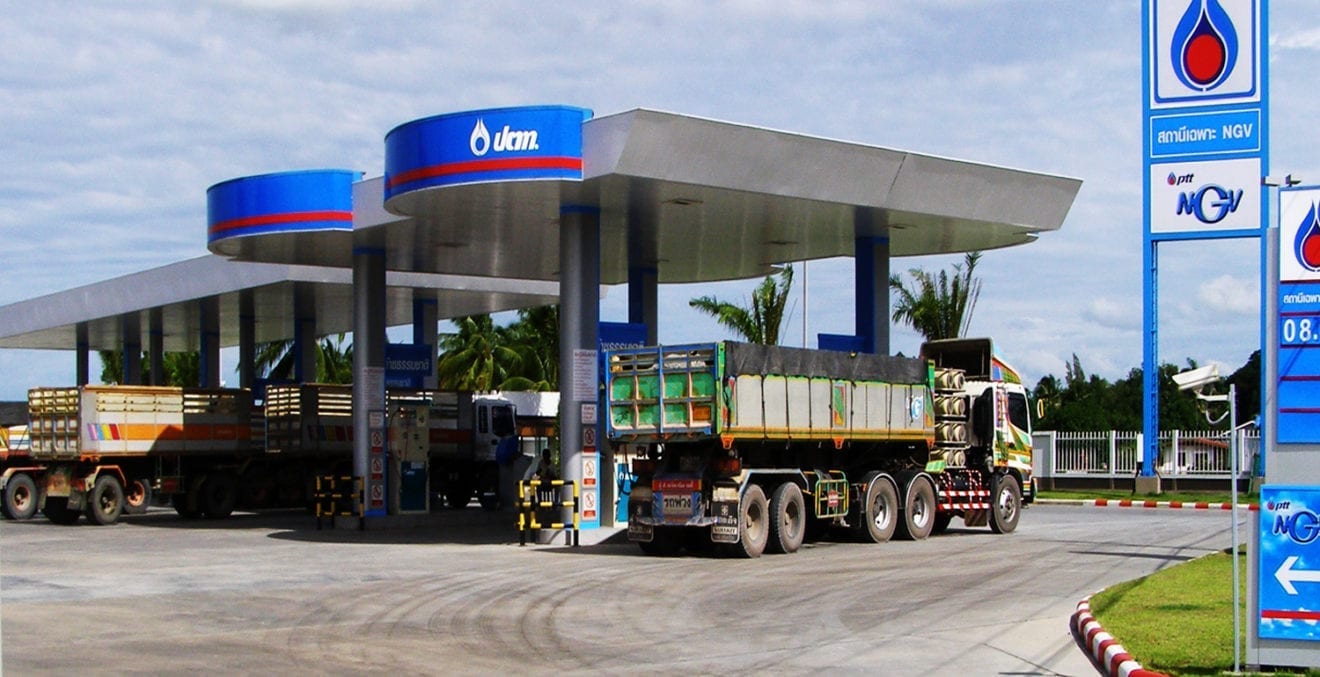
    PTT, the national oil and gas conglomerate, plans to double profit margin from fuel retailing business to 30% of total sales by 2022, says Auttapol Rerkpiboon, chief of operations for downstream petroleum business.

    To achieve the goal, the company has set aside a capital spending budget next year of 12.17 billion baht, with another 10 billion for each year until 2022 to expand its oil and non-oil businesses.

    Mr Auttapol said the executive board approved the increased spending last week.

    The board also gave the go-ahead to an increase in the number of petrol stations to 1,800 nationwide next year and to 2,560 by 2022. The company has 1,400 petrol stations now.

    “Competition in the retail fuel business should be fierce,” Mr Auttapol said.

    PTT hopes the spending plan will allow it to maintain its position as the top fuel retailer with a 41% market share.

    The company plans to focus on diesel consumers next year by adding two new diesel stations for trucks.

    Diesel consumers are expected to drop over the next several years because of rival projects from competitors, Mr Auttapol said.

    The focus on petrol should help offset a dip in gas sales, Mr Auttapol said. Natural gas demand is expected to drop substantially after the removal of universal government subsidies this year, making prices uncompetitive against other fuels.

    The capital spending plan calls for PTT to expand the number of Amazon Coffee Shops to 2,300 next year, up from 2,000. The shop total is expected to rise to 4,000 in 2022, Mr Auttapol said.

    Another expansion on the non-oil front will be new food and drink retailers at PTT petrol stations. Next year, PTT expects to have an additional four food franchise brands at its stations.

    Mr Auttapol said PTT is about to finalise a plan to develop budget hotels adjacent to its fuelling stations and could announce a partner for the project soon.

    He said PTT plans to expand its petrol station network in other Asean countries from 225 stations to 295 next year and to 600 by 2022.

    For lubricants, PTT also plans to increase the sale of lube products next year, particularly in overseas markets such as China, where demand for lube remains high.

    PTT expects sales of lube product in China to rise to 400 million litres by 2022, up from roughly 200 million litres this year.

    Mr Auttapol said PTT expects fuel demand next year to grow by 2-3%, which is close to growth seen this year, an assumption based on domestic economic growth of 3-4%.

    The company’s PTT Oil and Retail Co is expected to be fully spun off in 2018, he said.

    PTT Oil and Retail Co aims for a listing on the Stock Exchange of Thailand in 2019.

    PTT shares closed yesterday on the SET at 448 baht, up two baht, in heavy trade worth 1.96 billion baht.

  • Vietnam plans to raise over $570 million through IPOs in energy firms

    Vietnam plans to raise over $570 million through IPOs in energy firms

    Vietnam hopes to raise a total of more than $570 million by selling stakes in an oil refinery, an oil distribution firm and a power company, the government website said on Saturday.

    The country has accelerated its privatization program in recent weeks, partly because of the need to fund a budget deficit and in the face of growing public debt.

    Vietnam aims to raise at least $297 million by selling a 20 percent stake in PetroVietnam Power Corporation and at least $155 million by selling 7.79 percent of the Binh Son Refining and Petrochemical company, the government said.

    In addition to the sale of those shares in initial public offerings (IPOs), the government said it planned to sell a 28.9 percent stake in the power company and a 49 percent stake in the refinery to strategic investors.

    The government also approved an earlier planned IPO in oil distribution firm PetroVietnam Oil Corp (PV Oil), aiming to raise at least $122 million by selling a 20 percent stake.

    The three share sales are expected within three months, the government said, without giving more precise details of the timing.

    Last month, Vietnam unveiled plans to sell a stake of up to 54 percent, worth $5 billion, in the nation’s biggest brewer, Sabeco, in what is set to be the country’s largest privatization yet.

  • Omnichannel Essentials for Ecommerce Success in China

    Omnichannel Essentials for Ecommerce Success in China

    The “Amazon effect” has disrupted the entire retail industry by conditioning consumers to expect personalized, customer-centric service. As ecommerce gains market share, U.S. retailers are looking abroad for growth. Nordstrom, for instance, recently expanded to Canada and boosted revenue.

    Another hot market for foreign expansion is China, with nearly 1.4 billion consumers who are tech-savvy, increasingly affluent and ravenous for American products.  To delight Chinese shoppers, U.S. retailers can make it easy and convenient to shop anywhere and anytime. Retailers need a cross-border strategy supported by relevant omnichannel marketing to realize ecommerce success in China.

    In 2016, China’s cross-border ecommerce market reached $917 billion US, according to iMedia. Mobile shopping accounted for 56% of China’s 2016 online sales. On Singles Day or 11/11 – the world’s biggest online shopping event, created by Alibaba in China and held on November 11 – mobile accounted for an astounding 82% of total sales; experts expect this figure to rise in 2017.

    In rural China, online shopping is often consumers’ only option – especially for U.S. and foreign products. While China’s tier 1 cities, including Beijing and Shanghai, represent affluent markets, Tier 2 cities like Suzhou and Ningbo enjoy lower living costs, giving consumers more disposable income for overseas shopping.

    U.S. retailers can reduce risk and costs by entering China through cross-border ecommerce and prioritizing five omnichannel essentials. Here are 5 tips to help you create ecommerce success in the massive, growing Chinese market:

    A responsive, localized website 

    China’s multiscreen users – online shoppers who use a combination of desktop, smartphone and tablet – spend 17% more than their mobile-only peers, according to McKinsey. Effective omnichannel strategies include responsive web design to reach these engaged shoppers who also shop online in 29% more categories and interact 14% more with businesses through social networks.

    To maximize online conversion rates, retailers must also localize their marketing to suit Chinese consumers’ shopping expectations. A user-friendly, mobile website with easy navigation, full language support, integrated payment and multilingual search are a must for retailers entering China.

    Mobile payment

    China is the world’s largest market for both smartphones and mobile payments. iResearch Global reports the transaction volume of Chinese mobile payments reached $1.5 trillion US in 2015; experts expect it will reach $3.20 trillion US in 2017. Six in 10 Chinese Internet users have used mobile payment, including Alibaba’s Alipay, WeChat Pay and Union Pay. Integrating these mobile payment methods in ecommerce websites can help U.S. retailers entice China’s burgeoning middle class.

    WeChat

    Pervasive social media platform WeChat attracts 700 million users and gives retailers the ultimate multichannel gateway for shopper engagement. WeChat’s integrated online browser, messaging app and social media platform lets users access over 10 million internal apps. WeChat users are highly engaged, as 94% users log in every day, 61% use it more than 10 times a day and 36% log in more than 30 times a day, according to Chinese Micro News. Starbucks just announced WeChat Pay now accounts for 29% of the retailer’s total transactions in China, according to Inside Retail Asia.

    German online pharmacy Bodyguard Apotheke created a successful Black Friday WeChat promotion. A well-respected mother and baby care influencer published a WeChat post on suitable medicines for babies, which earned more than 26,000 views and 2,100 likes, boosting brand awareness.

    QR codes

    In China, QR Codes are ubiquitous. Shoppers can scan codes (on print marketing, product labels, packaging, shop windows and receipts) with their smartphone WeChat app and store the information on their phone. Consumers can even pay for purchases using a QR code. Mobile integration helps retailers personalize their marketing to boost engagement.

    Bodyguard Apotheke produced banners and postcards with an offer for shoppers who scanned a QR code and became WeChat fans. The retailer increased traffic from its WeChat account, which represented 19% of total campaign sales and an average basket value of $93 US.

    Incentivized brand activities 

    U.S. retailers can connect with shoppers through loyalty rewards programs and interactive online games. These activities allow retailers to gather consumer data related to their shopping behaviors, then personalize their marketing to encourage sales and loyalty.

    These recommendations can help U.S. retailers realize cross-border ecommerce success in China by reflecting local shopping behaviors and product trends through relevant omnichannel marketing. For sustainable growth, many U.S. retailers form strategic partnerships with local experts to minimize their financial and infrastructural investments, and conquer China’s legal, financial, regulatory, linguistic and cultural barriers. Ultimately, success in China involves building a trusted brand by making multichannel shopping easy, convenient and seamless.

  • Petron to start $20B oil refinery in early 2018

    Petron to start $20B oil refinery in early 2018

    Petron, the country’s biggest oil refiner and retailer, has partnered with two foreign firms to start building a new oil refinery worth $15 million to $20 billion by early 2018.

    This is the biggest investment in the Philippine history so far. Have you seen a plant that is worth that much?” Ramon Ang, president and chief executive officer of Petron, said in a media roundtable in Pasig City.

    Ang said the oil refinery will mainly produce petrochemicals, with a capacity of 250,000 barrels per day. “It will process petrochemical and by-products.”

    Right now, we have a target location and we are in the process of acquiring or doing a lease or a joint venture agreement with the land owners. A new oil refinery project with this size requires at least 2,000 hectares and a deep sea port,” Ang told reporters.

    The chief of Petron said he cannot reveal yet the location and the names of his partners as the project has yet to secure government approvals.

    We have to wait for ECC (environmental compliance certificate) and other government approvals. We may start early next year, once the partners agree on equity. Financing is huge, we have to process it in different countries,” Ang said in Filipino.

    He said the construction period for the greenfield project will take two to 3 years. Ang said his group is looking at 30% equity and 70% loan for the financing of the project.

    “World market potential for petrochemical is very very high, so we are gearing for that,” Ang said.

    Expansion in Malaysia, Philippines

    Other than its greenfield project, Ang said Petron plans to earmark a spending budget of another $2 billion to expand its plants in Bataan and Malaysia.

    He said Petron plans to spend at least $1.5 billion to expand the capacity of its oil refinery in Malaysia to 150,000 barrels a day from 88,000 barrels a day. Petron also plans to spend about $500 million to upgrade its refinery in Bataan.

    “Right now, Malaysian investment contributes about 25% of our revenue. It will only grow if we invest in the Malaysian refinery upgrade. Otherwise, it is just like buy and sell. So, the Malaysian refinery, we have to upgrade. At the moment, we are finalizing the study to do the upgrade,” Ang told reporters.

    He said the Malaysian market is promising, with about 25 million population, consuming around 600,000 barrels a day.

    Petron acquired in 2011 Esso Malaysia’s Port Dickson refinery and fuel retail network in Malaysia.

    Meanwhile, the Petron Bataan Refinery is the country’s largest integrated crude oil refinery and petrochemicals complex. Inaugurated in 1961 with a capacity of 25,000 barrels per day, it has grown to its current rated capacity of 180,000 barrels-per-day.

    “Bataan upgrade will start within the next two months. If you notice, during the time of the government, they already know how to do oil refinery upgrade… it is just that the investment is too big. For us, this is where we are strong at,” Ang said.

    Petron registered a net income of P5.6 billion in the first quarter of 2017, doubling the P2.8 billion it posted for the same period last year.

    Combined volumes from the Philippines and Malaysia were 3% higher at 26.2 million barrels. 

    Domestic retail segment volumes grew 6%, with LPG and lubricants growing 5% and 16%, respectively. 

    Petrochemical export volumes also more than doubled. Petron Malaysia’s commercial and lubcricants sectors also posted double-digit growth.

  • Pertamina to acquire more oil and gas blocks abroad

    Pertamina to acquire more oil and gas blocks abroad

    State-owned oil and gas company PT Pertamina is seeking to acquire more oil and gas blocks in the country and abroad to meet its production target set by the government.

    “Operations abroad are expected to contribute 33 percent to the companys target of production of 1.9 million barrel oil equivalent per day in 2025,” its Upstream Director Syamsu Alam said in a media gathering here on Monday.

    The company would also be as aggressive in acquiring oil and gas blocks in the country, Syamsu said.

    Syamsu said currently Pertamina already has oil and gas blocks in operation in 12 countries such as in Algeria, Iraq and Malaysia, the first to operate , followed by ones in Nigeria, Tanzania and Gabon.

    Pertamina is preparing development of eight termination blocks in 2018 already handed over by the government to Pertamina including one in Sanga Sanga, East Kalimantan and OSES.

    Domestic assets are also optimized, Syamsu said citing the project of PHE WMO Integration, drilling of Parang Nunukan, Randugunting, enhanced oil recovery (EOR) of old wells.

    Indonesia is currently the 16th largest economy in the world with gross domestic product (GDP) at US$941 billion . In 2050, it is expected to break into the ranks of four largest after China, the United States, and India with GDP predicted at US$15.432 billion.

    Indonesia, therefore, would need support of large supply of energy , Syamsu said.

    In 2015 the countrys energy output reached 354 million tons equivalent oil including 271 million tons of coal and 113 million tons of oil, gas and renewable energy.

    While consumption of oil and gas is still high, production is decreasing with the shrinking known oil and gas reserves .

    Although Indonesia still has 60 oil and gas basins , the countrys oil reserves are ranked only the 26th in the world at 4 billion barrels. Similarly the countrys gas reserves , Indonesia is the 14th largest in the world with reserves of 100 TCF.

    The policy of Pertamina to acquire more oil blocks abroad to increase its reserves will contribute to guaranteeing energy supply in the country .

  • Korean motorists pay high oil taxes

    Korean motorists pay high oil taxes

    South Korean motorists pay much higher oil taxes than their counterparts in the United States and Japan, a report said Monday, sparking calls for the government to lower them.

    According to the report by online crude price provider Opinet, gasoline prices in South Korea averaged 1,455 won ($1.28) per liter in December last year, with taxes accounting for 62.3 percent of the price, or 905.75 won.

    In January, the proportion of taxes dropped to 60 percent in line with rising gasoline prices.South Korea imposes a flat sum of three different taxes on petroleum products, including transportation-energy-environment and education taxes. Also added are an import levy of 16 won per liter, a tariff equivalent to 3 percent of crude prices and a value added tax amounting to 10 percent of the retail price.

    An industry source said that the percentage of taxes to gasoline prices has remained in the 60 percent range since 2014, when international crude prices entered into a low-price phase.

    Taxes account for a far greater share of retail gasoline prices in South Korea than in the U.S. and Japan. In November, the portion of taxes stood at 61.5 percent for South Korea, while comparable figures were 52.9 percent for Japan and 20.9 percent for America.

    Some experts call on the government to reduce oil taxes that are “excessive and irrational,” which they claim has resulted in mass production of ersatz oil products.

    Others argue that the current oil tax system should remain intact because South Korea relies entirely on imports for its oil needs and a cut would run counter to government efforts to reduce greenhouse gases and fine dust.

    The government has started research on revising the current oil tax system, but a finance ministry official said nothing has been determined yet.

  • Greenpeace Claims HSBC Helped Financing Deforestation

    Greenpeace Claims HSBC Helped Financing Deforestation

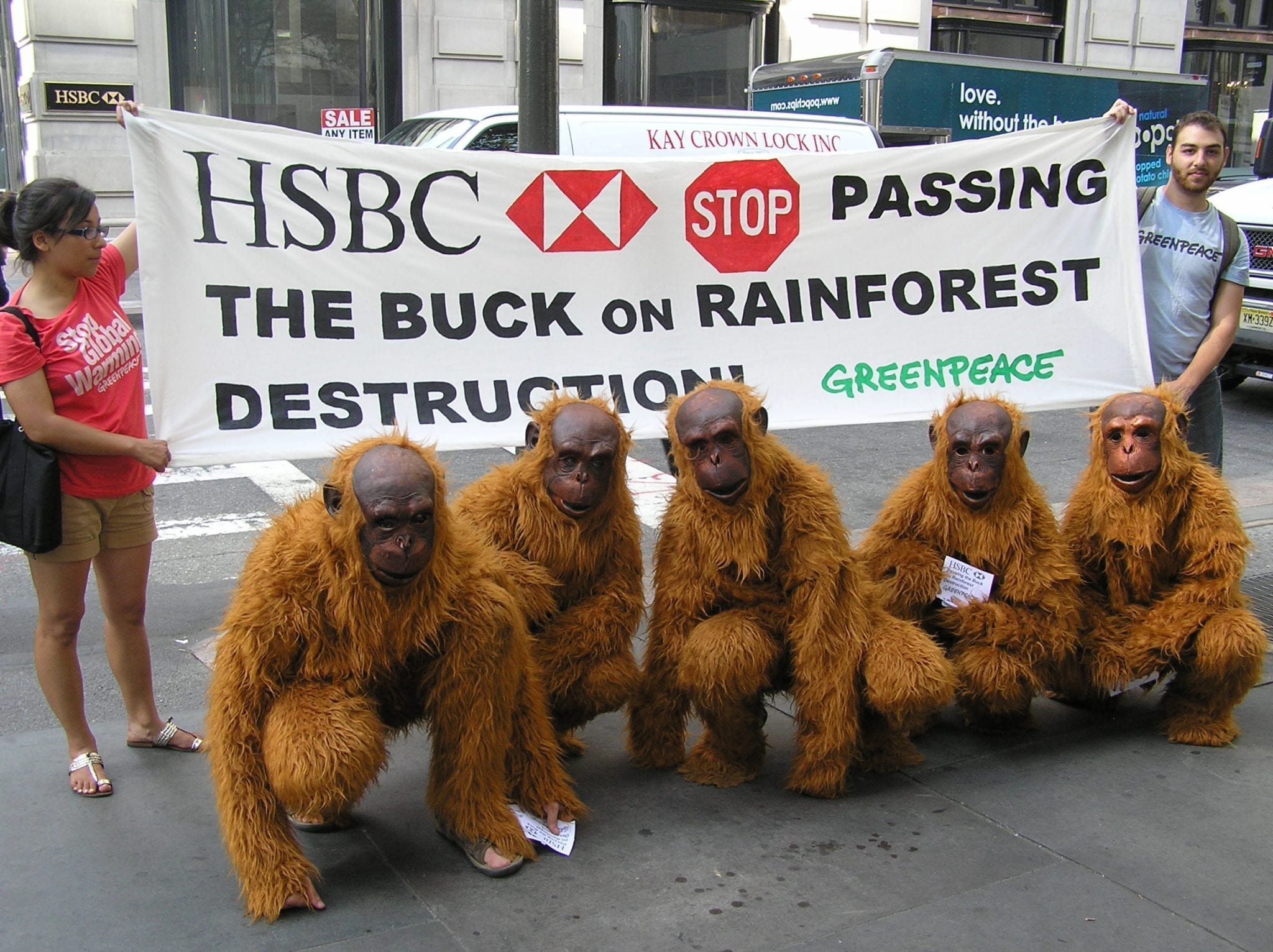
    Greenpeace International launched a new report on Tuesday, January 17, 2017, accusing British HSBC of supporting deforestation. The report stated that British HSBC provided financial services to palm oil companies that are causing rainforest destruction and human rights abuses in Indonesia.

    The report titled “Dirty Bankers: How HSBC is financing forest destruction for palm oil“, claimed that HSBC has been involved in arranging US$16.3 billion of loans and credit facilities to six palm oil firms. In addition, the is also said to have raised US$2 billion bonds for these firms.

    The palm oil companies listed in the report are Malaysian firm IOI; Indonesian Bumitama Agri and Salim Group; Singapore incorporated Goodhope Asia; Hong Kong-based and Singapore-listed Noble Group; and Korea’s Posco Daewoo Corporation.

    Greenpeace argued that HSBC has violated its policies of responsible lending by helping to finance the above-mentioned companies.

    Annisa Rahmawati, Greenpeace Southeast Asia senior campaigner said that although HSBC claimed to be a respectable bank with responsible policies on deforestation, “somehow these fine words get forgotten when it’s time to sign the contracts.”

    Not only HSBC, the report also listed several other banks claimed to be related to case studies in the report, including Japan’s Sumitomo and Tokyo Mitsubishi banks; Singaporean bank DBS; and the Australia and New Zealand Banking Group (ANZ).

    Despite the heavy criticism, the report did acknowledge HSBC as a “relatively progressive” bank that has shown a willingness to engage with criticism, and noted that the bank has a responsibility to set high standards for the rest of the sector.

  • Indonesia`s palm oil exports down 2 percent in 2016

    Indonesia`s palm oil exports down 2 percent in 2016

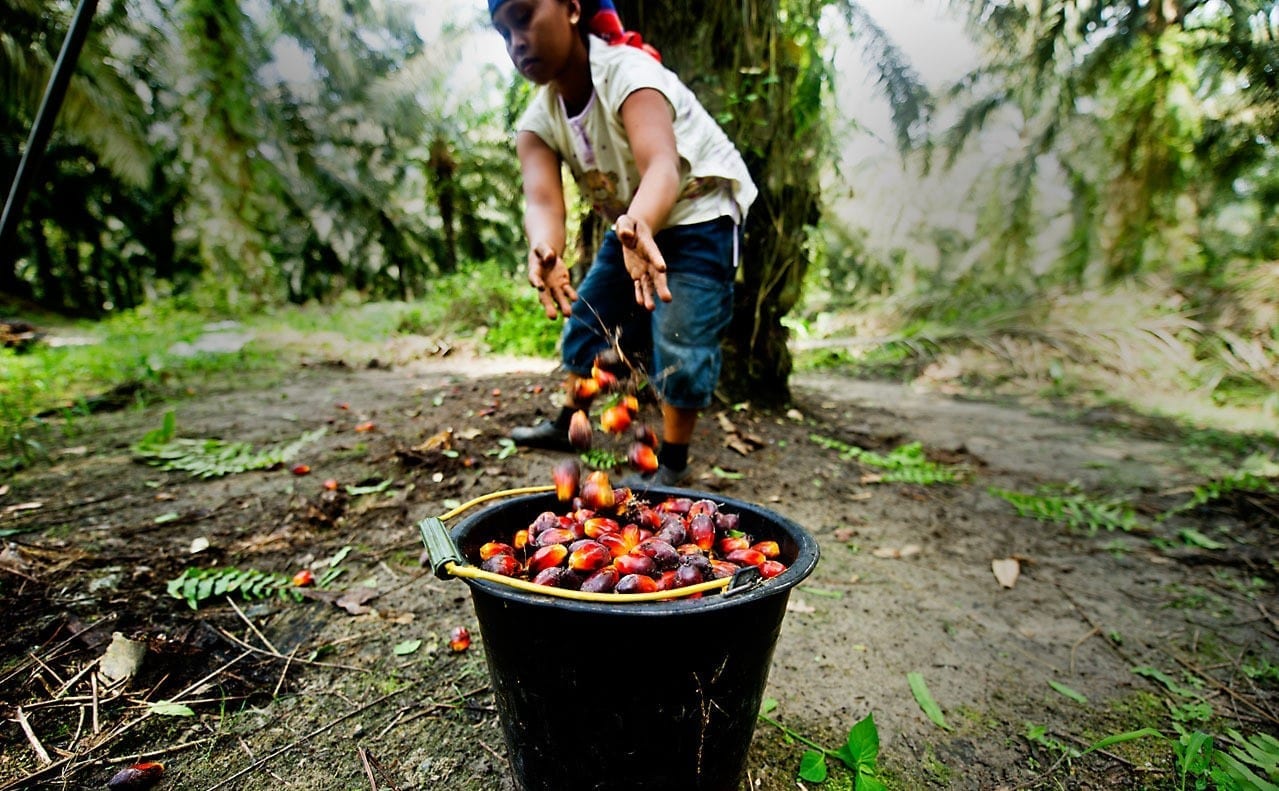
    Indonesias export of crude palm oil (CPO) and its derivatives fell by nearly 2 percent to 25.7 million tons in 2016 from 26.2 million tons in 2015 from after-effects of the El Nino weather phenomenon.

    “At the end of 2015, oil palm fruit production fell due to the El Nino-induced drought for all of 2015. Exports fell 2 percent by volume as production dropped by 7 to 30 percent,” President Director of the Oil Palm Plantation Fund Managing Board (BPDP) Bayu Krisnamurthi said at a press conference here Tuesday.

    Although the export volume of CPO, palm kernel oil (PKO) and their derivatives went down by 2 percent, the export value of palm oil rose by 8 percent to US$17.8 billion or Rp240 trillion from $16.5 billion or Rp220 trillion a year earlier, he said.

    The increase in the export value was caused by the improving global CPO prices which increased by 41.4 percent in 2016. The CPO prices stood at $535 per ton in June 2015, rose to $558 per ton in January 2016 and further moved up to $789 per ton in December 2016.

    Yet, the BPDP has asked exporters to pay attention to the latest CPO price which is too high because it can reduce Indonesias competitive edge in the vegetable oil market.

    “We know that Indonesian palm oil has to compete with soybean oil, so if the palm oil price is too close to the soybean oil price, our competitive edge will decline,” he said.

    Indonesia is currently the worlds biggest CPO producer.

    In 2015, Indonesias CPO production reached 32.5 million tons, with exports reaching 26.4 million tons. The export value went down from $21.1 billion in 2014 to $18.6 billion in 2015.

  • Indonesia sees jump in October palm oil exports

    Indonesia sees jump in October palm oil exports

    Indonesia saw the exports of its palm oil products, which include crude palm oil (CPO), biodiesel and oleochemical, increase by 34 percent month-on-month to 2.45 million tons in October, thanks to rising demand from major export destinations.

    In September, the world’s largest producer of palm oil shipped 1.89 million tons of products overseas.

    Indonesian Palm Oil Producers Association (GAPKI) executive director Fadhil Hasan said exports to India had increased by 31.64 percent month-on-month (mom) in October to 608,510 tons, while exports to China were slightly up by 2.17 percent to 316,450 tons.

    Exports to the European Union (EU) market, meanwhile, increased by 75.51 percent mom to 380,150 tons, not long after France revoked their CPO multiple taxes plan.

    “The traders took the chance to buy at cheaper prices, as they were anticipating a possible price hike in November amid increasing demand ahead of Christmas and New Year,” Fadhil said in a statement on Wednesday.

  • Uncertainty Marks The Year End For Thailand

    Uncertainty Marks The Year End For Thailand

    The non-ceasing political disturbance and reigning uncertainty is dominating every aspect of life in Thailand since the King Bhumibol Adulyadej’s death on October 13. The Crown Prince Maha Vajiralongkorn is supposed to appear for an audition as a heir to the throne after he had been invited to become the next King by the parliament. The deeply divided society, depressed under the rule of the military junta, needs reconciliation.

    The macro view from the long-term perspective for Thailand is rather worrying, notwithstanding the country’s status of oil and gas producer. Its own natural resources are not proving to be large enough to count on to satisfy the growing domestic demand. The oil reserves are on the way to extinction, and the capacities of the robust gas production are not sufficient to compensate for overtaking consumption. Thailand has turned into a net gas importer and faces increasing reliance on oil imports as well.

    The import curve reflects an intermittent character of oil cargo inflows, it remains unclear they are at all affected by the event of the King’s passing followed by the mourning period.

    More than a half the crude shipments are originated in the Middle East, with zero contribution by Iran. Although it is predictable that in not so remote a future the once rogue member of OPEC will find its way to squeeze into the Thai market anyway.

    The state-owned PTT and its refining unit Thai Oil have reported strong 3rd quarter profits, overshadowing the forecasts. Forex gains and favourable refining margins helped to reverse losses suffered in 2015.

    PTT is currently undergoing some restructuring splitting off its retail business unit, which is due to be renamed as PTT Oil and Retail Business Co Ltd (PTTTOR) to be listed eventually on the Stock Exchange of Thailand. The move is aimed to react to shrinking tolerance of fluent markets to inflexibility typical for inert government-controlled institutions.

    In the 1st quarter of 2017, Thai authorities were supposed to open for bids 29 onshore and offshore concessions for gas and oil production. But the first auction since 2007 was postponed again, and will be only completed in 2018. The existing contracts held by Chevron Corp and PTT Exploration and Production are due in 2022 and 2023, respectively.

    Previously, PTT announced plans to sign 15-year contracts with Royal Dutch Shell and BP to secure supplies of liquefied natural gas. The 5 million tons capacity of Map Ta Put LNG import terminal in the Gulf of Thailand will be doubled by March 2017. The current long-term deal with Qatar is ensuring some 2 million tons a year.

    More gas is being pumped in via the ASEAN pipeline from Thai-Malaysia joint offshore development area. This type of cooperation sets an example to follow in a region where territorial disputes have long been the cause of dormancy for many downstream projects.

    However, the Thai authorities will have to lose sleep over the challenging task to pursue the investors’ money. Any wrongdoing might provoke the capital outflow, then it will take a lot of effort to make the country attractive for investment again. To be updated soon.

  • Pertamina Reports Net Profit rp23,8 Trillion Six Months

    Pertamina Reports Net Profit rp23,8 Trillion Six Months

    PT Pertamina reported US$1.83 billion (Rp23.8 trillion) in net profit in the first half of the year, or an increase of 221 percent from the same period last year.

    Chief Executive of the state-owned energy company Dwi Soetjipto attributed the increase in profit to improved performance of its business units and efficiency in operation.

    “We are grateful that efficiency and increase in performance in the upstream and downstream operations have resulted in an increase in net profit to US$1.83 billion,” Dwi said.

    He said in the first half of the year, the company was still confronted with declining prices of oil in the world market.

    The condition served a big blow to oil companies in the world though the impact was less damaging on Pertamina, he said.

    The prices, however, began to pick up in the following three months, he added.

    Pertaminas Finance Director Arief Budiman said in the first half of 2016 the company recorded US$17.19 billion in income, down 21 percent from US$21.79 billion in the same period last year.

    Its operating income rose 110 percent from US$1.56 billion in the first six months of 2015 to US$3.28 billion in the same period in 2016.

    “We are strong in cash flow with balance reaching US$5 billion. Therefore, we are strong enough to carry out corporate action when necessary,” he said.

    He said the company produced 640,000 barrels of oil equivalent per day consisting of 305,000 barrels of crude oil and 1,938 mmscfd of gas.

    Investment in a number of upstream projects have been implemented such as in the 1×55 MW geothermal power project of PLTP Ulubelu 3, and 2×55 MW PLTP Lumut Balai now 45 percent completed .

    The company also continued to develop infrastructure both for gas transport and processing and marketing.

    Among gas pipe projects such as Arun-Belawan-KlM-KEK, Muara Karang-Muara Tawar, Gresik-Semarang, and Porong-Grati gas pipes have been more than 80 percent completed.

    Development of processing infrastructure is being accelerated such as Refinery Development Masterplan Program (RDMP) of Kilang Balikpapan, which is now in the final phase of “Basic Engineering Design”, and RDMP of the Cilacap refinery now in the phase of “Front End Engineering Design”.

    Meanwhile, a number of marketing infrastructure projects have been in the final phase of development such as Pulau Sambu and Tanjung Uban oil fuel terminals, procurement of oil fuel and crude oil tankers of the General Purposes (GP) and Medium Range (MR) types with delivery expected this year.