Tag: oil

  • Uncertainty Marks The Year End For Thailand

    Uncertainty Marks The Year End For Thailand

    The non-ceasing political disturbance and reigning uncertainty is dominating every aspect of life in Thailand since the King Bhumibol Adulyadej’s death on October 13. The Crown Prince Maha Vajiralongkorn is supposed to appear for an audition as a heir to the throne after he had been invited to become the next King by the parliament. The deeply divided society, depressed under the rule of the military junta, needs reconciliation.

    The macro view from the long-term perspective for Thailand is rather worrying, notwithstanding the country’s status of oil and gas producer. Its own natural resources are not proving to be large enough to count on to satisfy the growing domestic demand. The oil reserves are on the way to extinction, and the capacities of the robust gas production are not sufficient to compensate for overtaking consumption. Thailand has turned into a net gas importer and faces increasing reliance on oil imports as well.

    The import curve reflects an intermittent character of oil cargo inflows, it remains unclear they are at all affected by the event of the King’s passing followed by the mourning period.

    More than a half the crude shipments are originated in the Middle East, with zero contribution by Iran. Although it is predictable that in not so remote a future the once rogue member of OPEC will find its way to squeeze into the Thai market anyway.

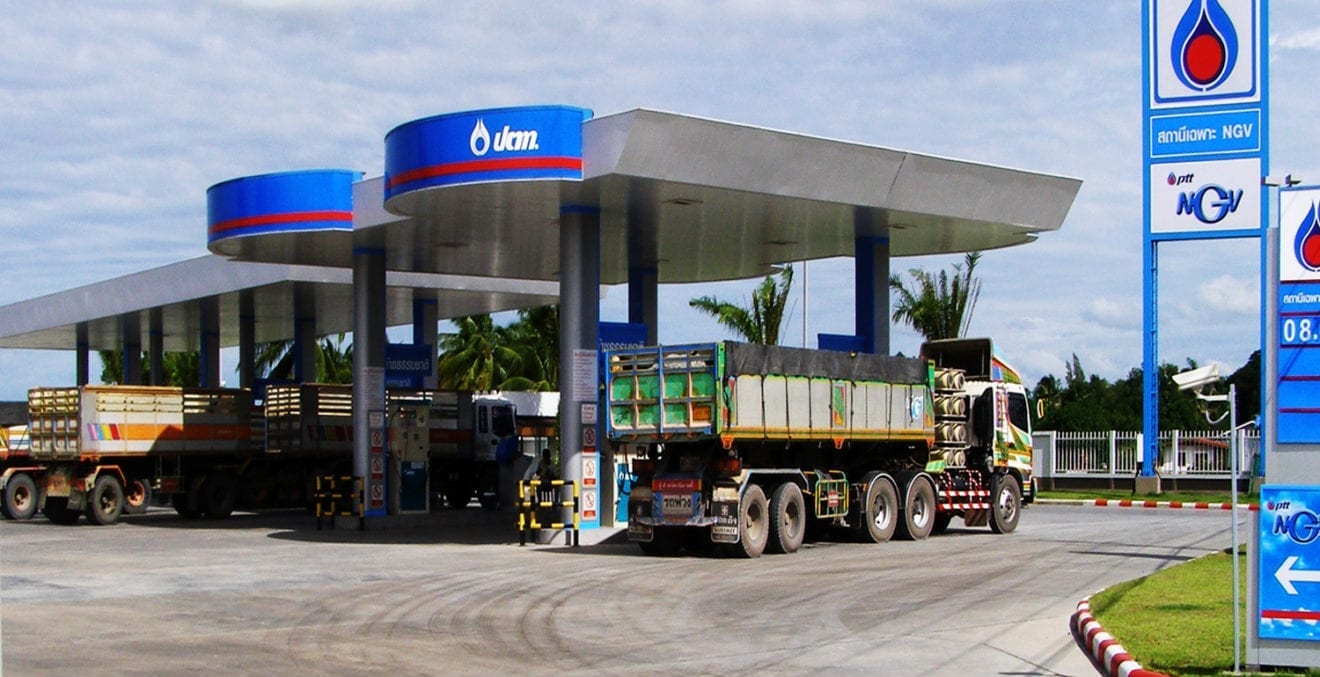
    The state-owned PTT and its refining unit Thai Oil have reported strong 3rd quarter profits, overshadowing the forecasts. Forex gains and favourable refining margins helped to reverse losses suffered in 2015.

    PTT is currently undergoing some restructuring splitting off its retail business unit, which is due to be renamed as PTT Oil and Retail Business Co Ltd (PTTTOR) to be listed eventually on the Stock Exchange of Thailand. The move is aimed to react to shrinking tolerance of fluent markets to inflexibility typical for inert government-controlled institutions.

    In the 1st quarter of 2017, Thai authorities were supposed to open for bids 29 onshore and offshore concessions for gas and oil production. But the first auction since 2007 was postponed again, and will be only completed in 2018. The existing contracts held by Chevron Corp and PTT Exploration and Production are due in 2022 and 2023, respectively.

    Previously, PTT announced plans to sign 15-year contracts with Royal Dutch Shell and BP to secure supplies of liquefied natural gas. The 5 million tons capacity of Map Ta Put LNG import terminal in the Gulf of Thailand will be doubled by March 2017. The current long-term deal with Qatar is ensuring some 2 million tons a year.

    More gas is being pumped in via the ASEAN pipeline from Thai-Malaysia joint offshore development area. This type of cooperation sets an example to follow in a region where territorial disputes have long been the cause of dormancy for many downstream projects.

    However, the Thai authorities will have to lose sleep over the challenging task to pursue the investors’ money. Any wrongdoing might provoke the capital outflow, then it will take a lot of effort to make the country attractive for investment again. To be updated soon.
  • Pertamina Reports Net Profit rp23,8 Trillion Six Months

    Pertamina Reports Net Profit rp23,8 Trillion Six Months

    PT Pertamina reported US$1.83 billion (Rp23.8 trillion) in net profit in the first half of the year, or an increase of 221 percent from the same period last year.

    Chief Executive of the state-owned energy company Dwi Soetjipto attributed the increase in profit to improved performance of its business units and efficiency in operation.

    “We are grateful that efficiency and increase in performance in the upstream and downstream operations have resulted in an increase in net profit to US$1.83 billion,” Dwi said.

    He said in the first half of the year, the company was still confronted with declining prices of oil in the world market.

    The condition served a big blow to oil companies in the world though the impact was less damaging on Pertamina, he said.

    The prices, however, began to pick up in the following three months, he added.

    Pertaminas Finance Director Arief Budiman said in the first half of 2016 the company recorded US$17.19 billion in income, down 21 percent from US$21.79 billion in the same period last year.

    Its operating income rose 110 percent from US$1.56 billion in the first six months of 2015 to US$3.28 billion in the same period in 2016.

    “We are strong in cash flow with balance reaching US$5 billion. Therefore, we are strong enough to carry out corporate action when necessary,” he said.

    He said the company produced 640,000 barrels of oil equivalent per day consisting of 305,000 barrels of crude oil and 1,938 mmscfd of gas.

    Investment in a number of upstream projects have been implemented such as in the 1×55 MW geothermal power project of PLTP Ulubelu 3, and 2×55 MW PLTP Lumut Balai now 45 percent completed .

    The company also continued to develop infrastructure both for gas transport and processing and marketing.

    Among gas pipe projects such as Arun-Belawan-KlM-KEK, Muara Karang-Muara Tawar, Gresik-Semarang, and Porong-Grati gas pipes have been more than 80 percent completed.

    Development of processing infrastructure is being accelerated such as Refinery Development Masterplan Program (RDMP) of Kilang Balikpapan, which is now in the final phase of “Basic Engineering Design”, and RDMP of the Cilacap refinery now in the phase of “Front End Engineering Design”.

    Meanwhile, a number of marketing infrastructure projects have been in the final phase of development such as Pulau Sambu and Tanjung Uban oil fuel terminals, procurement of oil fuel and crude oil tankers of the General Purposes (GP) and Medium Range (MR) types with delivery expected this year.

  • Indonesia’s Pertamina targets stakes in two Iranian oil, gas blocks

    Indonesia’s Pertamina targets stakes in two Iranian oil, gas blocks

    Indonesia’s state-owned Pertamina will sign a memorandum of understanding with the National Iranian Oil Co. next month to develop oil and gas blocks in Iran.

    Under the initial agreement, Pertamina will be allowed access to data on four Iranian oil blocks, a senior company official said Friday.

    “There are two to four blocks that will be evaluated based on the initial study. Of the four, there are two blocks that will be our priority,” Syamsu Alam, Pertamina’s upstream director, said.

    Pertamina expects to get an additional production of 30,000 b/d from each block if it is allowed to acquire the blocks, Alam said.

    Indonesia and Iran have recently intensified efforts to cooperate. Pertamina and NIOC recently signed a heads of agreement for the latter to supply refrigerated LPG to the former. Pertamina is also planning to import a 1-million-barrel cargo of Iran Light crude oil in the third quarter of this year to test the grade at its 348,000 b/d Cilacap refinery in Central Java

    Pertamina has allocated a capital expenditure of $5.31 billion this year, of which 72% is for upstream business. The company plans to spend $2 billion on upstream mergers and acquisitions this year.

    The state-owned company’s overseas blocks produced 83,000 b/d in May 2016 compared with 75,000 b/d in May last year. The increase mainly came from the company’s 10% stake in the West Qurna block in Iraq.

    Pertamina has three producing oil and gas blocks located in Malaysia, Algeria and Iraq.

    The company produced 306,250 b/d of crude in Q1 2016, up 14.5% year on year. Gas production rose by 22.2% year on year in Q1 this year to 1.98 Bcf/day, Alam said. The company is targeting production of 327,000 b/d of crude and condensate and 1.926 Bcf/d of gas in 2016. The figure is equal to 659,000 b/d of oil equivalent, up 10% year on year.

    With limited options domestically, the company is looking at growing its production via acquisition of overseas blocks. It is in advanced talks with Russia’s Rosneft to take a stake of about 10%-15% in two oil gas blocks in Russia. The company is aiming to get 35,000 b/d of production and 200 million barrels of reserves from those blocks.

  • Hong Kong Investors Eye Filling Station Business in Indonesia

    Hong Kong Investors Eye Filling Station Business in Indonesia

    Foreign investors have shown strong interest in the downstream oil and gas business in Indonesia. A leading Hong Kong-based company recently announced its interest in investing in the filling station business in Southeast Asia’s largest economy.

    The company’s investment interest was expressed during a business forum event that featured the Head of the Investment Coordinating Board (BKPM) Franky Sibarani as keynote speaker to 40 Hong Kong multi-sector investors, Wednesday (18/5). Franky said the investoris engaged in the trading of petrol, diesel, jet fuel and LPG in Hong Kong and overseas, and has business capability in the downstream oil and gas sector.

    Currently, the investor owns 42 petrol stations and two oil terminals with a storage capacity of 374,500 cubic metres. It also has a fleet of 16 vesselswith the capacity to transport 68,600 tons of oil. In addition, the company has a marketing network that covers almost the whole of Hong Kong.

    Franky added that the investor had visited Indonesia a number of times. They had met with Pertamina to share their investment plans in the general commercial fuel business in Indonesia. To ensure the plan goes ahead, a designated BKPM marketing team in Hong Kong will oversee the investment interest.

    BKPM has also received expressions of interest from other Hong Kong companies in investing in the infrastructure, maritime and fisheries sectors. “In fact there is one company operating in the electronics and property industries that will increase its investment in Sukabumi by US$ 5 million,” said Franky in a BKPM press release on Thursday (19/5).

    Franky hopes that in the future more Hong Kong companies will invest in Indonesia. He believes that as an investment destination, Indonesia has several competitive advantages,particularly its rich natural resources such as agricultural and mining commodities, including renewable energy sources.

    The government also has several infrastructure projects to promote investment and enhance the competitiveness of investment opportunities. These include 15 new airports, 163 ports, the 35 GW power project, and construction of 2,024miles of railway track and 621 miles of toll road and sea routes.

    BKPM has reformed its investment services by introducing One Stop Services and a 3-hour investment permit service, and easing direct investment in construction, as well as earmarking priority sectors for investment, which includes plans to develop 11 neweconomic zones and 20 National Strategic Tourism Areas.

    Franky added that Hong Kong is one of Indonesia’s main investment partners. Between 2010 and 2015, BKPM recorded actual investment from Hong Kong of US$ 3 billion. In the first quarter of 2016, actual investment from Hong Kong amounted to US$ 456 million, a significant increase on the US$ 75 million recorded the same period last year. The most popular sectors for Hong Kong investors were property including industrial estates, transport, warehousing and telecommunications.

  • Pertamina cuts Pertamax gasoline prices

    Pertamina cuts Pertamax gasoline prices

    State-owned oil and gas company Pertamina has lowered the prices of Pertamax gasoline by Rp200-Rp300 per liter effective as of 00:00 on Sunday, 2016.

    Corporate Communication Vice President of Pertamina Wianda Pusponegoro said in written statement here on Sunday that the lowering of the prices was a periodical corporate decision made to follow the trend of the world crude prices.

    “The prices of Pertamax were lowered by Rp200 per liter for Java, Madura and Bali islands and by Rp300 per liter for other regions,” she said.

    She cited Jakarta and its surroundings as an example where Pertamax price was lowered from Rp7,550 per liter to Rp7,350 per liter. In Surabaya, East Java, the price was lowered from Rp7,650 to Rp7,450 per liter.

    In East Kalimantan, on the other hand, the price of Pertamax was cut by Rp300 per liter from Rp8,000 per liter to Rp7,700 per liter.

    The price of Pertamax Plus in West Nusa Tenggara, Java and Bali was cut by Rp200 per liter and by Rp300 per liter in other regions.

    However, the price of Pertamax Dex was lowered by Rp300 per liter in all regions. The Price of Dexlite gasoline was set at Rp6,650 per liter.

    Pertamina also cut the price of Pertalite gasoline by Rp200 per liter in all regions.

    “The price of Pertalite in Papua which was initially sold at Rp7,300 per liter is lowered to Rp7,100 per liter,” she said.

    The prices of diesel oil/bio-diesel oil were also reduced by Rp300 per liter.

    In Jakarta and Banten, the prices of fuels of these types went down from Rp6,950 per liter to Rp6,650 per liter.

    “Besides the decline in the world oil prices, the lowering by Pertamina of the gasoline prices was also a form of the companys appreciation to consumers,” Wianda Pusponegoro said.

    She said Pertamina will continue to monitor tightly the availability of stocks at gasoline refueling stations considering that the decline in the price of gasoline often increases consumption.

  • Pertamina to launch new oil fuel products Turbo

    Pertamina to launch new oil fuel products Turbo

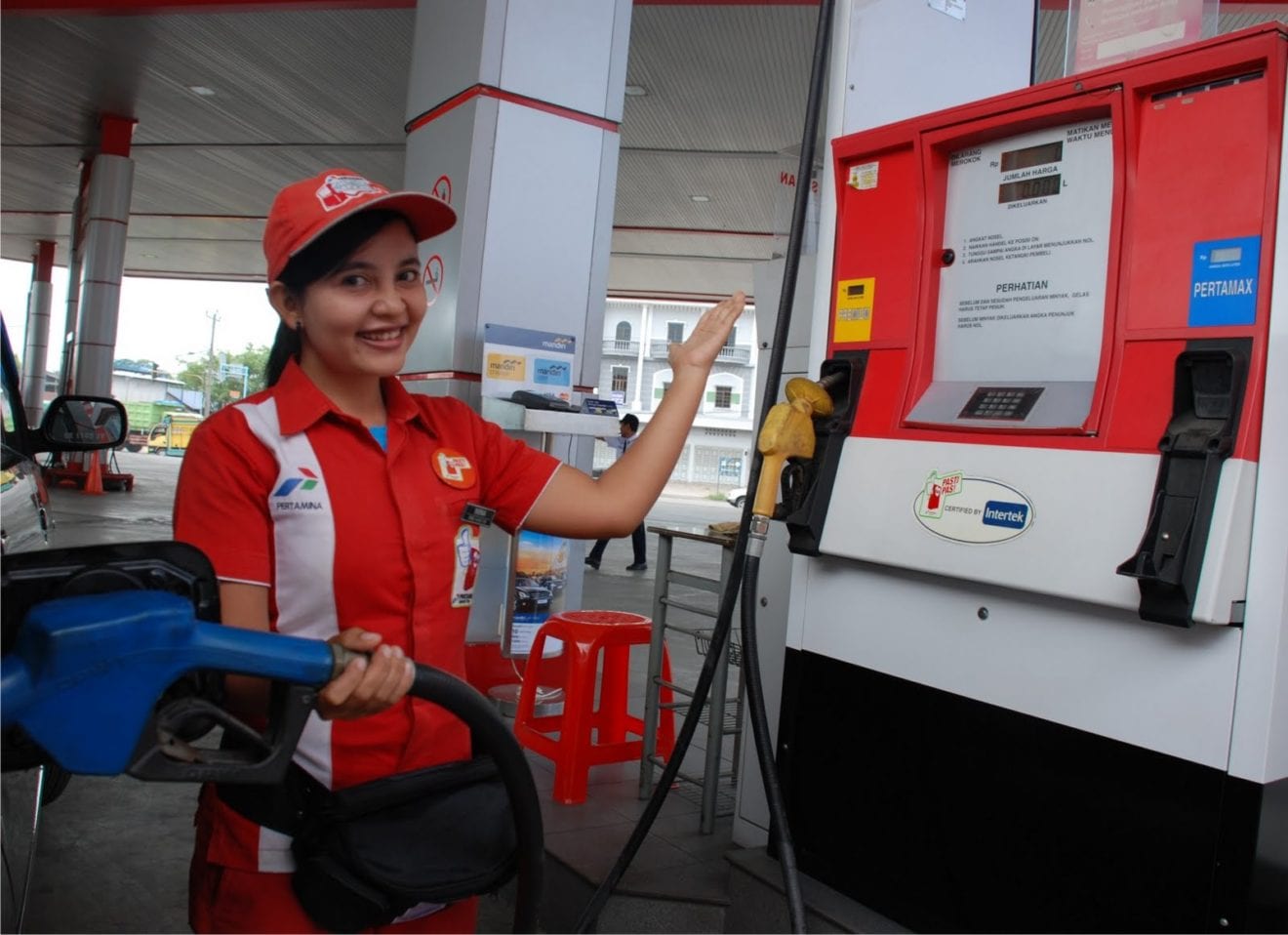
    Pertamina will soon launch a new oil fuel product Turbo with Research Octane Number (RON) 98 to expand the market of its non subsidized oil fuels.

    General Manager of Pertaminas southern Sumatra Regional Marketing Operation Herman M. Zaini said the production of Turbo is part of the companys bid for survival amid the shrinking prices of oil now diving to as low as US$35 per barrel.

    “After the success in launching Pertalite Pertamina will soon come up with Pertamax Turbo to give more choices for the consumers of non-subsidized oil fuels, and to reduce the consumption of subsidized oil fuel,” Herman said here on Tuesday.

    He said currently Pertamina is focused more on business in the downstream sector as business in the upstream sector which normally contributes 70 percent to its income, has suffered badly with deficit as a result of oil price fall.

    The decline in business in the upstream sector, however, has positive effect as it forced Pertamina to innovate and turn out new marketable products in the country and abroad, he said.

    Previously Pertamina had only gasoline products of Premium with RON 88, Pertamax RON 92, Pertamax Plus 95, and Pertamax Racing RON 100, but now it also has Pertalite RON 90 and soon there would be Pertamax Turbo, he said.

    “Currently Pertamina exports lubricant oil to 26 countries including Middle east countries. And now Pertamina is seeking contract for supplying oil fuels for fuel filling stations in Myanmar. Tender is being in the process,” he said.

    If Pertamian won the tender, it will build 1,360 public fuel filling stations in cooperation with Myanmar state company Myanmar Petroleum Products Enterprise, he said.

  • IOC bids for fuel marketing and retail rights in Myanmar

    IOC bids for fuel marketing and retail rights in Myanmar

    State-run Indian Oil Corp (IOC) has bid for rights to import, store and distribute petroleum products in Myanmar.

    “We have put in a bid to enter fuel marketing and retail business in Myanmar,” a senior company official said.

    Myanma Petroleum Products Enterprise (MPPE) last year invited companies to form a joint venture for import, storage, distribution and sale of all petroleum products except liquefied petroleum gas (LPG) and liquefied natural gas (LNG).

    A separate tender for cooking gas LPG was floated. IOC had bid for that tender too, the official said.

    MPPE left the fuel distribution business when it was privatised in 2010, but is planning a re-entry into the fast-growing business sector that is marred by widespread dissatisfaction over service standards and fuel quality.

    In 2010, MPPE transferred 216 filling stations to private companies across the country but it still runs 12 pumps which supply fuel to state-owned vehicles.

    It also owns four main fuel terminals and 24 sub-fuel terminals. Around 70 private companies run the country’s 1163 petrol stations, but few have storage facilities or an import licence.

    MPPE now wants to tie up with foreign companies to expand the business and rehabilitate existing facilities. MPPE will hold 51 per cent of equity while the foreign company will hold the rest.

    The joint venture will be for a maximum of 30 years, extendable two 10-year periods.

    The official said IOC wants to use its just commissioned Paradip refinery in Odisha to ship fuel a short distance across the Bay of Bengal to get to Myanmar.

    Being the country’s largest fuel retailer, it also has experience of setting up fuel stations and managing logistics, which would be helpful in the nascent market.

    IOC is among the 11 to have bid for the separate tender to build a new liquefied petroleum gas (LPG) terminal and supply chain business for the distribution and marketing of the cooking and heating fuel.

    Winner of this tender will have to upgrade eight storage containers each with a capacity of 5550 metric tonnes of LPG for Ministry of Energy-owned No 1 Refinery (Thanlyin), and build a wharf with the capacity to load and unload 2000 metric tonnes of LPG.

    This is the first time foreign companies will be allowed to distribute LPG in Myanmar.

    Besides IOC, Singaporean firms Puma Energy Group and BB Energy (Asia) and a consortium of Japan’s Marubeni Corporation and Tokai Holdings has also bid.

  • Chin Teck Q1 earnings halved on losses in Indonesia

    Chin Teck Q1 earnings halved on losses in Indonesia

    Chin Teck Plantations Bhd earnings fell 43.5% to RM5.98mil in the first quarter ended Nov 30, 2015 from RM10.61mil a year ago, partly because its associates sustained losses in their Indonesian oil palm plantations.

    It said on Thursday its revenue was slightly higher at RM27.81mil from RM27.72mil a year ago due to slightly higher prices for the fresh fruit bunches (FFB).

    However, the average selling price of crude palm oil (CPO) was lower despite higher prices for the FFB. It also said that a year ago, there was a gain from the sale of investment.

    Also overall operating expenses were higher due to the increase in replanting expenses.

    Its oil palm plantations in Lampung Province, Indonesia had to suspend harvesting due to unrest in the nearby villages.

    “The plantations have commence harvesting. At end-November, the total harvested area was about 13% of the total area planted,” it said.

    Earnings per share were 6.55 sen versus 11.61 sen. It declared an interim dividend of eight sen, which was similar to a year ago.

  • China cuts retail oil prices

    China cuts retail oil prices

    The prices of gasoline and diesel in China will respectively be cut by 110 yuan and 105 yuan (18 U.S. dollars) per tonne, the National Development and Reform Commission (NDRC), China’s top economic planner, said in a statement Monday.

    The adjustment will come into effect Tuesday. The benchmark retail price of gasoline will drop by 0.08 yuan per liter and that of diesel by 0.09 yuan.

    Prices of refined oil products in China are adjusted when international crude prices translate into a change of more than 50 yuan per tonne for 10 working days.

    Crude prices fell last week, weighed on concerns of oversupply after the Organization of the Petroleum Exporting Countries (OPEC) decided to keep its daily output at 30 million barrels for the next six months.

    The NDRC has reduced oil prices for four times and raised them five times this year, tracking changes in international crude oil prices.