Tag: Online

  • Online Brokerage Launches B2B Platform

    Online Brokerage Launches B2B Platform

    Xiaomi-backed Tiger Brokers is expanding its reach into the institutional segment with the launch of a business-to-business (B2B) platform.

    Tiger Brokers is partnering Singapore-based financial advisory firm PFPFA as it launches a B2B platform for institutional partners, the company announced on Friday.

    Under the partnership, PFPFA clients will have direct access to Tiger’s online brokerage and platform, which will include technological solutions such as advanced portfolio and risk management tools.

    Tiger Brokers said it hopes to build on the success of Tiger Trade, its Singapore consumer platform that currently has close to 300,000 users since launching 1.5 years ago. It plans to rapidly grow its B2B segment in the coming months by offering its services to more financial institutions, including robo-advisors, banks, neo-banks and fund managers, the announcement said.

  • HSBC Private Banking Launches Online Trading in Asia

    HSBC Private Banking Launches Online Trading in Asia

    HSBC has opened access to online trading for private banking clients in Asia as part of $100 million of investment in its core banking and digital platforms in the coming two years.

    HSBC Private Banking has launched its online trading platform in Asia, according to a statement, opening access to 10 financial markets including Hong Kong, mainland China, Singapore, Japan, the Philippines, Australia, U.K., U.S., Germany, and France.

    Technology is redefining wealth management, giving greater access, flexibility, and control over the management of investments globally,» said APAC regional head of HSBC Private Banking Siew Meng Tan.

    The current offering will include cash equities and exchange-traded funds before expanding to listed warrants and callable bull bear contracts (CBBC), FX spot and forwards, structured notes, non-complex funds, dual currency instruments, and fixed income by 2022.

    Clients can buy and sell securities during market hours with a maximum trade of $2 million per transaction and $10 million per day.

    A dedicated support team will provide coverage of 20 hours per day across each market’s opening hours.

    According to Tan, the private bank will look to invest $100 million over the next two years to build and innovate its core banking and digital platforms.

    Earlier this year, HSBC announced that it planned to invest over $3.5 billion in the next five years in its wealth and personal banking unit which includes private banking.

    HSBC Private Banking has already made various upgrades over the last two years including a new internet banking application; integrated and direct client communications; an investment and research platform with personalized alerts; and instant messaging.

  • Online groceries shopping booms as HCMC practices social distancing

    Online groceries shopping booms as HCMC practices social distancing

    Many HCMC residents have turned to online shopping for essential goods following a two-week social distancing order across the city, and e-commerce platforms are reporting a boom.

    Data from e-commerce platform Tiki shows sales grow by 30 percent last weekend, just before social distancing was implemented in Ho Chi Minh City on Monday, with a rise in the number of searches for fast-moving consumer goods, fresh food, mom and baby products.

    E-commerce platform Lazada’s sales of fast-moving consumer goods in the past few days were three times higher than during social distancing period in April last year. Sales of fresh food and frozen products have increased tenfold.

    Tran Tuan Anh, CEO of e-commerce platform Shopee, confirmed that there has been high demand for essential goods, especially fast-moving consumer goods, healthcare products and house appliances.

    A Tiki representative who did not want to be named said that they have been working with suppliers to increase the supply of essential goods, fresh food as well as tech products that serve work and entertainment at home by up to 50 percent, while supply of hand sanitizers will increase 25 times.

    Shopee said it has been selling essential goods at reasonable prices and providing free shipping for customers. It is also implementing free advertising programs for its sellers.

    Lazada has affirmed it will continue expanding goods supply, besides implementing discount programs, no-contact delivery and boosting cashless payments.

    Latest data from Malaysia-based market research firm iPrice shows consumers have grown accustomed to buying essential goods online, with the groceries segment the only one to see a 13 percent year-on-year increase in the number of web visits in Q1.

    Meanwhile, web visits related to non-essential goods like mobile phones and electronics appliances dropped 9 percent and 6 percent, respectively.

    Covid-19 has served as a catalyst for e-commerce, boosting online shopping demand for essential goods, iPrice stated.

  • Online share of retail sales jumps to 19% amid lockdowns

    Online share of retail sales jumps to 19% amid lockdowns

    Online sales accounted for nearly a fifth of total retail turnover last year as lockdowns to combat the spread of the coronavirus pandemic fuelled a boom in e-commerce, a United Nations study released on Monday showed.

    Online sales accounted for 19 percent of overall retail sales in 2020, up from 16 percent a year earlier, according to estimates from the UN Conference on Trade and Development (UNCTAD) based on national statistical offices in major economies.

    South Korea reported the highest share at 25.9 percent, up from 20.8 percent the year before. China had a 24.9 percent share, Britain 23.3 percent, and the United States 14.0 percent.

    Global e-commerce sales rose 4 percent to US$26.7 trillion in 2019, according to the latest estimates available, UNCTAD said. This included business-to-business (B2B) and business-to-consumer (B2C) sales, and was equivalent to 30 percent of global economic output that year.

    The pandemic led to mixed fortunes for leading B2C e-commerce companies in 2020, according to the report.

  • Online concierge pharmacy platform POC raises $4.5 mln to improve services in Vietnam

    Online concierge pharmacy platform POC raises $4.5 mln to improve services in Vietnam

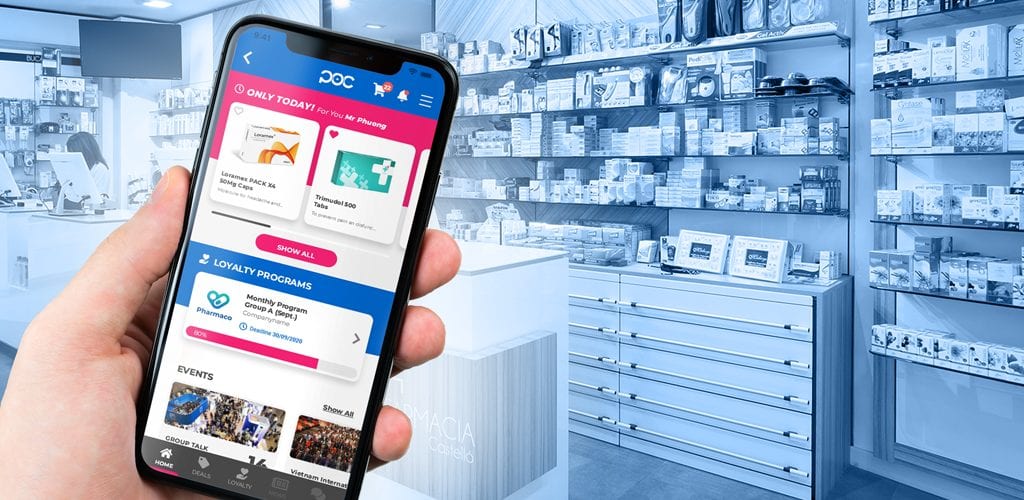
    Pharmacy Online Concierge Pharma has secured $4.5 million in an equity financing round to digitize pharmacies in Vietnam.

    Based in Vietnam and Hong Kong, the platform helps stakeholders such as pharmacies, drug manufacturers, distributors, wholesalers, and consumers to digitally manage their interactions.

    It raised the money from Picus Capital of Germany, Goat Capital and FJ Labs that of the U.S., Febe Ventures 500 Startups Vietnam of Singapore, and several unnamed angel investors. It is one of the biggest rounds at this stage in Vietnam.

    POC Pharma said it would use the money to improve its services in Vietnam, focusing on selling pharmaceutical products online first and then aiming to launch in more countries.

    Its services include trade programs and trade offers management, content and information sharing, data integration and visualization, customized customer engagement, multichannel commercialization, and order management. Established in 2020 by Thomas Miklavec and Charles Defrance, POC helps pharmacists manage all their processes, increasing revenues and profits while improving their quality of service.

    The startup said it has five global pharmaceutical company customers, including Bayer and Pfizer, and more than 20,000 pharmacies in 22 different markets use its platform.

  • Pomelo expands its online presence with localised Philippines store

    Pomelo expands its online presence with localised Philippines store

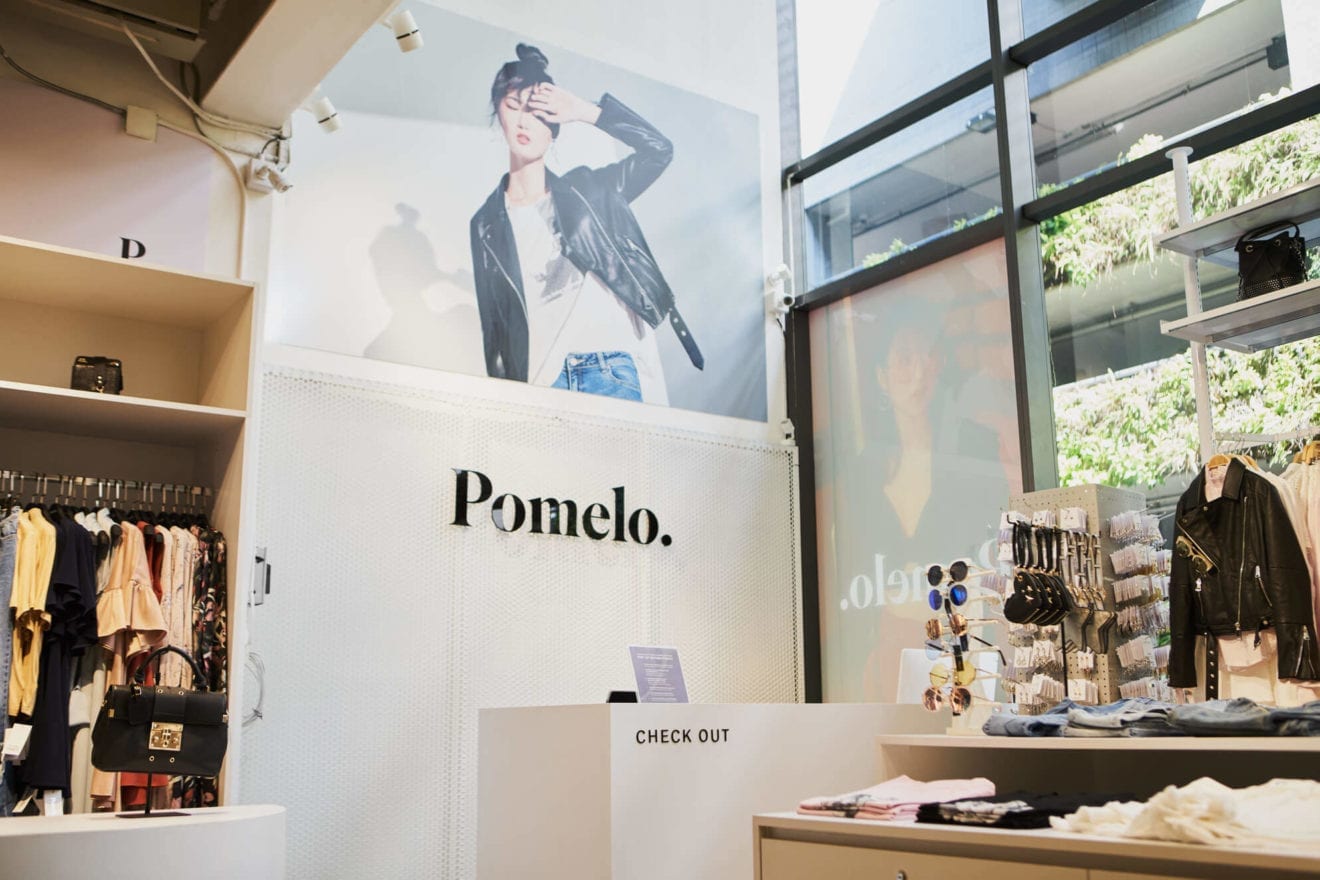
    The omnichannel fashion platform has launched a localized online store in the Philippines as part of its digital expansion across Southeast Asia.

    According to Pomelo, monthly orders from the Philippines currently account for around 10 percent of Pomelo’s total orders. Coinciding with the brand’s eight-year anniversary, the launch will help the brand strengthen their presence in Southeast Asia and increase its market share in the Philippines. Currently, the brand’s listing on Zalora Philippines has amassed more than 100,000 unique orders from locals.

    The Philippines’ online store will house Pomelo’s exclusive collaborations and fashion-forward apparel, including the brand’s new Spring/Summer 2021 Collection. The store will also feature the brand’s cashback reward and loyalty program, ‘Pomelo Perks.’

    This year in particular has seen the brand’s efforts to expand across the region increase with new stores launched in Singapore and Indonesia. The brand will also launch a flagship store in Malaysia this May.

  • Buying Art Online Goes Mainstream

    Buying Art Online Goes Mainstream

    While overall art sales contracted in 2020 amid the Covid-19 pandemic, online sales doubled in value. Aggregate online sales reached a record high of $12.4 billion, doubling in value from 2019, while the share of online art sales grew from 9 percent of total sales by value in 2019 to 25 percent in 2020, according to the fifth Global Art Market Report, published by Art Basel and UBS.

    This was the first time the share of e-commerce in the art market exceeded that of general retail. This growth also came despite a 22 percent dip in sales of art and antiques globally, which stood at $50.1 billion in 2020

    According to Christl Novakovic, CEO UBS Europe SE, head wealth management Europe and chair of the UBS Art board, called 2020 a «turning point for digital innovation in the art market, which traditionally relies on discretionary purchasing, travel and personal contact.

    The crisis also provided the impetus for change and restructuring, the most fundamental shift being the rollout of digital strategies and online sales, which had lagged behind other industries up to now, said Clare McAndrew, founder, Arts Economics, who authored the report.

    The report incorporated a survey of 2,569 high-net-worth (HNW) collectors, of which 66 percent felt the pandemic had increased their interest in collecting, while 32 percent reported it had significantly done so. Some 57 percent said they planned on purchasing more artwork in 2021.

    And while the pandemic prompted the cancellation of high-profile art fairs – where the largest deals traditionally are sealed – some 45 percent of collectors also said they made a purchase through an art fair’s online viewing room.

  • Alibaba has major ambitions for Vietnamese businesses

    Alibaba has major ambitions for Vietnamese businesses

    Chinese e-commerce giant Alibaba wants to have over 10,000 Vietnamese small and medium-sized enterprises selling on its platform by 2025.

    Its government relation and business development manager, Vu The Tung, who revealed this at a ceremony to sign a memorandum of understanding with the Vietnam Trade Promotion Agency on Tuesday, said his company would help Vietnamese businesses increase their exports by promoting their products.

    The two signatories have been running a training program since August last year to enhance Vietnamese businesses’ ability to participate in global e-commerce.

    Vu Thi Minh Thuy, manager of the agency’s information technology application center, said through the training program over 300 companies have been provided consultancy in online cross-border sales.

    Fifty agriculture, aquaculture, food processing, and packaging companies became ready to sell on Alibaba’s e-commerce platform after completing training in October, she said. The two sides hope to have 1,200 Vietnamese enterprises on the platform by the end of 2021.

    Deputy Minister of Industry and Trade Do Thang Hai, who hailed Alibaba’s support, said: “The Vietnam Trade Promotion Agency and Alibaba will continue to look for enterprises to take part in the training program, and create recognition for Vietnamese brands on Alibaba’s e-commerce platform. They are also planning to create an exclusive section for Vietnamese products on the Alibaba website.”

  • Hong Kong furniture retailer launches online food range

    Hong Kong furniture retailer launches online food range

    Hong Kong furniture retailer Pricerite has introduced its first online food range, Pricerite Food, fronted by Hong Kong rising star, actor Liu Junqian.

    According to the company, Pricerite Food’s philosophy is to promote a “slow living” lifestyle amid the influence of “fast-food culture”. The range is split into three categories: quality exclusive, traditional taste and Asian taste.

    “Our philosophy is to promote food culture and gradually change the life attitude of urban people,” the company said in a statement translated from Chinese.

    The range will be launched simultaneously in Pricerite’s online store and at nine physical outlets, including stores in Mong Kok Chong Hing, Kowloon Bay, North Point, and Yuen Long.

    As part of its launch campaign, Pricerite Food has introduced a video advertisement featuring actor Liu Junqian, who is also appointed as the brand spokesperson.

    The brand also rolled out ‘Pricerite Food Virtual Store’ at Hong Kong station, with selected ingredients printed on the top of the poster. Customers can shop directly by scanning the QR Code next to the product they want to order to enter the online store for self-service shopping.

  • How the online sporting industry has influenced fashion retail

    How the online sporting industry has influenced fashion retail

    Sport can simply be recognized as a physical activity that involves competition between individuals or teams. That being said, it doesn’t seem clear where fashion fits into this notion, apart from the sportswear used to play such games. Though, traditionally, sports like football have always carried an aspect of fashion design in order to create sportswear that represents a team and allows them to stand out from their competition, fashion in sport has since come a long way.

    Now, with access to sport in person, on television, and online, such sports have influenced fashion trends and have diversified the fashion retail industry as a result of its accessibility. Sportswear has now become a part of everyday life, whether playing sport or not. That’s why big sports apparel brands like Nike and Adidas dominate the retail industry in China. It’s therefore not surprising that jeans have been exchanged for joggers and boots for trainers. We’ll take a look at this shift in the fashion retail industry below.

    Influencers

    First and foremost, while sport itself has of course influenced the fashion retail market through the exploration of clothing for active people, key figures in society have a lot to answer for this. In our modern society, a lot more people are aware of their health and fitness so are engaging in more physical activities. Naturally, this means a bigger sportswear wardrobe. This shift in wardrobe doesn’t stop there. Now, people are quick to share their sporting apparel across social media to engage with other like-minded fitness people.

    One Asian influencer in particular, Hana Giang Anh, has her very own fitness social media platform and can often be seen sharing her sportswear looks on Instagram. Since Instagram is a visual platform that creates aspiration amongst users, particularly since products can be tagged, those that follow influencers often get on board with fashion trends and can be seen flaunting sportswear themselves. For that reason, online sport has influenced the fashion retail market as it has exposed social media users to the benefits of sportswear.

    Online events and games

    With the online space so widespread, access to online sporting events and games is all the easier. Sites like William Hill offer access to sport via online betting across the world, allowing the sporting market to draw further attention to itself. This has led to the sporting audience has grown and interest in sport has increased: even those that don’t play sports themselves or take a keen interest in a particular sport or team are presented with the opportunity to participate in some way, whether it’s through betting on a game or playing an online sports game.

    Since fashion is a way of displaying your identity, more people are taking to sportswear to show that they belong to the sporting industry. For that reason, since sport has been introduced to the online sphere, it has capably influenced the fashion retail market through the increased accessibility to online users. This has had both a cause and effect – it has caused more people to directly or indirectly get involved with sport, and it has consequently had an effect on their lifestyle choices, including the clothes they choose to wear.

    This goes to show that with the idealization of and accessibility to sport online, more people are aware, not only of its health benefits and entertainment value but of its fashion value too. That’s why more retail brands are creating sportswear that pushes boundaries and makes a statement, all while being fashionable, comfortable, and ideal for physical activity. Hence, the fashion retail market is more sport orientated than ever.

  • Google Meet will get Q&A and polling features for more engaging online meetings

    Google Meet will get Q&A and polling features for more engaging online meetings

    Next week Google’s popular Google Meet platform for video calls and conferences is going to receive some useful features to further improve the video conferencing experience. The two features that will be coming starting next week are the ability to create polls and a Q&A feature.

    The Q&A feature would be particularly useful for students, attending online lectures or classes. With the new Q&A feature, students or meeting participants can ask questions without disturbing the flow of the presentation. After a question has been submitted, other participants can upvote it as well.

    The second collaboration-oriented Google Meet feature that is going to come soon is Polls. Polls allow meeting organizers to get feedback from their audience in a real-time manner, which should make a meeting more engaging for all participants. Meeting moderators will have the possibility to launch multiple polls even during a video call, while results and data from the poll will be mailed to them. Moderators will also receive the results from the poll right away.

    These two new features are expected to start deploying on October 8. Google expects deployment to all users to be completed in 15 days. These features will be available for subscribers of G Suite Essentials, G Suite Business, G Suite Enterprise, and G Suite Enterprise for Education.

  • Temenos, Alibaba Partner

    Temenos, Alibaba Partner

    The banking software company is joining up with the Chinese internet giant on cloud-based services. The deal opens a huge new potential market for Geneva-based Temenos: it is joining Alibaba’s cloud services, the company said in a statement on Thursday. In effect, banks can adopt Temenos’ software – Transact – on the Chinese firm’s cloud infrastructure.

    The move represents a massive step forward in so-called software as a service or SaaS. Providers like Temenos are moving towards more piecemeal sales and away from large one-time installations. Much of this is cloud-based, meaning banks can easily and less expensively grab what they need quickly. The technology providers hope for increased recurring revenue as well as scale effects.

    Alibaba and Temenos are currently testing with banks to establish so-called proof of concept, and already have joint customers in the wider Asia-Pacific region, they said. Transact is set up to be compatible with as many data clouds as possible.

    Alibaba, strongly anchored as China’s leading e-commerce and payments firm, is also the leading domestic cloud provider. The cloud subsidiary recently pledged an $28 billion investment in expanding, including hiring 5,000 new staff.

  • Online book sales outstrip offline in Covid-19’s wake

    Online book sales outstrip offline in Covid-19’s wake

    With the coronavirus pandemic prompting the growing popularity of ‘untact consumption’, South Korea’s publishing industry is seeing online book sales outstrip offline sales.

    Kyobo Book Center, the No. 1 online and offline bookstore in South Korea, says that its book sales via mobile and web platforms this year comprised 33.4 percent and 22.9 percent, respectively, of total sales.

    Offline sales, in contrast, remained at 43.7 percent. It is the first time that the bookstore’s online sales jumped ahead of offline sales.

    Experts argue that the coronavirus outbreak has prompted consumers to purchase books through mobile or online platforms instead of visiting offline stores.

    The coronavirus has also influenced book sale trends, in which sales of books related to science jumped by 46 percent while sales of publications on politics and society, economy and management jumped by 39.7 percent and 24.4 percent, respectively, compared to last year.

    Most of the books involved how to deal with the coronavirus, and prospects in the post-pandemic world.

    On the other hand, books on tourism plunged by 54.1 percent in sales, followed by magazines (-20.4 percent), cartoons (-10.6 percent), foreign books (-10.1 percent), poems and essays (-6.7 percent), and cookbooks (-5.3 percent).

  • Online shopping in Singapore soars in Covid-19’s shadow

    Online shopping in Singapore soars in Covid-19’s shadow

    Online shopping in Singapore has surged since the outbreak of the coronavirus pandemic.

    Research from data and analytics firm GlobalData suggests the effect on the country’s e-commerce market will be long-lasting, estimated to reach US$9.5 billion this year. Previously, e-commerce grew at a compound annual growth rate of 15.4 percent between 2015 and 2019 to reach $6.2 billion last year.

    “The pandemic, which triggered fear of contamination, has resulted in a change in consumer buying behavior,” said GlobalData banking and payments senior analyst Sowmya Kulkarni. “Shopping centers are now being avoided and consumers are choosing online platforms for their day-to-day purchases.”

    A separate data-driven analysis of Covid-19’s impact on the digital behavior of Singapore consumers undertaken by multinational professional services firm Accenture predicts Singapore’s new digital economy will amass nearly $500 million.

    “The scale of the changes identified in our findings suggest a clear shift in Singapore’s consumer behavior and consumption, impacted by Covid-19 measures,” said Lee Joon Seong, an Accenture MD. “There is a strong likelihood that the shift will persist into phase one of the post-Circuit Breaker period and beyond, as movement restrictions and consumers cautions remain.

    “In the long run, he says, such shifts represent huge opportunities for online shopping in Singapore. “Companies that accelerate their digital capabilities to stay relevant to digital consumers will be able to seize opportunities and emerge victorious as we move into a post-Covid-19 world.”

  • Facebook Shops enabling retailers to sell directly to consumers

    Facebook Shops enabling retailers to sell directly to consumers

    Social commerce is about to get a whole lot more social, with Facebook announcing the launch of its business-to-consumer marketplace offering Facebook Shops.

    The new platform began rolling out in New Zealand yesterday and will be progressively rolled out across international markets during the coming months.

    Shops will leverage the co-owned ecosystem of Facebook, Instagram, and WhatsApp to make it easy for customers to find the products they want, wherever they are, and be able to get in contact with the business selling if they need more information.

    Businesses will be able to set up a partly-customizable storefront within Facebook, which can be accessed through Facebook, Instagram, or through stories or ads.

    In the US, customers will be able to check out directly within Facebook – though this feature has yet to make it to Australia and New Zealand.

    “Over the past three months businesses of all sizes have been forced to change their business models and adapt to selling online,” Facebook Australia and New Zealand MD Will Easton said.

    “We’ve accelerated our development of new products, giving businesses better means of connecting with consumers, and helping businesses who don’t have an online presence to drive sales online.”

    Facebook founder Mark Zuckerberg says Shops will be free for businesses to access.

    “Our business model here is ads, so rather than charge businesses for Shops, we know that Shops are valuable for businesses. They’re going to – in general – bid more for ads and we’ll eventually make money that way.”

    And later this year the business will expand Shops into its live-streaming features, in which a business can tag products that will be on display before starting a stream to make them purchasable when going live.

    Facebook is already working in collaboration with e-commerce partners such as Shopify, BigCommerce and WooCommerce to enable businesses an easier time getting their Facebook Shop up and running.

    Shops is the latest push by the social media giant into the world of commerce, building off the strengths of its customer-to-customer Marketplace offering.

    And according to industry firm UBS the drive toward online shopping will only become more important for businesses in a post-Covid-19 world.