Retail News CRM

Tag: Payment

  • Unlocking Retail Growth: How Payment Data Transforms Customer Engagement Strategy

    Unlocking Retail Growth: How Payment Data Transforms Customer Engagement Strategy

    In the evolving retail environment, merchants are faced with an abundance of platforms and technologies to engage with customers. This, according to Mastercard’s SVP of consumer acquisition and engagement, Johann Suchon, has given rise to a new challenge: discerning where to allocate resources for tangible growth.

    The Changing Retail Ecosystem

    With an increasingly fragmented and competitive retail landscape, brands have numerous opportunities to connect with customers through both digital and physical channels. Navigating the optimal combination of platforms, technologies, and marketing tools, however, has become a complex task. The modern retail ecosystem is far more intricate than in the past, and retailers now face the challenge of identifying the most effective tools, along with those that best facilitate the management of their offers.

    Suchon asserts that retailers must begin influencing customer purchasing decisions early in the buying journey. Payments are evolving beyond a simple transactional function, morphing into a strategic engagement channel. Through payment data, brands can significantly influence customer behavior – a capacity that far exceeds what could be achieved by leveraging solely their first-party data.

    The Transformation of Loyalty Programs

    According to Suchon, loyalty programs are currently undergoing one of their most significant transformations. The key competitive edge lies not just in acquiring customers, but also in reaching the appropriate consumers with meaningful offers. Traditional loyalty programs, which typically offer uniform benefits to members, are becoming less effective as customers increasingly demand personalized experiences.

    By enriching their data with payment information, retailers can target offers much more accurately. Retailers who have previously invested in loyalty programs are in a strong position to transition, as their first-party data can be used to tailor communications and offers more effectively than brands without loyalty programs.

    The use of payment data also presents a broader view of customer behavior, allowing retailers to gain insights into spending patterns across various industries, thus identifying opportunities that may have otherwise been missed.

    Emerging retail trends also suggest a significant shift in cross-border spending in Asia-Pacific, with approximately 70% of transactions originating from local consumers. For retailers targeting inbound tourism, this offers a substantial opportunity to connect travelers with relevant offers before and during their visit.

    Questions & Answers

    What is the current challenge for retailers in term of customer engagement?
    The current challenge for retailers is discerning where to allocate resources for tangible growth amidst an abundance of platforms and technologies.

    How can payment data be utilized in the retail sector?
    Payment data can significantly influence customer behavior and offers a broader view of customer behavior, allowing retailers to gain insights into spending patterns across various industries, thus identifying opportunities that may have otherwise been missed.

    What is the future trend in loyalty programs in the retail sector?
    Loyalty programs are currently undergoing significant transformations, with a shift towards personalized experiences. By enriching their data with payment information, retailers can target offers much more accurately. This trend is likely to continue and evolve in the future.

  • Singapore Loses $7 Billion Annually due to Inefficient Cross-Border Payment Systems: Study

    Singapore Loses $7 Billion Annually due to Inefficient Cross-Border Payment Systems: Study

    The antiquated systems of cross-border payments are imposing a substantial financial burden on businesses in Singapore, confining billions of dollars in operational capital and diminishing economic efficiency. This is according to recent research conducted by the financial tech firm, Airwallex, and the Centre for Economics and Business Research (Cebr).

    The research suggests that Singaporean companies lose roughly $7 billion per year owing to inefficiencies inherent in the traditional global payment infrastructures. The losses mainly come from payment failures, foreign exchange spreads, correspondent banking fees, and slow settlement processes that plague a vast portion of the global business-to-business (B2B) payment realm.

    Airwallex has termed this occurrence as the “Global Growth Tariff,” defining it as the economic pullback instigated by outdated cross-border payment systems. The report estimates that globally, a staggering $330 billion in working capital is stalled within the financial system due to these inefficiencies, an amount that is roughly equivalent to 9 percent of the United Kingdom’s annual gross domestic product.

    The Business Capital Drain

    For Singapore, one of the most internationally linked trade and financial hubs globally, the impacts are especially notable. Businesses involved in cross-border operations encounter higher transaction costs, delayed access to funds, and increased administrative workloads, all of which can influence cash flow and investment decisions.

    According to the study, payment failures and manual repair measures account for about $420 million in annual costs for Singaporean businesses. When transactions fail to process automatically, companies often suffer additional operational expenses and delays as payments are manually fixed and resubmitted.

    Simultaneously, foreign exchange spreads and correspondent banking fees remain the dominant source of friction. As per the research, these costs annually account for roughly $6.3 billion in lost business capital worldwide.

    The report also emphasizes the impact of settlement delays. At any given time, about $220 million in working capital is essentially frozen in Singapore as businesses await the clearance of international transactions. This capital could otherwise be used for investments, recruitment, or daily business operations.

    The Push for Efficiency

    The report’s findings come at a time when businesses are under increasing pressure to optimize liquidity amid economic uncertainty, higher financing costs, and ongoing changes in global trade patterns.

    “Legacy payment systems are quietly depleting billions from businesses that can least afford it. Every dollar stuck in the system is a dollar not invested in growth,” said Firdevs Abacioglu, Head of Data Science and AI at Airwallex.

    The research was founded on an analysis of cross-border B2B payment volumes, payment failure rates, significant currency corridor foreign exchange costs, and international supplier and contractor payment settlement timelines.

    Liam Daly, Senior Economist at Cebr, stated that the findings spotlight the structural inefficiencies that persistently obstruct international commerce. He added that addressing these frictions would promote seamless international trade and free up capital for productive use.

    Questions & Answers

    What is the “Global Growth Tariff”?
    The Global Growth Tariff is a term coined by Airwallex, referring to the economic drag created by outdated cross-border payment systems.

    How much do payment failures and manual repair processes cost Singaporean businesses annually?
    Payment failures and manual repair processes cost around $420 million each year for Singaporean businesses.

    What is the estimated amount of working capital trapped within the financial system due to inefficiencies in cross-border payment systems?
    According to the report, around $330 billion in working capital is effectively trapped within the financial system due to these inefficiencies.

  • Revolutionizing In-Car Transactions: Alipay Debuts Voice-Controlled Mobile Payment System

    Revolutionizing In-Car Transactions: Alipay Debuts Voice-Controlled Mobile Payment System

    At the 2026 Beijing International Automotive Exhibition, Banma Intelligence, a renowned Chinese tech corporation, partnered with fintech heavyweight Alipay to introduce a pioneering AI-enabled in-car system. This innovative technology allows drivers to initiate transactions using just their voice.

    Revolutionizing In-Car Transactions

    Known as the “AI cockpit”, the cutting-edge solution merges Banma’s in-vehicle intelligence with Alipay’s AI Pay. This allows drivers to perform hands-free transactions without the need for a smartphone. The developers of this technology aim to simplify in-car digital experiences as vehicles continue to become more software-focused.

    Ming Cai, the Chief Product Officer at Banma, noted that significant progress has been made in the realm of smart cockpits over the past two years, particularly in understanding user intent. He stated that by integrating voice-activated payments, one of the last barriers to smooth in-car digital experiences has been effectively eliminated. As a result, drivers can now simply express their intent verbally to complete a purchase.

    Emphasis on High-Demand Services

    Initially, the system primarily concentrates on services in high demand like entertainment and travel. For instance, drivers can book movie tickets, reserve hotel rooms, or order food through voice commands. A command like “buy two movie tickets” prompts the system to select showtimes and seats, following which the user can verbally confirm the choices to finalize the payment.

    Security Measures

    Security is a key feature of this new system, with Alipay integrating multi-layered risk controls and real-time fraud detection to safeguard the transactions carried out via the system.

    The development indicates a wider industry trend towards intelligent, connected vehicles, with digital services emerging as a key differentiator. Payment integration is viewed as a vital part of this ecosystem as it allows car manufacturers and software providers to deliver smooth, comprehensive user experiences.

    The companies revealed that the AI cockpit has already completed integration testing with several prominent automakers and is set to feature in new vehicle models in the latter half of 2026.

    Questions & Answers

    What is the “AI Cockpit”?
    The “AI Cockpit” is a state-of-the-art system developed by Banma Intelligence and Alipay that allows drivers to conduct transactions using voice commands.

    What services does the AI Cockpit initially focus on?
    The system is initially focused on high-demand services like entertainment and travel. It allows drivers to book movie tickets, reserve hotel rooms, and order food using voice commands.

    How does the system ensure the security of transactions?
    Security is a key feature of the system. Alipay has incorporated multi-layered risk controls and real-time fraud detection measures to protect transactions conducted through the system.

  • Samsung’s Lee Family Wraps Up $7.95B Inheritance Tax Payment: Paves Way for Tech Investment Boom

    Samsung’s Lee Family Wraps Up $7.95B Inheritance Tax Payment: Paves Way for Tech Investment Boom

    The family of the late Chairman of the Samsung Group, Lee Kun-hee, is nearing the completion of a sizeable inheritance tax payment. The amount, approximately 12 trillion won ($7.95 billion USD), is expected to be settled later this month.

    Final Installment

    The heirs, including the Chairman’s widow Hong Ra-hee and their children Lee Jae-yong, Lee Boo-jin, and Lee Seo-hyun, will be making the sixth and concluding payment this month. This plan was initiated in 2021 after the Chairman’s passing in 2020.

    Estate Valuation

    Lee Kun-hee’s estate was estimated to be worth around 26 trillion won, comprising stocks, real estate, and art collections. Hong Ra-hee is shouldering the most significant proportion of the tax, around 3.1 trillion won. The children follow closely behind, each paying between 2.4 to 2.9 trillion won.

    Payment Strategies

    The family members navigated the tax payment through various strategies. Hong and her daughters allegedly sold shares in key Samsung affiliates like Samsung Electronics, Samsung SDS, and Samsung C&T. Hong also entered into a trust agreement earlier this year to sell 15 million Samsung Electronics in an apparent move to cover her portion of the tax.

    In contrast, Samsung Electronics Chairman Lee Jae-yong financed his share of the tax through dividends and personal loans. This approach is perceived as an attempt to maintain his influence over the group’s ownership structure, primarily centered on Samsung C&T.

    Investment Plans

    Over the past five years, the family is estimated to have received about 4 trillion won in dividends from affiliates following Lee Kun-hee’s death, and more than 6 trillion won when considering earlier dividends.

    With the tax nearly settled, the group is predicted to channel more investment into sectors like semiconductors, artificial intelligence, and biopharmaceuticals. The completion of the inheritance tax payments is significant as it coincides with improved earnings at Samsung Electronics and the resolution of legal risks.

    Questions & Answers

    What was the total worth of Lee Kun-hee’s estate?
    The estate, which comprised stocks, real estate, and art collections, was estimated to be worth around 26 trillion won.

    How did the Lee family manage to pay off the inheritance tax?
    The family used various strategies to pay the tax. This included selling shares in key Samsung affiliates and gaining dividends. Lee Jae-yong also utilized personal loans.

    What is the expected future investment direction of the Samsung Group?
    With the tax nearly settled, the Samsung Group is expected to increase investment in sectors like semiconductors, artificial intelligence, and biopharmaceuticals.

  • Crypto.com Bolsters Fiat Payment Capabilities in Singapore through Enhanced Partnership with DBS Bank

    Crypto.com Bolsters Fiat Payment Capabilities in Singapore through Enhanced Partnership with DBS Bank

    Crypto.com, a leading cryptocurrency platform, has further established its presence in Singapore’s highly regulated digital asset market with an enhanced partnership with DBS Bank, the largest bank in Southeast Asia in terms of assets. This latest development amplifies Crypto.com’s access to Singapore Dollar (SGD) and US Dollar (USD) deposits and withdrawals. It also underscores the platform’s commitment to integrating cryptocurrency services with solid, bank-grade infrastructure within the Monetary Authority of Singapore (MAS) regulatory framework.

    Implications for Advanced Investors

    For the astute investor, smooth entry and exit points are as crucial as market access. Crypto.com’s addition of DBS to its list of banking partners, alongside its existing affiliation with Standard Chartered, lowers the risk of dealing with a single counterparty. In doing so, it also enhances the redundancy, speed, and reliability of fiat transactions. This multi-layered banking strategy offers a level of resilience that appeals to both serious retail and professional investors.

    Virtual Accounts and Swift Transfers

    A significant improvement brought about by this enhanced partnership with DBS is Crypto.com’s ability to set up unique virtual accounts for its customers. These accounts facilitate quicker and simpler SGD and USD transfers into and out of the Crypto.com App. This new development streamlines the management of funds for active traders and long-term investors who need dependable settlement and efficient liquidity flows.

    Positioning within Singapore’s Regulatory Ambit

    The extended fiat capabilities highlight Crypto.com’s focus on operating within clearly defined regulatory guidelines. Collaboration with leading domestic and international banks signals that it aligns with Singapore’s regulatory expectations surrounding transparency, security, and consumer protection. This is a key factor for investors assessing counterparty and jurisdictional risk.

    Leadership Insights on Expansion and Adoption

    Karl Mohan, EVP Financial Services and General Manager International at Crypto.com, emphasized the company’s commitment to providing secure and regulated fiat payment solutions. He stated that the expanded capabilities in Singapore enhance user experience and promote wider cryptocurrency adoption across the region.

    Chin Tah Ang, General Manager Singapore at Crypto.com, stressed the strategic significance of the Singapore market. As a hub for both Crypto.com’s headquarters and growth, he underscored the importance of their collaboration with DBS in offering seamless SGD and USD transfers for users.

    A Broader View of Crypto Infrastructure

    The quality of a platform’s infrastructure is becoming a defining factor for digital asset platforms as they mature, rather than simply the breadth of their product offerings. Crypto.com’s increased partnership with DBS signifies an industry trend towards models that prioritize integration with banks and regulatory compliance. This development is likely to resonate with investors who value stability, compliance, and operational efficiency in their cryptocurrency market exposure.

    Questions & Answers

    What does Crypto.com’s enhanced partnership with DBS Bank entail?
    The partnership signifies increased access to SGD and USD deposits and withdrawals, along with the ability for Crypto.com to set up unique virtual accounts for customers.

    How does this partnership benefit investors?
    This partnership offers a multi-layered banking strategy that reduces the risk of dealing with a single counterparty, enhances the speed and reliability of fiat transactions, and offers smooth entry and exit points.

    What does the partnership suggest about the broader industry trends?
    The expanded partnership aligns with the industry trend towards bank-integrated, regulation-first models, likely appealing to investors who value stability, compliance, and operational efficiency in their cryptocurrency market engagement.

  • VNPAY PhonePOS Unlocks Global Payment Acceptance for Small Merchants

    VNPAY PhonePOS Unlocks Global Payment Acceptance for Small Merchants

    For many small businesses, especially in suburban and rural areas, the costs associated with traditional point-of-sale (POS) devices have posed a significant barrier to embracing modern payment methods. This disparity has highlighted a digital divide: regions that have enthusiastically adopted technology are racing ahead, while others with limited infrastructure—home to 4 million small enterprises—lag behind.

    Transforming Payments with VNPAY PhonePOS

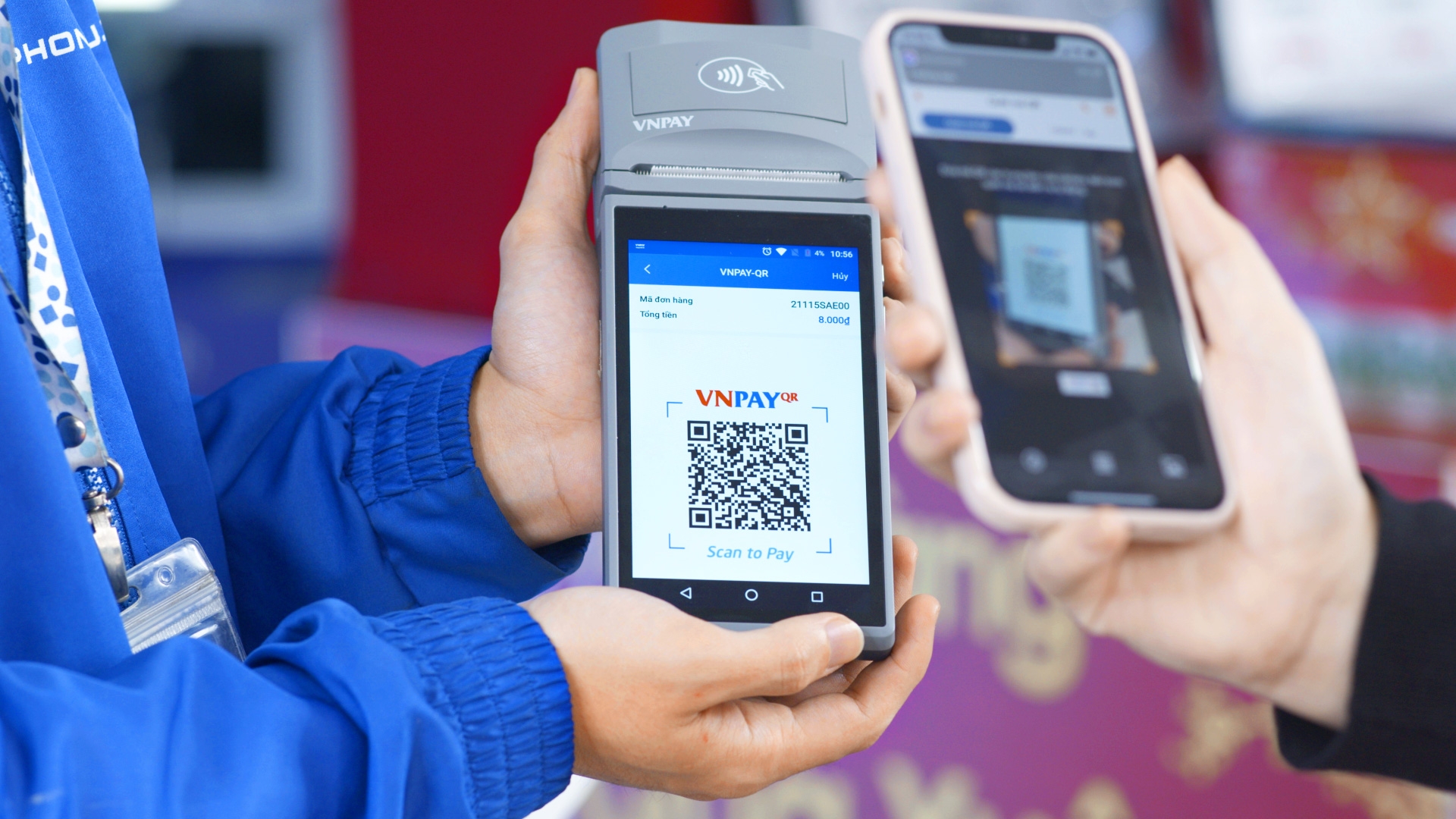
    The introduction of the VNPAY PhonePOS solution is set to change this landscape dramatically. With just an Android smartphone equipped with NFC capabilities, merchants can effortlessly accept payments via major cards like Visa, Mastercard, JCB, and Napas, along with international e-wallets like Apple Pay and Google Pay. This innovation allows businesses to sidestep the hefty expenses linked to investing in specialized POS technology.

    Empowering Small Retailers

    VNPAY PhonePOS not only streamlines acceptance of card payments but also incorporates a robust real-time transaction reporting system. This feature enables sellers to monitor revenue, manage cash flow, and check transaction history directly from their smartphones. For those without advanced accounting software, this tool offers a simple yet effective way to enhance business operations.

    According to a 2024 report by the State Bank of Vietnam, cashless transactions in the country skyrocketed by 53% compared to last year. While this feat is commendable, it barely scratches the surface of the untapped potential within the fragmented retail market.

    Bridging the Digital Payment Divide

    Tran Tri Manh, Chairman of VNPAY, emphasized that the push for technological progress hinges on solutions that facilitate easy, low-cost, and secure technology adoption. VNPAY PhonePOS checks all the boxes and integrates seamlessly into the VNPAY Merchant platform, making it highly accessible for small merchants.

    “Rural regions, home to over 60% of our nation’s population, are increasingly gaining access to digital payment methods. From local markets to highway stops, cashless transactions are now faster and safer,” he highlighted.

    Solutions like VNPAY PhonePOS, which were once exclusively available in shopping malls, are now reaching these underserved markets, unlocking new business opportunities for millions of small entrepreneurs across Vietnam.

    Expanding into Tourism

    Moreover, PhonePOS is extending its reach into the burgeoning tourism sector. Numerous popular tourist spots, including Hoi An, Sa Pa, and Phu Quoc, are experiencing a surge in foreign visitors. Consequently, the capacity to accept international cards is becoming increasingly essential for small businesses, from quaint homestays to bustling roadside eateries. With just a smartphone, they can tap into fresh streams of revenue.

    Technology truly shines when it empowers the masses. Under this lens, VNPAY PhonePOS reduces costs while serving as a bridge connecting small businesses to global financial networks. The dream of digital economy participation for everyone in Vietnam is gradually transforming into reality.

    Previously known as VNPAY-SoftPOS, the newly renamed VNPAY PhonePOS—marketed with the catchy tagline “PhonePOS – Turn Your Phone into POS”—highlights its simplicity and broad appeal. Any store, no matter how tiny, can now play in the digital payment arena with an NFC-enabled Android phone.

    In a remarkable achievement, VNPAY has become the first company in Vietnam to secure the Mobile Payments on Commercial Off-The-Shelf (MPCOS) security certification for the VNPAY PhonePOS solution, as verified by the Payment Card Industry Security Standards Council.

    To earn this certification, the payment solution met over 190 stringent technical security requirements concerning system operations, monitoring, and protection, including end-to-end data encryption and proactive attack detection. This comprehensive security framework ensures robust safety throughout the user experience.

    Questions & Answers

    How does VNPAY PhonePOS work?
    It transforms any NFC-enabled Android smartphone into a payment acceptance device, allowing businesses to accept card payments and e-wallet transactions.

    What benefits does VNPAY PhonePOS offer small businesses?
    It’s cost-effective, easy to use, and provides real-time transaction reporting, which enhances financial management without the need for complex accounting software.

    What makes VNPAY PhonePOS a secure option?
    The solution has achieved MPCOS security certification, meeting over 190 technical requirements for security, including end-to-end encryption and regular security testing.

  • BridgerPay introduces the first agnostic omnichannel payment operations platform

    BridgerPay introduces the first agnostic omnichannel payment operations platform

    BridgerPay, a payment technology pioneer in the payments industry, is proud to announce its transformation into a powerful omnichannel payment operations platform, bringing unparalleled control and flexibility to businesses seeking to streamline their payment processes across all payment channels – e-commerce shops, physical stores and mobile applications.

    The transition to an omnichannel payment operations platform represents a significant positioning as a technology leader for BridgerPay, filling the untapped gap of omnichannel orchestration and payment operations that exists in the world, a pain shared by many enterprise merchants that run a multi-channel business.

    The concept of “omnichannel” used to revolve around a business’s capacity to process transactions across all channels using a single payment provider. Now, envision a world where you have the power to choose your preferred payment service provider for each channel. This is precisely what BridgerPay has crafted – an agnostic omnichannel solution that empowers merchants to optimise processing in any channel, from anywhere.

    Imagine that there are no boundaries restricting your business payments. Both your online and offline operations seamlessly process payments using the most suitable solution for each channel and geographic region. Picture a scenario where all your payments flow through your central management system, ensuring complete automation across all channels. This means you can initiate and process a transaction in a point of sale directly from your management system. Furthermore, you have the flexibility to obtain credit card tokens directly from the point of sale and use them later in your PMS or CRM, with the option to add fallback payment providers to optimise the approval ratio.

    Ran Cohen, CEO of BridgerPay, emphasises the transformative impact of BridgerPay’s platform: “We’re on an exciting journey that’s set to reshape the payment landscape for businesses. In today’s dynamic business environment, it’s essential to provide companies with the tools they need to simplify and improve their payment processes. This milestone development, the first of its kind, was born from a genuine need. Our enterprise clients, who already trust BridgerPay, approached us with a request to expand its functionality offline, for example, in physical stores or hotel front desks. Transforming these client requests into reality is at the core of our mission. As a result, we’ve created a revolutionary omnichannel payment operations platform that promises to fundamentally redefine how businesses navigate and manage their payments.”

    The impact on your business:

    Unparalleled control: Automation across all channels, with your payments flowing through a central management system streamlines your payment processing and enhances operational efficiency.

    Connectivity: Experience the effortless flow of transactions between any payment channel and your systems, ensuring error-free operations. This provides you with precise control to initiate point-of-sale transactions and retrieve tokens from credit cards, guaranteeing accuracy and efficiency in your processes.

    Payment optimisation: Each channel your business operates in will be optimised, tailored specifically to its geographical location. This approach enables you to achieve the highest approval ratios across all your channels, both in physical point of sale and e-commerce.

    Risk mitigation: The freedom to choose the most suitable payment provider for each channel allows you to diversify and spread the risk across various payment providers. This flexibility is crucial for risk management, as not every payment provider for point-of-sale (POS) transactions is ideal for e-commerce.

    Boosted revenue: Along with the tools the BridgerPay platform offers, the freedom to choose the most suitable payment service provider for each channel, whether it’s web, mobile, or point of sale, significantly boosts your revenue.

    PCI & security: By using BridgerPay as your omnichannel payment operations platform, you automatically eliminate your PCI scope. This not only enables the secure transmission of credit card information but also upholds a safe and reliable environment, further enhancing the security of your payment processes.

    The shift to an omnichannel payment operations platform positions BridgerPay as a forward-thinking industry leader dedicated to delivering innovative payment solutions to meet the diverse needs of businesses across all sectors, especially those that handle payments through multiple channels.

    About BridgerPay: BridgerPay is the world’s first omnichannel payment operations platform, built to automate all payment flows with a Lego-like interface, empowering any business to scale their payments, insights and revenue with a codeless, unified and agnostic software.

  • Apple Pay launched in Vietnam

    Apple Pay launched in Vietnam

    Apple Pay has arrived in Vietnam, enabling users to make contactless money transactions through an iPhone or Apple Watch.

    Vietnam is the third country in Southeast Asia to allow Apple Pay after Malaysia and Singapore.

    Several lenders such as MB Bank and Techcombank now support Apple Pay services at some establishments such as Starbucks, Phuc Long, Mc Donald’s, Highlands Coffee, CGV, and Winmart.

    Users can add their credit or debit card information to Apple Pay using the Apple Wallet app.

    At least an iPhone 6 or Apple Watch Series 4 is required to use it.

    Apple Pay was first launched in the U.S. in 2014.

    Apple assures that users’ credit data is only stored on their devices and not transmitted to Apple’s servers.

    In Vietnam, Samsung Pay was launched in 2017 and Google Wallet in November 2022.

  • Apple Pay all set to come to Vietnam

    Apple Pay all set to come to Vietnam

    Digital wallet Apple Pay will soon be available in Vietnam. At least one bank has announced that it will soon support Apple Pay services.

    Sources have told VnExpress that three other major banks will also launch Apple Pay by the end of this month.

    Users can add their credit and debit card information to Apple Pay and make payments through their iPhone or Apple Watch.

    Devices connect through near-field communication and are authenticated by users’ FaceID or fingerprints.

    In most markets, users do not have to pay Apple Pay fees since their banks cover them.

  • Stores’ claims of accepting Pi payment turn out to be misleading

    Stores’ claims of accepting Pi payment turn out to be misleading

    Some stores accept payment in cryptocurrency Pi but only partially and require buyers to pay mainly in cash.

    “I saw a post selling a used iPhone 11 and thought I could buy it with a dozen Pi tokens,” Thanh Son of HCMC said.

    But it turned out he could only pay 10 percent with Pi and the remaining VND12.5 million ($535) had to be paid in cash.

    “I can easily buy the same phone for VND12.5 million without spending a single Pi,” he said wistfully, adding it was a trick sellers used to entice Pi owners.

    He later contacted some other sellers and got pretty much the same answer.

    “Some places require a smaller proportion of cash but they undervalue Pi.”

    Some investors had begun to claim they bought food and equipment using Pi on social media since July 13 when the cryptocurrency’s developers allowed it to be traded.

    Cryptocurrencies are not legal tender in Vietnam, and issuing, trading or using one for payment attract fines of up to VND100 million.

    Sellers try to avoid legal risks by calling deals using Pi “exchanges” rather than “transactions.”

    A person who asked not to be identified said they had put down a VND10 million deposit for a car after the dealer made an offer “exclusively for the Pi owner community.”

    But the seller actually does not accept payment using Pi.

    He reportedly told the person: “Once Pi enters the open mainnet phase, you guys, Pi owners, can offer it for legal tender. Then you bring the legal tender to us and take your car.”

    The dealer claimed over 100 people had deposited. It is far from clear when, and if ever, the crypto will become legal tender.

    There is a chance the people would lose their deposits, an expert warned.

  • Apple’s plan to allow alternative payment platforms for Dutch dating apps is reportedly rejected

    Apple’s plan to allow alternative payment platforms for Dutch dating apps is reportedly rejected

    Apple could be fined this coming week by the Netherlands’ ACM (Authority for Consumers and Markets) for continuing to take a cut of 15% to 30% of in-app payments for dating apps in the country that are downloaded from Apple’s App Store. Apple does not allow developers to offer alternative payment platforms for their apps and any developer that does faces expulsion, along with their related apps, from the App Store.

    By failing to fully comply with the ACM, Apple currently owes over 45 million euros ($49 million) in penalties. The watchdog agency has charged Apple 5 million euros weekly since January for continuing to block alternative payment platforms for dating apps from the App Store. This past week was the ninth that saw Apple fined for failing to follow the order and once the amount Apple owes reaches 50 million euros, subsequent fines could be higher.

    Reuters reports that Apple submitted a new proposal to the ACM last week hoping to get the weekly fines halted. However, an unnamed official at the ACM told the news agency that Apple’s proposal does not comply with its order. Earlier this month Apple told the agency that it was following the agency’s request by telling developers of Dutch dating apps that they could provide users with a third-party in-app payment platform.

    However, Apple wants the developers to essentially create a separate app for the Dutch App Store and another for the App Stores used in other countries. Apple felt that this request was fair and would make sure “that Apple complies with its legal obligations in the Netherlands while at the same time having the ability to maintain its standard terms and conditions in the rest of the world.”

    The ACM begged to differ responding that Apple’s plan created an unnecessary barrier. Back in 2019, the watchdog agency started an investigation to determine whether Apple was abusing its dominant market position. That investigation was later reduced in scope to cover dating apps only, including Tinder.

    Apple, according to the agency, abuses its domination of the market and has been ordered to revise its ban on third-party App Store payment platforms. Apple says that it does not abuse its position in the marketplace.

    Last week we told you that if the Digital Markets Act (DMA) becomes law in the EU, Apple may be forced to allow iPhone users to sideload apps from third-party app stores which is a practice it currently does not allow anywhere due to security concerns.

    If the DMA does become law in the EU, Apple will also have to allow alternative payment platforms to collect in-app payments in the App Stores found in member countries. EU’s antitrust chief, Margrethe Vestager says that the Act could become law as soon as this coming October, or it could take until 2023 to pass.

    Apple is also caught up in Epic’s appeal of the aforementioned court case that saw Judge Yvonne Gonzalez Rogers release a 185-page decision that said Apple is not a monopoly, and that the company cannot be punished for being successful. The judge did order an injunction that prevents Apple from blocking the use of third-party app payment platforms, but the tech giant won a last second stay blocking that injunction from the Ninth U.S. Circuit Court of Appeals.

    So for now, at least in the U.S., Apple can continue to block alternative app payment platforms from entering the walled garden. In other regions of the world, Apple might have to make some changes.

  • Facebook Messenger gets a Split Payment option as well as controls for voice message recordings

    Facebook Messenger gets a Split Payment option as well as controls for voice message recordings

    Meta is introducing a few new changes to the Facebook Messenger app. In a blog post, Meta announced that it is increasing the duration of voice messages to 30 minutes, compared to the previous 1-minute duration, and that Vanish Mode, the feature that allows you to send messages that are immediately erased once they are read, should be available everywhere now.

    Meta also introduces two new features to the Messenger app: Split Payments option, which currently would be only available in the US, and voice message recording controls.

    Split Payments enables you to distribute the payment amount among every person in the group, or as Meta said, “split your bill evenly.” The new feature is available on iOS and Android, but only in the US.

    If you are in the US and want to use the new Split Payments feature, go to a group chat and tap the + icon. Then choose the payments tab and tap the “Get started” button. After that, select the payment amount, enter a personalized message, then confirm and submit the payment request.

    Also, according to Meta, if some of your friends in the group don’t have Split Payments set up, they may quickly add their payment information in order to send and receive money.

    Meta introduces the ability to pause, preview, delete or continue recording a voice message before you send it to your friend. Previously, you could only record an audio message and send it without the ability to preview it.

    As we can see from the snapshot below, the controls for the recording will appear as a soundbar illustration on which you can slide your finger in order to hear your recording. The “Pause” and “Resume recording” controls are located on the left and right sides of the soundbar, respectively, and the “Delete” and “Send” buttons are beneath the soundbar illustration.

  • Technical Standards To Simplify Digital Payments

    Technical Standards To Simplify Digital Payments

    The Swiss Bitcoin Association recommends the first technical standards for simplified payment verification (SPV) using digital currencies, eliminating the need to download entire the blockchain for transactions.

    Switzerland’s Bitcoin SV Technical Standards Committee today recommended its first digital currency standard for simplified payment verification (SPV), enabling transactions to occur without having to download the entire blockchain.

    This standardized format is now in use across three prominent ecosystem applications, the Bitcoin SV node software, Merchant API (mAPI), ElectrumSV and ElectrumX.

    The first BSV technical standard progressing to the recommended stage – the final stage for technical standards – represents a significant achievement for the Bitcoin SV Technical Standards Committee, says Technical Committee Chair Steve Shadders.

    The Swiss government today adopted a report on the digitalization of the financial markets, identifying opportunities and risks and laying out action points for the coming years.

  • Australia to Shake Up Digital Payment Regulations

    Australia to Shake Up Digital Payment Regulations

    Australian authorities will revamp the regulatory landscape for digital payments, broadening its remit on online transaction providers, cryptocurrency exchanges, and the possible creation of a central bank digital currency.

    On crypto exchanges, Australia will begin consultation early next year on establishing a licensing framework and regulations for businesses the hold crypto assets on behalf of consumers.

    It will also consult on the feasibility of a central bank digital currency with advice provided by the end of 2022.

    Online transaction providers and buy-now-pay-later providers will also effectively see the end of unregulated business as Australia will also broaden its payment laws to cover such payment players.

    If we do not reform the current framework, it will be Silicon Valley that determines the future of our payment system, according to a report citing notes by Australian treasurer Josh Frydenberg.

    Australia must retain its sovereignty over our payment system.

  • Singapore and Philippines Step Up Digital Payment Cooperation

    Singapore and Philippines Step Up Digital Payment Cooperation

    The regional neighbors aim to boost cross-border collaborations that will strengthen Asean regional payments and provide financial inclusivity to Overseas Filipino Workers (OFWs) and micro-small-to-medium-sized enterprises (MSMEs).

    The central banks of Singapore and the Philippines have signed an agreement at the World Fintech Festival Philippines to boost payments cooperation, which includes the linkage of the two countries’ QR and real-time payment systems.

    The agreement expands on the Fintech Innovation Function Cooperation Agreement, which was signed between the two countries in 2017. According to the announcement, the 2021 agreement will make cross-border payments cheaper, more inclusive, and more transparent and drive financial inclusion, particularly underserved Filipinos.

    MAS managing director Ravi Menon called the agreement a concrete step towards the vision of an ASEAN network of interconnected real-time payment systems.